

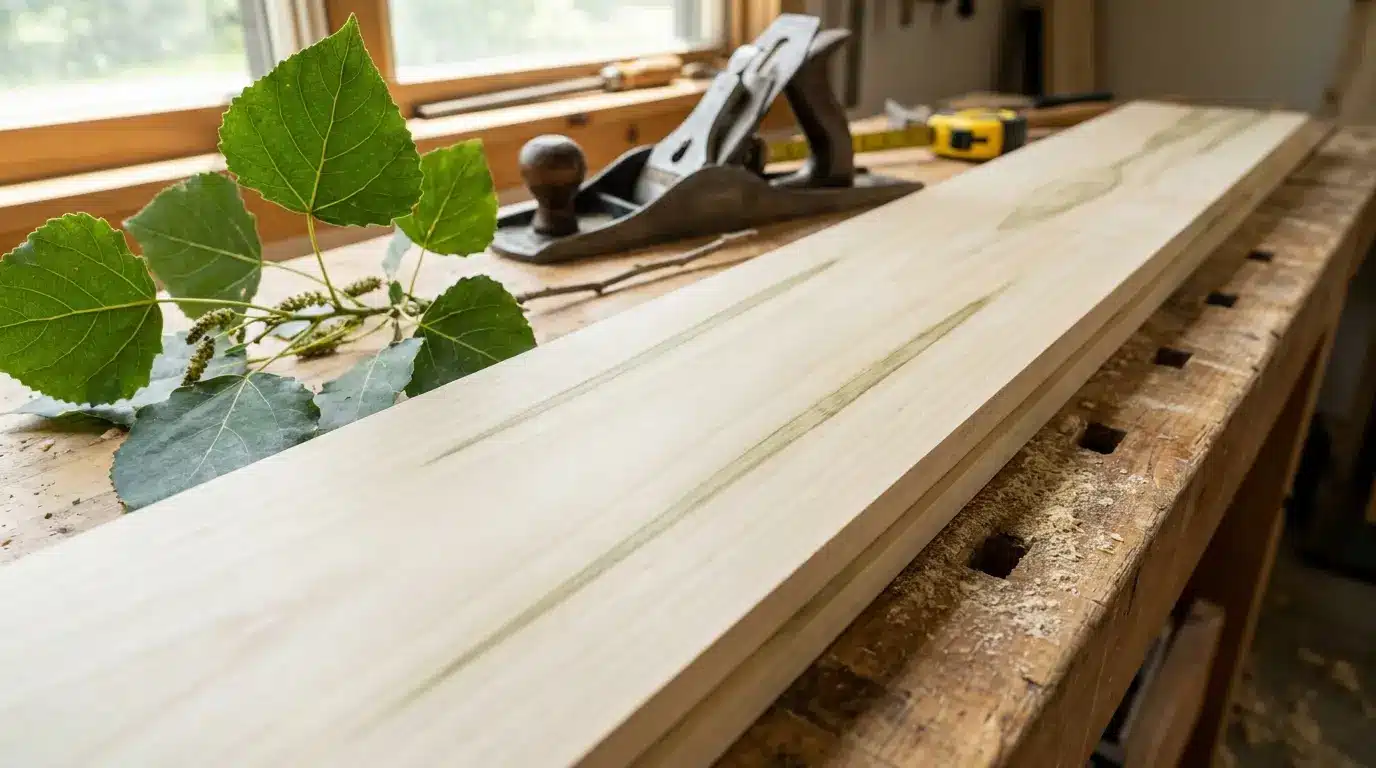


| Poplar wood | Value |
|---|---|
| Classification | Hardwood |
| Janka hardness | 540 lbf |
| Common nicknames | Tulip poplar, yellow poplar, whitewood |
| Best for | Painted furniture, frames, trim, plywood |
| Not ideal for | Flooring, cutting boards, outdoor furniture |
With more than 20 years of woodworking experience in carpentry and custom furniture, I have seen how different woods perform in real-world projects and which lower-cost options are actually worth using.
Yes, poplar is a hardwood. It comes from a broadleaf tree rather than a conifer, which is why it’s classified as such. Still, its Janka hardness rating is much lower than woods like oak or maple, so it dents and scratches more easily.
That is why poplar often causes confusion at the lumberyard. Although it is technically a hardwood, it behaves more like a softer wood in everyday use.
Why Poplar Counts as a Hardwood
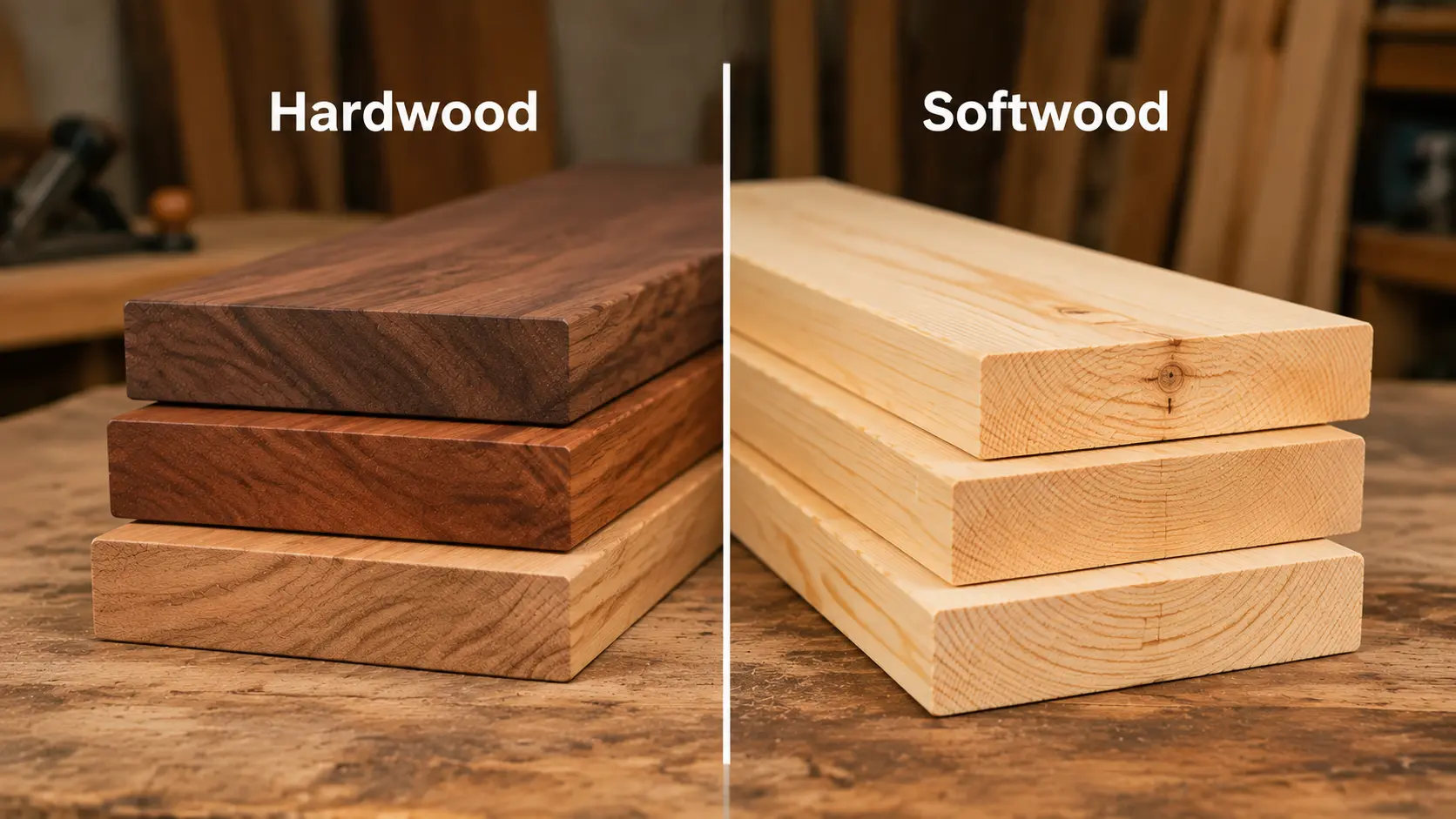
The hardwood and softwood labels do not describe how hard a wood feels to the touch.
Hardwood comes from angiosperms, flowering trees that drop their leaves each fall. Softwood comes from gymnosperms, mostly cone-bearing evergreens like pine, spruce, and cedar.
Poplar flowers every spring and sheds its leaves every autumn. That single trait places it in the hardwood group, no matter how soft the milled lumber feels.
Most lumber sold as poplar actually comes from the tulip tree, or Liriodendron tulipifera. American yards almost always stock this wood as poplar, even though true Populus trees, like aspen and cottonwood, also exist.
Pine, fir, and cedar never enter this conversation, since they grow cones instead of flowers. Density and weight play no part in the classification at all.
How to Identify Poplar Wood
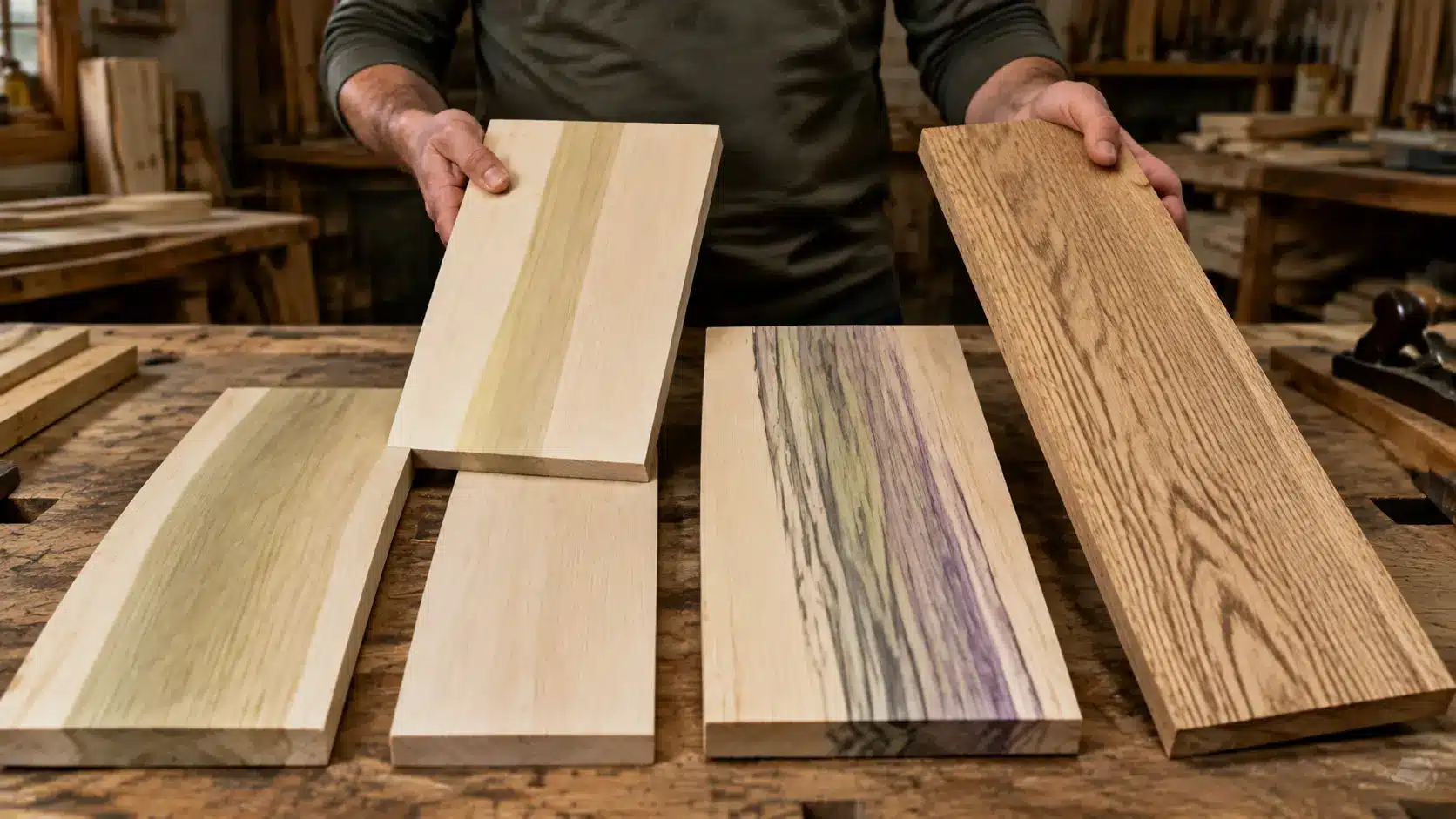
If you already own a board and want to confirm the species, follow these steps.
- Check the color: Poplar sapwood runs creamy white in most boards you encounter. Its heartwood shifts from pale yellow-brown to olive green, sometimes within the same board.
- Check the grain and texture: The grain remains straight and even, with a fine-to-medium texture, similar to oak or ash.
- Look for mineral streaks: Some boards pick up green, gray, or purple streaks as the tree grows. Woodworkers call this rainbow poplar, and it often sells at a premium.
- Compare the weight: Hold a poplar board next to an oak board of the same size. The poplar will feel noticeably lighter almost right away.
What Poplar Wood is Used for
Builders reach for poplar all the time, just not always where you can see it.
1. Furniture and Frame Parts
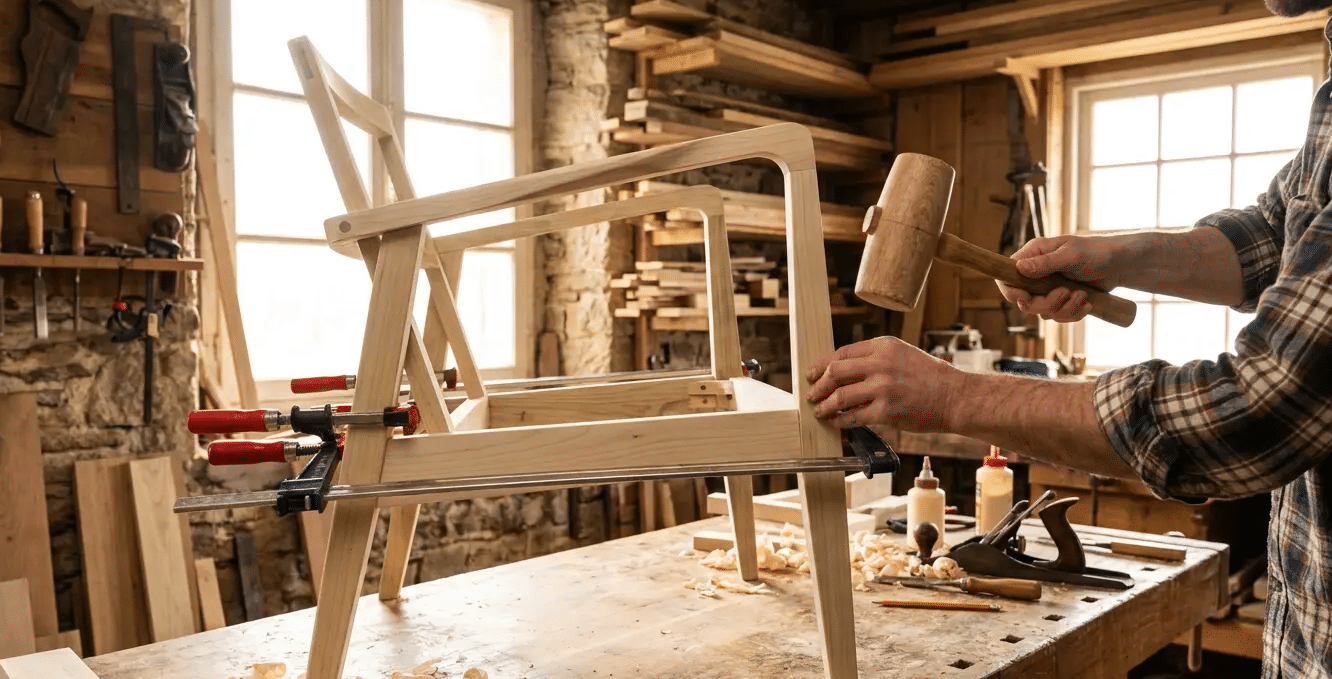
These sit under upholstery or paint, where appearance is not important to the buyer. Among the types of wood for furniture, poplar is commonly used for hidden frames because it is lightweight, affordable, and easy to work with.
Builders choose it for furniture supports since the frame stays concealed after assembly. Its low weight also helps reduce shipping costs on large orders.
2. Paint-ready Cabinets and Trim
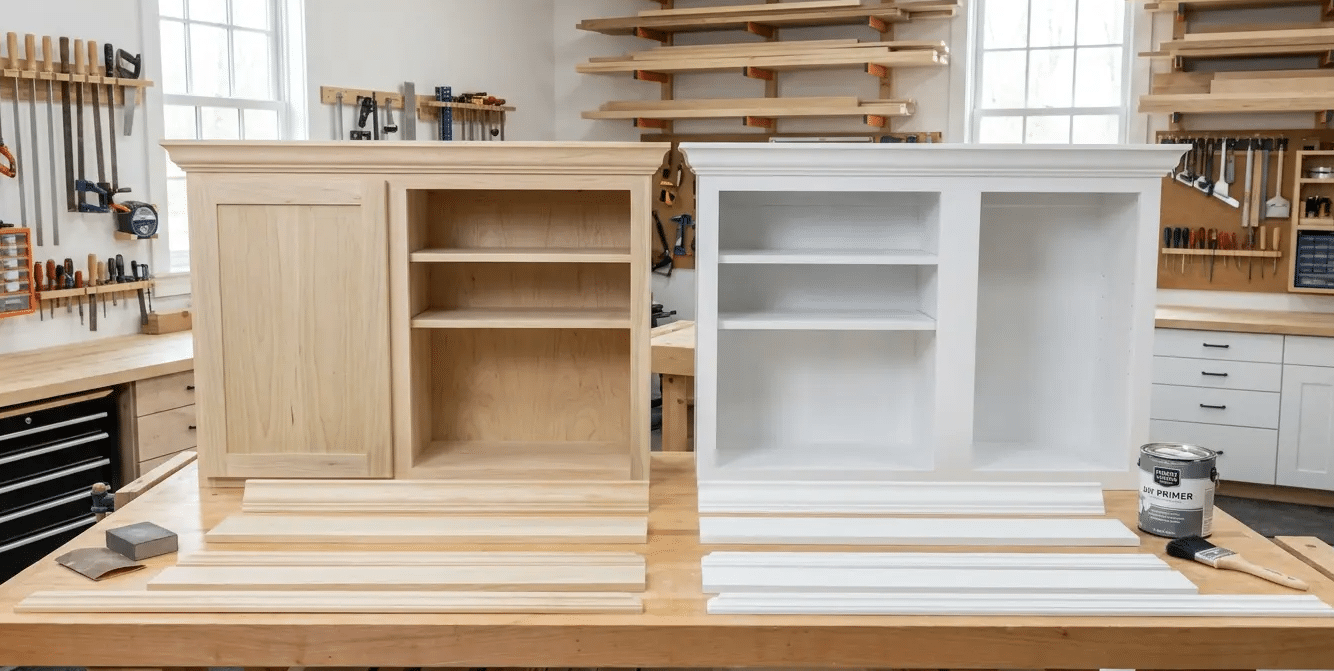
Cabinets, shelves, and trim take a smooth coat once primed properly. Millwork, molding, and door parts often use poplar, too, since most are painted rather than left natural.
The straight grain helps paint sit evenly across long trim runs. Many kitchen cabinet makers use poplar for face frames before painting the whole piece.
3. Plywood Core Material
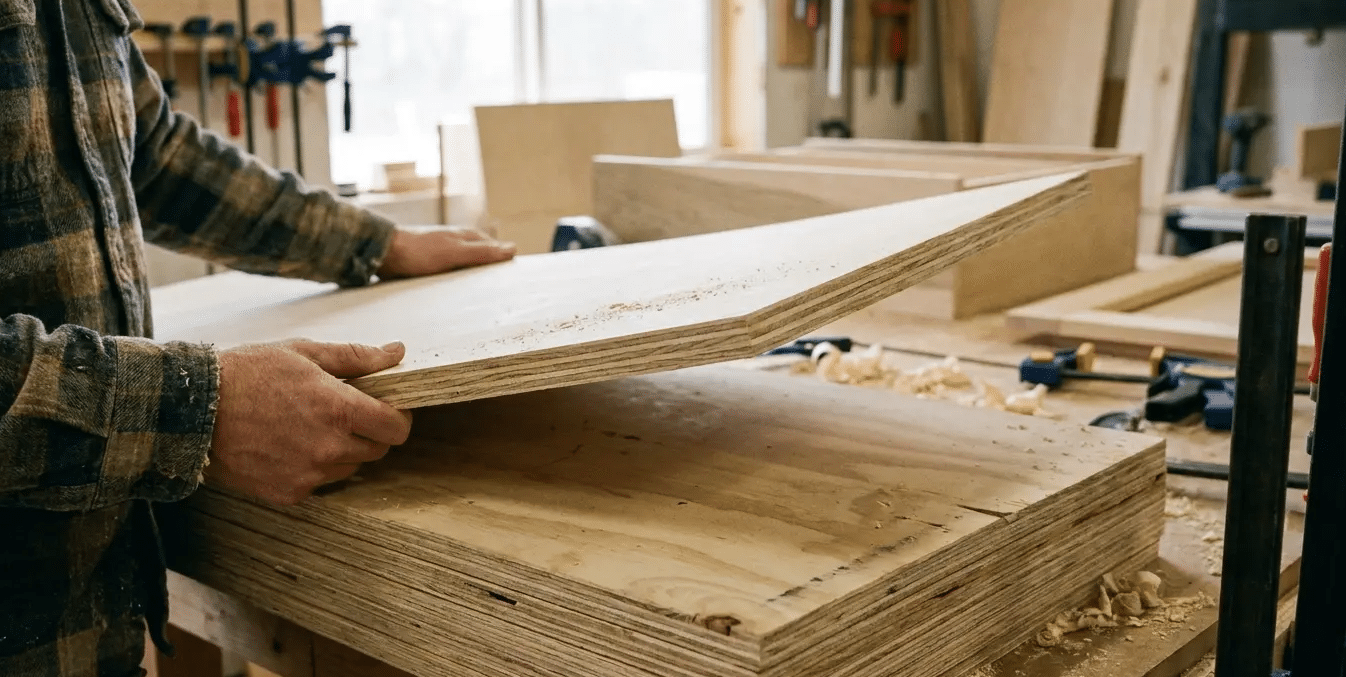
Plywood cores gain lightweight strength from poplar without adding much extra bulk. This makes plywood easier to install without giving up rigidity.
Manufacturers like poplar cores because they resist warping better than some softwood alternatives. This keeps plywood sheets flat during storage and shipping.
4. Pallets and Crates
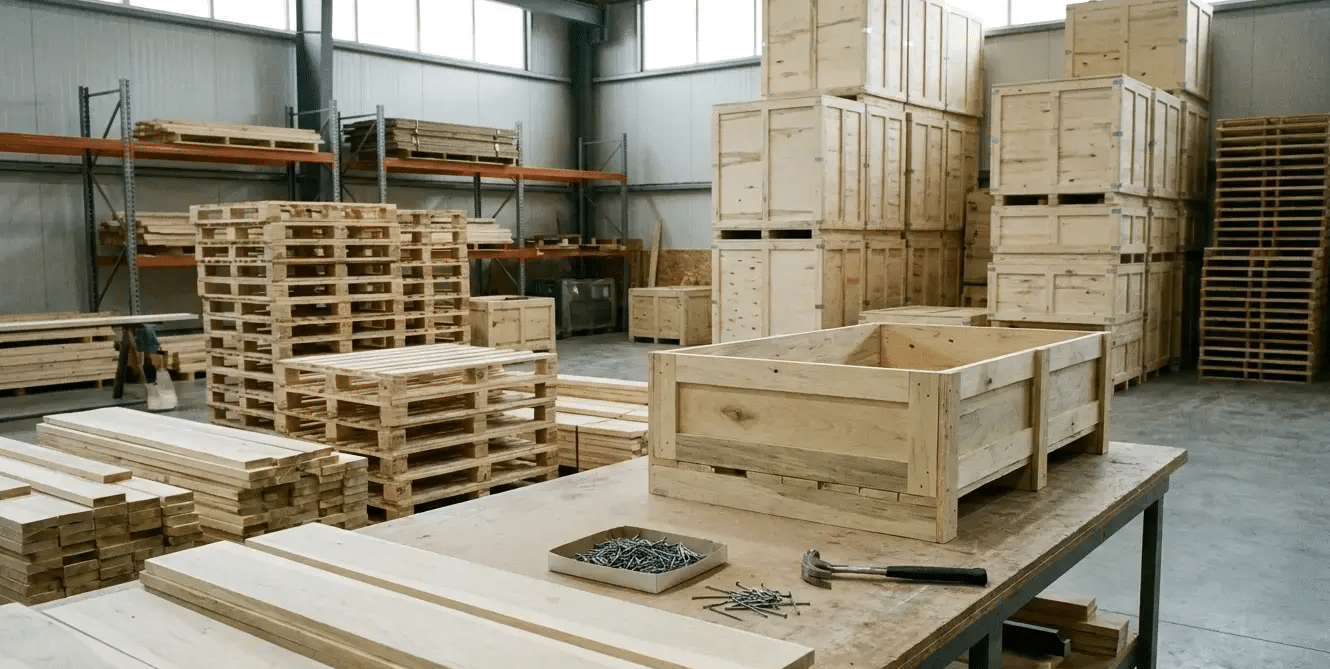
These rely on poplar for its low cost and light weight during transport. Poplar boards withstand repeated loading without breaking down quickly.
Shipping companies also value how easily poplar takes nails and staples. Its lightweight also keeps freight costs down for large shipments.
5. Small Hobby Builds
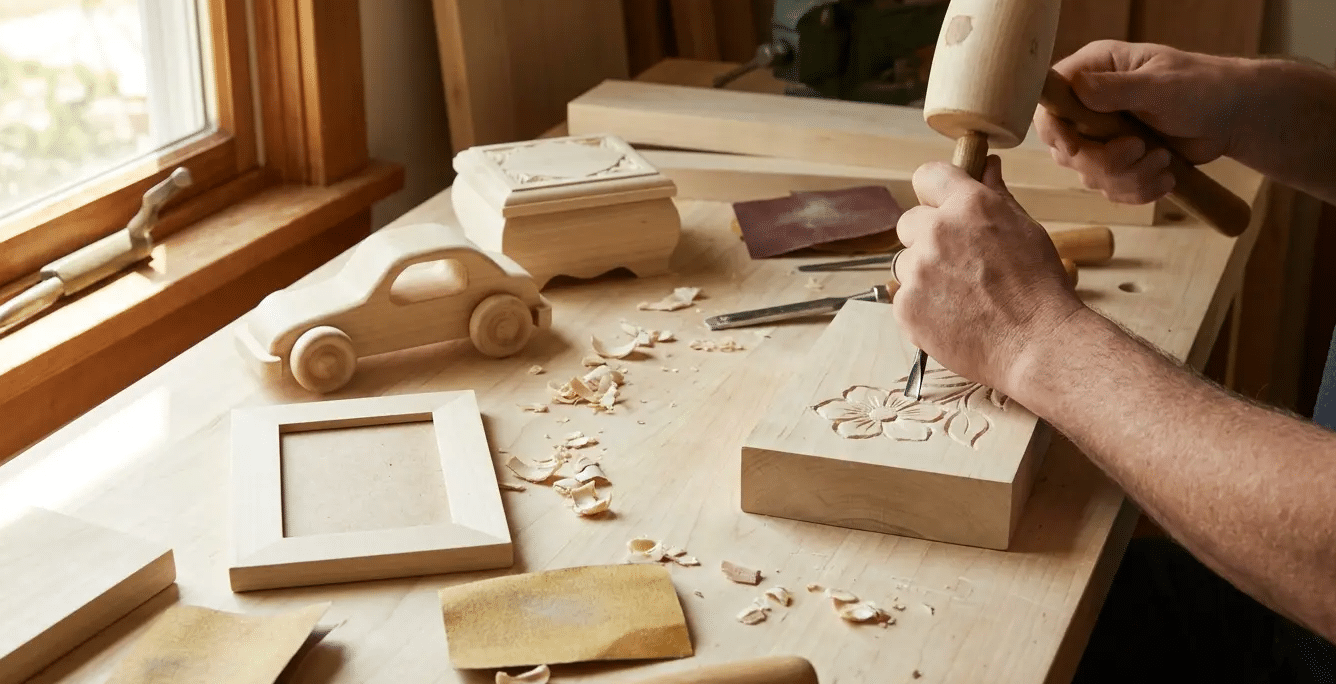
Carved signs, wooden toys, and photo frames made at home often use poplar. Its soft texture makes hand carving easier for beginners. Poplar also holds paint and varnish well on finished projects.
Painters favor poplar because it holds a clean, even coat without much prep work. Carpenters like it because it rarely splits when nailed close to an edge, even on thin trim pieces.
Why Poplar Feels Softer than Other Hardwoods
The Janka scale ranks wood hardness by pressing a steel ball into a board until it embeds halfway. Poplar scores 540 pounds of force, compared to 1,290 for red oak, 1,450 for maple, and 1,010 for walnut.
Even Douglas fir, a softwood commonly used for house framing, rates around 700 on the Janka hardness scale, making it harder than poplar. This lower Janka rating helps explain why poplar is easy to cut, shape, and work with in a workshop.
A quick comparison clears up why poplar confuses so many buyers.
| Trait | Hardwood | Softwood |
|---|---|---|
| Tree type | Angiosperm, flowering | Gymnosperm, cone-bearing |
| Leaves | Broad, drop each fall | Needles, mostly evergreen |
| Common examples | Oak, maple, poplar | Pine, cedar, fir |
| Typical density | Usually higher | Usually lower |
| Exceptions | Poplar, balsa | Douglas fir, yew |
Density sits in the usual column for a reason. Poplar and balsa are both hardwoods that score low on the Janka scale. Douglas fir and yew are softwoods that hold up better than people expect.
The tree’s method of reproduction determines the label, not how the board feels in your hand.
Poplar Compared to Other Common Hardwoods
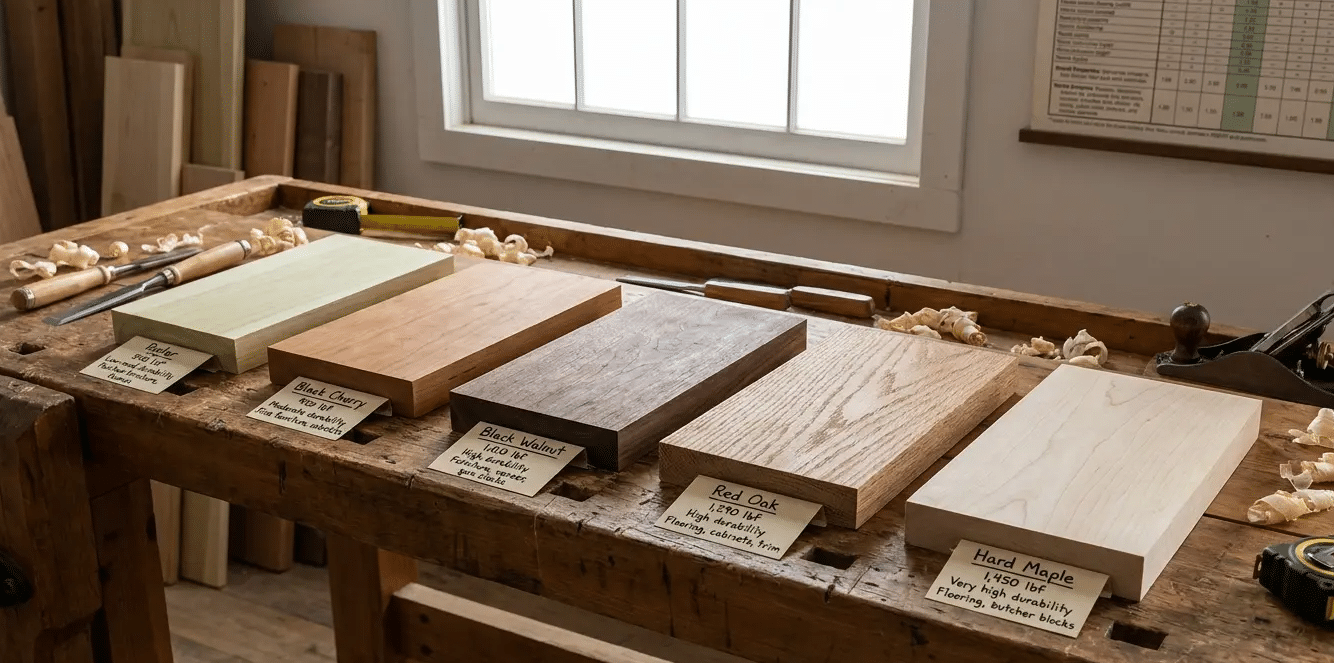
A side-by-side table makes these differences easier to see than raw numbers alone.
| Wood | Janka hardness | Durability | Best use |
|---|---|---|---|
| Poplar | 540 lbf | Low to moderate | Painted furniture, frames, trim |
| Black cherry | 950 lbf | Moderate | Fine furniture, cabinets |
| Black walnut | 1,010 lbf | High | Furniture, veneer, gun stocks |
| Red oak | 1,290 lbf | High | Flooring, cabinets, trim |
| Hard maple | 1,450 lbf | Very high | Flooring, butcher blocks |
Poplar sits at the bottom of this list on hardness, but it also costs noticeably less than the others. For painted or hidden work, like frames or trim, that price gap usually favors poplar.
For daily use in the open, such as a dining tabletop, oak or maple makes more sense.
Is Poplar a Durable Hardwood
Durability depends on how you use the wood, not just its hardwood label. Indoors, poplar lasts for years, especially once painted or sealed. It works well for modularfurniture, cabinet parts, and frames where heavy impact is limited.
It dents more easily than oak or maple, so it struggles on floors or tabletops. Furniture frames, cabinet boxes, and trim rarely take hard hits, making poplar a practical choice for these applications. Regular dusting and occasional waxing help painted poplar furniture maintain its finish longer.
Outdoors, poplar breaks down quickly without a sealed finish. With the right protection, it can still perform well for suitable projects. A fresh coat of paint or sealant every few years helps keep outdoor pieces protected.
Poplar’s Limits Worth Knowing
No single wood species works for every job, and poplar has a few clear limits worth knowing.
- Dents and scratches under everyday use, making it a poor fit for tabletops or floors with regular traffic.
- Blotches when stained, unless you apply a pre-stain wood conditioner first to even out absorption.
- Rots fairly quickly outdoors without a sealed finish over the top.
- Carries none of the natural rot resistance found in cedar or redwood.
- Needs a sealed finish before it faces rain, sun, or ground contact.
Frequently Asked Questions
Is it okay to burn poplar in a wood stove?
Yes, seasoned poplar can be burned in a wood stove. It lights easily but burns faster and produces less heat than denser hardwoods.
Is poplar better than pine?
Poplar is usually better for indoor furniture because it is smoother and has less resin. Pine is often preferred when you want a stronger grain and a rustic look.
Which variety of poplar is best?
Tulip poplar is one of the best varieties for woodworking because it is lightweight, easy to shape, and widely available. The best type depends on the project.
What is the lifespan of a poplar tree?
Most poplar trees live for about 30 to 50 years. Some healthy varieties may survive for 100 years or longer in suitable conditions.
How fast can a poplar tree grow?
Poplar trees are fast-growing and may grow about 3 to 5 feet each year. Growth depends on the variety, soil, sunlight, and water supply.
Is Poplar the Right Choice?
Picking poplar comes down to what the finished piece needs to survive over time.
Choose poplar for painted furniture, hidden frames, interior trim, and budget builds where looks matter more than raw toughness.
Skip it for flooring, cutting boards, or any surface that sees daily wear without a protective coat. Its lower price beats oak, maple, or walnut whenever a project calls for paint over a natural wood look.
A first apartment bookshelf, a painted nightstand, or a set of interior door trim all fit this description well. If the piece stays indoors under a coat of paint or primer, poplar rarely disappoints the person who picked it.