

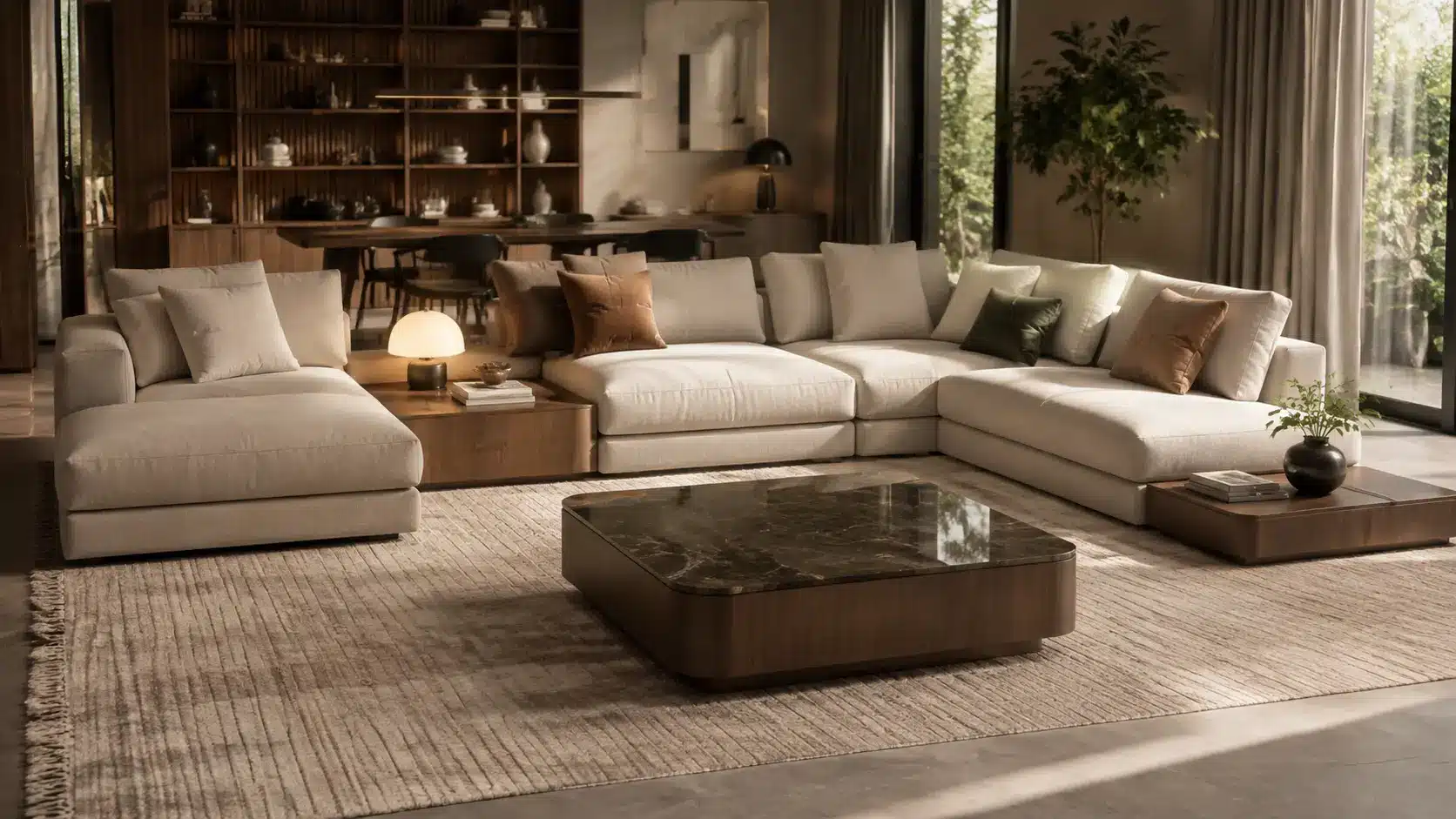


Most furniture is built for a fixed room in a fixed life. Buy a sofa, put it against the wall, leave it there for a decade. That approach works until the room changes, the family grows, or the apartment gets smaller, and the sofa suddenly does not fit through the door.
Modular furniture was designed around that problem. Instead of one rigid piece, you get a system of components that can be rearranged, expanded, or scaled down as your space and needs shift over time.
This blog covers what modular furniture actually is, the main types available, how it differs from sectional furniture, what it typically costs, and what to check before buying a system for your home.
What is Modular Furniture?
Modular furniture is built from separate, standardized units called modules that can be combined, rearranged, or expanded to fit different spaces and needs.
Instead of buying one fixed piece, you assemble a system from individual components. A modular sofa might include armless seats, corner pieces, and ottomans that can be arranged in dozens of layout combinations.
The same logic applies to shelving, storage, beds, and office furniture, where each module functions independently yet connects seamlessly with others.
A modular shelving unit, for example, might start as a single small cube and later grow into a full wall of connected storage without replacing the original piece.
Why Modular Furniture is Popular Now
Modular furniture has moved well beyond a niche design trend to become a genuine market force, backed by real numbers.
The U.S. modular furniture market reached $24.3 billion in 2025 and is projected to continue growing steadily through 2035, driven largely by shrinking home sizes and rising urban living costs.
Younger buyers and small families are a major part of this shift, favoring pieces that combine practicality with style over furniture that locks them into one fixed layout.
Demand from offices and co-working spaces has also added to the momentum, as businesses look for seating and desk systems that can be rearranged as teams and layouts change.
This mix of residential and commercial demand is why modular furniture, once a mid-century design idea, has become an everyday shopping category rather than a specialty product.
What are the Features of Modular Furniture
True modular furniture is defined by four core traits that make it function as a system rather than just a collection of matching pieces.
Each unit is built to standardized dimensions, so modules from the same collection connect without gaps or mismatched heights.
Those same pieces can be rearranged into different configurations, an L-shape one month and a straight line the next, without buying anything new. Any individual module, such as an armless chair, also serves as standalone furniture when separated from the rest of the set.
And because you can add new units later, the system grows with your space and needs rather than becoming obsolete when either changes.
What are Types of Modular Furniture
Modular design shows up in more categories than most people realize, well beyond the living room sofa.
1. Modular Sofas and Sectionals
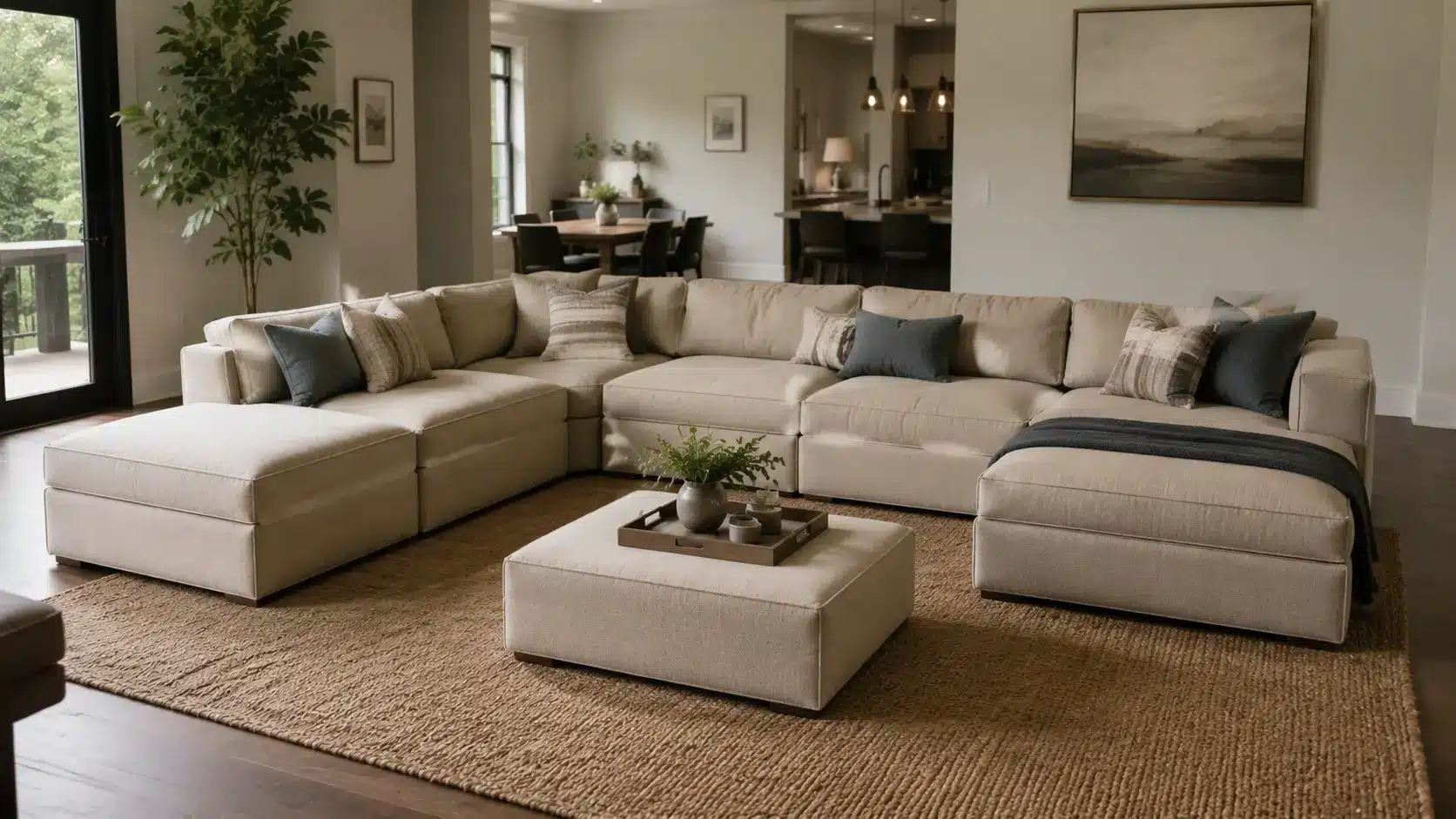
Armless chairs, corner units, chaises, and ottomans that combine into custom layouts. These pieces can be used as a sofa and a separate chair, or linked into a full sectional, depending on the room.
Many systems also include a chaise module that can be moved to either end of the sofa.
Best for: living rooms and shared spaces that need flexible seating arrangements.
2. Modular Shelving and Storage Systems
Stackable cubes, adjustable shelves, and cabinets that expand as your storage needs grow. New units can be added on top of or beside existing ones without replacing what you already own.
Some systems also allow shelves to be repositioned within the same frame as needs change.
Best for: closets, home offices, and rooms that need storage to scale over time.
3. Modular Bed Systems
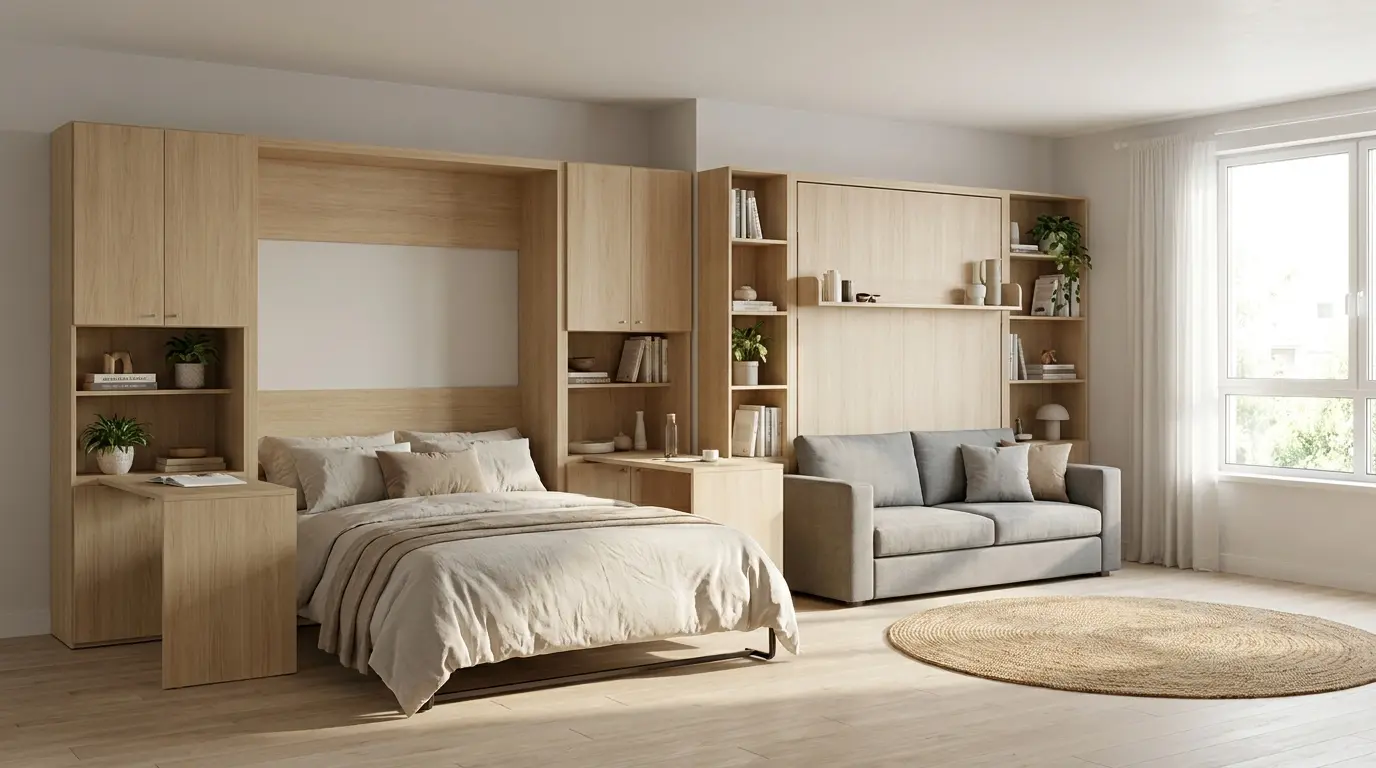
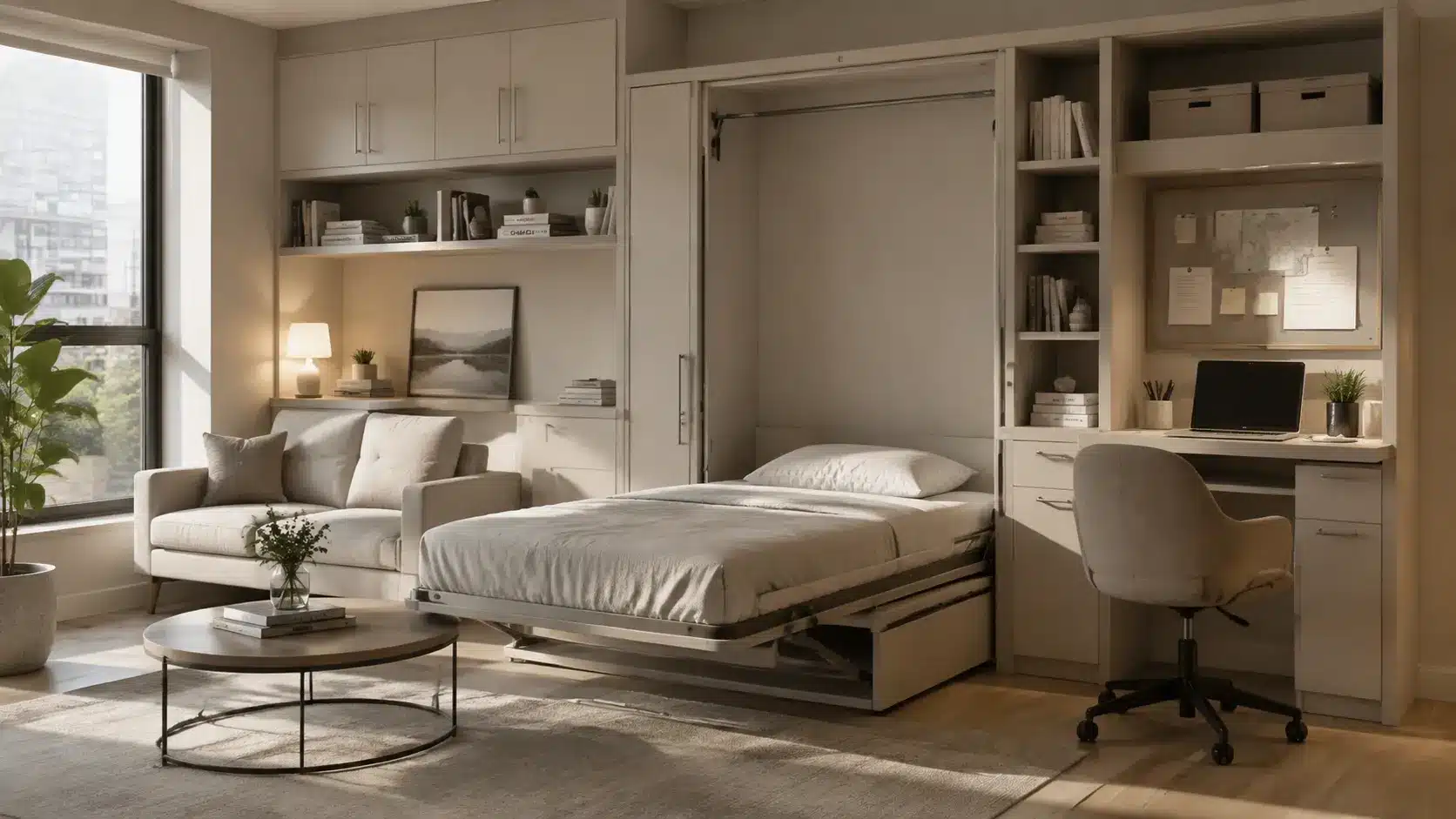
Wall beds with built-in cabinetry, desks, or sofas that fold away when not in use. These systems allow a single room to function as a bedroom at night and an office or living space during the day. Some designs fold up vertically, while others tuck into a cabinet unit along the wall.
For studios or smaller layouts, space-saving furniture can complement modular bed systems by maximizing available space and improving everyday functionality.
Best for: studio apartments and guest rooms that double as other spaces.
4. Modular Office Furniture

Desks, partitions, and seating systems designed to be reconfigured as office layouts change. Teams can shift from private desks to open collaboration areas without buying new furniture each time.
Panels and dividers can also be added or removed to adjust privacy levels within a shared space. For home setups, minimalist home furniture choices can complement modular systems by creating flexible work areas with practical desk and storage solutions.
Best for: co-working spaces and offices that frequently rearrange teams or layouts.
How Much Does Modular Furniture Cost
Pricing varies widely, but general market patterns give a useful starting point.
Budget modular pieces, such as a single armless chair or storage cube, often start at $200 to $400 per module. Mid-range modular sectionals and shelving systems typically run $800 to $2,500 for a full set, depending on size and material.
Higher-end designer modular systems, especially from brands rooted in the Eames and Nelson design tradition, can run well above that range.
These figures reflect general retail patterns rather than a single fixed price, since cost depends heavily on materials, brand, and module count.
What are the Benefits of Modular Furniture
Modular furniture earns its popularity by solving problems that fixed furniture simply cannot.
Space efficiency is usually the first draw, since modules can be rearranged or scaled down to suit furniture ideas for compact homes and multi-purpose rooms.
That same setup gives you flexibility over time, letting the same pieces adapt as your needs shift, whether that is a growing family or a home office turning into a guest room.
There is a cost angle too. Buying one module at a time spreads the expense, and you can replace a damaged piece individually rather than buying an entirely new set.
That same modularity also makes moving day easier, since smaller pieces are far simpler to carry through narrow doorways and staircases.
Modular Furniture Design Ideas for Every Home
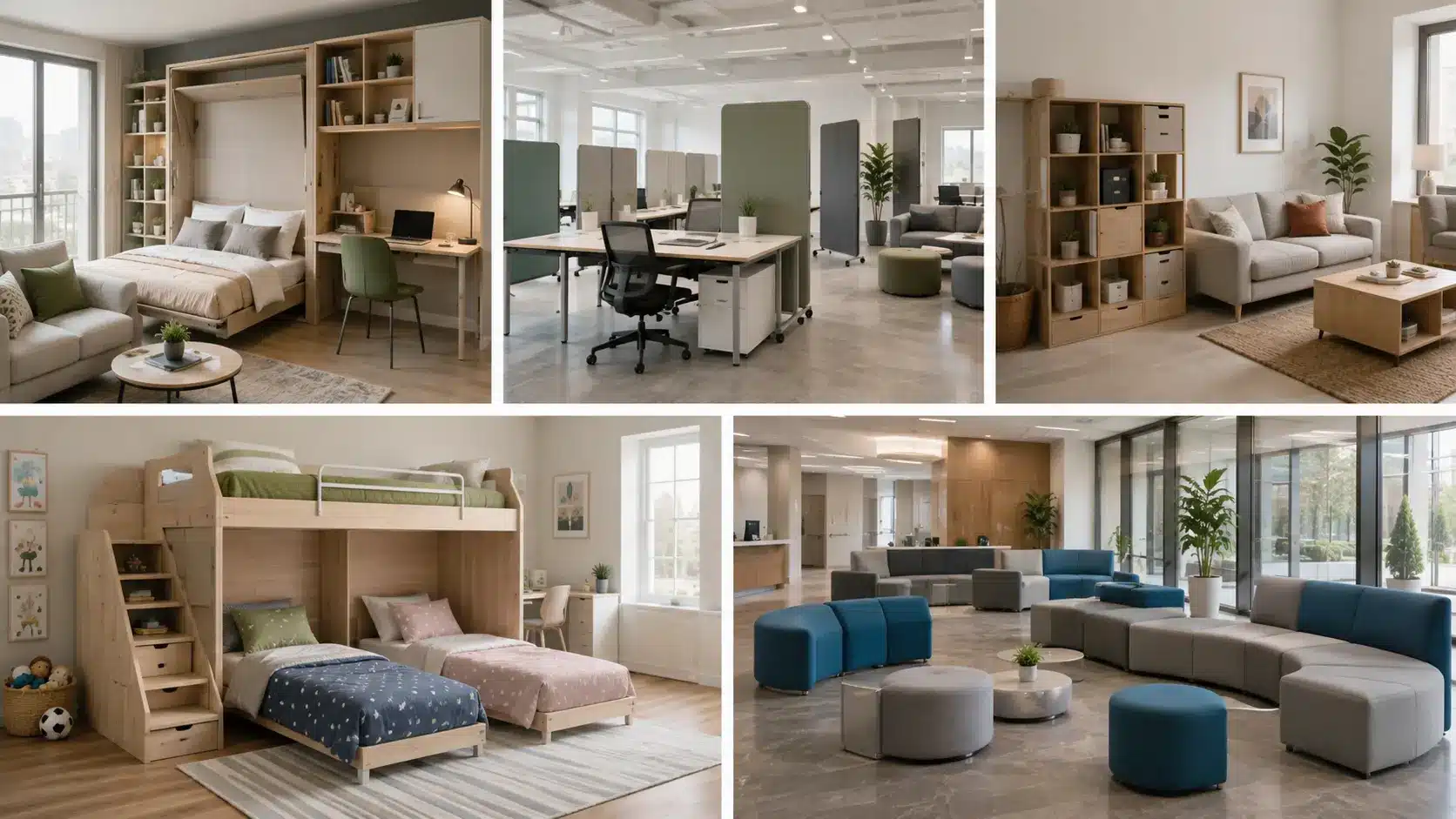
Beyond the showroom, modular design shows up in everyday settings where flexibility solves a real, ongoing problem.
- Micro-apartments and studio units: Wall beds and fold-away desks let one room serve as a bedroom, office, and living space depending on the time of day.
- Co-working offices: Movable desks and partitions let a single floor plan shift between quiet workstations and open team areas within the same day.
- Rental homes: Renters use modular pieces to furnish a space without committing to furniture that will not fit their next apartment.
- Growing families: Modular kids’ furniture, like bunk systems that separate into two beds, adapts as children grow or siblings need their own space.
- Hospitality and healthcare settings: Lobbies and waiting areas use modular seating to reconfigure layouts for events, social distancing needs, or changing foot traffic.
How to Choose Modular Furniture for Your Space
Picking the right system takes a bit more thought than a standard furniture purchase. Measure your room and doorways first, since modular pieces must still fit through hallways and entryways during delivery.
Check how the modules connect, whether through clips, brackets, or simple friction fit, since sturdier connectors tend to hold up better over years of rearranging.
Confirm that individual modules can be purchased separately later, in case you want to expand the set or replace a worn piece down the road, and stick to one collection or line rather than mixing modules from different product lines, since fabric and finish rarely match exactly across collections
Modular Furniture vs. Sectional Furniture
These two terms are constantly confused, so it helps to draw a clear line between them. Knowing the difference makes it easier to find the right product and avoid buying something that doesn’t meet your actual needs.
| Feature | Modular Furniture | Sectional Furniture |
|---|---|---|
| Scope | Covers sofas, shelving, beds, and office systems | Refers specifically to seating |
| Layout | Can be split, expanded, or rearranged freely | Arranged into an L-shape, U-shape, or straight line |
| Relationship | The broader category | One specific type of modular seating |
Note: Every sectional is modular, but not everything modular is a sectional.
Pros and Cons of Modular Furniture
Most articles on this topic only list benefits, so here is a fairer, two-sided look. Modular furniture solves real problems, but it also comes with trade-offs worth knowing before you buy.
Looking at both sides together gives a clearer picture than either list on its own.
| Pros | Cons |
|---|---|
| Rearranges to fit different rooms and layouts | Can feel less structurally solid than one-piece furniture |
| Damaged modules can be replaced individually | Matching fabric or finish on future add-ons can be tricky |
| Scales up or down as your space changes | Larger systems can be complex to assemble |
| Often easier to move through doorways in pieces | Connector hardware can loosen over time with heavy use |
Weighing both sides against how you actually plan to use the furniture is the best way to decide if it fits your space.
No single pro or con should decide the outcome, since the right answer depends on the specific room and household.
Frequently Asked Questions
Which brand is considered the best for modular sofas?
Brands like Burrow, Lovesac, West Elm, and IKEA are highly regarded for modular sofas due to their quality, flexibility, and design options.
Do modular couches stay together?
Most modular couches use clips, brackets, or locking systems. These connectors prevent the individual sections from separating during use.
What is the 4-inch rule for furniture?
The 4-inch rule applies to the height of furniture seats. Sofas, chairs, and ottomans should have seat heights within four inches of one another.
What furniture store has the best-quality furniture?
The best furniture store depends on your needs and budget. Compare materials, construction, warranties, and customer reviews before purchasing.
Does Walmart have quality furniture?
Walmart offers several reliable and affordable furniture options. However, quality varies depending on the brand, materials, seller, and product.
Final Thoughts
Modular furniture solves a real problem for a country living in smaller spaces than it used to, but it works best when chosen with intention rather than picked for flexibility alone.
Understanding the actual differences between modular and sectional pieces, knowing the honest trade-offs, and checking how well a system can grow with you make the difference between furniture that adapts to your life and furniture that just sits there looking flexible.
The right modular setup should feel less like a compromise and more like furniture built for how you live.