



Are you tired of walking into a kitchen that feels stuck in another decade? I know how frustrating it is to feel trapped between a dated space and the massive price tag of a full kitchen remodel.
You deserve a beautiful home without draining your savings or living in a construction zone for months. This guide breaks down exactly how much cabinet refacing costs and the specific factors that push your quote up or down.
You will find the truth about material quality, labor rates, and whether a DIY approach is actually worth the risk. By the end, you’ll have a realistic budget and the confidence to choose the best path for your renovation.
Kitchen Cabinet Refacing Basics
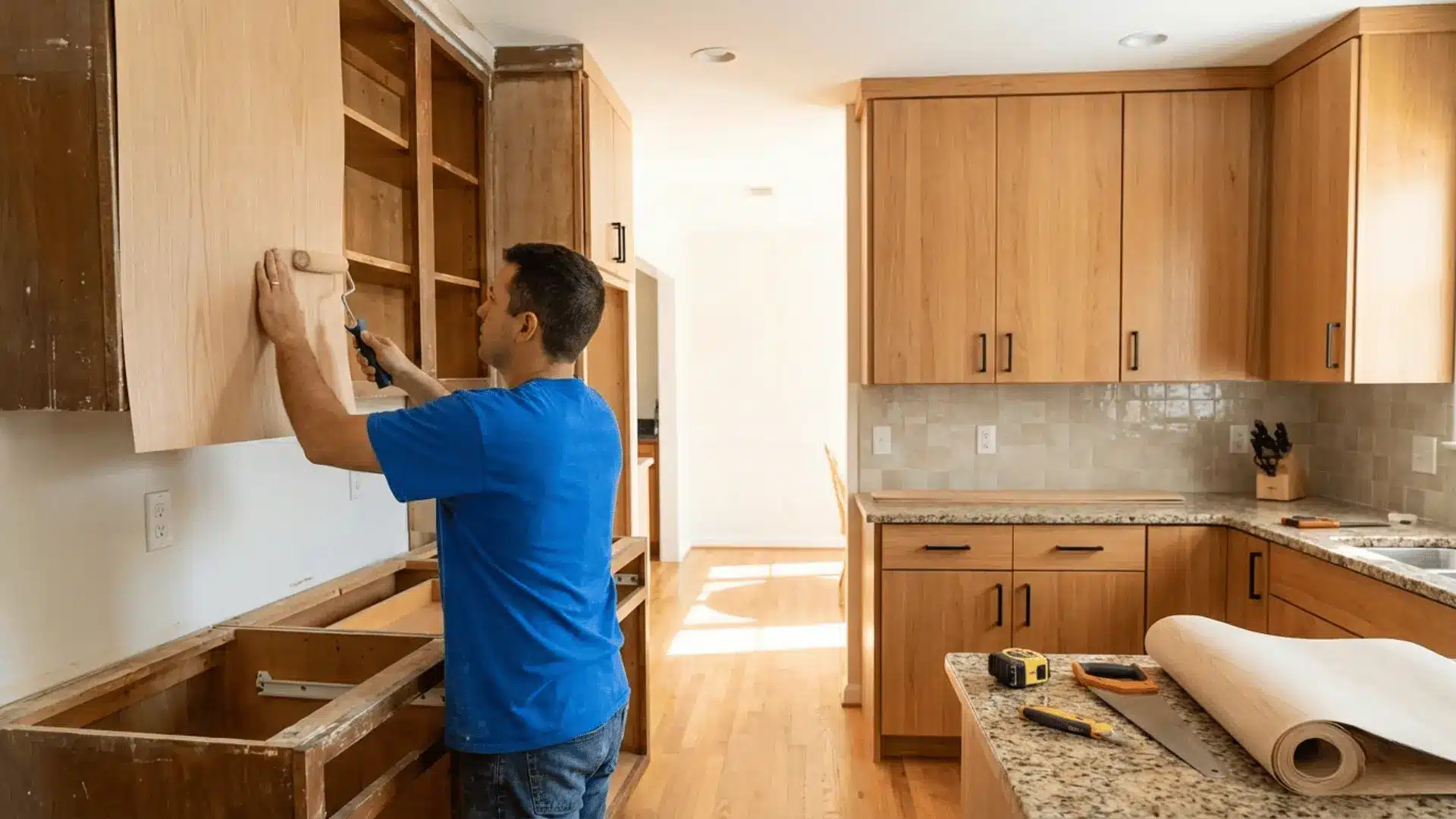
Cabinet refacing gives your kitchen a fresh look without removing the full cabinet setup. You keep the existing cabinet boxes and structure, but update all the visible parts.
This includes replacing doors, drawer fronts, handles, and the outer surface finish, so everything looks new from the outside. Inside, the layout and storage stay the same, which helps you avoid major changes. When you compare refacing to full replacement, the difference is clear.
Refacing costs less, takes less time, and creates less mess in your home. Full replacement, on the other hand, involves removing cabinets, higher costs, and longer work time.
If your cabinet structure is still strong, refacing is a smart and practical way to refresh your space.
One thing that often surprises homeowners: because labor makes up 50–70% of a refacing quote, two contractors using the same materials can give you estimates that differ by thousands of dollars.
That’s not a red flag. It reflects regional labor rates, their overhead, and how they price access and complexity. Getting three quotes is not optional.
Key Factors That Affect Cabinet Refacing Cost
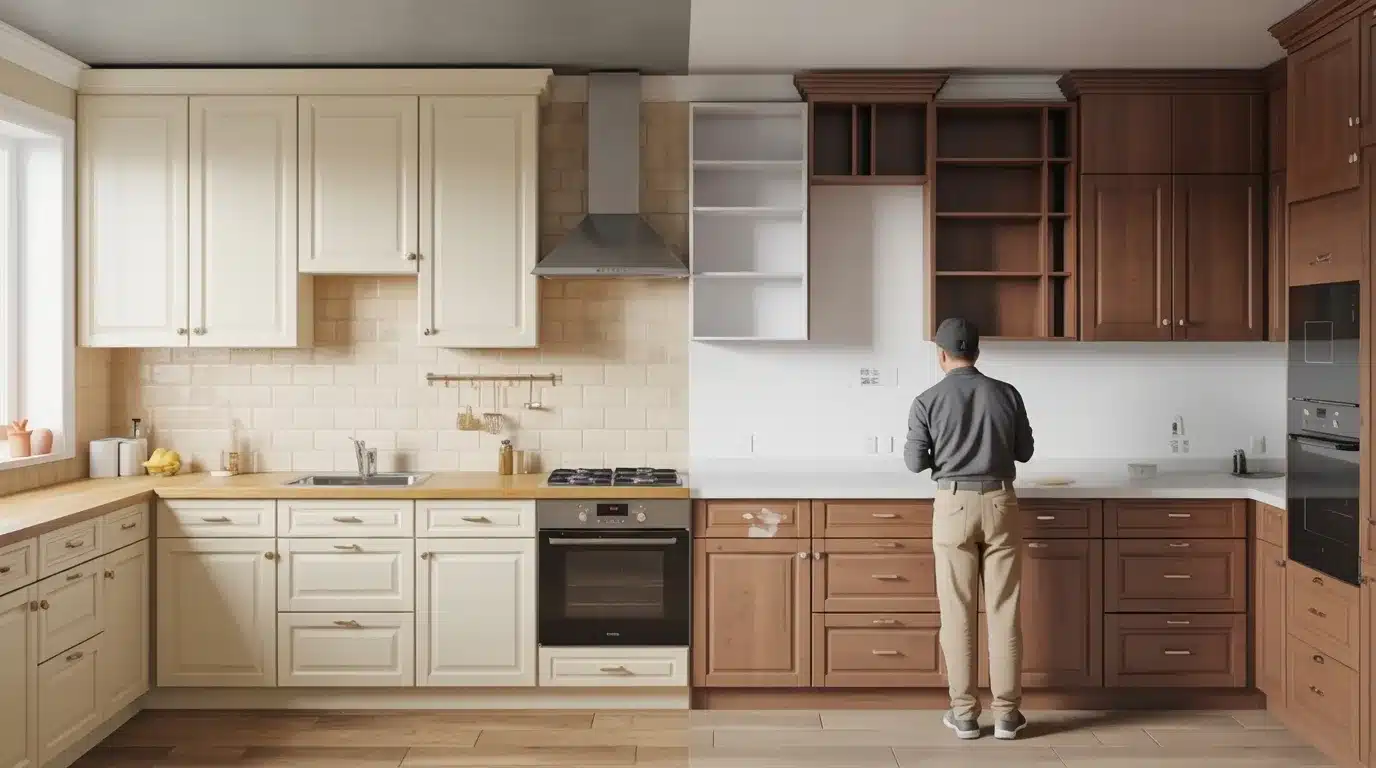
Cabinet refacing costs aren’t one-size-fits-all, and that’s exactly why two neighbors can get wildly different quotes for seemingly similar kitchens. Understanding what’s actually driving your number helps you budget smarter and negotiate better.
1. Kitchen Size
Kitchen size is the most direct cost driver in any refacing project. Contractors price per door and drawer front, typically $75–$150 per door for materials and labor combined.
A small kitchen with 10–15 doors runs $1,500–$4,000, while a large kitchen with 25–35 doors can push $6,000–$12,000.
Before requesting quotes, count every door and drawer front separately; that number is what contractors actually price against, not square footage.
2. Material Choice
Material selection can shift your total refacing cost by thousands. Vinyl wrap and RTF doors are the most budget-friendly at $50–$100 per door.
Wood veneer sits in the mid-range at $100–$200 per door, offering a more premium appearance. Solid wood doors command $200–$400 per door at the high end.
For an average kitchen, upgrading from vinyl to solid wood alone can add $3,000–$6,000 to your total project cost.
3. Door Style
Door profile directly affects both fabrication time and material cost. Flat-panel doors are the most affordable, typically priced 20–30% lower than other styles.
Shaker doors sit in the mid-range and remain the most popular choice, adding moderate cost without an excessive premium.
Raised-panel doors require precision routing and more raw material, pushing per-door costs 35–50% higher than flat-panel equivalents. On a 20-door kitchen, that style difference alone can mean $1,500–$3,000 in additional spend.
4. Location
Similar trends appear in projects like remodel costs of a basement, where location alone can significantly change pricing. In high-cost states like California, New York, and Washington, labor alone can account for $3,000–$5,000 of a mid-size kitchen project.
Midwestern and Southern states typically run $1,200–$2,500 for a comparable labor scope. The same kitchen, same materials, and same door count can carry a $2,000–$3,000 price difference purely based on your zip code and local contractor market rates.
For a concrete example, refacing an average kitchen in Boise, Idaho, runs around $5,000. The same project in New York City typically costs twice that. If you’re in a high-cost metro, build in a 20–30% buffer above the national average when you’re planning your budget.
5. Condition of Existing Cabinets
Cabinet condition quietly adds cost that most initial quotes don’t include. Water damage repairs typically run $200–$600 per affected cabinet box.
Warped frames, soft spots, or compromised hinges require structural work before any refacing begins, often adding $500–$2,000 to the total project cost depending on severity.
Contractors assess box condition during the estimate visit, but requesting a written breakdown of repair costs separately from refacing costs protects you from budget surprises mid-project.
Each of these factors compounds on the others; a large kitchen with premium doors, solid wood veneers, and repairs needed can cost two to three times a straightforward small-kitchen job. Know your variables before you commit.
Add-Ons That Raise Your Final Quote
Most refacing quotes you see online don’t include the extras, and most homeowners add at least a few. Here’s what the common upgrades actually cost, based on current contractor pricing:
| Add-On | Typical Cost Range | Worth It? |
|---|---|---|
| Soft-close hinges and drawer slides | $20–$50 per set | Yes, adds years of daily use satisfaction |
| New hardware (knobs and pulls) | $100–$1,000 total | Yes, fastest visual upgrade per dollar |
| Crown molding | $300–$570 installed | Yes, if staying long-term |
| Glass door inserts | $150–$500 per door | Situational, adds visual depth but increases cleaning |
| Under-cabinet lighting | $200–$350 per fixture | High impact for resale and daily use |
| Pull-out shelves and organizers | $200–$500 per cabinet | Yes, if the function is a complaint |
| Island or peninsula panels | $1,000–$4,000 | Major visual upgrade; price varies widely by size |
If you’re working with a tight budget, prioritize soft-close hinges and new hardware first. They cost the least and deliver the most visible difference per dollar.
Crown molding and glass inserts are finishing touches; add them only after your primary scope is locked in, and the budget can absorb them.
Signs You Should Reface and Signs You Shouldn’t
Refacing is not always the right answer. The honest version of this conversation includes knowing when to walk away from it.
Refacing makes sense when:
- Cabinet boxes are structurally solid, with no soft spots, water damage, or warping
- You’re happy with the layout and don’t need to add or remove cabinets
- The existing door style is your only complaint, not the function
- You’re planning to stay in the home for at least 5–7 more years
- You want a kitchen update with minimal disruption (most refacing projects are completed in 2–5 days)
Refacing doesn’t make sense when:
- Cabinet boxes are damaged, warped, or have significant water or pest damage
- You want to change the layout, add an island, or reconfigure storage
- The existing boxes are particleboard in poor condition, and veneers won’t adhere reliably
- Your kitchen is so dated that the counters, layout, and footprint all need to be changed anyway. In that case, full replacement at the same time saves you labor costs overall.
I’ve seen homeowners spend $7,000 refacing cabinets that were genuinely on their last legs structurally. Two years later, they were replacing everything anyway. If the boxes are questionable, pay a contractor $150–$300 for a structural assessment before you commit to refacing.
What Real Homeowners Are Saying
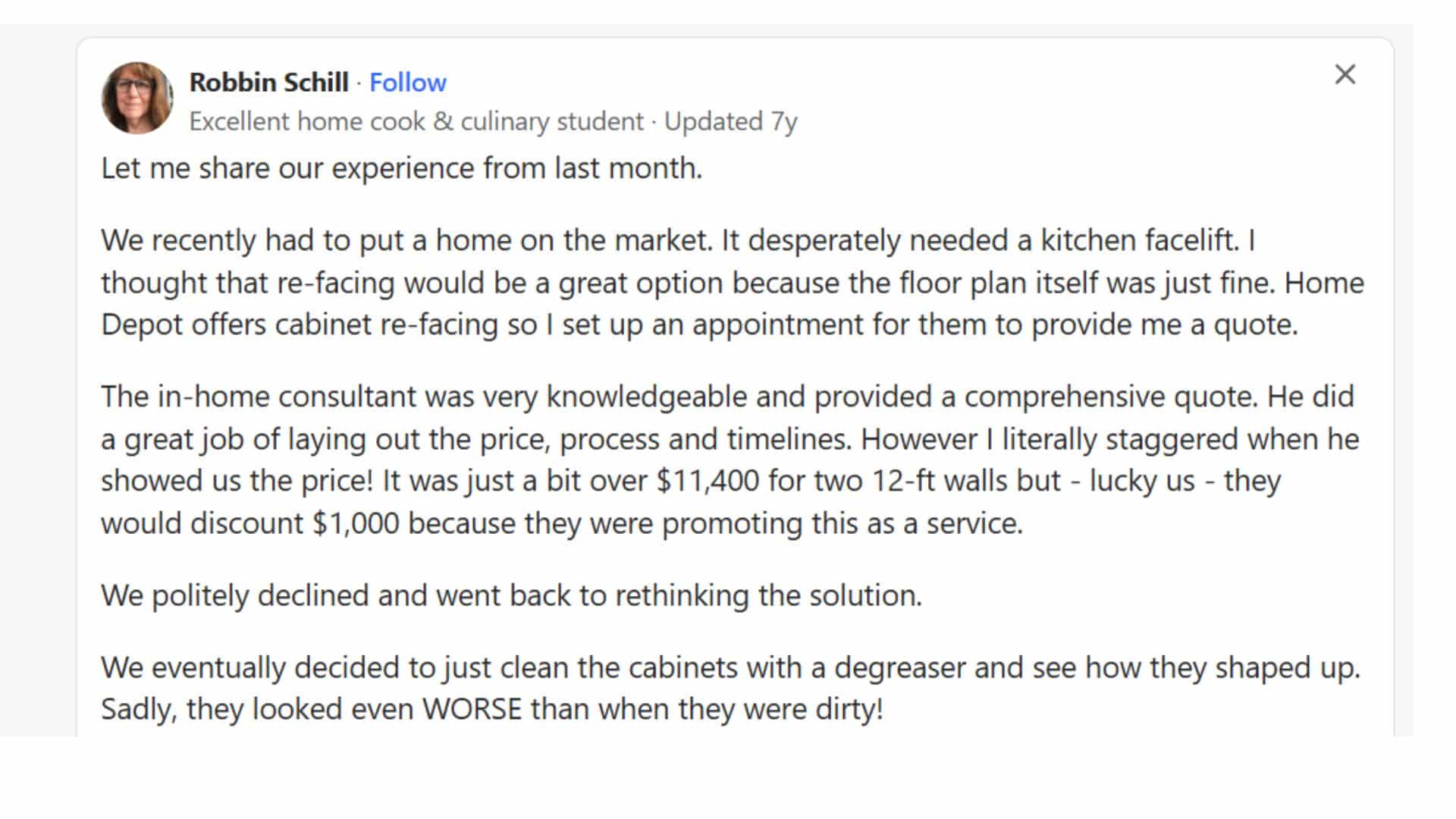
Real homeowners have plenty to say about cabinet refacing on Quora. One seller shared on Quora that their home “desperately needed a kitchen facelift” and chose refacing since the layout already worked just fine, a smart, budget-friendly call.
Not all feedback is glowing, on Quora a real estate investor bluntly cautioned that refacing structurally weak cabinets is “like putting lipstick on a pig,” since buyers notice the difference the moment they open a door.
The consistent takeaway across all posts: refacing pays off only when the cabinet boxes are solid, and the existing layout already works for you
The experience highlights something most homeowners discover too late: refacing can cost significantly more than expected, even when the layout works perfectly. Getting multiple quotes before committing is essential.
I hear a version of that investor’s warning constantly from contractors I work with. The most experienced ones will actually turn down a refacing job if the boxes aren’t worth saving. That’s worth paying attention to. If a contractor is eager to start without looking closely at your box condition, that’s a flag.
DIY Cabinet Refacing Cost vs Risk
Refacing your cabinets yourself sounds like an easy way to save thousands, and sometimes it genuinely is. But the gap between a clean DIY finish and a costly mistake is smaller than most people expect.
| Breakdown | DIY Refacing | Professional Refacing |
|---|---|---|
| Average Cost | $1,000 – $3,500 | $3,000 – $8,000 |
| Material Cost | $600 – $2,000 | Included in quote |
| Labour Cost | Your time only | $1,500 – $4,000 |
| Time Required | 1–2 weekends minimum | 2–4 days |
| Skill Level Needed | Moderate – High | Professional |
| Warranty | None | 1–5 years |
The numbers tell part of the story, but skill level and warranty protection tell the rest. If your kitchen is small and your doors are flat, a DIY is worth a try. Anything beyond that, trust a professional.
Is Cabinet Refacing Worth It?
Cabinet refacing sits in a unique sweet spot; it’s not the cheapest option and not the most comprehensive, but for the right kitchen, it delivers results that genuinely rival full replacement at a fraction of the disruption, cost, and time.
The real question isn’t whether refacing works, it’s whether your specific kitchen warrants it. Structurally healthy cabinets with an outdated appearance are the ideal candidate.
Refacing saves 40–60% over full replacement, completes in days, and when paired with hardware and countertop upgrades, produces a transformation most homeowners struggle to distinguish from a complete remodel.
The value is real, but only when the foundation underneath deserves it.
Common Mistakes to Avoid
When it comes to DIY cabinet refacing, it’s easy to overlook a few key details. But these common mistakes can really derail your project, leaving you with results that don’t match your expectations.
Let’s take a closer look at what to avoid.
- Poor Door Alignment: Misaligned doors are the most visible DIY error, making even quality materials look unprofessional and rushed.
- Choosing Cheap Veneer: Low-grade materials peel within months, especially near heat and moisture, turning your savings into a repeat expense.
- Skipping Surface Prep: Refacing over dirty, greasy, or uneven cabinet boxes guarantees poor adhesion and a finish that deteriorates quickly.
- Ignoring Box Condition: Applying new faces over damaged or soft cabinet frames wastes money on a foundation that will fail regardless.
Questions to Ask Before Hiring a Cabinet Refacing Contractor
Not all refacing contractors are equally experienced, and the quality difference in a finished kitchen is visible. Before signing anything, ask every contractor these questions:
- Do you apply veneer on-site or do the doors go to a shop? (Shop work is generally cleaner.)
- What happens if you find box damage during the project? Is that quoted separately?
- Can I see a recently completed project in person or photos with client references?
- What does your warranty cover, and for how long?
- Can I supply my own hardware, or does it need to come from you?
- Will you add features like crown molding, glass inserts, or under-cabinet lighting?
A contractor who hesitates on any of these, especially the box condition question, is worth removing from your shortlist. The best ones will volunteer that information before you even ask.
Cabinet Refacing vs. Painting and Replacing
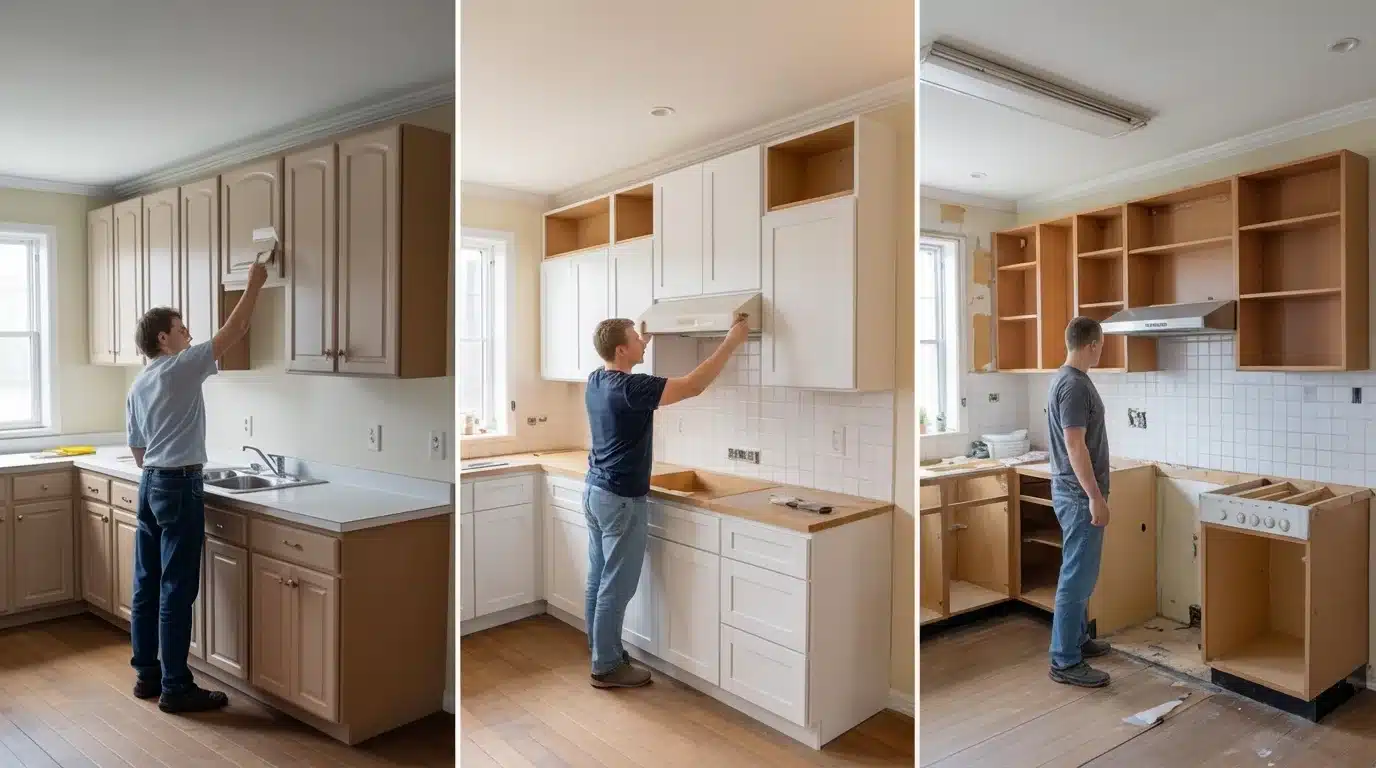
I’ve worked with all three options, and each one fits a different situation. If you’re unsure what makes sense for your budget or goals, this simple table will help you compare them side by side and choose what works best for you.
| Factors | Painting | Refacing | Replacing |
|---|---|---|---|
| Average Cost | $500 – $1,500 | $3,000 – $8,000 | $8,000 – $25,000+ |
| Durability | 3–5 years | 10–15 years | 15–25 years |
| Time to Complete | 1–2 days | 2–4 days | 2–5 weeks |
| Structural Fix | No | No | Yes |
| Layout Change | No | No | Yes |
| Resale Value Impact | Low | Moderate | High |
| DIY Friendly | Yes | Partially | Rarely |
| Low Budget (Under $2,000) | Best move | Out of range | Not feasible |
| Mid Budget ($3,000–$9,000) | Underspending | Best value | Stretching thin |
| High Budget ($10,000+) | Underutilising | Possible | Maximum return |
From what I’ve seen, painting works when you need a quick, low-cost fix, especially in rentals. If your cabinet boxes are still strong but look old, refacing gives you better long-term value.
I usually suggest replacement only when there’s real damage or layout issues, since it costs much more but solves deeper problems properly.
Wrap Up
Cabinet refacing is one of those decisions that looks simple on the surface but carries a lot of moving parts underneath.
I’ve walked you through everything that shapes the final number, from kitchen size and material choice to location, cabinet condition, and the real cost of going DIY.
Now you have a clear picture of how much does cabinet refacing cost and, more importantly, what drives that cost up or down.
The smartest move you can make is to assess your cabinet boxes honestly, set a realistic budget, and match your choice to your goals, not just the lowest quote.
If this helped you think it through more clearly, drop your questions in the comments or read our related guides on kitchen renovation budgeting.
Frequently Asked Questions
How does refacing impact the resale value of a home?
Refacing offers a high return on investment by modernizing the kitchen’s aesthetic for less. It typically recovers 60–80% of costs during a home sale if the layout is functional.
Can I add new features like soft-close hinges during refacing?
Yes, refacing is the perfect time to upgrade functional hardware. Most professionals include new soft-close hinges and modern drawer glides as part of the standard installation process for better performance.
Is it possible to reface only the upper or lower cabinets?
You can certainly reface specific sections to save money or create a “two-tone” look. However, matching finishes later can be difficult, so it is usually best to do both.
Do I need to empty my kitchen cabinets before the pros arrive?
Unlike a full remodel, you often only need to clear the items near the front. Since the cabinet boxes remain intact, most homeowners keep their dishes and pantry items inside.