

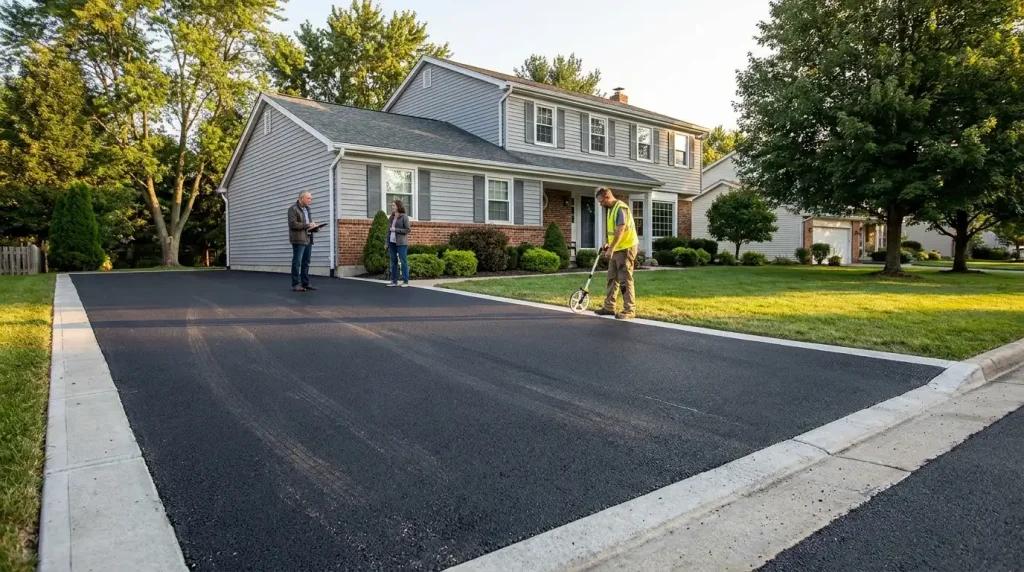


Let’s be honest: looking at your cracked, fading driveway doesn’t exactly trigger warm and fuzzy feelings. Instead, it usually triggers one massive question mark: How much is this going to cost me?
If you’ve started looking online, you already know the national averages can feel like a total guessing game. One site says a few thousand, while another quotes a small fortune. It’s incredibly frustrating trying to build a real budget when you don’t know what’s actually included.
That’s why we’re cutting through the contractor fluff. From the hidden groundwork fees that sneak onto final invoices to regional price swings, here is exactly what you will pay for a new asphalt driveway, and how to keep those costs down
Asphalt Driveway Cost: What You Will Actually Pay
A new driveway costs between $7 and $13 per square foot installed, which puts a standard two-car driveway (roughly 600 square feet) somewhere between $4,200 and $7,800 before extras like old surface removal, drainage corrections, or heated systems enter the picture.
That range is what you see after base prep, grading, and compaction, not just the asphalt layer itself. Most homeowners end up paying around $5,300 for a typical residential project, according to current data from Angi and HomeAdvisor.
If you are trying to set a real budget, the range above is the starting point, not the finish line. What moves you toward the high end or well past it is worth understanding before you call a single contractor.
| Cost Note: Figures in this article are estimates based on national averages from Angi, HomeAdvisor, and Bob Vila (2025–2026). Actual costs vary significantly by region, contractor, materials, and project scope. Always get at least three written quotes before committing to any project. |
Asphalt Driveway Cost by Size
Square footage is the most reliable anchor for a rough budget. Measure only the area that will be paved — not nearby landscaping, garage space, or walkways — and price removal, grading, base repair, drainage, and permits as separate line items.
| Driveway Size | Approx. Area | Basic Install | Mid-Range Install | Complex Install |
|---|---|---|---|---|
| Small, 10×20 ft | 200 sq ft | $1,400–$2,600 | $2,600–$3,600 | $3,600–$5,000+ |
| Standard, 16×40 ft | 640 sq ft | $4,500–$7,500 | $7,500–$10,000 | $10,000–$14,000+ |
| Large, 24×60 ft | 1,440 sq ft | $10,000–$16,000 | $16,000–$21,000 | $21,000–$28,000+ |
| Extra Large, 30×80 ft | 2,400 sq ft | $16,800–$24,000 | $24,000–$33,000 | $33,000–$45,000+ |
| Long Rural Drive | Per linear foot | $7–$10/ft | $10–$16/ft | $16–$25+/ft |
Basic installs apply to flat, accessible sites with an existing gravel base that does not need full replacement. Mid-range is the most common scenario for homeowners who want a driveway built to last through normal weather and daily parking.
Complex installs come into play when the site needs old surface removal, excavation, drainage corrections, or a completely rebuilt base layer, the line items that most initial quotes quietly leave out.
These figures are planning ranges. A contractor still needs to walk the property, check the soil, review drainage, and confirm asphalt depth before any number becomes a real quote.
What Installing an Asphalt Paving Cost Actually Includes
The paved surface you see at the end is the last step of a multi-stage process, and most of what determines the final price happens before a single load of asphalt arrives. Here is what a complete installation typically involves.
1. Site Clearing
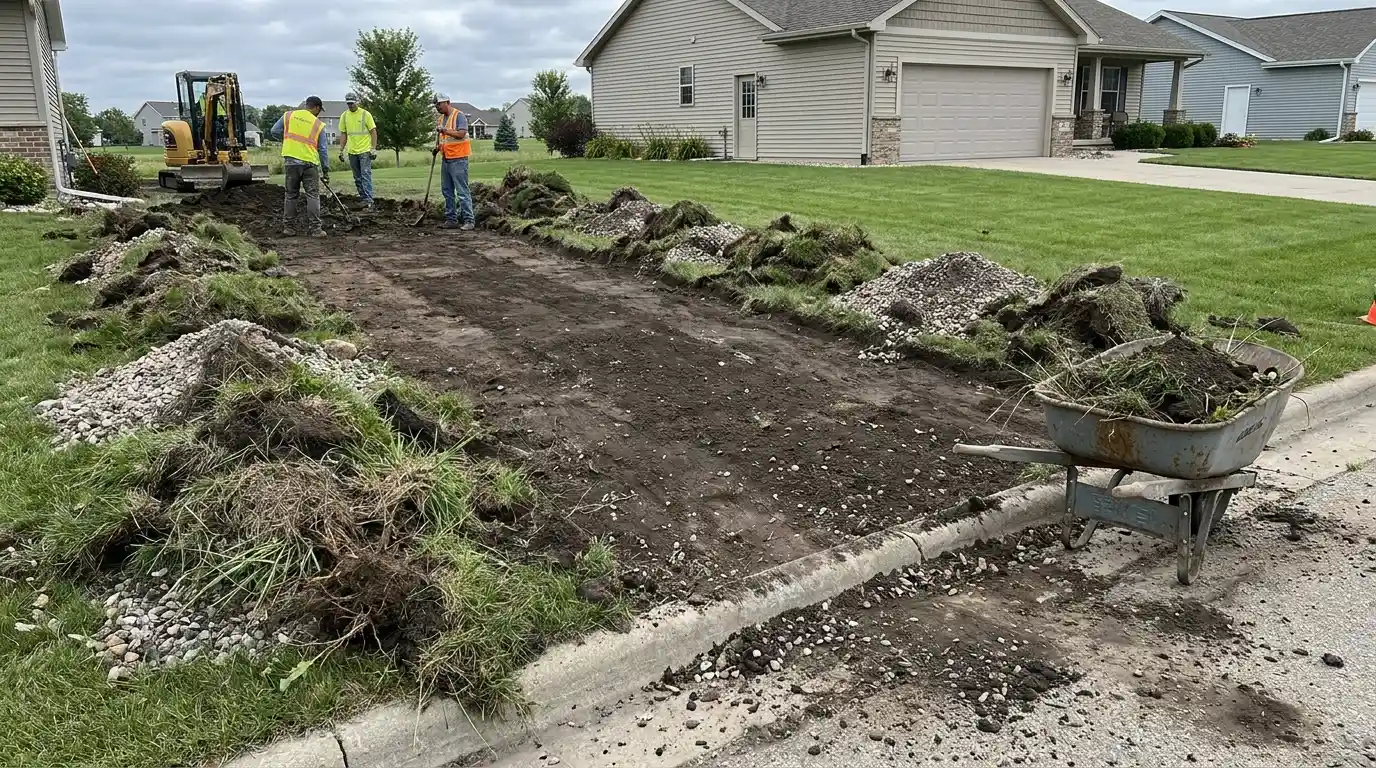
Clearing prepares the driveway area before excavation. The crew removes grass, roots, debris, old edging, and loose surface material. Simple open sites may cost $100 to $300.
Thick roots, tight access, or buried debris can push clearing to $1,000 or more. Make sure any quote includes hauling and disposal, not just surface clearing.
2. Excavation and Grading
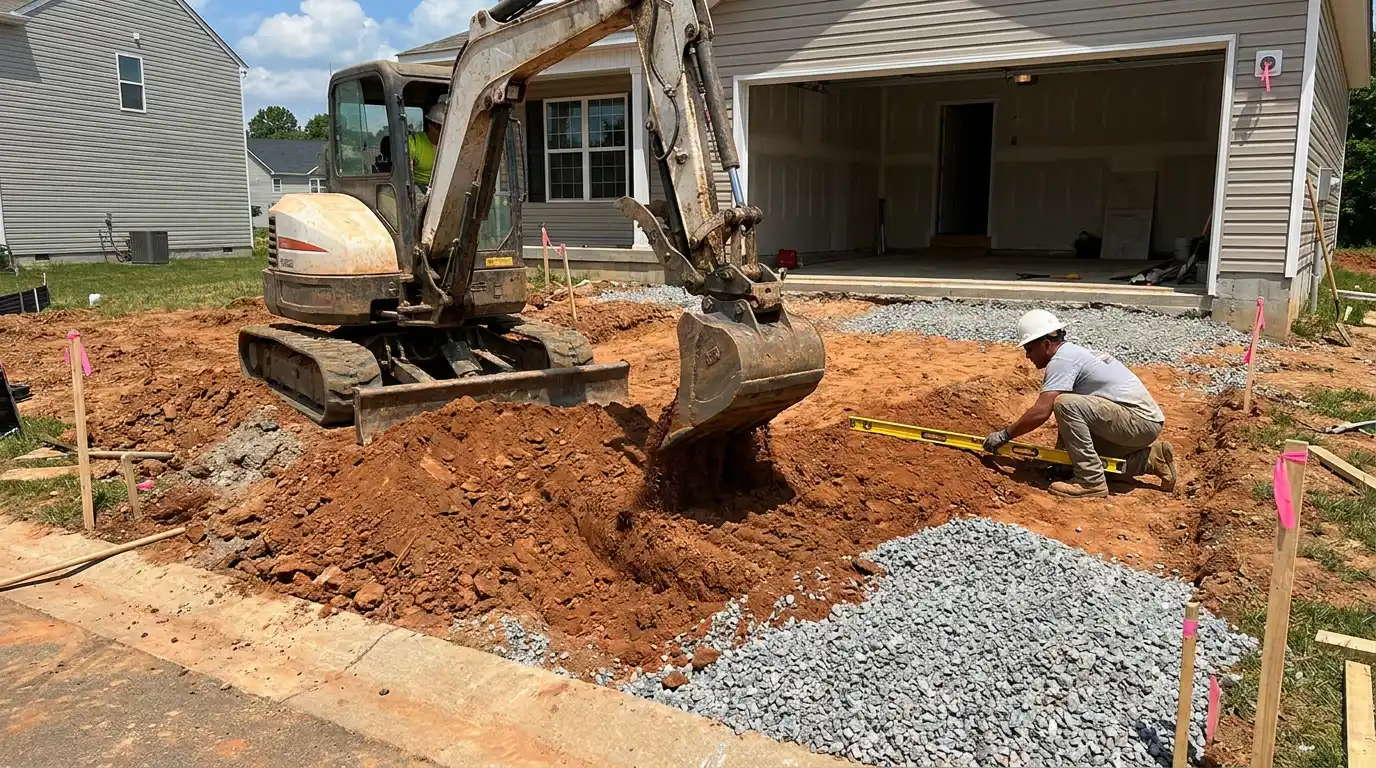
Excavation removes weak soil. Grading creates the right slope so water runs away from the driveway, garage, and foundation rather than pooling beneath the surface. Basic grading on a simple, flat site runs around $500.
Sloped land, soft soil, or drainage corrections can push this stage toward $3,000 or more. Ask how the contractor will direct water away from the paved surface after installation.
3. Gravel Base
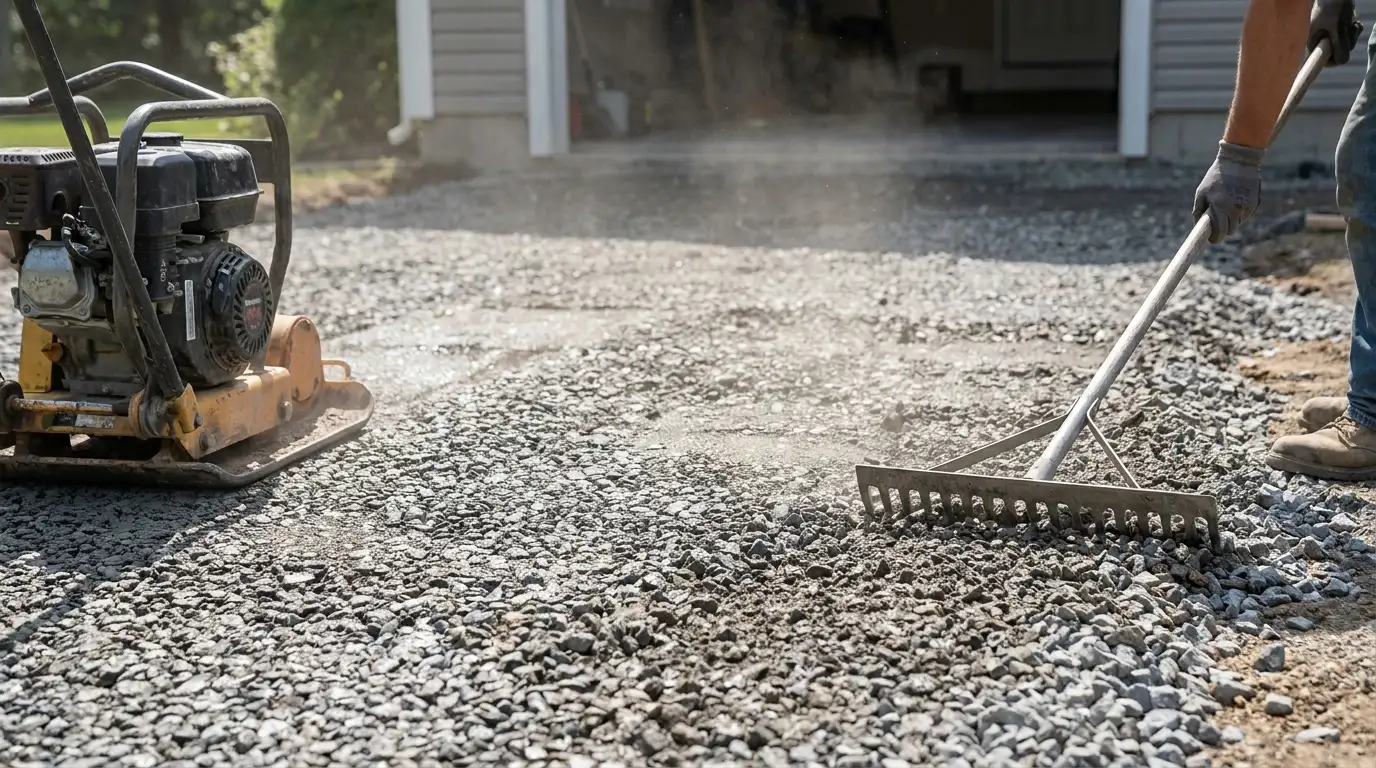
The compacted gravel base is what keeps asphalt from cracking, sinking, or failing at the edges. Contractors spread crushed stone and compact it in layers. Standard base work costs roughly $1 to $3 per square foot, though deeper base requirements on weak soil can exceed that.
Skipping a proper base saves money now and causes structural failure within a few years. Ask what base depth is included and whether additional stone will be charged separately if the soil is soft.
4. Asphalt Paving
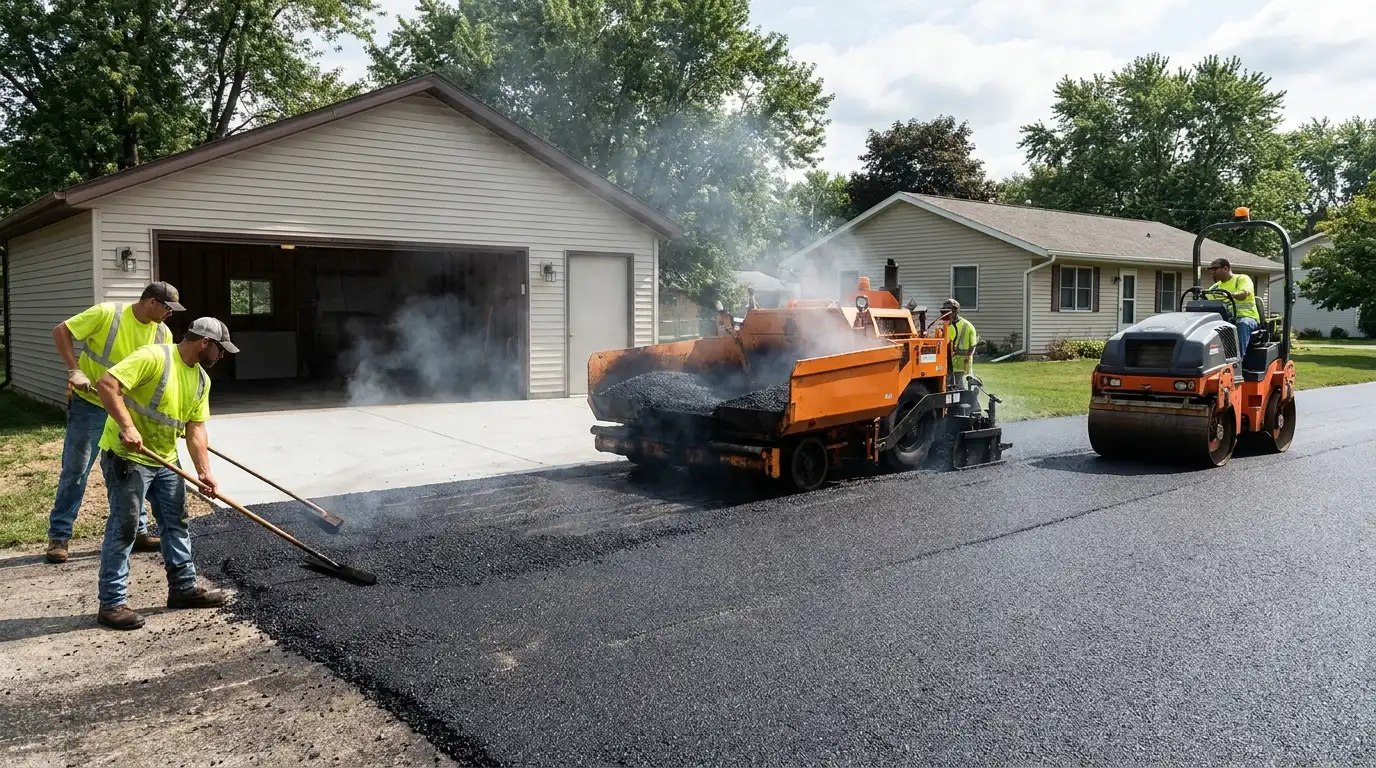
This covers material delivery, spreading, leveling, edge shaping, and compaction. Standard residential paving runs $5 to $12 per square foot for the paving stage itself, depending on asphalt thickness, labor rates, and site access.
Tight corners, garage tie-ins, or custom edges require more hand work and raise labor costs. Confirm whether the quoted asphalt thickness is measured before or after compaction, the number can change meaningfully.
5. Final Cleanup and Finish
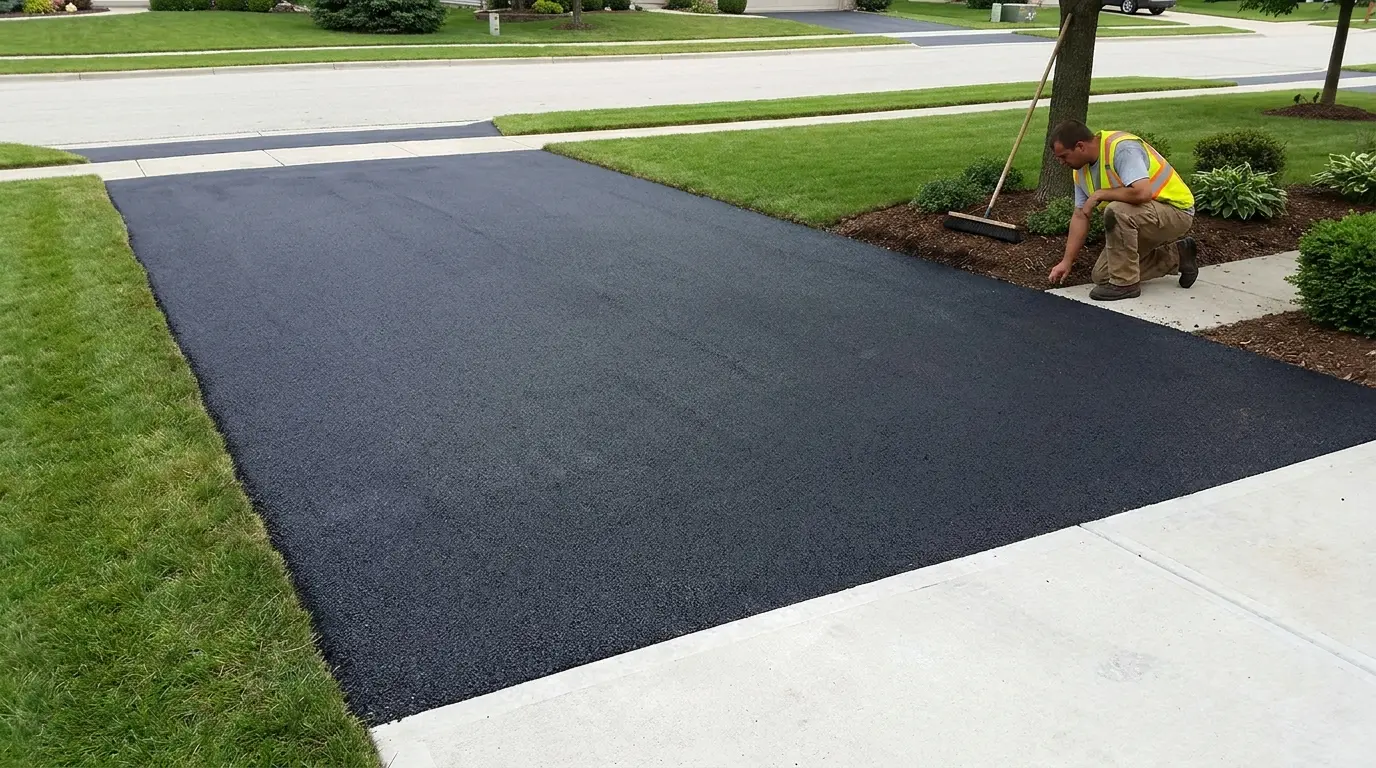
Light cleanup is usually included in the project price. If the crew needs to haul old asphalt, concrete, heavy debris, or excess soil off the property, expect an additional $100 to $800 or more, depending on disposal needs. Make sure the cleanup includes hauling, edge finishing, and final site clearing before you sign anything.
A detailed quote should show clearing, grading, base depth, asphalt thickness, cleanup, and any extra fees as separate line items. If those items are vague or bundled together without explanation, ask for a written breakdown.
Cost Breakdown by Line Item
The table below shows where a typical asphalt driveway budget actually goes. These ranges are based on a standard residential installation in the 600 to 800 square foot range.
| Line Item | Low End | High End | What Drives the Variation |
|---|---|---|---|
| Site Clearing | $100 | $1,000+ | Root density, access, and debris volume |
| Excavation and Grading | $500 | $3,000 | Slope, soil condition, drainage needs |
| Gravel Base | $600 | $2,400 | Depth required, soil stability |
| Asphalt Materials and Labor | $3,000 | $9,600 | Thickness, driveway size, regional labor rates |
| Old Surface Removal | $600 | $2,400 | Material type (concrete vs. asphalt), area |
| Cleanup and Disposal | $0 | $800 | Amount of material hauled off-site |
| Permits | $0 | $500 | Local jurisdiction requirements |
The asphalt materials and labor line is the number most people focus on — but site clearing, grading, and base work together can easily add $1,200 to $6,400 to a project that quoted low on the surface paving alone.
What Determines Your Asphalt Driveway Cost
Several variables shape the final price before paving begins. Getting clear on these before calling contractors means you can compare bids fairly and catch the gaps that lead to change orders later.
- Driveway Size and Square Footage: A larger surface area means more materials and more labor hours. Measure accurately before requesting quotes, a low quote built on an underestimated area will always grow.
- Asphalt Thickness: Standard residential driveways use a 2-to-3-inch layer. Sites that handle heavier vehicles need 3 to 4 inches. Thicker installs cost more upfront but hold up significantly longer, which changes the math over 15 to 20 years.
- Grading and Site Preparation: Sloped or uneven land requires grading before paving. Poor drainage sites need additional groundwork. These prep costs regularly surprise homeowners and can add $500 to $3,000 to the project before asphalt arrives.
- Sub-Base Material and Depth: A proper crushed stone base — typically 4 to 8 inches deep depending on soil — is what keeps asphalt stable over time. The base often accounts for 15 to 20 percent of the total project cost and is one of the first items a low bid quietly skips.
- Old Driveway Removal: Tearing out existing concrete or asphalt runs $1 to $2 per square foot on average. A 600-square-foot removal adds $600 to $1,200 before new paving begins. Factor this in from the start — it is not always included in the paving quote.
- Regional Labor Rates: Labor costs in the Northeast and West Coast run 20 to 40 percent higher than in the Midwest or Southeast. Always get local quotes rather than relying solely on national averages, which can mislead in either direction depending on your market.
- Asphalt Type: Hot mix asphalt is the standard for residential driveways. Porous asphalt manages water runoff better but costs more. Recycled asphalt costs less and is environmentally sound, but needs more frequent maintenance. Each option is a real trade-off, not just a price difference.
Regional Variation: Where You Live Changes the Number
The national averages above are useful for orientation, but actual bids will reflect your local market. Here is what that looks like in practice.
| Region | Typical Cost per Sq Ft (Installed) | Key Factors |
|---|---|---|
| Northeast | $9–$15+ | High labor costs, freeze-thaw cycles, require a thicker base, and strict disposal regulations |
| Midwest | $7–$12 | Clay soils often need a deeper gravel base (8 inches or more), a seasonal paving window |
| Southeast | $6–$11 | Lower labor rates, longer paving season, and heat can soften asphalt during the summer |
| West Coast | $9–$15+ | High labor costs, urban access fees, and strict permitting in many municipalities |
| Mountain / Plains | $7–$12 | Variable soil conditions, shorter paving season, moderate labor market |
Cold-climate installations carry a hidden cost many homeowners do not anticipate: heavier base requirements.
Minnesota clay soils, for example, typically need an 8-inch compacted base to handle frost heave, compared to 4 to 6 inches in warmer, sandier regions. That extra material cost shows up in the quote, whether or not the contractor spells it out.
New Installation vs. Resurfacing vs. Repair
Not every damaged driveway needs a full replacement, and paying for more work than the condition warrants is a budget mistake that happens more often than it should. If the damage is limited to surface cracks, concrete crack repair costs are worth reviewing before assuming a full overlay or replacement is necessary.
| Option | Estimated Cost | What It Includes | Best For | When to Avoid |
|---|---|---|---|---|
| New Installation | $7–$13 per sq ft | Excavation, grading, base layer, asphalt paving, compaction | Bare soil, gravel driveways, new driveway areas | Existing driveways with only light surface wear |
| Resurfacing (Overlay) | $3–$7 per sq ft | New asphalt layer over existing stable surface | Worn surface, faded asphalt, shallow cracks, solid base | Sinking, major cracking, potholes, or drainage failure |
| Crack Filling and Patching | $100–$600 | Filling cracks, sealing gaps, patching isolated damage | Driveways in fair condition with a few problem areas | Widespread damage, base failure, or repeated potholes |
| Full Replacement | $8–$15 per sq ft | Old surface removal, base rebuild, grading, new asphalt | Failed base, severe cracking, major structural damage | Driveways with only cosmetic surface wear |
Quick decision framework: surface cracks only, seal and patch. Top layer worn but base solid, resurface. Base compromised or sinking, full replacement. Choosing based on condition rather than the lowest available option is what separates a $600 repair from a $10,000 fix five years later.
Asphalt vs. Other Driveway Materials
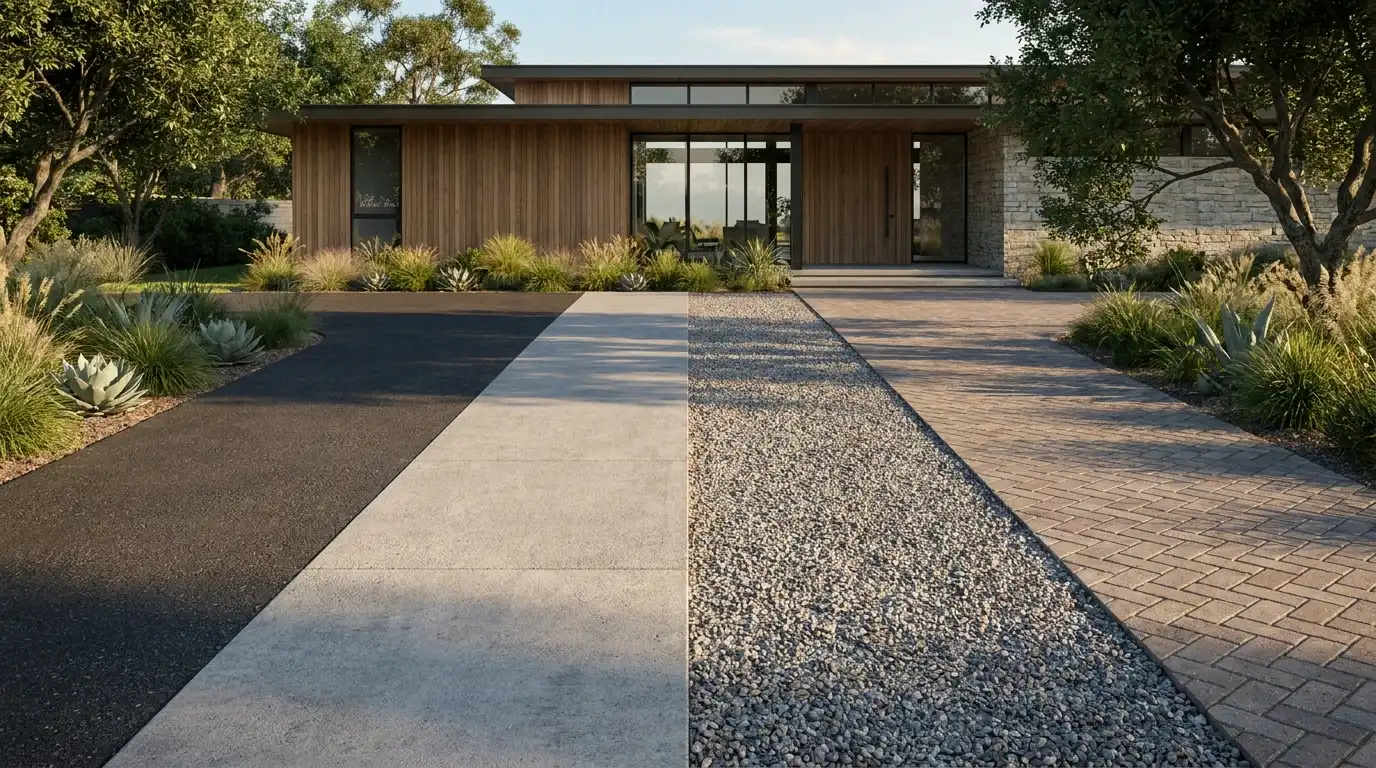
If you are still deciding on surface material, a look at modern driveway materials shows how concrete, pavers, gravel, and asphalt compare in real residential settings. The cost table below focuses specifically on what each option costs per square foot and what you are trading off at each price point.
| Material | Cost per Sq Ft (Installed) | Lifespan | Maintenance | Best For |
|---|---|---|---|---|
| Asphalt | $7–$13 | 15–25 years | Moderate | Cold climates, budget-focused projects |
| Concrete | $8–$20 | 25–40 years | Low | Warmer climates, long-term value |
| Gravel | $1–$5 | 10–20 years | High | Rural areas, large spaces, tight budgets |
| Pavers | $10–$30 | 30–50 years | Low | Premium driveways, design-focused homes |
Asphalt’s real advantage is upfront cost; it comes in meaningfully below concrete and far below pavers. It also handles freeze-thaw cycles better than concrete, which is why it dominates in northern markets.
The trade-off is that it needs maintenance every few years and reaches end-of-life sooner.
If you are leaning toward concrete or pavers instead, the stamped concrete vs paverscost gap is narrower than most quotes suggest.
Hidden Costs Most Homeowners Do Not See Coming
This is where budgets go wrong. These are the expenses that contractors do not always surface in the first conversation, and the ones most likely to turn a $5,000 quote into a $7,500 final invoice. Anyone planning wider backyard hardscaping costs alongside a new driveway will recognize most of these as common across all exterior paving projects.
Drainage correction: Poor grading or existing water pooling can add $500 to $3,000 to groundwork costs before a single load of asphalt arrives. Contractors are supposed to flag this during a site visit — some do not unless you ask directly.
Tree root removal: Roots running under the driveway path require excavation and removal. Expect $200 to $800 added to the project depending on root density and depth.
Retaining walls or curbing: Sloped properties often need these. Concrete curbing alone adds $10 to $20 per linear foot. On a driveway with 80 feet of edge, that is $800 to $1,600 before any other work begins.
Heated driveway coils: Hydronic or electric heating systems installed beneath asphalt run $12 to $27 per square foot. On a 600-square-foot driveway, that is a $7,200 to $16,000 addition on top of standard paving costs.
HOA restrictions: Some associations require specific finishes, colors, or surface types. Variance requests or special materials add time and real cost to the approval and installation process.
Disposal fees for demolished material: Hauling demolished concrete or asphalt runs $50 to $150 per load. Larger projects generate multiple loads. Ask before you assume hauling is included in the quote.
The best protection against all of these is asking your contractor to walk the site with you before signing anything and to note in writing what the quote does and does not include.
Asphalt Driveway Cost Estimator
Use this formula to build a rough planning figure before contractor conversations begin:
Length × Width = Total Square Feet
Total Square Feet × Cost Per Square Foot = Estimated Paving Cost
| Measurement | Example Number |
|---|---|
| Length | 40 feet |
| Width | 20 feet |
| Total Area | 800 square feet |
| Estimated Rate | $10 per square foot |
| Estimated Paving Cost | $8,000 |
Then add your likely extras, old surface removal, grading, drainage, permits, and any access complications. The more work your site needs before asphalt can go down, the wider the gap between your formula estimate and the actual bid.
Long-Term Maintenance: What Asphalt Actually Costs Over 10 Years
Installation is the first cost, not the only one. What you spend on maintenance over the first decade will determine whether the driveway holds together or becomes a repair cycle that costs more than replacement.
| Maintenance Task | Frequency | Estimated Cost |
|---|---|---|
| Sealcoating | Every 3–5 years | $100–$400 per application |
| Crack Filling | Annually as needed | $50–$300 |
| Pothole Repair | As needed | $100–$500 |
| Resurfacing | Every 10–15 years | $1,500–$4,000 |
10-year cost estimate for a 600 sq ft driveway: Installation at $4,200–$7,800, plus three sealcoats ($300–$1,200), plus crack repairs ($200–$600) puts the realistic 10-year range at approximately $4,700 to $9,600.
Concrete installed at $8–$20 per square foot comes in higher upfront but carries lower maintenance costs over the same window. Skipping sealcoating and crack repairs is the single fastest way to turn a mid-range asphalt driveway into a full replacement project before year 12.
Tips to Lower Your Asphalt Driveway Cost
Smart planning choices reduce the final bill before paving begins. The goal is to avoid unnecessary labor and limit add-ons without cutting anything that protects the surface long-term.
- Measure accurately and avoid over-paving: Extra width or unnecessary parking area adds cost with no functional return. Know your measurements before calling anyone.
- Keep the design straight: Curved and circular layouts require more hand work and shaping, which adds labor cost. A straight run is almost always cheaper for the same total area.
- Fix drainage before paving: Addressing water flow issues now costs less than repairing the cracking and sinking they cause two to four years after installation.
- Reuse a stable base: If the existing base is solid and well-drained, keeping it reduces excavation, hauling, and new material costs. A contractor willing to assess this rather than automatically rebuilding is worth more than one who quotes base replacement by default.
- Book in fall or winter: Contractors discount work in slower seasons to keep crews busy. In many markets, fall and early winter bookings can save 10 to 20 percent versus peak summer scheduling.
- Separate must-haves from upgrades: Get borders, extra thickness, heated systems, and sealcoating quoted as line items so you can see exactly what each adds — and decide which ones make sense for your budget and how long you plan to stay.
Questions to Ask Before You Sign
A reliable contractor should answer these clearly and put the details in writing before any deposit changes hands. Vague answers or rushed timelines are worth slowing down for.
- Does the quote include site clearing, excavation, grading, old surface removal, and final cleanup?
- What asphalt mix will be used, and what is the thickness after compaction?
- How deep will the crushed stone base be, and will it be compacted in layers?
- How will water drain away from the driveway, garage, and foundation?
- Are permits included, or will they be charged separately?
- What happens if weak soil or drainage problems are found during the work?
- How are change orders priced, approved, and added to the final bill?
- What is the payment schedule, and how much is due before work begins?
- What warranty covers the materials, surface, and workmanship?
- Can you provide references from recent local projects similar in size?
Tie the final payment to a walkthrough of the finished driveway, not to a completion date. That one condition protects your budget and gives you a clear moment to confirm the base, slope, edges, and surface match what was promised.
Frequently Asked Questions
How much does a new asphalt driveway cost for a two-car garage?
A standard two-car driveway covering roughly 600 square feet costs between $4,200 and $7,800 installed in 2026 at $7 to $13 per square foot. Old surface removal, drainage corrections, or base rebuilding can push the total higher.
How long does an asphalt driveway last?
A properly installed and maintained asphalt driveway lasts 15 to 25 years. Regular sealcoating every 3 to 5 years, prompt crack repair, and avoiding heavy loads in extreme heat extend that range. Skipping maintenance shortens it significantly.
Is asphalt cheaper than concrete for a driveway?
Yes, asphalt costs $7 to $13 per square foot installed versus $8 to $20 for concrete. Asphalt has a lower entry cost but requires more maintenance and a shorter replacement cycle. Over 25 years, total cost of ownership is closer than the install price suggests.
Can asphalt be installed over concrete?
Yes, asphalt can be laid over a stable concrete base at $3 to $7 per square foot. It is not a long-term solution — concrete expands and contracts, which eventually cracks the asphalt layer above it. It works as a temporary upgrade, not a permanent fix.
When is the best time of year to pave an asphalt driveway?
Late spring through early fall when ground temperatures stay above 50°F. Asphalt needs warm ground to compact properly. Fall bookings often come with better contractor availability and modest pricing discounts versus summer peak season.
Does asphalt increase home value?
A new asphalt driveway can add $5,000 to $7,000 to resale value, meaning most homeowners see a near-full return on investment when selling. Condition matters — a cracked or poorly maintained driveway has the opposite effect.
Can asphalt be installed in rain?
No. Rain during installation affects bonding, compaction, and surface quality. A reputable contractor will reschedule rather than pave in wet conditions. Surface moisture or a damp base can cause long-term adhesion failures.
What causes asphalt driveways to crack?
The most common causes are freeze-thaw cycles, an inadequate base layer, tree root pressure, and UV degradation of the surface oils. Most are preventable with proper base depth and regular sealcoating.
Final Thoughts
A smart driveway budget starts with knowing what the price really covers. I would look beyond the surface and pay attention to size, base work, grading, drainage, materials, and long-term care.
You now have a clearer way to compare quotes, spot weak estimates, and decide when repair, resurfacing, or full replacement makes sense. An asphalt driveway can be a strong value when it is installed well and maintained before small problems spread.
That matters because the right choices now can prevent bigger costs later. Use the tips, tables, and contractor questions before starting your project. Share your thoughts in the comments or check related blogs for more home improvement cost help.