

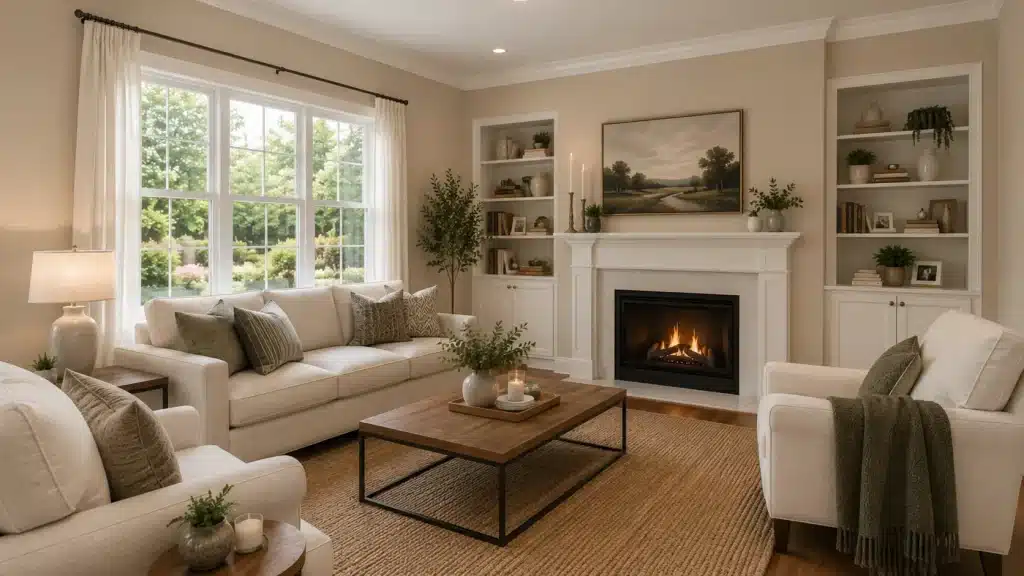

Paint colors often look simple on a swatch, but I know how tricky they can feel when a swatch looks calm while the wall tells a different story. That is why you may want a clear look at Bungalow Beige before choosing it for your home.
Bungalow Beige by Sherwin-Williams is a warm neutral that brings softness and depth without feeling too yellow or dated. I like how it can work on interior walls, exteriors, and cozy rooms, but its look can shift with lighting, trim, and nearby finishes.
If you want a warm, welcoming backdrop, this color is worth getting to know closely. My goal here is to help you see where it works best and what to check before painting.
| Paint Name | Bungalow Beige |
| Brand | Sherwin-Williams |
| Color Code | SW 7511 |
| Also Known As | HGSW7511 |
| Color Family | Neutral / Beige |
| LRV | 53 |
| RGB | 205 / 191 / 176 |
| Hex Value | #CDBFB0 |
| Best For | Walls, living rooms, bedrooms, hallways, dining rooms, exteriors |
| Avoid Pairing With | Cool blue-grays, icy whites, stark modern grays, overly cool finishes |
What Sherwin-Williams Bungalow Beige Actually Looks Like on a Wall
Bungalow Beige SW 7511 looks soft and settled on a paint chip. On a wall, it reads warmer than you expect, especially once natural light hits it from the side. That’s not a problem, but it is what you’re choosing.
This is a mid-tone warm beige with an LRV of 53, which puts it right in the middle of the light-to-dark scale. It doesn’t brighten a room the way a pale off-white would, and it doesn’t anchor a space the way a deep greige does. What it does is create a warm, settled backdrop that feels comfortable without demanding attention.
The hex value is #CDBFB0, and the RGB sits at 205 / 191 / 176, confirming just how much warmth is baked into the base. It belongs to the same neutral family as Sherwin-Williams Balanced Beige, but reads noticeably warmer once you place them side by side.
Bungalow Beige works well in traditional, farmhouse, cottage, and transitional homes where warm wood tones, cream accents, stone, and brick are already part of the room. It’s a harder fit in spaces that lean modern or cool.
Bungalow Beige Undertones: What’s Actually In There
The undertones in Bungalow Beige are warm tan and soft gold, with a faint brown base that shows up most noticeably in low natural light. Unlike some beiges that carry pink or gray, this one stays consistently warm.
There’s no surprise shift toward mauve in north-facing rooms. What you get instead is a slight deepening toward tan or caramel when the light gets flat.
That golden undertone is what makes it work so well with wood tones, brick, stone, and warm metals. It’s also what makes it difficult next to cool finishes.
Place Bungalow Beige beside a gray quartz countertop or an icy white cabinet door, and the warmth in the wall color can read as muddy rather than cozy. The undertone isn’t subtle enough to disappear into a cool room.
The clearest way to understand the undertones is to hold a trim swatch next to the paint sample before you commit. Pure White SW 7005 sits cool enough to create visible tension with Bungalow Beige.
Alabaster SW 7008 or Antique White SW 7035 will support it. Testing this relationship is not optional for this color.
Bungalow Beige Undertones and Lighting Effects
Lighting can change how Sherwin-Williams Bungalow Beige looks once it is on the wall. This warm beige has soft tan and brown undertones, so it can appear lighter, deeper, warmer, or slightly earthy depending on the room.
Because Bungalow Beige is not a pale cream or a cool greige, it should be tested near flooring, trim, cabinets, counters, brick, stone, and wood finishes before painting a full space.
Check the sample in the morning, afternoon, evening, and at night so you can see how much warmth it shows throughout the day.
In Natural Light
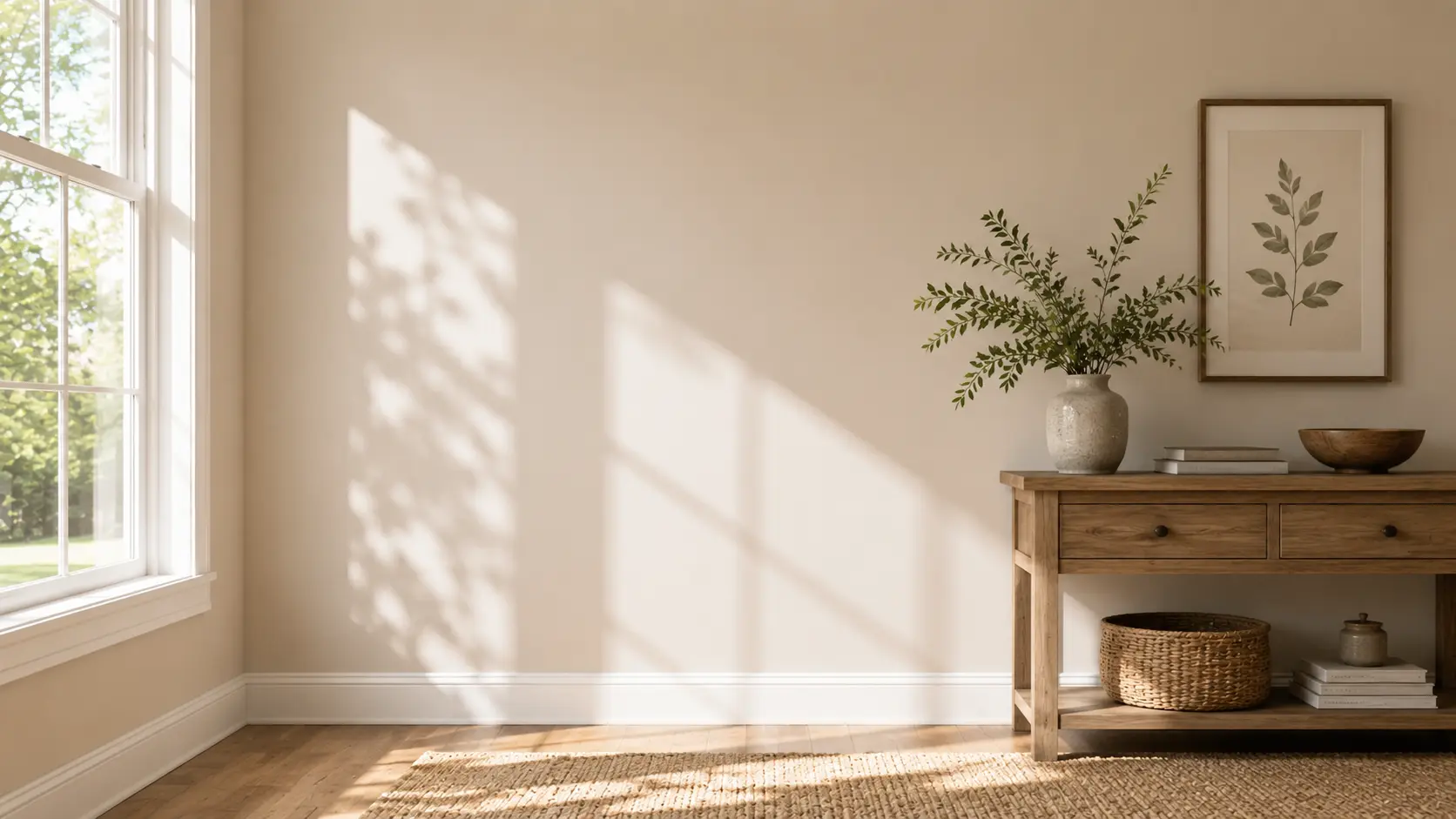
Natural light can make Bungalow Beige look soft, warm, muted, or richer based on the direction of the room. In bright spaces, it often feels open and welcoming. In shaded spaces, its tan and brown tones may become more noticeable.
North-facing rooms: The light is usually cooler and softer. Bungalow Beige may look more muted or slightly earthy in these rooms. It can still feel cozy, but it works best with warm white trim, wood tones, cream decor, and soft lighting.
South-facing rooms: They receive warmer daylight for most of the day. This light can make Bungalow Beige feel brighter, softer, and more inviting. It is one of the better lighting conditions for this color because the warmth makes the beige look smooth rather than dull.
East-facing rooms: East-facing rooms get bright morning light, which can make Bungalow Beige look fresh and softly warm early in the day. Later, as the natural light fades, the color may look deeper or more muted. Warm bulbs can help keep it balanced.
West-facing rooms: West-facing rooms get stronger afternoon and evening light. During this time, Bungalow Beige can look warmer, richer, and cozier. This makes it a good choice for living rooms, dining rooms, bedrooms, and spaces used more in the evening.
In Artificial Light
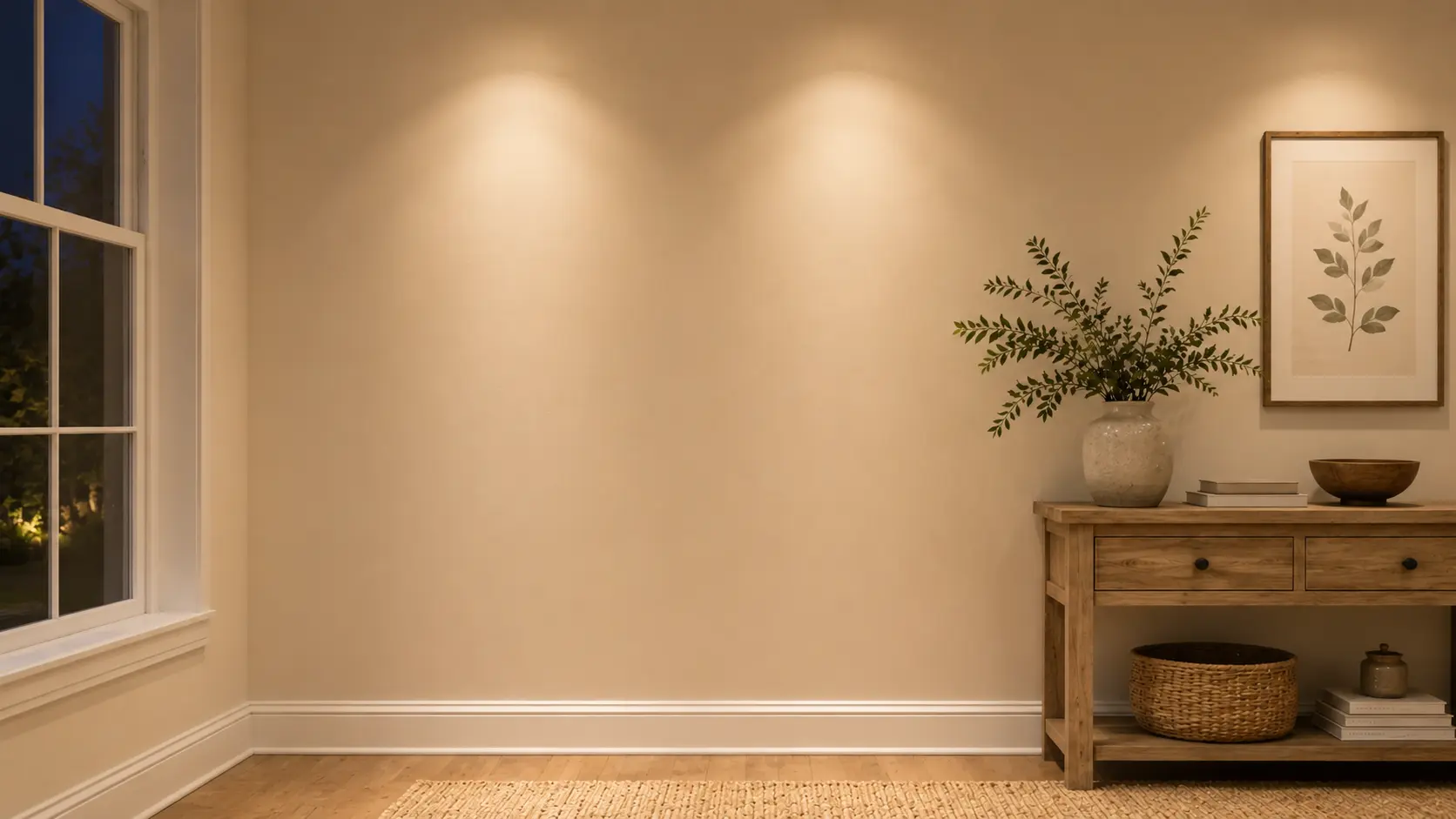
Artificial lighting can change Bungalow Beige after sunset. Warm white bulbs can bring out more of its tan and brown side, making the room feel cozy and relaxed.
Cool LED or daylight bulbs can make Bungalow Beige look flatter or slightly dull. If you want the color to stay warm and balanced, soft white bulbs are usually a safer choice.
Layered lighting also helps this color look better. Use ceiling lights, table lamps, floor lamps, or wall sconces together so the beige feels even across the room. This keeps Bungalow Beige looking warm, soft, and comfortable during the day and at night.
Where Bungalow Beige Fits in the SW Neutral Range
Sherwin-Williams runs its neutral palette from crisp whites all the way through deep earthy tones. Bungalow Beige sits in the warm beige tier, well above mid-tone browns but below the lighter off-whites like Antique White (LRV 73) or Worn Linen (LRV 63).
Its closest peers by tone are Accessible Beige SW 7036 (LRV 58), which reads slightly lighter and less warm, and Relaxed Khaki SW 6149 (LRV 42), which is noticeably deeper.
Bungalow Beige lands between these two. It has enough depth to feel finished but doesn’t risk making a room feel heavy the way a low-LRV earth tone can.
The reason it gets described as a dependable neutral is that its warmth isn’t polarizing. Unlike stronger warm beiges that can read as orange in certain lights, the gold in Bungalow Beige stays muted enough to remain livable.
It’s warm enough to feel cozy. It’s neutral enough to feel timeless. That combination is genuinely rare in a single color.
Among the most popular SW beige and greige paint colors, Bungalow Beige stands out for how consistently it reads warm without tipping into yellow.
Choosing the Right Finish for Bungalow Beige
The finish you choose for Sherwin-Williams Bungalow Beige can change how warm, smooth, or rich it looks in your space. Flatter finishes make it feel softer and more muted, while glossier finishes reflect more light and can make the beige look slightly brighter.
Matte and eggshell finishes are best for walls because they keep Bungalow Beige calm, warm, and easy to live with.
Satin finishes work well for trim, doors, kitchens, bathrooms, and exteriors because they add light reflection and are easier to clean. Semi-gloss finishes are a good choice for doors, trim, cabinets, and high-touch areas where durability matters.
| Finish | Best For | Why It Works |
|---|---|---|
| Matte | Bedrooms, low-traffic walls | Soft look with very low shine |
| Eggshell | Living rooms, hallways, dining rooms | Good balance of softness and durability |
| Satin | Trim, doors, bathrooms, kitchens, exteriors | More washable with light reflection |
| Semi-gloss | Trim, cabinets, doors | Durable, cleanable, and slightly brighter |
Room-by-Room Uses: Where Bungalow Beige Works Best
Bungalow Beige is a versatile neutral that can work in many areas of a home. Its warm undertones and balanced depth help create comfortable spaces that feel inviting and timeless.
1. Living Room
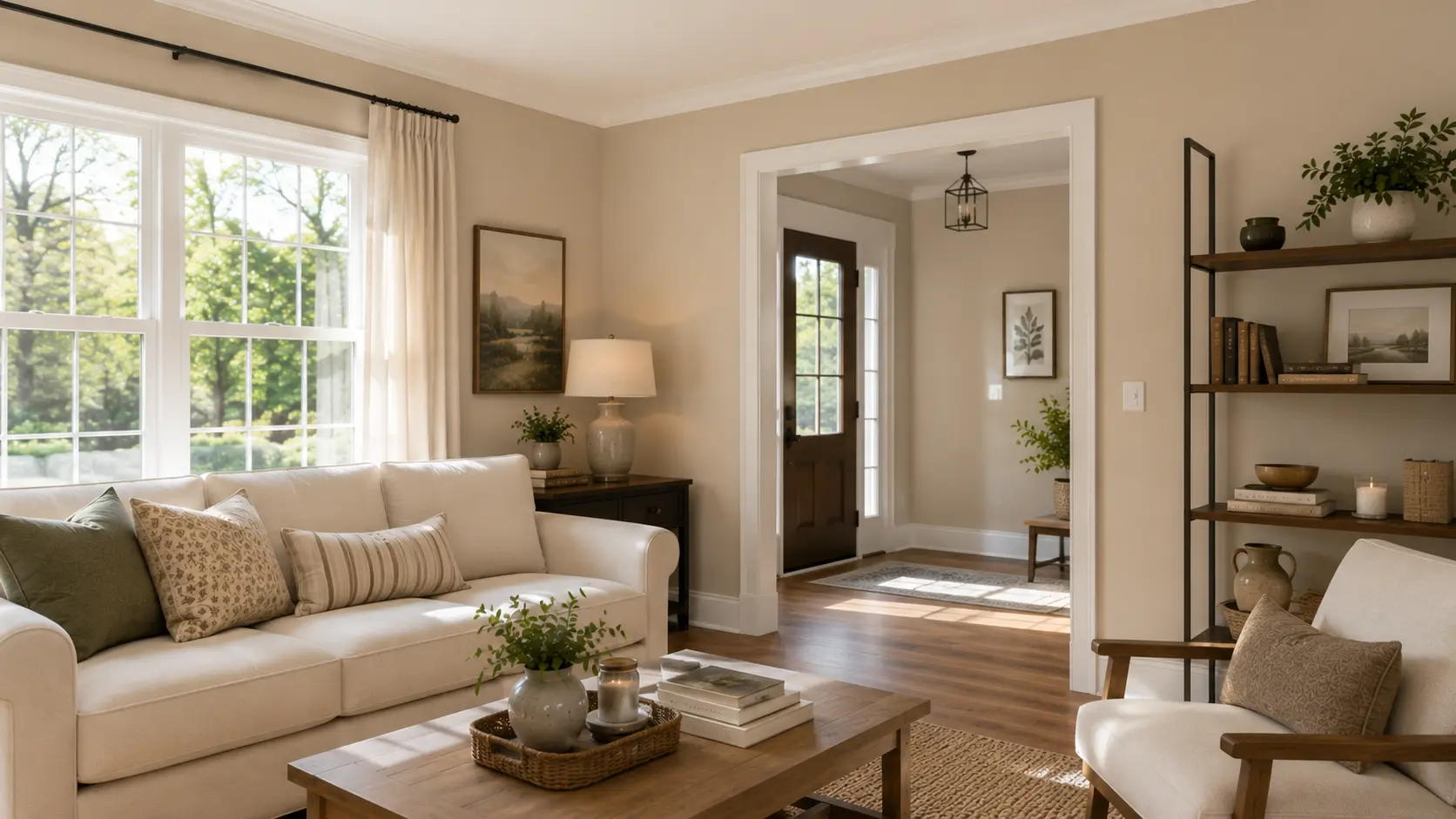
In living rooms, Bungalow Beige gives the space a warm, settled feel. It can sit behind cream sofas, wood tables, woven rugs, stone fireplaces, and warm white trim without feeling too strong.
You can use it when the room needs a soft, neutral backdrop that feels cozy yet open, especially with natural light, plants, textured pillows, and simple art pieces nearby at home, too.
2. Bedroom
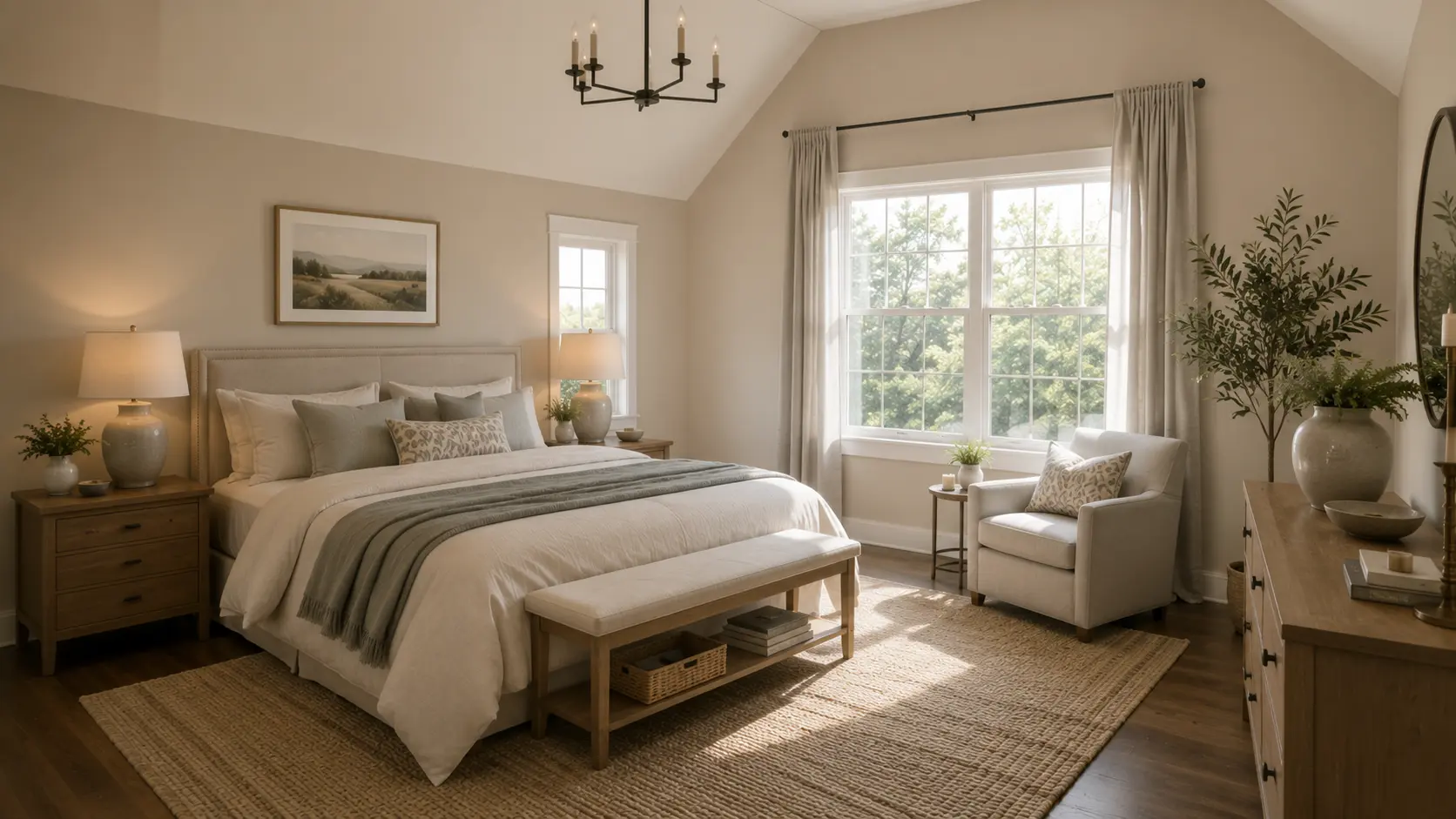
Inside bedrooms, Bungalow Beige can create a calm, warm, and restful mood. It pairs well with white bedding, beige fabrics, wood nightstands, soft lamps, and muted green or brown accents.
If you want a room that feels comfortable at night and gentle in the morning, this shade can work well on all walls, especially with warm bulbs, linen curtains, and simple decor that keeps the space peaceful and balanced throughout the day.
3. Hallways and Entryways
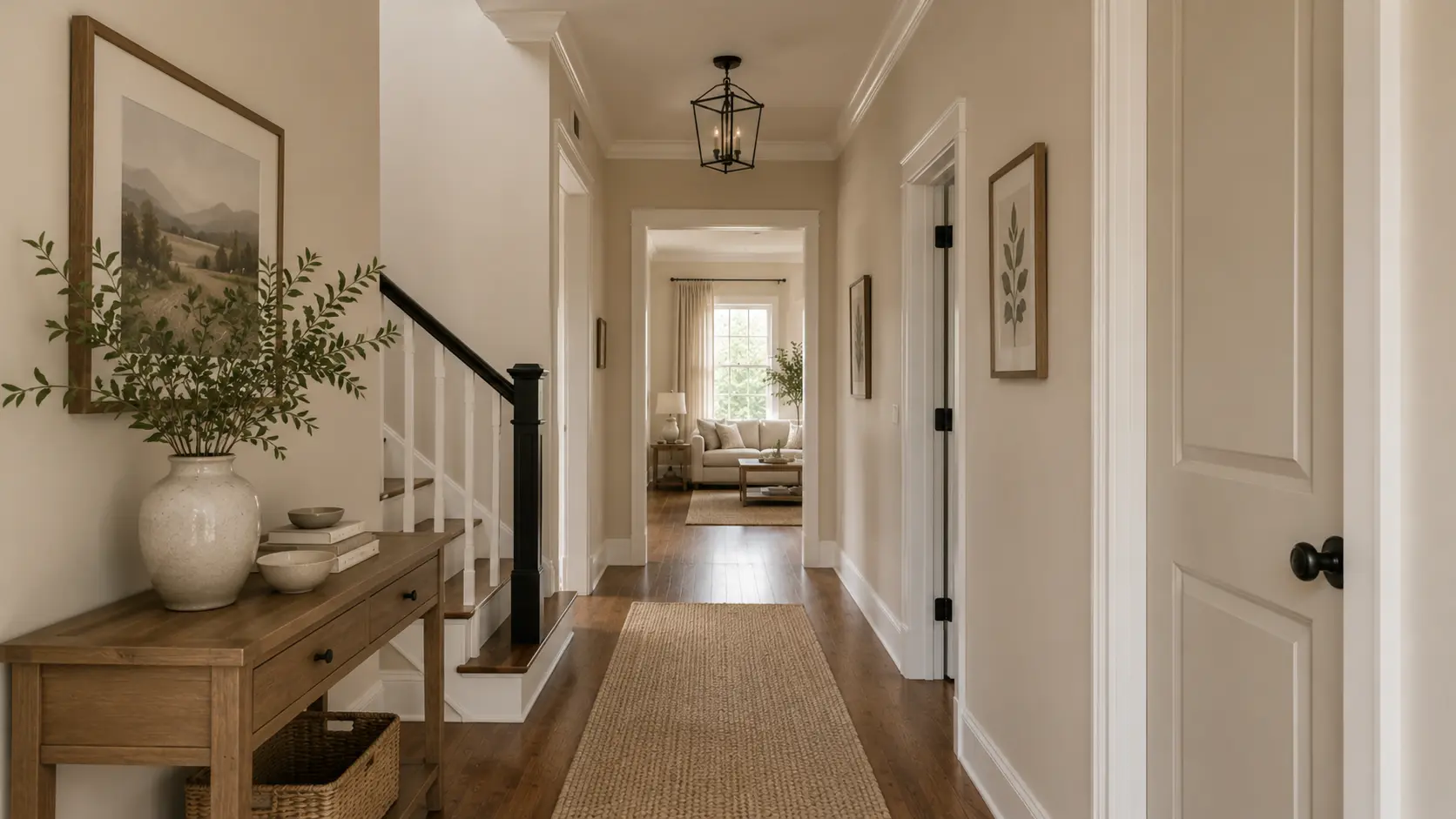
Around hallways and entryways, Bungalow Beige adds warmth to spaces that often feel plain or narrow. It also hides small marks better than bright white paint.
You can pair it with warm white trim, wood flooring, black hardware, or simple wall decor for a welcoming first impression that feels clean, soft, and easy to maintain in busy daily areas and active family homes too.
4. Kitchen
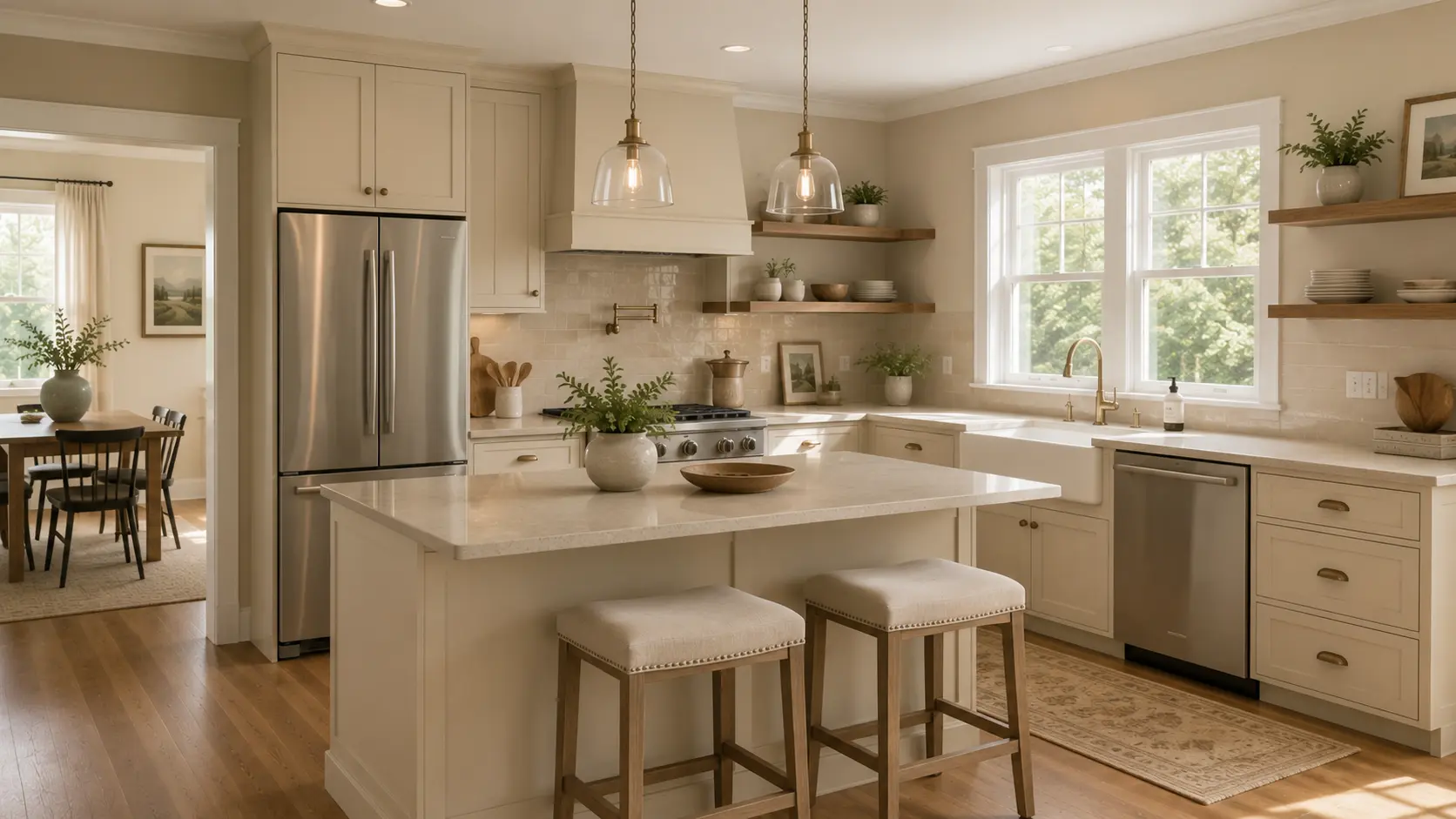
Kitchens are where Bungalow Beige can go wrong if the cabinet color isn’t right. It works alongside cream cabinets, wood open shelving, beige backsplash tile, stone counters, and brass or bronze hardware.
This is not a color for a kitchen with gray quartz, white shaker cabinets, and polished chrome. That combination will make the wall color look muddy.
If your kitchen leans warm in its fixed finishes, Bungalow Beige is a strong wall option. For more on how warm beige and cabinet color interact, the kitchen paint and cabinet color covers the pairing logic in more detail.
5. Bathroom
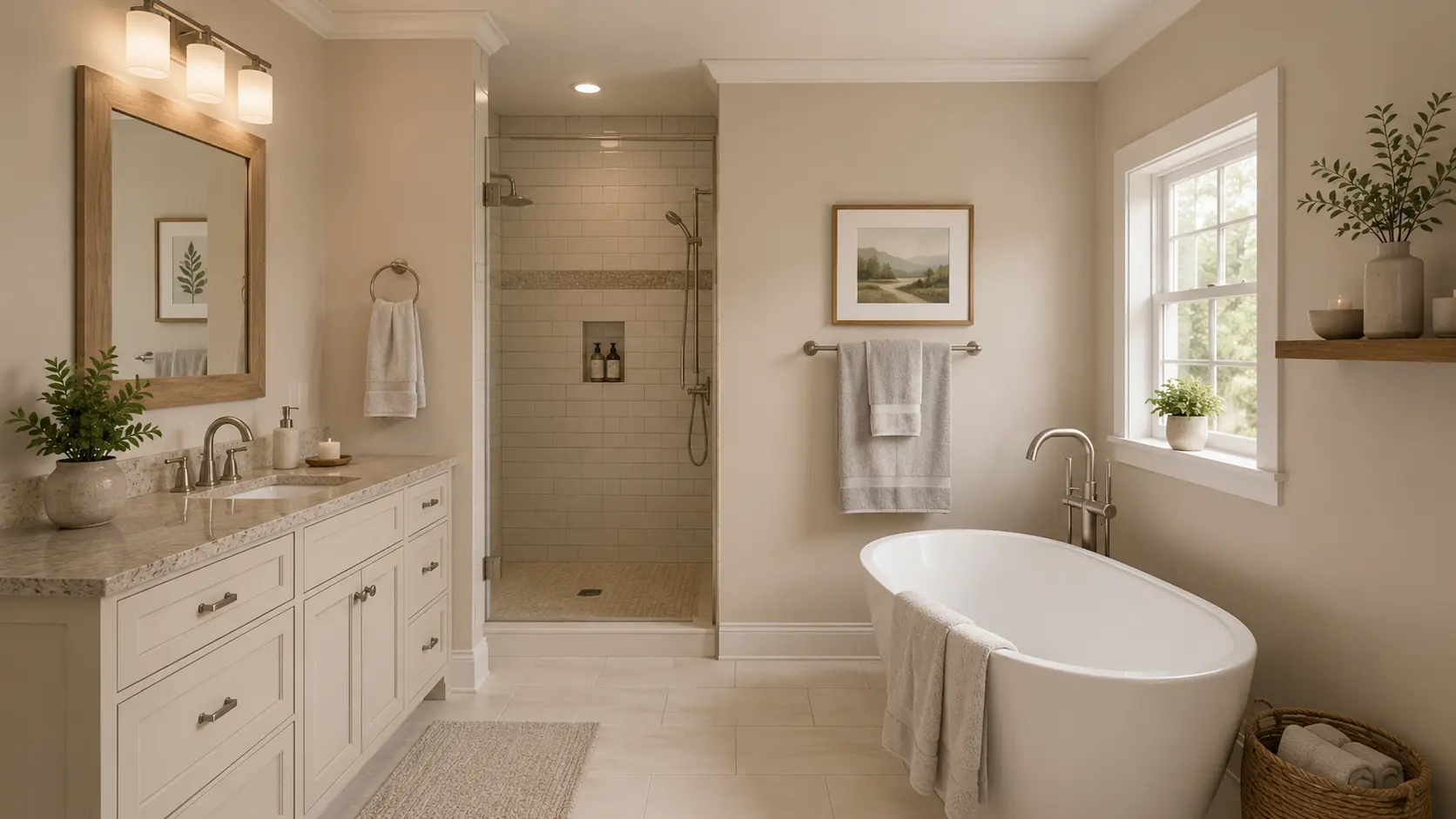
Inside bathrooms, Bungalow Beige can make the space feel warmer and softer, especially when the space has cream tile, wood vanities, warm stone, or brushed brass fixtures. It can help small bathrooms feel more finished without making them feel closed in.
Use it with soft white trim, warm bulbs, simple mirrors, and light towels so the room stays fresh, calm, and easy to live with every day for guests and family too.
6. Exterior
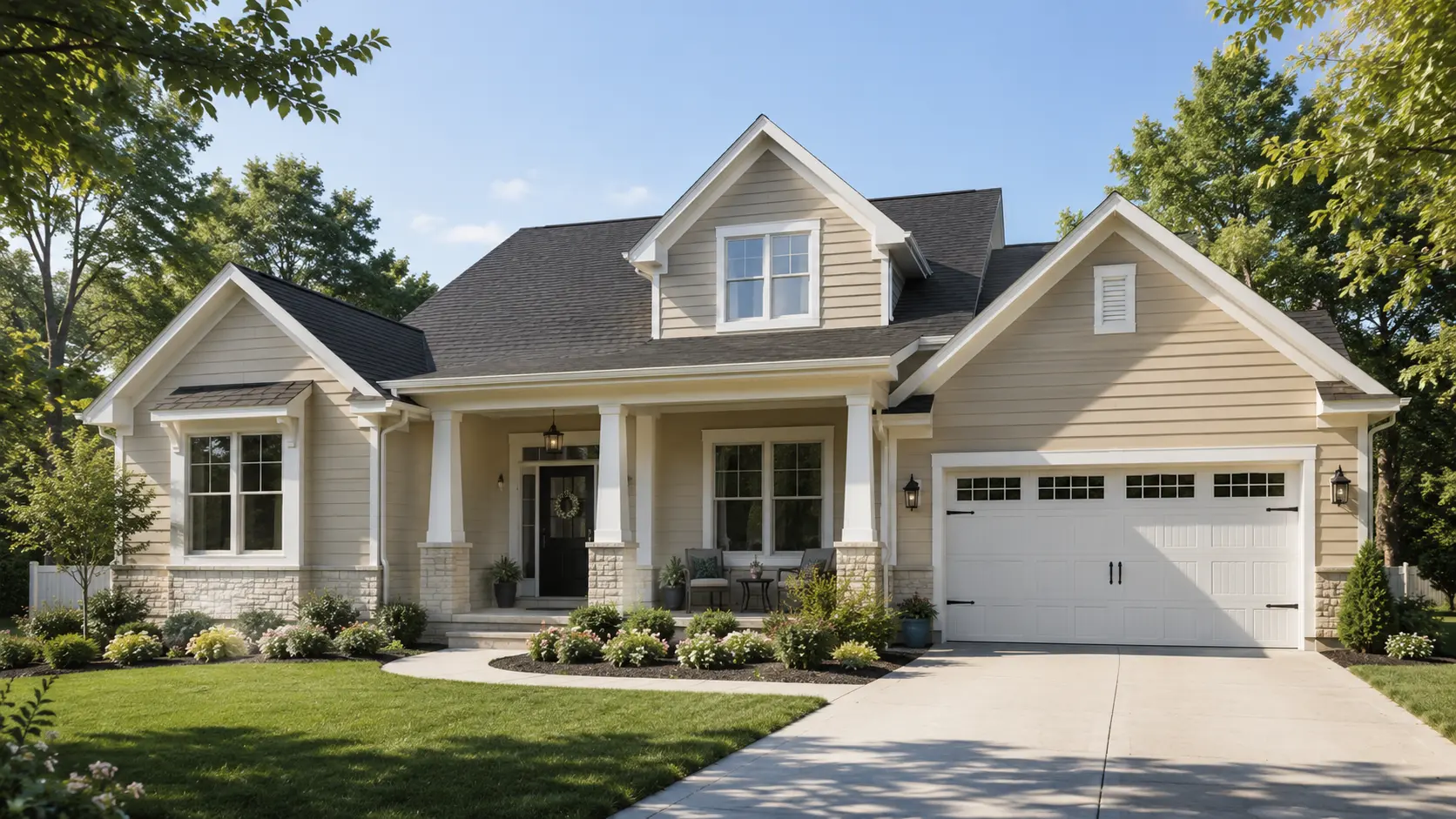
On exteriors, Bungalow Beige has enough warmth and depth to hold up well in natural light. It works well on siding, stucco, brick, and trim.
Pair it with warm white accents, dark shutters, black hardware, stonework, or a wood front door for a soft, welcoming exterior that feels classic, calm, and connected to natural outdoor materials year-round, in every season, outside around the home too.
From living rooms to exteriors, Bungalow Beige adapts easily to different settings. Choosing the right room, lighting, and finishes can help this warm neutral look its best.
Coordinating Colors for Bungalow Beige SW 7511
The warm tan and gold undertones in Bungalow Beige narrow the coordinating palette. Colors that lean cool or carry gray will create visible tension. Colors that share a warm base will support it.
1. Trim Colors
Warm whites are the right trim choice. Alabaster SW 7008 is a soft warm white that supports the gold undertone without going creamy.
Antique White SW 7035 is slightly warmer and works especially well in traditional spaces. Pure White SW 7005 sits too cool and will create a visible clash at the edge.
2. Accent and Coordinating Wall Colors
Deep navy, dark forest green, and soft terracotta all work as accent colors against Bungalow Beige. Naval SW 6244 provides strong contrast without fighting the warmth. Retreat SW 6207 is an earthy muted green that pairs naturally.
For a softer contrast, Accessible Beige SW 7036 reads lighter and slightly cooler, making it useful in adjacent open-plan spaces where a subtle tonal shift is the goal.
Alpaca SW 7022 is worth considering if you want a more gray-leaning option in a connecting room; it shares some warmth with Bungalow Beige but reads noticeably more neutral.
For a full comparison of how these neutrals differ in real rooms, the Alpaca paint review walks through the undertone differences clearly.
3. Flooring
Warm wood tones, honey oak, walnut, and medium-brown hardwood all sit naturally with Bungalow Beige. Light beige tile and warm stone also work.
Cool gray hardwood, bleached white oak, and dark gray tile are difficult pairings because they pull the room in opposing temperature directions.
Bungalow Beige vs. Similar Sherwin-Williams Colors
Bungalow Beige sits between soft neutral and warm beige, so comparing it with nearby shades helps you see its real character before choosing it for walls.
Compared with Neutral Beige Paint Colors
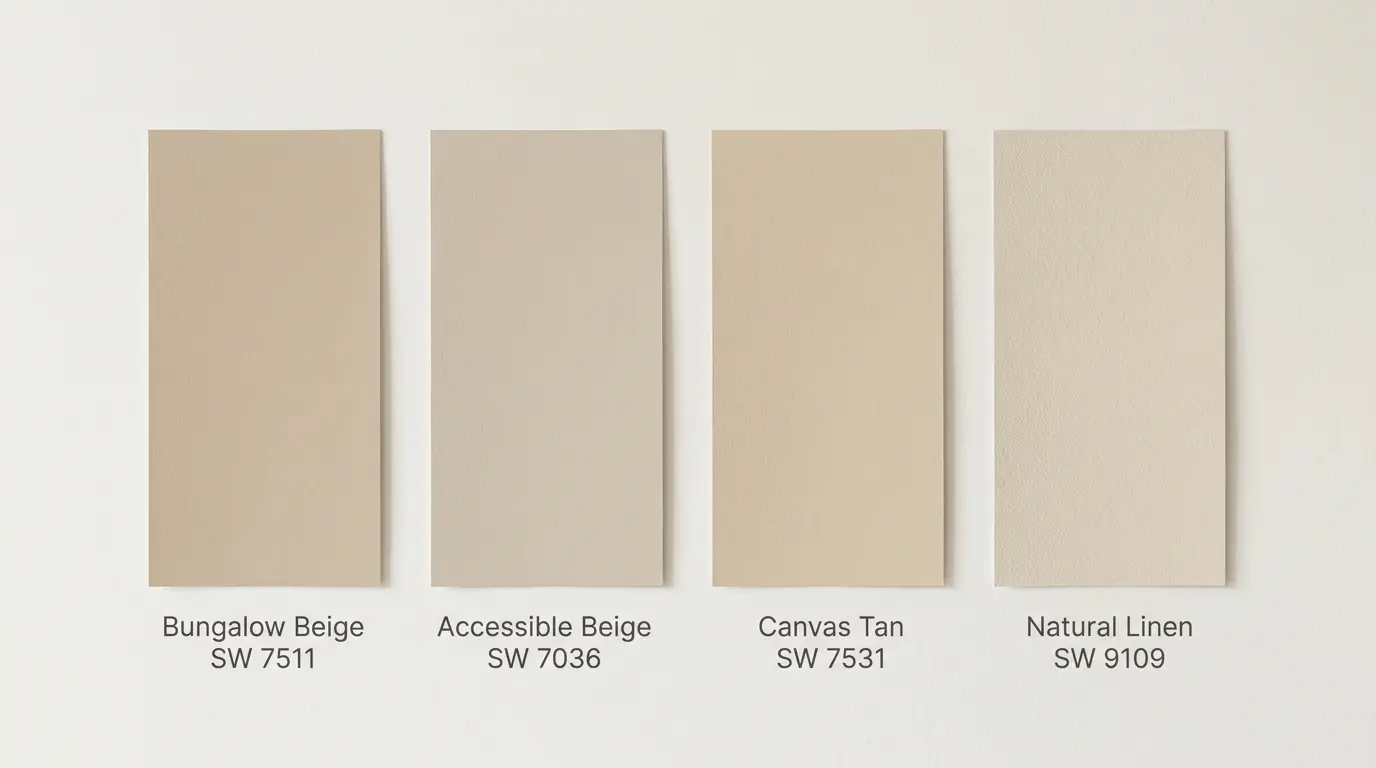
Bungalow Beige SW 7511 fits well with neutral beige paint colors because it feels calm, balanced, and easy to use in many rooms. Compared with Accessible Beige SW 7036, it usually feels warmer and less beige.
Next to Canvas Tan SW 7531, it can look slightly deeper and cozier. Compared with Natural Linen SW 9109, Bungalow Beige feels more grounded and less creamy.
This is helpful for spaces with wood floors, cream trim, stone, brick, and warm white accents that need a soft, settled wall color.
Compared with Warm Beige Paint Colors
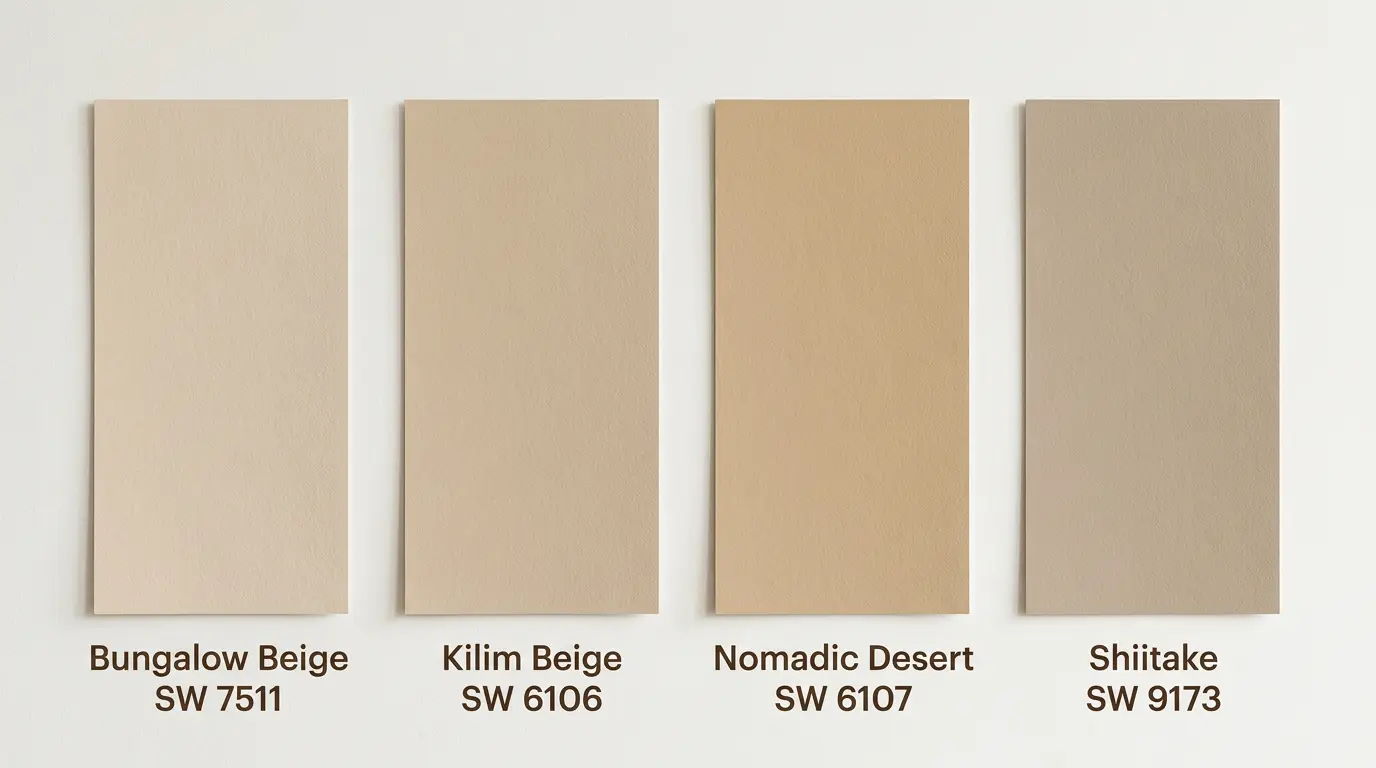
Bungalow Beige SW 7511 also belongs with warm beige paint colors because it carries soft tan, brown, and earthy undertones.
Compared with Kilim Beige SW 6106, it feels more muted and less golden, which can make it easier to live with. Next to Nomadic Desert SW 6107, it looks lighter and softer.
Compared with Shiitake SW 9173, Bungalow Beige can feel warmer, more classic, and more traditional. It works well when the room already has wood, cream, stone, brass, or warm lighting that supports its cozy beige base.
These comparisons show where Bungalow Beige sits: warmer than many neutral beiges, softer than stronger warm beiges, and flexible enough for cozy everyday spaces.
How to Sample and Test Bungalow Beige SW 7511
A poor sample test is one reason Bungalow Beige can look different after the full room is painted. This warm beige can shift with light, trim, flooring, and nearby finishes, so it should be tested in the actual space first.
Buy the real Sherwin-Williams paint sample, not only a printed card or digital color chip. Paint at least two 12-inch by 12-inch samples on different walls in the same room.
Check the samples in morning, afternoon, and evening light with your lamps on. Hold your trim, flooring, cabinets, counters, or fabric swatches beside the paint, because undertone clashes often show up near these fixed finishes.
The finish also matters. Lower sheen can make Bungalow Beige feel softer, while satin or semi-gloss can make it look brighter or richer. For a cleaner option, peel-and-stick samples can help you move the color around the room before making a final choice.
Pros and Cons of Bungalow Beige SW 7511
Before choosing Bungalow Beige, it helps to see where it works well and where it may fall short. Its pros and cons can make the decision clearer.
| Pros | Cons |
|---|---|
| Warm and welcoming beige that makes rooms feel cozy | Can look too warm in rooms with yellow bulbs |
| Works well in living rooms, bedrooms, hallways, and dining rooms | May feel muted or dull in low natural light |
| Pairs nicely with wood, cream, stone, brick, and warm white trim | Not ideal with cool gray floors or icy white finishes |
| Has enough depth to feel finished without looking too dark | May not give a crisp modern white or cool neutral look |
| Can work on interiors and exteriors | Needs proper sampling because lighting can change its undertone |
| Hides small marks better than very light whites | Can feel heavy in very small spaces without good lighting |
Overall, Bungalow Beige is a strong choice for warm, comfortable spaces, but testing it first helps you avoid surprises in lighting, finishes, or undertones.
Common Mistakes to Avoid with Bungalow Beige
Most problems with Bungalow Beige happen when the color is picked too quickly. It is warm and flexible, but it still needs the right light, trim, flooring, and fixed finishes.
- Screen-only choice: Choosing Bungalow Beige from online photos can lead to disappointment because cameras, editing, screens, and lighting can all change how warm, tan, or muted the color appears.
- Ignored flooring: Cool gray floors or icy tile can fight the warm undertones of Bungalow Beige and make the walls feel mismatched or dull.
- Wrong trim pairing: A very cool white trim can make Bungalow Beige look heavier, warmer, or less balanced than expected.
- Poor lighting check: Using Bungalow Beige in a shaded room without testing can be risky, as low light may bring out more of its tan and brown depth.
- Too much beige: Pairing beige walls with tan sofas, honey wood floors, and warm decor can make the space feel flat. Add contrast with white, black, green, stone, or textured pieces.
Avoiding these mistakes helps Bungalow Beige look calm and intentional. The goal is to choose a warm beige that works with the whole space, not against it.
Frequently Asked Questions
Does Bungalow Beige look yellow on the wall?
It doesn’t typically read as yellow. The undertones lean warm gold and tan rather than yellow. Under yellow-toned bulbs, the warmth can become more pronounced, but in most lighting conditions it reads as a soft warm beige rather than a yellow wall. Sampling in your actual light is the safest way to confirm this for your specific room.
Is Bungalow Beige a good color for an open floor plan?
Yes, provided the connected spaces share warm fixed finishes. Keep trim and door colors consistent throughout so the beige reads as a single decision across the space. Add contrast through rugs, furniture, and art rather than through adjacent wall colors that shift cooler.
What trim color works with Bungalow Beige?
Warm whites are the right choice. Alabaster SW 7008 and Antique White SW 7035 both support the gold undertone without creating tension at the edge. Avoid Pure White SW 7005 and similar cool-leaning whites, which will make the wall color look heavier and more golden than expected.
Can Bungalow Beige be used on an exterior?
Yes. The LRV of 53 gives it enough depth to hold up in natural light without washing out. It works on siding, stucco, and brick. Pair it with warm white trim, dark shutters, and natural stone or wood accents for a classic exterior that holds across all seasons.
Does Bungalow Beige work in a small bathroom?
It can, provided the fixed finishes are warm. With cream tile, wood vanities, and brushed brass fixtures, it reads as warm and finished. Avoid it in bathrooms with cool tile, chrome fixtures, or minimal natural light, where it can feel flat and heavy rather than cozy.
What ceiling color pairs with Bungalow Beige walls?
A soft warm white, Alabaster SW 7008 is a reliable choice. It keeps the ceiling from going stark or cool against the warm wall. Avoid cool whites or pure bright whites, which will make the warmth in the walls look more pronounced and unintentional by contrast.
Is Bungalow Beige a good color for resale?
Generally yes. Warm neutrals appeal to a wide range of buyers and are easy to style around. The main risk is pairing it with cool finishes that are already fixed in the home. If the floors, countertops, and cabinets lean cool, Bungalow Beige may not be the strongest resale choice compared to a true greige like Agreeable Gray.
Final Takeway
Bungalow Beige can be a smart choice when you want warmth without making a room feel too dark or heavy. I like that it works in many spaces, but you still need to check lighting, trim, flooring, finishes, and sheen before painting.
You have also seen how it compares with other beige shades, where it works best, and what mistakes to avoid. That matters because beige can change fast once it hits real walls.
Bungalow Beige gives you a soft, cozy base when the rest of the room supports its warm undertone. Try a real sample first, watch it through the day, and share your thoughts in the comments.