
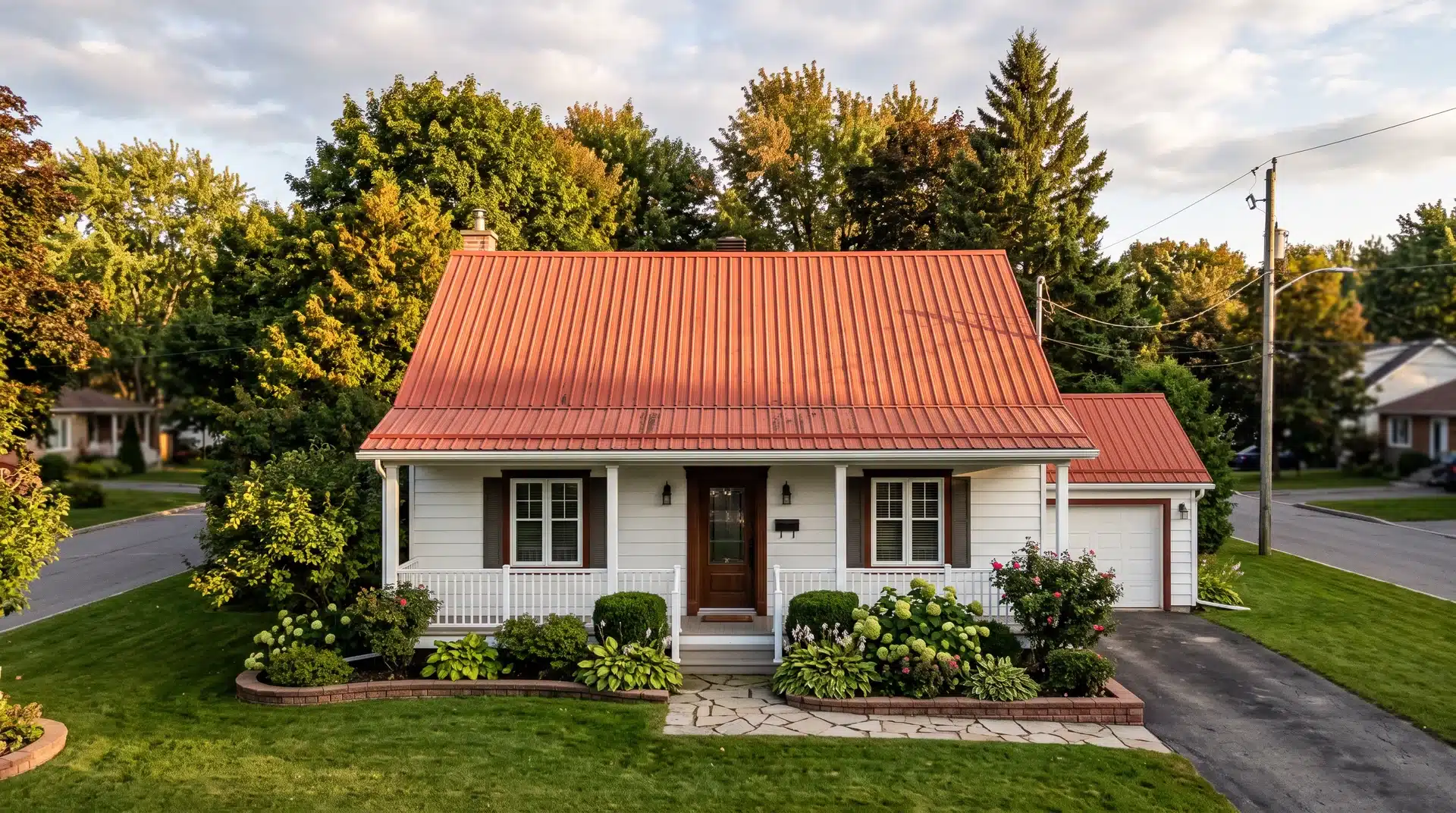


| Quick Answer: Yes, painting a metal roof works well when done right. Remove rust first, apply a primer matched to your roof’s metal type, then finish with UV-resistant paint. Proper prep adds a decade or more of life for a fraction of the replacement cost. |
I’ve painted two metal roofs. The first looked great for eight months and then started peeling at every seam.
I had skipped the primer and rushed the rust removal. The second one is still holding up years later. The difference was entirely in how I prepared the surface.
So when people ask me whether you can paint a metal roof, the answer is yes, and it is one of the better calls you can make if your roof is starting to fade or showing rust.
It costs 40 to 60 percent less than a full replacement and adds 10 to 15 years to the roof’s life.
That’s the real advantage metal has over shingles when you’re deciding what to do with an aging roof. Do the prep right. That is exactly what this blog is for.
Tools and Materials for Painting a Metal Roof
I showed up on my first metal roof paint job without the right primer. I climbed back down, drove to the hardware store, and lost half a day.
| Tool / Material | Purpose |
|---|---|
| Pressure washer | Remove dirt, mold, mildew, and loose paint |
| Wire brush and sandpaper (80-grit) | Remove rust and smooth rough spots |
| Paint scraper | Strip flaking old paint from the surface |
| Safety harness, non-slip shoes, gloves, eye protection | Personal protection on the roof |
| Rust converter or rust-inhibiting solution | Stop rust spreading under new paint |
| Metal-specific primer (rust-inhibiting, aluminum, or galvanized depending on roof type) | Bonds new paint to the metal surface |
| Acrylic latex paint formulated for metal roofing (UV-resistant, water-repellent) | Main protective and weatherproofing coat |
| Paint sprayer | Even fast coverage on large roof areas |
| Roller and brush | Detail work, edges, seams, and corrections |
| Exterior caulk and sealant | Seal gaps, joints, and open seams |
| Drop cloths and masking tape | Protect gutters, fascia, and trim |
| Ladder with stabilizer | Safe, stable roof access |
How to Paint a Metal Roof the Right Way
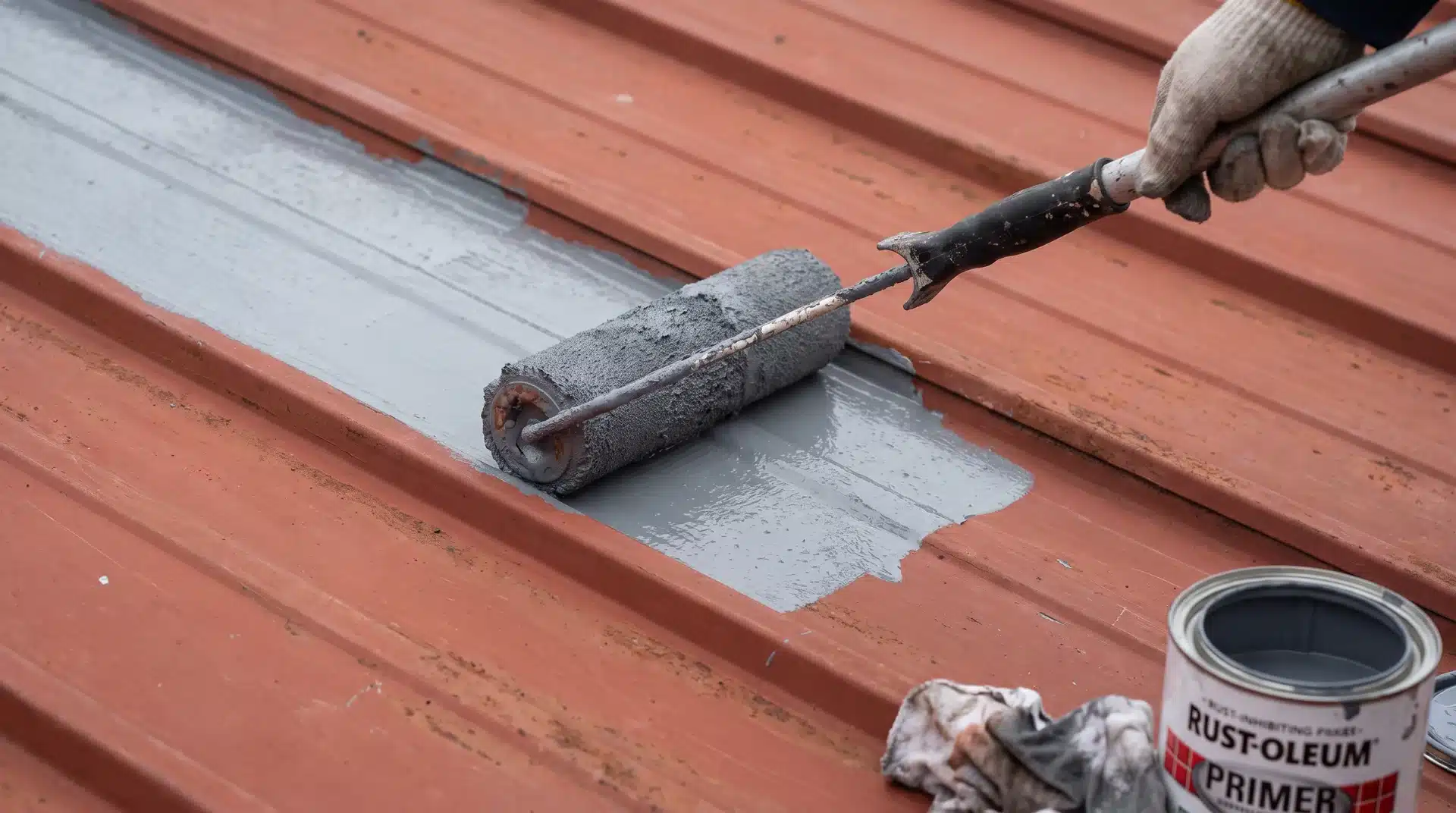
Preparation is 70 percent of this job. The steps below are in the order they need to happen. Skip one or reorder them, and you are looking at a two-year finish instead of a fifteen-year one.
Step 1: Set Up Safety Equipment and Inspect the Roof
Before anything else, anchor a safety harness to a structural point on the roof. Non-slip shoes are not optional on any metal surface, wet or dry.
Once you are safe, walk the entire roof and look for rust spots, loose or bent panels, holes, cracked seams, and areas where old paint is peeling.
Note every problem before you clean. Paint does not fix structural damage. It traps moisture against it, which accelerates the very corrosion you are trying to stop.
If your roof is new, wait at least six months before painting. Some factory coatings come with a warranty that can be voided if you paint too early.
Step 2: Clean the Entire Roof Surface
A pressure washer removes the bulk of the work in a fraction of the time a brush would take. Run it across the full surface to lift dirt, bird droppings, mold, mildew, and algae.
Follow with a wash using a diluted trisodium phosphate solution or a dedicated roof cleaner to cut through grease and oil residue. Rinse completely.
Soap residue left behind prevents primer from bonding and is one of the most common causes of paint failure that homeowners never trace back to the cleaning step.
The roof needs to be completely clean before anything else happens.
Step 3: Remove Rust and Strip Flaking Old Paint
Work through every rust spot with a wire brush, 80-grit sandpaper, or an angle grinder fitted with a wire wheel.
Remove all loose, flaking, and bubbling rust down to bare metal. A paint scraper handles old paint that is lifting along seams and edges.
Do not paint over rust under any circumstances. Rust sealed under new paint does not stop. It spreads, and within months, it pushes the new paint off from underneath.
I know it is tempting to rush through this one. Don’t. Every minute you spend here adds months to the finish.
Step 4: Apply Rust Converter to Remaining Rust
After rust removal, any area where rust has penetrated deeply needs chemical treatment before primer is applied.
A rust converter reacts with iron oxide, converting it into a stable compound that stops further corrosion and provides a surface for primer to bond to.
Apply with a brush and allow it to dry per the manufacturer’s instructions, which is typically around 24 hours.
Do not rush this step on older roofs or roofs with visible corrosion pitting. The converter needs time to complete the chemical reaction before it can hold anything on top of it.
Step 5: Repair Damage and Seal all Seams and Joints
Fill small holes with a metal roofing patch or a roof repair sealant rated for exterior use.
Run a bead of exterior caulk along all open seams, panel overlaps, around fasteners, and at every point where the roof meets flashing or trim. Allow all repairs and caulk to cure fully before moving to primer.
Paint applied over uncured sealant wrinkles and fails.
This step protects the roof’s waterproofing as much as the paint does, and skipping it leaves the roof’s most vulnerable points exposed to water entry, no matter how good the paint job looks.
Step 6: Let the Roof Dry Completely
Apply primer only to a dry roof. Any moisture trapped underneath creates bubbles, blistering, and adhesion failure that show up within the first season.
Ideal conditions are 50 to 85°F, low humidity, and no rain forecast for at least 24 hours.
Avoid painting on metal in direct midday sun: the surface heats up quickly, causing the primer to skin over before it penetrates.
Wait at least 24 hours after pressure washing before you prime. In humid climates like the Southeast, I would wait 48 hours to be safe.
Step 7: Apply Metal-Specific Primer
This is the step I see skipped most often, and it is the single biggest reason DIY metal roof paint jobs fail early.
I skipped it on my first roof and had to redo the whole thing. The first selection depends on your specific roof type. Steel roofs need a rust-inhibiting primer.
Aluminum roofs have a naturally slick surface and require an aluminum-bonding primer: standard primers do not adhere to aluminum without it.
Galvanized metal has a zinc coating that actively prevents standard primers from bonding. Use a galvanized metal primer specifically, or the paint will peel within months.
Apply with a sprayer for full coverage, a roller for flat runs, and a brush along seams and edges. Allow the full cure time listed on the label before touching it.
Step 8: Choose Your Paint and Check Weather Conditions
The best paint for a metal roof is a 100% acrylic latex formula designed for metal roofing. UV-resistant and water-repellent versions protect against the two conditions that degrade metal roofs fastest.
Oil-based paints are more durable but harder to apply and dry significantly slower. Color matters more than you would expect on a metal roof.
Light colors reflect heat and reduce cooling costs, making them a practical choice in warmer US climates like the South and Southwest.
Dark colors absorb heat and can noticeably raise attic temperatures. Do not paint outside the 50 to 85°F window, in wind, or when rain is expected within 24 hours of application.
Step 9: Apply the First Coat of Metal Roof Paint
Start at the peak and work downward on every pass. Working downward keeps overspray off already-painted surfaces and prevents you from stepping on wet paint.
A sprayer provides the most even coverage on large roof areas. Follow with a roller to work paint into seams and around fasteners where a sprayer leaves thin spots.
Apply thin, even coats. Thick coats sag, drip, and take far longer to dry without adding any extra protection.
Allow the first coat to dry fully before applying the second, which typically takes four to eight hours, depending on the product and conditions.
Step 10: Apply the Second Coat and Do a Final Inspection
A second coat is not optional. One coat on a metal roof does not provide adequate UV or moisture protection, no matter how thick it is.
Repeat the peak-down method. Once the second coat has dried for 24 to 48 hours, do a walk-through inspection of the entire roof.
Look for thin spots, missed seams, runs, and any places where the primer is still showing through. Touch up with a brush before calling it done.
A properly painted metal roof lasts 10 to 15 years. You will know it is time to repaint when you start seeing fading, peeling, or rust spots returning.
Pros and Cons of Painting a Metal Roof
Before you climb up there, here is a look at what you are getting into.
| Pros | Cons |
|---|---|
| Costs 40 to 60 percent less than a full roof replacement | Prep work is time-consuming, especially rust removal |
| Extends roof life by 10 to 15 years when done correctly | The wrong primer for your roof type causes early peeling |
| Protects against UV damage, rust, and corrosion | Steep or multi-story roofs require a professional |
| Reflective paint options reduce cooling costs in summer | Paint can trap moisture if applied over unrepaired damage |
| Refreshes curb appeal and updates exterior color | Needs repainting every 8 to 15 years, depending on climate |
| Can be a DIY project on single-story roofs | Falls from roofs are among the most common home improvement injuries |
| Stops existing rust from spreading when treated correctly | New roofs with factory coatings may have warranties that painting voids |
Conclusion
I’ve made most of the mistakes on a metal roof paint job. I skipped the primer, rushed the rust removal, and painted in the heat of the day.
Every single one cost me time and money. The version that holds up for a decade is not complicated. Inspect before you paint, treat every rust spot before you prime, and give each coat the full time it needs to dry before applying the next.
That is it. A painted metal roof, done with proper prep, lasts 10 to 15 years and costs a fraction of the cost of a replacement.
Do it without the prep, and you are doing it twice. The prep is the job. Everything else is just paint.
Frequently Asked Questions
How long does paint last on a metal roof?
Most painted metal roofs last 10 to 15 years with proper preparation and quality materials. Regular maintenance and early touch-ups on faded or peeling areas can extend that further.
Can you paint a metal roof yourself, or do you need a professional?
A single-story metal roof with a moderate pitch is manageable as a DIY project if you follow the prep steps and use the right safety equipment.
Can you paint a metal roof in winter?
Not in most of the US. Paint and primer need temperatures between 50 and 85°F to adhere and cure properly. Applying paint below 50°F results in poor adhesion, slow drying, and a finish that fails sooner than it should.