



Standing in the middle of a renovation and realizing you have been using the wrong word for years, that is a specific kind of humbling moment.
The cupboard vs cabinet debate sounds simple until you are actually standing in a showroom trying to explain what you need.
After two decades of building custom furniture and fielding this exact question from clients, I can tell you the confusion makes complete sense. These two words get used interchangeably in showrooms, contractor bids, and online listings all the time, often by people who should know better.
I will cover definitions, key differences, and regional uses to help you figure out which one belongs in your home.
What Is a Cupboard?
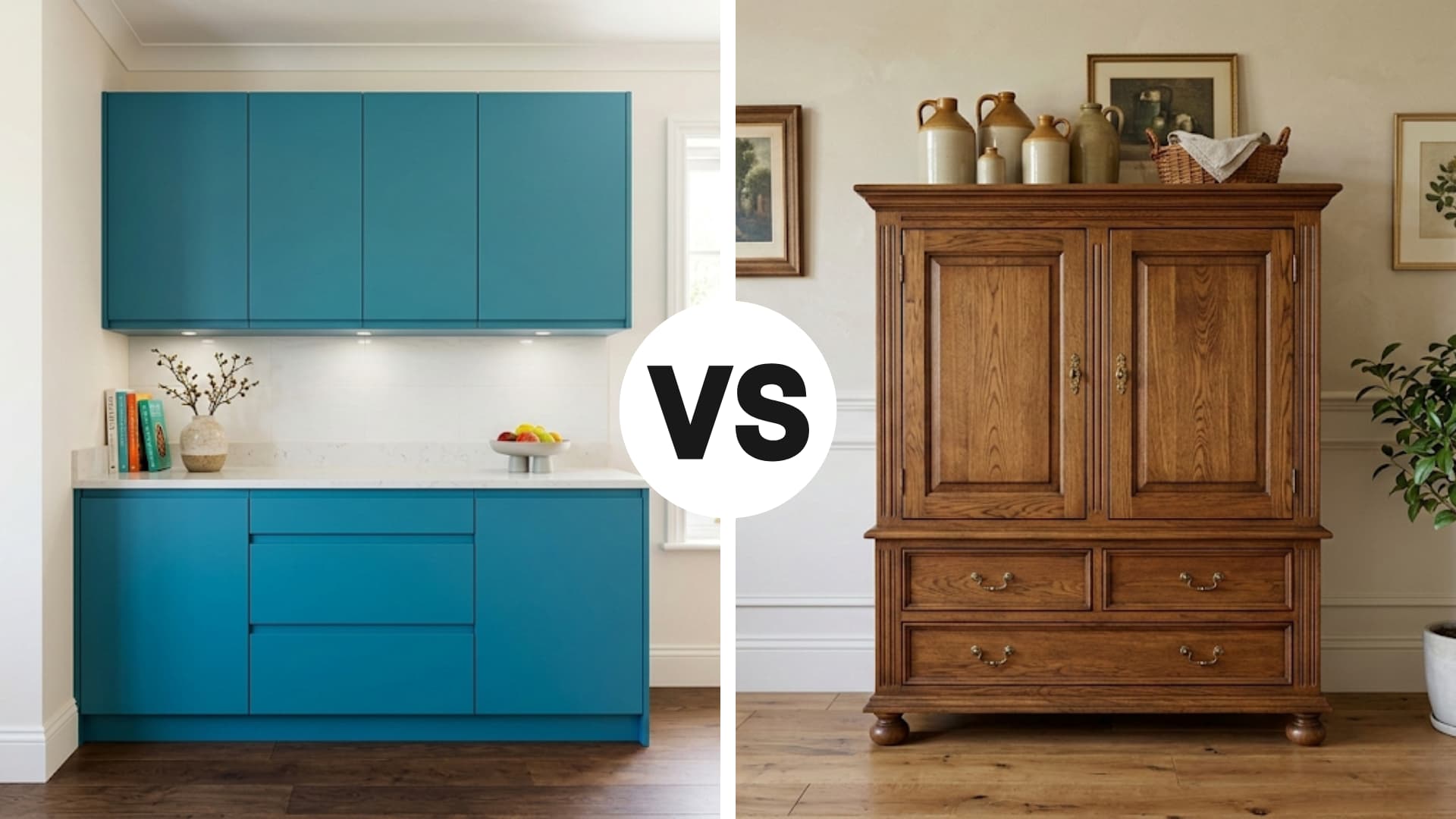
A cupboard is a freestanding storage unit with doors and shelves, designed to keep household items neatly out of sight. Unlike cabinets, cupboards are not fixed to a wall, and in my experience, that flexibility is what makes them so practical for everyday homes.
They carry a traditional, classic character that works beautifully in farmhouse or vintage-inspired spaces where warmth matters more than sleek modern design.
You will find them in kitchens for food and dishes, in bedrooms for clothes or linens, and in hallways for general storage. Common types include food cupboards, linen cupboards, and under-stair cupboards for tucked-away hidden storage.
What Is a Cabinet?
A cabinet is a built-in or wall-mounted storage unit with doors and shelves, designed to sit permanently in a space.
In most homes I work with, cabinets are fixed to walls or fitted under counters, giving kitchens, bathrooms, and home offices a clean, structured look that freestanding furniture simply cannot replicate.
What I find most useful about cabinets is how many forms they take. Wall cabinets sit above counters, base cabinets sit on the floor, and tall pantry cabinets handle the heavy-duty storage.
Each cabinet style fits a specific room and purpose, making cabinets one of the most versatile storage solutions in any home.
Cupboard vs. Cabinet: Key Differences Explained
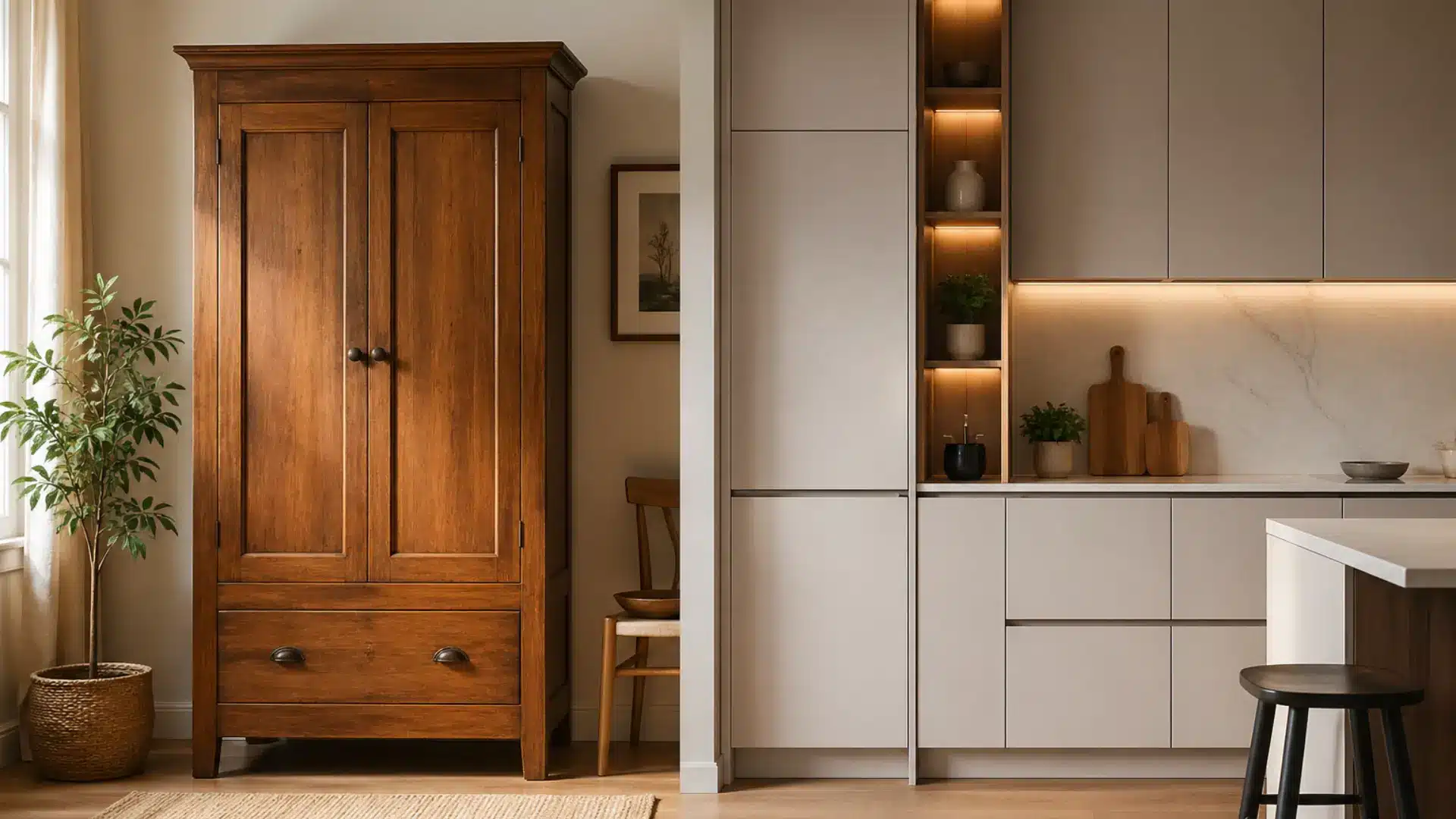
Cupboards and cabinets may look similar, but they differ in design, function, size, installation, shelving, and build quality. Here is a closer look at how each one stands apart across every category:
1. Design and Construction
Cupboards: Usually freestanding pieces with simple door styles and basic finishes. They have a more traditional look and are often made from solid wood with minimal detailing.
Cabinets: Typically built-in with custom finishes and more design options. You can choose from various door styles, materials, and hardware to match your space perfectly.
2. Function and Purpose
Cupboards: Great for storing everyday items like food, clothes, or linens. They keep things hidden and organized without needing much thought about layout or accessibility.
Cabinets: Designed with specific storage needs in mind. Think kitchen cabinets with pull-out drawers or bathroom cabinets with built-in organizers — function drives every design decision.
3. Size and Placement
Cupboards: Usually tall and vertical, making good use of floor space. They stand alone in a room and can be moved around without any hassle or tools.
Cabinets: Come in all sizes and can be placed horizontally or vertically. They are designed to fit a specific wall or space, so sizing is planned from the start.
4. Installation
Cupboards: No installation needed. They sit on the floor and can be moved whenever you want. Perfect if you rent or like to rearrange your space often.
Cabinets: Permanently mounted to walls or fitted under counters. Once they are in, they stay put. This makes them sturdier but harder to move or replace later.
5. Shelving
Cupboards: Usually come with fixed shelves in a set layout. You work around what is already there, which keeps things simple but limits how you organize your stuff.
Cabinets: Often have adjustable shelves you can move up or down. This makes it easy to store items of different sizes without wasting any space inside.
6. Material and Build
Cupboards: Typically built from solid wood with straightforward construction. They are durable and have a classic feel, but they do not usually come with high-end finishes or custom options.
Cabinets: Often custom-built with better quality materials and finishes. You can go as simple or as detailed as your budget allows, making them feel more polished overall.
Cupboard & Cabinet: Cost Comparison
Budget plays a big role in this decision, and the cost difference between cupboards and cabinets can be significant.
Cabinets are generally more expensive because they are custom-built, professionally installed, and designed to fit your specific space. Here’s a rough idea of what to expect:
- Stock cabinets (pre-made, basic finishes): $100 – $300 per linear foot
- Semi-custom cabinets: $150 – $650 per linear foot
- Custom cabinets: $500 – $1,500+ per linear foot
Installation costs are separate and can add another $50 – $250 per cabinet, depending on your location and contractor. Cabinets are a long-term commitment. Once they’re installed, they stay.
Cupboards are generally more affordable because they are freestanding and require no professional installation. Cupboards give you flexibility; you can rearrange, repaint, or relocate them as your needs change.:
- Basic freestanding cupboards: $80 – $400
- Mid-range solid wood cupboards: $400 – $1,000
- High-end or antique-style cupboards: $1,000 – $3,000+
If you rent your home, a freestanding cupboard is a smarter investment, you can take it with you when you move. Cabinets stay with the property.
Cupboard & Cabinet in Different Rooms
The room you’re furnishing changes everything. Let me walk you through how cupboards and cabinets are used differently across the most common spaces in your home.
1. Kitchen
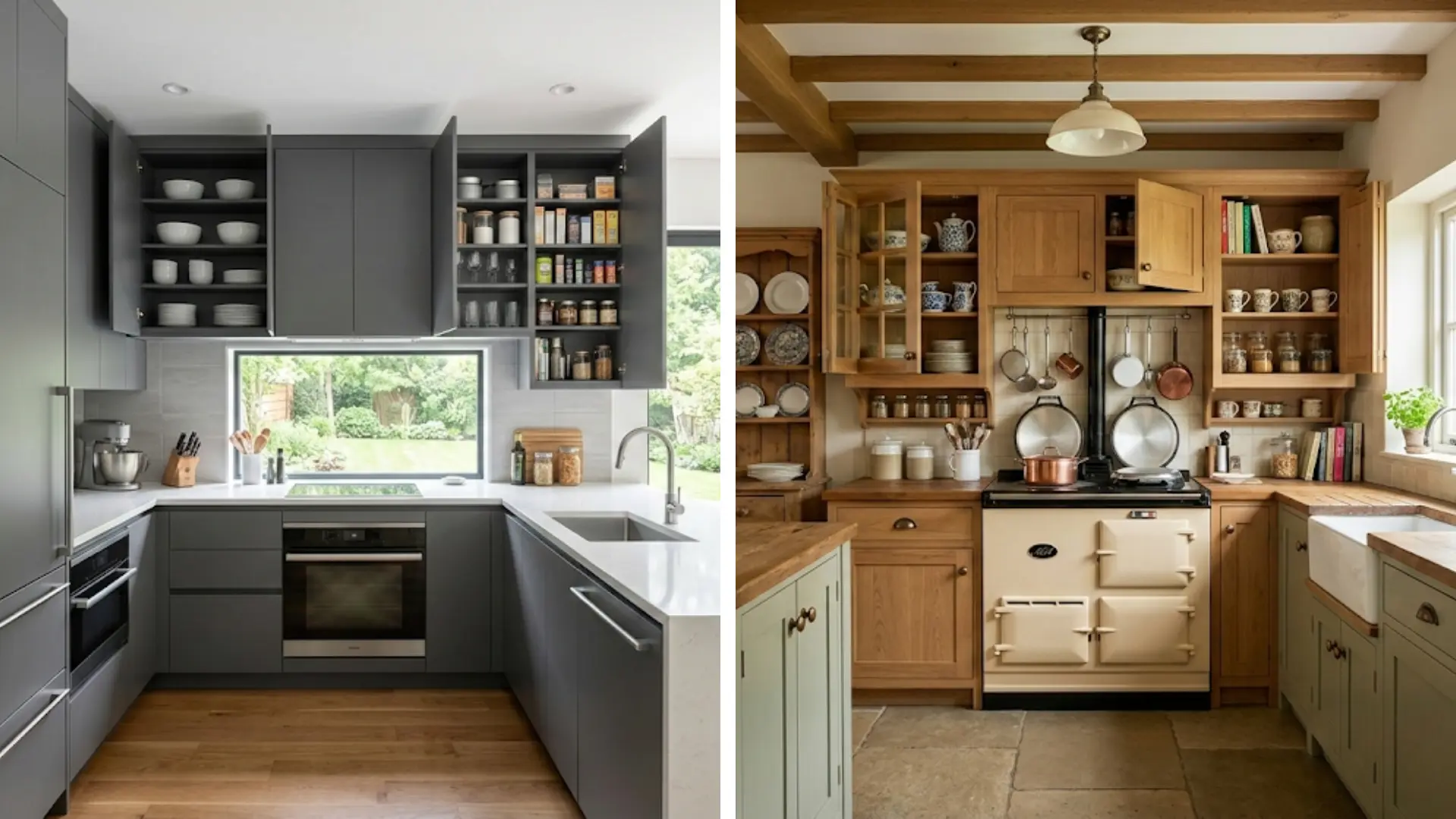
The kitchen is where this debate gets the most heated. In the US, you’ll almost always hear “kitchen cabinets”; they’re built-in or wall-mounted and designed for maximum efficiency. But in the UK, the exact same storage unit is called a “kitchen cupboard.”
Both hold your dishes, pots, and pantry items. The key difference is feel; cabinets come across as permanent and polished, while cupboards lean toward tradition and functionality.
That polished finish is also why decisions like kitchen cabinet paint color matter so much more with cabinets than with cupboards.
If you’re renovating a modern kitchen, cabinets are almost always the standard choice.
2. Bathroom
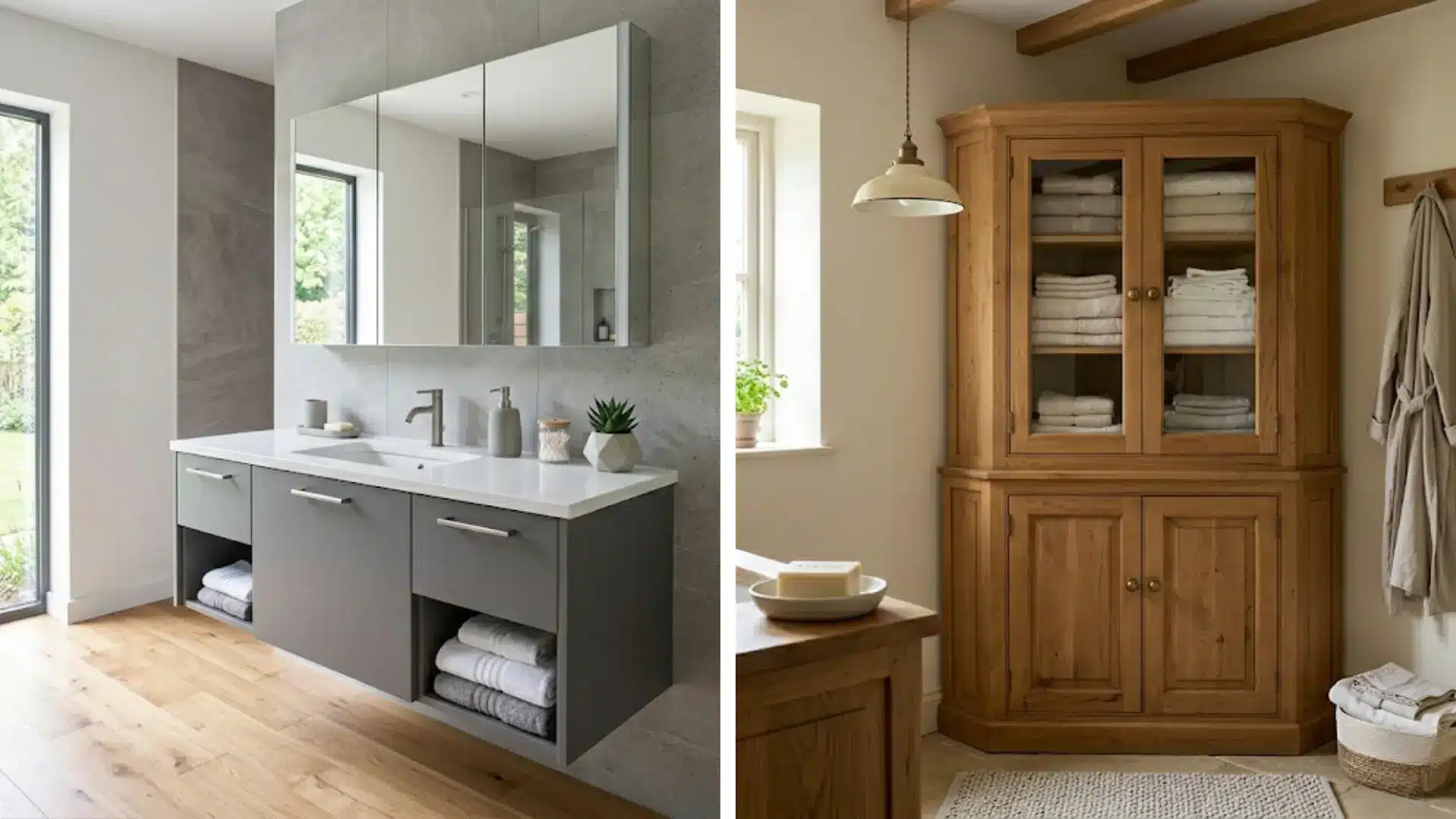
In the bathroom, cabinets clearly take the lead. Think medicine cabinets mounted above the sink or vanity cabinets installed under the counter. They’re sleek, space-saving, and built to hold toiletries, towels, and cleaning supplies neatly out of sight.
A freestanding cupboard in the bathroom isn’t impossible, but it’s far less common. You might find one in a larger bathroom used to store extra linens or backup supplies when built-in storage simply isn’t enough.
3. Dining Room
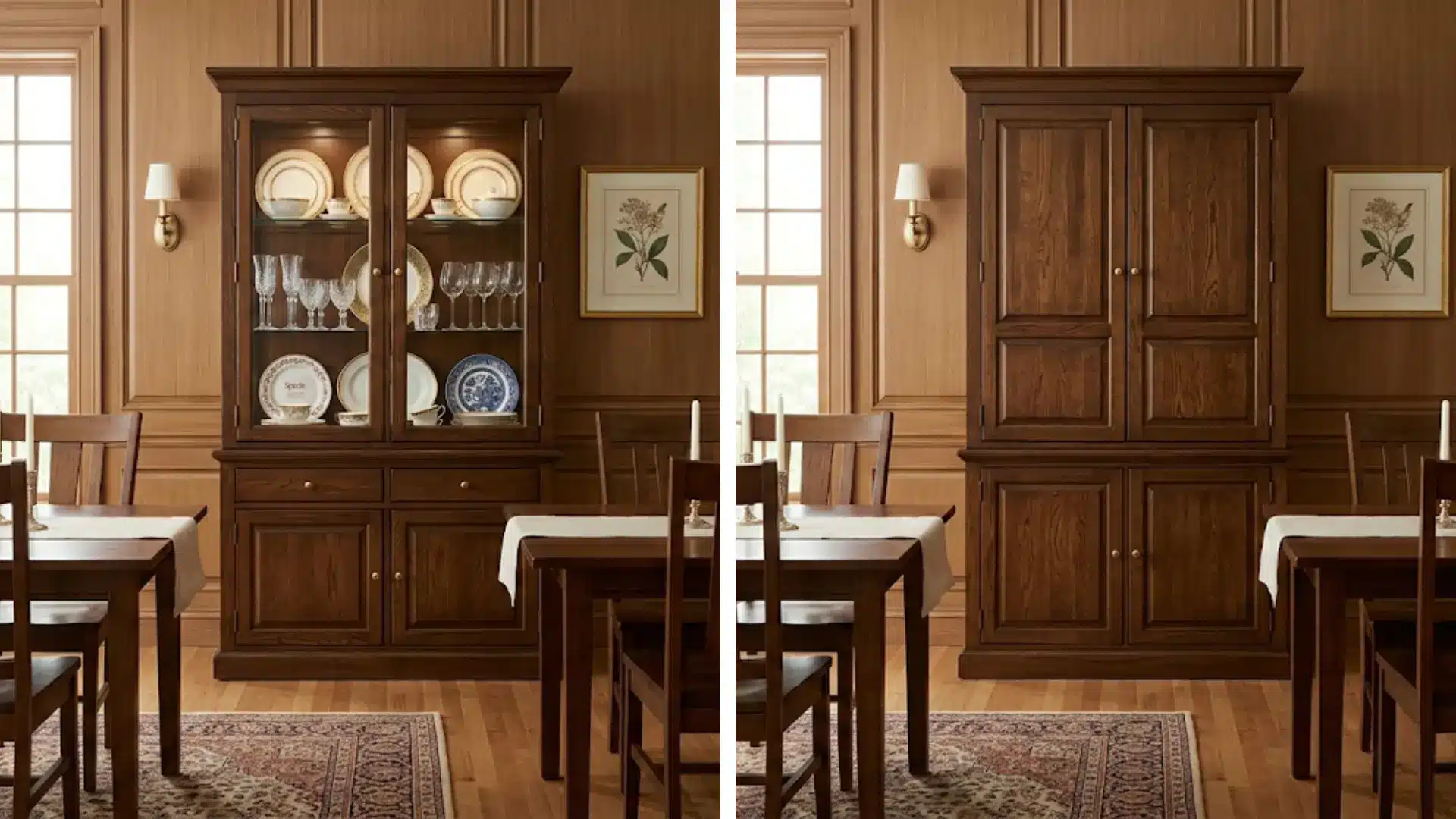
In the dining room, both terms show up, but with very different purposes. A cabinet here usually means a display cabinet or china cabinet with glass-paneled doors, used to showcase your fine dishes, glassware, or decorative pieces.
A cupboard, on the other hand, is a closed storage unit meant to keep things tucked away and out of sight. The rule of thumb is simple: if you want to display, go with a cabinet. If you want to store and hide, go with a cupboard.
4. Pantry
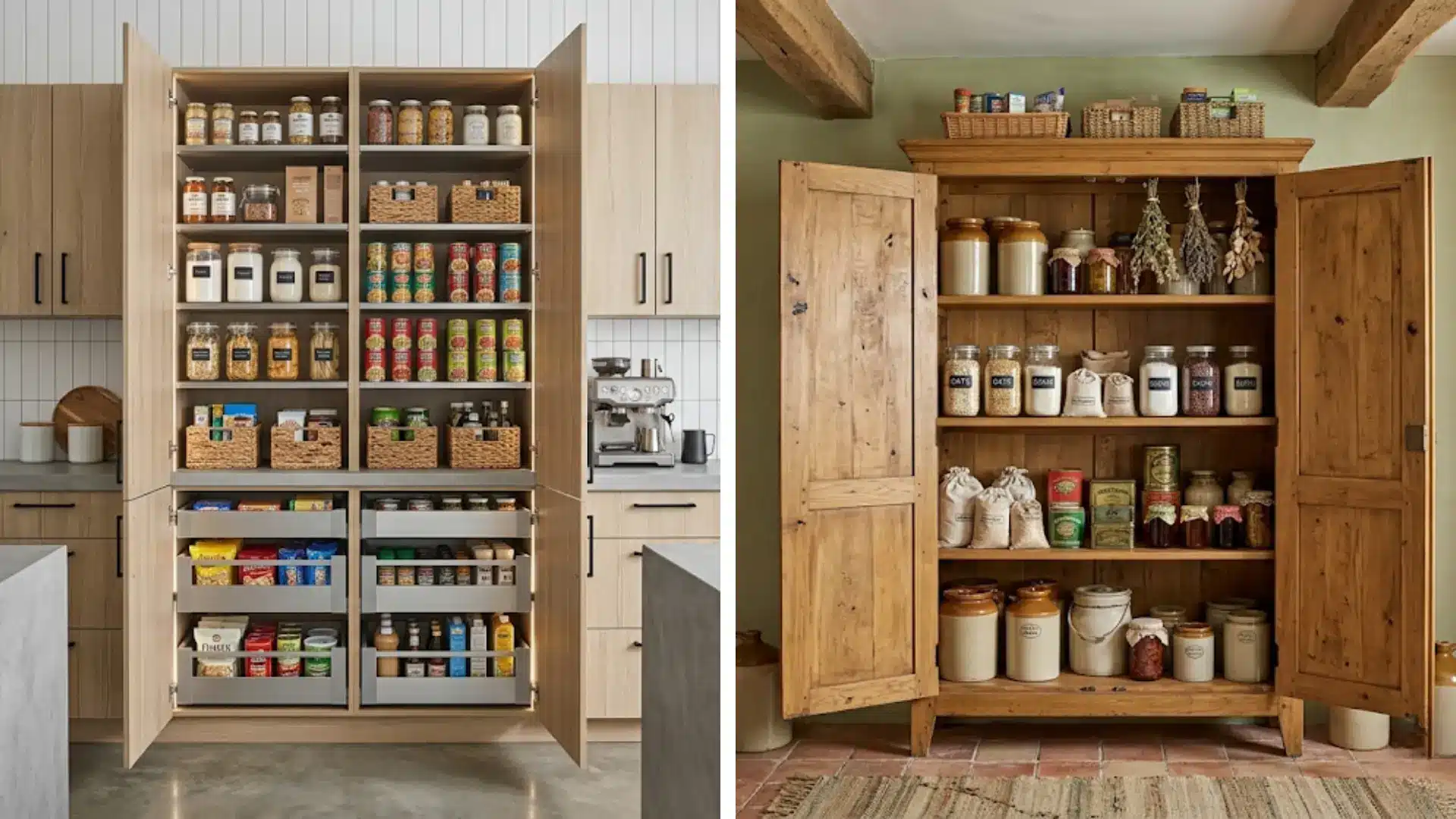
A pantry sits right in the middle of this debate. It’s essentially a large cupboard or a dedicated cabinet space used purely for food storage. In modern homes, pantry cabinets are built-in units with adjustable shelves and pull-out drawers.
In older or more traditional homes, a pantry cupboard is a freestanding wooden unit with fixed shelves. Either way, the goal is the same: keeping your dry goods, canned items, and snacks organized and easy to reach whenever you need them.
5. Laundry Room
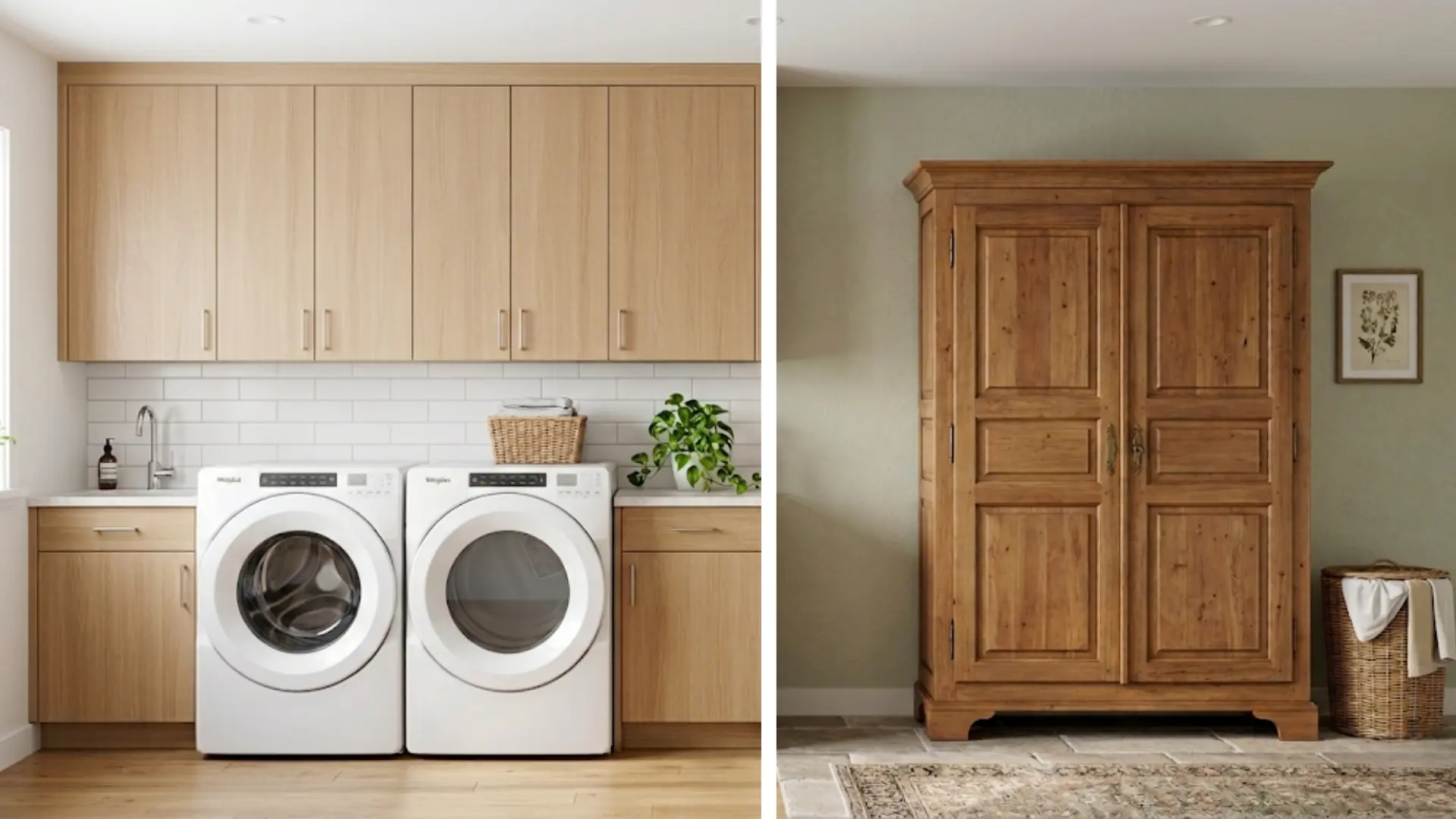
The laundry room is often overlooked in storage planning, but it matters more than most people think. Wall-mounted cabinets above the washer and dryer are the most popular choice; they keep detergents, fabric softeners, and cleaning supplies close but safely out of reach.
A freestanding cupboard also works well in a larger laundry space for storing towels or extra supplies. The decision really comes down to your space size, your budget, and whether you want permanent or flexible storage.
Which One Should You Choose for Your Home?
Your home style plays a big role in choosing between cupboards and cabinets. The right choice should match your design, mood, and overall aesthetic.
- Modern or contemporary home: Go with cabinets. Their clean lines, adjustable shelves, and built-in finish will complement your space perfectly.
- Farmhouse or traditional home: A freestanding cupboard adds warmth, character, and a timeless charm that built-in cabinets often lack.
- Transitional style (mix of modern and classic): You can actually use both, cabinets in the kitchen and bathroom, cupboards in the dining room or bedroom.
When you match storage to your home style, everything feels intentional and balanced. Choose what fits your space best, and your home will feel complete.
Pro Tip: Mixing both is perfectly fine. Use built-in cabinets where you need efficiency and a polished look, and bring in a statement cupboard where you want personality and warmth.
Cupboard, Cabinet, and Other Storage: How Do They Compare?
Many storage terms sound similar, which can make things confusing fast. Here’s a clear comparison:
| Storage Type | Primary Use | Design & Features | Where It’s Found |
|---|---|---|---|
| Cupboard | Store dishes, food, or linens | Small, enclosed unit, typically with shelves | Kitchens, hallways, or utility rooms |
| Cabinet | General-purpose storage | Can be freestanding or built-in, with doors/drawers | Kitchens, bathrooms, offices |
| Closet | Store clothes and accessories | Built-in space, typically with hanging rods or shelves | Bedrooms, entryways, hallways |
| Pantry | Store food and kitchen supplies | Larger than a cupboard, purpose-built for food | Kitchens or nearby rooms |
| Drawer | Store smaller items | Horizontal pull-out, part of a cabinet or standalone | Kitchen cabinets, desks, and nightstands |
| Wardrobe | Store clothes | Freestanding, often with hanging rods and shelves | Bedrooms, dressing rooms |
Knowing these distinctions makes it easier to shop smarter, talk to contractors confidently, and choose the right storage for every room.
Final Thoughts
So now you know, a cupboard vs. a cabinet isn’t exactly the same thing, even though people treat them like they are. From how they’re built to where they’re placed and what they store, each has its own personality.
If you want something sleek, built-in, and modern, a cabinet is your best bet. If you prefer something freestanding, traditional, and easy to move around, go with a cupboard.
And if you’re in the UK, well, you’re probably calling both a cupboard anyway, and that’s perfectly fine! I hope this guide helped clear things up for you.
Have thoughts or questions? Drop a comment below, I’d love to hear what you prefer: cupboards or cabinets!