

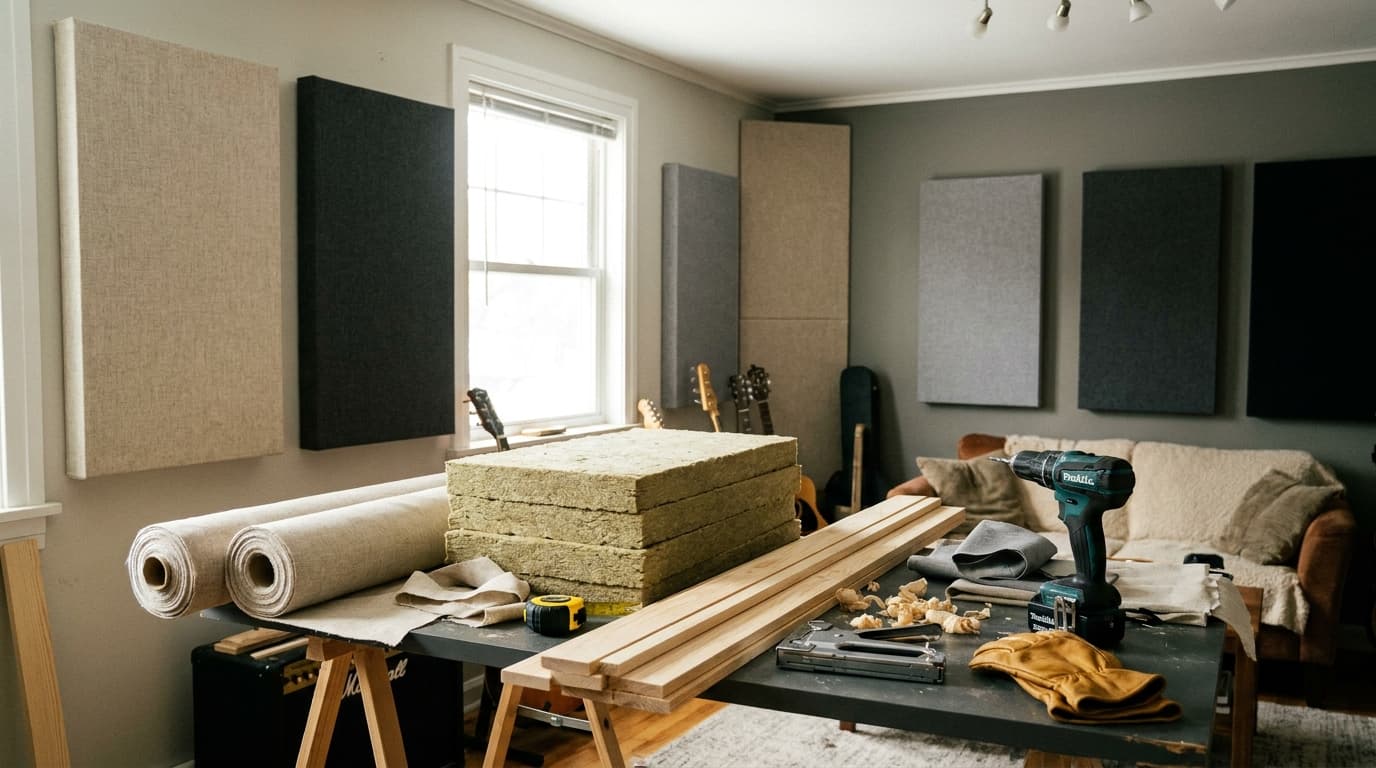


A room can sound fine until one recording exposes every echo. If you are researching diy acoustic panels, you probably want more than a list of supplies.
You want to know what actually works in real rooms before spending money, cutting wood, or wrapping insulation in fabric. I get that, because small choices like panel thickness, breathable cloth, core material, and wall placement can change the result fast.
The sections ahead keep the focus on practical decisions people discuss in forums every day: what to build first, what to avoid, where panels should go, and how to test the difference. By the end, you will have a clearer plan for a room that sounds controlled, not overdone.
| Difficulty | 2 out of 5, simple build, but clean fabric wrapping and safe insulation handling need care |
| Time | 1–2 hours per panel for beginners; faster if the wood is pre-cut |
| Cost | $30–$100+ per panel, depending on core material, fabric, frame wood, and mounting hardware |
| Tools Needed | Staple gun, drill/driver, saw, measuring tape, square, scissors, clamps, safety gloves, mask, eye protection |
| Skill Required | Beginner-friendly, basic measuring, cutting, drilling, and stapling; a helper is useful for larger wall or ceiling panels |
What Do Acoustic Panels Do, and Are They Worth It?
Acoustic panels control sound inside a room by absorbing echoes, reverb, and sharp reflections from hard surfaces. They are not made to block outside noise or fully soundproof walls, so that difference matters before starting.
If your voice recordings sound hollow, video calls feel echoey, or speakers sound harsh, DIY panels can be worth making at home. The main value comes from using the right absorbing material, breathable fabric, and proper placement.
A homemade panel can work well when it is built with enough thickness and placed where sound first bounces. The real benefit is control: you can choose the size, fabric, cost, and design that fit your room. For many small studios, offices, and gaming rooms, that makes the project practical and useful.
Methods of Building an Acoustic Panel and Which is Right for You?
The right acoustic panel method depends on how much time, budget, and finish quality you want. If you are building your first panel, a simple framed design is usually the safest choice. If the panels will stay visible in a living room or home theater, a decorative border may be worth the extra effort.
For renters, freestanding panels make more sense because they avoid wall damage. The goal is to pick a method that matches your room, tools, and comfort level, not the most complicated design.
| Building Method | Best For | Skill Level | Main Benefit | Keep in Mind |
|---|---|---|---|---|
| Basic wood frame panel | Beginners, bedrooms, offices, small studios | Easy | Simple, affordable, and reliable | Finish may look basic without trim |
| Two-part frame panel | Cleaner builds and larger panels | Medium | Stronger frame with less bowing | Takes more cutting and assembly time |
| Decorative border panel | Home theaters, living rooms, visible walls | Medium | Looks more polished and furniture-like | Costs more and needs careful fitting |
| Frameless panel | Quick builds and lightweight panels | Easy | Fast, cheap, and simple | Less durable and harder to hang neatly |
| Freestanding panel | Renters, podcasts, movable setups | Medium | No wall mounting needed | Takes up floor space |
| Ceiling cloud panel | Studios, desks, mixing spots, theaters | Medium to hard | Reduces ceiling reflections well | Needs very secure mounting |
If you want the most balanced option, choose the basic wood frame panel. It gives you good sound control, simple construction, and enough flexibility for most rooms.
How to Build DIY Acoustic Panels: Step by Step
Building DIY acoustic panels becomes easier when the steps follow a clear order. This process covers sizing, framing, fabric wrapping, insulation, finishing, and mounting.
Materials and Tools Cost Table
Before buying anything, it helps to separate must-have materials from tools you may already own. The total cost can look higher on paper because items like a drill, saw, or staple gun are usually one-time purchases. For the actual panel, the main cost comes from the absorbing core, wood frame, fabric, and mounting hardware.
| Material or Tool | Quantity | Estimated Cost | Purpose |
|---|---|---|---|
| Mineral wool or rigid fiberglass | 1 board per panel | $8–$20 | Main sound-absorbing core |
| Recycled denim insulation | 1 board per panel | $12–$25 | Alternative sound-absorbing core |
| Pine boards or plywood strips | 4 pieces per panel | $12–$30 | Builds the panel frame |
| Breathable fabric | Enough to cover front, sides, and back edges | $8–$25 | Covers the panel neatly |
| Backing fabric | 1 piece per panel | $3–$10 | Covers the rear side |
| Screws | 8 to 12 per panel | $3–$8 | Joins the frame corners |
| Wood glue | 1 small bottle | $4–$8 | Strengthens the frame joints |
| Staples | 30 to 50 per panel | $3–$8 | Holds fabric in place |
| Staple gun | 1 | $10–$25 | Attaches fabric to the frame |
| Saw | 1 | $20–$80 | Cuts the wood pieces |
| Drill | 1 | $40–$120 | Makes pilot holes and drives screws |
| Measuring tape | 1 | $5–$15 | Measures wood, fabric, and wall space |
| Gloves | 1 pair | $3–$10 | Protects hands while handling insulation |
| Mask | 1 | $2–$10 | Protects from dust and loose fibers |
| Eye protection | 1 pair | $5–$15 | Protects eyes during cutting and handling |
| French cleats, Z-clips, or brackets | 1 set per panel | $5–$20 | Mounts the panel on the wall |
| Ceiling anchors | 2 to 4 per ceiling panel | $5–$15 | Secures ceiling cloud panels |
This table provides a realistic starting point, but the final cost depends on panel size, material quality, and the number of tools already available.
Step 1: Plan the Panel Size Around the Insulation
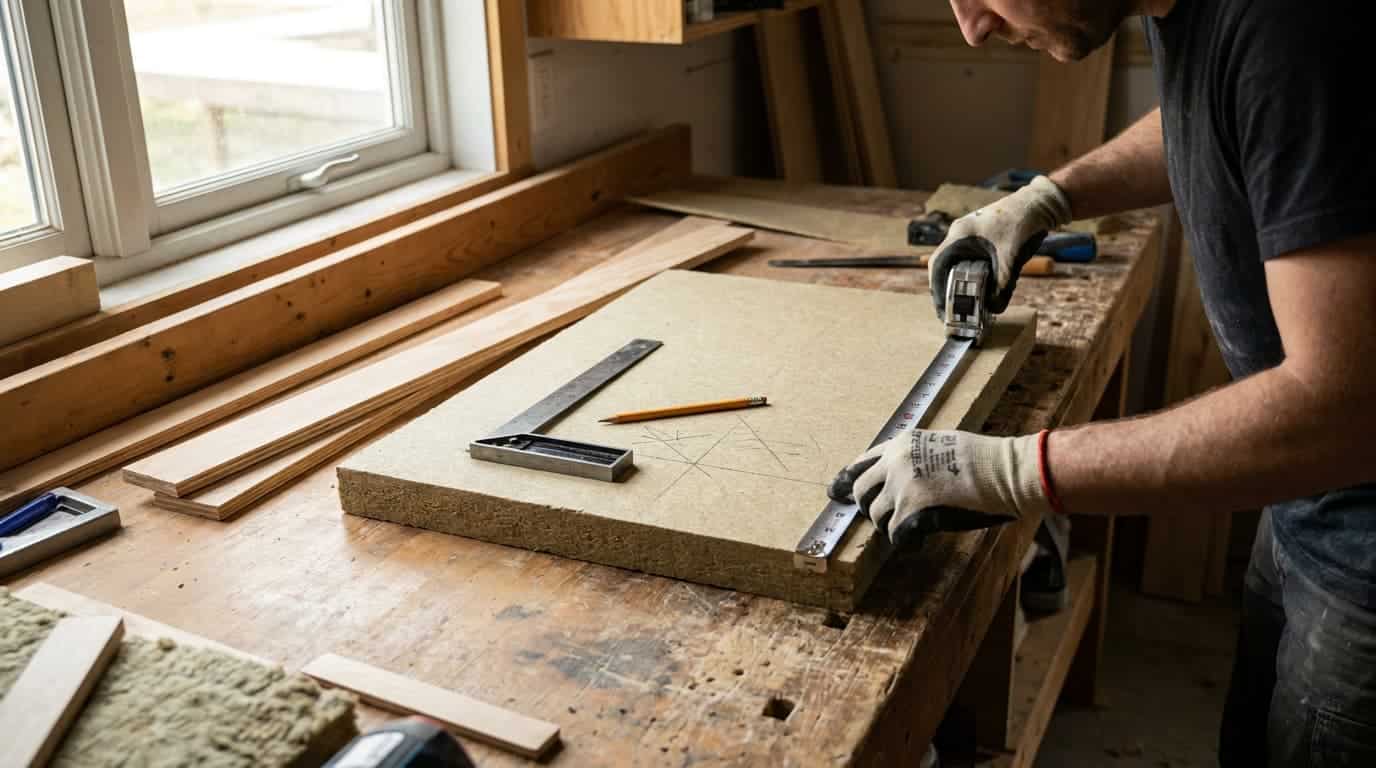
Start with the size of your acoustic insulation. In the transcript, the insulation came in a 4 x 2 ft size, so the frame was designed around that instead of cutting the insulation down.
Add a small amount of extra space to the frame. The builder added about 1/8 inch to the length and width for easier fitting, plus a little extra depth so the insulation would not press tightly against the fabric.
Step 2: Cut, Assemble, and Strengthen the Frame
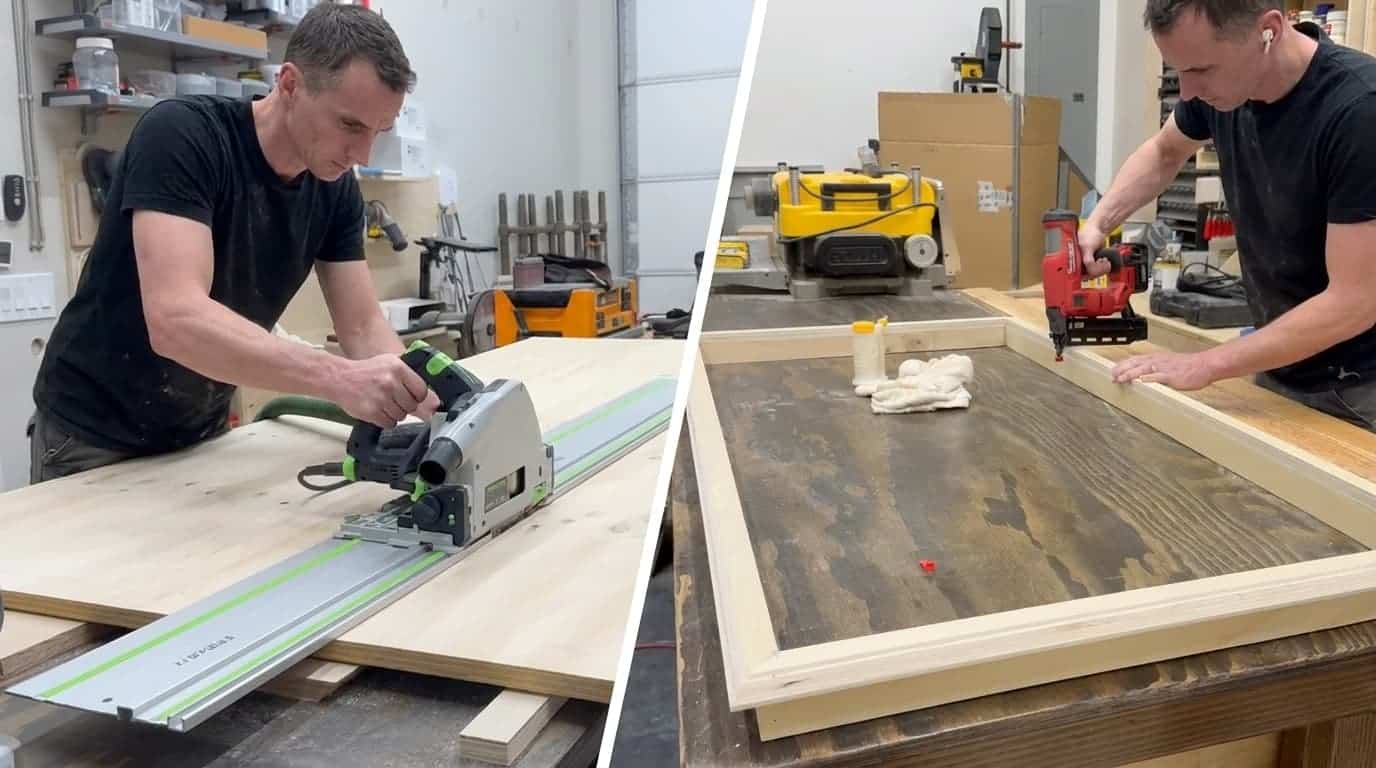
Use 3/4-inch birch plywood for the frame because it is straight, smooth, strong, and less likely to warp. The builder made a two-part frame: one section held the insulation, and the other helped support the fabric and outer trim.
If you enjoy working with plywood and want to put the same grain-matching and edge skills to use on a smaller scale, the wood inlay beginner guide covers exactly that kind of close-tolerance work.
Join the frame pieces with wood glue and brad nails. The glue adds strength, while the nails hold everything in place as it dries. Let the frame cure overnight if possible before moving on.
Step 3: Sand the Frame and Prepare the Surface
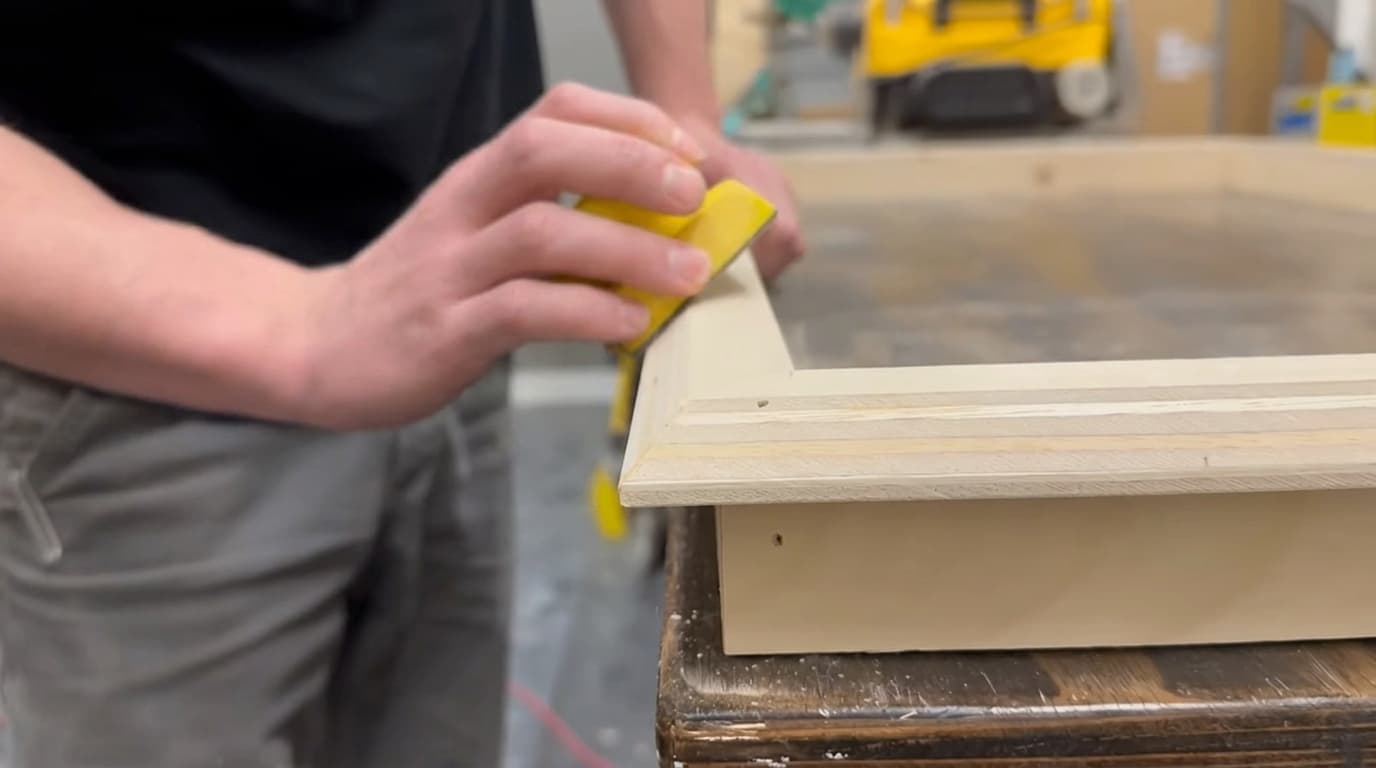
Sand all edges where the fabric will touch the frame. This is important because sharp plywood edges can snag or tear thin stretch fabric.
Use 220-grit sandpaper, then wipe the frame with a damp cloth to remove dust. A smooth frame makes the fabric easier to wrap and helps the finished panel look cleaner.
Step 4: Choose and Wrap the Front Fabric
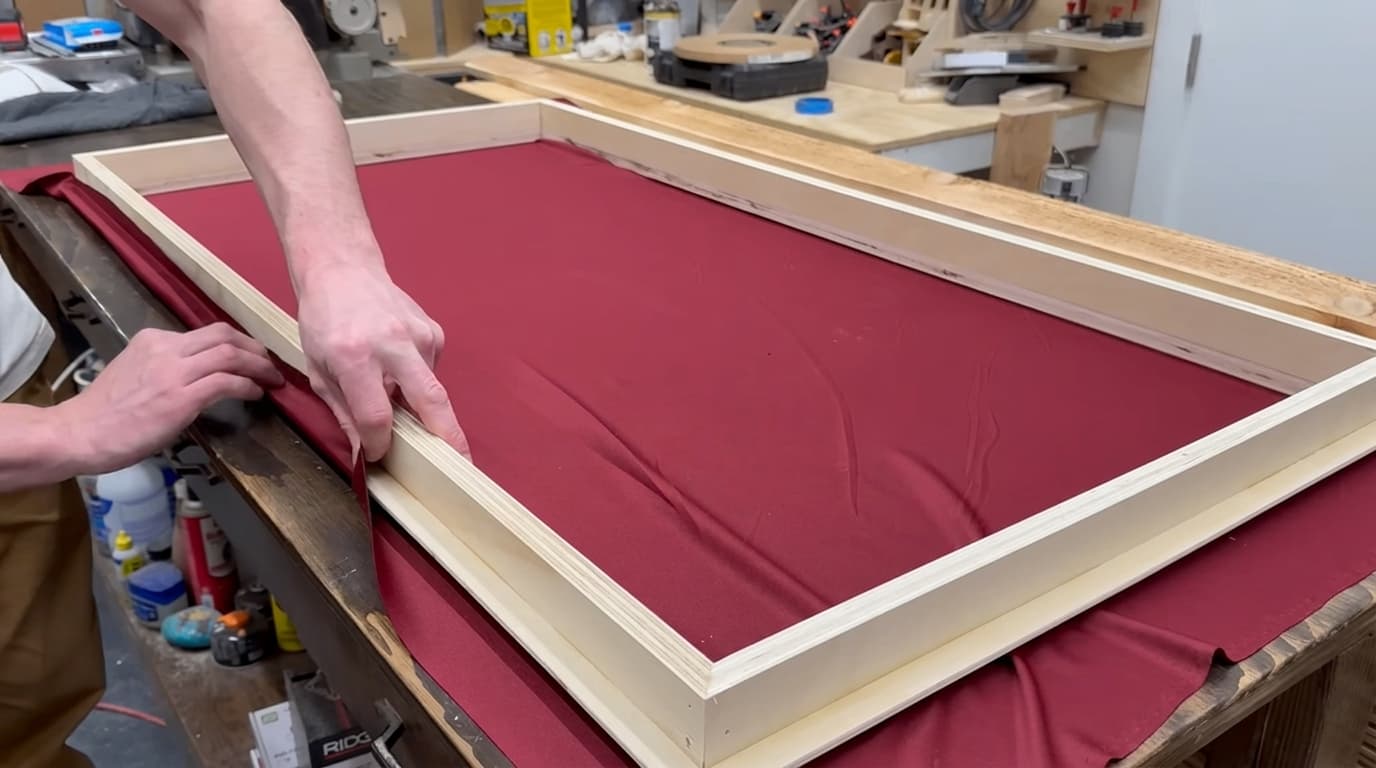
Pick a thin, breathable fabric that allows sound to pass through. The builder used polyester stretch fabric because it was light, smooth, and less likely to wrinkle.
Wrap the front by starting with one long side. Secure it lightly with fabric tape, then staple it. Move to the opposite long side and stretch the fabric toward yourself before stapling. Finish with the two short sides, folding the corners neatly and trimming extra fabric.
Step 5: Add the Acoustic Insulation and Close the Back
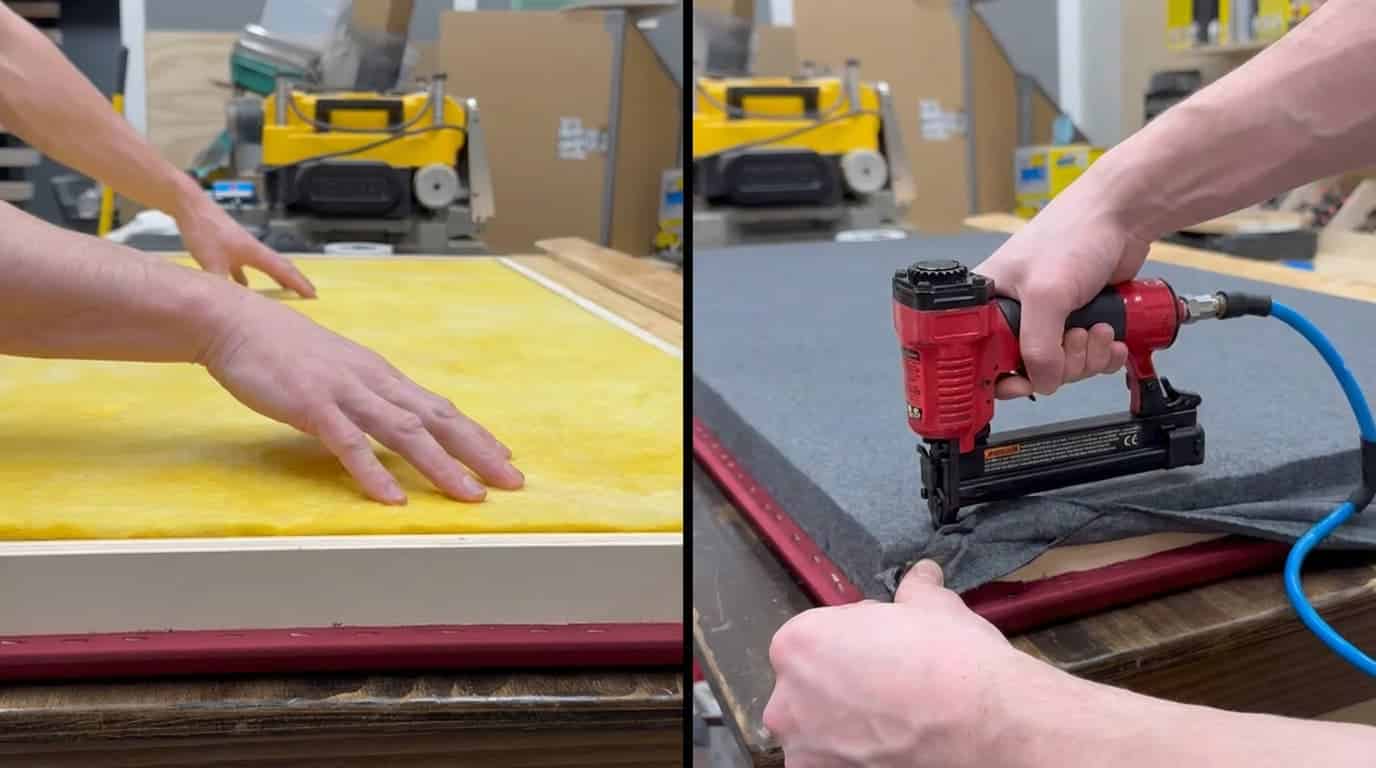
Place the rigid acoustic insulation inside the frame. warns against using regular loose home insulation because it may sag and will not give the same neat finish.
After the insulation is in place, wrap the back with another piece of fabric. Staple it flat and keep the edges clean. Make sure no staples stick out, especially if you plan to add a wood border.
Step 6: Build and Finish the Optional Wood Border
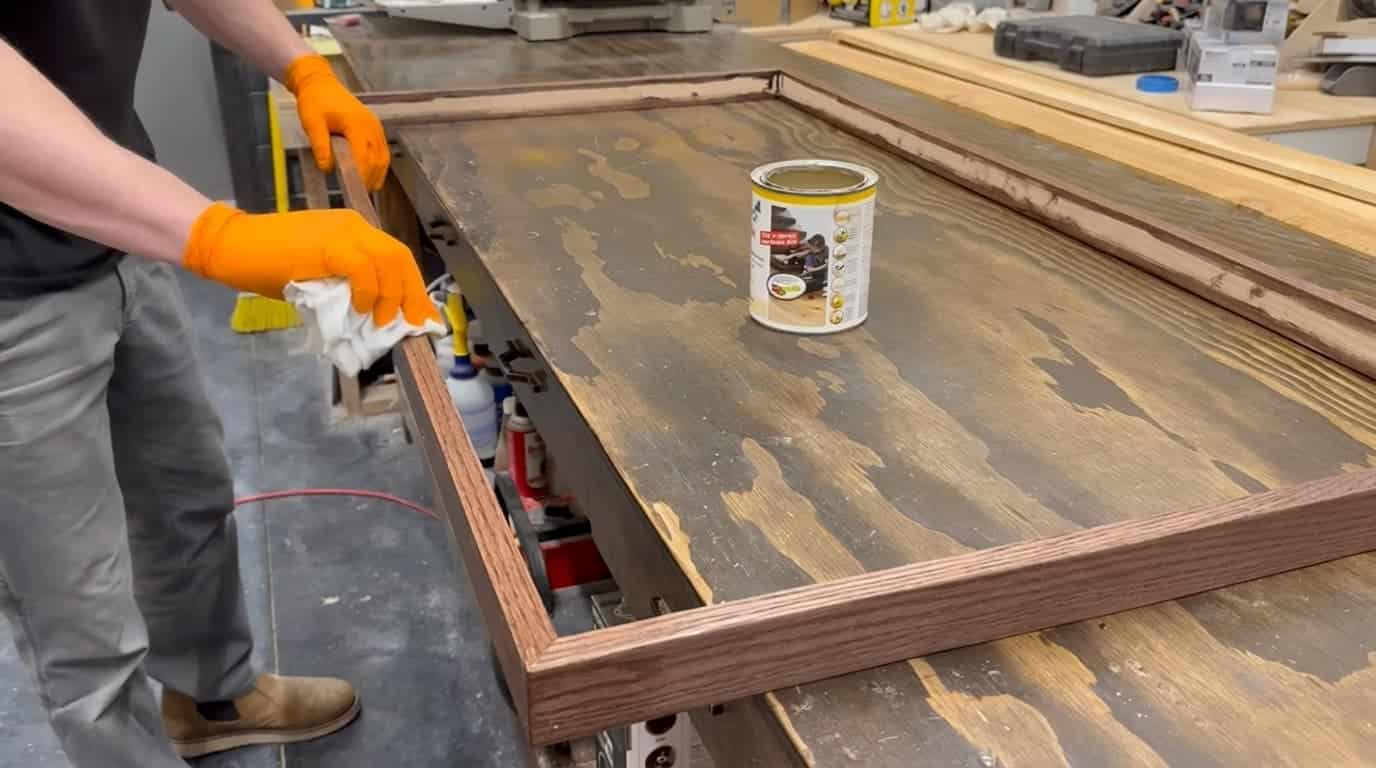
For a more finished look, cut strips from 3/4-inch oak plywood to create an outer border. Test-fit one strip first, then use it as a guide for the rest. The border should fit snugly around the panel.
Sand the border, add edge banding if needed, then stain and seal it. Let the finish dry overnight before attaching it to the panel.
The same stain-and-seal process is covered in detail in the barn door building, which walks through surface prep and finish coats for exposed oak and pine.
Step 7: Attach the Border and Mounting Hardware
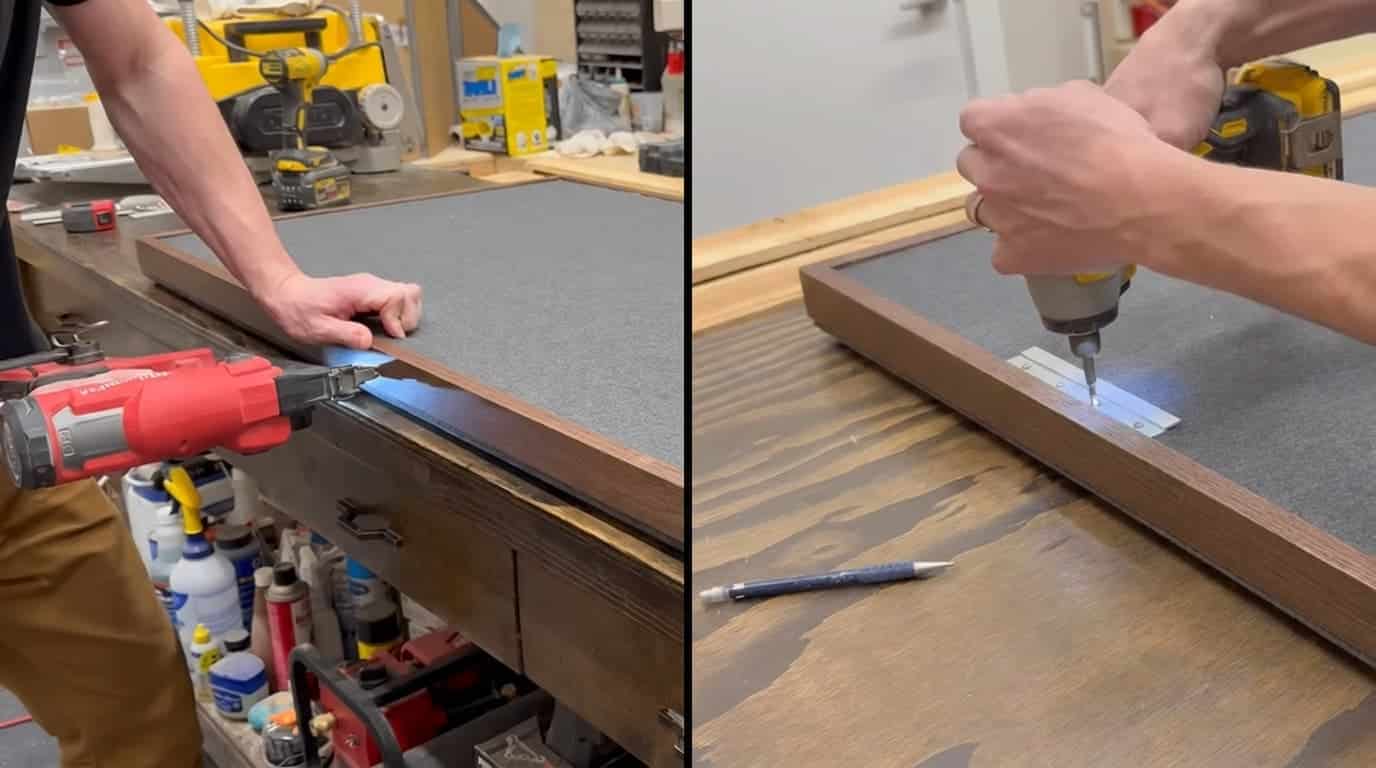
Slide the finished oak border around the panel and secure it with brad nails. The builder used one nail on each side to hold the border tight.
Then install low-profile French cleats on the back of the panel and on the wall. These help the panel hang flat and secure. Use stronger anchors for heavier panels or ceiling-mounted panels.
Step 8: Hang the Panels and Test the Room
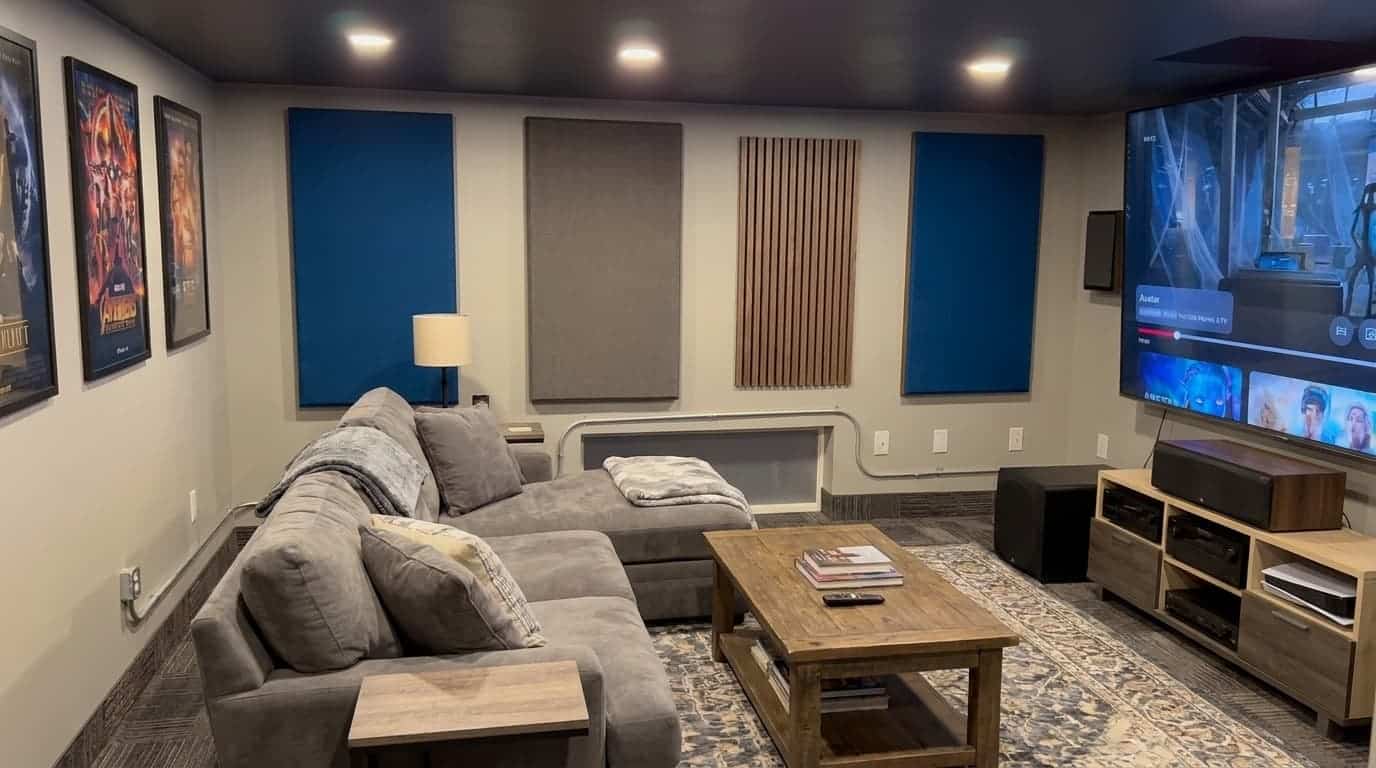
Hang the panels in the room and listen for the change. In the transcript, the builder installed 10 panels in a small home theater room and noticed a clear drop in room noise. Conversations and movie dialogue became easier to hear.
Start with the most important wall areas first, then test before adding more panels. This keeps the room controlled without making it feel too dull.
Once the panels are hung, test the room before building more. Small placement changes can improve clarity without making the space feel too flat.
Here’s the detailed video overview:
Where to Place DIY Acoustic Panels
Panel placement matters as much as the build itself. A few well-placed DIY acoustic panels can make a room sound clearer without covering every wall.
| Placement Area | Where to Put Panels | Why It Helps | Best For |
|---|---|---|---|
| First reflection points | Side walls where the speakers first bounce sound. Use the mirror trick to find the spot. | Reduces early reflections and improves clarity. | Music, mixing, gaming, and home theater |
| Behind speakers | Front wall behind speakers, monitor, or desk. | Controls front-wall reflections and softens harsh sound. | Studios, desk setups, speaker rooms |
| Behind the listening position | Wall behind your chair, sofa, or mixing seat. | Reduces rear-wall bounce, especially in small rooms. | Home theaters, studios, small rooms |
| Ceiling cloud | Above a desk, studio chair, or main listening seat. | Cuts reflections between the floor and the ceiling. | Studios, offices, podcast rooms |
| Corners and bass traps | Room corners, especially near speakers or bass-heavy areas. | Controls low-end buildup better than flat wall panels. | Music rooms, theaters, bass-heavy rooms |
Start with the strongest reflection points, then test the room. Good placement helps you use fewer panels while still getting cleaner sound.
Real Community Questions About DIY Acoustic Panels
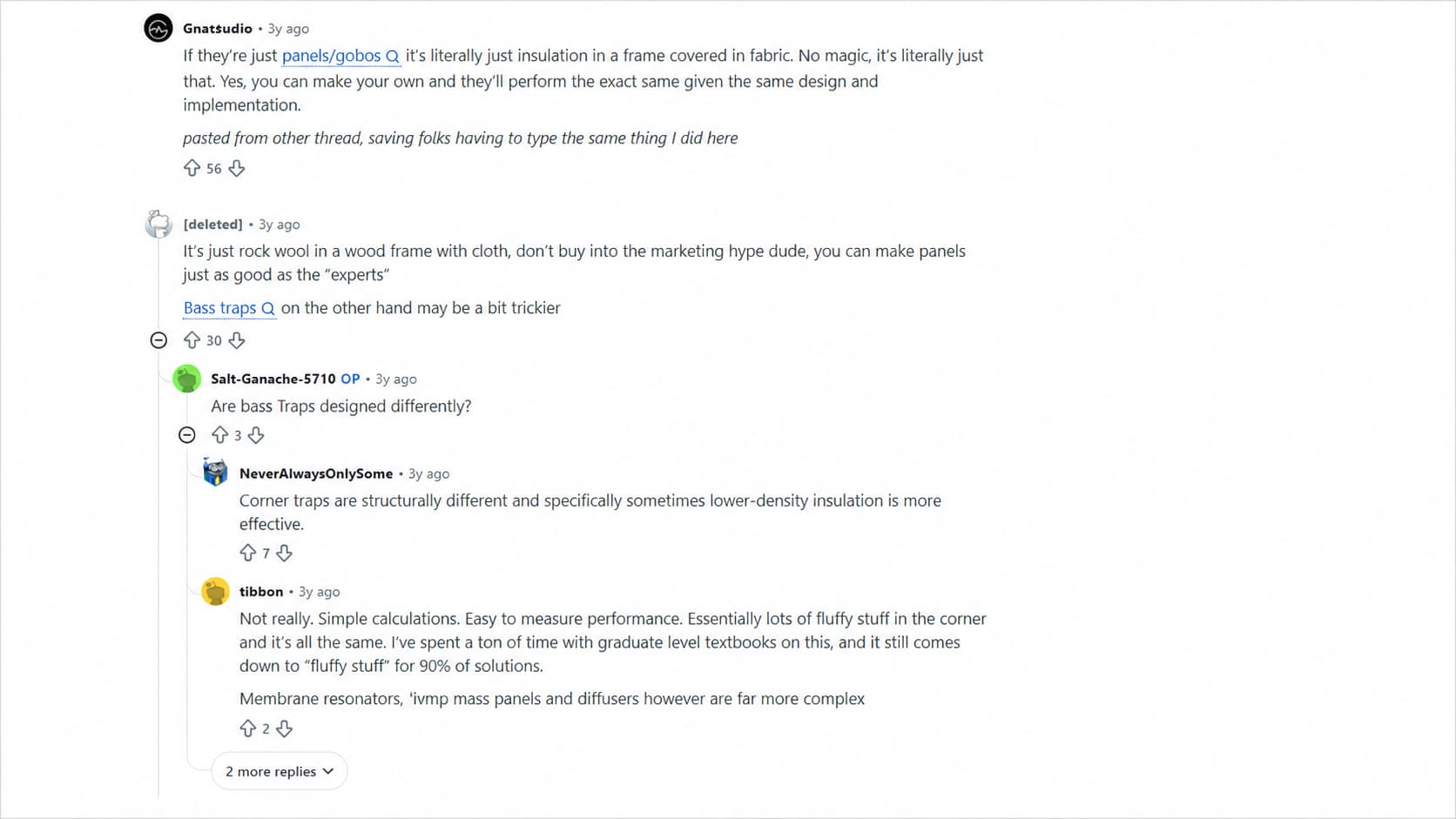
Reddit users explain that DIY acoustic panels are not as mysterious as they may seem. In this discussion, builders point out that standard panels or gobos are usually insulation placed inside a wood frame and covered with cloth.
Several comments push back against the idea that branded acoustic treatment is always special, since many companies use the same or similar insulation materials that DIYers can buy themselves. The thread also adds useful nuance around bass traps.
Some users say corner traps can be built using the same basic idea, while others note that certain designs, such as membrane resonators, limp mass panels, and diffusers, are more complex. Overall, the advice supports DIY panels when design, materials, and placement are handled properly.
How to Test Your Panels After Installation
Testing shows whether your DIY acoustic panels are actually helping. Use simple checks first, then adjust placement before building or buying more panels.
- Clap test: Stand in the room and clap once. Listen for ringing, flutter echo, or a sharp bounce after the clap.
- Voice recording test: Record the same sentence before and after installing panels. Check if your voice sounds clearer and less hollow.
- Speaker listening test: Play familiar music or movie dialogue. Notice if voices sound cleaner and harsh reflections feel softer.
- Video call test: Join a call or record a short sample. Listen for reduced echo and better speech clarity.
- Before-and-after phone recording: Use the same phone, same spot, and same distance so the comparison stays fair.
- Room measurement software: Use this only if you want more detail about reflections, reverb, or frequency issues.
Do not judge the panels by looks alone. A quick sound test helps you place them smarter and avoid over-treating the room.
Common Mistakes Acoustic Panels DIY Builders Make
Most DIY acoustic panel mistakes come from rushed choices. The wrong fabric, a weak frame, or poor placement can cause a good panel to perform poorly.
| Common Mistake | Why It Matters | Better Approach |
|---|---|---|
| Using the wrong core material | Loose or soft insulation can sag and lose shape. | Use rigid mineral wool, rigid fiberglass, or acoustic insulation boards. |
| Choosing a non-breathable fabric | Thick or coated fabric can block sound before it reaches the core. | Use fabric that lets air pass through easily. |
| Making panels too thin | Thin panels may reduce sharp echo but leave the room sounding boxy. | Use thicker panels when space allows. |
| Skipping surface prep | Rough frame edges can snag, wrinkle, or tear the fabric. | Sand the frame before wrapping. |
| Wrapping fabric poorly | Uneven tension can create wrinkles, bumps, and loose corners. | Secure one side first, then stretch evenly. |
| Placing panels randomly | Panels may miss the spots where reflections cause the most problems. | Start with the first reflection points and test the room. |
| Using weak mounting hardware | Panels can loosen, tilt, or fall over time. | Match brackets, cleats, or anchors to the panel weight. |
A better build comes from simple care at each stage. Choose the right materials, wrap cleanly, and place panels where the sound actually needs help.
Tips for Better DIY Acoustic Panels
A few smart habits can make your panels cleaner, safer, and more useful. These tips help you avoid wasted time and extra cost.
- Build one test panel first: Check the size, fabric tension, core fit, and hanging method before making a full set. This same test-before-committing approach pays off in any multi-piece build.
It is the same reason most people start with a single prototype on projects like these, whiskey barrel furniture builds, where sizing can vary between barrels. - Use insulation size as your guide: Build the frame around the board to avoid rough cuts and waste.
- Leave slight frame space: Let the core sit flat without pressing hard against the fabric.
- Use fabric tape before stapling: Hold the cloth in place so wrinkles are easier to fix.
- Keep staples flat: Neat staples help the backing, trim, and mounting parts sit properly.
- Add an air gap when possible: A small wall gap can improve absorption.
- Test before building more: Move panels around and listen before adding extra panels.
- Use stronger hardware overhead: Ceiling panels need safer anchors because they hang above people.
Good panels are not just about what you buy. Careful sizing, clean wrapping, safe mounting, and testing make the final result much stronger.
Frequently Asked Questions
How long do DIY acoustic panels usually last?
Well-built DIY acoustic panels can last for years if the fabric stays tight, the frame remains dry, and the core does not sag. Check them once in a while for dust, loose staples, fabric fading, or frame movement issues, too.
Can humidity affect DIY acoustic panels?
Yes, humidity can affect the frame, fabric, and some core materials over time. Use straight plywood or sealed wood, keep panels away from damp walls, and avoid installing them in basements with moisture problems unless the room is controlled properly.
Should DIY acoustic panels be fire-resistant?
Fire safety is worth thinking about, especially in studios with lights, cables, or electronics nearby. Choose safer materials when possible, avoid placing panels against heat sources, and check local fire rules if panels are used in commercial or shared spaces.
Can acoustic panels be cleaned?
Yes, but clean them gently. Use a soft brush, a lint roller, or a low-suction vacuum. Avoid soaking the fabric, because moisture can affect the core or frame. Removable fabric covers make cleaning easier in dusty rooms or pet areas.
Should panels match the room layout symmetrically?
For listening rooms, symmetry usually helps because both ears receive more balanced reflections. Place matching panels on the left and right sides when possible. For voice recording, exact symmetry matters less than treating the strongest echo around the microphone area.
Final Thoughts
A better-sounding room usually comes down to smart choices, not complicated gear. I would start with the basics: choose the right core material, use breathable fabric, build a solid frame, and place each panel where reflections actually happen.
You also saw why testing matters, because a small placement change can improve clarity before you spend more money. DIY acoustic panels are worth the effort when you want better voice recordings, cleaner calls, clearer movie dialogue, or a calmer studio setup.
The best part is that you can shape the build around your room and budget. Try the tips, test your space, and share your results or questions in the comments.