

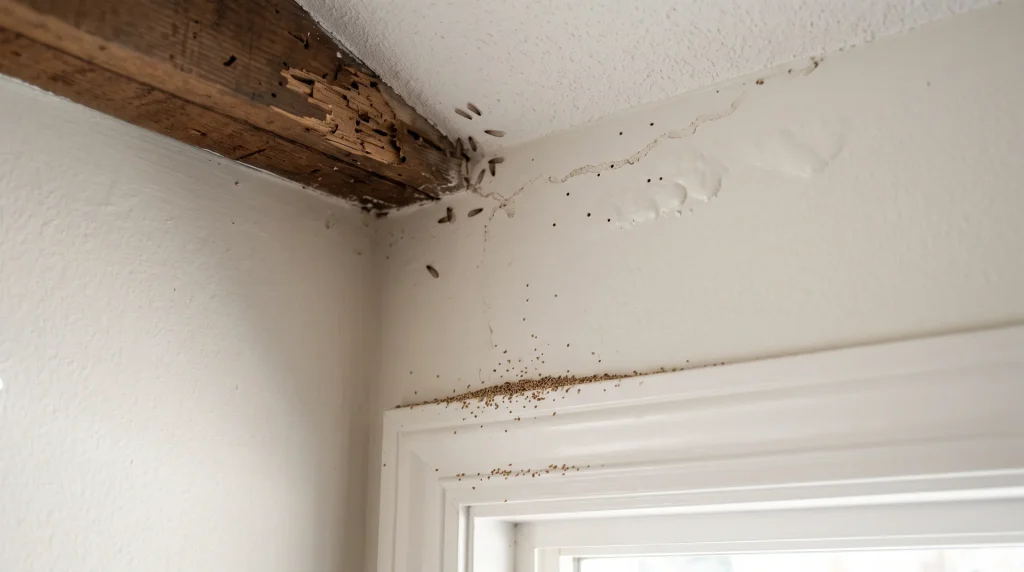


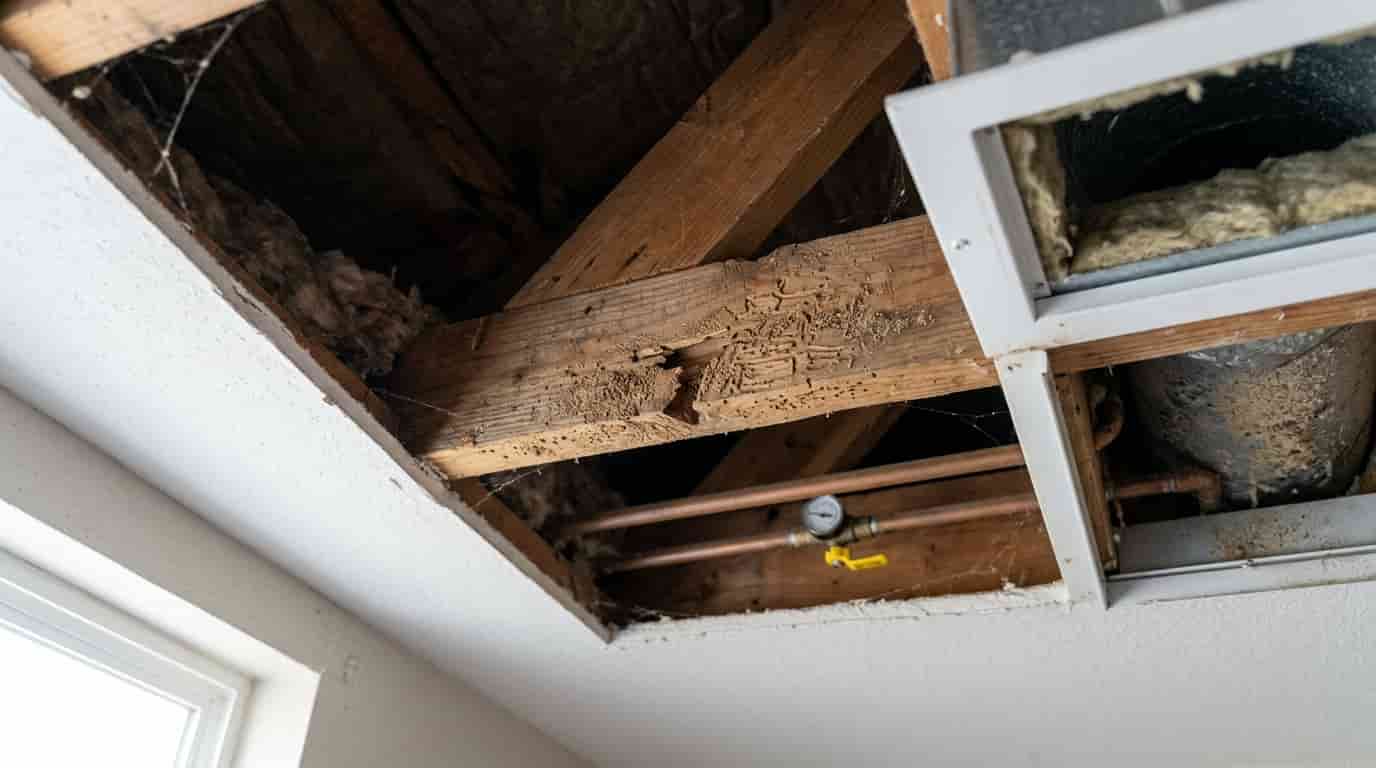
Early signs of termites in a ceiling include tiny holes, pellet-like droppings, mud tubes, irregular surface trails, discarded wings, hollow or weakened ceiling wood, and unexplained bubbling or peeling paint.
A single hole or patch of damaged paint does not confirm a termite infestation. Nail marks, leaks, settling, and other insects can create similar symptoms.
Several related signs in the same area are more concerning than a single isolated mark.
For example, a small ceiling hole directly above a fresh pile of pellets deserves closer attention than a hole with no debris or other termite clues nearby.
8 Early Stage Signs of Termites in the Ceiling
Ceiling termite activity often leaves small, easy-to-miss clues before obvious damage appears. Check for several related signs in the same area rather than relying on a single symptom.
1. Tiny Holes in Drywall or Plaster
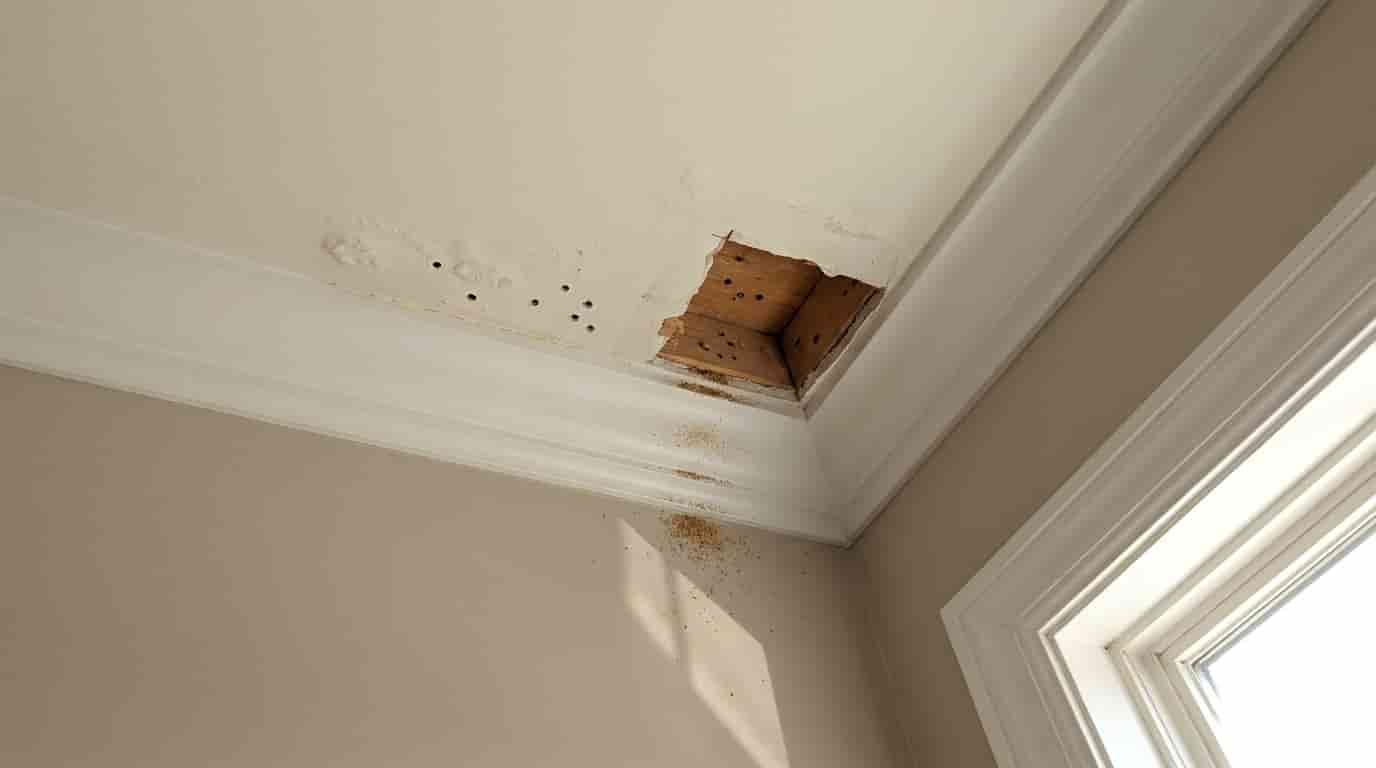
Small holes in modern drywall texture or plaster may appear when termites push waste from their galleries or emerge from infested wood.
These small, round holes may occur around ceiling seams, crown molding, beams, corners, light fixtures, or attic openings. Drywood termites commonly create kick-out holes, while other insects, old repairs, or settling can cause similar marks.
Look for nearby pellets, wings, trails, or other signs before concluding that termites are present.
2. Pellet-Like Droppings Below the Ceiling
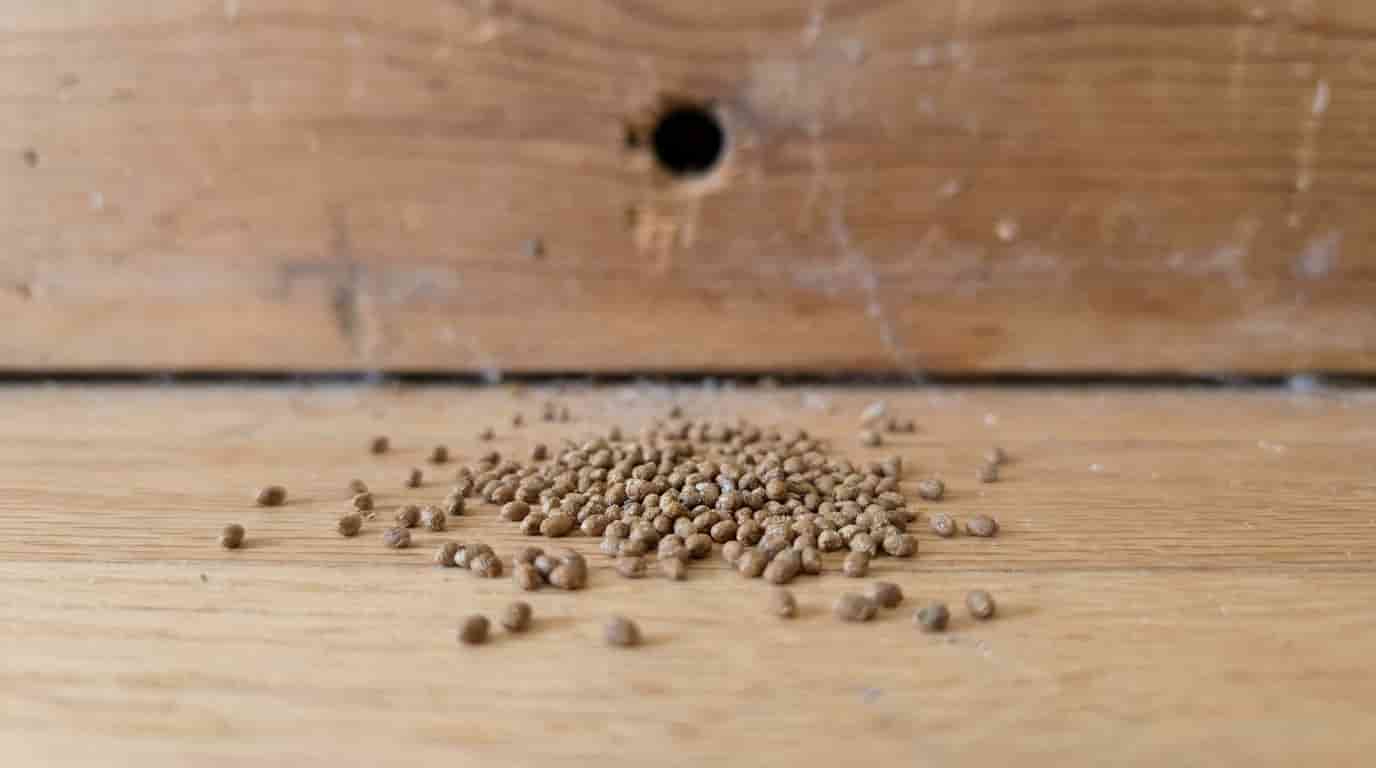
Small piles of hard pellets beneath a ceiling area may indicate drywood termite activity. These pellets, called frass, are pushed out through kick-out holes as termites clear their galleries.
Frass is usually small, hard, and uniform in shape. It may resemble coarse sand or pepper and often collects beneath a single opening. If fresh pellets return after cleaning, the opening may still be active.
Check the surrounding area for pellets, discarded wings, irregular trails, or damaged wood before assuming termites are responsible.
3. Mud Tubes or Soil-Like Material
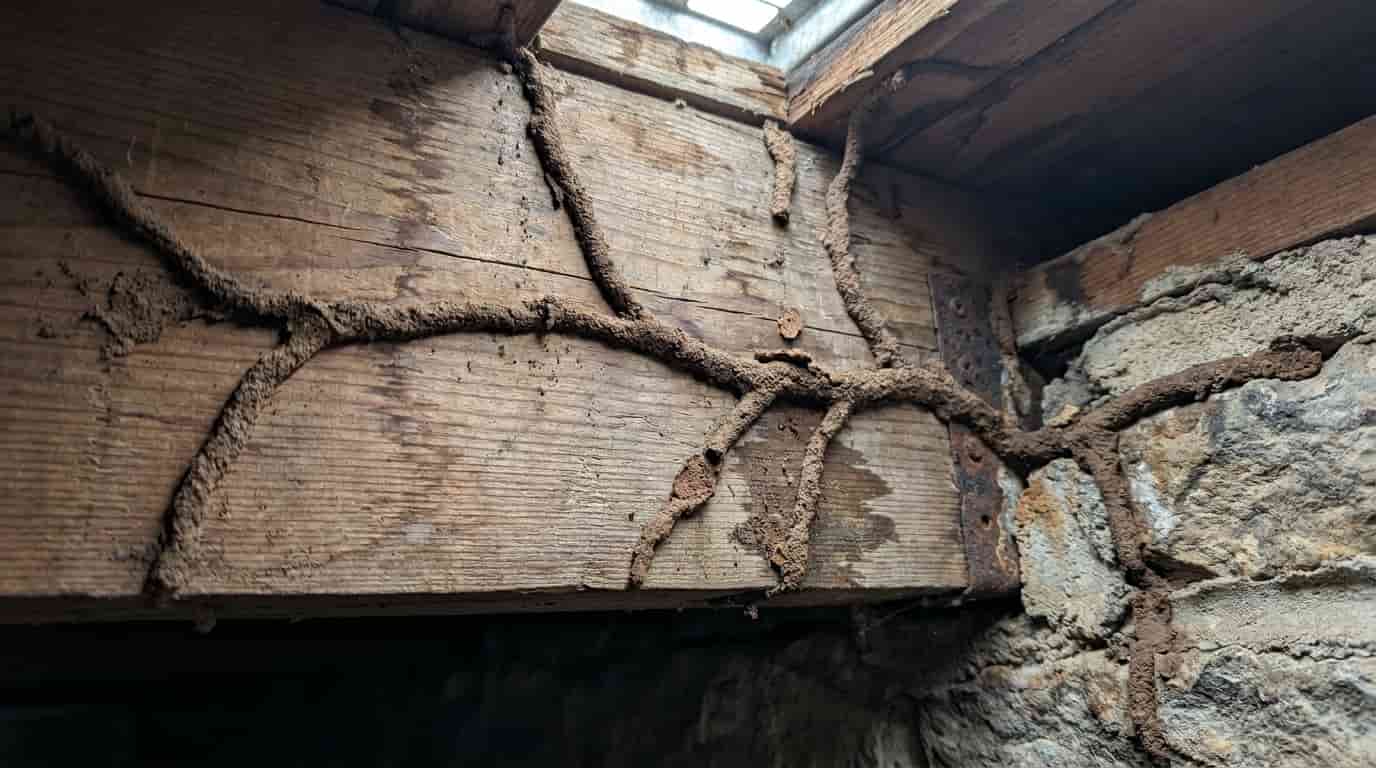
Subterranean termites build mud tubes to travel safely between the soil and wooden parts of a building. Made from soil, moisture, and termite saliva, these tubes may appear as narrow brown lines, dried mud, or raised trails.
Around ceilings and attics, they may occur near wall joints, joists, plumbing openings, chimneys, masonry, or areas connected to the foundation.
Ceiling-level mud tubes are less common but may indicate termites have moved upward through hidden framing or wall cavities. Leave them intact for inspection.
4. Raised or Sunken Surface Trails
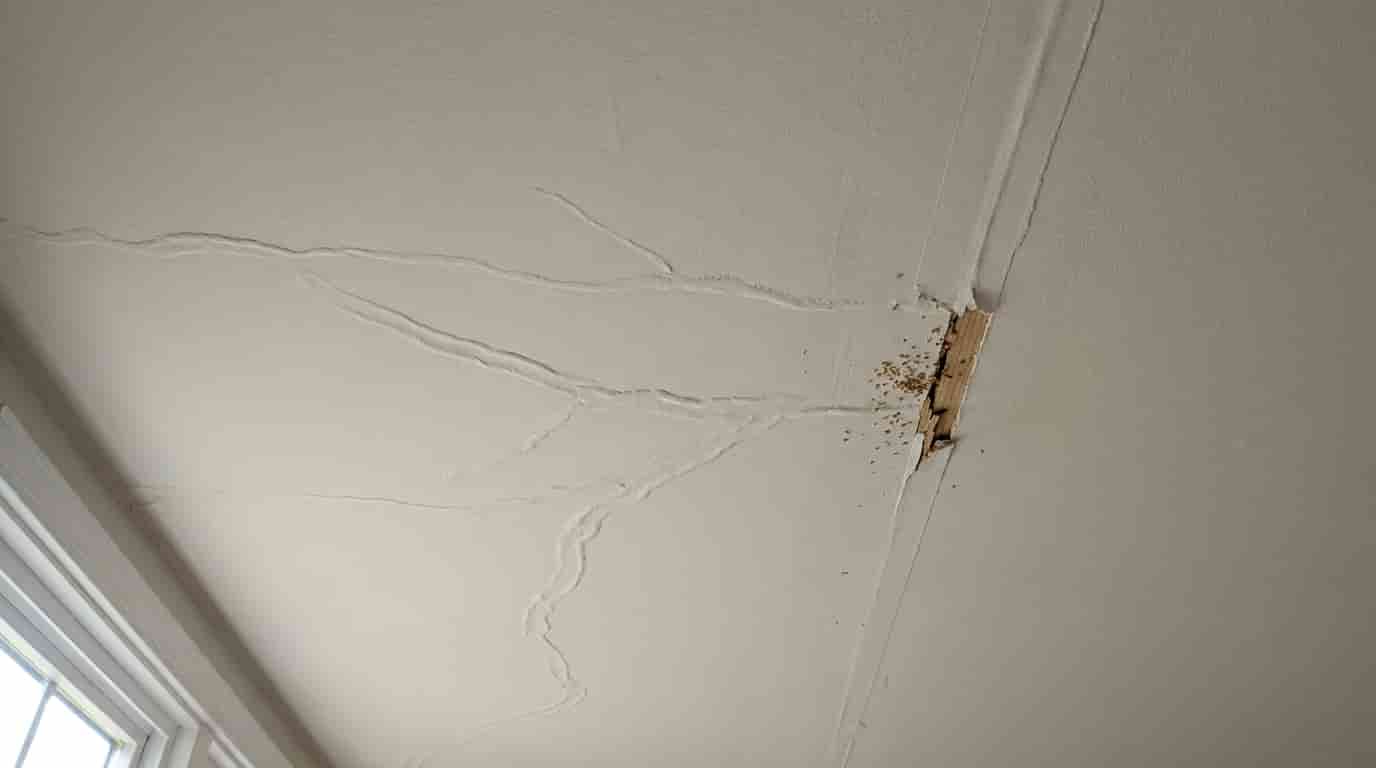
Termite galleries near the ceiling surface may create irregular lines or changes in texture.
These signs can appear as narrow dents, raised paint lines, vein-like marks beneath drywall paper, darker tracks, or uneven areas that do not follow straight seams. Unlike normal drywall joints, termite trails are usually irregular and may curve or branch.
They are more concerning when found with pinholes, frass, mud material, or damaged wood.
5. Bubbling or Peeling Paint
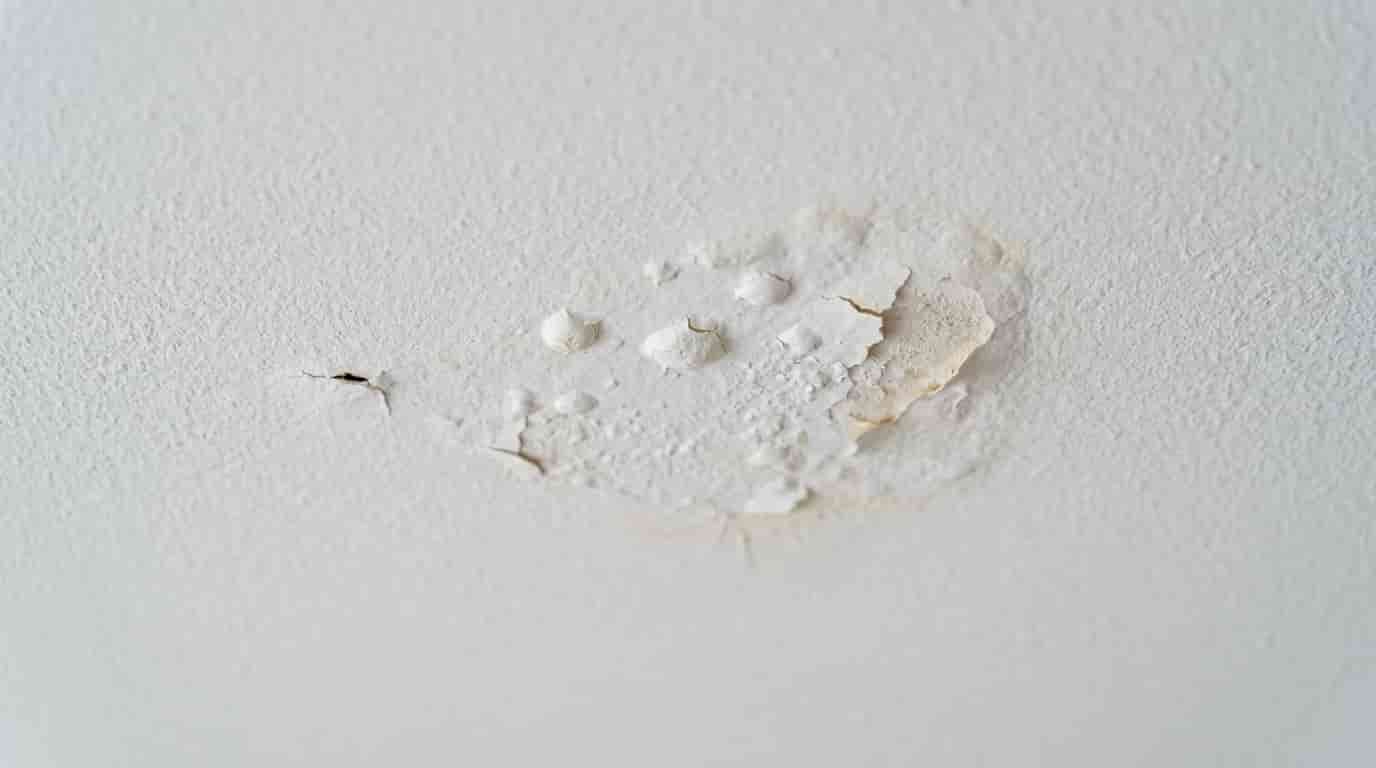
Paint may bubble, blister, peel, or become uneven when the surface beneath it is disturbed.
Termites are one possible cause, but moisture issues are more common. Check for leaks, condensation, poor ventilation, or previous water damage before assuming an infestation.
Water damage often causes staining and swelling, while termite activity may create thin, uneven surfaces with nearby holes or debris. Treat damaged paint as a supporting clue, not proof on its own.
6. Hollow or Papery Wood
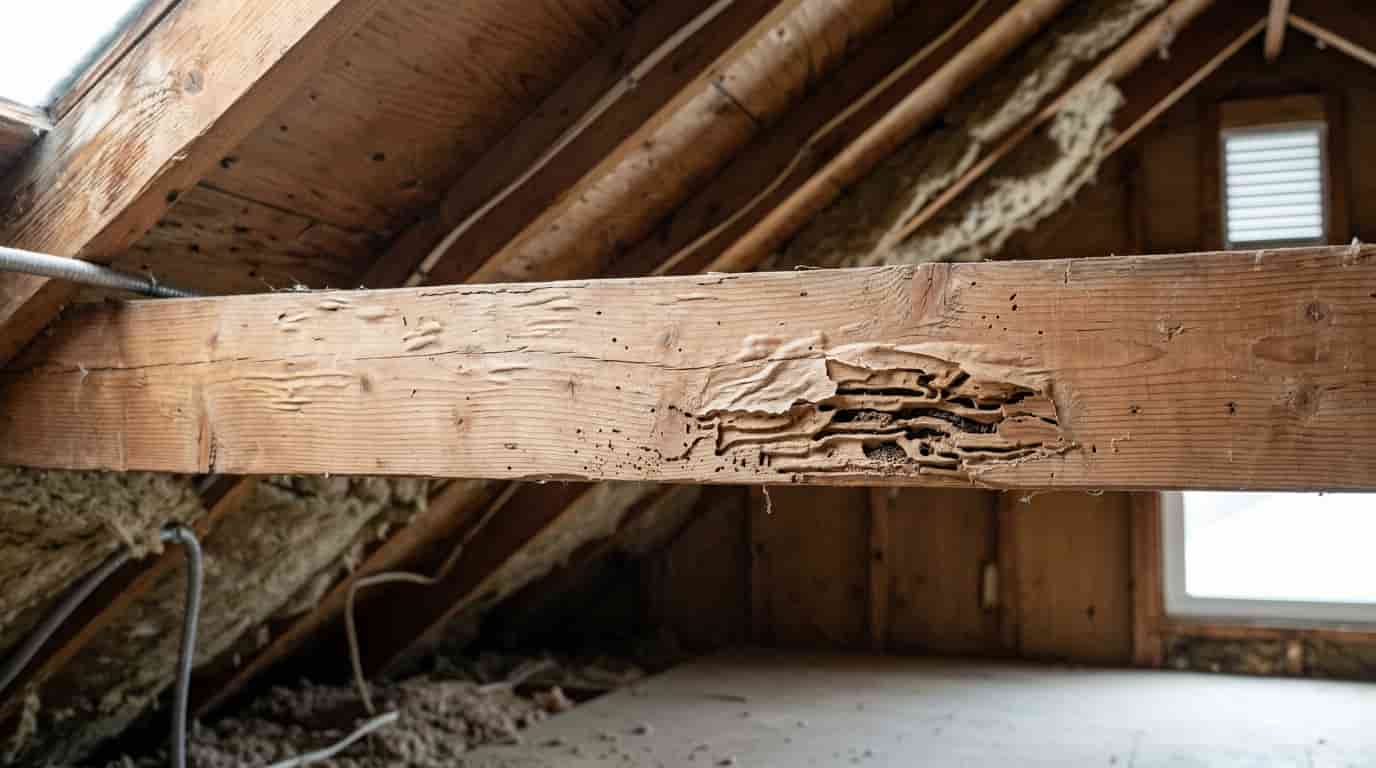
Termites often feed inside wood while leaving the outer layer intact, so joists, beams, molding, or trim may look normal despite internal damage.
Affected wood may look thin, blistered, uneven, or cracked, with small holes nearby. Avoid testing suspicious wood by pressing or striking it, as weakened surfaces may break.
If an exposed beam appears damaged or unstable, stop examining it and keep people away until it is assessed.
7. Discarded Wings or Termite Swarmers
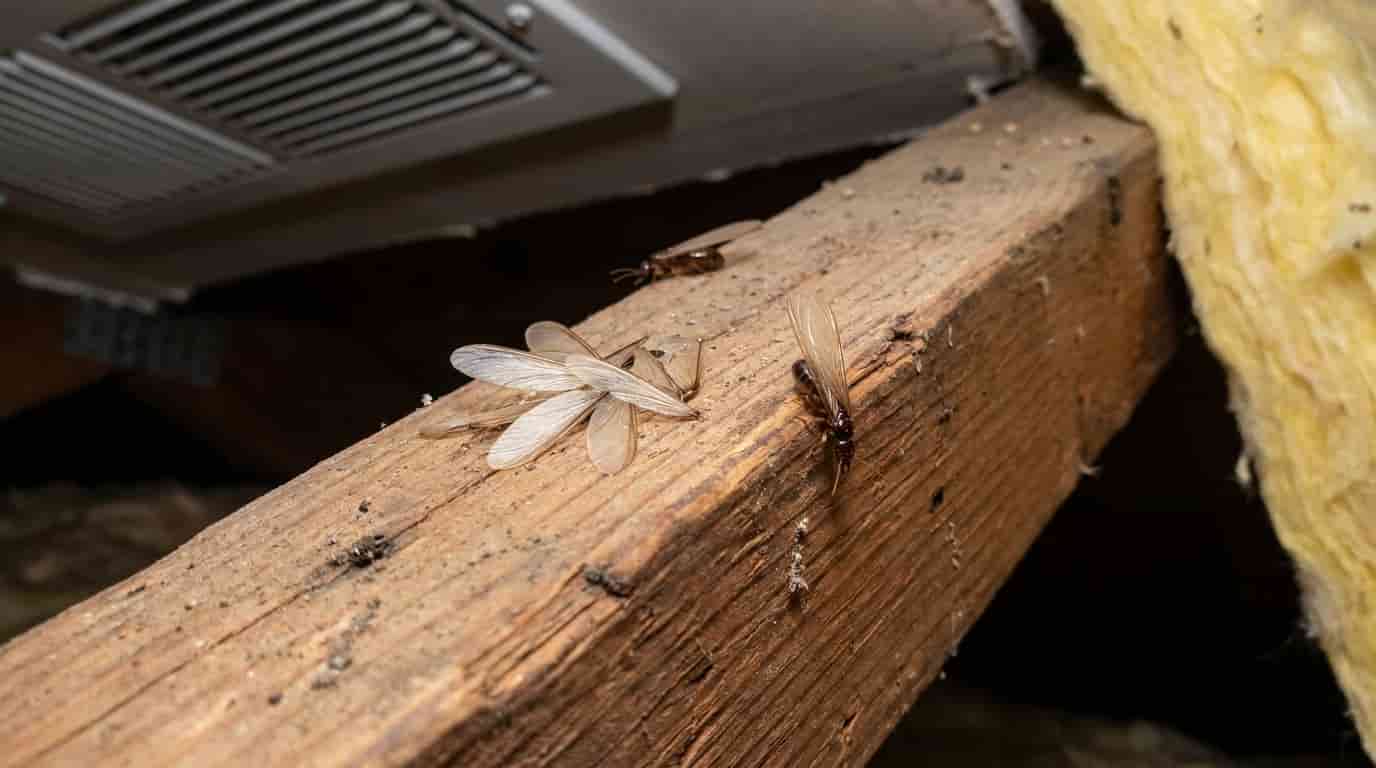
Winged reproductive termites, known as swarmers, leave established colonies to start new ones.
They may emerge from ceiling cavities, attic framing, or upper walls and shed their wings near windows, vents, lights, or attic openings.
Termite wings are usually similar in length and appear in small piles. Swarmers have straight antennae and four equal-sized wings, unlike flying ants. Shed wings indoors can indicate termite activity.
Finding shed wings indoors, especially near ceiling openings or wooden framing, can be an important sign of termite activity.
8. Faint Clicking or Rustling Sounds
Termites can sometimes produce faint sounds inside wood, such as soft tapping or rustling.
However, ceiling noises are more often caused by plumbing, HVAC systems, rodents, or normal house movement. Sounds alone do not confirm the presence of termites and are more meaningful when accompanied by signs such as pellets, holes, mud tubes, or wings.
What to Do After Finding Possible Termite Signs
Finding one suspicious sign does not mean you need to begin tearing out the ceiling. The next steps should focus on safety and professional confirmation.
1. Avoid Disturbing the Area
Do not spray household insecticide into holes or ceiling cavities. Killing a few visible termites will not eliminate a hidden colony and may push the remaining insects deeper into the structure.
Avoid patching holes, painting over surface damage, breaking mud tubes, removing damaged wood, opening the ceiling, or cleaning away debris before documenting the evidence.
Move furniture away if loose material may fall.
2. Address Active Leaks
Repair active roof or plumbing leaks, but do not cover the suspected termite opening before inspection.
Fixing moisture problems can help prevent further deterioration and make it easier to determine whether termites or water damage caused the issue. Check areas around the ceiling for signs of ongoing leaks, condensation, or poor ventilation that may be affecting the structure.
Avoid cosmetic repairs, such as patching holes or repainting damaged areas, until you confirm the cause. Covering the evidence too early can make it harder to identify the source of the problem.
3. Arrange a Licensed Termite Inspection
A professional may inspect the ceiling and attic framing, connected walls, foundations and crawl spaces, mud tubes and frass, moisture conditions, plumbing and utility routes, and other areas with structural wood.
Ask whether the evidence appears active, which type of termite is suspected, and whether any parts of the structure could not be accessed.
The inspection should also explain the recommended treatment and whether a contractor or structural professional should assess damaged materials.
Ways to Make Ceiling Areas Less Inviting to Termites
Home remedies can help reduce conditions that favor termites. They cannot remove termites hidden inside ceiling wood or framing. If you see multiple signs of termites, schedule a professional inspection.
1. Reduce Excess Moisture: Fix roof leaks, plumbing leaks, and condensation issues. Keep attic spaces dry with proper ventilation. Dry wood is less attractive to termites.
2. Remove Wood and Cellulose Debris: Remove old lumber, cardboard, branches, and firewood near the building. Keep wood materials away from exterior walls. Clear unused wood scraps from attic spaces.
3. Vacuum Visible Swarmers and Wings: Vacuum termite swarmers and discarded wings when found indoors. Seal and dispose of vacuum contents outside. Record where swarmers appeared for inspection.
4. Keep the Area Dry and Ventilated: Use fans or dehumidifiers in damp areas. Improve airflow in attic and ceiling spaces. Reducing humidity helps protect wooden structures.
5. Avoid Unproven DIY Treatments: Vinegar, bleach, oils, and household sprays may only kill visible termites. They cannot reach hidden colonies inside wood. Avoid drilling holes or applying mixtures into ceilings.
How to Prevent Future Termite Activity
1. Control Moisture- Repair roof leaks, plumbing problems, condensation, and overflowing gutters before water reaches the attic or ceiling framing. Improve attic ventilation where humidity regularly builds up.
2. Remove Wood-to-Soil Contact- Check siding, porch posts, deck supports, steps, and other wooden materials that touch the soil. Create separation between structural wood and the ground where possible.
3. Protect the Foundation and Exterior- Keep gutters clear and extend downspouts so water drains away from the foundation. Store firewood off the ground and away from exterior walls. Remove dead wood, stumps, and leftover building timber near the home.
4. Schedule Periodic Inspections- The right inspection schedule depends on local termite pressure, previous infestations, construction type, moisture conditions, and any existing termite warranty.
Homes with a history of termite activity may need closer monitoring than properties with no previous evidence.
What Early Termite Signs Could Be Telling You
Most ceiling termite activity remains hidden well before visible evidence appears. When clues surface, such as a fresh pile of frass, a cluster of shed wings near a vent, or irregular surface trails, they typically indicate a colony that has been active for some time.
Acting on early evidence keeps repair scope limited. Infestations identified before structural deterioration sets in tend to require less remediation.
Waiting until visible damage appears often means managing an active infestation and the resulting structural repairs simultaneously.
Frequently Asked Questions
Can Termites Be in the Ceiling Without Visible Damage?
Yes. Termites can remain behind drywall, insulation, or framing while feeding on hidden wood. Wings, frass, mud material, or small holes may appear before the ceiling shows obvious damage.
Why Do Termite Pellets Keep Appearing After Cleaning?
Drywood termites may continue pushing frass through an active kick-out hole. Pellets that repeatedly return beneath the same ceiling location are more concerning than one old, undisturbed pile.
Can Ceiling Termites Spread to Other Rooms?
Yes. Termites can move through connected joists, wall cavities, roof framing, and other wooden components. Visible evidence in one room may represent only part of the affected area.
How Quickly Can Termites Damage Ceiling Joists?
The rate varies based on colony size, termite type, moisture, wood condition, and the duration of the infestation. Visible sagging, cracking, or surface deterioration suggests you should not delay a professional assessment.