

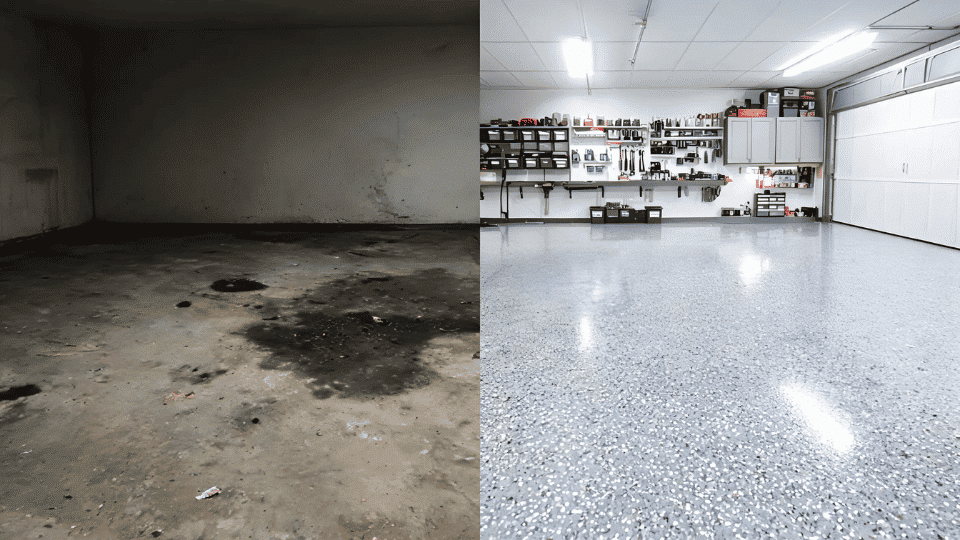


Professional epoxy garage floor cost runs $3 to $12 per square foot installed.
For a 2-car garage, that puts the full project between $1,200 and $6,000, and the gap between those numbers is almost entirely explained by three things: how much prep the concrete needs, which coating system you choose, and which line items your contractor has quietly left out of the base quote.
I’ve seen homeowners get two quotes for the same garage and wonder how they can differ by $3,000. The answer is almost never the epoxy itself.
It’s the prep method, the number of coats, and whether grinding, crack repair, and a topcoat are included. Once you know what drives the price, comparing quotes becomes a lot more straightforward.
| Cost Note: Figures in this article are estimates based on national averages from HomeAdvisor/Angi data (2024–2025). Actual costs vary significantly by region, contractor, and concrete condition. Always get at least three written quotes before committing to any project above $1,000. |
Epoxy Garage Floor Cost at a Glance
The table below gives you the working numbers before we get into what moves them up or down.
| Line Item | Low End | High End | What Drives Variation |
| Professional installation (per sq ft) | $3 | $12 | Coating type, prep method, number of layers |
| DIY epoxy kit (full project) | $100 | $500 | Kit quality, garage size, whether tools are rented |
| 1-car garage (200–300 sq ft) | $700 | $3,500 | Concrete condition, coating system |
| 2-car garage (400–500 sq ft) | $1,200 | $6,000 | Most common size; premium system adds $2,500+ |
| 3-car garage (600–700 sq ft) | $2,000 | $7,500+ | Larger floor area, more prep time |
| 4-car garage (800–1,000 sq ft) | $3,500 | $10,000+ | Commercial-scale prep, premium topcoat |
| Surface prep / concrete grinding | $1/sq ft | $5/sq ft | Floor condition, existing coatings, moisture issues |
The $3–$12 range covers a lot of ground. A basic water-based epoxy on a clean slab sits at the low end.
A full system with 100% solids epoxy, diamond grinding, decorative flake broadcast, and a polyaspartic topcoat sits at the high end. Both are technically “epoxy garage floor coating”, but they’re not the same product.
Epoxy Garage Floor Cost by Garage Size
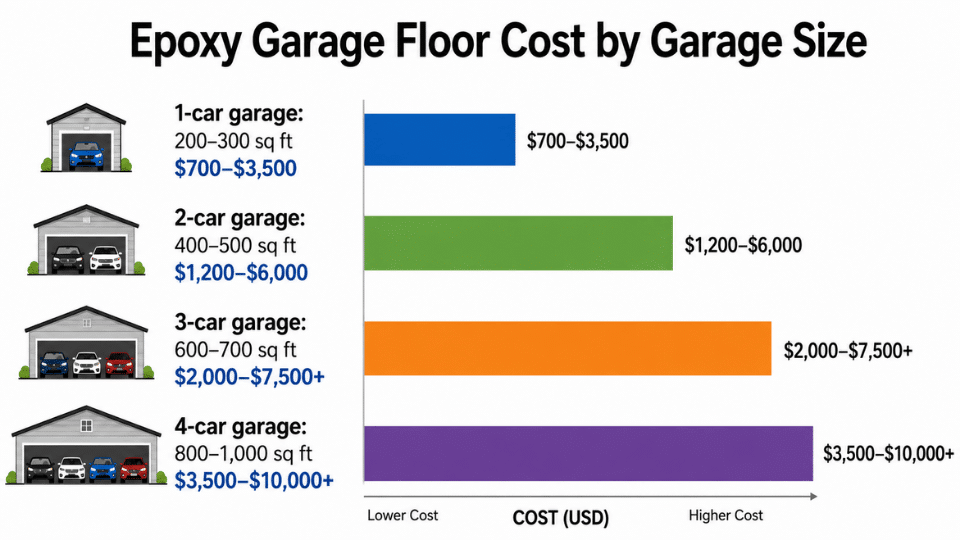
Square footage gives you a starting number, nothing more. The same 500-square-foot garage can come in at $1,500 or $6,000 depending on the prep work required and the coating system chosen.
That said, size is still the fastest way to anchor an initial estimate before you start talking to contractors.
| Garage Size | Approx. Sq Ft | Typical Cost Range | Premium System Cost |
| 1-car garage | 200–300 sq ft | $700–$3,500 | $2,500–$3,600 |
| 2-car garage | 400–500 sq ft | $1,200–$6,000 | $4,000–$5,500 |
| 3-car garage | 600–700 sq ft | $2,000–$7,500+ | $5,500–$7,000 |
| 4-car garage | 800–1,000 sq ft | $3,500–$10,000+ | $7,500–$10,000+ |
A 2-car garage is the most common reference point. Premium systems for that size,100% solids epoxy, decorative flake broadcast, diamond grinding, and a polyaspartic topcoat, typically land between $4,000 and $5,500. That’s not a budget project, but it’s also a floor that can last 10 to 20 years in a working garage with regular vehicle traffic.
Epoxy Garage Floor Cost by Coating Type
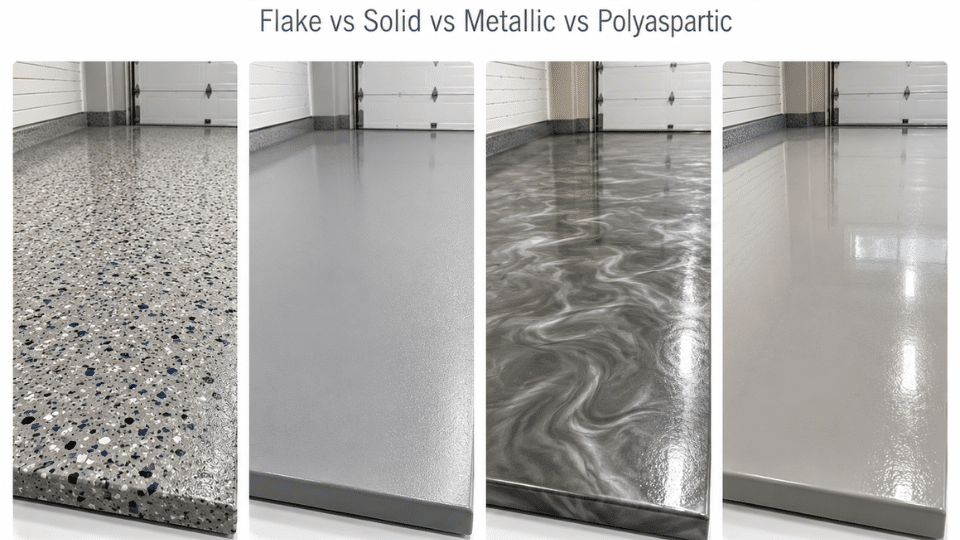
The coating system is where the real price variation lives. Each type has a different mix of strength, thickness, curing time, and finish quality — and not all of them hold up the same way under daily vehicle use.
| Coating Type | Cost per Sq Ft | Lifespan | Best For |
| Water-based epoxy (DIY) | $0.50–$2 | 3–5 years | Light-use garages, storage spaces |
| Solid-color epoxy | $3–$7 | 5–10 years | Clean finish, basic protection |
| Decorative flake epoxy | $7–$10 | 10–15 years | Vehicle traffic, grip, hides dirt |
| Metallic epoxy garage floor | $9–$12 | 10–15 years | Decorative finish, showrooms |
| Polyaspartic coating | $7–$12+ | 15–20 years | Fast cure, UV resistance, heavy use |
For most working garages, decorative flake epoxy delivers the best combination of grip, durability, and price without pushing into premium territory.
Metallic epoxy looks impressive in photos but is better suited to a display space than a garage where a truck parks six days a week.
Epoxy vs. Polyurea: What the Quote Might Not Tell You
Some contractors price their systems as “epoxy” but apply a polyurea or polyaspartic topcoat over an epoxy base.
This is actually a better system than straight epoxy, polyurea cures faster, handles UV exposure without yellowing, and resists hot tire pickup more effectively.
The confusion is that it gets sold under the “epoxy” umbrella even when the topcoat is a different chemistry entirely.
If a contractor quotes a system with a base coat and topcoat, ask specifically whether the topcoat is polyurea or polyaspartic. That distinction matters for longevity, especially in garages with significant UV exposure through windows or an open door.
A clear breakdown of what each layer costs, similar to how construction costs get itemized by component, is what you want before signing anything.
DIY vs. Professional Epoxy Garage Floor Cost
The price difference between DIY and professional installation is real. The performance gap is just as real, and it’s mostly about prep, not product.
DIY Epoxy Garage Floor Cost
A DIY epoxy garage floor kit costs $100 to $500 depending on garage size, product quality, and whether a topcoat and decorative flakes are included.
Water-based DIY kits are the most common. They’re thinner than professional-grade materials, easier to apply, and they do the job adequately on a clean, dry slab with light use history.
The real cost risk in DIY isn’t the kit, it’s the prep. If the concrete has oil stains, hairline cracks, old paint, or any moisture coming up from below, DIY epoxy is almost certain to peel within a year or two.
Homeowners going the DIY route also typically need rollers, degreaser, etching solution, crack filler, and sometimes a rented diamond grinder, none of which are in the kit price. Total DIY project costs often land between $300 and $800 once tools and materials are factored in.
Professional Epoxy Installation Cost
Professional epoxy installation costs $3 to $12 per square foot.
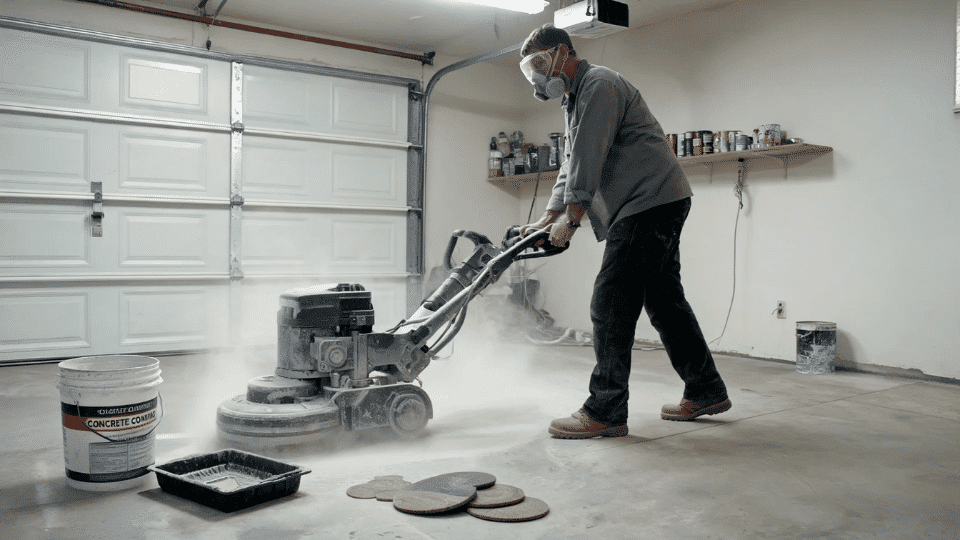
That price usually includes steps that DIY kits skip entirely: diamond grinding the concrete surface, removing old coatings, testing for moisture, applying a thicker base coat, broadcasting decorative flakes, and sealing with a protective topcoat. Each of those steps exists because skipping them causes early failure.
Professional installation makes the most sense when the garage sees regular vehicle traffic, has existing stains or damage, or when you want a long-term warranty.
The higher upfront cost pays for fewer failures later, a floor that peels after 18 months and needs to be stripped and redone is never cheap regardless of what it cost the first time.
Which Option Makes Sense for Your Garage
Choose DIY if the concrete is already in good condition, the garage sees light use, and a cosmetic refresh is the goal.
Choose professional installation if you want a floor that holds up to daily vehicle traffic, chemical spills, road salt, and heavy tools, or if the concrete needs any real repair work before coating.
My rule: if the floor needs grinding, crack repair, or moisture mitigation, professional prep is the only option worth paying for.
Where Epoxy Garage Floor Budgets Go Wrong
This is the section most cost guides skip. The base quote looks reasonable, until it doesn’t. Here are the specific line items that routinely surprise homeowners after the work begins.
Surface Prep Priced Separately
Grinding, acid etching, and old coating removal are often excluded from the base quote. A contractor who gives you a $1,500 quote “to epoxy the floor” may be quoting materials and labor only.
Concrete grinding adds $1 to $3 per square foot. Old coating removal varies based on what’s there and how many layers. These aren’t optional steps, if they’re missing from the quote, they’re being added to the invoice later.
Crack and Slab Repair
Hairline cracks are common in concrete garage floors and need to be filled before any coating is applied. Most contractors won’t know the full extent of cracking until they grind the surface.
Slab repairs typically cost $250 to $750 as a project add-on. Budget for it even if the floor looks clean at first inspection.
Moisture Issues
Moisture vapor coming up through the slab is one of the most common causes of epoxy failure.
If a contractor doesn’t test for moisture before application, and moisture is present, the coating will eventually delaminate from below, usually within a year.
Moisture testing costs $200 to $500. Some contractors include it; many don’t mention it until there’s a problem.
Topcoat Not Included
An epoxy base coat without a sealing topcoat is a floor that will show wear, scratching, and staining faster than expected. Many low quotes apply one layer of epoxy and stop there.
Ask explicitly whether a topcoat or polyaspartic seal coat is included. If it isn’t, add $0.50 to $2 per square foot to the quote.
Custom Finishes and Flakes
Decorative vinyl flake broadcast is usually quoted as a standard upgrade, but custom color blends, full-flake systems, or metallic finishes can add $2 to $5 per square foot on top of the base price.
Nail down the finish type before the quote is finalized, not after the work starts.
| Add-On Cost | Typical Price | Often Missing From Base Quote? |
| Concrete grinding / diamond prep | $1–$3/sq ft | Frequently |
| Old coating removal | Varies by condition | Almost always |
| Crack and slab repair | $250–$750 | Frequently |
| Moisture testing | $200–$500 | Usually |
| Sealing topcoat | $0.50–$2/sq ft | Sometimes |
| Decorative flake or custom finish | $2–$5/sq ft extra | Varies |
| Stem wall or edge coating | Varies by layout | Varies |
A quote that looks $1,500 cheaper than the competition may simply have left these items off the paper. That’s not a bargain, it’s a deferred invoice.
How Regional Location Affects Epoxy Garage Floor Cost
Labor rates for coating contractors vary significantly across the US.
In higher cost-of-living markets, the Northeast, Pacific Northwest, and major metro areas in California, professional epoxy installation commonly runs $8 to $12 per square foot even for standard systems.
In mid-South and Midwest markets, the same work often lands between $4 and $7 per square foot. Regional variation in concrete contractor demand, material shipping costs, and local permit requirements all contribute to this gap.
If you’re budgeting for a large garage in a high-cost market, add 20 to 40 percent to the national averages above. If you’re in a rural or lower-cost area, the lower end of those ranges is more realistic.
This is one of the reasons why getting three local quotes is more useful than using any national average as your planning number, similar to how basement remodel costs can shift dramatically between a city project and a suburban one.
Epoxy vs. Other Garage Floor Coating Options
Epoxy is the most common choice, but it isn’t the only one. Here’s how it stacks up against alternatives when price and performance are both on the table.
| Flooring Option | Cost per Sq Ft | Lifespan | Best For |
| Garage floor paint | $0.50–$2 | 1–3 years | Cheapest cosmetic option |
| Water-based epoxy (DIY) | $1–$3 | 3–5 years | Light-use garages |
| Professional epoxy coating | $3–$12 | 10–15 years | Durable everyday protection |
| Polyaspartic / polyurea coating | $7–$12+ | 15–20 years | UV resistance, fast cure, heavy use |
| Polished concrete | $4–$8 | 10–20 years | Low maintenance, industrial look |
| Interlocking garage tiles | $3–$10+ | Varies | DIY-friendly, removable |
Garage floor paint is the cheapest entry point but gives out quickly under vehicle traffic and chemical spills. Polished concrete costs about the same as mid-range epoxy and requires no topcoat, but it doesn’t hide stains as well.
Polyaspartic and polyurea coatings outperform epoxy on lifespan and UV stability, if the budget allows, a hybrid epoxy base with a polyaspartic topcoat is the most durable system available in this price range.
What’s Negotiable and What Isn’t
Not everything in a garage floor quote is fixed. Knowing which line items have flexibility — and which don’t — helps you get better value without ending up with a floor that fails.
Surface preparation is not negotiable. Diamond grinding opens the concrete pores so the epoxy bonds properly. Contractors who acid etch only (instead of grinding) are delivering an inferior prep for the same price. Don’t accept this as a cost-saving compromise. Prep quality is the single biggest predictor of whether a floor lasts 3 years or 15.
The finish and topcoat are negotiable. If budget is tight, a solid-color epoxy with a standard topcoat outperforms a decorative flake system applied over inadequate prep.
A plain floor that bonds properly is better than a beautiful floor that peels. Scheduling during slower contractor seasons — typically late fall and winter — can also get you 10 to 15 percent off standard rates.
Moisture testing is non-negotiable on any slab that shows signs of humidity, efflorescence (white salt deposits), or prior delamination. Skipping it is a gamble that costs far more than the test when the floor fails six months later.
What to Ask Your Contractor Before Signing Anything
Most contractors won’t volunteer this information unless you ask for it directly. These five questions separate the thorough quotes from the ones that look good until the work starts.
- What prep method are you using — diamond grinding or acid etching? Grinding creates a more consistent surface profile. If the answer is acid etching only, ask why.
- Is moisture testing included, and what happens if moisture is found? You want to know the answer before the project starts, not after the base coat is down.
- What exactly is your coating system — base coat, broadcast, and topcoat? Get the product names and the number of layers in writing.
- Are crack repair and old coating removal included in this quote, or are they add-ons? This is the most common source of surprise invoices on garage floor projects.
- What warranty do you offer, and what voids it? A reputable installer stands behind the work for at least two years. If there’s no warranty, that tells you something about their confidence in the prep.
Is Epoxy Garage Flooring Worth the Cost?
For a garage that sees regular vehicle traffic, tool use, and chemical exposure, a professionally installed epoxy garage floor coating pays for itself in reduced cleaning time and concrete protection within a few years. The upfront cost is real, but so is the gap between scrubbing an oil-stained concrete slab every few months and washing down an epoxy surface in minutes.
It’s harder to justify when the concrete has significant structural damage, active moisture problems, or the garage rarely gets used. A floor with serious underlying issues needs that work addressed before any coating is applied — no surface treatment survives a slab that’s moving or wicking moisture from below. In those cases, the epoxy cost is the second budget item, not the first. For broader renovation context, understanding the full scope of what concrete and slab work costs before any coating goes down is worth doing before you request quotes.
How to Save Money Without Getting a Floor That Fails
Cutting costs on epoxy should target inefficiency, not quality. These are the adjustments that save money without compromising the floor.
- Clear the garage completely before the installer arrives — labor charges for furniture and storage removal are real and easy to avoid.
- Do the basic cleaning yourself. Sweeping, degreasing surface oil, and removing loose debris are straightforward tasks that some contractors bill for.
- Get at least three written quotes and compare the line items, not just the totals. A lower total with prep excluded is not a better deal.
- Choose decorative flake over metallic epoxy when durability matters more than appearance. The performance gap doesn’t justify the price difference for a working garage.
- Schedule during late fall or winter. Coating contractors have slower seasons, and rates often reflect that.
- Confirm in writing that topcoat, crack repair, and old coating removal are included or explicitly priced as add-ons before any work begins.
The one cost that is never worth cutting is surface preparation. A thin coating applied over inadequate prep will fail regardless of product quality.
The labor to strip a failed floor and redo it typically costs more than the difference between a proper prep job and a shortcut one.
Frequently Asked Questions
These are the questions I hear most often from homeowners who’ve already started getting quotes and realize the numbers don’t quite add up.
How much does it cost to epoxy a garage floor?
Professional installation runs $3 to $12 per square foot. A 2-car garage typically costs $1,200 to $6,000 depending on prep depth, coating type, and whether add-ons like crack repair and topcoat are included. DIY kits cost $100 to $500 but require proper prep to last.
How long does an epoxy garage floor last?
A professionally installed floor with proper prep lasts 10 to 15 years under normal vehicle traffic. DIY water-based systems typically last 3 to 5 years. A polyaspartic topcoat can extend lifespan to 15 to 20 years.
How long does it take to epoxy a garage floor?
Most professional installations take 1 to 2 days for the coating work. Add 3 to 7 days before vehicle traffic is permitted, depending on the coating system, temperature, and humidity levels during cure.
Can you epoxy a garage floor yourself?
Yes, if the concrete is clean, dry, and structurally sound. DIY kits work for lightly used garages. If the floor has oil stains, cracks, old paint, or moisture issues, DIY epoxy is likely to peel early without professional-grade prep equipment.
Is epoxy garage flooring worth the cost?
For a garage with regular vehicle use and concrete that needs protection from oil, road salt, and chemicals, yes. It reduces cleaning time significantly and extends the life of the slab. For a garage with serious moisture or structural problems, address those first — no coating survives a compromised slab.
What is the difference between epoxy and polyurea garage floor coatings?
Epoxy is the base coating — it bonds to concrete and provides thickness and chemical resistance. Polyurea and polyaspartic are topcoats applied over epoxy, adding UV resistance and faster cure time. The best systems use both: epoxy base, polyaspartic topcoat.
How do you clean an epoxy garage floor?
Mild dish soap and warm water handles most cleaning. For oil or chemical spills, a pH-neutral cleaner and a soft-bristle brush work well. Avoid acidic cleaners and steel wool — both can damage the topcoat over time.
Final Verdict
The $3 to $12 per square foot range for epoxy garage floor cost is where every budget starts. Where it ends depends on what’s underneath the surface.
I’ve watched homeowners accept the lowest quote and end up paying for a second installation 18 months later because the prep was inadequate. The contractors who charge $7 to $10 per square foot and grind the concrete, test for moisture, and put down three layers rarely get callbacks for failures.
The contractors who quote $3 and show up with an acid etcher and one coat of water-based epoxy frequently do. Before you sign anything, ask for the full line-item breakdown, specifically whether grinding, crack repair, and topcoat are in the price.
That question alone will tell you more about the quality of the job than the total at the bottom of the quote.
| Cost estimates based on HomeAdvisor/Angi national averages, 2024–2025. Verify current pricing with local contractors before budgeting. |
Sources
- HomeAdvisor/Angi, “Epoxy Garage Floor Cost.” 2024–2025. https://www.angi.com
- NAHB, “Cost of Constructing a Home.” 2024. https://www.nahb.org
- This Old House, “How Much Does Epoxy Flooring Cost?” March 2026. https://www.thisoldhouse.com/flooring/epoxy-floor-cost