

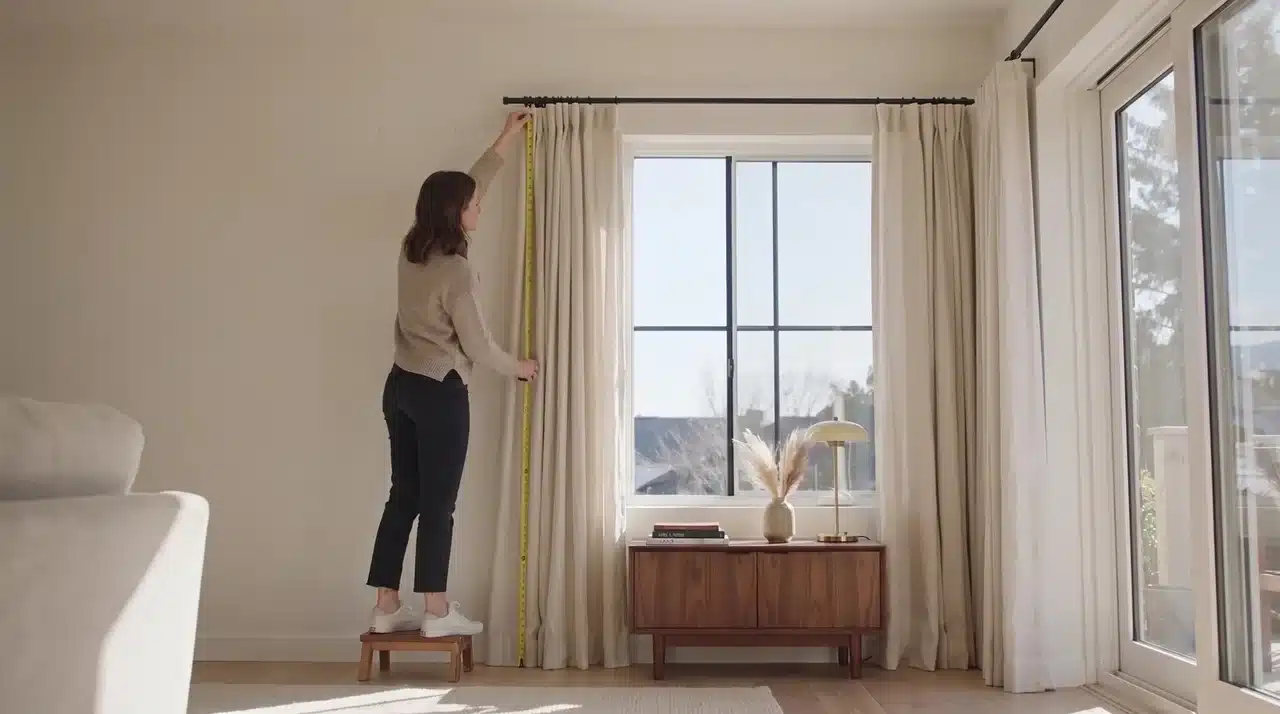


| Quick Answer: Measure hardware placement first, calculate fabric width using your fullness multiplier, then determine drop length. Always measure at multiple points since walls aren’t perfectly even. Use a metal tape measure for best accuracy. |
A curtain that’s too short or narrow can make a room look unfinished, even with perfect fabric and color.
Getting the fit right takes more than measuring your window. Measure the rod or track, decide the length, and factor in fullness before you buy. Hanging curtains the right way also matters.
Skip these steps, and you risk gaps, thin panels, or curtains that don’t hang right. If you sew your own panels, knowing how to sew curtains matters as much as measuring them.
Knowing how to measure for curtains helps you pick panels that fit your window and style. A few extra minutes with a tape measure save you from a costly reorder.
Tools Needed to Measure Curtains
You do not need special equipment to measure curtains. A few basic tools will get you accurate numbers:
- Metal tape measure: more rigid and accurate than fabric tape
- Step ladder: needed to reach rods mounted above eye level
- Pencil: to mark bracket positions on the wall
- Notebook or phone notes: to record measurements as you go
- Level (optional): to check that your rod brackets sit evenly
Pro tip: Measure every window separately, even in the same room. Windows that look identical often have small differences of half an inch or more, especially in older homes.
How to Measure for Curtains Step by Step
Measuring for curtains is straightforward when you follow the right order. These four simple steps will help you get accurate measurements for a perfect fit and a professional-looking finish.
1. Decide Where the Curtain Rod or Track Will Go
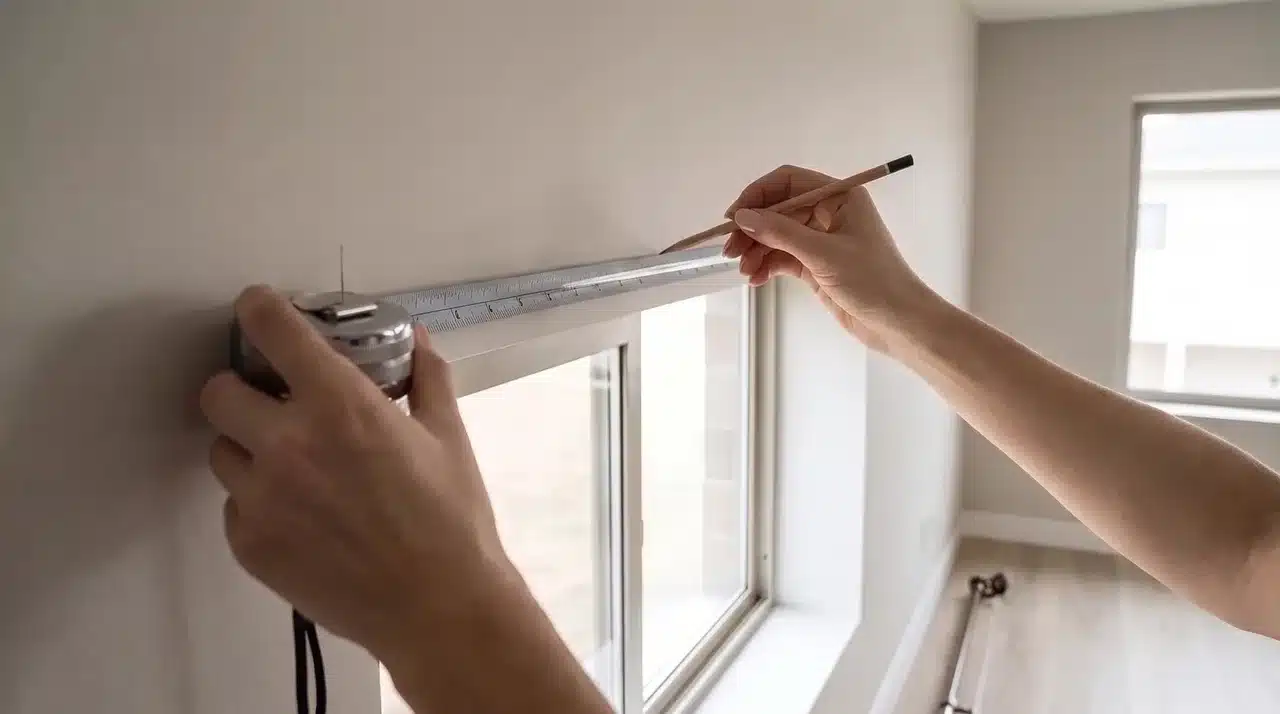
Measure only after you know where the rod will sit. Placement affects every number that follows.
The standard rule is to mount the rod four to six inches above the window frame. Extending it beyond the frame on each side, usually four to ten inches, lets curtains stack fully open without blocking the glass.
Expert recommendation: Place the rod several inches above and wider than the window frame, depending on your room style and available wall space.
A higher rod also makes ceilings look taller, which is a common trick in small rooms.
2. Measure Curtain Width
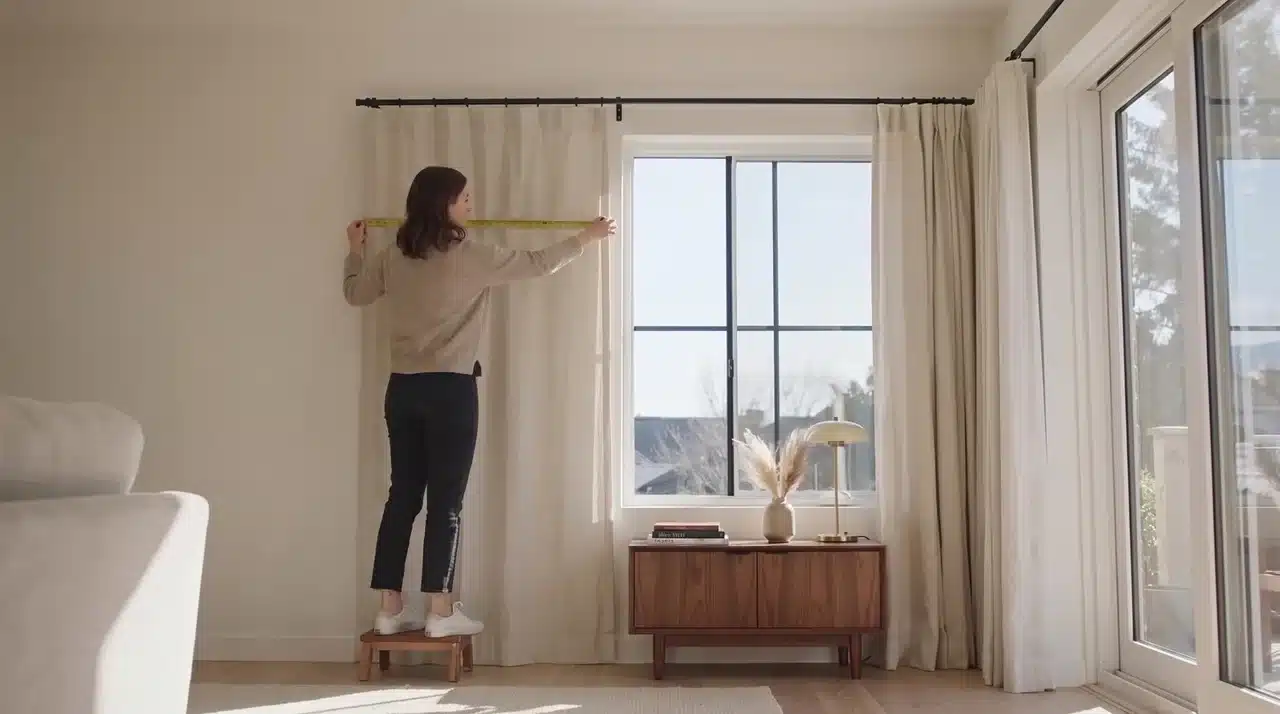
Curtain width follows this formula:
Curtain width = Rod or track width × fullness ratio
For example, a 60-inch rod × 2 fullness = 120 inches of fabric. If using two panels, each panel should be 60 inches wide. The extra width creates the folds for a fuller, more elegant look.
Fullness is the extra fabric that creates soft folds when curtains are closed. Without it, curtains look flat and stretched, like a bedsheet pinned to a rod.
| Curtain Style | Recommended Fullness |
|---|---|
| Sheer curtains | 2 to 3 times the width |
| Standard curtains | 1.5 to 2 times the width |
| Heavy curtains | 1.5 to 2 times the width |
| Minimal look | Around 1.25 times the width |
Never buy curtains equal to your window width. They will hang flat and stretched when closed, with no drape or texture at all.
3. Measure Curtain Length
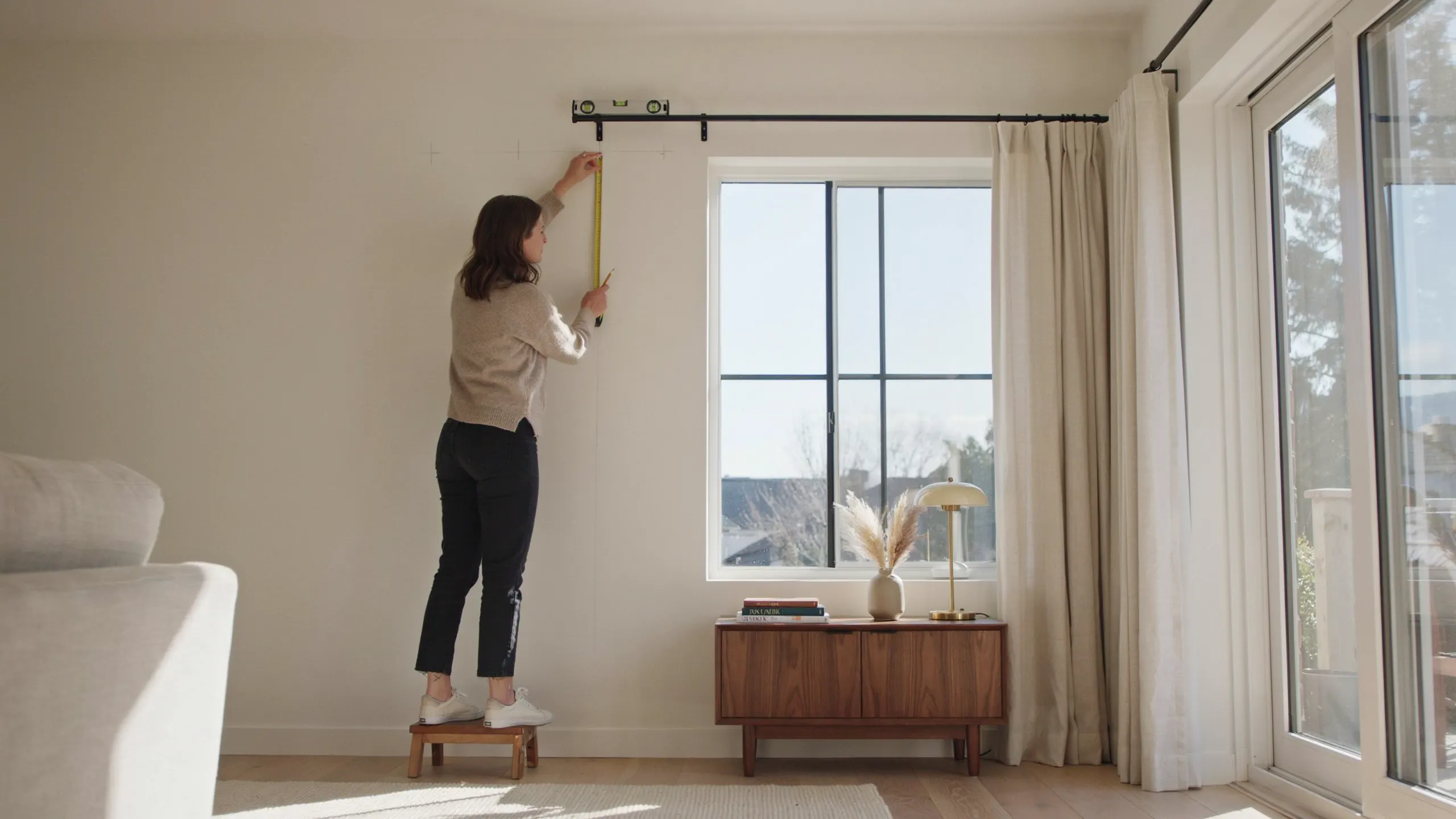
Curtain width is calculated by multiplying the rod or track width by your chosen fullness ratio. Fullness is the extra fabric that creates soft, natural folds instead of a flat appearance.
Sheer curtains typically need 2–3× the rod width, while standard and heavy curtains look best at 1.5–2×, and minimalist styles around 1.25×.
Avoid choosing curtains that match the exact width of your window or rod, as they will hang flat with little texture or drape when closed.
4. The Curtain Heading Style
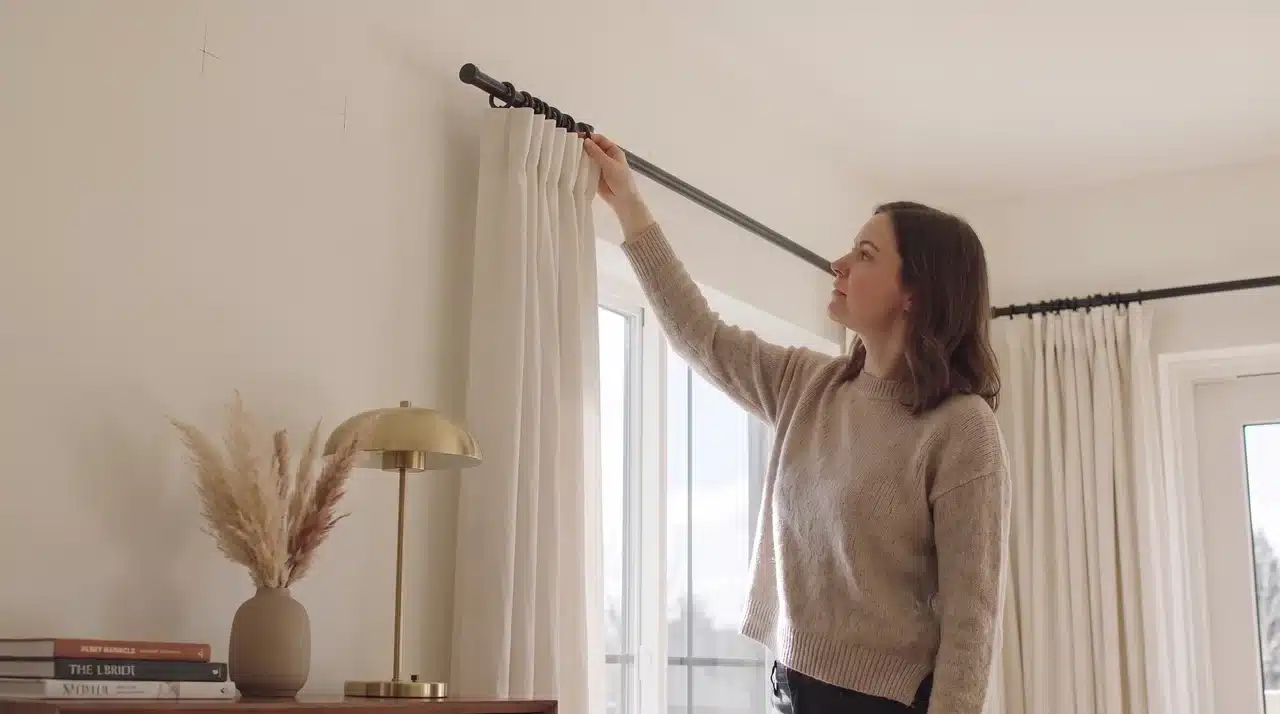
Your curtain heading style affects where you begin measuring, so it’s important not to overlook it.
Eyelet curtains are measured from the top of the rod; rod pocket curtains require extra allowance for the fabric gathered above the rod;
Tab-top curtains include the loop height; pinch-pleat curtains are measured from the hook position; and ring-top curtains start from the ring attachment point.
Measuring from the wrong point can leave curtains hanging too high or dragging on the floor.
Common Curtain Measuring Mistakes to Avoid
Measuring the Window Instead of the Rod: This is the single biggest reason curtains look too narrow once hung. Measure curtains against the hardware, not the glass.
Forgetting Fullness: Curtains need extra fabric width to form folds. Skipping this step leaves panels looking flat and stiff.
Measuring Only One Side: Always check both width and height at multiple points. Walls and floors are rarely perfectly even.
Ignoring Curtain Hardware: Rings, hooks, and clips all add height to your curtain’s starting point, which changes your final length.
Buying Before Measuring: Ready-made curtain sizes vary between brands. An “84-inch” panel from one retailer is not always the same as one from another.
How Curtain Length Changes the Look of a Room
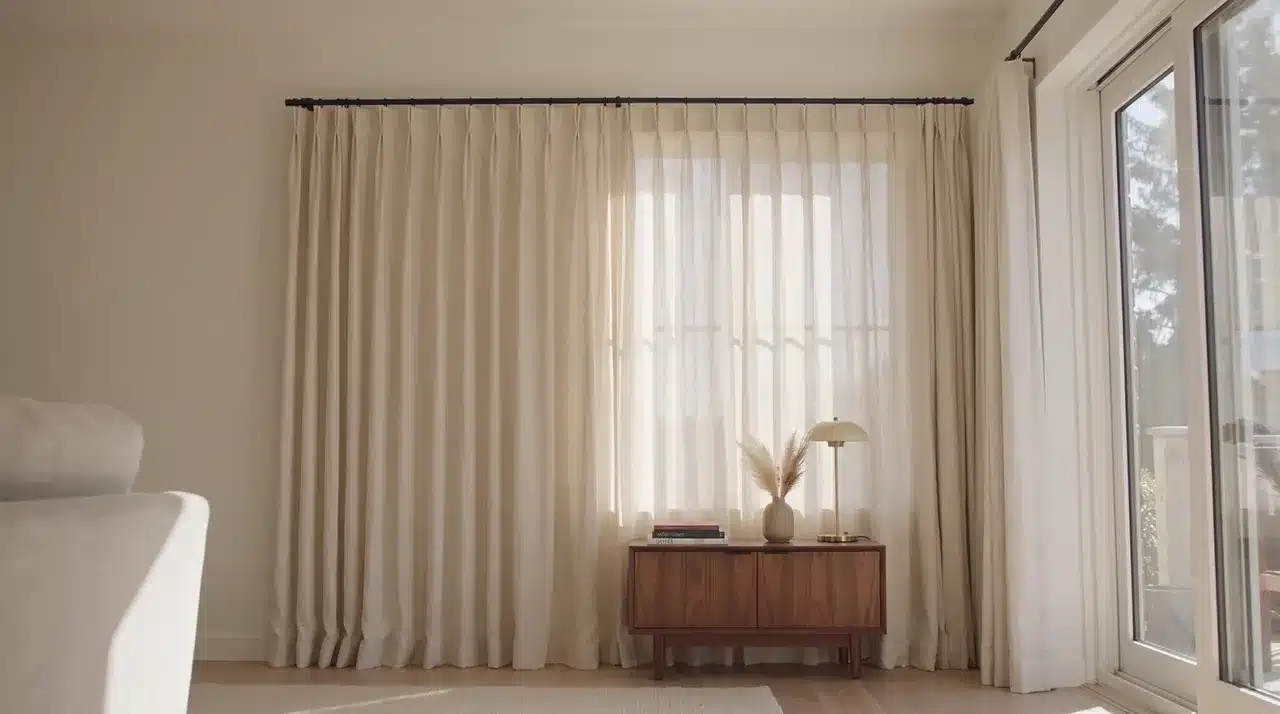
The exact drop length you choose changes the entire feel of a room, not just the fit.
Floor Kiss: Curtains barely touch the floor, creating a tailored, clean look that suits modern spaces.
Slight Break: A small amount of extra fabric folds gently at the bottom, giving a relaxed, lived-in appearance.
Puddle Length: Extra fabric pools on the floor for a traditional, formal style, often used in dining rooms or living rooms.
Homes with pets or young children usually do better with a floor-kiss or slightly shorter length, since puddled fabric collects dust and gets underfoot. High-traffic areas, such as hallways or entryways, also benefit from curtains that clear the floor rather than drag along it.
Final thoughts
Proper curtain measurements are the foundation of window treatments that truly complete a room. By measuring your hanging hardware first, calculating the width based on your desired fullness ratio, and selecting an appropriate drop length, you ensure the panels hang perfectly.
Whether you’re hanging ready-made curtains or learning how to sew curtains from scratch, accurate measurements are essential.
The right proportions transform a window from merely covered to elegantly finished. Taking time to measure correctly now prevents costly mistakes and ensures your curtains look professionally installed.
These fundamentals apply whether you’re a beginner or an experienced sewer, making them indispensable for any curtain project.
Frequently Asked Questions
How Do You Measure What Size Curtains You Need?
Measure the curtain rod width, choose a fullness ratio, then measure the drop from the rod to your desired curtain length.
How Wide Should Curtains Be For a 54-Inch Window?
Aim for a total curtain width of 81–108 inches (1.5–2× the width of the window) for a full, balanced appearance.
What Size Curtains Do I Need For a 36-Inch Window?
Choose curtains with a total width of 54–72 inches and measure the length from the rod to your preferred endpoint.