

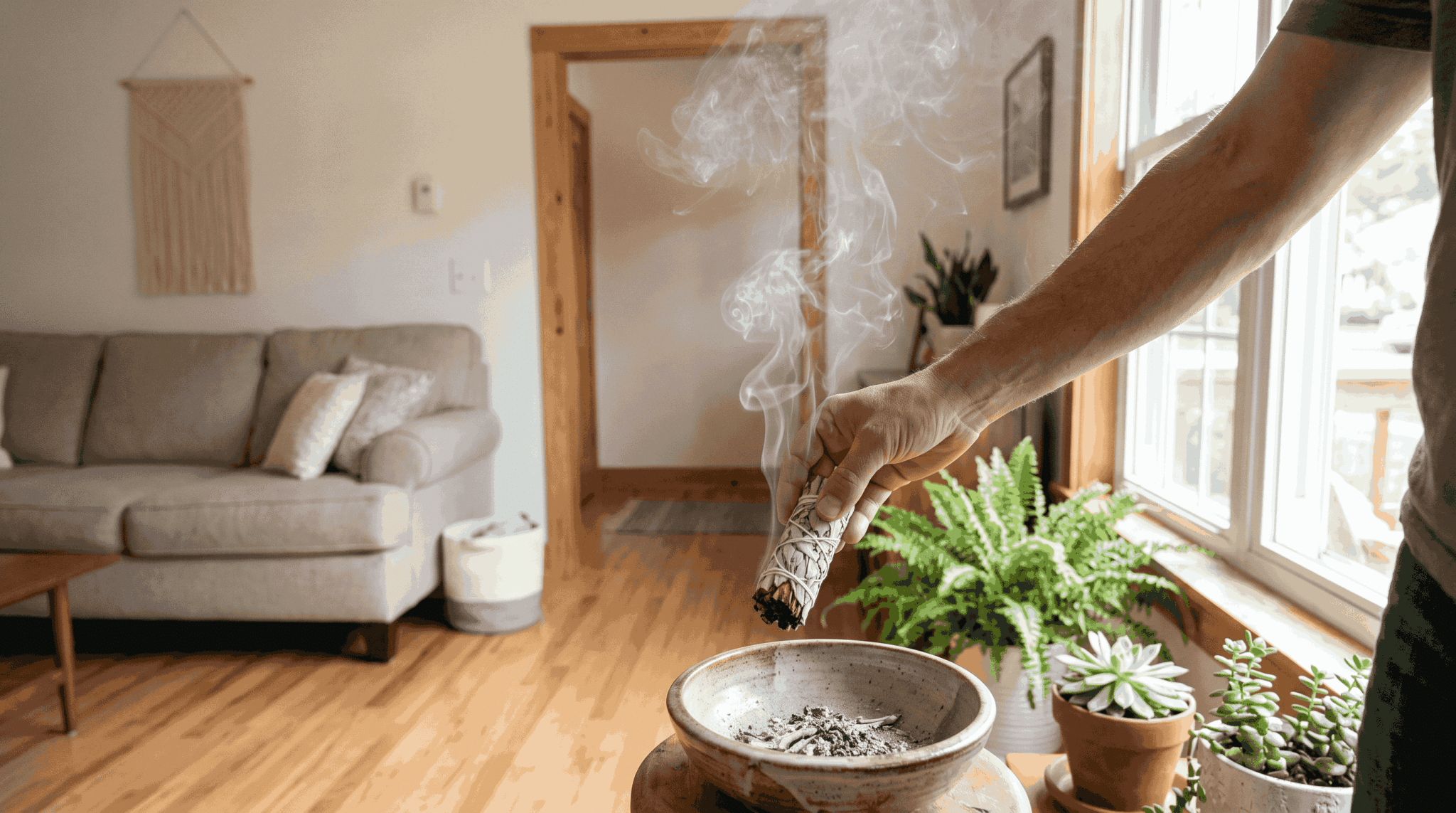


Some rooms just feel off. Not cluttered, not dirty, just heavy. The kind of feeling that settles in after a stressful week, a big life change, or simply too much time spent indoors without a real reset.
For that kind of heaviness, people have been turning to sage for centuries. Rooted in Indigenous and spiritual traditions across cultures, the ritual uses the slow drift of sage smoke to clear stagnant energy and invite calm back into a space.
It’s less about belief and more about intention, a deliberate, unhurried act that signals to your mind and your home that something is shifting.
If you’ve been curious about trying it, this blog covers everything you need to know: what to gather, how to move through each room, and how to do it safely from start to finish.
What Does Saging a House Mean?
House saging is the practice of burning dried sage and letting the smoke drift through each room to clear stagnant energy and refresh the space.
Many people use it after a stressful event, a move, or simply when a home starts to feel heavy or unsettled. It can also become part of a broader home-reset routine, alongside decluttering, opening windows, rearranging furniture, or creating a calmer atmosphere.
The smoke itself isn’t magic. What matters most to practitioners is the intention behind the ritual and the sense of a fresh start it creates.
What You Need to Sage Your House
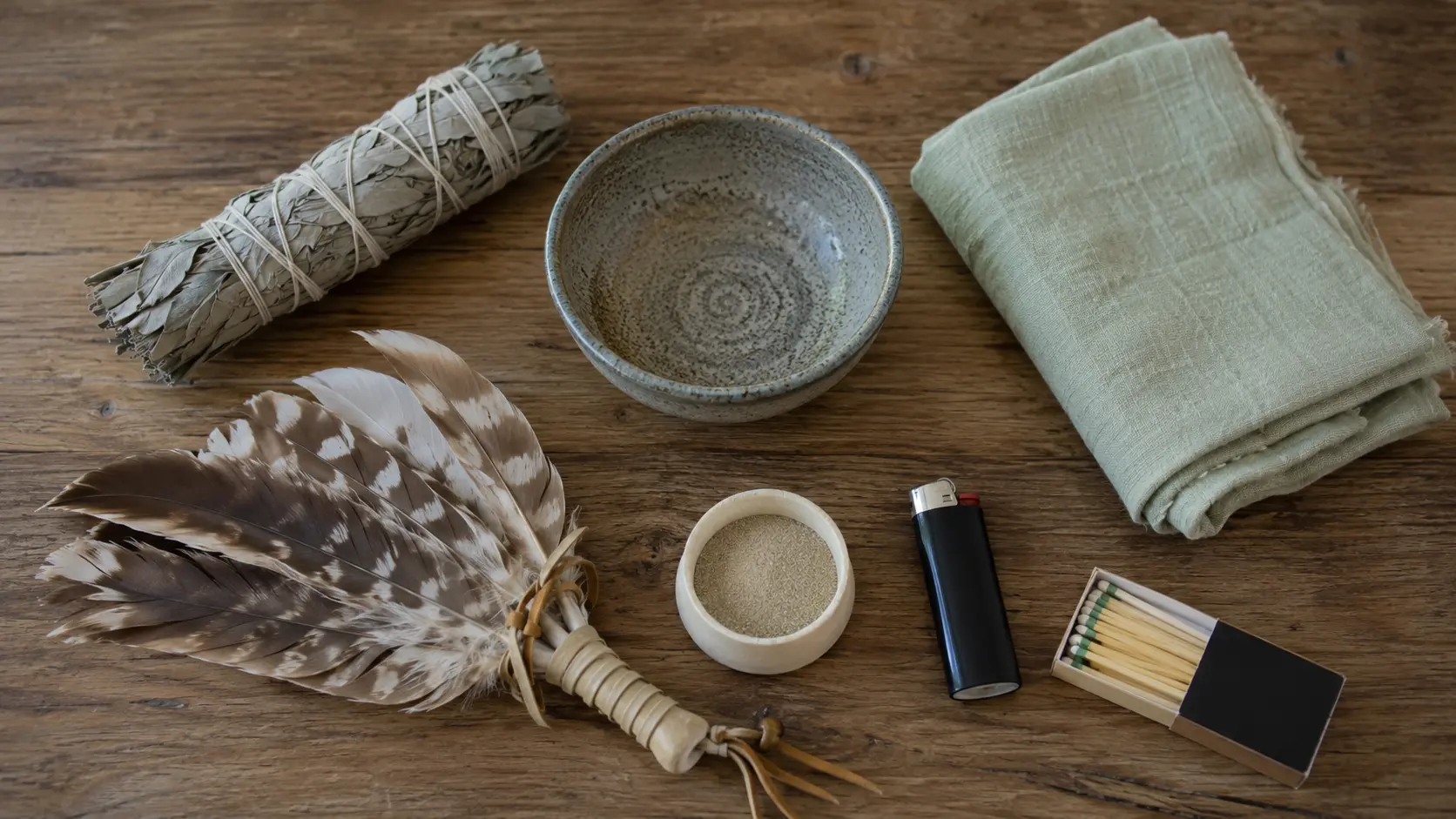
Gathering supplies ahead of time keeps the ritual calm and uninterrupted.
- A sage bundle or loose sage
- A fireproof bowl or abalone shell
- Matches or a lighter
- Sand or water for extinguishing the sage
- An open window or maybe a bathroom door
- An optional feather or hand fan to guide the smoke.
How to Prepare Your House Before Burning Sage
A little prep work before lighting the sage makes the whole process safer and more effective.
- Tidy clutter and remove trash.
- Open windows and interior doors.
- Turn off fans that may spread embers.
- Move flammable objects away from your path.
- Keep children and pets in a safe area.
- Decide on an intention for the ritual.
How to Sage Your House for the First Time Safely
First-timers often worry about doing it wrong, but the process is forgiving. The steps below walk through everything from lighting the bundle to finishing near the front door.
Step 1: Set a Clear Intention
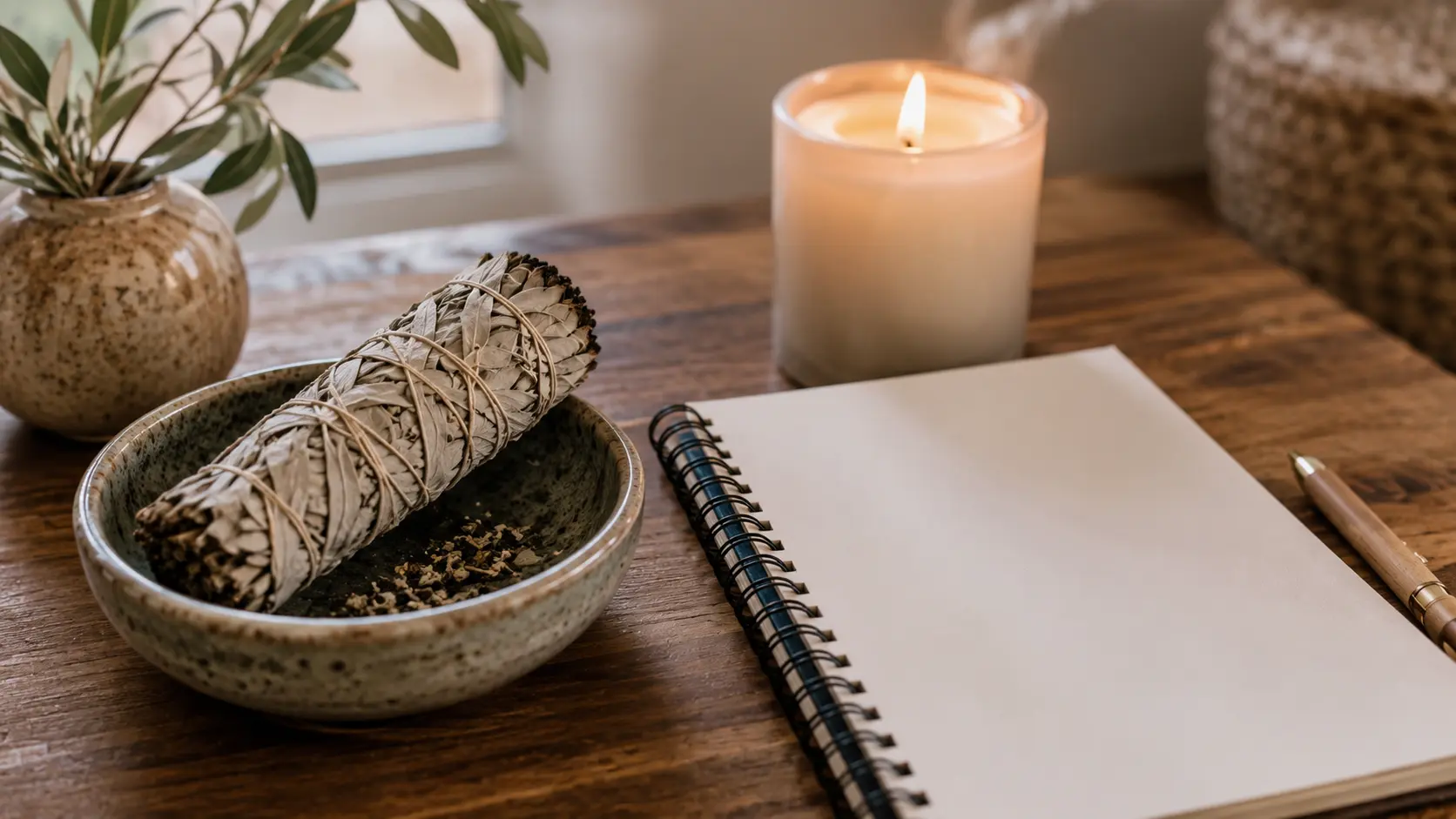
Choose a simple purpose for the cleansing before you begin, like creating a peaceful environment or marking a fresh start after a hard week.
Keeping it short and specific makes it easier to stay focused on the rest of the ritual.
Safety tip: Keep your fireproof bowl and extinguishing material within reach before you begin.
Step 2: Open a Window or Door
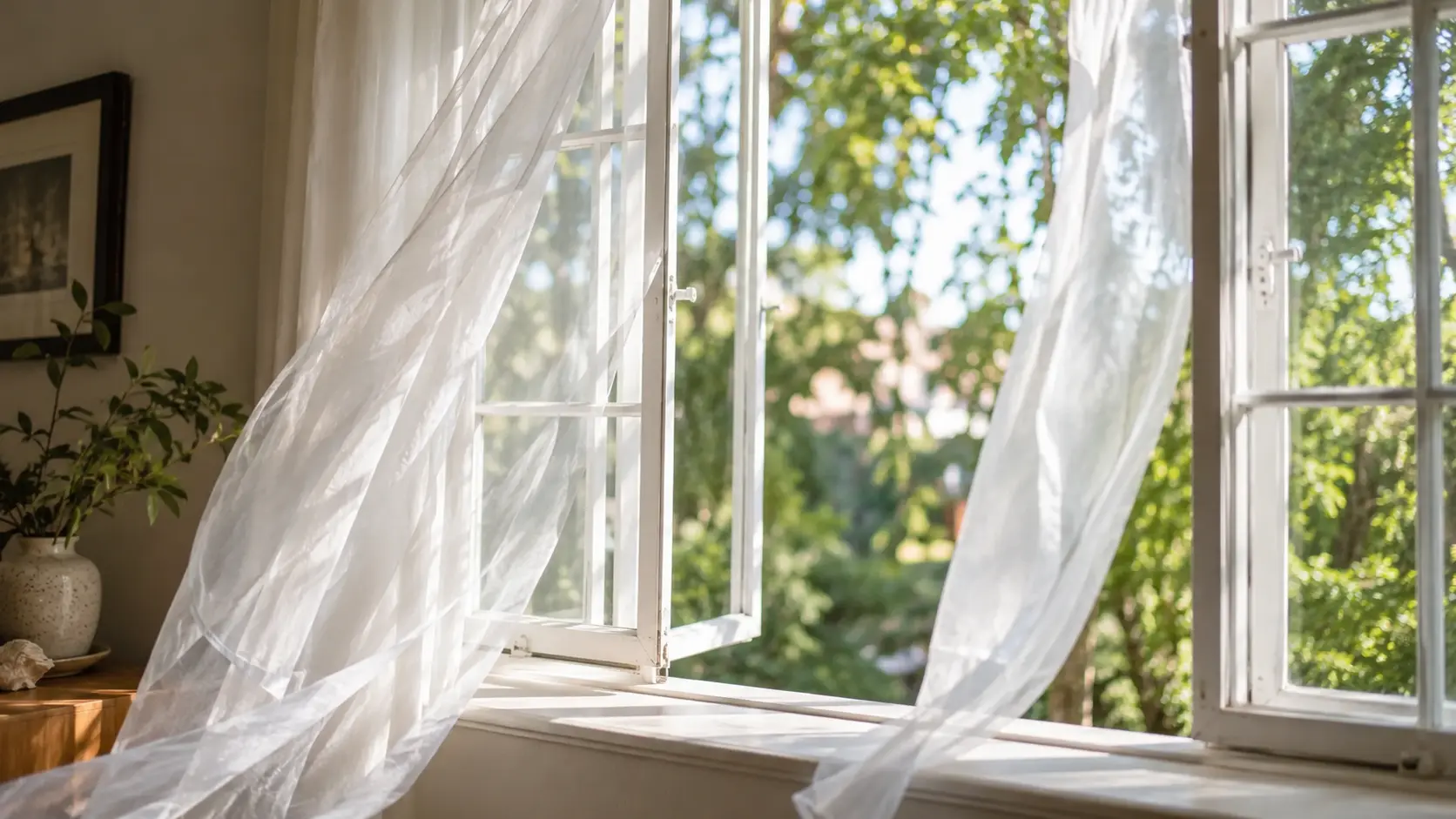
Ventilation lets smoke leave the home rather than build up indoors, so open at least one window or door before lighting the sage.
This single step does more to keep the air breathable than almost anything else in the process.
Safety tip: Check that smoke alarms near the opened window won’t trigger from drifting smoke.
Step 3: Light the Sage Bundle Safely
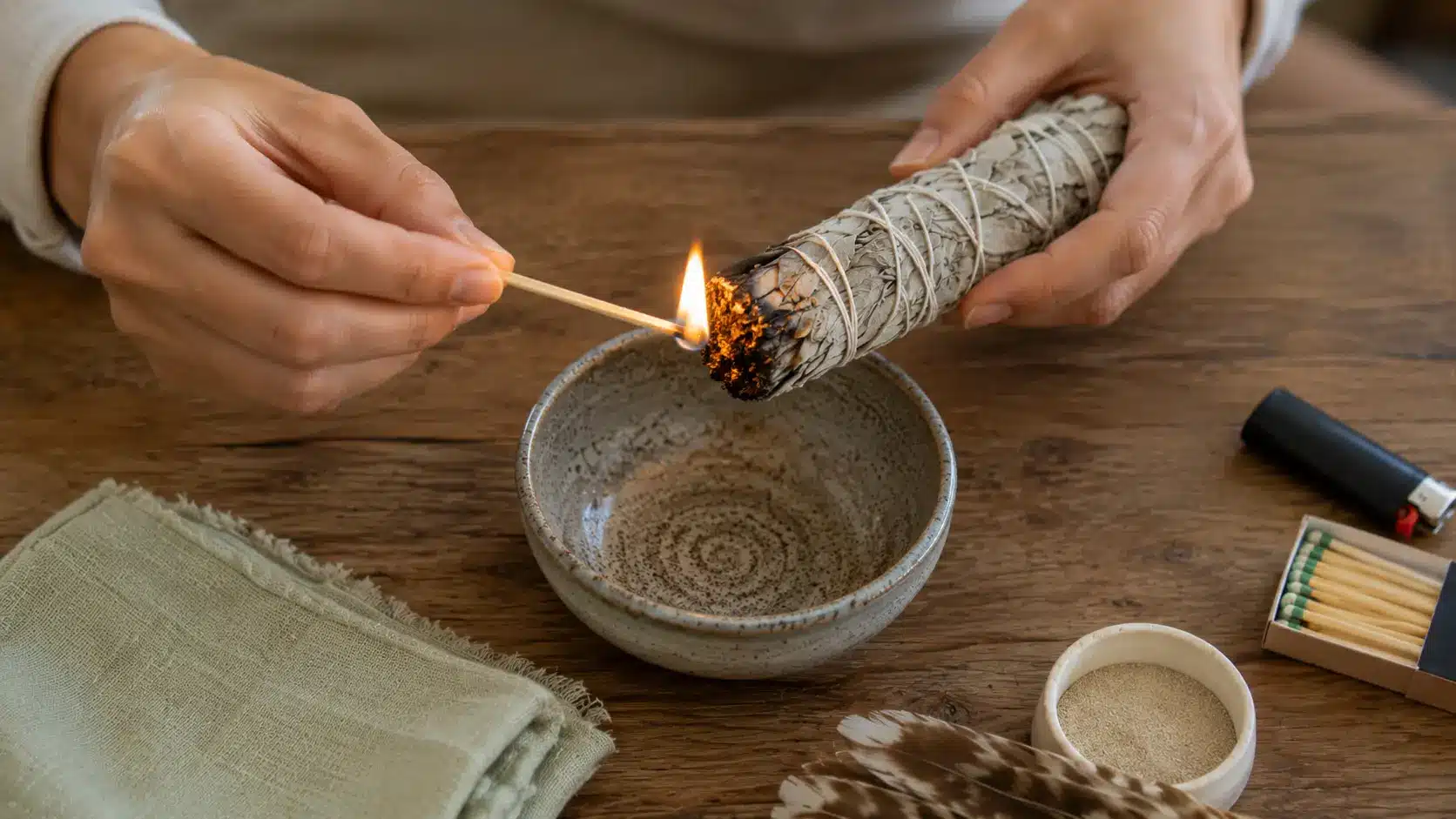
Hold the sage bundle over your fireproof bowl, light the tip, let it burn for a few seconds, then gently blow out the flame so it smolders and produces smoke instead of fire.
A steady stream of smoke, rather than an open flame or flickering light, is the sign that the sage is smoldering properly and producing smoke as intended.
Safety tip: Never light the bundle near curtains, paper, or other flammable materials.
Step 4: Begin at the Main Entrance
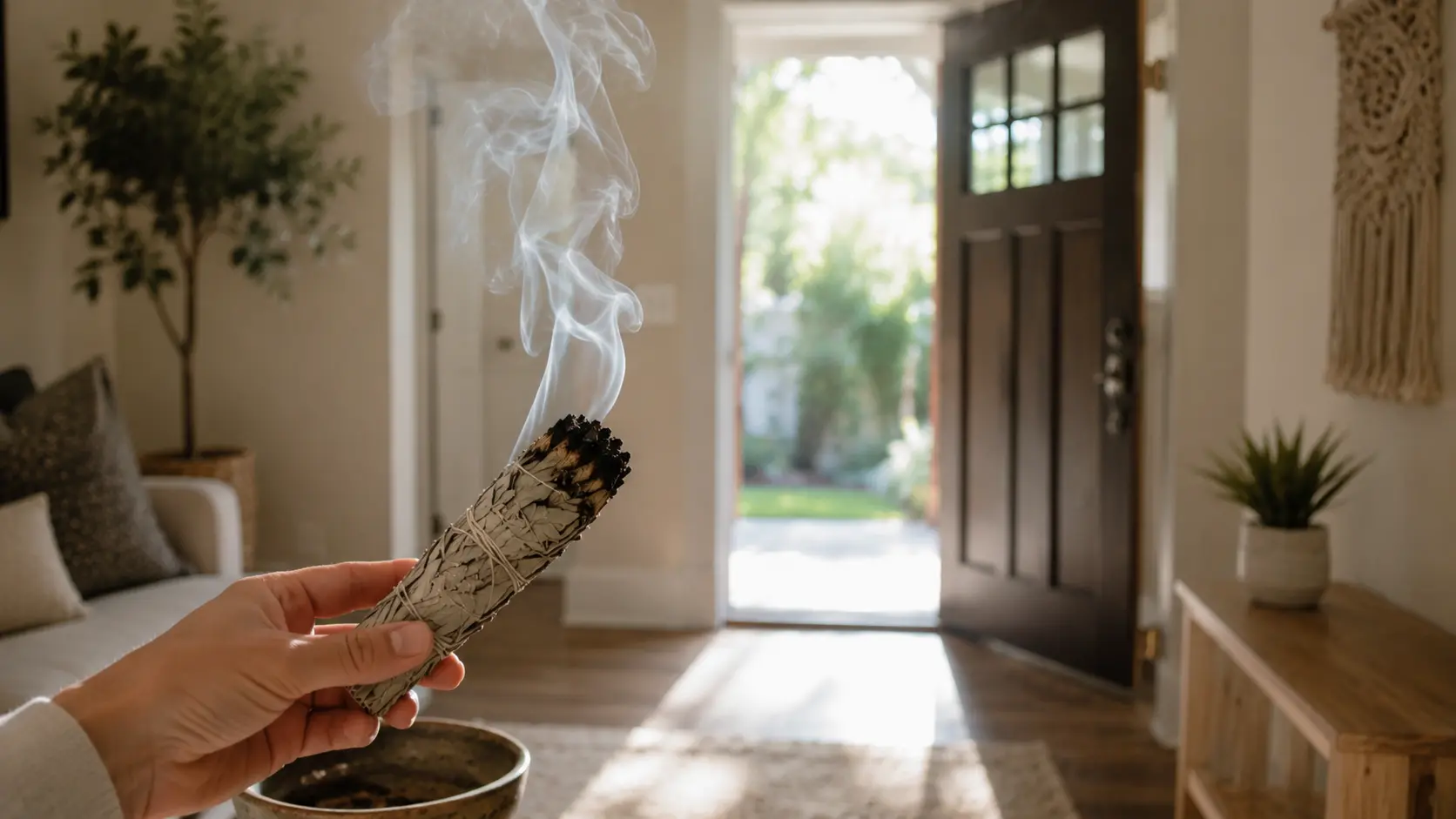
Many people start at the front door since it’s considered the main point where energy enters the home, then move through the house in one continuous direction.
Starting here also gives you a clear reference point to return to later.
Safety tip: Keep pets and children away from the entryway while the sage is lit.
Step 5: Move Slowly Through Each Room
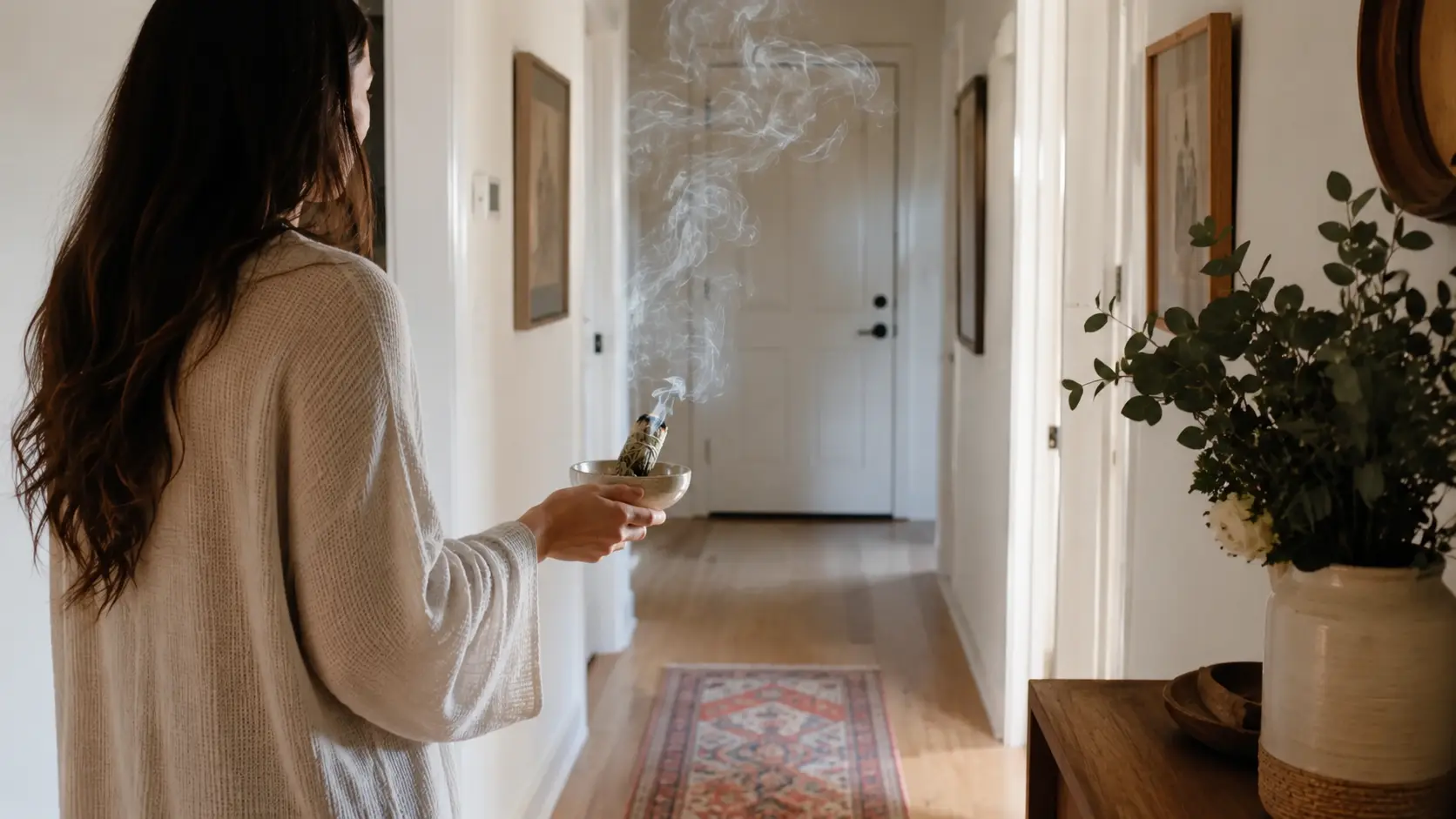
Carry the sage in its fireproof bowl and walk slowly through each room, letting a small amount of smoke drift into the space as you go.
There’s no need to fill the room with smoke, just enough to pass through each area.
Safety tip: Watch for falling ash and keep the bundle angled downward over the bowl as you walk.
Step 6: Focus on Corners, Doors, and Windows
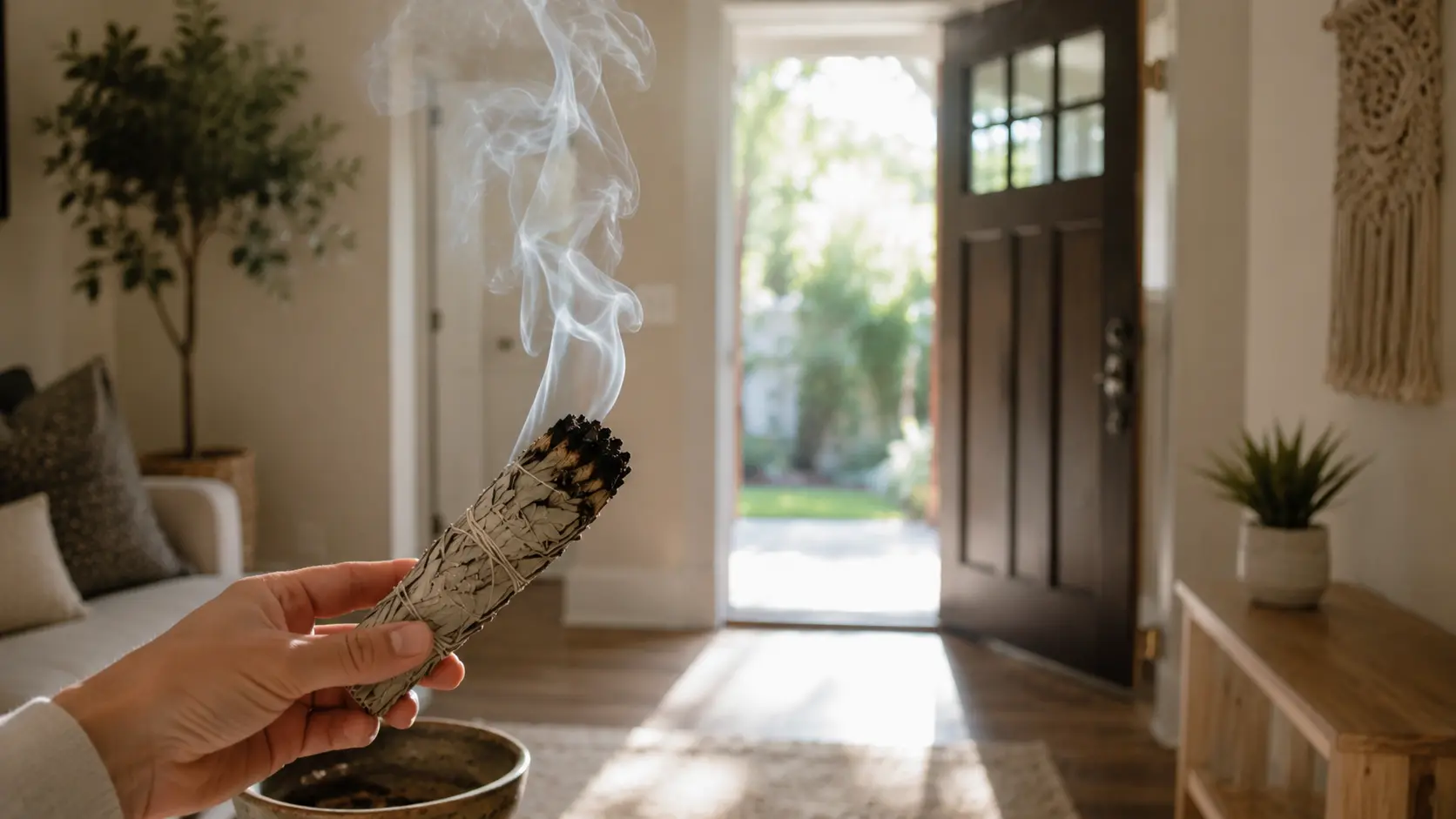
Direct the smoke toward corners, closets, entryways, and painted vinyl windows other spots where air tends to sit still, since these areas are often the focus of the ritual.
These are the same spots that tend to collect dust and stale air day to day.
Safety tip: Keep a safe distance from window treatments and stored items in closets.
Step 7: Repeat Your Intention
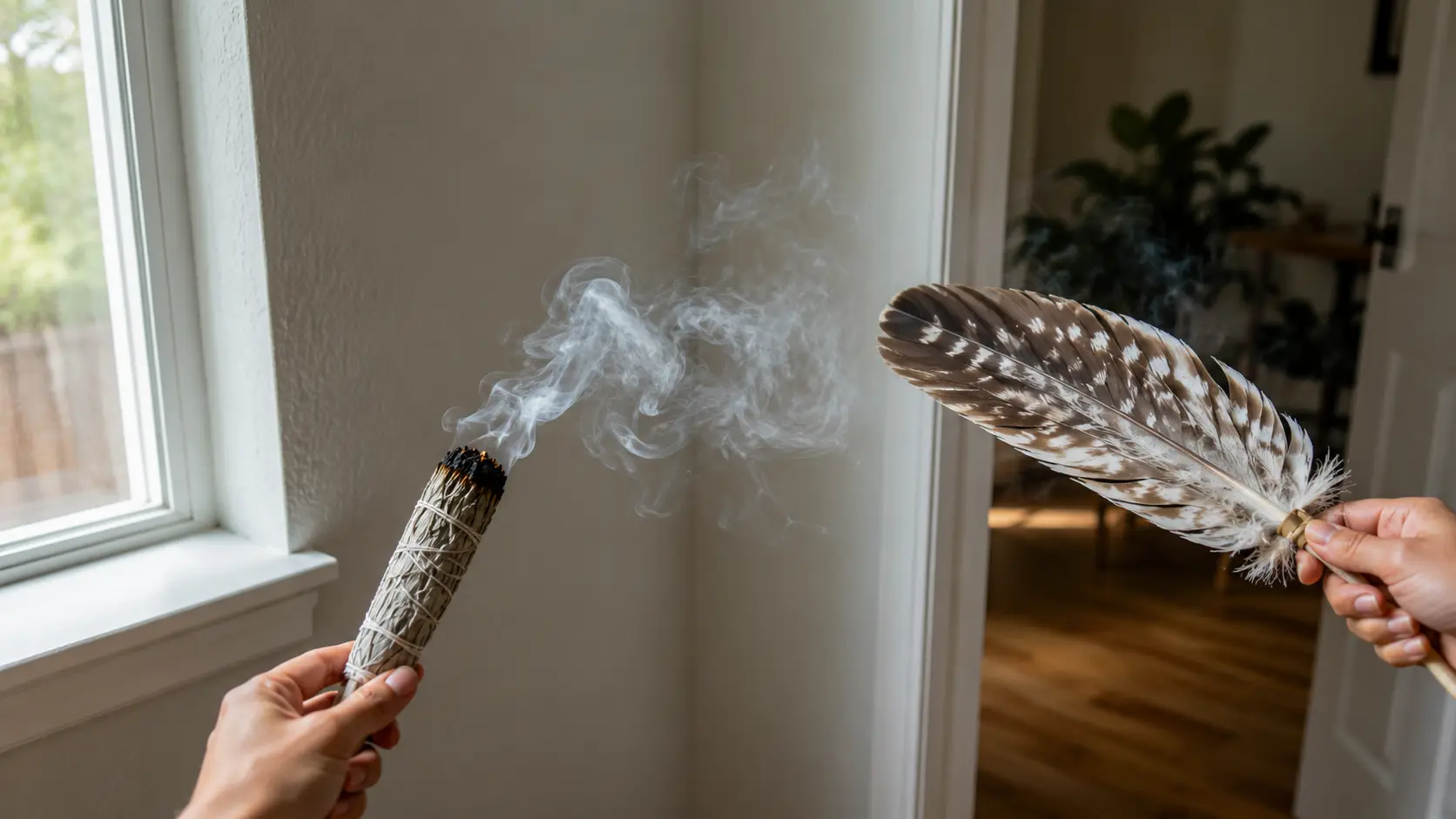
As you move from room to room, repeat your chosen intention quietly or aloud. Keeping the same words in mind can help you stay focused and present throughout the process.
There is no need to rush. Move at a comfortable pace and repeat the intention whenever you feel your attention drifting.
Safety tip: Don’t let focus on the intention distract you from watching the burning tip.
Step 8: Return to the Starting Point
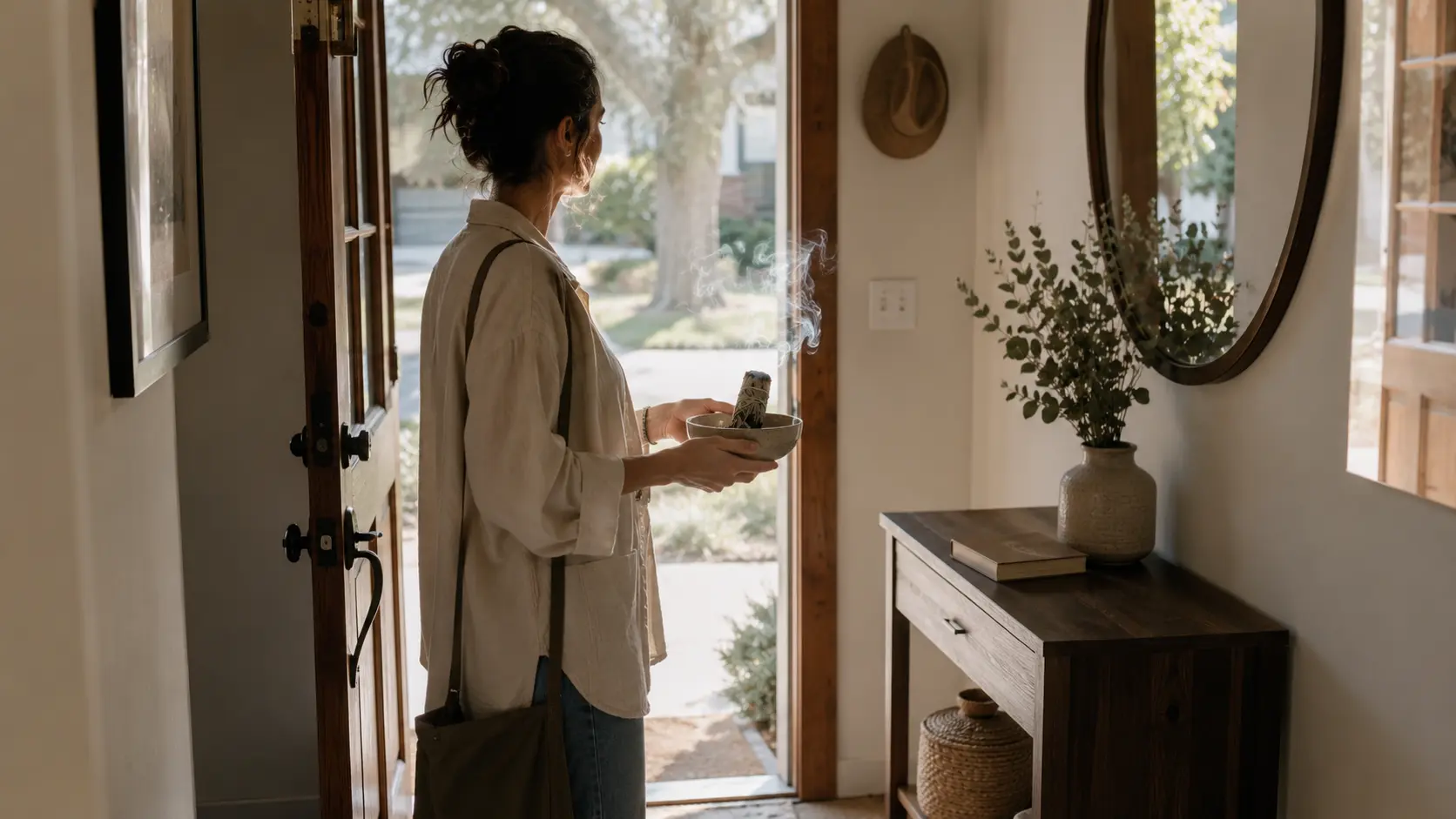
Finish your path near the main entrance or the open window you started with, completing the loop through the home. This closes out the ritual with the same clear structure it started with.
Safety tip: Do a quick visual check of the bundle for any active embers before setting it down.
Step 9: Extinguish the Sage Completely
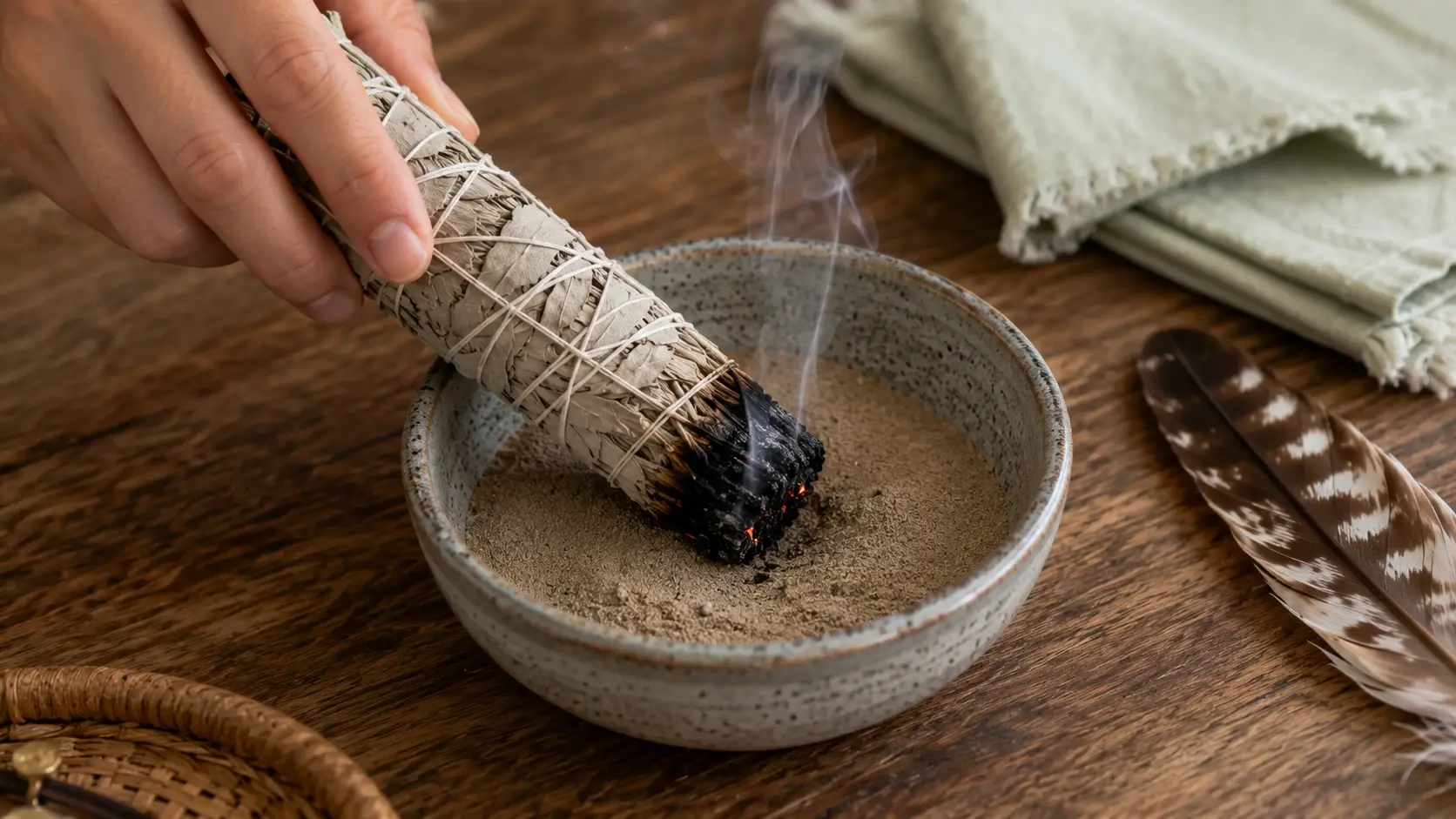
Press the burning end firmly into sand or a fireproof container and check closely for any remaining embers before setting it aside. This last step matters just as much as the ritual itself.
Safety tip: Confirm the bundle is fully cold to the touch before storing it away.
How Often Should You Sage Your House?
There’s no fixed schedule for saging a house. Many people do it after moving into a new home, following an argument, before starting something new, after guests leave, or simply whenever the space starts to feel unsettled.
The ritual is performed as needed rather than on a strict routine.
Some people prefer a light, regular rhythm, like once a season or at the start of a new month, while others reach for sage only when something specific prompts them.
Neither approach is more correct than the other. The right frequency really comes down to how often the home feels like it needs a reset, not a set number of times per year.
Which Direction Should You Move While Saging?
There’s no single required direction for staging a house, so the table below covers the most common approaches.
| Approach | How It Works | Best For |
|---|---|---|
| Clockwise | Starts at the front entrance and follows a consistent clockwise path room to room | People who want a simple, repeatable routine |
| Counterclockwise | Moves in the opposite direction from clockwise, starting at the same entry point | Practitioners with a personal or traditional preference |
| Natural layout | Follows the home’s floor plan in whatever order feels easiest to walk through | Larger or irregularly shaped homes |
What matters more than the exact direction is covering every room at a steady, unhurried pace; sticking to the same path each time can make the ritual feel more familiar over time.
How to Complete Your House Cleansing Ritual
A few simple steps wrap up the ritual once you’ve worked through every room.
- Let fresh air circulate for a few minutes before closing the windows.
- Dispose of ash safely and store the cooled sage bundle in a dry, fire-safe place.
- Take a quiet moment to acknowledge the fresh start before returning to your routine.
- Check the room where you started one last time to make sure no embers remain.
How to Choose Sage for House Cleansing
When buying sage for house cleansing, look beyond price and packaging. The more important details are the type of sage, where it was grown, and whether the seller explains how it was harvested.
You can find white sage from established herb suppliers such as Mountain Rose Herbs, which offers organically cultivated white sage of California origin, and Taos Herb Company, which carries California white sage sourced from private land.
For smaller growers, marketplaces can also be useful, especially when sellers provide clear details about cultivation and harvesting. For example, Blossom Valley Sage grows and harvests white sage on private property in San Diego, California.
Before buying, check whether the sage is cultivated or wild-harvested, where it comes from, and whether the seller provides transparent sourcing information. White sage is particularly vulnerable to overharvesting, so cultivated plants or responsibly harvested sage from private land are better options when available.
Common Mistakes to Avoid When Saging a House
A few small missteps account for most of the problems people run into with this ritual. Creating too much smoke is one of the most common mistakes, since a light, steady stream works better than a heavy cloud that overwhelms the space.
Skipping ventilation quickly compounds the problem, so keep windows and doors open throughout. Carrying the bundle without a fireproof bowl underneath it is another oversight worth correcting before you start, as ash and embers drop without warning.
Moving too quickly through each room undermines the whole process; slow, deliberate movement gives the smoke time to do its work.
Keep an eye on anything flammable nearby, including curtains, loose papers, and dry decorative pieces, since sage burns longer than it appears to. When you’re done, make sure the bundle is fully extinguished rather than just set aside, since smoldering sage left unattended is a fire risk.
Frequently Asked Questions
What time of day should you smudge your house?
You can smudge at any time, though many people prefer the morning or before a new beginning to create a fresh atmosphere.
Does burning sage invite bad spirits?
No, there is no evidence that burning sage invites bad spirits; many people use it as a symbolic cleansing practice based on personal or cultural beliefs.
Does sage have to be gifted?
No, Sage does not have to be gifted; you can purchase it yourself if you choose to use it respectfully.
What is the prayer for powerful home cleansing?
There is no single required prayer; you can say a simple, sincere intention asking for peace, protection, and positive energy in your home.
Does dried sage ever go bad?
Dried sage does not spoil quickly, but it can lose its fragrance and burn quality over time if stored in a damp or humid place.
A Fresh Start for Your Home
Sagging a house comes down to a few simple stages: preparing the space, lighting the bundle safely, moving smoke through each room with intention, and finishing the ritual with care.
Keep the smoke light, the ventilation open, and let the process bend to your own beliefs and your household’s needs rather than a rigid set of rules.
Long after the smoke has cleared, what stays behind is the quiet shift in how the home feels. That’s the real point of the ritual, not the smoke itself.