

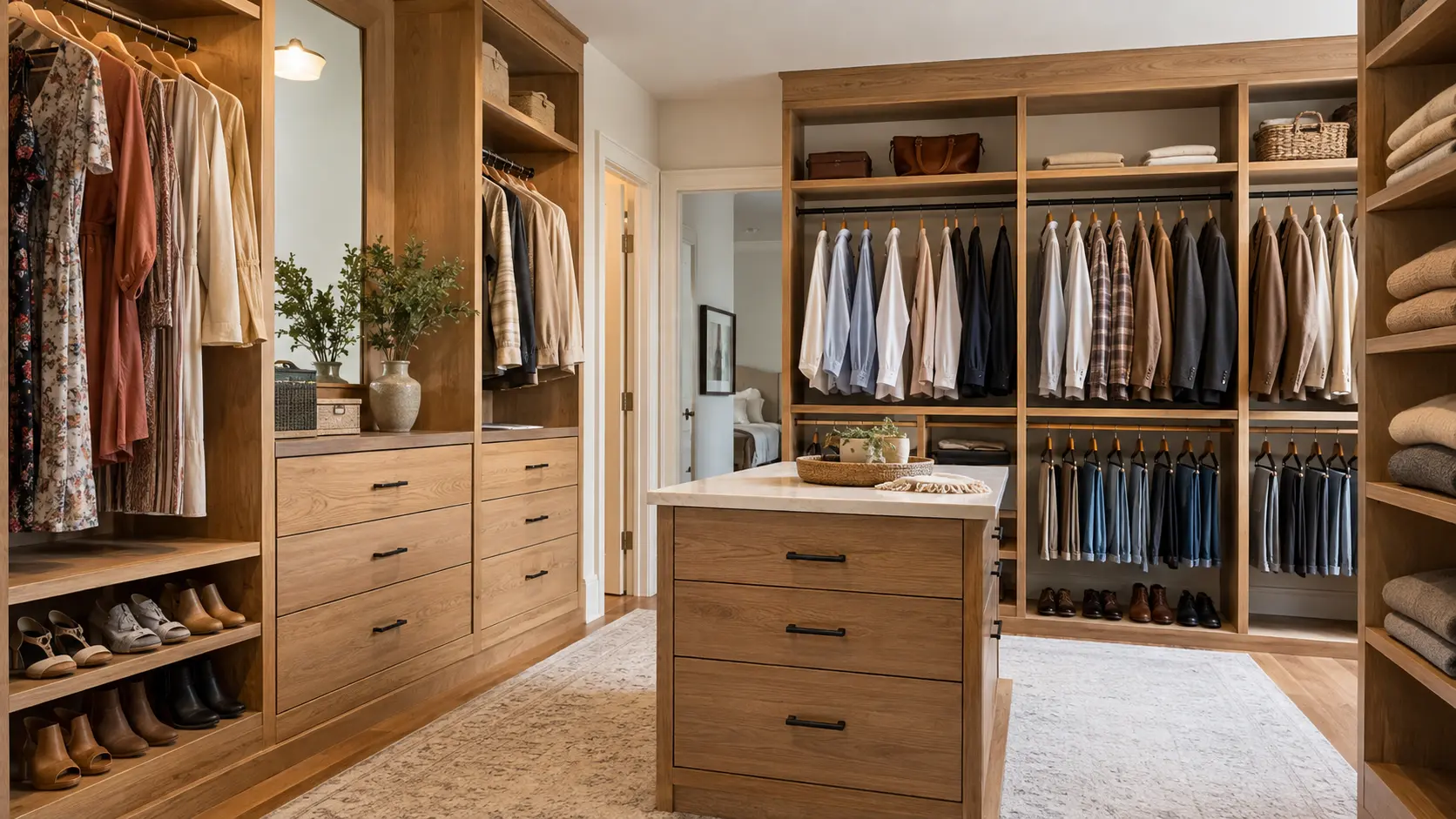


With over 12 years in interior design, I focus on practical layouts that make everyday spaces easier to use.
A well-designed closet is more than just adding shelves or storage bins. Balance, movement, and placement all shape how comfortable the space feels.
Proper proportions prevent shelves, drawers, and islands from making the room feel cramped. A clear layout keeps clothing, shoes, and accessories within easy reach.
Choosing the right lighting and colors can make a small closet feel brighter and more open.
You can solve many closet problems by improving storage placement, keeping walkways clear, and choosing finishes that work well together.
Plan Your Master Closet Around Everyday Needs
The best master closet ideas combine usable storage, clear walking space, suitable lighting, and an organized layout.
A closet that looks great but leaves clothes crammed onto a single rod or forces you to squeeze past an island every morning misses the point.
Function should come first. Once the layout works for your daily routine, you can focus on style.
A functional closet adapts as your storage needs change. Shoe collections grow, seasonal wardrobes shift, and accessories often pile up faster than you expect.
The best designs build in flexibility from the start, like adjustable shelves or modular bins.
From full-height cabinets to a dedicated vanity, these ideas can help turn an ordinary closet into a well-organized space.
1. Install Floor-to-Ceiling Cabinets
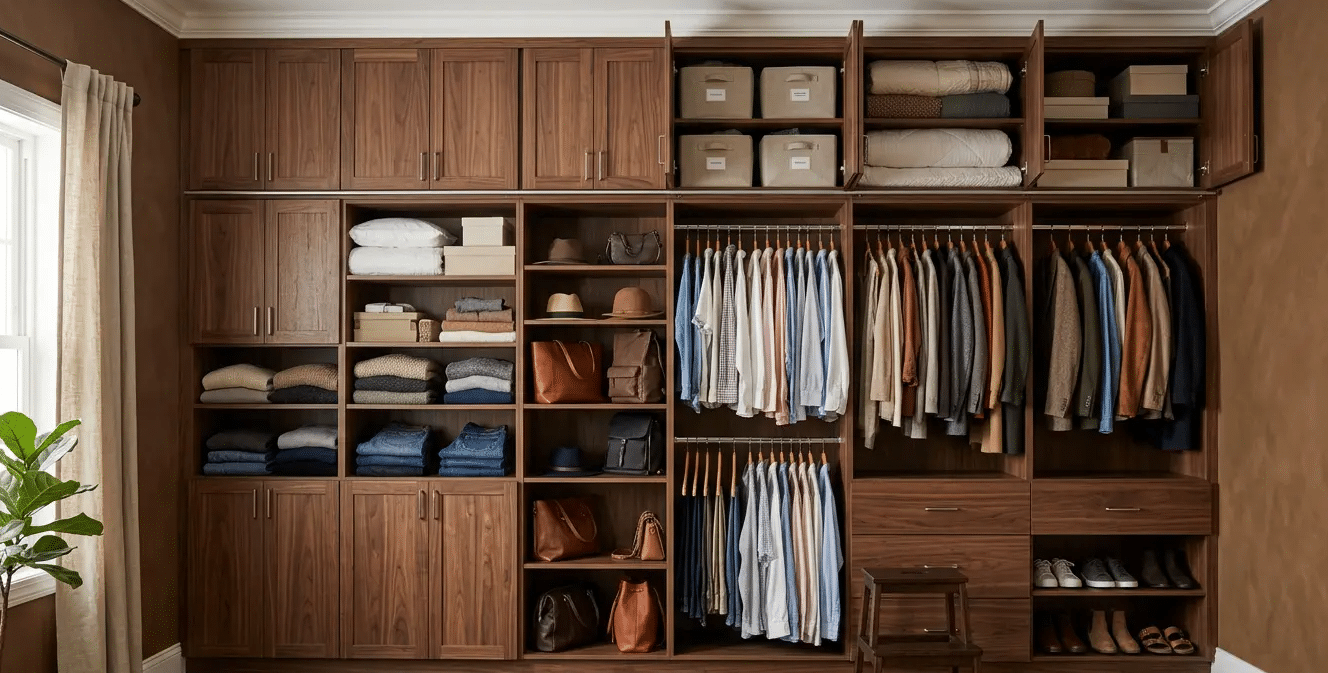
Use the full height of the room to store clothing, bags, bedding, and seasonal items without wasting space above the closet.
Cabinets that reach the ceiling turn the empty space above eye level into useful storage. If you have a tall closet with low cabinets, you waste valuable space above each shelf.
A pull-down rod or a small step stool makes it easy to reach the top sections without much effort.
Best for: Rooms with tall ceilings and limited floor space.
2. Add a Center Island with Drawers
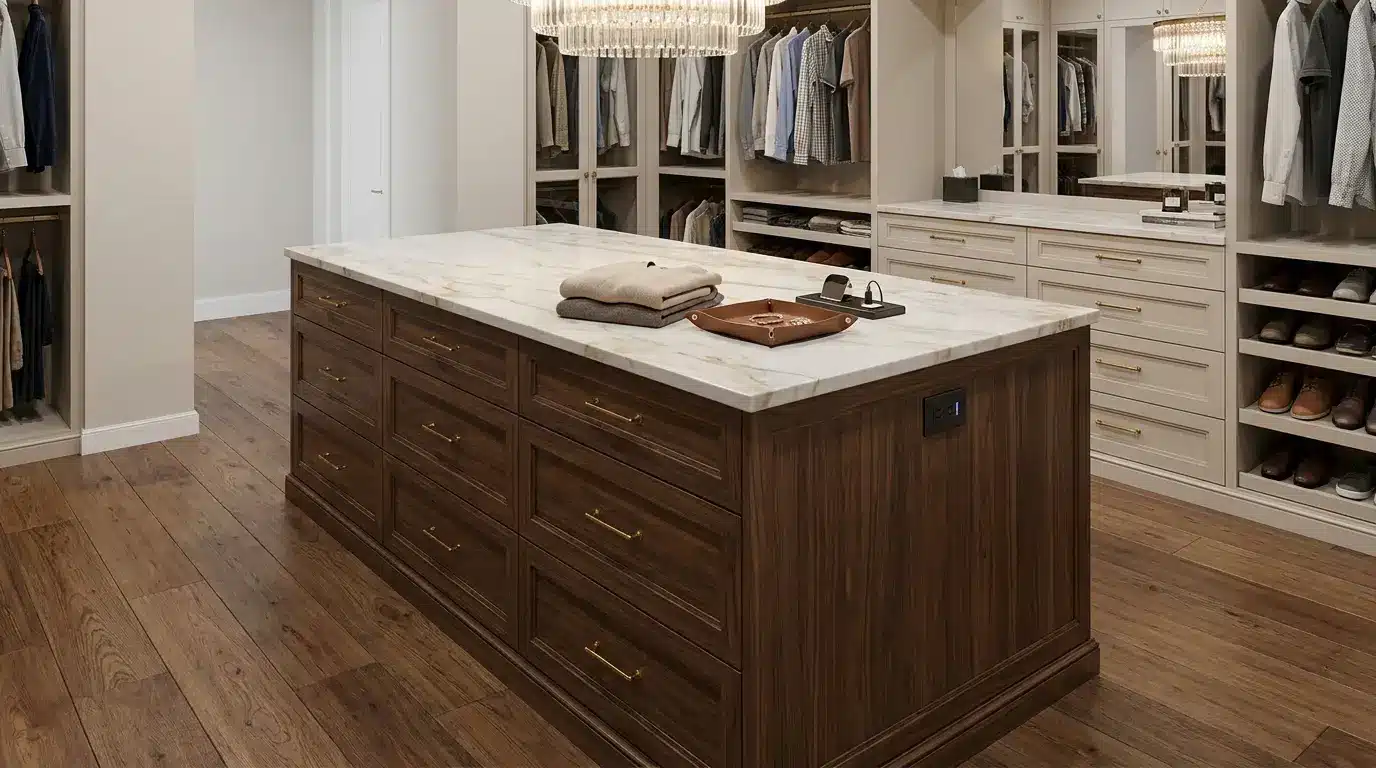
A closet island provides extra storage for jewelry, accessories, folded clothing, and everyday essentials while also serving as a useful countertop.
It also gives you a place to lay out outfits or fold laundry without leaving the room. Just make sure there’s enough space around the island to move comfortably.
A built-in outlet on the island can also power a steamer or charging station right where you get dressed.
Best for: Larger closets with enough clearance on all sides.
3. Set Up Separate Zones for Each Person
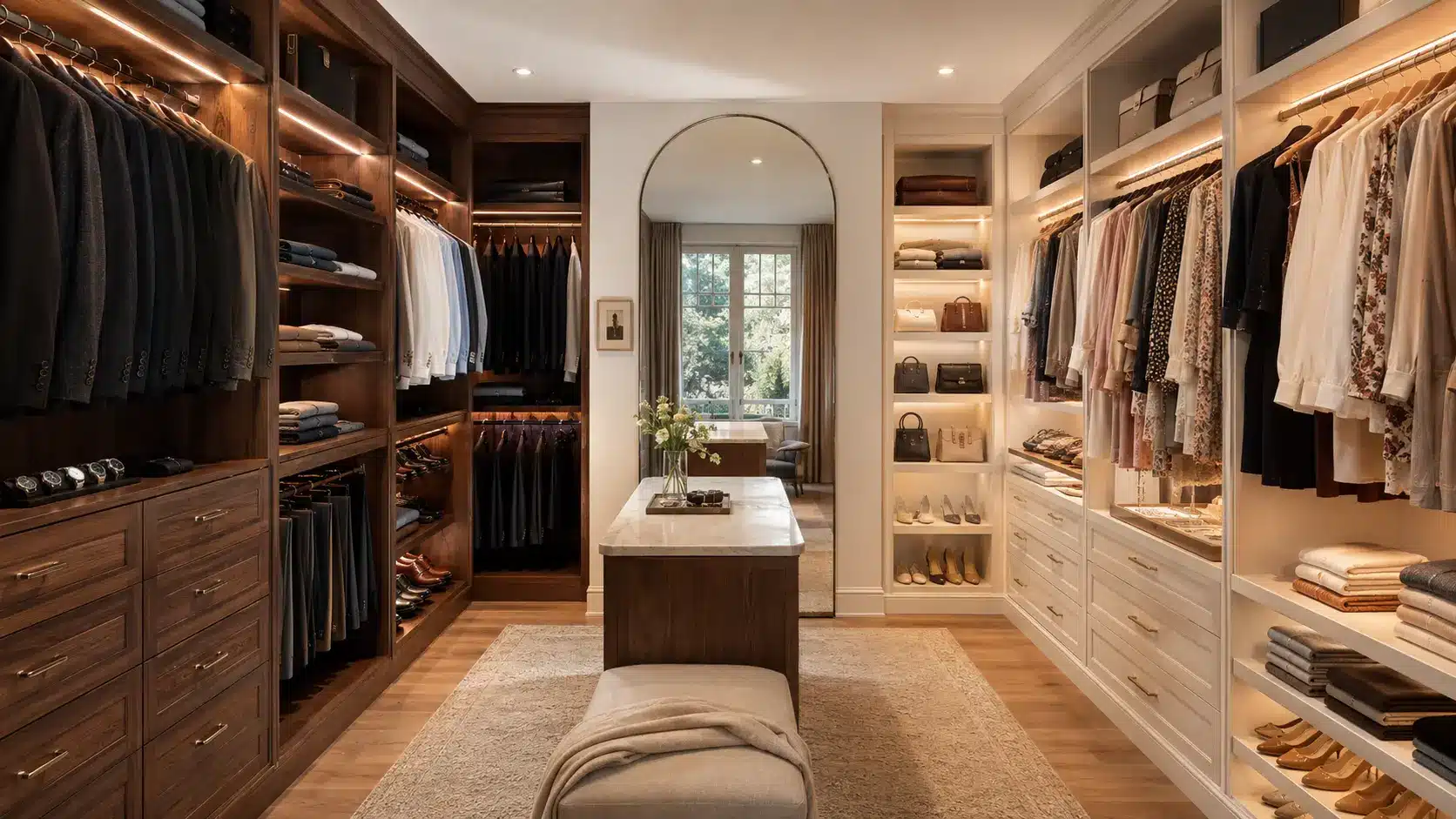
Divide hanging rods, drawers, shelves, and shoe storage so each person has a clearly organized section.
Clear zones help cut down on morning clutter and show exactly where everything belongs. This also avoids confusion about whose sweater is on which shelf.
Color-coding each side with different hardware or labels makes the split even easier to maintain.
Best for: Shared closets used by couples.
4. Use Double Hanging Rods
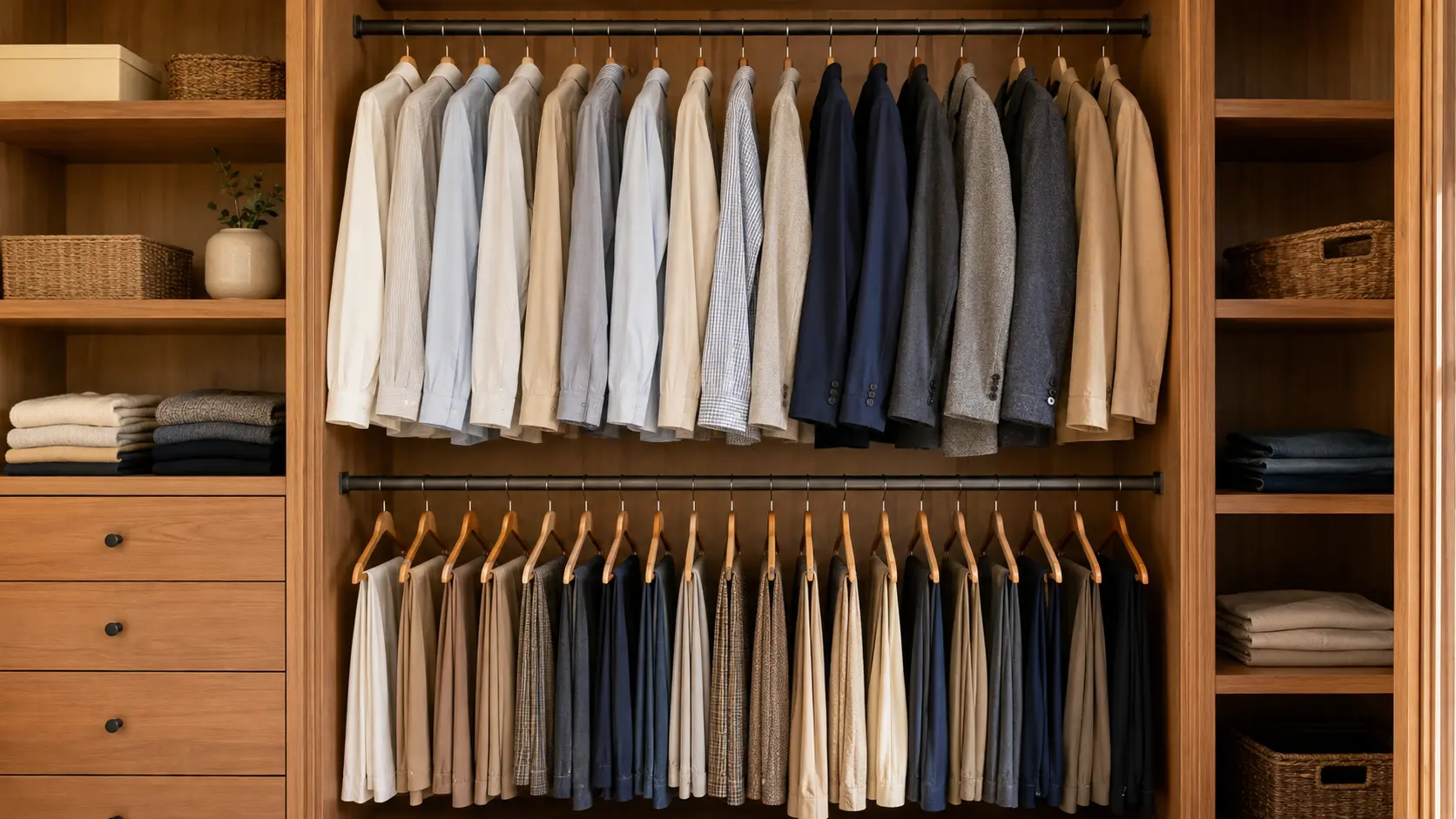
Install one rod above another to create separate areas for shirts, jackets, skirts, and folded pants.
This setup doubles your hanging space without taking up more room, which is great for closets with limited wall space. It works especially well if you have lots of shorter items, like blouses and folded trousers.
Keep the upper rod at a height you can comfortably reach for daily items without a step stool.
Best for: Wardrobes with lots of shorter hanging items.
5. Include Adjustable Shelving
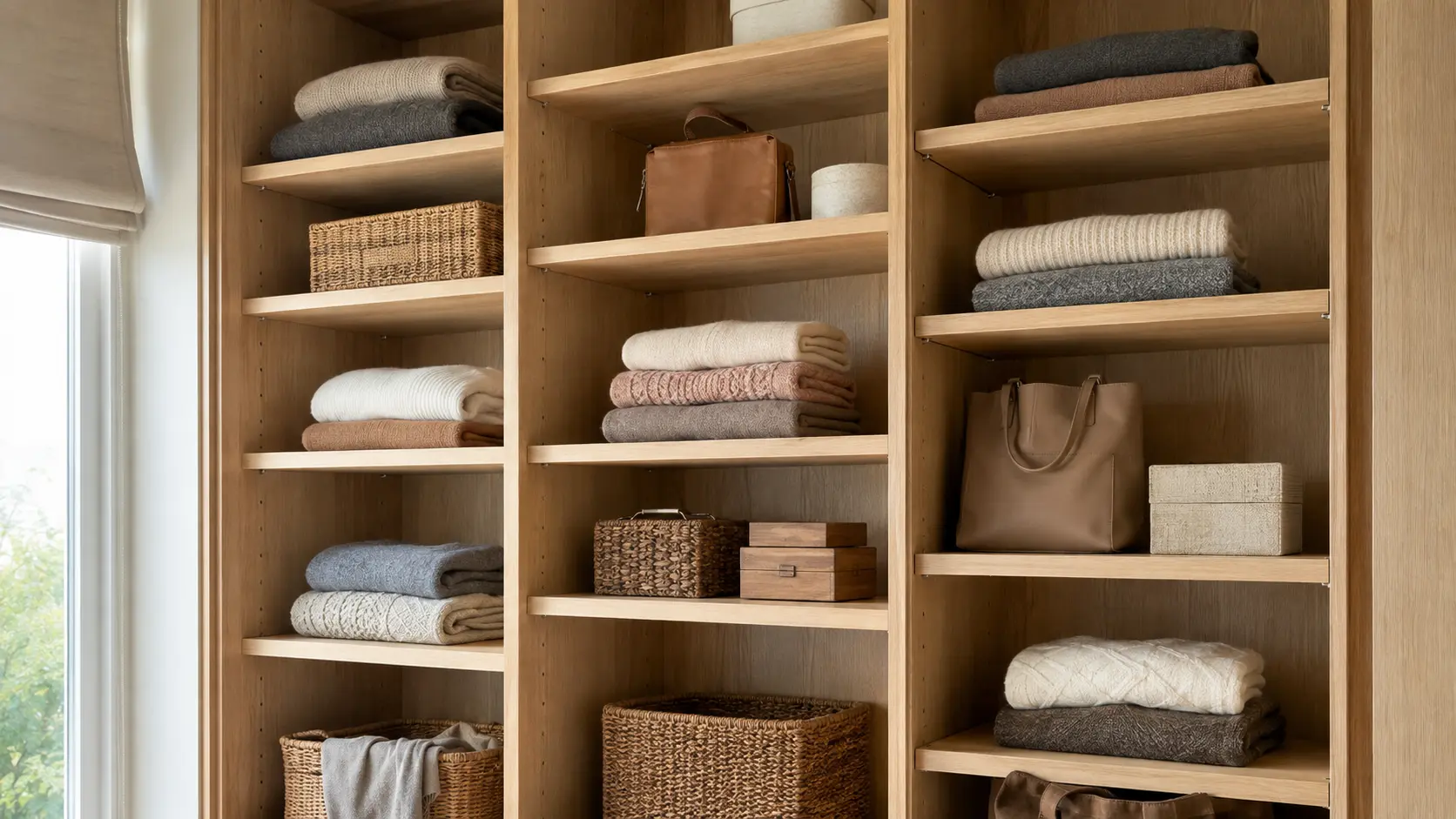
Movable shelves let the closet layout change as clothing collections and storage needs evolve over time. A shelf that fits sweaters now can be adjusted for taller storage bins next season.
This flexibility keeps your closet useful for years, so you don’t have to redesign it every time your needs change.
Adjustable shelving also makes it easier to fit unexpected items, like new boots or heels.
Best for: Anyone whose storage needs shift by season.
6. Add Pull-Out Shoe Shelves
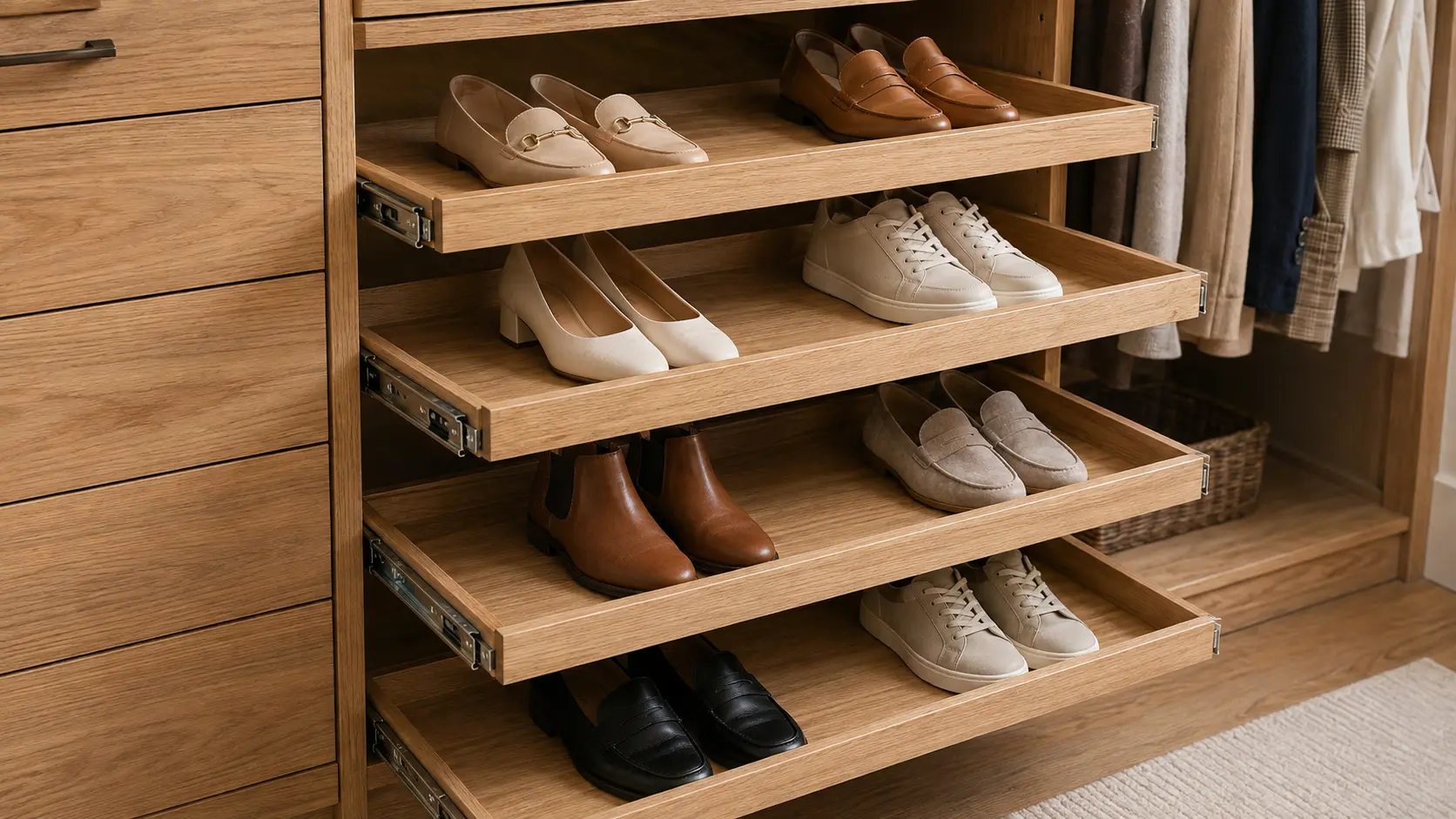
Slanted or pull-out shelves keep shoes visible, easy to reach, and protected from overcrowding.
This storage makes it easy to spot matching pairs at a glance, instead of digging through a pile. It also keeps shoes off the floor, helping your closet stay tidier.
A slight downward tilt on each shelf lets shoes rest naturally without sliding off.
Best for: Larger shoe collections.
7. Install Glass-Front Cabinet
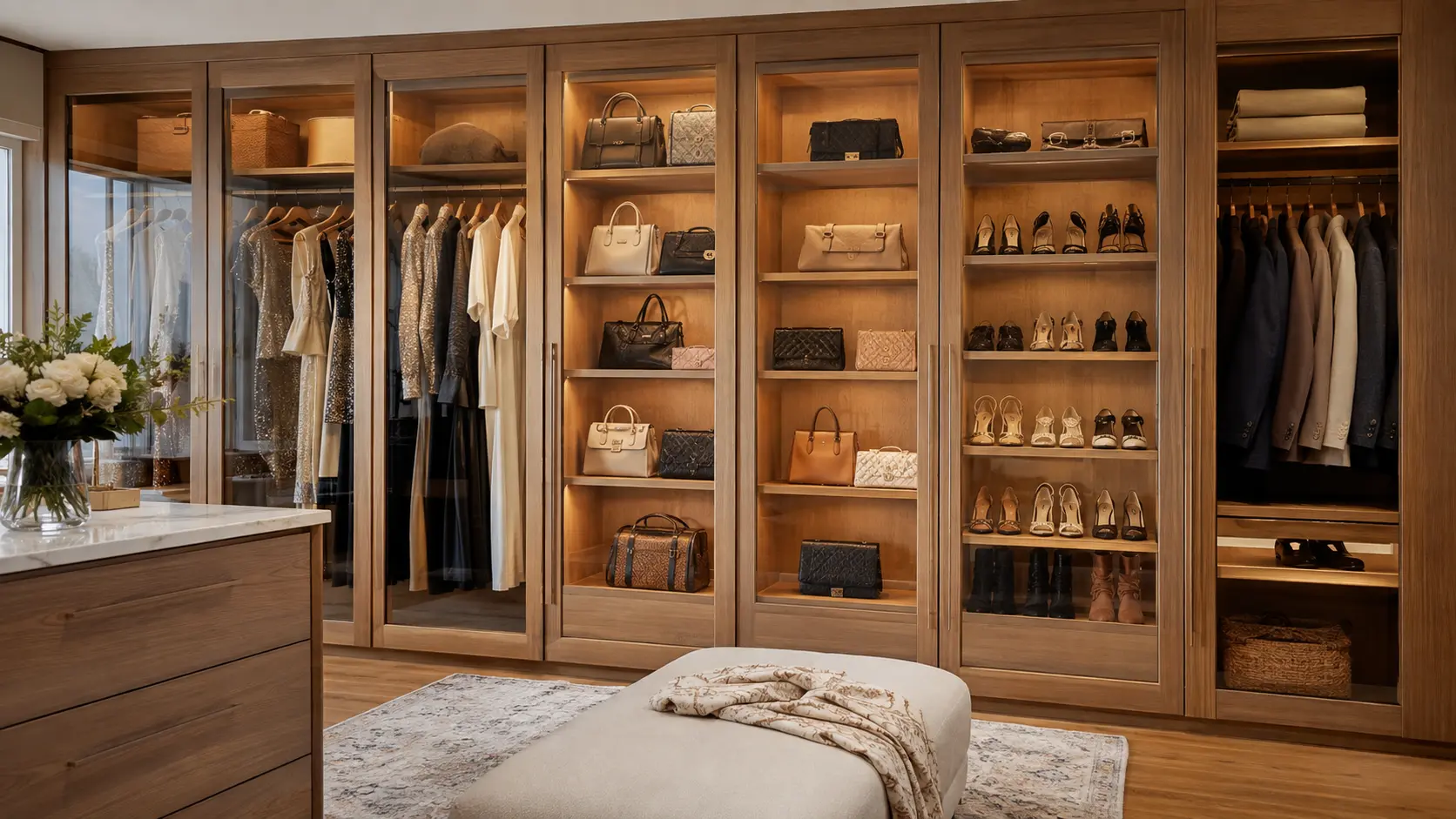
Glass doors protect special clothing and accessories while giving the master closet a clean, display-style appearance.
They’re great for handbags, shoes, or seasonal pieces you want to see without opening a door. The display also makes your closet feel more like a boutique than just a storage space.
Adding a small interior light behind the glass makes the display pop even more at night.
Best for: Displaying handbags, shoes, or special-occasion pieces.
8. Build a Vanity Area
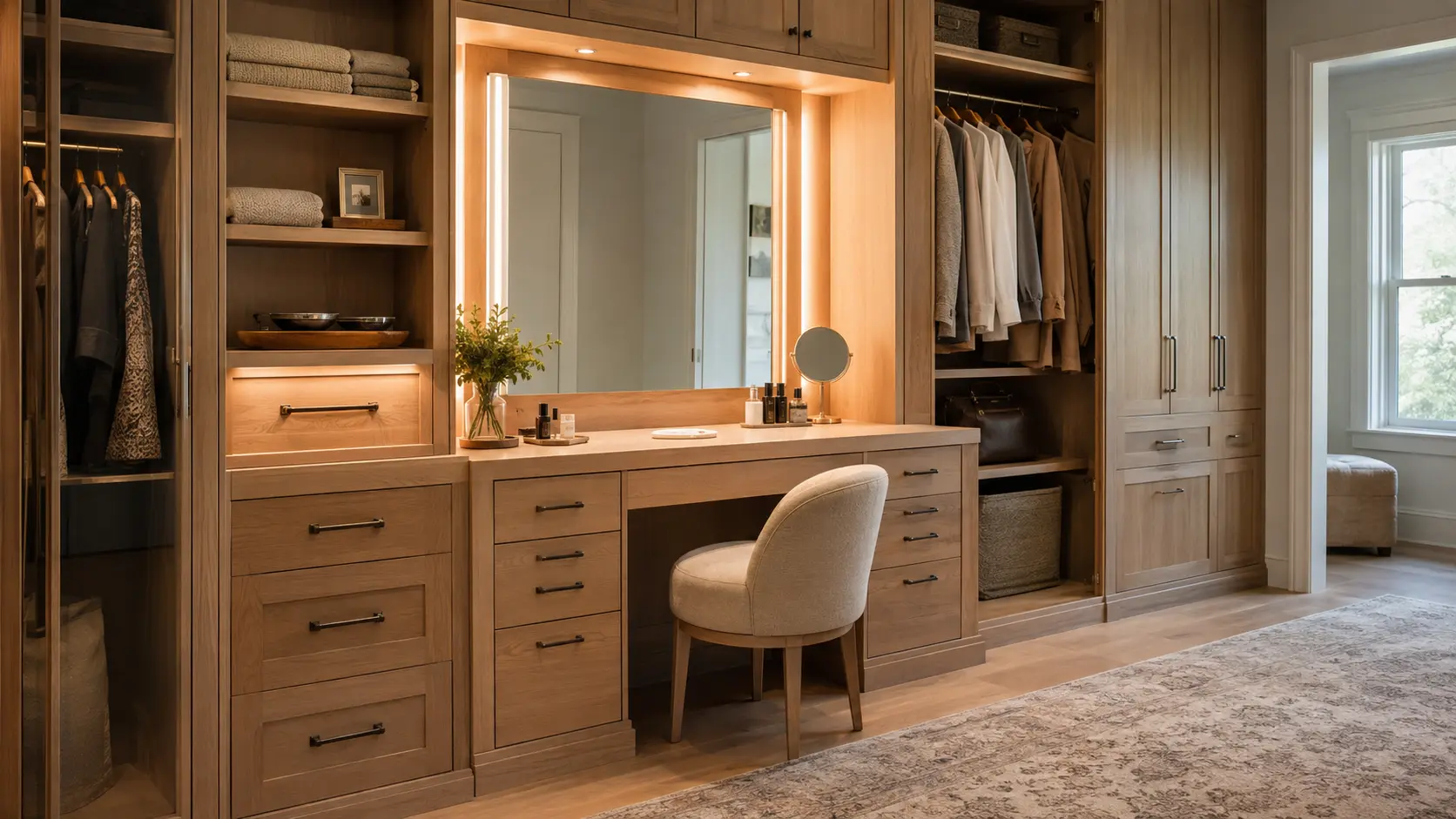
A small vanity with drawers, a mirror, and suitable lighting creates a convenient place for makeup, skincare, and grooming.
Having your routine in the closet frees up bathroom space and keeps all your supplies together. It also saves you from running between rooms in the morning.
A comfortable stool or chair nearby makes the space feel more like a real routine stop rather than an afterthought.
Best for: Closets with enough room for a dedicated counter.
9. Add a Storage Bench
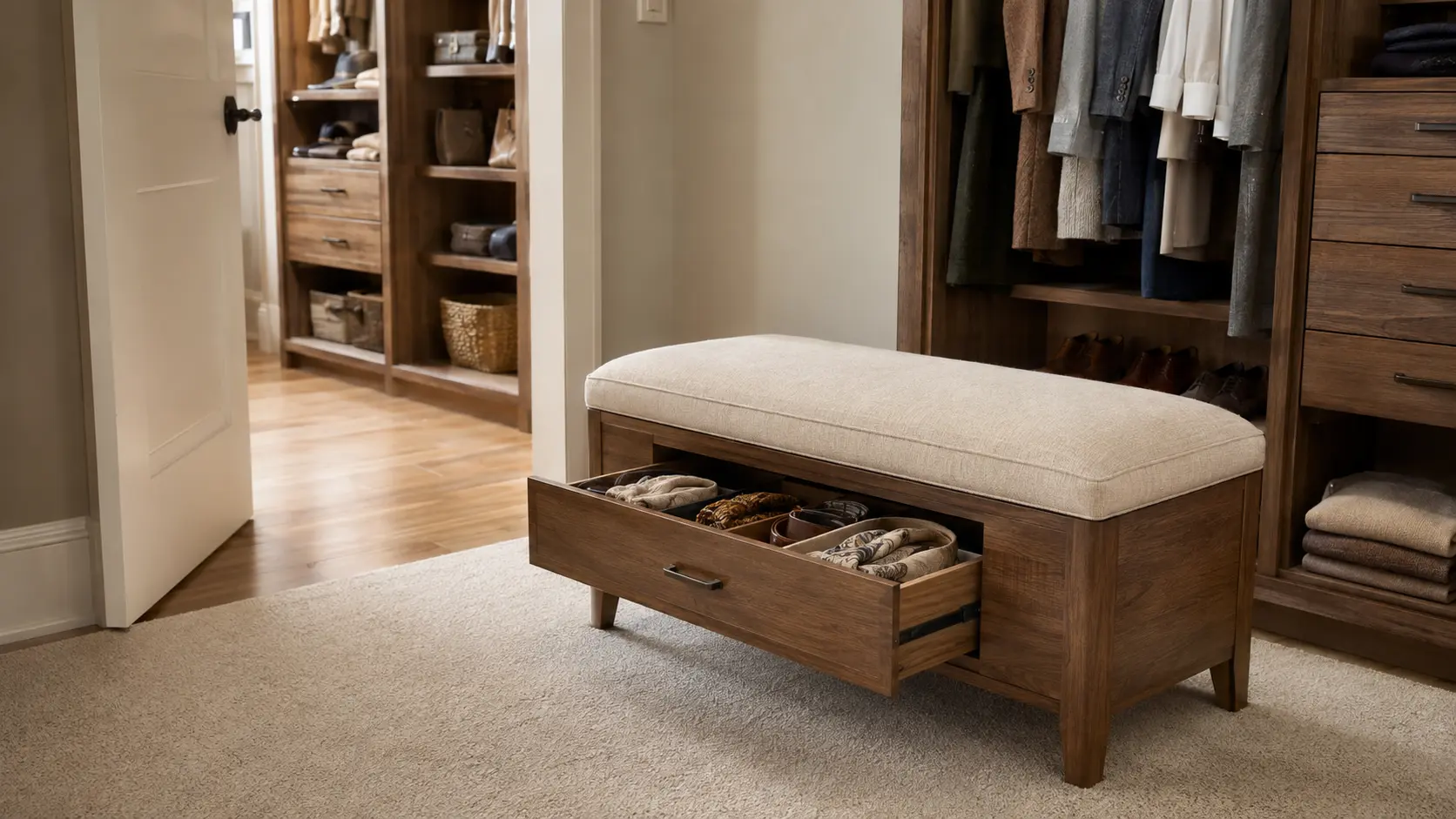
A padded bench provides comfortable seating, while the hidden storage beneath can hold shoes, bags, or seasonal items.
It’s a small upgrade that makes putting on shoes much more comfortable than balancing on one foot. It also gives you a place to sit while you pick out an outfit.
A hinged top on the bench makes the storage underneath easy to reach without moving the cushion aside. That means less lifting and less mess when you just need one pair of shoes.
Best for: Closets with a bit of extra floor space near the entry.
10. Create a Full-Length Mirror Wall
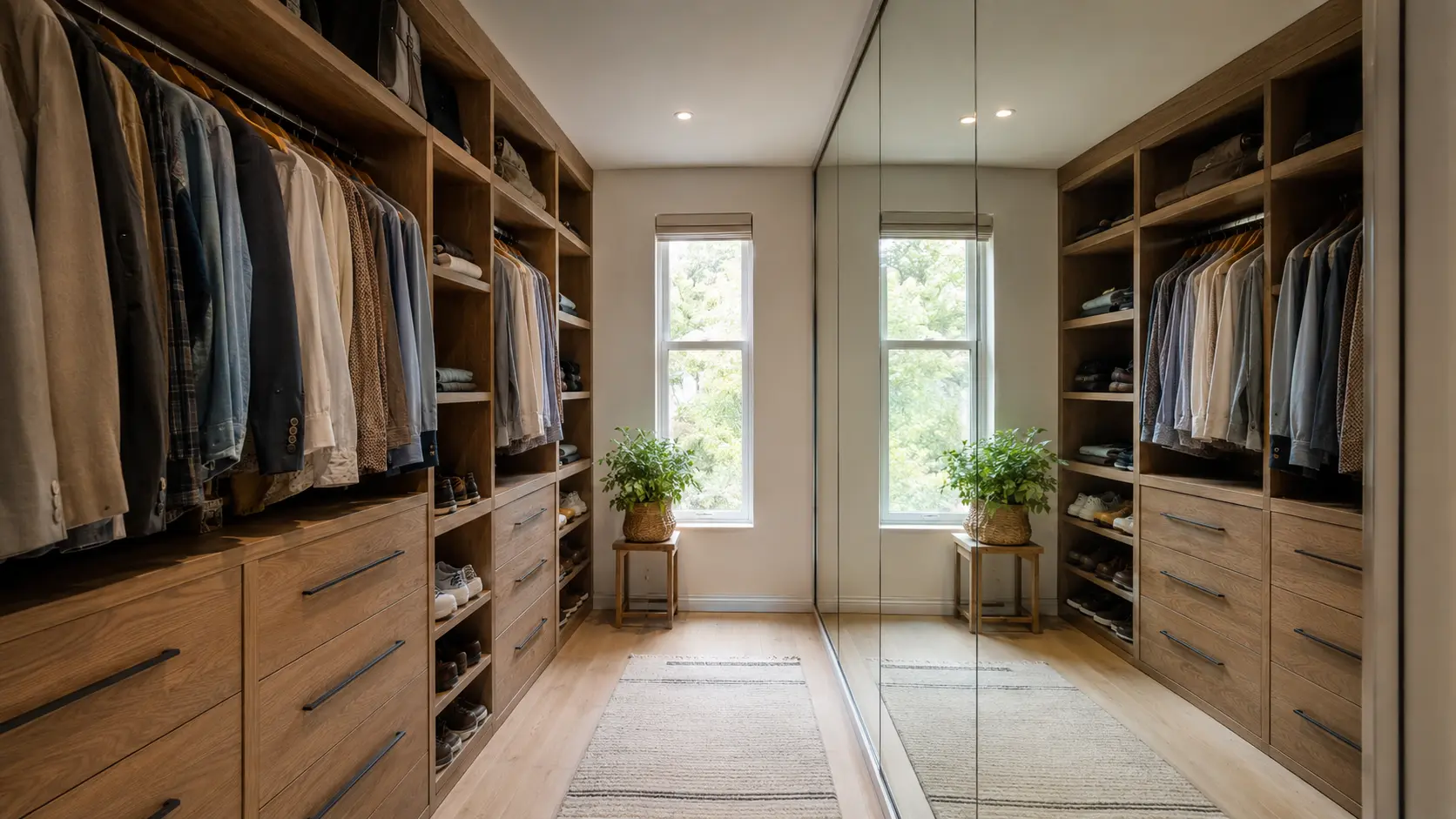
A large mirror makes dressing easier and can help a narrow or small master closet feel brighter and more open.
Mirrored surfaces reflect light around the room, which is especially helpful in closets without windows. A full wall of mirrors also makes it easier to check your outfit from every angle.e.
Framing the mirror to match your cabinet hardware helps it feel like part of the design, not an add-on.
Best for: Small or windowless closets.
11. Use Hidden Laundry Hampers
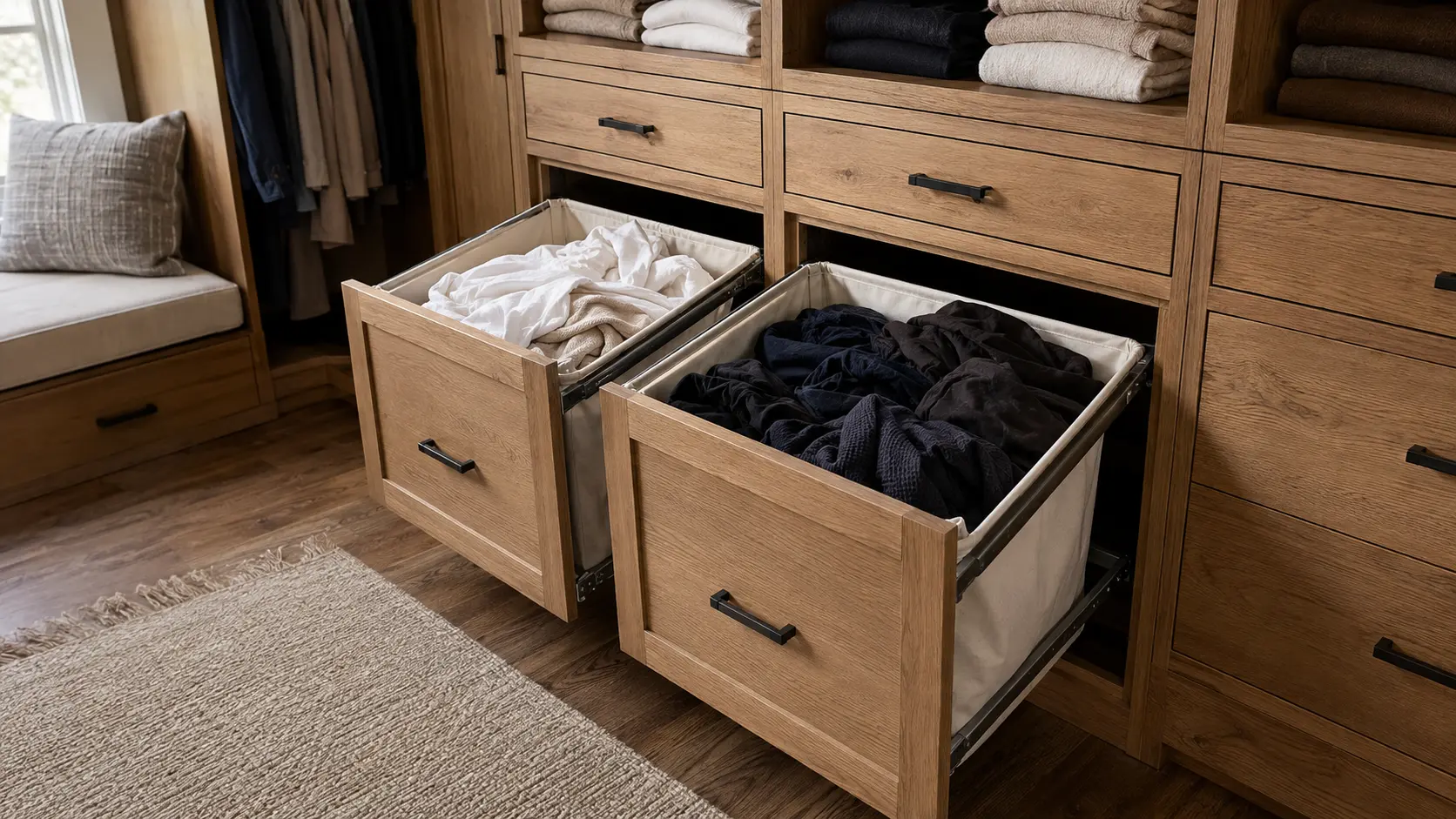
Built-in pull-out hampers keep worn clothing separated and prevent baskets from taking up valuable floor space.
Putting hampers in a cabinet or drawer keeps the room tidy, even during busy weeks. It also helps you sort laundry by color or fabric without any extra work.
Using two separate hamper inserts makes it simple to split lights from darks right from the start.
Best for: Keeping laundry out of sight in a tidy layout.
12. Add Dedicated Jewelry Drawers
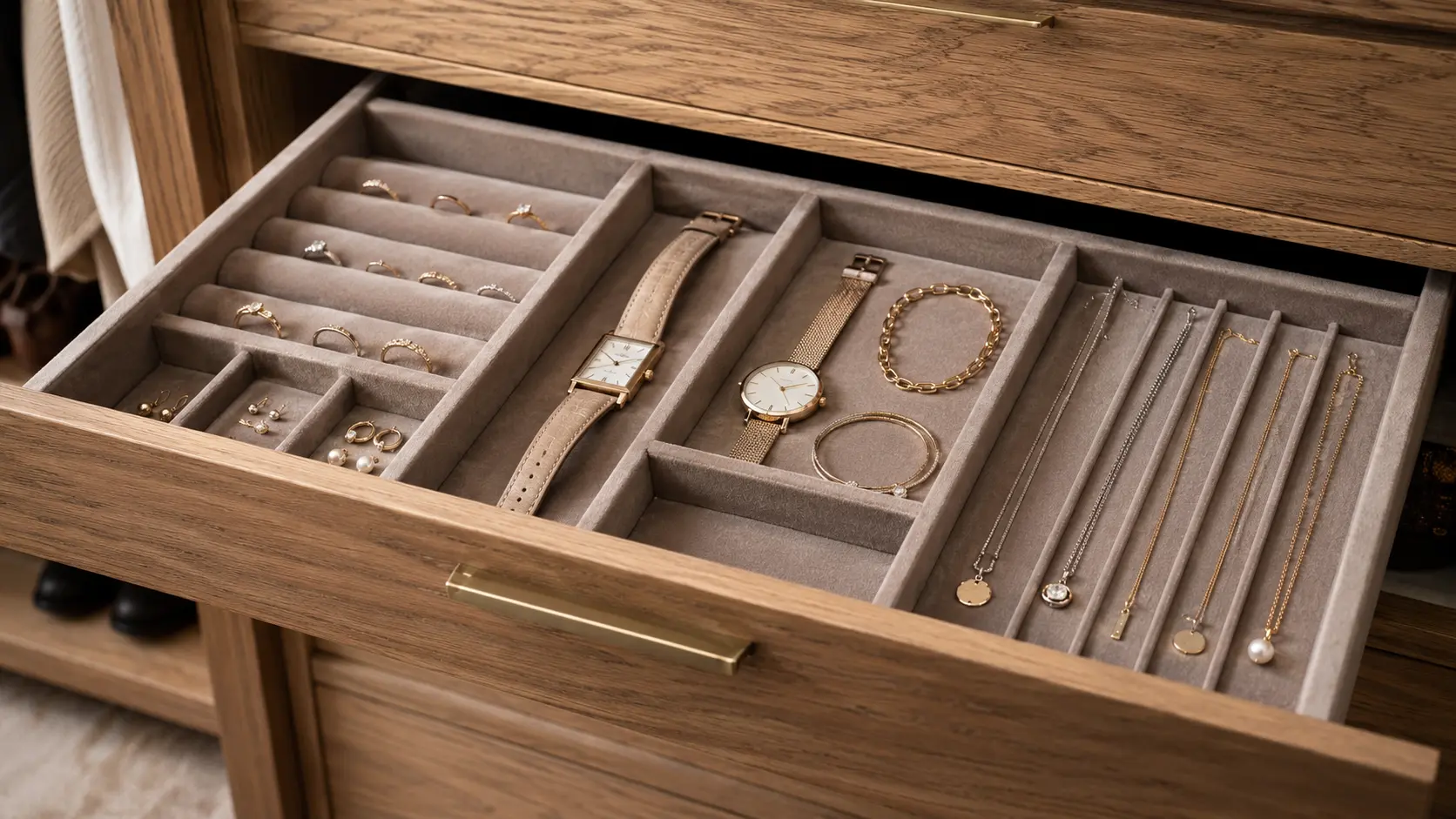
Shallow-lined drawers with small compartments protect watches, necklaces, rings, and other accessories from damage.
Dedicated compartments help prevent tangled chains and lost earrings. A soft lining in each compartment also protects your jewelry’s finish over time.
Best for: Larger jewelry or accessory collections.
13. Install LED Closet Lighting
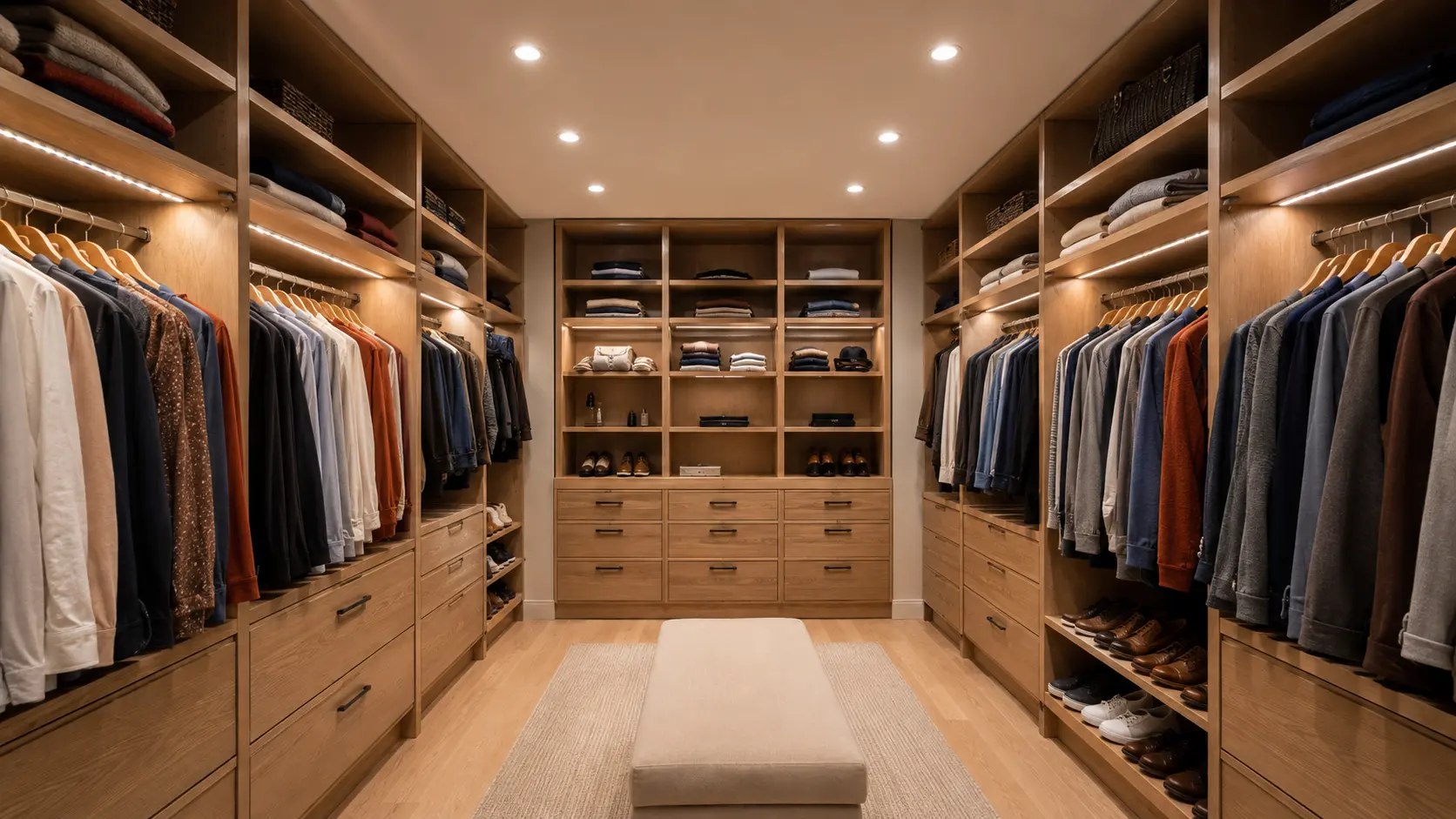
Use recessed lights, illuminated hanging rods, or shelf lighting to improve visibility and create a polished finish.
Good lighting makes it far easier to tell navy from black on a dark morning. It also helps highlight textures and colors that get lost under dim, standard overhead fixtures.
Best for: Closets without natural light.
14. Use Corner Storage Efficiently
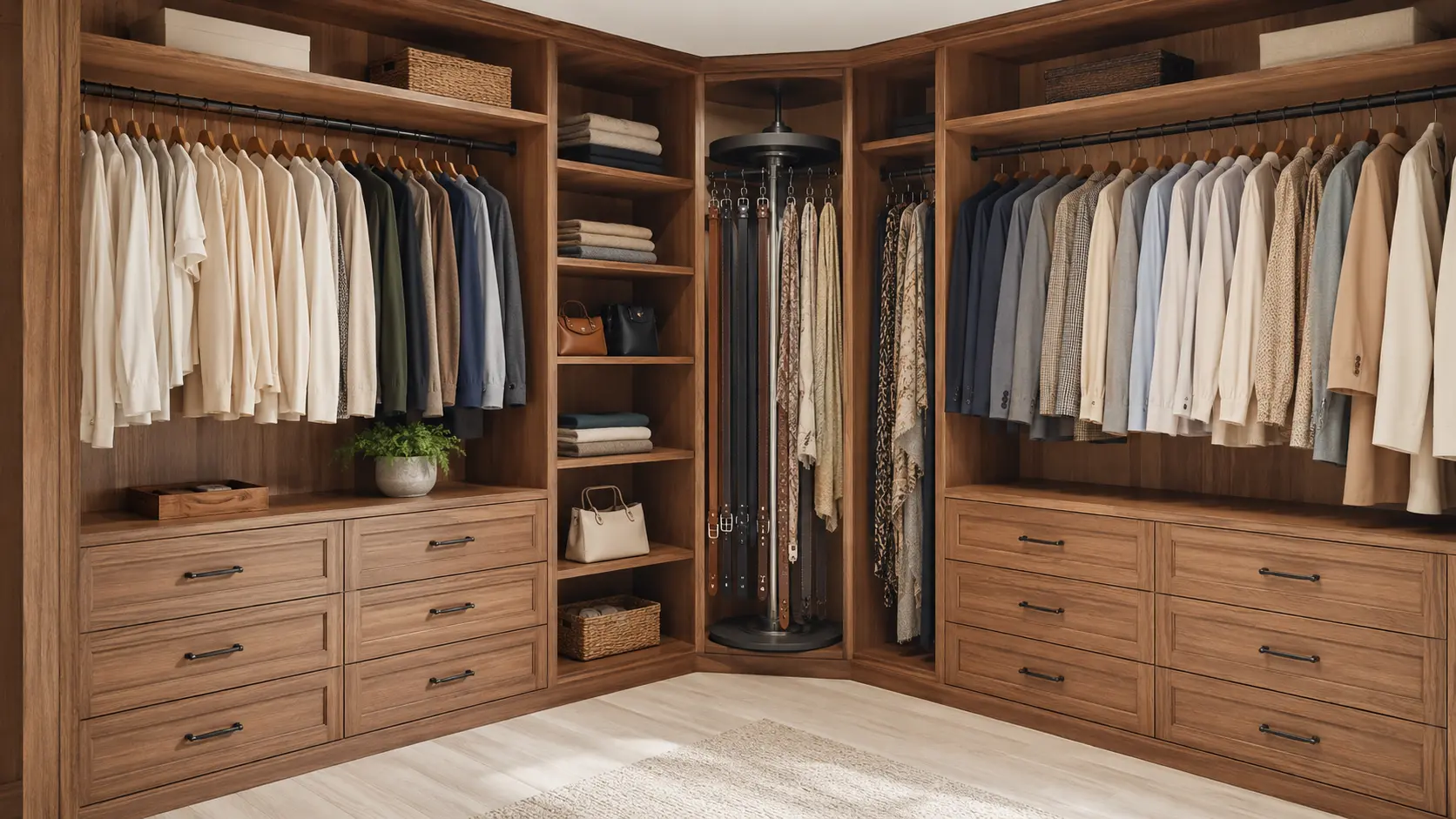
Corner shelves, rotating racks, or angled hanging sections can turn difficult areas into practical storage.
Corners are easy to overlook, but with the right fixtures, they can store more than you might think. A rotating rack, for example, makes it much easier to reach items in a tight corner.
Best for: L-shaped or irregularly shaped closets.
15. Sliding Doors Work Best in Small Spaces
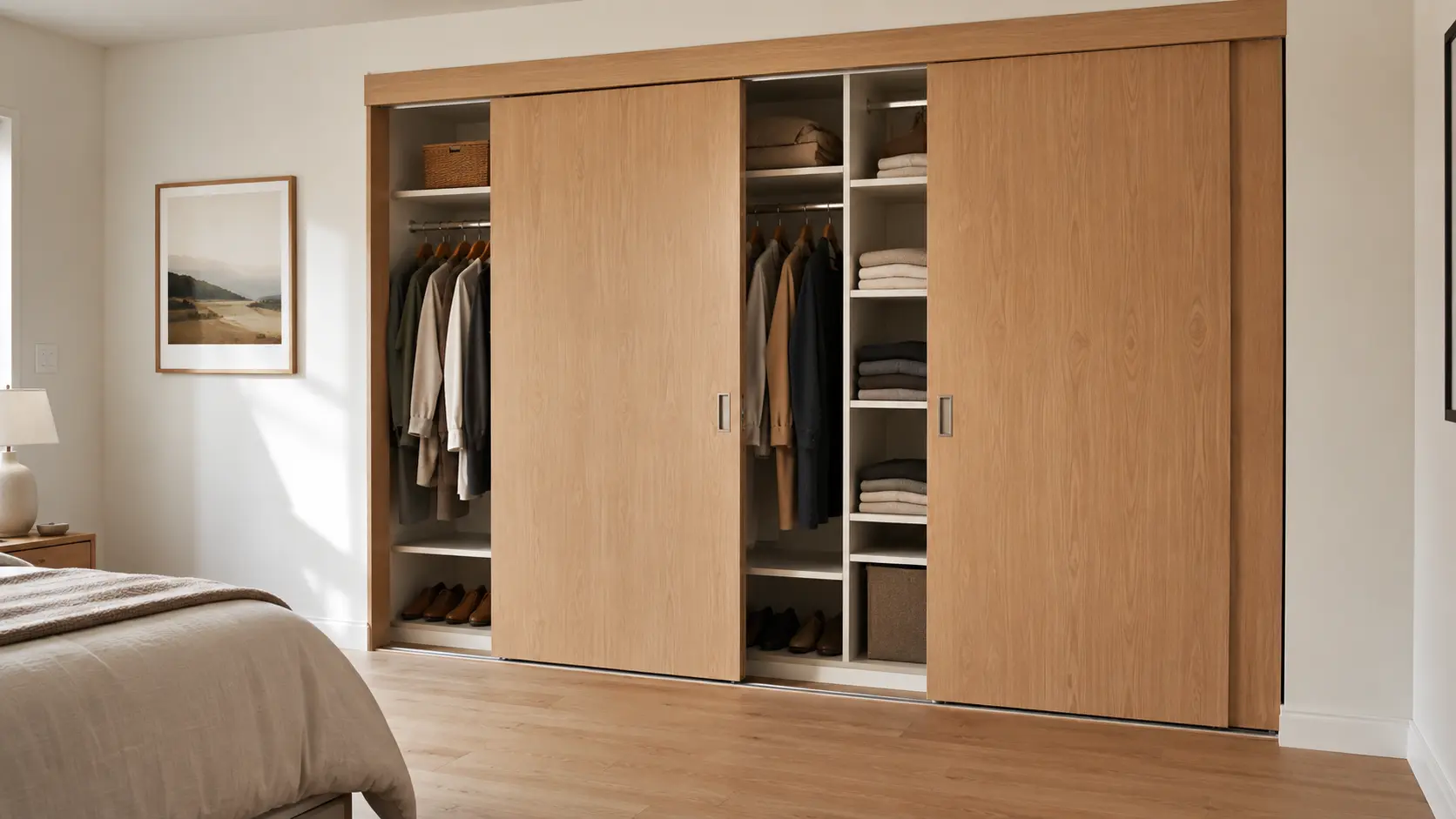
DIY cabinet doors save floor space because they don’t need clearance to swing into the bedroom or closet.
This makes them a smart choice for smaller layouts where every square foot of walking space counts. They also work well near tight hallways where a swinging door would be a hazard.
Best for: Small closets with tight floor plans.
16. Add Storage Baskets to Open Shelves
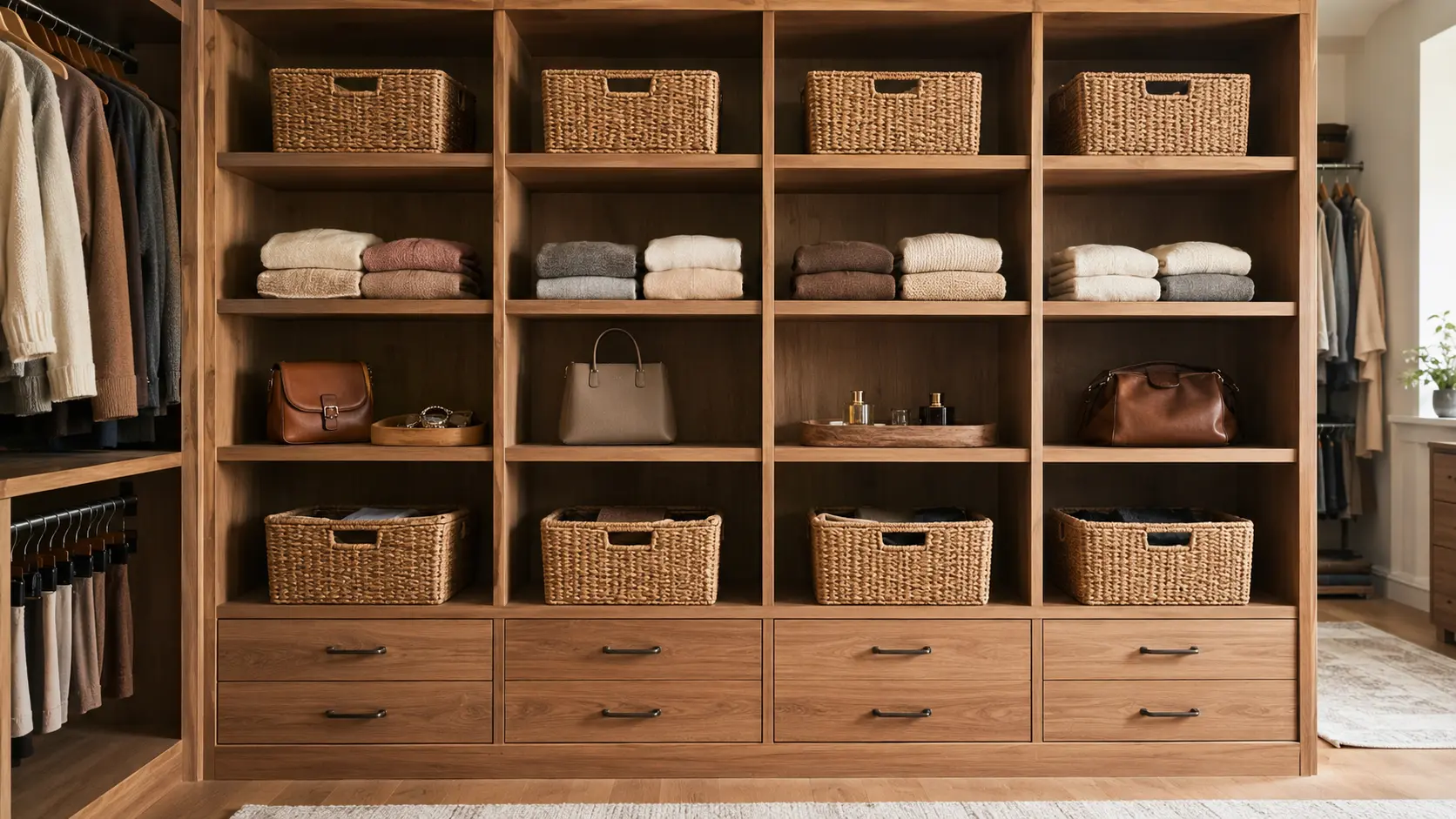
Matching baskets keep small items organized while reducing visual clutter on open shelving. Labeling each basket also makes it faster to find scarves, belts, or other small accessories.
Best for: Open shelving that tends to look cluttered.
17. Reserve Upper Cabinets for Seasonal Storage
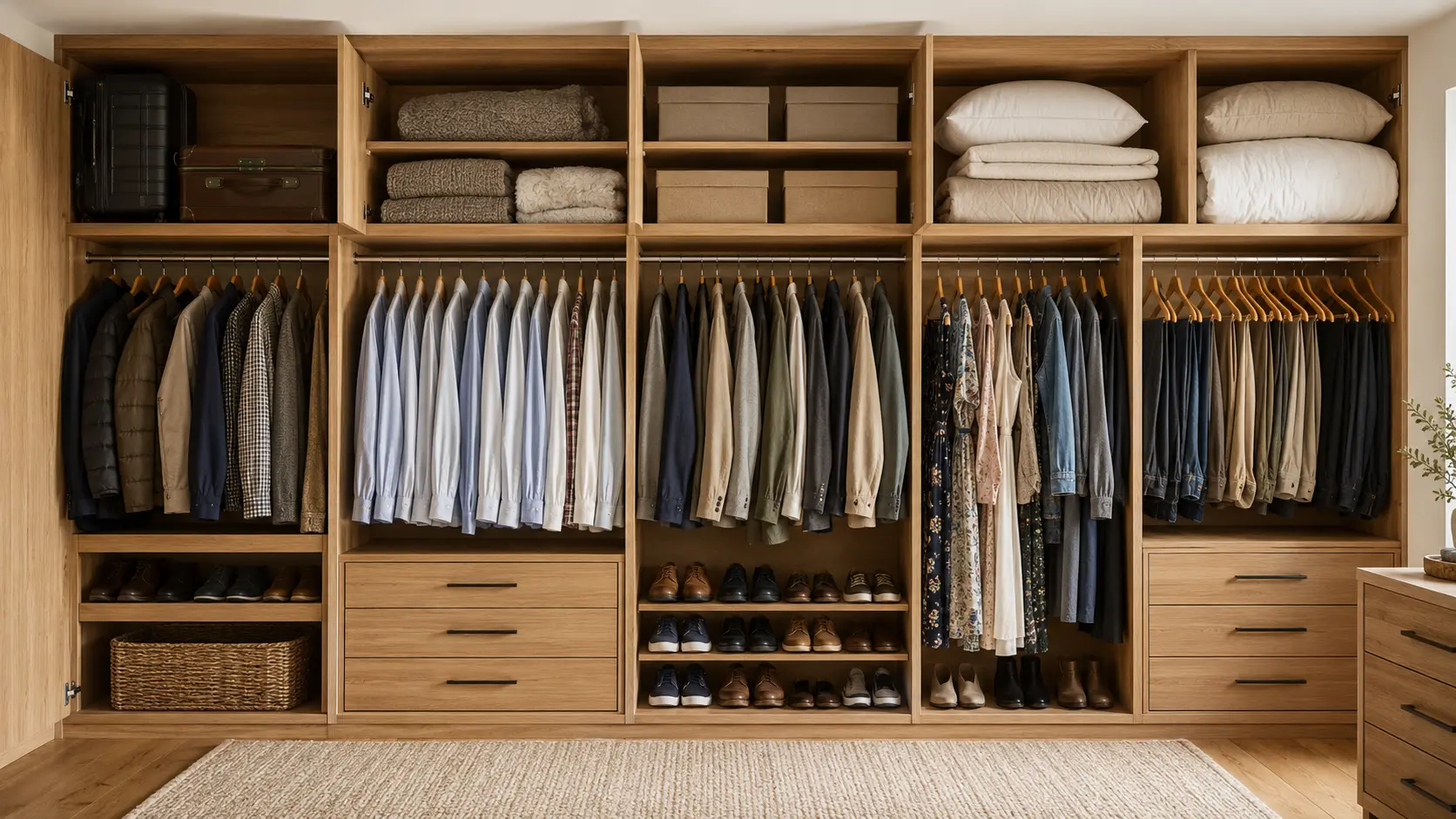
Use upper cabinets for luggage, winter clothing, spare bedding, and items you don’t need every day.
Keeping these out of reach but still accessible frees up prime storage space for daily essentials. A small step stool nearby makes those upper cabinets easy to access as the seasons change.
Best for: Storing items you only need a few times a year.
How to Create a More Functional Master Closet
Lighting is where many closet designs fall short; without it, colors are harder to read, and sections of the closet become dead zones.
Durable flooring and proper ventilation round out the basics, keeping the space easy to maintain and protecting clothing from moisture and odor over time.
The finer details are what separate a closet that works from one that just holds things. Drawer dividers, belt racks, valet rods, scarf organizers, and pull-out trays put everything within reach without the usual rummaging. A full-length mirror keeps outfit checks in the room where they belong.
Electrical outlets handle steamers, chargers, and a vacuum without running cords to the nearest hallway. Labels on bins and drawers pay off most during seasonal swaps or in shared spaces, where it is easy to lose track of what belongs where.
How to Plan a Master Closet Remodel
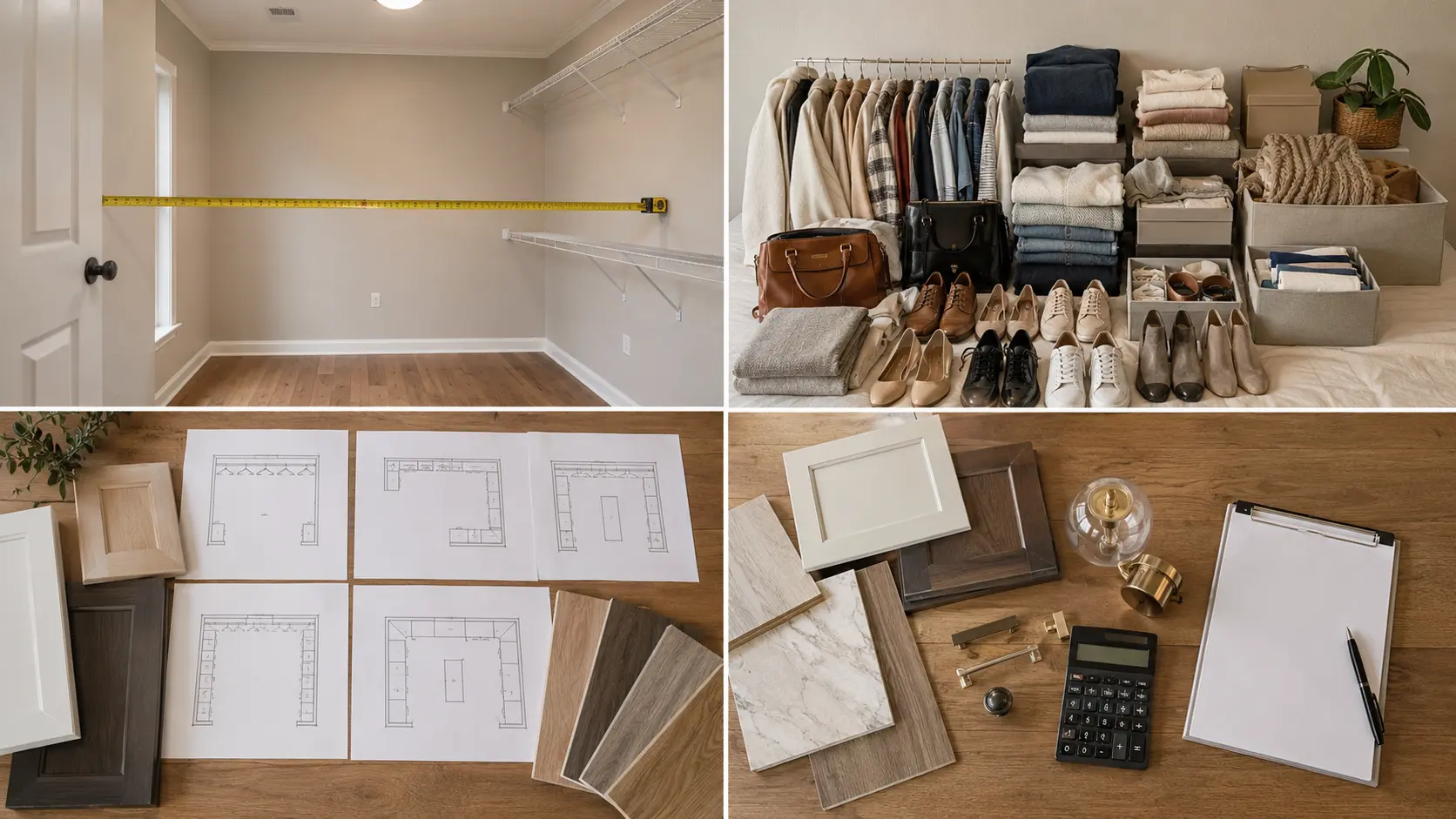
A little upfront planning saves you from having to redo work later, so start with these four steps before picking out cabinets or paint colors.
1. Measure the Available Space: Record the room’s width, depth, ceiling height, door placement, and any windows or outlets. These measurements shape every decision that follows, from cabinet size to lighting placement.
2. Review What You Need to Store: Count hanging clothing, folded items, shoes, bags, accessories, and seasonal belongings. Knowing the actual volume of what needs to fit prevents a beautiful closet from running out of space within a year.
3. Choose a Practical Layout: Select a single-wall, galley, L-shaped, U-shaped, or island layout based on the available room. The right layout depends on the closet’s shape and how much walking space you want to keep open.
4. Set a Realistic Budget: Include cabinetry, labor, lighting, flooring, hardware, and storage accessories in the total cost. Building in a little extra for unexpected changes during the project helps avoid surprises later.
Mistakes That Can Ruin a Master Closet
Even well-planned closets can run into a few recurring problems, most of which are easy to avoid once you know what to look for.
Ignoring vertical storage space wastes the wall height above eye level, which adds up over the life of the closet, while shelves that are too deep hide items in the back and make them hard to reach.
Adding an oversized island can eat up the walking space a closet needs to function, and insufficient lighting makes it hard to distinguish colors or find items quickly.
Failing to measure clothing and shoes before designing storage often leads to a layout that doesn’t actually fit what’s being stored.
Frequently Asked Questions
What are the closet design trends for 2026?
Closet designs in 2026 focus on built-in storage, warm wood finishes, LED lighting, glass-front cabinets, adjustable shelving, and dedicated spaces for shoes, bags, and accessories.
What is a good size for a master closet?
A comfortable master closet is typically 100 to 150 square feet, providing enough room for hanging clothes, shelving, drawers, and easy movement around the space.
How do rich people organize their closets?
Luxury closets are usually organized by clothing type first, then by color. Custom shelves, drawers, display cabinets, and dedicated sections for shoes, bags, and jewelry help keep everything easy to find.
Is 3 feet too deep for a closet?
No. A 3-foot-deep closet works well for standard hanging clothes and shelving. It offers enough depth for hangers while keeping items easy to reach.
Should I organize my closet by color or type?
Start by grouping clothing by type (shirts, pants, dresses, jackets), then arrange each group by color. This makes finding outfits quicker while keeping the closet neat and visually organized.
Design a Closet That Fits Your Lifestyle
A great master closet doesn’t have to include every idea on this list. The best setup is the one that fits your space, storage needs, and daily routine.
Pick the features that match how you actually get dressed and how much room you have, then build the rest of the layout around those priorities.
Whether that means a full island setup or just a smarter shelf and better lighting, small, well-planned changes add up to a closet that feels organized, comfortable, and easy to use.