
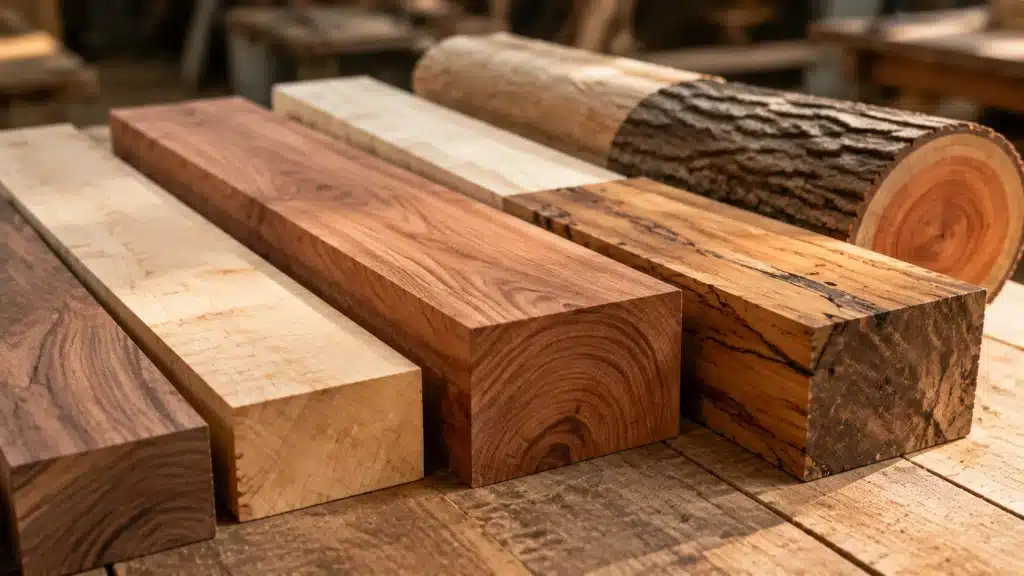


I’ve had people bring me tiny wood samples and ask one big question: which one can take the most abuse and is the strongest wood? It sounds simple until you realize the answer changes depending on what you are building.
Some woods are so hard they fight your saw before you even start. Others look modest on paper but outlast everything around them.
If you have ever stood in a lumber yard feeling mildly lost, this is for you. This post walks through what makes a wood strong, how the world’s top-ranked species actually compare, which ones are worth buying, and which ones belong in a museum more than your workshop.
What Is The Strongest Wood?
The strongest wood depends entirely on what kind of strength you need. Australian Buloke tops the Janka hardness scale at 5,060 lbf, but hardness is one dimension.
For the projects I actually see in workshops, floors, furniture frames, decks, tool handles, bending strength, stiffness, crushing resistance, and rot resistance all matter as much or more than a surface dent test.
I have had clients come in with a printout of a hardness ranking and ask me to source the wood at the number-one rank. Half the time, that wood is habitat-restricted, CITES-regulated, or costs more per board foot than everything else in the shop combined.
The number doesn’t build the project. The right species for the job does.
| Species | Janka Rating (lbf) | Best Use | Cost Range | Durability |
| Australian Buloke | 5,060 | Specialty turned pieces | Rare / not commercially sourced | Extreme, benchmark only |
| Brazilian Quebracho | ~4,800 | Industrial, outdoor heavy use | High/limited supply | Extreme, limited availability |
| Lignum Vitae | ~4,500 | Historic bearings, mallets | Very high / CITES regulated | Extreme, not practical to source |
| Ipe | ~3,680 | Decking, outdoor boards | $8–$15 per board ft | Very high, FSC sourcing required |
| Hickory | ~1,820 | Tool handles, furniture, flooring | $4–$8 per board ft | High, widely available |
| Hard Maple | ~1,450 | Floors, countertops, shelving | $4–$7 per board ft | High, widely available |
| White Oak | ~1,350 | Furniture, outdoor, flooring | $4–$8 per board ft | High, rot-resistant, widely available |
Cost figures are approximate US retail averages as of 2025 and vary by region, grade, and supplier. Verify current pricing with your local hardwood dealer before budgeting.
How Wood Strength Is Actually Measured
Wood strength is not one number. It is a collection of mechanical properties, each of which matters for a different type of load.
The USDA Forest Products Laboratory Wood Handbook documents six core metrics, and the standard test method is ASTM D143, which uses small clear samples under controlled conditions. Real boards with knots, grain variation, or inconsistent moisture content will often perform differently than published figures suggest.
Here is what each metric actually tells you and when it matters:
- Janka Hardness: Measures how much force it takes to push a 0.444-inch steel ball halfway into the wood. A higher number means better dent and wear resistance. Relevant for floors, tabletops, and tool handles. It does not tell you anything about how the wood bends or handles structural loads.
- Modulus of Rupture (MOR): Measures how much load a board can carry before it breaks under bending. This is the number that matters for shelves, furniture frames, and spanning beams. A high Janka score with a low MOR means a wood that looks hard but snaps under load, not something you want in a chair leg.
- Modulus of Elasticity (MOE): Measures stiffness, how much a board flexes before failing. Long shelf spans and structural supports need high MOE. A flexible wood will sag visibly under load even if it never technically breaks.
- Crushing Strength: Measures how well wood handles compression parallel to the grain. This is the metric for posts, legs, and any application where the load pushes straight down. Posts that carry roof loads need high crushing strength, not just hardness.
- Rot Resistance: Not a force measurement, it is a classification of how wood responds to moisture and fungal decay over time. This is the most important metric for anything installed outdoors. A wood that scores high on every strength test will still deteriorate quickly outside if it lacks heartwood extractives that resist decay.
These metrics do not move together. A wood can be extremely hard and still be a poor choice if it is brittle, poorly rot-resistant, or so stiff it cracks instead of flexing. With that framework in place, here is how the world’s strongest species actually compare.
The Strongest Wood Species, Ranked and Evaluated
The following species represent the top of the hardness scale, from the extreme end down to what most workshops can actually use.
1. Australian Buloke: Janka 5,060 lbf
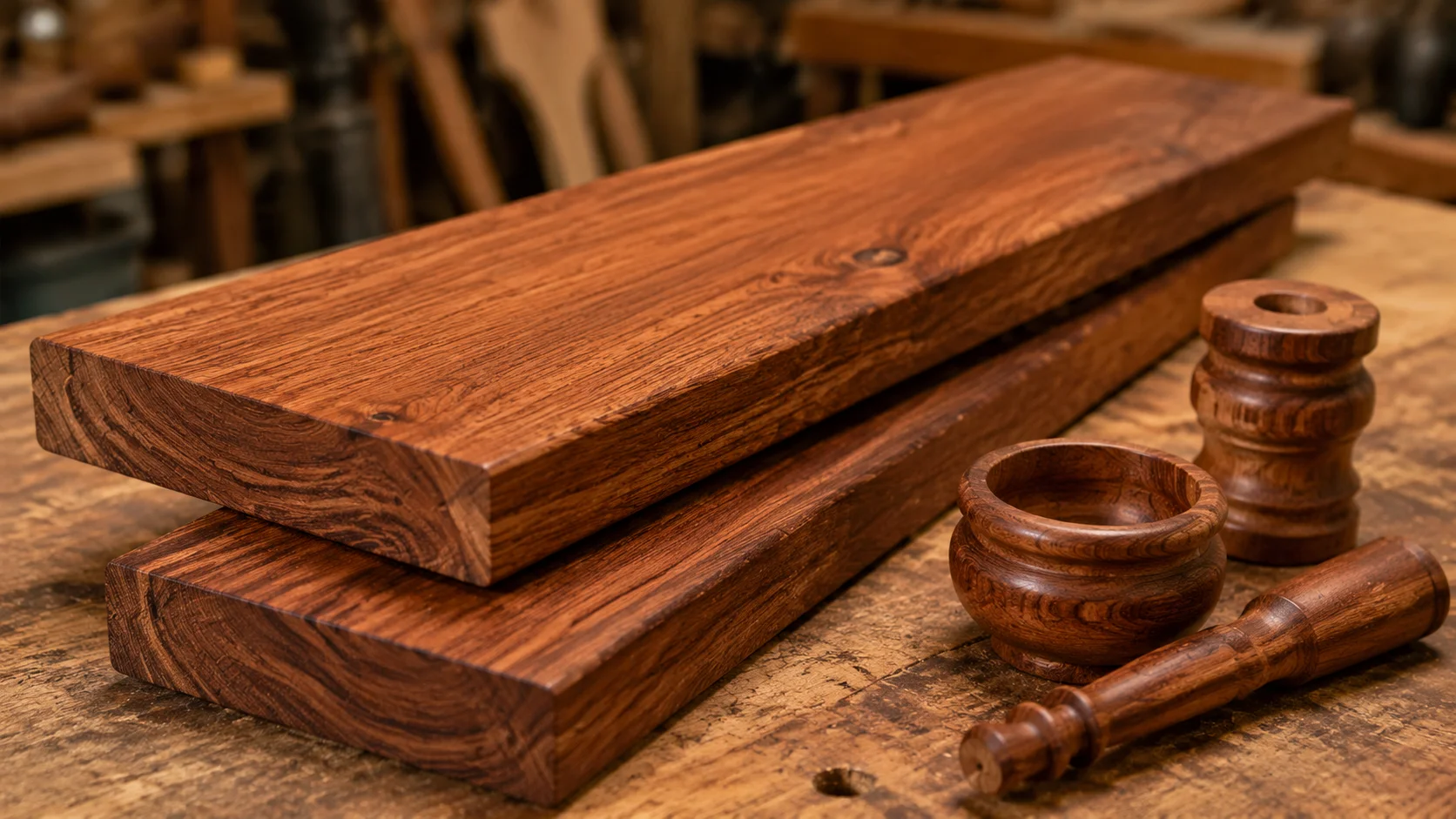
Scientific name: Allocasuarina luehmannii | Region: Eastern and southern Australia
Australian Buloke holds the highest Janka rating of any known species — 5,060 lbf. The Australian Government Department of Climate Change, Energy, the Environment and Water lists buloke woodlands as a threatened ecological community.
That means this is not a shopping option. It appears on ranking lists as a benchmark. The practical woodworker should treat it as a reference point and move on.
2. Brazilian Quebracho: Janka ~4,800 lbf
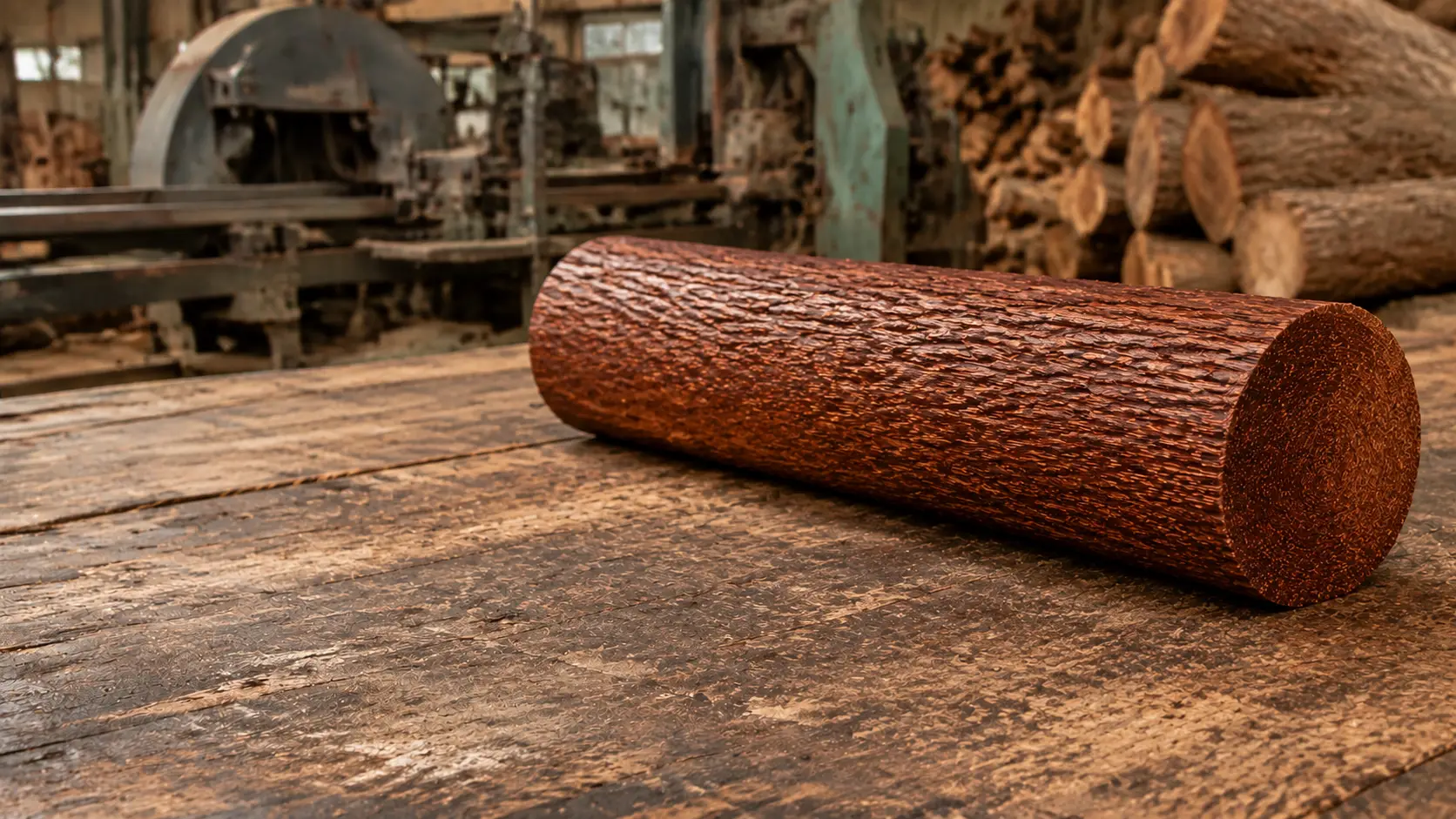
Scientific name: Schinopsis brasiliensis | Region: South America
Quebracho translates to “axe-breaker.” That name is accurate. It has been used in railroad ties, heavy outdoor industrial applications, and tannin extraction.
Supply is limited, and responsible sourcing requires careful verification. For most woodworkers, it is another reference point rather than a practical material purchase.
3. Lignum Vitae: Janka ~4,500 lbf
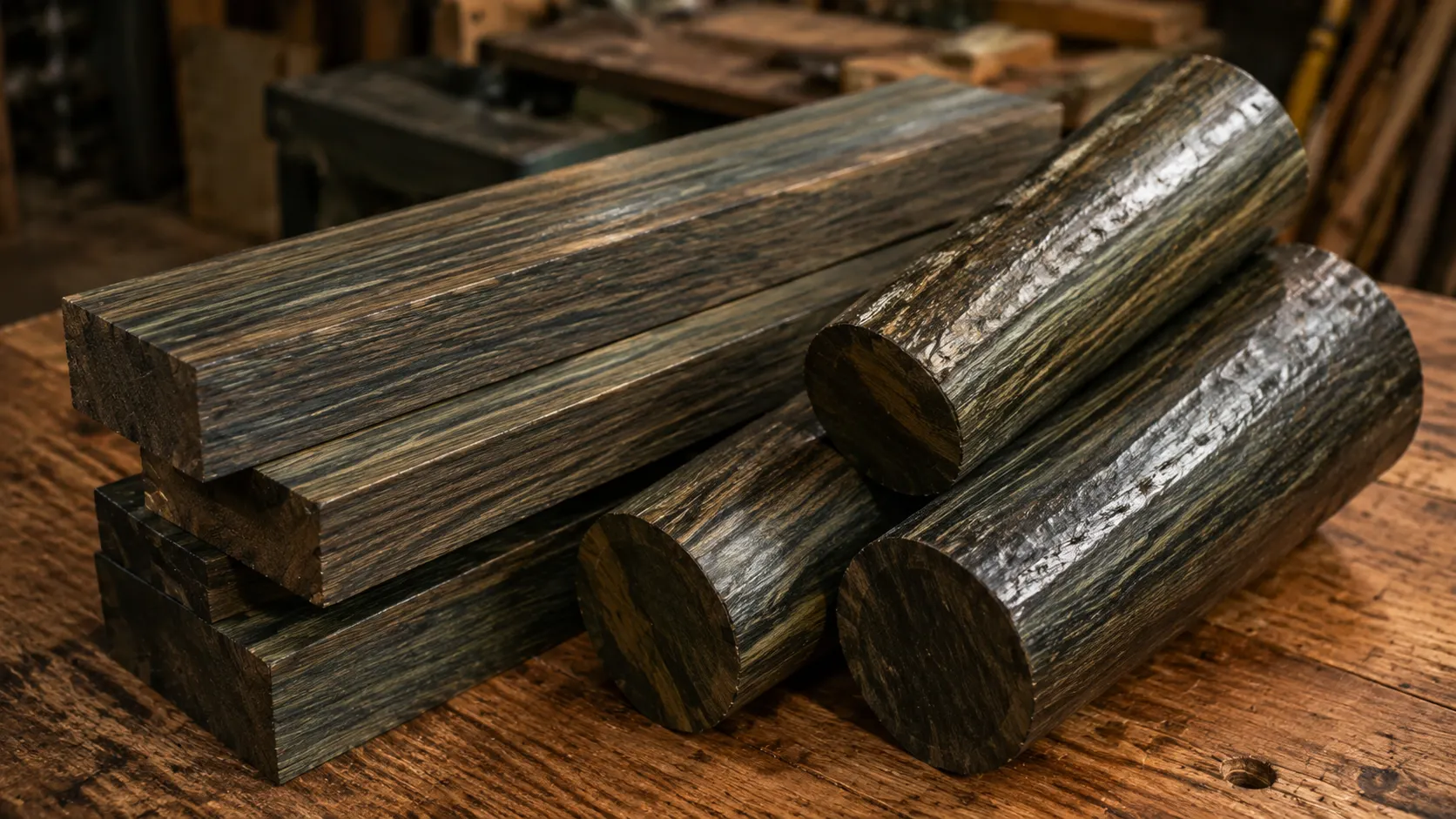
Scientific name: Guaiacum officinale | Region: Caribbean and northern South America
Lignum Vitae has natural oils that make it self-lubricating — which is why it was used in marine ship bearings for centuries before synthetic alternatives existed.
It is now a CITES Appendix II-listed species, meaning international trade is regulated and permits are required. Fascinating material history; limited practical availability.
4. Ipe: Janka ~3,680 lbf
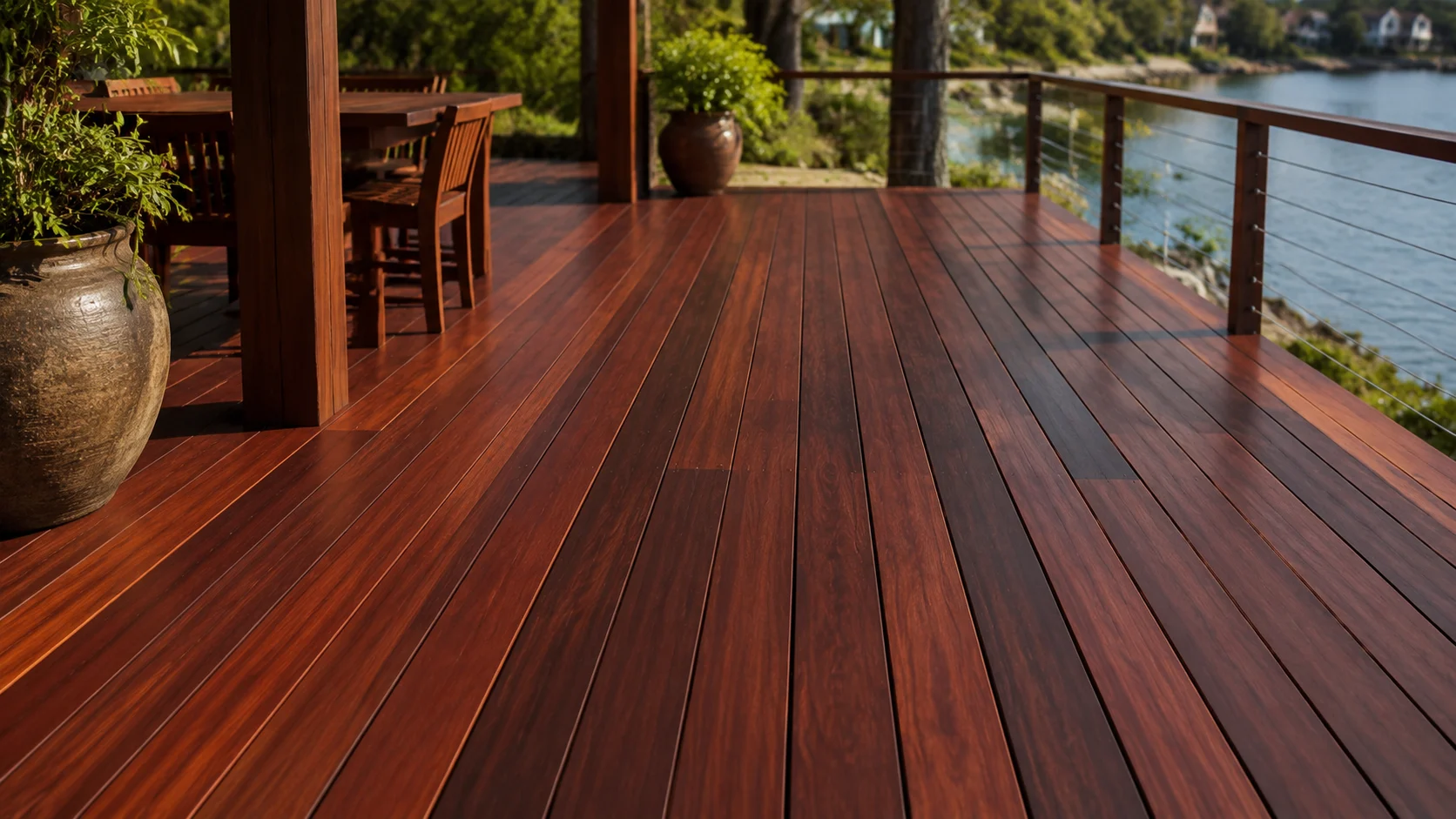
Scientific name: Handroanthus spp. | Region: Central and South America
Ipe is where the hardness scale meets something you can actually buy and build with. It is one of the most popular decking woods in North America, with dense grain, natural durability, and rot resistance that holds up in exposed applications.
The supply chain problem is real, though. Irresponsibly sourced ipe contributes to deforestation, and you should always verify FSC certification and chain-of-custody documentation before buying. Ask your supplier for it by name. If they cannot produce it, find a different supplier.
5. Hickory: Janka ~1,820 lbf
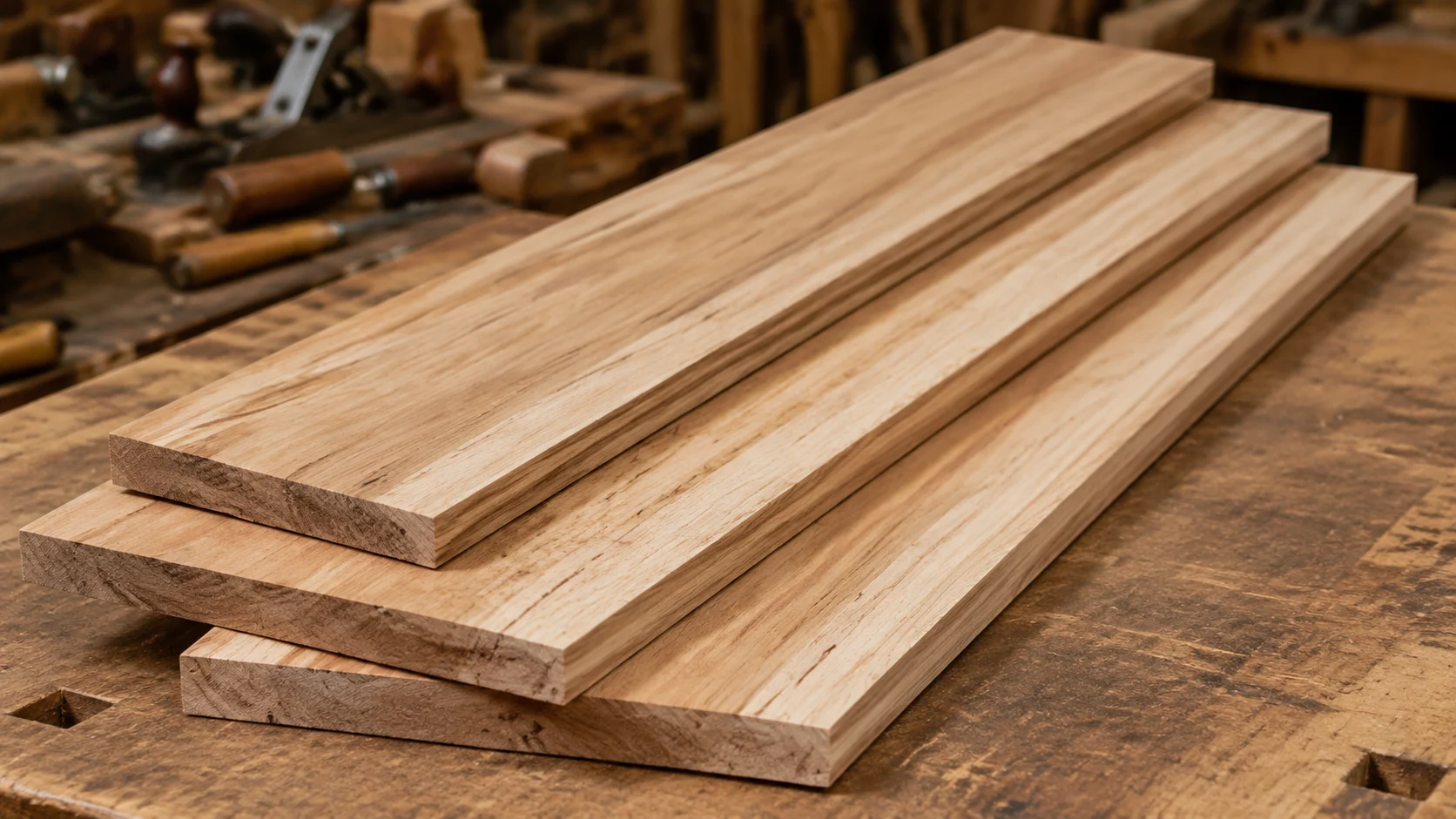
Scientific name: Carya spp. | Region: North America
Hickory is where I stop referencing the chart and start recommending something. Pignut hickory ranks at the top for combined strength index, hardness, bending, stiffness, crushing strength, and density together, according to The Wood Database.
It handles shock better than almost any domestic species, which is why it has been the material of choice for hammer handles, axe handles, and chairs that take real abuse. It is available at most hardwood dealers. It will work your tools harder than soft maple, but it will not fight you the way tropical exotics do.
Now that you know where these species land on the scale, the more useful question is which one actually belongs in your project.
Strongest Wood vs. Hardest Wood: What Changes for Real Projects
The hardest wood is not always the strongest choice for a specific job. Surface hardness resists denting, but bending strength, shock absorption, and rot resistance determine whether the wood actually survives the application.
- Surface Hardness: Floors, countertops, cutting boards, tabletops, and tool handles need strong dent and scratch resistance. Hard maple, hickory, and white oak work well because they handle friction, impact, and repeated contact.
- Bending Strength: Chairs, shelves, frames, and load-bearing furniture need more than hardness. They need bending strength. White oak and hickory are good choices because they resist flexing and cracking under repeated load.
- Rot Resistance: Outdoor wood needs moisture, decay, and insect resistance. Ipe, teak, white oak, cedar, and redwood perform well outside. A high Janka score does not matter much if the wood absorbs water and rots.
Choosing by Project Type
| Project | Best Strong Wood Choice | Why It Fits | Watch Out For |
| Furniture | Hickory or white oak | Strong, available, durable | Hickory is hard to machine; keep tools sharp |
| Flooring | Hard maple or hickory | Good wear resistance for high-traffic surfaces | The finish choice affects scratch visibility significantly |
| Decking | FSC-certified ipe or white oak | Rot resistance and outdoor durability | Ipe requires verified sourcing; always ask for documentation |
| Tool handles | Hickory | Best shock absorption of any domestic species | Grain orientation matters, straight grain along the handle length only |
| Shelving | White oak or hard maple | Good stiffness for long spans | Board thickness still determines sag, 3/4 inch is not enough for a 36-inch unsupported span |
| Budget projects | Red oak or ash | Practical, widely available, honest performers | Neither is a top-tier strength choice for high-demand applications |
Domestic hardwoods consistently come out ahead when you factor in sourcing ease, cost, workability, and the ability to find replacement material in five years. An exotic wood you cannot re-source for a repair is often a worse choice than a domestic hardwood that performs at 90% of the exotic’s strength.
How Finish Interacts With Strong Hardwoods
Dense woods and standard finishing products do not always cooperate. This is where I see clients get surprised after they have already bought a planer full of expensive hardwood.
Hickory has pronounced grain variation between earlywood and latewood. Stain absorbs unevenly, which means color will look blotchy without a pre-conditioner or a washcoat.
Hard maple is a closed-grain wood with minimal porosity; it holds an oil finish poorly, and penetrating oils sit on the surface instead of soaking in. The reliable finish for hard maple is a surface-building film finish: water-based polyurethane or lacquer. Do not try to oil hard maple and expect it to look like walnut.
Ipe has a naturally oily surface that causes adhesion problems with most standard finishes. Wipe it down with acetone before applying any finish to open the surface. For outdoor IPE decking, a penetrating oil specifically formulated for dense tropical hardwoods, not a deck sealer designed for pressure-treated pine, is the right product.
White oak accepts most finishes well, including oils, hardwax oils, and film finishes; it also machines cleanly enough that table edge profiles hold their detail without tearout. It is the most forgiving of these species in the finishing room.
Budget Reality Check: Cost vs Actual Performance
The exotic species at the top of the hardness scale are expensive, difficult to machine, and largely impractical for the average woodworking project. The price premium does not buy proportional performance for most applications.
Hickory at $4–$8 per board foot performs at or above lignum vitae or quebracho for shock resistance in tool handles, and you can buy it at a local hardwood dealer, cut it without carbide tooling rated for tropical exotics, and source replacement material without waiting weeks for a specialty import.
Hard maple at a similar price point beats most flooring exotics on workability while still handling the wear load of a residential floor without issue; the same logic applies when choosing wood for dining tables, where surface hardness and budget both narrow the field considerably.
The cases where paying a premium makes sense: FSC-certified ipe for decking that will take 20 years of outdoor exposure, or teak for marine applications. The cases where it does not: building indoor furniture or flooring with rare exotics when hickory, hard maple, or white oak will outlast the house.
| Cost Note: Board foot prices above are approximate US retail averages for 2025. Hardwood prices shift with supply chain conditions. Verify current pricing with your local hardwood dealer before budgeting any project. |
Is the Hardest Wood Worth the Price?
For most projects, no. Australian Buloke, Lignum Vitae, and Brazilian Quebracho are not commercially available in any practical quantity, and their hardness advantages over domestic species do not translate into meaningful performance gains for furniture, flooring, or decking.
They are curiosities at the top of a chart, not materials I would specify for a client project.
Ipe is the exception, a genuinely superior decking material that is worth the price when sourced responsibly and installed correctly. Nothing in the domestic hardwood category matches its outdoor durability at a comparable cost.
For everything else: hickory for impact applications, hard maple for wear surfaces, and white oak for anything structural or outdoor-adjacent.
These three species cover the majority of strong-wood needs for real workshops and residential projects, and they are available at hardwood dealers throughout the US without special orders, import documentation, or sustainability concerns.
What Makes Wood Durable Outdoors
Outdoor durability is about chemistry, not hardness. Wood that resists decay does so because its heartwood contains natural extractives, tannins, oils, and resins that inhibit fungal growth and resist moisture absorption. Those properties have nothing to do with Janka ratings.
A few installation details that determine how long any outdoor wood survives, regardless of species:
- Heartwood only for wet areas. Use heartwood sections anywhere the wood contacts moisture. Sapwood on any species, including naturally durable ones, is far more vulnerable to decay.
- Design for drainage. Boards should be installed with gaps so water exits rather than pooling in joints and on end grain. Trapped moisture accelerates decay faster than almost anything else.
- Pre-drill dense hardwoods. Hickory, ipe, and any wood above 2,000 lbf need pilot holes for fasteners. Forcing screws into dense hardwood splits the board near the end grain and creates entry points for moisture.
- Use corrosion-resistant fasteners. Standard steel screws react with tannins in oak and ipe, leaving black staining around every fastener hole. Stainless or coated deck screws only.
- Maintenance schedule. Outdoor wood lasts significantly longer when it is cleaned seasonally, checked for checking and cracking, and refinished on a regular schedule, typically every two to three years for most species.
Frequently Asked Questions About the Strongest Wood
These are the questions I hear most often from people who are trying to match a wood species to a real project rather than a ranking list.
What is the strongest wood in the world?
Australian Buloke holds the highest Janka hardness rating at 5,060 lbf, making it the hardest wood by that metric. For combined strength across hardness, bending, stiffness, and crushing resistance, hickory ranks at the top among commercially available species.
Is oak the strongest wood?
Oak is strong and practical, but hickory, hard maple, ipe, and several other species rank above it on the Janka scale. White oak sits around 1,350 lbf. Oak’s value is its balance of strength, workability, rot resistance, and price rather than any individual strength metric.
What wood is stronger than hickory?
Several exotic species have higher Janka ratings than hickory’s 1,820 lbf, including ipe, lignum vitae, Brazilian quebracho, and Australian Buloke. All are either more expensive, harder to source, regulated, or significantly harder to machine than hickory for typical workshop use.
Is the hardest wood always best for furniture?
No. The hardest woods are often heavy, costly, and difficult to cut, shape, and finish. Furniture needs bending strength and workability as much as surface hardness. White oak, hard maple, walnut, and hickory are better choices than most high-Janka exotics — they also respond well to refinishing, which matters for anyone working through a dining table makeover on an existing piece.
What is the strongest wood for outdoor use?
For outdoor use, rot resistance matters more than hardness. FSC-certified ipe is the top-performing option for hardness and durability combined. White oak and cedar are solid domestic choices. Climate, installation quality, and maintenance schedule determine actual lifespan as much as species selection does.
What is the strongest wood for flooring?
Hard maple at 1,450 lbf and hickory at 1,820 lbf are both reliable flooring choices for high-traffic residential applications. Brazilian cherry (jatoba) at around 2,350 lbf offers higher hardness if budget allows, though it requires more careful acclimation before installation.
Does a higher Janka rating mean the wood lasts longer?
Not necessarily. Janka hardness measures dent resistance, not longevity. A wood can score very high on the Janka scale and still decay quickly outdoors if it lacks natural rot resistance. Longevity depends on the full combination of species properties, application, installation quality, and maintenance.
Final Verdict
The best choice is rarely the wood with the biggest number beside its name. A project succeeds when the wood matches the job, the climate, the budget, and the tools available. Chasing the strongest wood on a ranking list often leads to something expensive, hard to machine, or impossible to source locally.
When comparing options, the metric that matters most is the one your project actually tests: surface hardness for a floor, bending resistance for a shelf, rot resistance for a deck. Australian Buloke may hold the hardest title, but hickory, white oak, and hard maple will handle nearly anything a home workshop or residential project asks of them.
What are you building? Drop a comment with the project and where it will live (indoors, outdoors, humid climate, heavy use) and I’ll point you toward the wood that actually fits.