

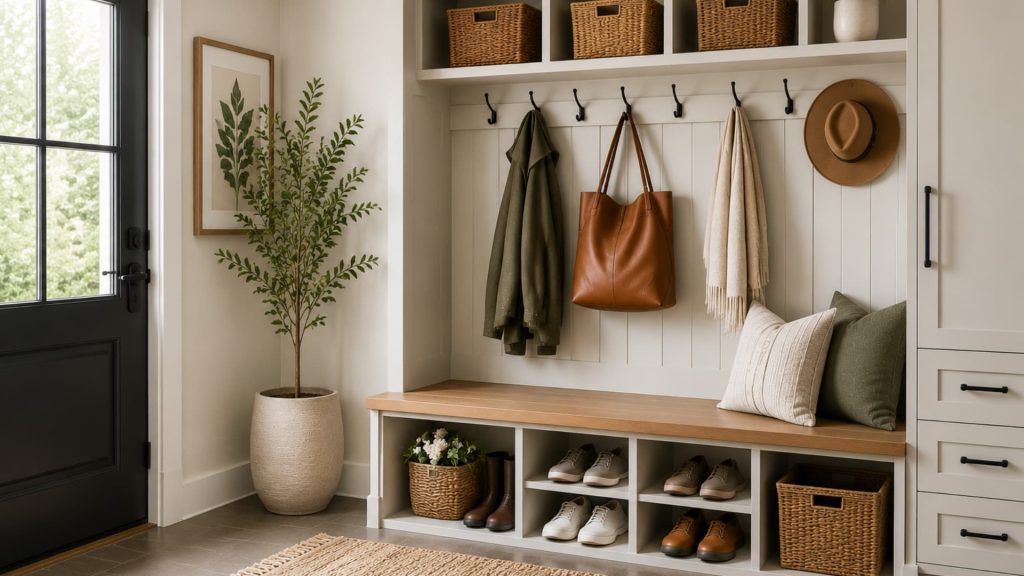


A mudroom is a transition zone near your home’s entrance where shoes come off, coats get hung, and daily clutter stops before it reaches the living room. That is the plain definition, and it is the only one that matters.
If your entry is where wet boots, backpacks, dog leashes, and umbrellas pile up every single day, you already know the problem a mudroom is built to solve.
The confusion usually comes from the photos. Some mudrooms are entire rooms with built-in lockers, laundry machines, and pet-washing stations. Others are a bench, three hooks, and a boot tray wedged into a hallway corner. Both work. The size is not what makes it a mudroom. The function is.
I am going to break down what belongs in a mudroom, where it typically goes in a home, how it compares to a foyer or entryway, and which design approaches are worth your time depending on how much space you are actually working with.
The One Job a Mudroom Does
Every mudroom design decision should come back to a single question: Does this help contain the mess before it gets into the rest of the house? The purpose is not decoration. It is containment and transition.
Shoes track in dirt, water, salt, and mud. Coats hold moisture. Backpacks carry everything from sports gear to grocery bags. A mudroom gives all of those items a defined landing spot near the door they actually enter through, which is usually the garage door, side entry, or back door, not the front.
When it works, the rest of the house stays cleaner and daily routines run faster. When it does not work, it is usually because the storage does not match how the household actually moves through the entry.
Key Features Every Mudroom Needs
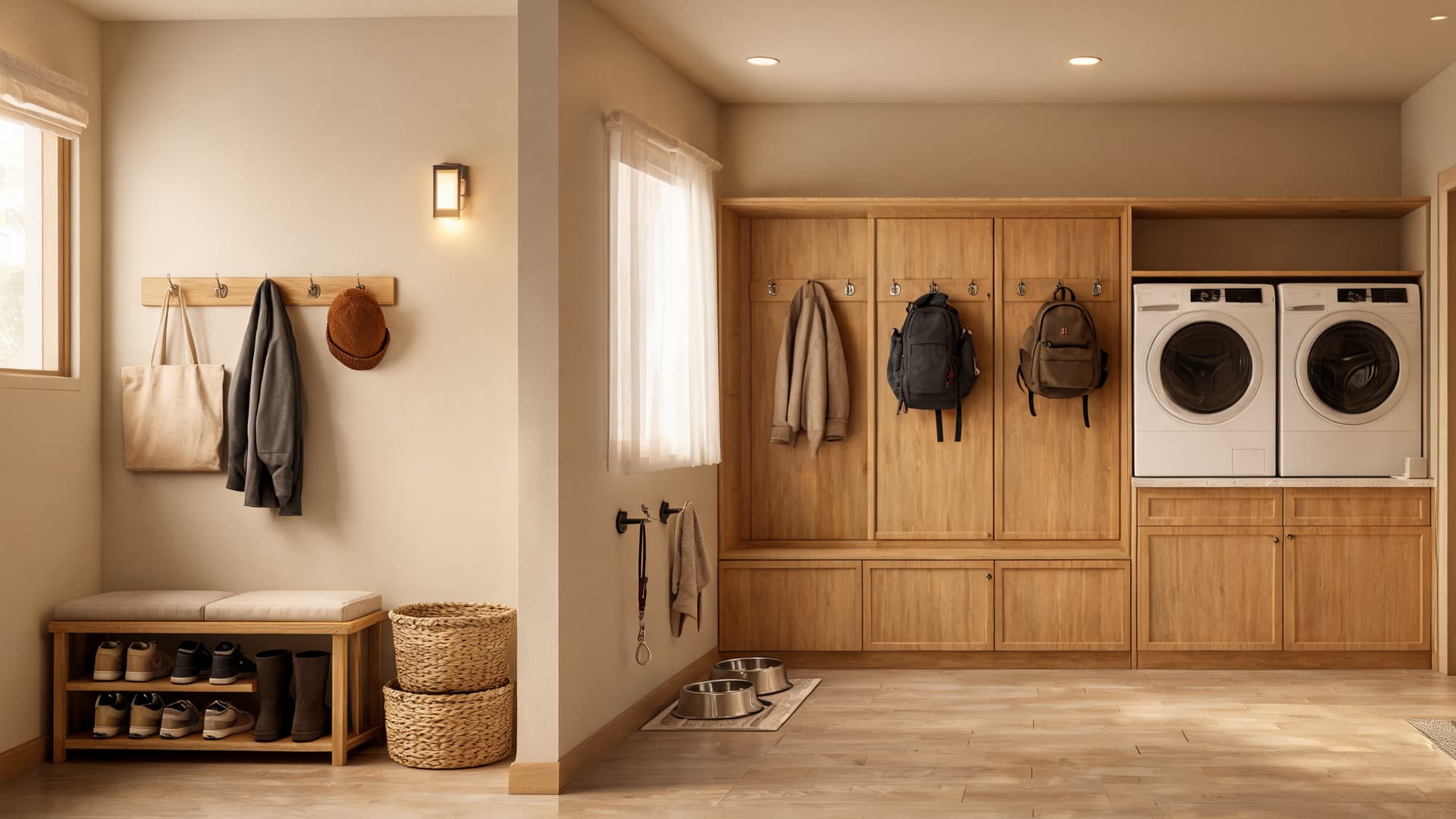
The features worth building around are the ones that match how your household actually enters and exits. A family of five with kids in sports needs different storage than a couple with two dogs. Start with the essentials and add from there.
- Bench or seating: The single most practical addition. Sitting down to remove shoes is a habit people will actually follow. Standing while balancing on one foot is not.
- Hooks or peg rails: Wall-mounted hooks keep coats, bags, hats, and leashes off the floor without consuming any footprint. A peg rail at 60 to 66 inches from the floor works for adults; drop a lower row at 42 to 48 inches for kids.
- Shoe storage: Cubbies, shelves, drawers, or boot trays. Open cubbies are easiest for daily use; closed drawers hide the mess. If you have kids, open cubbies win on habit compliance.
- Cubbies or lockers: Assign one per person. This is the move that eliminates the “where is my stuff” problem. Each cubby holds a backpack, a coat, and whatever gear belongs to that person.
- Closed cabinets: Everything that does not need to be grabbed on the way out the door, cleaning supplies, pet food, spare bags, and seasonal gear go behind a door.
- Durable flooring: Tile, luxury vinyl plank, sealed concrete, or brick. Any of these can handle water, mud, salt, and heavy daily use. Carpet does not belong here.
- Baskets and bins: Gloves, sunscreen, pet towels, reusable grocery bags, and accessories need a home. Baskets and bins keep these from becoming a pile on the bench.
- Good lighting: Overhead or wall-mounted task lighting. A dim entry makes cleaning up messes harder and the space feel smaller than it is.
- Mirror: A wall-mounted mirror frame near the door gives everyone a last check before heading out and adds reflected light to a typically darker entry.
- Optional sink or pet wash: Worth planning for during a renovation if you have dogs, do heavy gardening, or deal with sports gear regularly. Retrofitting plumbing is expensive. Building it in once is not.
- Laundry access: Many mudrooms run adjacent to or directly into the laundry room. Wet clothes, muddy uniforms, and sports gear go straight from the door to the wash.
A small mudroom does not need everything on this list. A bench, hooks, and somewhere for shoes will outperform a space with no plan at all. Build what fits the space, then add once you see what the daily routine actually demands.
Popular Mudroom Design Styles
Design style matters less than the storage system behind it, but a coherent visual approach does make the space easier to live with. These are the four approaches I see work most consistently in real homes.
1. Modern Mudroom
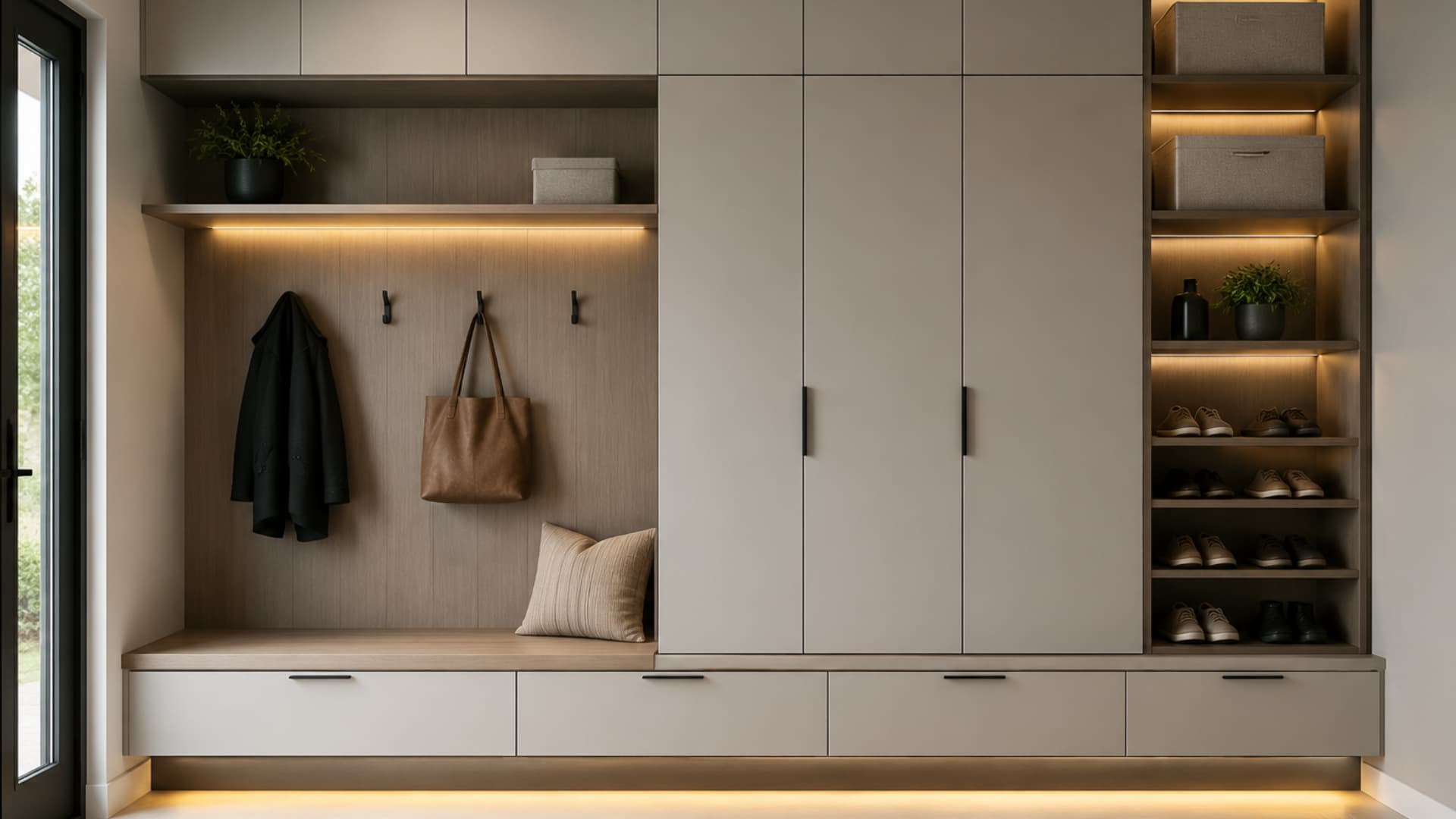
Modern mudrooms prioritize hidden storage and a visual calm that extends from the rest of the home. Shoes, coats, and bags go into closed cabinets and labeled compartments.
Neutral tones, typically white, grey, or warm wood, keep the entry feeling consistent with adjacent rooms. The result is a space that does not visually announce how much daily chaos it is absorbing.
This approach works especially well in open-plan homes where the entry is visible from the main living area. If someone can see your mudroom from the living room, hidden storage pays off more than open cubbies.
2. Farmhouse Mudroom
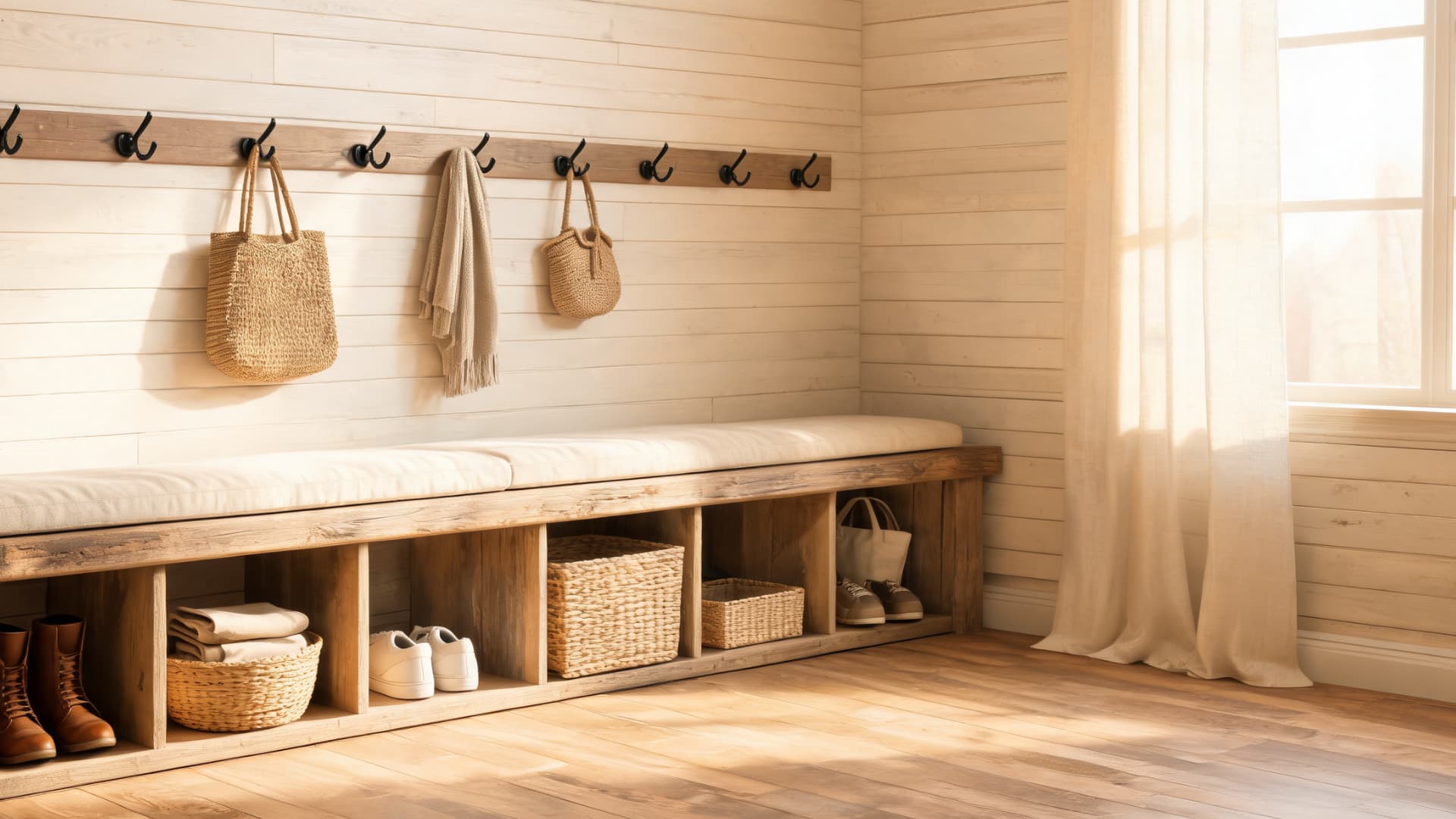
Farmhouse mudrooms are built to look lived-in while staying organized. Rustic wood benches, shiplap or beadboard walls, black metal hooks, and woven baskets do most of the design work. Open cubbies make access fast, which matters in a household where kids and gear move in and out quickly.
The warmth of the materials makes this a forgiving style. It does not look wrong when it is slightly messy, which is exactly what a working mudroom needs to be.
3. Minimal Compact Mudroom
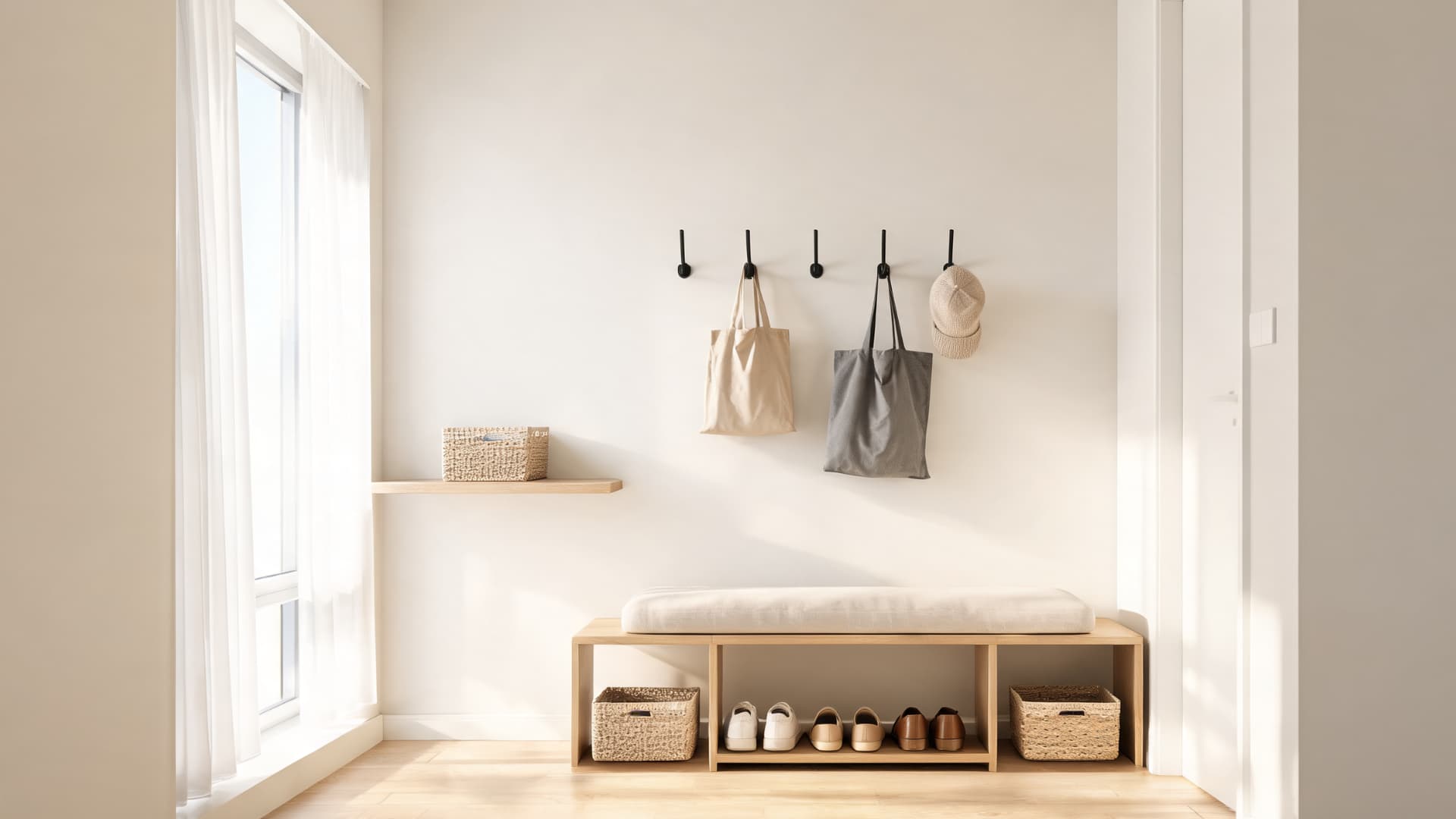
This is the approach for apartments, rentals, and tight entryways where a full built-in is not possible.
A slim bench, wall-mounted hooks, narrow shoe storage, and a small basket for keys and accessories cover the essentials without making the entry feel cramped.
The key discipline here is editing: every element earns its place, or it does not go in. Decorative objects that do not help contain mess come out. Visual openness is what makes a small entry feel workable rather than claustrophobic.
4. Luxury Built-In Mudroom
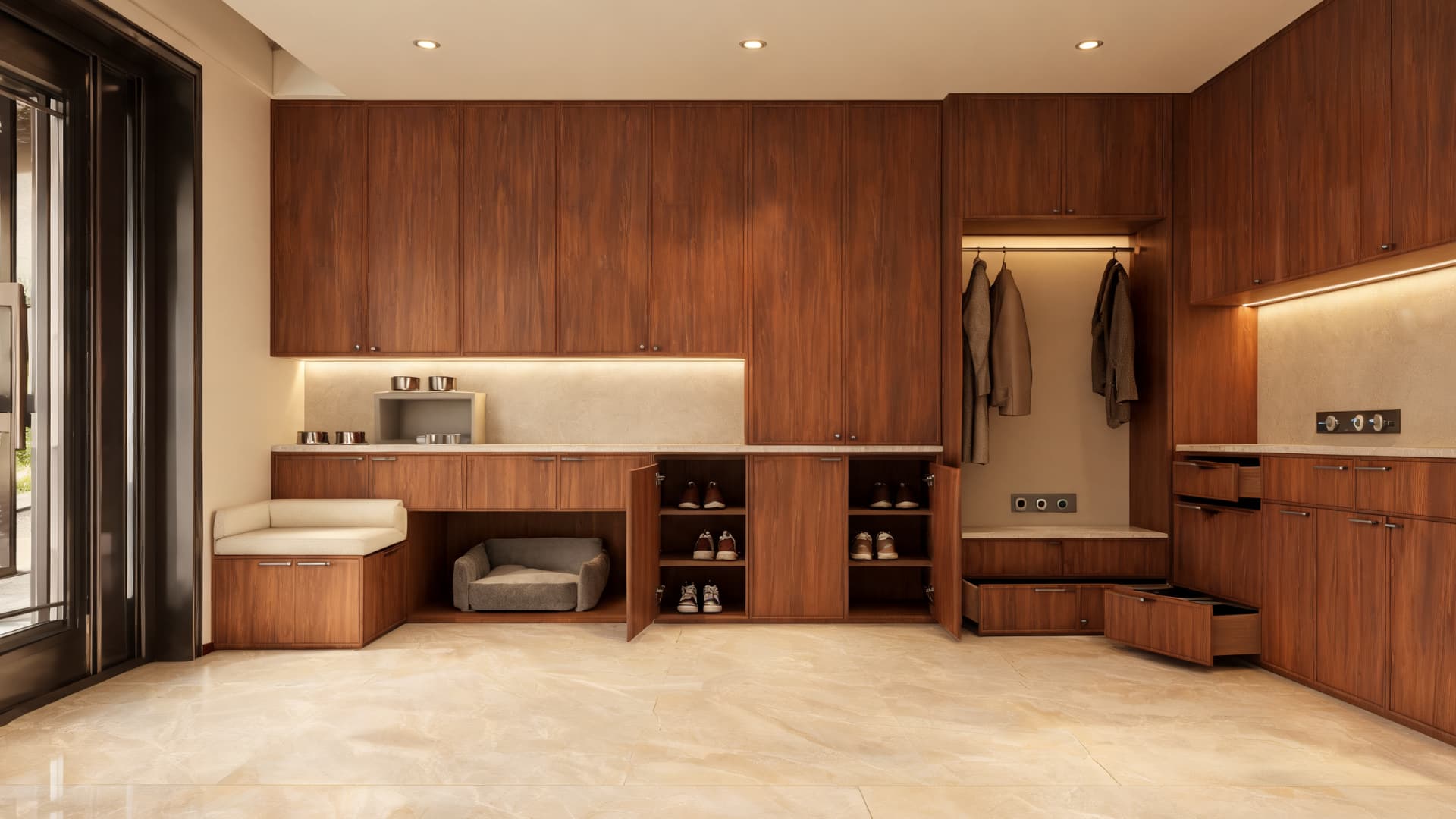
Luxury mudrooms are custom-built spaces where every element is specified to handle daily load while looking like it belongs in the rest of the home.
Full-height cabinetry, soft-close drawers, built-in lighting inside cabinets, and premium materials like wood panels, quartz, or stone countertops make these function as well as they photograph.
Optional additions, a pet-washing station, a charging drawer, and a laundry chute are planned into the design from the start rather than retrofitted later. If you are building or doing a full renovation, this is when to add them.
Small Mudroom Ideas for Compact Homes
You do not need a dedicated room to get mudroom function. These three approaches consistently work in smaller homes, apartments, and tight entryways.
1. Narrow Hallway Mudroom
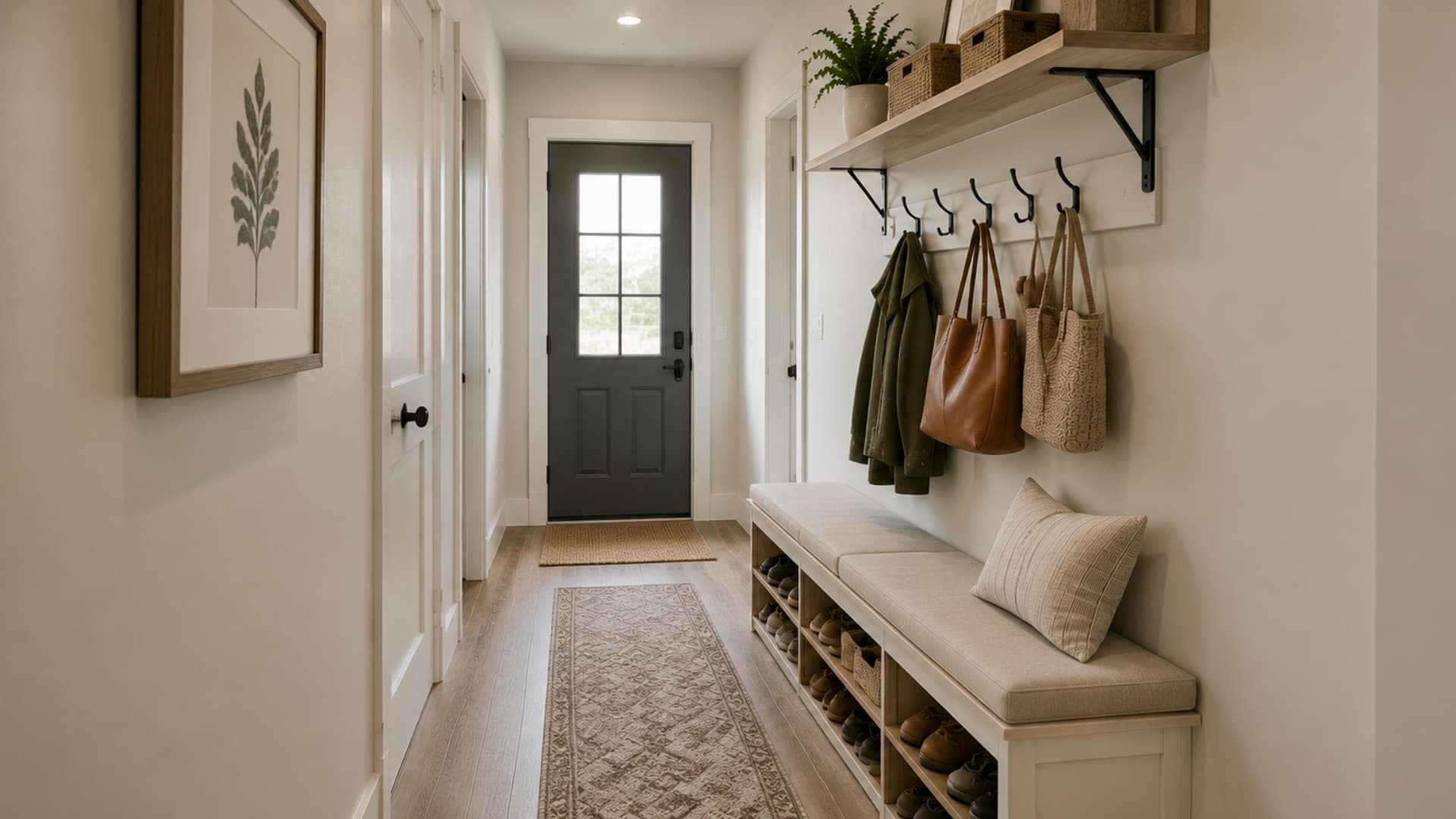
A narrow hallway mudroom setup focuses everything on the wall and keeps the floor clear. Wall-mounted hooks at two heights cover adults and kids without consuming any footprint. A shallow floating shelf above the hooks handles hats and small baskets.
A slim bench, 14 to 16 inches deep, provides seating without blocking movement through the hallway. This works in any entry that is at least 36 inches wide, which is the minimum clearance for comfortable daily use.
The same traffic-flow logic that applies to furniture spacing in living rooms applies here: people need to move without turning sideways.
2. Vertical Storage Solutions
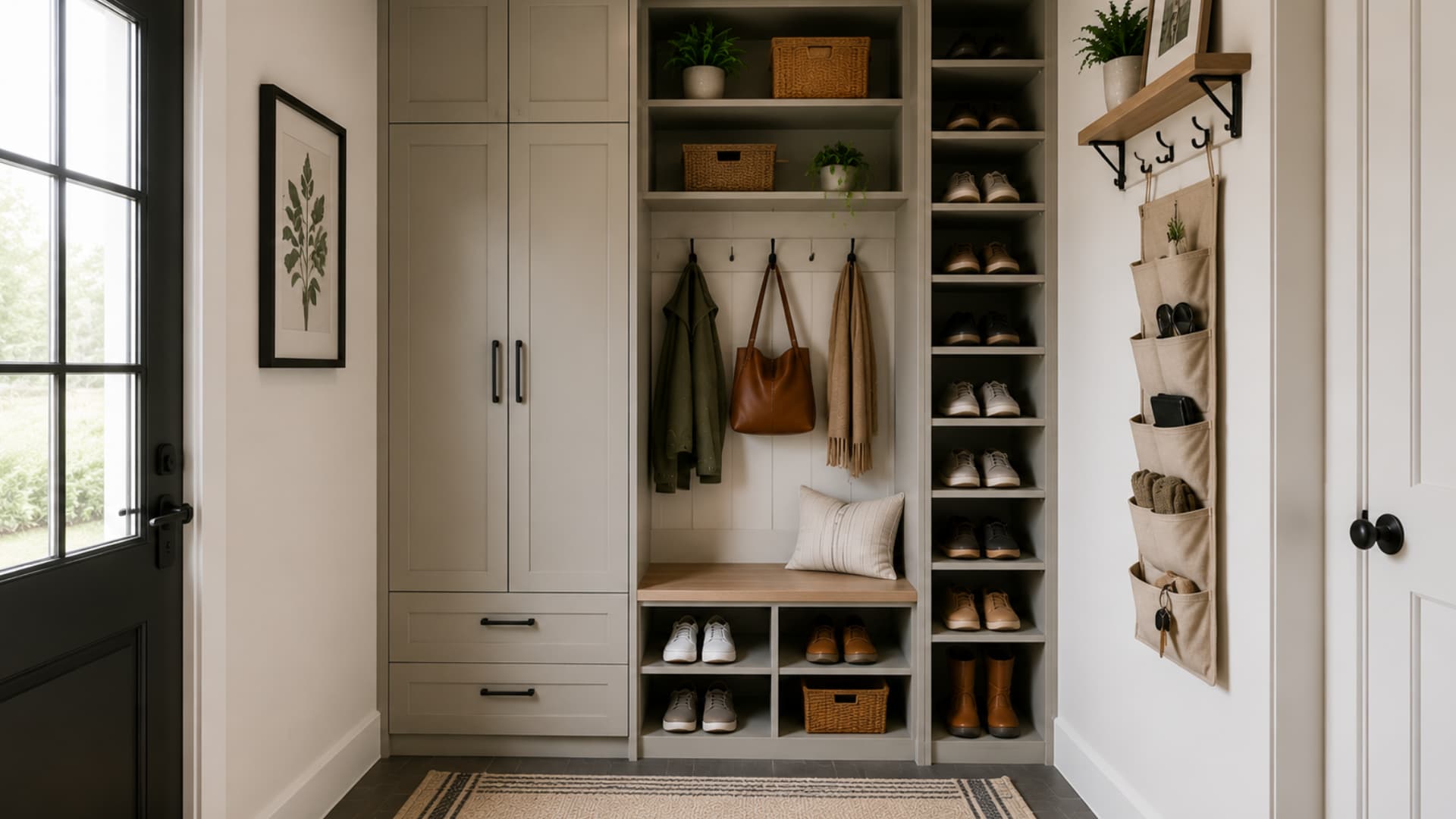
In compact mudrooms, the floor is the most valuable space. Keep it clear by moving everything vertically. Tall cabinets for shoes and coats use wall height from floor to ceiling, keeping everyday items organized without spreading out.
Hanging organizers for bags and accessories add storage without adding footprint. The visual result is a taller-feeling entry, which is the opposite of what most small entryways suffer from.
3. Multi-Use Entry Corner Design
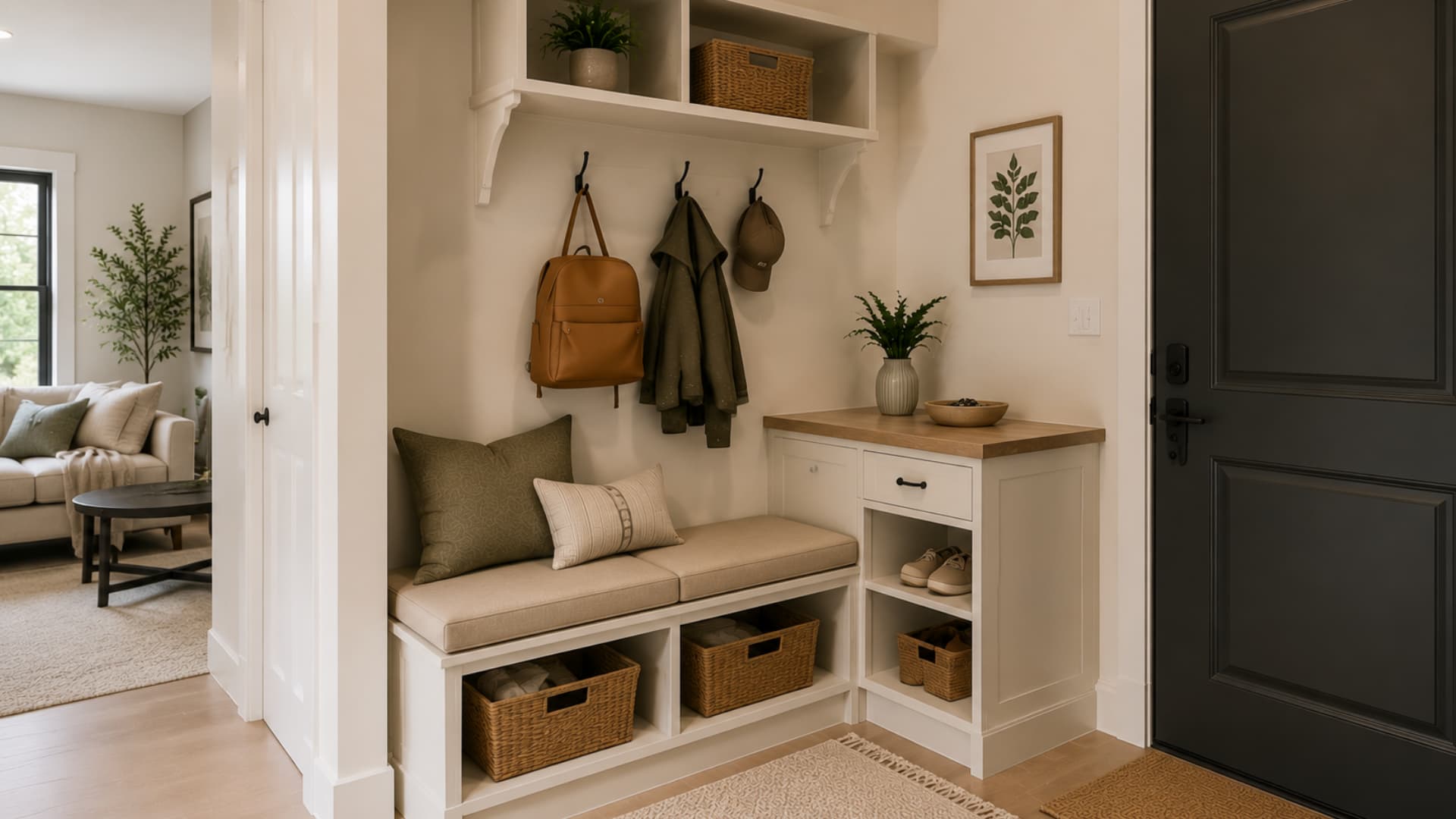
A corner bench with wall hooks and a small storage unit stacked above it puts seating, coat storage, and shoe storage into a single compact footprint. This works in apartments and small homes where there is no corridor to line with storage.
The corner location means the bench does not block a traffic path, which is the usual problem with standalone benches in tight entries. It also creates a defined drop zone that does not visually intrude on the rest of the room.
Best Materials for a Mudroom
A mudroom handles more daily moisture, dirt, and impact than most rooms in the house. Materials need to be easy to clean first, and good-looking second.
| Feature | Good Options | Why It Works |
|---|---|---|
| Flooring | Tile, luxury vinyl plank, sealed concrete, brick, stone | Handles moisture, dirt, and heavy daily traffic |
| Walls | Semi-gloss paint, beadboard, washable paneling, tile accents | Wipes clean; flat paint absorbs splashes and stains |
| Storage | Painted cabinets, solid wood, metal hooks, durable shelving | Holds heavy coats, bags, shoes, and gear without warping |
| Rugs and Mats | Washable rugs, indoor-outdoor runners, boot trays | Traps water and mud at the door; must be machine-washable to stay clean |
One note on flooring: if you have pets or kids in sports, lean toward large-format tile or luxury vinyl plank flooring. Small tile formats have grout lines that collect mud and are difficult to scrub clean. Luxury vinyl plank is the most budget-friendly option that still handles moisture well, and it works with underfloor heating if the entry is cold in winter.
Mudroom vs. Entryway vs. Foyer
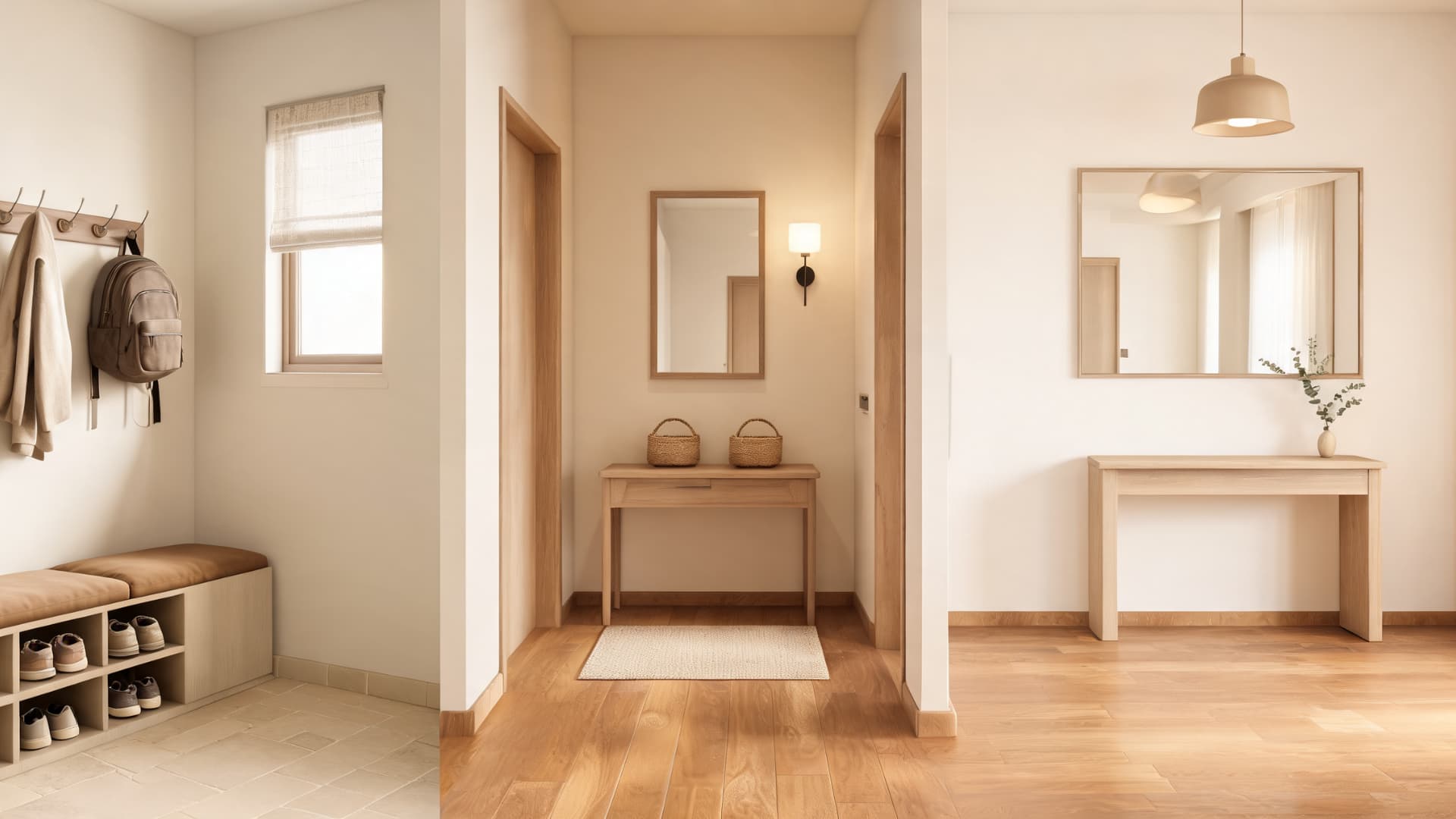
These three terms get used interchangeably online, and they are not the same thing. Understanding the difference helps you figure out which approach your home actually needs.
| Space | Main Purpose | Common Features | Best For |
|---|---|---|---|
| Mudroom | Controls mess and stores daily outdoor items | Bench, hooks, cubbies, shoe storage, durable flooring | Families, pets, sports gear, wet weather, daily drop zones |
| Entryway | Creates a practical arrival point | Console table, hooks, mirror, rug, light storage | Everyday arrivals, guests, keys, shoes, light storage needs |
| Foyer | Creates a formal welcome area | Lighting, decor, mirror, table, statement rug | Guest-facing front entries and first impressions |
The simplest way to decide which one you need is: if you are dealing with mud, wet gear, sports equipment, or multiple people’s daily bags, that is a mudroom problem. A foyer is about the impression the home makes. A mudroom is about what actually happens when the family walks in the door.
Mudroom Design Mistakes to Avoid
Most mudrooms that fail do not fail because of budget. They fail because the storage does not match the actual daily habit. Here are the mistakes I see most often.
- No seating: Without a bench or chair near the door, taking shoes off means balancing against the wall. People stop doing it, and shoes end up everywhere.
- Wrong flooring: Soft or textured flooring holds moisture, dirt, and odors. It also cannot be mopped. Use hard, smooth surfaces.
- Open storage only: Open hooks and cubbies are practical for daily items, but without any closed storage, the visible mess accumulates fast and the space never looks controlled.
- No plan for wet items: Wet shoes, umbrellas, rain jackets, and dog towels need boot trays, drip hooks, and washable mats. Without them, moisture spreads onto the floor and walls.
- Ignoring small items: Keys, mail, sunglasses, pet bags, charging cables, and accessories need dedicated containers or drawers. A bowl on the bench is not a system.
- Choosing the wrong entry: The mudroom should be near the door the household actually uses most, which in most homes is the garage door or a side entry, not the front door.
- Too much decor: A mudroom can look good. But every decorative item that does not help contain mess is one more thing to clean around.
These mistakes are fixable at any stage. If you have an existing entry that is not working, start by identifying which one of these is the actual problem before spending on a new setup.
Mudroom Photo Checklist
Before you save a mudroom inspiration photo, run it through this checklist. A photo can look organized in perfect light with no one’s actual belongings in it. What matters is whether the layout would work in your real entry on a real morning.
| Checklist Item | What to Check |
|---|---|
| Entrance location | Is it near the door your household actually uses most? |
| Floor clearance | Can two people pass through it without squeezing? |
| Hook count | Is there one hook per person in the household, minimum? |
| Bench depth | Is it at least 14 inches deep for comfortable seating? |
| Shoe plan | Is there dedicated shoe storage, not just floor space beside the bench? |
| Flooring type | Can it be mopped or wiped after a muddy day? |
| Wet gear storage | Is there a plan for dripping umbrellas and wet boots? |
| Kid and pet access | Can everyone in the household reach their own storage? |
| Daily maintenance | Would this layout stay tidy on a normal Tuesday, not just after a photoshoot? |
Use this checklist as a filter, not a final decision. The best mudroom idea for your home is the one that matches your real entry size, the number of people using it, and the gear they actually carry through that door.
Frequently Asked Questions
Does a mudroom add value to a home?
A well-organized mudroom adds practical value that buyers notice, particularly in family homes and wet climates. It signals that the home handles daily life well. A built-in mudroom with quality materials can contribute to resale appeal, though exact return on investment depends heavily on regional buyer expectations.
Can I add a mudroom to an existing home without major renovation?
Yes. Hooks, a bench, shoe storage, and baskets near your most-used door create mudroom function without construction. Unused closets, hallway corners, and garage entries are all workable starting points. Built-ins give you more storage, but they are not a requirement to get the benefit.
What is the minimum space needed for a mudroom?
A workable mudroom can fit in a 4-foot-wide wall section. A bench at 16 to 18 inches deep, wall hooks above, and a boot tray on the floor is enough for one or two people. For a family of four or more, plan for at least 6 to 8 feet of wall length to give each person a dedicated zone.
What flooring is best for a mudroom?
Large-format porcelain tile and luxury vinyl plank are the two most practical choices. Both handle moisture well, are easy to mop, and hold up under daily foot traffic. Avoid small-format tile with many grout lines, as mud collects in grout and is difficult to scrub out consistently.
What should not be stored in a mudroom?
Valuables, important documents, and electronics should not live in a mudroom. The space is exposed to moisture, temperature swings, and heavy traffic. Anything sensitive to those conditions belongs in a more controlled interior space.
What is the best lighting for a mudroom?
Overhead flush-mount or recessed lighting works for most mudrooms. If the entry is very small, a wall sconce at eye height avoids the flat-lit shadow that overhead fixtures create in narrow spaces. Aim for at least 50 foot-candles at floor level so you can spot mud and clean it before it tracks further into the house.
Do I need a mudroom if I have a foyer?
A foyer and a mudroom solve different problems. A foyer manages first impressions. A mudroom manages daily mess. If your foyer is where shoes, bags, and coats actually accumulate every day, adding mudroom storage to that space is worth considering, even if it changes the visual character of the entry slightly.
Final Thoughts
Creating an organized drop zone is all about mapping out your household’s actual patterns rather than just trying to copy a flawless interior design photo.
Knowing what is a mudroom functionality allows you to prioritize simple habit compliance, keeping wet gear, heavy bags, and dirty shoes safely contained right at the door.
Choosing durable, low-maintenance flooring and installing dedicated hooks or benches will immediately save you hours of deep cleaning.
Now that you know how to maximize vertical space and avoid common layout mistakes, you can build a setup that fits your routines perfectly.
Which storage features do you need the most? Share your thoughts below, or check out my related home organization guides to get started.