

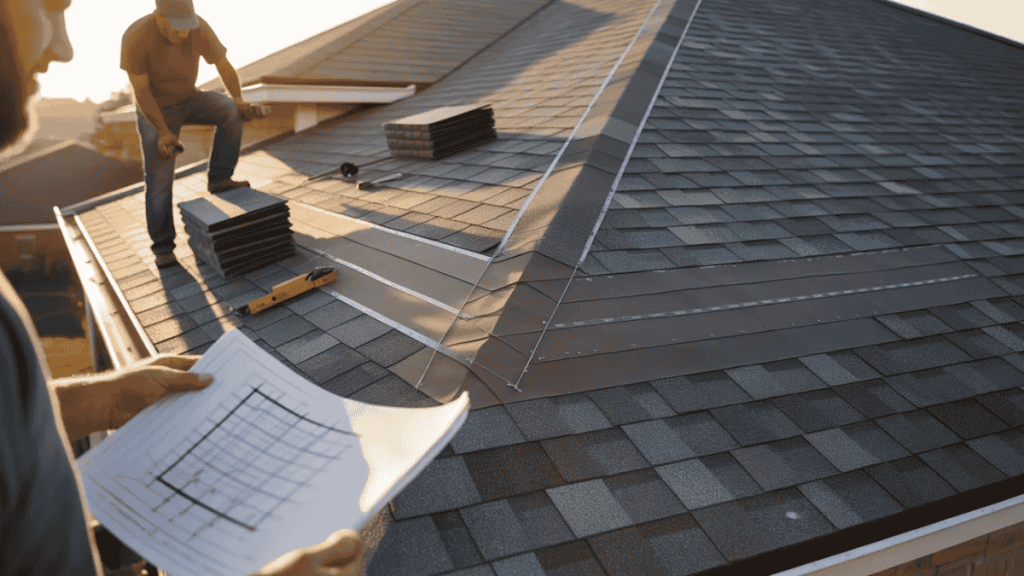


When I first heard contractors talking about “squares” during my roof replacement, I was confused. They weren’t talking about shapes; they were discussing measurements. If you’ve ever thought what a square in roofing is, you’re not alone.
Understanding what a square is in roofing can save you money and help you make smarter decisions before signing a contract.
Roofers use this standard unit to quickly estimate shingles, material, and labor costs, much like understanding the structure of a hip roof can impact your project planning
Once you grasp this simple concept, reading estimates and comparing quotes becomes much easier and far less stressful.
What Is a Square in Roofing?
In roofing, a square is a unit of measurement that represents 100 square feet of roof surface area. It is commonly used by contractors to calculate materials and costs for a roofing project.
Key Points:
- One roofing square = 100 square feet of roof surface.
- A 10-foot by 10-foot section of roof equals one roofing square.
- Roofing squares help standardize estimates and material calculations.
- Homeowners can use this to better understand roofing quotes and cost breakdowns.
Why Roofers Use “Squares” Instead of Square Feet
Roofers use squares instead of square feet because it simplifies calculations and speeds up communication during material ordering and job planning.
Saying a roof is 20 squares sounds much cleaner than saying it measures 2,000 square feet in total area. Shingles, underlayment, and other materials are packaged and estimated by the square rather than by square foot.
This system allows contractors across the country to use one common measurement language without confusion. Using squares also makes comparing roofing quotes easier, since most companies price their work per square rather than per square foot.
How Many Bundles of Shingles Are in a Roofing Square?
Most standard asphalt shingles require three bundles to cover one complete roofing square. However, this can vary depending on the type and style of shingle:
- Standard 3-tab shingles: Typically 3 bundles per square
- Architectural shingles: Usually 3 bundles per square, but check the manufacturer’s specifications
- Luxury or specialty shingles: May require 4-5 bundles per square due to their thickness and design
Each bundle typically weighs between 50 and 80 pounds and covers approximately 33 square feet. Always verify the coverage rate on the shingle packaging, as coverage rates can vary by manufacturer and style.
How Roof Pitch Affects Your Square Count
One of the most commonly overlooked factors when calculating roofing squares is roof pitch, the steepness of your roof’s slope.
Contractors use a pitch multiplier to account for the difference between your home’s footprint and its actual surface area, which can be similarly critical when considering the durability of outdoor furniture in different weather conditions.
| Roof Pitch (Rise per 12″ Run) | Pitch Type | Multiplier | Example: 1,500 sq ft Footprint |
|---|---|---|---|
| 2/12 to 4/12 | Low slope | 1.02 – 1.06 | ~1,530 – 1,590 sq ft |
| 4/12 to 6/12 | Moderate slope | 1.08 – 1.16 | ~1,620 – 1,740 sq ft |
| 6/12 to 9/12 | Steep slope | 1.20 – 1.36 | ~1,800 – 2,040 sq ft |
| 9/12 and above | Very steep | 1.40+ | 2,100+ sq ft |
A home with a 1,500-square-foot footprint and a 6/12 pitch may require materials for 18 to 20 squares, not 15. Always ask your contractor to show their pitch factor before signing off on any estimate.
How to Calculate Roofing Squares (Step-by-Step)
Following these steps helps ensure accurate material estimates and prevents costly shortages during installation.
Materials Required
Before measuring your roof, gather these essential tools to ensure accurate calculations and safe movement while working at height.
- Tape measure (25–50 feet)
- Ladder
- Calculator
- Notebook and pen
Note: Always wear non-slip shoes and safety gloves while measuring the roof to improve grip and reduce the risk of slipping or injury.
Step 1: Measure Your Roof Area in Square Feet

Begin by measuring the length and width of each roof section separately using a reliable tape measure. Multiply the length by the width to calculate the square footage for that section of the roof.
If the roof has multiple sections, repeat the process for every flat surface or slope. Add all the square footage amounts together to determine the total roof area before converting it into roofing squares.
Step 2: Convert Square Feet to Squares
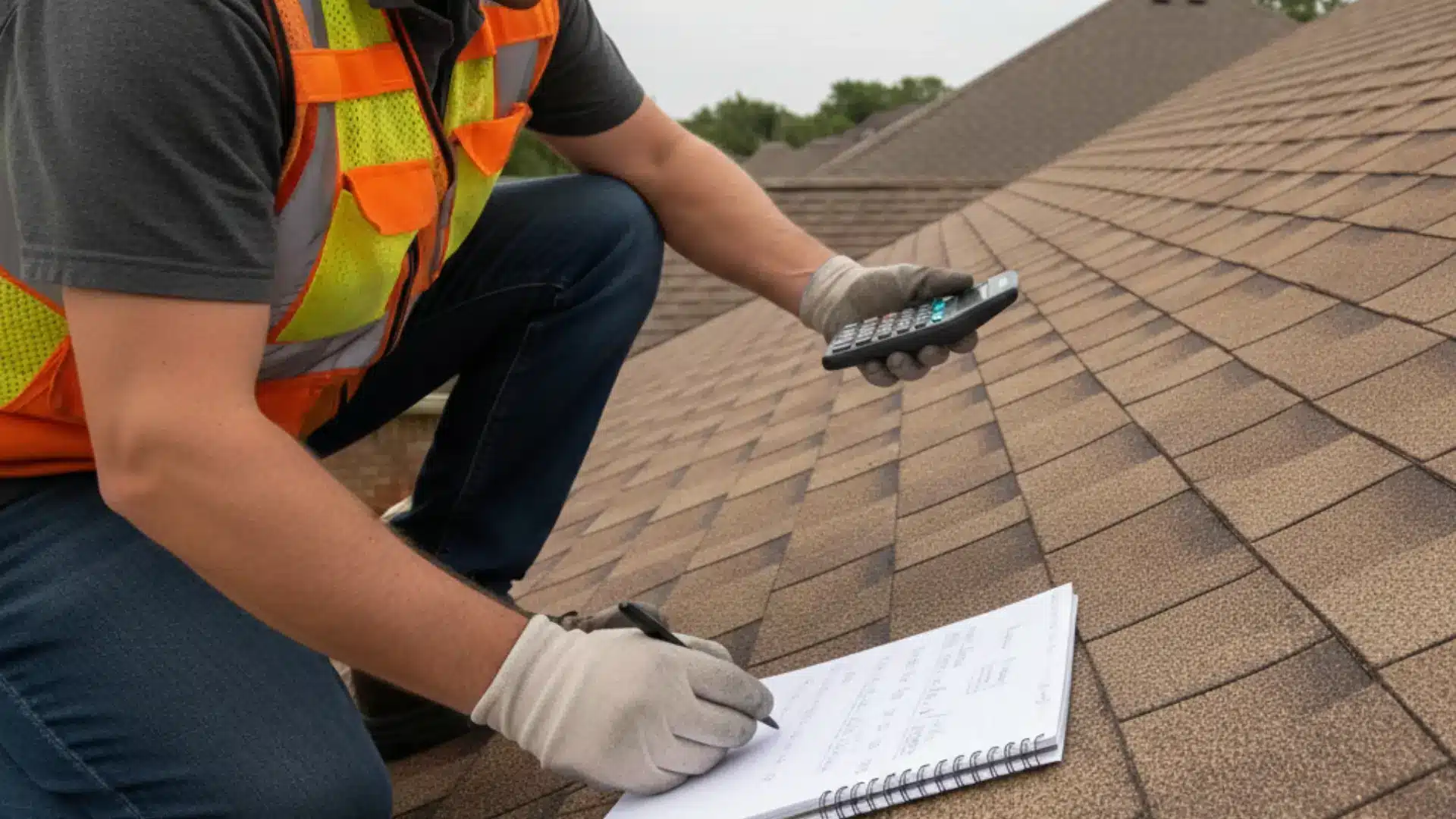
After measuring your total roof area in square feet, the next step is to convert it to roofing squares. Simply divide the total square footage by 100, since one roofing square equals 100 square feet.
This calculation gives you the total number of squares needed, which contractors use to accurately estimate shingle quantities, materials, and overall project costs.
Formula : Total Square Feet ÷ 100 = Roofing Squares
Step 3: Add a Waste Factor
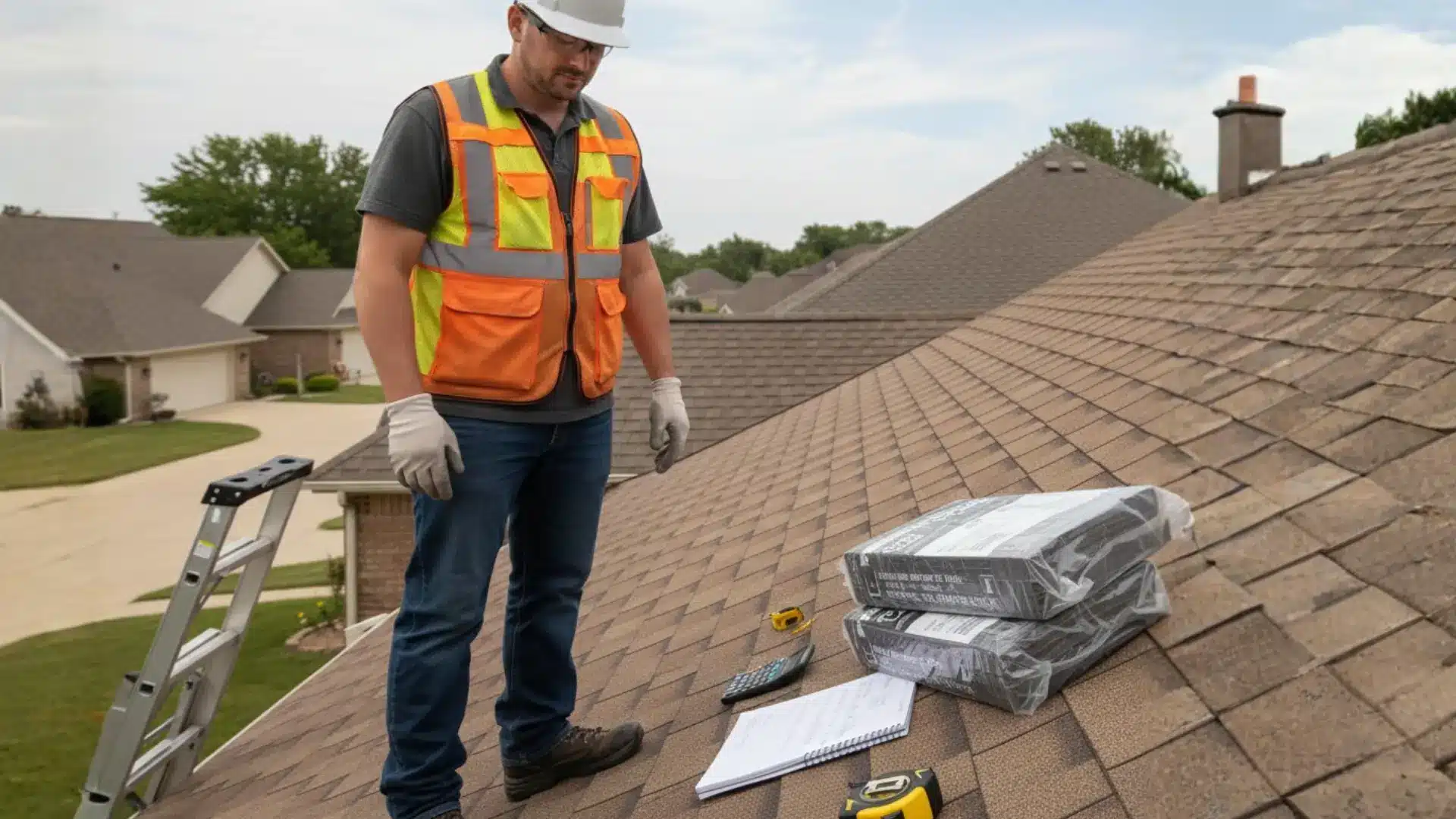
Roofing projects always require extra material because some shingles must be trimmed around edges, ridges, and valleys. These cuts create waste that cannot be reused on other sections of the roof.
Contractors usually add 10 to 15 percent extra material to prevent shortages during installation. Adding this waste factor ensures the project continues smoothly without delays caused by missing shingles or supplies.
Roofing Square Example Calculations
Here are simple examples that show how to convert square feet to roofing squares. The rule is to divide the total square footage by 100.
| Roof Size (Square Feet) | Calculation | Roofing Squares | With 10% Waste Factor | With 15% Waste Factor |
|---|---|---|---|---|
| 1,200 sq ft | 1,200 ÷ 100 | 12 squares | 13.2 squares | 13.8 squares |
| 1,500 sq ft | 1,500 ÷ 100 | 15 squares | 16.5 squares | 17.25 squares |
| 2,000 sq ft | 2,000 ÷ 100 | 20 squares | 22 squares | 23 squares |
| 2,500 sq ft | 2,500 ÷ 100 | 25 squares | 27.5 squares | 28.75 squares |
These examples make estimating roofing squares easier and help you plan material quantities with greater confidence before ordering shingles.
Key Interpretations:
When I first calculated roofing squares myself, these simple insights prevented expensive mistakes and unnecessary last-minute material shortages.
- The calculation is simple: Divide total roof square footage by 100 to determine how many roofing squares your project requires.
- Never order exact amounts: A 2,000-square-foot roof equals 20 squares, but you should order 22–23 squares, including waste.
- Waste factor depends on roof complexity: Simple roofs may need 10% extra, while complex roofs with valleys and peaks often require 15% or more.
- Round up, not down: If your total equals 13.2 squares, order 14 squares to avoid running short during installation.
- Convert to bundles for ordering: Since one square equals three bundles, 15 squares require 45 bundles, plus extra for waste.
- Waste covers more than mistakes: Extra shingles account for cuts around vents, chimneys, skylights, edges, ridges, and valleys.
- Larger roofs mean more waste material: A 2,500-square-foot roof may require 3–4 extra squares, adding 9–12 bundles.
Knowing these practical details gave me confidence to review estimates carefully and avoid overspending on unnecessary roofing materials.
Roofing Squares and Cost Estimation
Roofing costs are usually calculated per square, so the total number of squares directly impacts the final project price. The more squares a roof has, the higher the total cost.
For example:
- Contractor rate: $400 per square
- Roof size: 20 squares
- Total cost: $8,000
This price often includes materials, labor, and removal of old shingles before new installation begins. However, steeper roofs or complex designs may increase labor costs because they require more time, safety equipment, and skilled work.
Understanding the total square count makes it easier to review estimates, compare contractor pricing, and ensure the project cost is calculated correctly.
American Standard Preferences for Roofing Squares
Before anything else, it helps to know what you are working within. The official ANSI roofing standards set the baseline that every low-slope roofing decision in the US should be measured against.
American homeowners and contractors follow consistent industry standards when selecting roofing materials. These preferences shape how squares are ordered, priced, and installed across most residential projects nationwide:
- Asphalt Shingles, Dominance: Asphalt shingles cover over 80% of American roofs, with 3 bundles per square, each covering roughly 33.3 sq ft and weighing 50–80 lbs at standard thickness.
- Architectural Shingles, Preferred Style: Dimensional architectural shingles measure approximately 13¼” x 38⅜” per piece, with 64–66 shingles per bundle and 192–198 shingles needed to complete one full square.
- Waste Factor, Industry Norm: American contractors apply a 10% waste buffer on simple gable roofs and 15–20% on complex roofs with multiple valleys, adding 1.5–3 extra squares per 15-square project.
- Square Pricing, Standard Practice: Residential roofing rates run $350–$500 per square for standard asphalt, $500–$800 for architectural shingles, and $900–$1,500 per square for premium luxury shingle installations.
- Standard Roof Size, National Average: A typical American single-family home has a roof area of 1,700–2,100 sq ft, translating to 17–21 squares before pitch multipliers and waste factors are applied.
- Roof Pitch, Dominant Preference: The most common American residential pitch runs between 4/12 and 6/12, adding a 1.08–1.16 multiplier, increasing a 1,700 sq ft base footprint to roughly 19–20 billable squares.
- 30-Year Warranty, Baseline Expectation: Standard architectural shingles weigh 240–300 lbs per square and carry a 30-year warranty, while premium options weigh 320–400 lbs per square with 50-year coverage.
- Color Preference, Regional Variation: Charcoal and weathered wood tones account for nearly 70% of U.S. shingle purchases, with individual shingle dimensions standardized at 12″ x 36″ across most major manufacturers.
These standards provide American homeowners with a reliable baseline for comparing contractor estimates, evaluating material quality, and making informed decisions before any roofing project begins.
Common Mistakes Homeowners Make
Understanding roofing squares helps avoid costly errors that can affect material estimates, contractor quotes, and overall project planning. Here are the common mistakes homeowners make:
- Assuming roof size equals home size: Roof surface area is often larger due to pitch, slopes, and overhangs.
- Ignoring roof pitch: Steeper roofs have more surface area than flat roofs with the same base measurement.
- Forgetting to add waste material: Not adding 10–15% extra shingles can cause shortages during installation.
- Assuming all shingles cover the same, some specialty shingles require different bundle amounts per square.
Avoiding these mistakes ensures accurate estimates, smoother installation, and better control over roofing costs and material planning decisions.
Roofing Square vs. Square Foot
Understanding the difference between a roofing square and a square foot helps simplify roof measurements and contractor estimates.
|
Measurement Type |
Definition |
How It Is Used |
Example |
|
Square Foot |
A basic unit of area equal to one foot by one foot. |
Used to measure total floor or roof surface area. |
2,000 square feet describes the total roof size. |
|
Roofing Square |
A roofing unit equal to 100 square feet of roof area. |
Used by contractors to estimate materials and pricing. |
2,000 square feet equals 20 roofing squares. |
Knowing this difference makes roofing estimates easier to read, compare, and understand without confusion during project planning discussions.
Final Thoughts
Now that I understand what a square in roofing means, reading roofing estimates feels much clearer and less stressful.
A roofing square simply equals 100 square feet, but that small detail plays a big role in pricing and planning. Knowing how to calculate squares allows me to check estimates and ask smarter questions during contractor discussions.
It also helps me understand how many shingles and materials my roof will actually require. If you are planning a roof repair or replacement, take a few minutes to calculate your roofing squares first.
If this guide helped you, share it with someone preparing for a new roof project.
Frequently Asked Questions
What are common mistakes homeowners make when calculating roofing squares?
Homeowners often mistake the roof size for the home’s size, ignore roof pitch, forget to add extra material for waste, or assume all shingles cover the same area.
How does the waste factor affect roofing calculations?
The waste factor accounts for extra materials needed due to cuts and overlaps. Typically, contractors add 10-15% more materials to avoid shortages during installation.
Why does roof pitch impact the total square count?
Roof pitch increases the roof’s actual surface area. Steeper pitches require more material, so contractors use a pitch multiplier to adjust the square count accordingly.