

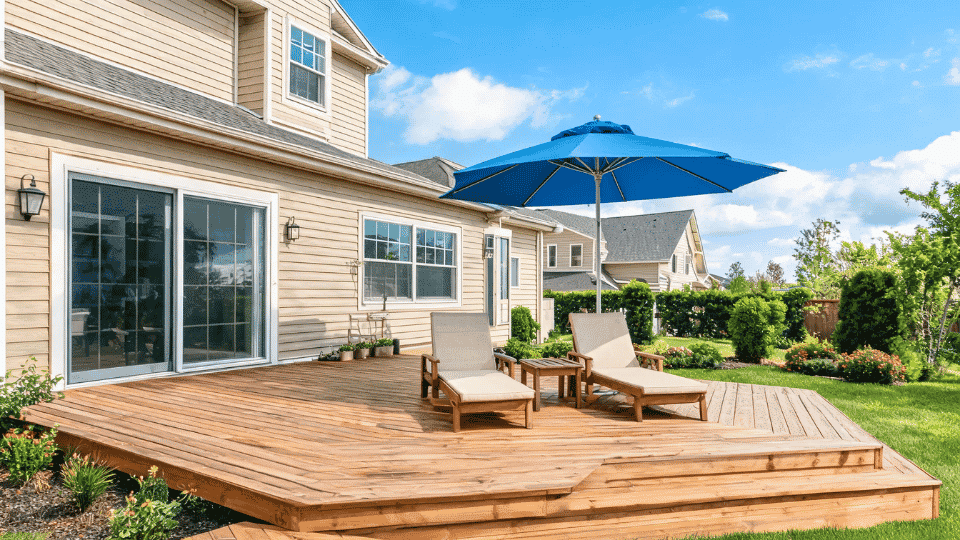


Deck quotes can be confusing because the same project name can refer to very different work. A small pressure-treated platform may cost around $4,000, while a raised composite rebuild with stairs, railings, footings, and demo can cost over $30,000.
So, how much does it cost to build a deck? Start with the scope, not the headline price. The labor cost to build a deck per square foot often accounts for the largest gap, especially when the job includes old deck removal, code updates, or custom railing.
Before you trust a contractor bid, compare the deck size, materials, height, permits, cleanup, and every line item. Use this step before requesting your final deck quotes.
| Cost Note: The mentioned figures are estimates based on current US deck pricing patterns, contractor quote ranges, and homeowner-reported examples from forums and social media. Actual costs vary by region, contractor, deck height, material, permits, and project scope. Always get at least three written quotes before signing any deck contract. |
How Much Does It Cost to Build a Deck by Size?
Deck size sets the base price. Larger decks need more boards, more framing, more fasteners, more railing, and more labor hours.
| Deck Size | Square Feet | Basic Wood Deck | Mid-Range Deck | Composite or Custom Deck |
|---|---|---|---|---|
| 10×10 | 100 | $3,000 to $6,000 | $6,000 to $9,000 | $9,000 to $14,000 |
| 12×12 | 144 | $4,500 to $8,500 | $8,500 to $13,000 | $13,000 to $20,000 |
| 12×16 | 192 | $6,000 to $11,000 | $11,000 to $17,000 | $17,000 to $26,000 |
| 14×20 | 280 | $9,000 to $16,000 | $16,000 to $25,000 | $25,000 to $35,000+ |
| 16×20 | 320 | $10,000 to $18,000 | $18,000 to $28,000 | $28,000 to $40,000+ |
| 20×20 | 400 | $13,000 to $24,000 | $24,000 to $35,000 | $35,000 to $50,000+ |
| 500 sq ft | 500 | $16,000 to $30,000 | $30,000 to $45,000 | $45,000 to $65,000+ |
These numbers are not meant to replace a local quote. They are meant to help you spot a number that needs more explanation.
A 300 sq ft deck can be cheap or expensive depending on what sits under it, what sits around it, and what the contractor has to remove first.
However, the deck is not limited to just the wooden build; factors like furniture and outdoor features are in the mix, and they can change the cost of working on a full backyard when including the deck, skirting, patio, etc.
Labor Cost to Build a Deck Per Square Foot
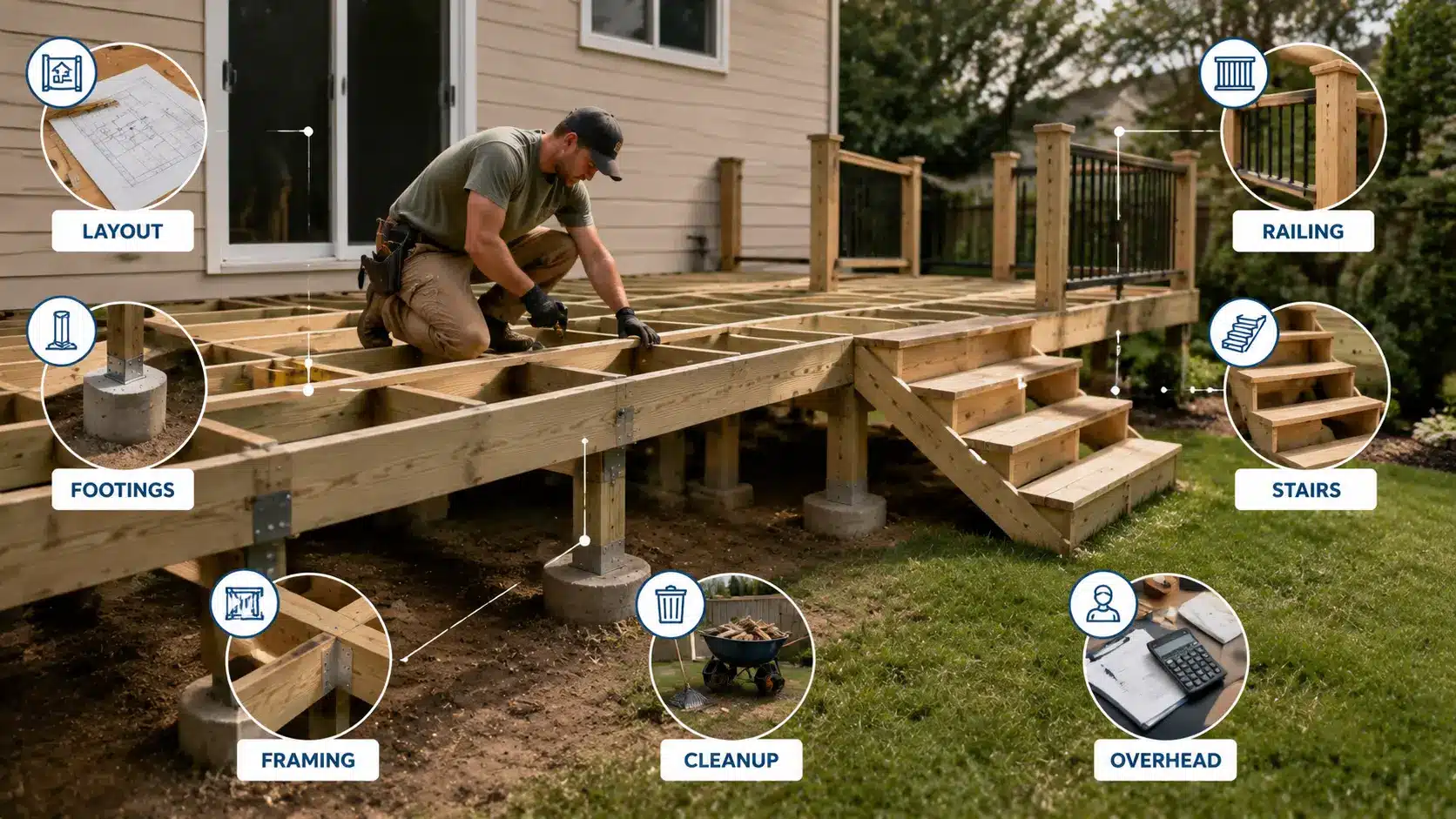
Labor cost to build a deck usually runs $15 to $40 per square foot for standard contractor work. Simple ground-level decks can land below that range. Raised, multi-level, or composite decks can run much higher.
| Project Type | Labor Cost Per Sq Ft |
|---|---|
| Basic ground-level wood deck | $10 to $20 |
| Standard residential deck | $15 to $35 |
| Raised deck with stairs | $25 to $45 |
| Composite deck installation | $25 to $50 |
| Multi-level deck | $40 to $60+ |
| Rebuild with demo | $30 to $60+ |
Labor is not only for board installation. You are paying for layout, post holes, concrete, framing, blocking, ledger work, stairs, railing, inspection fixes, cleanup, and contractor overhead. Even the styles picked for the parts, such as deck skirting types, finishes, and stairs, can make significant changes.
That is why labor can account for a large share of the final deck cost.
A 12×12 deck is 144 sq ft. If labor runs $20 to $40 per sq ft, labor alone can cost $2,880 to $5,760 before materials. Add stairs, railing, demo, or composite boards, and the labor number rises.
Deck Cost by Material
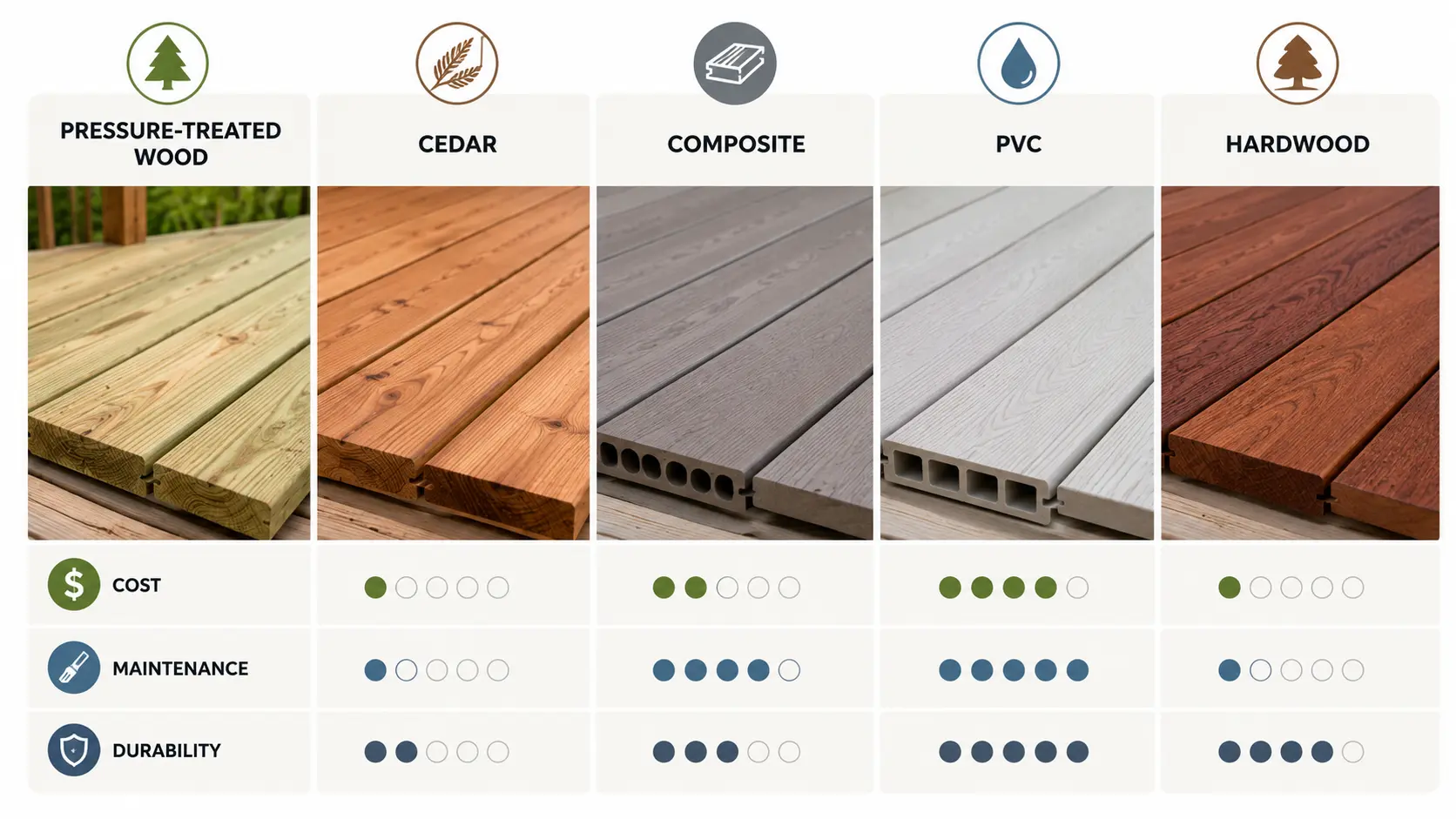
Material choice is one reason forum prices vary so much. A basic wood deck and a composite deck may be the same size, but the quote can differ by thousands.
| Deck Material | Installed Cost Per Sq Ft | Maintenance | Best Fit |
|---|---|---|---|
| Pressure-treated wood | $30 to $55 | High | Lowest first cost |
| Cedar | $40 to $70 | Medium to high | Natural wood look |
| Redwood | $45 to $75 | Medium to high | Better natural rot resistance |
| Composite | $50 to $90 | Low | Lower upkeep |
| PVC | $60 to $100+ | Low | Wet or high-moisture areas |
| Hardwood | $70 to $120+ | Medium | Premium deck builds |
Material choice is where many online price comparisons fall apart. A pressure-treated wood deck may look cheap because the first cost is lower, while composite and PVC quotes can rise once hidden fasteners, fascia, stair trim, and upgraded railing are included.
Before comparing your quote with a forum comment, check the exact material, product line, railing type, and finish details.
What Drives the Final Deck Price
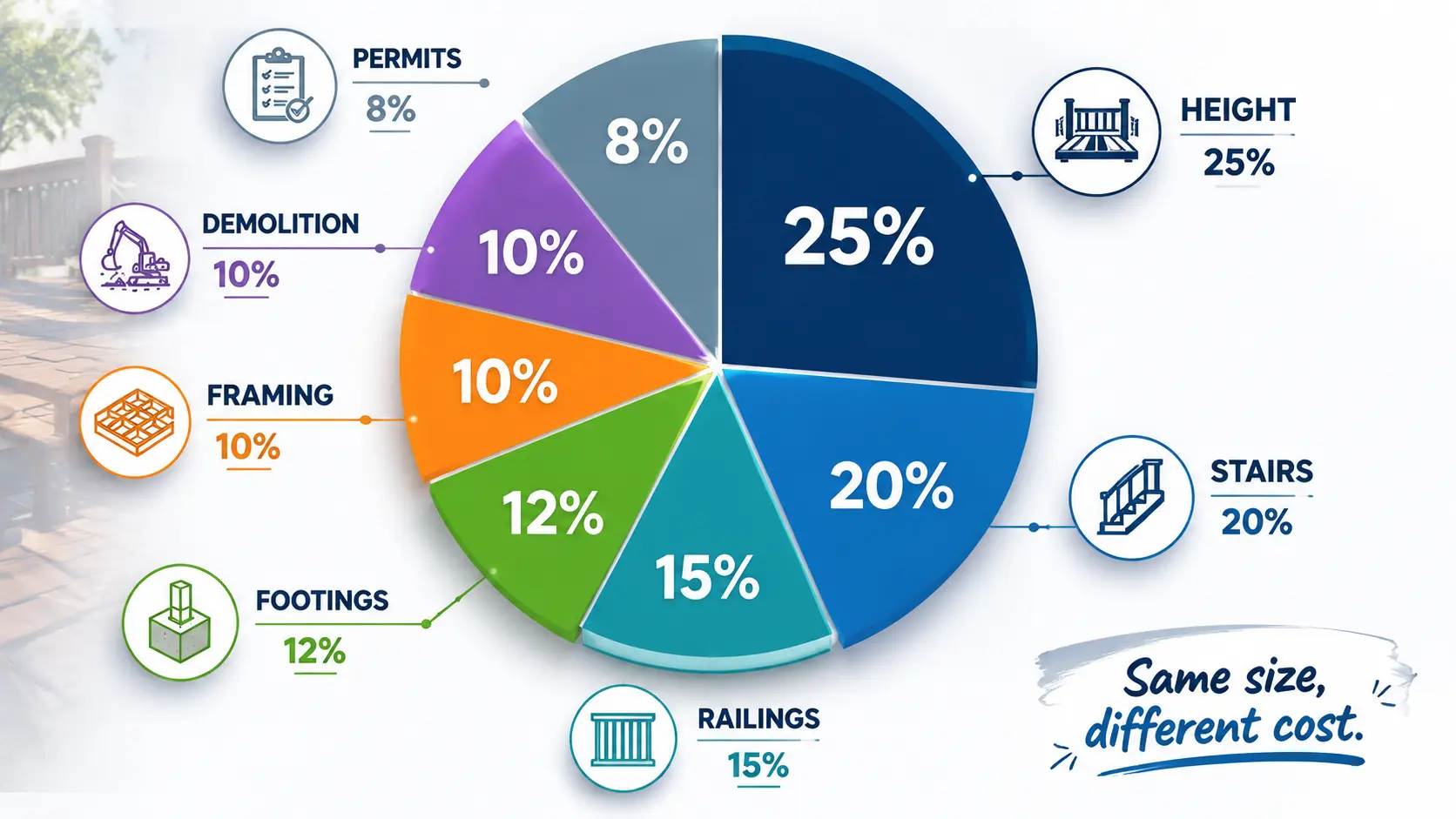
| Note: This breakdown reflects average cost distribution across deck projects and can vary; demolition may represent little to no cost on a new build where no existing structure needs to be removed. |
The deck boards are just the starting point. These seven factors are what separate a $6,000 quote from a $30,000 one, and what most homeowners don’t think to ask about before signing.
1. Height
Ground-level decks cost less, have shorter posts, simpler framing, and faster labor. Raised decks add high cost at every level:
- Longer posts and stronger beams to handle increased load
- Cross-bracing and deeper footings required for structural stability
- Guardrails are commonly required on decks more than 30 inches above grade, but local code decides the final requirement.
- Taller, heavier, or unusual deck designs may require engineered plans or structural review.
The higher the deck, the more likely it is to need guardrails, stronger framing, inspections, and added structural planning. Decks.com’s deck railing code guide is a useful starting point, but the final requirement should come from your local building department.
2. Stairs
Each stair run requires stringers, treads, risers, railings, landings, and code-compliant rise-and-run dimensions. Cost drivers include:
- Number of runs from deck level down to grade
- Stair width and total drop height from deck to ground
- Railing type required on both sides of every run
- Landings are needed when connecting the deck to the patio or yard
One run typically adds $1,500 to $3,500. Multiple runs can change the entire quote.
3. Railings
Railing type is one of the biggest variables between two quotes for the same deck size. Cost depends on:
- Material choice: wood is the cheapest, cable and glass cost the most
- Total linear footage and required height per local code
- Anchoring method and fastener type used at each post
- Custom curves, tensioners, or premium hardware specified in the design
Always ask for the railing spec before comparing quotes.
4. Footings
Footings carry the full structural load of the deck. What drives cost:
- Soil type and bearing capacity at your specific site
- Local frost line depth determines how far piers must go
- Slope and drainage conditions requiring additional excavation or forming
- Code requirements tied directly to your deck’s height and size
Shallow deck blocks are the cheapest. Poured concrete piers below the frost line cost more but provide long-term stability and reliably pass inspection.
5. Framing
Framing is the skeleton on which everything else sits. If saving money is the goal, framing is not the place to cut corners. Cost factors for framing include:
- Joist, beam, and post sizing are determined by your deck’s span
- Many composite boards require specific joist spacing, and some layouts need tighter spacing than standard wood decking.
- Flashing and blocking must be installed correctly to prevent long-term water damage.
- Engineered beams specified for larger decks or heavier load requirements
Cutting corners on framing is where decks fail structurally five to ten years later.
6. Demolition
Removing an old deck adds both labor and disposal costs. Key variables:
- Condition of the existing structure, since rotted framing takes significantly longer
- Material types, such as wood, composite, concrete, and metal, are priced differently for disposal
- Whether hauling and dump fees are included in the quote or billed separately
- Yard access and protection are required to avoid damage during removal
Always confirm the demo scope in writing before work starts.
7. Permits
Many cities require permits for attached, elevated, or structurally significant decks, but rules vary by location. Check your city or county building department first; for example, this city deck permit page from Shoreview, Minnesota, shows the kind of local permit guidance homeowners may need to review. The process includes:
- Plan review and written approval are required before any construction begins
- Inspections at the framing stage and again at final completion
- Fees that vary by jurisdiction, deck size, height, and structural type
Skipping permits creates liability, insurance, and resale problems. Ask upfront who pulls the permit, what inspections are required, and whether fees are included in the quote.
What Homeowners Say About Real Deck Costs
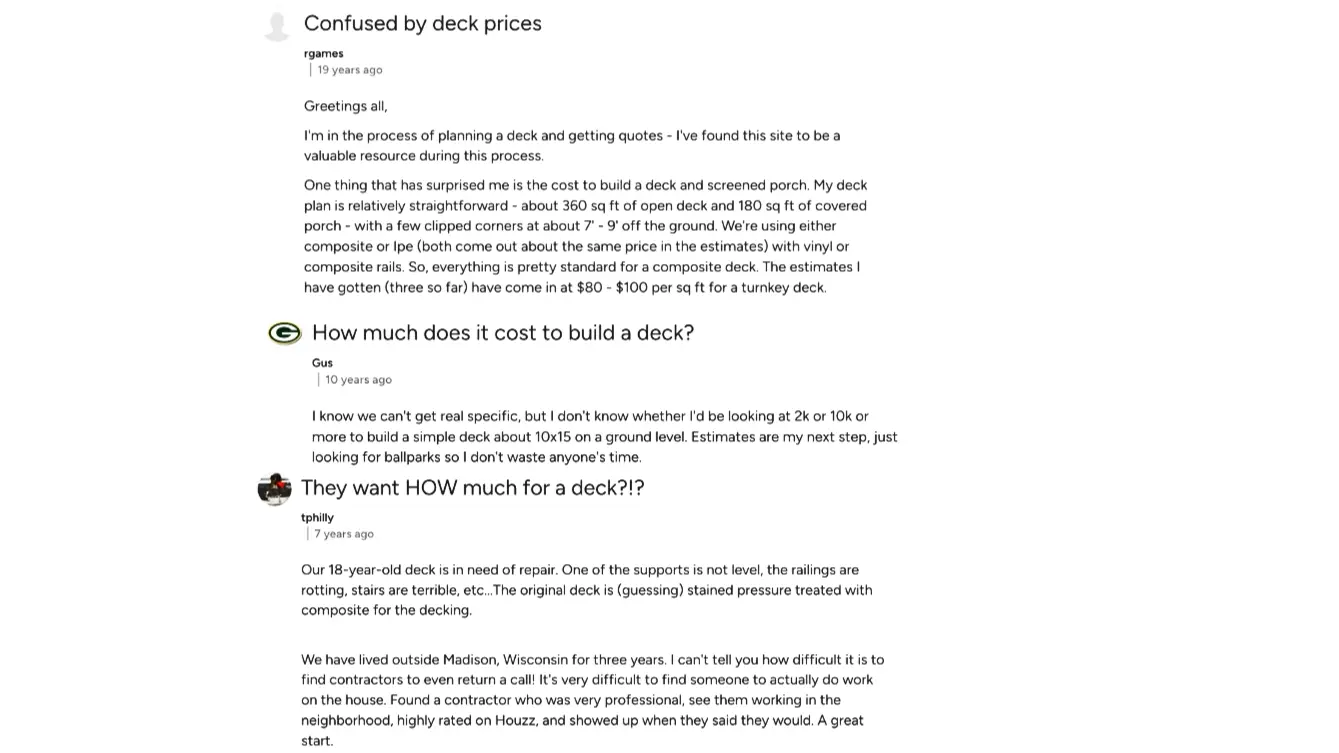
Homeowner threads make deck pricing feel more real than a cost calculator. In one Houzz discussion, a user asked people to share “where are you located, how big is your deck,” and what they spent, which matches how many homeowners price-check before calling contractors.
Another user asked whether a simple 10×15 ground-level deck would cost “2k or 10k or more,” while a commenter said materials for a 10×10 deck were “around $1200” before labor.
A bigger replacement thread shows why quotes can feel shocking. One homeowner broke down a deck quote at about “$160 a square foot” for a little over 400 sq ft.
Another thread reported “$80 – $100 per sq ft” for a turnkey composite deck and porch, which proves why scope matters.
These comments all point to the same lesson: forum prices help, but only when you check size, height, material, railing, demo, and labor.
What to Ask Your Contractor Before Signing
Before paying a deposit on any deck build, get clear answers to these five questions in writing.
- What exactly is included in this quote? Ask for an itemized breakdown of materials, labor, permits, demo, hauling, railings, stairs, and footings. Any item that isn’t listed isn’t included.
- What triggers a change order? Soft framing, poor soil, uneven ground, and rotted ledger boards are the most common reasons a fixed-price quote turns into a higher bill. Know the policy before work starts.
- Are you pulling the permit? If the answer is no or vague, that’s a red flag. Permitted work is inspected work. Uninspected decks have resale and liability implications.
- What is the framing material and spacing? Composite boards require tighter joist spacing than wood. If a contractor quotes composite boards for a wood-spaced frame, the boards will bow.
- What is your warranty, and who handles post-build issues? Workmanship warranties vary from 1 year to 5 years. Know who to call if a board lifts or a post shifts.
What’s Negotiable and What Isn’t
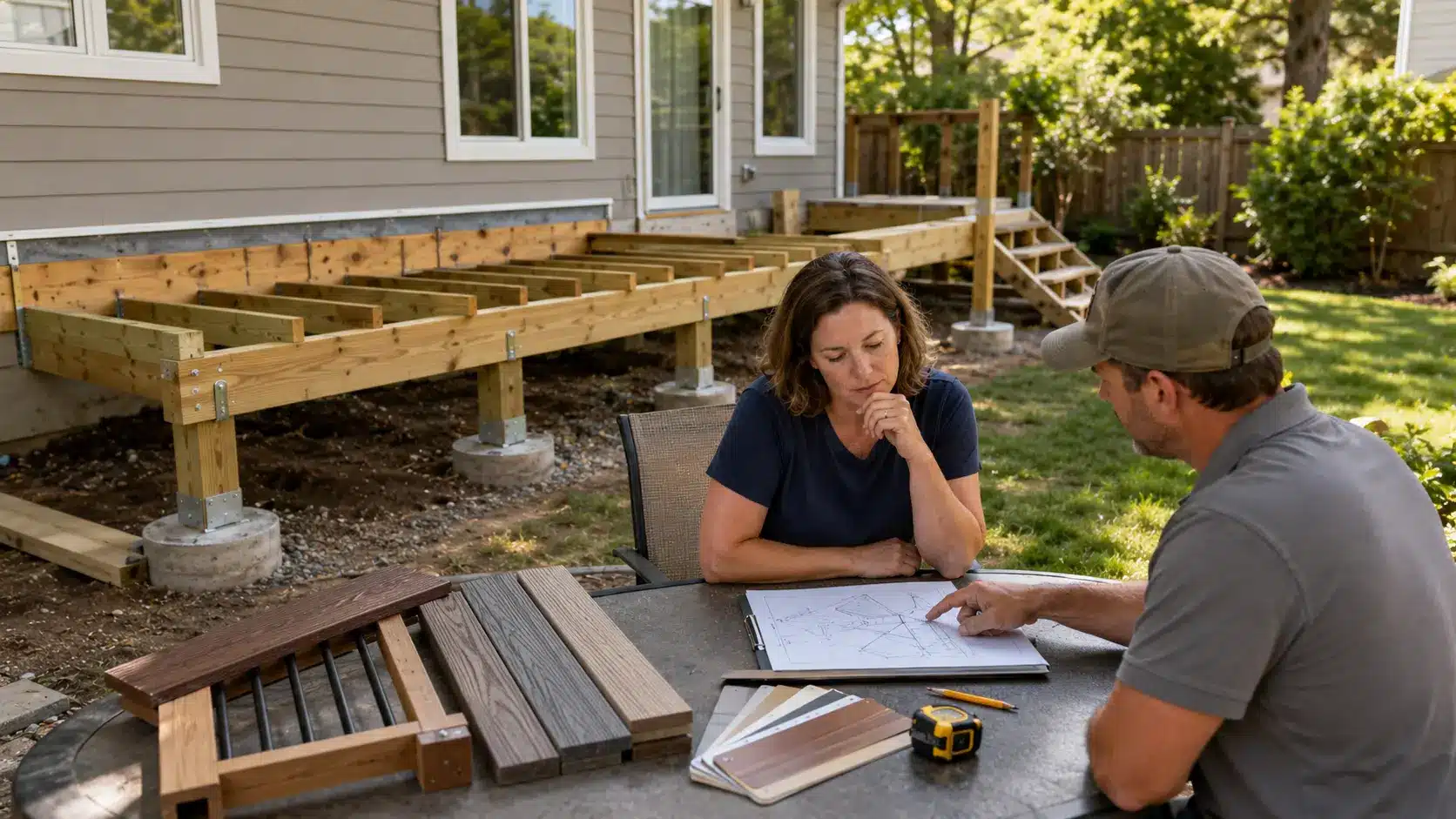
If you’re working toward a tighter number, some deck costs have flexibility, and some don’t. Knowing which is which before you start negotiating saves time and bad faith.
Typically negotiable: Material grade (e.g., stepping down from capped composite to standard composite), railing style (wood instead of cable), deck size (reducing by 20 sq ft can save more than you’d expect), timing (off-season builds in late fall or winter often come in lower when contractors are less busy).
Not negotiable: Footing depth required by code, permit filing, ledger attachment method, structural joist sizing for your span. A contractor who negotiates these items is cutting corners that show up in failed inspections or structural problems two to five years out.
Why Online Deck Prices Are So Misleading
A low forum price and a high contractor quote can both be real, but they may describe completely different projects.
Forum posters sharing deck prices rarely include the full picture: whether they did the work themselves, whether permits were pulled, what the railing type was, whether they had to demo anything first, or what region they’re in. A 300 sq ft deck in rural Mississippi and a 300 sq ft deck in coastal Connecticut are not the same job.
Houzz and Reddit comments are useful as sanity checks. One Houzz thread showed quotes ranging from around $80–$100 per square foot for turnkey composite and porch builds to roughly $160 per square foot for a composite deck on a complex property.
Those are real numbers for real projects, but they’re not your numbers until you know the scope matches. Use online prices to flag outliers in your quotes. If you get three quotes and one is 40% lower than the others, ask what’s missing, not whether to take it.
Frequently Asked Questions
Is it cheaper to build a deck yourself or hire a contractor?
DIY deck building can cost less upfront because you avoid labor charges. However, mistakes with footings, ledger attachment, framing, stairs, or permits can become expensive. A simple ground-level deck may suit DIY, but raised or attached decks are usually safer with a licensed contractor.
Why is my deck quote much higher than online estimates?
Online estimates often leave out stairs, railings, demolition, permits, hauling, difficult access, and upgraded materials. Your quote may also include code updates or structural repairs. Compare line items before deciding whether the price is too high.
Can I lower my deck cost without cutting corners?
Yes. You can reduce the size, choose pressure-treated wood, simplify the railing, avoid multiple stair runs, or build during a slower season. Do not cut costs on footings, ledger attachment, joist sizing, flashing, or permits.
What should be included in a deck quote?
A good deck quote should list materials, labor, deck size, railing type, stairs, footings, framing specs, permits, demolition, hauling, cleanup, payment schedule, warranty, and change-order rules. If those details are missing, ask for a revised written quote.
Final Verdict
So, how much does it cost to build a deck? The best answer comes from matching real quotes to the same scope, not from copying one forum number.
A small wood platform can stay near the lower range, while a raised composite rebuild with stairs, railings, demo, and permits can cost far more. The labor cost per square foot to build a deck is the number I would check first because it reflects the work behind the bid. Use online prices as a rough reality check, then rely on written local quotes with the same scope.
Before you sign, ask what is included, what is excluded, and how add-ons are billed. Then get at least two more quotes with the same scope to ensure the comparison is fair.