

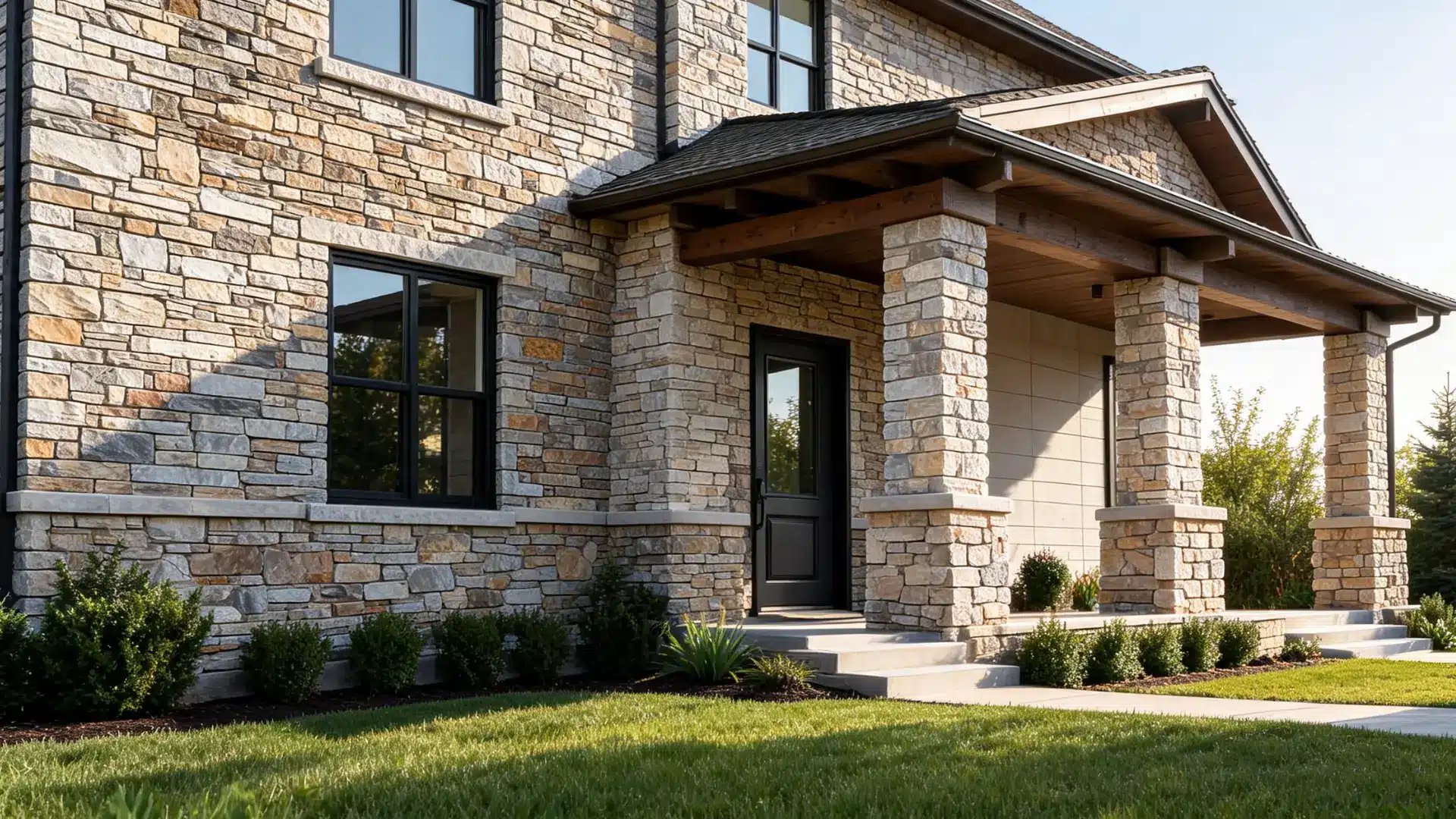


Choosing the right types of exterior stone for a home can change the look, strength, and maintenance needs of a home’s exterior walls. Some stones are better for full facades, while others work best on porch columns, chimneys, lower walls, or small accents.
Natural stone gives the most real texture and color variation. Manufactured stone veneer is lighter and often easier to install. Faux stone panels are useful for quick updates, but they may not have the same depth as real stone or cement-based veneer.
I would start by comparing each stone based on appearance, durability, climate suitability, and maintenance requirements. That makes it easier to choose a stone that fits the home instead of picking only by color.
Understanding Stone Veneer Siding for House Exteriors
Stone veneer siding is a lightweight exterior cladding material designed to replicate the appearance of natural stone while reducing cost, weight, and installation complexity. It is widely used in residential architecture to improve curb appeal without requiring full masonry construction.
Available in both natural thin-cut veneer and manufactured forms, it offers design flexibility while maintaining a realistic stone finish. Homeowners often choose stone veneer for its ability to suit both modern and traditional styles. It can be applied to exterior walls, entryways, columns, and accent sections to create a strong sense of visual depth.
Unlike full stone, it does not need heavy structural support, making it suitable for renovations and new builds. Its durability, variety of textures, and weather resistance make it a practical long-term exterior design choice.
Types Of Exterior House Stone And Where They Work Best
The most common types of exterior house stone include granite, limestone, sandstone, slate, quartzite, fieldstone, cobblestone, travertine, marble, basalt, schist, manufactured stone veneer, and faux stone panels. Each option has a different style, weight, cost level, and care needs.
This section covers the main query first. Use it to compare the features, benefits, best uses, and drawbacks of each exterior stone type before moving into cost, climate, and design details.
1. Fieldstone
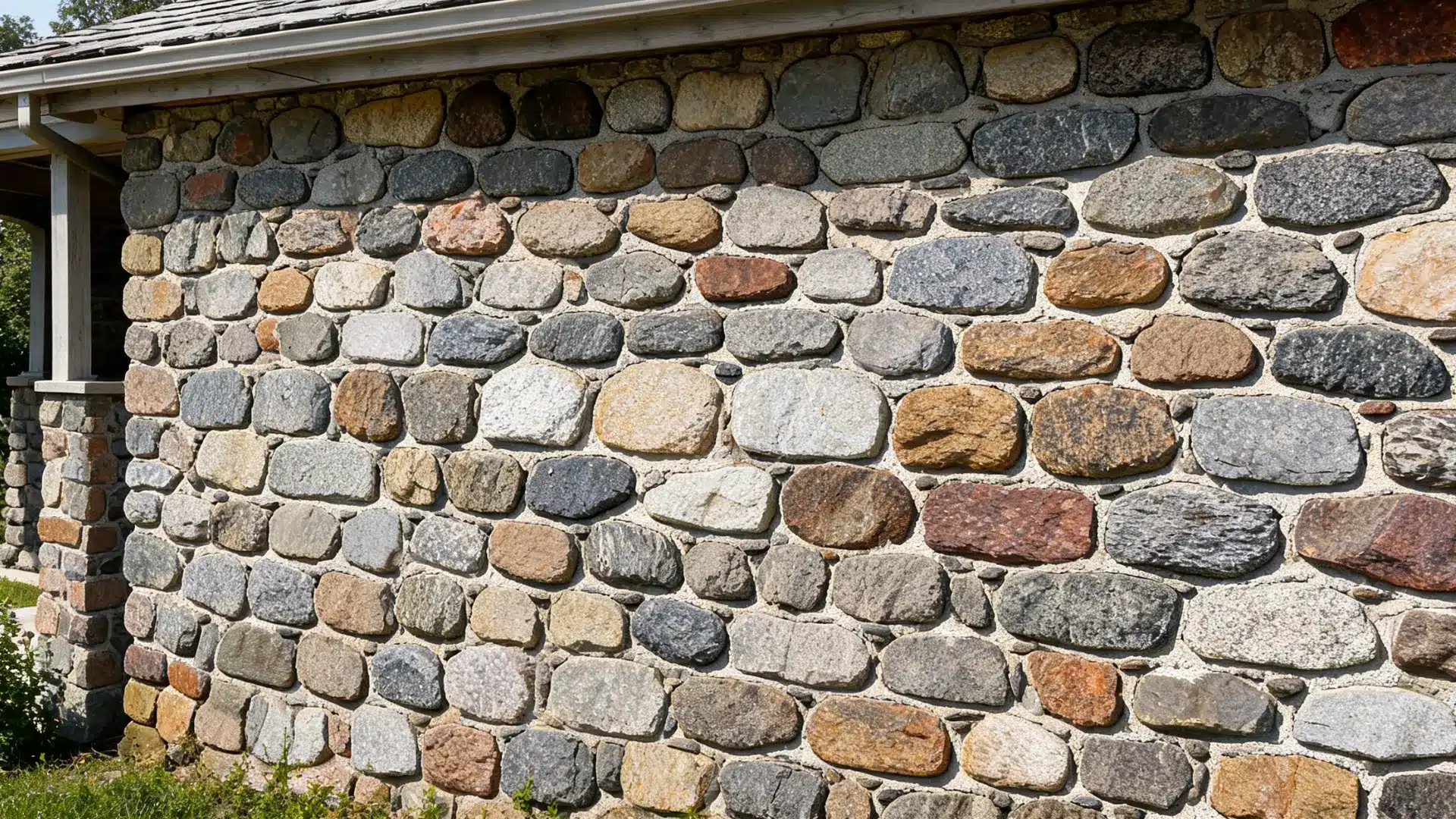
Fieldstone is a naturally irregular stone collected directly from fields or riverbeds. It creates a rustic and organic exterior look with unmatched variation in shape and tone.
It is often used in cottages, farmhouses, and heritage-style homes where natural texture is preferred over uniformity. Fieldstone blends well with landscapes and garden walls, making it a popular, timeless choice for exterior façades seeking natural character and visual depth.
- Benefits: Strong visual appeal, blends with nature, highly durable
- Best Climate: Temperate and cold regions
- Drawbacks: Difficult installation, higher labor cost, uneven fitting
2. Granite
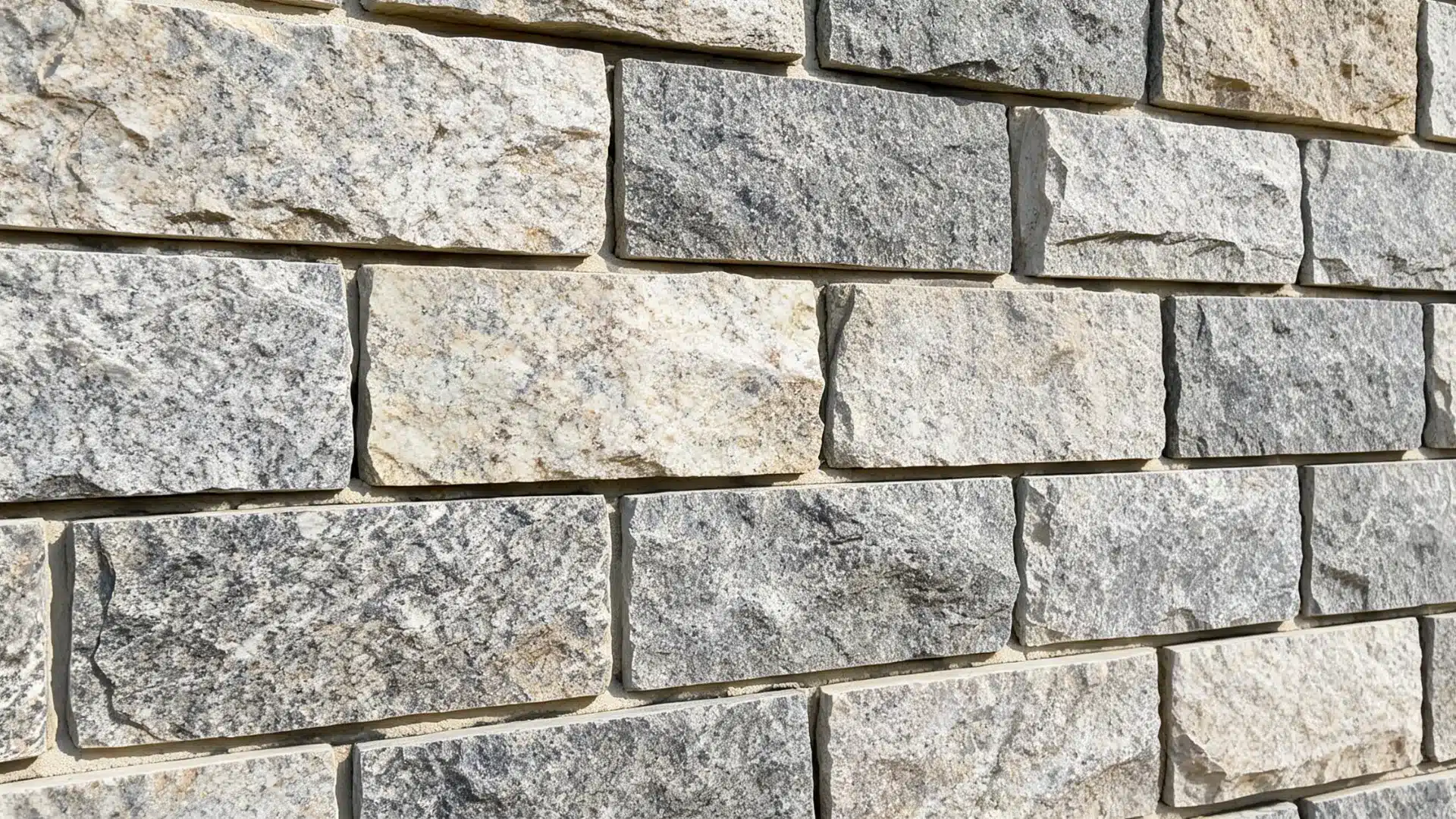
Granite is one of the hardest natural stones used in exterior construction. It has a dense crystalline structure that gives it extreme durability and resistance to weather damage.
Its speckled surface adds a premium, polished appearance to home exteriors. Granite is widely used in modern and traditional architecture where long-lasting performance and low maintenance are key priorities for homeowners.
- Benefits: Extremely durable, low maintenance, weather-resistant
- Best Climate: Hot, cold, and extreme weather zones
- Drawbacks: Expensive, heavy, difficult to install
3. Limestone
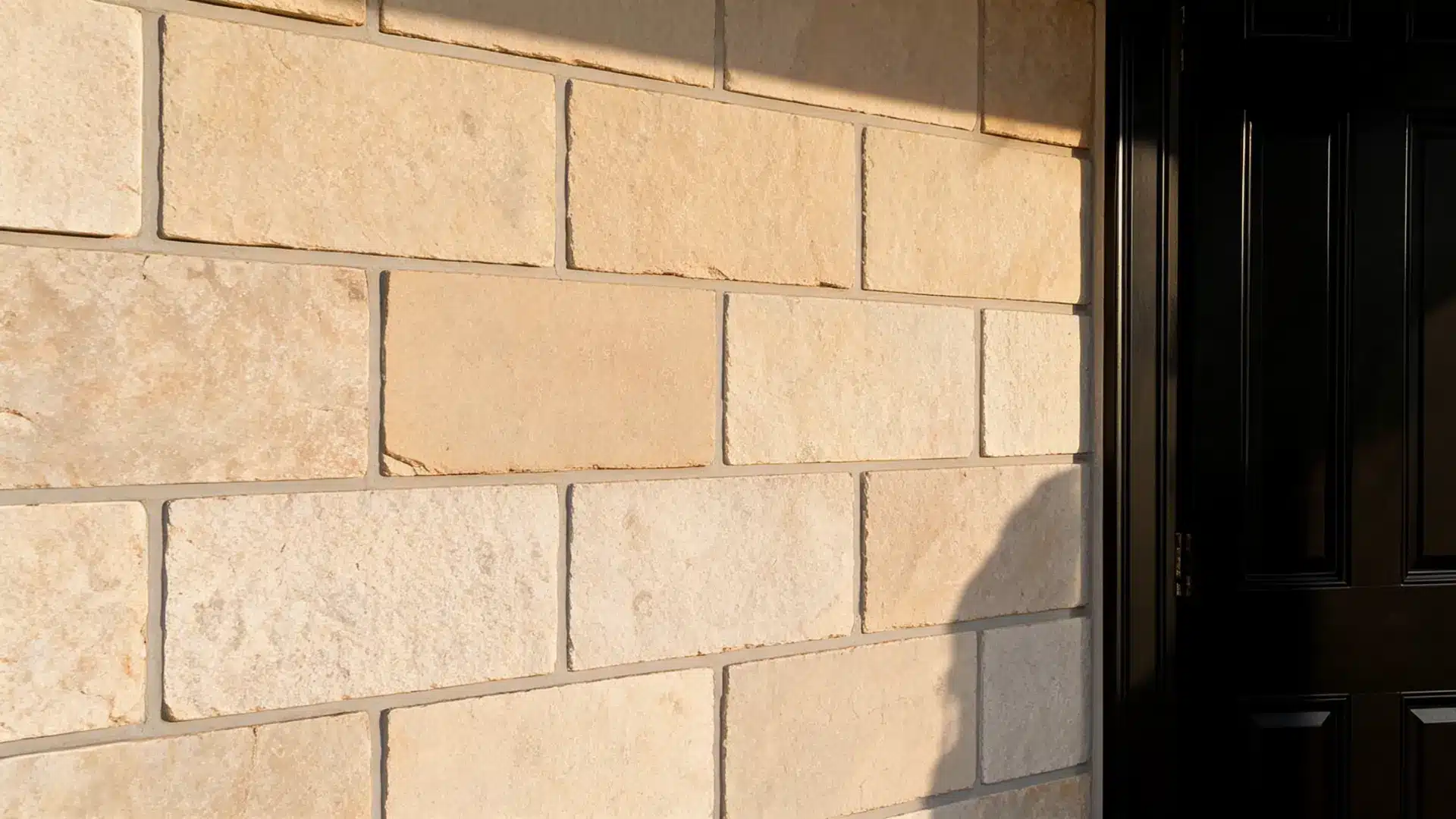
Limestone is a soft, sedimentary stone known for its smooth texture and neutral beige or cream tones. It creates a clean, elegant exterior suitable for both modern and classic homes.
Over time, limestone develops a natural patina that enhances its character. It is widely used in residential façades where subtle beauty and balanced aesthetics are preferred over bold textures.
- Benefits: Elegant look, easy to shape, timeless appeal
- Best Climate: Dry and moderate climates
- Drawbacks: Sensitive to acid rain, needs sealing, stains easily
4. Sandstone
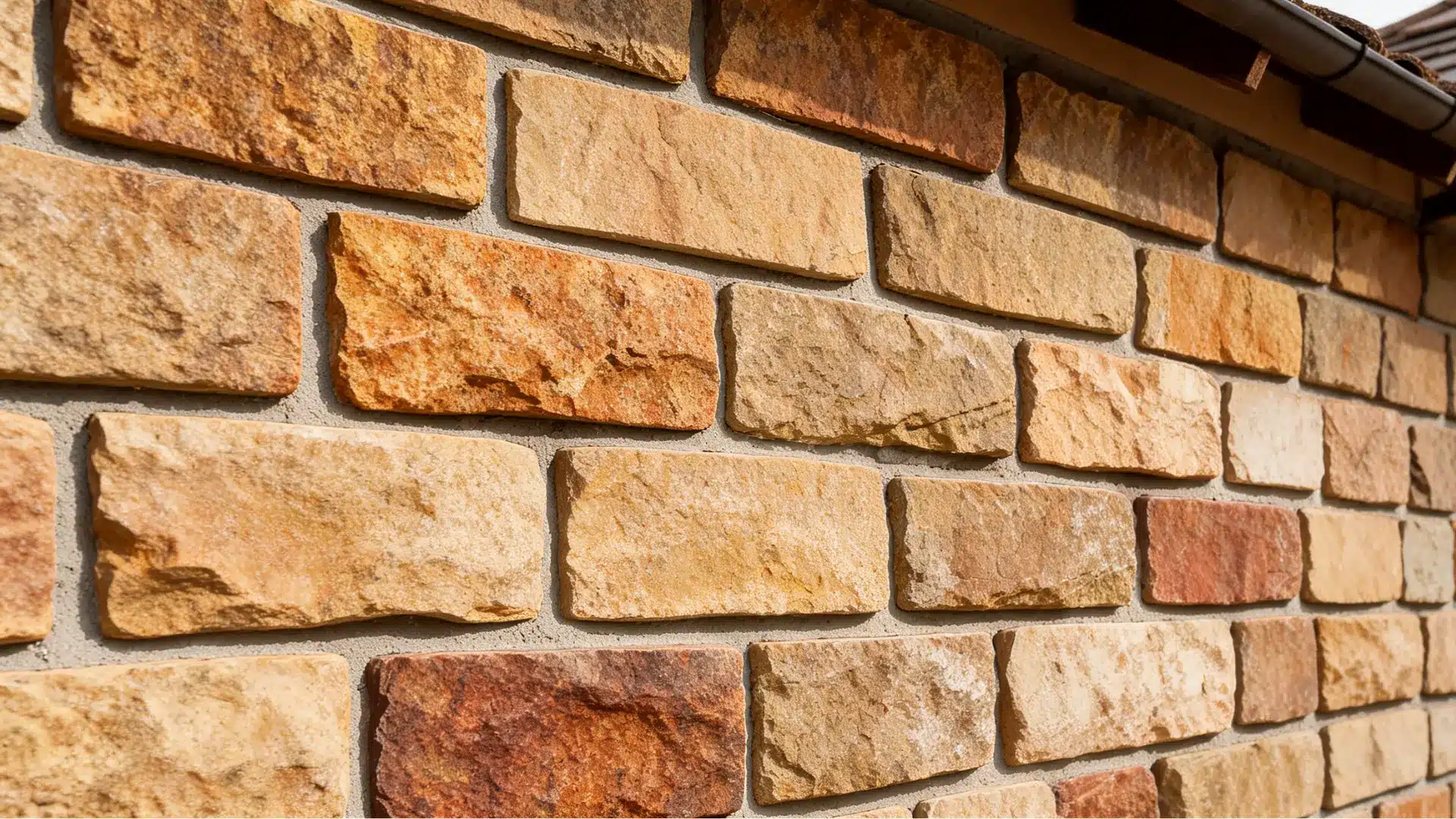
Sandstone is a sedimentary rock composed of compacted sand grains, giving it a textured, grainy surface. It comes in warm shades like red, yellow, and brown, making it ideal for earthy architectural styles.
Sandstone is commonly used in Mediterranean and rustic homes. Its natural warmth enhances exterior appeal, especially in designs that aim for a welcoming and grounded visual effect.
- Benefits: Attractive natural look, good insulation, versatile design use
- Best Climate: Dry, warm, and semi-arid regions
- Drawbacks: Porous, absorbs water, needs sealing
5. Slate
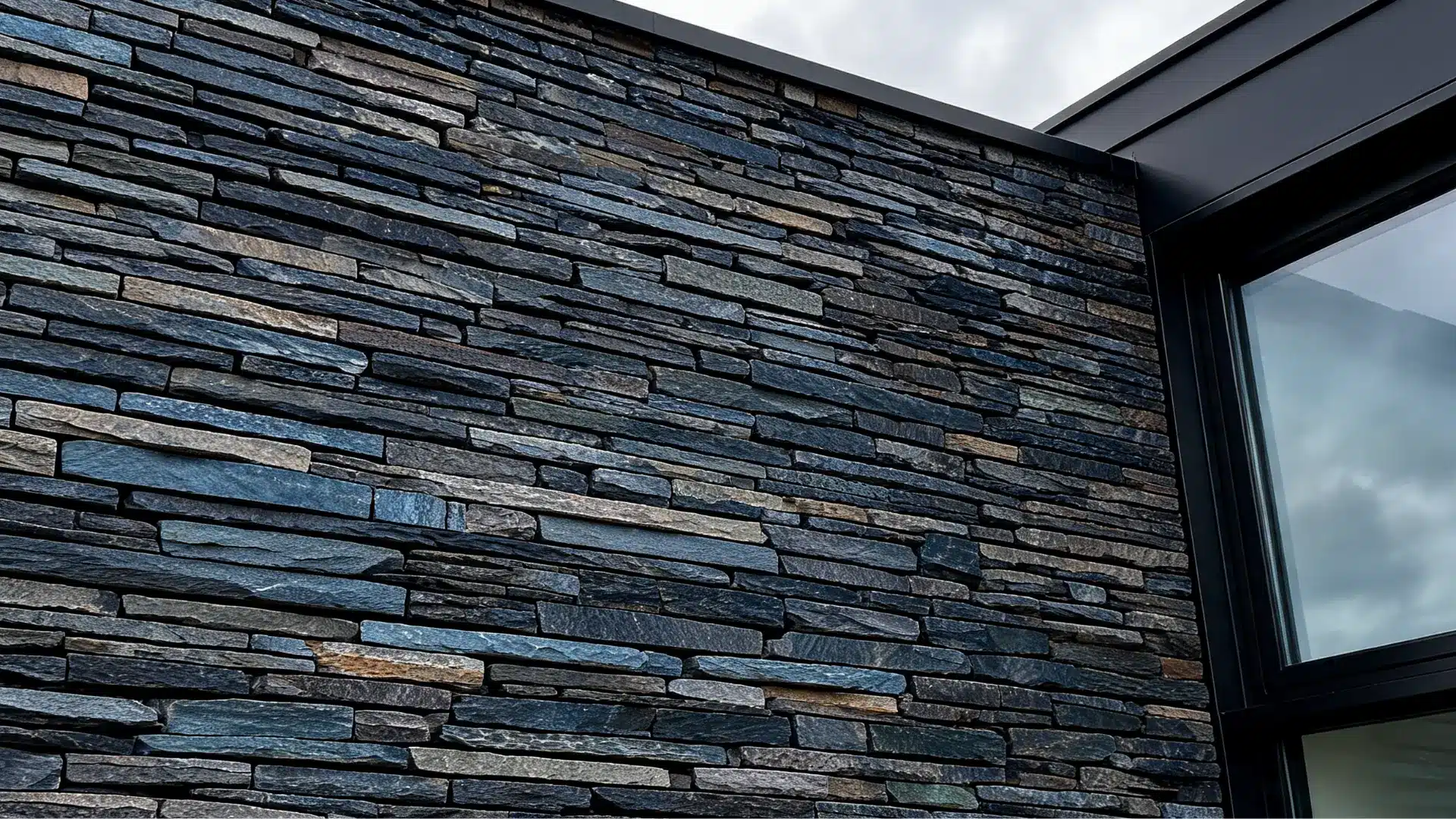
Slate is a fine-grained metamorphic stone known for its layered structure and deep dark tones. It is commonly used in modern homes for a sleek and dramatic exterior finish.
Slate naturally splits into flat sheets, making it ideal for structured wall cladding. Its resistance to water and weather changes makes it a reliable option for long-term exterior applications.
- Benefits: Waterproof, durable, modern aesthetic
- Best Climate: Rainy and cold regions
- Drawbacks: Can chip easily, higher installation cost
6. Travertine
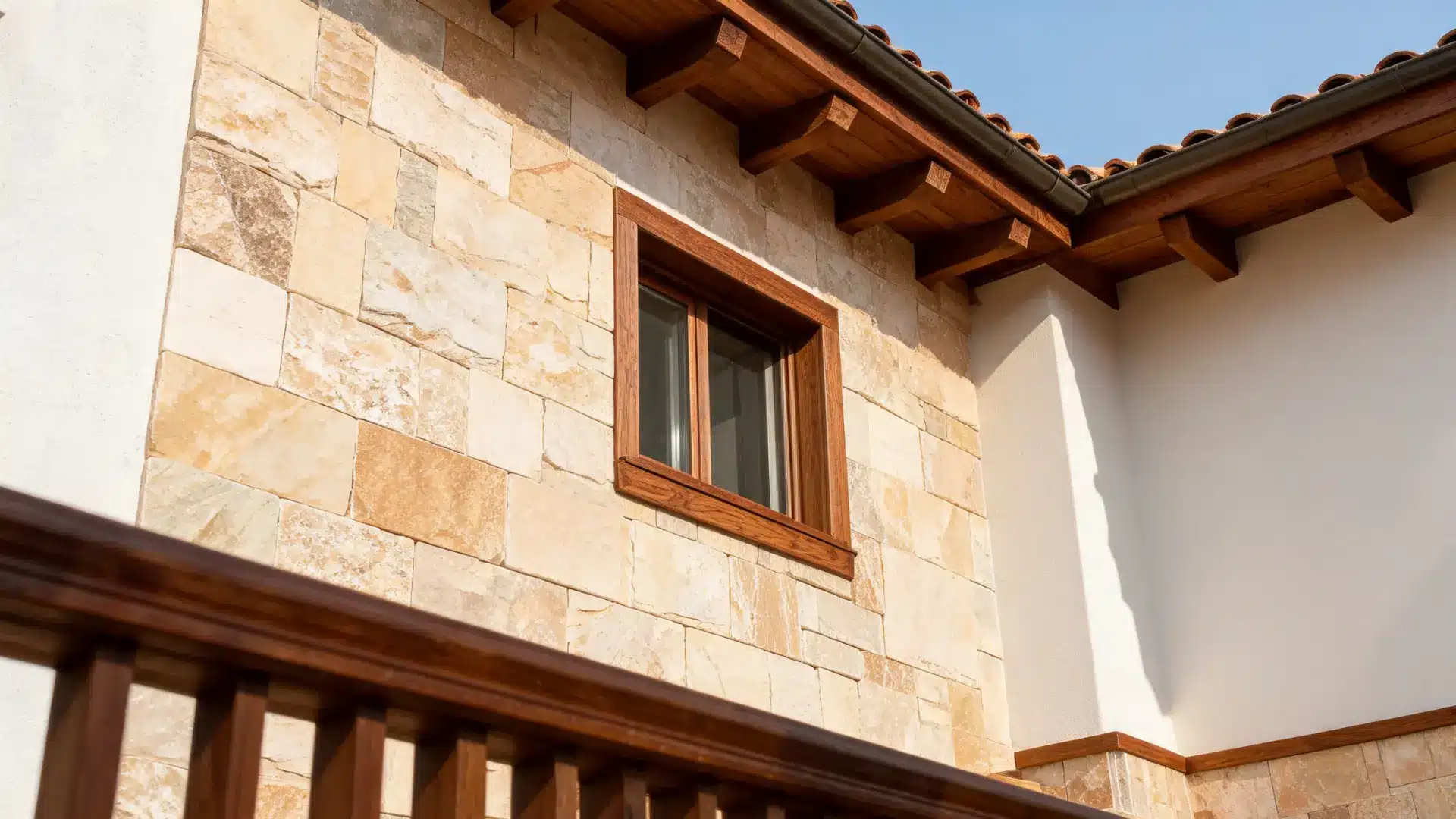
Travertine is a limestone-based stone with natural pores and soft beige tones. It is widely used in Mediterranean-style homes for its warm and relaxed appearance.
\The porous surface helps regulate heat, making it suitable for sunny climates. Travertine adds a luxurious yet natural feel to exterior walls and poolside areas, enhancing overall architectural harmony.
- Benefits: Heat-resistant, stylish, natural texture
- Best Climate: Hot and dry climates
- Drawbacks: Requires sealing, porous structure absorbs moisture
7. Quartzite
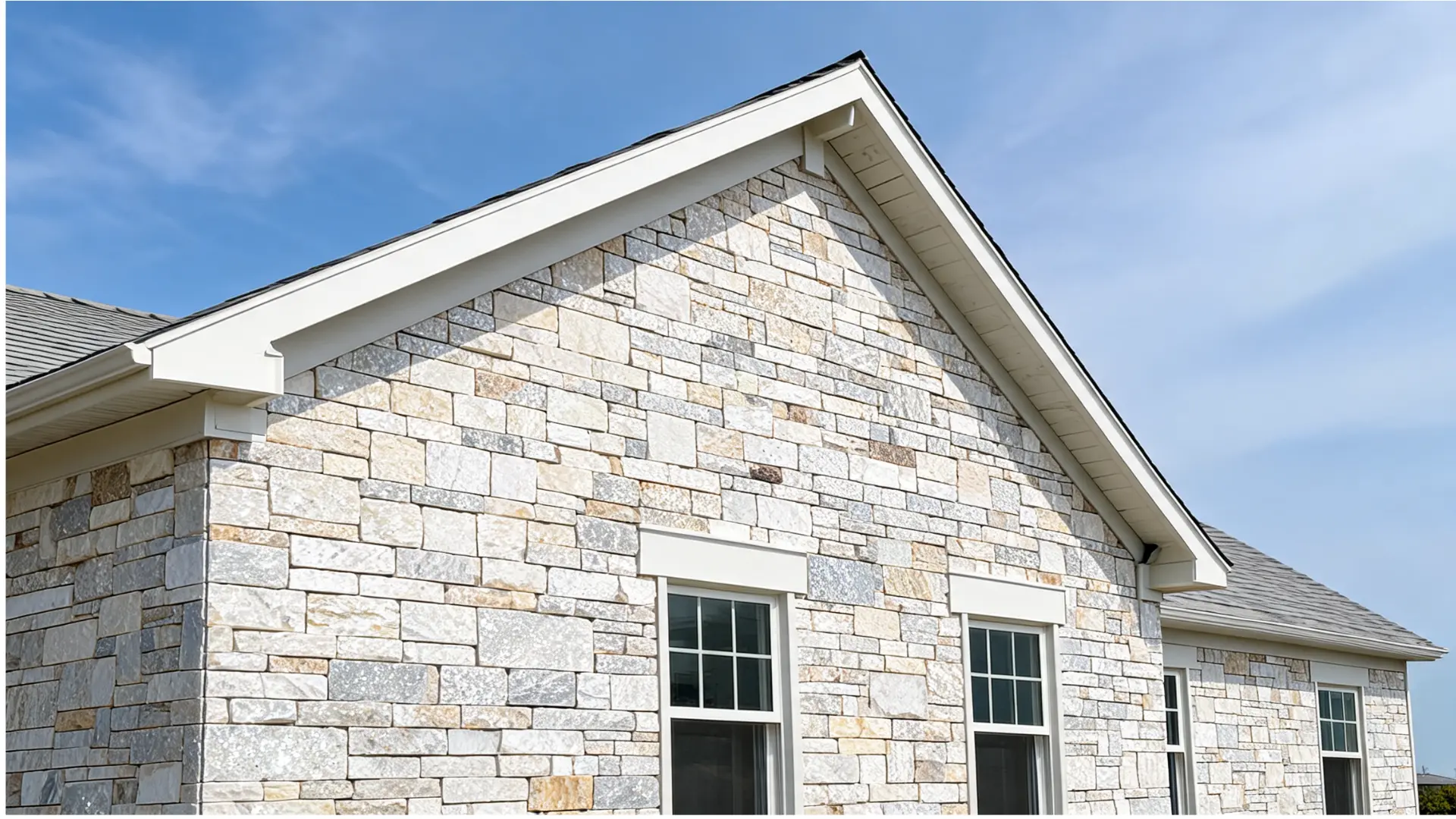
Quartzite is a very hard metamorphic stone formed from sandstone under heat and pressure. It often has a subtle sparkle due to quartz crystals within its structure.
This stone is used in premium exterior designs where durability and visual elegance are important. Quartzite is resistant to scratches and weather damage, making it suitable for long-term installations.
- Benefits: Extremely durable, scratch-resistant, elegant appearance
- Best Climate: All climates
- Drawbacks: Expensive, difficult to cut
8. Basalt
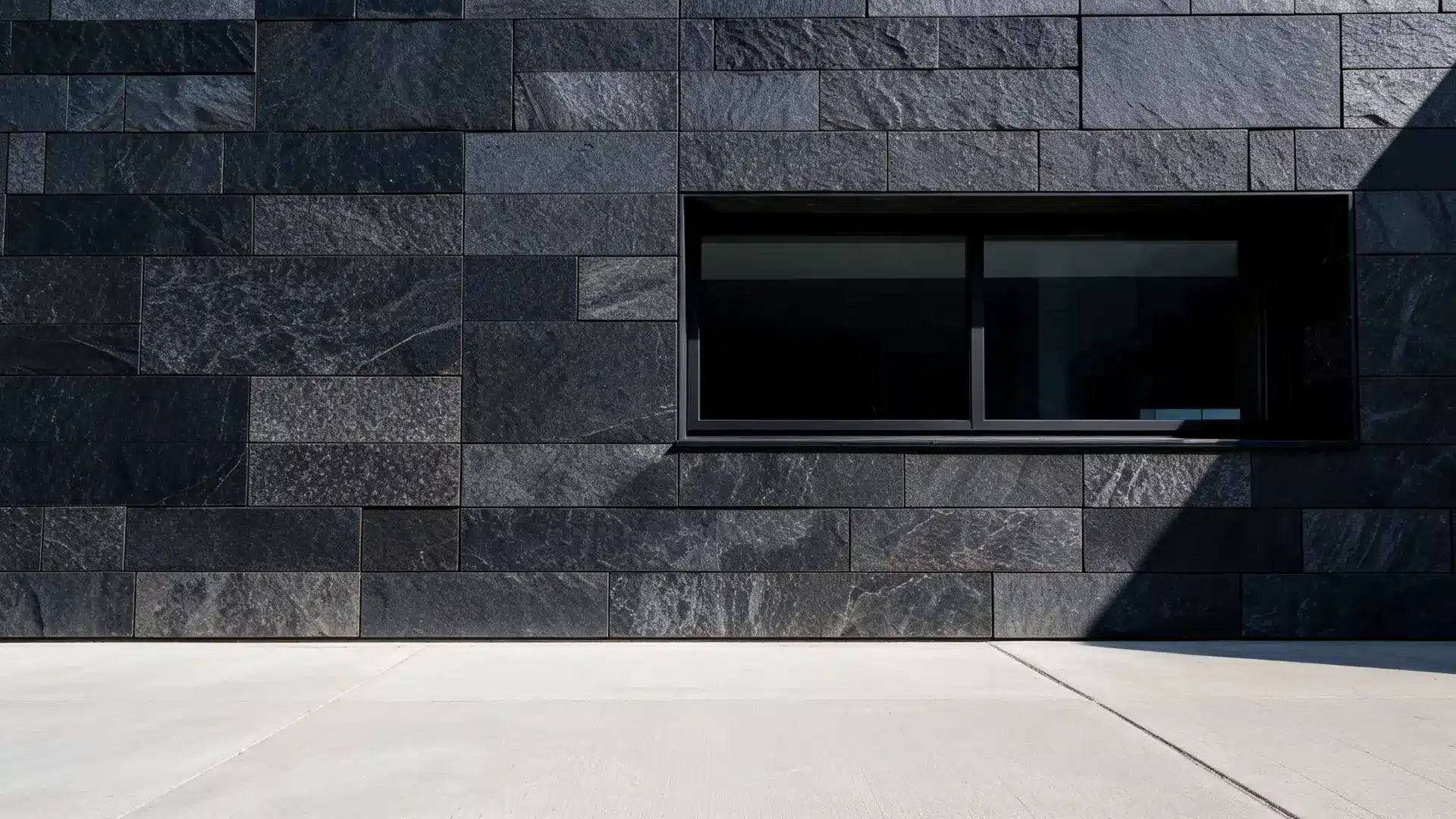
Basalt is a dense volcanic stone with a dark, uniform appearance. It is commonly used in contemporary architecture for clean, minimal exterior designs.
Its strong structure allows it to withstand harsh weather conditions without degradation. Basalt provides a bold contrast when paired with glass or metal elements in modern home exteriors.
- Benefits: Strong, low maintenance, modern look
- Best Climate: All climates, especially extreme conditions
- Drawbacks: Heavy, limited color variation
9. Bluestone
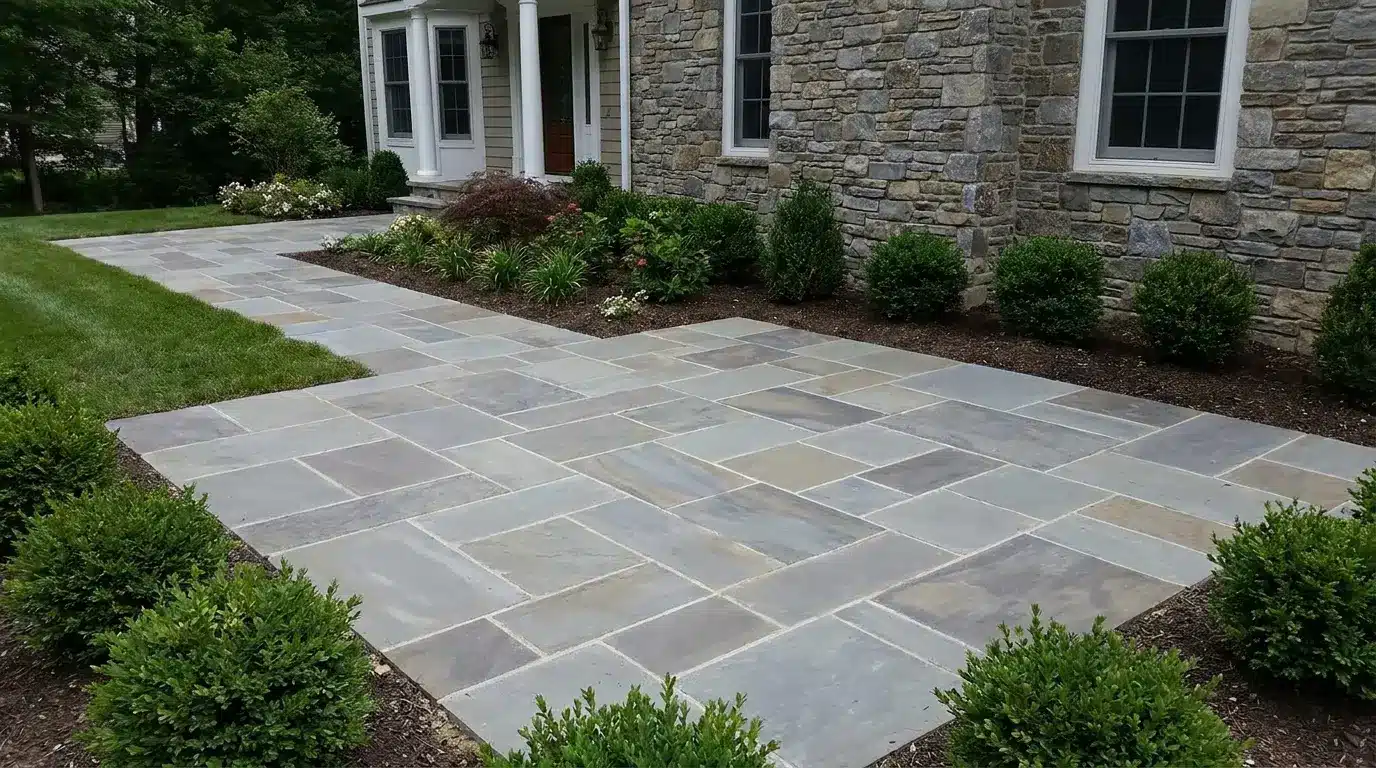
Bluestone is a dense natural stone with blue-grey tones that create a calm and balanced exterior look. It is often used in patios, walkways, and façade accents.
Bluestone is highly durable and performs well under freeze-thaw cycles, making it suitable for colder regions. Its natural color variation adds subtle depth to exterior surfaces.
- Benefits: Durable, slip-resistant, visually balanced
- Best Climate: Cold and temperate regions
- Drawbacks: Can fade slightly over time, heavy material
10. Cobblestone
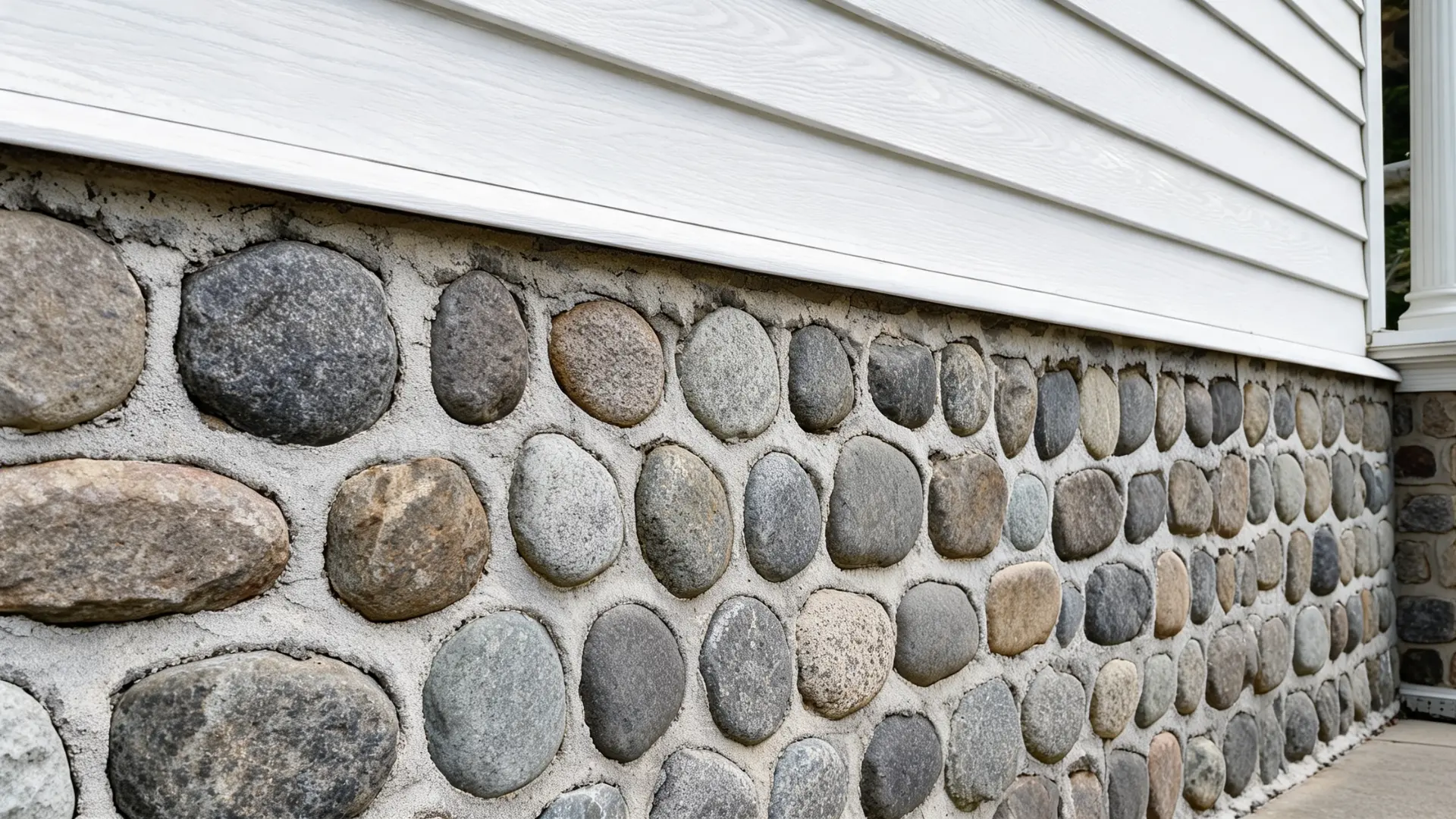
Cobblestone consists of naturally rounded stones that have been used in exterior builds for centuries. In modern residential applications, it works best as an accent, wainscoting, column bases, chimney surrounds, rather than full wall coverage.
The rounded shape creates significant texture and visual weight, which can overwhelm large flat surfaces.
If you’re comparing cobblestone pathways to other hard surface options, modern driveway materials cover the cost and durability trade-offs in more detail. Cobblestone is extremely durable once set, it just needs mortar joints monitored over time.
- Benefits: Extremely durable, historic appearance, strong texture
- Best Climate: All climates
- Drawbacks: Difficult installation, uneven surface
11. River Rock
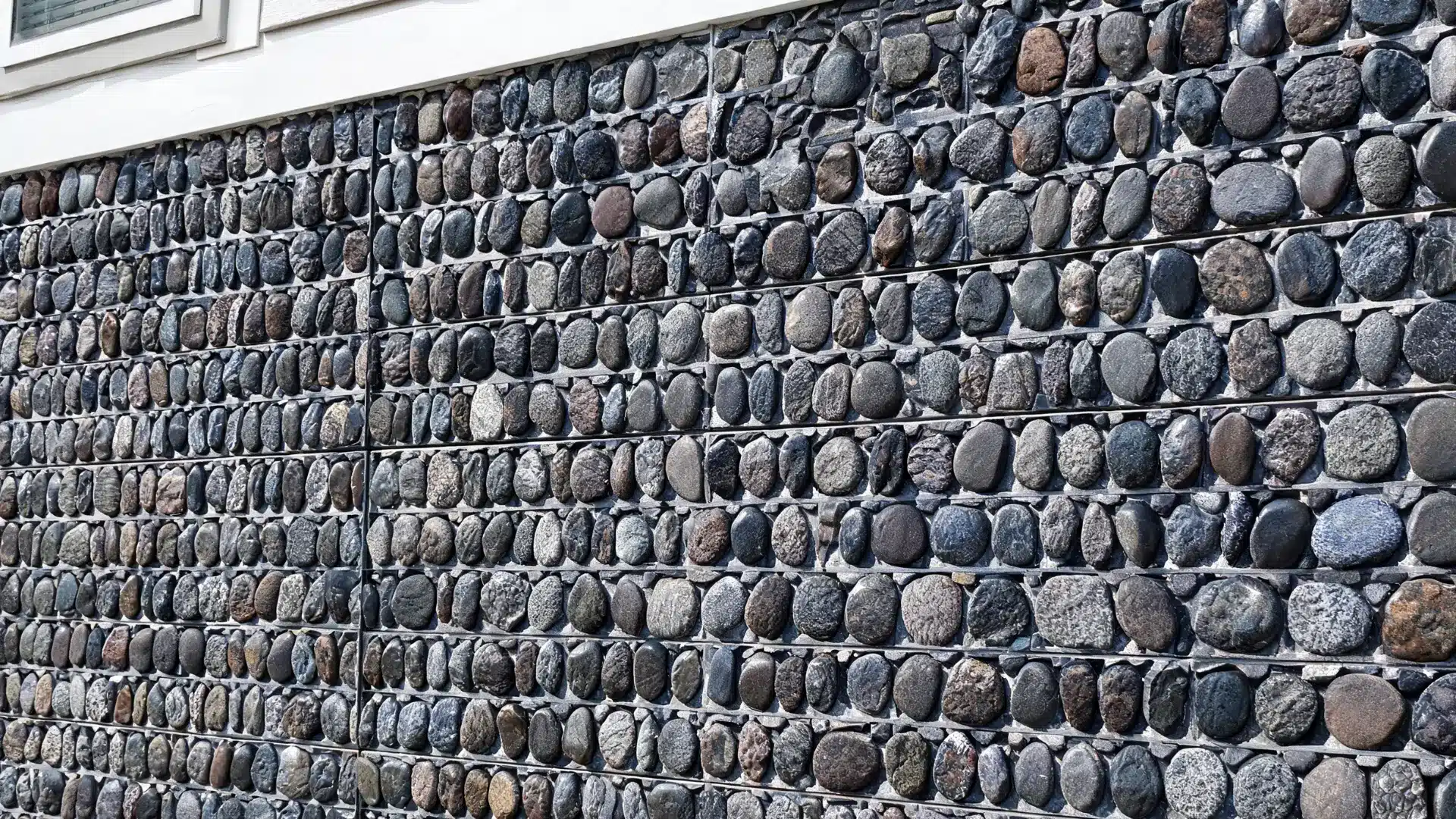
River rock is naturally smoothed stone shaped by flowing water over time. It has soft edges and neutral tones that create a calming exterior effect.
It is commonly used in landscaping, accent walls, and decorative features. River rock blends naturally with outdoor environments, making it ideal for eco-inspired home designs.
- Benefits: Natural look, decorative appeal, weather-resistant
- Best Climate: All climates
- Drawbacks: Not suitable for structural walls, loose fitting
12. Flagstone
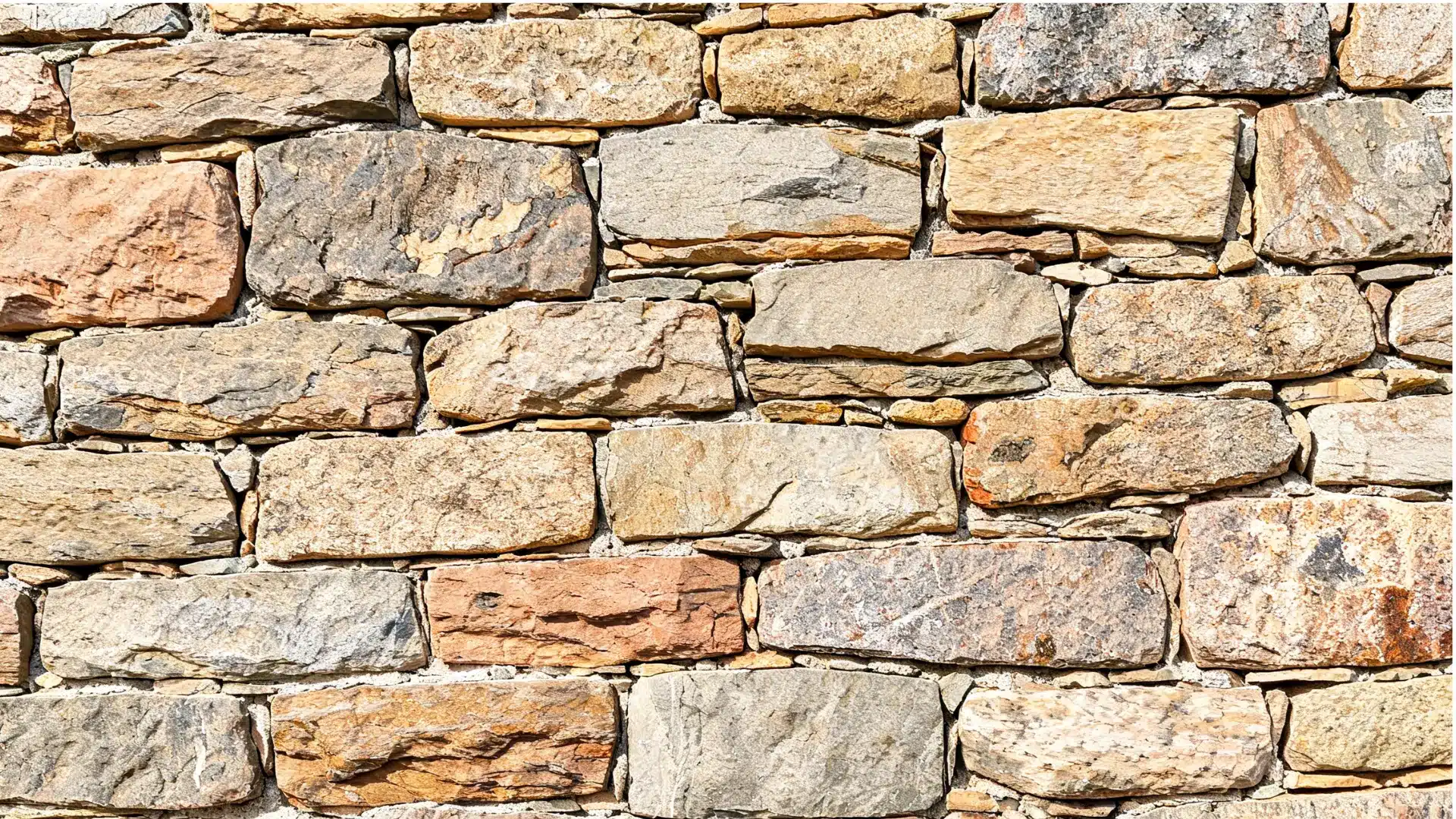
Flagstone consists of flat, layered stones used in irregular patterns for exterior surfaces. It is popular in patios and garden walls due to its natural, earthy appearance.
Flagstone offers design flexibility and blends well with outdoor landscapes. It offers durability while maintaining a natural handcrafted aesthetic.
- Benefits: Natural look, versatile, slip-resistant
- Best Climate: Dry and moderate climates
- Drawbacks: Uneven surface, needs leveling
13. Soapstone
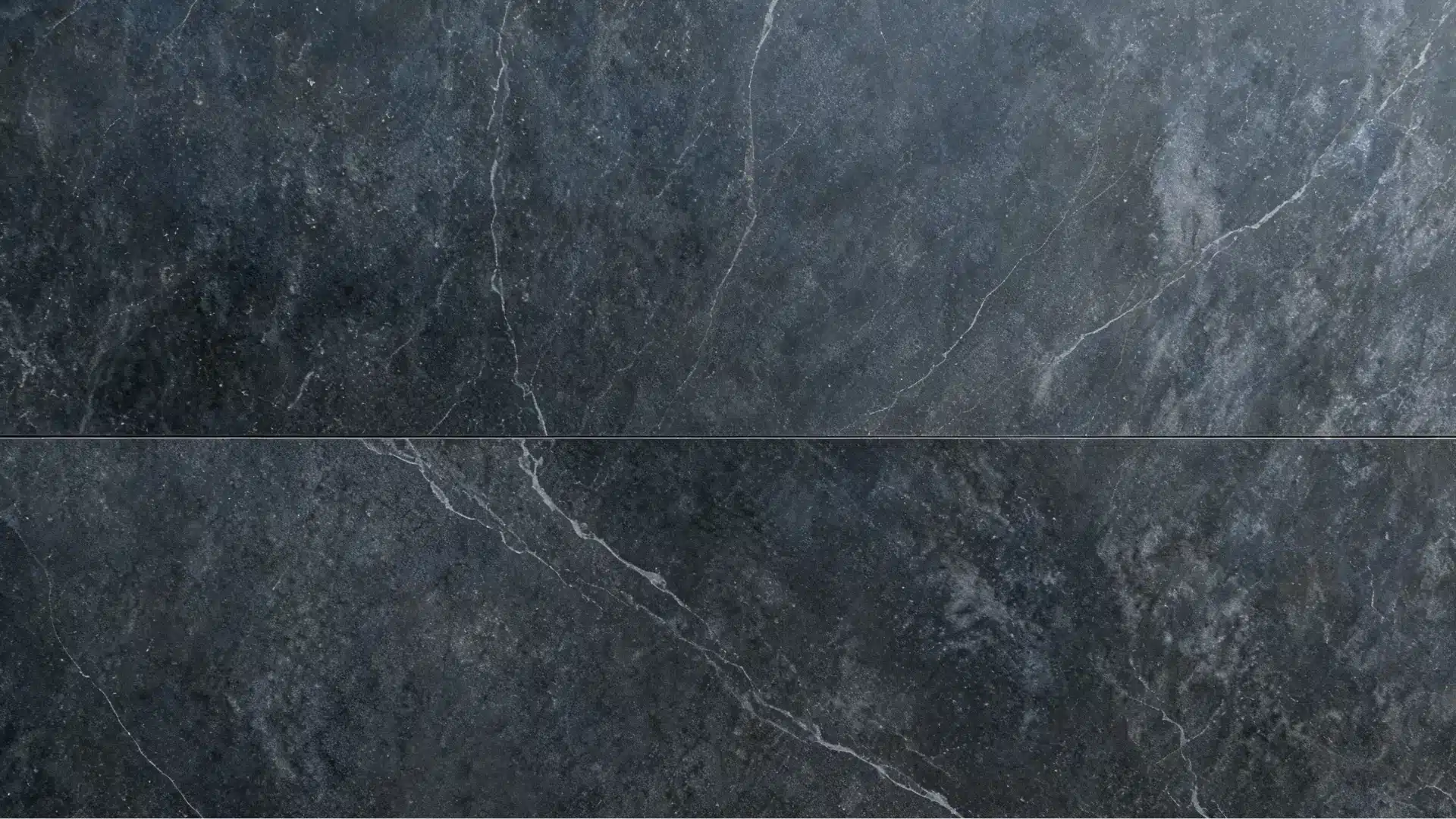
Soapstone is a smooth, soft stone with muted grey tones and a silky feel. It is less commonly used for full exteriors but works well in accent areas.
Over time, it darkens and develops a rich patina. Soapstone offers a subtle, refined appearance that suits minimalist architectural designs.
- Benefits: Heat-resistant, elegant finish, unique aging
- Best Climate: Moderate climates
- Drawbacks: Soft and prone to scratches, limited structural use
14. Marble Veneer
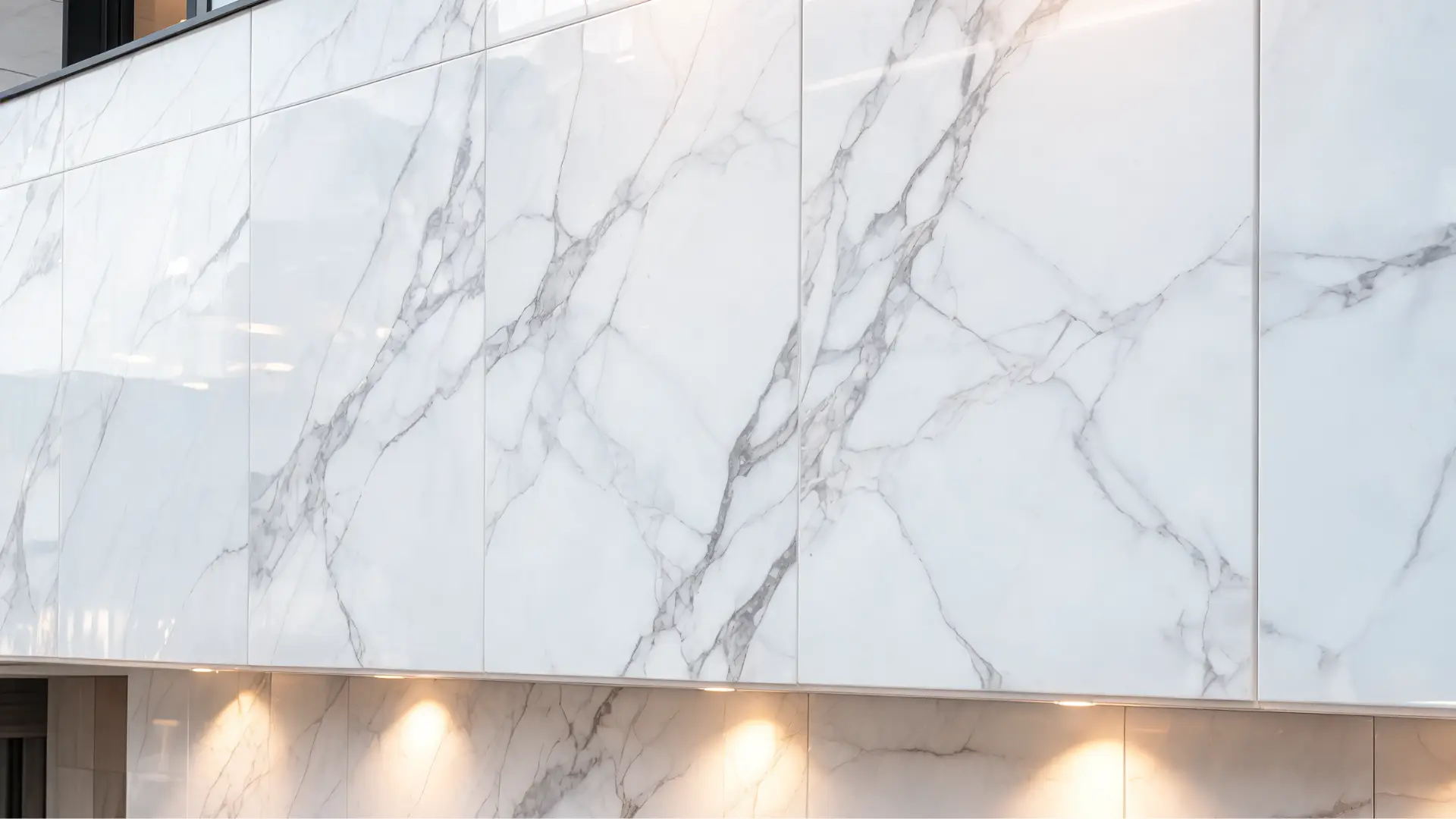
Marble veneer is a thin-cut layer of natural marble used for exterior cladding, offering a high-end appearance without the heavy structural load of full marble blocks. It is commonly applied in accent walls, luxury façades, and premium residential designs.
The material delivers elegant veining patterns and a polished visual effect. It reduces installation complexity while still maintaining a refined architectural finish suitable for decorative exterior applications.
- Benefits: Luxury appearance, lightweight structure, premium aesthetics
- Best Climate: Dry, low-moisture, and protected exterior areas
- Drawbacks: High cost, sensitive to weather exposure, requires maintenance
15. Coral Stone
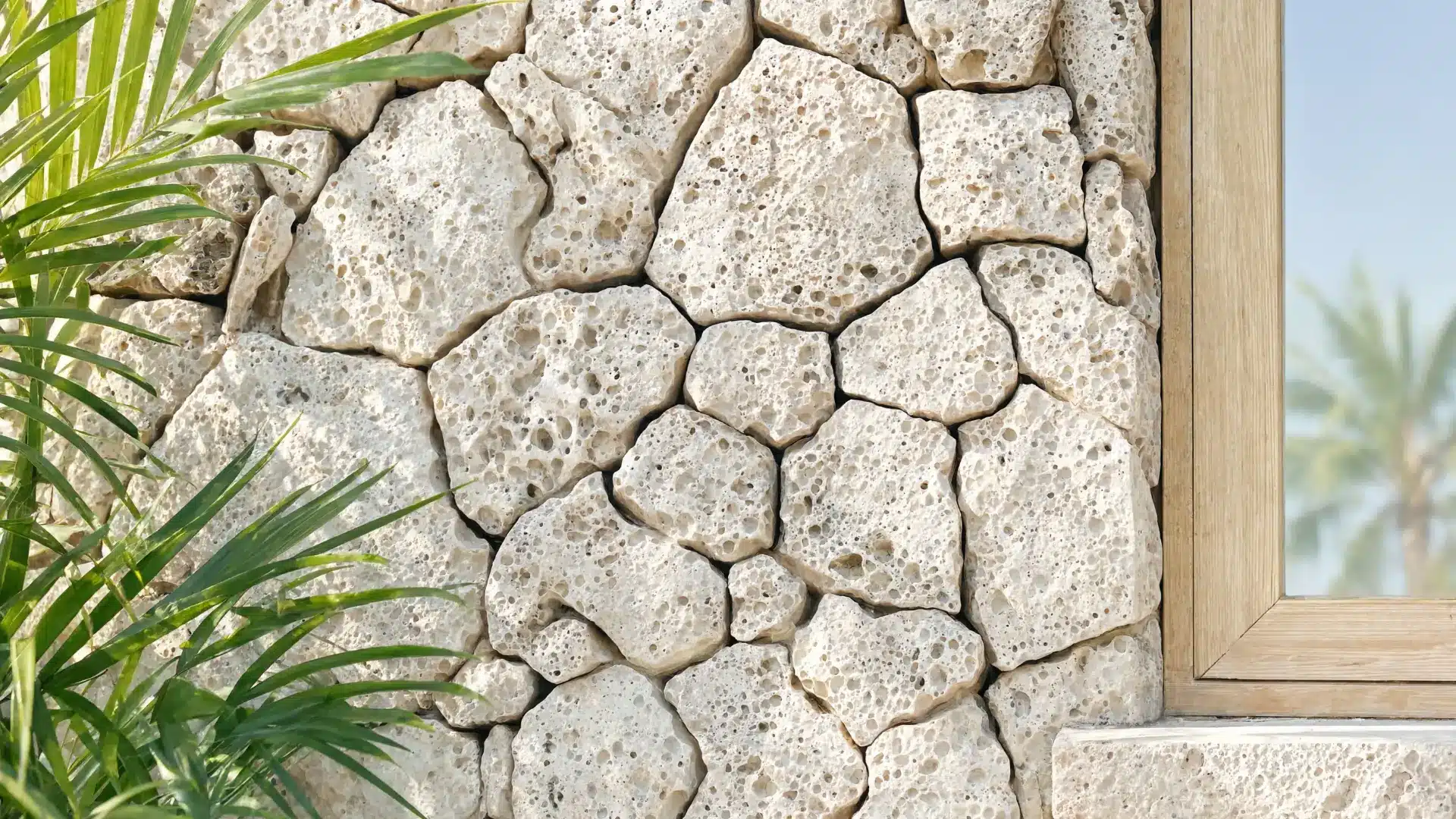
Coral stone is a naturally porous limestone formed from ancient coral reef deposits. It features a light, textured surface that works especially well in coastal and tropical architectural designs.
This stone reflects sunlight effectively, helping reduce heat absorption in exterior walls. It is widely used in beach-style homes, resorts, and warm climates where cooling performance and natural aesthetics are both important design priorities.
- Benefits: Heat reflective, cooling effect, coastal visual appeal
- Best Climate: Tropical, coastal, and hot, humid regions
- Drawbacks: Highly porous, needs sealing, prone to moisture absorption
16. Split-Faced Stone
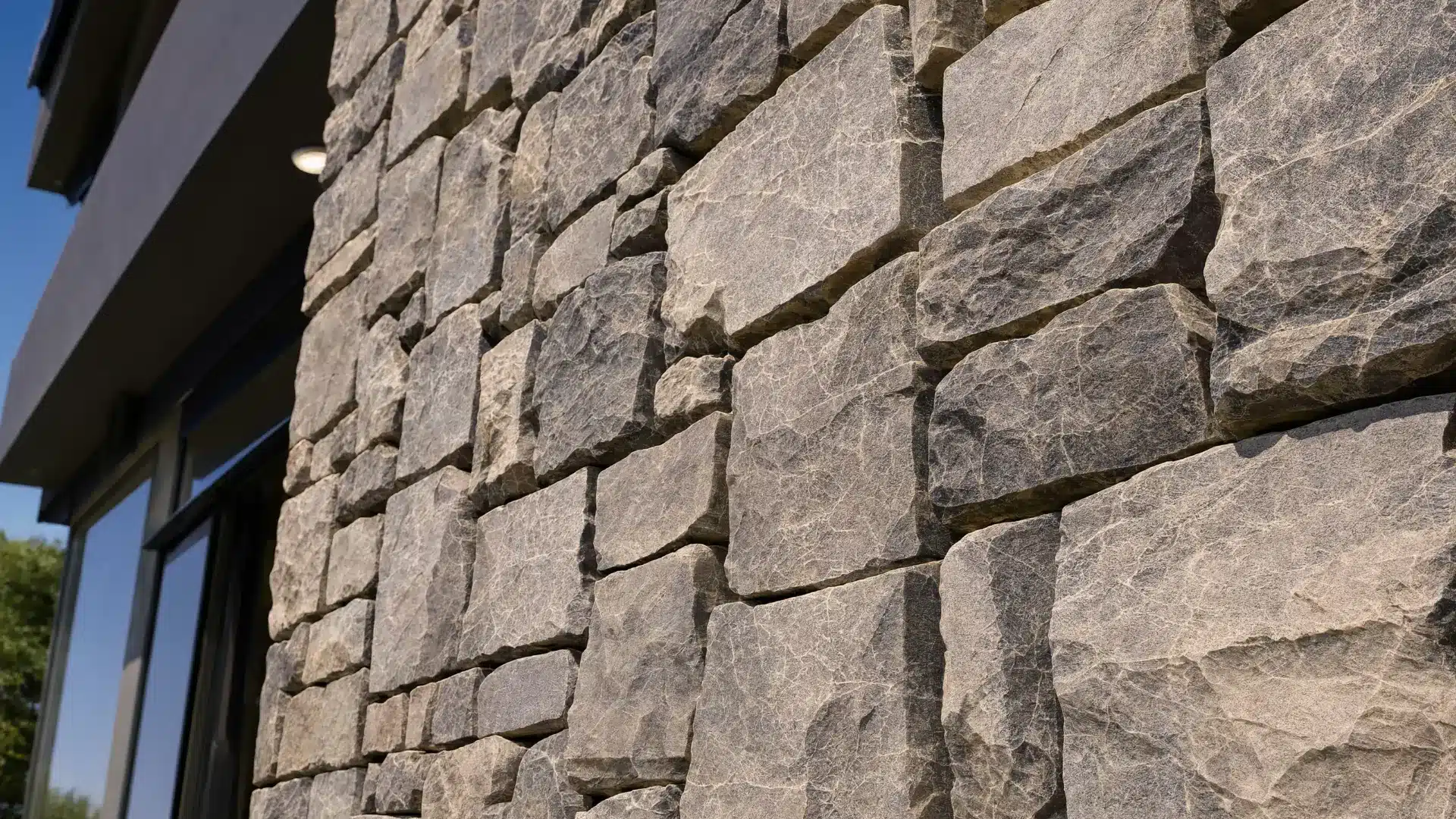
Split-faced stone is created by cleaving natural blocks to reveal a raw, uneven surface. That exposed interior face creates strong shadow depth and textural contrast, the main design appeal in contemporary and commercial-influenced residential architecture.
For a fireplace accent wall carried through to the exterior, the visual connection works well; exterior and interior accent wall ideas show how that material continuity plays out in real homes.
The rough texture makes cleaning more effort than flat-faced stone, use a soft brush and stone-safe cleaner rather than pressure washing, which can dislodge mortar from irregular joints over time.
- Benefits: Strong depth effect, modern aesthetic, visual contrast
- Best Climate: Suitable for all climate conditions
- Drawbacks: Difficult cleaning, uneven installation, maintenance challenges
17. Tumbled Stone
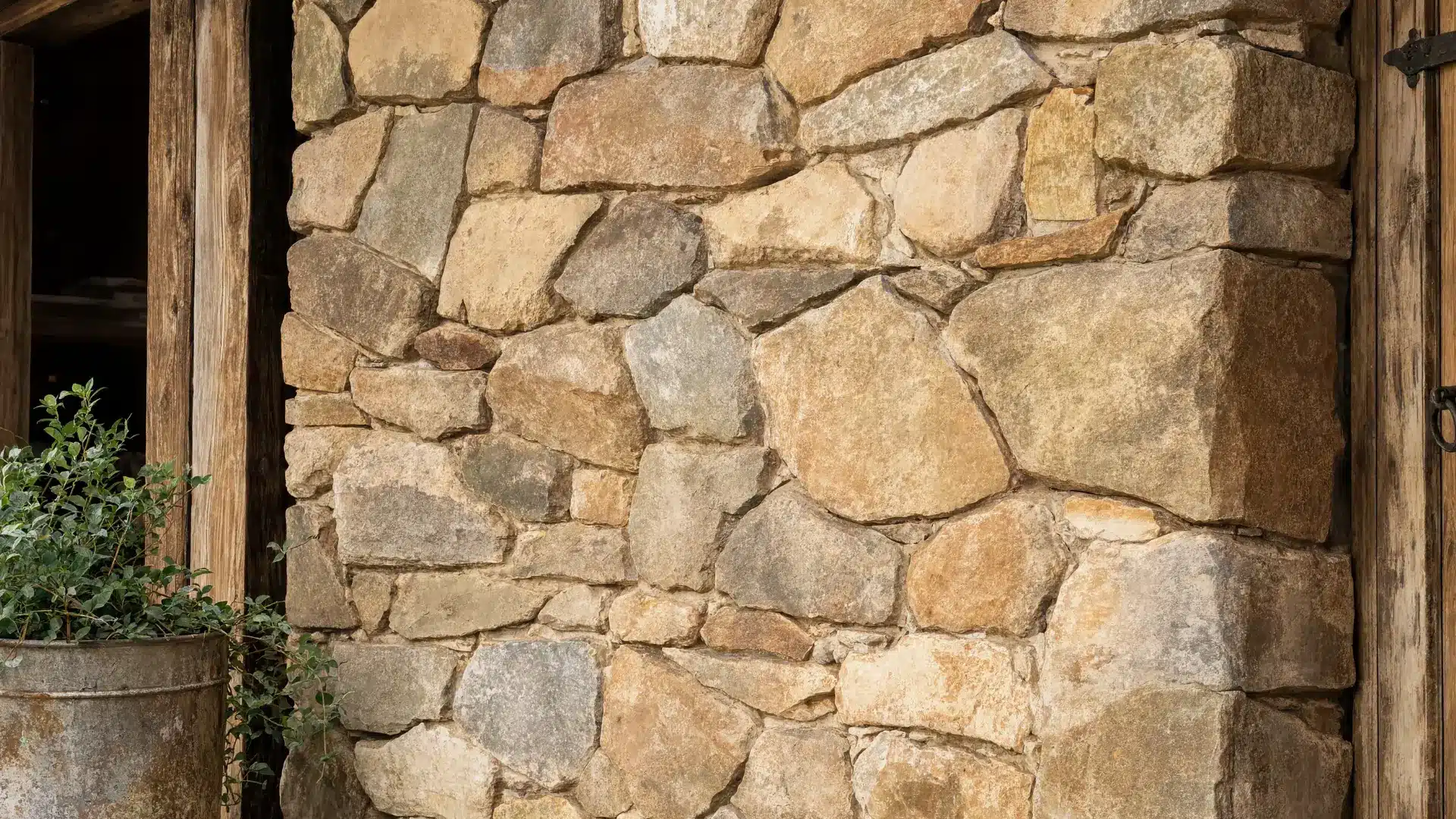
Tumbled stone is a natural stone that is mechanically treated to soften edges and create an aged, weathered appearance. It is widely used in traditional, rustic, and farmhouse-style exteriors where a timeless look is preferred.
The softened texture allows easy blending with surrounding materials like wood and brick. It offers a lived-in, historic feel that enhances architectural warmth and character in exterior designs.
- Benefits: Rustic charm, timeless look, easy material blending
- Best Climate: Moderate and stable climate regions
- Drawbacks: Limited modern appeal, reduced sharp detailing
18. Manufactured Stone Veneer
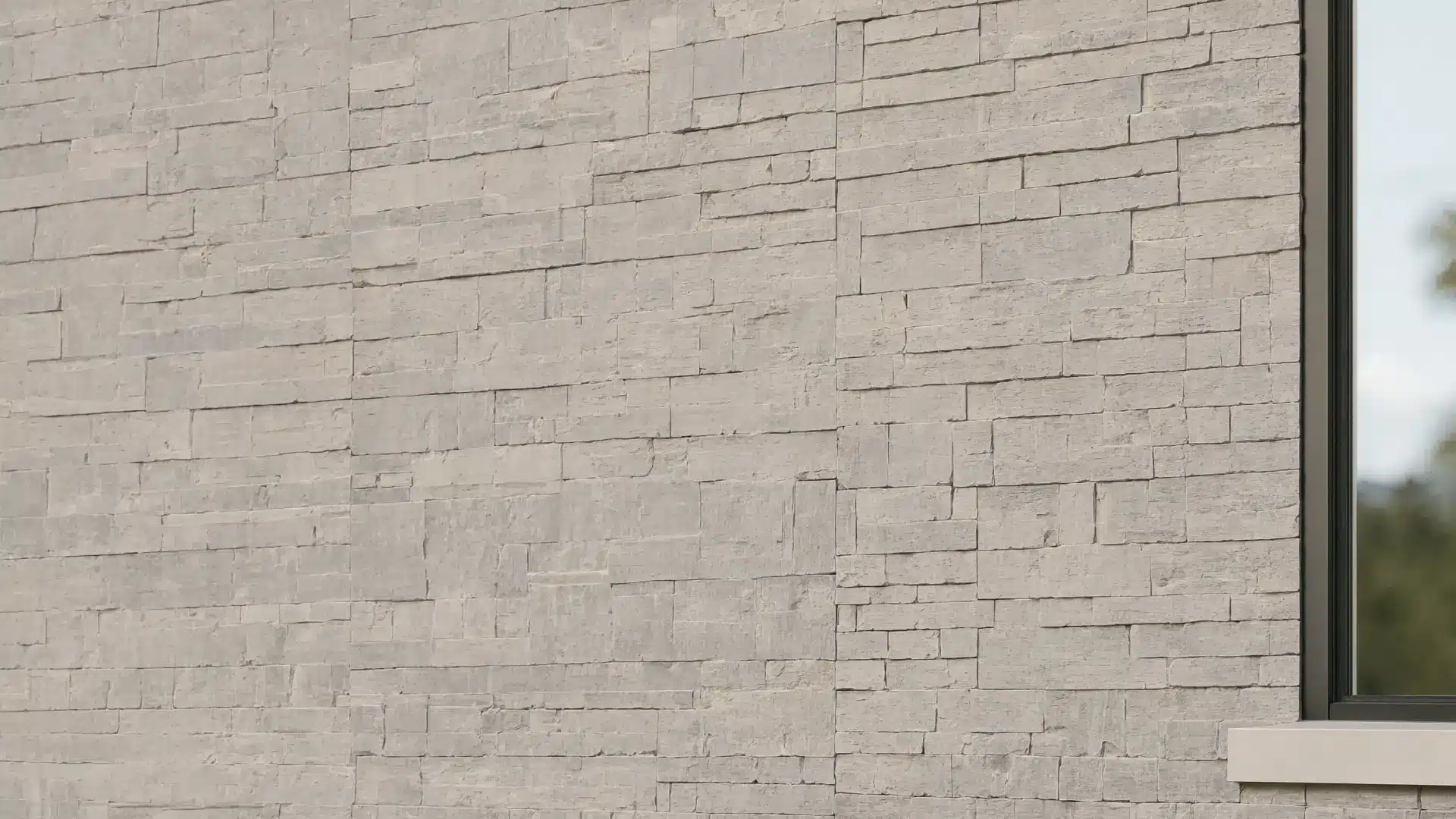
Manufactured stone veneer is engineered using cement, aggregates, and pigments to replicate the appearance of natural stone.
It is lightweight, cost-effective, and widely used in modern residential and commercial construction. The material ensures consistent color and texture across large surfaces, making installation predictable and efficient.
- Benefits: Affordable, lightweight, consistent appearance
- Best Climate: Suitable for most climates
- Drawbacks: Less natural variation, may fade over time
19. Stone Cladding Panels
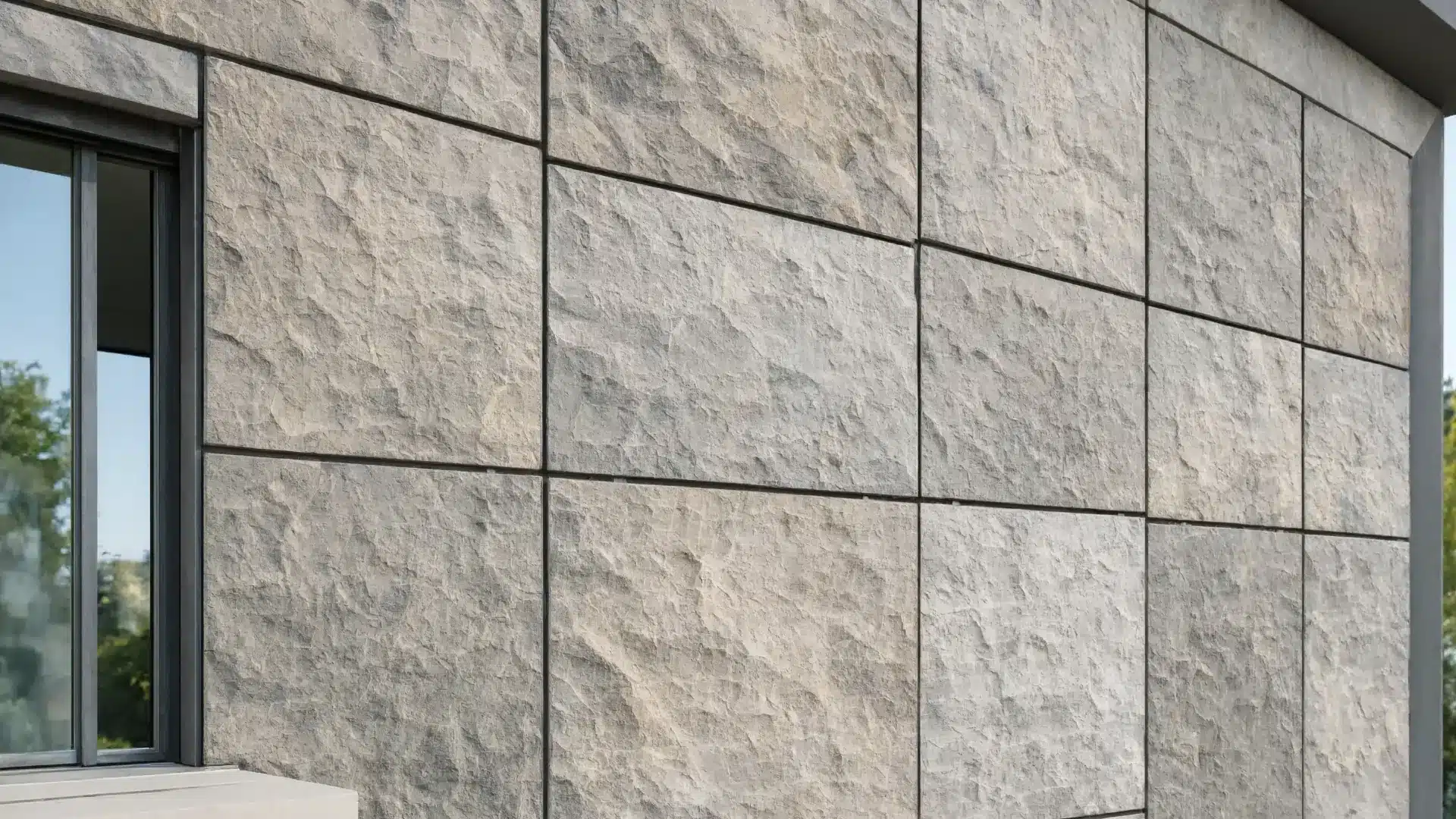
Stone cladding panels are pre-fabricated exterior systems designed for fast installation on building façades. These panels reduce labor time and provide a uniform stone-like finish across large surfaces.
The system enables shorter construction timelines while maintaining a visually structured exterior that mimics traditional stone installations, with greater efficiency.
- Benefits: Quick installation, uniform finish, lightweight system
- Best Climate: Urban and suburban environments
- Drawbacks: Limited design flexibility, slightly artificial appearance
20. Engineered Stone Panels
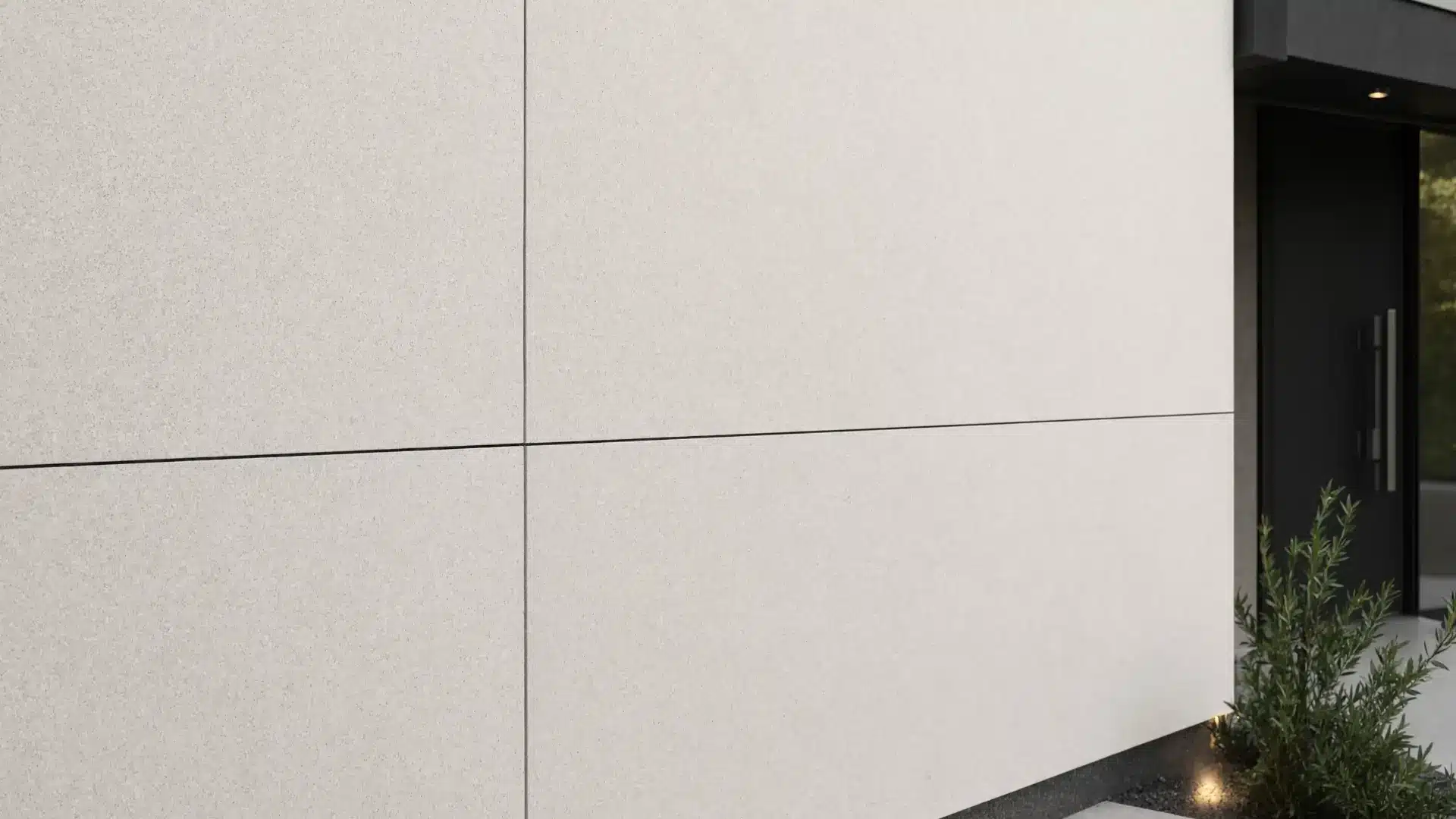
Engineered stone panels are precision-manufactured slabs designed for modern architectural exteriors. They deliver consistent patterns and clean surface alignment, making them ideal for contemporary and commercial-style homes.
These panels are often used in large façade applications where uniformity is preferred over natural variation.
- Benefits: Seamless finish, fast installation, modern aesthetic
- Best Climate: Suitable for all climates
- Drawbacks: Expensive, lacks natural variation
21. Faux Stone Siding Panels
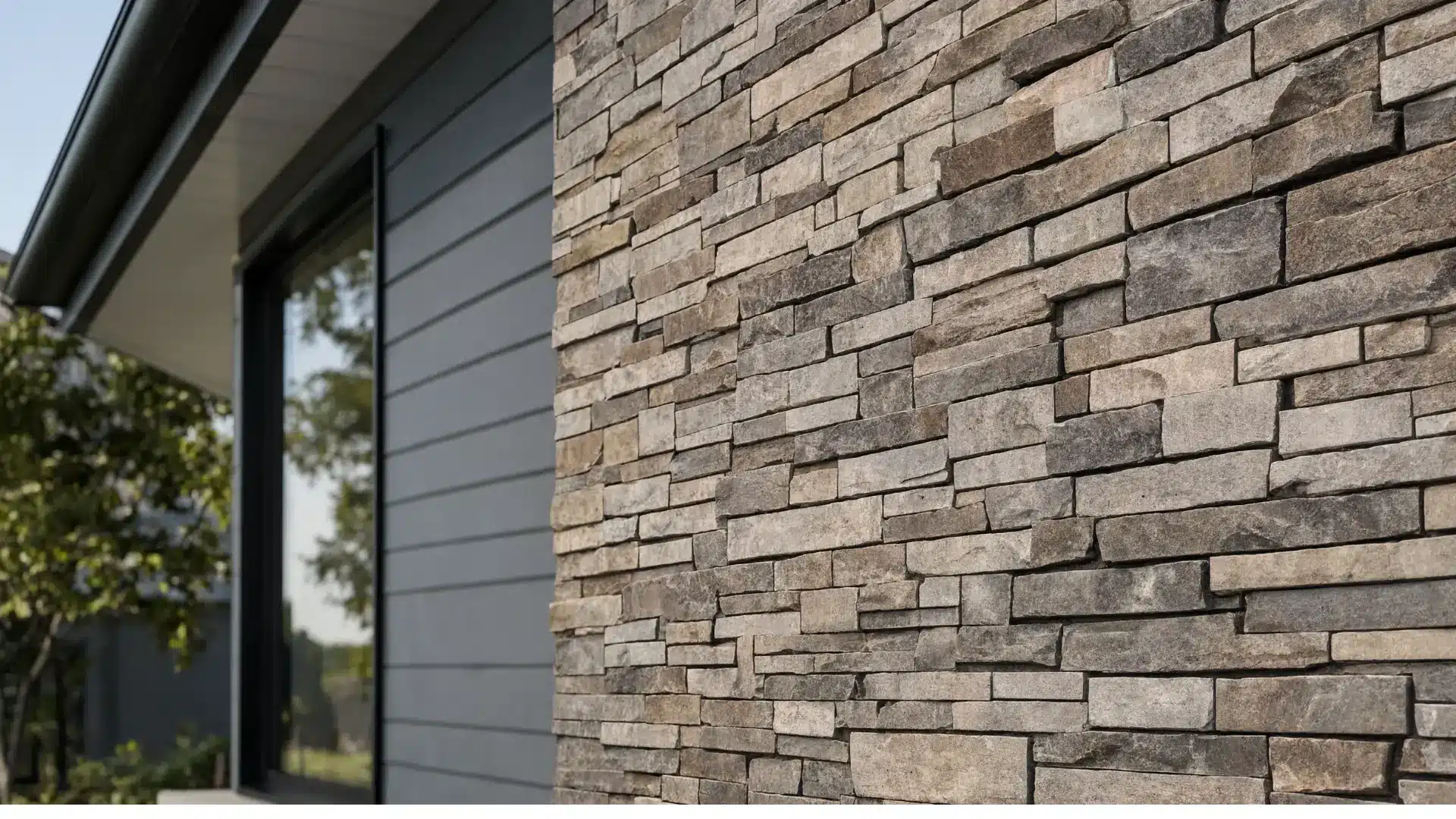
Faux stone siding panels are synthetic exterior materials designed to imitate natural stone at a lower cost. They are lightweight, easy to install, and often used in renovation or DIY projects.
These panels are made from polymer or composite materials that replicate stone textures and patterns. They provide a quick visual upgrade for exterior walls without requiring heavy masonry work or structural reinforcement.
- Benefits: Budget-friendly, easy installation, lightweight design
- Best Climate: Mild to moderate weather conditions
- Drawbacks: Lower durability, artificial appearance, limited lifespan.
Where Exterior Stone Works Best Around the House
Stone doesn’t have to cover the entire exterior to do its job. In most cases, targeted stone application looks more deliberate and costs significantly less than full coverage.
The zones where it contributes most are porch bases, columns, chimneys, entryways, garage surrounds, and foundation walls. These are the areas where stone adds genuine structural visual weight without making the exterior feel overdone. Stone also performs well in outdoor living zones, patios, pool houses, outdoor kitchens, and garden walls.
For patio and pathway decisions specifically, the cost comparison between stone, pavers, and concrete surfaces is worth working through before committing; stamped concrete versus pavers breaks down the real cost difference. Choose materials that can handle moisture, cleaning, and UV exposure for these exterior placements.
The most effective placement repeats the stone in one or two zones rather than spreading it across every surface. That creates visual cohesion without the exterior feeling like a showroom sample board.
Stone Veneer Siding Ideas for House Exteriors
Stone veneer’s design range is wide enough that it suits both subtle accent work and bold full-façade treatments. These applications cover the most commonly requested exterior stone configurations, from minimal to comprehensive.
- Stacked stone entry wall to anchor the front elevation with a strong focal point
- Full accent façade on the street-facing elevation for bold exterior presence
- Garage front cladding to break up plain siding runs across the widest part of the home
- Mixed material exterior combining stone with wood, stucco, or brick and paint combinations
- Column wrap design for added depth and visual structure at entries and covered porches
- Lower wall veneer base to ground the exterior and reduce visual height on tall elevations
- Chimney stone cladding for a classic finish that carries from the roofline to the ground
- Window border accents for subtle detailing without committing to a full façade application
- Outdoor living wall for patio zones that carry the exterior material into functional outdoor space
- Modern monochrome veneer in dark slate or basalt tones for contemporary residential exteriors
Each of these works best when the stone profile, color, and texture connect to at least one other exterior material, roof color, siding, trim, or door, rather than sitting as a standalone decision.
Grout, Color, And Finish Choices
Grout can change the read of a stone wall more than most people expect. Two homes using the same stone profile will look significantly different if one uses matching grout and the other uses high-contrast grout. Matching grout softens the wall and reads as more continuous.
Contrasting grout emphasizes each individual stone piece, which works well with fieldstone and cobblestone but can feel busy with smaller ledgestone or stacked profiles.
Stone color should connect to what’s already on the home, roof tone, siding, trim, gutters, and walkway material. A roof with strong color variation is easier to carry when the stone is calmer. A plain siding field opens up more room for a textured or color-varied stone. Planning paint costs alongside stone placement is worth doing early in the exterior design process; exterior house painting costs cover the full picture for budgeting both together.
| Tip: Always view stone samples outdoors, not in a showroom. Morning light, afternoon sun, overcast sky, and proximity to roof color all change how a stone reads in practice. What looks warm inside a store may look yellow against a grey roof. |
This is especially true for stones with subtle undertones, travertine, limestone, and certain manufactured veneers can shift significantly between lighting conditions and seasons.
How To Choose The Best Exterior House Stone
Start with climate, then choose the style. A stone that cannot handle the local weather is not the right choice, even if the color looks good.
Next, decide between natural stone, manufactured stone veneer, and faux panels. Natural stone gives the most real texture. Manufactured veneer gives a stone look while weighing less. Faux panels are best for fast, lightweight updates.
Then look at maintenance. Granite, quartzite, slate, and basalt are better for lower upkeep. Limestone, sandstone, travertine, marble, and many veneers require more attention to sealing and moisture control.
| Stone Type | Best For | Climate Fit | Maintenance Level |
| Granite | Full façades, long-term build | All climates | Low |
| Quartzite | Premium exteriors | All climates | Low |
| Slate | Modern cladding, rainy regions | Cold and rainy | Low-medium |
| Basalt | Contemporary exteriors | All climates | Low |
| Limestone | Classic façades | Dry, moderate | Medium-high |
| Sandstone | Warm, earthy styles | Dry, semi-arid | Medium |
| Travertine | Mediterranean style, hot climates | Hot and dry | Medium |
| Fieldstone | Rustic, farmhouse exteriors | Temperate, cold | Medium |
| Manufactured Veneer | Most residential projects | Most climates | Low-medium |
| Faux Stone Panels | DIY, budget renovations | Mild to moderate | Low |
The right stone should fit the home, the climate, the budget, and the level of maintenance you are willing to handle.
Common Mistakes To Avoid With Exterior House Stone
Exterior stone is a long-term choice, so it is worth avoiding mistakes before installation begins. Many issues arise from choosing by color alone, skipping water control, or using too many materials on a single facade.
- Choosing The Wrong Stone for Climate: Porous stone in wet or freezing areas can stain, crack, or wear faster.
- Skipping Drainage Details: Stone veneer still needs water barriers, flashing, and a safe way for moisture to escape.
- Using Too Many Exterior Materials: Stone, brick, siding, trim, roofing, and doors should work together rather than compete.
- Choosing From A Tiny Sample: Small samples may not show the full color range or texture variation.
- Forgetting Corners: Corners make veneer look finished and should be included in the estimate.
- Overusing Stone: A balanced accent often looks better than covering every visible wall.
- Ignoring Grout Color: Grout can soften or sharpen the final look, so choose it with the stone sample.
Good exterior stone should look like part of the original design. If it feels added on, the color, profile, or placement may need to be simplified.
Frequently Asked Questions
How does exterior stone affect home insulation and energy efficiency?
Stone adds thermal mass, which helps regulate indoor temperatures by absorbing heat during the day and releasing it at night. Dense stones like granite and quartzite provide more meaningful thermal performance than lightweight veneer or faux panels, which have less mass and therefore less buffering effect.
Can exterior stone be painted or stained for a different look?
Staining or tinted sealing is the safer option, it can subtly shift the color while preserving breathability. Painting natural stone is generally a poor choice because it can trap moisture in the stone, leading to cracking, spalling, and mildew. Once painted, getting back to bare stone is a significant removal job.
What is the average lifespan of manufactured stone veneer versus natural stone?
Natural stone installed correctly can last 50 to 100 years or more. Manufactured stone veneer typically runs 20 to 40 years depending on material quality, installation accuracy, and weather exposure. The installation quality matters as much as the material, poorly installed natural stone will fail faster than well-installed manufactured veneer.
How do you prevent moss, mold, or algae growth on exterior stone walls?
Proper drainage behind the stone is the first line of defense. For porous stones like sandstone, limestone, and travertine, regular sealing closes the surface pores that organic growth colonizes. Trim vegetation back from stone walls and clean with a stone-safe antifungal solution when growth appears, pressure washing works on dense stones but can damage mortar joints in textured or irregular applications.
Are there eco-friendly or sustainable options for exterior house stone?
Reclaimed natural stone is the most sustainable choice, it avoids quarrying entirely. Locally sourced stone reduces transport emissions significantly. Some manufactured veneer products use recycled aggregates. For patio and pathway applications, understanding the full environmental and cost picture of each material helps; paver installation costs include material sourcing context worth reviewing.
Can exterior stone be installed over existing brick or siding?
Yes, but it requires proper surface preparation. A water-resistive barrier, furring strips or metal lath, and strong mortar bond are all necessary. Lightweight manufactured veneer and faux panels are the most practical retrofit options. Full natural stone over existing siding may require structural reinforcement, get a structural assessment before committing to the weight load.
Sum Up
Picking the right types of exterior house stone can make a huge difference in how your home looks and performs. I hope this guide has helped you see the key differences between natural stone, manufactured veneer, and faux panels, along with their costs, benefits, and ideal climates.
You now know which stones suit modern, rustic, or classic homes, and how to consider maintenance and installation. With this information, you can make choices that balance beauty, durability, and practicality.
If you’re planning your next exterior project, try comparing samples outdoors and see which stone fits your home best, then share your results or questions with others.