



Hardwood floors add warmth and value to a home, but their finish can wear down quickly without proper care.
Dust, grit, excess moisture, and the wrong cleaning products often cause scratches, dullness, and surface damage.
Keeping hardwood floors clean starts with simple habits. Remove debris before mopping, use a cleaner suited to the floor’s finish, and avoid soaking the wood.
The right tools and cleaning routine help protect the finish while keeping the surface looking fresh.
Essential Tools and Cleaner for Hardwood Floors
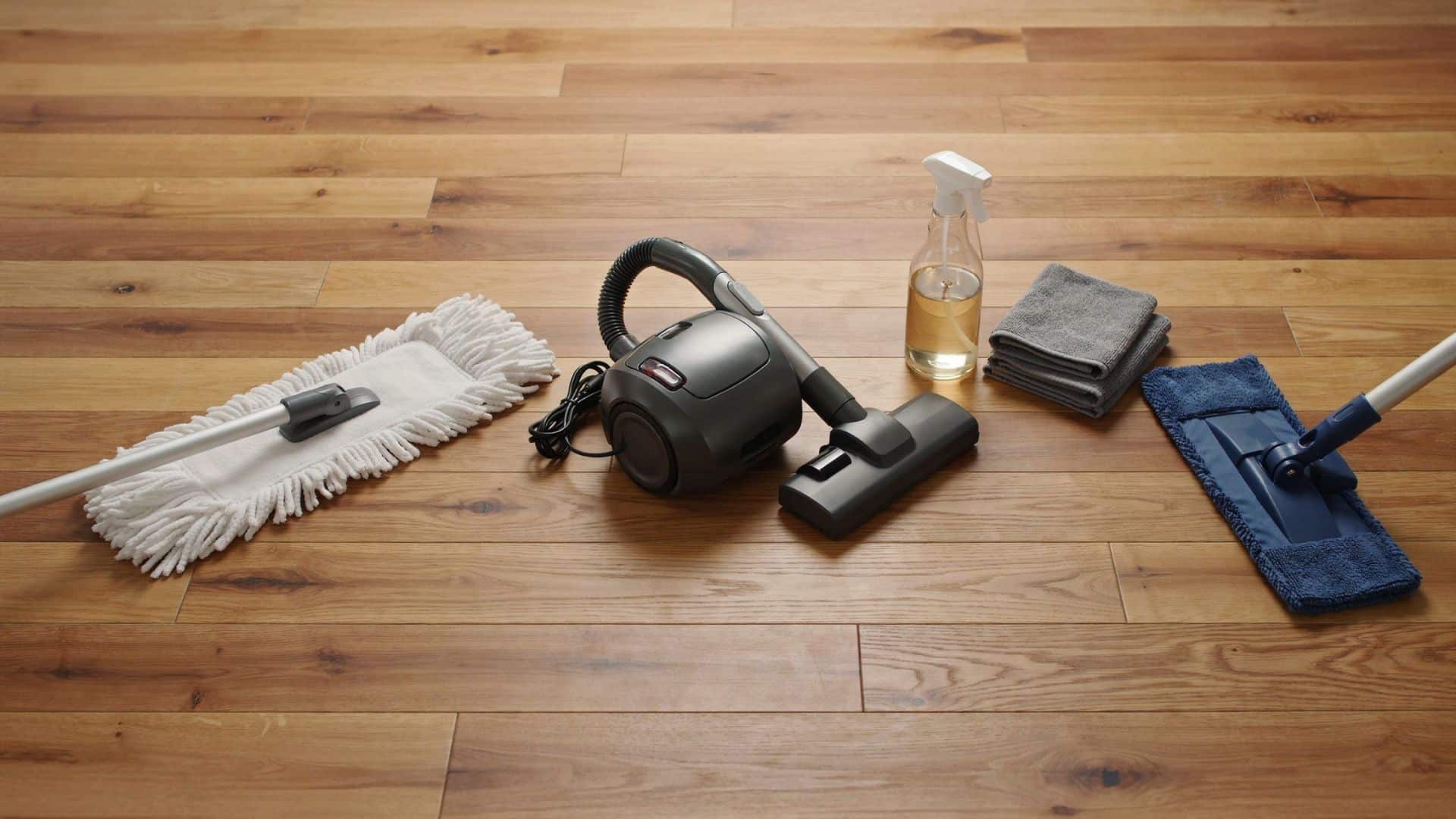
Before cleaning hardwood floors, gather the right tools and products to avoid scratches, residue, and moisture damage. The items below help remove dirt safely while protecting different floor finishes.
| Tool / Care Item | How to Use It |
|---|---|
| Microfiber mop | Picks up dust and grime without scratching the finish, making it a safe choice for regular hardwood floor cleaning. |
| Soft-bristle broom and microfiber cloths | Remove loose dirt and handle spills, corners, and small cleaning areas quickly. |
| Hardwood-safe vacuum | Use the bare floor setting, turn off the beater bar, and choose soft attachments to prevent scratches and scuffs. |
| pH-neutral hardwood cleaner | Choose a water-based cleaner that matches your floor’s finish. Avoid harsh chemicals and residue-forming products that can dull or damage the surface. |
| Know your floor finish. | Polyurethane floors handle light damp cleaning, while oil, wax, and water-based finishes require specific products and care methods. |
| Control moisture | Use a spray bottle or a lightly damp mop instead of soaking the floor, as excess water can cause swelling or damage. |
Using the correct tools and controlling moisture make routine cleaning safer and more effective. Always match your cleaning method to your floor’s finish to prevent unnecessary damage.
How to Clean Hardwood Floors Step by Step
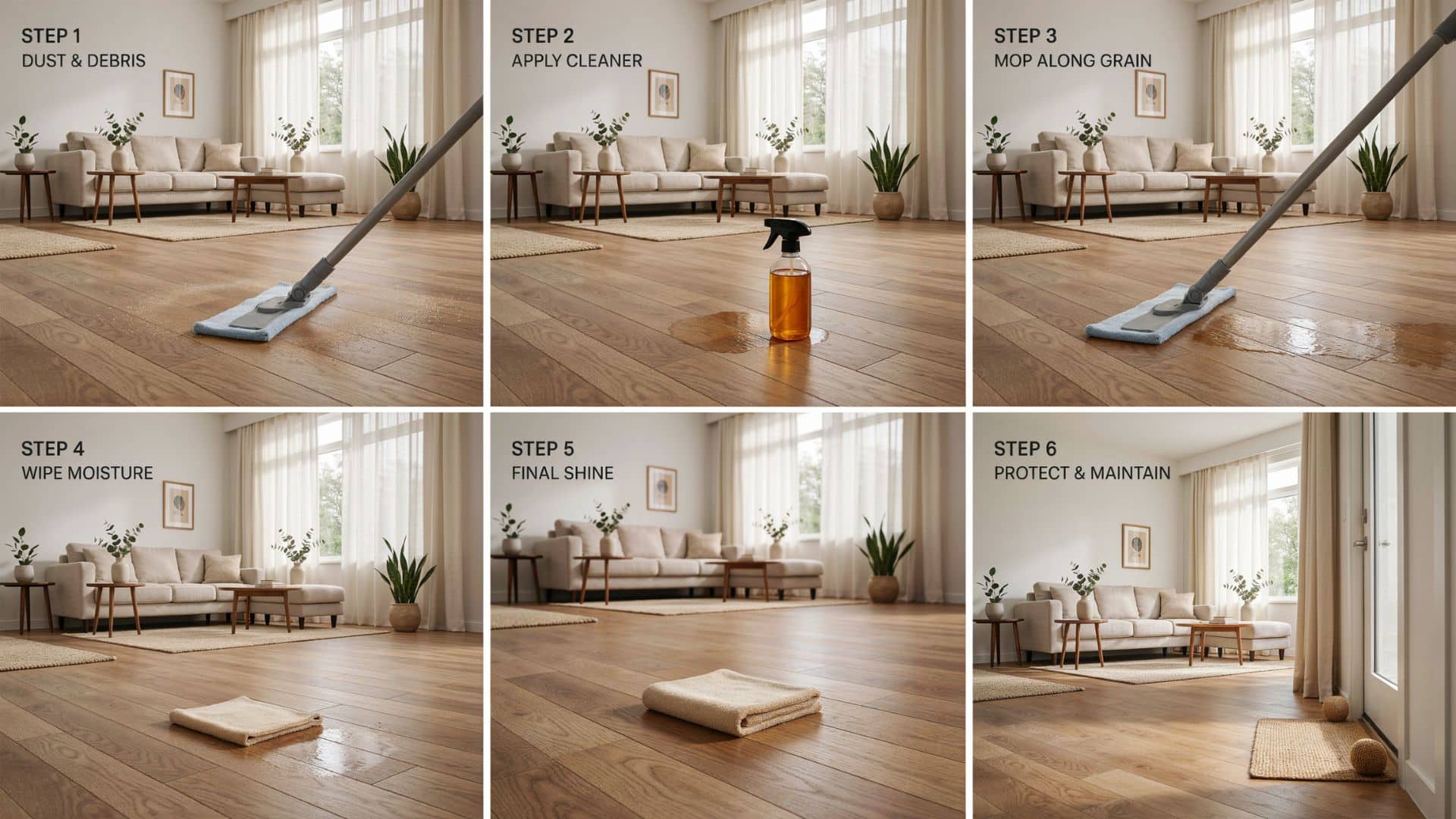
Before you start cleaning, it helps to follow the right order to protect your hardwood finish.
The process begins with removing dirt and buildup, then moves through careful mopping, drying, and maintenance steps that keep floors looking clean without exposing them to excess moisture.
1. Remove Dirt and Stubborn Buildup
First, remove dust, pet hair, and loose debris using a microfiber mop, soft broom, or hardwood-safe vacuum. For high-traffic areas, use a microfiber cloth with hardwood cleaner to lift stubborn dirt.
Gently clean between floorboards with a soft attachment, avoiding excess moisture that can seep into seams.
2. Prepare the Cleaning Solution
Always follow the cleaner’s instructions instead of adding extra product.
Too much solution can leave behind a sticky film that attracts more dirt and makes the floor look dull. Spray a light mist over a small area rather than soaking the surface.
3. Damp Mop the Floor
Use a mop that feels slightly damp, not wet. Work in small sections so moisture does not sit on the wood for too long.
Rinse the mop regularly, or replace the microfiber pad when it gets dirty, to avoid spreading grime across the floor.
4. Dry the Floor Properly
After cleaning each section, wipe away leftover moisture with a dry microfiber cloth or make a dry pass with your mop. Removing excess water helps protect seams and prevents issues like swelling or warping.
5. Restore Shine After Cleaning
If your hardwood looks dull after cleaning, the issue may be a worn finish rather than leftover dirt. Hardwood polish can temporarily improve the appearance, but it does not repair damaged coatings. Floors with heavy wear may need professional refinishing to restore their original look.
6. Maintain Clean Floors Between Deep Cleanings
Regular maintenance keeps hardwood floors cleaner and reduces the need for frequent wet cleaning. Sweep high-traffic areas often, place mats near entrances, use furniture pads to prevent scratches, and clean spills as soon as they happen to protect the finish.
How to Clean Different Types of Hardwood Floors
- Sealed Hardwood Floors: Most modern hardwood floors are sealed with polyurethane. Use a damp mop with a pH-neutral cleaner and avoid harsh products that can damage the finish.
- Unfinished Hardwood Floors: Without a protective coating, hardwood is more susceptible to moisture damage. Use dry cleaning methods and avoid excess water to prevent stains or warping.
- Engineered Hardwood Floors: The thin layer of real wood over a composite core requires careful moisture control. Use minimal liquid and avoid soaking the surface.
- Older Hardwood Floors: Older finishes may react differently to cleaners. Test products in a hidden area first and use gentle cleaning methods on worn or aged floors.
What Not to Use on Hardwood Floors
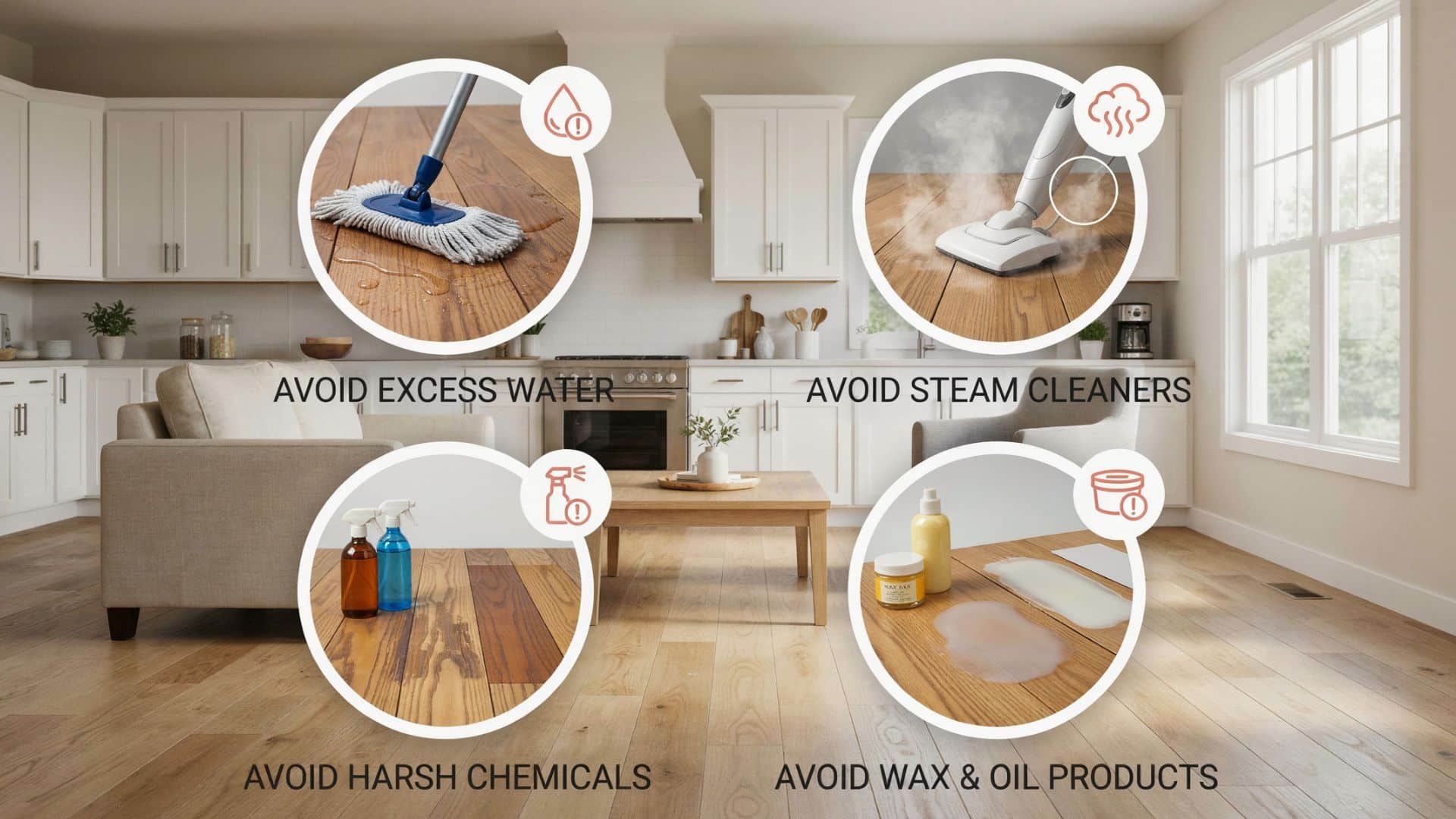
Before cleaning hardwood floors, knowing what to avoid is just as important as knowing what to use.
Certain products and cleaning methods can damage the finish, trap moisture, or create buildup that affects the floor’s appearance over time.
Keep these common mistakes in mind to protect your hardwood investment.
- Avoid Excess Water: Standing water can seep into seams, causing swelling, warping, or cupping. Use a lightly damp mop instead of a wet one.
- Avoid Steam Cleaners: Steam adds heat and moisture that can penetrate between boards, damaging the wood or subfloor.
- Avoid Harsh Chemicals: Bleach, ammonia, and abrasive cleaners can dull or strip the hardwood finish.
- Avoid Wax and Oil-Based Products on Certain Finishes: These products can leave buildup on modern polyurethane floors and affect future refinishing. Always check your floor’s finish first.
Common Mistakes When Cleaning Hardwood Floors
One of the most common hardwood floor cleaning mistakes is mopping before removing dust and debris, as grit can scratch the finish during cleaning.
Using the wrong mop can also cause problems, with abrasive materials damaging the surface and overly wet mops increasing the risk of moisture.
Avoid cleaning with water too frequently, as repeated exposure to moisture can wear down the finish over time. Clean spills quickly, since liquids left sitting can seep into the wood and cause water stains or surface damage.
Conclusion
Keeping hardwood floors looking good comes down to gentle tools and the right cleaner for your finish.
Keeping moisture to a minimum every time you clean matters just as much.
None of this requires anything complicated, just a routine you actually stick to. A little consistency now saves you from a much bigger refinishing job later.
It keeps the floor looking like the investment it was.
Frequently Asked Questions
What is the best thing to wash your hardwood floors with?
Use a microfiber mop with a pH-neutral hardwood floor cleaner recommended for your finish. Avoid excess water and harsh cleaners that can damage the protective coating.
Can I use Swiffer wet cloths on hardwood floors?
You can use Swiffer wet cloths on some sealed hardwood floors if you use them lightly, but avoid leaving moisture behind. Always check your flooring manufacturer’s recommendations first.
What do professional cleaners use on hardwood floors?
Professionals typically use microfiber mops and hardwood-safe, pH-neutral cleaners designed for the floor’s specific finish. They focus on low-moisture methods to protect the wood.
What is the best homemade cleaner for hardwood floors?
A simple, damp microfiber mop is often the safest homemade option for many sealed hardwood floors. Avoid vinegar mixtures, as they may dull or weaken some finishes over time.
Is Murphy’s Oil Soap good for wood floors?
Murphy’s Oil Soap can be used on some finished wood surfaces, but it may leave residue on certain hardwood floors. Check your finish type and the manufacturer’s care instructions before using it regularly.