

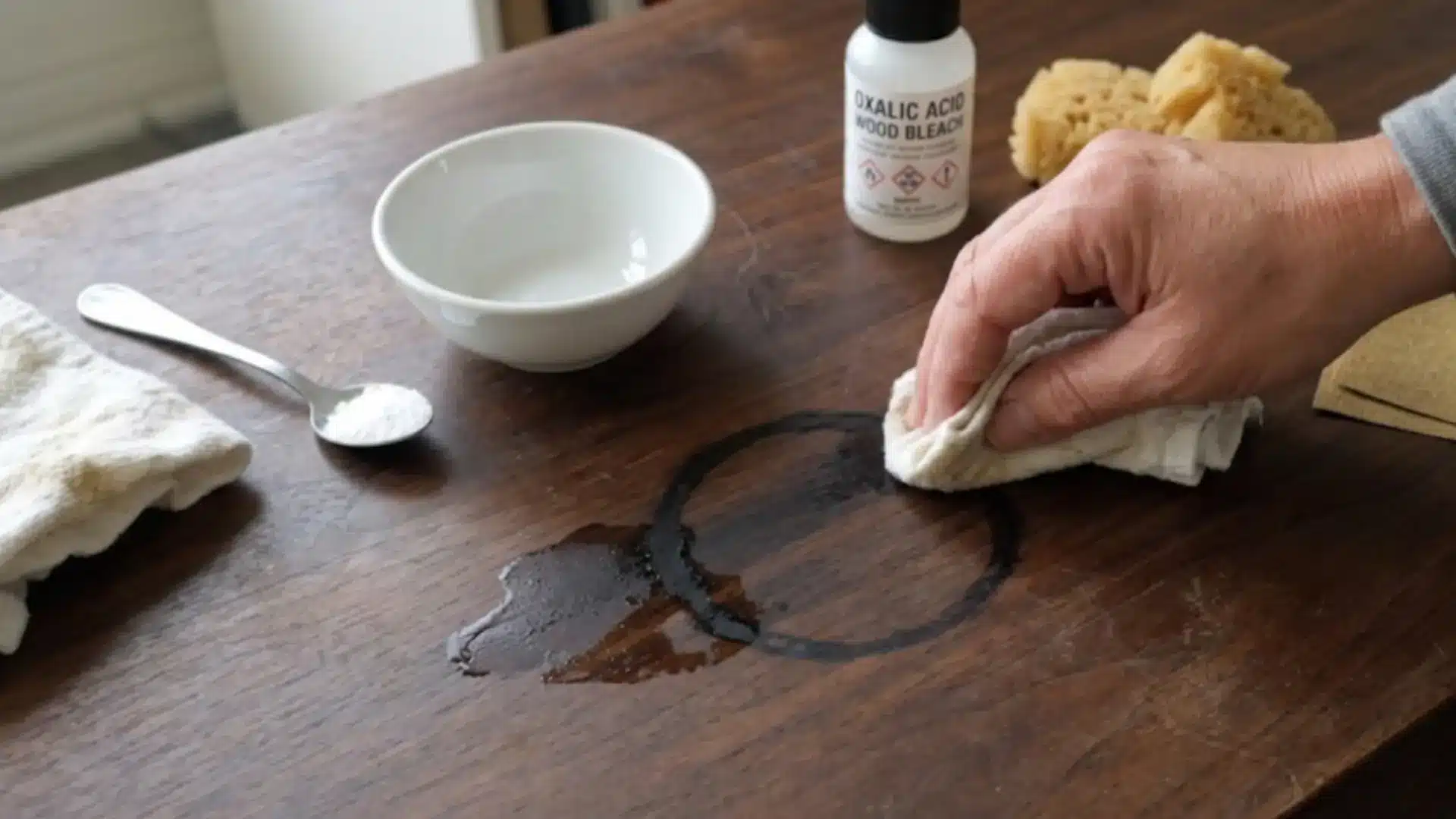


Water rings on a wooden table can ruin the look of an entire room in seconds.
Have you ever tried wiping them away only to see the stain still there? It feels frustrating when a clean surface suddenly looks damaged, especially when regular cleaning does nothing. I
know how confusing it gets when different fixes online give mixed results and no clear direction. The water stain problem on wood often depends on heat, moisture, and finish type, not just surface cleaning.
In this guide, you’ll see how to remove water stains from wood using simple home methods, safe fixes, and practical steps that actually work.
How to Remove Water Stains from Wood: What Actually Works
If you want to know how to remove water stains from wood, start by figuring out what color the mark is — because white and dark stains behave completely differently and need different approaches.
I’ve pulled more than a few water-damaged pieces off job sites over the years, and the most common mistake I see is people trying the same method on every stain regardless of what it is.
That’s how you turn a fixable white ring into something that needs sanding and refinishing. The color of the stain tells you how deep the moisture went, and that tells you what will actually clear it.
What Causes Water Stains on Wood Surfaces
Water stains form when moisture interacts with either the protective finish or the wood itself. White stains appear when water gets trapped under the finish layer, the moisture clouds the coating from below, but the wood underneath is usually untouched.
Dark stains are a different problem: those mean water has penetrated past the finish and into the wood fibers, often causing oxidation of the tannins in the grain. Heat makes both worse by opening the finish and allowing liquid to enter faster. The longer moisture sits, the deeper it goes, which is why quick cleanup is worth more than any remedy after the fact.
Tannin-rich species like oak, walnut, and cedar are especially prone to dark staining when moisture reaches the wood, because the water reacts with the natural tannins and turns them dark.
Pine and other softwoods absorb moisture faster due to their open grain, but the stain chemistry is less dramatic. Understanding this helps you set realistic expectations before you start.
Types of Water Stains on Wood: Identify Before You Touch It
Before you reach for anything, identify what you’re looking at. The wrong method for the wrong stain type wastes time and risks further finish damage.
| Stain Type | Appearance | Cause | Difficulty |
| White Ring | Cloudy, milky circle on finish surface | Moisture trapped under finish from glasses or cups | Easy — usually removable with heat or oil |
| Dark Stain | Brown or black discoloration in the wood | Water penetrated past the finish into wood fibers | Hard — may need bleaching, sanding, or refinishing |
| Heat + Moisture Mark | Dark or white mark, sometimes with rough texture | Hot item combined with condensation breaking down finish | Medium — depends on severity and age |
| Finish Damage | Dull, patchy areas on a polished surface | Long-term moisture exposure weakening the protective coating | Medium — often needs polishing or spot refinishing |
| Raw Wood Stain | Deep mark on unfinished or bare wood | Water absorbed directly into untreated surface | Hard — requires refinishing or replacement |
The stain type determines the method. If you’re looking at a white ring on a sealed dining table, heat or oil will likely clear it. If you’re looking at a black spot on an unfinished piece, you’re looking at a refinishing job — no household remedy will touch that.
How to Remove Water Stains from Wood: Four Methods That Work
These are the methods I’d walk through in order, starting with the least invasive. Test every method on a hidden area first — the back of a leg, the underside of a leaf. What works on polyurethane can dull an oil finish, and vice versa.
1. Hair Dryer (Best Starting Point for Fresh White Rings)
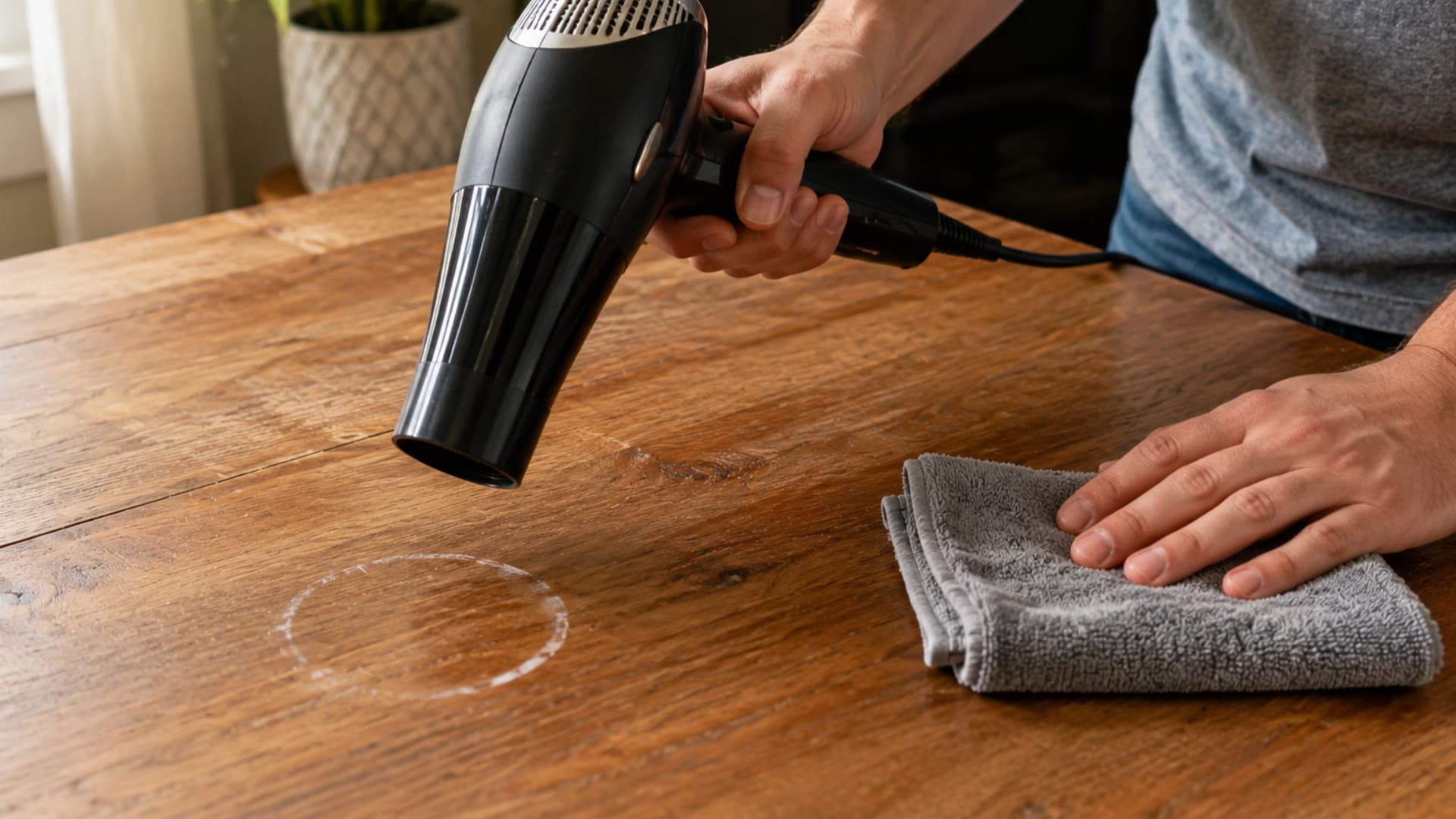
The hair dryer method is a safe and beginner-friendly way to remove light water stains from wood by gently evaporating trapped moisture from the finish layer. It works best when stains are fresh and haven’t deeply set into the wood fibers.
Best For: White rings, New cloudy marks, Delicate wood finishes, Small water stains on tables or dressers
- Start by wiping the wood surface with a soft dry cloth. Remove dust, dirt, or oil buildup so heat can distribute evenly. A clean surface also prevents particles from getting trapped in the finish during heating.
- Use the lowest heat setting available on your hair dryer. Avoid high heat because it can dry out or crack the wood finish, especially on polished or varnished surfaces.
- Hold the hair dryer about 6–8 inches away from the stain. This ensures gentle heating instead of direct hot airflow that could damage the wood surface.
- Keep the dryer moving in slow circular or side-to-side motions. Concentrated heat in one area can cause uneven drying or finish discoloration.
- Check the stain every 30–60 seconds. As moisture evaporates, the white ring should slowly fade or become lighter. Stop immediately if you notice any surface dulling.
Risk Level: Low to medium. This method is fairly safe when used carefully, but too much heat can soften, dull, or damage the finish.
2. Iron Method (Heat Lift for Stubborn White Marks)
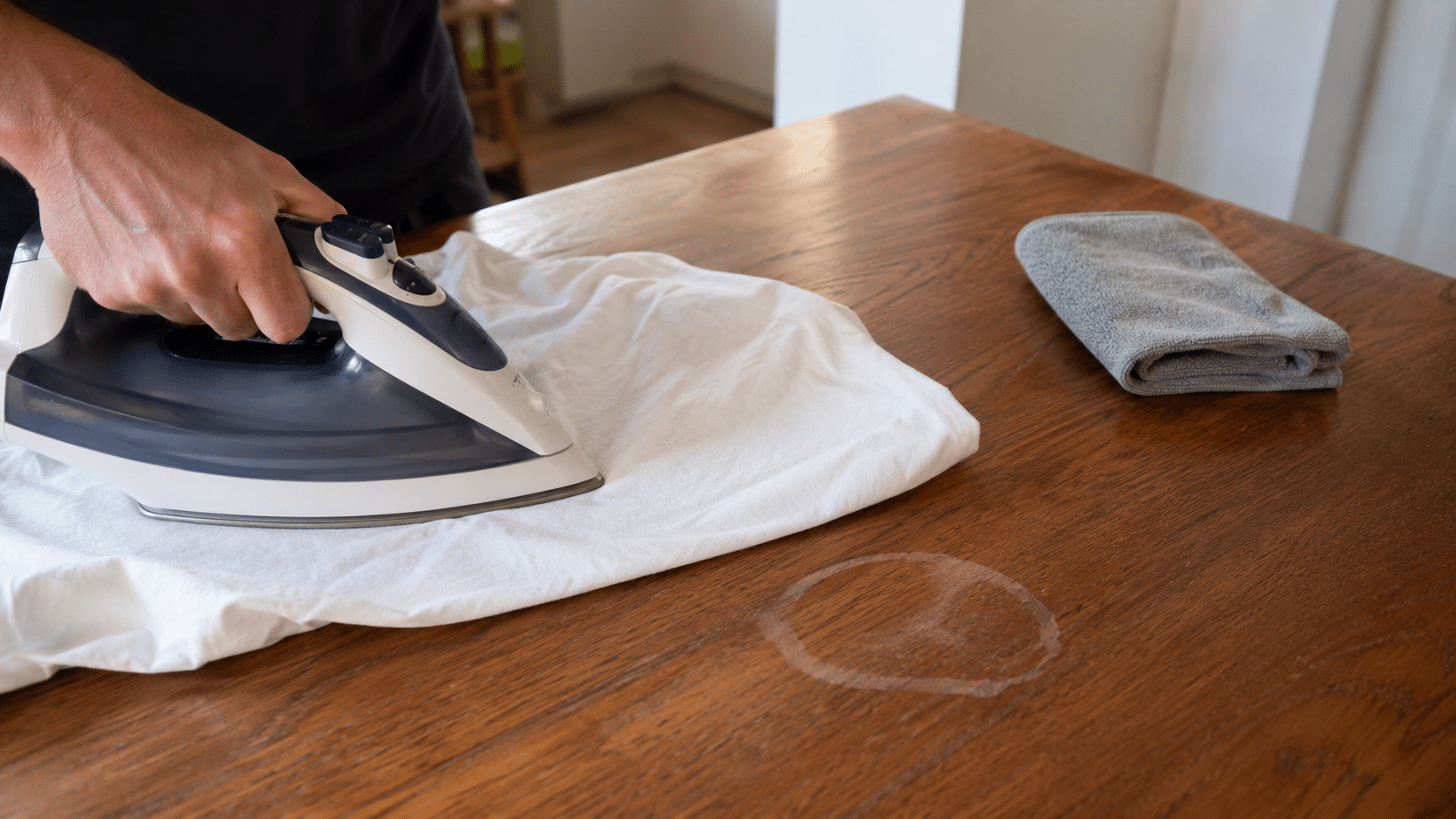
The iron method is a widely used technique to remove fresh water stains from wood by using controlled heat to pull trapped moisture out of the finish layer. It works best on light surface marks caused by hot cups or recent spills that haven’t deeply penetrated the wood.
Best For: White rings, fresh water stains, light cloudy marks, sealed or polished wooden tables, dressers, and cabinets
- Place a clean cotton cloth over the stained area and set the iron to low or medium heat without steam. Gently move the iron over the cloth in short intervals to avoid overheating the surface.
- Apply heat evenly across the cloth instead of focusing on one spot. This helps lift moisture gradually without damaging the finish or creating burn marks.
- Check the stain every few seconds to monitor progress. Stop immediately if the surface starts to feel too hot or shows signs of dulling.
- Avoid using steam, high heat settings, or direct contact between iron and wood. These can permanently damage the protective finish layer.
- Repeat the process only in short cycles if needed, allowing the wood to cool between attempts.
Risk Level: Medium. Effective for fresh stains, but improper heat use can permanently damage the wood finish.
| Note: Reddit’s r/howto community has documented this method repeatedly. The consistent report is that it works on white rings, often after two to three short passes, but leaves smudging if pushed too long. Stop when the ring fades — do not try to make it perfect in one session. |
3. Mayonnaise or Petroleum Jelly (For Surface-Level Marks on Older Finishes)
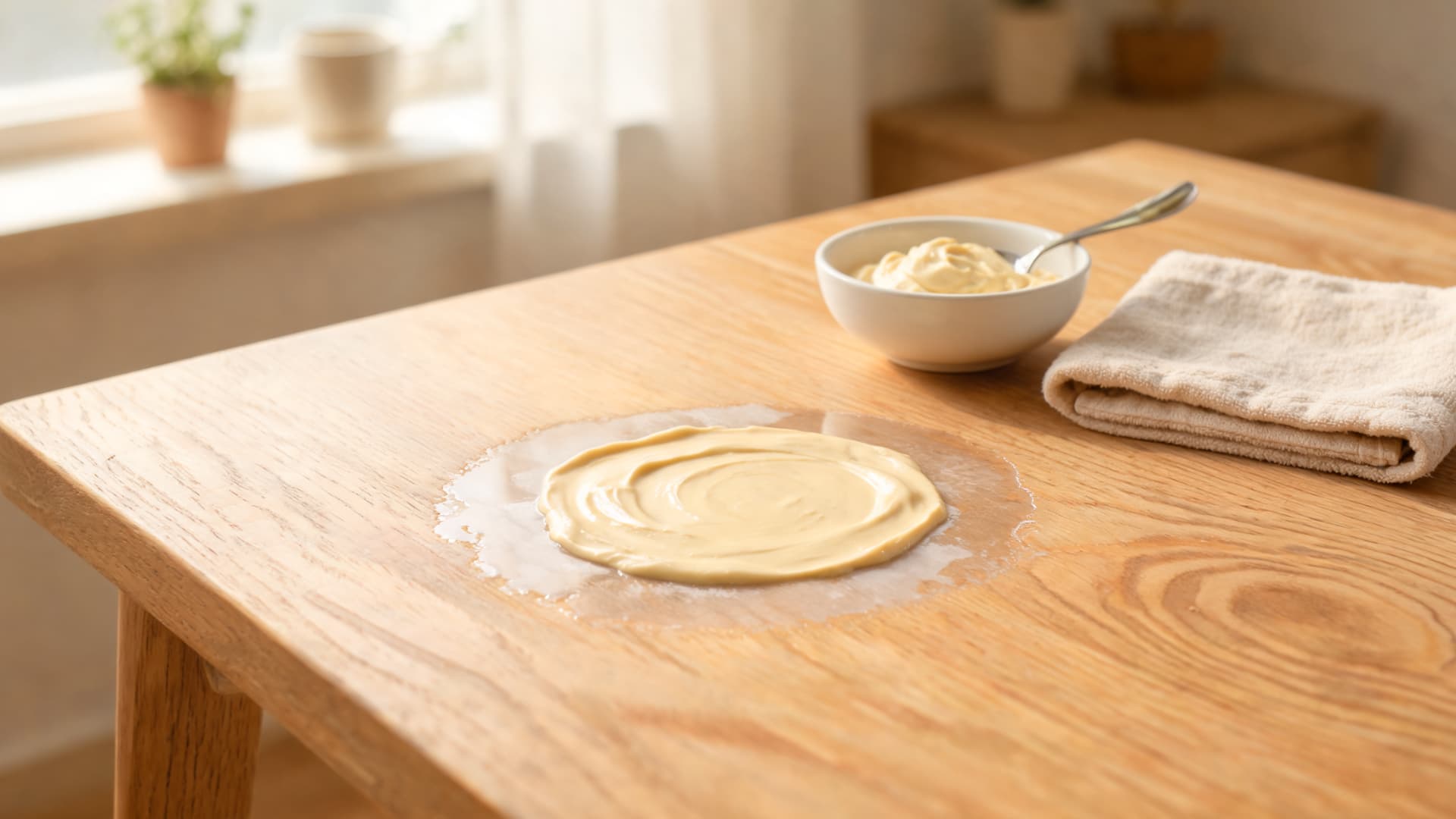
The mayonnaise method is a popular home remedy that helps reduce white water stains on wood by using natural oils to restore moisture balance in the finish. It works best on surface-level marks caused by glasses or hot dishes.
Best For: White rings, light surface stains, polished wooden tables, cabinets, and dressers
- Apply a small amount of full-fat mayonnaise directly onto the stained area using a soft cloth or fingertip. The oils in mayonnaise help penetrate the finish and loosen trapped moisture.
- Spread it evenly over the stain in a thin layer. Avoid applying too much, as a thick layer can become messy and harder to clean later.
- Leave it on the surface for 2–4 hours. For deeper or older stains, it can be left overnight to allow better oil absorption into the finish layer.
- Wipe the area thoroughly using a clean damp cloth. Make sure no residue is left behind, as it can create stickiness or dull patches.
- Buff the surface gently with a dry microfiber cloth to restore shine and blend the treated area with the rest of the wood.
Risk Level: Low. This method is generally safe but may leave residue if not cleaned properly.
4. Baking Soda Paste (For Mild Marks That Won’t Respond to Heat or Oil)
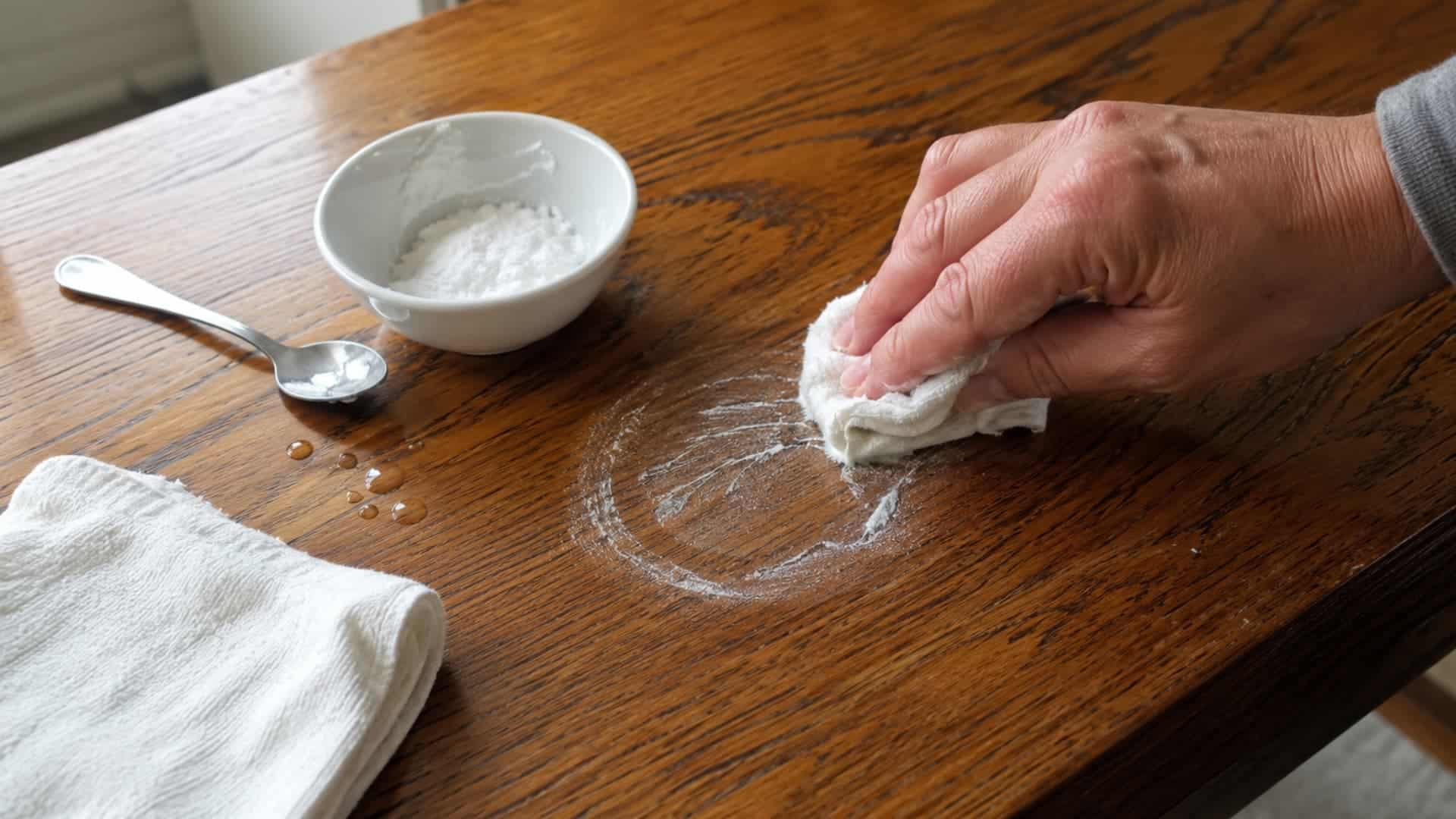
The baking soda paste method is a gentle DIY technique used to remove stubborn water stains from wood by lightly lifting residue from the surface without damaging most sealed finishes. It works best on mild to moderate stains that do not respond to heat or oil-based remedies.
Best For: Light dark stains, mild water marks, sealed wooden tables, dressers, cabinets, and slightly older surface stains
- Mix baking soda with a few drops of water to create a thick paste. Apply it gently onto the stained area using a soft cloth, using light circular motions to avoid scratching the finish.
- Work slowly and avoid heavy pressure. The mild abrasive nature of baking soda helps lift stain buildup without damaging most sealed wood surfaces.
- Wipe the area with a clean damp cloth after a few minutes to remove all residue, then dry and buff the surface for a smooth finish.
- Avoid scrubbing aggressively, as too much pressure can dull or scratch polished or glossy wood finishes.
- Repeat only if needed, allowing the surface to rest between applications to prevent over-processing.
Risk Level: Medium. Safe for most sealed wood surfaces when used lightly, but may damage delicate, glossy, or antique finishes if over-applied.
| Important: None of the methods above will remove a dark stain that has penetrated into the wood fibers. Commercial wood cleaners may lighten them, but true dark stains, particularly black marks from prolonged moisture or tannin oxidation, require oxalic acid (wood bleach), sanding, restaining, and resealing. That’s a refinishing job, not a cleaning one. |
Real-Life Advice: What Usually Works Best?
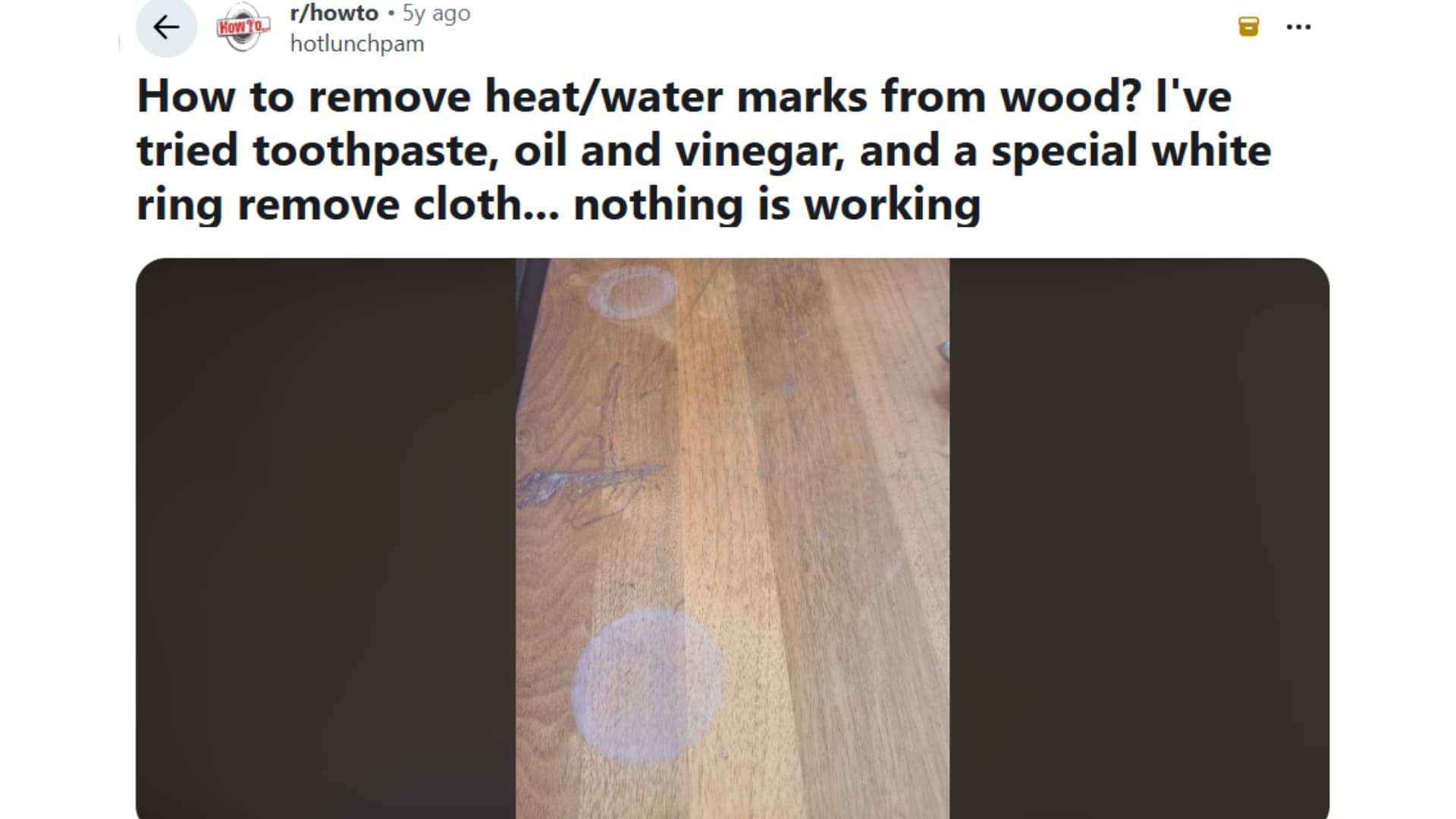
In a Reddit r/howto discussion, the original poster had already tried toothpaste, oil and vinegar, and a white ring removal cloth, but the stain was still there. Several people suggested using an iron with a towel between the heat and the wood.
The poster later said the ironing trick worked best, though a few smudges remained. Others mentioned mayonnaise for white rings, while some warned that oily fixes can soak into wood and cause problems.
The biggest takeaway from real experiences is to start with controlled heat for white marks, avoid rushing through multiple methods, and stop if the stain looks dark, deep, or unchanged after a few careful tries.
Commercial Products Worth Considering
When home remedies have run out of road, these product types are the next step. They’re faster and more consistent on stubborn or older water stains that household methods can’t fully clear.
| Product Type | What It Does | Best Use | Effectiveness |
| Wood Restorers | Oil-based formulas that revive dull or stained finishes | Light to moderate water marks on finished wood | High |
| Furniture Polishes | Surface cleaners that restore shine and remove mild staining | White rings and surface haze | Medium |
| Stain Removers | Stronger chemical cleaners formulated for deeper marks | Older or darker water stains | High |
| Wood Oils | Lightens deep tannin-based dark stains without destroying wood structure | Black marks, tannin oxidation stains, unfinished wood | Very High — requires safety precautions |
| Professional Kits | Multi-step restoration systems including filler, stain, and finish | Severe stains, aged damage, post-sanding repairs | Very High |
Oxalic acid is the one most people skip but shouldn’t overlook for genuinely dark wood stains. It’s the standard in professional refinishing for a reason, it neutralizes the tannin reaction rather than just bleaching over it.
Use it with gloves, good ventilation, and follow the neutralizing rinse step exactly as specified on the product label.
How to Prevent Water Stains on Wood
Prevention is easier than any of the methods above. The finish on your furniture is the only thing standing between the wood and whatever lands on it — protecting that finish is the real job.
- Use coasters and trivets without exception. Hot cups and cold glasses are the two most common sources of white rings. A coaster costs less than ten minutes of remediation work.
- Wipe spills immediately. Moisture left for more than a few minutes starts working through some finishes. The faster you act, the less the finish has to absorb.
- Seal and reapply finish on schedule. Polyurethane and lacquer degrade over time. A surface that was sealed five years ago may no longer be providing the protection it looks like it is.
- Control indoor humidity. Wood expands and contracts with humidity swings, which opens small cracks in the finish over time. Keeping humidity between 35 and 55 percent extends finish life and reduces stain risk.
- Polish regularly. Routine polishing maintains the protective layer on many finished surfaces. It’s not a substitute for resealing, but it slows the degradation of the outer coat.
These habits matter most on the wood surfaces that see daily use, dining tables, coffee tables, kitchen islands. High-use surfaces need more frequent attention than pieces that sit in a corner.
Frequently Asked Questions
Does vinegar remove water stains from wood?
Vinegar alone can lighten mild surface marks, but it works better combined with olive oil in a 50/50 mix. The acid breaks down mineral deposits; the oil conditions the finish. Apply with the grain and wipe clean after 30 minutes. It won’t touch deep dark stains.
Can baking soda remove water stains from wood?
Yes, for mild white marks on sealed surfaces. Mix it to a paste, apply with a soft cloth in light circular motions, and wipe clean. Do not use it on glossy or antique finishes — the mild abrasive will dull them. Non-gel white toothpaste works on the same principle.
How do you get dark water stains out of wood?
Dark stains that have penetrated the wood fibers need oxalic acid (wood bleach), not household remedies. After treatment, the area requires sanding, restaining to match, and resealing. If you’re not comfortable with that sequence, it’s a job for a furniture restoration professional.
Does mayonnaise remove water rings from wood?
It works on white rings, especially on older lacquer or shellac finishes where heat carries more risk. Apply a thin layer, leave it two to four hours or overnight, then wipe thoroughly clean. Leaving residue behind creates a sticky dull patch that’s a separate problem to fix.
Why do water stains come back after cleaning?
Usually because moisture is still trapped under the finish, or the surface wasn’t fully dried before it was buffed. Heat or humidity changes can push the mark back to the surface. If a white ring returns after treatment, repeat the heat method and ensure the piece dries completely before reassessing.
What type of wood is most resistant to water stains?
Hardwoods with tight grain and natural oils — teak, white oak, and walnut — resist moisture penetration better than softer species. Teak in particular contains natural resins that repel water even without an applied finish. Softwoods like pine absorb moisture fastest and stain most readily.
Can sunlight remove water stains from wood?
Indirect sunlight can sometimes dry a very fresh, shallow white stain over a few days. It is not reliable and should not be the first approach. Direct sunlight causes UV bleaching and can create a discoloration problem worse than the original stain.
When should you call a professional restorer instead of using DIY methods?
Call a professional when the stain is dark and covers more than a few inches, when the wood feels soft or spongy near the stain, when the finish has visibly cracked or bubbled, or when DIY attempts have left the surface looking worse than the original mark.
Summing Up
Water stains on wood don’t always mean permanent damage, but they do need the right approach to fix properly. Y
ou’ve seen how different stain types react differently and why choosing the correct method matters. Simple heat methods, oil-based fixes, and gentle abrasives can all help depending on how deep the stain has set.
The key is to test carefully, avoid rushing, and stop when the surface starts to show any damage or dullness.
Knowing how to remove water stains from wood the right way helps you protect furniture and keep surfaces looking clean for longer. Try the method that matches stain type and share your experience or explore wood care tips.