

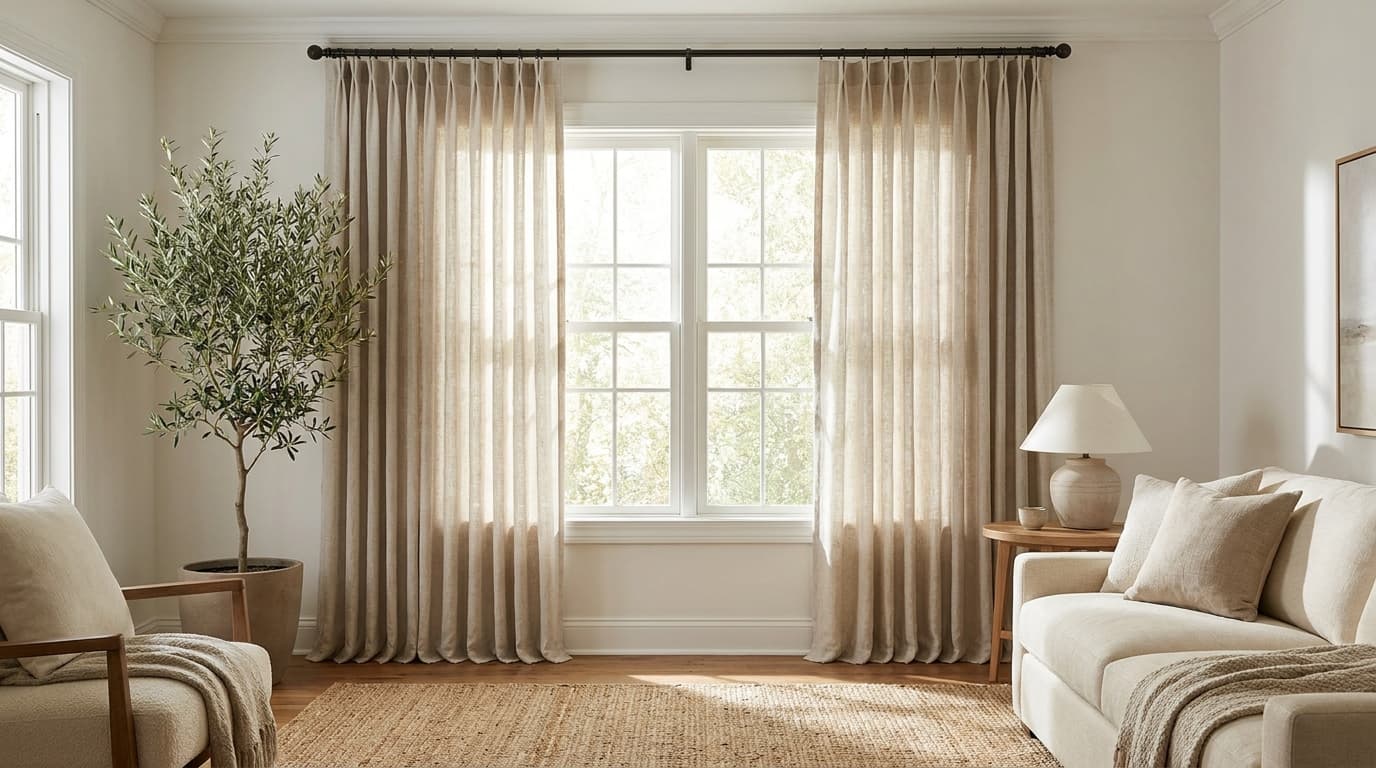


Curtains can completely change how a room feels, but the installation process often comes with more measuring, drilling, and adjusting than expected.
If the height is wrong, your window looks smaller, if the width is wrong, the room feels cramped instead of open.
To hang curtains, install brackets 4–6 inches above the window frame and 3–4 inches out on each side. Attach the rod, then hang your curtain panels.
Learning how to hang curtains the right way changes how a whole room feels. A few extra inches in the right spots can make ceilings look taller, and windows look wider.
You will learn every step by the end, from gathering tools to hanging the final panel.
What You Need to Hang Curtains
Before you touch the wall, gather everything on this list. Having tools ready saves trips up and down the ladder.
Tool/Material:
- Tape Material
- Level
- Pencil
- Drill
- Wall Anchors
- Stud Finder
- Curtain Rod
- Brackets
- Curtain panels
- Step ladder
If you’re working with plaster or brick walls, a masonry drill bit makes the job easier. Standard wall anchors don’t always grip well in these materials.
How to Hang Curtains Step-By-Step
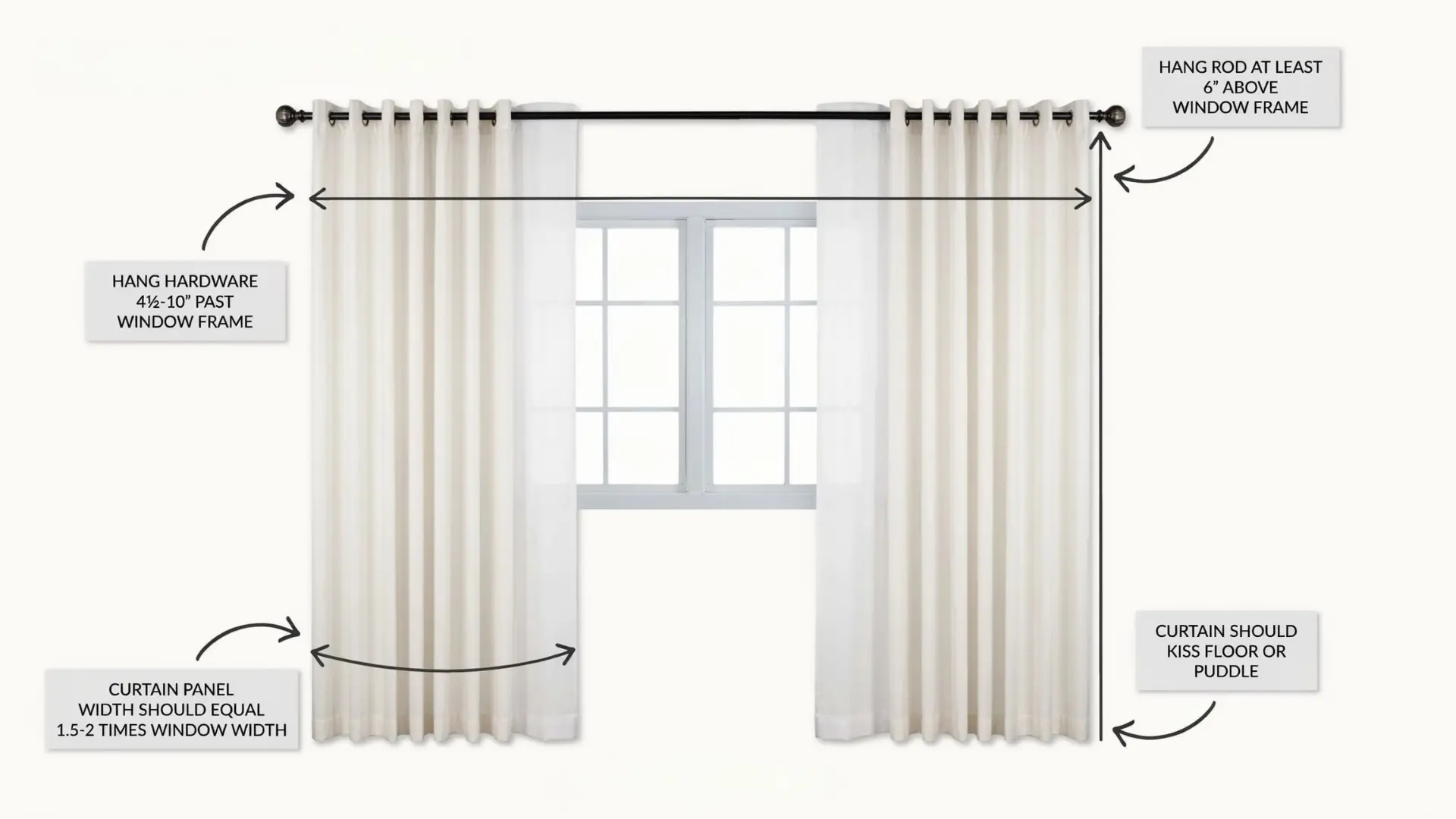
Once you’ve gathered your tools and hardware, the actual process moves quickly. Each step builds on the last, from measuring your window to giving the panels a finished look.
Follow these steps to get a rod that sits straight and curtains that hang the way you pictured them.
Step 1: Measure Your Window and Decide Curtain Placement
Start by measuring the width of your window frame. Add extra inches on each side if you want curtains that let in more light when open, and measure your curtains accordingly.
Next, decide how high you want the rod. Most designers suggest placing it 4 to 6 inches above the window frame. This trick makes ceilings look taller.
For length, decide if you want curtains that graze the floor, break slightly, or pool at the bottom. Each style gives a different look, measured from where the rod sits to your chosen endpoint.
- Width: Measure your window frame, then add 4 to 8 inches to each side for the rod. This extra width lets curtains stack neatly when open, rather than covering the glass.
- Length: Measure from where your rod will sit down. A common example is a standard 84-inch panel, which works well for windows with 8-foot ceilings when the rod sits close to the top.
Step 2: Mark Where the Curtain Brackets Will Go
Use your pencil to mark bracket positions on the wall. Check both marks with a level so the rod hangs straight.
Brackets usually sit 3 to 4 inches beyond the window frame on each side. This width lets curtains stack fully open without blocking daylight.
Suppose you’re using a stud finder, mark where the studs are, too. Hitting a stud gives your bracket extra hold, especially with heavier curtains.
Step 3: Install The Curtain Brackets
Drill pilot holes at your marked spots. If you’re not hitting a stud, insert wall anchors first for added grip. Screw each bracket into place. Test them by gently pulling to make sure they feel secure before moving forward.
Double-check both brackets with your level. A small tilt now becomes an obvious slant once the rod and curtains go up.
Step 4: Attach The Curtain Rod
Slide the rod into the installed brackets. Most rods snap into place or rest with a simple locking mechanism.
Give the rod a gentle shake to confirm it’s secure. If it wobbles, tighten the bracket screws or check that the rod is seated correctly.
Step 5: Hang the Curtain Panels
Slide your curtain panels onto the rod before locking the final bracket piece, if your rod design requires it. This step depends on the curtain style you’ve chosen.
Different curtain styles hang in different ways:
- Rod pocket curtains: They slide directly onto the rod through a built-in fabric channel.
- Grommet curtains: They have metal rings sewn into the top that slip easily over the rod.
- Tab top curtains: They use fabric loops that wrap around the rod.
- Pinch pleat curtains: Need hooks that clip onto rings, which then hang from the rod.
- Tie-top curtains: They are tied directly around the rod with fabric strips.
Each curtain style creates a different fold pattern when hung. Grommet curtains tend to fall in neat, even waves, while rod pocket styles bunch more loosely.
Step 6: Adjust Curtains for a Finished Appearance
Once your panels are hanging, take a step back and check the fall. Smooth out any twisted fabric near the rod.
Give the curtains a light steam or iron if they look creased from packaging. This small step makes a noticeable difference in the finished look.
Pull the panels open and closed a few times. This helps the fabric relax into its natural folds faster.
How High Should You Hang Curtains
Most curtains look best when the rod sits 4 to 6 inches above the window frame. This small gap makes the window look taller than it is.
If your room has high ceilings, go higher. A rod placed closer to the ceiling stretches the wall and makes the whole room feel bigger.
Based on ceiling height:
- Standard 8-foot ceiling: Hang the rod 4 to 6 inches above the frame.
- 9- to 10-foot ceiling: Hang the rod 6 to 10 inches above the frame.
- Very high ceiling: Hang the rod close to the ceiling, leaving a 2- to 3-inch gap.
For length, let the panel end where you want the eye to stop. Floor-length curtains should sit just above the floor or graze it. Puddled curtains need extra fabric pooling at the bottom.
Pro Tip: When in doubt, hang the rod higher, not lower. Extra height rarely looks wrong, but a low rod always makes a window look smaller.
Choose the Right Curtain Rod and Hardware
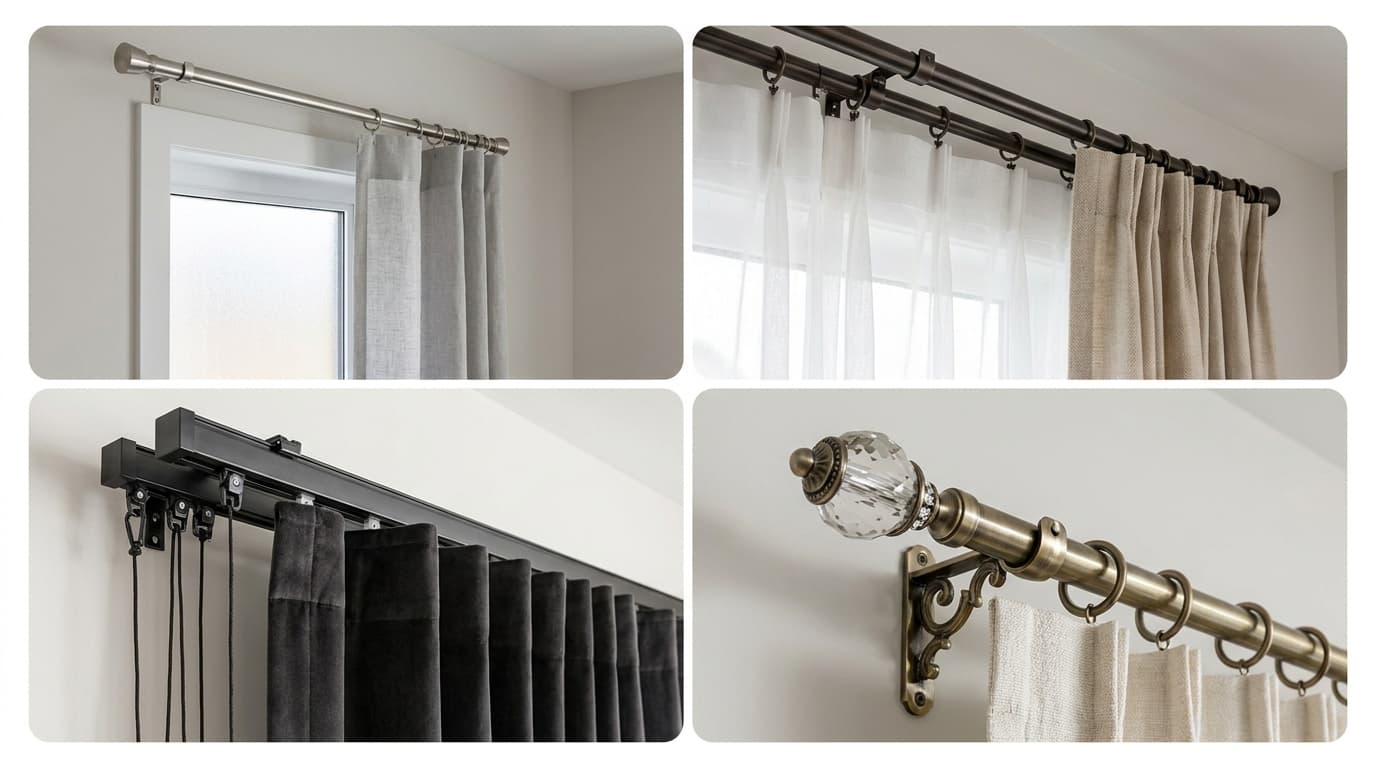
Picking the right rod affects both how your curtains hang and how long they last. Not every rod works for every curtain weight.
- Standard curtain rods work well for lightweight or medium curtains. They come in adjustable lengths, so you can match them to most window sizes.
- Double rods let you layer sheers with heavier drapes. This setup works well if you want both privacy and light control.
- Traverse rods use a pulley system to open and close curtains smoothly. These suit heavier fabrics that are harder to pull by hand.
- Decorative rods with finials add a finishing touch to the room. These work best when the rod remains visible rather than hidden behind fabric.
For hardware, match your bracket size to your curtain weight. Heavy blackout panels require deeper brackets and stronger anchors than sheer curtains do.
How to Hang Curtains with Drilling
Drilling gives your curtain rod the strongest hold. This method works best for heavy fabric or a rod that carries a lot of weight.
Here’s the quick version of the process:
- Mark your bracket spots with a pencil and a level.
- Drill pilot holes into the wall.
- Add wall anchors if you’re not hitting a stud.
- Screw the brackets into place.
- Attach the rod, then hang your curtain panels.
Drilling works on drywall, wood, plaster, and brick. Just match the anchor or bit to your wall type, and it holds up well for years.
How to Hang Curtains without Drilling
Renters and anyone looking to avoid wall damage still have solid options. These methods skip the drill entirely.
- Tension rods: These fit inside the window frame and are held in place by spring pressure. No screws or anchors needed.
- Adhesive hooks: Command-style hooks hold light-to-medium curtain rods. Check the weight limit printed on the packaging first.
- Magnetic curtain rods: These work only on metal frames, such as those on sliding doors or garage windows.
- Clip-on rods: These attach directly to the top of the window frame using spring clips.
Tip: Adhesive hooks work best with lightweight curtains, since heavier fabric can pull the hooks loose over time. Test the hook’s grip for a full day before hanging your final panels.
Benefits of Hanging Curtains without Drilling
Skipping the drill comes with real perks, especially if you rent your home or want a quick fix.
Here are the main benefits:
- No wall damage: Your walls stay free of holes and marks.
- Renter-friendly: You keep your security deposit safe, since there’s nothing to patch or repair.
- Faster setup: Most no-drill methods take minutes, not hours.
- No tools required: You skip the drill, screws, and anchors altogether.
- Easy to move: You can shift your curtains to a new spot or room without any wall repair.
- Budget-friendly: You save money on drill bits, anchors, and other hardware.
These methods work well for lightweight and medium curtains. If you plan to hang heavy blackout panels, check the weight limit on your hardware first.
Common Curtain Hanging Mistakes to Avoid
Hanging the rod too low makes the window and ceiling look shorter than they are. Choosing a rod that’s too narrow blocks light, since curtains can’t clear the window even when fully open.
Skipping the level creates a visible slant, since uneven brackets show once the rod and curtains go up.
Ignoring curtain weight causes trouble, too, since heavy fabric on weak brackets can pull loose within weeks.
Buying panels that are too short can make a room feel unfinished, since curtains stop above the floor. Forgetting the wall type is another common slip, since plaster and brick need different anchors than drywall.
Tips for a Polished Curtain Look
A few finishing touches make a noticeable difference once your curtains are up.
- Steam or iron panels before hanging to remove packaging creases.
- Use curtain weights sewn into the hem for a straighter fall.
- Tie back curtains during the day to let in more natural light.
- Match curtain color to your wall tone for a coordinated look, or contrast for a bolder statement.
- Rotate panels occasionally if they hang in direct sunlight, since fabric can fade unevenly over time.
- Use curtain-sewing techniques to add curtain weights to the hem for a straighter fall and a more tailored appearance.
Final Thought
Curtains shape the feel of a room in ways that are easy to overlook. The right rod height turns a standard window into something that feels intentional. The right width keeps panels from swallowing daylight when pushed open.
Both measurements take five minutes to get right and much longer to fix once the brackets are in the wall.
Follow the steps in order, check each one with a level, and mark the wall before drilling. A careful, patient first pass beats a rushed one every time.
Whether you are drilling into drywall for blackout panels or clipping a tension rod into a rental window, the process is the same. Measure carefully, hang with care, then stand back and let the room tell you if it worked.
Frequently Asked Questions
How High Should Curtain Rods Be Hung?
Most curtain rods should sit 4 to 6 inches above the window frame. This placement makes the window and ceiling look taller.
How Much Wider Than the Window Should a Curtain Rod Be?
A curtain rod should extend 3 to 8 inches beyond the window frame on each side. This width lets curtains stack open without blocking the glass.
Can You Hang Curtains without Drilling Holes?
Yes, tension rods, adhesive hooks, and clip-on rods all work without drilling. These options suit renters or anyone who wants to avoid wall damage.
What Curtain Length Looks Best?
Curtains that graze the floor or break slightly work well in most rooms. Pooling fabric suits a more formal look, while a slight break lends a casual feel.
How Do You Keep Curtains from Sagging in the Middle?
Use a sturdy rod rated for your curtain weight, and add a center support bracket for wide windows. This prevents the rod from bowing under heavier fabric.