

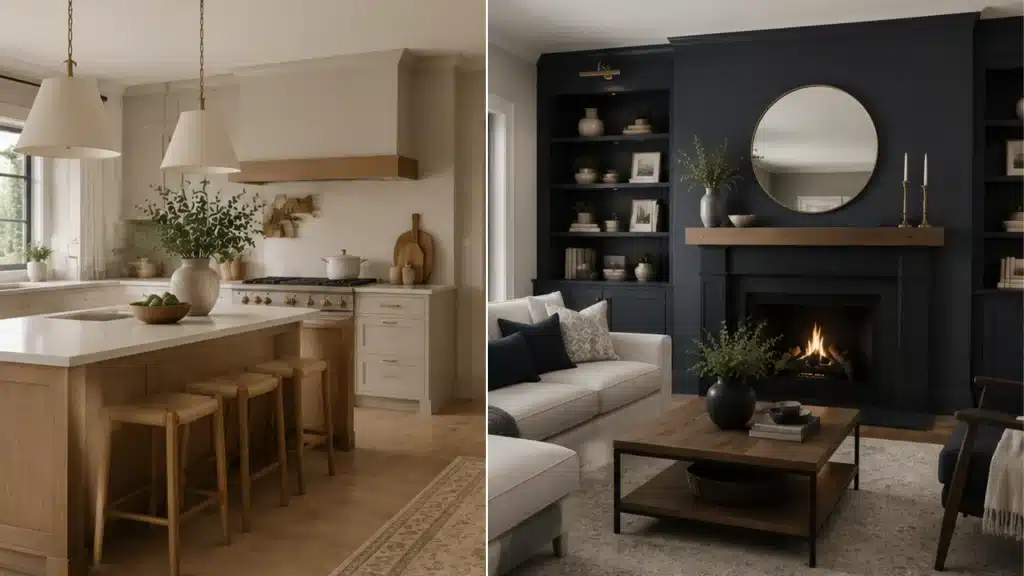


I’ve spent more hours than I’d like to admit digging into this color, and it still catches me off guard every time. Edgecomb Gray is one of those Benjamin Moore colors people can never quite agree on: gray or beige?
Honestly, both, and that’s the whole appeal.
How it actually looks in your room depends on more than the paint chip. I’ve seen homeowners fall for a sample at the store, only to watch it look completely different once it’s up on their living room wall.
Natural light, flooring, and nearby finishes can shift it from soft beige to a cooler gray, so this blog breaks down the undertones, LRV, and pairings that actually hold up before you commit to a gallon.
What Color is Benjamin Moore Edgecomb Gray?
Edgecomb Gray HC-173 sits in Benjamin Moore’s Historical Collection. It is also known as Baby Fawn OC-15 in some regional collections.
That trips people up when they’re comparing swatches online, leading to two names for the same chip.
It’s a warm greige, built from both beige and gray rather than leaning hard into either. That middle-ground quality makes it a transitional color. It doesn’t scream farmhouse, and it doesn’t scream modern gray box.
It just sits quietly in the background and lets furniture and trim do the talking.
A simple way to think about it. Too gray? No. Too beige? No. A balanced warm neutral that adapts to the room? Yes.
| Feature | Details |
|---|---|
| Paint Color | Benjamin Moore Edgecomb Gray |
| Color Code | HC-173 |
| Collection | Historical Collection |
| Type | Warm greige |
| LRV | 63 |
| Undertones | Warm beige-tan base with a faint green-gray note |
| Best For | Walls, open-concept spaces, bedrooms, exteriors |
What Undertones Does Benjamin Moore Edgecomb Gray Have?
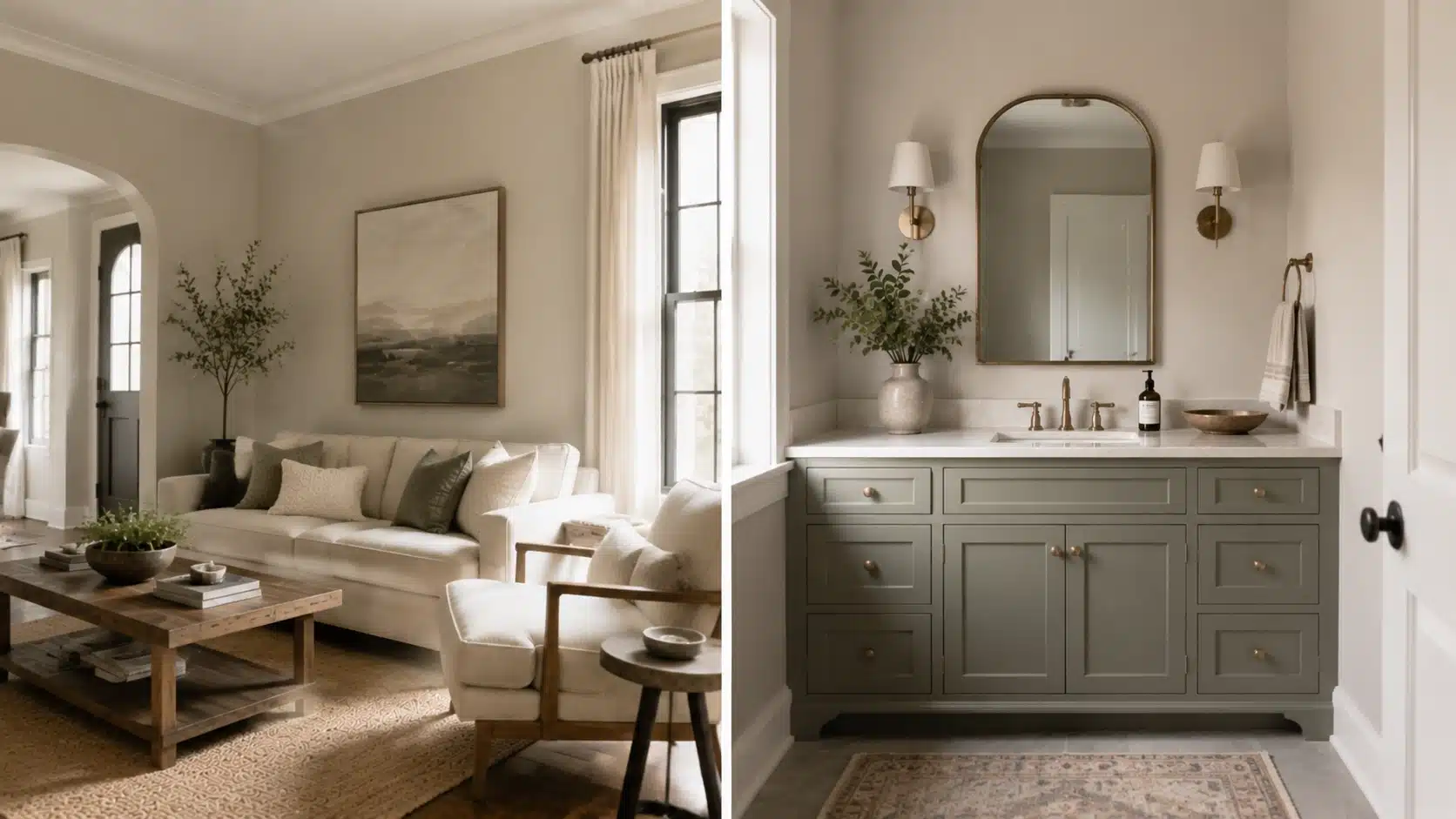
Edgecomb Gray carries a faint gray-green undertone beneath its warm beige-tan base.
It rarely reads as true green on the wall. Instead, it mostly shows up under fluorescent bulbs or in rooms with heavy greenery just outside the window.
What it does is keep the color from tipping too far into pink or peach, which is part of why it photographs so evenly across different rooms.
If you want to lean into that undertone rather than mute it, Saybrook Sage carries a similar gray-green base at full strength. It’s an easy match for an adjoining room or a powder bath.
- Does Edgecomb Gray Look Pink or Purple? Occasionally, in low or artificial light. Warm flooring, brick, or incandescent bulbs can pull out a dusty pink cast more than the paint itself does.
- Is Edgecomb Gray More Beige or Gray? It depends on exposure. North-facing rooms push it toward gray, south-facing rooms bring out beige, and evening light adds warmth either way.
- Does Edgecomb Gray Have a Yellow Undertone? Not really. Its warmth reads more beige-tan than yellow, which keeps it from getting the golden cast that some warm neutrals show under bright artificial light.
Best Rooms to Use Benjamin Moore Edgecomb Gray
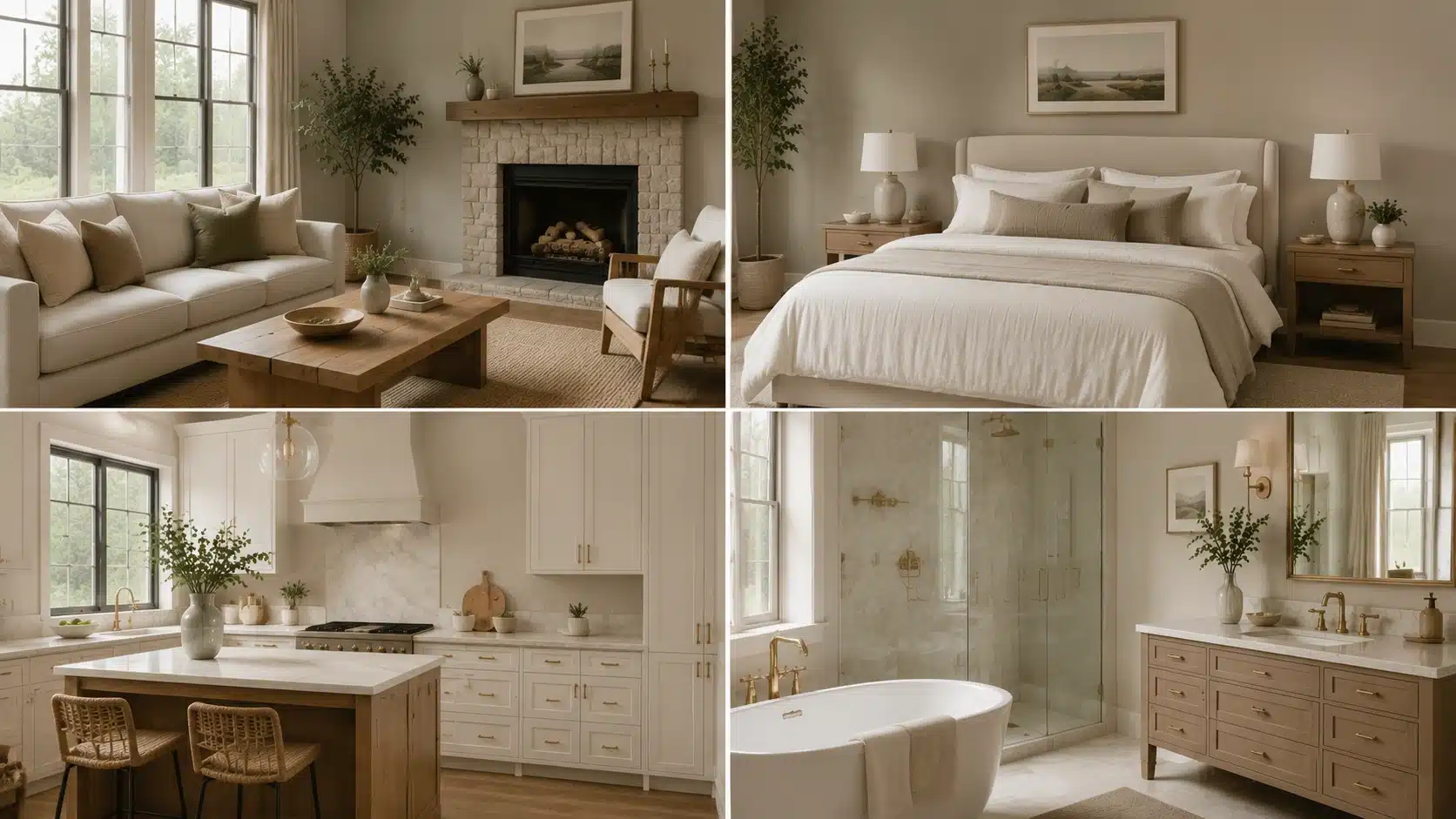
Edgecomb Gray works in almost any room, but it shines where natural textures and warm materials already exist. Here is how it performs across the most common spaces.
- Living rooms handle this color well, particularly open layouts with natural textures like wood flooring, linen upholstery, and stone accents. It reads calm without going flat.
- Bedrooms benefit from the same softness. Paired with soft whites and warm neutrals on bedding, it creates a restful, low-contrast feel that doesn’t compete with décor.
- Kitchens work well when this greige is on the walls behind white or off-white cabinetry, especially with marble or quartz counters and brass or matte black hardware for contrast.
- Bathrooms do best when paired with warm-toned stone or tile. A very cool blue-gray tile can clash with its warmth, making both look slightly off.
Colors That Pair Well with Edgecomb Gray
Edgecomb Gray rarely stands alone in a room. Its warm, in-between quality makes it a great backdrop for both bold accents and quiet neutrals.
The right pairing depends on whether you want strong contrast, added depth, or something that blends in without competing for attention.
1. Benjamin Moore Hale Navy
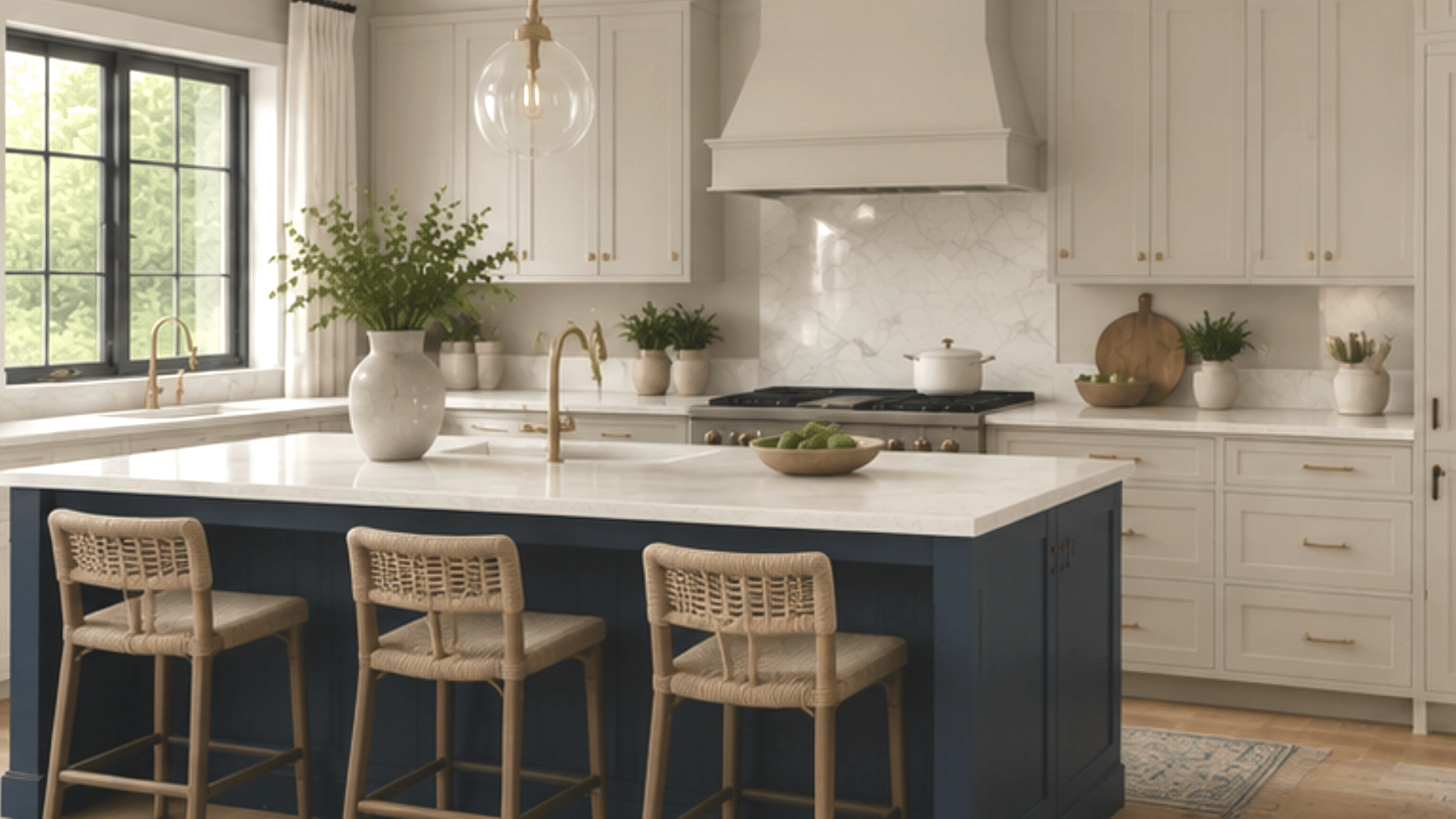
Hale Navy and Naval give Edgecomb Gray something grounded to play against.
It works well on a front door, a kitchen island, or an accent wall in a living room or entryway, where the contrast reads as intentional rather than heavy-handed.
Keep the surrounding trim in a soft white so the navy has room to stand out.
2. Natural Wood Tones
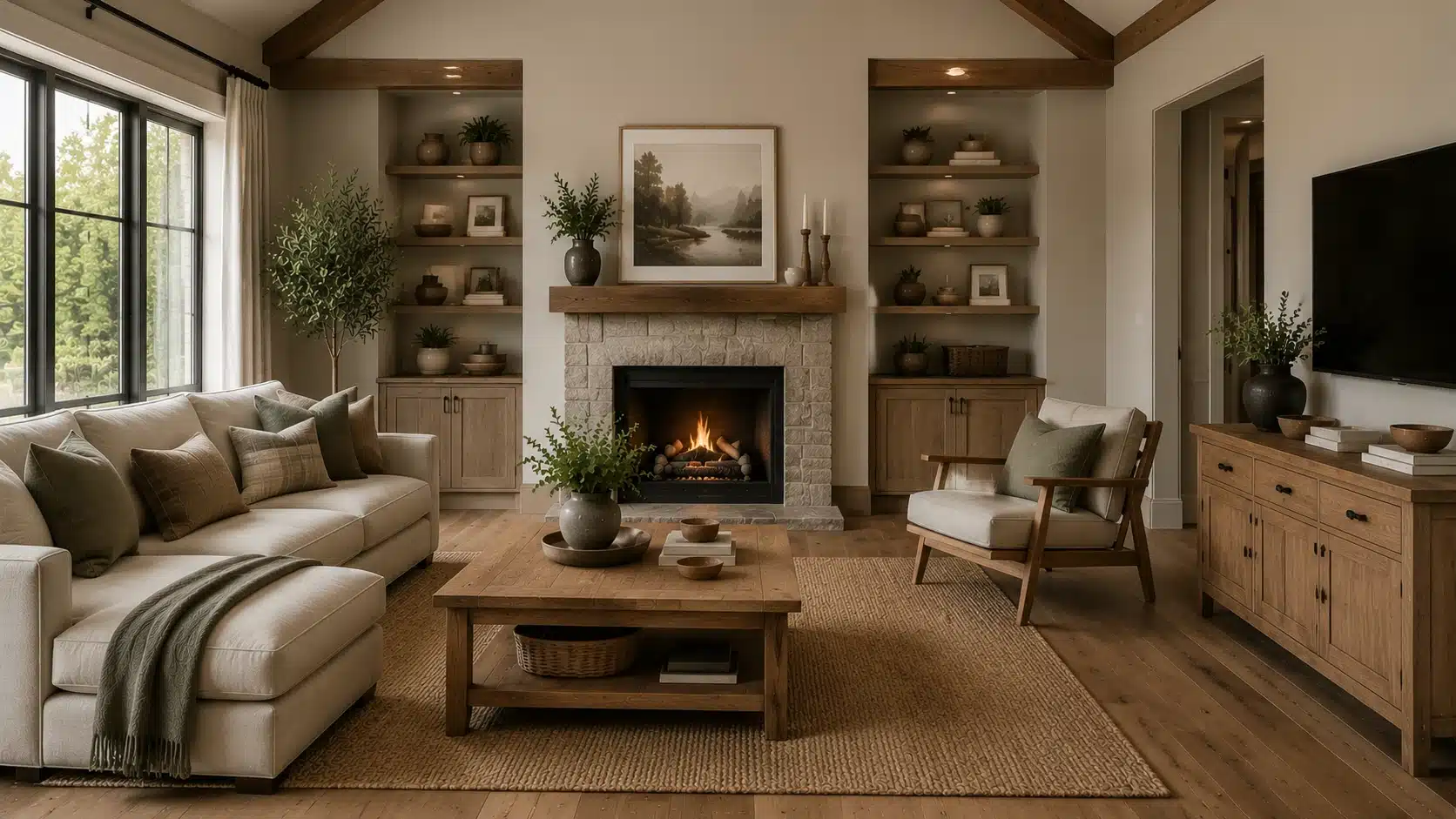
Oak and walnut reinforce the earthy quality of Edgecomb Gray rather than fighting it.
Use them for flooring, open shelving, or furniture in a living room, kitchen, or bedroom to keep the palette grounded and warm. Lighter wood tones, such as white oak, also work well, especially in rooms with plenty of natural light.
3. Benjamin Moore Kendall Charcoal
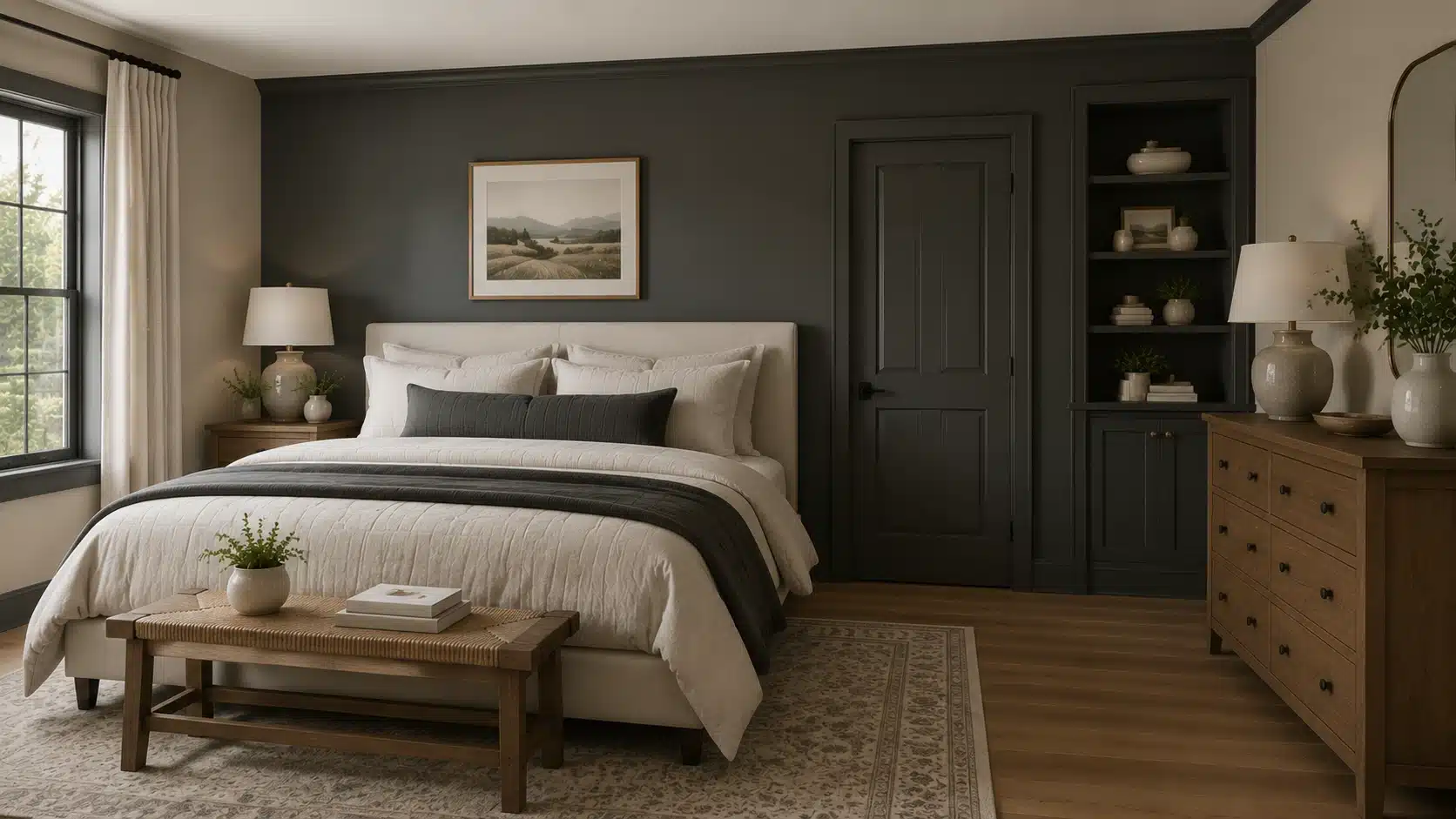
Kendall Charcoal adds depth without clashing with Edgecomb Gray’s warmth.
Use it on trim, built-ins, or a fireplace surround in a living room, study, or home office, anywhere you want definition without introducing a colder undertone.
It also works well as a door color in a hallway painted in Edgecomb Gray.
4. Benjamin Moore White Dove
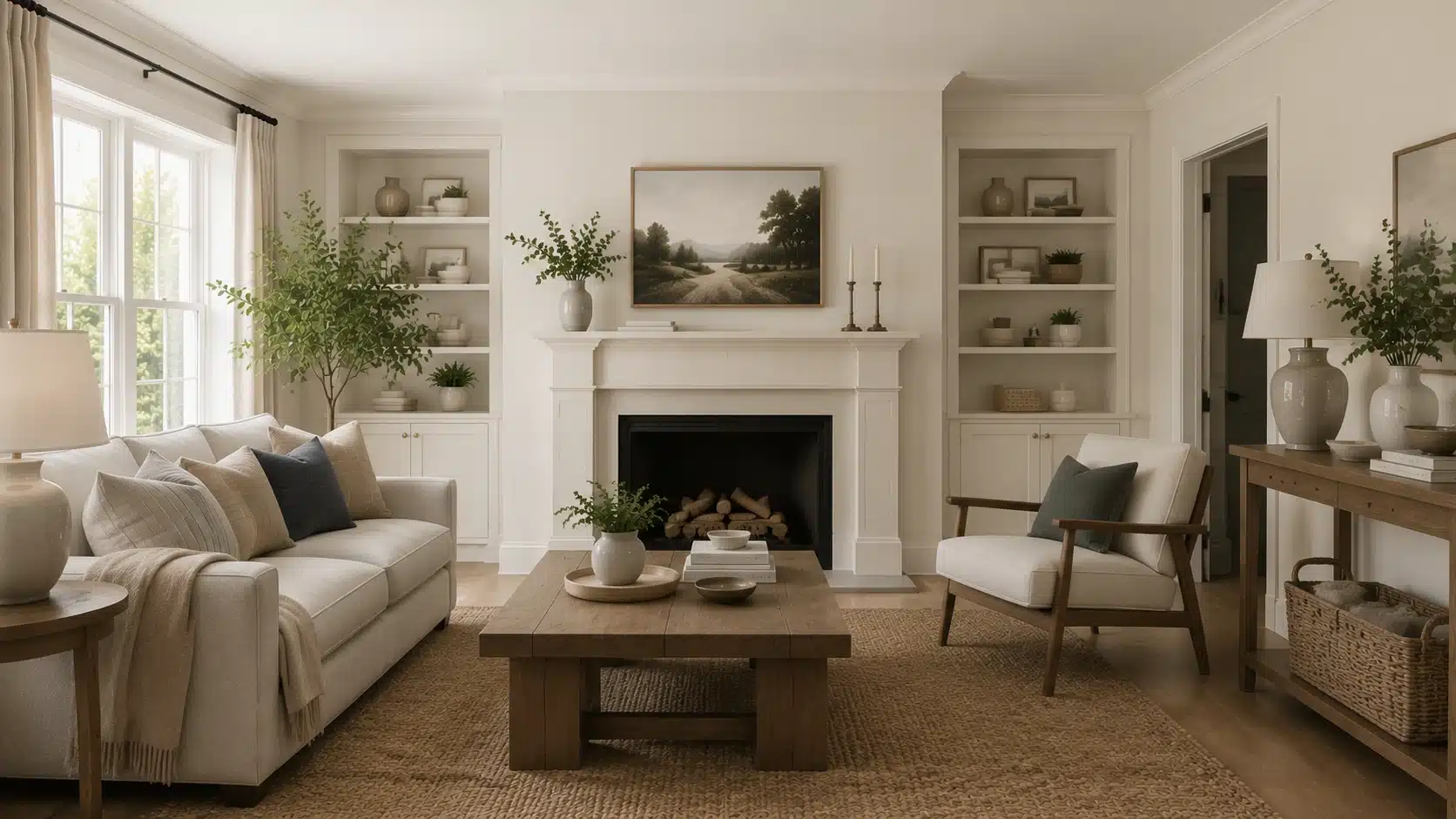
White Dove is the most common whole-home pairing, since it creates a soft, cohesive palette.
It works well on trim, ceilings, and kitchen or bathroom cabinetry throughout a house painted mostly in Edgecomb Gray. The two colors share enough warmth that the transition between rooms never feels abrupt.
5. Benjamin Moore Vintage Vogue
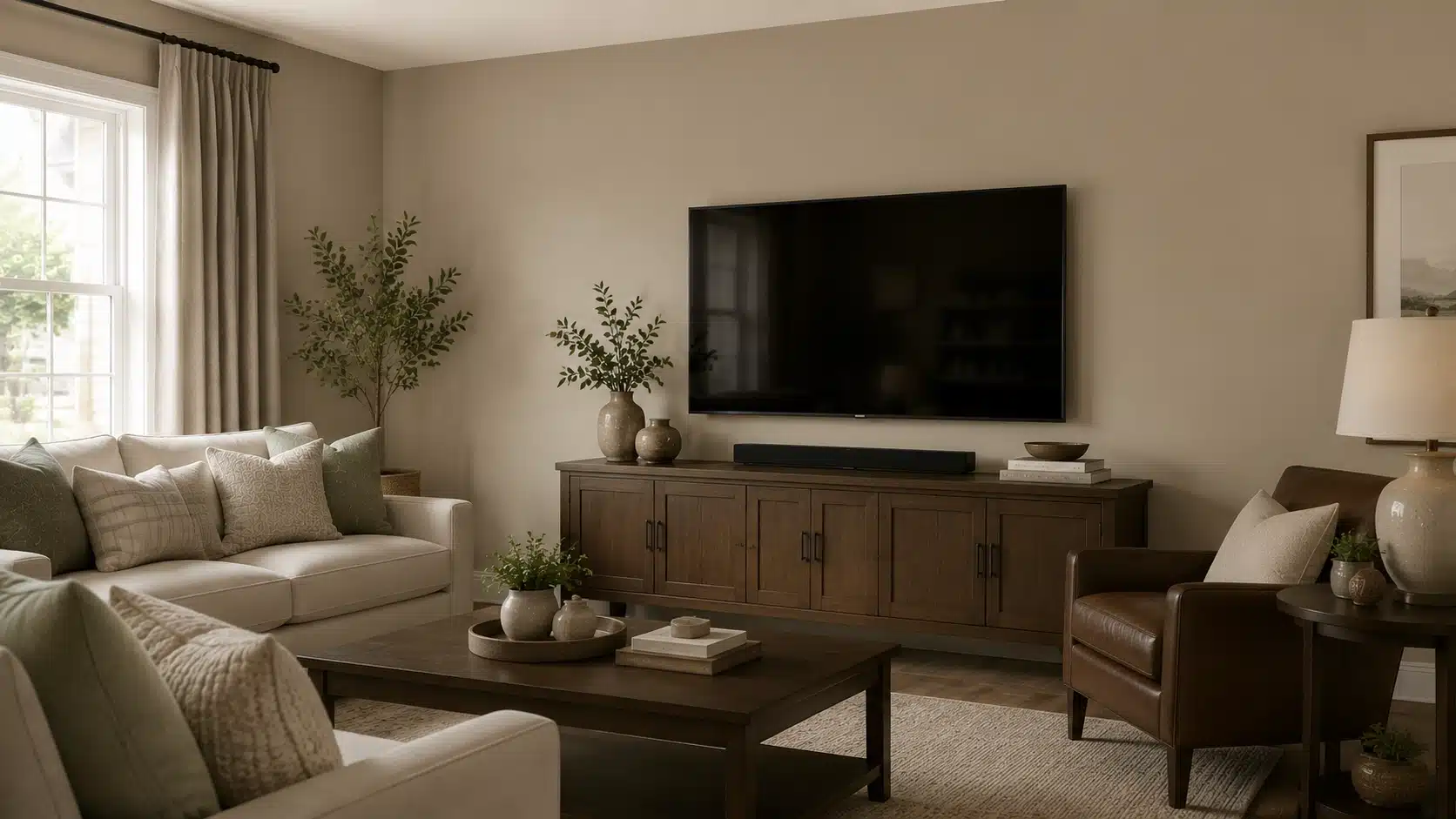
Vintage Vogue brings a moody, smoky green that grounds a room without clashing with Edgecomb Gray’s warmth.
It works especially well on a kitchen island, a dining room accent wall, or an entryway for a bit of drama. Keep it to one surface rather than the whole room, so it reads as an intentional accent.
Similar Paint Colors
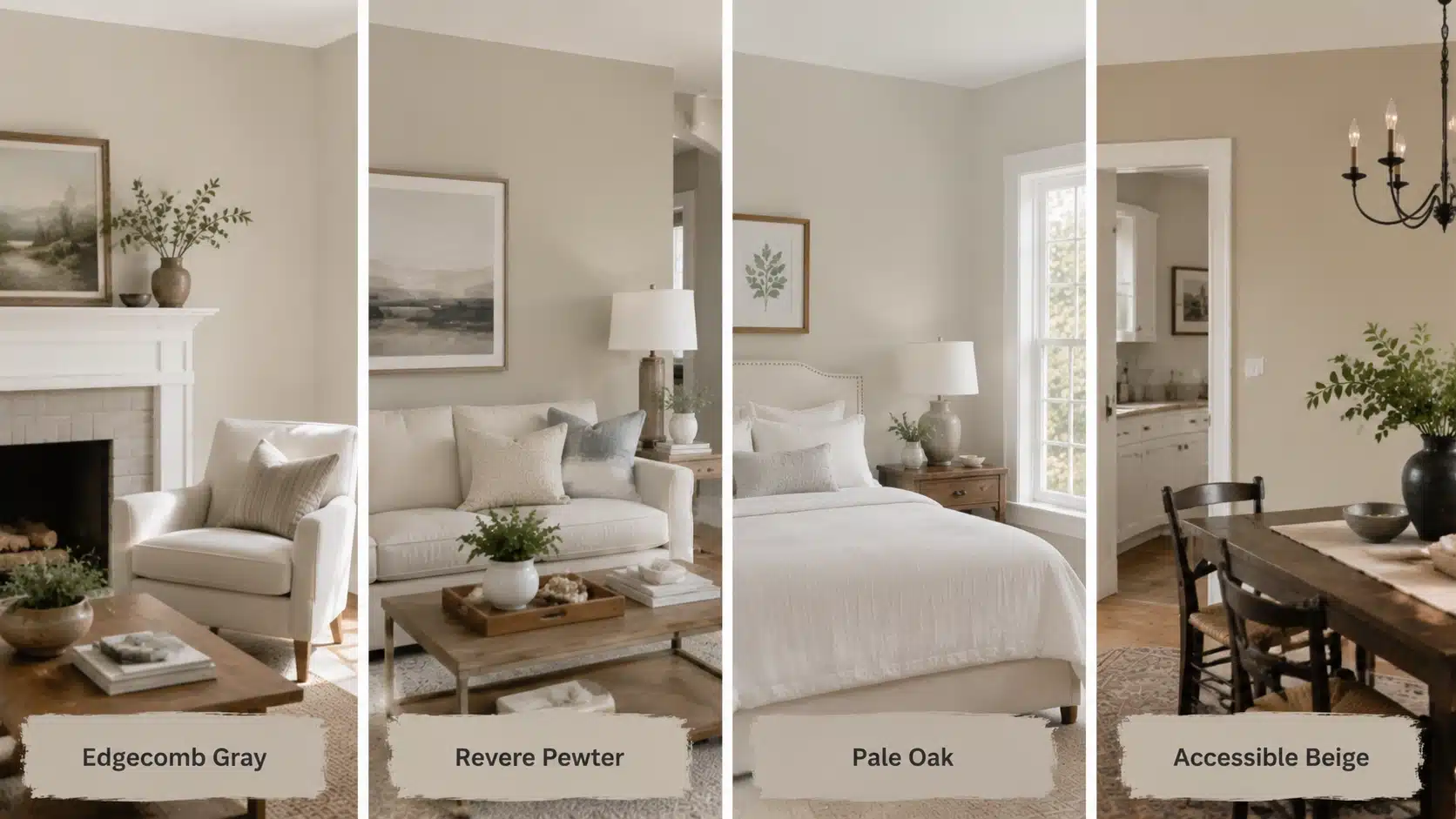
Edgecomb Gray is often compared with a handful of other Benjamin Moore neutrals, since several fall within the same warm, medium-light range.
Edgecomb Gray vs Revere Pewter
Edgecomb Gray is noticeably lighter and reads softer on the wall. Revere Pewter’s LRV is around 55, giving it more visual weight and making it a better fit for rooms that need a grounded, moodier feel.
Edgecomb Gray vs Pale Oak
Pale Oak reads airier and slightly cooler than Edgecomb Gray, with less beige presence overall. It works well in bright, light-filled rooms, while Edgecomb Gray holds its warmth better in spaces with less natural light.
Edgecomb Gray vs Agreeable Gray
Edgecomb Gray leans warmer and more beige overall, while Agreeable Gray reads cooler and closer to a true neutral gray. It suits homes already built around cool finishes, where Edgecomb Gray would feel out of place.
Edgecomb Gray vs Accessible Beige
Edgecomb Gray carries more gray influence and reads less tan than Accessible Beige. It leans further into a warm tan, with less gray to soften it, making it the warmer choice of the two for traditional interiors.
Of these, Revere Pewter draws the most comparisons, since the two colors are easy to confuse. Its lower LRV gives it more weight, making it the better pick for rooms that need depth.
How Does Edgecomb Gray Look in Different Lighting?
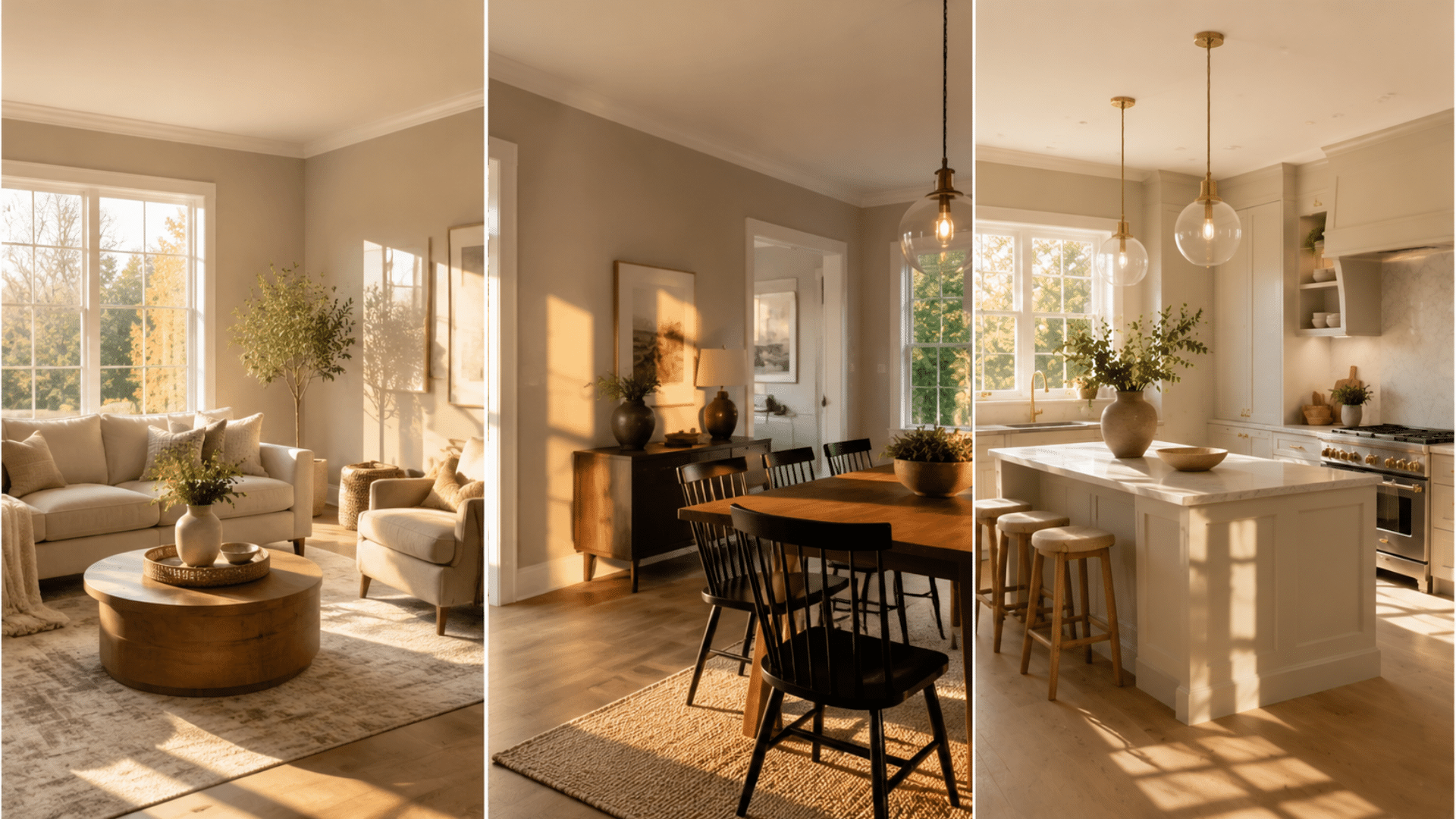
The same gallon can look different from room to room. Daylight direction and bulb temperature pull Edgecomb Gray toward its gray or beige side in ways a paint chip never shows.
1. North-facing rooms
- The gray side becomes more noticeable here. It still reads warm compared to a true cool gray, but loses some beige softness. Pairing it with warm wood tones or brass fixtures helps counter the coolness.
2. South-facing rooms
- This pulls the color toward its beige and tan side. According to one in-depth color review, warm southern light plays up the color’s beige undertones and can even bring out a hint of pink.
3. East-facing rooms
- Eastern light runs warm and yellow in the morning but turns cooler by afternoon, pushing the color from beige toward a cooler greige as the day goes on.
4. West-facing rooms
- Western light does the opposite. It starts cool and shadowy in the morning, then turns warm and red-tinged by evening, which draws out the color’s beige tendencies later in the day.
Can You Use Benjamin Moore Edgecomb Gray on Cabinets?
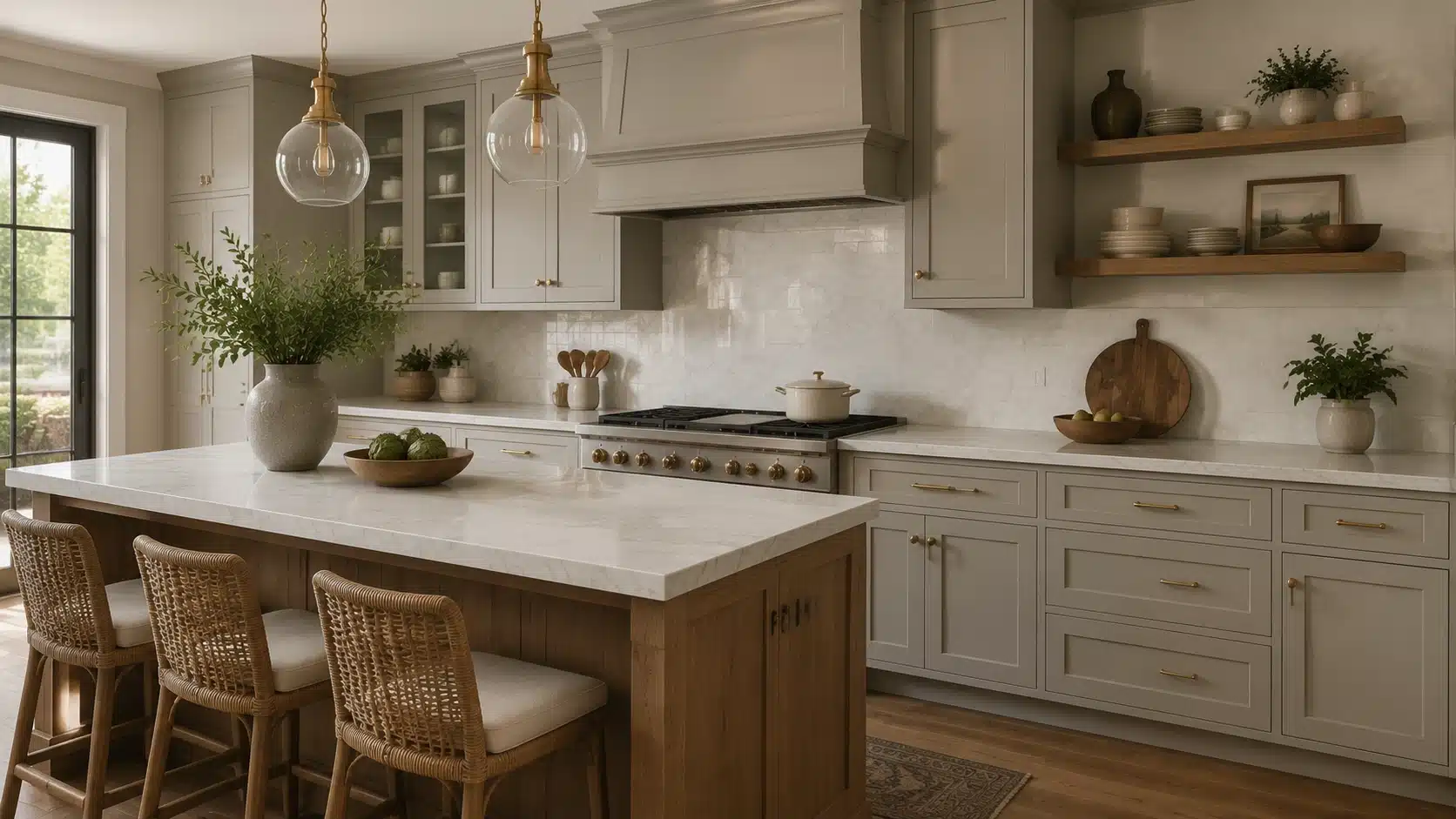
Yes. It’s a common choice for traditional and transitional kitchens looking for something softer than stark white. It pairs naturally with:
- Benjamin Moore White Dove
- Benjamin Moore Chantilly Lace
- Brass or aged-brass hardware
- Natural wood open shelving or floating shelves
One caution worth repeating from professional painters: always test a sample directly on the cabinet material before committing.
Cabinet finishes reflect light differently than flat wall paint, especially with satin or semi-gloss sheens. A color that reads warm and soft on a wall can look noticeably different on cabinet doors.
Is BM Edgecomb Gray Good for Exteriors or Interiors?
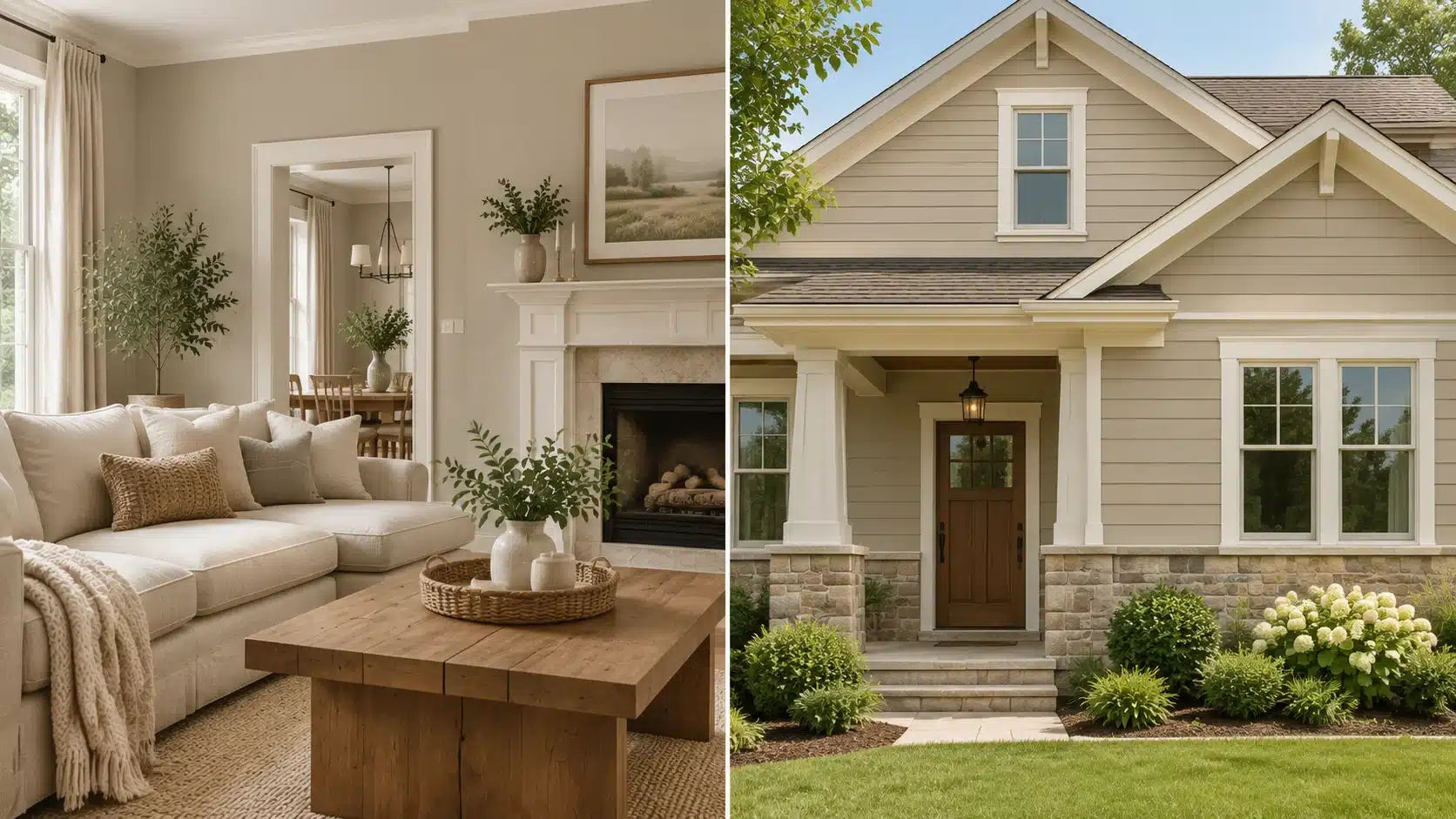
It holds up well outdoors, particularly on homes with natural stone, brick, or wood accents.
The warmth in the undertone complements farmhouse and traditional exteriors without looking stark against greenery or brick.
- Indoors, it works just as well on walls, cabinets, and trim, since the same warm base that reads well in daylight also holds up under standard interior bulbs.
- Exterior sunlight is far more intense than interior lighting, which changes how the color behaves compared to an interior wall:
| Setting | How Edgecomb Gray Reads |
|---|---|
| Interior walls | Balanced warm greige that shifts with room exposure and bulb type |
| Exterior siding or trim | Brighter and lighter overall, since direct sunlight is much stronger than indoor light. |
Always test a large sample board outdoors, on more than one side of the house, before painting the full exterior.
The Pros and Cons of Choosing Edgecomb Gray
No paint color works everywhere, and Edgecomb Gray is no exception. Weighing where it excels against where it can fall short helps set realistic expectations before you commit to a full room or a whole house.
| Pros | Cons |
|---|---|
| Warm without tipping into full beige, so it avoids feeling dated | Appearance shifts noticeably depending on room orientation and light, so a single swatch can be misleading |
| Works across traditional, transitional, and modern farmhouse styles without a full redesign | Can look slightly muddy in rooms with limited natural light or heavy shade |
| Pairs easily with both cool and warm wood tones, which simplifies furniture shopping | Needs testing against existing flooring and furniture before committing, especially in older homes |
None of this makes Edgecomb Gray a bad choice. It just means the room’s light and existing finishes matter as much as the paint chip does.
Is Edgecomb Gray Right for Your Home
If you want a neutral that leans warm rather than cool, this color is a good fit.
The bigger question is whether your room gets consistent light and already leans warm in its existing finishes. Edgecomb Gray shifts more than most colors depending on exposure and what’s around it.
It works best in homes already leaning toward warm tones, with wood tones, brass fixtures, or natural stone nearby. It’s less reliable in cool, blue-based spaces.
A sample board checked across a few hours of daylight will tell you more than any photo online. Start there before buying the gallon.
Frequently Asked Questions
Will Edgecomb Gray clash with cool-toned flooring?
It can. Gray-based tile, cool oak, or blue-undertone hardwood may pull out unwanted contrast. Warm or neutral wood tones are a safer match, so test a sample against your actual flooring before committing.
How many coats of Edgecomb Gray does a room need?
Most walls need two coats for even coverage, especially over a darker existing color. A tinted primer matched to the paint base can help reduce streaking on the first coat.
Does Edgecomb Gray look good in small rooms or hallways?
Yes. Its medium-light LRV keeps small spaces from feeling boxed in, though hallways with little natural light may need a warmer bulb to avoid a flatter, grayer look.
Is Edgecomb Gray a safe choice for resale value?
Real estate agents often favor warm neutrals like this one because they appeal to a wide range of buyers and photograph well for listings, without the risk of a trend-heavy color.
Does Edgecomb Gray work on ceilings?
It can, particularly at a lighter tint, if the walls are already the full shade. A flat ceiling finish in Edgecomb Gray softens the contrast between walls and ceiling in rooms with lower light.