

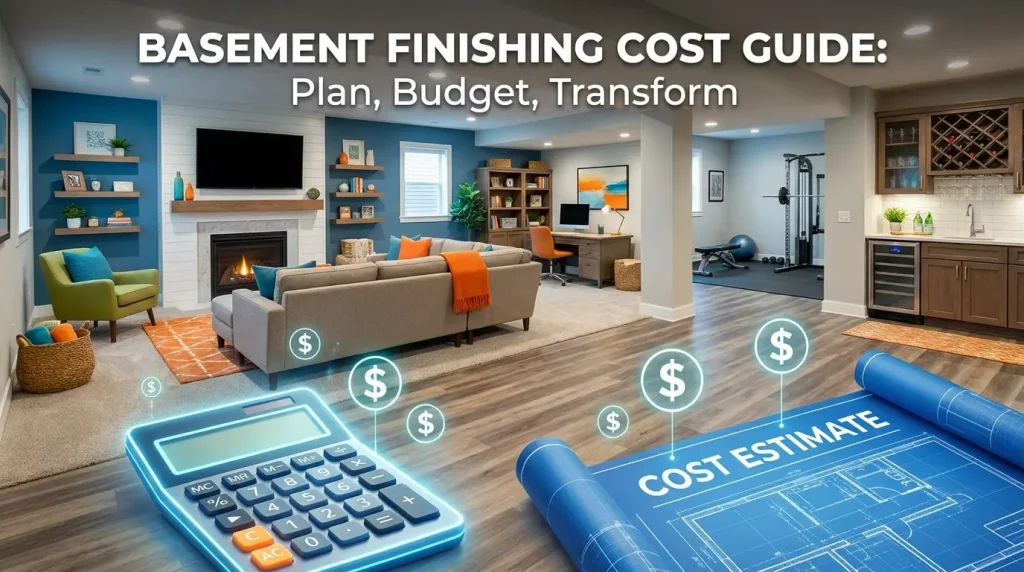


Basement finishing cost runs between $15,000 and $75,000 for most US homeowners, with a national average around $30,000 to $50 per square foot for standard work. That is the honest answer up front.
Where your project lands within that range depends on four things: the size of the space, the condition it is in before anyone picks up a framing nail, the finish level you choose, and where you live.
The spread is wide because the variables are real, not vague. A 600-square-foot open-plan family room with existing rough-in plumbing in suburban Ohio lands very differently than a 1,200-square-foot build-out with a bathroom, a bedroom, and a wet bar in a Seattle suburb.
Both are “basement finishing projects.” Neither belongs in the same budget conversation.
This guide breaks down the real cost drivers, shows you where contractor quotes hide the surprises, and tells you what to ask before you sign anything.
| Cost Note: Figures in this article are estimates based on national averages from HomeAdvisor/Angi (2025) and NAHB Cost of Construction Survey data. Actual costs vary significantly by region, contractor, materials, and project scope. Always get at least three quotes before committing to any project above $1,000. |
Basement Finishing Cost by Size
Square footage sets the floor on your budget, not the ceiling. Every additional room, fixture, or upgrade builds on top of the base per-square-foot cost. The table below uses the national $30–$50–$75 per square foot range for low, mid, and high-end finishes respectively.
| Basement Size | Low End ($30/sq ft) | Mid-Range ($45/sq ft) | High End ($75/sq ft) |
| 500 sq ft | $15,000 | $22,500 | $37,500 |
| 750 sq ft | $22,500 | $33,750 | $56,250 |
| 1,000 sq ft | $30,000 | $45,000 | $75,000 |
| 1,200 sq ft | $36,000 | $54,000 | $90,000 |
| 1,500 sq ft | $45,000 | $67,500 | $112,500 |
These figures cover standard framing, drywall, insulation, flooring, lighting, and electrical. They do not include bathroom additions, egress windows, waterproofing, or structural repairs. All of those sit on top as separate line items. The next section covers those specifically, because they are where most budget overruns actually happen.
How to Estimate Your Basement Finishing Cost Before Calling Anyone
A quick working estimate before your first contractor conversation looks like this:
(Square footage × cost per square foot) + feature additions + permits + 15% contingency
Walk through a real example: a 1,000-square-foot basement at $40 per square foot costs $40,000 as a base.
Add a full bathroom at $12,000, permits at $1,500, and a 15% contingency buffer of $8,025. Total working estimate: $61,525.
| Pro Tip: Do not skip the contingency. Of every basement finishing project I have seen go over budget, the single most common reason is that the contingency line was cut before work began. Budget 15% minimum on any project in a home more than 20 years old. |
What Actually Drives Basement Finishing Cost: A Line-by-Line Breakdown
Knowing the number on paper is different from knowing where it comes from. Here is a breakdown of the real cost drivers, ordered by how often they surprise homeowners after a project starts.
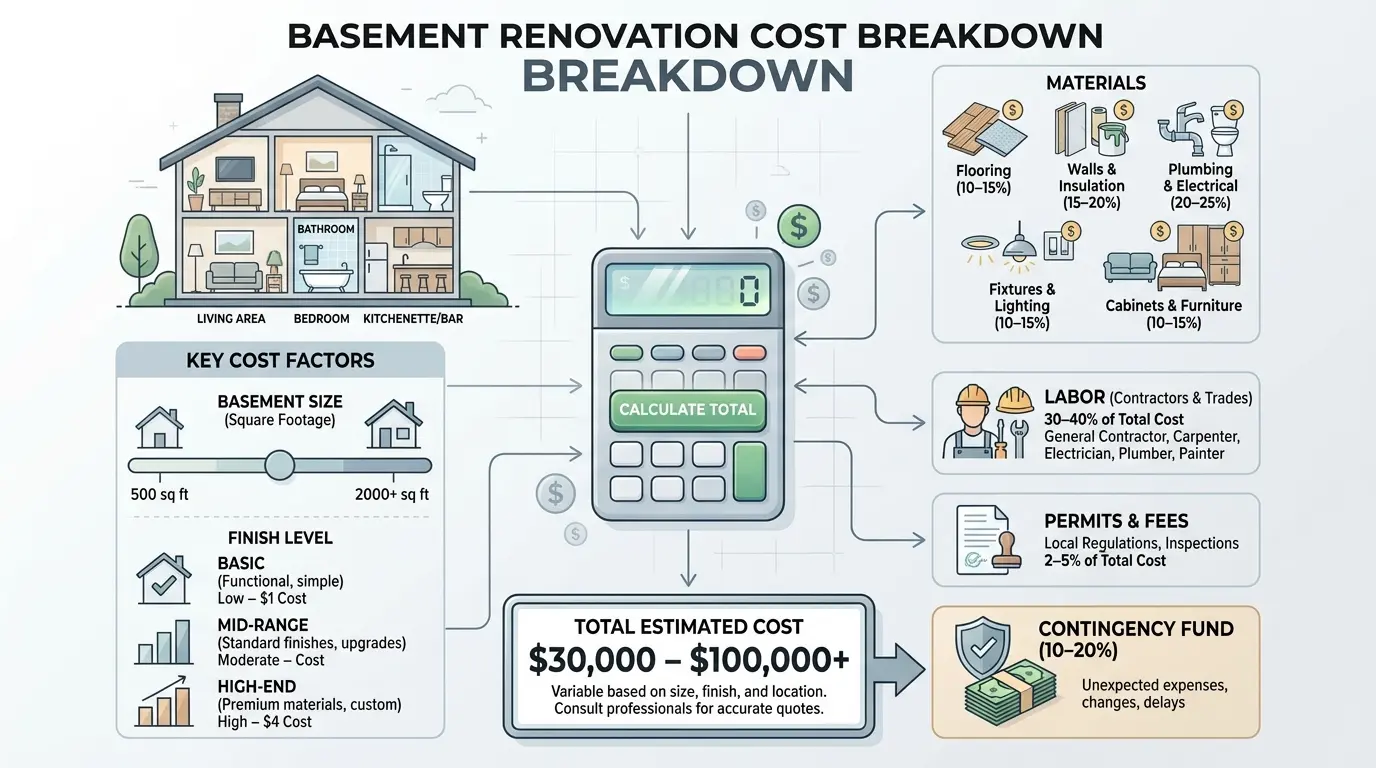
1. Framing, Drywall, and Insulation
This is the skeleton of the project, the line item contractors will quote first and the one where open layouts save real money.
Fewer interior walls mean fewer linear feet of framing, less drywall, and a faster installation schedule. A 1,000-square-foot open plan can cost $8,000–$14,000 in framing and drywall.
Divide that space into four separate rooms and the same work climbs to $14,000–$22,000.
2. Waterproofing and Drainage
This is the cost most homeowners do not price in until a contractor opens the walls and finds moisture.
A full interior waterproofing system runs $3,000 to $15,000 depending on scope. Crack injection, sump pump installation, and interior drain tile each carry separate costs.
Exterior waterproofing pushes well past that. The full guide to basement waterproofing costs covers each method and what drives the price.
Budget for this before anything cosmetic moves, because finishing over an active moisture problem is not a solution.
3. Electrical and Lighting
A finished basement needs dedicated circuits for outlets, a subpanel connection, and lighting throughout. Standard work for a 1,000-square-foot basement runs $3,500–$7,000.
Recessed lighting, smart switches, or home theater wiring adds to that. If your existing panel is at capacity, which is common in homes built before 1990, a panel upgrade adds $1,500–$4,000 to the electrical scope before a single fixture goes in.
4. Flooring
Below-grade spaces need moisture-tolerant flooring. Luxury vinyl plank ($2–$5 per square foot installed) handles this well and is among the most cost-effective choices for finished basements. Engineered hardwood runs $6–$12 installed.
Carpet over a vapor barrier is cheaper upfront at $1.50–$4 per square foot but is the first thing you will be ripping out if moisture becomes a problem.
Tile works well in bathrooms but adds labor cost to the general living area. For a 1,000-square-foot basement, flooring ranges from roughly $1,500 to $12,000 depending on material choice.
5. HVAC Extensions
An unfinished basement typically sits outside the home’s climate control loop. Extending existing ductwork or installing a ductless mini-split unit for a finished space runs $1,500–$6,000 for most projects.
Older HVAC systems may need assessment before the extension is added; if the main unit lacks capacity, upgrading it becomes a separate cost. Proper ventilation is also a permit requirement in most jurisdictions. It is not optional.
6. Permits and Inspections
Permit fees vary significantly by municipality but typically add $500–$2,000 to a basement finishing project. Structural changes, electrical, and plumbing all require separate permits in most jurisdictions.
Staged inspections are common. Expect a framing inspection, an electrical rough-in inspection, and a final inspection at minimum.
Missing any of these creates rework that costs more than the permit fee ever would have. Pull the permits.
Added Features: What Each Room Costs
The base per-square-foot cost covers the space, not the upgrades inside it. Each of the following is a line item that sits on top of your base estimate.
Basement Bathroom Addition: $8,000–$25,000
A full bathroom is the single largest add-on cost in most basement projects. The range is wide because the cost depends almost entirely on whether rough-in plumbing already exists.
If it does, a basic full bath adds $8,000–$15,000. If there is no rough-in, which is typical in older basements, you are looking at breaking concrete, installing an ejector pump for below-grade waste, running supply lines, and meeting inspection requirements.
Full scope on a no-rough-in bathroom runs $15,000–$25,000 before fixtures. A half bath runs $5,000–$12,000 by comparison. Keep new plumbing as close to existing lines as possible, because every foot of new pipe run across a concrete slab adds labor cost.
Basement Bedroom Addition: $5,000–$12,000 Additional
A below-grade bedroom has one non-negotiable requirement: an egress window. Building code in most US jurisdictions requires a minimum net clear opening of 5.7 square feet, with a minimum opening height of 24 inches and minimum width of 20 inches.
Installation of a code-compliant egress window, including excavation for the window well, runs $2,500–$5,000 per window.
Add to that the bedroom framing, closet, HVAC extension, and electrical, and a compliant basement bedroom adds $5,000–$12,000 to the project above what the base square footage cost covers.
Wet Bar or Kitchenette: $5,000–$15,000
A wet bar requires a sink, supply lines, drain routing, cabinet installation, and electrical circuits for appliances. Keeping it near existing plumbing controls cost significantly.
A basic wet bar with a prep sink and stock cabinets runs $5,000–$8,000. A full kitchenette with a small refrigerator, microwave, and dishwasher circuits pushes to $10,000–$15,000.
Plan the electrical load before choosing appliances, because additional circuits for a kitchenette may require a subpanel.
Home Theater, Home Office, or Gym: $3,000–$10,000 Additional
Dedicated-use rooms add specific requirements on top of the base cost. A home theater needs dedicated electrical circuits, acoustic considerations, and structured wiring for audio and video.
Budget $3,000–$10,000 above base depending on equipment. A home office adds network drops and electrical outlets; $1,500–$3,500 covers most configurations.
A home gym needs impact-resistant flooring (rubber flooring runs $2–$8 per square foot installed) and increased HVAC capacity for the heat load. If the basement is part of a larger renovation, the guide to house additions before and after shows how homeowners typically sequence these decisions.
The Complete Cost Summary: All-In Line Items
| Line Item | Low End | High End | What Drives Variation |
| Framing + drywall + insulation | $8,000 | $22,000 | Number of interior walls, ceiling height |
| Waterproofing + drainage | $0 | $15,000+ | Existing moisture problems, system type |
| Electrical + lighting | $3,500 | $9,000 | Panel capacity, circuit count, fixture type |
| Flooring | $1,500 | $12,000 | Material choice, moisture prep required |
| HVAC extension | $1,500 | $6,000 | Existing system capacity, duct vs. mini-split |
| Bathroom addition | $8,000 | $25,000 | Existing rough-in, ejector pump, fixture grade |
| Egress window (bedroom) | $2,500 | $5,000 | Excavation depth, soil conditions |
| Permits and inspections | $500 | $2,000 | Municipality, scope of work |
| Contingency (15%) | Built into budget | Built into budget | Age of home, unknown conditions |
This breakdown makes it clear why two homeowners with the same square footage can end up with vastly different total costs.
The line items above the base, specifically waterproofing, bathroom, and egress, are not optional depending on project scope, and they are the items most commonly missing from initial contractor quotes.
Where Budgets Go Wrong
Most basement finishing projects that overshoot their budget do so at the same points. These are not unusual surprises. They are predictable costs that did not make it into the original estimate.
- Waterproofing discoveries after walls open: This is the most common mid-project cost addition. A contractor removes old paneling or starts framing and finds active seepage, crack damage, or evidence of past flooding. Addressing it at that point is non-negotiable. You cannot frame over a moisture problem. Budget for it before work starts, or assume the contingency covers it.
- Panel and electrical upgrades: More circuits, more outlets, and more fixtures routinely push older electrical panels to their limit. An inspector will flag this before sign-off. A panel upgrade that was not in the original scope adds $1,500–$4,000 mid-project.
- Floor leveling: Uneven concrete affects every subsequent trade: flooring, door installation, and trim fitting. Self-leveling compound adds cost and time that rarely appears in a first quote. Check your slab before the project starts.
- Debris removal: Old insulation, carpet, paneling, and drywall from demo work needs to be hauled. Dumpster fees, disposal charges, and labor hours for cleanup can add $500–$1,500 to the early phase of the project.
- Mold remediation: Any visible growth or persistent musty smell requires professional assessment and clearance before walls close. Enclosing active mold is not a solution. Remediation costs vary widely based on the extent. Budget $500–$6,000 if there is any indication of growth before the project starts.
What’s Negotiable vs. What Isn’t
Not every line item has the same flexibility. Understanding which costs are fixed and which have real room to move helps you have a more productive conversation with any contractor.
Not negotiable: Permit fees (set by municipality), electrical panel upgrades required to pass inspection, egress window specifications required by code, and waterproofing remediation for identified moisture problems. These are compliance and safety items. Cutting them creates liability and future cost.
Negotiable: Finish level on flooring and fixtures, brand and grade of cabinets and hardware, lighting fixture type, layout complexity (fewer walls cost less), and project phasing. The bathroom can be framed and roughed in during the main project and finished later. Flooring can be luxury vinyl rather than hardwood.
DIY-able: Painting, trim installation, basic flooring over an existing subfloor, cleanup, and storage assembly. These are the tasks where DIY labor makes a real dent without creating code compliance or safety risk. Leave electrical, plumbing, structural work, and HVAC to licensed contractors.
Regional Cost Variation: Where You Live Changes the Number
Labor rates for finishing work differ significantly across the country. The same 1,000-square-foot project that costs $40,000 in suburban Ohio will cost closer to $55,000–$65,000 in the San Francisco Bay Area or New York metro, and may run $32,000–$38,000 in parts of the Midwest or Southeast. The difference is almost entirely labor.
Material costs are more consistent nationally, though lumber and drywall prices have shown volatility in recent years.
Urban markets also tend to have longer permit timelines and more stringent inspection schedules, both of which affect contractor pricing. If you are in a high-cost metro, the mid-range per-square-foot figures in this article will run toward the upper end.
What to Ask Your Contractor Before Signing
The questions below are not small talk. They are the specific items that determine whether a quote is complete or whether it has hidden costs you will discover mid-project.
- Is waterproofing included, or is it a change order if you find moisture? Nail down the answer before work starts.
- What is your permit process? Do you pull all required permits, and is the fee included in this quote? Some contractors price permits separately.
- If my electrical panel needs an upgrade to support this scope, is that included or additional? This is the most common mid-project addition on older homes.
- What is your process for handling unexpected structural or foundation issues? Get the change order protocol in writing.
- What is the payment schedule, and what are the specific completion milestones tied to each payment? Never pay more than 10–15% upfront on a project of this size.
Is Finishing a Basement Worth the Cost?
For most homeowners, yes, with a clear-eyed view of the return.
A finished basement adds functional square footage to a home and typically returns 50–75% of the investment in resale value according to NAHB data, depending on market conditions and the quality of the work.
A $40,000 project in a market where finished basement space is valued may add $20,000–$30,000 to the sale price.
That is not a full dollar-for-dollar return, but the daily use value of the space, the family room, the home office, the bedroom for a teenager, is where homeowners typically feel the investment most.
The cases where it is less worth it:
- When waterproofing problems have not been resolved first
- When the project is over-customized for resale (very specialized home theater builds or niche layouts)
- When a homeowner is planning to sell within 12–18 months and the local market does not heavily value finished basement square footage
In those cases, a partial finish, meaning framing, electrical, and flooring without custom rooms, often captures most of the value at a fraction of the cost.
For a broader look at how basement finishing fits into whole-home renovation sequencing, the basement remodel cost guide covers full renovation scope and sizing considerations.
Frequently Asked Questions
How much does it cost to finish a basement?
Most US homeowners spend $15,000 to $75,000, with a national average around $30,000 for a mid-size basement at standard finish levels. Projects with bathrooms, waterproofing, or premium finishes push past $75,000.
What is the average cost to finish a basement per square foot?
The national range is $25 to $75 per square foot, with most mid-range projects landing between $35 and $50. Open layouts with minimal plumbing additions sit at the lower end; multi-room builds with bathrooms run higher.
How much does finishing a basement cost with a bathroom?
Adding a full bathroom adds $8,000–$25,000 on top of the base project cost, depending on whether rough-in plumbing already exists. A half bath addition runs $5,000–$12,000. Always locate new plumbing close to existing lines to control cost.
What is the most expensive part of finishing a basement?
Plumbing and bathroom additions, followed by waterproofing remediation, are typically the highest-cost single line items. Electrical panel upgrades and egress window installation are the most common unexpected expenses after a project starts.
How much would it cost to finish a basement yourself?
DIY finishing can reduce labor costs by 30–50% on eligible tasks. Painting, flooring, trim, and cleanup are genuinely DIY-able. Electrical, plumbing, structural framing, and HVAC require licensed contractors in most jurisdictions. Attempting these as DIY work creates permit and inspection problems.
How much does it cost to finish a small basement?
A 500-square-foot basement runs $15,000–$37,500 depending on finish level. Smaller spaces cost more per square foot because fixed costs like electrical rough-in and permits do not scale down proportionally with the space.
Does finishing a basement increase home value?
Typically yes. NAHB data suggests homeowners recover 50–75% of finishing costs in resale value. Returns are highest when the space adds a functional room type, such as a bedroom or family room, and when waterproofing has been properly addressed before finishing.
What does basement finishing cost not include?
Standard per-square-foot quotes usually exclude waterproofing, egress windows, bathroom rough-in, structural repairs, panel upgrades, debris removal, and mold remediation. Always confirm what is and is not included in writing before accepting a quote.
Final Words
Here is what you now know that most people do not figure out until mid-project: the basement finishing cost number a contractor quotes on day one is almost never the number on the final invoice.
The projects that come in on budget are the ones where the owner priced waterproofing before the framing started, confirmed whether the electrical panel had capacity, and built a 15% contingency into the budget before anyone put a shovel in the ground.
The $30,000 average cost is real, but it assumes a dry, structurally sound basement with no plumbing additions. Add a bathroom and address a moisture problem, and you are in $55,000–$65,000 territory before premium finishes.
Get the full scope on paper, ask the five contractor questions above, and price the line items separately. That is the difference between a basement project that lands where you expected it to and one that doesn’t.
Cost estimates based on HomeAdvisor/Angi 2025 national averages and NAHB Cost of Construction Survey data. Verify current pricing with local contractors and suppliers before budgeting.