

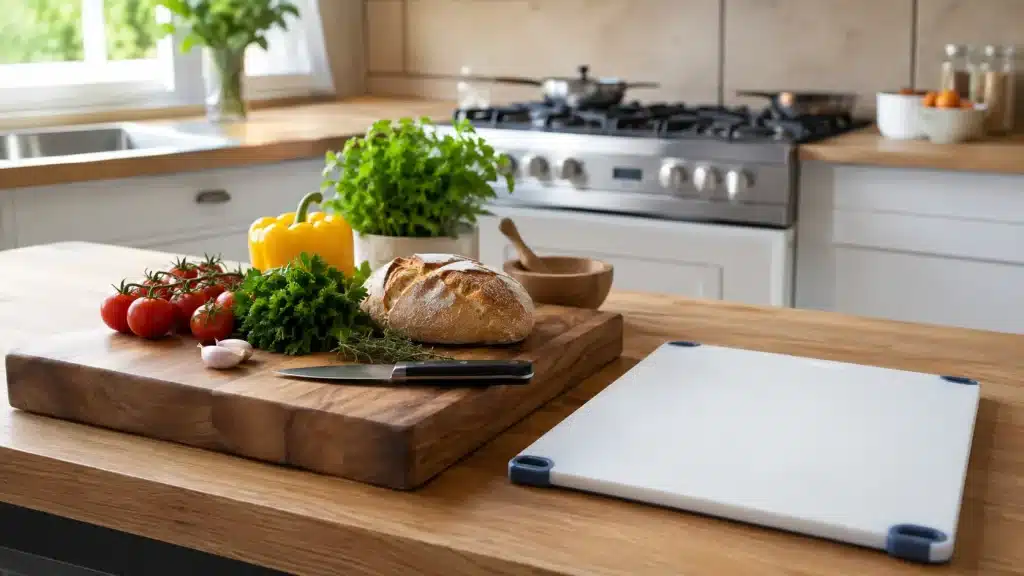


Ever wonder what’s actually sitting under your knife every time you prep a meal? Choosing the best cutting boards for health matters more than most people realize in a kitchen.
You end up using the same worn surface for everything from raw chicken to fresh fruit, which raises concerns about hygiene and long-term safety.
I know it can feel confusing figuring out which materials are actually safe and which ones quietly create problems over time. I’ll help you sort through which materials actually make sense, how they perform in daily use, and what to avoid.
By the end, you’ll know which cutting board materials support safer food prep, how to set up a practical two-board system, and how to keep your kitchen routine cleaner and more consistent for overall safety.
Best Cutting Boards for Health: Non-Toxic Materials for Daily Kitchen Prep
A cutting board looks simple until you think about every food that lands on it. Raw chicken, apples, bread, onions, and herbs should not all share one worn surface, and the best cutting boards for health make that separation easier, not harder.
The practical starting point is two boards: one solid hardwood board for daily chopping, and one separate easy-clean board for raw meat, poultry, and seafood.
From there, the material you choose shapes how the board holds up, how easy it is to keep clean, and whether you are introducing plastic or unknown coatings into your prep routine.
| Best Material for Daily Prep | Solid maple, walnut, or beech |
| Best Material for Raw Meat | Rubber, stainless steel, titanium, or dishwasher-safe plastic |
| Boards to Avoid for Daily Use | Glass, worn plastic, bamboo with unknown adhesives |
| Key Maintenance Rule | Wash, dry upright, and oil hardwood when it looks dry |
| Replace When | Deep grooves, cracks, lasting odor, or heavy staining appear |
The table above covers the short version. Everything below explains why each material behaves the way it does, so you can pick the right board for how you actually cook, not just what looks best on a counter.
What Makes a Cutting Board Non-Toxic?
A non-toxic cutting board needs to pass a straightforward test: it should be made for direct food contact, easy to clean consistently, and free from finishes or coatings that peel or wear into food during regular chopping.
| Feature | Why It Matters |
| Food-safe material | The board should be made specifically for cutting and food prep, not repurposed from a surface with unknown treatment |
| Clear finish details | Unknown coatings wear down during chopping and can end up in food |
| No strong chemical smell when new out of the box | Odor can point to poor finishes, composite adhesives, or materials not suited to food contact |
| Smooth, intact surface | Rough spots and grooves hold food residue that normal washing does not reach |
| Stable thickness | Thin boards slide under pressure, wear faster, and crack sooner |
| Simple, realistic care needs | A board only stays safe if you can clean it properly in your actual kitchen routine |
The safest board is not necessarily the most expensive one. It is the board with known materials, food-safe construction, and a surface you will actually maintain. A premium walnut board that never gets oiled and develops cracks is less safe than a basic rubber board that gets washed after every use.
Best Cutting Board Materials for a Health-Focused Kitchen
Material choice drives most of the decision here. The right one depends on what you cut most often, how frequently you cook, and how much upkeep you are willing to do. Here is how each option holds up under real conditions.
1. Solid Maple
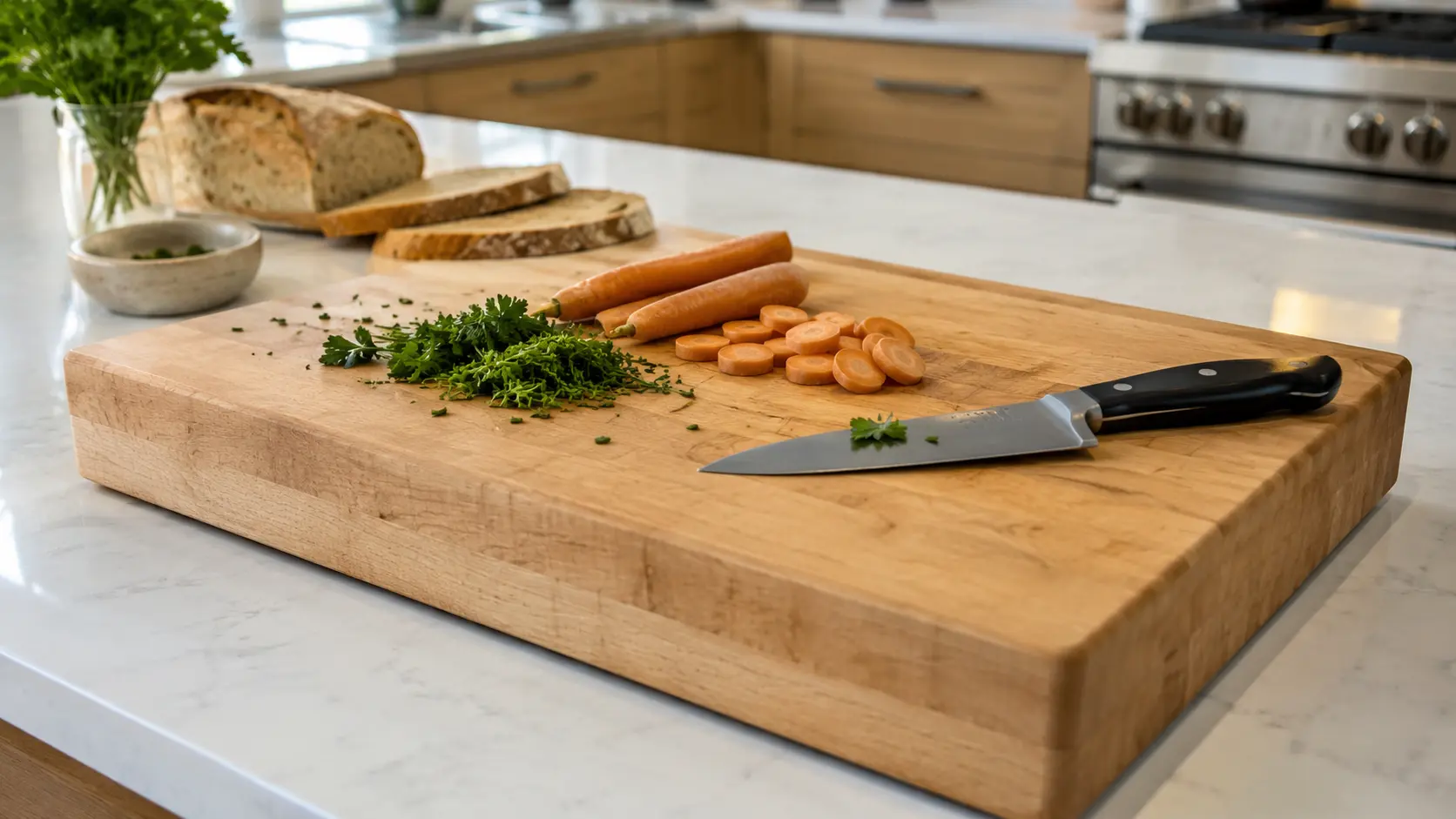
Solid maple is the most reliable all-around choice for daily food prep. Among common hardwood species, maple ranks around 1,450 lbf on the Janka hardness scale, hard enough to resist deep knife grooves without being so rigid that it wears blades quickly. It holds up well over years of use, takes food-grade mineral oil easily, and does not bring plastic into your chopping routine.
Maple works best for fruit, bread, herbs, and vegetables. It is gentle enough on knife edges to protect a quality chef’s knife from premature dulling, which matters if you are chopping daily. The surface stays tight for a long time before knife marks become deep enough to trap residue.
Choose maple if you want a non-toxic cutting board for daily use, a surface that can last a decade or longer with proper care, and a clear step away from thin plastic for most prep work. It needs handwashing and thorough drying after every use, and food-grade mineral oil when the surface starts to look dry or feel rough.
2. Walnut
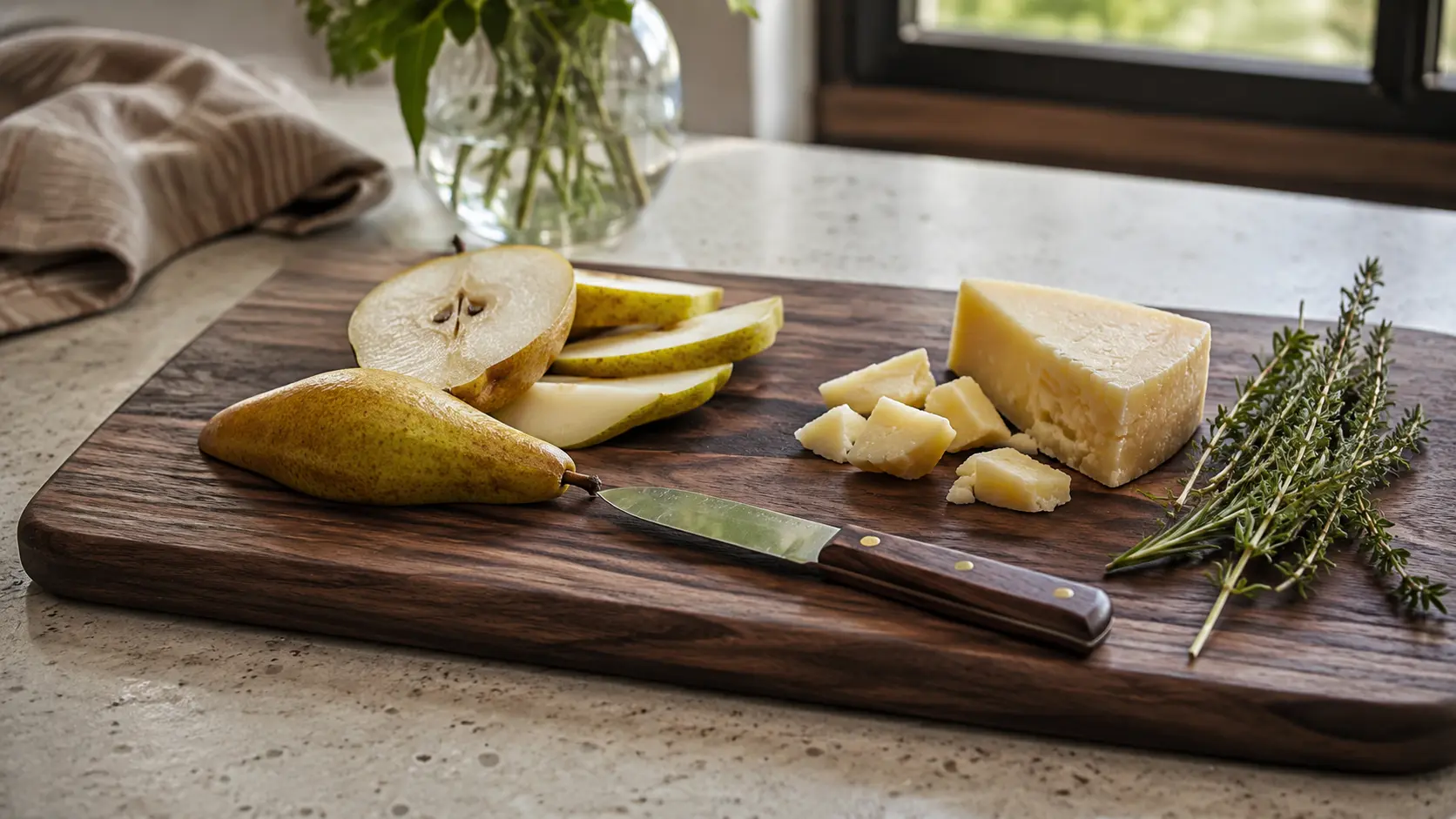
Walnut sits softer than maple at around 1,010 lbf Janka, which makes it noticeably more pleasant for long chopping sessions.
The closed grain resists moisture well, and the darker color hides light staining better than a pale maple board. If you already think about wood tones across your kitchen, walnut reads warm and grounded on a counter without looking out of place.
The main tradeoff is cost. Walnut boards run higher than comparable maple, and like all hardwoods, they should not sit in water or go through the dishwasher.
Keep walnut for produce, bread, and cooked foods rather than raw meat prep, where you need aggressive cleaning after every use. Oil it with food-grade mineral oil when it starts to look pale or dry.
3. Beech
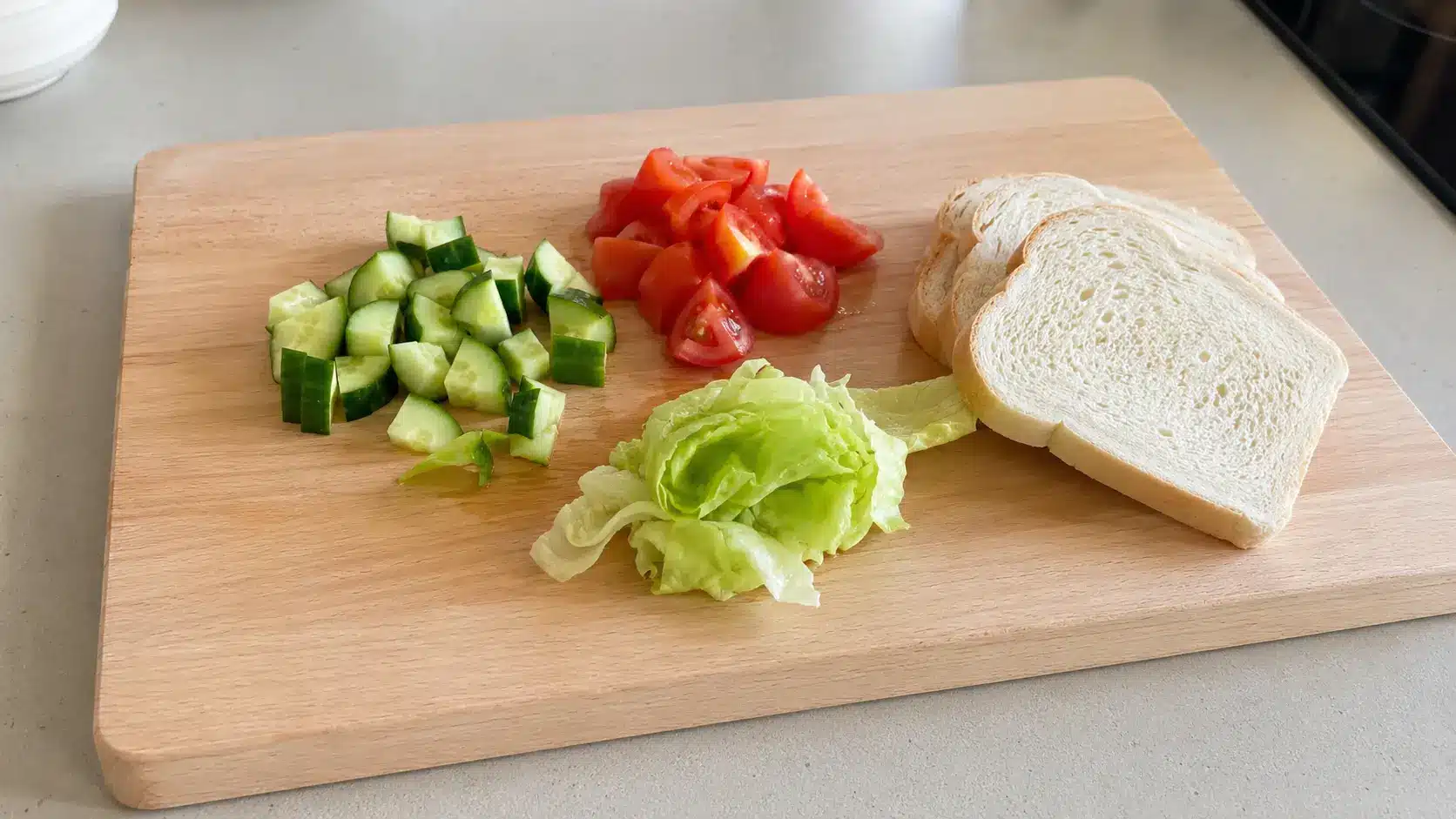
Beech is the budget-smart hardwood in this category. It comes in at around 1,300 lbf Janka, closer to maple than walnut, and performs well for everyday chopping. It is often significantly cheaper than thick end-grain maple or premium walnut while offering the same core benefit: a solid wood surface that does not shed plastic.
The feel is firm and clean. Beech handles regular prep well when washed promptly and dried upright after each session. It is a practical first hardwood board for a kitchen making the switch away from cheap plastic, and it oils and maintains the same way as maple or walnut.
4. Rubber
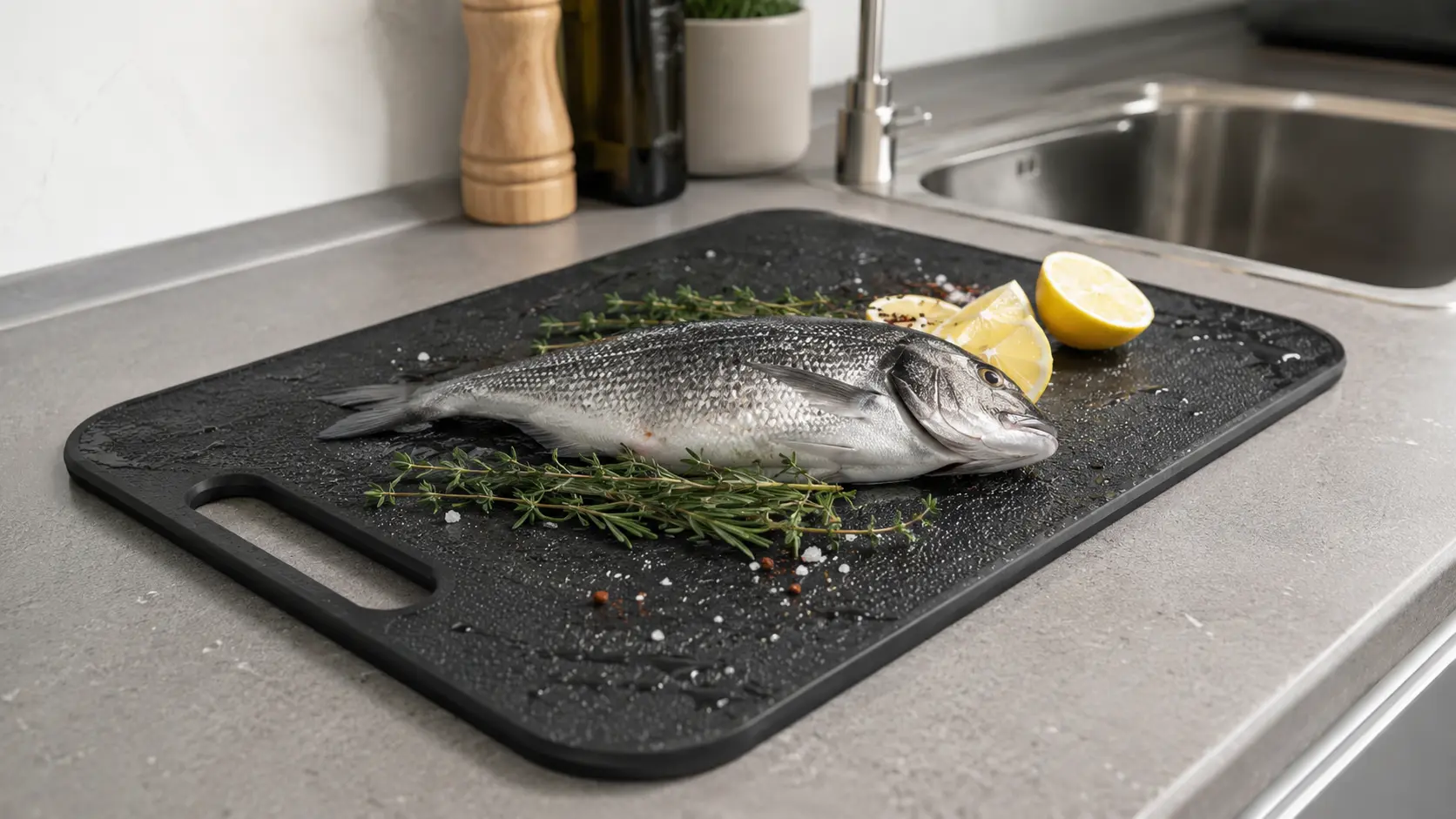
Rubber boards are the strongest middle-ground option for anyone who wants easy cleaning without relying on cheap plastic. They grip the counter well without a damp towel underneath, which reduces slipping during fast prep work. The surface is gentler on knife edges than glass or steel, and it holds up to daily use without developing the deep grooves that make plastic boards a microplastic concern.
Rubber works well for both meat prep and daily chopping. It is heavier than plastic and more expensive, but that weight also makes it more stable. If you cook frequently and want a single board that handles everything including raw proteins, rubber is worth the higher entry cost. It does not need oiling like wood, though it is not dishwasher-safe on most models.
5. Stainless Steel
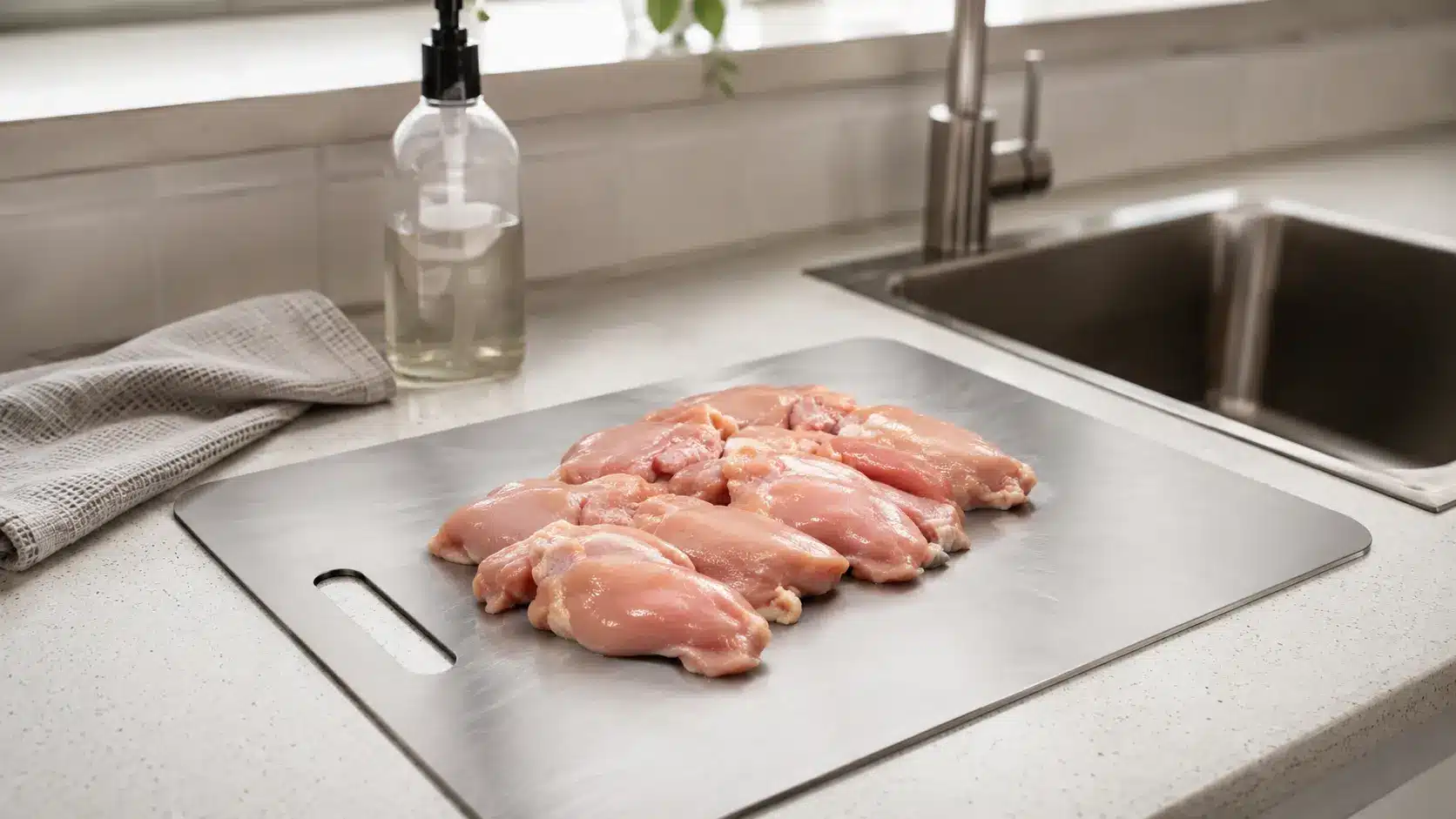
Stainless steel boards are nonporous, easy to sanitize, and do not absorb meat juices or strong odors. They work well for raw meat, fish, garlic, and anything with a strong smell that you do not want migrating to your hardwood daily board. The surface cleans quickly and can be sanitized with a diluted bleach solution without any risk of damage.
The practical downside is feel and knife wear. Steel is hard, loud under a blade, and will dull a good knife faster than wood or rubber. Use it as a task-specific board rather than your main daily surface.
Short prep jobs, breaking down chicken, portioning fish, and slicing garlic are where stainless steel earns its place. Extended chopping sessions belong on wood or rubber.
6. Titanium
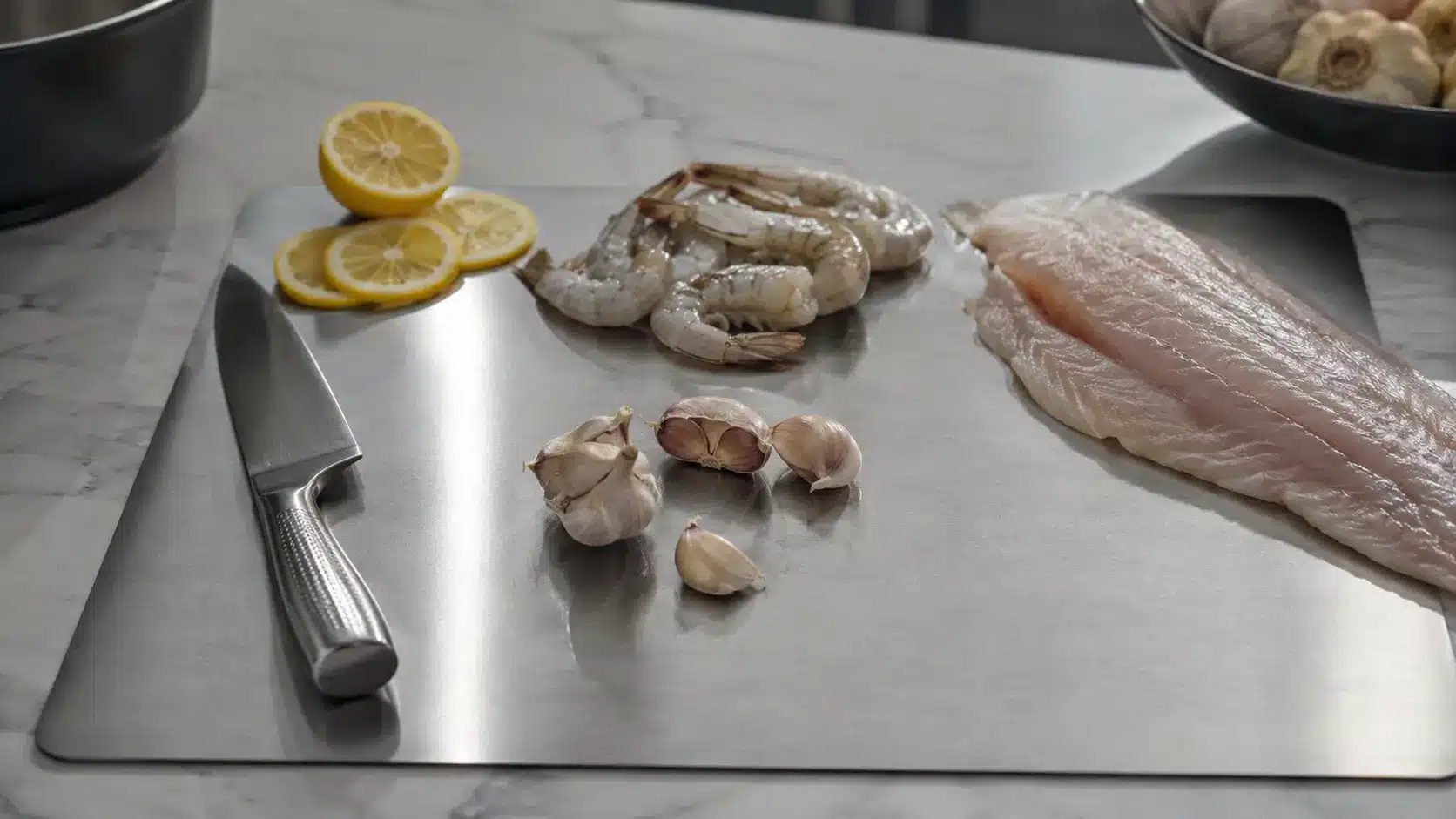
Titanium boards appeal to people who want a completely plastic-free, nonporous surface for raw meat and seafood prep. They are lightweight relative to their durability, nonreactive with acidic foods, and easy to wash. The health case for titanium is simple: no plastic, no porous material to trap bacteria, no coatings that wear off.
They share the same limitation as stainless steel: hard on knives and noisy under a blade. If smooth, quiet chopping matters to you, wood or rubber will feel significantly better. Titanium is best positioned as a meat-and-fish board that gets washed immediately after use, not a board for a long prep session involving precise knife work.
7. Bamboo
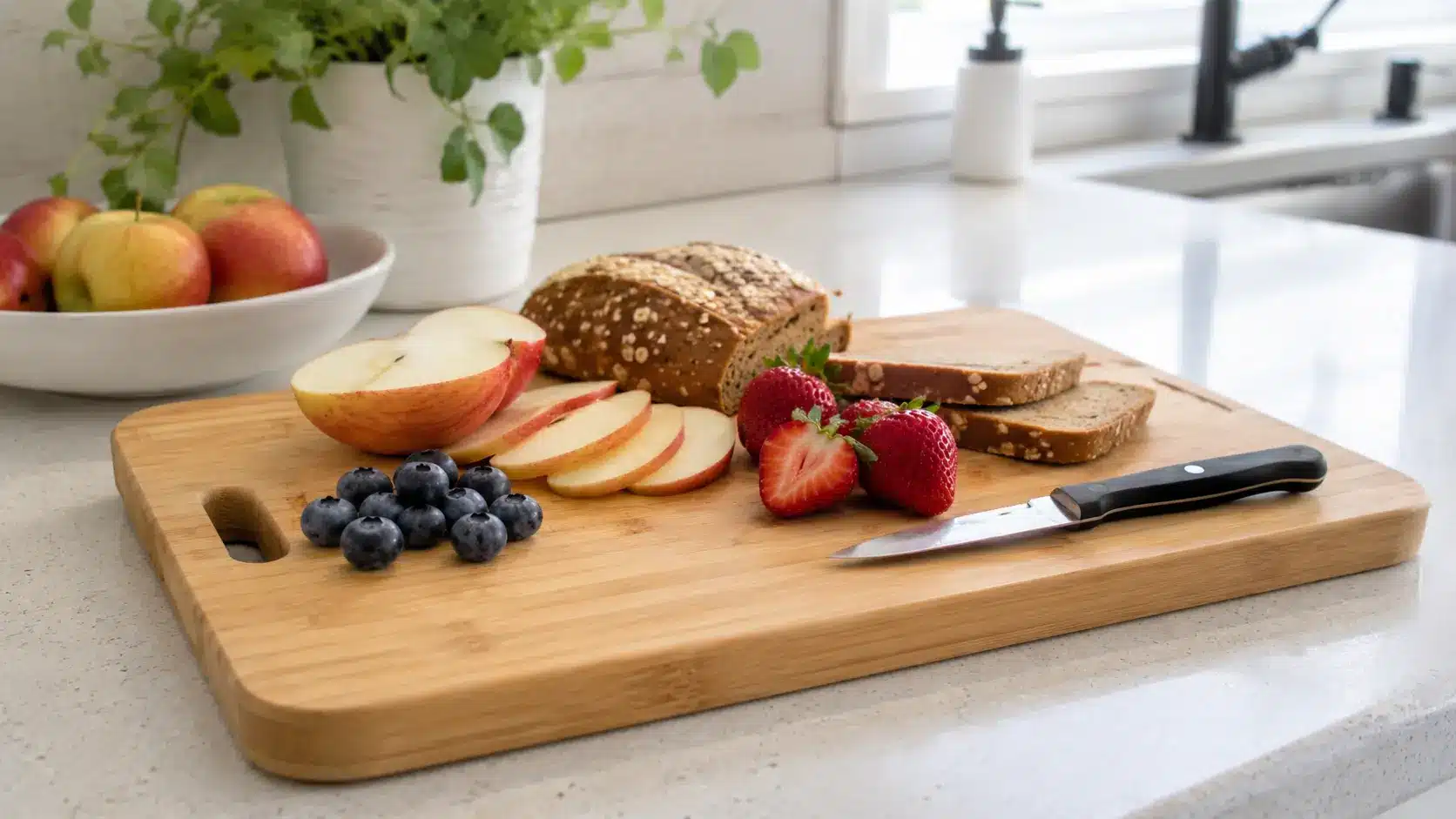
Bamboo is often sold as the natural, eco-friendly choice, and in some respects it is. It is lightweight, usually affordable, and grows faster than hardwood trees. For light prep work, fruit, bread, and herbs, it performs adequately as a plastic-free starter option.
The structural problem is that bamboo is technically a grass pressed and glued into board form, not solid wood. Many bamboo boards use formaldehyde-based adhesives to bond the strands, which undermines the non-toxic case entirely.
Bamboo also runs harder than maple or walnut at around 1,380 lbf, which makes it noticeably rougher on knife edges with regular use. If bamboo is on your shortlist, verify that the adhesive is food-safe before buying. If that information is not clearly stated by the manufacturer, choose a different material.
8. High-Density Plastic
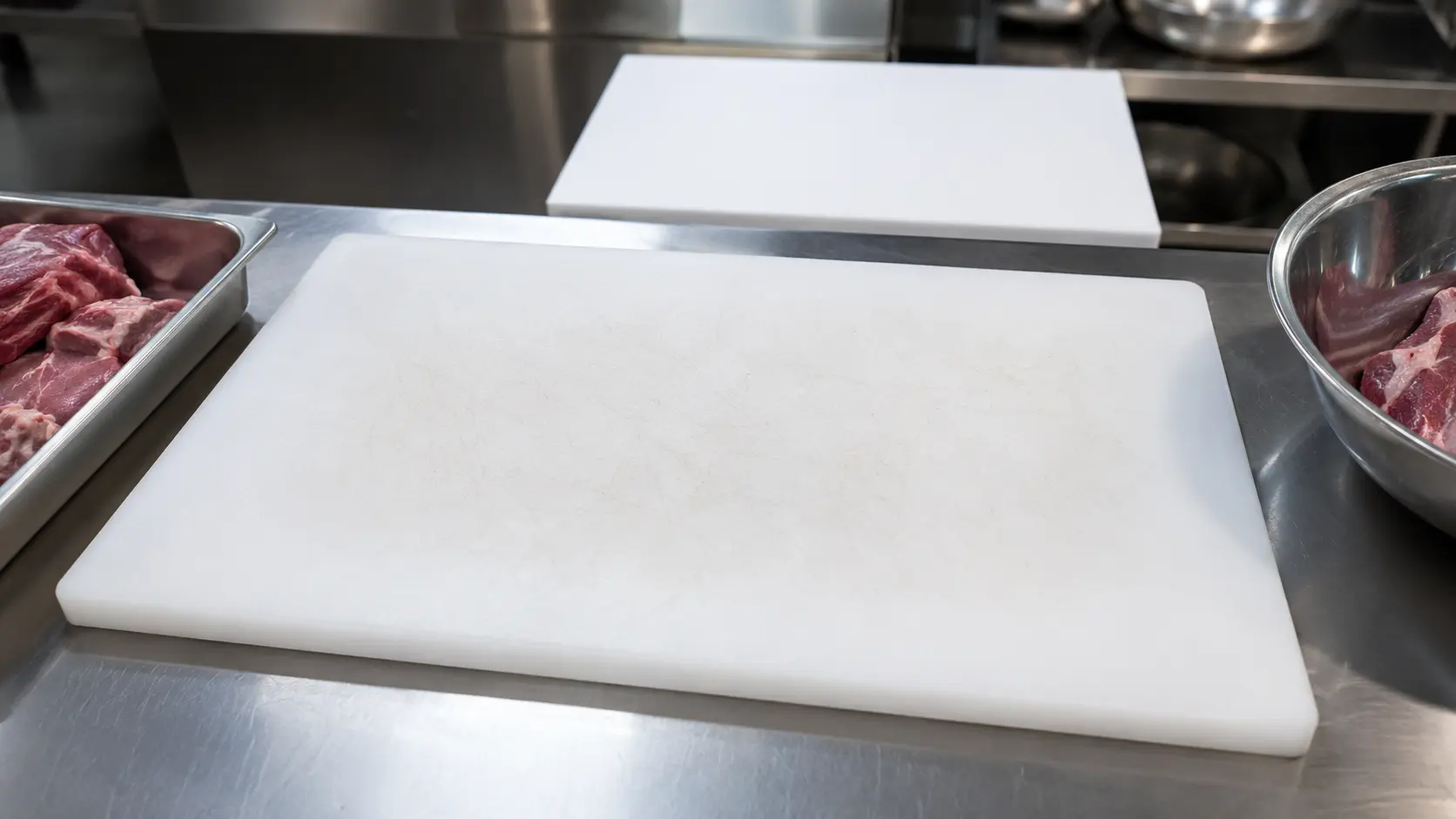
Plastic has not become completely useless in a health-conscious kitchen, but it carries real limitations that get worse with age. New, thick high-density polyethylene boards are dishwasher-safe and easy to sanitize after raw meat prep. The problem is what happens once the surface shows real wear.
A 2023 study reported by the American Chemical Society found that chopping on polyethylene and polypropylene boards can release microplastic particles into food, with the amount varying by cutting force, board condition, and material.
Deep knife grooves accelerate this. If you keep plastic boards, use them only for raw meat where easy sanitation is the priority, replace them before grooves look deep, and do not use old, scratched plastic for daily produce prep.
9. Glass
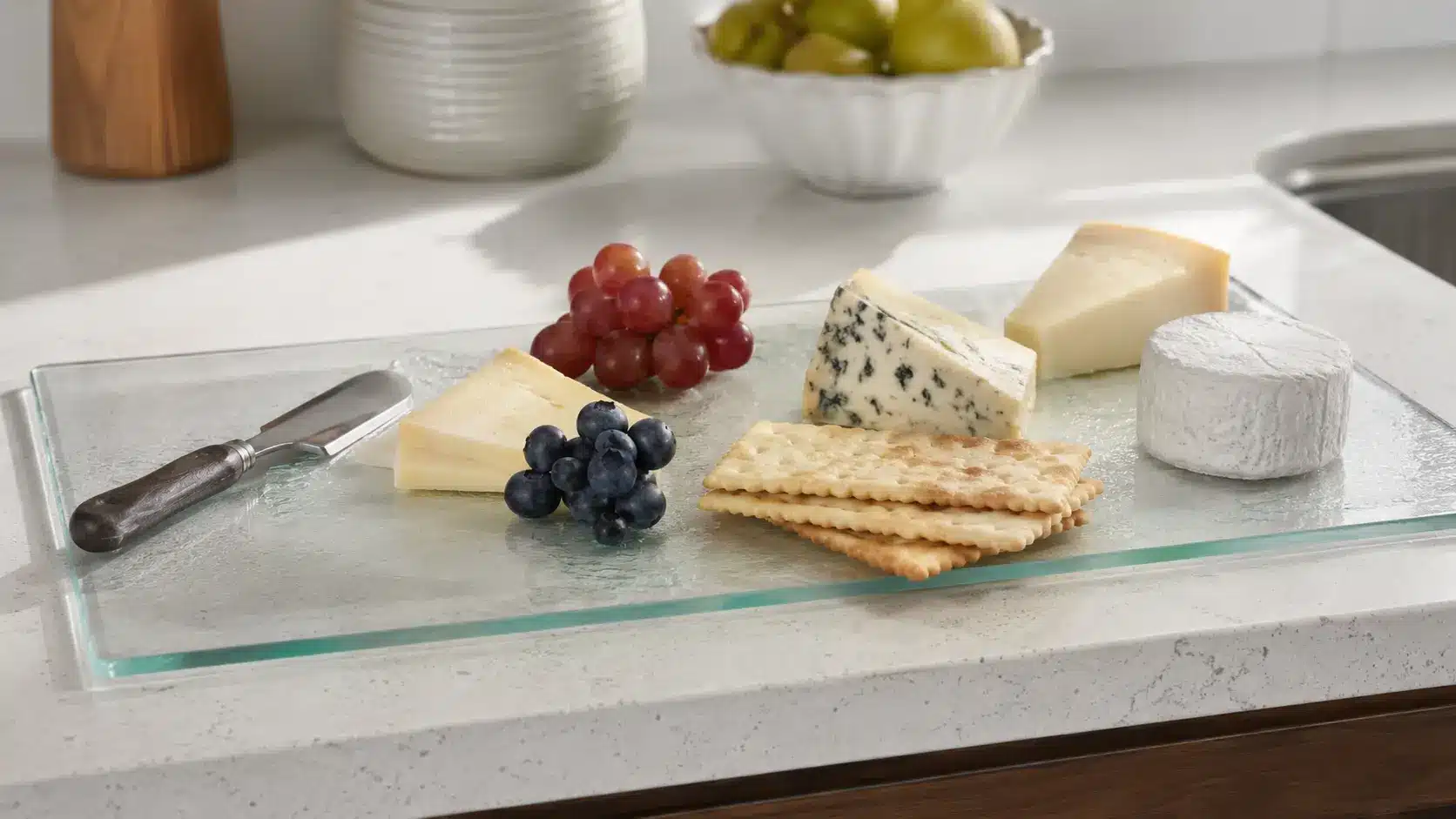
Glass is genuinely nonporous and does not absorb odors or bacteria, which sounds like an advantage until you factor in what it does to knife edges. Glass is too hard for regular knife work; it will dull a blade noticeably faster than any other material listed here.
The surface also tends to be slippery during active chopping, which creates a safety problem independent of hygiene.
Glass belongs on the counter as a serving board for cheese, crackers, and soft fruit — not as your main cutting surface. If you already own one, use it for its strengths and keep it out of your daily prep rotation.
The Two-Board Setup That Makes Sense for Most Kitchens
The safest practical setup is not one board for everything. It is two boards with clear roles, kept separate and maintained consistently.
| Board | Use It For | Best Material |
| Everyday board | Fruit, bread, herbs, vegetables, cooked foods | Maple, walnut, or beech |
| Raw meat board | Chicken, beef, fish, seafood | Rubber, stainless steel, titanium, or replaceable HDPE plastic |
The USDA notes that both wood and nonporous boards can be used safely in home kitchens, but using separate boards reduces the chance of raw meat juices contacting foods like bread, fruit, and salad ingredients that will not be cooked before eating.
The everyday board should feel steady and knife-friendly. The raw meat board should be easy to wash and sanitize immediately after use, without the kind of care routine that hardwood requires.
Microplastics and Cutting Board Wear
Worn plastic raises health questions that new plastic does not. Once knife marks become deep, they trap residue and, with polyethylene and polypropylene boards, contribute to microplastic release during active chopping.
The American Chemical Society reported in 2023 that this effect varies with cutting force, food type, and how worn the surface already is.
Plastic does not need to disappear from every kitchen. But old, deeply scratched plastic should not be a daily prep surface for produce and ready-to-eat foods. The table below identifies when it is time to replace any board, not just plastic ones.
| Sign | What to Do |
| Deep grooves that do not wash clean | Replace the board |
| Rough, pitted surface | Stop using it for daily prep |
| Persistent odor after washing | Discard it |
| Heavy staining that cleaning does not shift | Replace with a fresh board |
| Cracks or splits in wood | Replace — cracks trap bacteria and cannot be fully sanitized |
A board in good condition is significantly safer than the same board with a year of heavy use and no maintenance. The material matters, but so does the current state of the surface.
How to Keep a Board Safer for Longer
Good care habits extend the useful life of any board and reduce the window during which surface damage becomes a hygiene concern. Wood species vary in how they respond to finishing and moisture. Understanding how hardwoods behave over time helps you maintain the surface before problems develop rather than after.
- Wash after every use. Hot, soapy water removes food residue and juices before they have time to set into the surface or dry into grooves.
- Do not soak wood or bamboo. Prolonged water contact causes swelling, warping, and cracks, all of which create surfaces that cannot be cleaned properly.
- Dry boards upright. Standing the board on its edge lets air reach both sides. Flat storage traps moisture underneath and speeds up warping.
- Sanitize after raw meat. Wash the board first, then sanitize. The USDA recommends a diluted bleach solution (one tablespoon per gallon of water) for nonporous boards after raw meat contact.
- Oil hardwood when it looks pale or dry. Food-grade mineral oil is the right product. Apply it, let it soak in for several hours, then wipe off the excess. Do not use cooking oils like olive or vegetable oil — they go rancid inside the wood.
- Use the dishwasher only when the board allows it. Hardwood, bamboo, and most rubber boards should not go in the dishwasher. Check the manufacturer’s guidance before assuming.
These habits matter most for hardwood boards, which require more consistent attention than rubber or steel. But even a rubber board that never gets fully dried after washing will develop problems over time. The board material sets the ceiling; how you maintain it determines where you land.
Frequently Asked Questions About Non-Toxic Cutting Boards
What is the safest cutting board material for everyday use?
Solid hardwood — maple, walnut, or beech — is the safest everyday choice for fruit, bread, herbs, and vegetables. These surfaces are plastic-free, knife-friendly, and durable when maintained properly with regular washing, drying, and occasional oiling with food-grade mineral oil.
Are wooden cutting boards more hygienic than plastic?
Research from the Journal of Consumer Protection and Food Safety found little difference in bacterial counts between wood and plastic boards after proper cleaning. Hardwood does have natural antimicrobial properties, but the more important factor for both materials is surface condition — deep grooves on either material are harder to clean than a smooth, well-maintained surface.
Do plastic cutting boards release microplastics?
Yes, worn polyethylene and polypropylene boards can release microplastic particles during chopping, according to a 2023 American Chemical Society report. The amount varies with board condition, cutting force, and food type. Replace plastic boards before grooves become deep, and avoid using old, scratched plastic for daily produce prep.
What cutting board should I use for raw chicken?
Use a dedicated board that you can sanitize immediately after use. Rubber, dishwasher-safe HDPE plastic, stainless steel, or titanium all work well. Keep this board entirely separate from your everyday produce and bread board to prevent raw juices from reaching food you will eat without cooking.
Is bamboo a good non-toxic cutting board option?
Bamboo can be a budget-friendly plastic-free option, but check the adhesive before buying. Many bamboo boards use formaldehyde-based glues to bond the strands. If the manufacturer does not clearly state that the adhesive is food-safe, choose a different material. Bamboo also runs harder than maple, which wears knife edges faster with regular use.
When should I replace a cutting board?
Replace any board when deep grooves appear that do not wash clean, cracks develop in wood, persistent odor remains after washing, or heavy staining cannot be removed. A board that cannot be cleaned fully is not worth keeping, regardless of how good the original material was.
Is glass a good cutting board for health-conscious kitchens?
Glass is nonporous and easy to clean, but it is too hard for regular knife work and dulls blades quickly. Save glass for serving cheese or slicing soft foods. It is not a practical daily prep surface.
Final Thoughts
Choosing the best cutting board changes for health how you handle food safety, knife care, and everyday kitchen prep more than you might expect.
The main takeaway is simple: wood works best for daily produce, rubber or steel for raw meat, and worn plastic should be replaced before it becomes unsafe.
Keeping these roles clear helps you reduce contamination risks and maintain a cleaner cooking routine without overcomplicating your kitchen setup.
Ultimately, the best cutting boards for health come down to choosing known materials, maintaining them properly, and matching each board to its specific kitchen task.
I’d suggest you review your current boards and try one change that improves safety and daily prep today.