

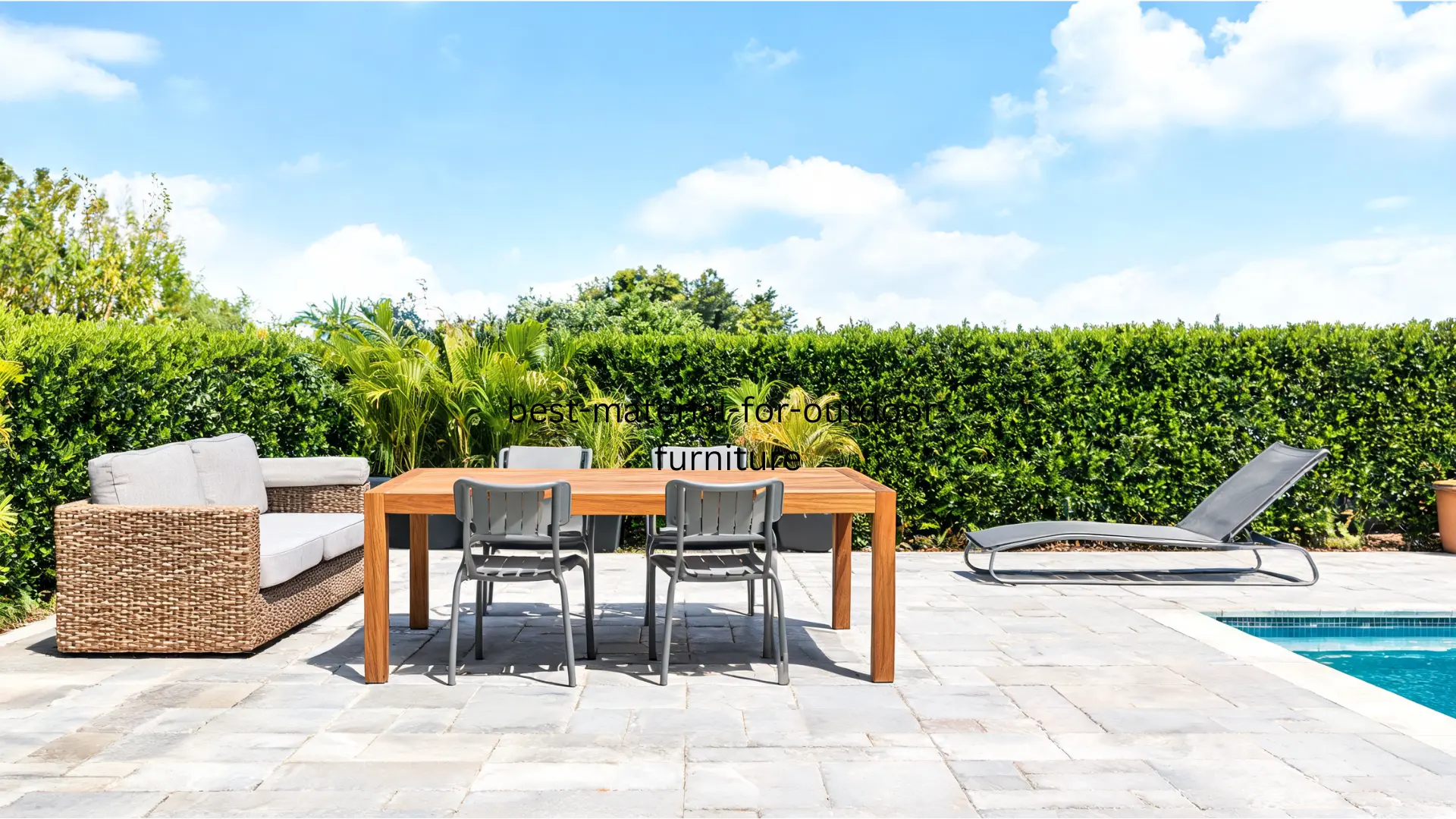


Outdoor furniture looks easy to buy until the weather ruins the wrong material. I know how frustrating it feels when a patio set fades, rusts, cracks, or feels worn out after only one season.
The best material for outdoor furniture depends on your climate, budget, maintenance comfort, and where the furniture will sit.
A sunny deck, rainy patio, coastal yard, and covered porch all need different choices. This guide helps you compare teak, aluminum, HDPE, resin wicker, steel, fabrics, and other common options.
By the end, you’ll know which materials last longest, which ones need care, and what to avoid before you buy.
What is the Best Material for Outdoor Furniture?
The best material for outdoor furniture depends on your climate and how much maintenance you want. For most people, teak, aluminum, and HDPE/poly lumber are the safest long-term choices because they handle outdoor exposure well and work across many patio styles.
Teak is one of the best wood options because it naturally resists moisture and decay. Aluminum is lightweight, rust-resistant, and easy to move. HDPE/poly lumber is very low-maintenance and holds up well against rain, sun, and daily use.
If you want the best outdoor furniture for a specific setting, match the material to your weather. Coastal areas need rust-resistant materials. Hot sunny decks need fade-resistant options. Rainy climates need materials that do not swell, rot, or hold water.
Comparing the Most Common Outdoor Furniture Materials
Not all outdoor materials perform the same way. Some are built for coastal air. Some are fine in a covered porch but fail fast in full sun. Use this table to narrow the field before reading the detail sections below.
| Material | Best For | Main Benefit | Maintenance Level |
| Powder-coated aluminum | Most patios, decks, and poolside spaces | Rust-resistant, lightweight, durable | Low |
| Teak | Premium wood furniture, open patios | Long-lasting, naturally weather-resistant | Medium |
| Resin wicker | Classic patio seating, covered spaces | Woven look with better outdoor durability than natural wicker | Low |
| Steel | Strong outdoor frames | Sturdy and durable | Medium |
| Wrought iron | Windy areas and garden furniture | Very heavy and stable | High |
| Sling / Textilene | Pool loungers and dining chairs | Breathable, quick-drying, easy to clean | Low |
| HDPE / Polywood-style | Coastal, rainy, and snowy climates | Resists moisture, insects, cracking, and fading | Low |
| Acacia | Affordable wood furniture | Warm wood look at a lower price than teak | Medium-high |
| Eucalyptus | Natural outdoor seating | Durable hardwood with natural oil content | Medium |
| Ceramic | Outdoor tabletops | Heat-resistant, stain-resistant, easy to clean | Low |
For most outdoor spaces, powder-coated aluminum gives you the best combination of durability, low maintenance, and weather resistance. Teak earns its premium price on open decks where wood aesthetics matter.
Ceramic is worth noting for tabletops specifically; it’s heat-resistant and easy to clean, and the table edge profiles available on ceramic tops vary significantly in how they hold up to outdoor use. Everything else depends on your climate, which is where the real decisions start.
Best Outdoor Furniture Materials by Weather
Climate should drive the material choice before style does. A covered porch has very different demands than a south-facing deck or a coastal yard 100 feet from the water.
| Weather Condition | Best Materials |
| Full sun | HDPE, aluminum, teak, solution-dyed acrylic fabric |
| Heavy rain | Teak, aluminum, HDPE, resin wicker |
| Humidity | Aluminum, HDPE, teak, stainless steel |
| Coastal salt air | Aluminum, HDPE, teak, marine-grade stainless steel |
| Windy areas | Wrought iron, steel, heavy teak |
| Cold winters | HDPE, teak, aluminum |
| Covered patio | Wicker, wood, cushioned seating, aluminum |
The table above is a starting point. The sections below break down each material by how it actually behaves over time, not just how it looks in the showroom.
The Best Outdoor Furniture Materials, Ranked by Real-World Performance
1. Powder-Coated Aluminum
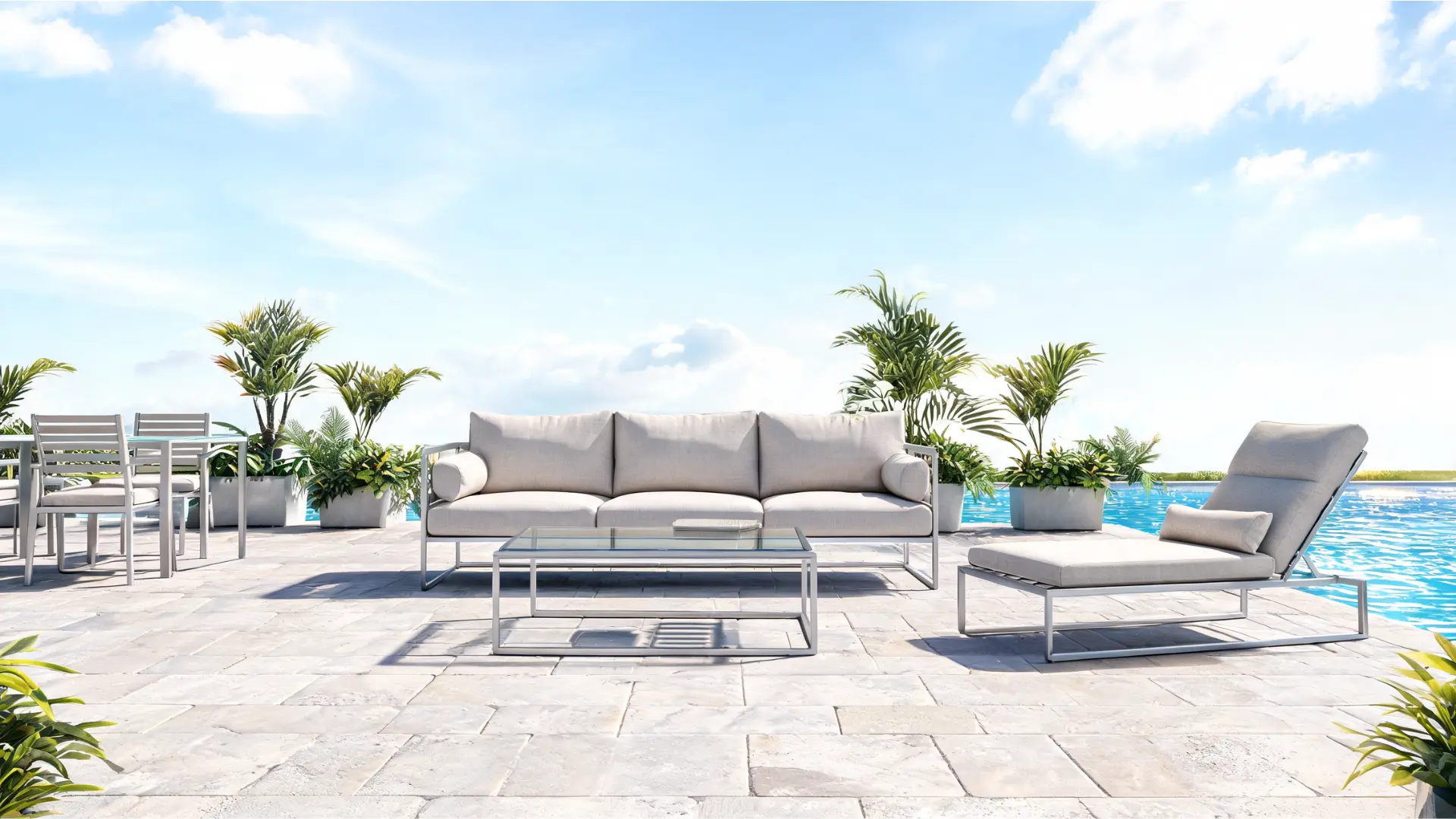
Powder-coated aluminum is the most reliable all-around outdoor furniture material for most US climates. Aluminum doesn’t rust. The powder coating adds a protective layer that handles moisture, UV, and poolside chemical exposure without flaking or chipping under normal conditions. It’s light enough to rearrange on a deck, but substantial enough to feel solid.
Where it earns its place is versatility. Coastal air, humid summers, rainy springs, and full-sun patios all put aluminum through its paces without the rust and corrosion problems you get from untreated steel. The frame won’t swell, crack, or need seasonal sealing.
- Durability: High
- Climate: Rainy, humid, coastal, sunny, poolside
- Budget: Mid-range; strong long-term value
- Best uses: Sofas, dining chairs, coffee tables, loungers, balcony furniture
- Watch for: Surface scratches that expose bare aluminum — touch up the coating before moisture gets in
If you’re choosing one material for a patio and want to stop thinking about it, powder-coated aluminum is the right call.
2. Teak
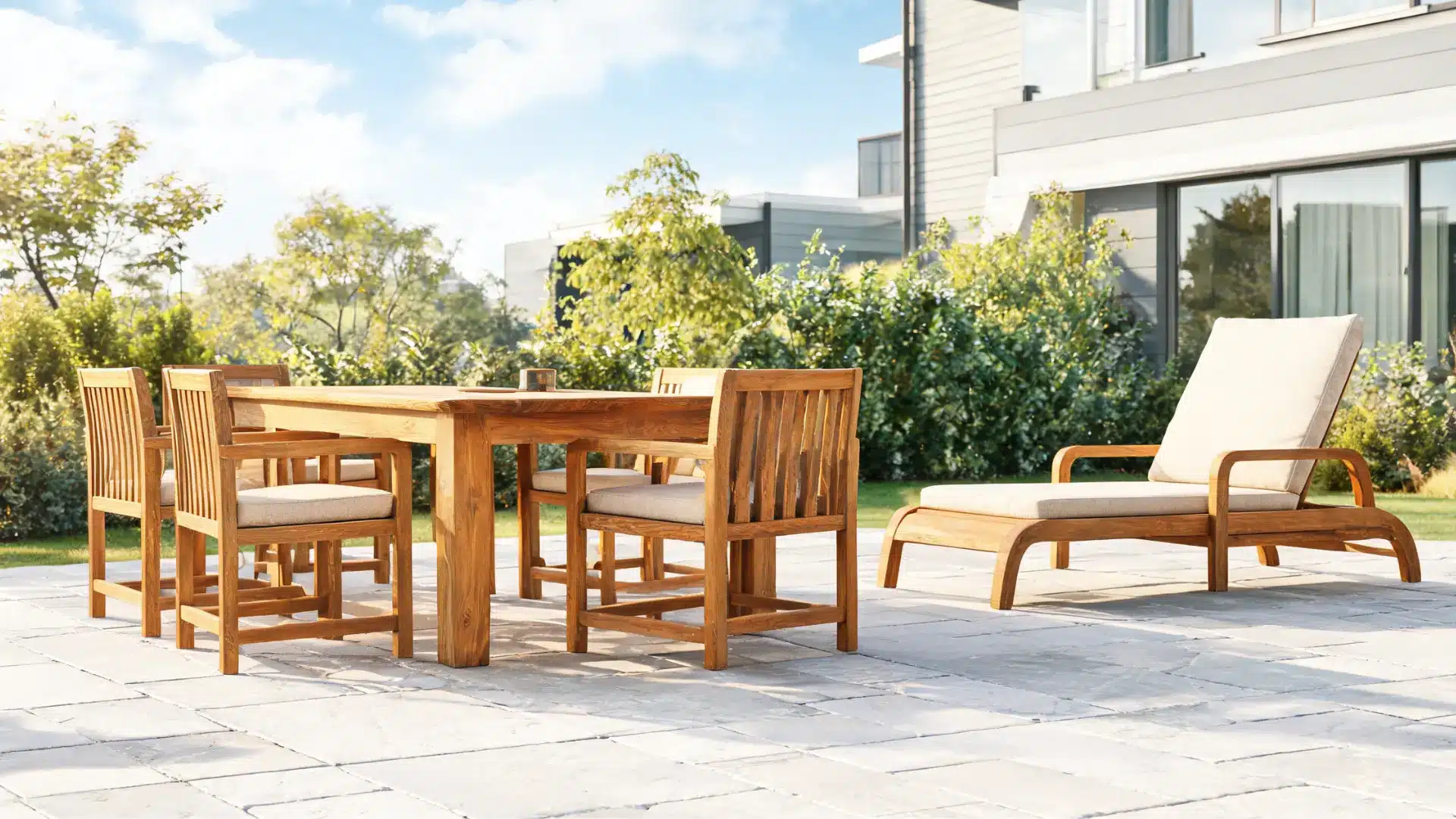
Teak is the benchmark outdoor wood species because it contains naturally occurring oils that resist moisture, rot, and insects without any finish applied.
After a rainy season, the surface stays sound where acacia or pine would show swelling or gray streaking.
The trade-off is cost and upkeep expectations; teak isn’t no-maintenance; it’s low-maintenance if you understand what it does over time.
Left untreated, teak turns silver-gray. That’s not damage, it’s the natural patina the wood develops as the surface oils oxidize. If the golden color matters to you, plan to oil it once a season. If you don’t mind the silver look, you can leave it alone and the structural integrity stays intact.
- Durability: Very high
- Climate: Open patios, decks, uncovered gardens, rainy regions
- Budget: Premium — the price premium over acacia is real, and usually justified
- Best uses: Tables, benches, chairs, sofas, loungers
- Watch for: Grade A vs. Grade B teak varies significantly in oil content and lifespan — verify the grade before buying
3. Resin Wicker
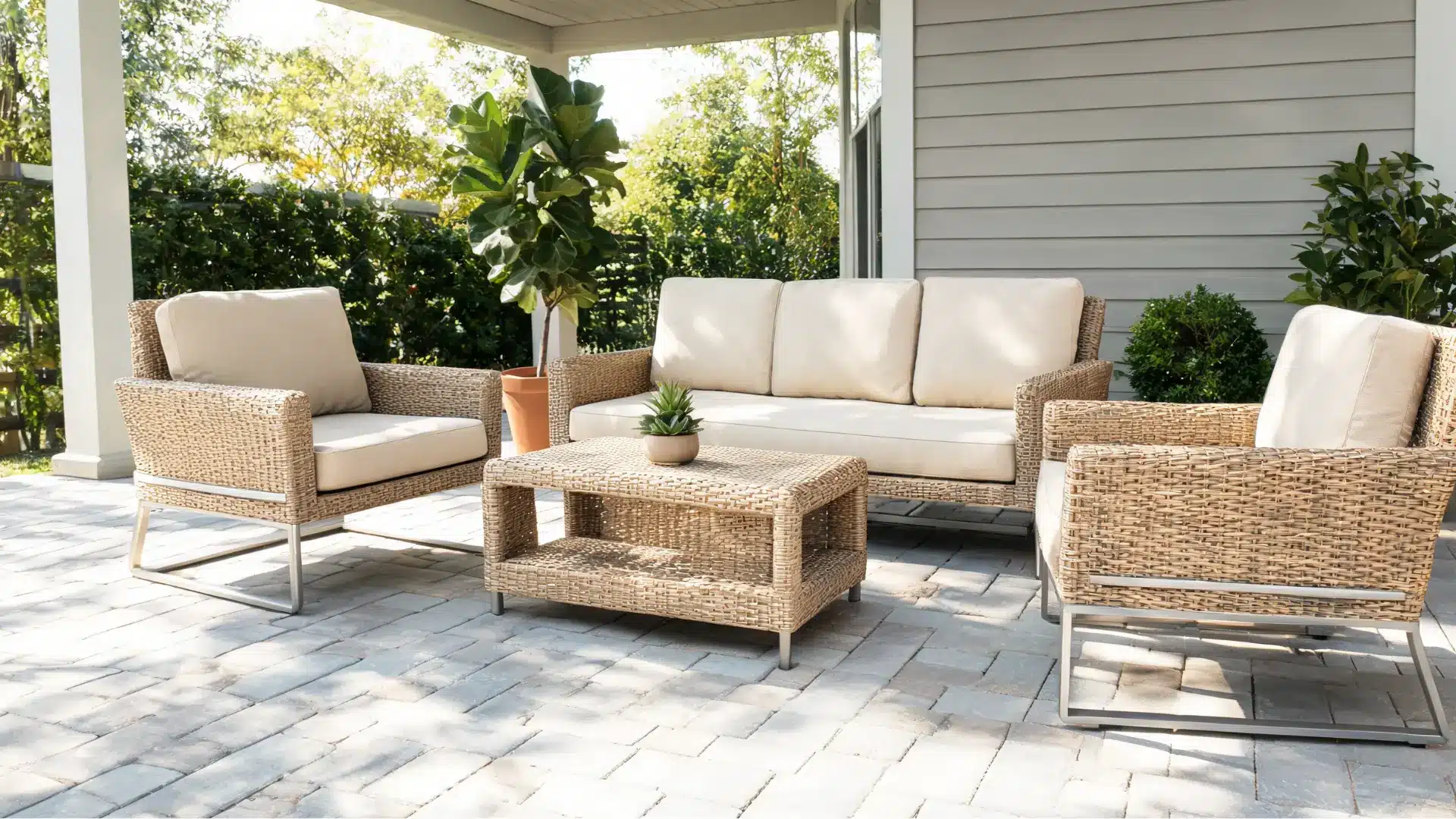
Resin wicker gives you the classic woven patio look without the weather problems that natural wicker or rattan bring. The synthetic polyethylene fiber resists water, UV, and decomposition far better than organic alternatives. For best durability, pair it with an aluminum frame rather than steel — the frame material under the weave matters as much as the wicker itself.
It performs well in mild-to-moderately humid climates and on covered porches. In extreme coastal conditions or full-sun exposure for years at a stretch, the weave can loosen or fade. Good-quality resin wicker from a reputable manufacturer outperforms budget versions significantly in this department.
- Durability: Medium to high
- Climate: Mild, dry, partly covered, moderately humid
- Budget: Budget to mid-range
- Best uses: Patio sofas, lounge chairs, conversation sets, covered porch furniture
- Watch for: Cheap versions unravel at stress points within two seasons — look for tight, even weave and a solid frame
4. Steel and Wrought Iron
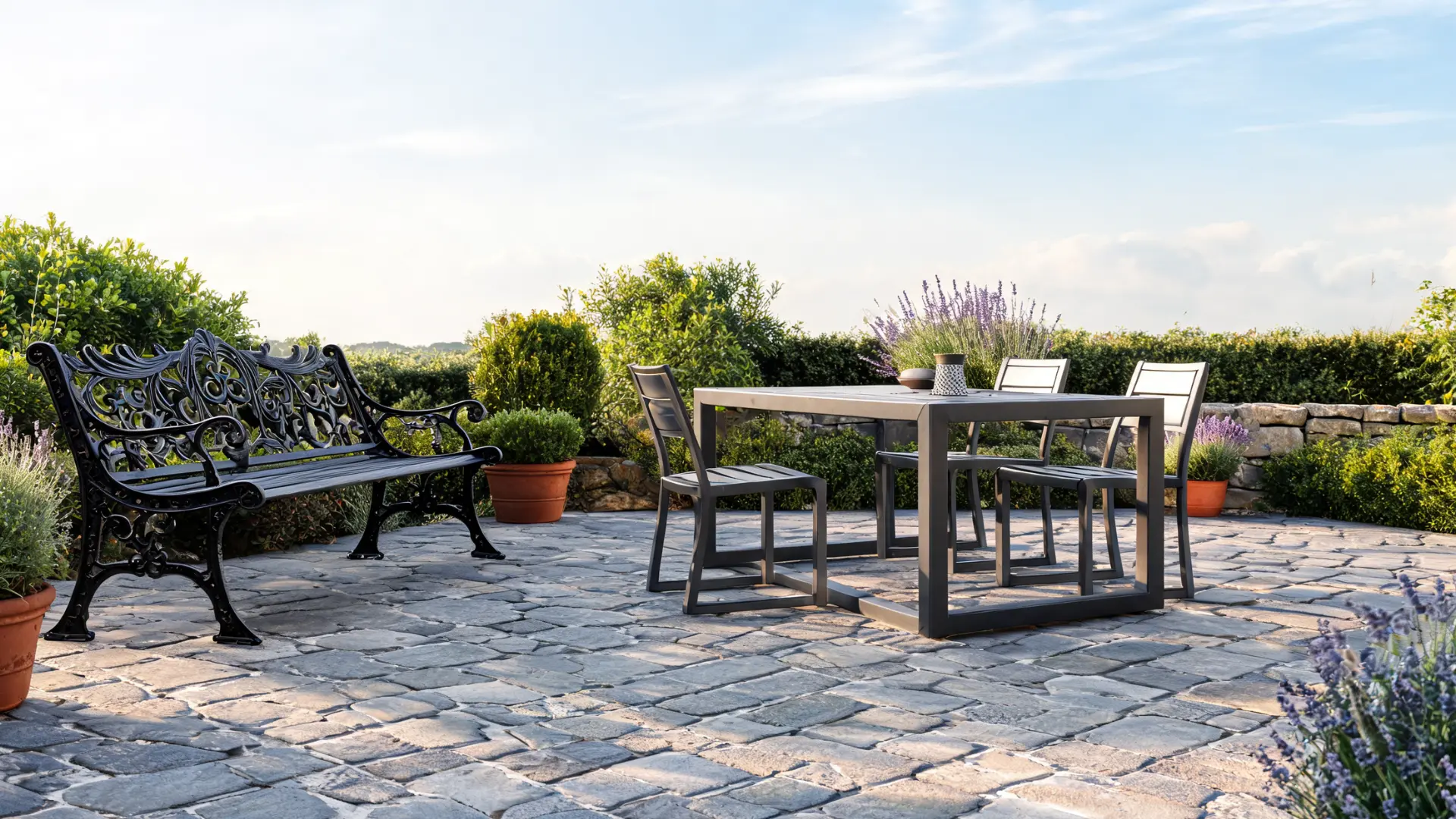
Steel and wrought iron are the right call when weight is an asset specifically in windy areas where lightweight chairs become a liability. A wrought iron bistro set doesn’t blow over. Neither does a heavy steel dining table. The mass is the feature.
Steel is more practical for modern outdoor furniture because it’s strong but lighter than wrought iron. Wrought iron has more decorative potential and a traditional look, but it demands more rust maintenance. In wet climates, chips in the coating expose bare metal fast. Inspect the paint finish before buying and check that the hardware is stainless or galvanized.
- Durability: High, with proper coating and regular inspection
- Climate: Windy, dry, covered outdoor spaces, avoid coastal areas without a marine coating
- Budget: Steel is mid-range; wrought iron is mid-range to premium
- Best uses: Garden benches, dining sets, bistro chairs, decorative accent pieces
- Watch for: Rust at the feet and joints first — these areas collect water and are the first to fail
5. Solution-Dyed Acrylic
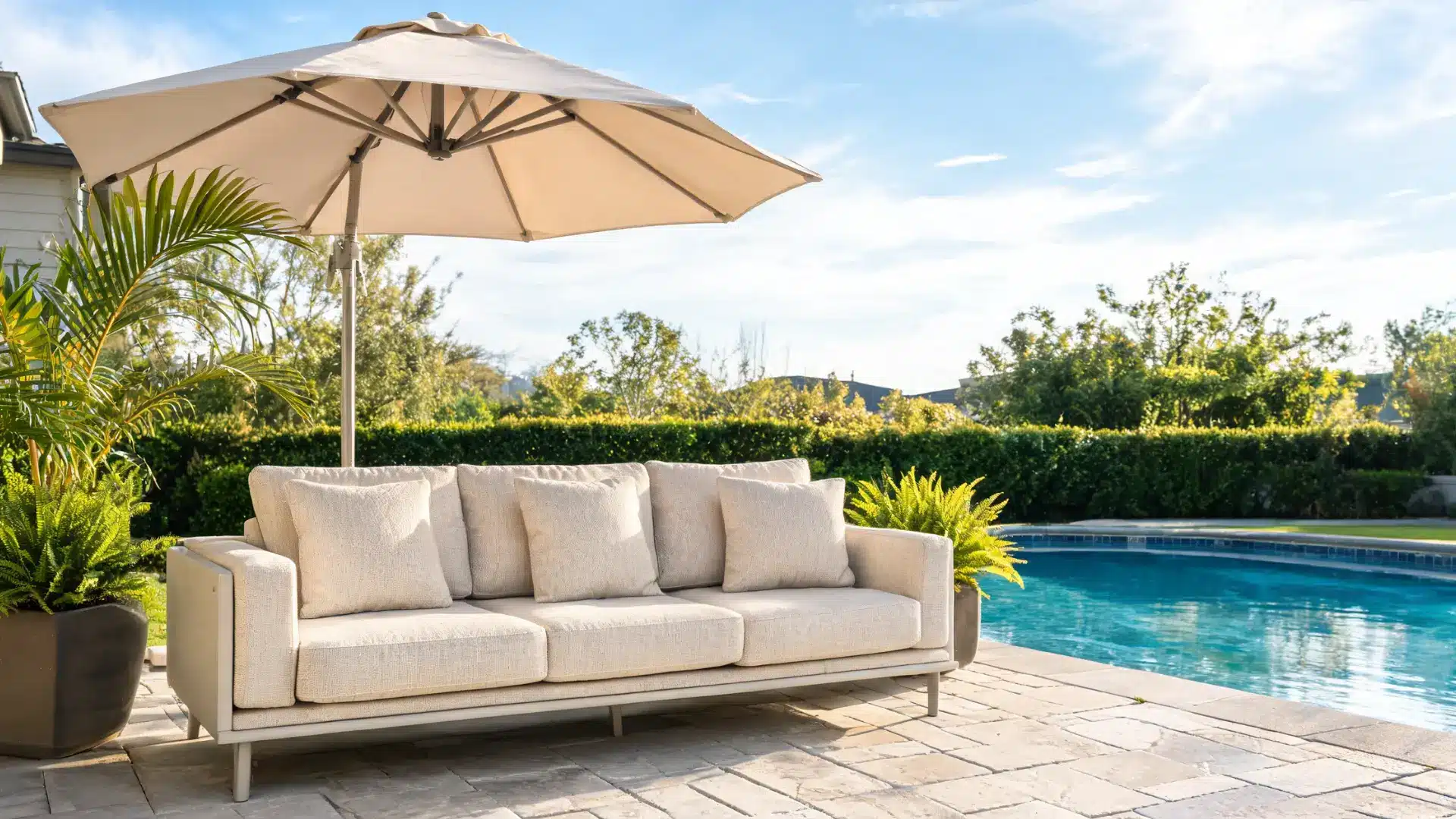
Solution-dyed acrylic is the right fabric for outdoor cushions, upholstered seating, and umbrellas. The difference from standard outdoor fabric is in how the color is applied: the dye runs through the entire fiber rather than sitting on the surface. That’s what makes it genuinely fade-resistant in strong sun rather than just marketed as such.
It also handles moisture better than indoor fabric, resisting mold and mildew in humid conditions. Pair it with quick-dry foam and removable cushion covers to maximize lifespan. Sunbrella is the most recognized brand in this category, but any solution-dyed acrylic from a reputable manufacturer gives you the same core protection.
- Durability: High
- Climate: Sunny, humid, rainy, poolside
- Budget: Premium fabric — the cost difference vs. standard outdoor fabric is real and worth it
- Best uses: Cushions, pillows, upholstered sofas, umbrellas, shade covers
- Watch for: Even high-quality acrylic breaks down faster if cushions are left soaking wet for extended periods — bring them in during multi-day rain
6. HDPE / Polywood-Style
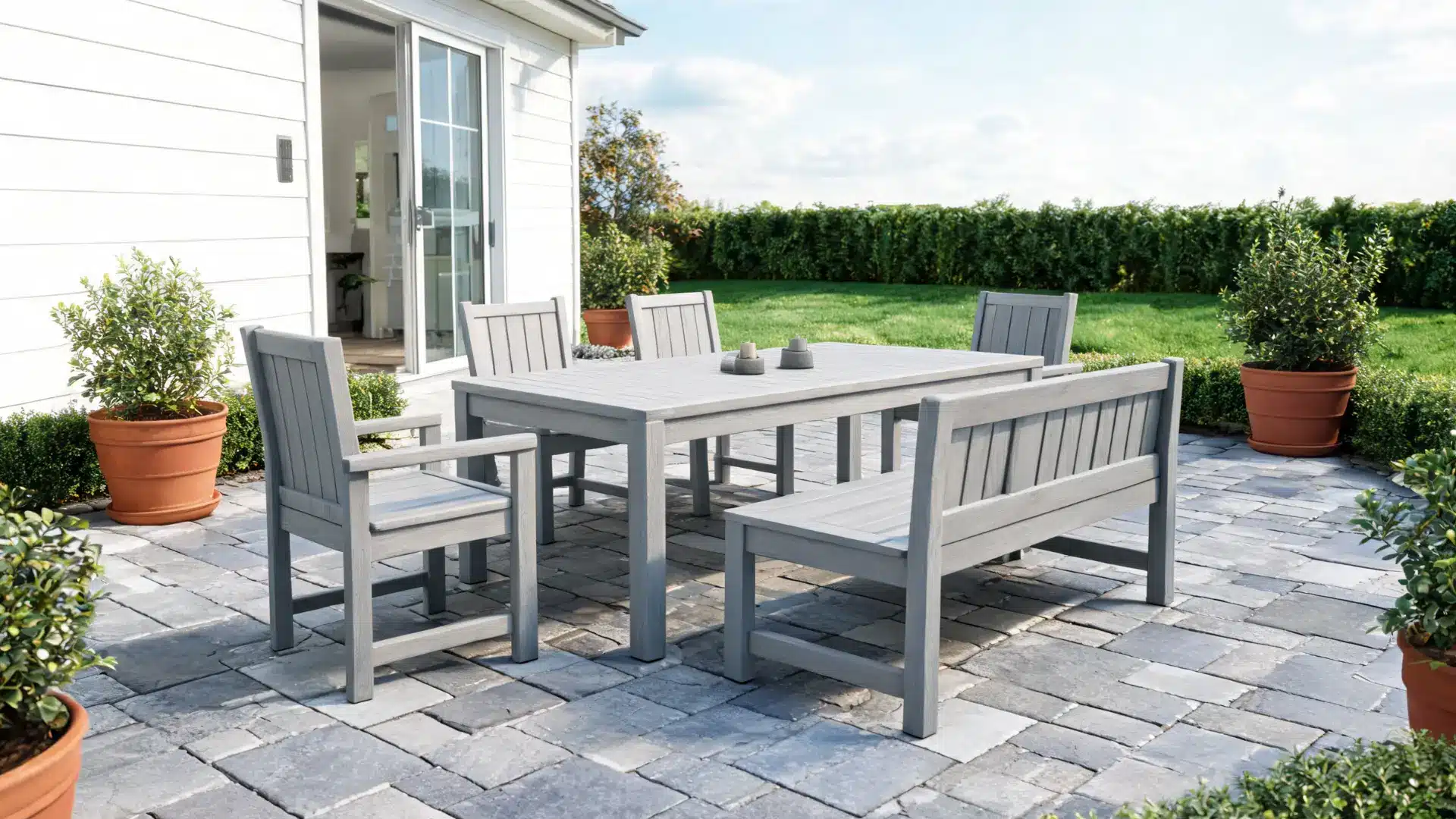
HDPE lumber is dense recycled plastic shaped to mimic wood proportions. It doesn’t absorb moisture, so rain and snow can’t degrade it the way they work on real wood grain. Insects can’t damage it. It won’t crack from freeze-thaw cycles. For uncovered pool decks, lakefront docks, and coastal yards where real wood would need seasonal sealing and inspection, HDPE is the lower-effort, longer-lasting alternative.
It’s heavier and more expensive than basic plastic furniture, and that gap in quality is where it earns its price. The color runs through the board rather than sitting on the surface, so fading is much slower than with painted or coated alternatives.
The trade-off is that it doesn’t accept stains or develop the natural patina that real wood does. For buyers who want the look and feel of actual wood that weathers and takes oil finishes, HDPE vs. real wood is a different comparison than it first appears.
- Durability: High
- Climate: Rainy, humid, coastal, sunny, snowy
- Budget: Mid-range to premium; significantly better long-term value than basic plastic
- Best uses: Adirondack chairs, benches, dining chairs, coastal furniture
7. Acacia
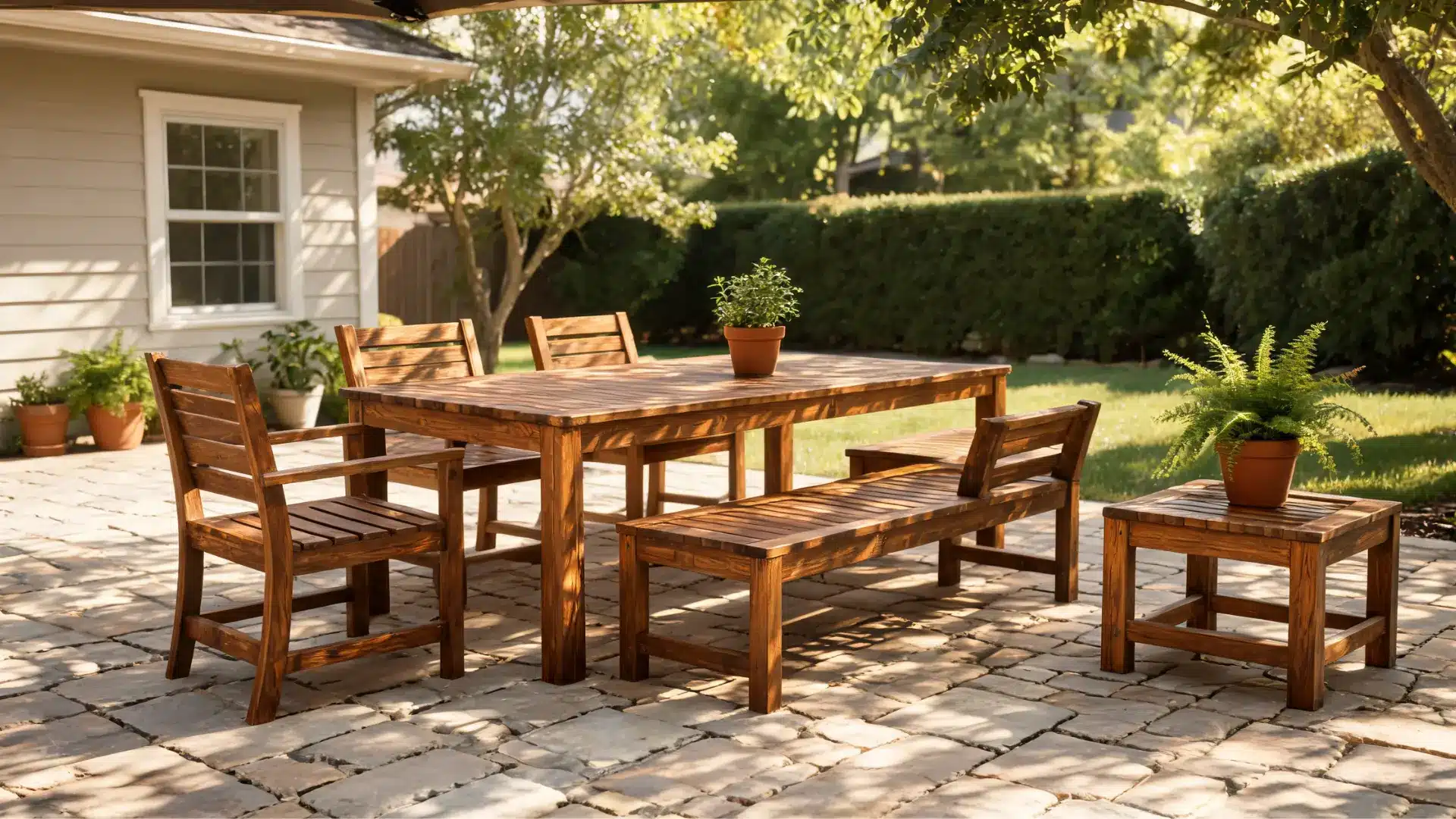
Acacia is a dense, affordable hardwood that gives you a warm wood look without the price of teak. It performs respectably in dry or partly covered spaces but needs more active maintenance than teak if it’s exposed to regular rain or direct sun. Plan on sealing or oiling it every few months if it lives outside uncovered.
The wood varies in quality by source. Some acacia comes well-dried and tight-grained; some is cheaper stock that checks and cracks within two seasons. Pay attention to the finish quality on the piece itself rather than just the species name.
- Durability: Medium to high (with maintenance)
- Climate: Dry, sunny, covered, and partly covered spaces
- Budget: Budget to mid-range
- Best uses: Dining sets, benches, coffee tables, lounge chairs
- Watch for: Acacia that ships wet or poorly dried will check and crack regardless of how well you maintain it
8. Eucalyptus
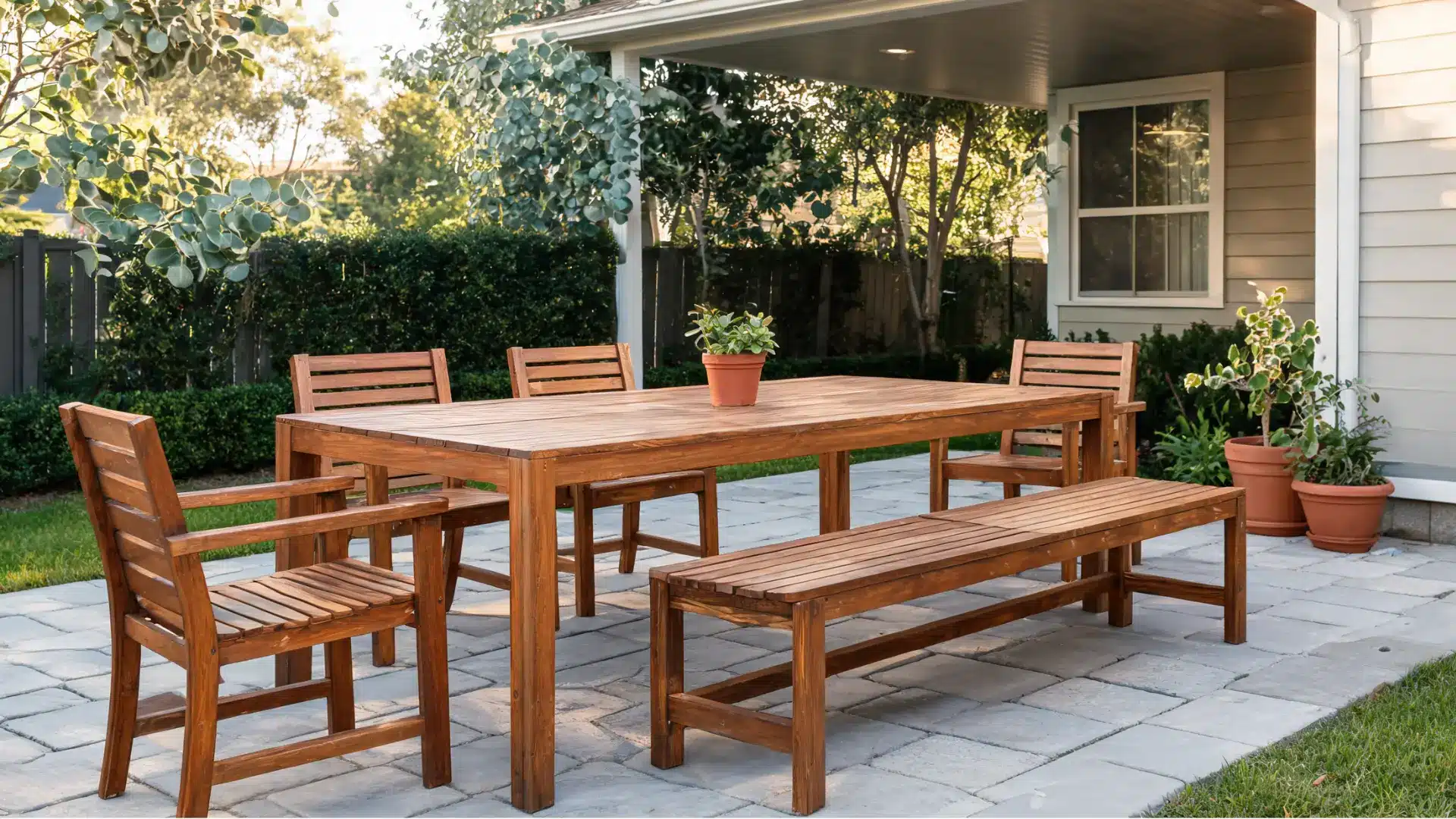
Eucalyptus sits between acacia and teak in terms of outdoor performance and price. Its natural oil content helps it resist moisture and insects better than most cheaper hardwoods. It gives a rich, warm wood look and usually costs meaningfully less than teak.
Like acacia, it performs best when cleaned and oiled on a regular schedule. Left untreated in full-sun, rainy conditions, it will gray and eventually crack. In covered or partly shaded outdoor spaces, it holds up well with moderate care.
- Durability: Medium to high
- Climate: Sunny, mild, covered, moderately humid
- Budget: Mid-range
- Best uses: Dining sets, lounge chairs, benches, patio tables
9. Stainless Steel
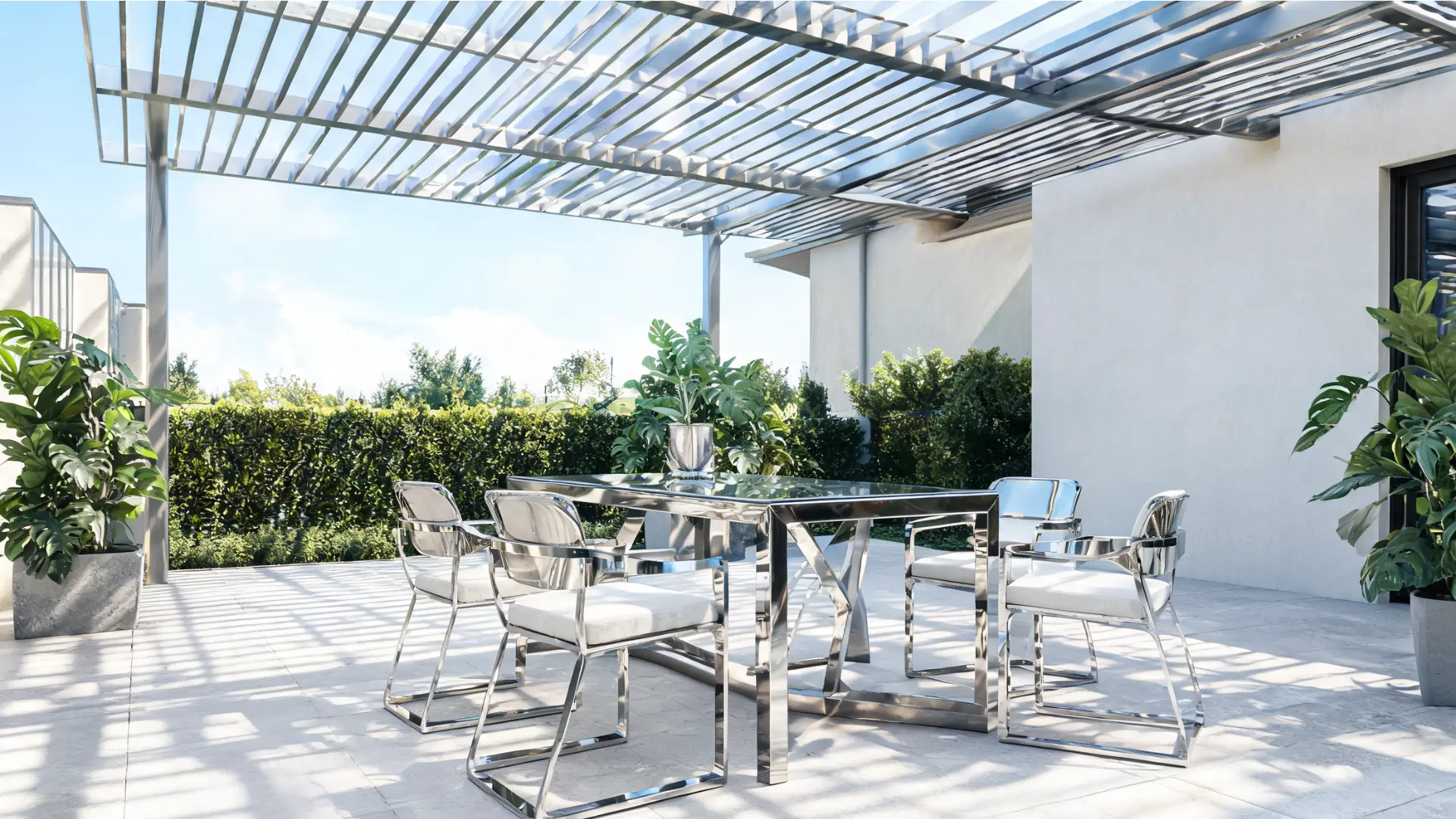
Stainless steel has a clean, modern look and better corrosion resistance than regular painted steel. It works well for dining table frames, contemporary chairs, and modern patio furniture where a sleek metal finish is part of the design intent.
In harsh coastal environments, even stainless steel can show surface rust marks if salt and grime accumulate without regular cleaning. Marine-grade (316) stainless holds up better than standard (304) in direct ocean proximity. Either way, wipe it down regularly in coastal conditions and you’ll get many years of clean performance.
- Durability: High
- Climate: Sunny, dry, covered, and modern patio spaces; coastal with regular cleaning
- Budget: Premium
- Best uses: Dining tables, table bases, modern chair frames, contemporary patio sets
What Actually Makes an Outdoor Furniture Material Last
Outdoor furniture faces conditions that indoor furniture never encounters: UV exposure, rain, humidity, temperature swings, pollen, bird droppings, and in coastal areas, constant salt air. The materials that hold up are the ones engineered for those conditions, not just marketed as “weather-resistant.”
Before choosing, think through these factors against your specific outdoor space:
- Weather resistance: The material should handle your actual climate — not just fair-weather conditions.
- Rust and corrosion resistance: Metal furniture needs protective coatings, especially near water. Check what happens to the hardware too, not just the frame.
- UV protection: Strong sunlight fades fabric, weakens plastic, and dries out wood. UV-stable materials last substantially longer in full-sun positions.
- Weight and stability: Lightweight furniture is easy to move. Heavier pieces stay put in the wind. Match the weight to the exposure.
- Maintenance reality: Some materials need wiping down twice a year. Others need oiling, rust inspection, and seasonal sealing. Be honest about what you’ll actually do.
- Lifespan vs. upfront cost: Cheap furniture replaced every two to three years usually costs more over a decade than mid-range furniture that lasts ten years with basic care.
Maintenance Guide by Material
Even the most durable outdoor furniture lasts longer with the right maintenance routine. The good news is that most materials only need basic care — the problems happen when maintenance gets skipped entirely.
| Material | What to Do | How Often | Key Tip |
| Powder-coated aluminum | Wash with mild soap and water | Every few weeks | Touch up any coating scratches before rust gets in |
| Teak | Clean with a soft brush; oil only if preserving the golden color | Seasonally | Letting it turn silver-gray is fine structurally — it’s a natural process |
| Acacia and eucalyptus | Clean and oil or seal regularly | Every few months | Cover or bring in during extended rain |
| Resin wicker | Dust between the weave; wash gently with mild soap | Monthly | Avoid stiff-bristle brushes that can snag the weave |
| Steel and wrought iron | Clean and touch up chips or rust spots promptly | Monthly in wet climates | Use furniture covers during rainy seasons |
| HDPE / Polywood-style | Wash with soap and water | As needed | Avoid abrasive cleaners that can dull the surface |
| Sling and Textilene | Rinse, wipe with mild soap, dry fully | Every few weeks | Check manufacturer guidance before using bleach |
A consistent basic routine, wiping down before dirt builds up, covering during extended harsh weather, and storing cushions during long inactive periods add years to any material’s lifespan.
Outdoor Furniture Materials to Avoid
Some materials look fine at purchase and start showing problems within a season or two. These are the ones worth avoiding or treating with caution:
- Natural wicker: Absorbs moisture, dries out in strong sun, cracks, sags, and unravels. It may hold up on a fully covered porch, but not on an open patio. Choose resin wicker over an aluminum frame instead.
- Untreated wood: Without a protective finish, it swells, warps, cracks, rots, and attracts insects. Choose teak, sealed acacia, eucalyptus, or cedar instead.
- Cheap steel: When the paint or coating chips, rust spreads fast. It stains patios, weakens frames, and makes the furniture increasingly difficult to maintain. Choose powder-coated steel, stainless steel, or aluminum instead.
- Low-grade plastic: It fades, cracks, and becomes brittle in strong UV. It also blows around easily in wind. Choose HDPE, Polywood-style furniture, or powder-coated aluminum instead.
Common Buying Mistakes
Most outdoor furniture failures trace back to decisions made before the purchase. A few things to check before committing:
| Mistake | What to Check Instead |
| Ignoring the frame material | Choose powder-coated aluminum, teak, HDPE, or sealed hardwood |
| Choosing the wrong cushion fabric | Choose outdoor-rated fabric like solution-dyed acrylic or olefin |
| Buying poor-quality wicker | Choose outdoor-grade resin wicker over an aluminum frame |
| Forgetting about furniture weight | Choose heavier frames like teak, steel, or wrought iron for windy spaces |
| Not checking the hardware | Choose stainless steel, galvanized, or corrosion-resistant screws and bolts |
Hardware is the detail most buyers overlook. A solid aluminum frame with cheap zinc screws will show rust at every joint within a couple of seasons. The frame material gets the attention; the hardware is what actually determines whether the piece holds together.
Frequently Asked Questions
Can outdoor furniture be left outside all year?
Powder-coated aluminum, teak, HDPE, and resin wicker handle year-round exposure better than untreated wood or cheap steel. Even so, furniture covers and cushion storage during extended harsh weather meaningfully extend the lifespan of any material.
What outdoor furniture material works best for apartments and balconies?
Powder-coated aluminum, resin wicker, and compact HDPE pieces work best for balconies. They’re easier to move, fit small spaces, and need minimal maintenance. Avoid heavy wrought iron unless the balcony has a confirmed weight capacity for it.
Which outdoor furniture material stays coolest in the sun?
Sling and Textilene fabrics stay cooler than dark metal frames or thick cushions. Metal frames heat up significantly in direct sunlight, especially darker finishes. Light-colored cushions and shade structures make a larger practical difference than material alone in hot climates.
Is HDPE better than regular plastic for outdoor furniture?
Yes. HDPE is thicker, denser, and far more weather-resistant than low-grade plastic. It resists cracking, peeling, UV fading, and insect damage. Regular plastic is cheaper upfront but often needs replacing within three to four years under full sun.
Do outdoor furniture cushions need to be stored indoors?
Not always, but storing them during heavy rain, winter, or long periods of inactivity extends their lifespan considerably. Solution-dyed acrylic fabric handles moisture well, but extended saturation — weeks of damp storage — breaks down even quality fabric faster than necessary.
What hardware should I look for in outdoor furniture?
Stainless steel, galvanized, or specifically coated corrosion-resistant hardware at every joint and connection point. Poor hardware fails even when the frame material is solid, particularly in coastal, humid, and poolside environments.
Is heavier outdoor furniture always better?
No. Heavy furniture stays put in the wind, which is valuable in exposed spaces. But it’s harder to move, store, and clean. Aluminum is a better choice for balconies, small patios, and flexible layouts where you rearrange frequently.
Final Verdict
Choosing outdoor furniture becomes much easier when you match the material to your real weather, not just the style you like.
I would start with your climate first, then compare maintenance, weight, cushion fabric, hardware, and long-term value.
The best material for outdoor furniture may be powder-coated aluminum for low-maintenance patios, teak for a premium wood look, HDPE for wet or coastal spaces, or heavier metal for windy areas.
You also need to check cushions, screws, coatings, and cleaning needs before buying. A smart choice now can save you money and repairs later. Share your patio setup or check related outdoor furniture guides before you decide.