



Polywood furniture holds up. That’s the honest starting point. I’ve watched real wood patio sets rot out in three seasons on an uncovered deck, and I’ve seen cheap molded plastic buckle under UV and split at the seams before two winters are done.
The question worth asking before you spend $800 on an Adirondack chair is exactly what you’re buying and whether it earns the price.
This guide covers what Polywood is made of, how it performs across different climates, how it compares to natural wood, and which furniture types are worth the money.
| Material | High-density polyethylene (HDPE) plastic lumber |
| Primary Source | Recycled plastics, milk jugs, detergent bottles, post-consumer HDPE |
| Color Method | UV inhibitors and pigments blended into the lumber, not surface-painted |
| Maintenance Required | Soap, water, and a soft brush, no sealing, staining, or oiling |
| Warranty (Brand) | 20 years (Polywood brand) |
| Best For | Uncovered patios, pool areas, coastal environments, high-traffic outdoor spaces |
| Not Ideal For | Buyers wanting authentic wood grain, the lowest upfront price, or lightweight furniture |
That’s the short version. The full picture is more useful than a spec sheet, so let’s get into it.
What is Polywood Made Of?
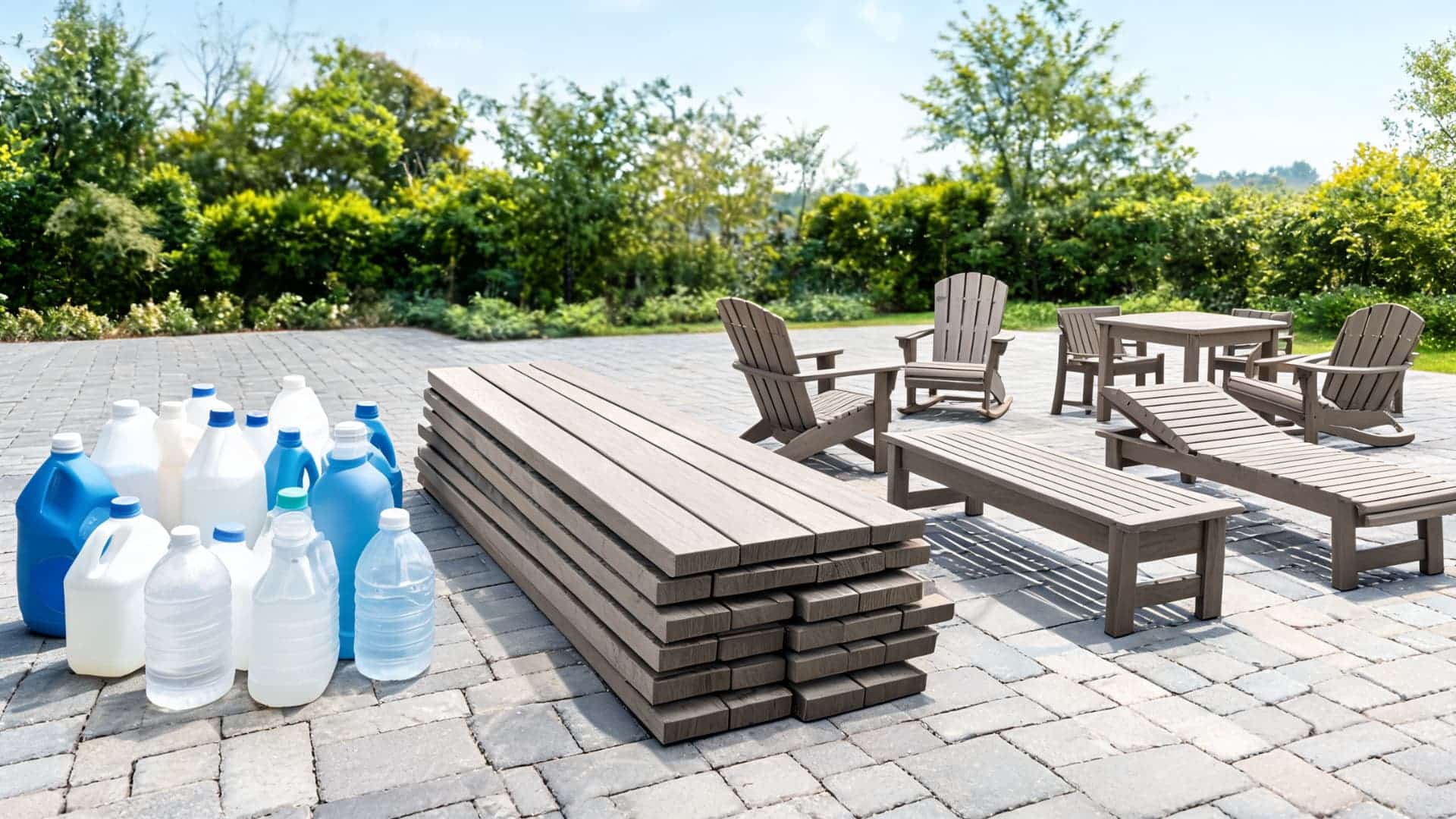
Polywood furniture is made from high-density polyethylene (HDPE) sourced primarily from recycled plastics like milk jugs, detergent bottles, and post-consumer packaging.
The raw material is processed into dense boards that are shaped, cut, and assembled like lumber. From a distance, a well-made Polywood Adirondack chair looks like painted wood. Up close, the surface texture is smoother and more uniform than timber grain.
What separates HDPE lumber from cheap patio plastic is density and how color is applied. UV inhibitors and pigments are blended into the material during manufacturing, not applied as a surface coat. That means the color runs through the board.
A deep scratch on a Polywood slat won’t reveal a stark white interior the way a painted plastic chair would; the tint carries through. It also means the UV protection is structural rather than cosmetic.
The boards are then cut and drilled like dimensional lumber and fastened with stainless steel hardware to resist corrosion. The result is furniture that looks like traditional outdoor wood furniture but behaves like a dense plastic material, which is exactly what it is.
| Pro Tip: Check the hardware before you buy any poly lumber furniture. Stainless steel fasteners are the standard for quality HDPE pieces. Zinc or plated screws will rust and stain the boards faster than the material itself degrades. |
Is Polywood Real Wood?
No, and the name trips people up constantly. Polywood is HDPE plastic lumber shaped to resemble timber. It comes in wood-inspired colors like teak, mahogany, driftwood, and natural, and the board profiles mimic the proportions of dimensional wood stock. That’s where the resemblance ends.
There’s no grain, no fiber structure, and nothing in it that came from a tree. It won’t accept stain, it doesn’t need sealing, and it won’t develop the silver patina that teak does over time.
Buyers who want the natural behavior and aesthetic of real wood, including how it weathers, how it takes oil finishes, how it smells in the sun, will find that Polywood doesn’t replicate any of that. What it does offer is a stable, predictable surface that requires almost no maintenance to keep looking the same year over year.
Polywood vs. Natural Wood: How They Actually Compare
For the outdoor context, uncovered pool decks and porches, and lakefront docks — the material differences translate into real performance gaps over time. Here’s how they compare across the factors that matter most for outdoor furniture
| Factor | Polywood (HDPE) | Natural Wood (Teak, Cedar, Pine) |
| Rot resistance | Does not rot, HDPE has no organic fiber | Varies by species; pine rots fast without treatment; teak holds up well |
| Splintering | Does not splinter | Splinters as the surface dries and cracks over the seasons |
| Maintenance | Soap and water only | Annual sealing, oiling, or refinishing, depending on species |
| Fade resistance | UV inhibitors built into the material hold color well | Fades and grays without a UV-protective finish applied |
| Weight and stability | Heavier than lightweight plastic; stable in moderate wind | Varies; teak is heavy, pine is lighter |
| Upfront cost | Higher, expect $300-$900 for a quality Adirondack chair | Wide range; painted pine is cheap, teak is expensive |
| Long-term cost | Lower, minimal upkeep, long lifespan | Higher annual maintenance costs add up; replacement is more likely |
| Appearance over time | Stays consistent; does not age like wood | Develops character with age (silver patina, grain variation) |
The comparison changes depending on which wood you’re actually using. A quality teak set maintained properly will last decades and look better for it. The problem is most buyers aren’t comparing Polywood against teak; they’re comparing it against painted pine or basic acacia that won’t survive three winters without significant work.
Against that standard, HDPE lumber wins on durability and long-term cost without much debate. For guidance on which outdoor wood species actually hold up.
How Polywood Performs in Real Weather
The material doesn’t care what the weather is doing. That’s the practical reality of HDPE, and it’s why Polywood gets recommended for the situations where real wood tends to struggle. Here’s how it holds up across the conditions that matter.
1. Hot and Sunny Climates
UV inhibitors built into the material slow the fading process significantly compared to painted or stained wood. That said, dark colors, navy, black, and deep charcoal, absorb heat and can become uncomfortable to touch on a July afternoon in direct sun.
If your patio gets full sun from 10 am to 4 pm, lighter colors are the practical choice for comfort. The material itself won’t degrade from UV exposure the way unstabilized plastic does.
2. Rainy and Humid Environments
HDPE doesn’t absorb water. There’s no swelling, warping, or surface checking from moisture cycling the way you’d see in untreated or even sealed wood.
Surface dirt, pollen, and mildew can still collect on the boards; the material isn’t self-cleaning, but a scrub brush with soapy water handles all of it without needing to let the furniture dry out or condition it afterward.
3. Cold and Snowy Climates
The material holds up through freeze-thaw cycles that crack and split wood. Polywood can stay outside through a northern winter without the fiber stress that causes untreated wood to check and split when moisture in the grain freezes and expands.
Covers are optional, but they help reduce cleaning time when spring arrives. Stacking chairs or bringing cushions inside over winter extends cushion life; the frames don’t need it.
4. Coastal and Poolside Use
Salt air and pool splash are where HDPE furniture has a clear structural advantage over most wood alternatives.
The material doesn’t absorb chlorine or salt, doesn’t corrode (provided the hardware is stainless), and doesn’t need rinsing for its own protection, though rinsing to remove salt buildup on visible surfaces keeps it looking clean. This is one of the strongest use cases for poly lumber furniture.
Polywood vs. Poly Lumber: Why the Distinction Matters
Polywood is a brand name, not a material category. When people say “polywood furniture,” they sometimes mean furniture made by the Polywood brand specifically, and sometimes they mean any furniture made from poly lumber or HDPE boards, regardless of manufacturer. The distinction matters because quality and warranty coverage vary between manufacturers even when the base material is the same.
| Term | What It Means | When to Use It |
| Polywood | Specific brand, founded in 1990, US-manufactured HDPE furniture with a 20-year warranty | When referring to the brand specifically |
| Poly lumber | The material category, HDPE boards used by many furniture manufacturers | When discussing the material, regardless of brand |
| HDPE furniture | An accurate generic term for any furniture made from high-density polyethylene | Technical or comparative contexts |
The Polywood brand offers a 20-year warranty against structural defects, which is the benchmark for the category. Other poly lumber brands, Breezesta, DuraWeather, Berlin Gardens, and Seaside Casual, use comparable HDPE material but carry different warranty terms and quality tiers.
Buying from a brand that specifies HDPE content and backs the product with a long warranty is a better investment than buying unbranded poly lumber furniture where those specs aren’t disclosed.
Why Polywood Furniture Costs More
A single Polywood Adirondack chair runs $250 to $400. A dining set for six can run $1,500 to $3,000. The higher price reflects the density of the material, the quality of the hardware, and the cost of domestic manufacturing, not padding. Here’s what drives the cost.
First, HDPE lumber itself is denser and heavier than the molded plastic used in cheap patio furniture. Processing recycled HDPE into furniture-grade boards — blending UV stabilizers and pigments into the material during extrusion- costs more per unit than injection-molded plastic.
Second, stainless steel hardware is standard on quality poly lumber pieces. It’s more expensive than zinc or plated fasteners, and it matters for long-term performance. Corroding hardware on an outdoor furniture frame leaves rust streaks on the boards and eventually compromises the joints.
Third, the Polywood brand specifically manufactures in the US, which is reflected in the price. The 20-year warranty coverage they offer also reflects the manufacturer’s confidence in the product’s lifespan, which factors into the cost structure.
The cost-per-year math is worth running. A $350 Polywood chair that lasts 20+ years costs roughly $17-18 per year. A $90 molded-plastic chair that needs replacing every 4-5 years costs $18-22 per year and generates more waste. The upfront number is larger; the long-term number is often comparable or better.
| Note: Cost estimates for Polywood furniture reflect the brand’s current US pricing. Poly lumber furniture from other manufacturers (Breezesta, DuraWeather, Berlin Gardens) may vary significantly. Prices fluctuate seasonally; peak spring pricing (March–May) runs higher than off-season pricing. |
The Main Characteristics of Polywood Outdoor Furniture
Five things separate POLYWOOD from standard outdoor furniture, and from each other, depending on where you use it.
- No routine maintenance. No staining, oiling, sanding, or sealing, ever. Soap and water handle everything.
- Fade resistance is built into the board. Pigment is blended through the HDPE before extrusion, not coated on. No peeling, no blotchy patches.
- No rot, no splinters. HDPE has no organic fiber for fungi to break down, a direct advantage on pool decks and rental properties.
- Heavy and stable, but awkward to move. The density that holds chairs steady in the wind makes large pieces difficult to store seasonally.
- More sustainable, not zero-impact. Recycled HDPE diverts post-consumer plastic from landfills. Manufacturing still uses energy; the furniture is not biodegradable.
Taken together, these characteristics make POLYWOOD well-suited to high-exposure, low-intervention outdoor situations, and a harder case for anyone who prefers the feel of natural wood or moves furniture often.
Best Types of Polywood Furniture to Buy
Some Polywood furniture types offer better long-term value than others. The best choices are pieces that stay outdoors, face the weather often, and benefit from strong, low-maintenance HDPE construction.
| Polywood Furniture Type | Best For | Why It’s Worth Buying |
|---|---|---|
| Adirondack Chairs | Fire pits, lawns, decks, patios | Adirondack chairs are one of the best Polywood buys because they handle constant outdoor exposure well. Their slatted design drains water easily, and the material resists rot, moisture, and ground contact. |
| Dining Sets | Covered and uncovered patios | Polywood dining sets work well for regular outdoor meals. Their heavier weight keeps tables steady in the wind, while stainless steel hardware adds durability for long-term use. |
| Rockers, Gliders, and Porch Swings | Front porches and covered seating areas | These pieces are ideal when furniture stays in one place but faces changing weather. HDPE holds up well to repeated rocking or gliding without the loosening common in older wood joints. |
| Chaise Lounges and Deep Seating | Pool areas, patios, lounge spaces | Poolside Polywood furniture performs well because HDPE resists moisture, chlorine, sunscreen, and wet use. For cushioned pieces, choose quick-dry, fade-resistant fabric with available replacement cushions. |
| Benches and Planters | Gardens, walkways, porches | Polywood benches need little maintenance beyond cleaning and work well in exposed spaces. Planters are also durable, but drainage holes are important because HDPE does not breathe like wood. |
Polywood is most worth the price when the furniture stays outside year-round. Start with chairs, dining sets, or benches if you want practical pieces that need little upkeep.
How to Choose the Right Polywood Furniture for Your Space
The material decision comes first. Once you’ve decided HDPE furniture is the right call for your outdoor space, the purchase decision narrows down to a few practical questions.
Measure before you buy. Polywood pieces run large, especially Adirondack chairs (typically 29–32 inches wide) and dining tables. Leaving 36 inches of clearance behind a dining chair for a comfortable pull-out is the minimum, more if it’s a high-traffic path. Sectional components add up fast in smaller patios.
Match the piece to the use. If you eat outside three times a week, a dining set earns its keep. If the patio is mostly for relaxed weekend seating, two Adirondack chairs and a side table will serve better than a formal dining set that sits empty most days.
Color choice is a comfort decision, not just aesthetic. Dark colors, black, navy, charcoal, hold up fine in UV terms, but get hot in direct afternoon sun. For pool decks and sun-exposed patios, lighter colors (white, sand, natural) are cooler to the touch and show less heat absorption. For shaded porches, color choice is mostly aesthetic.
Check cushion availability for deep seating. Adirondack chairs and rockers often work well without cushions. Covers are optional, but they help reduce cleaning time when spring arrives, the same logic applies to any exposed deck surface around them. Confirm replacement cushions are available and priced before committing to a deep seating set.
Frequently Asked Questions About Polywood Furniture
These are the questions that come up most often from people who’ve narrowed their decision down to Polywood and want specifics before buying.
Is polywood furniture worth the money?
For outdoor spaces with significant weather exposure and minimal maintenance attention, yes. The cost-per-year math favors HDPE furniture over most alternatives when you factor in replacement cycles and maintenance costs. It’s not worth it if you want authentic wood grain or need the lowest possible upfront price.
Can polywood furniture be left outside year-round?
Yes. HDPE lumber is designed for year-round outdoor exposure. Covers are optional — they reduce cleaning time after winter but aren’t required to protect the material. Bring cushions inside or store them in a weatherproof box over winter.
Does polywood furniture get hot in the sun?
Dark-colored poly lumber furniture can get uncomfortably warm in direct afternoon sun. Lighter colors stay cooler. This is a material property, not a brand-specific issue — dark-colored plastic and metal furniture both run hotter than light-colored alternatives in direct sunlight.
Can polywood furniture be painted?
Not recommended. HDPE has low surface adhesion for most paints, so conventional paint won’t bond reliably and will peel faster than it would on wood. The color is built into the material — repainting isn’t typically needed and usually causes more problems than it solves.
Does polywood furniture attract termites or insects?
No. HDPE has no organic fiber content. Termites, carpenter ants, and wood-boring insects are not attracted to it and cannot damage it the way they would timber furniture.
How do you clean polywood furniture?
Mild dish soap, warm water, and a soft-bristle brush. Rinse with a garden hose. For stubborn mildew or staining on the surface, a diluted bleach solution (1/3 cup per gallon of water) works without damaging the material. No pressure washer required.
Is polywood furniture good for rental properties?
Yes. The combination of durability, low maintenance, and resistance to rot, splinters, and fading makes it a practical choice for rental properties where furniture needs to hold up through tenant turnover without constant attention.
What is the difference between polywood and composite decking?
Composite decking typically combines wood fiber with plastic binders, which can retain moisture and support mold growth under some conditions. Polywood is pure HDPE with no wood fiber content — it doesn’t absorb water and has no organic material for fungi to break down. They are different materials with different performance profiles.
Final Verdict
Polywood makes the most sense when you want outdoor furniture that can stay outside and still hold up with very little work.
I like it most for patios, pool decks, porches, and coastal spaces where rain, sun, salt, and daily use can wear down cheaper materials fast.
You now know what Polywood furniture is made of, why HDPE performs differently from real wood, how it handles different climates, and which pieces offer the best value.
The upfront price is higher, but the low maintenance and long lifespan can make it easier to justify. Before you buy, measure your space, choose the right color, and share which piece you are considering.
Sources
Polywood Brand, “Materials and Sustainability.” polywood.com
Family Handyman, “The 10 Best Outdoor Furniture Brands, According to Designers.” 2025. familyhandyman.com
Casual Furniture World, “What Is Polywood Furniture? Definition, Materials, History & Brands.” 2025. casualfurnitureworld.com