

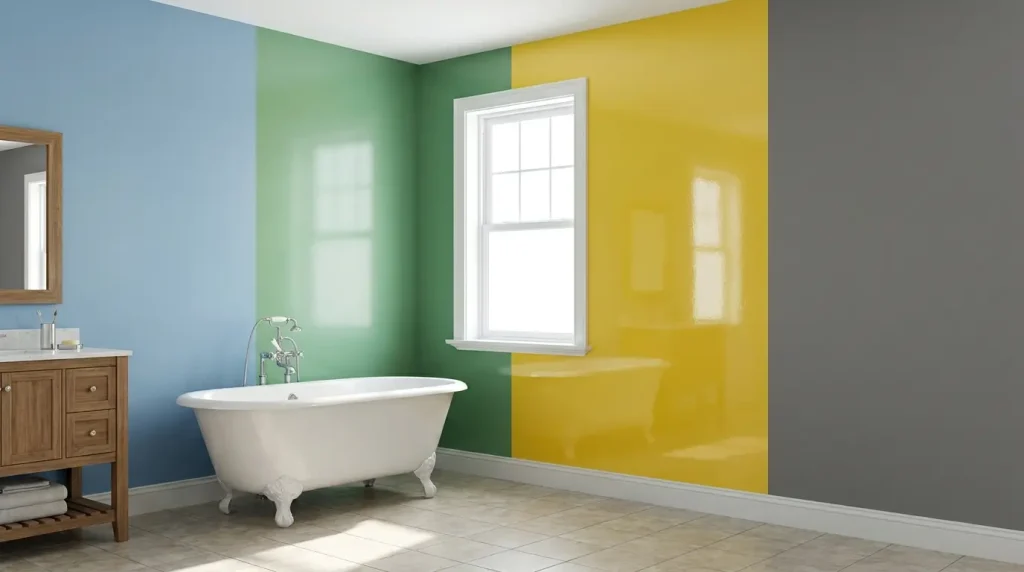


Bathrooms are tricky spaces when it comes to paint. I’ve spent years helping clients pick finishes that last, and I still remember staring at a tiny powder room swatch in the morning light, wondering if semi-gloss would look too harsh.
The right paint finish doesn’t just protect walls from moisture; it shapes how a room feels at 7 am versus 7 pm, especially when light shifts across tile, mirrors, and fixtures.
If you’re wondering which sheen is best for your walls, trim, or shower area, I’ll break down the pros, cons, and practical tips for selecting the best paint finish for bathroom spaces, including mildew-resistant, washable, and waterproof options.
Why Does Paint Finish Matter More in Bathrooms?
Paint sheen refers to the level of shine a paint has once it dries, and it plays a bigger role than appearance alone. It directly impacts durability, cleanability, and how well a surface handles moisture.
Flat finishes are great at hiding dents and uneven patches, but they tend to absorb moisture and are difficult to wipe clean.
Higher-sheen options like satin, semi-gloss, and gloss reflect more light, resist scrubbing, and hold up better in humid conditions, though they can highlight wall imperfections more easily. If you want a deeper look at how each level of sheen performs across different rooms, paint sheen comparisons by room type cover the full range.
In bathrooms, this choice becomes especially important because constant steam, condensation, and frequent cleaning put extra stress on walls and ceilings. A poor finish can lead to streaking, peeling, or mildew buildup in corners and near wet zones like sinks and showers.
That’s why testing samples in real bathroom lighting matters, sheen can shift noticeably from morning softness to evening glare in humid conditions and under artificial light.
Factors That Affect the Right Bathroom Paint Finish
Before choosing a finish, look at how the bathroom is used. A powder room without a shower has very different paint needs than a busy family bathroom. The main things to check are:
- Moisture level: Bathrooms with showers need stronger moisture resistance.
- Ventilation: Poor airflow makes paint work harder because humidity stays trapped.
- Surface condition: Glossy finishes can show bumps, patches, and roller marks.
- Cleaning needs: Busy bathrooms need paint that can handle wiping and scrubbing.
- Lighting: Bright lights and natural light can make shiny finishes look harsher.
- Paint location: Walls, ceilings, trim, doors, and cabinets each need a different finish.
Once you review these factors, the right finish becomes clearer. You can confidently match sheen to moisture, cleaning, lighting, and the exact surface being painted.
Best Paint Finish for Bathroom: Top Recommendations
Choosing the right paint sheen is about balancing appearance, moisture resistance, cleanability, and the presence of wall imperfections. I often tell my clients that the wrong finish can make a bathroom look cheap or require a repaint sooner than expected.
1. Gloss & High-Gloss
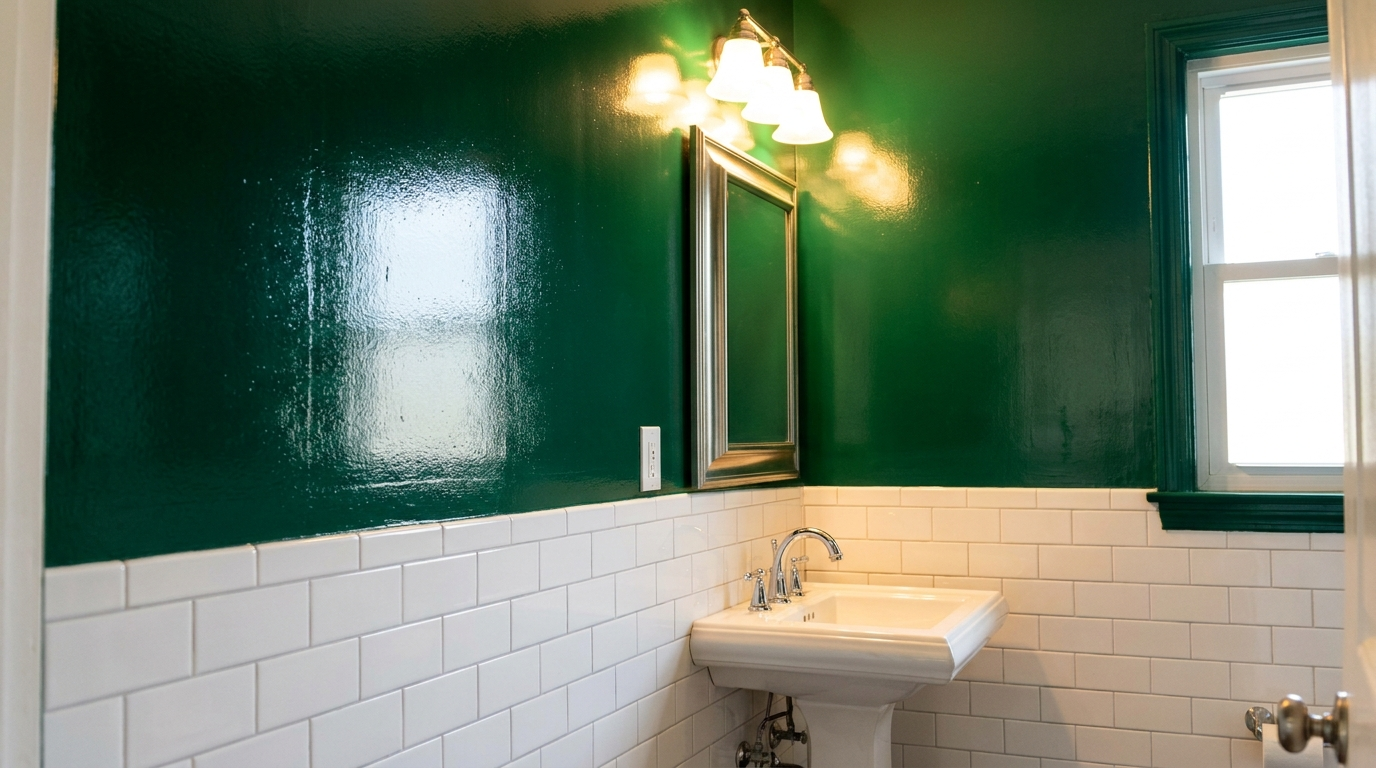
Gloss and high-gloss paints are highly reflective finishes that create a polished, almost glass-like surface. They’re the shiniest options available and have a smooth, sleek appearance.
The high sheen makes surfaces extremely resistant towater, soap splashes, and humidity, which is why these paints are most often used for trim, doors, cabinets, or small accent walls near sinks and tubs.
Best Use Areas: Cabinetry and trim, Bathroom doors, Small accent walls near moisture-prone areas
2. Semi-Gloss
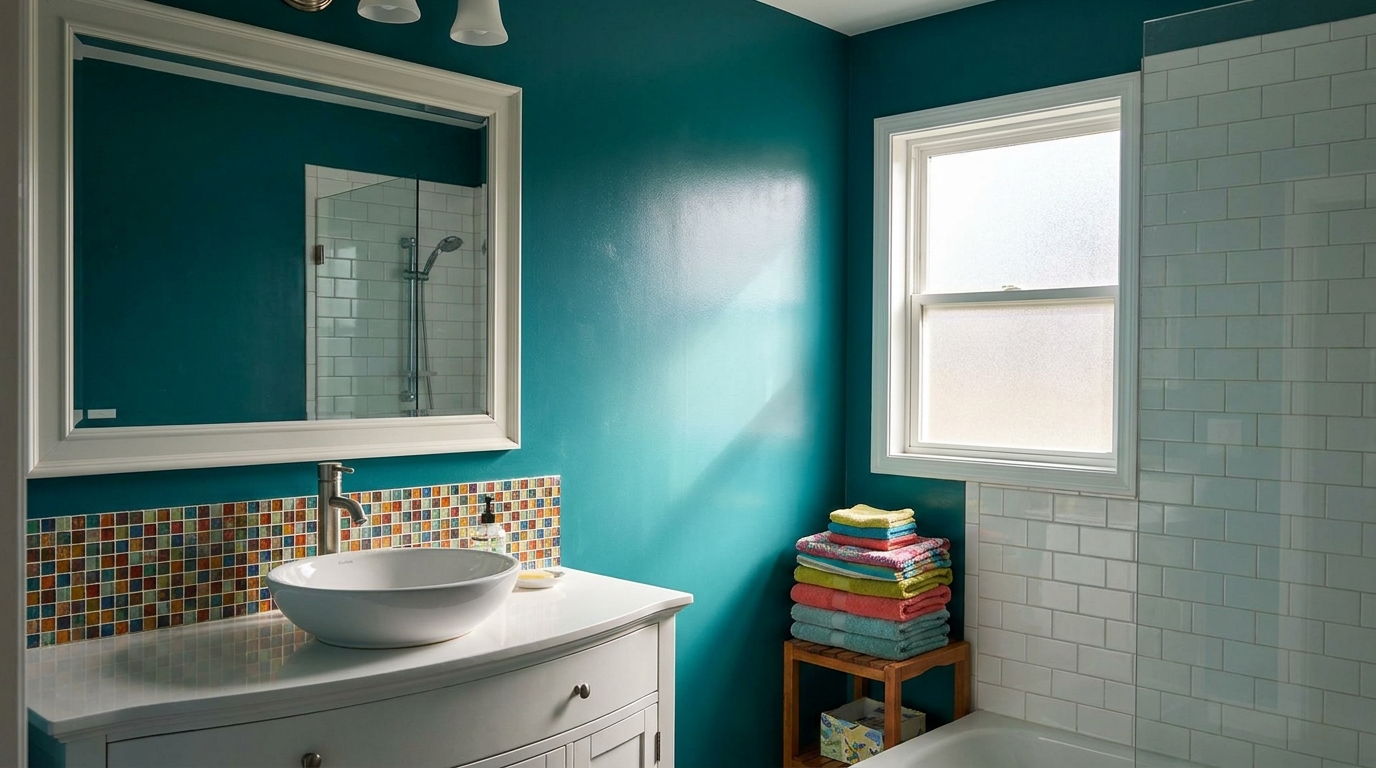
Semi-gloss is a medium-high sheen that balances reflection with subtlety. It’s one of the most popular choices for bathrooms because it combines durability with elegance.
Semi-gloss can handle direct water contact, steam, and regular cleaning without peeling or staining. It’s particularly useful around showers, sinks, and backsplashes.
For a closer look at how it holds up against satin on interior walls, the difference between satin and semi-gloss is worth reading before you commit to either.
Best Use Areas: Shower and bathtub walls, Sink splash zones, Family bathrooms or powder rooms with heavy use
3. Satin
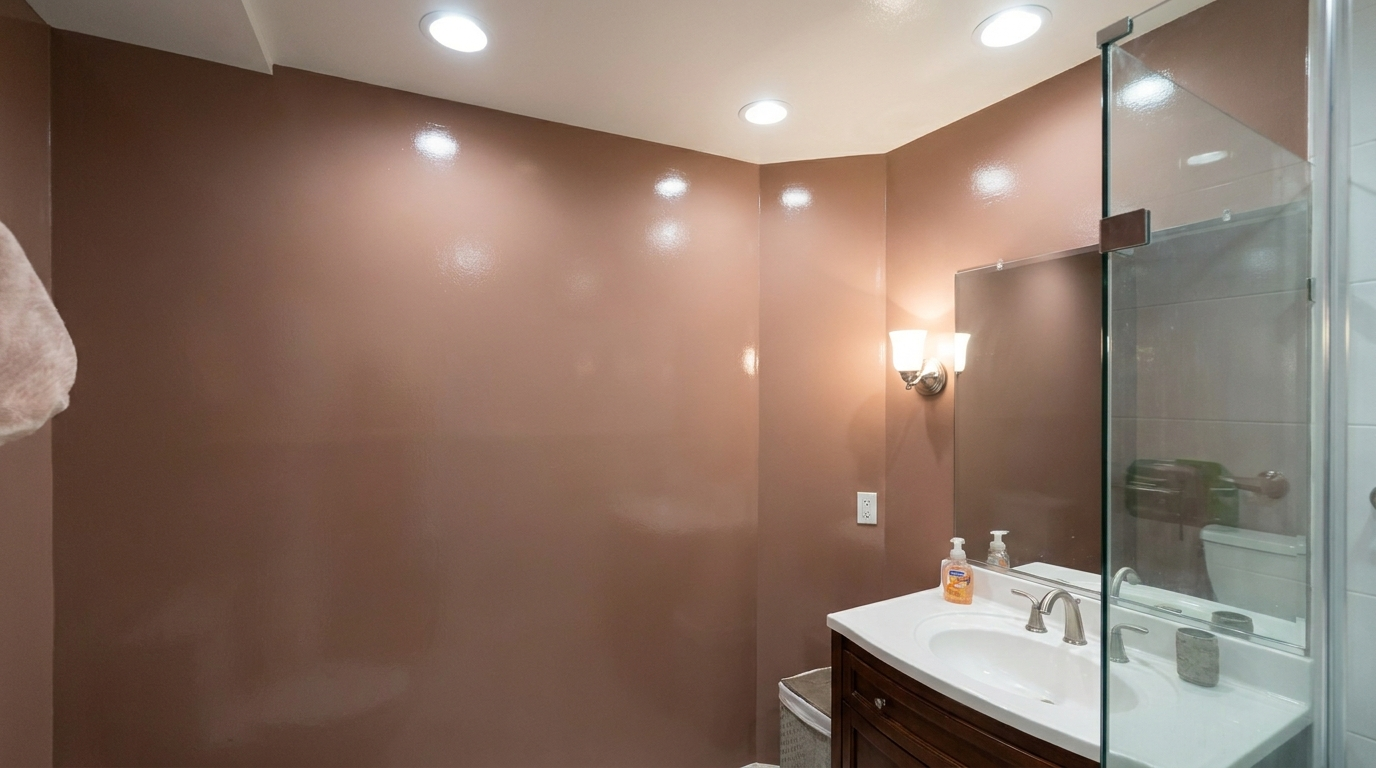
Satin has a soft, velvety sheen that reflects light gently. It’s less shiny than semi-gloss, offering a warm, sophisticated look.
Satin is moisture-resistant and washable enough for moderate-use walls while hiding minor imperfections better than glossier paints. It strikes a balance between cleanability and soft visual style, which is why it’s often the right call for mid-size or powder bathrooms. If you’re still deciding whether satin fits your specific space, whether satin finish suits your room covers the tradeoffs in more detail.
Best Use Areas: Main walls in powder rooms or medium-use bathrooms, Areas not exposed to constant splashing, Low-traffic family bathrooms
4. Matte / Flat
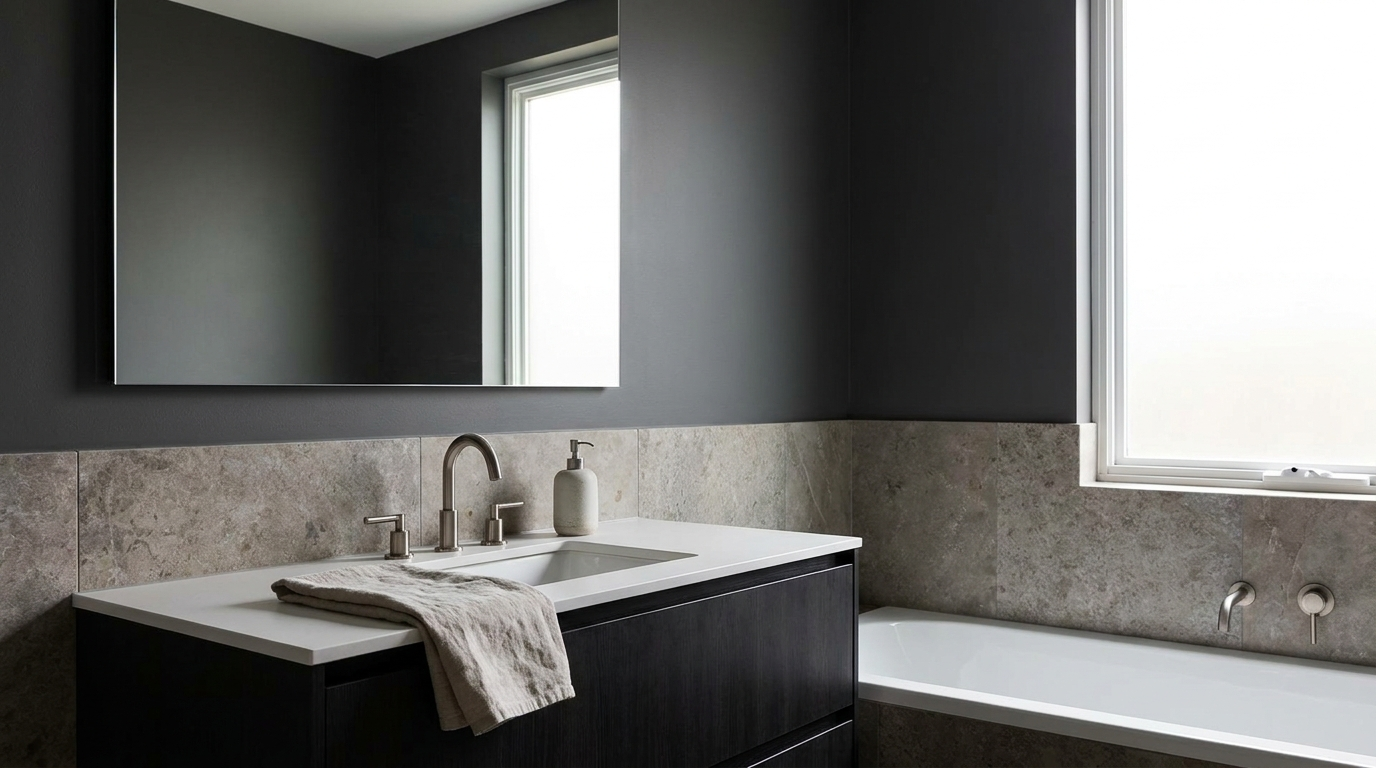
Matte or flat paint has little to no sheen, creating a soft, contemporary finish. It’s excellent at hiding imperfections and creating a cozy, modern appearance.
Matte finishes absorb moisture and are generally less washable, but in low-humidity powder rooms or small bathrooms with good ventilation, they provide a clean, minimalistic look. The flat versus satin comparison is useful if you’re weighing these two for a powder room or ceiling.
Best Use Areas: Powder rooms, Ceilings in bathrooms, Accent walls away from direct water exposure
How to Choose the Best Paint Finish for a Bathroom
Bathrooms face varying moisture and traffic levels, so choosing the right paint finish ensures durability, easy cleaning, and long-lasting beauty.
- Identify Moisture Zones: Map high-, moderate-, and low-moisture areas to select finishes that resist water and mildew.
- Consider Traffic & Cleaning Frequency: Use semi-gloss for heavy use, satin for occasional contact, ensuring surfaces remain cleanable.
- Assess Wall Imperfections: Flatter sheens hide bumps; glossier sheens emphasize imperfections; test swatches in both morning and evening light.
- Choose the Right Paint Formula: Select mildew-resistant, waterproof, or scrubbable formulas to match your bathroom’s moisture and cleaning needs.
What to Look for Beyond the Finish
Beyond the paint finish, the formula you choose matters just as much in a bathroom. Look for mold- and mildew-resistant paint, especially one with antimicrobial additives, because bathrooms hold steam and damp air longer than most rooms.
Paint and primer combinations can also improve adhesion, but very humid rooms or damaged walls may still require a separate primer for better grip.
VOC levels are another key point. Low-VOC paints are better for enclosed bathrooms because they emit fewer strong odors and are easier to use in small spaces with limited airflow. If you want to understand exactly what VOC content means and how it affects indoor air quality, what VOC in paint actually means explains it clearly.
Water-based latex paint is usually the best choice for bathroom walls since it dries faster, cleans up easily, and resists yellowing. Oil-based paint is durable but produces stronger fumes, has a longer drying time, and is less common in modern bathroom projects.
Comparing Popular Paint Brands for Bathroom Use
Picking the right brand and formulation matters as much as choosing finish and sheen. Some paints are specifically engineered to resist moisture, mildew, and repeated cleaning, which is vital in bathrooms where humidity and condensation are constant.
Below are clear, product‑focused pointers to help you choose paint brands that perform well in high‑moisture rooms.
| Brand & Product | Moisture Resistance | Mildew Protection | Durability | Price |
|---|---|---|---|---|
| Benjamin Moore Aura Bath & Spa | Excellent | Very High | Very High | Premium |
| Sherwin‑Williams Emerald Interior | Excellent | Very High | Very High | Premium |
| Behr Premium Plus Kitchen & Bath | Good | Good | Good | Value |
| PPG Diamond Interior | Very Good | Very Good | Very High | Mid‑Range |
| Zinsser Perma‑White | Excellent | Excellent | High | Budget-Friendly |
When choosing paint for a bathroom, brand formulation and finish selection go hand in hand. Investing a bit more in a paint designed for humidity pays off with longer life, reduced mildew concerns, and fewer repaints.
Pair your chosen brand with the appropriate sheen (semi‑gloss or satin for most walls and high‑moisture zones), and ensure proper surface prep and ventilation for the best results.
Common Mistakes When Choosing Bathroom Paint Finish
Choosing the wrong paint finish often leads to faster wear, higher maintenance, and unwanted visual issues in bathrooms. A few common errors show up repeatedly during bathroom projects:
- Using flat paint in high-moisture areas: Flat or matte finishes may look smooth at first, but they absorb moisture easily. In bathrooms with frequent showers, this often leads to stains, peeling, and mildew buildup around corners and ceilings.
- Choosing gloss for all walls: High-gloss paint is durable, but using it across entire bathroom walls can make imperfections more visible. Uneven patches, roller marks, and surface flaws become more noticeable under bright lighting.
- Ignoring ventilation conditions: Paint finish performance depends heavily on airflow. Bathrooms with poor ventilation trap humidity, which can damage even mid-sheen paints over time and reduce overall durability.
- Skipping sample testing in real lighting: Sheen changes appearance under different lighting conditions. A finish that looks balanced in store lighting may appear too shiny or too dull once applied in a bathroom with shifts between natural and artificial light.
- Overlooking surface preparation: Even the best paint finish will not perform well on poorly prepared walls. Dust, uneven patches, or leftover moisture can affect adhesion and lead to early wear or patchy results.
Frequently Asked Questions
Can I use the same finish for walls and trim in a bathroom?
While it’s possible, semi-gloss or high-gloss is usually the better call for trim because it cleans easily and holds up to direct contact. Satin or semi-gloss works better for walls. Different finishes protect surfaces according to their function and moisture exposure.
How does natural light affect the choice of bathroom paint sheen?
Natural light changes throughout the day, highlighting imperfections or glare. A satin or soft semi-gloss balances reflection, ensuring walls look smooth in both morning and evening light.
Are there eco-friendly or low-VOC options for bathroom paints?
Yes, many premium paints, including mildew-resistant formulas, are low-VOC or zero-VOC, reducing odors and toxins while still performing well in humid, high-use bathrooms.
Does color choice impact mildew growth in bathrooms?
Indirectly, yes. Darker colors show streaks and water marks more clearly, while lighter shades reflect light and make streaks less noticeable. Sheen and ventilation are more important for mildew prevention than color alone.
Conclusion
Picking bathroom paint is really about choosing what can handle real life, not just what looks good on a color card. I’d choose satin for most walls because it gives you a clean look, better washability, and solid moisture resistance.
You can use semi-gloss where water, steam, and daily wiping are major concerns, such as trim, doors, cabinets, and splash zones. Matte or flat finishes should be used in low-moisture areas unless the formula is designed for bathrooms.
The best paint finish for bathroom spaces also depends on airflow, surface condition, and how often you clean. When you match the finish to the room, your paint lasts longer and looks better. Try these tips, then share your results or questions in the comments.