

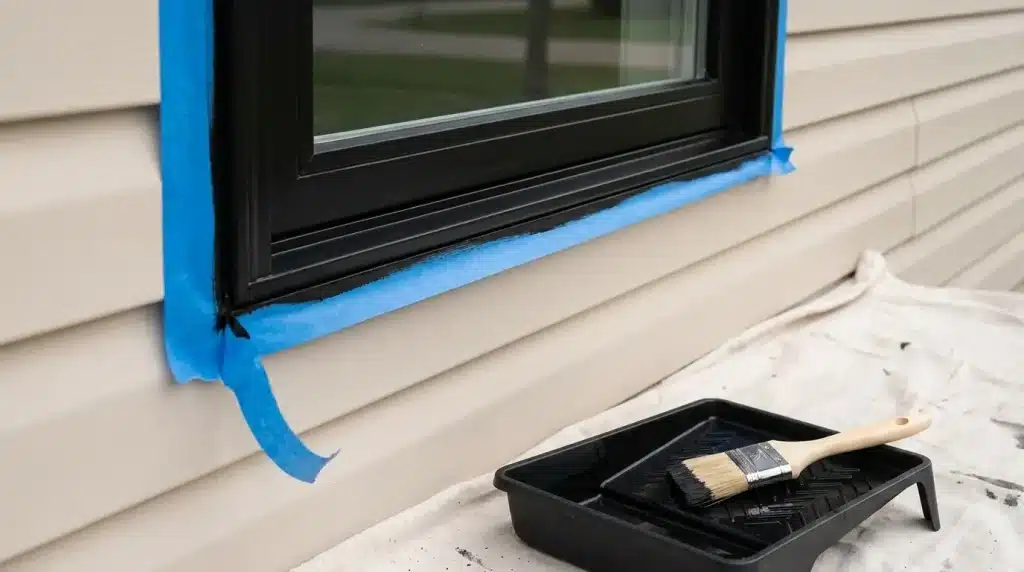


| Difficulty | 3 out of 5, Prep work is where most people go wrong |
| Time | One full weekend (prep + 2 coats + cure time) |
| Cost (DIY) | $50–$150 per window for materials |
| Tools Needed | 220-grit sandpaper, small angled brush, painter’s tape, bonding primer, vinyl-safe acrylic latex paint, soft cloth, drop cloth |
| Skill Required | Intermediate or basic painting experience helps |
Paint can change the whole mood of a home, even when the change is small. But can you paint vinyl windows without creating a peeling mess later?
That answer depends on the paint, prep, color, and condition of the frame. I’ve seen many homeowners fall for a deep black frame before checking how much heat vinyl can hold. That one choice can decide whether the finish lasts or the frame bends.
Vinyl needs more care than wood because it is smooth, flexible, and sensitive to heat. Ahead, you’ll see when painting makes sense, when to avoid it, what paint and primer to choose, how to handle dark colors, and whether DIY, a pro, or replacement is the better call.
Can You Paint Vinyl Windows?
Yes, you can paint vinyl windows, but it is a different project than painting wood trim or metal frames. Vinyl is smooth, non-porous, and slightly flexible, which means paint has no natural surface texture to grip. That does not make it impossible.
It means the bonding primer and paint choice carry more weight than they would on any other material.
The project works when the frames are still in solid condition, with no cracks, no warping, and no failed seals. Paint changes the visual character of the window. It does not fix a frame that has already started to fail.
If the window sticks, leaks air, or has fogged glass between the panes, those problems need to be addressed before anyone opens a can of paint.
When the windows are sound, painting vinyl frames is a reasonable way to update the look without the cost of full replacement.
Many homeowners repaint white frames to a softer charcoal or warm black to match updated exterior siding, and the result can look clean and intentional when the prep is done right. The key phrase is “when the prep is done right.”
Will Painting Vinyl Windows Void the Warranty?
Yes, painting vinyl windows can void the warranty, but it depends on the brand, the window’s age, and the warranty terms. Many warranties are tied to the original factory surface, so once you paint over it, the manufacturer may limit coverage for frame damage, finish failure, or heat-related issues.
Before painting, check your paperwork or search for the exact window model on the manufacturer’s website. I would not rely on general advice here because each brand sets its own rules. If the windows are newer, contact the company before you buy paint.
If you still decide to paint, keep a record of the paint, primer, color name, and product label. That gives you proof of what was used. It may not save the full warranty, but it can help if questions come up later.
When You Should and Shouldn’t Paint Vinyl Windows
Before you buy paint, take a close look at the window itself. Vinyl frames can be painted when they are still solid and working well, but paint should not be used to hide damage, leaks, or weak material. This quick check helps you decide if painting is worth it. Use the table below to see where your windows fit.
| You Should Paint Vinyl Windows If | You Shouldn’t Paint Vinyl Windows If |
|---|---|
| The frames are faded, stained, or outdated, but still firm and smooth. | The frames are cracked, warped, loose, or clearly damaged. |
| The windows open, close, lock, and seal the way they should. | The windows stick, leak, or have failed seals. |
| You want a lower-cost color update without replacing working windows. | You are trying to cover a problem that needs to be repaired first. |
| The surface can be cleaned and lightly prepared before painting. | The vinyl feels brittle, chalky, flaky, or weak to the touch. |
| You are using exterior paint made for vinyl, PVC, or plastic surfaces. | You only have regular wall paint, not paint approved for vinyl. |
| Your color choice is safe for vinyl and not much darker than the original frame. | You want a very dark color that is not listed as vinyl-safe. |
| The window warranty allows painting, or the warranty no longer matters to you. | The warranty is still active, and the manufacturer does not allow painting. |
If most of your window’s condition falls on the left side, painting can be a good way to refresh the look. If it falls on the right side, I would pause before picking a color. A repair, replacement, or professional opinion may save you from a finish that fails too soon.
Note: Painting vinyl windows is not risky when the frame is solid and the right paint is used. Problems usually start when paint is used to hide damage, the color creates too much heat, or the surface is rushed. Treat painting as a finish update, not a repair. That mindset helps you avoid peeling, sticking, and regret later
Best Paint and Primer for Vinyl Windows
The paint and primer you choose matter more on vinyl than on many other surfaces. Vinyl is smooth, flexible, and exposed to heat, light, and moisture, so the product needs to bond well without stiffening or stressing the frame.
I always tell people to read the label before falling in love with a color. A good result starts with two choices: the coating that adds color and the base layer that helps it hold.
Paint for Vinyl Windows
The best paint for vinyl windows is an exterior acrylic latex paint made for vinyl, PVC, or plastic surfaces. It should be flexible enough to move with the frame as temperatures shift. Satin or semi-gloss is usually the better finish because it looks cleaner and is easier to wipe down than flat paint.
Before you choose a color, consider how the window will handle sunlight and heat during the day.
- Choose a vinyl-safe color range: Some paint brands list approved vinyl colors, which matters if you want a shade darker than the original frame.
- Think about the finish in real light: Satin feels softer and more forgiving, while semi-gloss can make frames look sharper but may show brush marks more easily.
Primer for Vinyl Windows
Primer is useful when the paint brand asks for it or when the frame feels very slick after cleaning. A bonding primer for vinyl, PVC, or other plastics provides a better base for the topcoat. It should support the paint system rather than act as a separate quick fix.
Use primer only when it solves a real bonding need, not just because it feels safer.
- Pick a bonding primer for slick surfaces: The label should mention vinyl, PVC, plastic, or glossy exterior surfaces, not just wood or drywall.
- Keep primer coats thin and even: A heavy primer layer can create buildup around edges, making the final paint look bulky.
How to Paint Vinyl Windows the Right Way
This project shows how a plain vinyl window can shift the overall feel of a room with careful prep, bonding primer, and thin coats of paint. The process is simple, but the small details decide whether the finish looks clean or rushed.
Before starting, gather everything you need so the paint process stays smooth from prep to final touch.
Materials needed:
- 220-grit sandpaper or sanding disc
- Wet rag
- Small cleaning brush
- Bonding primer for shiny surfaces
- Vinyl-safe paint
- Small angled brush
- Painter’s tape
- Electrical tape for interior window grids
- Drop cloth or floor protection
- Clean cloth for wiping dust
Once the materials are ready, move through the process in this order.
Step 1: Prep the Vinyl Surface First
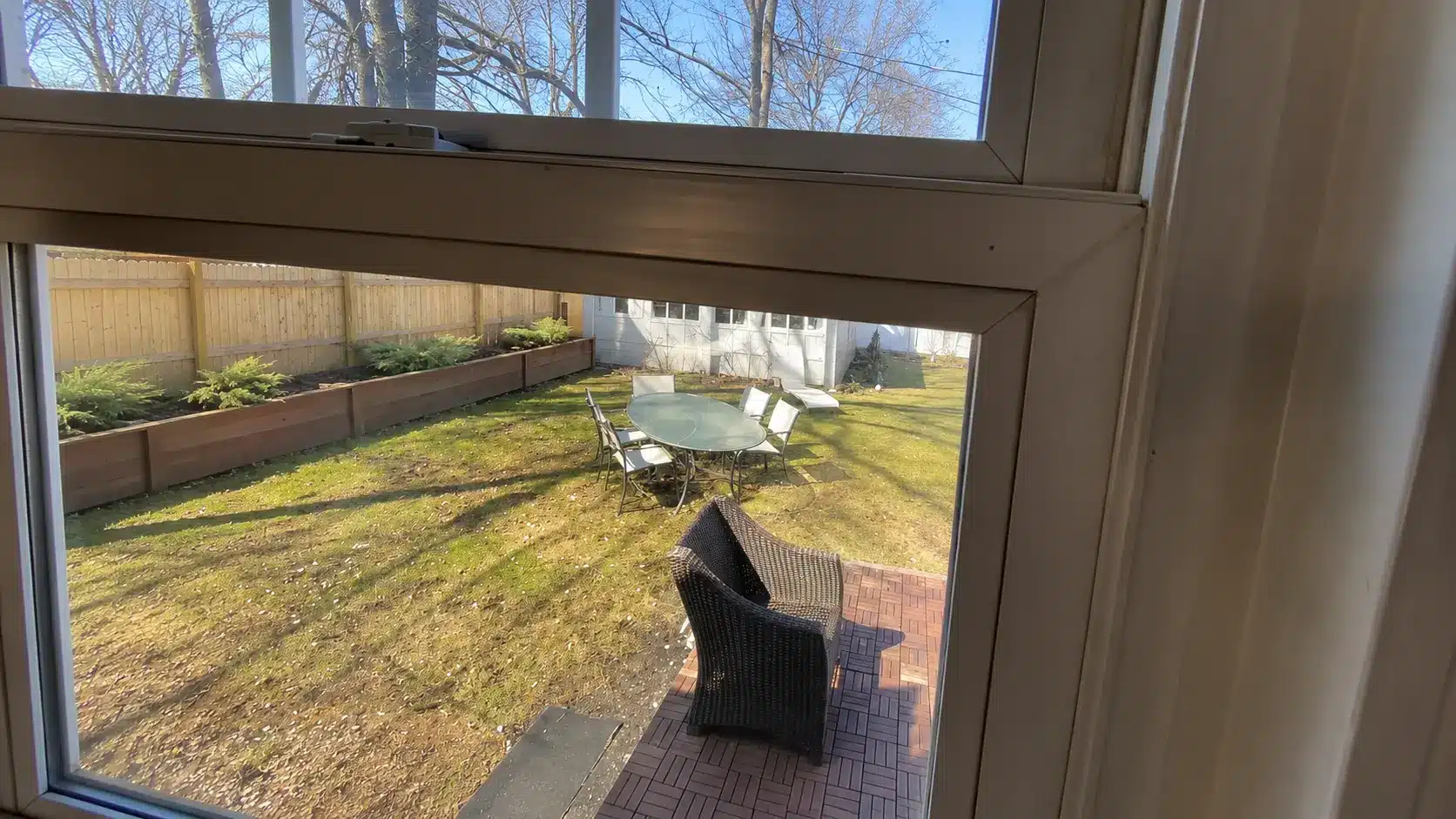
Start by looking closely at the vinyl frame and deciding which areas need light sanding. In this project, only a few sections were sanded with 220-grit sandpaper to test the difference, while the rest were left smooth.
The goal is not to scratch the frame deeply. You only want to dull the shine a little. After sanding, wipe the frame with a wet rag and use a small brush to clean dust from the corners. A clean surface helps the next layer sit evenly.
Step 2: Apply a Bonding Primer for Shiny Surfaces
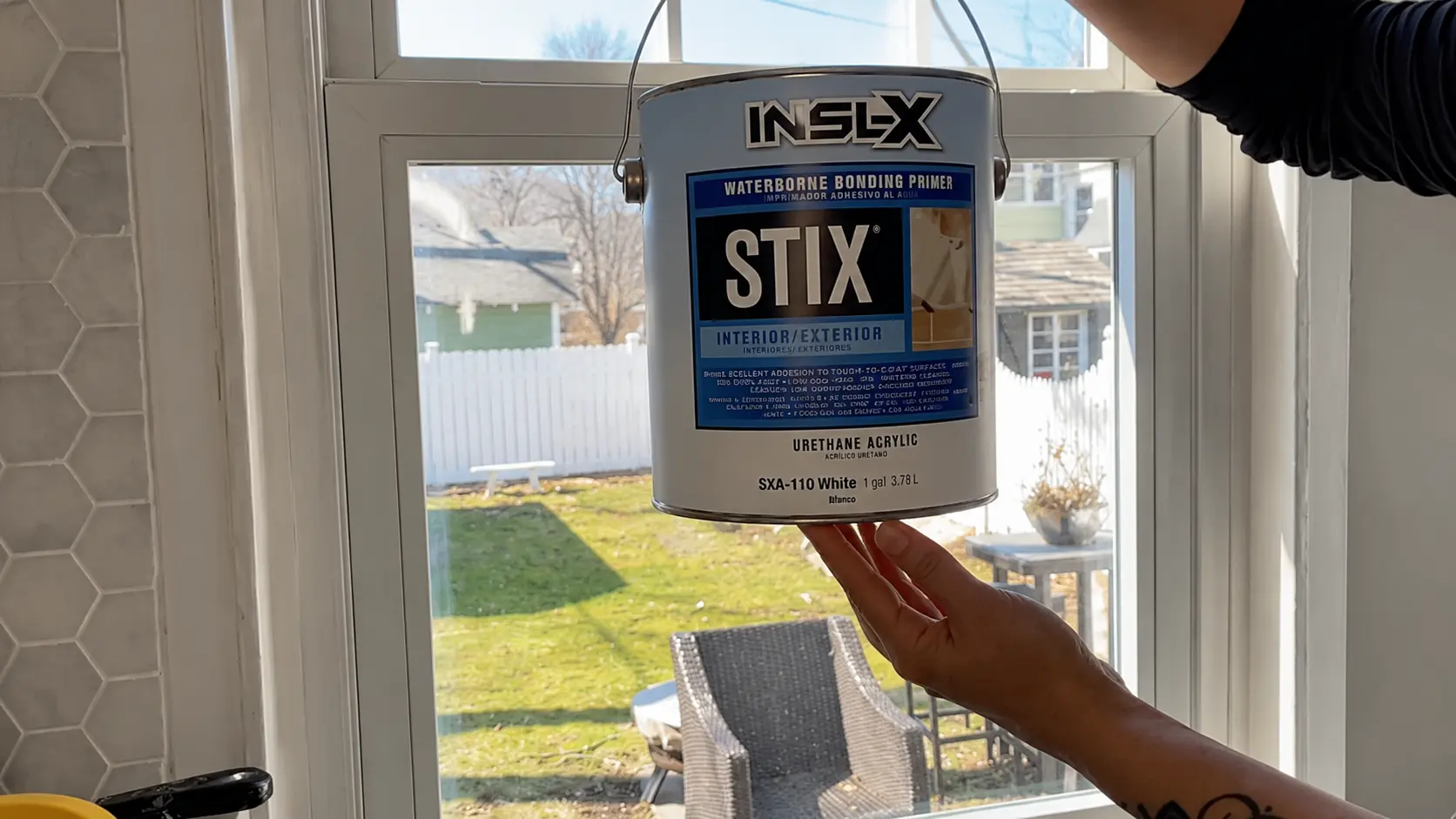
Vinyl is glossy, so a regular primer is not the best choice. Use a bonding primer made for hard-to-coat or shiny surfaces. In this project, two bonding primers were tested by me on different parts of the frame. Both helped the paint hold better than bare vinyl would.
Apply the primer in a thin, even coat and work it into the narrow frame edges. Let it dry as directed on the label. This base layer gives the paint something stronger to grip.
Step 3: Paint the Frame in Thin Coats
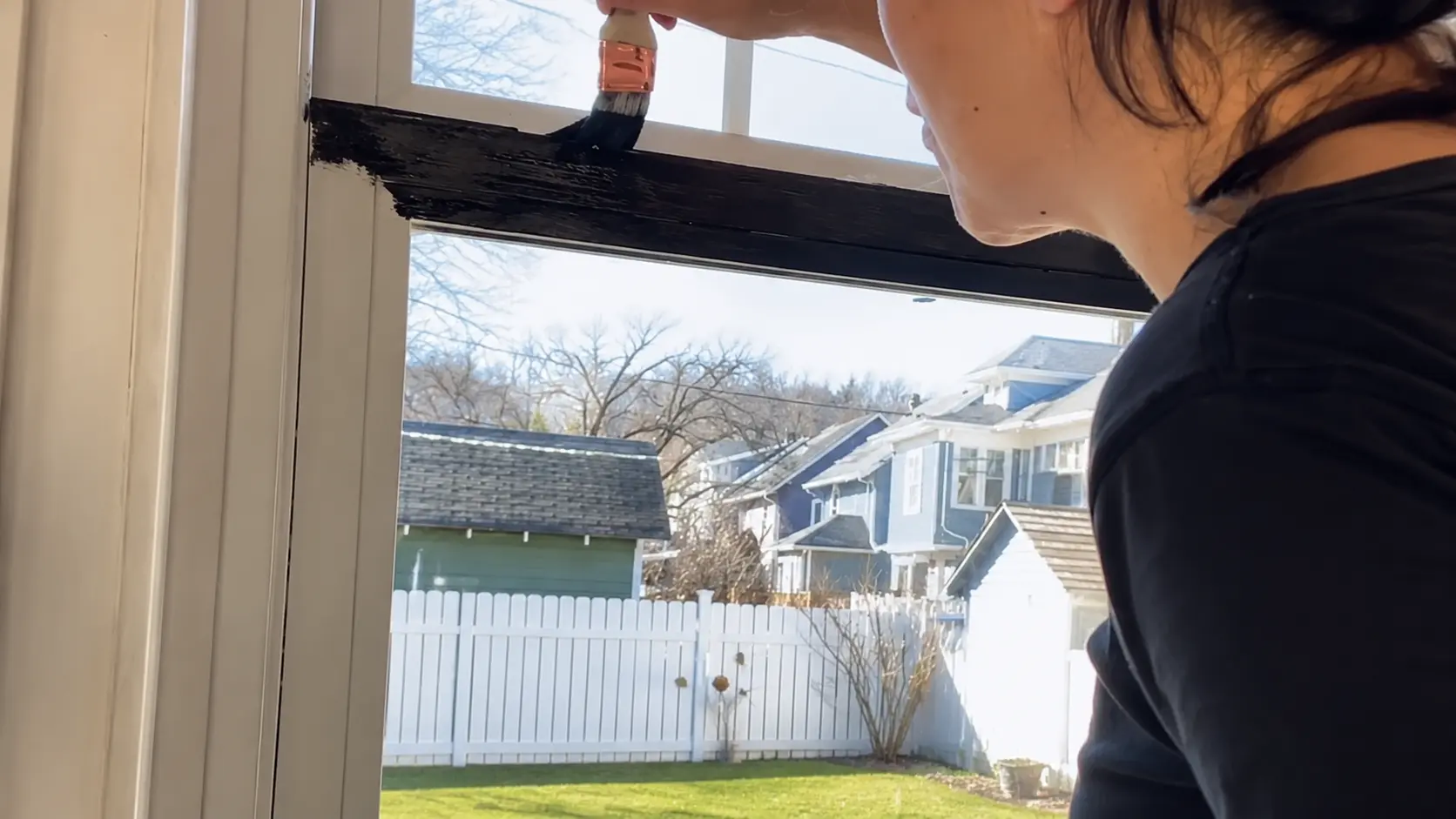
Once the primer is dry, apply the paint with a small brush and steady pressure. A soft black shade was used here instead of a harsh jet black, which gave the window a cleaner, more finished look.
The first coat may still show a little white underneath, especially around corners and narrow lines. That is normal. Do not overload the brush to cover everything at once. Let the first coat dry, then add a second coat for an even color.
Step 4: Cover the White Grids Inside the Glass
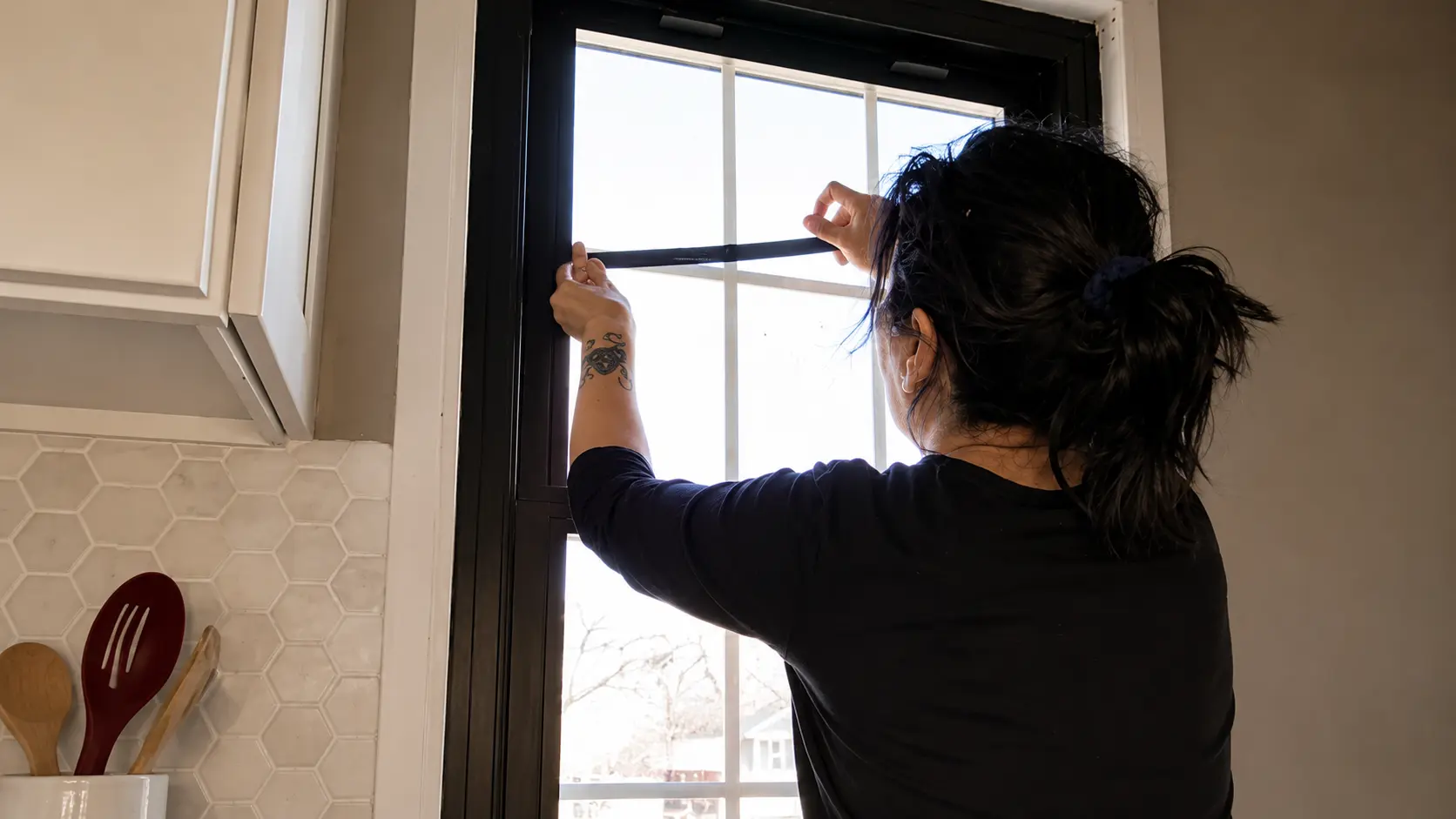
If your window has white grids between the glass, paint will not reach them because they sit inside the pane. A simple way to make them match the black frame is to use black electrical tape on the glass surface.
Place the tape in a straight line over each grid so it looks neat from both a distance and up close. Take your time here because crooked tape will stand out. This small detail helps the whole window look more complete.
Step 5: Check the Finish Before Calling It Done
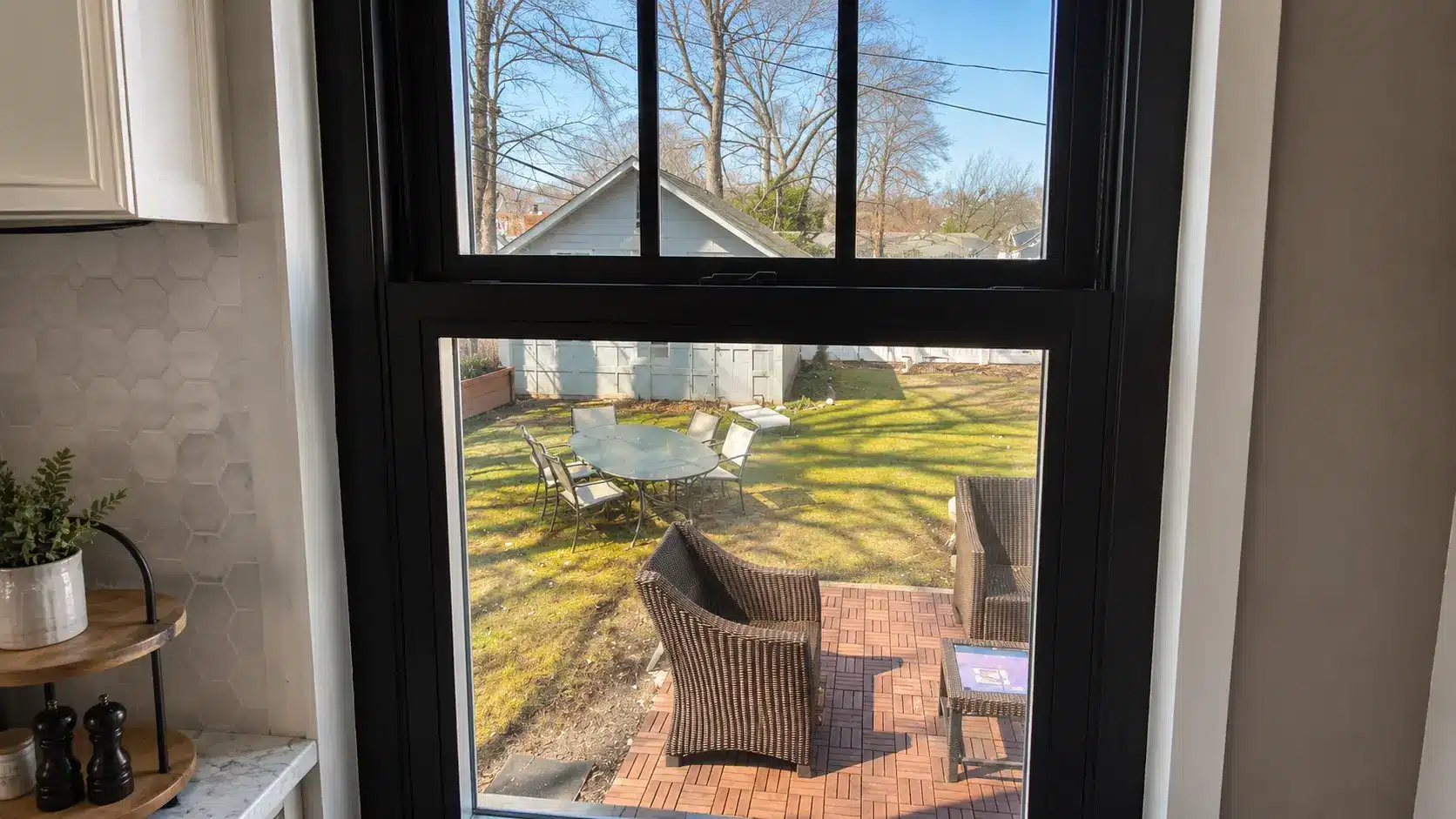
After two coats, step back and look at the frame from different angles. Check whether the color looks even, whether any white areas remain, and whether the edges look clean. In this project, sanding did not make a major visible difference, but the bonding primer mattered.
The finished vinyl frame looked uniform and no longer had that plastic look. Before moving on, open and close the window gently to make sure no painted edge feels stuck.
Watch the video for a step-by-step tutorial:
Can You Paint Vinyl Windows Black?
Yes, and black-framed windows look clean against the right exterior. The issue is heat. Black paint absorbs more solar energy than lighter shades, and vinyl is sensitive to sustained high temperatures.
On a south- or west-facing wall in summer, a standard black paint on white vinyl frames can cause the frame to expand beyond its engineered range, which leads to warping, sticking sashes, or stress on the sealed glass unit.
The safer path is to use paint specifically listed as vinyl-safe in the manufacturer’s dark or black range, and to check the LRV before committing.
An LRV at or above 55 carries less heat risk than deeper blacks at LRV 20 or below. A soft charcoal or dark gray at LRV 30–40 often gives the visual effect of a near-black frame without the same heat load.
If the windows face south or west and receive strong afternoon sun for most of the year, either choose a lighter dark shade or hire a professional who can spray a factory-quality vinyl coat. A pro will also mask the glass more cleanly than most first-time brush jobs on large windows.
For how dark trim colors interact with your overall exterior, the same principles that apply to black-framed window exteriors apply here, the frame reads as part of the full elevation, not on its own.
Best Weather for Painting Vinyl Windows
Weather can affect how well paint adheres to vinyl. A dry, mild, calm day gives the paint enough time to level, bond, and dry without dust, heat, or moisture getting in the way. I would always check the forecast before setting up. Use this table to pick the right painting conditions:
| Weather Condition | Best Choice | Why It Matters |
|---|---|---|
| Temperature | Mild weather within the paint label’s range | Paint bonds better when the surface is not too hot or too cold. |
| Surface feel | Cool or slightly warm to the touch | Hot vinyl can cause paint to dry too quickly and leave a rough finish. |
| Rain | Avoid painting before or during rain | Moisture can weaken the finish before the paint has time to set. |
| Humidity | Low to moderate humidity | Heavy moisture in the air can slow drying and affect the final surface. |
| Wind | Calm or light breeze | Strong wind can blow dust, pollen, or debris into wet paint. |
| Sun exposure | Shade, morning, or late afternoon | Direct, harsh sun can cause the paint to dry unevenly. |
The safest time is usually a mild morning or late afternoon when the frame is dry and not hot. You do not need perfect weather, but you do need steady conditions long enough for the paint to set clean
Common Mistakes to Avoid When Painting Vinyl Windows
Most mistakes happen when the project starts to feel too simple. Vinyl windows look easy to paint, but small shortcuts can show up later as rough edges, stuck parts, or a finish that wears faster than expected. The goal is not to overthink the job. It is to slow down at the points that matter most.
Watch for these common mistakes before you start painting.
- Painting without testing window movement: Open, close, lock, and unlock each window before painting. If something already sticks, paint can make that tight spot worse.
- Letting paint build up around edges: Thick paint near corners, grooves, and sash lines can dry bulky and make the frame look uneven.
- Forgetting to protect nearby surfaces: Glass, siding, trim, screens, and hardware can catch small splatters, especially when using a roller or sprayer.
- Removing tape at the wrong time: Pulling tape too late can lift dried paint, while pulling it too soon can smear wet edges.
- Skipping a small test area: A hidden test spot helps you check grip, color, and finish before covering the full frame.
- Closing the window too soon: Fresh paint needs time to settle. Closing the sash early can mark the finish or seal two painted edges together.
A clean result comes from the small habits that do not seem exciting while you work. Test the window, protect the edges, keep coats controlled, and give the finish time before using the window normally.
Note: Painted vinyl windows can last several years when the surface is prepared well and the right product is used. Sun exposure, weather, paint quality, and color choice all affect the finish. Watch for peeling, bubbling, fading, chalking, or rough texture, as these signs usually mean the paint is starting to fail.
Should You Paint Vinyl Windows Yourself, Hire a Pro, or Replace Them?
Once you know the windows can be painted, the next question is who should handle the job, or whether painting is even the best route. This choice depends on the window’s condition, height, color, finish goals, and how much risk you are willing to take on. Use this table to compare the three main options:
| Option | Best For | What You Gain | What to Watch For |
|---|---|---|---|
| DIY | Ground-floor windows in good condition, lighter color update | Lower material cost, flexible timing | Requires patience with prep and thin coats; edge finish takes practice |
| Hire a pro | Upper-floor windows, very dark colors, large homes, spray finish | Cleaner edges, better masking, spray application for uniform coverage | Costs more; still need to confirm they use vinyl-rated paint |
| Replace the windows | Leaking, cracked, sticking, or failed-seal windows | Better function, new warranty, longer-term solution | Higher upfront cost and more planning than a paint project |
A painted frame is best when the window already works well and only needs a visual update. If the job feels too risky, a pro can make sense. If the window itself is failing, replacement is usually the cleaner long-term choice
How to Maintain Painted Vinyl Windows
Once the paint cures, the goal is not to fuss over it every weekend. Good care is quiet and steady. Gentle cleaning, early touch-ups, and reduced water exposure will help painted vinyl frames stay neat in heat, rain, and dust. Keep the finish in better shape with simple habits.
- Wash a few times a year gently: Use mild soap, water, and a soft cloth to remove dust, pollen, and grime before they sit on the painted surface for too long.
- Avoid harsh cleaning products: Skip bleach-heavy cleaners, strong solvents, and abrasive scrubbers, as they can dull the finish or weaken the paint layer.
- Touch up small chips early: Fix tiny marks before moisture or dirt gets under the paint edge and turns a small spot into a larger peeling area.
- Reduce constant water exposure: Adjust sprinklers, clear blocked weep holes, and wipe standing water so the frame is not sitting wet more than it needs to.
- Check seals and caulk seasonally: Look around the frame once or twice a year for gaps, cracking, or loose caulk so moisture problems do not spread into the painted area.
Frequently Asked Questions
What is the best paint for vinyl windows?
Exterior acrylic latex paint formulated for vinyl, PVC, or plastic surfaces. Satin or semi-gloss finishes hold up better than flat in exterior conditions and are easier to clean. Confirm the label specifically names vinyl compatibility before buying.
Do you need to prime vinyl windows before painting?
Yes. A bonding primer rated for slick or non-porous surfaces is necessary for paint to adhere to vinyl. Standard drywall or wood primers are not the right product and can soften PVC. The bonding primer is the most important step in the process.
How long does paint last on vinyl windows?
Typically 5 to 7 years when prep is done correctly and a vinyl-rated paint is used. Sun-exposed frames, very dark colors, and high-humidity climates can shorten that timeline. Poor prep is the most common reason paint fails in under two years.
Will painting vinyl windows void the warranty?
Usually yes. Most manufacturers tie warranty coverage to the original factory finish. Check your paperwork before painting. If the windows are still under warranty, contact the manufacturer to confirm what is permitted before buying supplies.
Can you paint white vinyl windows black?
Yes, but it requires a vinyl-safe paint in a color with an LRV at or above 55 to reduce heat risk. On south- or west-facing walls with heavy sun exposure, even vinyl-safe dark paints carry more risk than lighter shades. A soft charcoal around LRV 35–45 is often the better call.
How do you prep vinyl windows for painting?
Clean the frame with a damp cloth, lightly scuff with 220-grit sandpaper to dull the shine, wipe away all dust, then apply a bonding primer rated for slick or non-porous surfaces. Let the primer dry fully before any paint goes on.
Can painted vinyl windows affect resale value?
A clean, neutral finish on solid frames generally does not hurt resale. An uneven, peeling, or overly dark finish can raise concerns about upkeep during a buyer walkthrough. The quality of the application matters more than the fact that the windows were painted.
When choosing exterior frame colors to complement exterior paint and roof combinations, cohesion with the overall exterior palette tends to read better to buyers than a frame color that stands alone.
How do you remove paint from vinyl windows?
Start with gentle scraping and warm soapy water. For more stubborn areas, use a vinyl-safe paint remover and test it on a hidden section first. Avoid aggressive sanding or harsh solvent strippers, which can permanently scar or warp the frame surface.
Wrapping up
Can you paint vinyl windows and still get a finish you feel good about? Yes, when the frames are sound, the paint is vinyl-safe, and the color suits the surface. I’d treat this as a careful color update, not a quick cover-up.
Look at the window in morning and evening light, think about how the frame color works with your trim, and be honest about the window’s condition.
If it leaks, sticks, or has a failed seal, paint will not fix the real problem. For more practical home color ideas, read our other blogs on exterior trim colors, modern window frame colors, and choosing paint shades that fit your home and daily light in every season without guesswork or stress.