

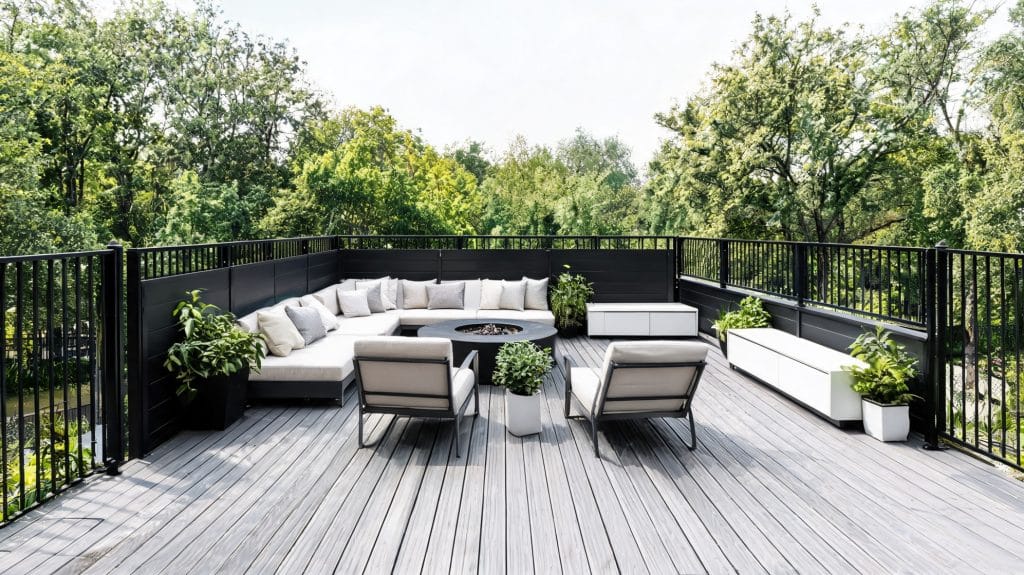


Before you buy a single piece of deck furniture, you need to know what the space will actually do to it. Resin wicker fades in two seasons on a south-facing deck. Powder-coated metal rusts at the feet if water pools on wood decking.
Teak holds up in almost any climate but needs annual oiling if you want it to stay honey-brown rather than silver-grey for a full breakdown of how each outdoor wood species behaves over time, that comparison covers what the material labels on furniture tags rarely tell you. These deck furniture ideas are organized around what holds up, what fits, and what you will actually use every day, not just what photographs well on a showroom floor.
| Material | Cost Range | Lifespan (avg) | Maintenance | Climate Suitability |
| Teak | $$$-$$$$ | 20-30+ years | Annual oiling (optional); weathers to silver without it | All climates; excellent in coastal and high-humidity |
| Powder-coated aluminum | $$-$$$ | 10-20 years | Wash annually; touch up chips before rust sets in at feet | Most climates; watch feet contact points in wet regions |
| Resin wicker (all-weather) | $$-$$$ | 5-10 years | Minimal; keep out of prolonged direct UV with a cover | Covered decks best; UV degrades weave faster than most sellers admit |
| HDPE (poly lumber) | $$-$$$ | 20+ years | Soap and water; no sealing or staining needed | All climates; does not splinter, crack, or absorb moisture |
| Acacia wood | $$ | 5-10 years outdoors | Seal every 6-12 months; will crack and grey faster than teak | Dry climates best; avoid coastal or high-humidity without consistent sealing |
| Sling / mesh fabric | $-$$ | 5-8 years | Rinse clean; replace slings when sagging | Excellent for pool decks; dries fast, no mildew in fabric |
Use that table before you read another word. The ideas below only hold their value if the furniture you pick is matched to the climate your deck actually lives in.
What to Know Before You Choose Deck Furniture
Measure the usable space first, not the footprint. Account for the door swing, stairs, railing edge, grill clearance, and any umbrella you plan to open. I mark furniture zones with tape on the deck surface before ordering anything. It shows you immediately where the space feels open and where it feels tight.
Standard clearances that keep a deck safe to walk through: 30 to 36 inches for main paths, 18 inches between a coffee table and sofa, 3 feet behind dining chairs so people can push back without hitting a wall or railing. Keep stairs and door swings fully clear. Fire pits and fire tables need at least 3 feet of clearance from railings, walls, furniture legs, and any cushion fabric.
Then match the furniture type to how you actually use the deck:
- Lounging: Sofa, loveseat, chairs, and ottoman for a relaxed seating area with deep cushions.
- Dining: Table, chairs, or bench seating for outdoor meals.
- Hosting: Sectional, bar cart, or fire pit table with room for 4 to 8 people to sit comfortably.
- Relaxing alone: Chaise lounge, egg chair, or hammock chair for quiet time outside.
- Family daily use: Storage bench, rounded edges, washable cushion covers, and furniture that cleans fast after meals.
Small Deck Furniture Ideas
Small decks require discipline. Every piece earns its place by doing more than one job, or it does not belong. Here is what works when the square footage is tight.
1. Folding Bistro Set
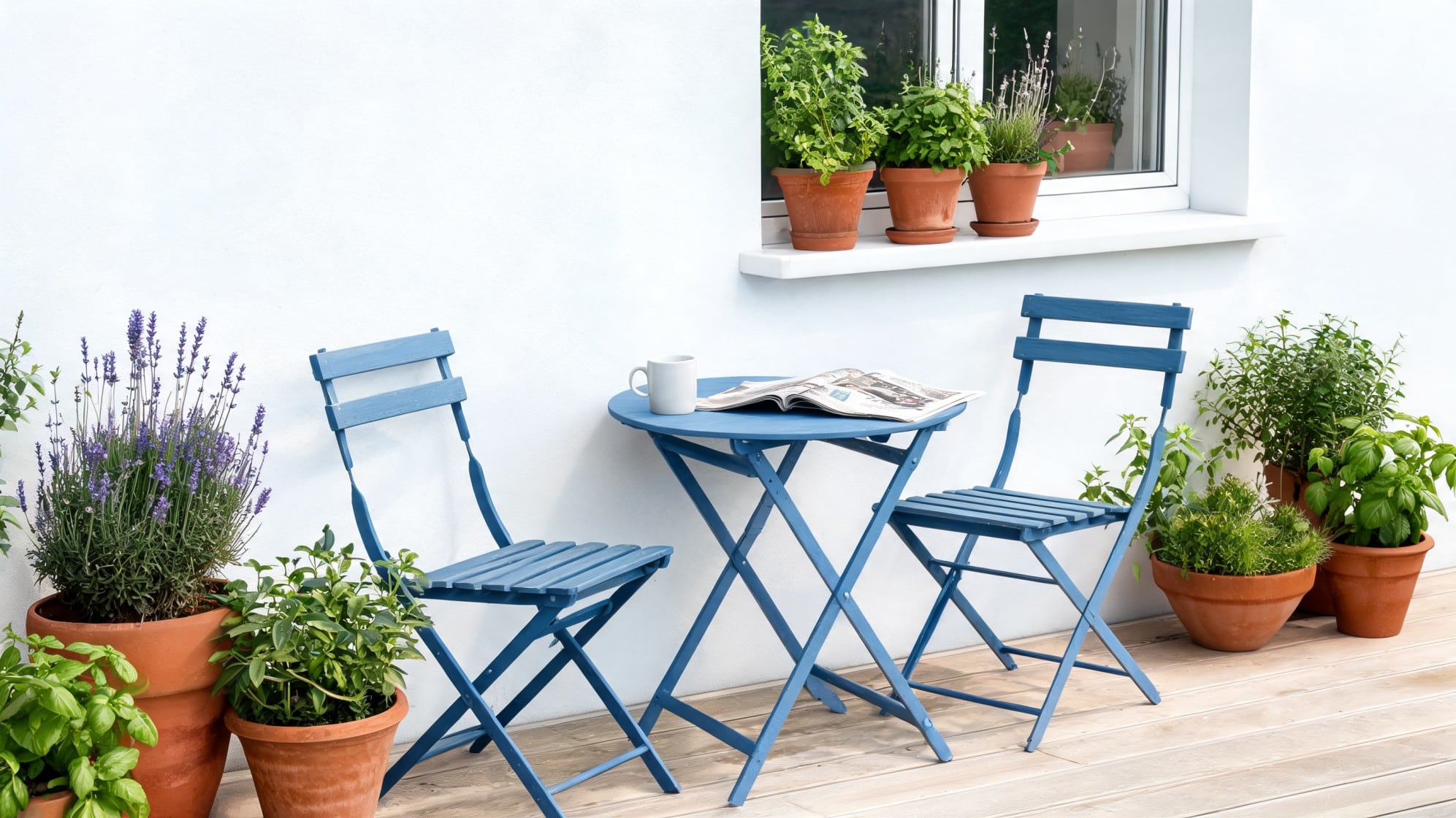
A folding bistro set is the most flexible piece you can put on a tight deck. It gives you a table and two seats, and when you need open floor space you fold the chairs flat and lean them against the railing. Round tables work better than square on narrow decks because they are easier to walk around and do not catch your hip on the corner.
On a wood or composite deck, check the feet on powder-coated metal bistro sets before you buy. Rubber or plastic glides on the feet prevent the rust marks that bare metal leaves on sealed decking after one wet season.
Materials that hold up: Powder-coated steel with rubber foot caps, teak, or all-weather resin.
2. Railing Bar Table
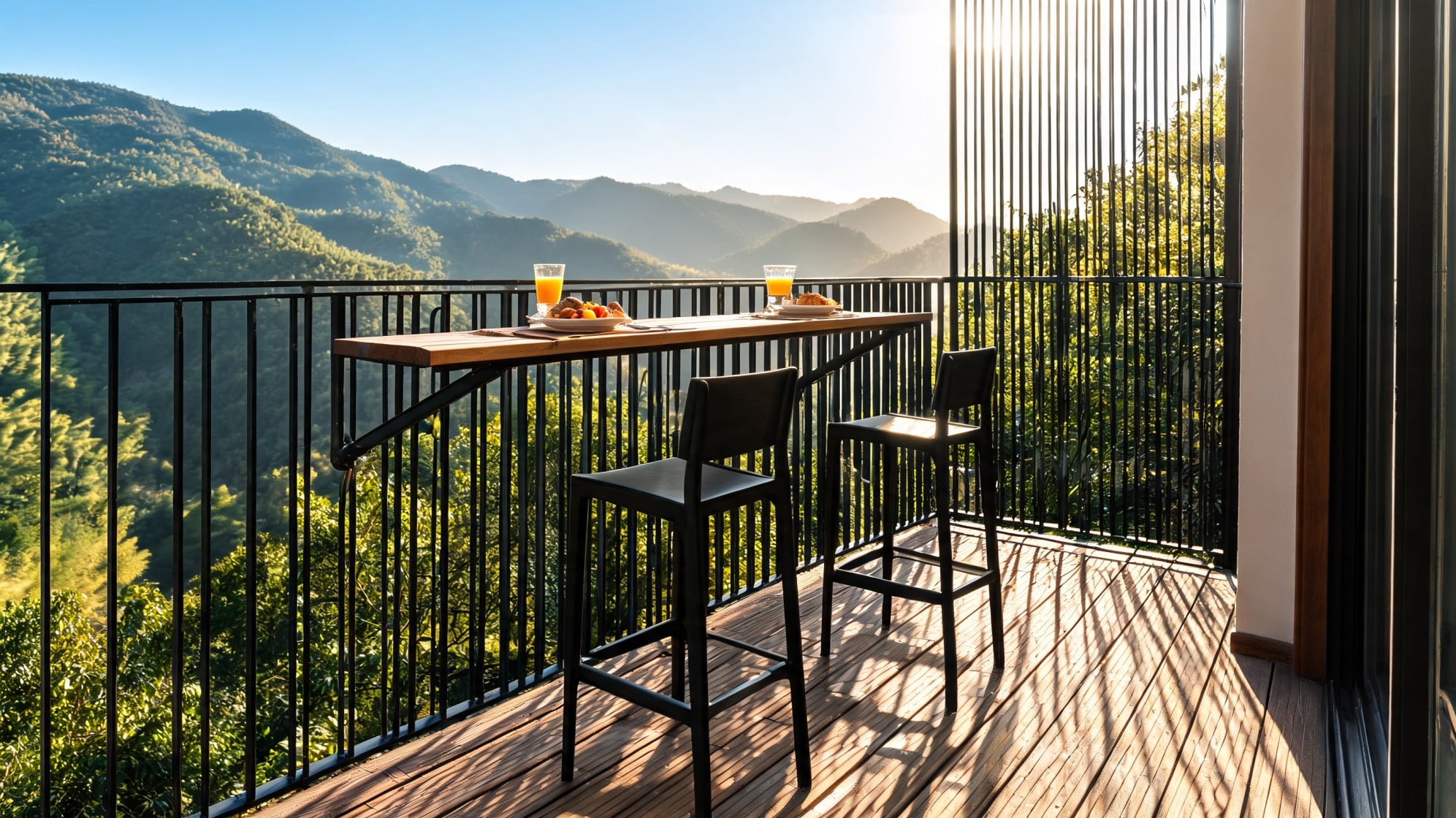
A railing bar table mounts to the railing or sits flush against it, which means it uses zero floor space except for the two bar stools that tuck underneath it when not in use. This idea works on any deck where the view or the light is the reason you are outside. You eat at the railing, keep the center of the deck open, and the whole setup breaks down in about 60 seconds if you need the space for something else.
One thing most people overlook: check that your railing can handle the lateral load before you mount anything to it. Most residential deck railings are built to code for a 200-pound horizontal force, so a clamping bar table is generally fine, but a sagging or loose railing is not the right anchor for furniture people lean on.
Materials that hold up: Powder-coated steel, aluminum, or sealed composite surfaces.
3. Storage Bench
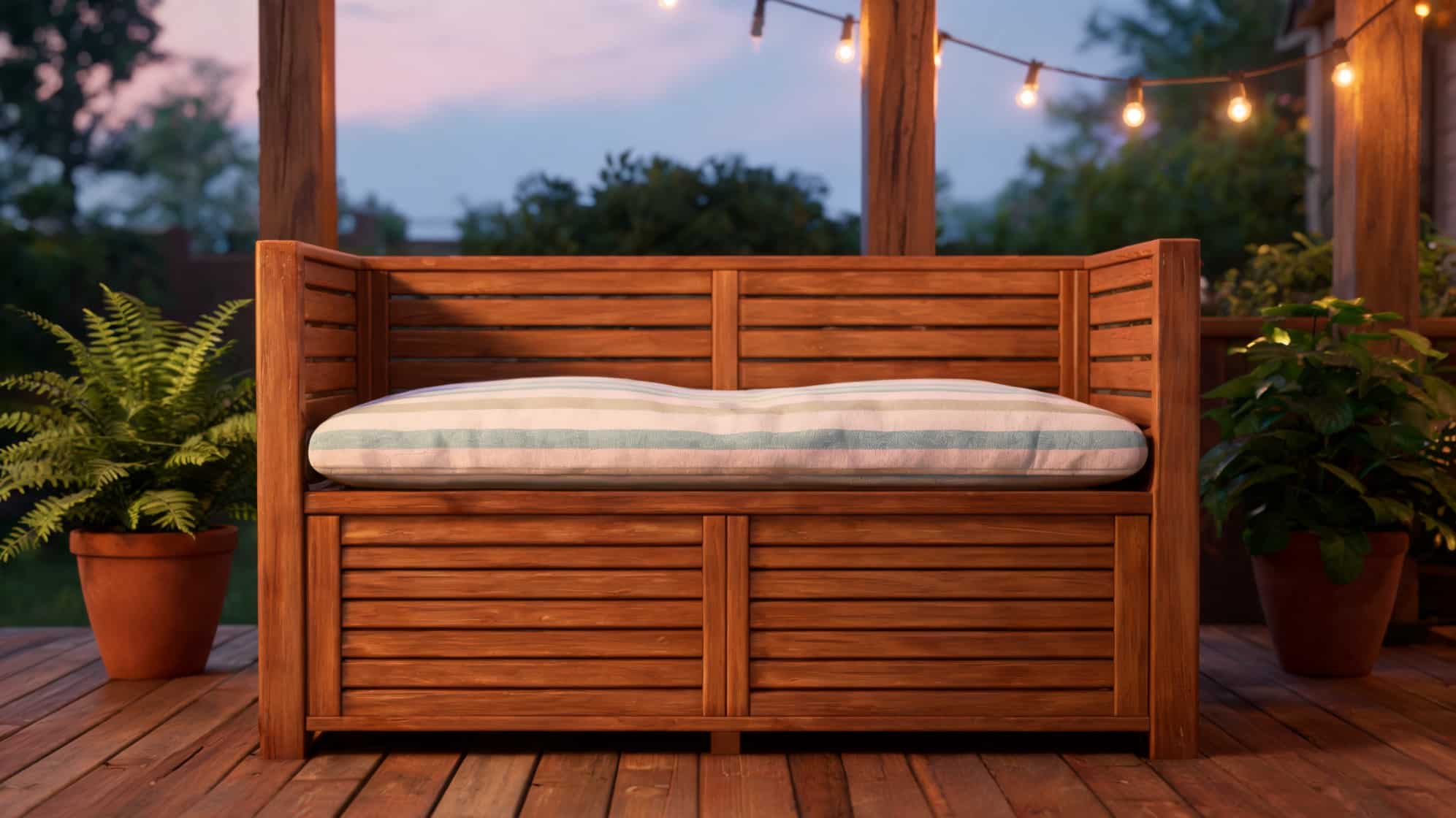
A storage bench placed along a wall or railing gives you seating and a place to store cushions, throws, and small gear without adding a separate deck box. On small decks, that trade matters. The lid doubles as a seat and keeps cushions dry so you are not pulling out damp fabric every time you sit down.
Look for a bench with a lid that stays propped open on its own, drainage holes in the bottom, and a seal on the lid edge. HDPE and resin benches last longest because they do not absorb moisture. Untreated or poorly sealed wood benches can rot from the inside out within two or three seasons in wet climates.
Materials that hold up: HDPE poly lumber, resin, or teak with a sealed lid edge.
4. Compact Outdoor Loveseat
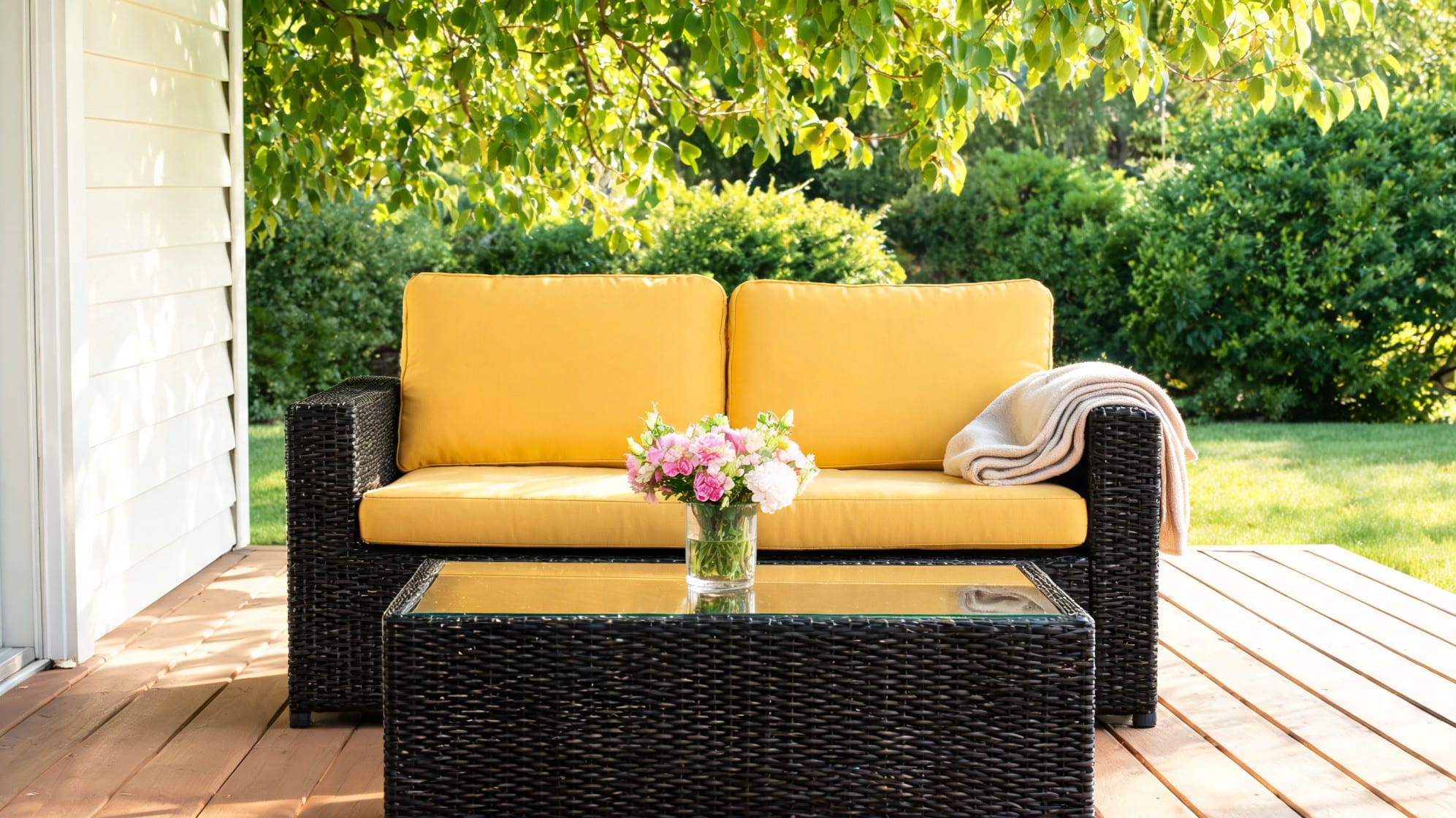
A two-seat outdoor loveseat gives you a cozy lounge area without the footprint of a full sofa. Push it against the house wall or the railing edge to preserve walking space, and put a glass-top or lightweight aluminum coffee table in front. The glass top keeps the visual space open on a small deck because it does not block sight lines the way a solid wood surface does.
If the deck gets full afternoon sun, check the cushion fabric rating before you buy. Fabrics with a UV fade rating below 1,000 hours of direct sun exposure will look washed out in two seasons. Solution-dyed acrylic fabric (the category name most sellers list) holds color significantly longer.
Materials that hold up: Aluminum frame, high-quality resin wicker, teak, and solution-dyed acrylic cushion fabric.
5. Stackable Chairs
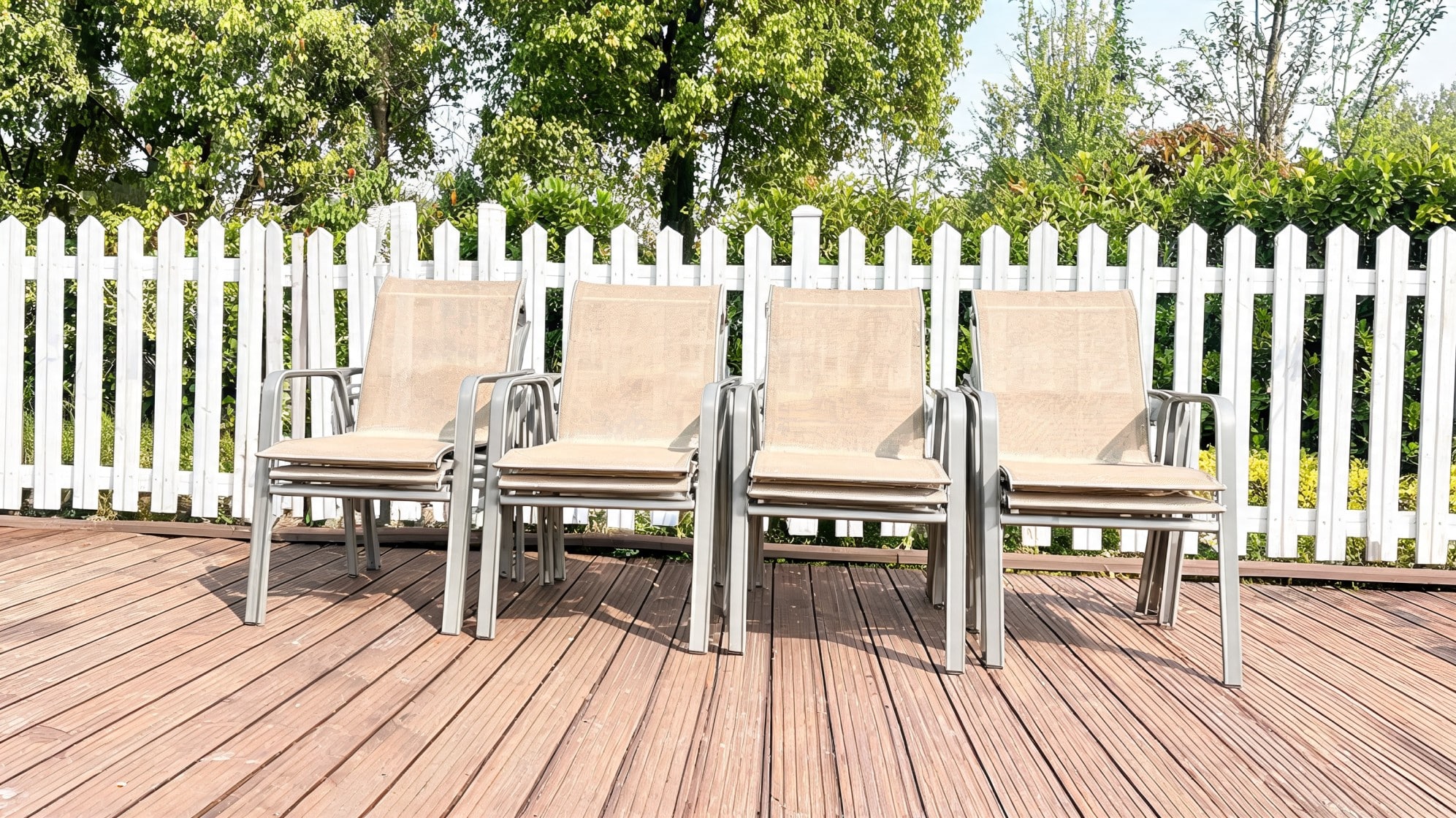
Stackable chairs let you keep four or six seats available without dedicating floor space to all of them every day. They stack in a corner or go into storage, and you pull them out when guests arrive. The ones worth buying are light enough for one person to carry but solid enough that they do not flex or rack when someone sits hard into them.
Avoid chairs with hollow aluminum legs that are unsealed at the bottom. Water gets in and sits, and the leg rusts from the inside over one or two winters without any visible warning on the outside surface until it gives way.
Materials that hold up: Solid aluminum, resin, or powder-coated steel with capped or sealed legs.
Large Deck Furniture Ideas
A large deck that is furnished without a plan ends up feeling scattered. Think in zones before you think in pieces. One zone for dining, one for lounging, one for quiet or reading. Each zone gets its own anchor piece, and the rest of the furniture is placed around it. The ideas below are the ones that work hardest in a large-deck layout.
6. Outdoor Sectional Sofa
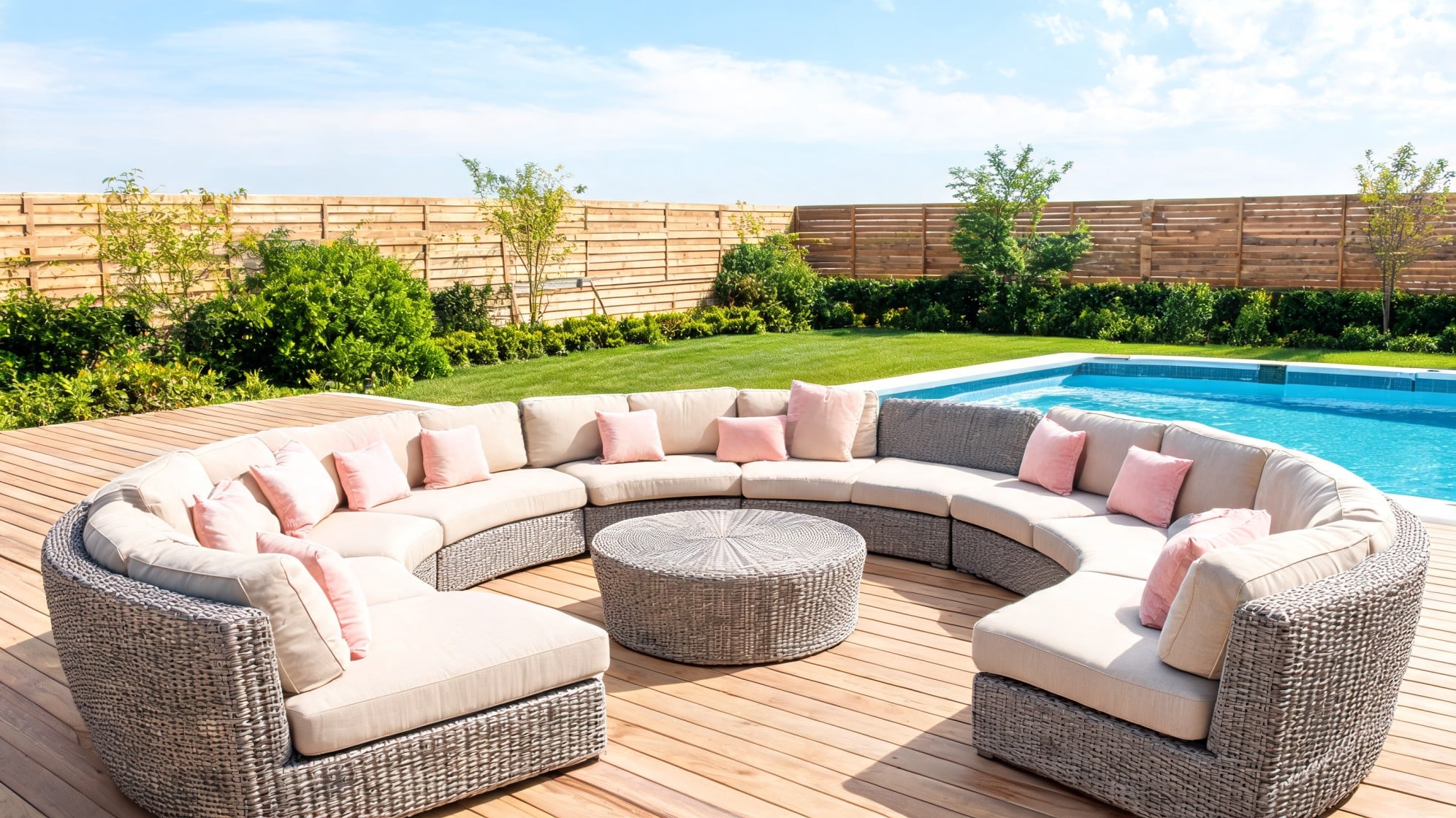
A sectional sofa is the anchor piece for a large deck lounge zone. An L-shape works for corners; a U-shape works when you want conversation seating for eight or more. Either way, the sectional needs to be paired with an outdoor rug underneath it, or the zone just looks like furniture sitting on a deck rather than a space someone designed.
The frame material matters more than people realize. Resin wicker over a steel frame is the standard at mid-price points, and the steel frame is where problems start. An unpainted or poorly coated steel frame corrodes at the welds within three to five years in coastal or humid climates. Pay more for an aluminum frame, or buy wicker over powder-coated steel and plan to cover it through wet seasons.
Materials that hold up: Aluminum frame, high-grade resin wicker weave, solution-dyed acrylic cushions with removable covers.
7. Chaise Lounge Zone
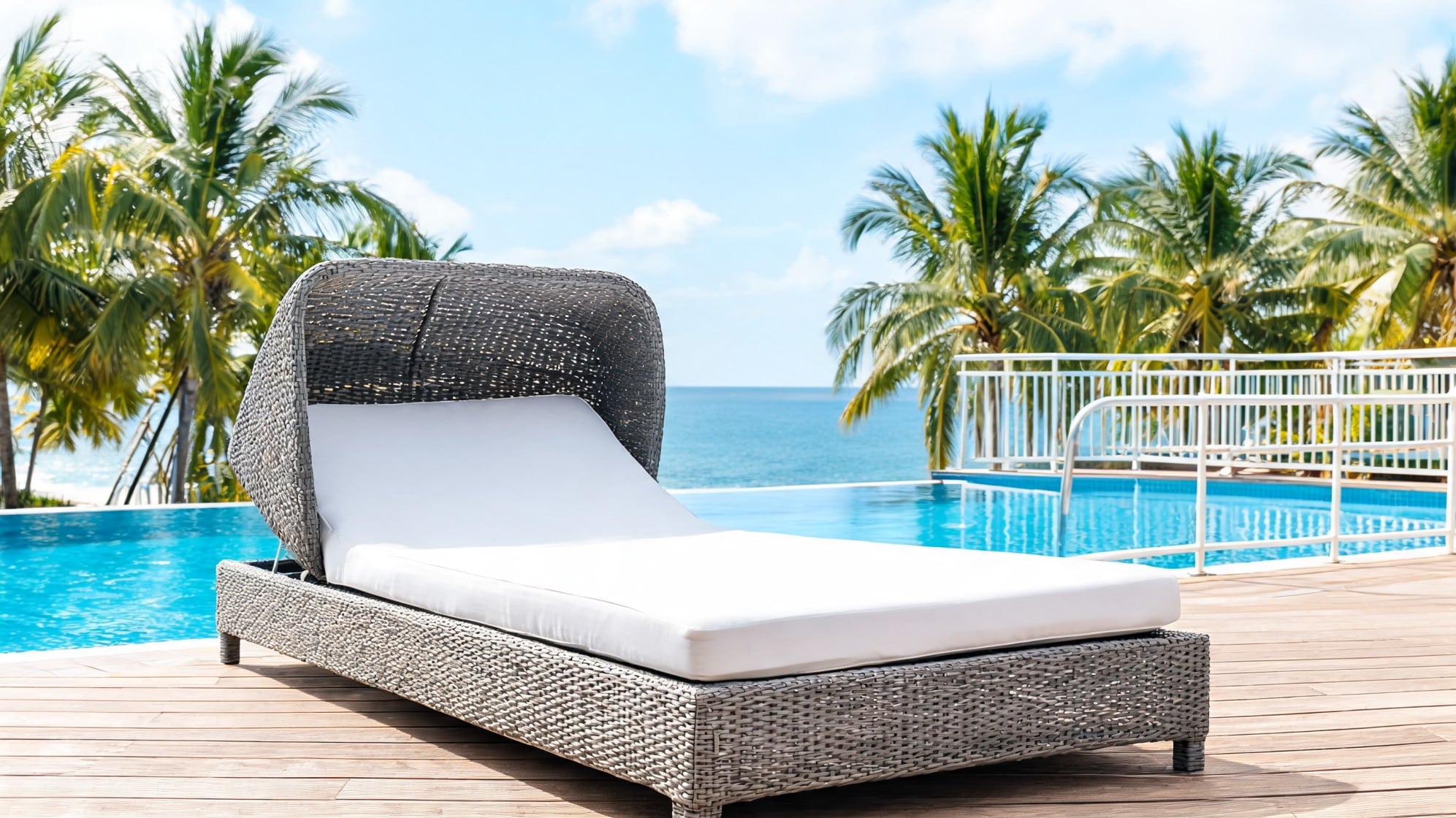
Two or three chaise lounges placed where the sun hits best create a dedicated sunbathing and reading zone on a large deck. Put a small side table between every pair of lounges for drinks and sunscreen. Adjustable backs matter more than most people expect: fixed-flat lounges are fine for napping but frustrating when you want to sit up and read without propping cushions behind you.
Near a pool, sling-fabric chaises are the better long-term call. Quick-dry mesh or sling fabric does not hold water in the weave and does not develop the mildew smell that thick cushion foam builds up when it stays damp for weeks at a time.
Materials that hold up: Aluminum frame with sling fabric for pool-adjacent decks; teak or HDPE for dry-climate decks away from water.
8. Long Outdoor Dining Table
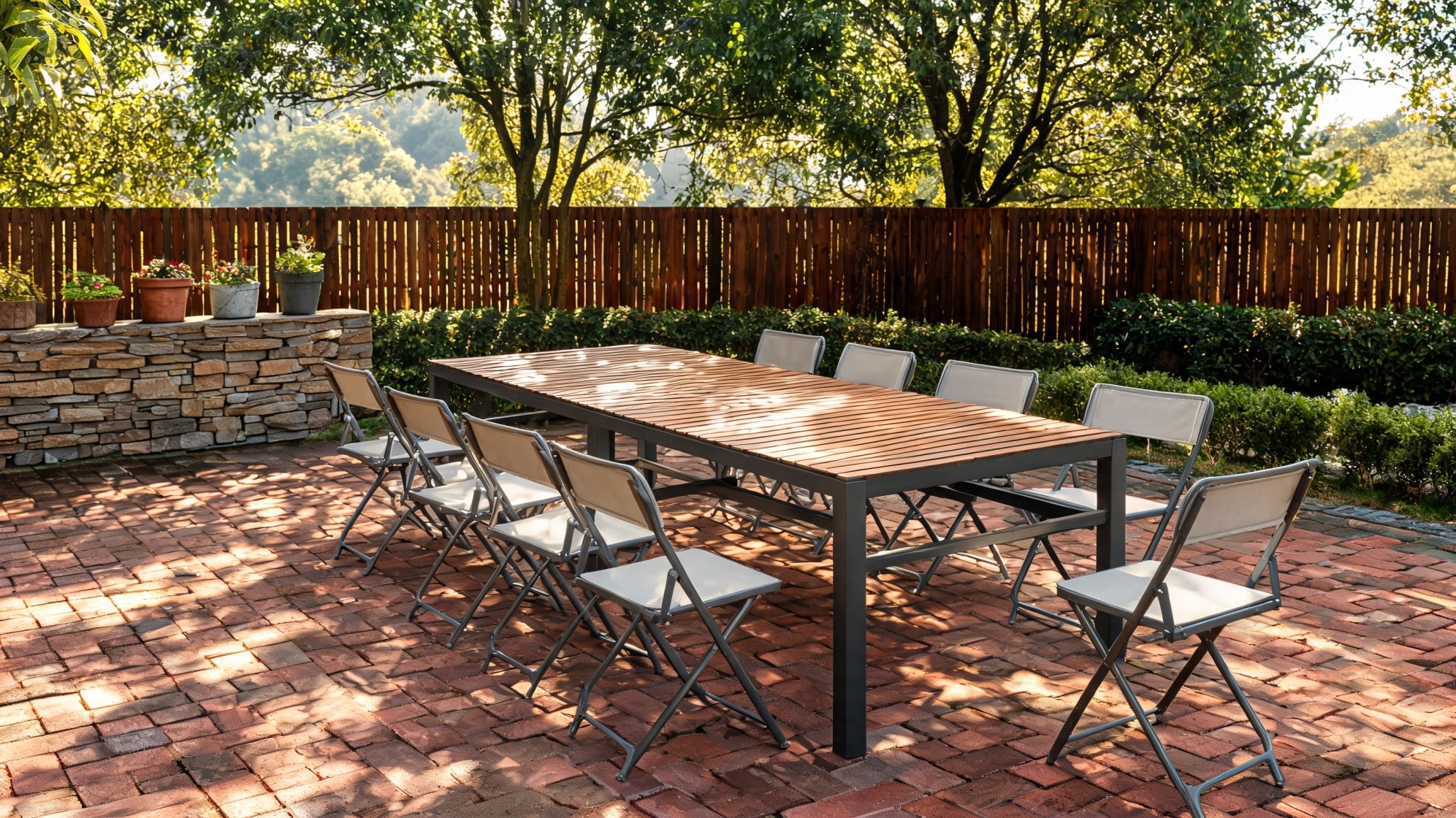
A long dining table on a large deck changes how the whole space gets used. It gives you enough room for a full family dinner or a cookout without running a second table out every time. Figure 24 inches of table length per person seated, plus at least 36 inches on the long sides for chair pull-back and server clearance.
On a wood deck, use furniture pads or glides under all four legs and under any cross-stretcher that contacts the surface. Metal or rough-cut wood edges leave permanent marks in composite and wood decking that no amount of sanding fully removes.
Materials that hold up: Teak, aluminum, HDPE, or powder-coated steel with a sealed or powder-coated surface finish.
9. Outdoor Bar With Stools
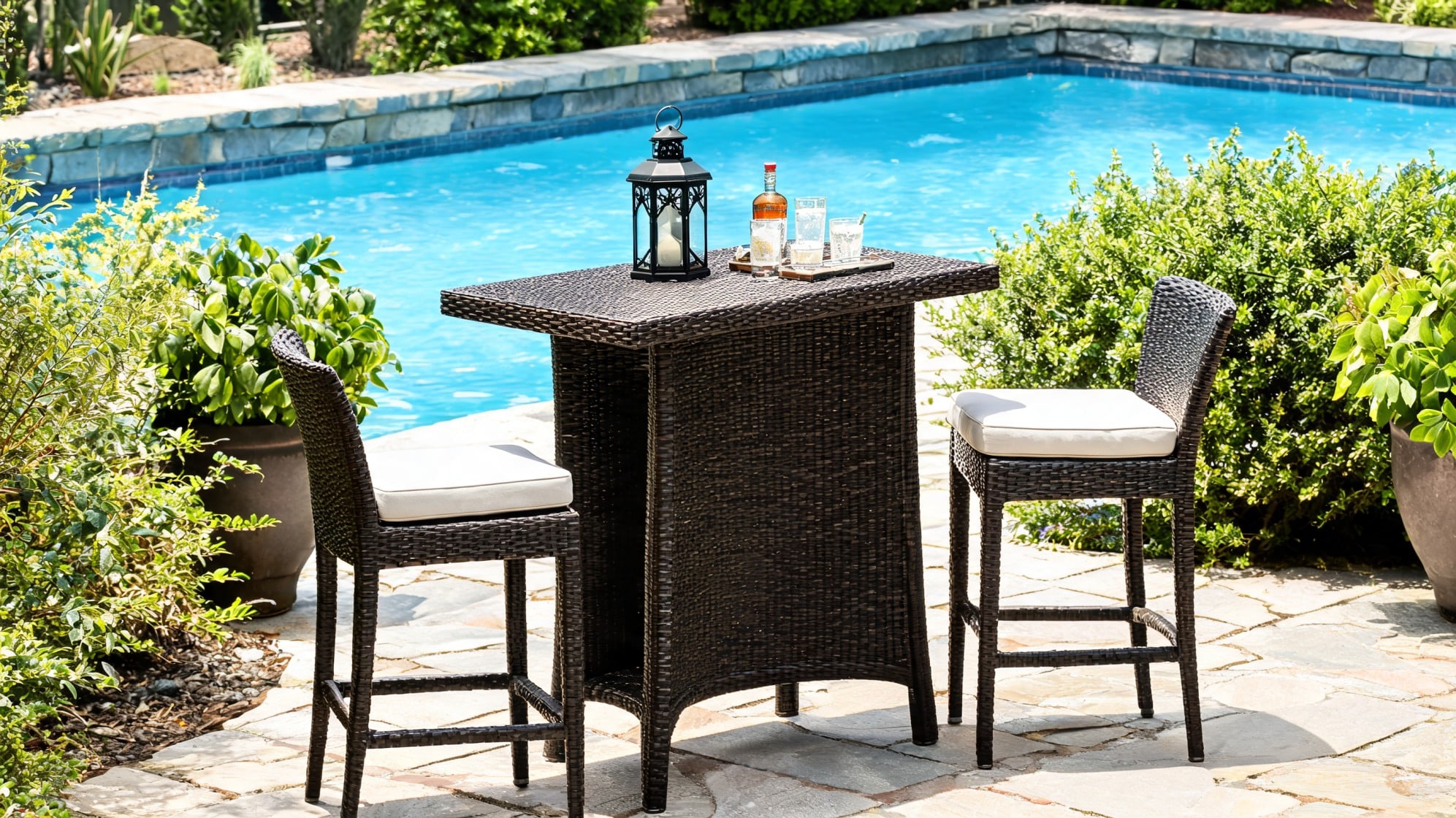
An outdoor bar table with stools earns its place on a large deck when the deck is close to a grill or kitchen. It keeps guests out of the cooking zone while still close to the action. Stools with footrests matter here: bar-height seating without a footrest forces people to brace their legs constantly, and most will migrate to lower chairs within 20 minutes.
A freestanding bar table is more practical than a built-in one for most homeowners because you can reposition it for different events. Built-ins look sharp but commit you to a layout that may not suit everything you do on the deck across the seasons.
Materials that hold up: Powder-coated aluminum, teak, HDPE, or stainless steel for bar surfaces that get heavy wet-glass use.
10. Deep Seating Set With Outdoor Rug
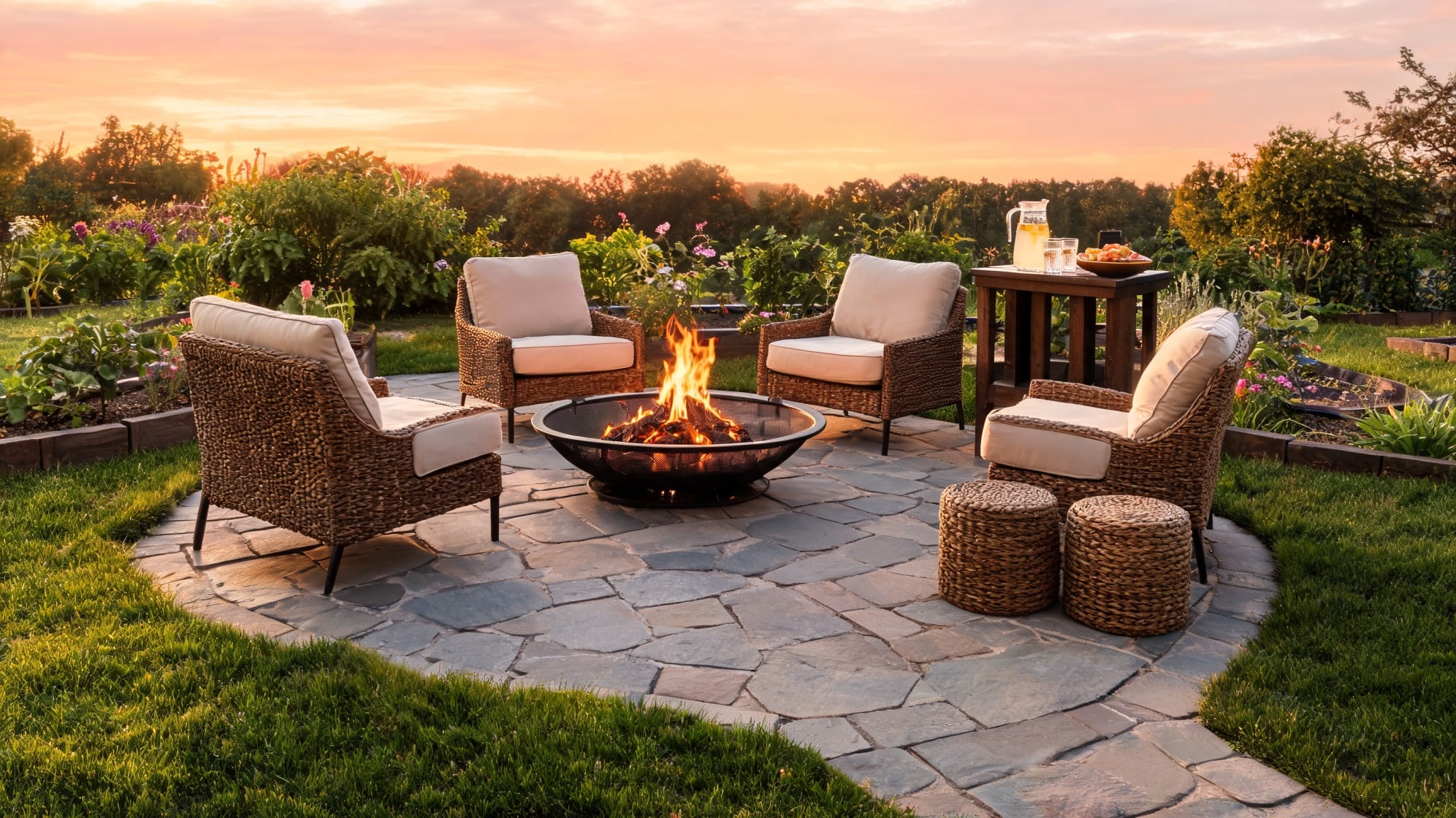
Deep seating with thick cushions and an outdoor rug underneath turns a section of a large deck into a space that people actually want to sit in for two hours, not just visit for a few minutes. The rug is doing structural work here: it defines the zone, ties the pieces together visually, and reduces the hollow sound that furniture makes on an open deck surface.
Choose cushions with removable, machine-washable covers. After a season of regular use, outdoor cushion covers hold bird droppings, sunscreen, food, and pollen. If you cannot wash them easily, they either get thrown away or they stay dirty, and neither outcome is acceptable for furniture you want to keep for five or more years.
Materials that hold up: Aluminum frame, high-grade resin wicker, solution-dyed acrylic cushions with zip-off covers, and a polypropylene outdoor rug that drains and dries fast.
Covered Deck Furniture Ideas
A covered deck changes the calculus on material selection because direct rain and UV exposure are reduced. That does not mean you can use indoor furniture outside, but it does mean softer fabrics, tighter weaves, and lighter frames hold up better than they would on an open deck.
What kills furniture on a covered deck is usually condensation, not rain: trapped humidity with poor airflow will mildew cushions and corrode metal joints just as thoroughly as direct weather, just more slowly.
11. Rocking Chairs With a Side Table
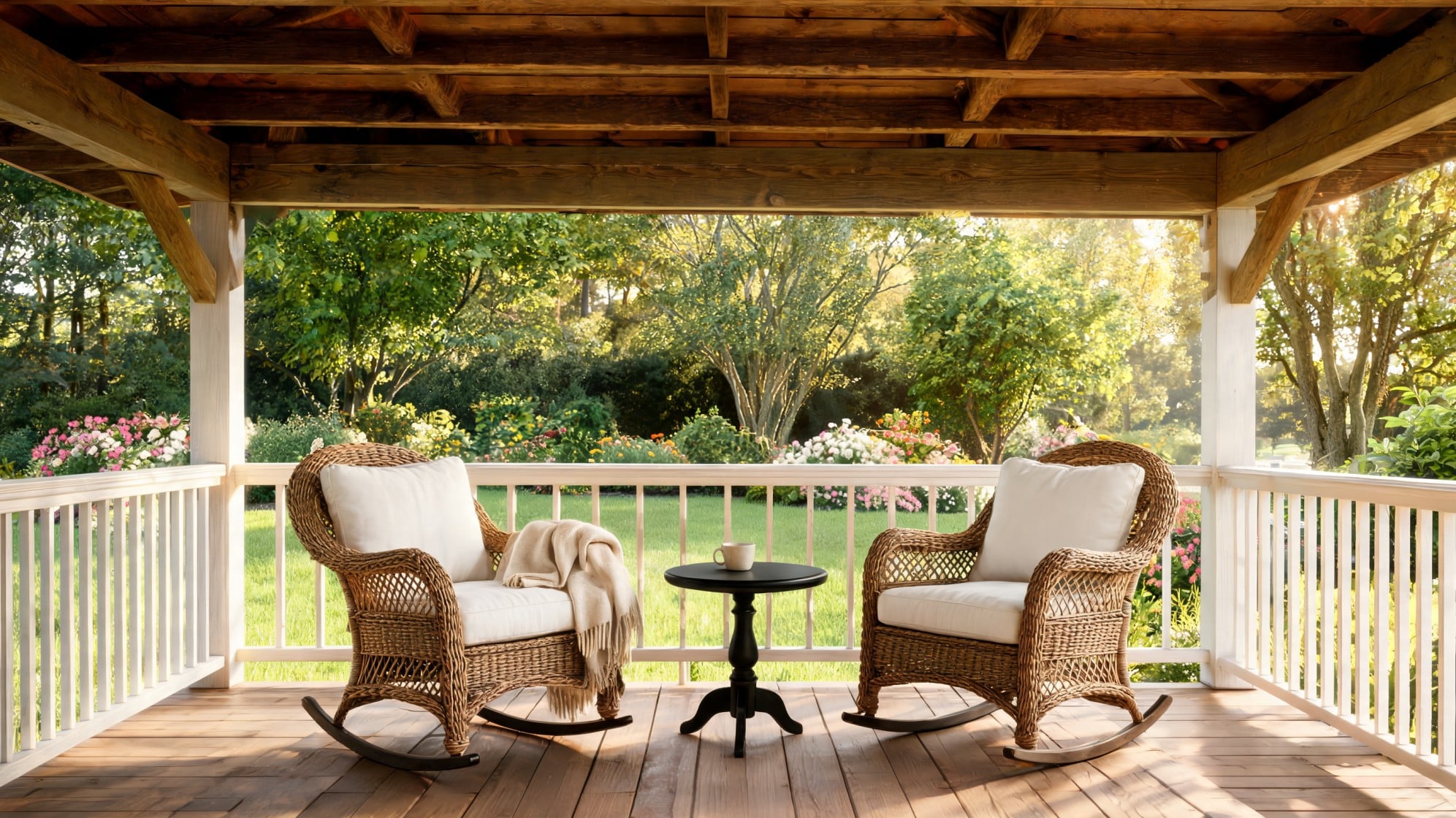
Two rocking chairs with a small side table between them is the most durable covered-deck arrangement there is. Nothing mechanically complicated, nothing that fails. Place them where they have enough room to rock without the rear legs catching on the wall or railing edge: most rocking chairs need 12 to 18 inches of clear space behind the back legs when at full extension.
Add seat cushions with ties so they stay put as the chair moves. Non-tied cushions slide forward on every forward rock and end up on the floor within 10 minutes of anyone actually sitting in the chair.
Materials that hold up: Teak, HDPE poly lumber, or acacia with a quality sealant and cushion ties.
12. Hanging Egg Chair
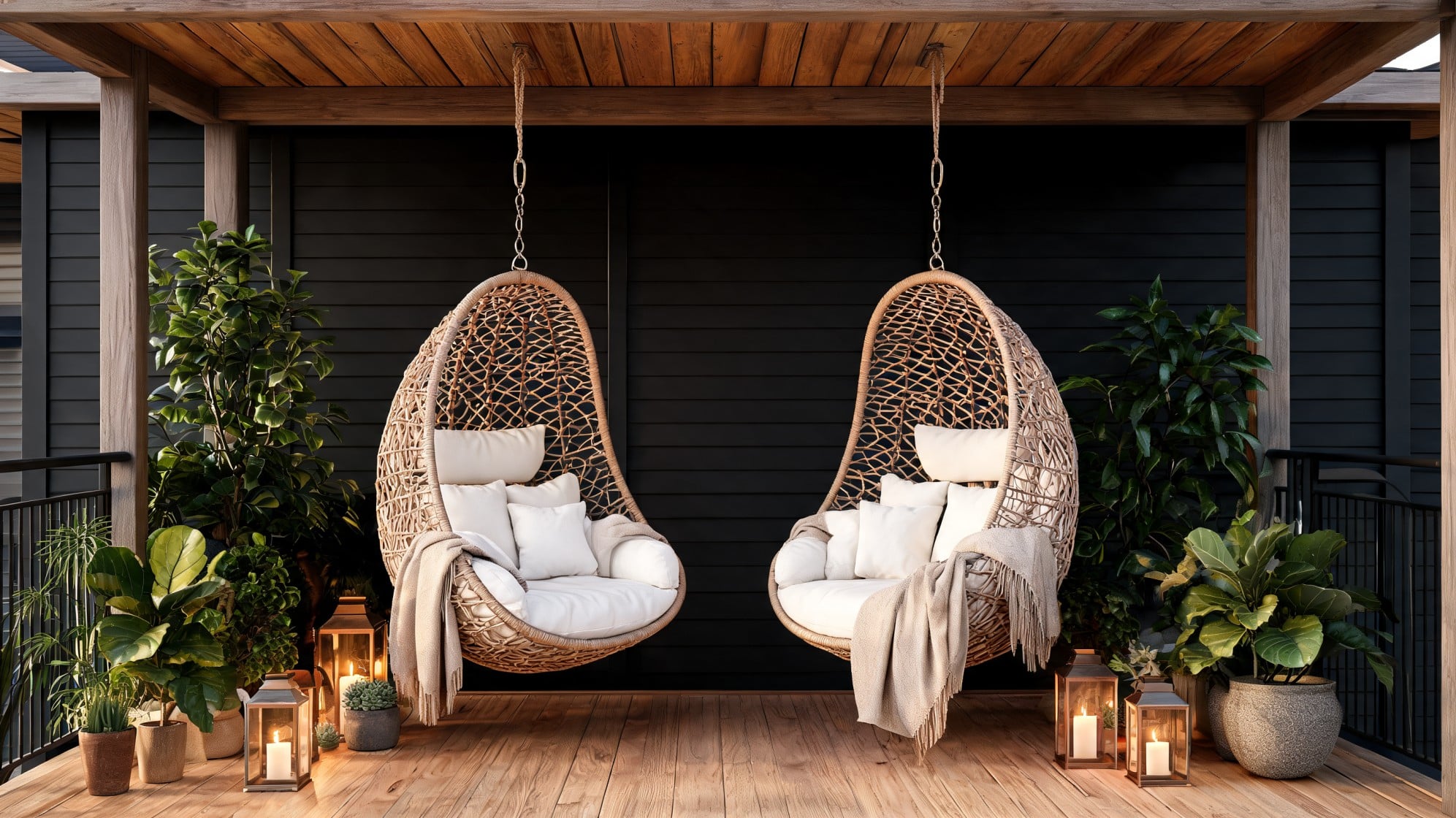
A hanging egg chair gives a covered deck a focal point and a dedicated spot for someone to sit away from the main conversation area. Freestanding models are the smarter choice for most homeowners because they do not require a structural assessment of the ceiling joists.
If you go ceiling-mounted, have the mounting point load-rated by whoever built your deck cover. The chairs plus a 200-pound person plus the dynamic swing load is more force than people expect, and a failed mount pulls the ceiling material with it.
Materials that hold up: Steel or aluminum freestanding frame; resin wicker seat with a cushion that ties in at the base.
13. Lantern Side Tables
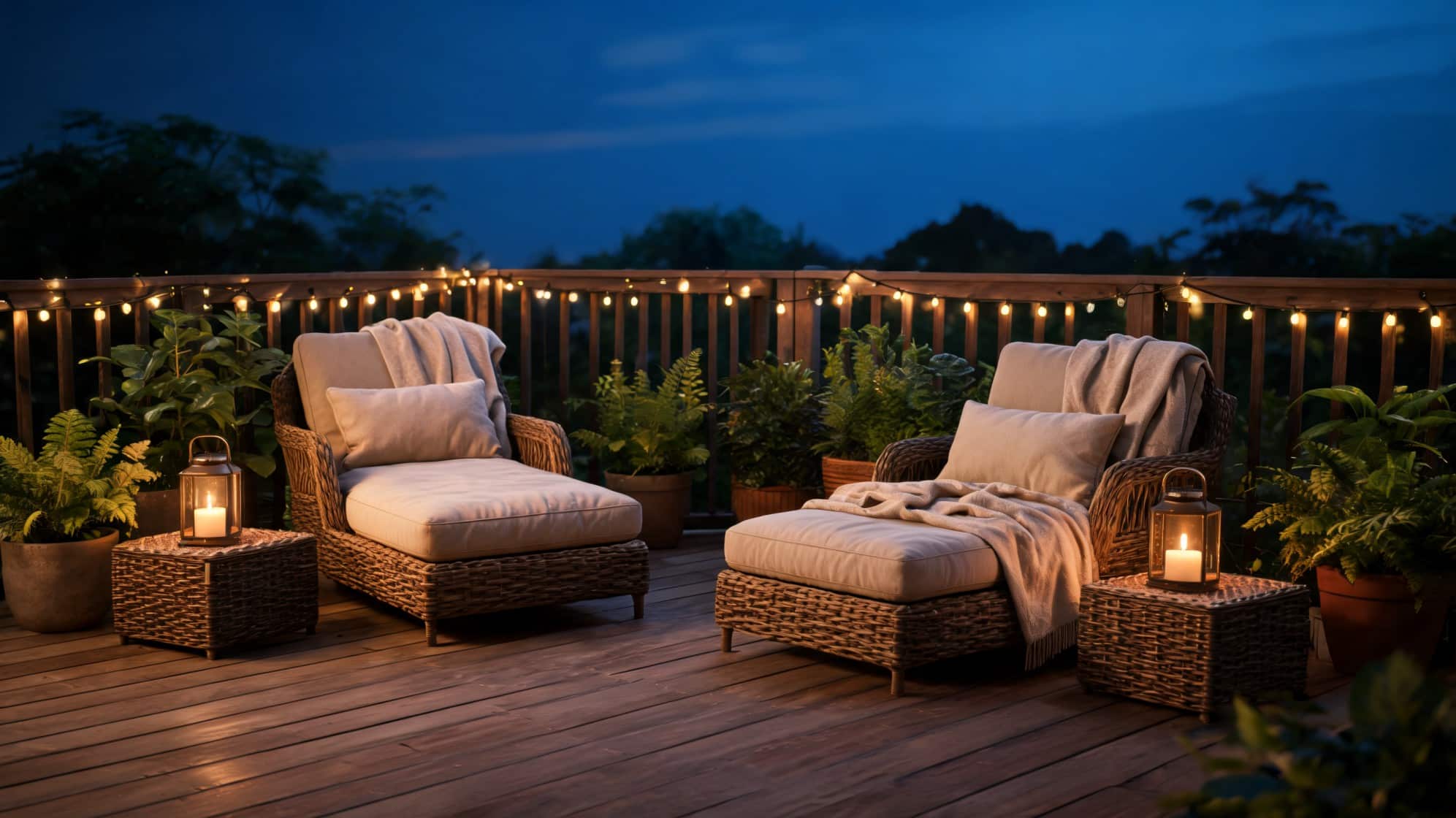
Overhead lighting on a covered deck rarely gives you the kind of light that makes the space feel worth sitting in after dark. Lanterns at table height, around chairs, and at the edges of the deck create warm pools of light that overhead fixtures never match.
A lantern table pulls double duty: it gives you a surface for drinks and warm directional light without running a cord from the house to a floor lamp.
For anything electric on a covered deck, confirm the fixture is UL-listed for damp or wet locations. “Indoor-rated” fixtures will corrode at the sockets inside two seasons of covered outdoor exposure, even without direct rain.
Materials that hold up: Powder-coated metal or aluminum lanterns rated for outdoor damp locations; aluminum or teak table surface.
14. Wicker Conversation Set
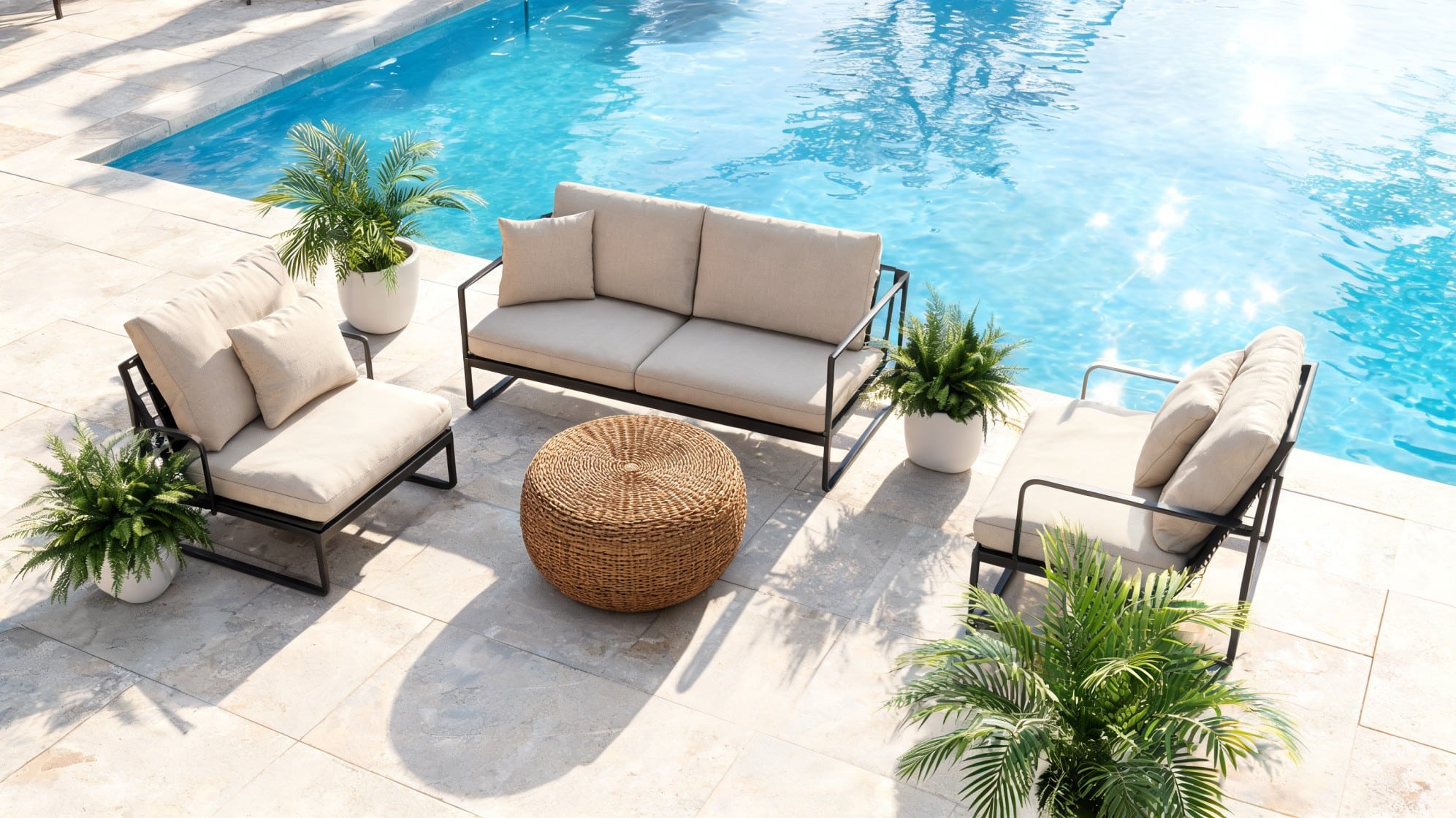
A wicker conversation set on a covered deck works well because it gets the UV and direct rain protection it needs to hold its color and weave integrity for longer.
The standard layout is a loveseat or small sofa, two matching chairs, and a coffee table between them sized so the person at the far end of the sofa can still reach it. That usually means 18 to 24 inches from sofa edge to table edge.
Keep the layout tight enough that people can actually talk at a normal volume. If the chairs are more than 7 feet apart, the conversation stops working and the zone feels like a waiting room.
Materials that hold up: Resin wicker over an aluminum frame; outdoor-performance fabric cushions with removable covers.
15. Outdoor Daybed
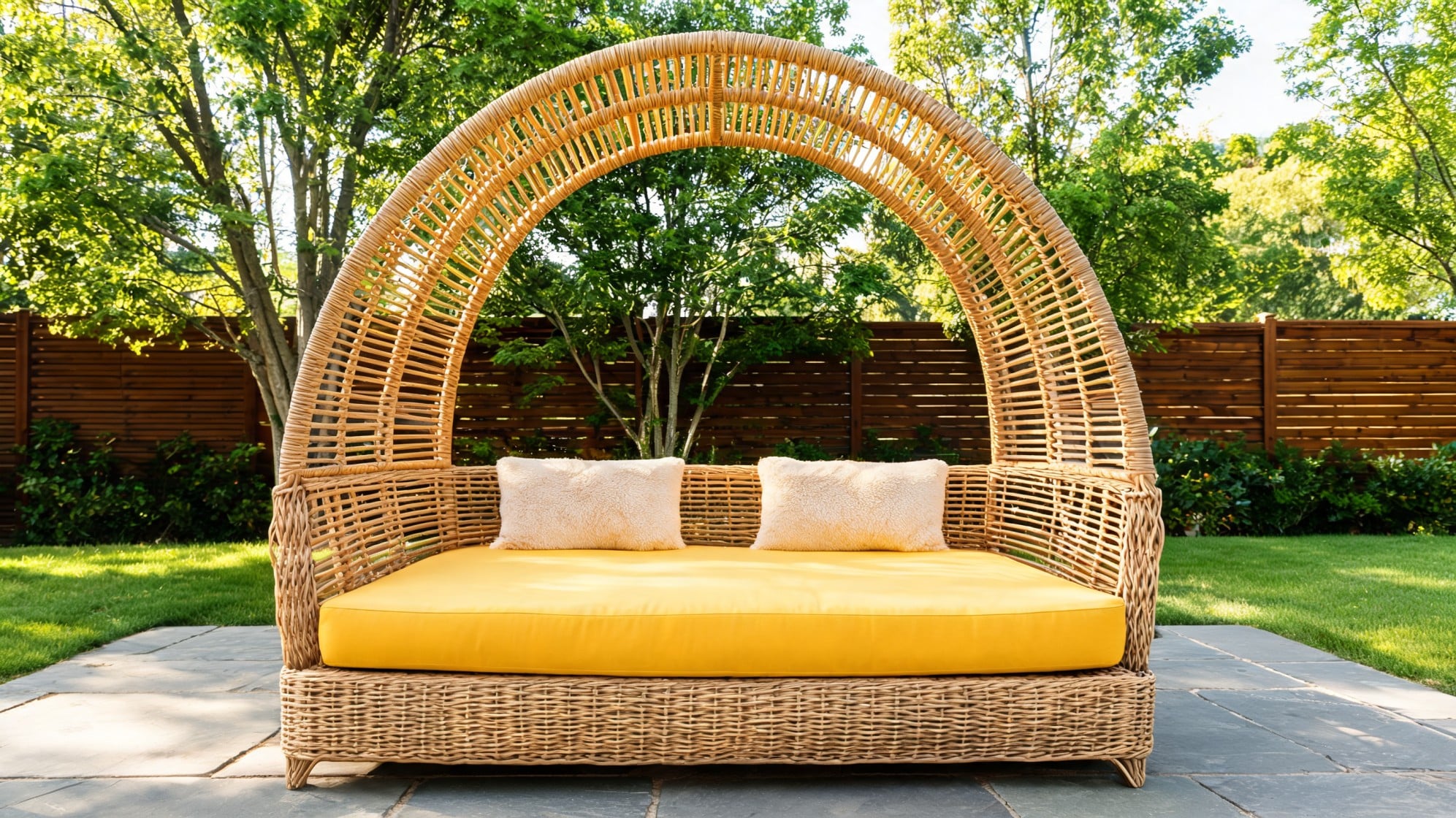
An outdoor daybed in a shaded corner of a covered deck gives the space something that chairs and sofas cannot: room to lie fully flat outside. Useful for naps, reading, or just watching the yard from a horizontal position without going back inside. Place it against a wall or privacy screen so it does not block foot traffic across the deck.
The frame and mattress support need to be genuinely rated for outdoor use, not just listed as “weather-resistant.” Fully enclosed foam with no drainage will stay damp after any moisture exposure and grow mildew inside the cover within a season. Look for a mattress insert with drainage channels or an open-cell foam that dries from the inside out.
Materials that hold up: Teak, resin wicker over aluminum, or powder-coated steel frame with a drainage-designed outdoor mattress insert.
Deck Dining and Serving Furniture Ideas
Dining and serving furniture is where layout and material decisions overlap most directly. The wrong table placement forces awkward traffic around every meal, and the wrong materials mean you are resanding or replacing a dining surface long before the frames wear out.
16. Bar Cart
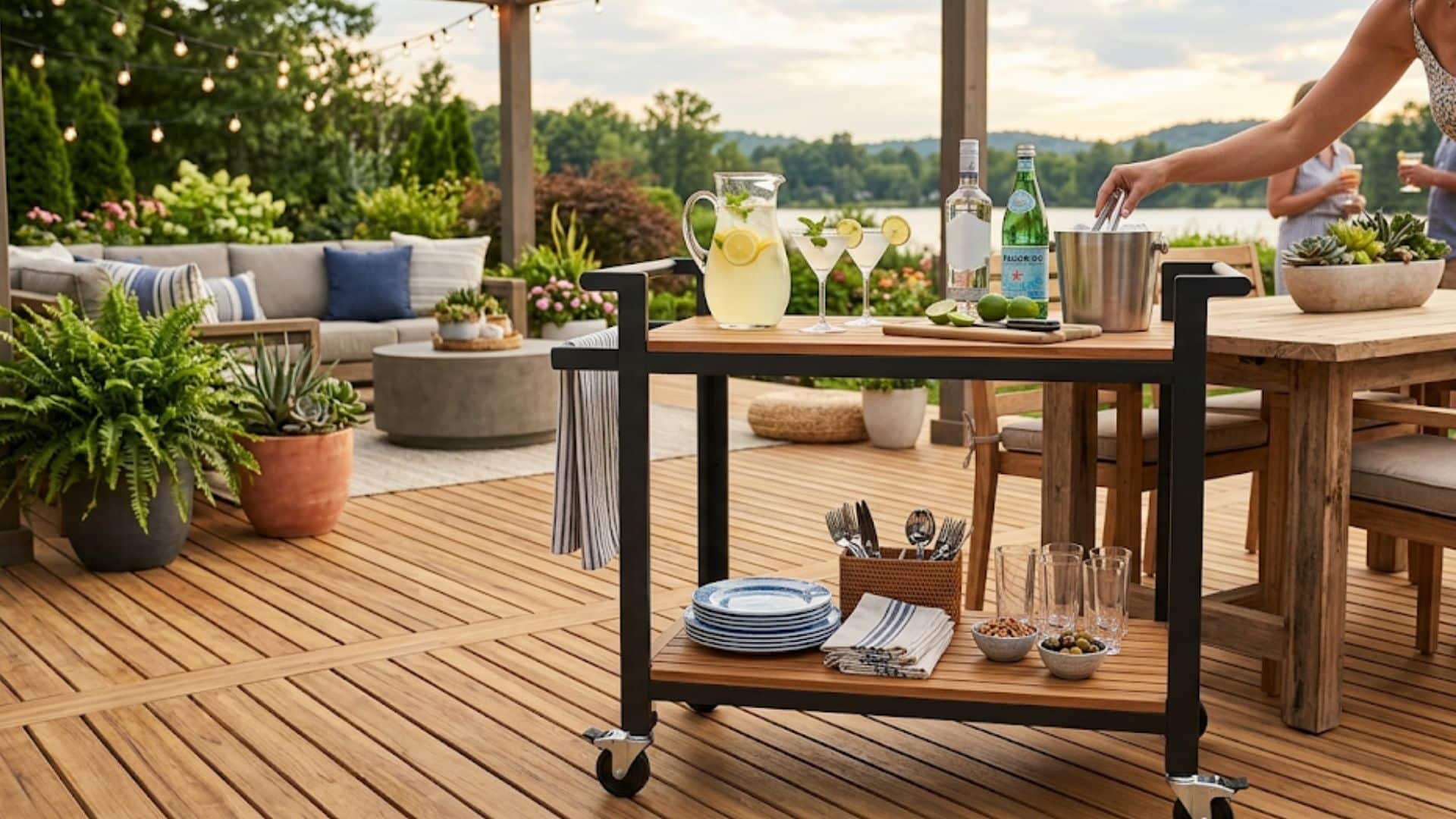
A bar cart on a deck serves a different function than a fixed serving station: it goes where you need it for each event and rolls back into a corner when the meal is over. The locking wheel is not optional on a deck with any slope.
A cart without locked wheels on a slightly pitched surface will migrate into the backs of people’s chairs over the course of an evening. If a more permanent outdoor bar structure interests you, the whiskey barrel project ideas show how to build a functional bar surface from reclaimed materials at a low cost.
For outdoor use, stick to metal or teak shelving. Painted MDF or untreated wood shelves on outdoor carts fail quickly when drinks spill repeatedly into them across a summer of use.
Materials that hold up: Powder-coated metal or stainless steel frame with teak, aluminum, or sealed tile shelving.
Deck Lounge Furniture Ideas
Every deck benefits from at least one piece of furniture that is built for sitting longer, not just stopping by. These ideas are for the lounge corner, the reading spot, and the end-of-day seat that makes the deck worth coming back to.
17. Hammock Chair
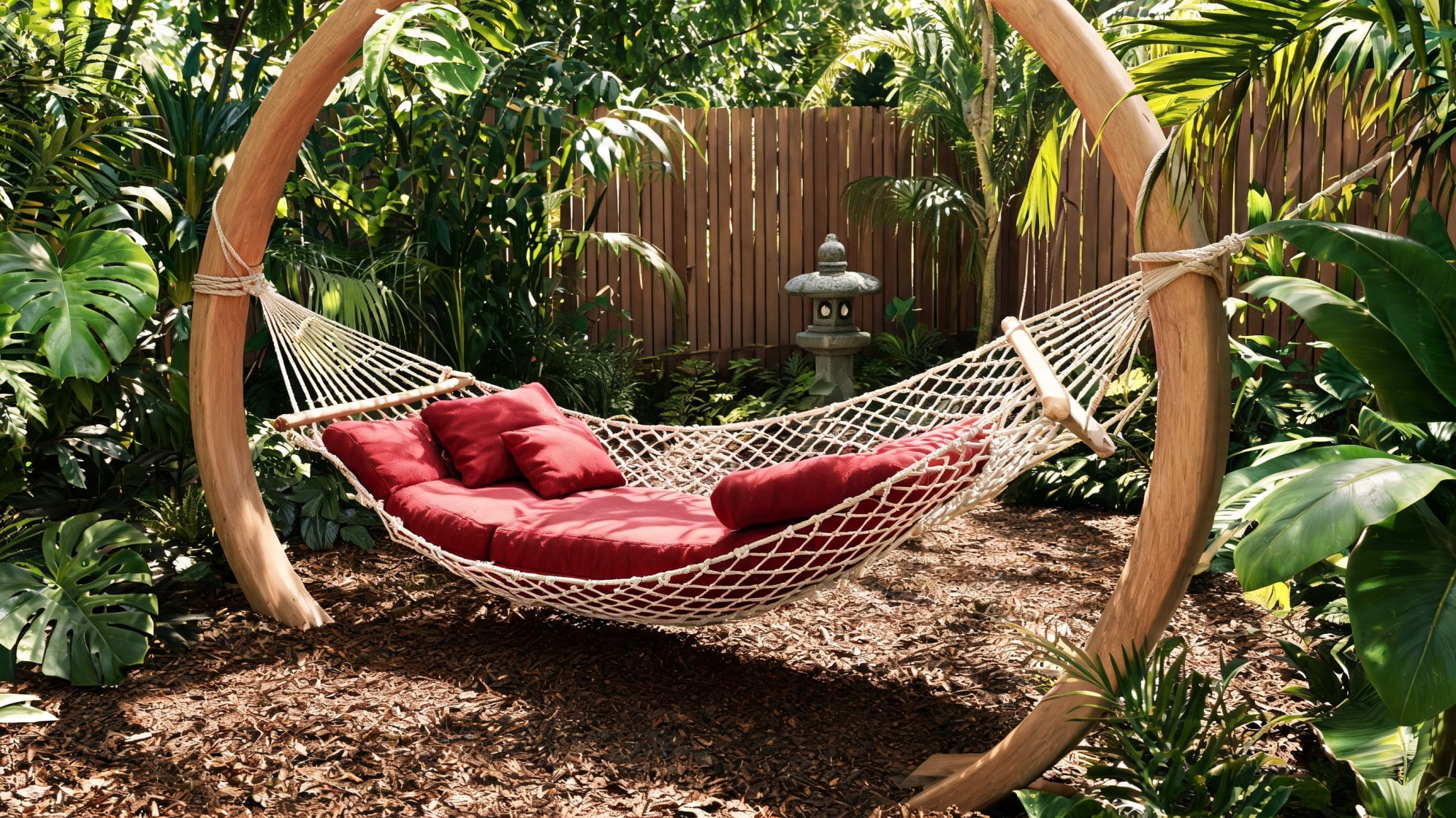
A hammock chair fills a corner without requiring as much floor clearance as a rocking chair. Freestanding models work on any deck surface and do not require drilling into a beam or a ceiling. The rope or fabric seat keeps air moving underneath you, which matters on a warm evening in a way that upholstered seats do not.
Check the weight rating of the freestanding frame before buying, not just the chair itself. The combined dynamic load of a person settling hard into the chair plus swinging exceeds the static weight rating. A 250-pound dynamic rating on a freestanding frame is generally adequate for most adults; a 200-pound rating is too close to the line for daily use.
Materials that hold up: Powder-coated steel freestanding frame; cotton-blend or polyester rope seat; weather-safe fabric cushion with insert ties.
18. Outdoor Poufs
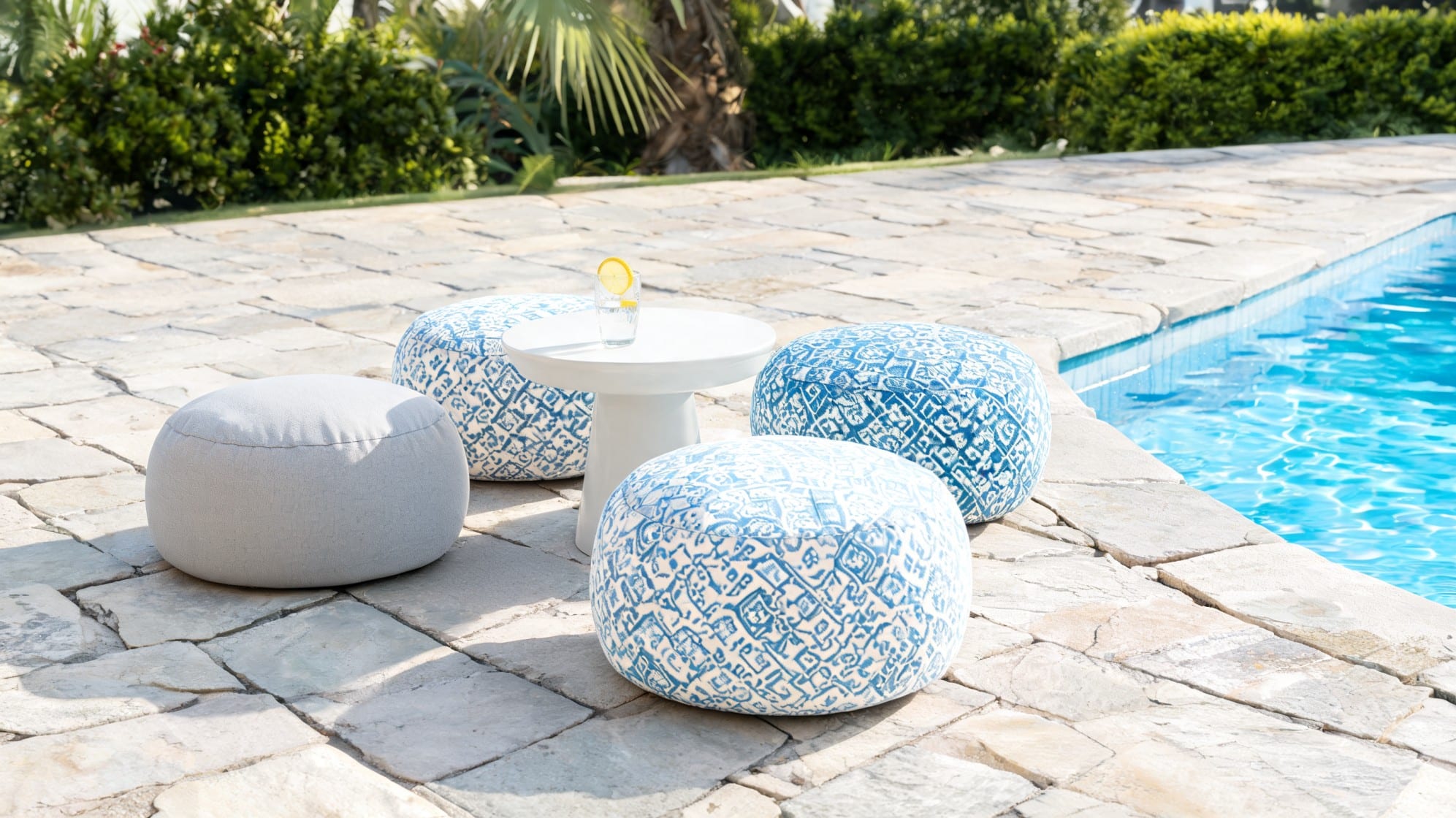
Outdoor poufs are the most flexible piece of furniture on this list. They work as a footrest, extra seat, or side table with a tray on top, and they weigh almost nothing, so rearranging the deck layout for a party takes about 90 seconds. Firm poufs hold shape through a season of daily use; soft-fill ones flatten permanently within a few weeks.
Cover poufs or store them inside during extended rain. The fabric itself can handle moisture, but the fill does not dry quickly and will mildew if left saturated for several days in a row.
Materials that hold up: Solution-dyed polyester or olefin outer cover; firm foam or compressed fill insert; waterproof inner liner.
19. Compact Corner Sofa
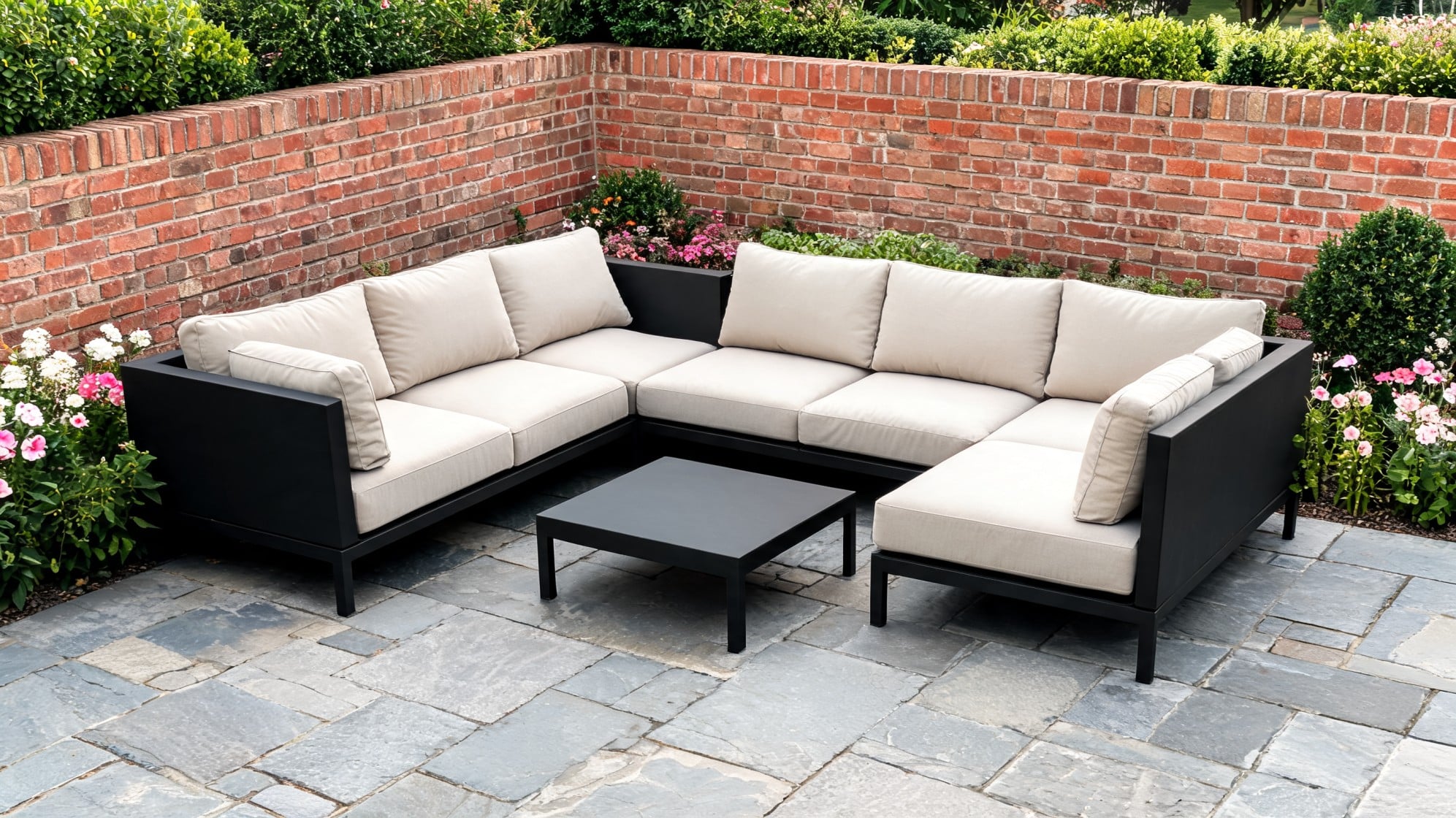
A corner sofa seats four or five people in a compact L-shape and converts a dead corner into the most-used part of a small or mid-size deck. Low-back styles preserve sight lines across the deck and into the yard; high-back styles give more wind and privacy protection but make the corner feel enclosed.
Modular corner sofas that connect with standard hardware are easier to clean and transport than single-moulded sectionals. Being able to separate the pieces and wash or replace individual cushion covers without dismantling the whole frame is worth paying for if you plan to use the deck year-round.
Materials that hold up: Aluminum frame, resin wicker, or teak with solution-dyed acrylic cushion covers.
20. Nesting Side Tables
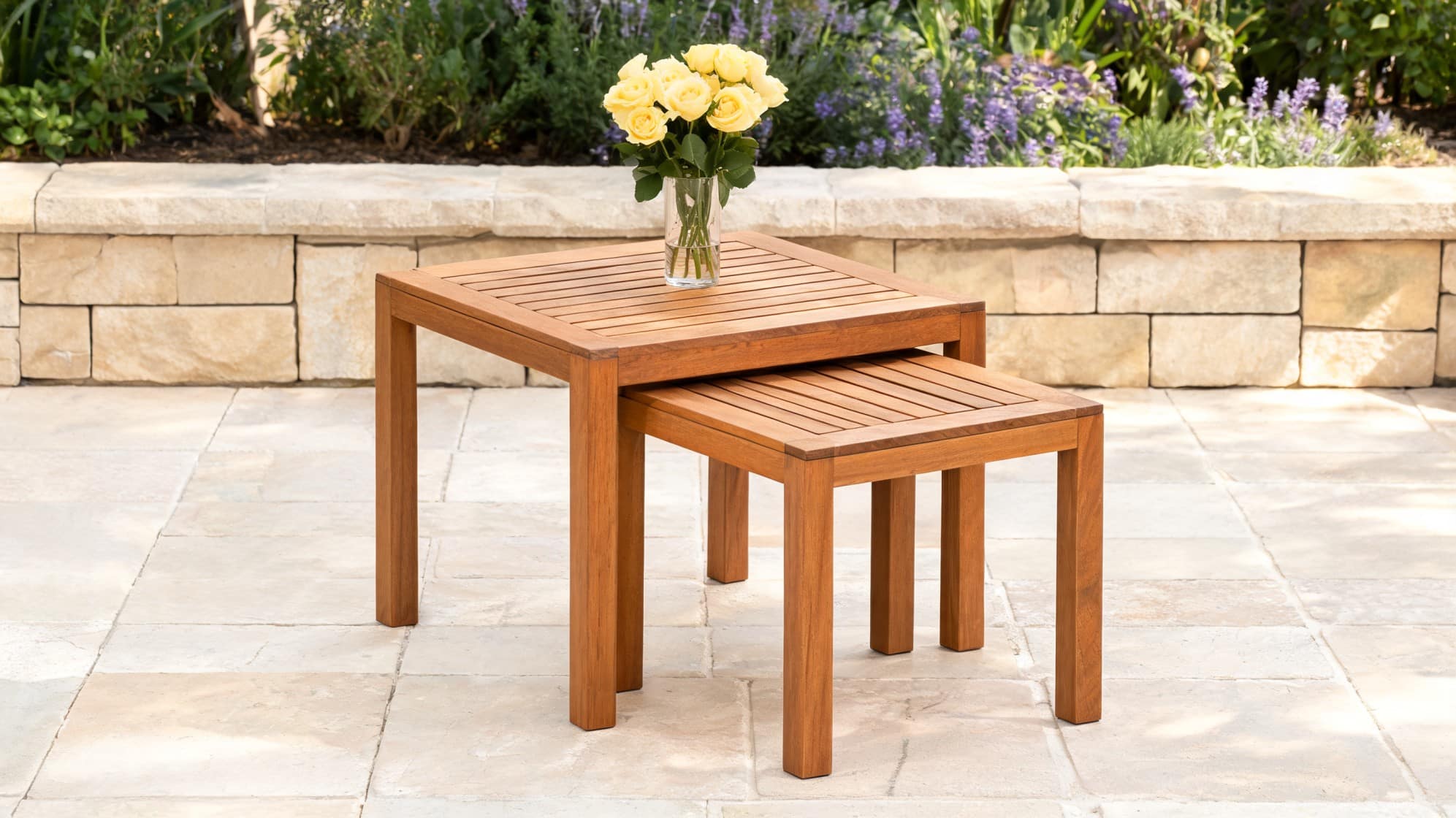
Nesting side tables solve the problem of having somewhere to put drinks without adding a table that sits in the middle of the traffic path every day. They stack together on quiet days and pull apart when you need the surface area. Round shapes move around tight spaces more easily than rectangular ones.
For outdoor use, avoid glass-top nesting tables unless the legs lock together when stacked. A set of nested glass tables that tips in the wind ends up with at minimum a cracked top and at worst an injury. Aluminum, teak, or resin tops are the practical call here.
Materials that hold up: Aluminum, teak, or resin tops with powder-coated or corrosion-resistant leg bases.
21. Adirondack Chairs
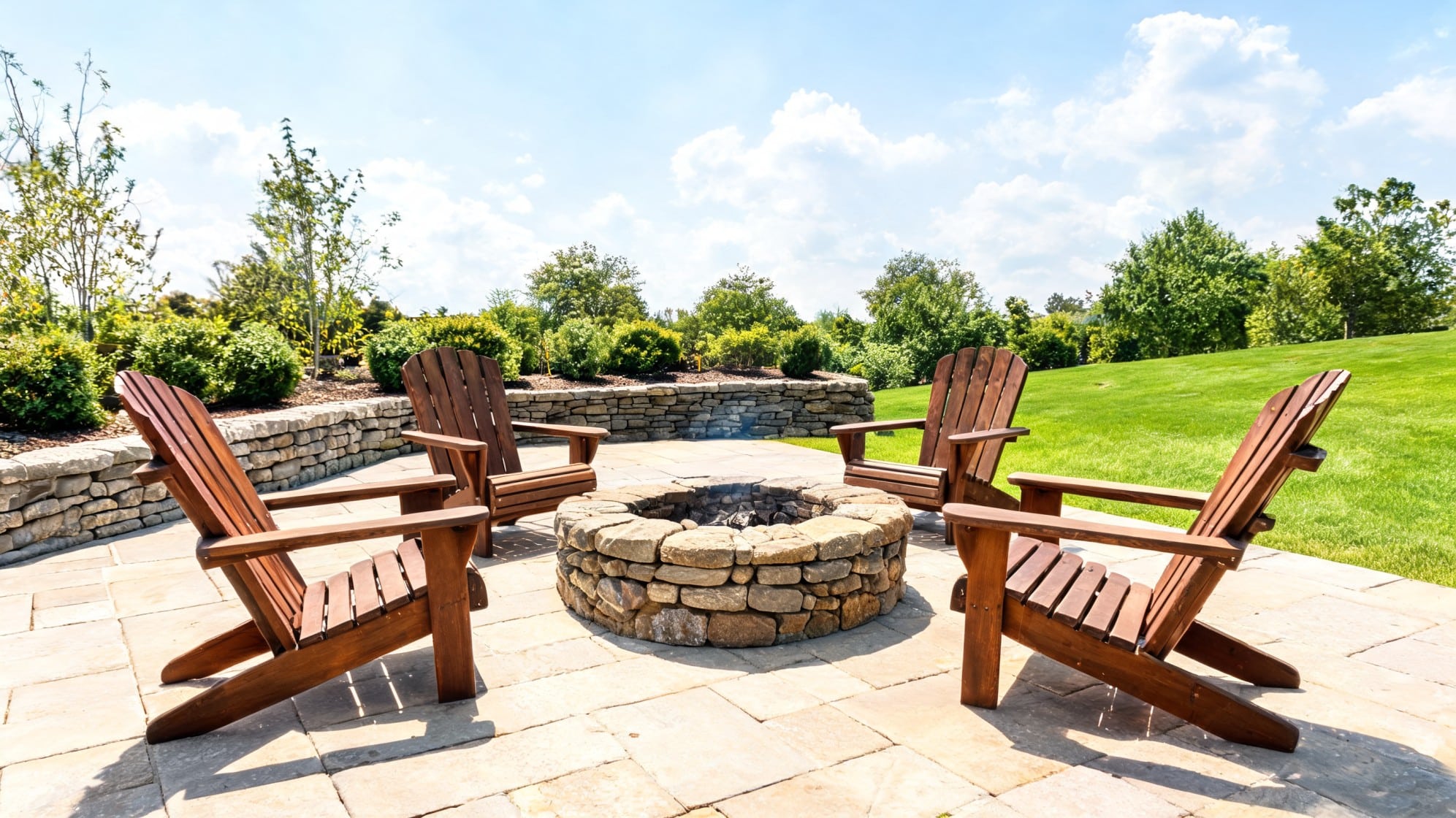
Adirondack chairs are one of the oldest outdoor furniture designs still in production because the geometry works. Wide armrests at the right height for resting a drink, a reclined seat angle that is comfortable for two or three hours, and a slatted back that sheds rain without trapping it. They suit fire pit areas, lake decks, cabin decks, and any outdoor space where the point is to sit and not do anything urgent.
HDPE poly lumber Adirondacks are the practical choice for most homeowners. They will not splinter, crack, warp, or need painting or staining. Wood Adirondacks look better for the first two years but require consistent maintenance to stay that way. If you are not going to seal or paint them annually, buy the HDPE and save yourself the work.
For a full overview of outdoor deck ideas beyond furniture, including material choices and layout planning for the deck structure itself, that resource covers the broader context around where these furniture decisions sit.
Materials that hold up: HDPE poly lumber for low-maintenance use; teak or cedar for those who will commit to annual maintenance.
What Fails Two Winters Later
This is the section most deck furniture roundups skip, so here it is plainly.
Steel frames under resin wicker corrode at the welds first, usually at the bottom where moisture pools. By the time you see rust on the surface, the joint is already compromised. The wicker weave itself looks fine until the frame fails beneath it. Fix: buy aluminum frames, or plan to replace mid-range wicker sets every five to seven years.
Acacia dining tables sold as outdoor furniture at budget price points will crack along the grain within two seasons in any climate with seasonal humidity swings. The species is not the problem; insufficient thickness and inadequate sealing at the factory are. A properly finished, thick-slab acacia table can last years. A 1-inch slab with one coat of outdoor oil on it will not.
Cushion foam without drainage fails even on covered decks. Morning condensation, the occasional spilled drink, and the first time the covers run through the wash leave damp foam that never fully dries. Mildew follows. Fix: buy cushions with drainage channels in the foam insert, or use thin quick-dry cushions and store them inside when the deck is not in use.
Umbrella bases rated for 25 to 50 pounds are not adequate on a deck that gets afternoon wind. A standard 9-foot market umbrella generates 40 or more pounds of horizontal force at 15 mph. A base that is too light tips the umbrella into the furniture or off the deck entirely. Fix: use a 75-pound or heavier base, or anchor the umbrella through the center of a table with an adequately weighted table base.
Budget Level Deck Furniture Ideas
Not every deck needs the same investment, and the right budget decision depends on how much use the deck gets, how long you plan to stay in the home, and how much maintenance you are willing to do. This table maps budget levels to the furniture that makes sense at each.
| Budget Level | Best Deck Furniture Ideas | Best For |
| Affordable | Folding bistro set, HDPE Adirondack chairs, stackable chairs, storage bench, outdoor rug, solar lighting | Small decks, renters, short-term use |
| Mid-range | Aluminum-frame loveseat set, fire pit table, dining set with benches, chaise lounges, storage deck box | Family decks, weekend hosting, 5 to 10-year use |
| High-end | Teak dining set, modular aluminum sectional, outdoor bar with built-in counter, outdoor daybed, built-in benches | Large decks, permanent setups, long-term ownership |
Start with the pieces you use every day and add the extras when the budget allows. A good dining table and four durable chairs will serve you better than a full eight-piece set where the frame quality was compromised to hit a price point.
Deck Furniture Layout Ideas by Style
Once the material decision is made, the style direction narrows what you actually look at. Pick one of these before you start shopping and the whole process moves faster.
- Modern: Black powder-coated aluminum frames, neutral cushions, low-profile silhouettes, and glass or concrete side tables.
- Coastal: Teak furniture with white or washed-out fabric, rope detailing, and light natural fiber rugs.
- Rustic: HDPE or cedar Adirondack chairs, reclaimed-look wood tables, iron lanterns, and warm-toned cushions.
- Boho: Rattan or resin wicker seating, layered outdoor rugs, patterned throw pillows, and a lot of container plants.
- Minimalist: Fewer pieces, clean lines, one anchor piece per zone, and consistent material across the full deck.
- Luxury: Teak or high-grade aluminum sectionals, fire table, outdoor kitchen or bar, and premium cushion fabric throughout.
Repeat two or three materials and two or three colors across the deck and the space reads as intentional rather than assembled from different purchases over the years.
Best Furniture for Different Deck Types
The deck surface and structure affect which furniture choices make sense long-term.
| Deck Type | Best Furniture Choices | Key Consideration |
| Wood deck | Teak, aluminum, resin wicker with rubber foot caps | Glides or pads on all legs; bare metal leaves permanent marks |
| Composite deck | Aluminum pieces with rubber or HDPE foot pads; no fire tables without a heat-rated mat underneath | Composite surfaces scratch and soften under direct heat; protect accordingly |
| Pool deck | Sling chairs, aluminum chaise lounges, quick-dry cushions | Everything gets wet constantly; choose material and fill that drains and dries in under 24 hours |
| Rooftop deck | Low-profile aluminum seating, heavy or anchored tables, no lightweight décor | Wind load matters; avoid anything that can become a projectile at 20 mph |
| Narrow deck | Railing bar table, folding bistro chairs, slim benches placed along one edge | Keep all furniture on one side; the walking path needs to stay clear the full length |
Match the furniture to the deck type before you match it to a style. A beautiful teak sectional on a rooftop deck with regular 20 mph gusts needs to be weighted and anchored or it will move, scratch the surface, and eventually damage something.
Deck Furniture Mistakes to Avoid
- Buying before measuring: A sectional or dining set that looked right in a product photo can block the door or leave no clear walking path once it is actually on the deck.
- Blocking doors or stairs: The deck should be easy to walk through in the dark, carrying food or drinks, without squeezing past furniture.
- Oversizing for the space: One piece too large for a small deck makes the whole area feel unusable.
- Forgetting walkway clearance: Leave 30 to 36 inches for main paths and 3 feet behind every dining chair.
- Bare metal legs on wood or composite: Use pads, glides, or rubber caps on every contact point.
- No cushion storage plan: If cushions live outside in all weather without covers or storage, they last two seasons instead of six or eight.
- Ignoring sun and wind conditions: Lightweight furniture on a windy deck and dark-colored metal furniture in full afternoon sun are problems that become obvious immediately after purchase.
- Fire pit too close to furniture or railings: Keep all fire features at least 3 feet from fabric, wood surfaces, and railings.
- Indoor furniture moved outside: MDF, particleboard, untreated fabric, and standard indoor foam are not rated for outdoor humidity and will fail within one season.
- No lighting plan: A deck that is not usable after dark gets half the use of one that is. Solar lights, wall-mounted fixtures, and lanterns do not require electricians and add significant evening functionality.
Frequently Asked Questions
What is the best material for outdoor deck furniture?
Teak and HDPE poly lumber are the two most durable choices. Teak handles almost every climate and lasts 20 to 30 years with basic maintenance. HDPE requires no maintenance at all and holds up equally well. Powder-coated aluminum is the best value option if you are not ready to spend on teak.
What deck furniture holds up best in rain?
HDPE poly lumber is the single best choice in consistently wet climates because it does not absorb moisture, crack, or develop mildew. Teak is close behind and recovers quickly from rain. Avoid acacia and standard powder-coated steel with unsealed joints in high-rainfall areas.
How do I arrange furniture on a small deck?
Push all major pieces to the perimeter, leave the center open for walking, and use furniture that folds or stacks when not in use. A folding bistro set or a compact corner sofa along one edge typically gives you seating without blocking the main path.
What is the most durable outdoor furniture for sun exposure?
Aluminum frames with solution-dyed acrylic cushions handle direct sun best. The fabric’s color stays stable for 1,000-plus hours of UV exposure before visible fading. Resin wicker degrades faster in full direct UV; keep it shaded or covered when not in use to extend its lifespan.
What patio furniture is best for a pool deck?
Sling-fabric or mesh chaise lounges on aluminum frames. They dry in under two hours, do not hold mildew in the fill, and resist pool chemical exposure better than thick-cushion alternatives. Save deep-seating cushions for the deck area away from the pool edge.
How much should I spend on outdoor deck furniture?
A practical mid-range setup for a standard 12 by 16-foot deck runs $800 to $2,500 depending on how many pieces you need. HDPE or aluminum furniture at the mid-range lasts 10 or more years. Budget sets under $400 often need full replacement within three to four seasons, which costs more over time.
What is trending in deck furniture right now?
Curved sectional seating, modular layouts that can be rearranged easily, earthy and natural tones, and outdoor furniture that mimics indoor living room comfort are the current directions. Sustainable materials including recycled aluminum and HDPE made from reclaimed plastic are also growing in the market.
Should I cover deck furniture when not in use?
Yes, for anything with cushions or with steel frame components. Good outdoor furniture covers extend cushion life by two to four seasons and prevent the rust at feet and joints that starts invisibly and becomes structural. Teak and HDPE can go uncovered year-round without meaningful degradation.
Final Verdict
Choosing the right layout and materials changes how you experience your outdoor living space. I want you to step onto your deck and feel relaxed, not stressed by upcoming maintenance or cramped walkways.
By measuring your actual usable clearance and matching your materials to your specific climate, you avoid the costly replacements that catch most homeowners off guard.
If you opt for space-saving railing tables or a durable teak sectional, your setup should work hard for your daily lifestyle.
Take these practical layout strategies, check your local weather patterns, and build an outdoor oasis that remains both functional and beautiful for many seasons ahead.