

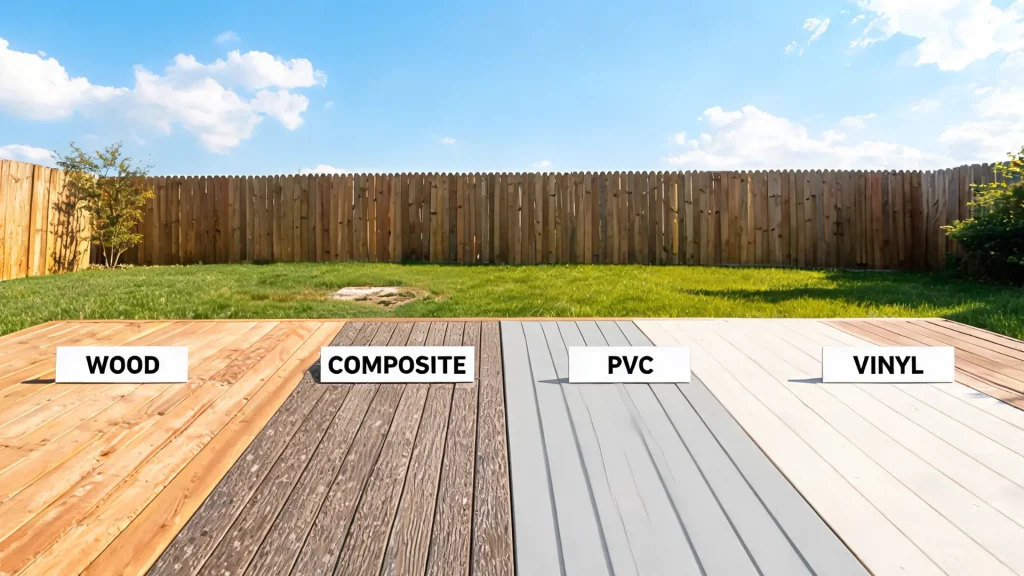


Your deck should hold up to real life, not become something you have to keep fixing. Choosing the best decking material can feel confusing when wood, composite, PVC, and hardwood all sound like smart choices.
I know you want deck boards that fit your budget, look good, and will not turn into a maintenance headache. Some materials cost less upfront but need more work later.
Others cost more but can save you time and repairs over the years. This guide compares each option by cost, lifespan, upkeep, climate, and comfort, so you can choose the right material for your home with fewer doubts.
What Is The Best Decking Material?
For many decks, capped composite is the strongest overall choice because it balances durability, low maintenance, long lifespan, and a wood-like look. It does not require the regular staining or sealing that wood does, which makes it easier to maintain over time.
Still, the right decking material depends on your space, budget, climate, and how much upkeep you want. PVC is a better fit for wet areas, pool decks, hot tubs, and coastal homes because it handles moisture well.
Pressure-treated wood works best when you need the lowest upfront cost. Cedar is a solid option if you want a natural wood feel. Ipe makes sense for a premium real-wood deck when cost and maintenance are less of a concern.
Best Decking Material By Need
Before comparing materials in detail, match your primary need to the right starting point. Most deck projects come down to one or two non-negotiables: budget, moisture exposure, heat, or maintenance, and those constraints eliminate most of the options before you’ve read a single spec sheet.
| Need | Best Decking Material | Why It Works |
| Best Overall | Capped Composite | Balances durability, low maintenance, long lifespan, and a wood-like appearance without annual sealing. |
| Lowest Upfront Cost | Pressure-Treated Wood | $3–$6 per sq ft for materials. The cheapest starting point, widely available at any lumber yard. |
| Best For Wet Areas | PVC | No wood fiber means no rot pathway. Handles moisture, mold, and coastal humidity better than any wood product. |
| Best Around Pools | PVC Or Slip-Resistant Composite | Handles standing water, cleans easily, and textured boards reduce slip risk on wet surfaces. |
| Best For Full Sun | Light-Colored Composite Or PVC | Lighter boards absorb significantly less heat. Dark boards in direct sunlight can reach temperatures uncomfortable for bare feet. |
| Best Natural Wood Look | Cedar Or Ipe | Real grain, real warmth, real character, no material can be fully replicated by composite. |
| Best Long-Term Value | Premium Composite Or PVC | Higher upfront cost, but no annual sealing or staining labor, and lifespans of 25–30 years with basic cleaning. |
| Lowest Maintenance | PVC | Soap and water. No staining, no sealing, no sanding. The closest thing to a zero-maintenance deck surface. |
| Best For Families And Pets | Composite | Splinter-free, durable under foot traffic, and easier to keep clean than any natural wood option. |
| Best Premium Look | Ipe | Dense grain, rich dark color, and a lifespan that genuinely reaches 40+ years when installed and oiled correctly. |
These categories are starting filters, not final answers. A deck in coastal Florida has different constraints than one in Minneapolis. Climate, foot traffic, and what’s below the deck, soil moisture, shade, drainage, all affect how each material performs two or three winters in.
Decking Material Options
Before choosing deck boards, think about your budget, climate, maintenance comfort, and how the deck will be used. The right material should fit your lifestyle, not just look good on installation day.
| Material | Cost Per Sq Ft (Materials) | Lifespan | Maintenance | Climate Fit |
| Pressure-Treated Wood | $3–$6 | 10–15 years (maintained) | High, annual sealing, periodic staining | Most climates: avoid high-humidity without diligent sealing |
| Cedar | $4–$8 | 15–20 years (maintained) | Medium-High, sealing or staining every 1–3 years | Moderate climates; performs well in dry or semi-humid regions |
| Capped Composite | $5–$14 | 25–30 years | Low, occasional soap and water cleaning | Most climates; check heat retention in full-sun applications |
| PVC | $5–$15 | 25–30+ years | Very Low, soap and water only | Best for wet, humid, or coastal environments |
| Ipe / Hardwood | $10–$20 | 40+ years | Medium, periodic oiling with tropical hardwood oil | All climates; pre-drilling required in colder freeze-thaw zones |
| Aluminum | $15–$25+ | 50+ years | Very Low, rinse and inspect fasteners periodically | Coastal, fire-prone, or extreme weather environments |
1. Pressure-Treated Wood Decking
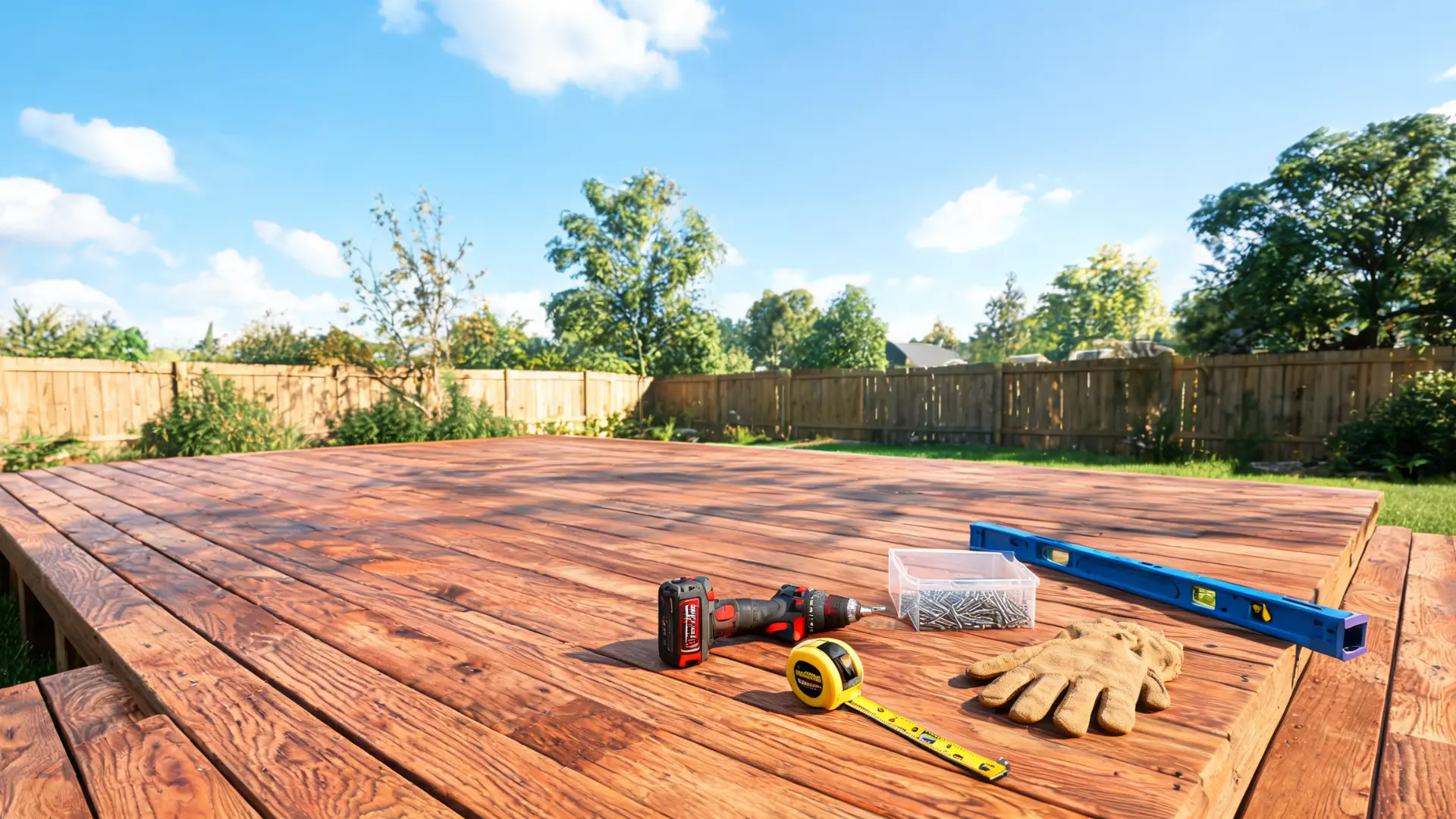
Pressure-treated wood is one of the most common choices because it is affordable, easy to source, and simple to install. It works well for large outdoor spaces or DIY projects where upfront cost is the priority, though it requires regular maintenance to stay durable.
Pros: Pressure-treated wood is budget-friendly and easy to work with, making it ideal for large decks or tight budgets. You can cut, fasten, paint, or stain it with standard tools while still achieving a natural wood appearance.
Cons: It requires ongoing care. Without regular cleaning, sealing, and staining, it can warp, crack, fade, rot, and splinter. Repairs and upkeep can reduce its long-term cost-effectiveness.
Best Situation: Best for tight budgets or when upfront cost matters most, and you are willing to perform yearly maintenance.
Cost Consideration: Upfront cost is low, but maintenance costs are high, so the long-term value is fair if properly maintained.
2. Cedar Decking
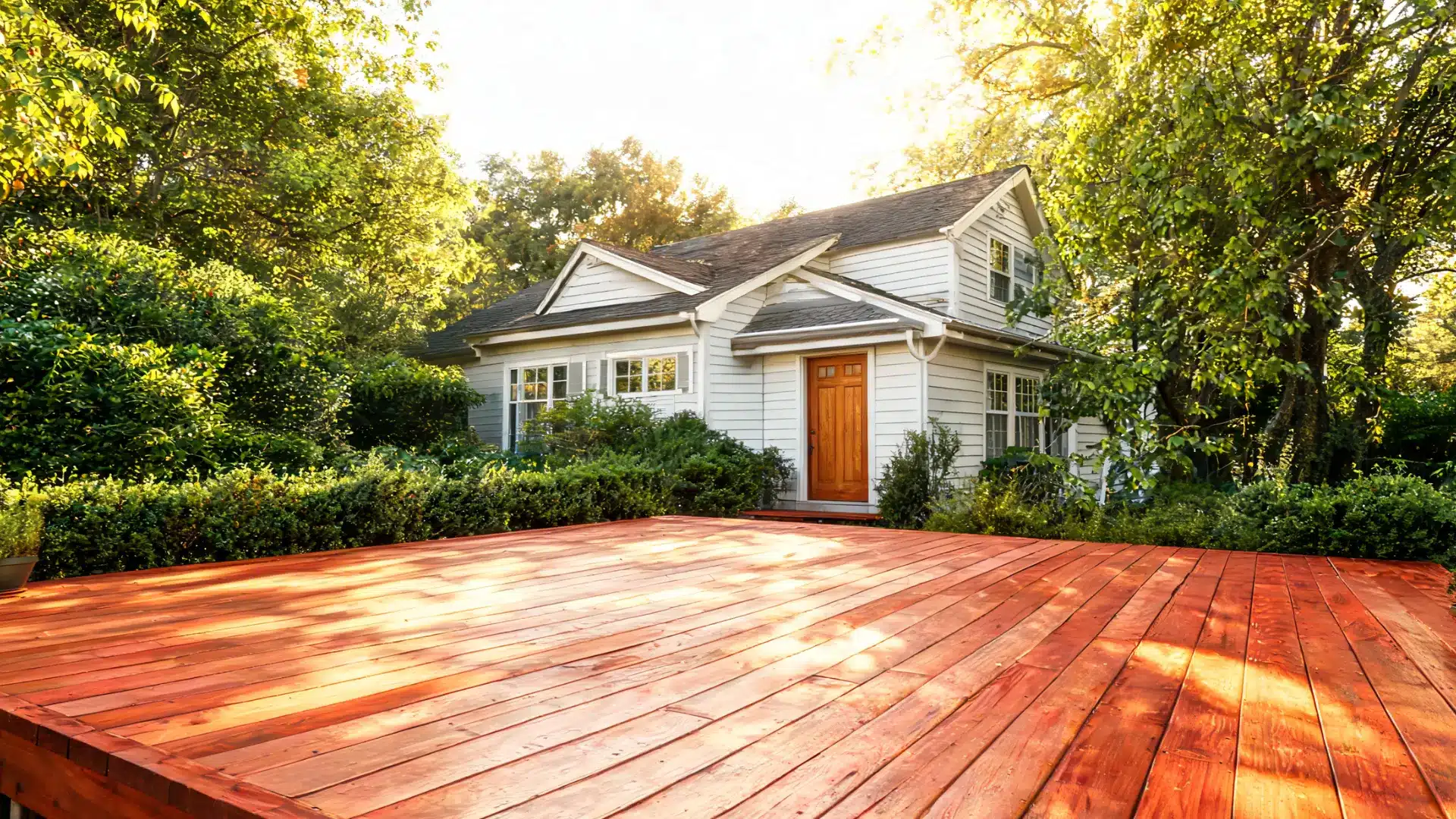
Cedar offers a warm, natural look and softer feel than hardwoods, making it ideal for traditional homes, cabins, and garden-style decks. It requires regular maintenance to preserve its color and prevent splintering or cracking.
Pros: Cedar provides rich color, authentic grain, and natural resistance to insects and decay. Its lighter weight makes it easier to work with than dense hardwoods, and it creates a classic, inviting outdoor appearance.
Cons: Requires sealing or staining to maintain its surface. Neglect can cause fading, cracking, drying out, or splintering. Higher-grade boards last longer but cost more.
Best Situation: Best for decks where a natural wood look is desired and regular upkeep is acceptable.
Cost Consideration: Upfront cost is low to mid-range; maintenance is medium to high, offering good long-term value for natural style.
3. Capped Composite Decking
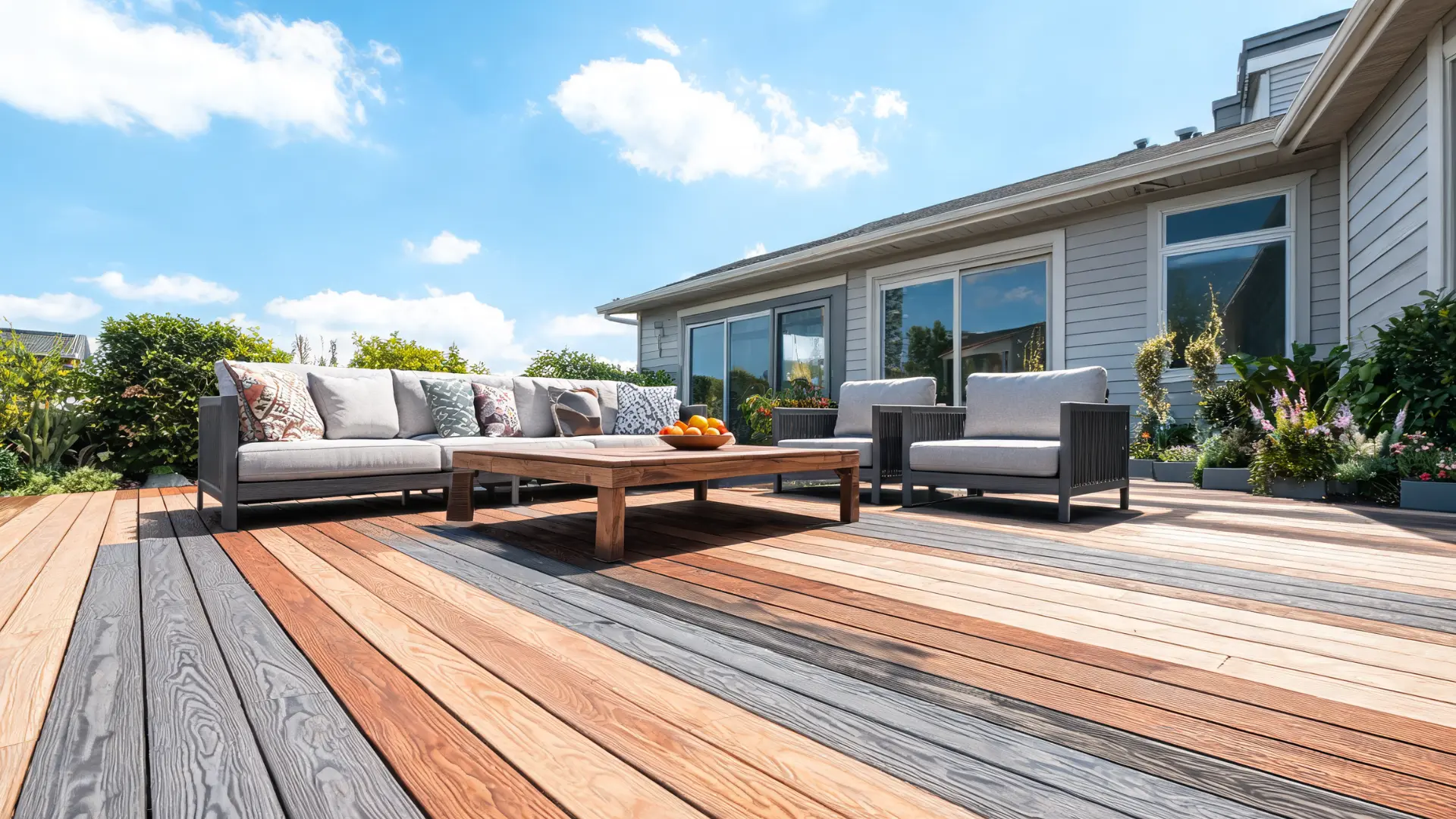
Capped composite decking combines wood fibers and plastic with a protective outer layer, offering durability, low maintenance, and a wood-like look. It is ideal for family decks, busy households, or high-traffic areas, as it resists rot, splinters, insects, and fading.
Pros: Resistant to rot, splinters, insects, and fading. Premium capped boards last decades with basic cleaning and come in multiple colors and grain patterns.
Cons: More expensive upfront than pressure-treated wood. Dark boards can retain heat in sunlight, and scratches may appear depending on board quality.
Best Situation: Best overall for most decks because it balances appearance, durability, low maintenance, and long-term value. The porch framing and material decisions matter here; composite over a poorly drained subframe still causes problems regardless of how good the boards are.
Cost Consideration: Upfront cost is mid to high; maintenance is low, making it a strong long-term investment.
4. PVC Decking
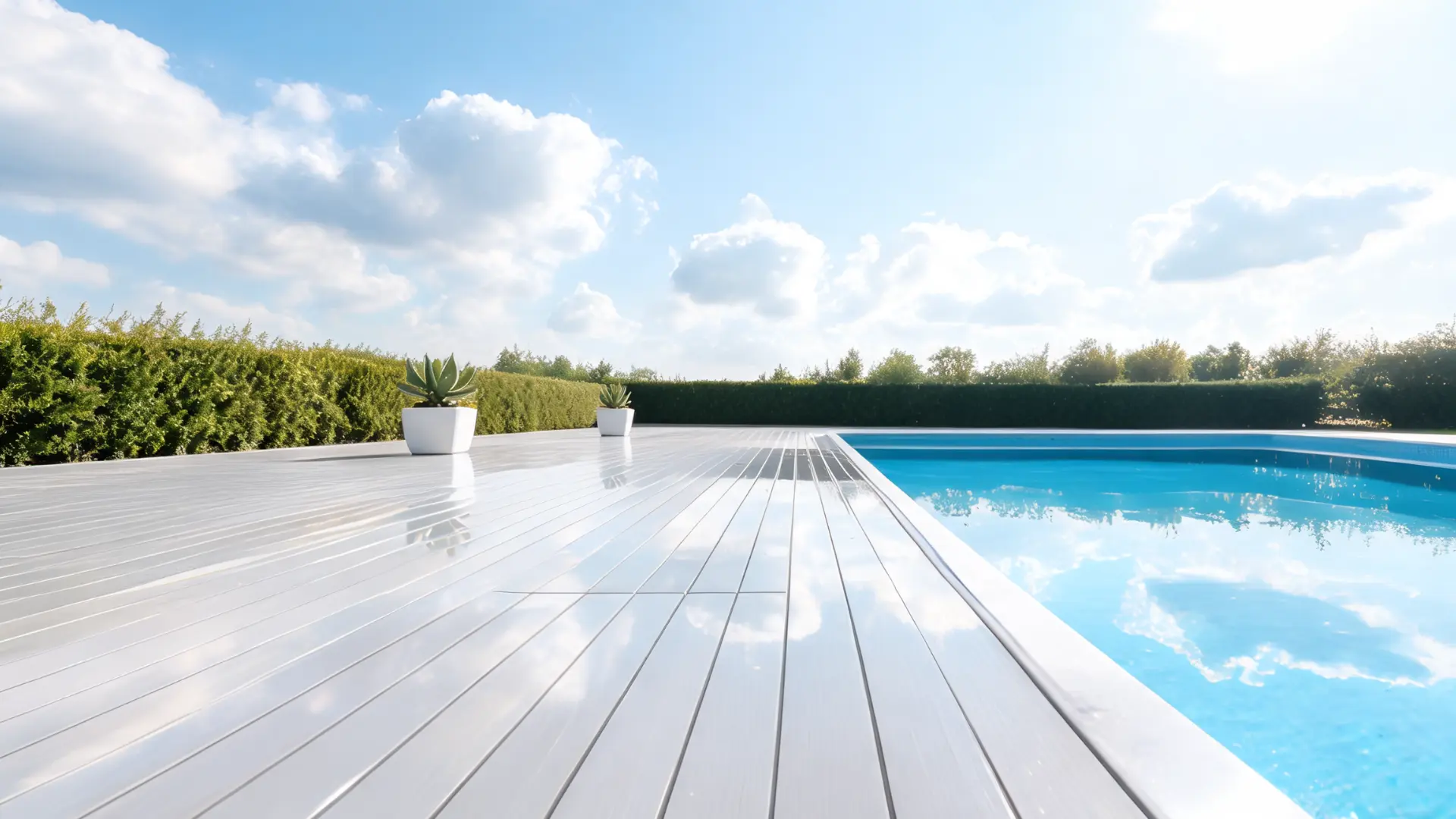
PVC decking is fully synthetic, giving excellent resistance to moisture, mold, insects, and rot. It is perfect for wet climates, coastal homes, pool areas, and other low-maintenance decks. PVC boards are easy to clean and generally require no sealing or staining, though the material can feel less natural than wood or composite.
Pros: Handles water exceptionally well, does not require staining or sealing, and is easy to clean after rain, pool use, or exposure to dirt.
Cons: Expensive and can feel less natural than wood or composite. Lower-quality PVC may appear plastic-like.
Best Situation: Best for wet climates, pool decks, coastal homes, or areas where low maintenance is a priority.
Cost Consideration: High upfront cost, very low maintenance, offering strong long-term value in wet areas.
5. Light-Colored Composite or PVC
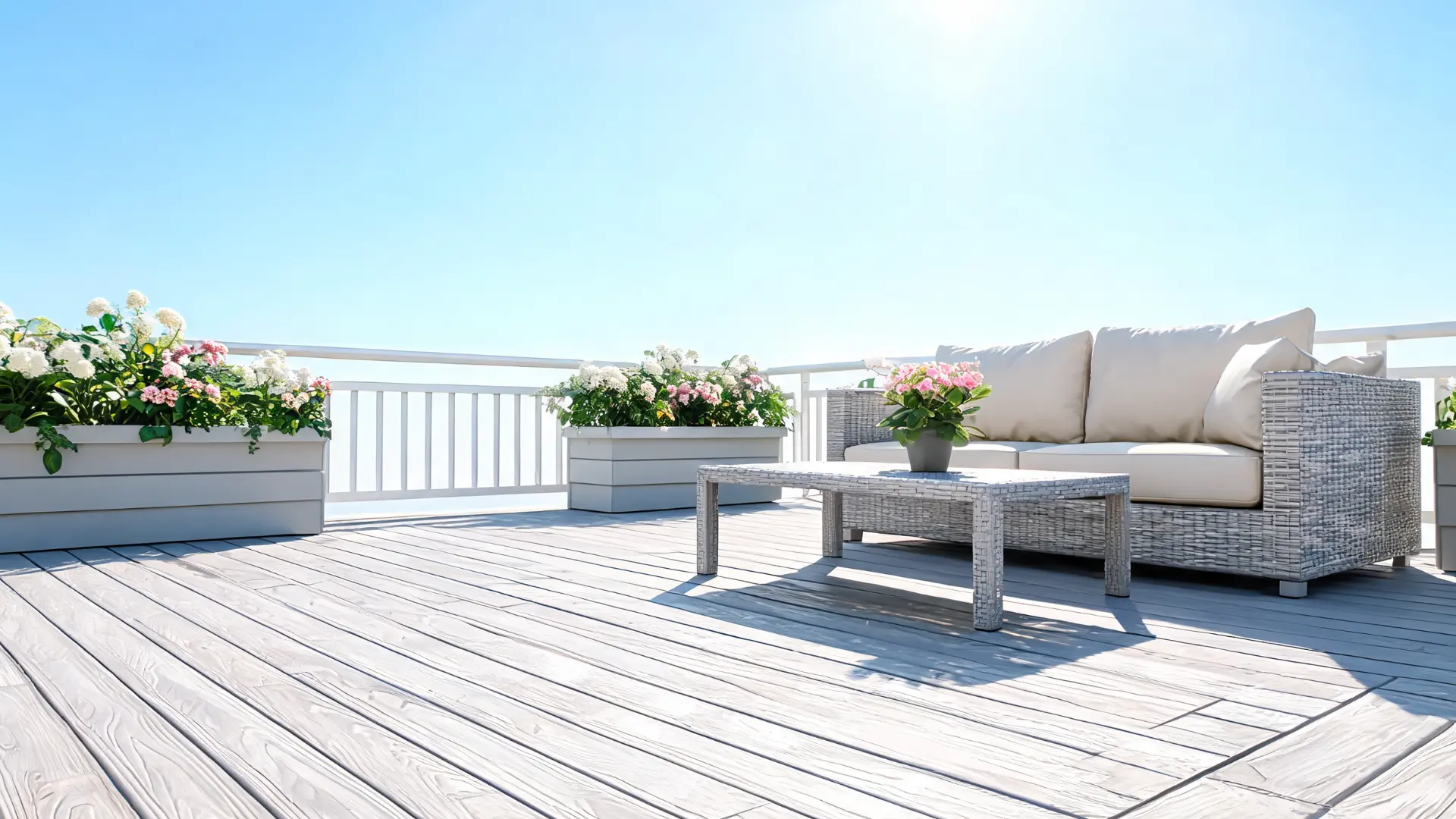
Light-colored composite or PVC boards are recommended for decks exposed to full sun. They absorb less heat, making walking barefoot more comfortable. These boards are suitable for hot, sunny climates where heat management and deck comfort are priorities.
Pros: Lighter boards provide cooler surfaces for barefoot comfort and safer walking in sunny conditions.
Cons: Darker boards can still become hot, and quality varies by brand. Testing samples outdoors is recommended.
Best Situation: Best for decks in full sun where comfort and heat management are priorities.
Cost Consideration: Upfront cost is mid to high; maintenance is low, providing good long-term value for sunny locations.
6. Slip-Resistant Composite or PVC
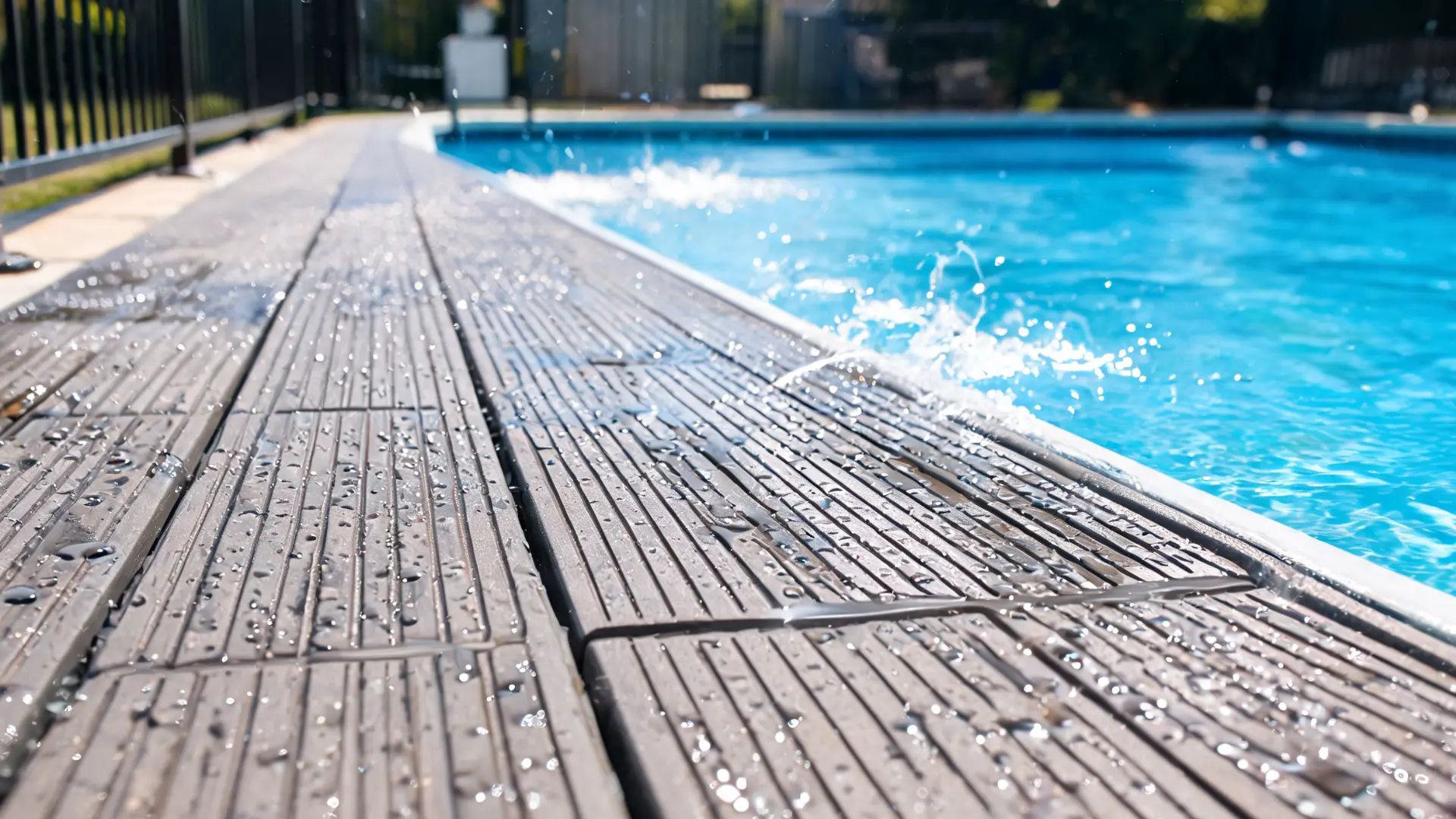
Slip-resistant composite or PVC is ideal for pool decks or other moisture-prone areas. They provide better traction, reduce the risk of slips, and are easier to clean and maintain in wet environments. These boards handle water exposure effectively and support safety around pools.
Pros: Provide better traction and water resistance, reducing the risk of slips and making poolside areas safer.
Cons: The level of slip resistance can vary between brands and product lines, and lower-quality boards may underperform.
Best Situation: Best for poolside decks where moisture, safety, and easy cleaning are important.
Cost Consideration: Mid to high upfront cost, low maintenance, strong long-term performance in wet areas.
7. Ipe and Other Hardwood Decking
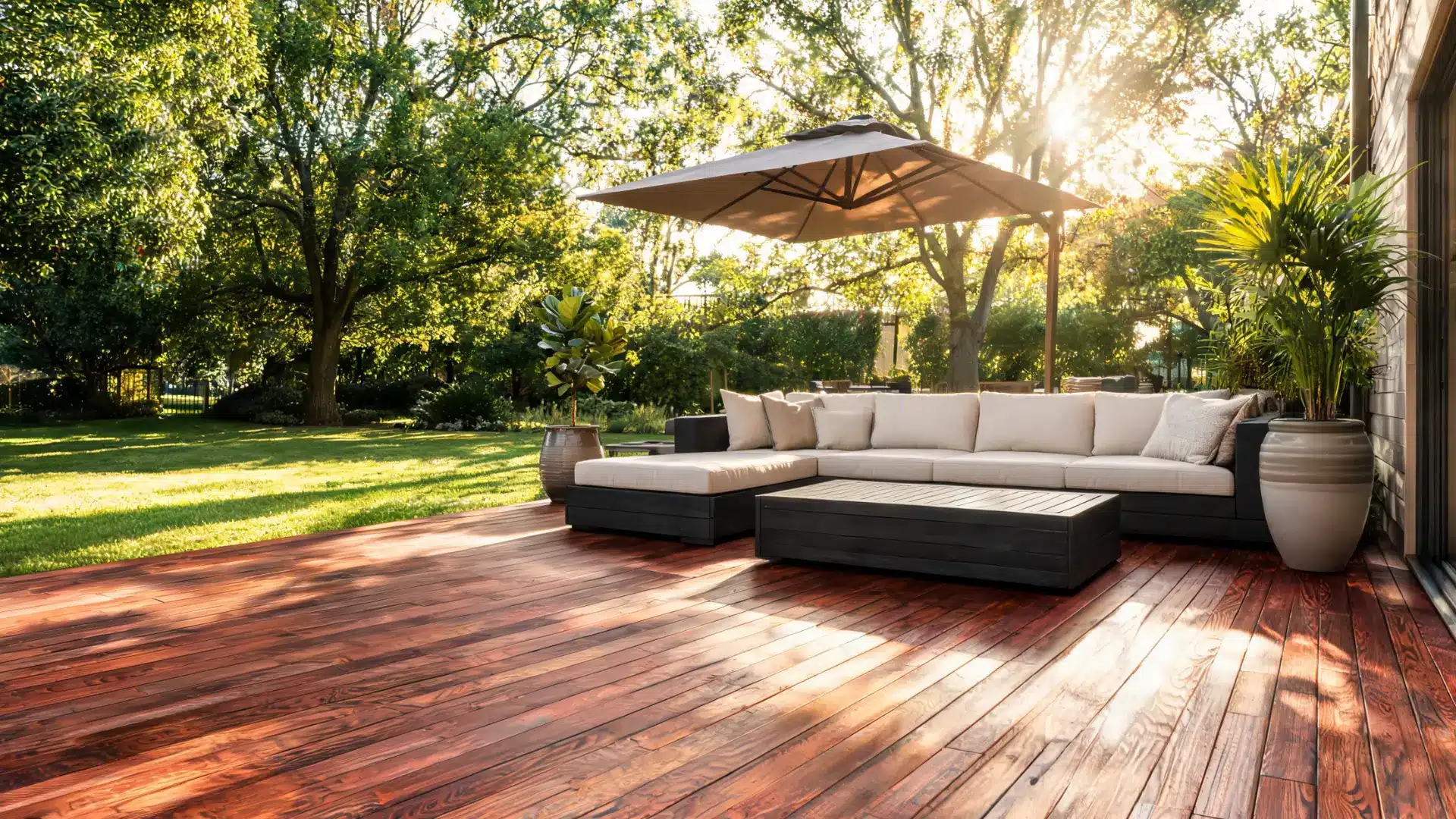
Ipe and other hardwoods are dense, durable, and visually luxurious. They work best for high-end decks where beauty and long-term strength are priorities over cost or ease of installation.
Hardwood requires specialized tools and skilled labor for installation and may require oiling to maintain its color. For more details on how Ipe performs compared to other dense species, the hardwood species ranked by strength and use covers the performance data in detail.
Pros: Rich color, tight grain, and natural durability; resistant to insects, rot, and heavy foot traffic.
Cons: Expensive, heavy, difficult to cut and install, often requires pre-drilling, special tools, and oiling to maintain color.
Best Situation: Best for premium real-wood decks where durability and appearance outweigh cost and installation effort.
Cost Consideration: High upfront cost, medium maintenance, offering strong long-term value if installed properly.
8. Aluminum Decking
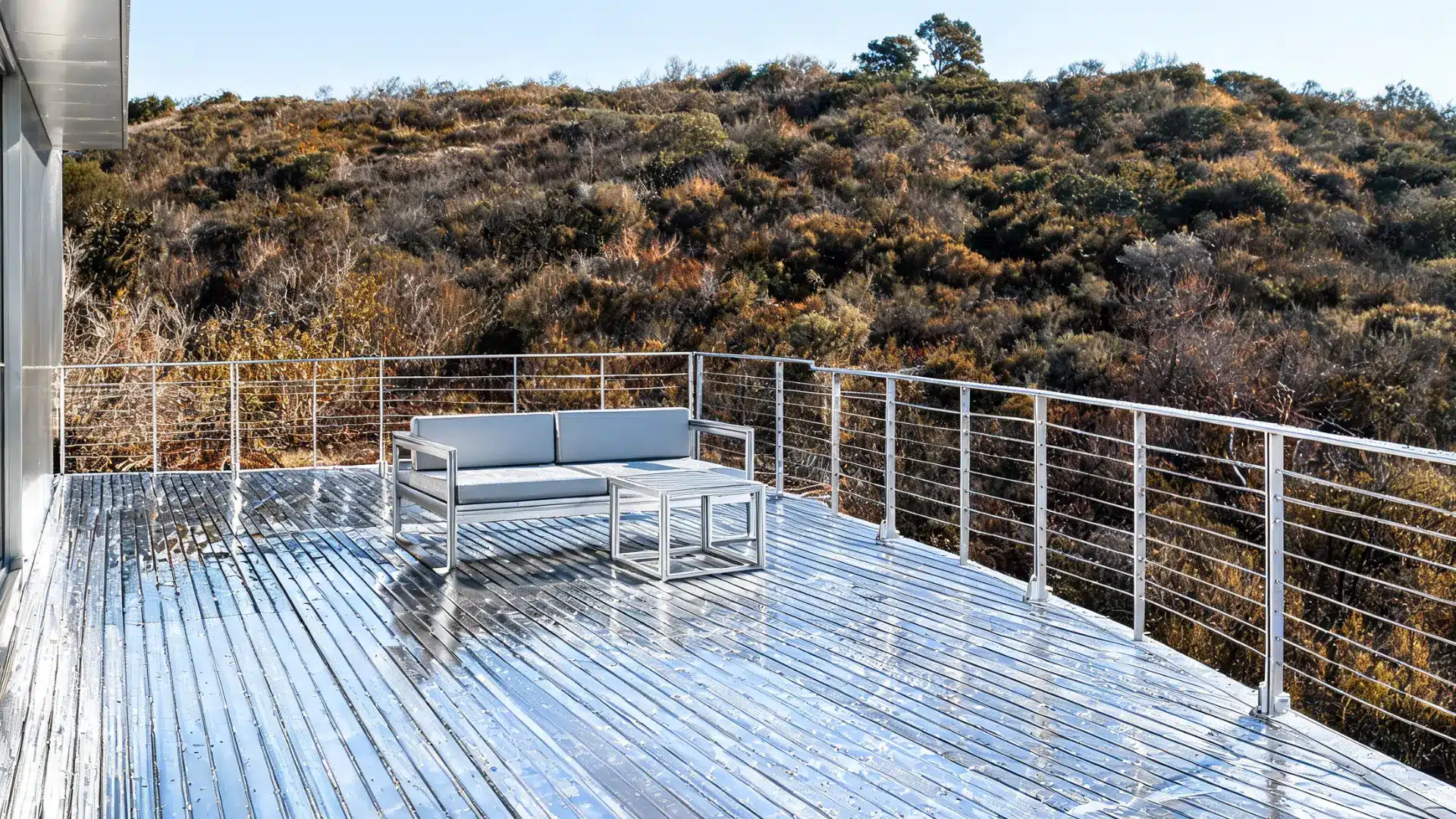
Aluminum decking is a specialty material used for docks, wet areas, or fire-prone zones. It is extremely durable, low-maintenance, and resistant to rot, splitting, and insects. However, it does not provide the warmth or natural look of wood, making it less ideal for standard backyard decks.
Pros: Will not rot, splinter, crack, or attract insects; requires minimal maintenance.
Cons: Expensive and industrial-looking; less natural appearance than wood, composite, or PVC.
Best Situation: Best for specialty decks needing extreme durability in challenging environments.
Cost Consideration: High upfront cost, low maintenance, strong long-term value for specialty use.
If I were picking my own deck, I’d go for high-quality Ipe, PVC, or premium composite for lasting performance. I’d avoid dark boards in full sun, test samples in my yard, and add shade where my family and pets walk barefoot.
Wood vs Composite vs PVC vs Vinyl
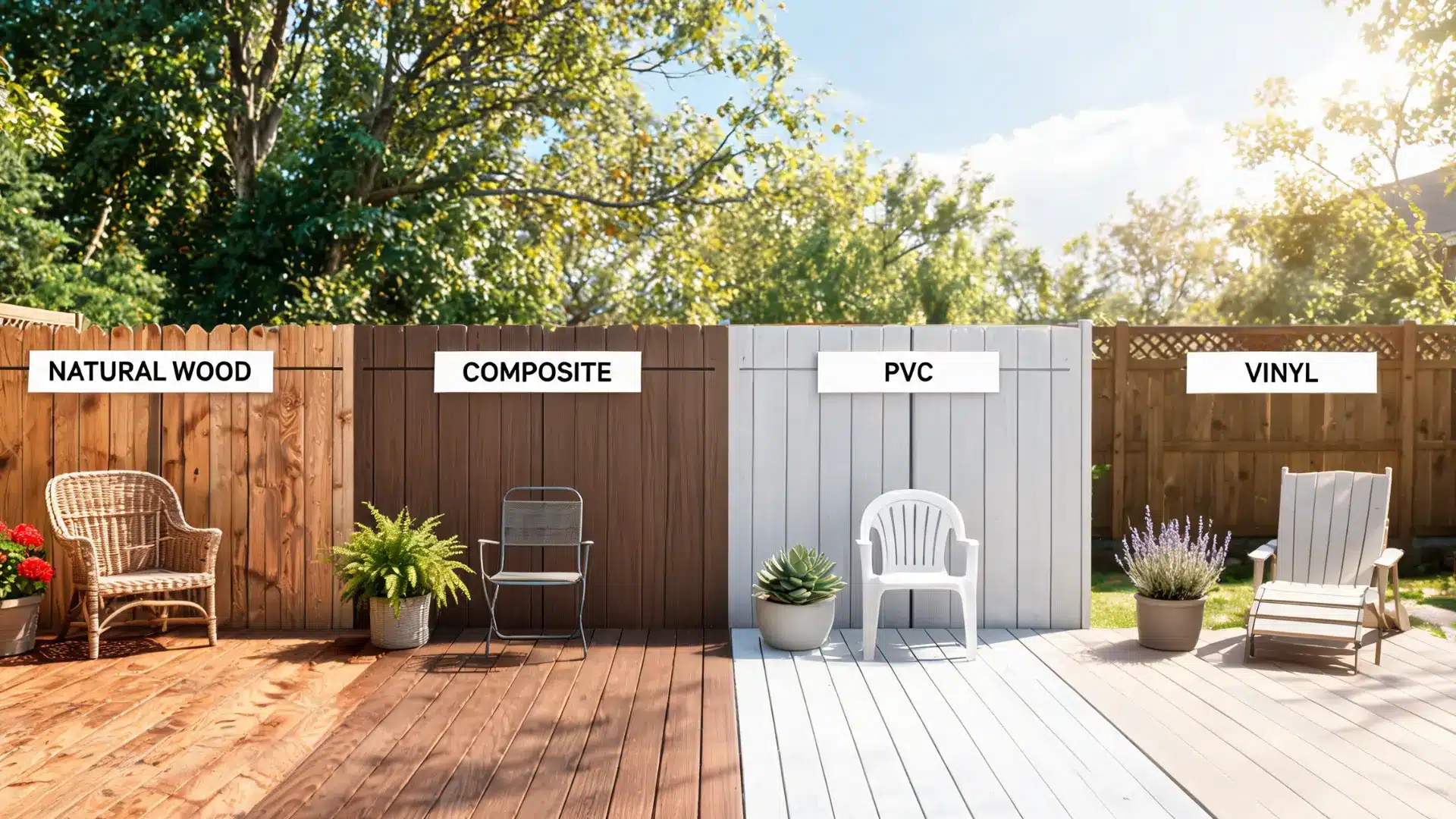
When deciding between wood, composite, PVC, and vinyl, it helps to compare them side by side. This table summarizes the main considerations for each material, helping you quickly see which choice fits your budget, maintenance comfort, and deck environment.
| Material | When To Choose | Key Benefits | Considerations |
|---|---|---|---|
| Wood | Upfront cost matters, want a real wood surface | Affordable initially, natural appearance, DIY-friendly | Requires regular maintenance, prone to warping, rot, and splinters |
| Composite | Balanced style, durability, and maintenance | Low-maintenance, wood-like look, long lifespan | Higher upfront cost, dark boards can get hot, scratches are possible |
| PVC | Deck near water, damp climates, lowest maintenance | Extremely moisture-resistant, minimal upkeep | High cost, may feel less natural, quality varies by product |
| Vinyl | Pool decks, wet climates, easy care | Moisture and mold resistant, low maintenance, variety of colors | Can look artificial, higher upfront cost, limited natural wood appearance |
This table is a quick guide to help you match the right material to your deck. While wood is cheaper upfront, composite, PVC, and vinyl often save time and effort over the long term, depending on your climate, usage, and lifestyle.
Decking Material Concerns and Tips
Every decking material has potential challenges. Heat, fading, scratches, moisture, and splinters can affect comfort, safety, and durability. Knowing these common issues helps you choose the right boards and plan proper maintenance to keep your deck looking and performing its best.
- Heat: Dark composite and PVC boards absorb sunlight, making the surface uncomfortable to walk barefoot on hot days. Pool decks or sunny patios are especially affected, so using lighter colors or adding shaded areas helps improve comfort and usability.
- Scratches: Daily use, moving furniture, pets, or grills can scratch composite or PVC boards. While these materials are generally durable, cheaper or uncapped options are more prone to visible surface marks that may affect their appearance over time.
- Slipping: Wet surfaces, algae, and shaded areas can make decks slippery, particularly smooth composite or PVC boards. Using textured or slip-resistant materials reduces this risk, making poolside and shaded areas safer for children, pets, and barefoot walking.
- Fading: All decking materials lose color gradually due to sunlight and weather exposure. Premium capped composite and PVC boards resist fading better, while wood fades faster if not sealed or stained. Regular maintenance prolongs the color and appearance of wood decks.
- Maintenance: Wood decks require cleaning, sanding, sealing, and staining to prevent rot, mold, and warping. Composite and PVC boards need minimal upkeep, usually occasional washing with soap and water, which saves time while keeping the deck looking fresh.
- Warping and Splinters: Wood can warp, cup, or split due to moisture or sunlight, creating splinters that are hazardous when barefoot. Proper installation, sealing, and regular maintenance can minimize these issues and help the deck remain safe and attractive.
If your deck borders a landscaped area or connects to outdoor living zones, the material you choose affects what works alongside it. Composite and PVC pair well with structured outdoor furniture and defined hardscape edges.
For ideas on how decking connects to the broader yard, the outdoor deck layout ideas cover how different surfaces, plants, and borders work together at the material level.
Note : Real homeowners report composite decks are low-maintenance but may get hot or scratch. Wood is affordable and has natural appeal but requires frequent care. PVC handles moisture well but can feel less natural and is more expensive. Hardwood like Ipe looks premium and lasts long, but is costly and harder to install.
Real-World Opinions From Homeowners and Experts
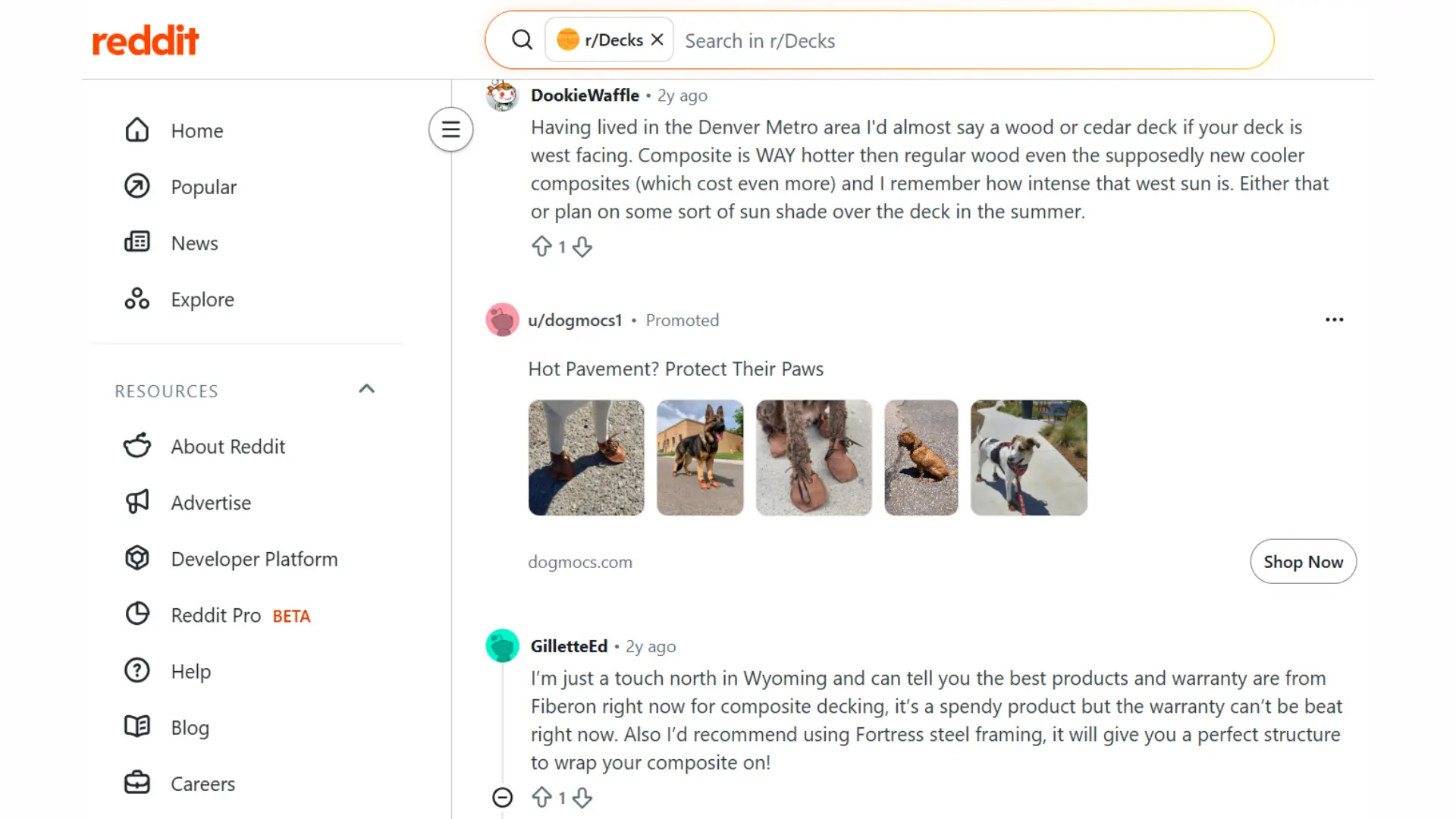
On Reddit, many users shared firsthand experiences with decking materials, highlighting the trade-offs between wood, composite, PVC, and specialty boards.
One Redditor noted that while plastic decking like Trex or TimberTech can maintain its structural integrity for decades, it often fades, scratches, or warps over time, and its patterns repeat unnaturally, making it feel artificial.
Others praised hardwoods such as cedar or Ipe for their natural beauty, durability, and ability to develop unique grain patterns over time, though they require regular maintenance and can be costly.
Homeowners also emphasized the importance of climate, sun exposure, and foot traffic, with composite and PVC performing better in wet or high-use areas. Some recommended testing samples in real conditions and paying attention to framing and installation for long-term stability.
Overall, Reddit users suggested balancing aesthetics, maintenance, and longevity based on personal needs and local conditions.
If I were picking a deck for my backyard, I’d go with capped composite for low maintenance and durability, but I’d still test samples in my sunniest spots. I love the look of real wood like cedar or Ipe, though I’d accept extra upkeep and cost for that natural feel.
Frequently Asked Questions
What is the most durable decking material?
Ipe hardwood has the longest documented lifespan at 40 or more years when properly installed and oiled. For synthetic options, premium capped composite and cellular PVC are rated at 25–30 years with low-maintenance upkeep. Aluminum outlasts all of them structurally, but is a specialty material for demanding environments.
What is the most low-maintenance decking material?
PVC or cellular PVC decking requires the least maintenance, soap, water, and occasional brushing to prevent biofilm in shaded areas. No staining, sealing, or sanding at any point. Premium capped composite is a close second, with the same basic cleaning requirement and no annual chemical treatment needed.
How long does composite decking last?
Premium capped composite from established manufacturers typically carries a 25-to-30-year warranty on fade and structural performance. Real-world lifespan with basic maintenance often matches or exceeds those figures. Uncapped or lower-quality composite can degrade faster, particularly in high-UV or high-moisture environments.
Is composite decking worth the cost over wood?
Over a 15-to-20-year period, yes, for most homeowners. The higher upfront cost of composite is partially offset by the elimination of annual sealing and staining costs. At $200–$600 per year in maintenance materials and labor for a wood deck, the savings compound quickly. The break-even point varies by deck size and local labor rates.
What decking material is best for a pool deck?
PVC or textured slip-resistant composite. Both handle standing water without rot or mold risk. PVC is preferred for permanent wet exposure. Textured boards reduce slip risk on wet surfaces. Avoid untreated wood or low-quality composite without a protective cap layer near pools.
What is the cheapest decking material?
Pressure-treated wood at $3–$6 per square foot for materials is the lowest upfront cost option. Factor in ongoing maintenance costs before assuming it’s the cheapest long-term choice. Properly maintained pressure-treated wood lasts 10–15 years. Skipped maintenance significantly shortens that window.
What decking material is best for hot climates?
Light-colored composite or PVC in hot climates. Lighter boards absorb less solar heat than dark ones — the surface temperature difference matters for comfort. In consistently sunny environments, choose boards with heat-dissipating formulations (some brands label these specifically) and plan for shade coverage over high-traffic barefoot areas.
Can I install decking over an existing concrete slab?
Yes. Composite, PVC, and aluminum can be installed over concrete using a pedestal or sleeper framing system that provides ventilation and drainage. Wood typically requires sleepers for airflow to prevent moisture accumulation underneath. Check that any existing concrete slab drains properly before installing any material over it.
Is there an eco-friendly decking material?
A capped composite that incorporates recycled wood fiber and post-consumer plastics is the most practical sustainable option at scale. Bamboo decking is renewable and grows rapidly, though it requires more maintenance than composite in most climates. FSC-certified Ipe and cedar from verified sustainable sources are also legitimate options for buyers who want real wood.
What decking material is safe for dogs?
Capped composite or PVC. Both are splinter-free surfaces, which is the main concern for dogs walking and lying on a deck. Avoid rough-cut or untreated wood that can develop splinters as it dries and ages. Darker-colored boards that get hot in the sun are also worth avoiding for dogs that spend extended time on a sunny deck.
Wrap Up
Choosing the right decking material can make a big difference in how you enjoy your outdoor space. I’ve shared how wood, cedar, composite, PVC, Ipe, and aluminum perform in terms of durability, maintenance, cost, and comfort.
You now know which materials work best for sunny decks, wet areas, pools, or premium finishes, and how to test samples and avoid common mistakes.
Understanding the pros, cons, lifespan, and real owner insights helps you pick a deck that lasts and stays enjoyable for years.
By focusing on your budget, climate, and lifestyle, you can make a confident choice for the best decking material. Share your thoughts or experiences in the comments below.