

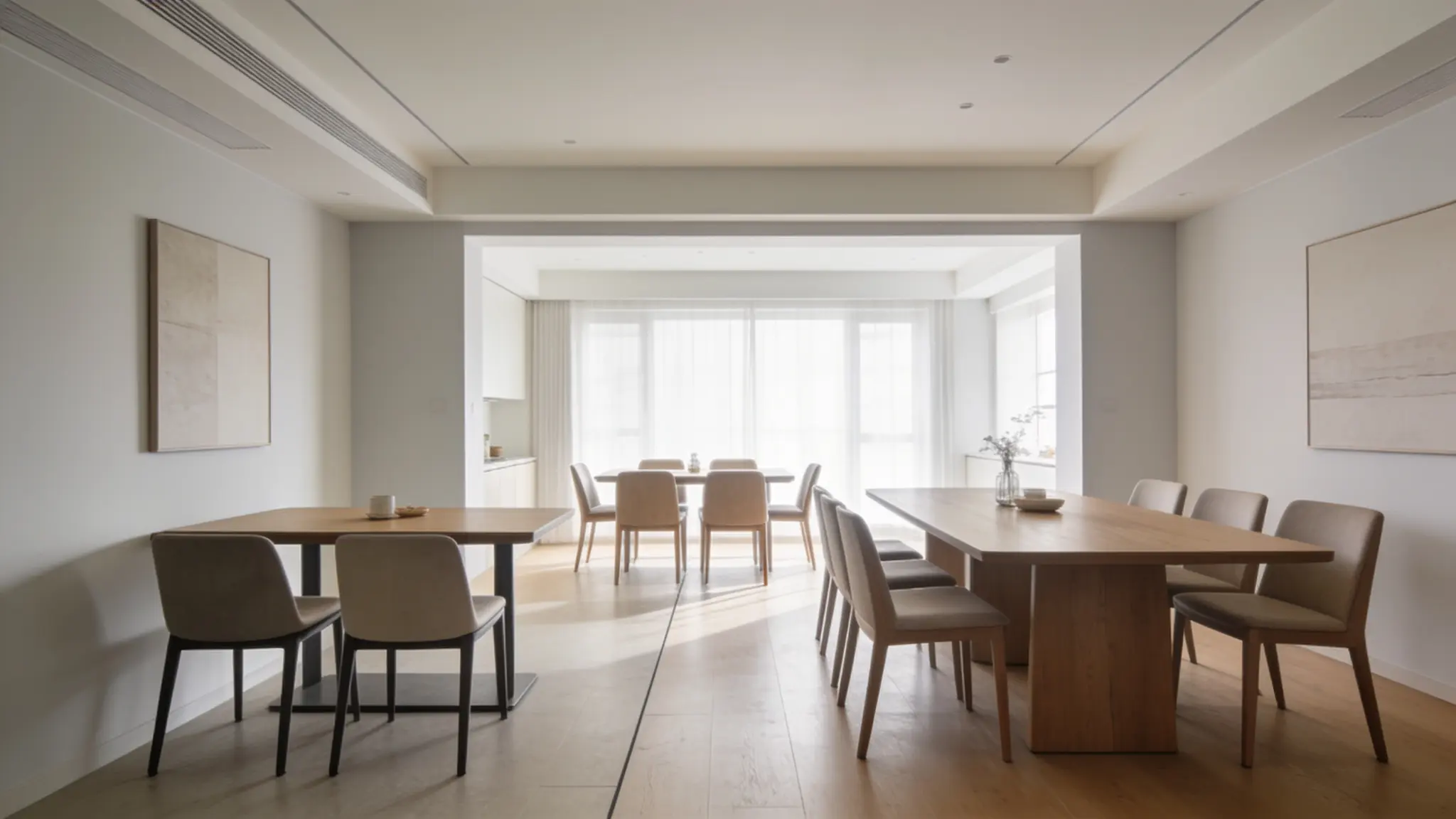


A table can measure right and still feel wrong. The missing piece is usually the space around it.
Dining table dimensions matter because length, width, and height decide how many people can sit, how chairs move, and how the room feels during meals.
Most dining table sizes depend on seating count, table shape, and the space around the table. Standard table sizes also change by layout, so a round six-seater will not fit the same way as a rectangular one.
I’ll keep the choices simple so you can measure once, compare clearly, and buy with confidence.
How Much Space Does a Dining Table Actually Need?
Before comparing dining table dimensions, three numbers matter more than the table size itself:
- 24 inches of table edge per person: the minimum for a plate, a glass, and elbow room
- 36 inches of clearance around the table: enough for chairs to pull out and someone to walk behind a seated guest
- 42 to 48 inches of clearance on any side that serves as a main walkway through the room
Most rooms don’t fail because the table is too large in the abstract; they fail because those clearance numbers weren’t applied before buying. Tape the footprint on the floor before committing to a size. That single step catches most mistakes.
| Pro Tip: Use painter’s tape to mark your intended table footprint on the floor, then pull a chair up to each side and check whether you can stand up without hitting the wall. If the answer is no, go smaller, not because the table won’t fit, but because the room won’t function. |
Standard Dining Table Dimensions by Seating Count
Seating count is the right starting point. The sizes below are for rectangular tables, which are the most common. Shape-specific sizing comes in the next section.
1. Two-Person Tables
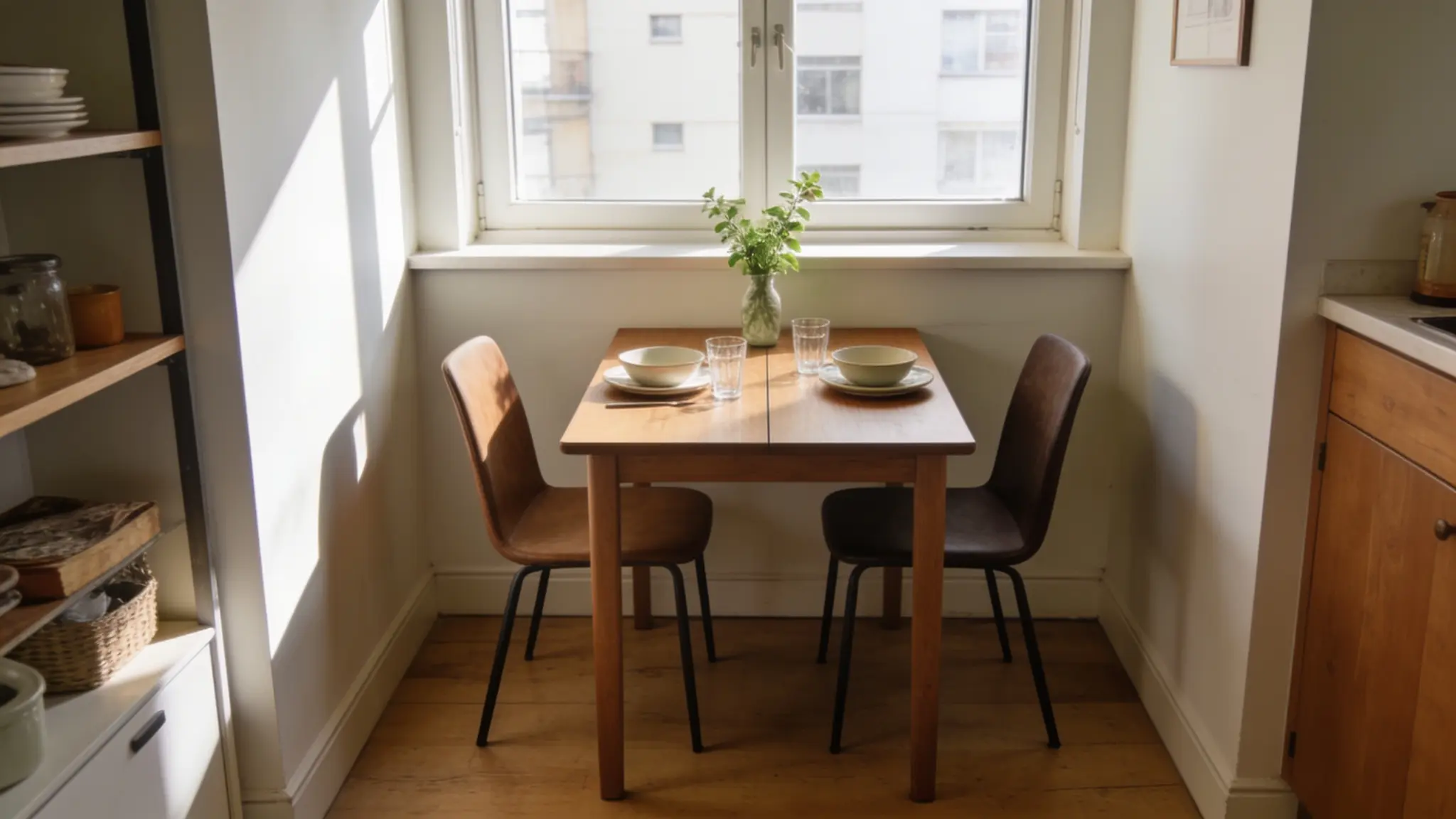
A two-person table typically measures 30 x 36 inches. That gives two people room for plates, glasses, and a small central dish without taking over a compact kitchen or studio apartment.
If the table also doubles as a work surface or coffee station, move up to 30 x 42 inches; the extra length makes a real difference when the table is doing more than one job.
In tight spaces, one long side can sit flush with a wall, but that edge won’t work as a seating side. Plan for that before you place the order.
2. Four-Person Tables
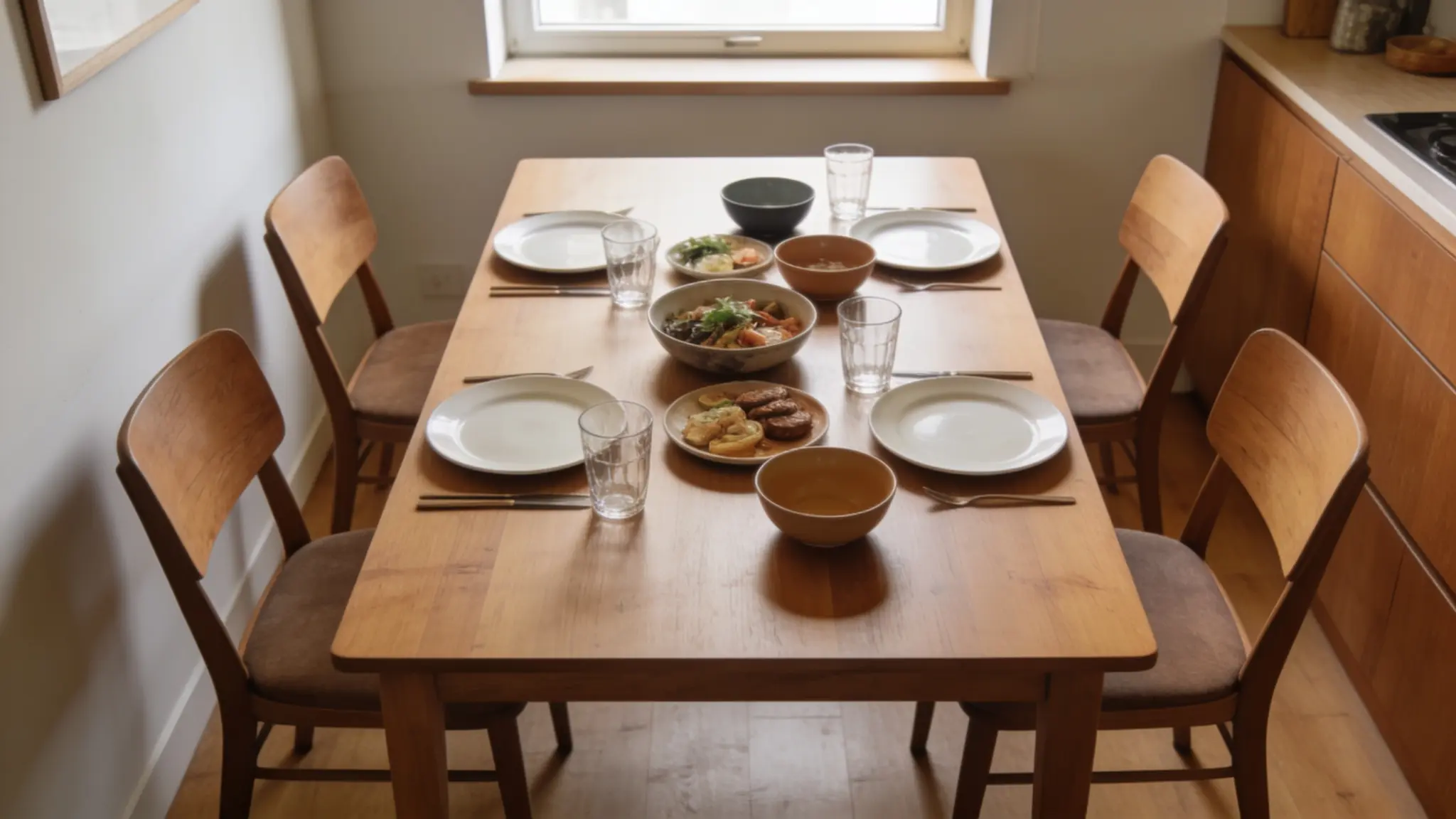
The standard four-person rectangular table runs 36 x 48 inches. This is the size that fits most apartment dining areas and smaller homes without compromising chair clearance.
A 30 x 48-inch table can work if the room is genuinely tight, but 36 inches of width is the practical minimum for daily family meals, anything narrower and shared dishes in the center start to feel like a problem.
3. Six-Person Tables
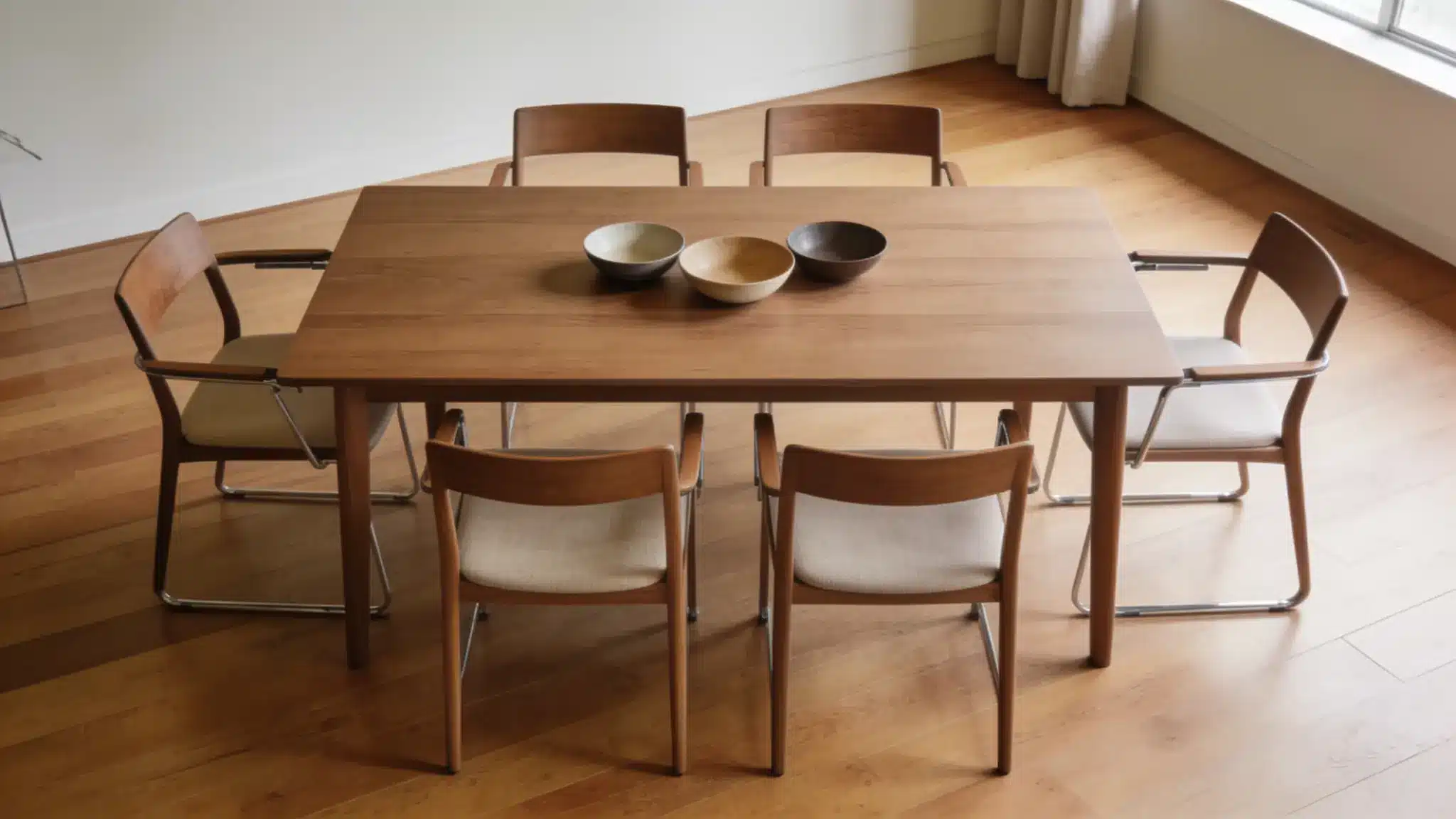
A six-person table needs 36 x 60 to 72 inches. The 60-inch length will technically seat six, but it works best with slim chairs and minimal place settings.
A 72-inch table is the more honest answer; it gives six adults genuine elbow room and leaves space in the center for serving dishes without everyone crowding the middle. If you’re deciding between the two, check your clearance on both sides and choose 72 inches if the room can hold it.
The standard dining table height of 28 to 30 inches is what most chairs are built around, but if you’re pairing a six-person table with non-standard seating, always verify the seat-to-tabletop gap measures 10 to 12 inches.
4. Eight-Person Tables
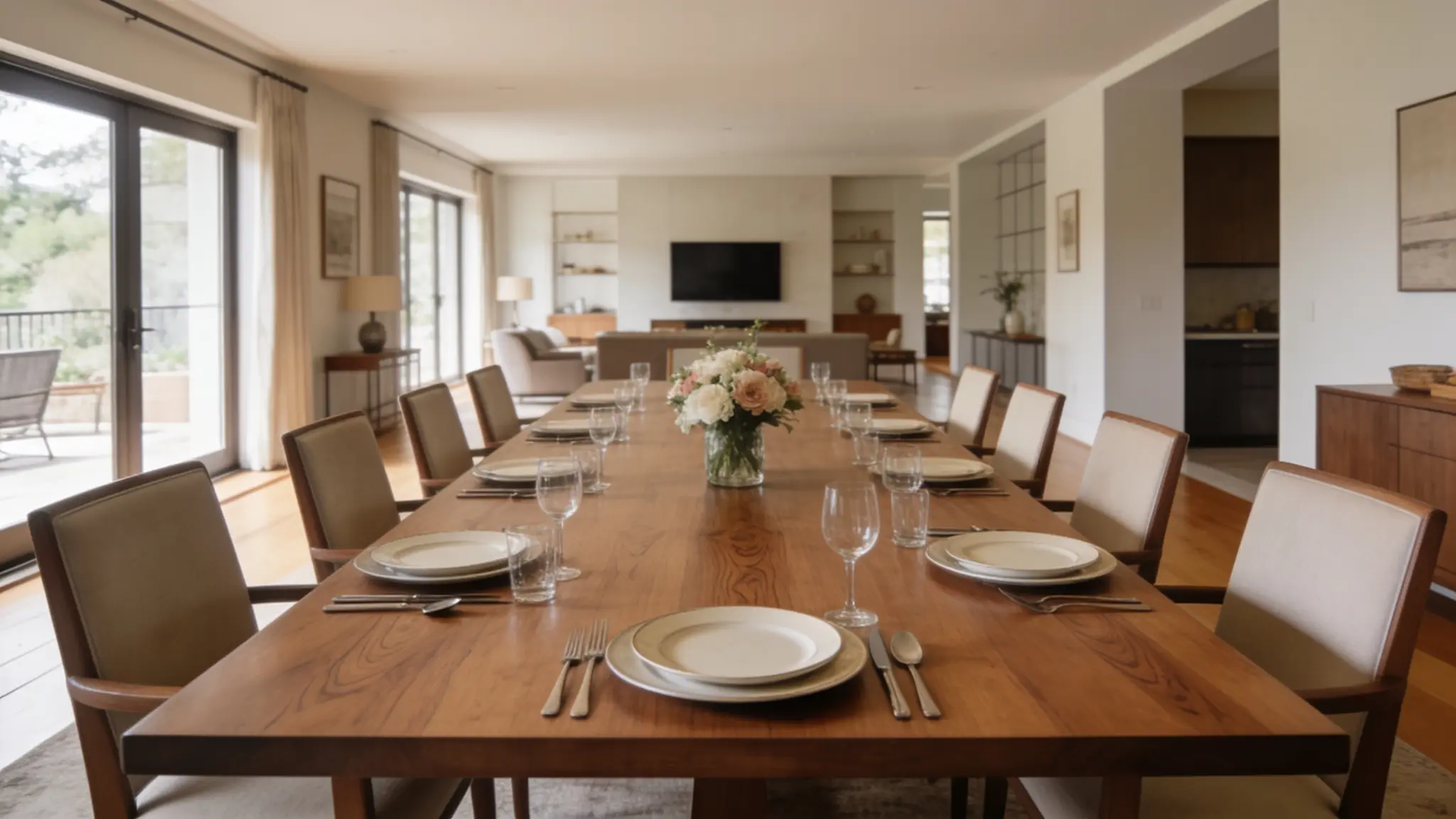
Eight people need 36 to 42 inches wide and 78 to 96 inches long. A 78-inch table can work with narrow chairs, but for regular use with adults, 90 to 96 inches is more comfortable.
The typical layout seats three on each long side, one at each end. Before finalizing, check whether the end chairs clear any nearby doors or walkways. End chairs are the first thing to cause a problem in a room that wasn’t measured carefully.
5. Ten to Twelve-Person Tables
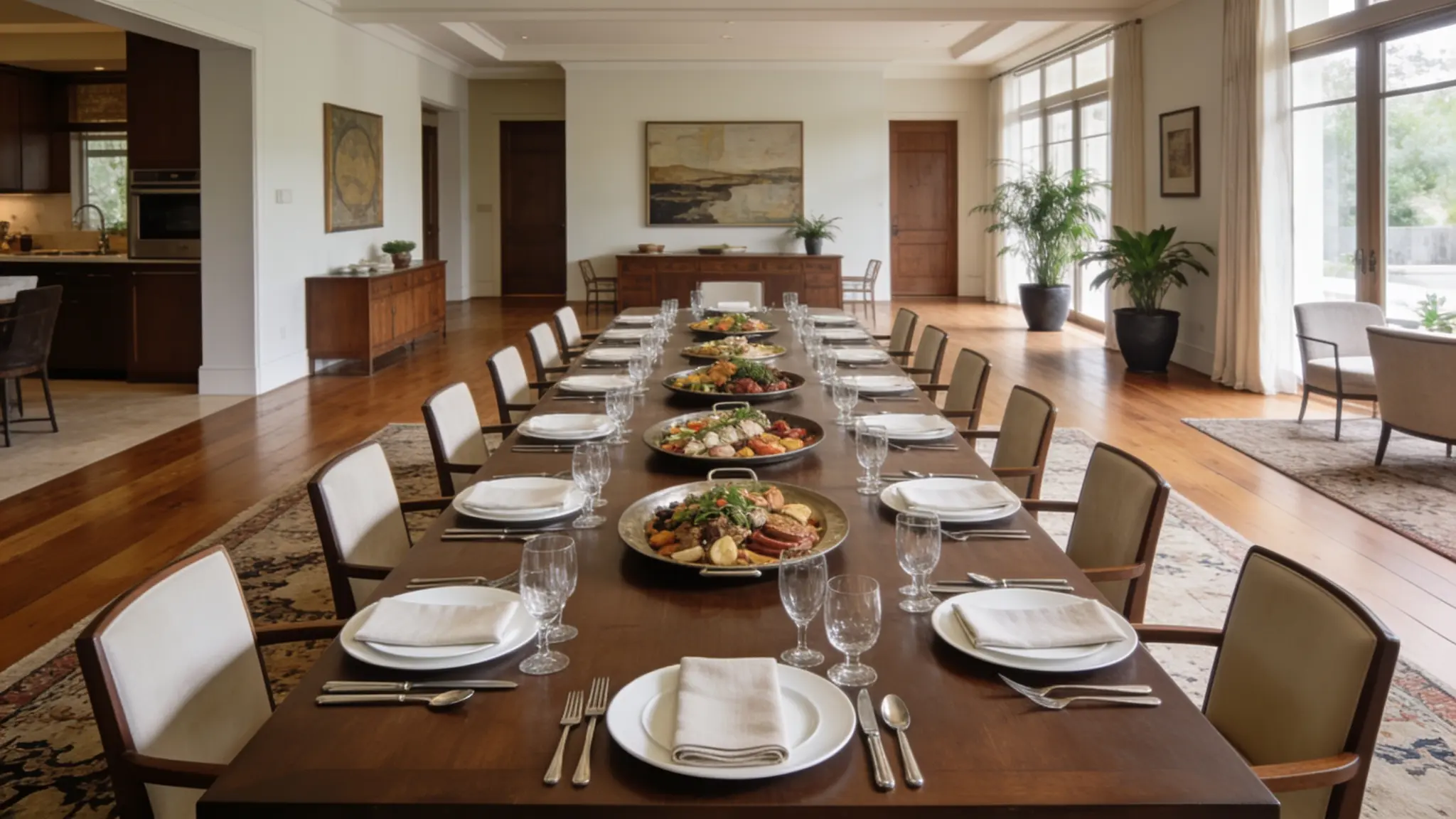
A ten-person table requires 40 to 44 inches wide and 96 to 120 inches long. For twelve, expect 42 to 48 inches wide and 120 to 144 inches long. These are large-room tables; they need open layouts, wide walkways, and chairs that pull back without hitting adjacent furniture.
For ten people, 108 inches feels more functional than 96. For twelve, 132 inches is a better starting point than the minimum 120.
Tables this size only work if the room genuinely has space around them. Measure the clearance on all four sides before comparing options.
Dining Table Dimensions by Shape
Shape affects how the table fits in a room, even when the seating count is the same. Decide on seat count first, then use shape to match the table to your specific room layout.
The right table shape depends heavily on whether your room is long and narrow, squarish, or open-plan, and each of those layouts has a clear answer.
1. Rectangular Tables
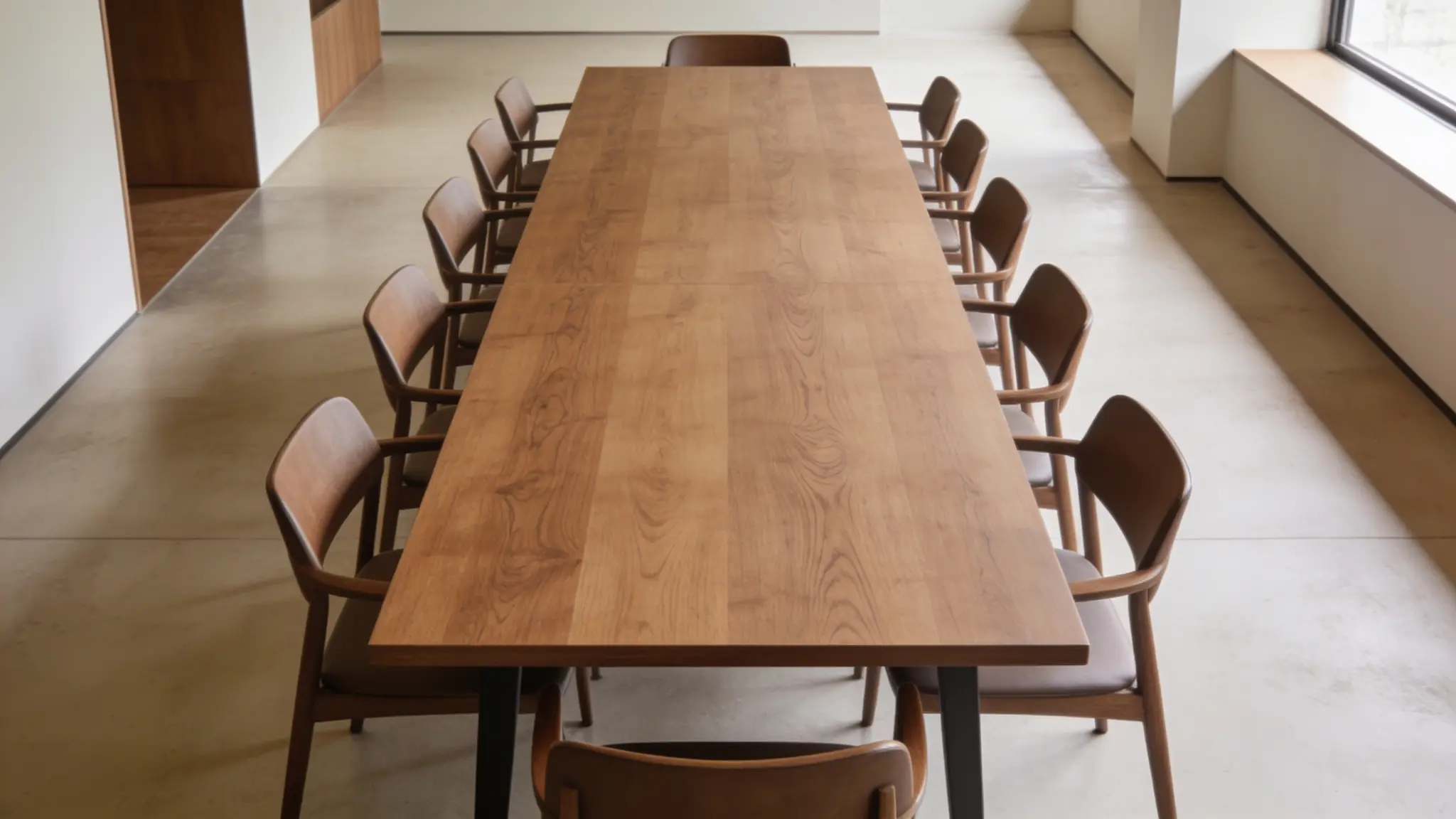
Rectangular tables are the most practical choice for most rooms because dining rooms tend to be longer than they are wide — the table follows the room rather than fighting it. They work especially well when you need end chairs or an extendable table with leaves.
| Best For | Why It Works |
| Long dining rooms | Follows the shape of the room without wasting floor space |
| Open layouts | Defines a clear dining zone within a larger space |
| Larger families | Seats more people without requiring extra width |
| End chairs | Both ends can seat an additional person |
| Extendable tables | Leaf extensions work naturally with the rectangular format |
If you use an extendable table, always check the fully open dimension before buying, that’s the measurement the room needs to support, not the collapsed size.
2. Round Tables
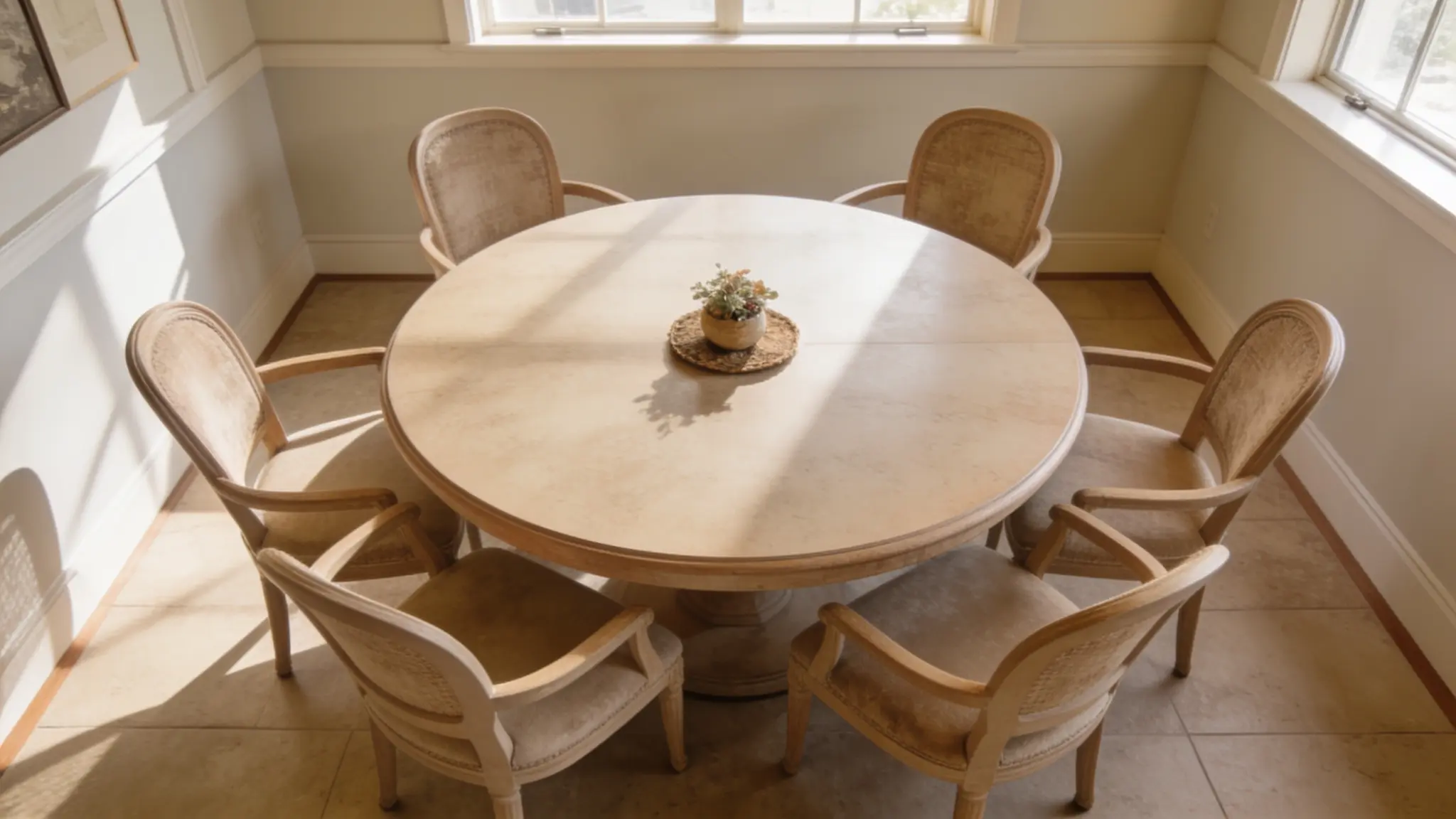
Round tables work best in square rooms. Everyone faces the center, which makes conversation easier, and there are no end positions that feel disconnected from the group. They also remove sharp corners from tight spaces, which matters in rooms where you move around the table frequently.
| Seats | Common Diameter |
| 2 people | 30 to 36 in |
| 4 people | 36 to 48 in |
| 6 people | 54 to 60 in |
| 8 people | 72 in |
Round tables become impractical past six people, not because of seating, but because the center becomes unreachable. A 72-inch round table seats eight, but reaching across it at a meal is awkward. For eight or more, a rectangular or oval table is more functional.
3. Square Tables
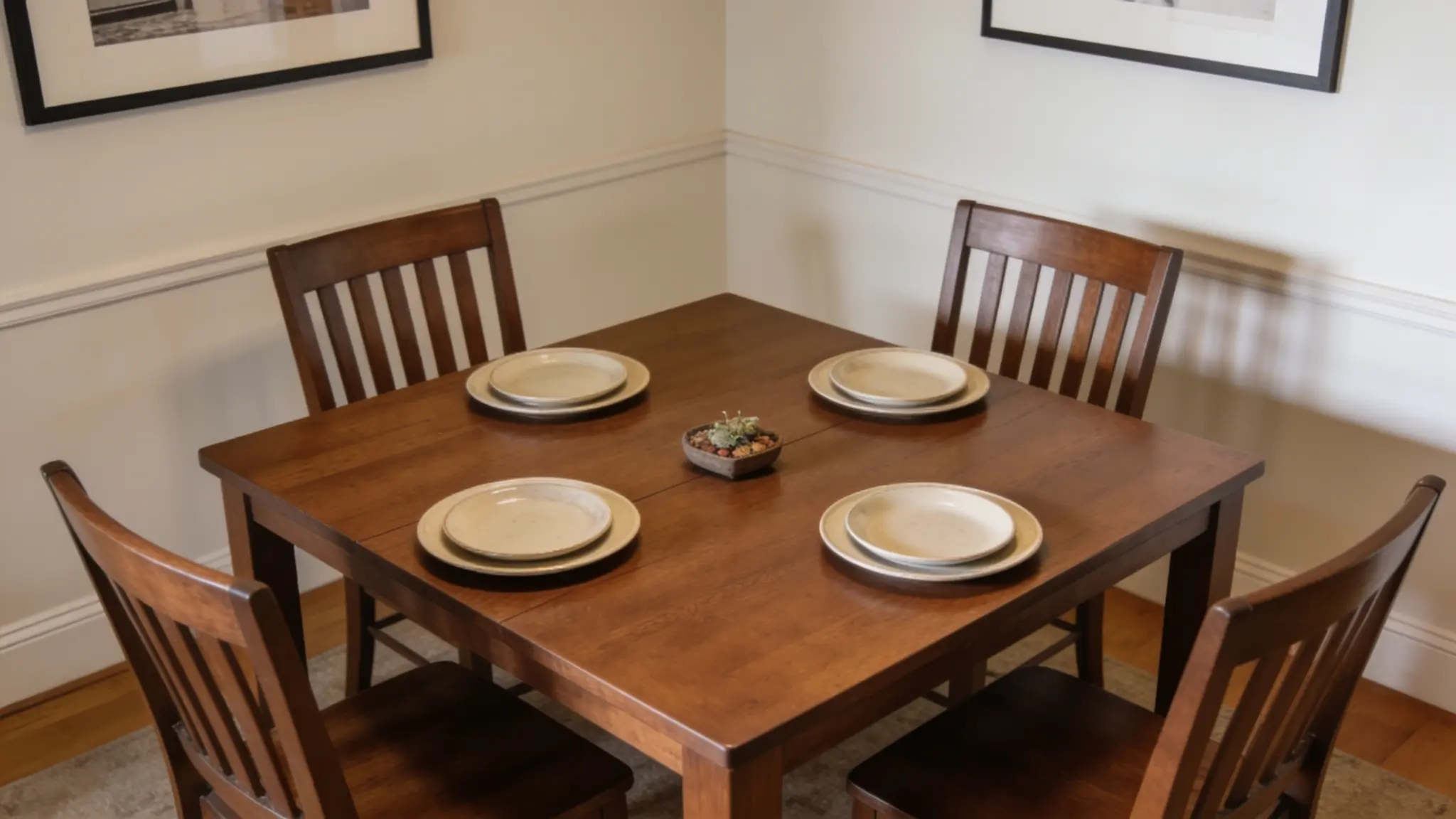
Square tables work well in square rooms for two to four people. They feel proportional and balanced, which makes them a natural fit for breakfast nooks, sunrooms, and smaller apartments. Beyond four people, a square table starts to waste floor space — each additional person adds to the width in both directions, and the center becomes hard to use.
| Seats | Common Size |
| 2 people | 30 to 36 in |
| 4 people | 36 to 44 in |
| 6 people | 54 to 60 in |
| 8 people | 60 to 72 in |
If you’re choosing between a square and a round table for two to four people, the room shape makes the call: square room, square table; square room with softer furniture, round table.
4. Oval Tables
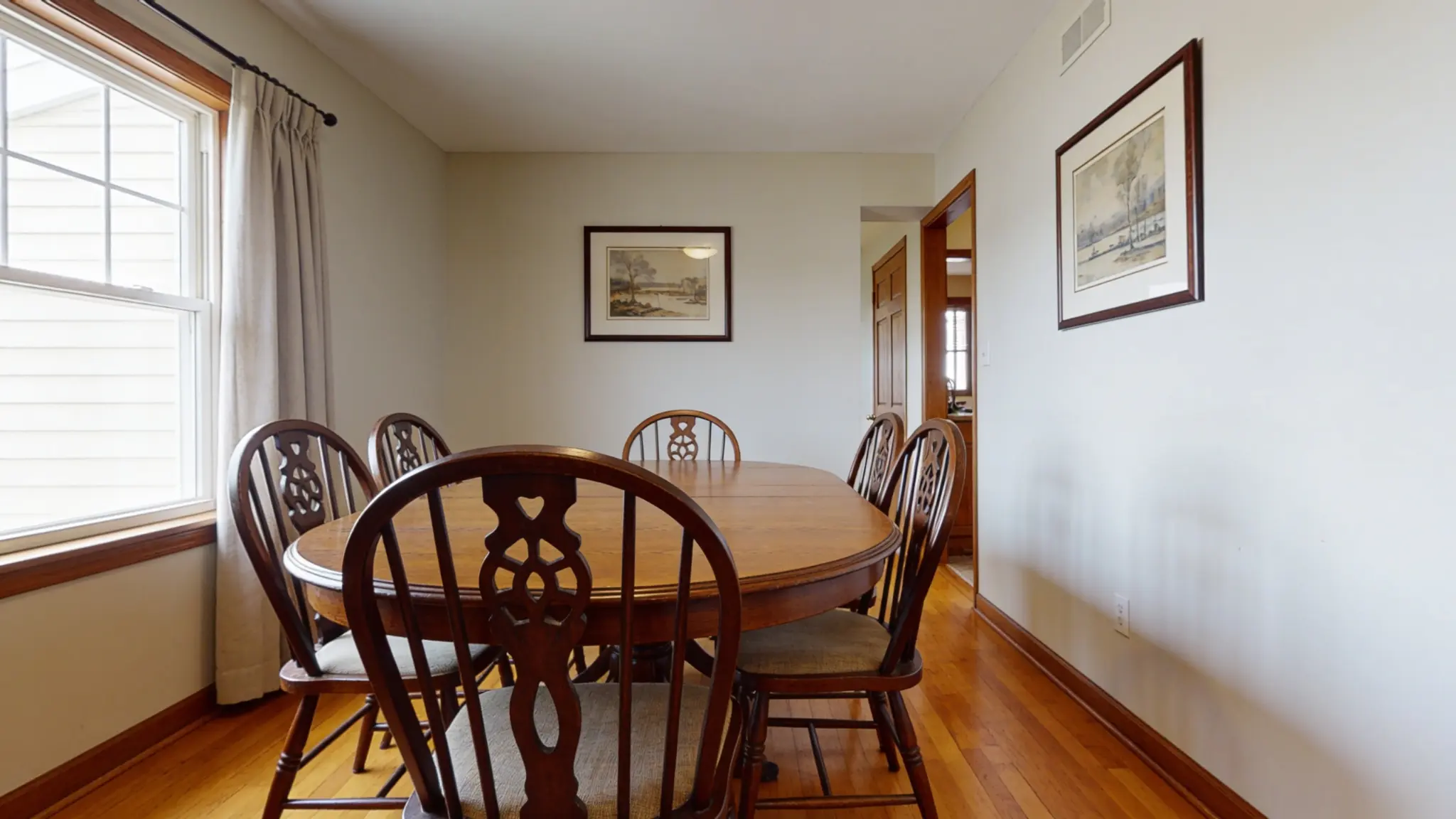
An oval table gives you the seating capacity of a rectangle with softer ends and better movement around the table. In rooms where a rectangular table feels boxy or where people regularly walk around the ends, an oval is worth considering. The rounded ends make it feel less formal and easier to navigate in tighter layouts.
| Seats | Common Length |
| 4 people | 48 to 60 in |
| 6 people | 60 to 72 in |
| 8 people | 78 to 96 in |
| 10 people | 96 to 120 in |
The width of an oval table is set by the manufacturer, not the seat count. Confirm the width before ordering, because a narrow oval at 32 inches will feel tight even if the length is right.
Room Size and Table Dimensions at a Glance
This chart combines the clearance rule, 36 inches minimum on all sides, with common table sizes to give you a practical starting range by room size.
If you’re also thinking through how the dining room fits into a larger open-plan space, the principles behind feng shui dining room layout are worth reading alongside this. They address traffic flow and furniture placement in ways that overlap directly with clearance planning.
| Room Size | Good Table Size | Comfortable Seating |
| 8 x 8 ft | 30 to 36 in round or square | 2 |
| 10 x 10 ft | 36 to 48 in round or 36 x 48 in rectangular | 4 |
| 10 x 12 ft | 36 x 60 in rectangular or 48 in round | 4 to 6 |
| 12 x 12 ft | 54 to 60 in round or 36 x 60 in rectangular | 6 |
| 12 x 14 ft | 36 x 72 in rectangular | 6 to 8 |
| 14 x 16 ft | 40 x 84 to 96 in rectangular | 8 |
| 14 x 18 ft | 42 x 96 to 108 in rectangular | 8 to 10 |
If your room has a sideboard, a wide doorway swing, or a kitchen island on one side, treat that as a wall when calculating clearance. Choose the smaller end of the table range for that room size.
What Else Affects Dining Table Fit
Two tables with identical listed dimensions can feel completely different at home. These four factors are worth checking before the final decision.
- Chair Style: Armchairs need 6–8 extra inches of space compared to side chairs. Padded or curved chairs also add depth — measure fully extended chairs before assuming they fit.
- Table Base and Edge: Pedestal bases improve legroom, while four-legged tables can block corner chairs. Rounded or beveled edges feel less sharp in tight spaces than square edges.
- Daily Use: Consider everyday activities, not just meals. Extra surface for laptops, homework, or serving dishes may require 6–12 additional inches in length.
- Extendable Tables: Always measure the fully extended table. Confirm leaf storage and that there’s still at least 36 inches of clearance on all sides.
How to Measure for the Right Dining Table Dimensions
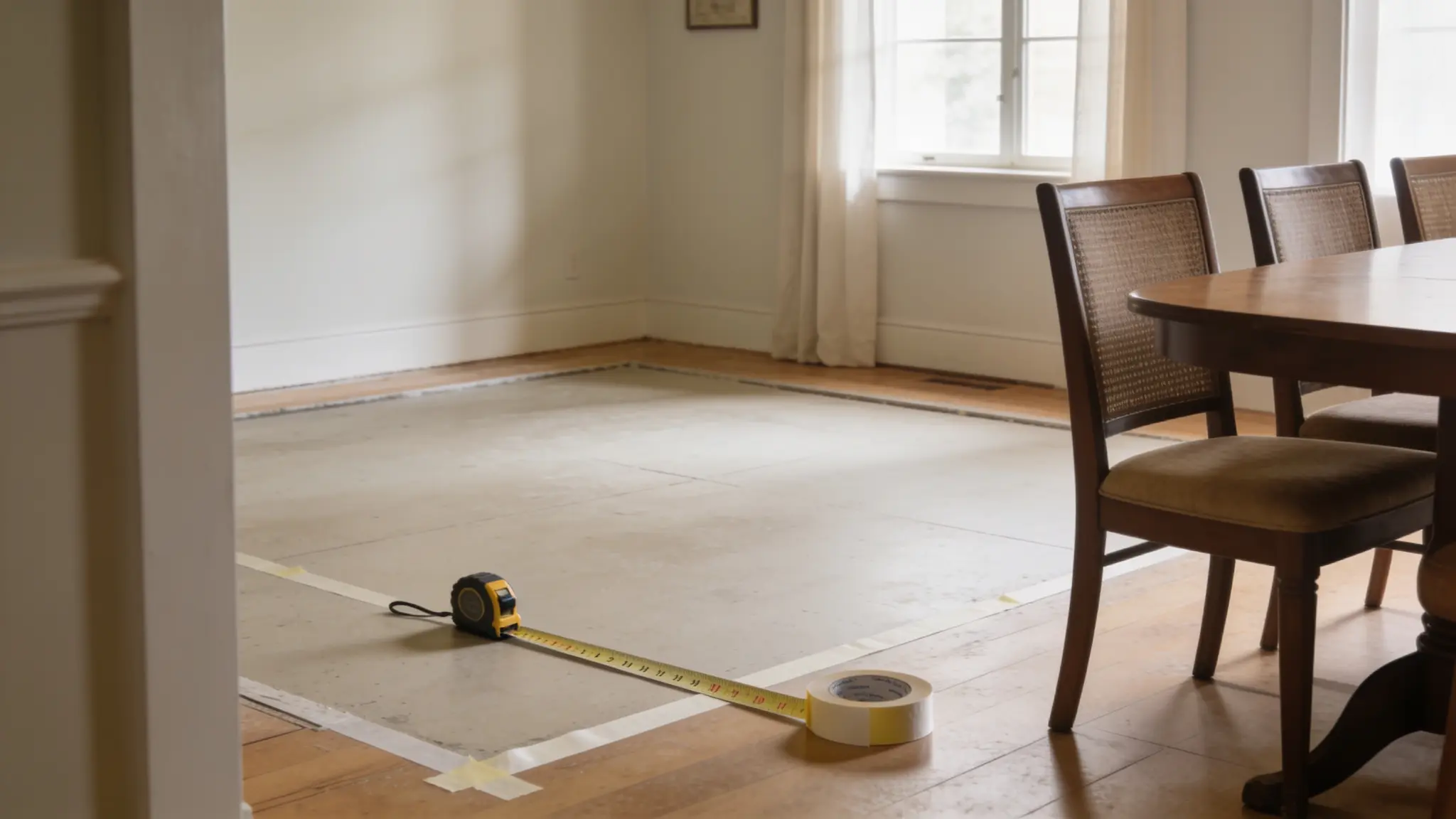
Measuring once correctly saves a return trip. Here’s what to check before comparing any specific table:
- Measure the full room length and width: include any indentations or fixed furniture in the calculation, not just the open floor space
- Subtract 72 inches from the room length and 72 inches from the room width: what remains is the maximum table footprint (36 inches clearance on each side)
- Check the main traffic path: if people regularly walk behind seated guests, that side needs 42 to 48 inches of clearance, not 36
- Allow 10 to 12 inches of legroom between the chair seat and the table underside, chairs sit at 17 to 19 inches, which means a standard 28 to 30-inch table height works for most
- Check the table apron depth: a deep apron reduces usable legroom and can stop chairs from sliding in fully; measure the underside before buying, not just the height
- Mark the footprint on the floor with painter’s tape and pull a chair up to each position, if you can’t sit comfortably and stand without hitting a wall, the table is too large for that room
Common Sizing Mistakes to Avoid
Most table purchases that don’t work come down to the same few errors. These are worth checking before you commit:
- Choosing the largest table the room can technically hold — technical fit is not the same as comfortable function
- Forgetting to add chair pull-out space to the clearance calculation
- Measuring room length but not checking the traffic path behind seated guests
- Choosing a round table large enough that no one can reach the center
- Checking the collapsed size of an extendable table without checking the open size
- Ignoring the table apron depth when evaluating legroom
A floor test with painter’s tape catches most of these before they become a return shipment.
Frequently Asked Questions
Can lighting affect table fit in a dining room?
Yes. Overhead fixtures or chandeliers need clearance above the table. Low-hanging lights can obstruct movement or create awkward sightlines, so account for their placement when measuring your table footprint to maintain a functional and visually balanced dining area.
Does flooring type impact table placement?
Hardwood, tile, or carpet can affect chair movement and stability. Rolling chairs slide more easily on hard surfaces, while thick rugs reduce clearance. Consider flooring type when choosing table dimensions to avoid cramped or uneven seating and ensure chairs can be pulled out comfortably.
Should the table shape match the room layout?
Yes, a table should complement the room’s shape. Rectangular tables suit long rooms, square or round tables fit square rooms, and oval tables improve traffic flow in tight corners. Matching shape to room improves comfort, seating efficiency, and aesthetics without overcrowding the space.
How do table leaves affect everyday use?
Extendable leaves change the table footprint. Even if stored within the table, extra length requires sufficient clearance for daily chairs and movement. Always plan for the maximum extended size, not just the collapsed size, to prevent congestion during meals or gatherings.
Can decorative table aprons reduce usable space?
Yes. Deep aprons can block chairs from sliding in fully, reducing legroom and seating comfort. Measure the underside clearance, not just the tabletop height, especially for tables in smaller rooms or when using chairs with arms.
Summing Up
Picking the right dining table starts with knowing how your room works every day. Dining table dimensions help you check the exact fit, dining table sizes show how many seats make sense, and standard table sizes give you a clear way to compare options before you buy.
I’d measure the room first, then check seating, chair width, and clearance before looking at style. That order keeps the choice practical and saves you from buying a table that feels too tight.
Use the charts above, mark the size on your floor, and check the open size if the table extends. If you’re ready to shop, take your room measurements with you and choose a table that fits daily life first.