

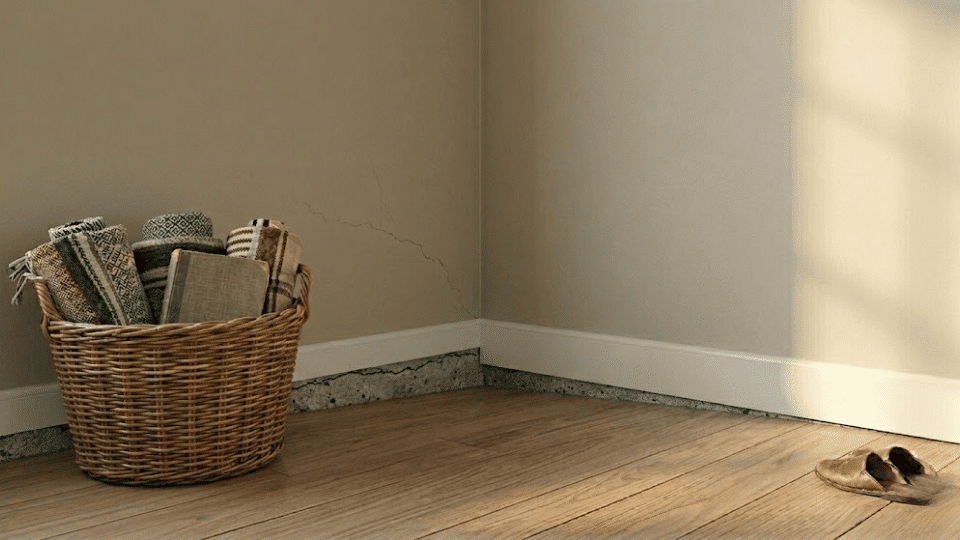


A sinking foundation tends to announce itself quietly, a door that won’t close right, a hairline crack along the baseboard, a floor that feels slightly off underfoot.
By the time most people notice something is wrong, the settling has already been going on for a while. The good news is that foam jacking foundation repair is often far less invasive and less expensive than most expect.
I’ve seen people assume the worst and end up with a same-day fix.
My goal here is to break down what polyurethane foam actually does beneath a settling slab, where it works well, where it falls short, what it realistically costs, and how to find a contractor who’s actually worth trusting with your foundation.
What Is Foam Jacking?
Foam jacking is a foundation repair method where polyurethane foam is injected through small drilled holes into the voids beneath a settling or sinking concrete slab.
Once it enters, it expands, filling gaps, stabilizing loose soil, and lifting the slab back toward its original position. The foam cures in as little as 15 to 30 minutes and can support between 6,000 and 14,000 lbs per square foot once set.
What I think makes it genuinely practical is its lightweight design. Unlike heavier slurry-based methods, it doesn’t pile additional stress onto soil that’s already compromised.
Holes are drilled, foam is pumped in, holes are patched, and in most cases, you’re walking on it the same day.
What Foam Jacking Can and Can’t Fix
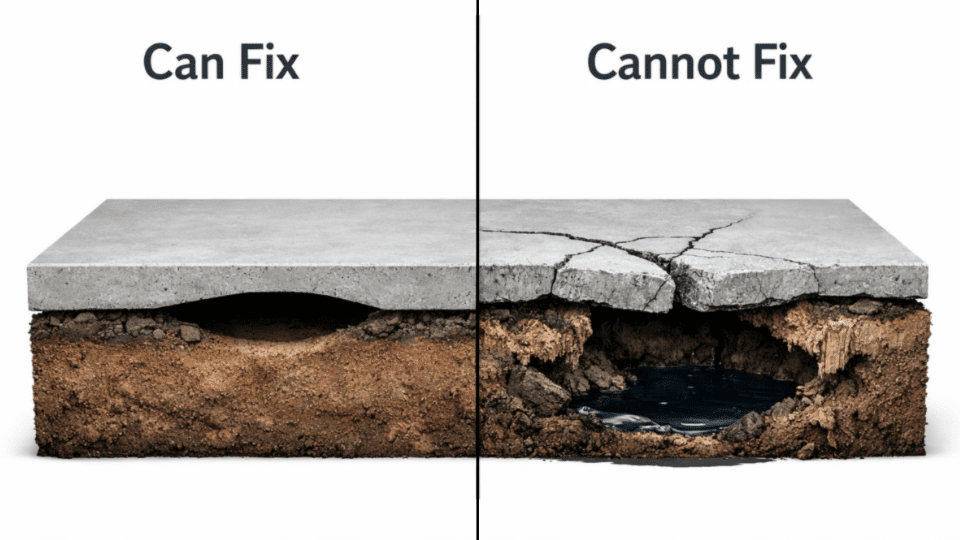
Not every sinking slab is a foam jacking job. Knowing the difference upfront saves you time, money, and the frustration of a repair that doesn’t hold. Here’s where it works well, and where it doesn’t.
Where Foam Jacking Works
Foam jacking performs best when the concrete itself is structurally sound, and the problem is what’s happening underneath it. Cases that tend to respond well include:
- Settled or sinking slab foundations with identifiable voids beneath
- Sunken garage floors caused by soil erosion or poor original compaction
- Uneven driveways or concrete flatwork adjacent to the home’s foundation, where creative modern driveway ideas can improve both function and appearance.
- Void filling under concrete caused by water washout or soil shrinkage
- Minor-to-moderate settlement where the slab hasn’t cracked through or broken apart
Where Foam Jacking Won’t Work
Foam jacking stabilizes what’s there; it can’t fix structural issues or correct an ongoing problem with the ground itself. It’s the wrong call when:
- The foundation slab has significant structural cracking or has begun to break apart
- Active soil movement is still occurring (expansive clay, ongoing erosion)
- Settlement occurs due to unrepaired plumbing leaks, leading to foam eventually being compromised by water.
- Voids are too large or too deep for foam expansion to fill reliably
- The foundation requires underpinning with piers to reach stable load-bearing soil
Foam Jacking vs. Other Options
Foam jacking isn’t the only way to address a settling foundation, and it’s not always the right one. Here’s how it stacks up against the three most common alternatives.
| Method | Works Best on | Cost Range | Advantage | Limitation |
|---|---|---|---|---|
| Polyurethane Foam Jacking | Moderate settling, intact slab, identifiable voids | $5–$25/sq ft | Lightweight, fast cure, same-day use | Won’t fix active movement or severe structural failure |
| Mudjacking | Larger areas, budget-conscious repairs | $3–$6/sq ft | Lower upfront cost, proven method | Heavy, adds load to compromised soil; can re-settle |
| Pier/Pile Systems | Serious structural settlement | $1,000–$3,000+ per pier | Permanent stabilization addresses the root cause | Most invasive and expensive option |
| Full Replacement | Severely cracked or broken foundation | $50–$75/sq ft | Clean slate, long-term fix | Highest cost, most disruptive, long curing time |
Foam jacking sits in the middle, not the cheapest, but significantly less invasive and faster than the heavy-duty options. If your slab is still largely intact and the soil beneath it is the problem, it’s a strong candidate.
What Does Foam Jacking Cost?
Understanding foam jacking costs helps you set realistic expectations before getting quotes. Prices can vary widely, so knowing the baseline and key drivers gives you better control.
Average Cost of Foam Jacking
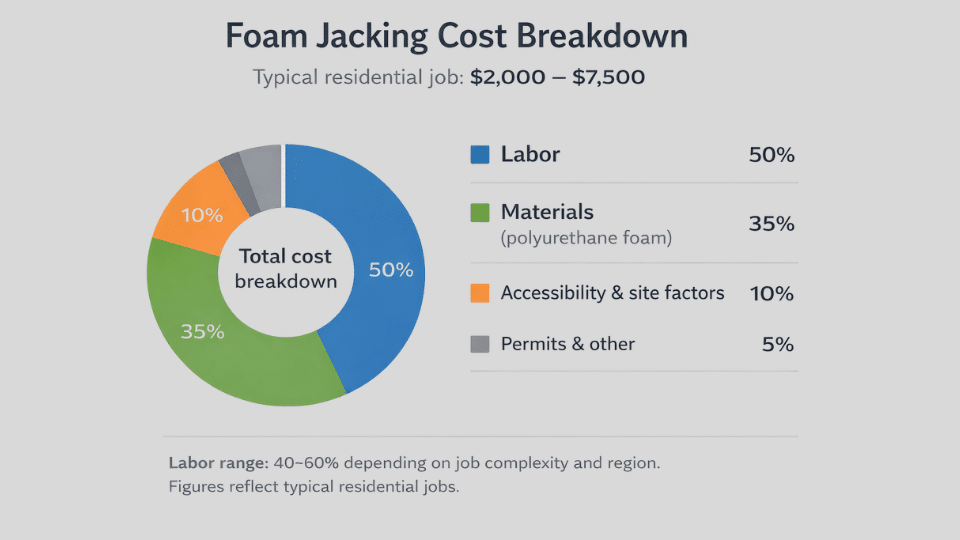
Foam jacking for foundation repair usually ranges from $2,000 to $7,500 for most homes. On a per-square-foot basis, expect $5 to $25, depending on job size. Smaller areas often cost more per square foot, while larger projects reduce that rate.
Labor makes up about 40–60% of the total cost, covering inspection, setup, drilling, and injection. The remaining cost mostly comes from polyurethane foam, which is priced higher than traditional materials.
Factors That Affect Foam Jacking Costs
Several factors can shift your final quote up or down:
- Area size: Larger jobs cost more overall but often less per square foot
- Void depth and severity: Deeper gaps need more foam, increasing cost
- Accessibility: Tight or interior spaces can add 20–50% to labor costs
- Soil conditions: Weak or shifting soil may need extra stabilization
- Location: Labor rates vary, with urban areas usually costing more
Most contractors also charge a minimum fee of $300 to $700, regardless of project size.
What the Process Looks Like
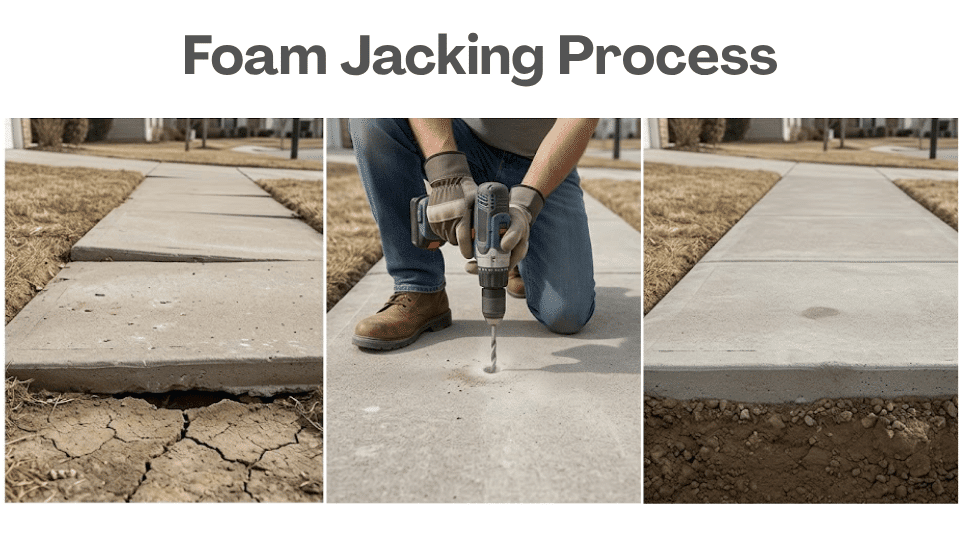
If you’ve scheduled a foam jacking appointment, here’s what to expect on the day so you can tell whether the job is being done properly.
- Initial assessment: The technician walks the area, checks elevation levels, and identifies injection points before any drilling begins.
- Drilling: Small holes (roughly the size of a penny) are drilled through the slab at calculated intervals.
- Foam injection: Polyurethane is pumped in under controlled pressure; it expands to fill voids and lift the slab.
- Monitoring: The crew tracks slab elevation during injection to avoid over-lifting. This is where experience matters most.
- Hole patching: Injection holes are filled, and the surface is cleaned up.
- Cure and walkthrough: Foam sets in 15–30 minutes. The contractor should walk you through what was done and flag anything that needs monitoring.
A typical residential job takes a few hours. If a contractor rushes through the assessment or skips the monitoring step during injection, that’s a problem worth raising before they leave.
How Long Does It Last?
Done right, foam jacking can last 10 years or more; some installations hold significantly longer. The foam itself is durable; it’s moisture-resistant, doesn’t wash out over time the way mudjacking slurry can, and holds its structural integrity well.
What actually determines longevity isn’t the material; it’s whether the underlying cause of the settling was addressed.
If water is still pooling against your foundation, if drainage hasn’t been corrected, or if soil movement is ongoing, the repair will eventually lose ground. Foam jacking fixes the symptom effectively.
The soil and water conditions around your foundation determine whether that fix holds for a decade or needs to be revisited in a few years.
How to Vet a Contractor
This is where many homeowners move too fast. Foundation repair isn’t something to decide on solely based on price. A few checks here can save you from bigger issues later.
- Start with licensing, insurance, and certifications. Confirm general liability and workers’ compensation coverage, and verify with your state board. Certifications like SPFA or BHA’s CSRS show added training.
- Check track record and compare quotes. Review complaint patterns, not just ratings. Get at least three detailed estimates. Avoid single-number pricing.
- Before committing, ask about foam type and strength, lifting control method, warranty details, and the full scope of drainage work included.
A rushed quote without proper measurements is a clear red flag that warrants walking away. Taking an extra day or two to vet your contractor properly can save you thousands down the road.
How to Prevent Future Foundation Settling
Preventing foundation settling comes down to controlling water and soil movement around your home. Taking small steps early can help you avoid costly repairs later.
- Maintain proper drainage around your home. Make sure water flows away from the foundation, not toward it. Poor drainage is one of the main causes of soil movement and settling issues.
- Keep soil moisture consistent. Dry soil shrinks, while overly wet soil expands. Water your yard evenly during dry periods to reduce stress on your foundation.
- Manage gutters and downspouts well. Clean them often and extend downspouts at least a few feet away from your home to prevent water buildup near the base.
- Use smart landscaping techniques. Avoid planting large trees too close, and ensure grading slopes away from your foundation to limit long-term soil pressure.
Taking these steps helps you stay ahead of foundation problems. A little maintenance now can protect your home’s structure and save you from major repairs later.
Final Words
Foundation settling isn’t always the crisis it feels like, but it does deserve a straight answer, not a guessing game.
Foam jacking foundation repair handles a specific set of problems well: voids beneath intact slabs, moderate settlement, and situations where the concrete itself is still sound.
It won’t address active soil movement or structural failure, and the price range is wide enough that an itemized quote is always necessary.
The real strength of polyurethane foam lies in what it doesn’t do: it doesn’t overload compromised soil, doesn’t take days to cure, and doesn’t require tearing anything apart.
If this helped clarify where you stand, drop a comment below with any questions, or pass it on to someone dealing with a settling slab.
Frequently Asked Questions
Can you do this yourself?
Rental equipment for foam jacking isn’t available to the public in most areas, and injection pressure requires calibrated machinery. This one needs a licensed contractor; there’s no real DIY version.
Does your insurance cover foam jacking?
Usually not. Insurers classify foundation settling as normal wear and tear. The exception is if a covered event, like a burst pipe, directly caused the damage. Always check your specific policy.
Is the foam safe around plumbing or drinking water?
Reputable contractors use foam certified to NSF/ANSI 61 standards, meaning it’s approved for contact with drinking water. Ask your contractor for product certification before work begins.
What if the slab sinks again?
Retreatment is possible and typically costs less than the initial job, since the contractor already knows the site. Longevity improves significantly when drainage issues are fixed alongside the repair.
How will I know if the lift actually worked?
Doors and windows that were sticking should close more smoothly. Gaps along baseboards should visibly reduce. A good contractor will show you before-and-after elevation readings before leaving.