

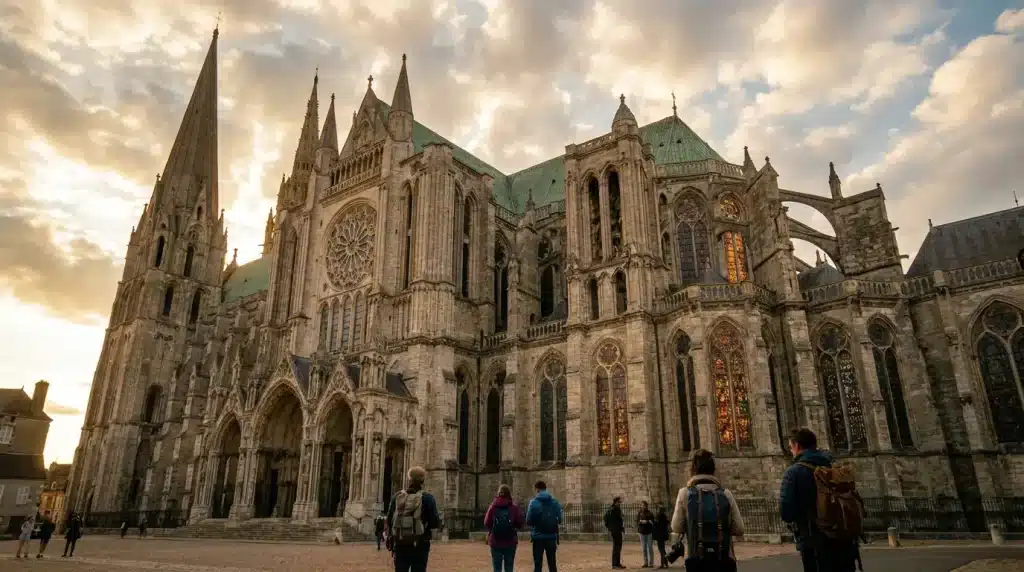


Have you ever stepped into a cathedral and felt instantly lifted by the soaring ceilings and colorful light? If you’ve ever wondered what makes a Gothic cathedral special, it can feel overwhelming to understand the arches, buttresses, and stained glass.
I know it’s hard to notice all the details while visiting or looking at photos. In this article, you’ll learn how to identify Gothic features like pointed arches, ribbed vaults, and flying buttresses.
I’ll also explain how Gothic differs from Romanesque and Gothic Revival, highlight famous cathedrals, and give practical tips so you can appreciate both the engineering and artistry when you explore one yourself.
What Are Gothic Cathedrals?
Gothic cathedrals are major Christian churches built in the Gothic architectural style, which began in northern France in the mid-12th century. One key starting point was the rebuilding of the Basilica of Saint-Denis near Paris from around 1135 to 1144.
From there, the style spread across Europe between the 12th and 16th centuries, changing how sacred buildings looked and felt. A cathedral is not called a cathedral only because it is large or famous. It is the main church of a bishop, making it an important religious seat for the region.
In medieval towns, a Gothic cathedral often stood at the center of public life. People came for worship, teaching, festivals, pilgrimage, ceremonies, and moments that shaped the whole community. What makes these buildings so moving is the way faith and design meet.
Earlier Romanesque churches often felt heavy, with thick walls, rounded arches, and smaller windows. Gothic builders wanted more height, more light, and more openness. That is why places like Notre-Dame de Paris, Chartres Cathedral, and Cologne Cathedral feel so powerful when you stand inside them.
Key Features of Gothic Cathedrals
The beauty of Gothic cathedrals comes from how stone, height, and light work together. Medieval builders used clever support systems to raise ceilings, open walls, and fill interiors with color. What looks delicate at first is actually careful engineering shaped into sacred space.
Here are the key features that define Gothic churches:
- Pointed arches: These sharp arches helped carry weight downward and made taller walls and wider openings possible. They also give Gothic interiors their strong upward pull.
- Ribbed vaults: Stone ribs span the ceiling and direct weight to the columns. They make the roof feel lighter while adding dramatic patterns overhead.
- Flying buttresses: These outer supports carry pressure away from the walls. Because of them, builders could add bigger windows and higher interiors.
- Stained glass and rose windows: Colored glass filled the church with blue, red, gold, and violet light while telling sacred stories. Rose windows created a glowing focal point. The way color behaves in a space shifts dramatically depending on where and how light enters, something Gothic builders understood centuries before it became a design principle.
- Towers, spires, and vertical lines: These features made the church visible across the town and gave the space a lifted, spiritual feeling.
- Stone sculpture and gargoyles: Carvings taught religious stories through figures and symbols. Gargoyles also helped move rainwater away from the walls.
Together, these features make a Gothic cathedral feel powerful, bright, and deeply atmospheric. The structure supports the space, while the glass and height make it feel alive centuries later.
Why Gothic Churches Were So Important
Gothic churches played a major role in medieval society and influenced far more than religious life. They served as places of worship, gathering spaces, and important landmarks that reflected the identity of a town or city.
Building a Gothic church often required the efforts of skilled architects, craftsmen, artists, and local communities working together over many years.
These impressive structures demonstrated advances in engineering and construction while showcasing beautiful sculptures, stained glass, and detailed stonework. They also represented the wealth and influence of religious institutions and local rulers.
Beyond their spiritual purpose, Gothic churches became centers of culture, education, and community life, leaving a lasting impact on European history and architecture.
Most Famous Gothic Cathedrals and Churches Around the World
The finest Gothic cathedrals are not famous for one reason. Some changed architecture, some guarded royal history, and others shaped the skyline of entire cities. What makes them worth your attention is how each one tells a different story through stone, glass, height, and local memory.
1. Notre-Dame de Paris, France
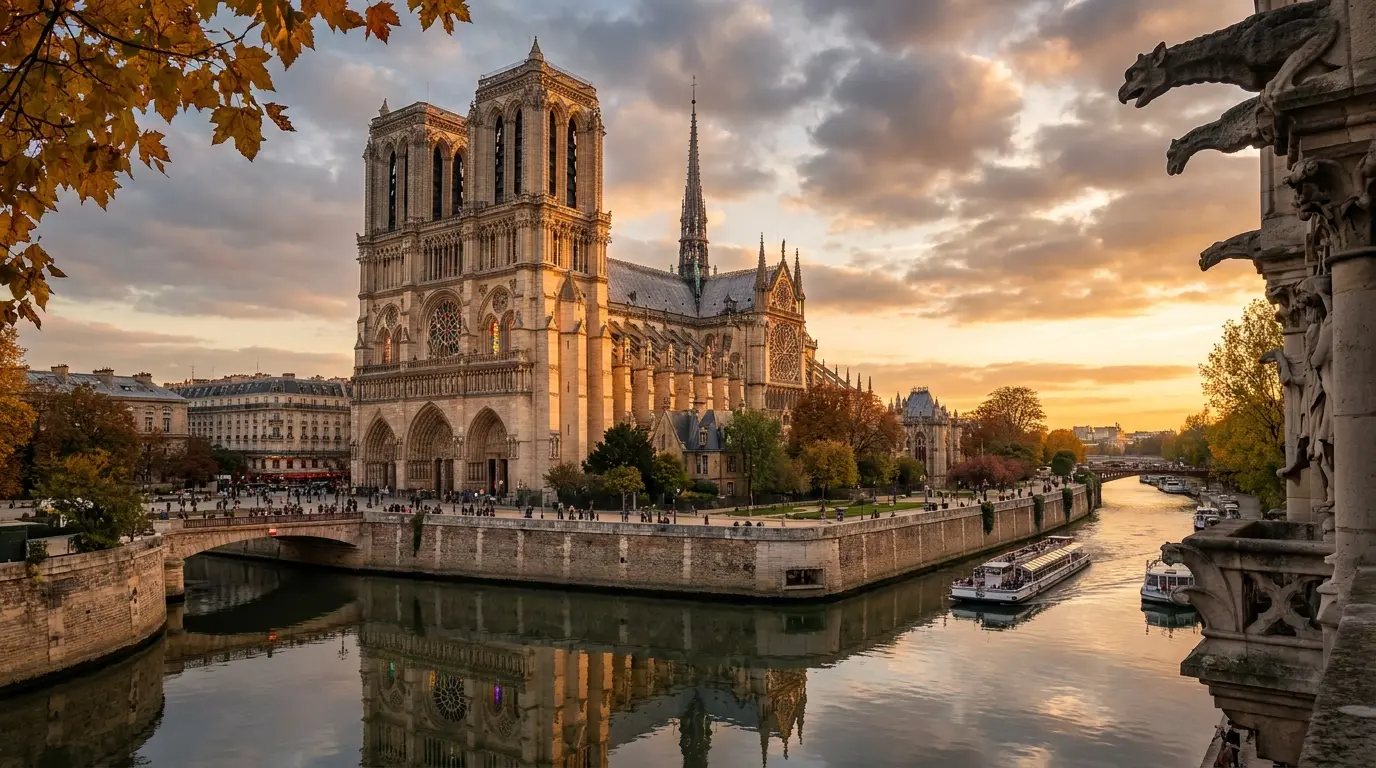
Notre-Dame de Paris began construction in 1163 and became one of the great symbols of French Gothic architecture. Built on the Île de la Cité, it watched Paris grow around the Seine for centuries.
Its towers, sculpted portals, and rose windows made it a model for later Gothic churches. When you stand before it, the building feels both royal and deeply human. Here is what makes it stand apart:
- Western facade with strong balance: The front is arranged with three portals, twin towers, and a central rose window, creating a calm yet powerful rhythm.
- Famous rose windows: Its stained glass brings soft color into the interior and shows how Gothic churches used light as part of worship.
- Cultural memory of Paris: Beyond architecture, Notre-Dame appears in literature, art, music, and national life, making it more than a historic church.
2. Chartres Cathedral, Chartres, France
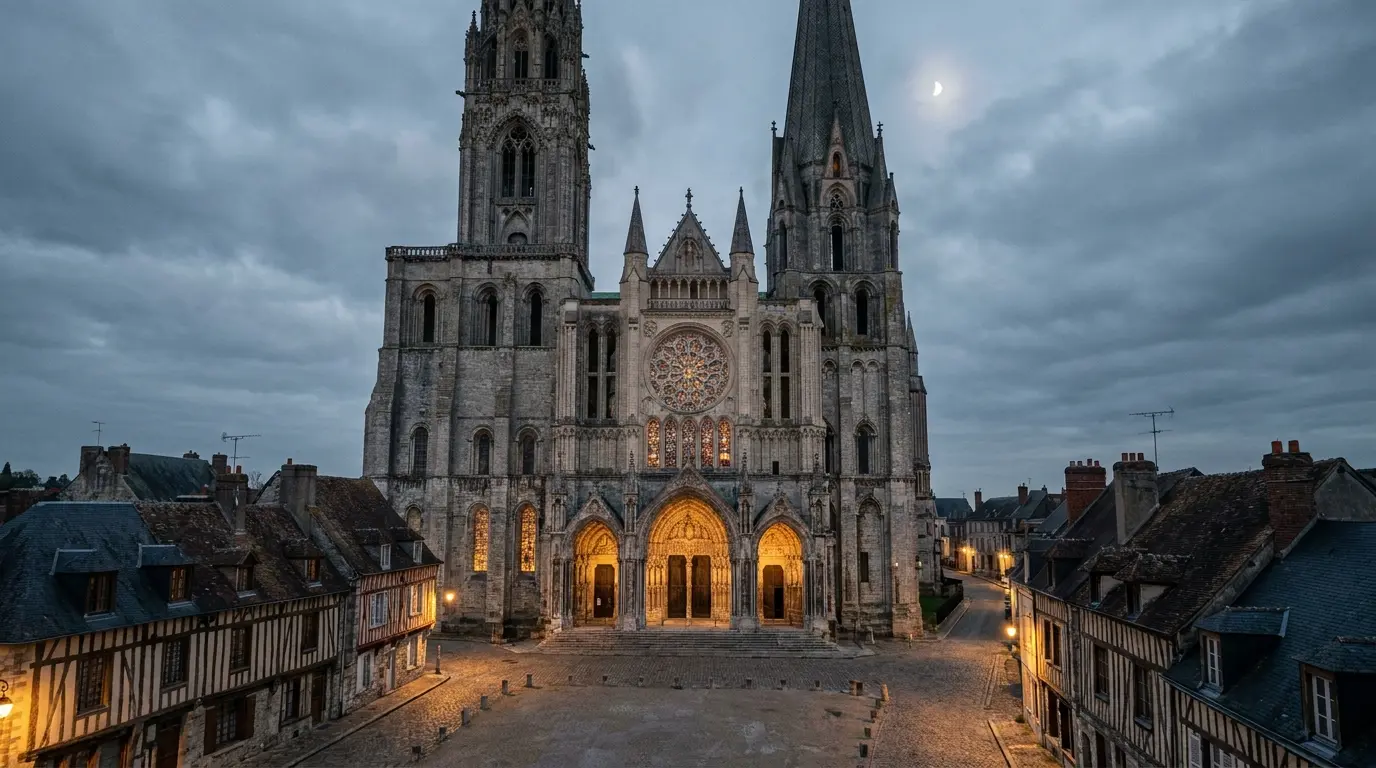
Chartres Cathedral was mostly rebuilt after a fire in 1194 and became one of the clearest examples of High Gothic architecture. It is especially loved for its medieval stained glass, much of which still survives.
The cathedral has a quiet power. From outside, it rises above the town; inside, the blue glass gives the space a calm, almost floating glow. These details give Chartres its lasting value:
- Chartres blue glass: The deep blue tones in its windows are among the most admired in medieval Europe. That particular shade of blue carries the same quality found in historically symbolic blue paints, where color was chosen not just for beauty but for the feeling it produced in a space.
- Pilgrimage importance: The cathedral became a major pilgrimage site because of its sacred relic and religious status.
- Unified Gothic design: Since much of it was rebuilt in a focused period, the building feels unusually complete and balanced.
3. Amiens Cathedral, Amiens, France
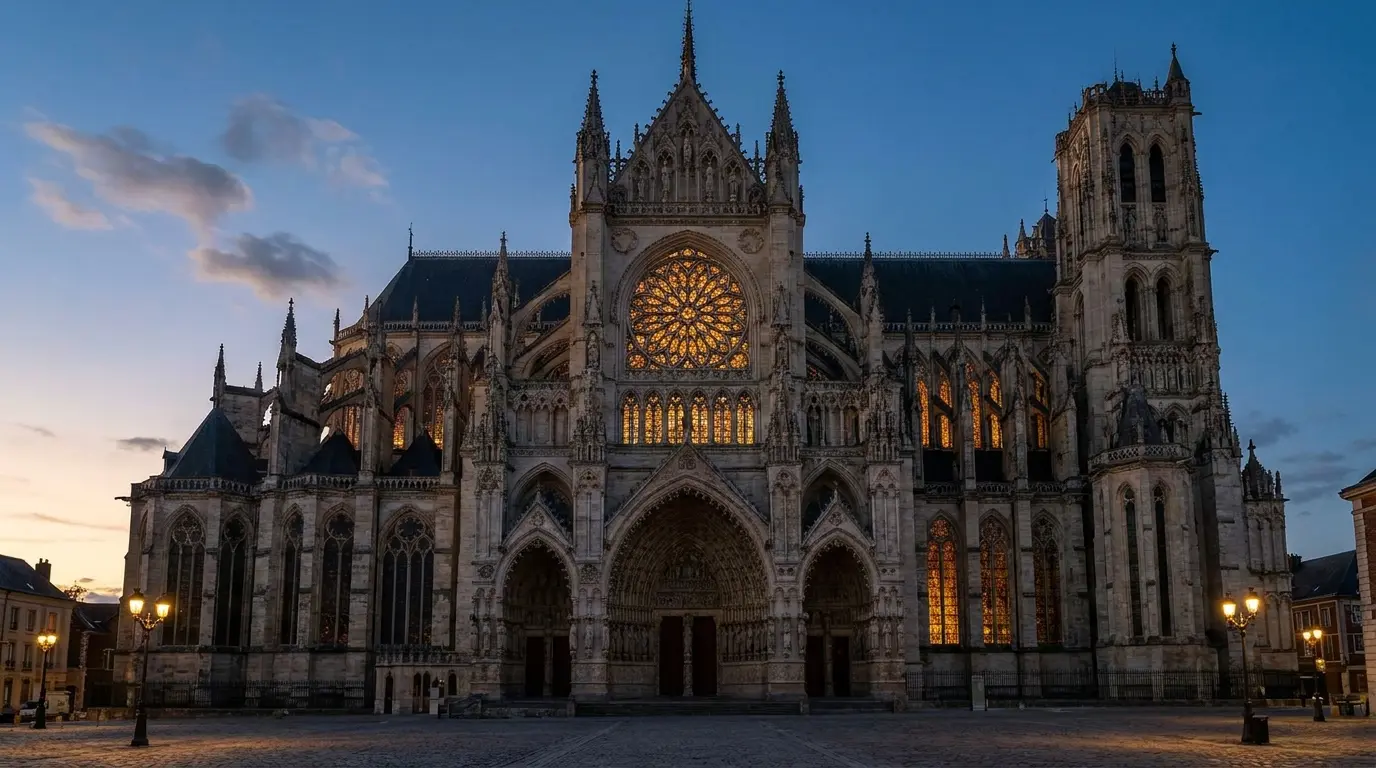
Amiens Cathedral was begun in 1220 and is one of the grandest achievements of High Gothic design. Its builders created a vast interior that feels open, bright, and perfectly ordered.
The nave rises with a confidence that makes you instinctively look up. It was not built only to impress; it was made to show how far Gothic engineering could go. Look closely at these features:
- Exceptional interior height: The nave reaches a striking height, creating one of the most powerful vertical effects in French Gothic architecture.
- Rich sculpted entrance: The west front is filled with carved figures that once helped teach religious stories to visitors.
- Clean structural rhythm: Columns, arches, and vaults align with rare clarity, making the interior feel calm rather than crowded.
4. Reims Cathedral, Reims, France
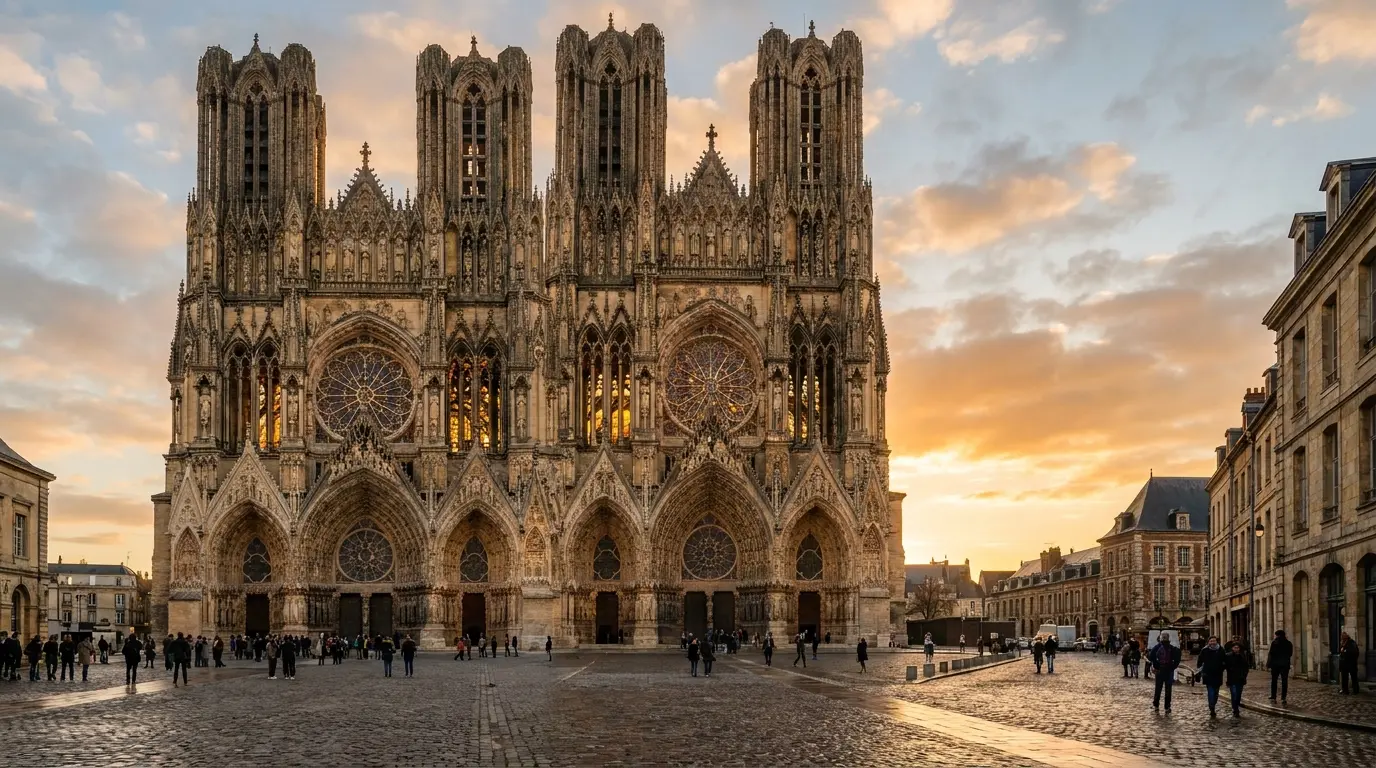
Reims Cathedral was started in 1211 and became closely tied to the history of French kings. For centuries, it served as the coronation church of France, giving it a rare political and spiritual weight. Its facade is one of the most sculptural in Gothic Europe.
The stone figures feel full of movement, as if the cathedral is speaking before you enter. Its importance comes through these details:
- Royal coronation setting: Many French kings were crowned here, giving the cathedral a central place in national history.
- Expressive sculpture: The famous carved figures, including smiling angels, make the facade feel lively and personal.
- High Gothic elegance: Its design shows the French Gothic love of height, order, and richly decorated entrances.
5. Cologne Cathedral, Cologne, Germany
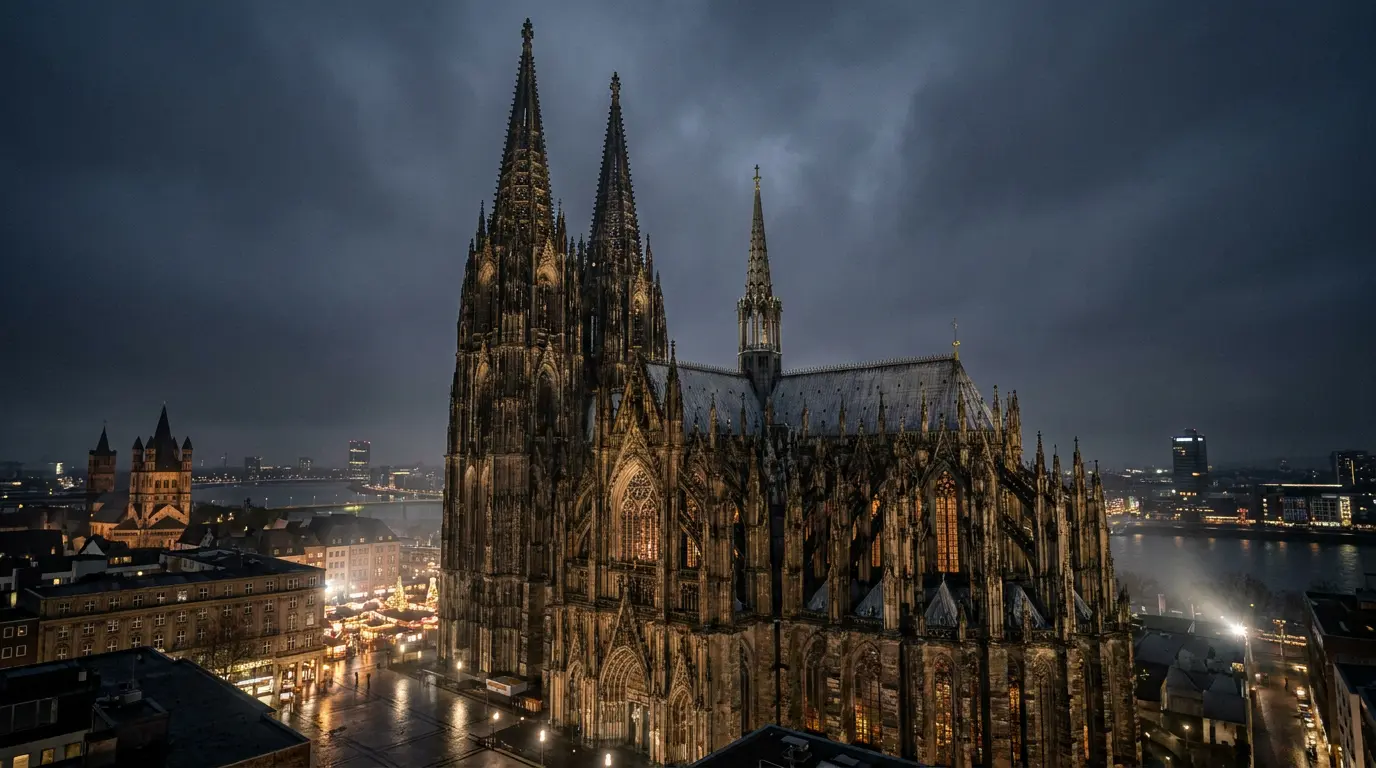
Cologne Cathedral began in 1248, paused for centuries, and was finally completed in 1880. That long story makes it one of Europe’s most remarkable church projects. Its twin spires rise above Cologne with a force you can feel even from a distance.
The cathedral holds both medieval ambition and 19th-century completion in one unforgettable shape. These points make Cologne especially powerful:
- Towering twin spires: The spires dominate the skyline and make the cathedral one of Germany’s most recognizable landmarks.
- Long construction timeline: Its completion after more than 600 years gives it a rare link between medieval and modern Europe.
- Major pilgrimage role: The cathedral was built in part to honor important relics, which drew pilgrims and elevated Cologne’s status.
6. Burgos Cathedral, Burgos, Spain
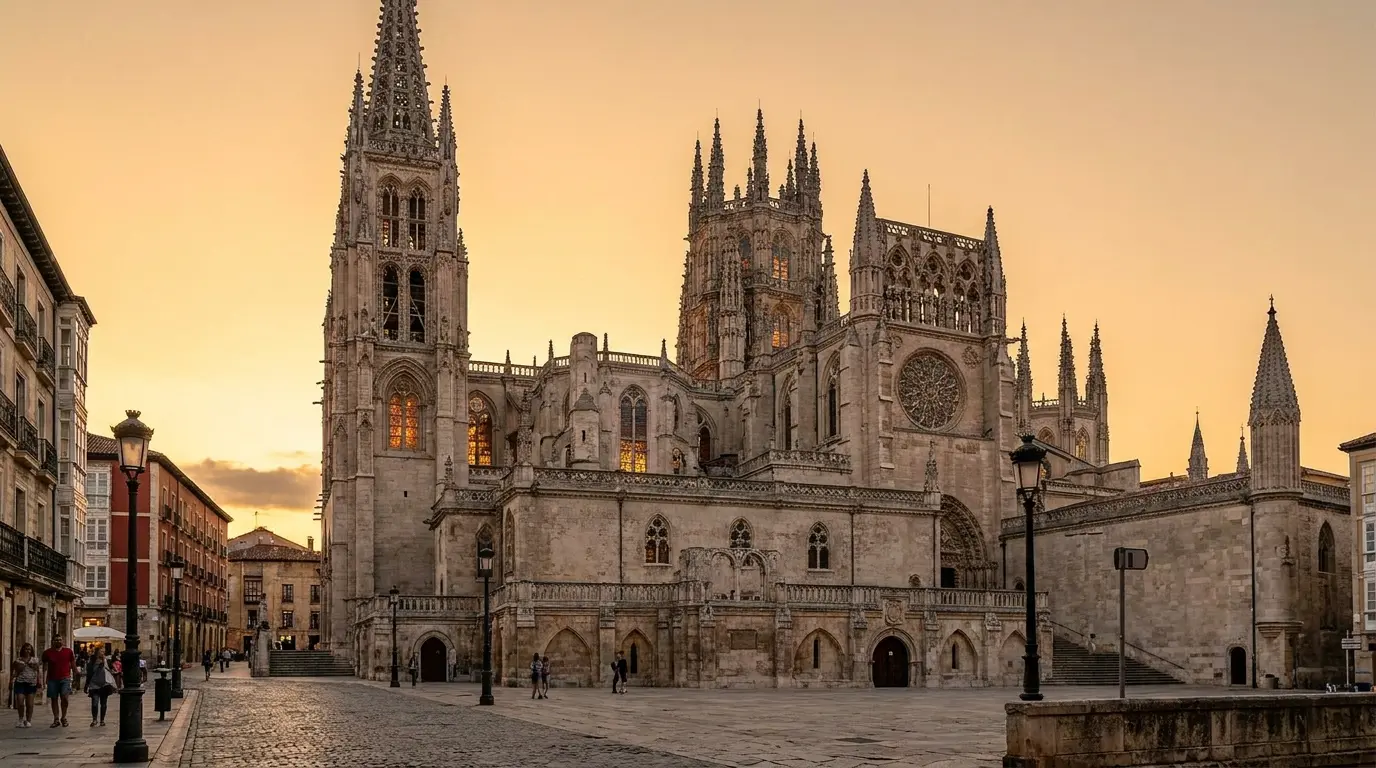
Burgos Cathedral began construction in 1221 and brought French Gothic ideas into a Spanish setting. Over time, later additions gave it a richer and more decorative look. Its sharp towers, carved details, and chapels create a layered experience.
You feel the original Gothic frame, as well as the personality of Spain in its stonework. Here is what gives Burgos its character:
- Spanish Gothic identity: The cathedral adapts French Gothic forms while adding local details, making it feel distinct from northern examples.
- Decorative towers: Its lace-like spires give the exterior a refined and elegant profile.
- Layered artistic additions: Chapels, tombs, and later details show how the building continued to grow with changing tastes.
7. Seville Cathedral, Seville, Spain
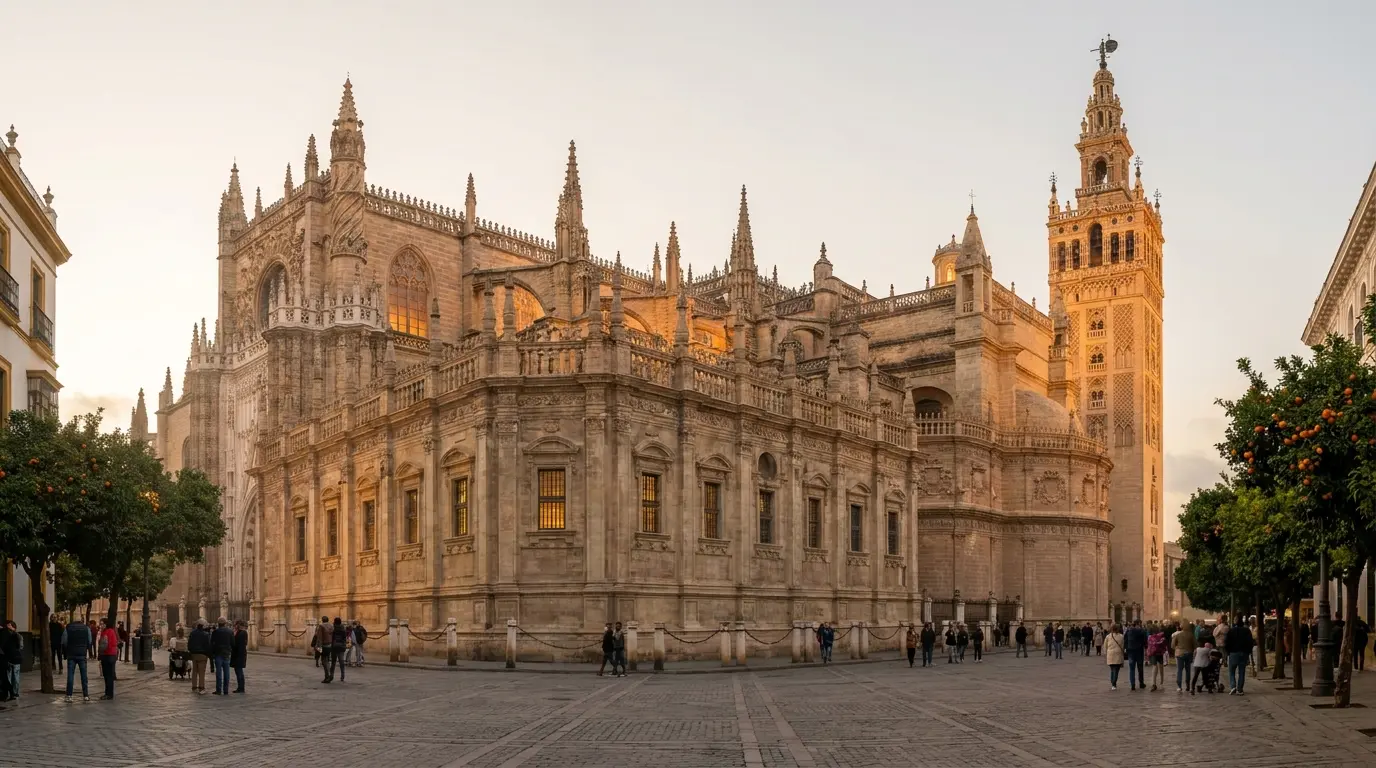
Seville Cathedral was built from 1401 on the site of the city’s former Great Mosque. This gives it a layered history unlike many other Gothic churches.
Its scale is overwhelming, but what makes it memorable is the blend of Gothic ambition with traces of earlier Islamic architecture. You feel the meeting of cultures in the stone, tower, and open spaces. These details make Seville unique:
- Immense Gothic scale: It is one of the largest Gothic churches in the world, built to reflect the city’s power and faith.
- La Giralda tower: The bell tower began as a minaret, preserving part of the site’s Islamic past.
- Cultural layering: The cathedral tells a story of religious change, urban power, and architectural reuse in southern Spain.
8. Westminster Abbey, London, England
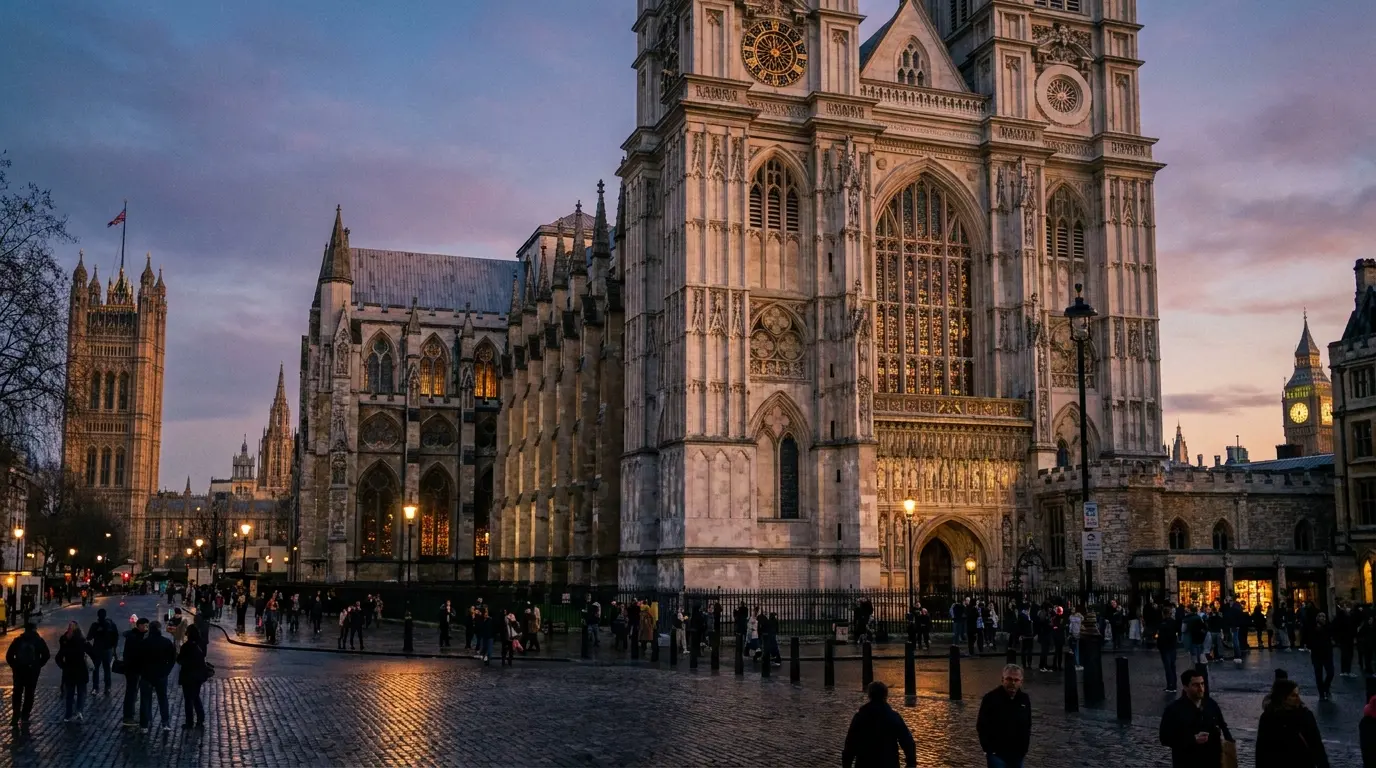
Westminster Abbey took much of its present Gothic form under Henry III, beginning in 1245. It became one of England’s most important religious and royal spaces.
Unlike some cathedrals known mainly for height or glass, Westminster is famous for ceremony, memory, and national identity. Walking inside feels like moving through England’s history in stone. Its value sits in these details:
- Royal ceremonial role: It has hosted coronations, weddings, and burials, making it central to British public life.
- Gothic interior rhythm: Pointed arches, tall vaulting, and long lines create a solemn but graceful setting.
- Historic memorials: Poets, monarchs, scientists, and public figures are remembered here, adding layers beyond architecture.
9. York Minster, York, England
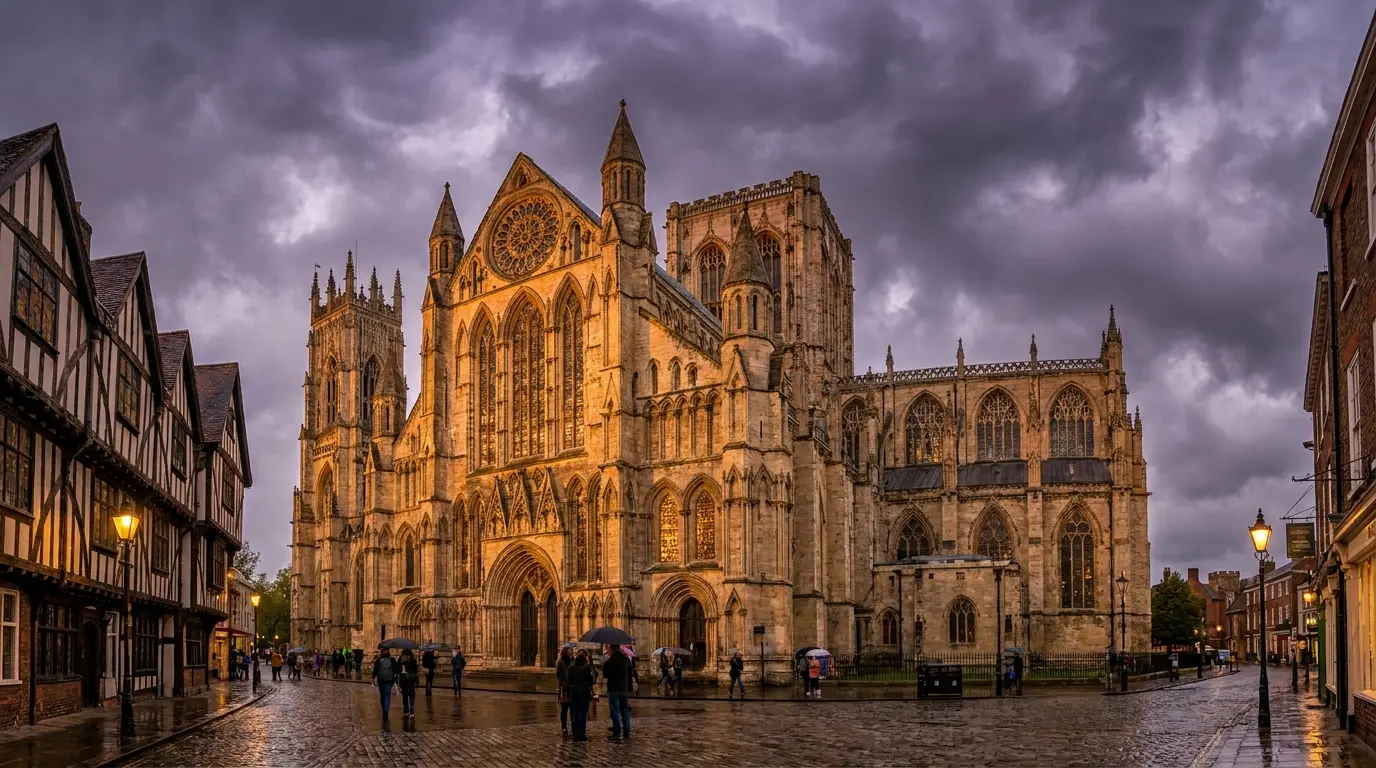
York Minster developed over several centuries, with major Gothic work from the 13th to 15th centuries. It is one of the greatest Gothic churches in northern Europe.
The building feels broad, bright, and deeply English in character. Its glass is a major reason to visit, especially when daylight brings the windows to life. These features make York Minster stand out:
- Great East Window: This vast stained-glass window is one of the largest and most important medieval windows in England.
- Strong northern presence: Its size and setting made it a major religious landmark far from London.
- Mix of Gothic phases: Different parts show changing English Gothic styles across several centuries.
10. Milan Cathedral, Milan, Italy
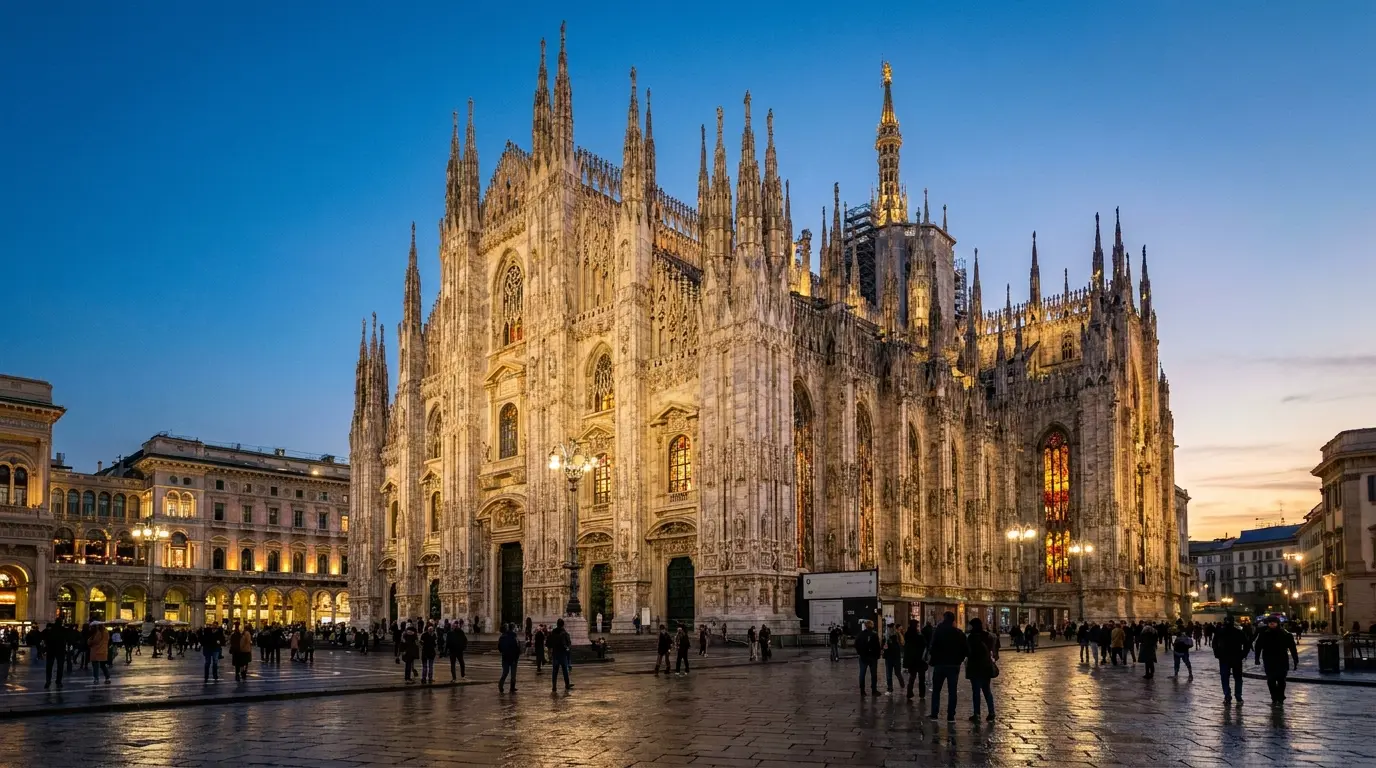
Milan Cathedral began in 1386 and took nearly six centuries to complete. It has a very different mood from French Gothic cathedrals. Instead of a dark, compact mass, it rises in pale stone with countless spires, statues, and fine details.
From the roof, you can stand close to the carved stone and see Milan spread below you. These details give Milan Cathedral its appeal:
- Forest of spires: The roofline is filled with pinnacles and statues, creating one of the most detailed Gothic silhouettes in Europe.
- Italian Gothic character: It blends northern Gothic ideas with local tastes, resulting in a style that feels uniquely Milanese.
- Walkable roof terraces: Visitors can climb close to the stonework, making the architecture feel personal and touchable.
11. Canterbury Cathedral, Canterbury, England
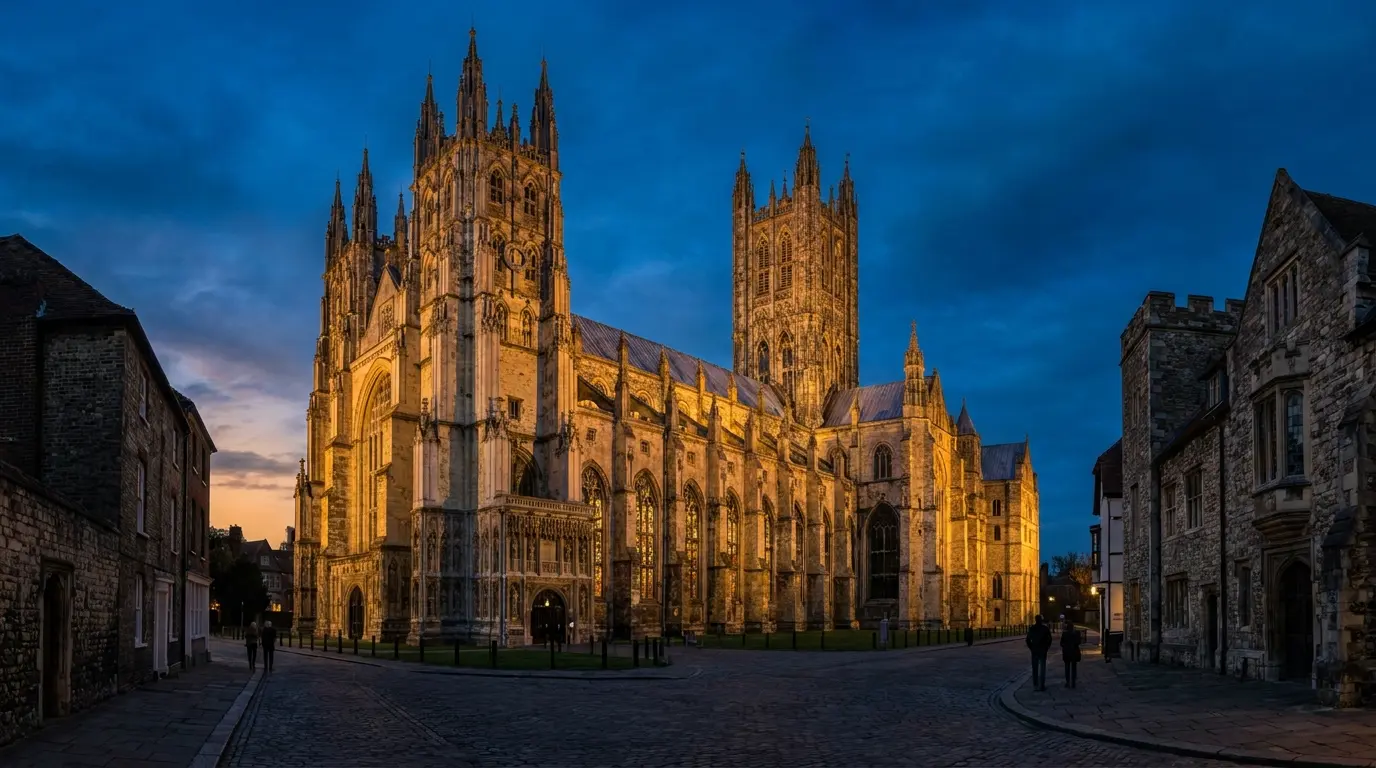
Canterbury Cathedral has roots going back to 597, but much of its famous Gothic character developed after the fire of 1174, when the choir was rebuilt in a new Gothic style.
It became one of England’s most important pilgrimage sites after the murder of Thomas Becket in 1170. When you walk inside, the building feels layered, sacred, and deeply tied to English history. Here is what makes Canterbury worth including:
- Early English Gothic choir: The rebuilt choir helped bring Gothic ideas into England, making Canterbury important in the spread of the style.
- Pilgrimage legacy: Becket’s shrine drew medieval pilgrims for centuries, giving the cathedral a powerful religious and cultural role.
- Layered architecture: The building holds Romanesque and Gothic parts together, so visitors can see how church design changed over time.
Parts of a Gothic Cathedral
Cathedral terms can feel confusing at first, but you only need a few to understand what you are seeing. Once you know the main areas, the building starts to feel less like a maze and more like a planned sacred space. Use this table as a simple guide while reading, visiting, or looking at photos.
| Part | What It Means | Why It Matters |
|---|---|---|
| Nave | The main central space where people gather | It gives the cathedral its long, grand interior view |
| Transept | The cross-section that cuts across the nave | It often creates the church’s cross-shaped plan |
| Choir | Area used by clergy and singers | It sits closer to the altar and carries ceremonial importance |
| Apse | Rounded or angled end near the altar | It frames the sacred focus of the building |
| West facade | Main front entrance | It often holds towers, portals, and sculptures |
| Portals | Decorated doorways | They welcome visitors with carved religious stories |
| Clerestory | Upper wall with windows | It brings daylight into the high interior |
Knowing these parts helps you slow down. Instead of only saying “This church is beautiful,” you can understand how the space leads you from entrance to altar, from shadow to light, and from street noise to stillness.
How to Recognize a Gothic Cathedral
You do not need to be an architecture expert to spot Gothic architecture. Step back first, then move closer slowly. Look at the outline from the street, the entrance from eye level, and the ceiling from inside.
The style reveals itself through the way the building rises, opens, and pulls light into the space. Look for these signs when you visit or view photos:
- Sharp pointed arches: You will often see them above doors, windows, side aisles, and interior walkways. Their pointed shape gives the building a taller and more upward-looking profile than round-arched churches.
- High vaulted ceilings: Inside, look for ceilings that seem to stretch far above you with visible stone ribs. These ceilings often make the nave feel long, lifted, and carefully ordered. The same principle that makes a low ceiling feel oppressive is what Gothic builders reversed through ribbed vaults and vertical proportion.
- External buttresses: Walk around the outside if you can. Gothic cathedrals often have stone supports that step away from the walls, sometimes shaped like half-arches, holding the upper structure in place.
- Large stained-glass windows: Instead of small wall openings, you may see wide panels of colored glass. From inside, these windows soften the stone with shifting tones of blue, red, gold, and violet.
- Circular rose window: Check the main facade or the ends of the transept. A rose window usually appears as a large round design made of stone tracery and colored glass.
- Tall towers or spires: From a distance, Gothic churches often rise above the surrounding streets. Their towers and spires were made to be seen from across the town, not only from the doorway.
- Carved portals: Pause at the main entrance. Gothic doorways often have layered arches, sculpted figures, and scenes carved into the stone, turning the entrance into a visual story.
- Light-filled nave: Once inside, notice how the central space feels. Gothic naves often feel taller, brighter, and more open than earlier medieval churches, with light guiding your eyes toward the altar.
Not every Gothic church has all of these signs. Some are modest, some have been rebuilt, and some blend styles from different centuries. But when you see height, pointed forms, colored glass, carved entrances, and a bright upward interior together, you are likely standing before a Gothic cathedral.
Gothic vs. Romanesque and Gothic Revival
Romanesque, Gothic, and Gothic Revival churches may look related, but each belongs to a different age. The easiest way to tell them apart is by noticing weight, light, and height. Romanesque feels grounded, Gothic feels lifted, and Gothic Revival brings the Gothic look into a later period.
| Style | Main Look | Common Features | Time Period | Best Way to Recognize It |
|---|---|---|---|---|
| Romanesque | Heavy, solid, fortress-like | Round arches, thick walls, barrel vaults, small windows, sturdy towers | Mainly 10th to 12th centuries | Look for rounded forms, darker interiors, and a strong, weighty structure |
| Gothic | Tall, bright, upward-reaching | Pointed arches, ribbed vaults, flying buttresses, stained glass, rose windows | Mainly 12th to 16th centuries | Look for height, colored light, pointed forms, and wide window openings |
| Gothic Revival | Medieval-inspired but newer | Pointed arches, spires, tracery, stained glass, decorative stonework | Mostly 18th to early 20th centuries | Look for Gothic details in buildings from a much later historical setting |
This comparison helps you read a church with more confidence. A Romanesque church often feels enclosed and protective. A Gothic cathedral feels open, vertical, and full of colored light. A Gothic Revival church may look medieval, but its story is newer and inspired by the past.
Tips for Visiting Gothic Cathedrals
A Gothic cathedral is best experienced slowly. Before you move from one famous corner to another, give your eyes time to adjust. These buildings reveal themselves through height, shadow, glass, stone, and silence, so a slower visit often feels much richer. Keep these tips in mind when you visit:
- Start from the back: Stand near the entrance and look down the nave. This gives you the full sense of length, height, and direction before you focus on smaller details.
- Look up before moving on: The ribbed vaults are easy to miss if you only look straight ahead. Notice how the ceiling lines guide your eyes upward.
- Study the stained glass from inside: Colored windows are best seen with natural light behind them. Morning or late afternoon light can make the glass feel especially vivid.
- Walk around the outside: Flying buttresses, towers, portals, and carvings often make more sense from the exterior. The outside explains how the inside stands.
- Pause at the main doorway: Many Gothic entrances carry carved figures and symbolic scenes. They often prepare you for the sacred stories inside.
- Read a short history first: Even a few facts about the cathedral’s age, city, or patrons can make the visit feel more personal and meaningful. A quiet place to do that reading matters too; the same instinct that draws people to a cozy reading room is what makes a cathedral nave so compelling to sit in before the crowds arrive.
Try not to rush your visit. Gothic churches were built for layers of attention, not quick glances. The more slowly you move, the more you notice: a carved face, a shaft of colored light, or a quiet corner that stays with you later.
Frequently Asked Questions
Why do cathedrals face the east?
They follow “liturgical orientation.” The altar faces east toward the rising sun, symbolizing the resurrection of Christ and his promised return. Consequently, the main entrance (west facade) welcomes visitors moving from western darkness toward spiritual light.
What are labyrinth floors used for?
Many Gothic floors, like Chartres, feature circular stone mazes. Medieval pilgrims who could not travel to Jerusalem walked these intricate floor paths on their knees as a symbolic, meditative substitute for a holy pilgrimage.
How did builders pay for cathedrals?
Funding came from royal donations, wealthy merchants, church taxes, and the lucrative sale of indulgences (spiritual forgiveness). Shrines housing famous saint relics also drew massive crowds of pilgrims whose entry donations funded generations of masonry.
Who actually built these churches?
Traveling guilds of specialized Freemasons, stone cutters, sculptors, and master engineers did the heavy lifting. Local peasants provided basic manual labor, like hauling heavy stone blocks, often working as an act of religious devotion.
Why are there clocks on the towers?
Monks and townspeople needed to track structural prayer times (liturgical hours). As mechanical clocks advanced in the late Middle Ages, cathedral towers naturally housed them, turning the church into the town’s official timekeeper.
Where did they get the stained glass?
Artisans melted silica sand, potash, and lime at high temperatures. They added metallic oxides to the molten batch—like copper for rich red or cobalt for deep blue—to stain the glass before blowing it into sheets.
What is the meaning of a crypt?
A crypt is a stone basement chamber located beneath the elevated altar floor. It served as a secure burial vault for saints, bishops, and martyrs, preserving holy relics while providing a quiet space for private worship.
Why do floor plans look like crosses?
Gothic builders intentionally laid out foundations in a Latin cross shape (cruciform plan). The long nave forms the vertical beam, while the intersecting transept forms the horizontal arms, structurally mirroring the primary symbol of Christian faith.
Wrapping Up
Standing inside a Gothic cathedral is more than just admiring stone and glass; it’s about feeling history, design, and faith all around you.
I hope you now understand how pointed arches, flying buttresses, ribbed vaults, and stained-glass windows work together to create height, light, and atmosphere.
You also know how to recognize Gothic features, distinguish them from Romanesque or Gothic Revival, and appreciate the significance of famous cathedrals like Notre-Dame, Chartres, or Seville. This knowledge helps you see both engineering and artistry in a new way.
Next time you visit a cathedral, take your time, observe details, and notice how space and light tell centuries-old stories.