

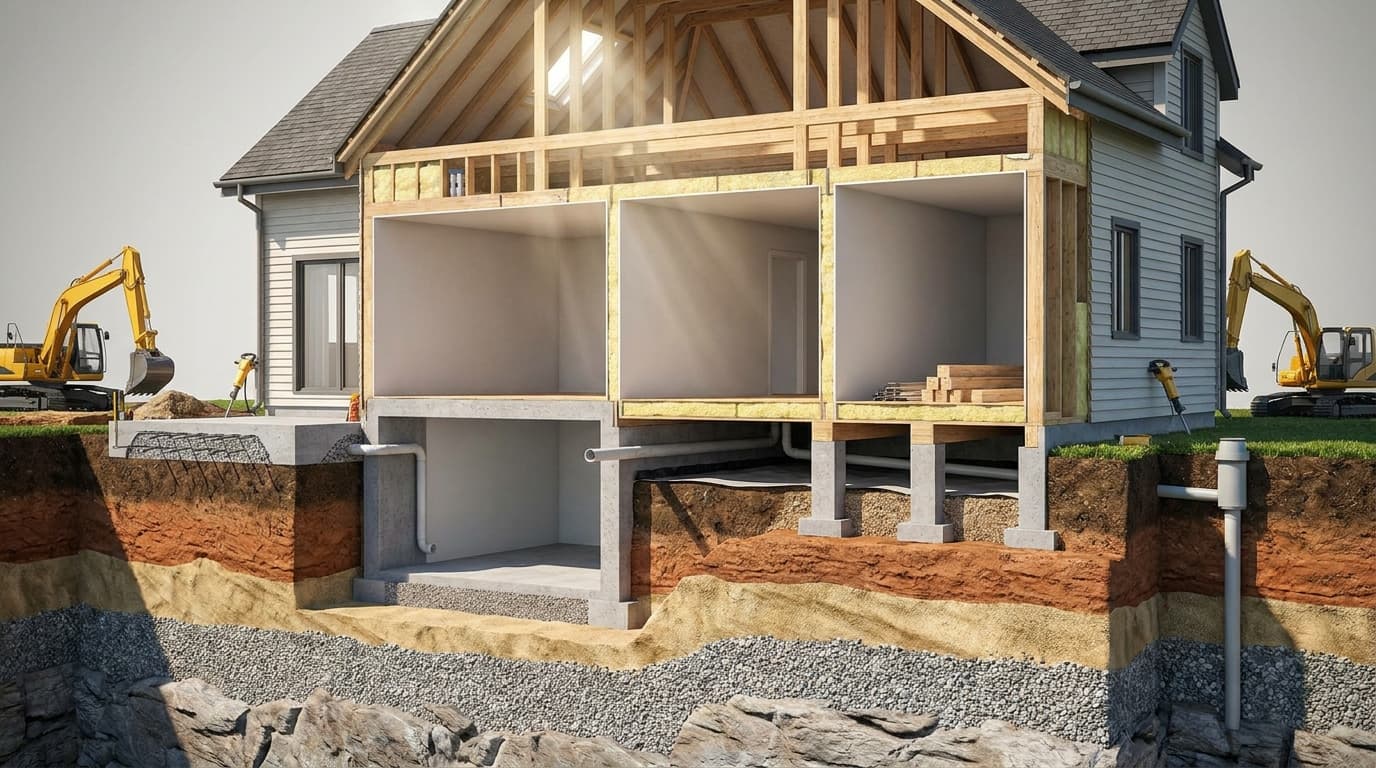


A house foundation type decision can shift your total build budget by $10,000 to $60,000 before you’ve bought a single board of lumber.
If you’re planning a new build, comparing lots, or trying to decode a contractor’s bid, the foundation line item is usually the one that causes the most confusion.
This guide breaks down all house foundation types, what each one costs in real numbers, where budgets go wrong, and what to ask before you sign anything.
| Cheapest Foundation Type | Concrete slab ($4,000–$12,000) |
| Most Expensive Foundation Type | Mat/raft foundation ($25,000–$70,000) |
| Most Common Hidden Cost | Waterproofing, drainage, and soil correction |
| Biggest Budget Risk | Discovering poor soil conditions after excavation starts |
| Cost Source | HomeAdvisor national averages, 2024–2025 |
The table above is a quick orientation, not the full picture. What type of lot you need and what it ends up costing depend heavily on where you’re building, what the soil is doing, and how your contractor prices the work beneath the surface. That detail is what this article is built around.
What a House Foundation Actually Does (And Why Type Matters)
A house foundation transfers the entire weight of a structure into the ground safely and prevents it from shifting, settling unevenly, or absorbing moisture in ways that damage the frame above.
Every crack in a wall, every door that sticks in a frame, every sloping floor in an older home can often be traced back to what happened at the foundation level years earlier.
Choosing the wrong type for your soil conditions or climate is one of the most expensive mistakes you can make in a new build. It is also one of the hardest to fix after the fact, because the foundation is already under your house.
The choice you make before the slab is poured or the piles are driven is the one you live with for decades.
The Key Factors That Determine Which House Foundation Type You Need
No single foundation type works everywhere. Before any cost conversation makes sense, these five factors have to be assessed for your specific site:
- Soil Type & Bearing Capacity: Clay expands/contracts; loose or sandy soil may need deeper support. Soil-bearing tests are essential before excavation.
- Frost Line Depth: Footings must extend below frost line to prevent heave; depth affects excavation and foundation type.
- Water Table & Drainage: High water tables add hydrostatic pressure; exterior waterproofing may cost $10,000–$30,000 extra.
- Building Size & Structural Load: Larger, heavier homes require deeper footings, more reinforcement, and additional concrete.
- Local Building Codes: Permit and inspection requirements vary; skipping them risks delays, fines, or resale liability.
These factors are why a contractor cannot give you a reliable foundation cost estimate without a site visit and, ideally, a soil report. Any bid based on a phone description of your lot should be treated as a rough planning number only.
If you’re still in the early stages of deciding whether to build at all, the build on your land full sequence of decisions that come before foundation selection.
All House Foundation Types: What They Cost and When to Use Them
The following breakdown covers each foundation type from the most commonly used to the most specialized, with honest cost ranges and the conditions that make each one the right or wrong choice for a project.
1. Concrete Slab Foundation
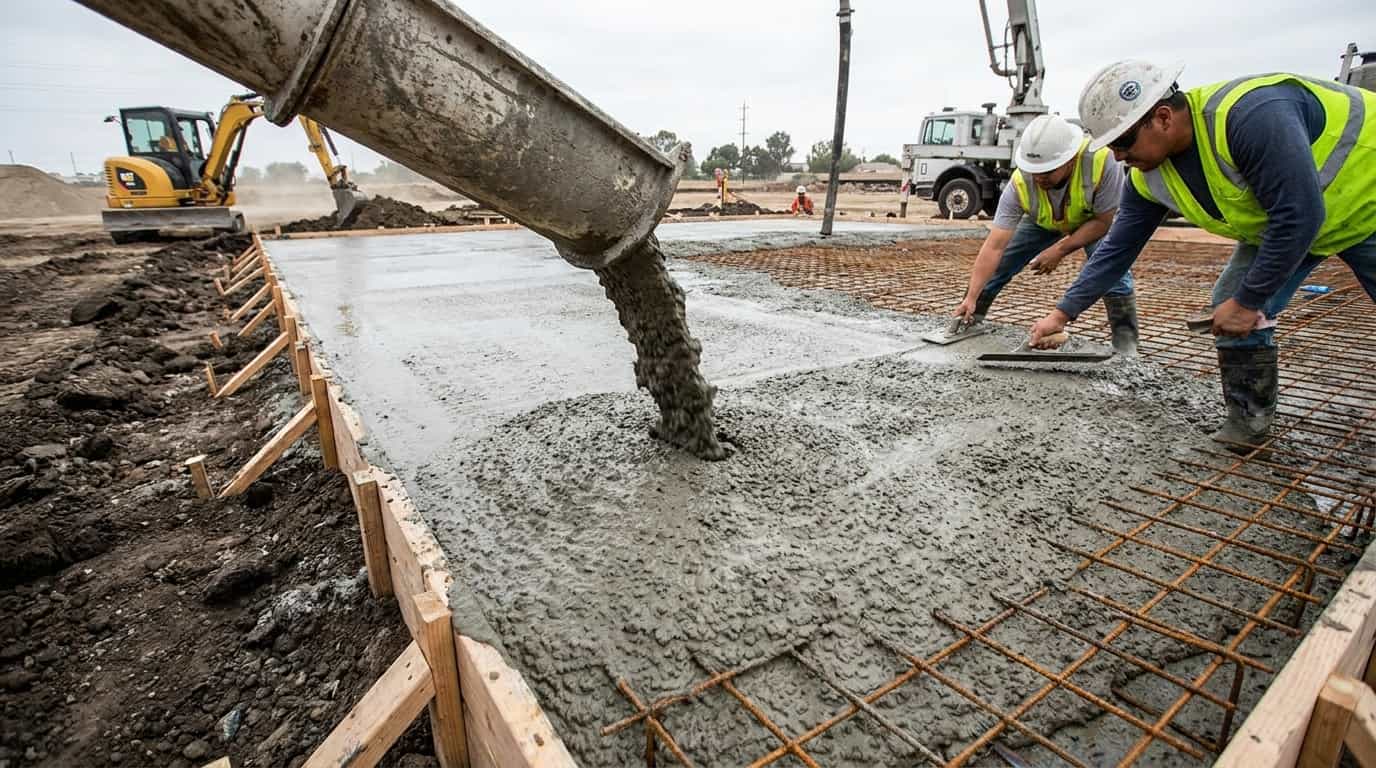
A concrete slab is poured directly onto prepared, compacted soil in a single continuous pour, with reinforcing steel embedded inside.
It is the least expensive foundation option and the fastest to complete. In the right conditions, it performs exceptionally well for decades with almost no maintenance.
Typical cost range: $4,000–$12,000 for a standard residential slab. This assumes flat terrain, stable soil, and a region where frost depth is not a factor.
| Works Well For | Watch Out For |
|---|---|
| Warm-climate builds with stable, flat lots | Plumbing runs through the slab; repairs require cutting concrete |
| Homes where no basement or crawl space is needed | Not suitable for lots with frost heave risk or expansive clay soil |
| Budget-constrained builds where soil conditions allow | Zero access to utilities under the floor after pour |
The hidden cost most homeowners miss: soil preparation. If your lot has fill dirt, tree roots, or soft spots, the contractor must excavate and recompact before pouring, which can add $1,000 to $5,000 to the base estimate.
2. Basement Foundation
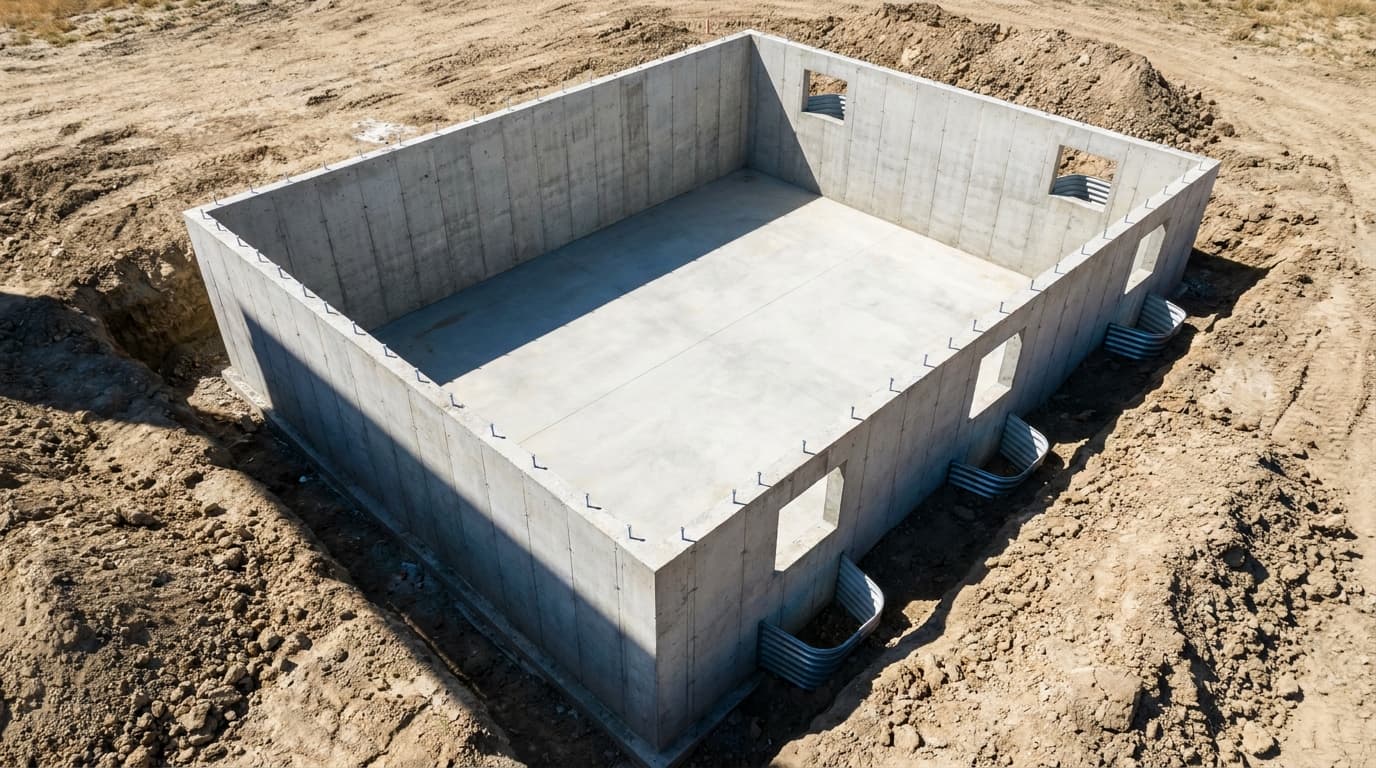
A basement foundation uses poured concrete or concrete block walls that extend well below the frost line, with a floor slab at the base.
The depth that protects the foundation from frost also creates usable square footage. A finished basement can add meaningful living space, but even an unfinished one is useful for utilities, storage, and mechanical systems.
Typical cost range: $15,000–$50,000. The wide range reflects excavation depth, wall type, waterproofing specification, and regional labor costs. On bedrock sites that require blasting, costs can go higher.
| Works Well For | Watch Out For |
|---|---|
| Cold-climate builds that require deep footings anyway | High water table sites require extensive waterproofing |
| Homes that need extra living or utility space | Ongoing moisture management: sump pumps, drainage tile, wall sealants |
| Sloped lots where partial basements are feasible | The most expensive standard foundation type to build and to maintain |
The waterproofing line item on a basement foundation deserves its own attention. Interior drainage systems run $50 to $100 per linear foot; exterior excavation-based systems run $100 to $300 per foot.
For a full-perimeter system, that means $8,000 to $30,000 on top of the base foundation cost. Many contractors quote the foundation and the basement waterproofing costs separately, so budget both before committing to this type.
3. Crawl Space Foundation
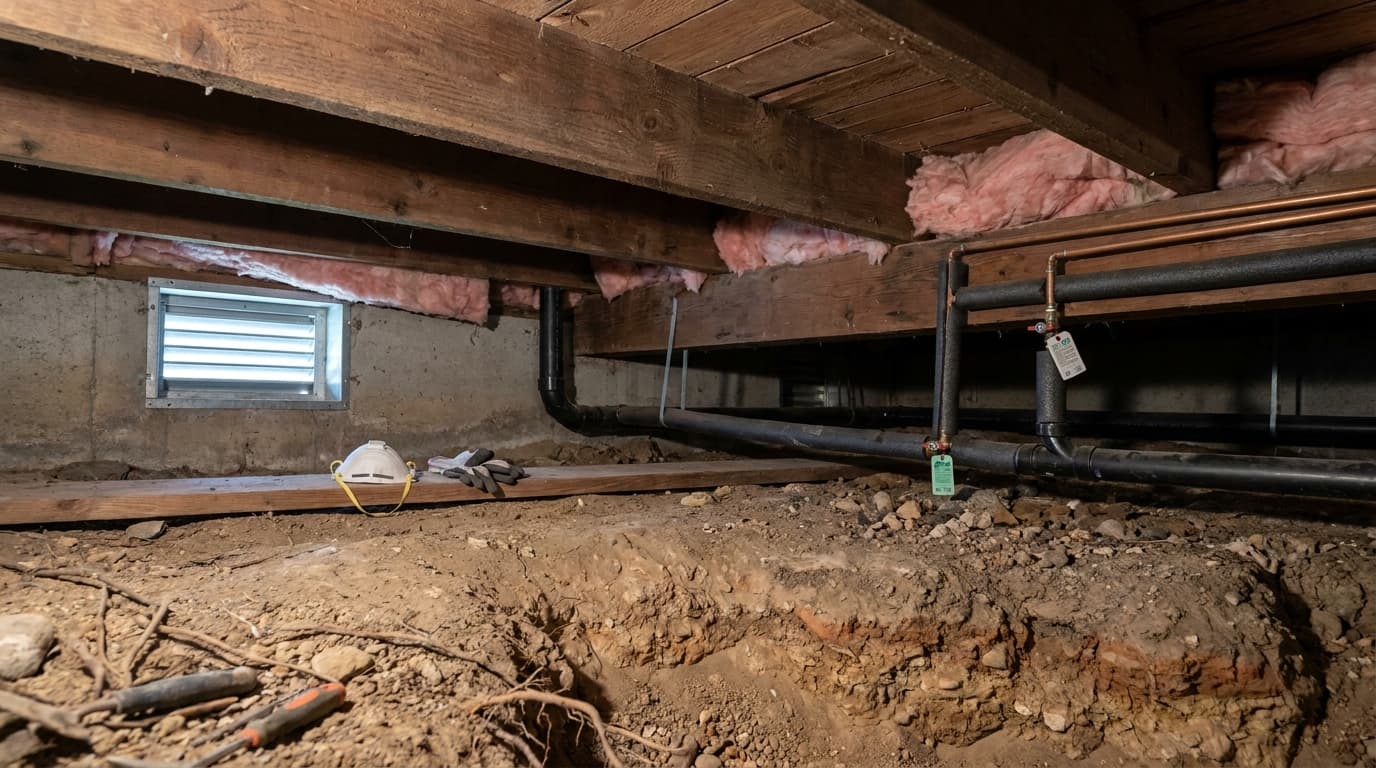
A crawl space foundation uses short stem walls to raise the home 18 inches to 4 feet above grade, creating a narrow accessible area under the floor.
It is the practical middle option between a slab and a full basement: more accessible than a slab for plumbing and electrical work, and less expensive to build than a basement.
Typical cost range: $8,000–$20,000. Ventilation systems, moisture barriers, and insulation are often add-ons that push the actual project cost toward the higher end.
| Works Well For | Watch Out For |
|---|---|
| Sloped or uneven lots where slab grading is impractical | Moisture accumulates easily without proper ventilation and vapor barriers |
| Regions with moderate climate and accessible utility needs | Pest entry is a persistent concern without encapsulation |
| Mid-range budgets that need utility access under the floor | Encapsulation adds $5,000–$15,000 but is often necessary in humid climates |
Crawl spaces that are not properly encapsulated and ventilated tend to become the source of mold, floor rot, and pest damage within 5 to 10 years. That maintenance liability rarely shows up in the initial quote.
4. Pier and Beam Foundation
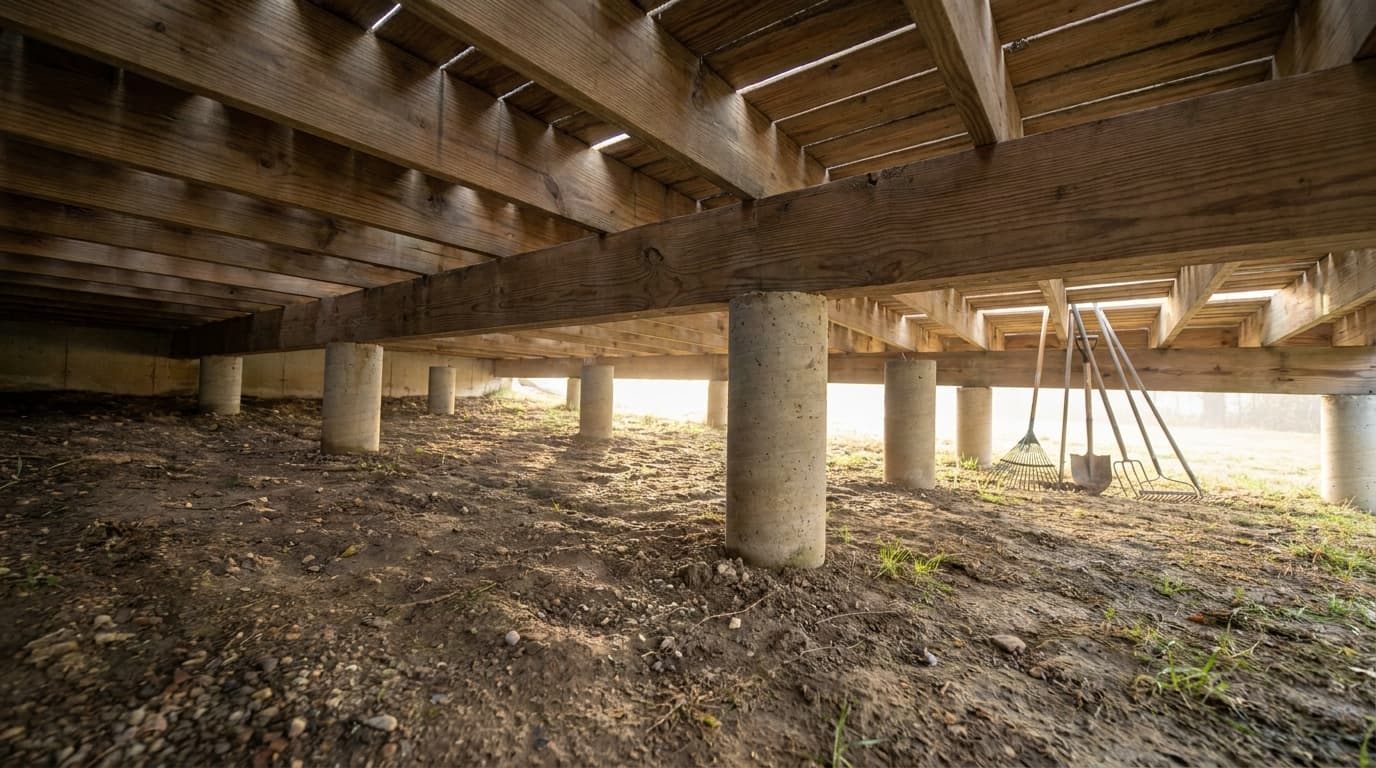
Pier and beam foundations support the home on a grid of vertical concrete piers with horizontal beams running between them. The house sits elevated above the ground, with open space underneath. This approach adapts well to uneven terrain and is common in older homes across Texas, the Southeast, and coastal regions.
Typical cost range: $12,000–$35,000. Depth of piers, soil conditions, and whether you are building new or rehabilitating an existing system all drive variation.
| Works Well For | Watch Out For |
|---|---|
| Coastal areas and flood-prone zones where elevation matters | Floors can shift and squeak as pier posts settle or wood ages |
| Uneven terrain that would require major grading for a slab | Requires regular inspection; settling piers need leveling every few years |
| Easy access to plumbing and electrical under the floor | Moisture and pest management are still required in the open underfloor space |
If you are buying an older home with a pier and beam foundation, get an inspection from a specialist who can evaluate whether the piers have settled unevenly and whether the beams show rot or insect damage. Repairs on a neglected system run $4,000 to $15,000 or more.
5. Pile Foundation
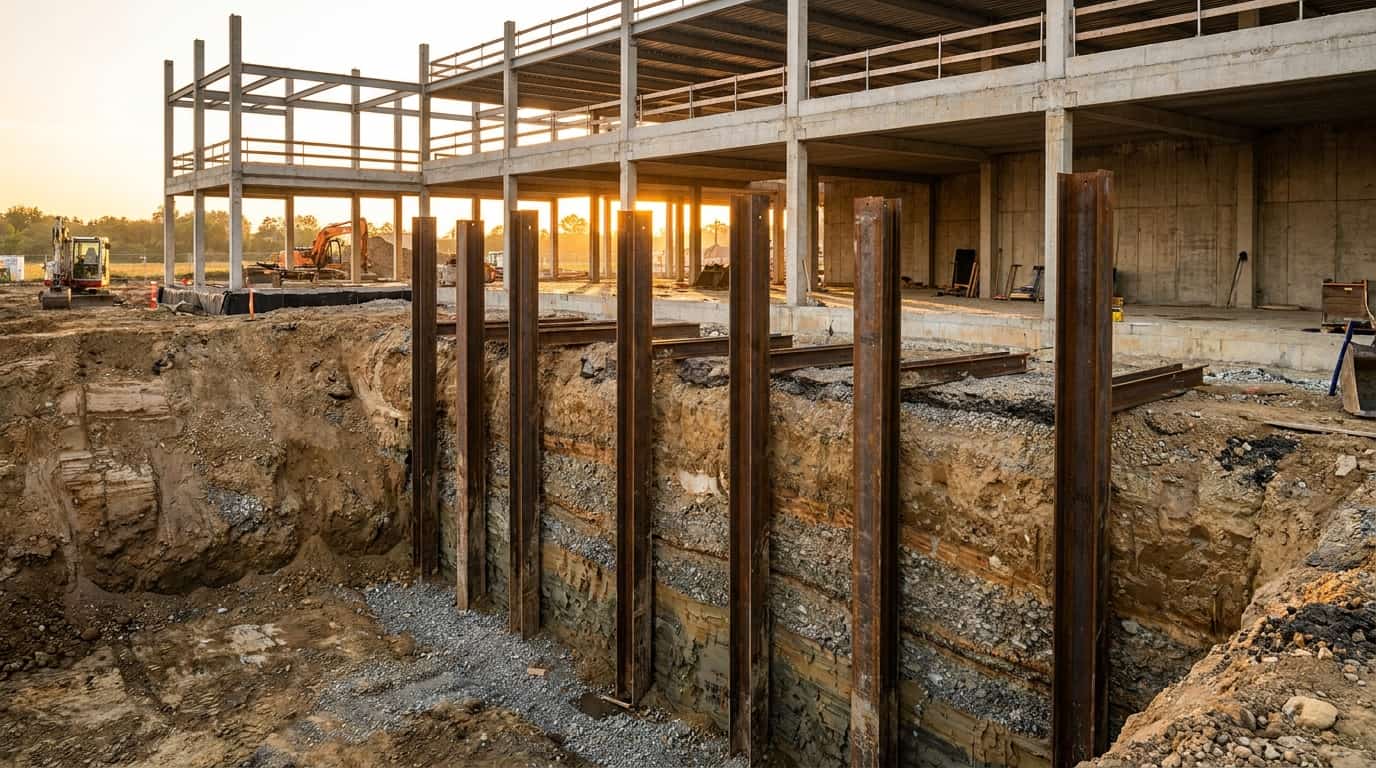
Pile foundations drive long steel or concrete columns deep into the ground until they reach stable load-bearing soil or bedrock.
They are used when the top layers of soil are too soft, waterlogged, or unstable to carry the structural load. This is not a residential first choice but the only viable option on sites with poor bearing capacity.
Typical cost range: $20,000–$60,000, with significant upward variation based on pile depth, soil resistance, and equipment mobilization fees. On coastal or waterfront builds, costs can exceed this range substantially.
| Works Well For | Watch Out For |
|---|---|
| Soft, waterlogged, or low-bearing-capacity soil | Specialized equipment required; not every contractor can quote this accurately |
| Heavy structures requiring deep load transfer | Engineering design fees add $3,000–$10,000 on top of installation |
| Flood-zone or oceanfront builds with strict elevation requirements | Very high upfront cost with no practical lower-cost substitution on problem sites |
6. Raised Foundation
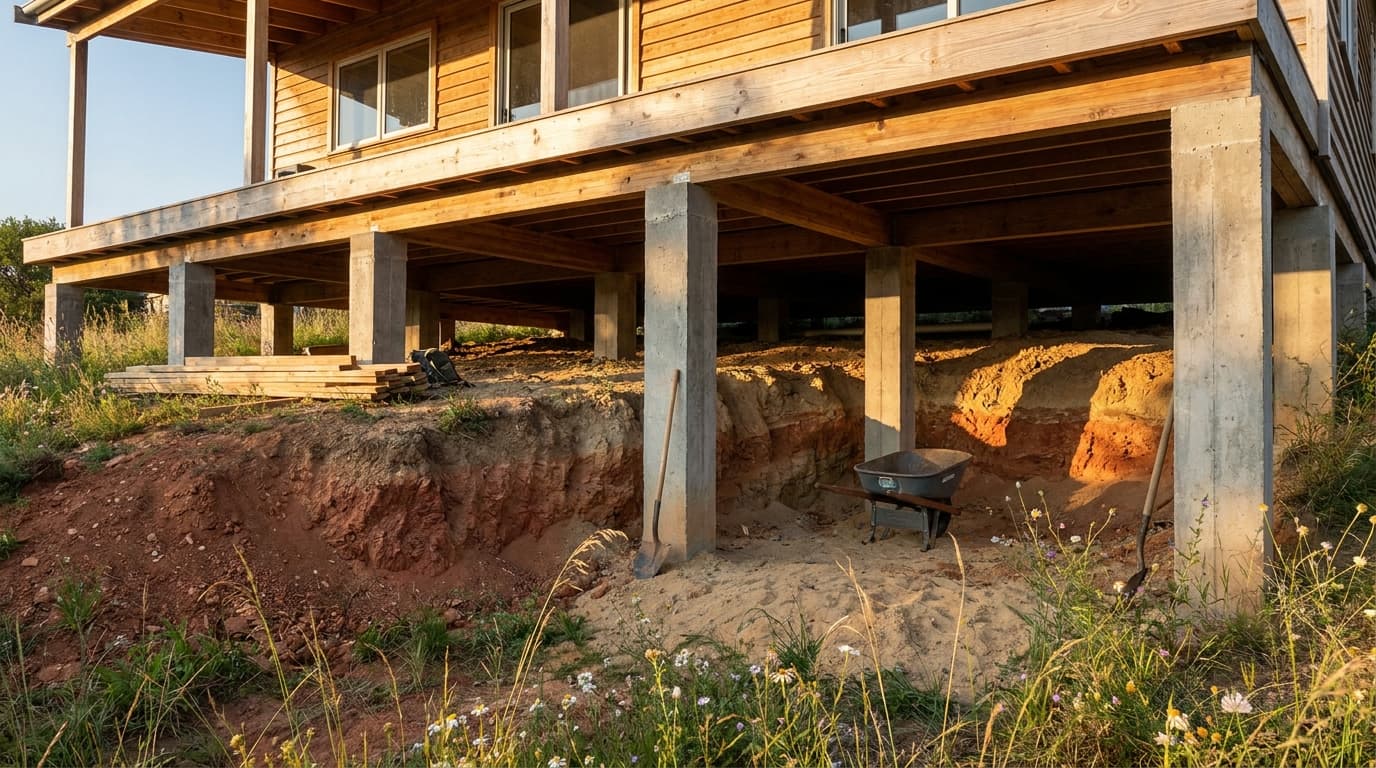
A raised foundation lifts the home clearly above grade using piers, columns, or perimeter walls. Unlike a standard crawl space, the clearance is often substantial enough to walk under. This design is common in flood zones, on hillside lots, and in regions where moisture management requires significant airflow under the structure.
Typical cost range: $10,000–$25,000. Bracing and seismic retrofits in earthquake-prone regions can add significantly to this range.
7. T-Shaped Foundation
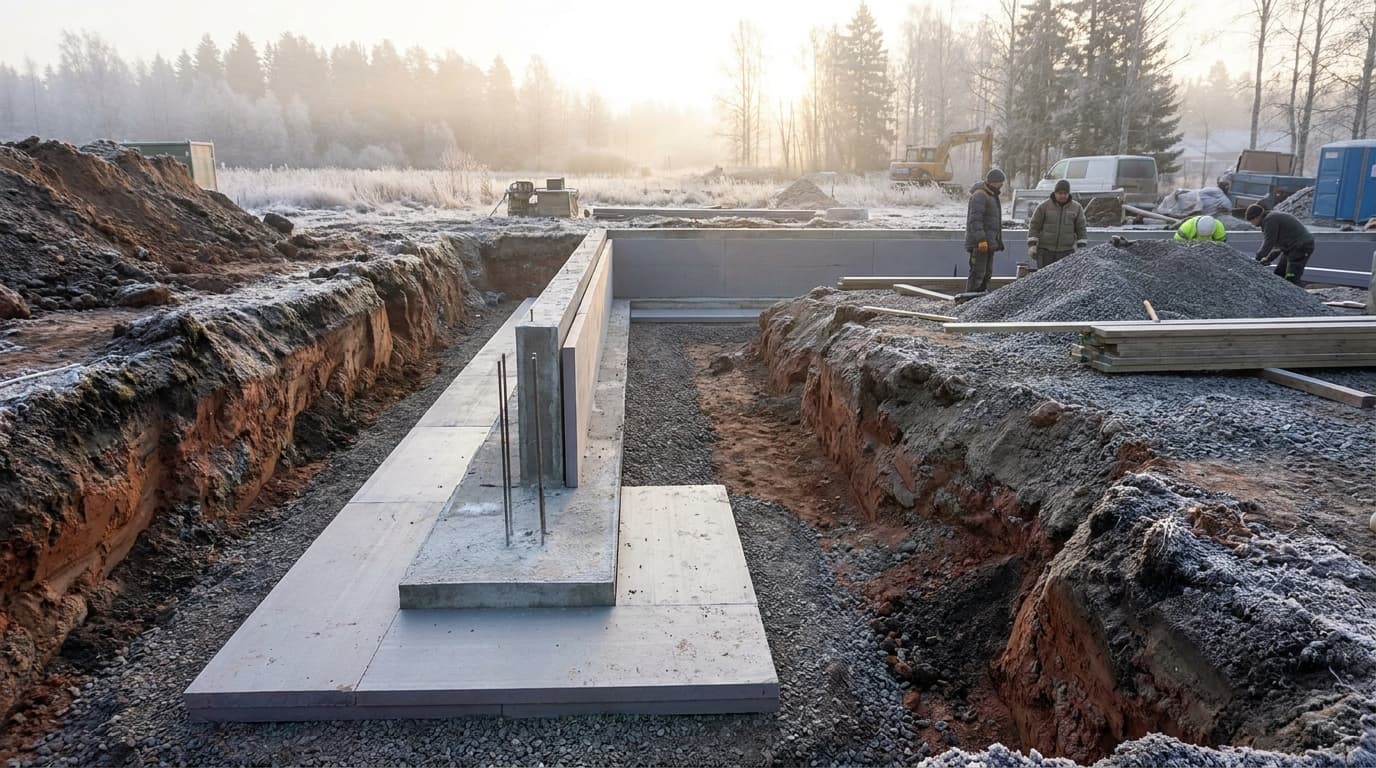
The T-shaped foundation is the standard cold-climate approach. Footings are poured first and go below the frost line, then walls are built on top of the footings, and the slab or floor system is placed last.
The cross-sectional shape, wider at the base than at the top, distributes load and resists the upward pressure of freezing and thawing soil.
Typical cost range: $15,000–$40,000. Deep footing requirements in northern states push costs toward the upper end of this range.
8. Frost-Protected Shallow Foundation (FPSF)
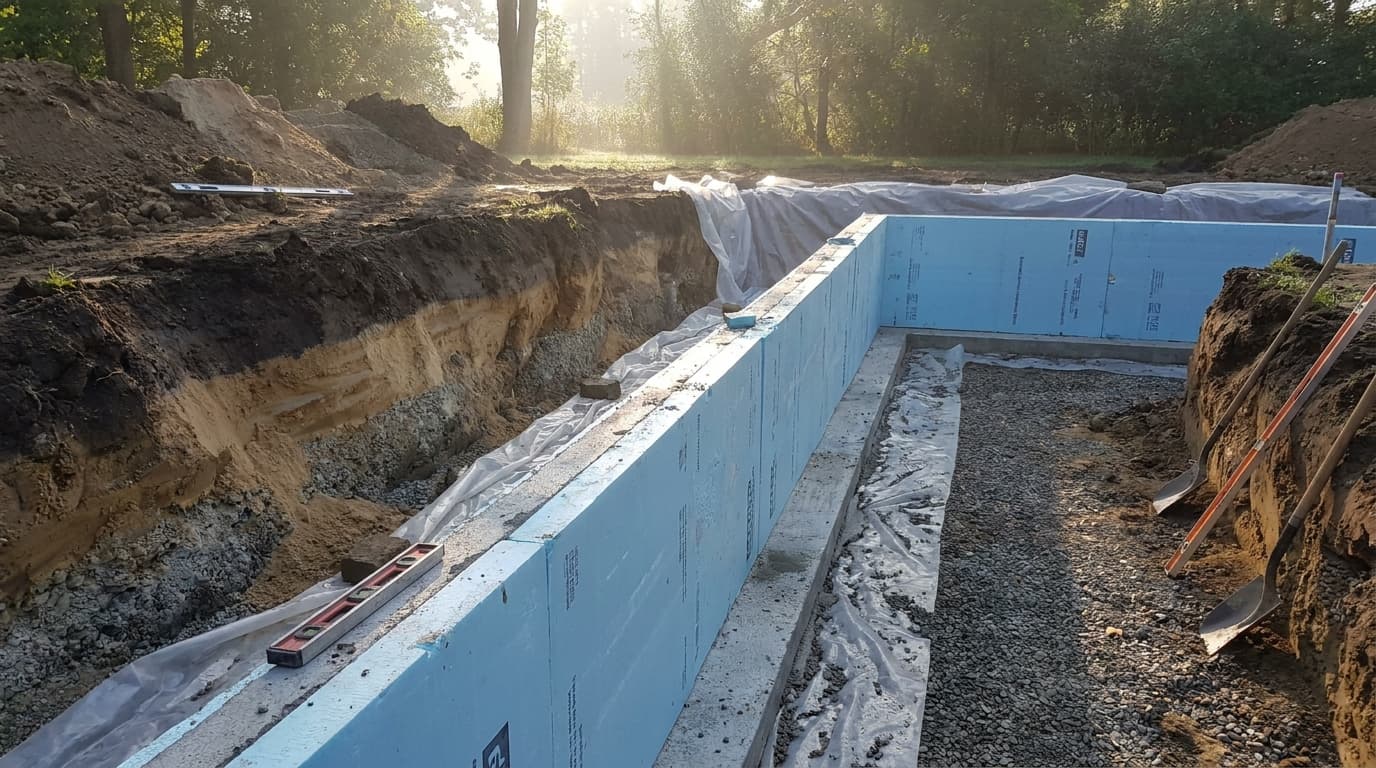
An FPSF uses rigid foam insulation placed horizontally around the perimeter of a shallow footing to keep the ground warm enough to prevent frost penetration. This allows footings to be placed at shallower depths in cold climates, reducing excavation and concrete costs compared to a T-shaped system.
Typical cost range: $10,000–$30,000. The savings over a deep T-shaped system come from reduced excavation, but the insulation installation must be done precisely according to engineering specifications. Shortcuts in placement defeat the frost protection entirely.
9. Mat or Raft Foundation
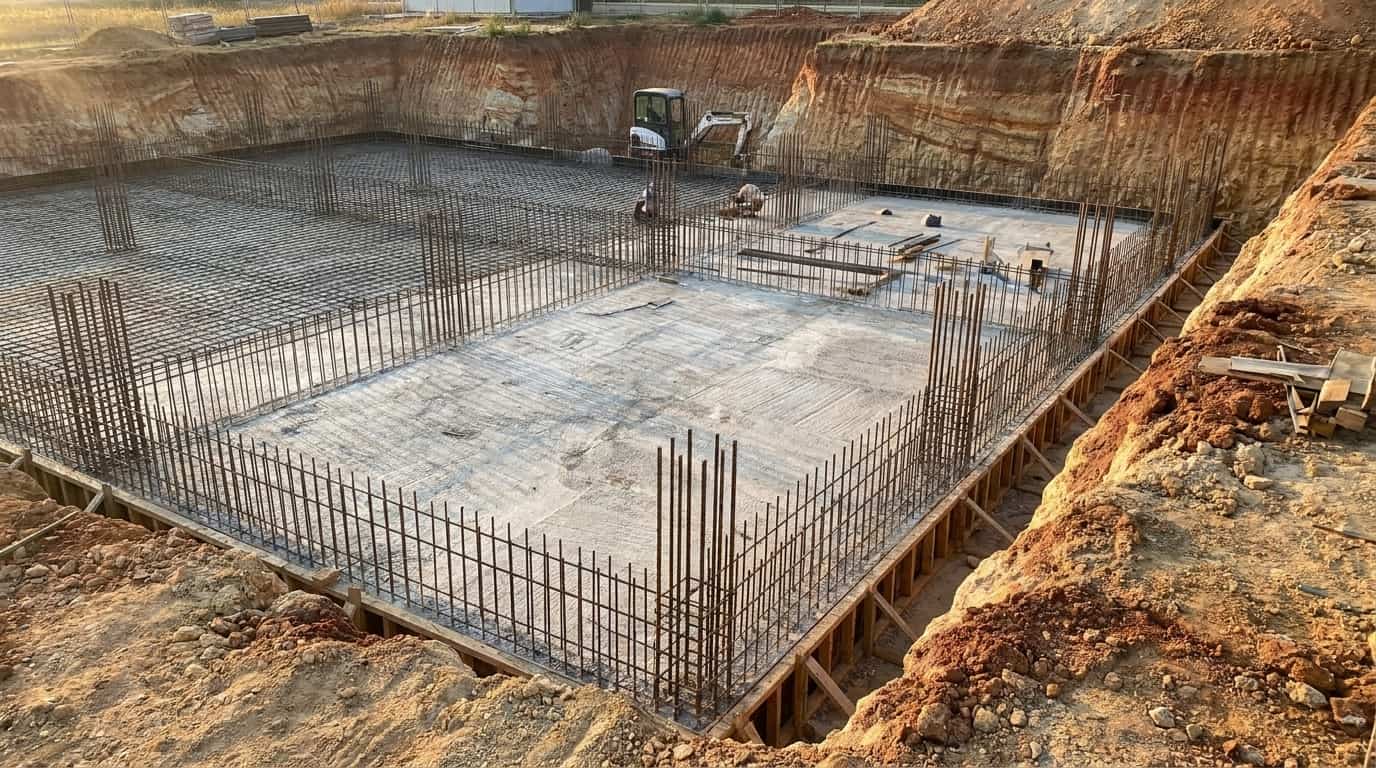
A mat foundation is a thick, heavily reinforced concrete slab that covers the entire building footprint.
Rather than concentrating load at specific points, it spreads the total weight across the maximum possible ground area. This is the correct choice when soil bearing capacity is uniformly low and isolated footings would punch through or settle unevenly.
Typical cost range: $25,000–$70,000. This is the most material-intensive option. The concrete volume alone on a large residential mat can approach what a standard basement costs just for the walls.
10. Insulated Concrete Form (ICF) Foundation
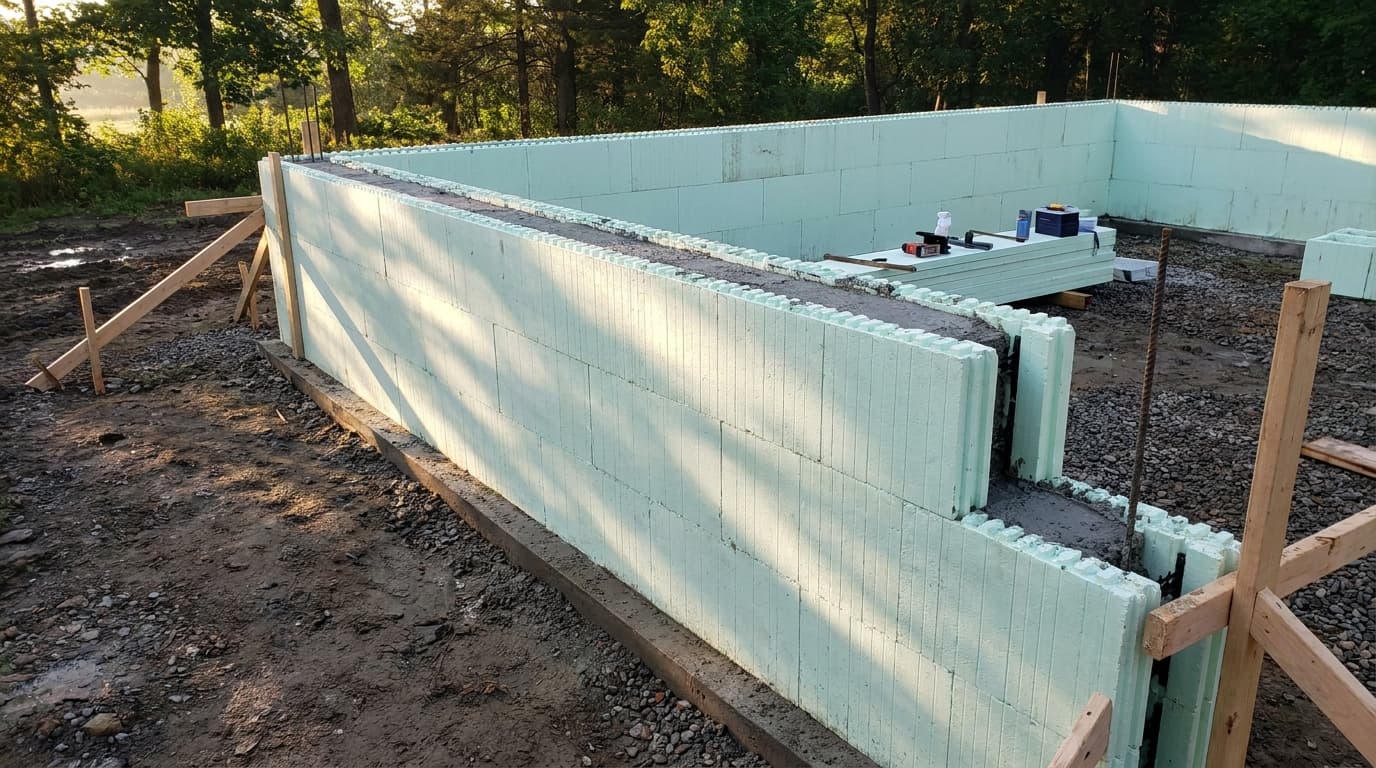
ICF foundations are built from interlocking foam blocks that serve as the formwork for poured concrete. After the concrete cures, the foam stays in place as permanent insulation.
The result is a wall with high structural strength, excellent thermal performance, and good sound attenuation. ICF is increasingly used for high-performance homes where the energy savings over time justify the higher upfront cost.
Typical cost range: $20,000–$50,000. Skilled labor is a requirement; ICF systems are less forgiving of placement errors than standard poured concrete. Modifications after the fact are difficult and expensive.
11. Concrete Block Foundation
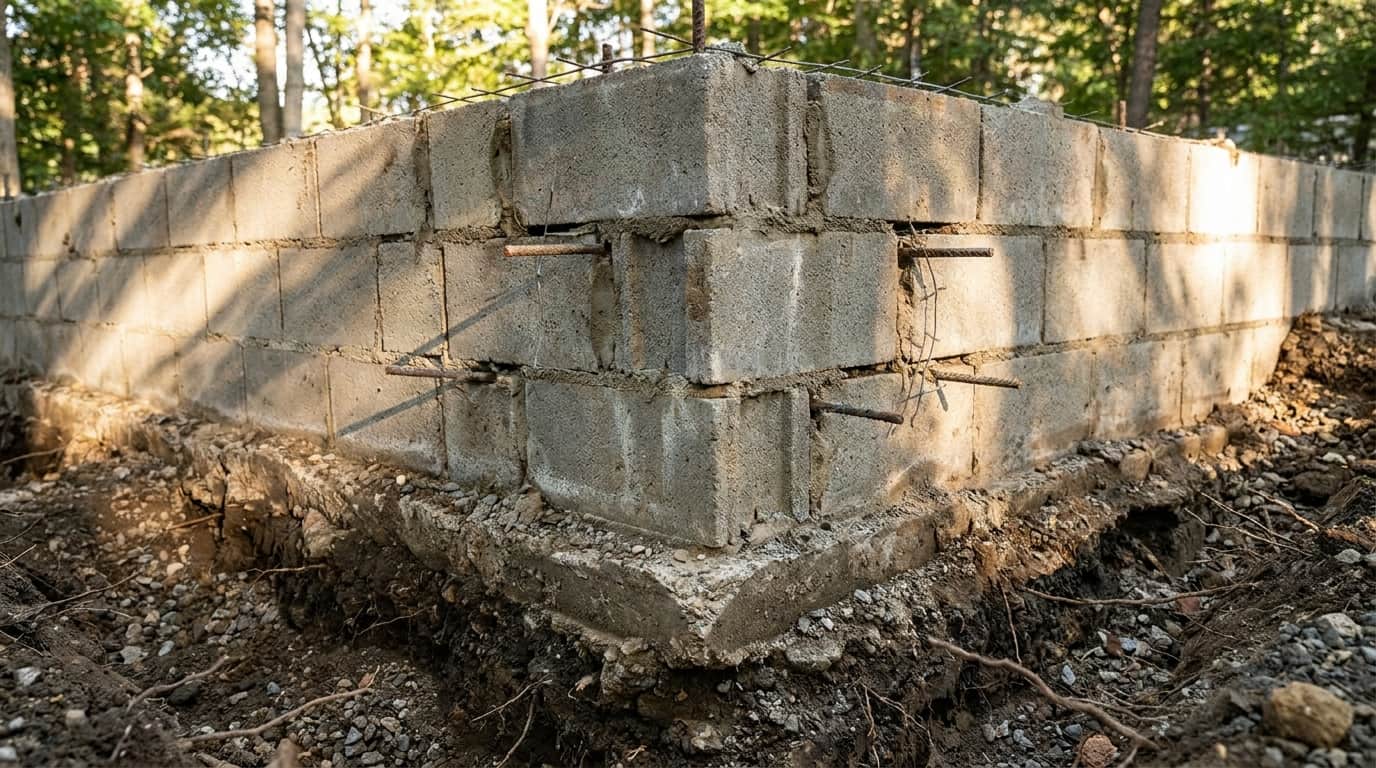
Concrete block (CMU) foundations are built by stacking and mortaring hollow concrete masonry units, typically with steel reinforcement threaded through the cores and grouted solid.
They were standard practice through much of the 20th century and remain common in certain regions. They are easier to repair than poured concrete, though they are more susceptible to water infiltration through mortar joints.
Cost notes: CMU foundations are priced similarly to poured concrete in most markets, though local labor and material availability affect the comparison.
Waterproofing is a non-negotiable add-on for CMU walls; block that is not sealed allows moisture to wick through the mortar at a rate that can cause significant damage within a few years, and prolonged water intrusion is one of the more common causes of water stains on ceilings in older homes with block foundations.
12. Poured Concrete Foundation
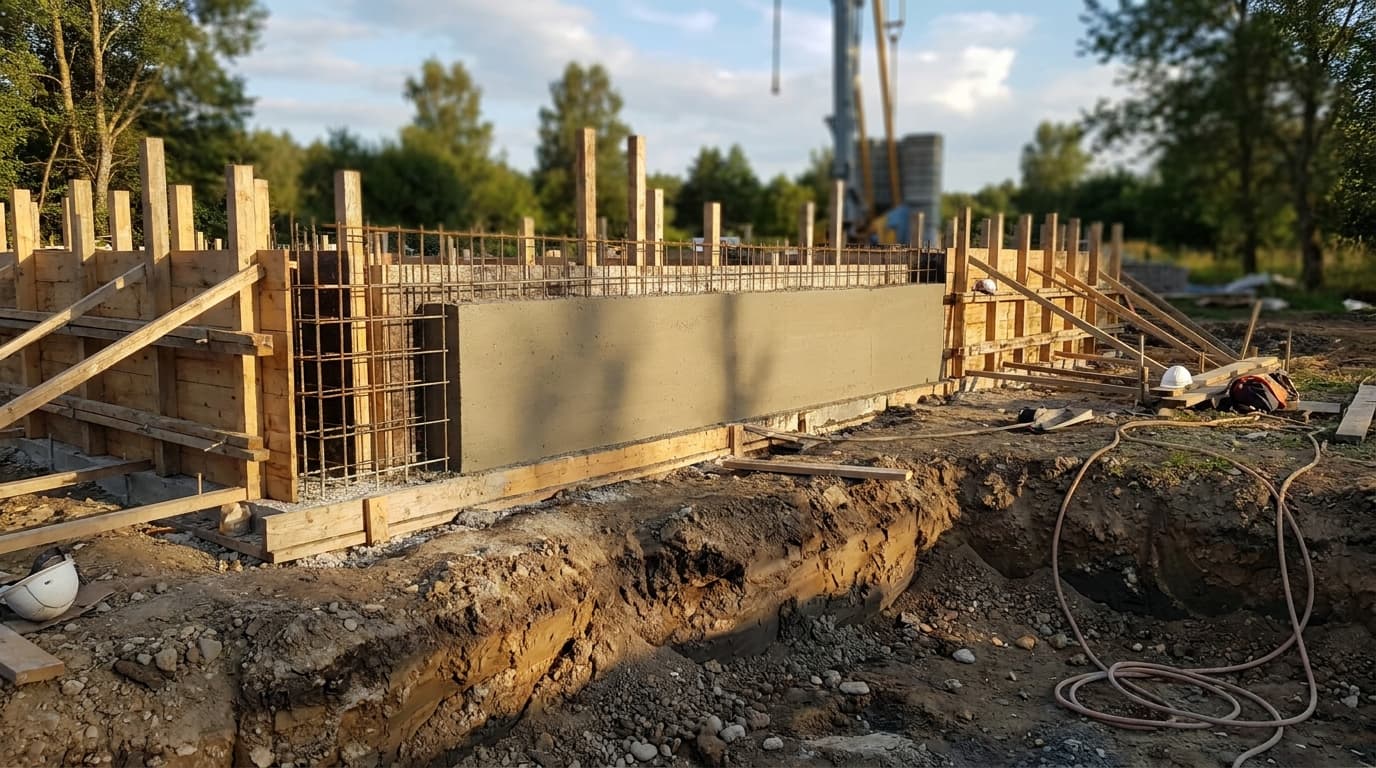
Poured concrete walls are formed in place using temporary steel or aluminum forms, then filled with concrete and steel reinforcement in a single continuous pour.
The result is a wall with no joints, no mortar lines, and uniform strength throughout. It is the current standard for new residential basements and foundation walls in most of the country.
Poured concrete outperforms CMU block on lateral soil pressure resistance, which matters on sites with heavy clay soils or steep lot slopes. The trade-off is that repairs, when needed, require cutting and patching rather than replacing individual blocks.
13. Hybrid or Mixed Foundation
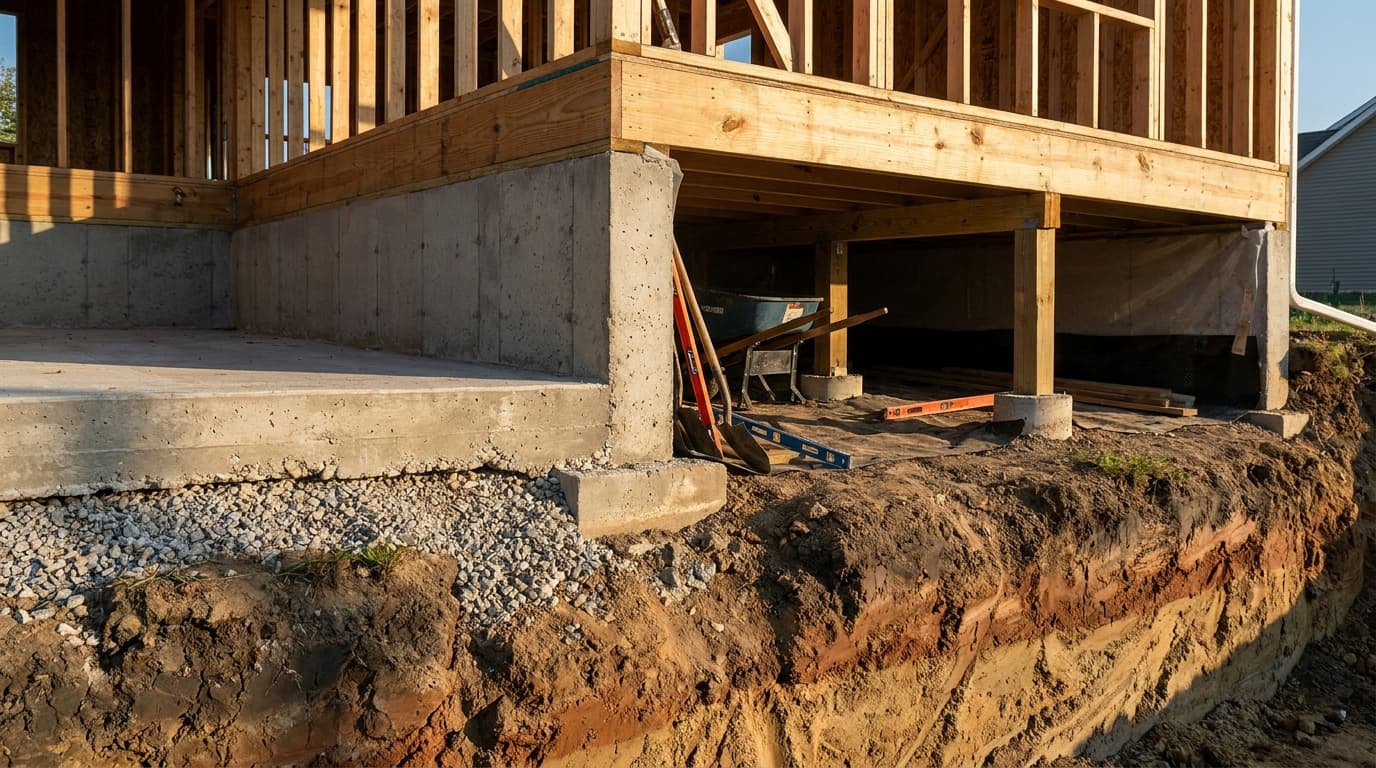
Hybrid foundations combine two or more foundation types on the same structure to address site-specific conditions. A home built on a sloped lot might use a full basement under one portion and a crawl space or slab under the other. Custom builds with multiple sections and complex footprints often require this approach.
The cost of a hybrid system is site-specific and cannot be estimated without detailed plans and a geotechnical assessment.
What matters from a budget perspective is recognizing that the transition points between foundation types require careful engineering to prevent differential settlement, which is when one section of a foundation moves at a different rate than another and causes cracks in the structure above.
Foundation Cost Summary: All Types Side by Side
Here is how all 13 house foundation types compare on cost. These are national average ranges. Your actual numbers will vary by region, soil conditions, and contractor.
| Foundation Type | Cost Range (USD) | Primary Hidden Cost |
| Concrete Slab | $4,000–$12,000 | Soil preparation, re-compaction |
| Basement | $15,000–$50,000 | Waterproofing, sump pump, drainage tile |
| Crawl Space | $8,000–$20,000 | Encapsulation, vapor barrier, pest control |
| Pier and Beam | $12,000–$35,000 | Pier leveling, beam inspection, and moisture management |
| Pile | $20,000–$60,000 | Engineering design, equipment mobilization |
| Raised | $10,000–$25,000 | Bracing, seismic retrofit in applicable zones |
| T-Shaped | $15,000–$40,000 | Deep excavation, footing depth in northern climates |
| Frost-Protected Shallow | $10,000–$30,000 | Insulation precision, engineering review |
| Mat/Raft | $25,000–$70,000 | Concrete volume, specialized reinforcement |
| ICF | $20,000–$50,000 | Skilled labor premium, precision installation |
| Concrete Block | $10,000–$30,000 | Waterproofing, mortar joint sealing |
| Poured Concrete | $12,000–$35,000 | Forming labor, curing time, and a skilled crew are required |
| Hybrid/Mixed | Site-specific | Differential settlement engineering, transition detailing |
The cost figures above represent the foundation work alone. Site preparation, grading, permits, and waterproofing are frequently quoted as separate line items.
Foundation type is also one of the biggest variables in overall construction cost per square foot, particularly when comparing slab builds to basement builds in the same region.
| Cost Note: Figures in this article are estimates based on HomeAdvisor national averages, 2024–2025. Actual costs vary significantly by region, contractor, soil conditions, and project scope. Always get at least three quotes before committing to any foundation type. See the construction cost per square foot guide for how foundation type factors into total build budgets by region. |
How Soil and Climate Determine Your Foundation Options
The two variables that contractors can least control are also the ones that most commonly blow up a foundation budget: what is in the ground and what the weather does to it.
- Expansive Clay Soil: Found in TX, OK, CO, and CA; swells when wet, shrinks when dry; can crack reinforced concrete. Requires deeper footings, drainage, or pier/pile systems.
- Loose or Fill Soil: Common on disturbed or low-lying sites; compresses over time if not compacted. Soil-bearing tests before construction prevent costly post-pour fixes.
- Frost Depth: Major driver of cost differences; colder regions need deeper, protected footings (T-shaped or FPSF), increasing foundation costs significantly.
- High Water Tables: Hydrostatic pressure can affect slabs/walls; waterproofing becomes structural necessity. Low bids may under-specify or plan to upcharge later.
Where Foundation Budgets Go Wrong
The most common budget surprises in foundation work fall into four categories. They are predictable, and knowing them in advance is how you protect yourself in contract negotiations.
Unexpected Soil Conditions: Loose fill, debris, underground water, or rock can appear after excavation; budget 10–15% contingency for soil-related changes.
Waterproofing & Drainage: Low bids often under-specify; confirm scope in writing, including interior/exterior drainage, sump pump, and perimeter drains.
Permits & Inspections: Multiple inspections may be required; fees and scheduling delays can increase project costs.
Grading & Drainage: Proper lot slope is critical; exterior grading is often separate from the foundation quote and affects long-term waterproofing performance
Concrete Foundations: Why They Dominate Modern Residential Builds
Concrete is the material behind most of the foundation types on this list: slabs, poured walls, ICF systems, mat foundations, and most modern piers are all concrete-based. Its dominance is not incidental.
Concrete handles compressive load exceptionally well, resists pests, can be formed into nearly any shape, and, when properly reinforced and cured, lasts longer than the home above it in most conditions.
What concrete does not do well is handle tension without steel reinforcement. An unreinforced slab or wall will crack under the kinds of loads and ground movements that residential foundations routinely experience.
Every concrete foundation quote should specify the rebar schedule, the concrete mix design, and the minimum curing time before backfilling.
If a bid does not mention these details, ask. They are the difference between a foundation that performs for 80 years and one that starts showing problems in 15.
Basement and Foundation: How the System Works Together
A basement functions as the foundation itself, supporting the house above while resisting soil and water pressure.
Key components work together: footings distribute wall loads to the soil, walls resist vertical and lateral pressures, the floor slab provides a usable surface and counters hydrostatic forces, perimeter drainage tiles divert groundwater, exterior waterproofing blocks moisture migration, and the sump pump collects and removes water. Removing any part compromises the system.
Chronic basement leaks usually indicate gaps in one area, such as missing or failed drain tiles, insufficient exterior waterproofing, or an undersized sump pump, showing that each element is essential for a functional, water-managed foundation..
Foundation Warning Signs Every Homeowner Should Know
If you are buying an existing home or monitoring a home you already own, these are the signs that warrant a professional foundation inspection rather than a wait-and-see approach.
| Warning Sign | What It May Indicate | Urgency |
| Stair-step cracks in the brick or block exterior | Differential settlement or frost heave | High; get an inspection |
| Horizontal cracks in basement walls | Lateral soil pressure or water pressure; walls may be bowing | Urgent; do not delay |
| Doors and windows are binding in frames | Foundation movement causing the structure to rack | Moderate to high, depending on progression |
| Sloping or bouncy floors | Pier settlement, beam rot, or crawl space moisture damage | Moderate; monitor and inspect |
| Water in the basement after rain | Failed waterproofing, drain tile blockage, or grading issue | High; source must be identified |
| Gaps between the foundation wall and the sill plate | Settlement or deterioration of the top-of-foundation course | High: structural implication |
Hairline cracks in concrete are common and often cosmetic. Width matters: cracks wider than 1/4 inch, cracks that are growing, or any horizontal crack in a basement wall are not cosmetic and require evaluation.
Foundation repair costs escalate quickly when problems are deferred. A $3,000 crack repair becomes a $30,000 wall stabilization project if the underlying cause is not addressed in time.
Foundation Maintenance: What Actually Matters Year to Year
The most effective foundation maintenance is almost entirely about water management. These are the tasks that prevent the problems described above from developing in the first place:
- Clear Gutters and Downspouts: Keep gutters and extensions free of debris and direct water at least 6 feet from the foundation to prevent leaks and wall deterioration.
- Maintain Positive Grade: Ensure the soil slopes away from the home, ideally 6 inches over the first 10 feet, to avoid surface water pooling near the foundation.
- Annual Inspections: Check crawl spaces and basement walls at least once a year, using a flashlight and moisture meter for early detection of cracks or moisture intrusion.
- Seal Cracks Promptly: Fill visible cracks in concrete before they widen or freeze, preventing water infiltration and structural damage.
- Manage Plantings: Keep trees and large shrubs at least 10 feet from the foundation to prevent root intrusion and soil shrinkage that can cause settling.
What to Ask Your Contractor Before Signing a Foundation Bid
These five questions will tell you more about a contractor’s competence and a bid’s completeness than almost anything else:
- Have you reviewed a soil report for this site, and if not, will you require one before finalizing pricing? A contractor who prices a foundation without a soil report is assuming conditions that may not exist. That assumption becomes a change order after excavation starts.
- What does your waterproofing specification include, and is it in this bid or a separate line item? This question separates the complete bids from the incomplete ones immediately.
- What permit inspections are required, and are permit fees included in this estimate? You want to know who is responsible for scheduling inspections and whether delays in inspection timing can affect your contract price.
- What is your concrete mix design, and what is your minimum cure time before backfilling? If a contractor cannot answer this, they are not specifying the work at the level required for a quality outcome.
- What is your contingency process if we find unexpected soil conditions after excavation? You want this spelled out in advance: what triggers a change order, how it is priced, and what documentation you receive.
Frequently Asked Questions
Can climate change affect my home foundation?
Extreme weather events, flooding, and shifting soil patterns caused by climate change can affect foundations. Homes in flood-prone or erosion-prone areas may need additional reinforcements, drainage, or soil stabilization to maintain long-term structural integrity.
How does nearby construction impact foundation stability?
Heavy construction next door can cause vibrations and soil displacement. Foundations may settle unevenly, causing cracks or shifts. Monitoring the foundation and consulting a structural engineer early helps prevent damage and manage risks.
Are older foundations more prone to pest infestations?
Yes. Aging foundations, especially crawl spaces, may have cracks or gaps allowing termites, rodents, or ants to enter. Regular inspections, sealing gaps, and pest control measures help protect the structural integrity.
Do foundations affect energy efficiency in homes?
Foundation type impacts insulation and moisture control. Basements and ICF walls can improve thermal performance and reduce energy costs, while poorly insulated slabs may increase heating and cooling requirements.
Can landscaping influence foundation health?
Yes. Trees with invasive roots or poorly graded gardens can shift soil and affect foundations. Maintaining proper distance from trees, positive grading, and root barriers prevents long-term damage.
What is the role of foundation vents?
Vents in crawl spaces control moisture and airflow. Properly placed and maintained vents prevent mold, wood rot, and structural weakening. Incorrect placement can lead to dampness and pest issues.
Final Verdict
Foundations are the part of a home you rarely see, but I’ve realized they set the stage for everything above. You now know the main house foundation types, what affects your choice, and common problems to watch for.
I’ve also shared practical tips for maintenance, budgeting, and when to call a professional. Understanding concrete foundations, soil, climate, and water issues helps you avoid costly mistakes and keeps your home stable for years.
I hope you feel more confident evaluating foundations for your home. Try applying these tips, check your own foundation for warning signs, and let me know your thoughts or experiences in the comments.