

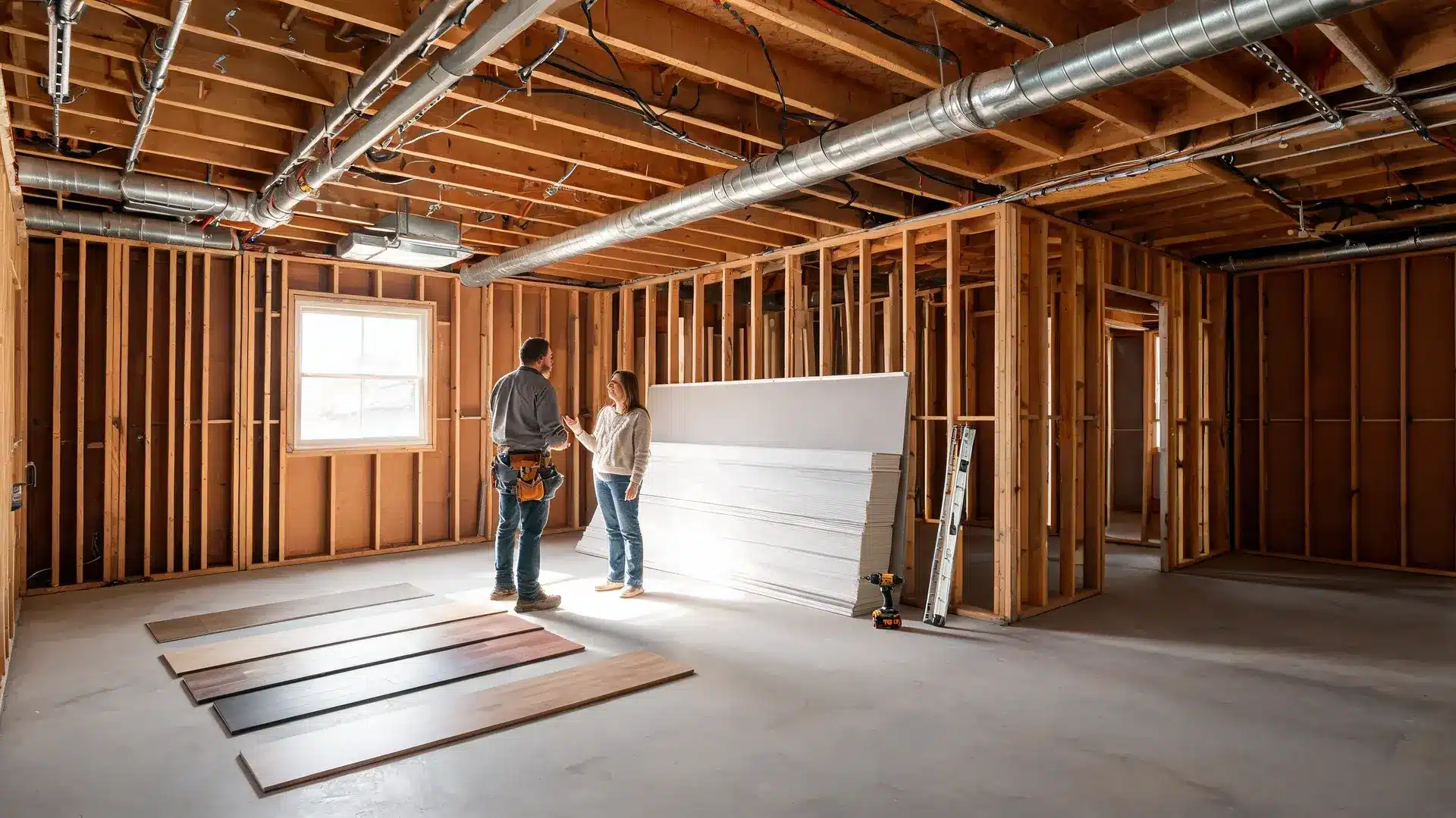


| Finish Level | Cost Per Sq Ft | Best For |
| Basic | $25 to $50 | Open family room, play area, simple office, storage zone |
| Mid-range | $50 to $75 | Bedroom, home office, upgraded flooring, cleaner layout |
| High-end | $75 to $100+ | Bathroom, wet bar, media room, built-ins, premium fixtures |
How much it costs to finish a basement comes down to three things: the size of the space, the finish level you choose, and the condition of the space before a single wall goes up. Most projects land between $25 and $75 per square foot, with a national average around $32,000 for a mid-size basement. High-end projects with bathrooms, wet bars, major repairs, or premium finishes push well past $100 per square foot.
The range only makes sense once you know which end of it your project sits on. A dry, code-compliant lower level with decent ceiling height and no moisture issues starts from a far better position than one with cracks, mold, or wiring that predates current code. Both projects look like “finishing a basement” on paper. They are not the same project at all.
Before you ask a single contractor for a quote: know your space, set a budget tied to function rather than finish, and read the section on hidden costs. That is where most budgets go wrong.
| Cost Note: Figures in this article are estimates based on national averages from Angi (2026) and HomeAdvisor (2025). Actual costs vary significantly by region, contractor, materials, and project scope. Always get at least three quotes before committing to any project above $1,000. |
What Finishing a Basement Actually Includes
When people ask how much it costs to finish a basement, they usually have one number in mind: the finished space they want. What they underestimate is the list of work that has to happen first.
At its most complete, a basement finishing project covers framing, insulation, drywall, ceiling work, flooring, electrical outlets, recessed lighting, HVAC connections, permits, and moisture control.
Most projects do not need all of those from scratch. If the space already has rough plumbing, solid ceiling height, safe stairs, and dry walls, a significant portion of that list is already handled, and the cost drops accordingly.
If it has leaks, mold, cracked foundation walls, or wiring that predates current code, those repairs take precedence over any decorative decisions. The most useful baseline is a dry, code-compliant, permitted space that functions like a normal living area. That gives you something honest to compare quotes against.
Basement Finishing Cost by Square Footage
Square footage gives you a starting point, but it does not tell the full story. The finished basement cost can change quickly once you add a bathroom, bedroom, wet bar, media room, or upgraded flooring. Use the table below as a planning range, then adjust based on the actual work your basement needs.
| Finished Area | Basic | Mid-Range | High-End |
| 300 sq ft | $7,500 to $15,000 | $15,000 to $22,500 | $22,500 to $30,000+ |
| 500 sq ft | $12,500 to $25,000 | $25,000 to $37,500 | $37,500 to $50,000+ |
| 700 sq ft | $17,500 to $35,000 | $35,000 to $52,500 | $52,500 to $70,000+ |
| 1,000 sq ft | $25,000 to $50,000 | $50,000 to $75,000 | $75,000 to $100,000+ |
| 1,500 sq ft | $37,500 to $75,000 | $75,000 to $112,500 | $112,500 to $150,000+ |
| 2,000 sq ft | $50,000 to $100,000 | $100,000 to $150,000 | $150,000 to $200,000+ |
These figures give you a planning range, not a final quote. A contractor still needs to assess moisture levels, ceiling height, plumbing access, electrical capacity, stair code compliance, egress windows, drainage, slab condition, and local permit requirements before any number becomes real. Use this table to sanity-check a quote — not to build a budget from scratch.
The Four Cost Drivers That Determine Your Final Number
Most budget surprises in a basement finishing project come from one of four areas. Understanding what each adds to the total — and whether your space already has a problem in that category — is the most useful thing you can do before sitting down with a contractor.
1. Moisture and Foundation Work
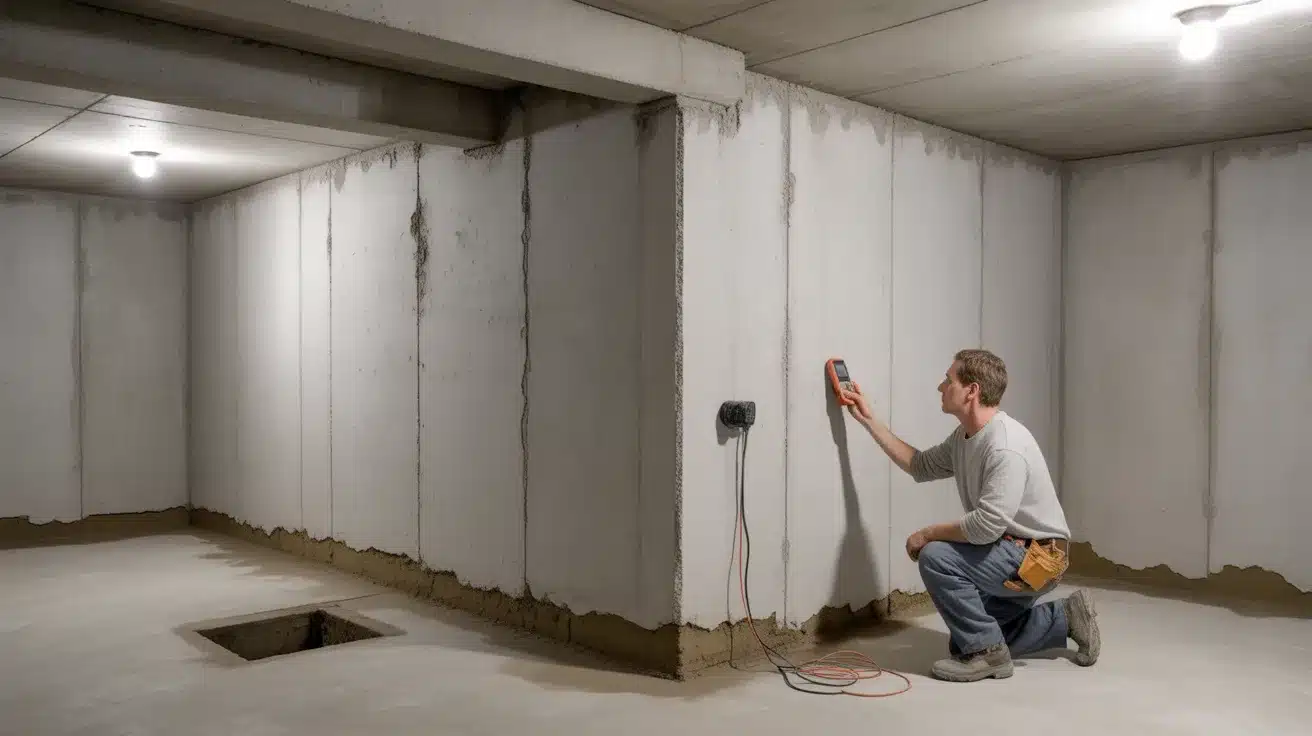
Water control comes before walls, flooring, and trim, every time. If your lower level shows staining, smells damp, or has cracks in the foundation, those repairs are not optional extras. Covering moisture issues with new materials produces mold behind the drywall, warped flooring, and repair bills far higher than the waterproofing work would have cost in the first place.
A full interior waterproofing system typically runs $3,000 to $15,000, depending on the scope. Exterior waterproofing pushes costs higher. Crack injection, sump pump installation, and interior drain tile are all separate line items. Budget for this before anything else moves. If you’re unsure what your basement needs, the guide to basement waterproofing costs walks through each method and what drives the price.
2. Plumbing and Bathroom Addition
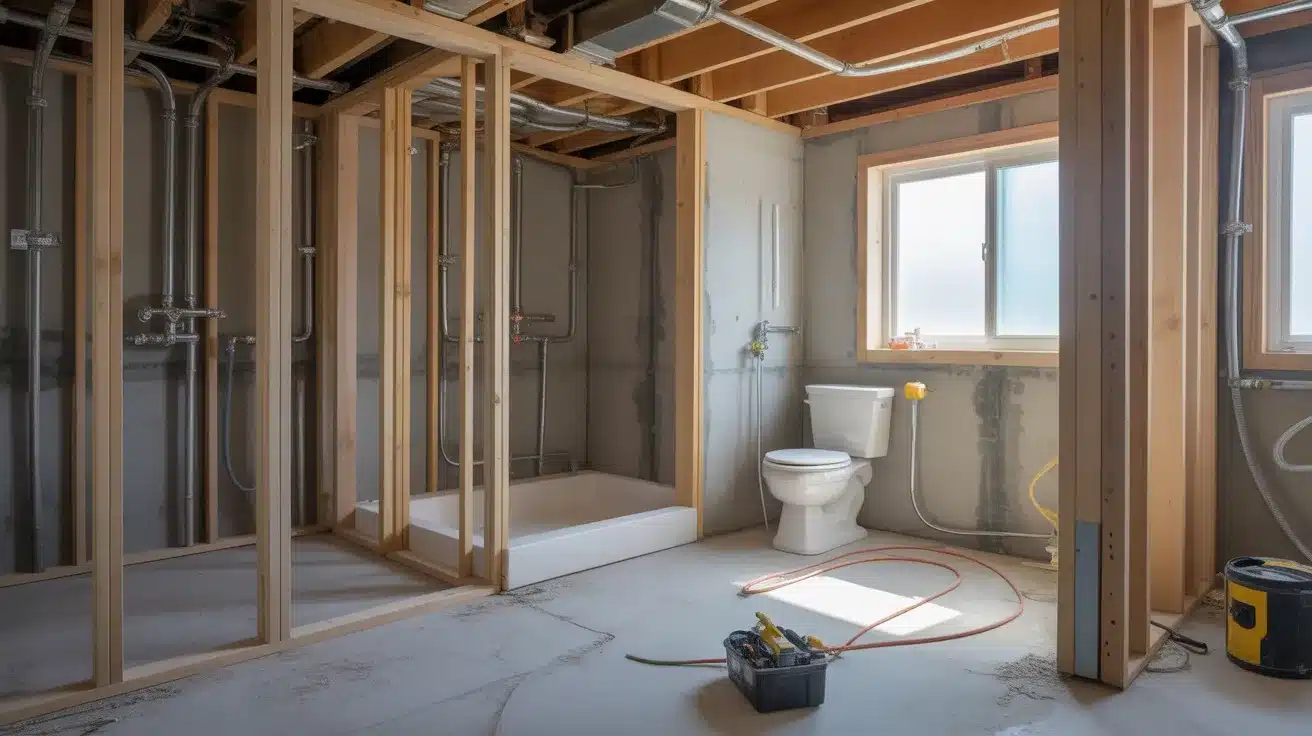
A basement bathroom is one of the largest single budget items in any lower-level project. It may require rough-in work, drain relocation, ejector pump installation, venting, tile, fixtures, and its own inspection, and every one of those has a separate cost.
Keeping new plumbing close to existing lines controls the total. A full bathroom addition on a space with no existing rough-in can add $8,000 to $25,000 or more to the project, depending on complexity and local labor rates.
Below-grade ejector pump requirements push costs toward the higher end of that range. Factor this as a fixed line item before comparing bids.
3. Egress Windows and Bedroom Requirements
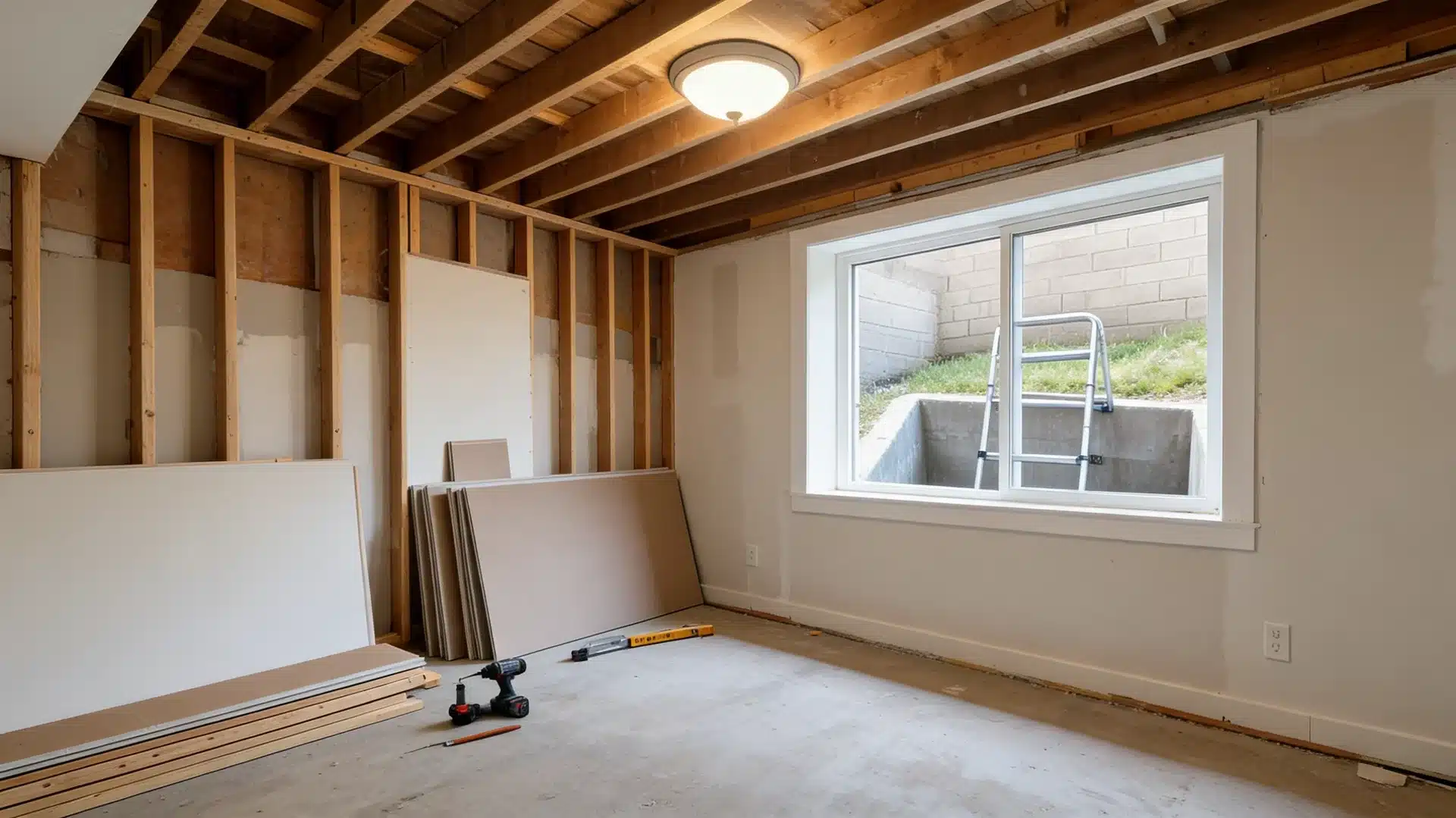
A lower-level bedroom requires an approved egress window to meet code in most jurisdictions. Some areas require egress windows for any finished basement, regardless of use. Check your local code before assuming the standard applies. Beyond the window, a legal bedroom also needs proper heat, smoke alarms, carbon monoxide detection, and a minimum ceiling height.
Egress window installation typically costs $2,500 to $5,500, depending on the size of the opening and the amount of foundation cutting required. These are non-negotiable for both safety and future resale paperwork. Skipping them creates compliance problems during inspections and disclosure problems when you sell.
4. Electrical and HVAC
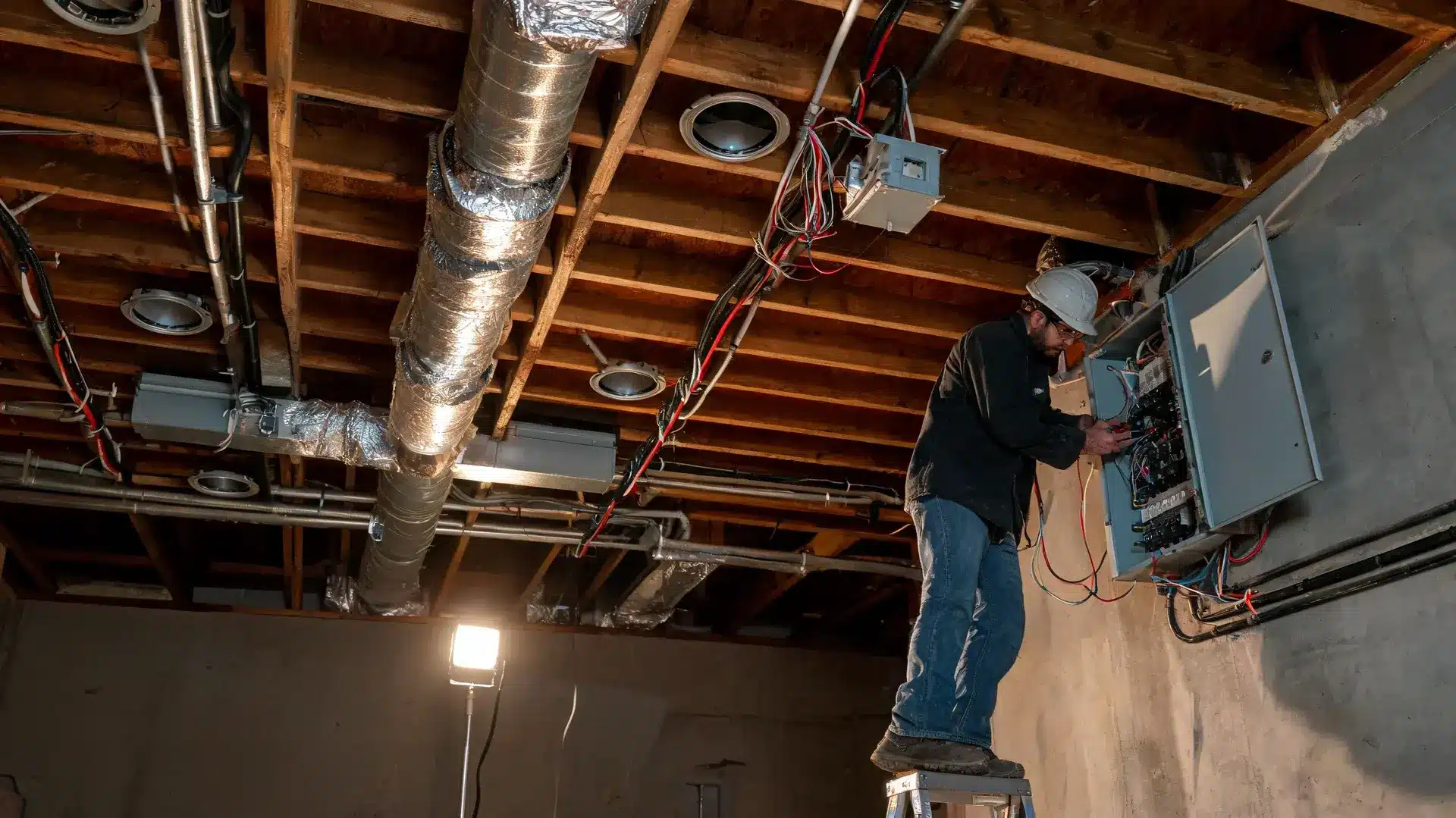
More finished living space puts more demand on your home’s systems. Additional outlets, recessed lighting, dedicated office circuits, panel capacity upgrades, HVAC duct extensions, and added return air all affect the project price and the daily comfort of the finished space.
A mini-split system for a basement without existing duct access runs $3,000 to $7,000 installed, with single-zone systems starting closer to $2,000 and multi-zone setups going higher.
Electrical panel upgrades vary widely depending on current capacity, budget $1,500 to $4,000 if your panel is close to its limit. An electrician can assess that in a single site visit before you commit to anything.
| Permit Warning: Never skip a permit to save money on a basement finishing project. Unpermitted work creates insurance, resale, and code compliance problems, and may require costly demolition and redo if flagged during a home inspection. Permits for a basement project typically run $500 to $2,000, depending on local fees and scope. That cost is small compared to the problems unpermitted work creates at sale time. |
Cost by Room Type
Your room plan changes the total because each use brings different system requirements. An open family room needs basic finishes. A bedroom or bathroom needs plumbing, code compliance, and safety features on top of standard finish work. Use this to understand what each room type adds before committing to a layout.
| Room Type | Main Work Required | Budget Impact |
| Family room | Open layout, flooring, ceiling, lighting, outlets | Lower to mid-range |
| Home office | Lighting, outlets, data wiring, sound control | Lower to mid-range |
| Bedroom | Egress window, closet, heat, alarms, code inspection | Mid-range to high |
| Bathroom | Plumbing, pump if needed, fixtures, tile, and ventilation fan | High |
| Wet bar | Sink, cabinets, counters, outlets, refrigeration space | Mid-range to high |
| Media room | Sound control, AV wiring, lighting, seating, built-ins | High |
The room type decision is a budget decision. Choose the layout based on what you will use every day before considering finishes. Money tied to a function ages better than money tied to a single-use layout that may not suit a future buyer.
Hidden Costs That Catch Homeowners Off Guard
These items rarely appear in a first quote but show up on nearly every project. Leaving no room for them is the most common reason a basement project runs over budget.
- Waterproofing and drainage: Crack sealing, sump pump work, interior drain tile, and grading corrections are often identified after work begins — not before.
- Mold remediation: Any musty smell or visible growth needs professional assessment and clearance before walls close. Enclosing active mold is not a solution.
- Panel upgrades: More lights, circuits, and outlets can push an older panel to its limit, requiring an upgrade before the electrical inspection passes.
- Floor leveling: Uneven concrete affects flooring installation, door swing, and trim fitting. Leveling compound adds both cost and time.
- Debris removal: Old insulation, paneling, carpet, and drywall from demo work need hauling — this rarely appears in an initial quote.
- Permit fees: City and county fees vary and can add $500 to $2,000 or more, depending on scope and jurisdiction.
- Furniture and setup: Seating, storage, rugs, desks, and window coverings are easy to forget until the space is done and empty.
Set aside 10 to 20 percent as a contingency before work starts. That buffer covers most of these items and avoids a difficult mid-project conversation about needing more money.
Line-Item Cost Breakdown
This is the format you should request from every contractor you consider. A lump-sum bid tells you nothing useful — a line-item bid lets you compare scope, identify what’s included or missing, and make targeted cuts if the total runs over.
| Line Item | Low End | High End | What Drives Variation |
| Waterproofing/moisture control | $3,000 | $15,000+ | Interior vs. exterior, sump pump, drain tile scope |
| Framing | $1,500 | $6,500 | Square footage, number of partition walls, ceiling type |
| Insulation | $1,000 | $4,000 | Type (spray foam vs. batt), wall vs. ceiling vs. floor |
| Drywall | $1,500 | $5,000 | Square footage, number of corners, finish level |
| Flooring | $1,500 | $8,000 | Material (LVP vs. tile vs. carpet), square footage |
| Electrical | $1,500 | $6,000 | Outlets, lighting, circuits, panel upgrade if needed |
| HVAC / mini-split | $2,000 | $7,000 | Duct extension vs. separate mini-split unit |
| Bathroom addition | $8,000 | $25,000+ | Rough-in status, ejector pump, fixture, and tile selection |
| Egress window | $2,500 | $5,500 | Foundation wall thickness, opening size, and well cover |
| Permits | $500 | $2,000 | Local jurisdiction fees, scope of permitted work |
| Contingency (10–20%) | Set aside before work starts, not after surprises appear |
These ranges are built from national averages. Regional labor markets, existing conditions, and contractor availability all affect where your project lands. The table is a cross-check tool, not a substitute for a written itemized bid.
DIY, Contractor, or a Mixed Approach
Choosing who does the work matters as much as choosing what gets done. Each path carries a different risk and cost profile.
| Approach | Best Fit | Main Risk |
| Full DIY | Painting, trim, some flooring, and cleanup | Slower timeline; potential redo costs if mistakes occur |
| General contractor | Full project, permits, trade coordination, inspections | Higher upfront cost |
| Mixed plan | Pros handle systems; the homeowner handles finish tasks | Requires a clearly defined task split from the start |
The mixed plan is the right call for most homeowners. Let licensed tradespeople handle electrical, plumbing, HVAC, and any structural work. Take on painting, cleanup, trim, and simple flooring yourself. That keeps risk low while delivering real labor savings.
The task split needs to be agreed in writing before work begins; mid-project confusion about who does what costs time and money. For a broader look at how this fits into larger home renovation decisions, the house additions before and after show how homeowners typically divide that responsibility across different project types.
Ways to Reduce the Cost of Finishing a Basement
Real savings come from simplifying the plan, not from cutting safety or skipping permits. Every item below reduces costs without compromising the parts that protect the investment long term.
- Keep the layout open: Fewer walls, doors, and built-in storage reduce both materials and labor hours significantly.
- Work with existing plumbing locations: Moving drain lines and supply pipes across a slab is among the most expensive decisions you can make. Keep wet areas where plumbing already exists.
- Choose durable flooring from the start: Luxury vinyl plank and tile handle the moisture and temperature fluctuations of a below-grade space better than carpet or hardwood — and they cost less to replace if needed.
- Paint yourself: Painting is one of the few finish tasks most homeowners can handle safely and well. On a 1,000 sq ft basement, that’s a meaningful labor savings.
- Use stock cabinetry: Custom built-ins add significantly to the budget. Stock kitchen or laundry cabinets installed as a wet bar or storage wall look clean at a fraction of the price.
- Leave unneeded areas unfinished: Mechanical rooms, utility areas, and storage zones do not need to be completed. Only finish the square footage you will actually use.
- Get at least three bids: Compare scope, materials, permit inclusion, and warranty — not just the bottom-line number. The lowest bid is often missing something the higher bids include.
None of these cuts requires a lower-quality result. A simpler layout with durable materials consistently outperforms a complex design with built-in shortcuts — in daily use and at resale.
Is a Finished Basement Worth the Money?
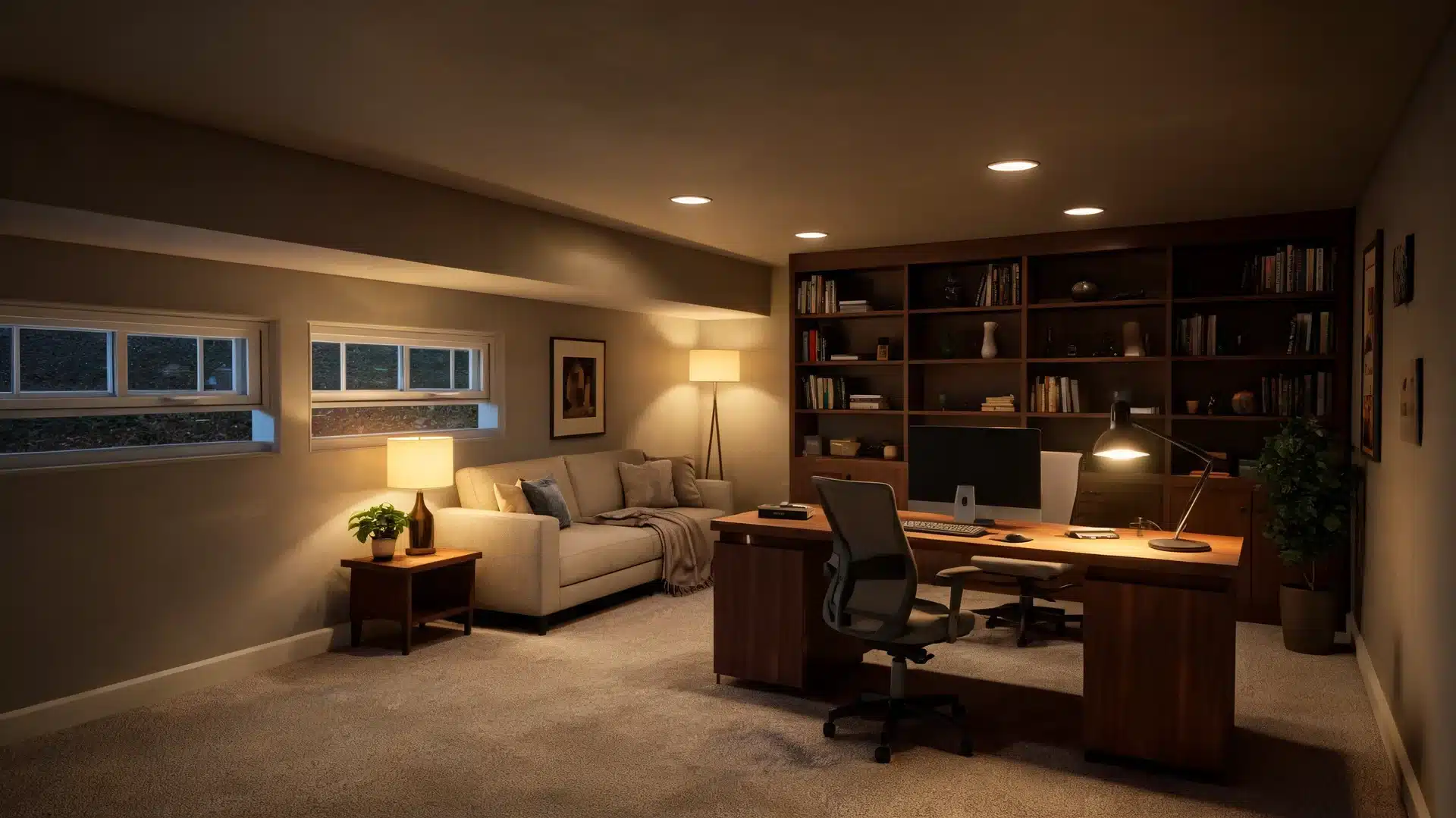
A finished lower level adds usable space and resale appeal when it solves a real space problem. ROI on basement finishing typically runs 64 to 70 percent, according to data from Angi and HomeAdvisor, meaning a $32,000 project can add $20,000 to $22,000 in resale value to a typical home. Functional layouts for family rooms, guest bedrooms, home offices, and bathrooms perform best across most markets. Specialty or highly personal designs perform worse.
| Good value add | Family room, guest bedroom, home office, bathroom, laundry space, and clean storage |
| Less flexible value | Specialty theater, oversized wet bar, single-use niche rooms, rare custom materials |
| Strong reason to start | You need more living area, plan to use it daily, and have the budget to do it correctly |
| Reason to pause | The quote strains your budget, the space has unresolved moisture issues, or the goal is resale value only |
Spend first on dryness, safety, lighting, and flexible room use. Buyers respond to clean, code-ready spaces that serve multiple purposes. Highly personal designs and niche configurations cost more and appeal to fewer people at resale, regardless of the quality of materials used. This is the same conclusion I’ve seen hold across markets at every price point.
The basement remodel cost guide by size breaks down how those value-add decisions play out at different square footage ranges if you want to dig further into the numbers.
Questions to Ask a Contractor Before You Sign
A strong contractor answers these questions directly and in writing before any deposit is paid. Hesitation or vague replies to any of them are a signal worth noting before you commit.
- Are permits pulled and included in the bid, or are they charged separately?
- Who coordinates and manages plumbing, electrical, and HVAC subcontractors?
- What material allowances are built into the quote, and what happens when you exceed them?
- How are change orders handled, priced, and approved?
- What is the process if moisture, mold, or structural issues are found after work begins?
- What is the payment schedule, and is the final payment tied to passing inspection?
- What warranty covers labor and materials after the project is complete?
- Can you provide references from recent projects of similar scope?
Tie the final payment to passing inspection, not to the contractor’s own sign-off. That single condition protects your budget and ensures code compliance before any remaining money leaves your account.
| 📝 Note: Request a line-item bid rather than a single lump-sum number. Line items let you compare competing quotes on the same scope, identify what each contractor has or has not included, and make targeted cuts if the total comes in over budget. |
FAQs About Basement Finishing Costs
These are the questions I hear most often from homeowners who’ve already gotten one quote and realized they need to understand the numbers better before they get the next two.
How much does it cost to finish a 1,000 sq ft basement?
A 1,000 sq ft basement typically runs $25,000 to $50,000 at a basic finish level and $50,000 to $75,000 at mid-range. High-end finishes with a bathroom, media room, or significant moisture work push the total past $100,000. The specific features, not just the square footage, determine where you land.
What is the cheapest way to finish a basement?
Keep the layout open, skip the bathroom, use luxury vinyl plank flooring, paint yourself, and use stock cabinetry for any storage walls. Handle cleanup and trim as DIY. Let licensed trades handle electrical, plumbing, and HVAC. That combination produces a functional, code-compliant space at the lowest cost per square foot.
Do low ceilings limit what you can do with a basement?
Yes. Most jurisdictions require a minimum ceiling height of 7 feet for habitable space, though local rules vary. Pipes, beams, and ductwork can reduce that further. A drop ceiling can conceal mechanicals while meeting height requirements but reduces finished clearance by 4 to 6 inches and adds cost.
Can I finish part of my basement and leave the rest unfinished?
Yes, and it often makes sense. Leaving mechanical rooms, utility areas, and storage zones unfinished reduces total cost and keeps access to shutoffs, panels, sump pumps, and drains easier for future maintenance. Only finish the square footage you plan to use regularly.
How long does it take to finish a basement?
Most basement finishing projects take four to eight weeks for a straightforward open layout. Adding a bathroom, egress window, or significant moisture remediation extends that timeline. Permit approval windows vary by jurisdiction and can add two to four weeks before work even begins.
What flooring is best for a finished basement?
Luxury vinyl plank is the strongest choice for most basements. It handles moisture and temperature fluctuations better than carpet or engineered hardwood, installs directly over concrete, and costs $3 to $7 per square foot installed. Tile is better in bathrooms and laundry areas. Fix any water issues before any floor goes down.
Final Thoughts
Getting an accurate answer on how much it costs to finish a basement starts with knowing your space before anyone prices it.
Measure the area you plan to use, identify any moisture or structural issues that need to be resolved first, choose a finish level that fits the home and your actual budget, and list the rooms you need in order of daily importance.
My straightforward take on the cost of finishing a basement is this: the money you spend on dryness, safety, and flexible room layout holds its value. The money spent on personal features and single-use designs rarely does.
A dry, permitted, practical lower level is worth far more at resale, and in daily use, than a costly niche space that only works for one kind of buyer. Drop a comment below and let me know how your basement turned out.
Sources
- Angi: How Much Does It Cost to Finish a Basement? (2026 data)
- HomeAdvisor: Basement Finishing Cost (2025 data)
- National Association of Home Builders (NAHB): Cost of Construction Survey