
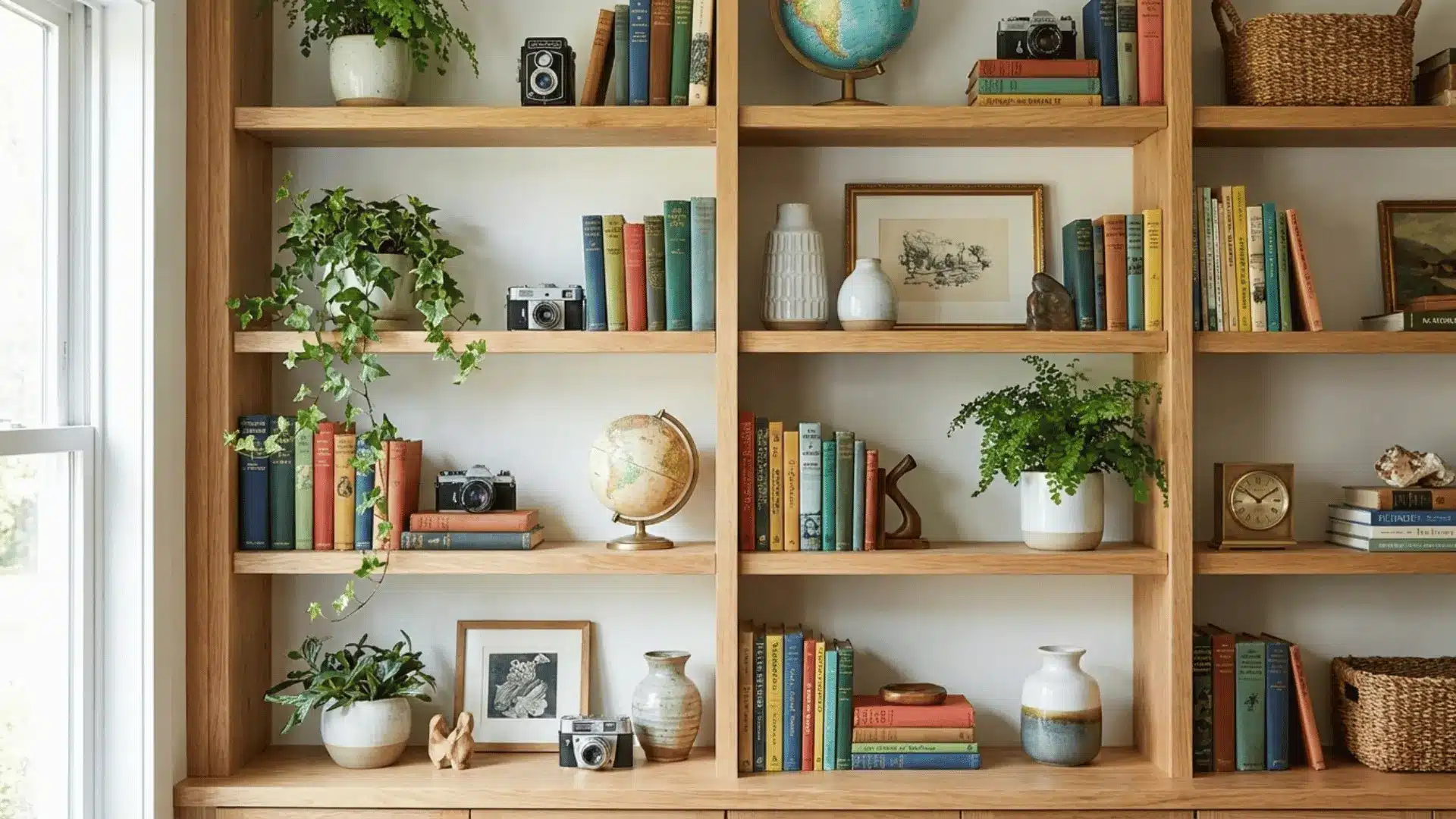


Ever looked at your shelves and felt something just seemed off? Your shelves can either look messy or feel clean and put together, and the difference comes down to how you style them.
If you’ve ever struggled with what to place where, you’re not alone. I’ve dealt with the same confusion, and that’s exactly why this guide is helpful.
You’ll learn how to decorate shelves step by step, from picking a style to placing each item with purpose.
The same intentional approach that works in a cozy minimalist bedroom, where every piece earns its place. You’ll also see how small changes can improve the overall look without much effort.
By the end, you’ll feel more confident arranging your shelves in a way that actually works. Plus, you’ll avoid common mistakes that make shelves look cluttered. Ready to fix your shelf setup?
The Basics of Shelf Styling
Mastering shelf styling begins with understanding a few fundamental principles that transform cluttered surfaces into curated displays.
Balance and symmetry create visual harmony; pair similar items on either side of a focal point to anchor the arrangement. Scale and proportion add interest; mix large statement pieces with medium accents and small decorative objects to avoid monotony.
Layers and depth bring dimension to flat surfaces, so place taller items at the back and smaller ones toward the front, creating a sense of depth.
Finally, color coordination ties everything together.
Choose complementary hues for a cohesive palette or introduce contrasting tones for bold, eye-catching contrast. Together, these principles turn any shelf into a styled, intentional space.
How to Decorate Shelves: Easy Ideas to Style and Organize
If you’re unsure where to start, these simple ideas can help you style shelves without stress. Each one can be used alone or mixed together. Let’s make your shelves feel like they truly belong in your space.
1. Stack Books Vertically and Horizontally
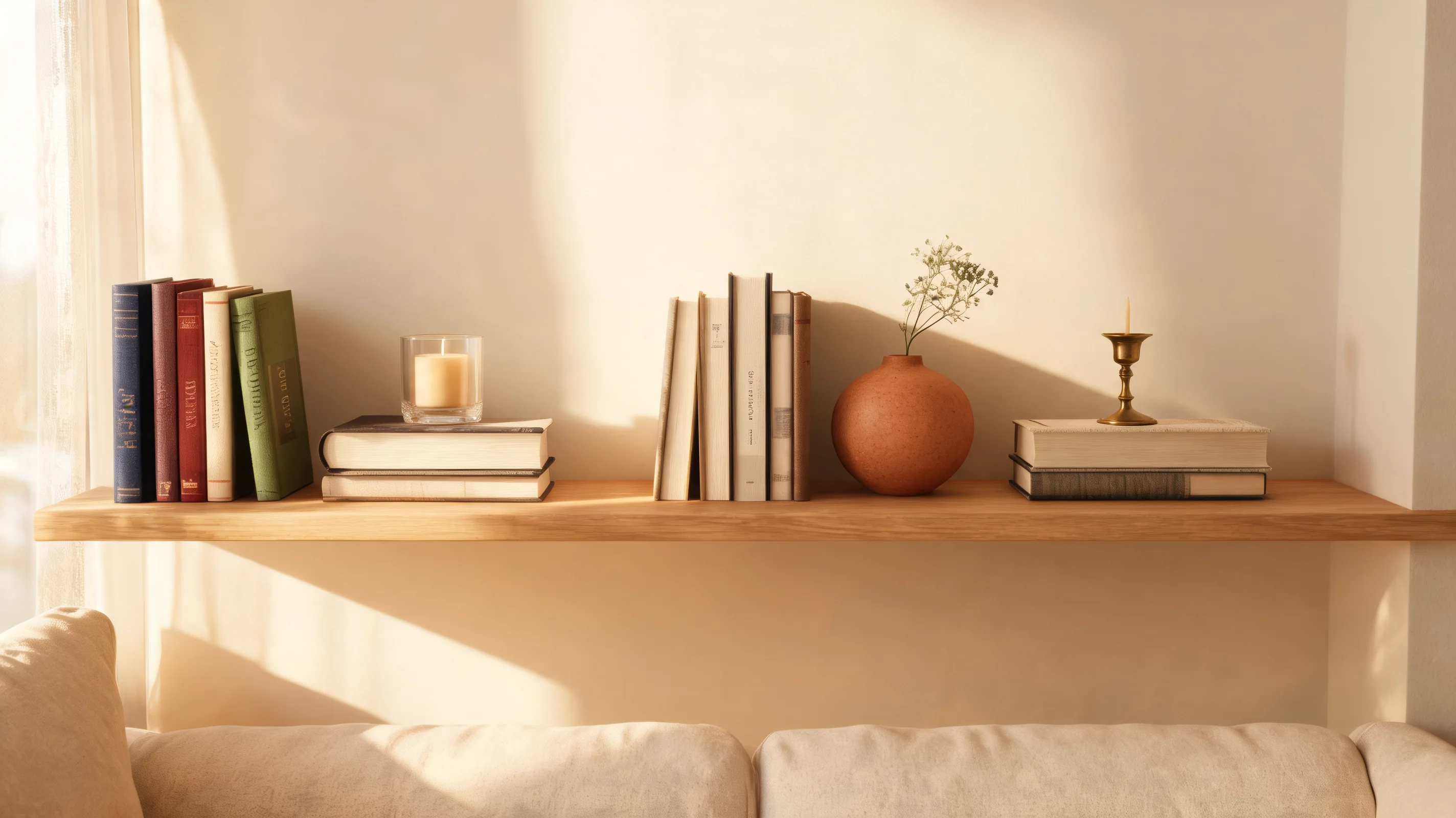
Balancing vertical and horizontal book stacks helps you organize shelves while adding visual rhythm. Vertical stacks bring structure, while horizontal ones break repetition.
I like using both together because it instantly makes shelves look intentional, balanced, and visually more interesting. Once your books are styled, let’s bring some life to those spaces.
- Fresh Layout: Rotate your book stacks seasonally to maintain a fresh and engaging visual appearance throughout your shelving arrangement naturally.
- Hidden Gems: Place small decorative items on horizontal stacks to add interest, depth, and personality while breaking monotony effortlessly on your shelves.
Tip: Try the “2 vertical, 1 horizontal” rule for easy symmetry.
2. Add Small Indoor Plants
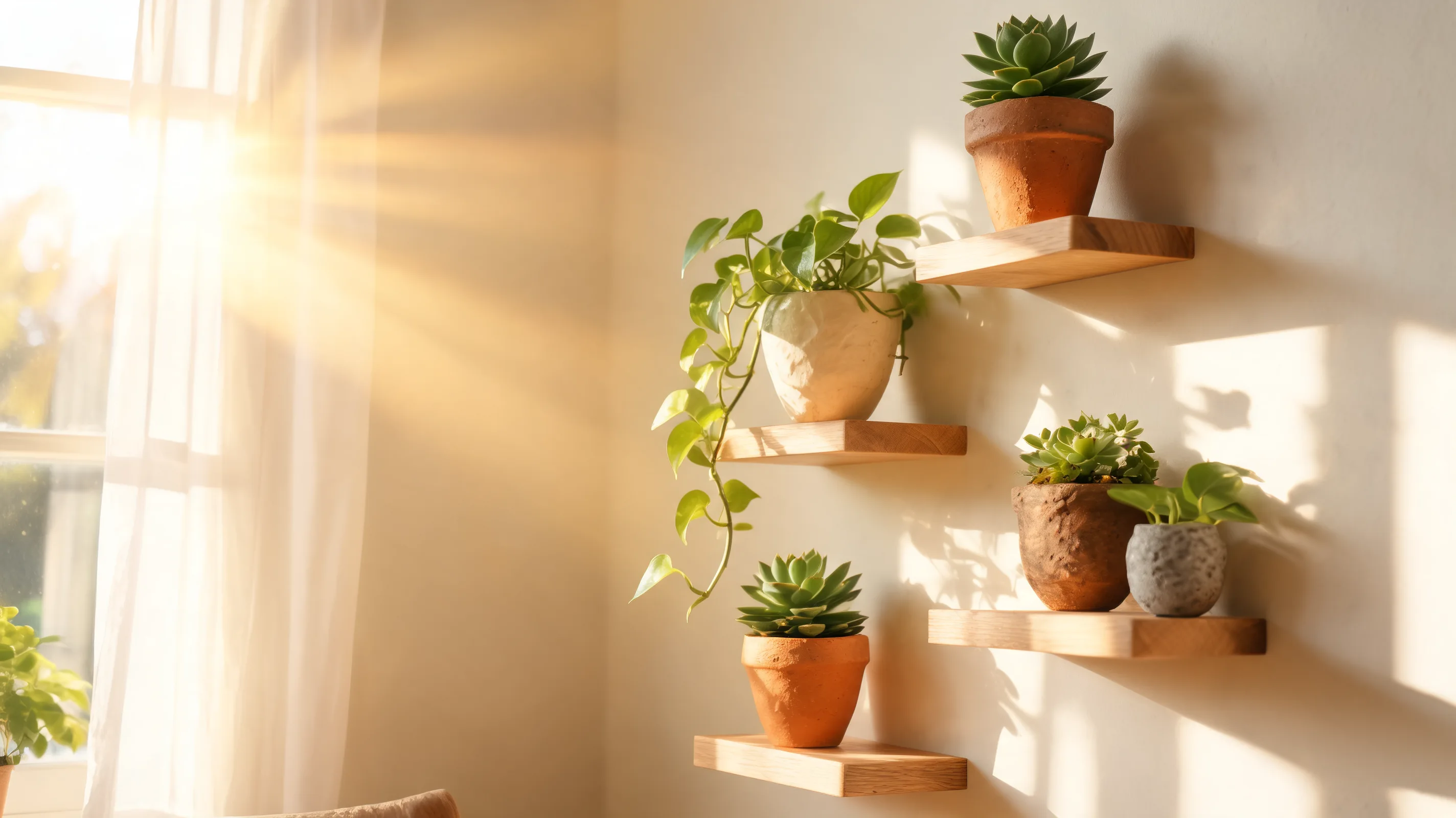
Small indoor plants like pothos or succulents bring natural freshness to shelves. They soften hard edges, improve visual flow, and make the space feel more relaxed.
I personally like placing greenery at different heights for a more natural, layered effect. Now that we have greenery, let’s add some personality with decorative items.
- Natural Texture: Choose plant pots with different textures, colors, and materials to make the shelf visually appealing and lively instantly for anyone.
- Air Boost: Select air-purifying plants that improve indoor air quality while decorating, providing both functional and aesthetic benefits simultaneously.
Formula: One plant per 3–4 feet of shelf for balance without overcrowding.
3. Use Decorative Vases
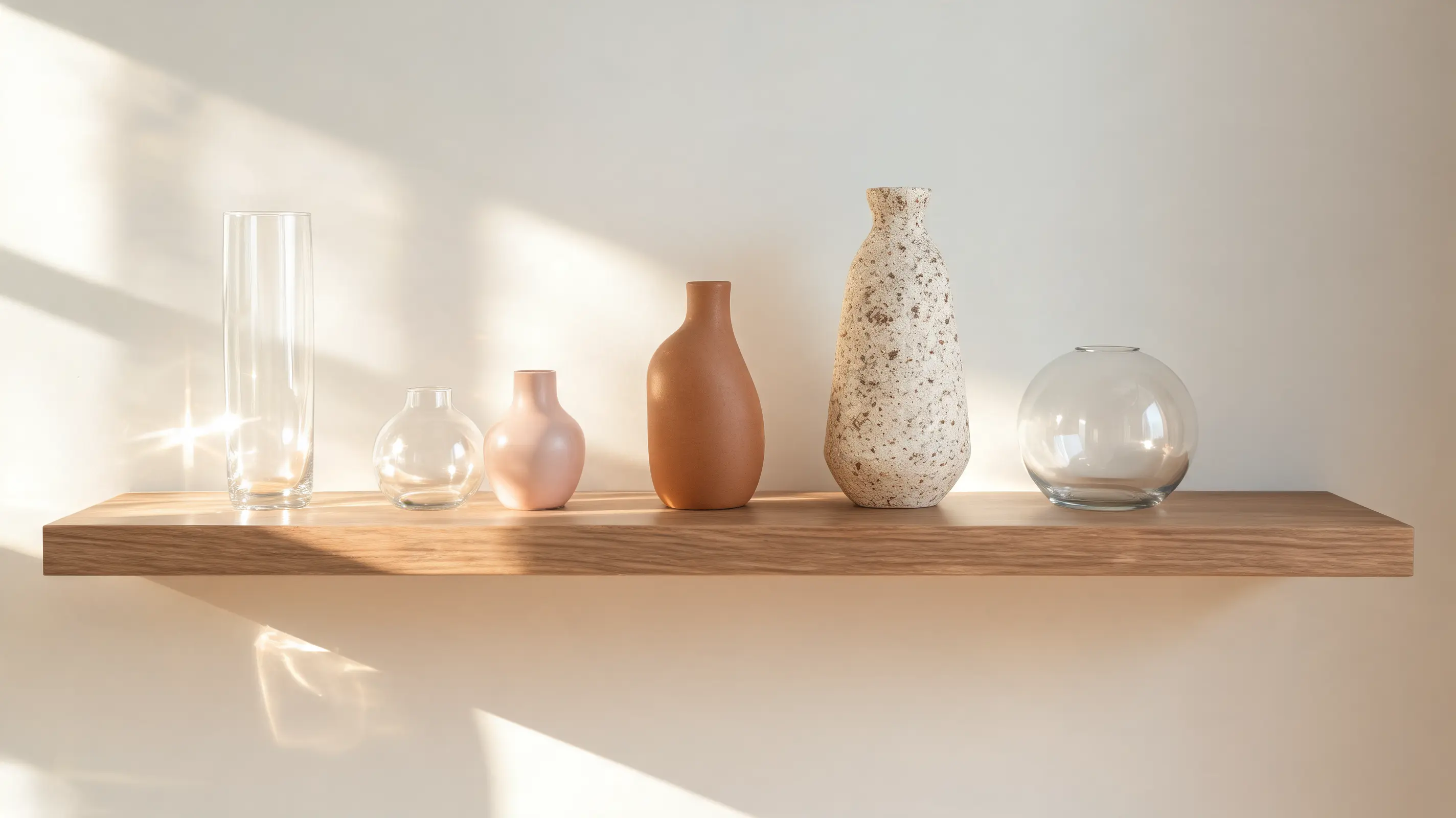
Decorative vases help break flat shelf lines and introduce height variation. If you use a single bold vase or a grouped arrangement, they naturally draw attention upward.
- Layered Height: Place shorter vases in front of taller ones for a visually dynamic effect and better balance on each shelf.
- Reflective Surfaces: Glass vases or metallic finishes catch light beautifully, brightening the shelf and adding subtle reflections for elegance.
Note: Pair odd numbers of vases for a visually appealing arrangement
4. Mix Photo Frames with Books
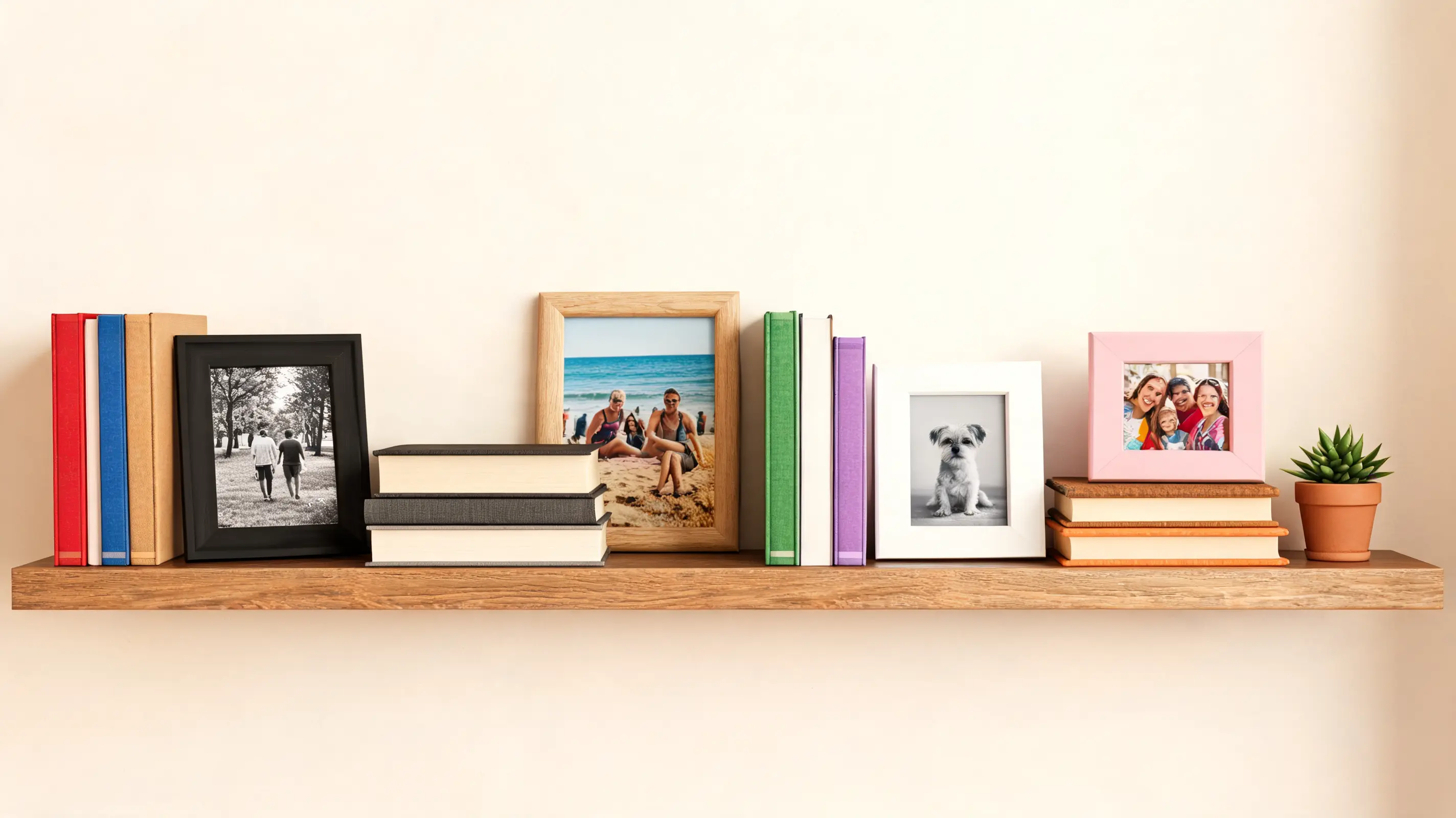
Combining photo frames with books adds personality and warmth to shelves. It prevents the space from feeling too structured or impersonal. This pairing is especially at home in a light academia bedroom aesthetic, where books and framed art work together to tell a story.
I often place frames between book sections to create a soft storytelling effect that feels natural and lived-in. Let’s bring some soft ambiance with warmth and glow.
- Sentimental Vibes: Include black-and-white or colorful photos to create contrast, visual interest, and make the shelves feel personal and welcoming naturally.
- Storytelling: Frames can showcase memories or special moments, helping shelves feel curated while telling your story visually to everyone.
Formula: Alternate 2 frames per 5–6 books for harmony.
5. Add Candles for Warmth
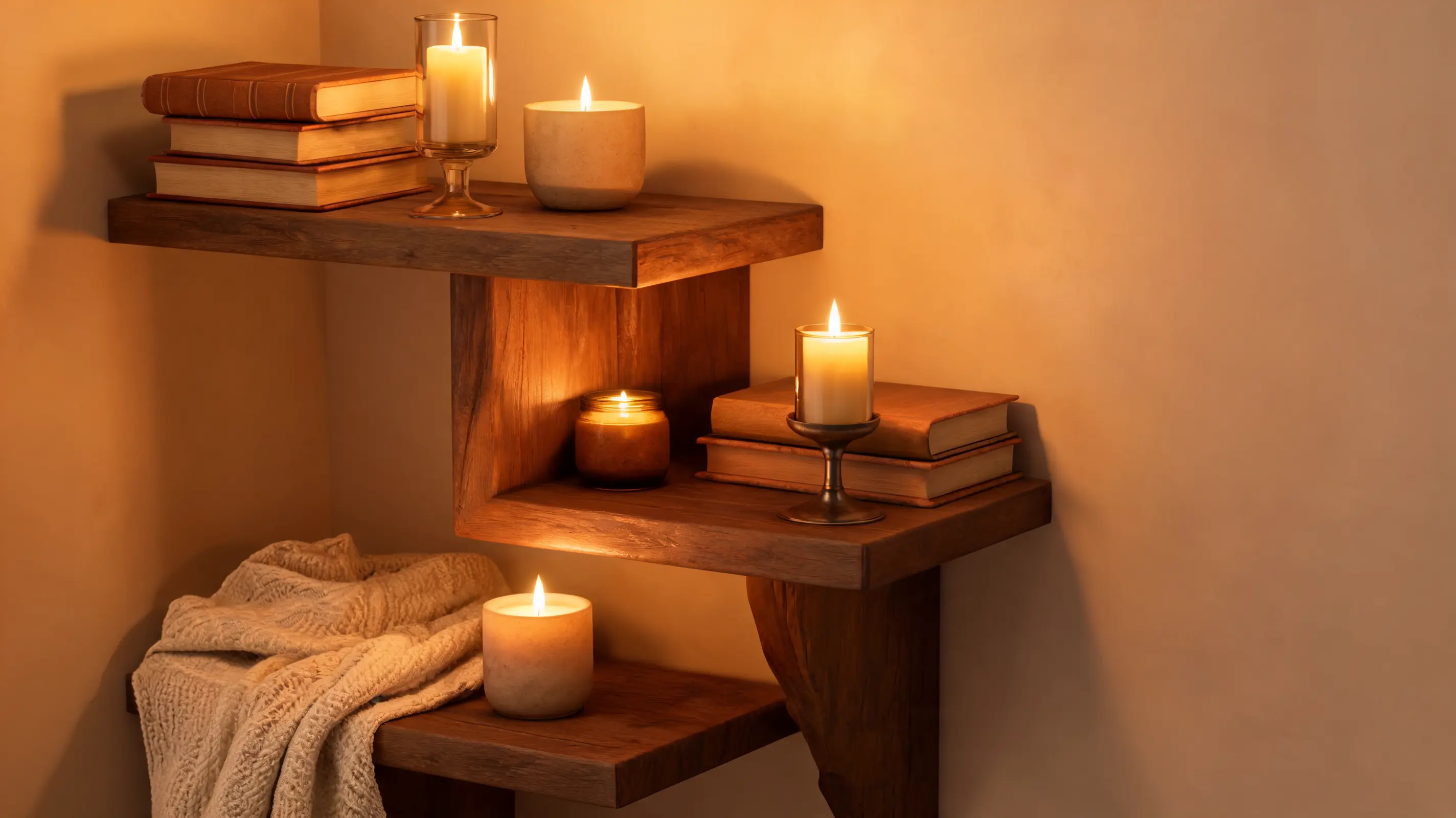
Candles introduce soft lighting and gentle texture to shelves. They help create a cozy mood, especially in the evenings.
- Ambient Touch: Use scented candles near books or plants to create cozy, inviting corners that encourage relaxation and style simultaneously.
- Layered Styling: Group three candles of varying heights and sizes to make an appealing, balanced, and visually interesting arrangement.
Note: Always choose flame-safe holders for safety and style.
6. Place Small Sculptures or Art Pieces
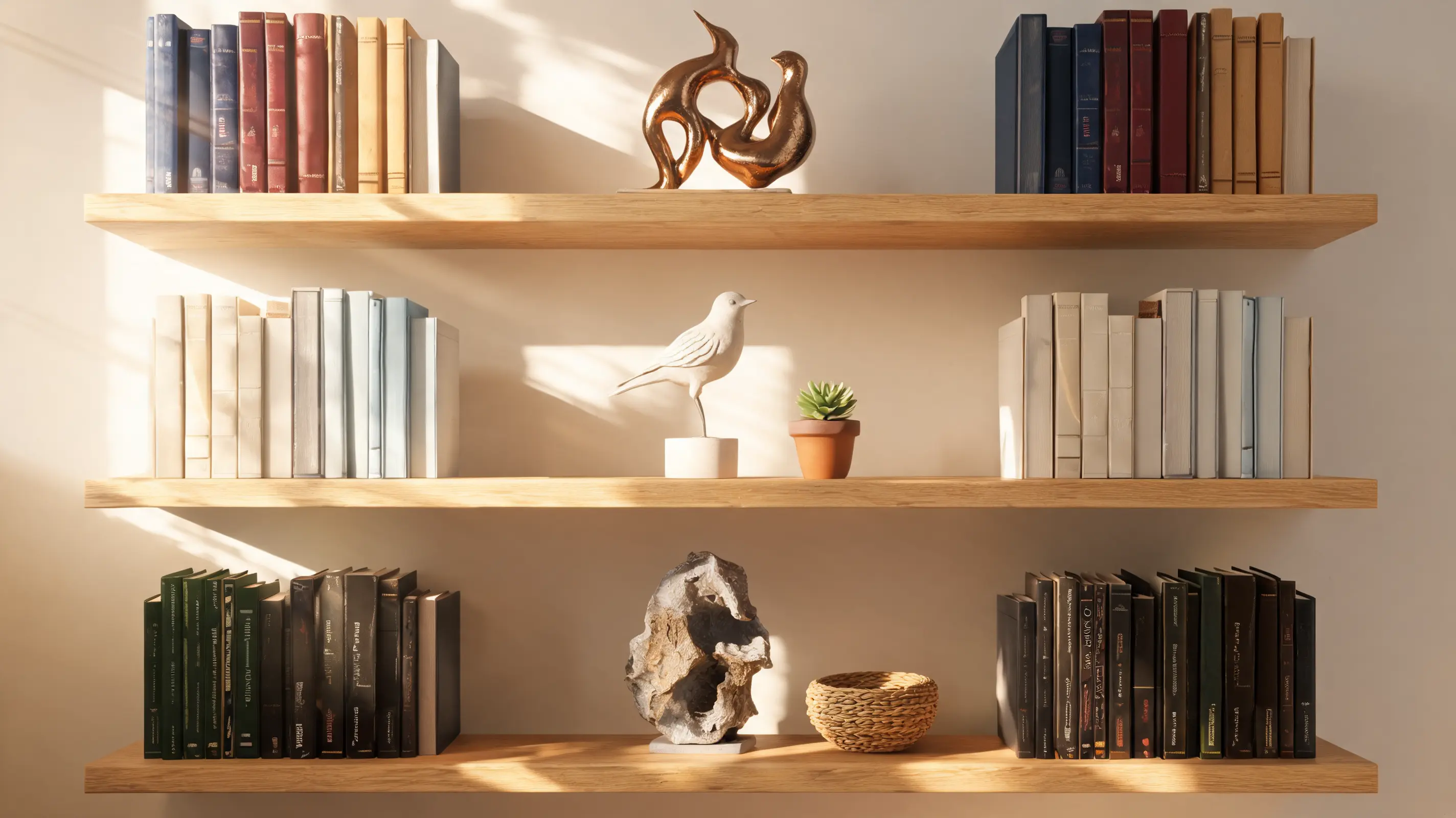
Small sculptures or art pieces act as visual anchors on shelves. They break repetition and add a focal point that draws attention. Once art is in place, storage solutions keep everything neat.
- Visual Break: Position a sculpture between books or decor to break monotony, adding depth, movement, and natural visual interest effortlessly.
- Theme Tie-in: Choose sculptures that complement the room’s existing style or color palette to make the shelves cohesive and beautiful.
Formula: Keep one eye-catching sculpture per shelf section to avoid clutter.
7. Use Woven Baskets
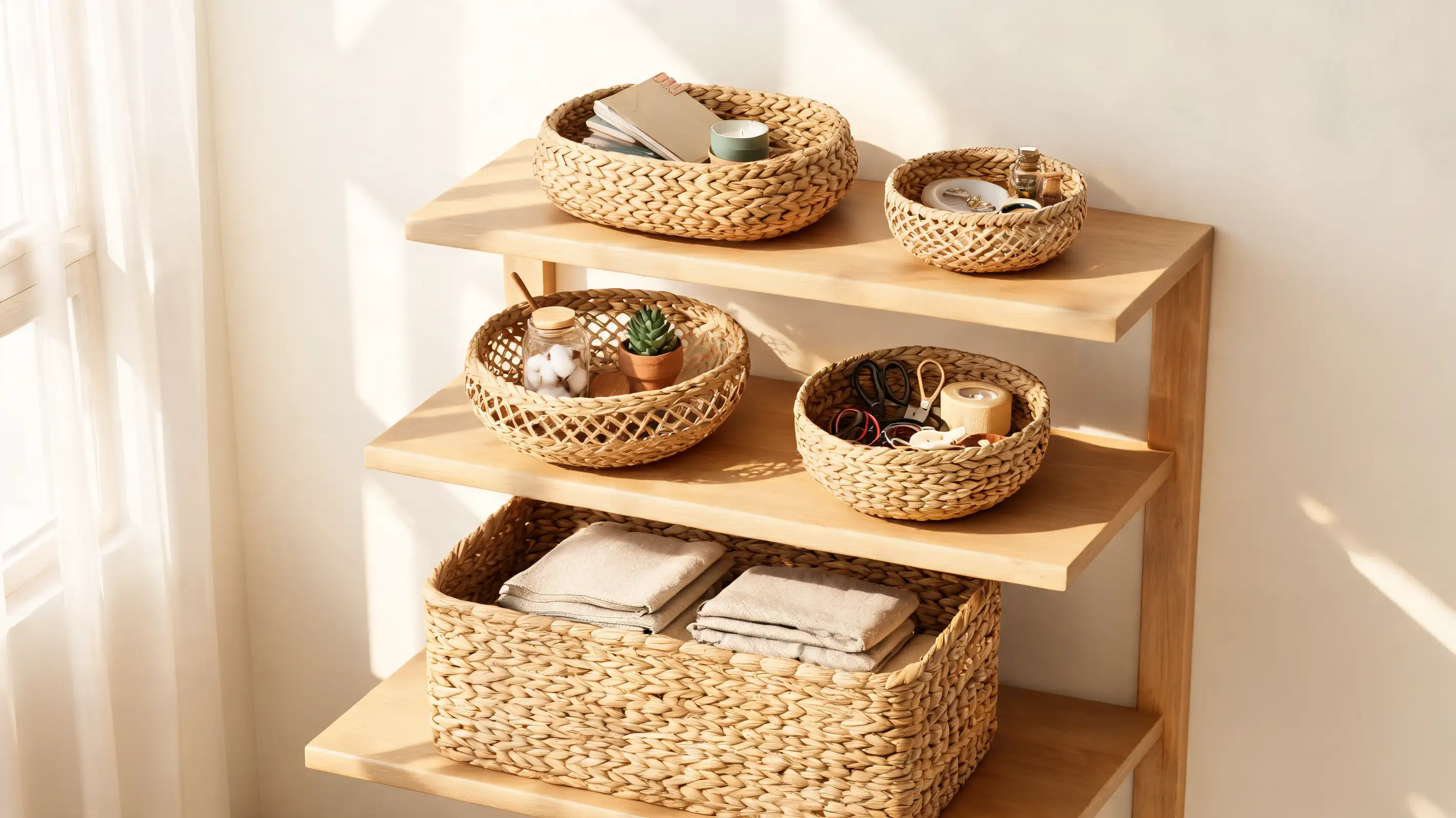
Woven baskets are perfect for combining storage and style. They help hide clutter while adding natural texture, especially on lower shelves.
I find them useful for storing small everyday items while keeping the overall shelf look clean and organized. Lighting can further enhance the mood after organizing.
- Hidden Storage: Use baskets to discreetly store miscellaneous items while keeping your shelves looking neat, organized, and aesthetically appealing.
- Material Mix: Combine different woven textures such as wicker, seagrass, or fabric to create depth, interest, and layered visual appeal.
Note: Mix sizes but stick to 2–3 textures to keep harmony.
8. Add Fairy Lights or LED Strips
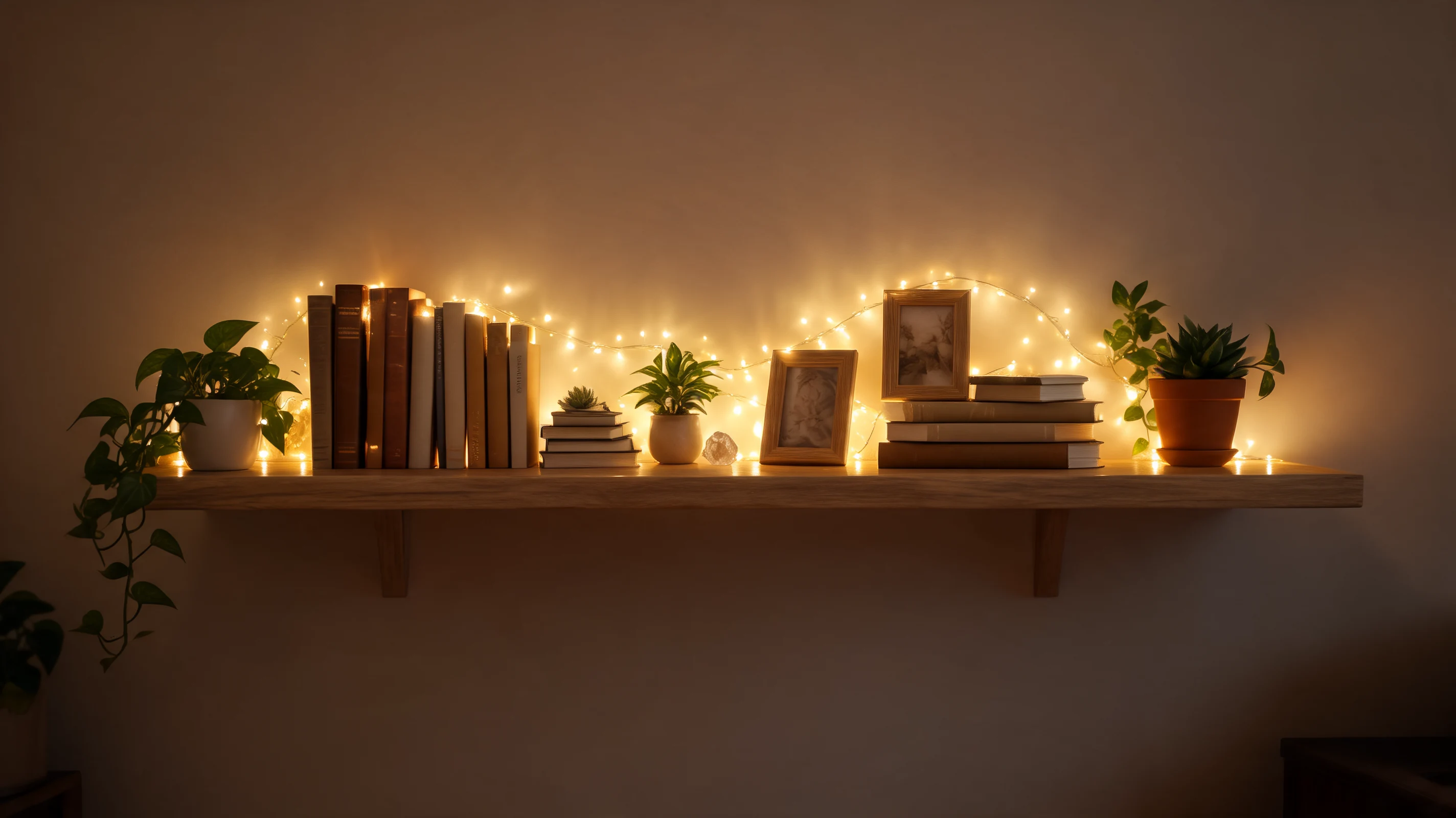
Fairy lights or LED strips add soft ambient lighting that completely changes the mood of shelves. They highlight objects gently and make the space feel warm during evenings. With lighting, it’s time to mix functional decor items for style.
- Soft Accent: Place LED strips behind books, plants, or frames to produce a subtle glow and create a relaxing visual effect efficiently.
- Flexible Placement: Fairy lights or LED strips can be repositioned easily to highlight different areas and keep shelves looking refreshed.
Formula: One light strand per 3–4 feet of shelf for even coverage.
9. Mix Books with Decor Objects
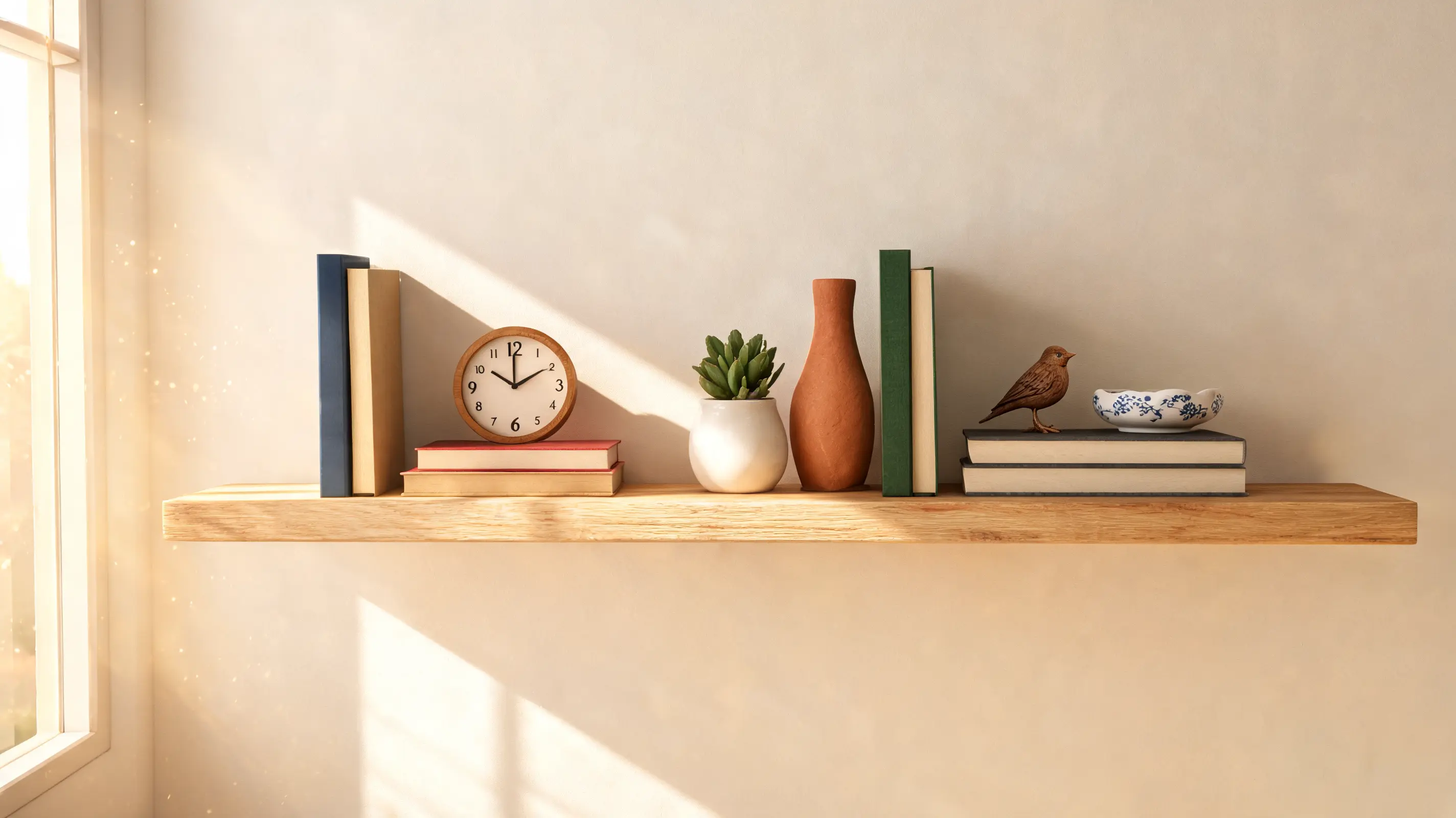
Mixing books with decor objects like clocks, ceramics, or small collectibles prevents shelves from looking like a library.
- Mini Scenes: Arrange 2–3 decor objects beside books to create small vignettes that add style, interest, and cohesion simultaneously.
- Functional Decor: Include small functional items like trays, clocks, or small containers that serve a utility while maintaining visual appeal.
Tip: Odd-numbered groupings are visually more appealing.
10. Group Items by Color
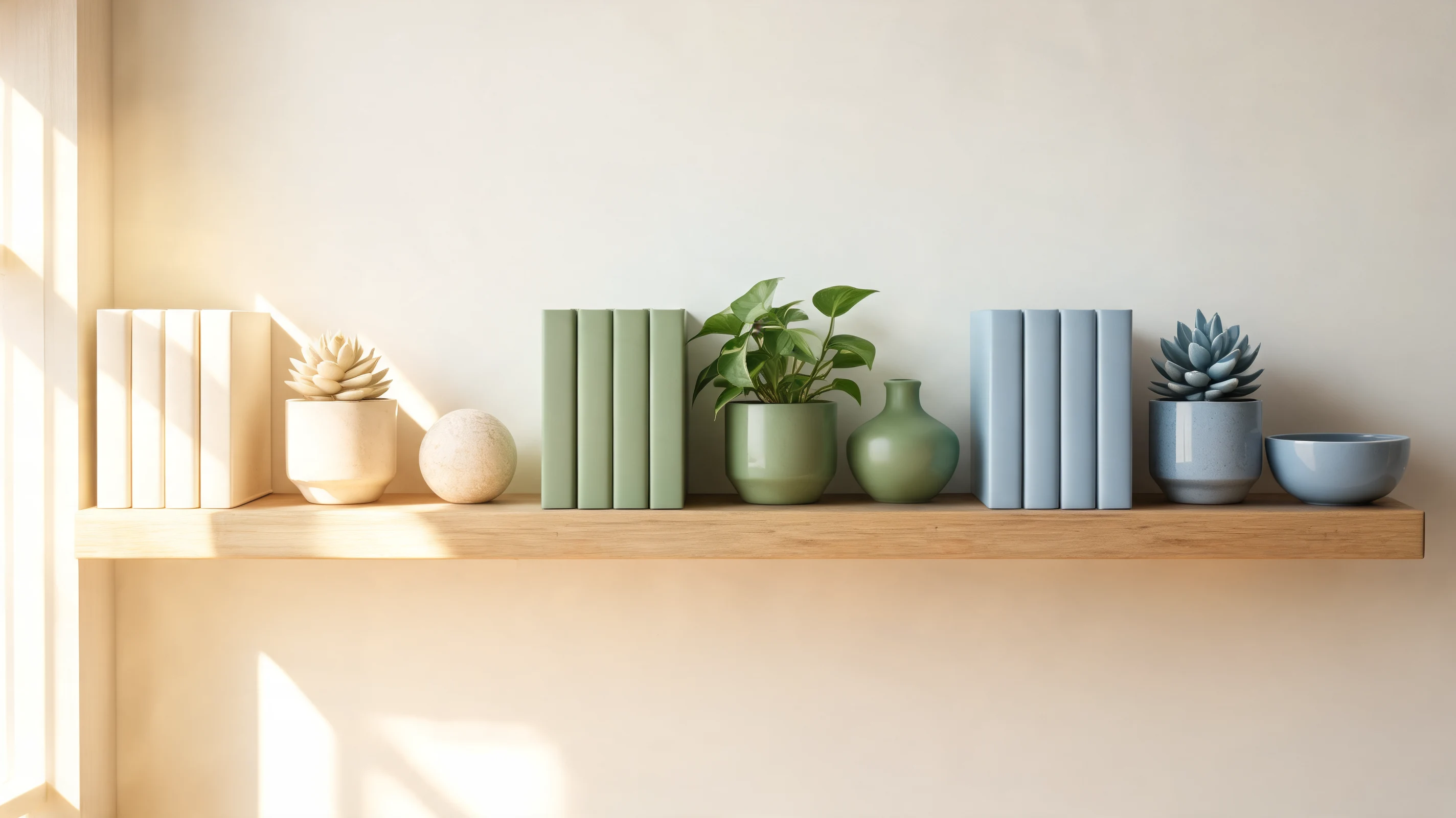
Grouping items by color makes shelves look clean and visually structured. A simple palette creates calmness and makes everything feel intentionally arranged and visually connected. Once color is in place, themed sections can give structure.
- Color Flow: Repeat accent colors vertically or horizontally to guide the eye naturally and maintain organized, intentional shelf styling consistently.
- Seasonal Shift: Switch accent colors seasonally to refresh shelves quickly while keeping the same base neutral color scheme intact.
Formula: One dominant, one secondary, and one accent color per shelf for harmony.
11. Create Themed Sections
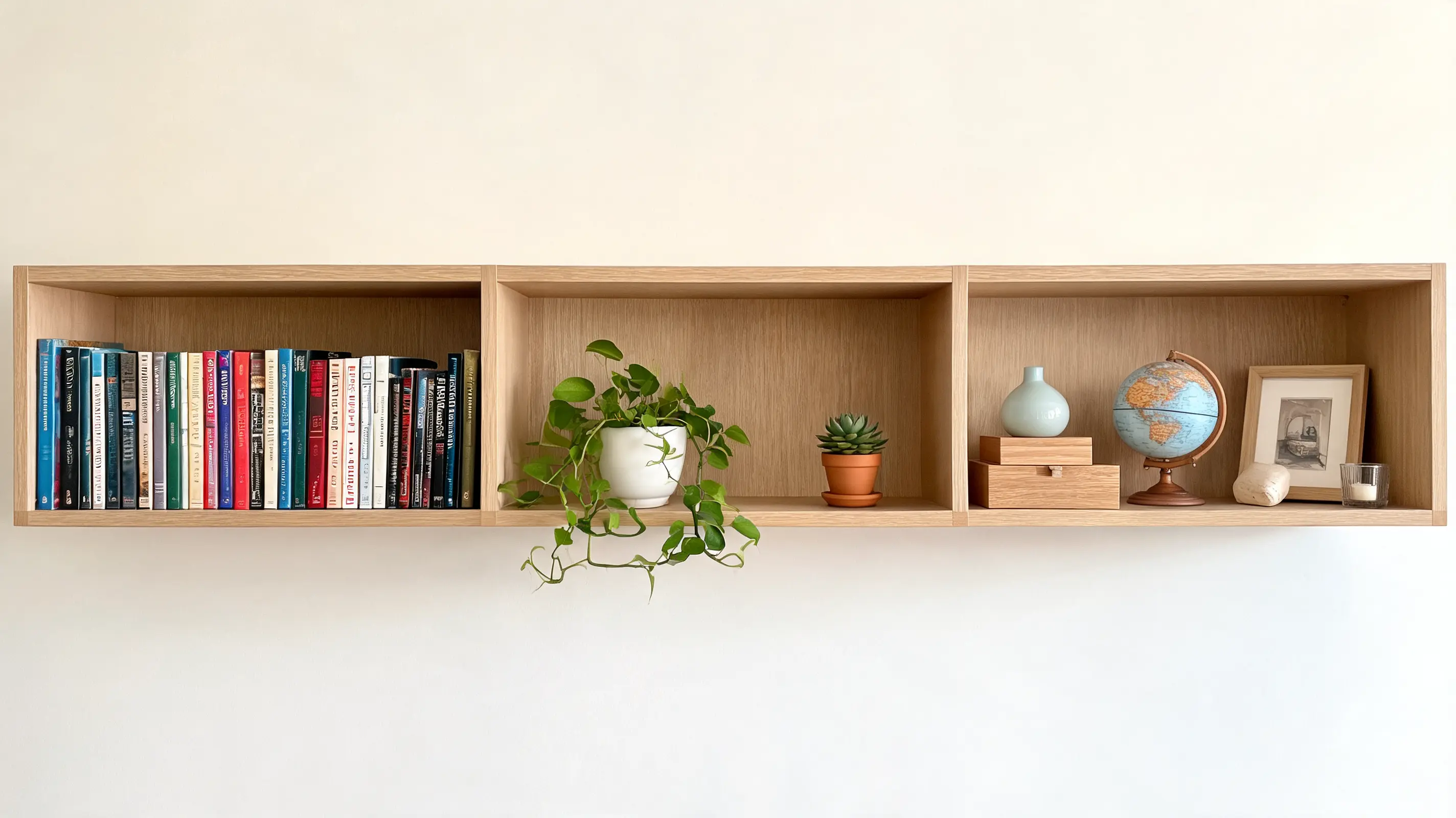
Creating themed sections means assigning each shelf a purpose, like books, plants, or decor items. This adds structure and makes the shelves easier to style.
I like switching themes occasionally because it keeps the space feeling fresh and thoughtfully arranged. Following these steps, your shelves will feel intentional, cozy, and completely you.
- Themed Stories: Group items by theme, like books, plants, or collectibles, to create visually appealing, curated, and interesting shelf arrangements consistently.
- Balanced Layout: Alternate dense and minimal shelves to provide breathing space and create harmony, avoiding visual clutter across the entire shelving unit
Note: Limit 2–3 themes per shelving unit to prevent chaos
Simple Shelf Styling Rules to Get the Balance Right
Before placing anything on your shelves, a few small choices can completely change how everything looks together. These simple rules help create a more relaxed, visually balanced setup without making it feel forced or overly planned.
- Height Mix: Combine tall and short items so the shelf feels naturally balanced instead of flat or repetitive in structure.
- Material Blend: Use a mix of wood, glass, metal, and ceramic pieces to add contrast and visual interest across shelves.
- Asymmetry Flow: Avoid placing items in perfect symmetry; slightly uneven arrangements feel more natural and are visually easier on the eyes.
- Open Space: Leave a bit of empty space so shelves don’t look crowded, and each piece can stand out properly.
- Layer Depth: Place some items in front and others behind to create depth and make the shelf feel more styled.
These small styling shifts can turn everyday objects into a more intentional and visually comfortable shelf display without much effort.
Common Mistakes That Make Shelves Look Cluttered
I’ve noticed shelves often look messy when small styling mistakes build up, so here are common issues you can easily avoid.
| Mistake | Why It Fails | Better Fix |
|---|---|---|
| Filling every space | Looks crowded and heavy with no breathing room | Leave gaps so items stand out clearly |
| Too many small items | Creates visual noise and a messy appearance | Mix small items with larger decor pieces |
| Same height items | Makes shelves look flat and boring | Vary heights using books, vases, decor |
| Ignoring color balance | Feels chaotic and unorganized | Stick to 2–3 repeating colors |
| Mixed styles | Breaks visual consistency | Use one main style with subtle accents |
When I keep these mistakes in mind, my shelves instantly feel calmer, cleaner, and much more intentional without extra effort.
Final Shelf Styling Tips for a Clean and Modern Look
I usually step back after styling shelves because seeing the full setup helps me notice balance, spacing, and overall flow clearly.
- Step Back View: Always view the entire shelf setup from a distance first, so you can judge balance and visual harmony accurately.
- One Shelf Focus: Adjust one shelf at a time instead of changing everything together, making styling feel easier and more controlled overall.
- Refresh Often: Swap decor pieces occasionally to keep shelves feeling fresh, interesting, and visually engaging without needing complete restyling each time.
- Balance Check: Ensure shelves feel balanced, not crowded, with enough spacing so each item has room to stand out clearly.
Final Thoughts
Getting your shelves to look right becomes easier once you focus on balance, spacing, and placing items with clear intent. I’ve found that starting simple and building step by step helps keep things from feeling messy.
You’ve seen how choosing a style, mixing item sizes, adding layers, and using plants can change the entire look. Small updates like shifting items or rotating pieces help keep things fresh over time.
Learning how to decorate shelves this way matters because it helps you create a space that feels organized and comfortable every day. It also saves you time since you won’t need constant changes later.
Now it’s your turn to try these ideas, adjust them to your liking, and see what works best for your space.
Frequently Asked Questions
What is the easiest way to start styling shelves?
Begin with a clean slate by removing clutter, setting a color palette, and choosing a few larger items to anchor the shelf before adding smaller decor pieces.
How do I prevent shelves from looking cluttered?
Leave breathing space between objects, balance large and small pieces, and avoid too many tiny items; keep negative space to enhance visual calm.
How can lighting improve shelf styling?
Soft lighting, like fairy lights or small LED lamps, highlights decor pieces and creates warmth, especially in deeper shelves or evening settings.
Is there a simple rule for arranging objects?
Designers often follow groupings in odd numbers (like 3 or 5 objects) for more visually engaging balance and natural-looking displays.
Can themed sections help with styling?
Yes, assigning each shelf a theme, like books, plants, or collectibles, creates structure and helps maintain a cohesive look.