

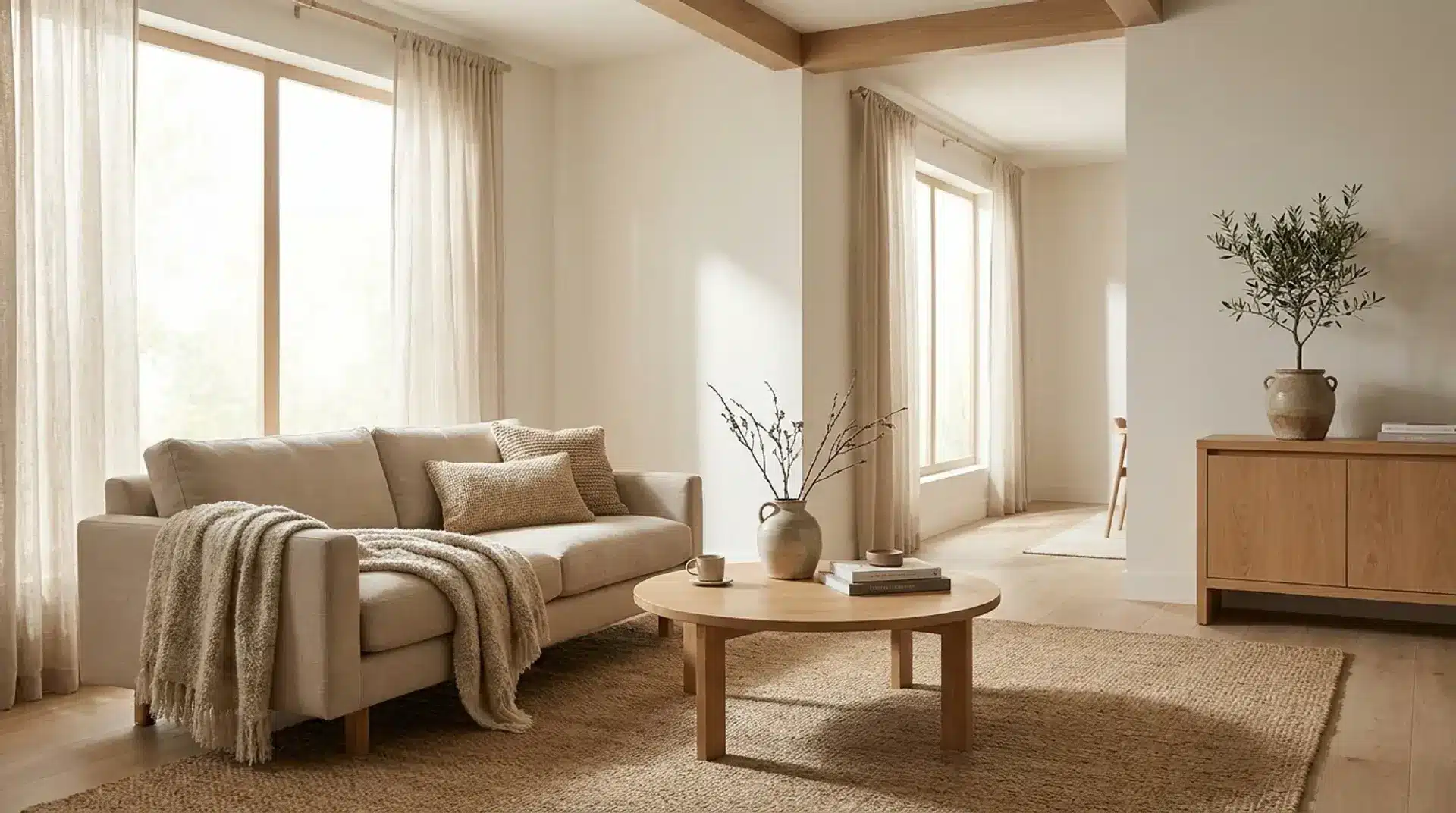


| Quick Answer: Japandi interior design pairs natural materials like wood, stone, and linen with low-profile furniture and muted, earthy colors, favoring fewer well-crafted pieces over decoration to create rooms that feel simple, grounded, and purposeful. |
Japandi interior design blends Japanese minimalism with Scandinavian warmth to create rooms that feel calm, orderly, and lived in at the same time.
It is not about buying matching furniture sets or copying a mood board.
It is a way of choosing fewer, better objects and letting natural light, wood, and texture do the talking.
If you have seen a room with low furniture, warm neutral walls, and a single ceramic bowl on a shelf, you have already seen Japandi in action.
This blog breaks down where the style comes from, how to build its color palette, what materials and furniture belong in it, and how to apply it room by room, along with common mistakes people make along the way.
What is Japandi Interior Design
Japandi is a design style that merges Japanese wabi-sabi philosophy with Scandinavian hygge, creating homes that are simple, functional, and quietly warm.
The word itself is a mashup of “Japanese” and “Scandi,” and design writers trace its rise in popularity to around 2017, when interest in slow living and decluttered spaces began to build momentum.
Wabi-sabi is the Japanese idea that beauty exists in imperfection and the natural aging of things, such as a hand-thrown bowl with an uneven glaze.
Hygge, the Danish concept, focuses on coziness, soft lighting, and creating a sense of comfort in everyday life.
This fusion style has evolved from a niche trend into a mainstream approach used by architects and homeowners alike.
Important Note: Japandi is not simply a beige room with wooden furniture. It is also not about making a space completely empty, filling it with Japanese-inspired decor, or using only light colors and minimalist furniture.
The Core Principles of Japandi Style
Before picking paint colors or furniture, it helps to know the values that hold the whole style together.
These principles appear in every well-designed Japandi space and closely reflect the focus on natural materials, longevity, and mindful choices found in sustainable interior design.
- Intentional simplicity: Every object earns its place. Nothing sits in a room just for the sake of decoration.
- Natural materials: Wood, stone, linen, cotton, wool, and ceramic dominate, while plastic and glossy synthetic finishes are kept to a minimum.
- Muted, earthy colors: Warm neutrals and soft greens replace bright primaries and high-contrast feature walls.
- Craftsmanship over mass production: Handmade ceramics, joinery furniture, and woven textiles bring in small, honest imperfections.
- Functional beauty: A piece has to be both useful and attractive. If it fails either test, it will not be admitted to the room.
Once these principles are clear, choosing furniture and colors becomes much easier because you filter every decision through the same short list of questions.
Japandi vs Scandinavian vs Minimalist vs Wabi Sabi
These four terms are often used interchangeably online, but they are not the same, and knowing the difference helps you shop and design with more confidence.
| Style | Color Tone | Furniture | Key Idea |
|---|---|---|---|
| Japandi | Warm neutrals with earthy, darker accents | Low, grounded, natural wood | Balance of Japanese calm and Nordic comfort |
| Scandinavian | Bright whites, pale woods, occasional pastel pops | Sleek, functional, light-colored | Hygge, coziness, and long-winter brightness |
| Minimalist | Often stark white, gray, or black | Sparse, sometimes industrial | Reduction to the essential, less focus on warmth |
| Wabi Sabi | Muted, earthy, imperfect finishes | Rustic, aged, handmade | Beauty found in imperfection and aging |
- Japandi: A balanced blend of Japanese minimalism and Scandinavian warmth, focused on natural materials, functionality, and understated comfort.
- Scandinavian: A bright, cozy design style that emphasizes light colors, clean lines, and practical furniture to create inviting, functional spaces.
- Minimalist: This approach removes unnecessary elements, prioritizing simplicity, clean forms, and only the essentials.
- Wabi-Sabi: A Japanese philosophy that celebrates imperfection, natural aging, and the quiet beauty found in handmade and weathered objects.
As comparison guides from sites like 2Modern point out, Scandinavian rooms tend to be lighter and brighter, while Japandi leans into deeper, moodier contrast alongside its neutral base.
Important Note: If bright, airy, and mostly white sounds like your taste, Scandinavian design may suit you better, while Japandi is the stronger fit if you want warmth paired with a bit of shadow and depth.
The Best Colors for a Japandi Interior
The Japandi color palette sits between the bright whites of Scandinavian design and the deeper, moodier tones found in traditional Japanese interiors.
The right color choices play an important role in residential interior design, helping to create the warm, natural feel that Japandi spaces are known for.
1. Base Neutrals
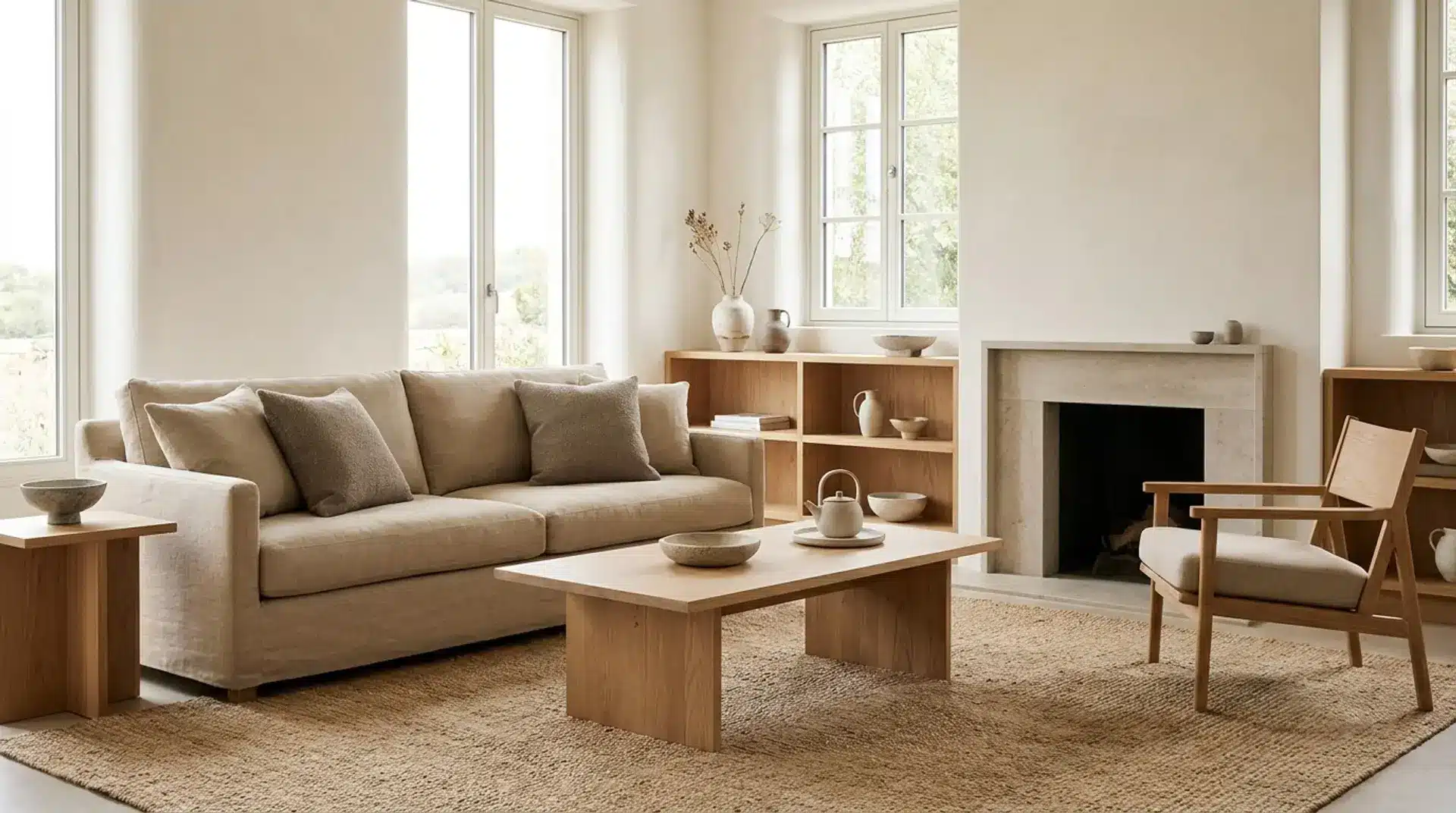
These soft, natural shades create a calming foundation that allows wood, stone, and textured fabrics to take center stage while keeping the room bright and balanced.
Warm whites, sandy beige, taupe, and soft gray form the foundation for walls, ceilings, and larger furniture pieces.
The word “warm” matters here, since a cool, blue-toned gray can clash with wood tones and make a room feel clinical rather than grounded.
2. Earthy Accents
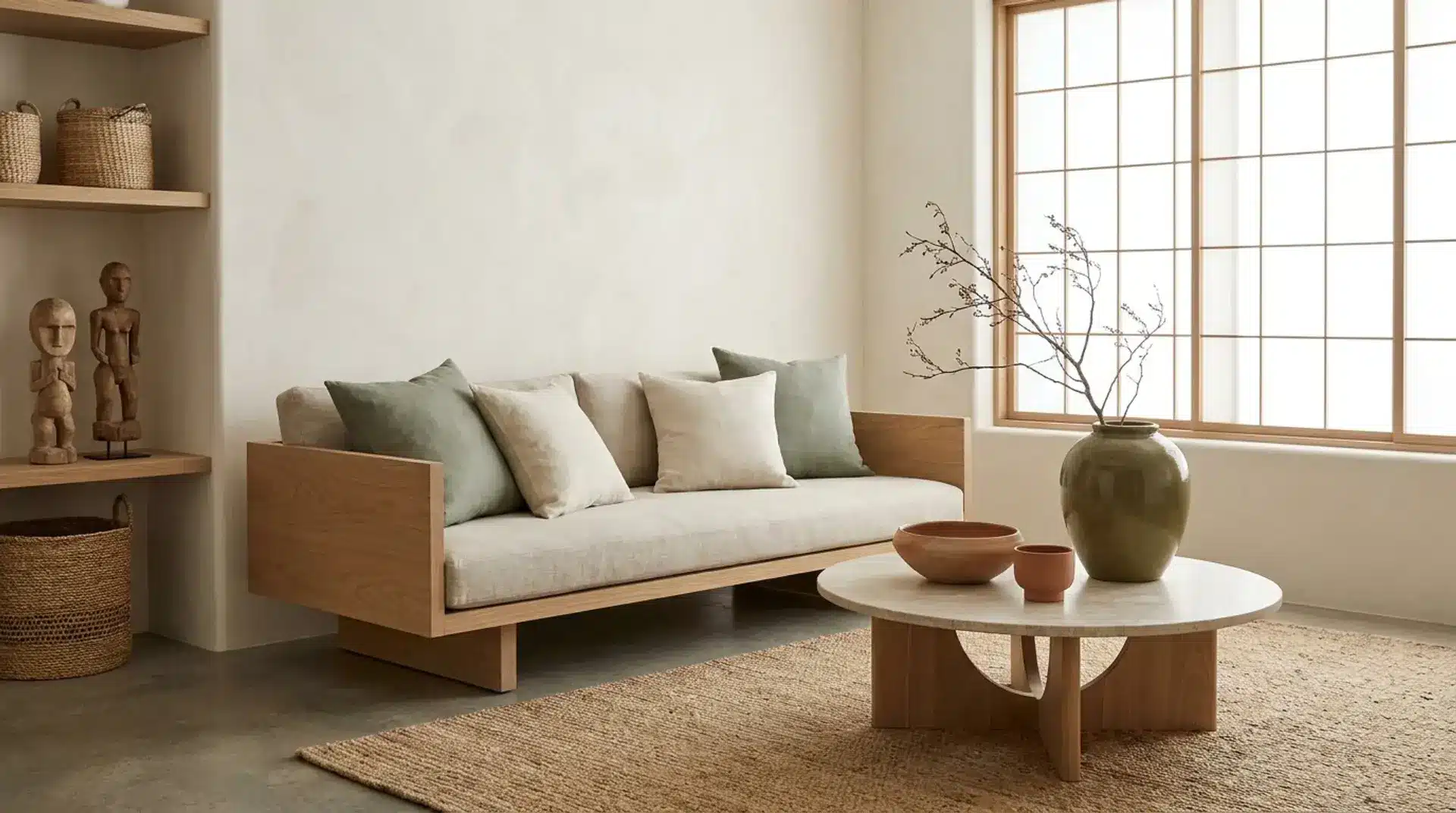
These nature-inspired tones add warmth and personality in small doses, bringing a sense of the outdoors into the space without disrupting its peaceful simplicity.
They bring depth to neutral interiors through cushions, ceramics, artwork, and other handcrafted details without overwhelming the minimalist Japandi aesthetic.
Use muted sage green, olive, clay, and terracotta sparingly on cushions, ceramics, or a single accent wall to bring in a bit of nature without overwhelming the palette.
3. Grounding Darks
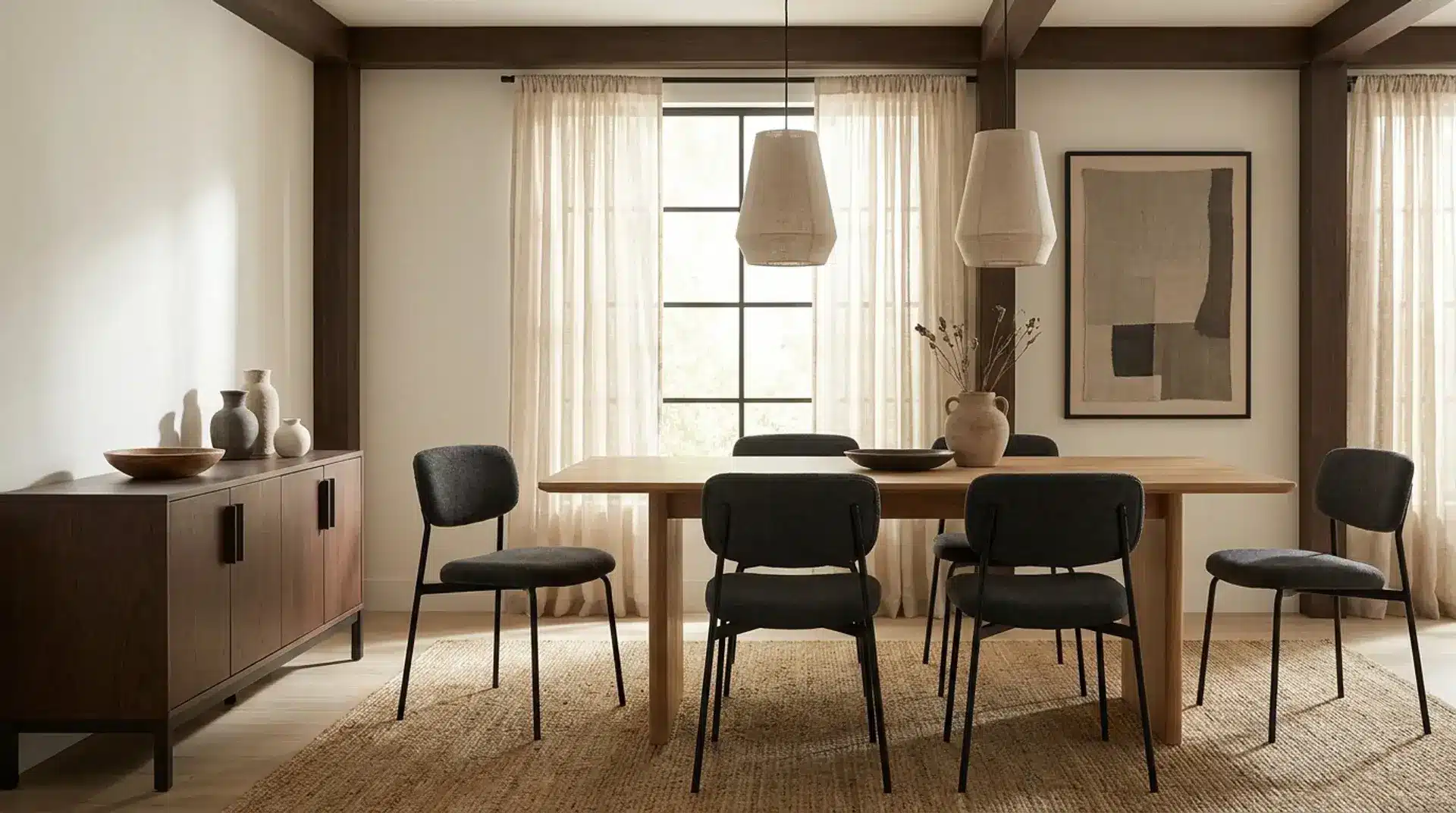
These deeper shades provide contrast and structure, helping define key features while adding depth to the otherwise light and neutral Japandi palette.
Charcoal, espresso brown, and matte black show up in hardware, furniture frames, or dining tables to add contrast and keep the room from feeling flat.
Keep finishes matte rather than glossy, since high shine reads as artificial and works against the natural, aged feel the style is going for.
Japandi Design Materials, Furniture, and Textural Elements
Materials are not just surfaces in a Japandi home, they are part of the design itself. The wood grain, the weave of a linen curtain, and the glaze on a ceramic vase are meant to be seen and felt, not hidden.
1. Wood and Natural Fibers
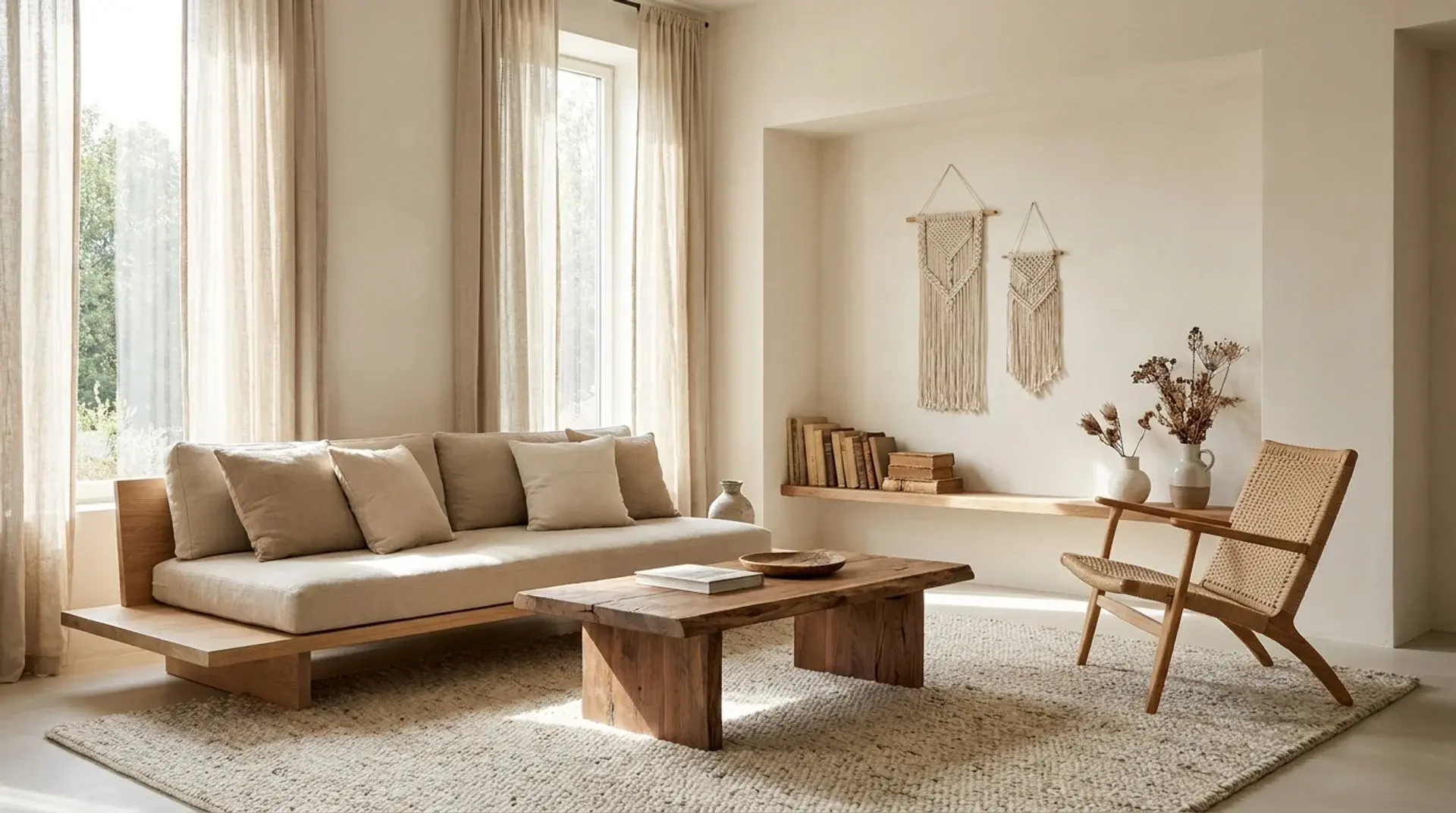
Light oak, ash, walnut, bamboo, and rattan bring subtle variations in grain and texture while maintaining a clean aesthetic.
Organic textiles like linen, cotton, hemp, and wool add softness to rugs, curtains, and upholstery.
Natural fiber rugs typically range from $100–$400 for budget options and $500–$1,500 for higher-quality wool or handwoven designs.
2. Furniture Shapes
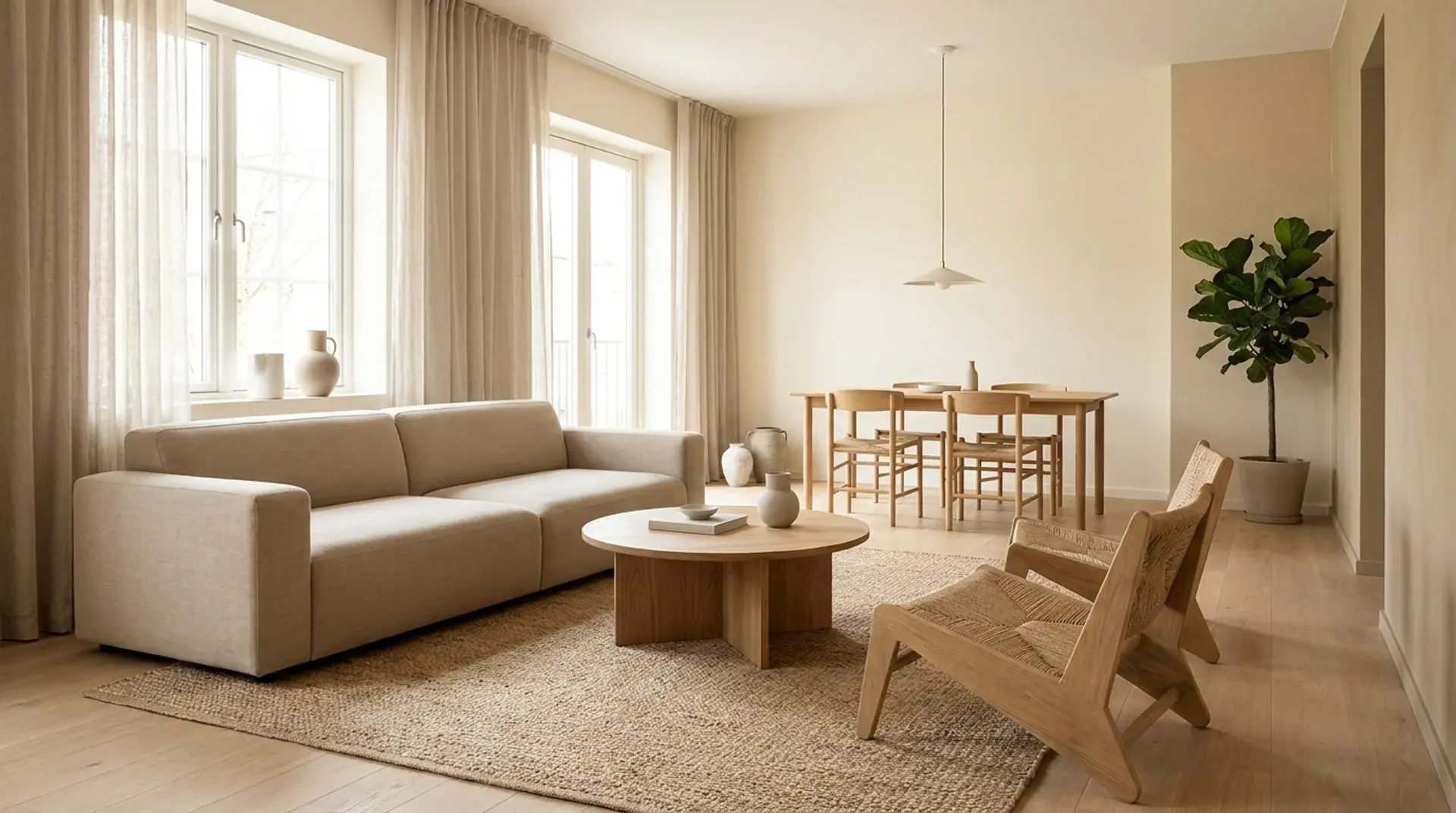
Low-profile sofas, chairs, and tables create a relaxed atmosphere while reflecting traditional Japanese influences.
Clean geometric forms replace decorative details, making craftsmanship, proportions, and natural materials the main visual elements.
Expect to spend around $400–$900 on a budget Japandi sofa, $1,000–$2,500 on a solid wood dining table, and $200–$600 on a simple platform bed.
3. Ceramics, Metal, and Greenery
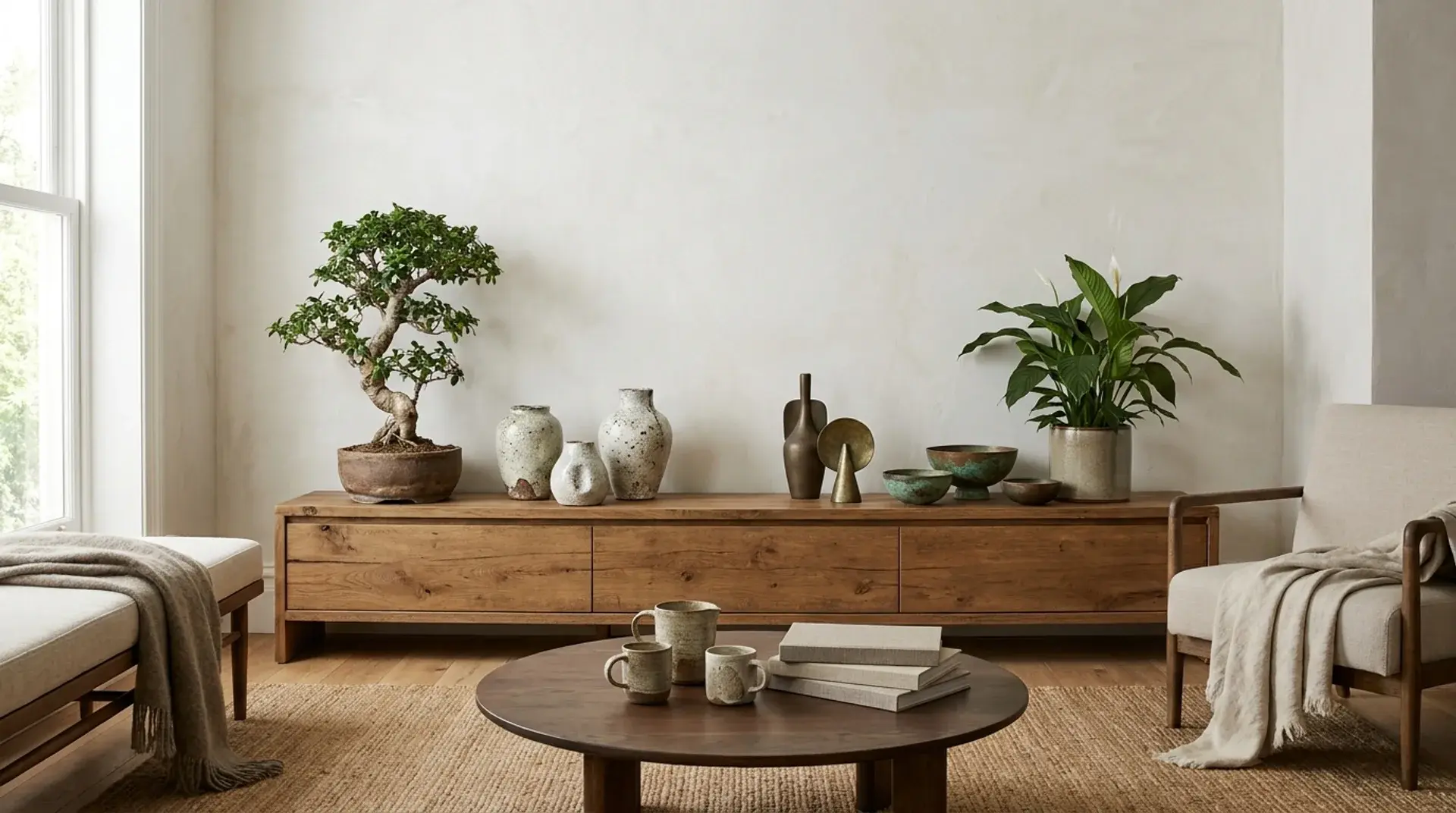
Decorative elements are carefully chosen to add character while preserving a sense of calm. Brass, bronze, and copper details develop a unique patina over time, adding warmth and history to the space.
Greenery is used thoughtfully, with plants like bonsai or peace lilies adding a refreshing natural element.
Handmade ceramics and decor can cost anywhere from $50–$200 for a few accent pieces to $500 or more for artisan collections.
How to Get the Japandi Look Room by Room
The Japandi approach can be applied throughout the home by focusing on simplicity, natural materials, and thoughtful choices suited to each room’s purpose.
Instead of adding more decoration, the style creates balance through texture, function, and carefully selected pieces.
1. Living Room
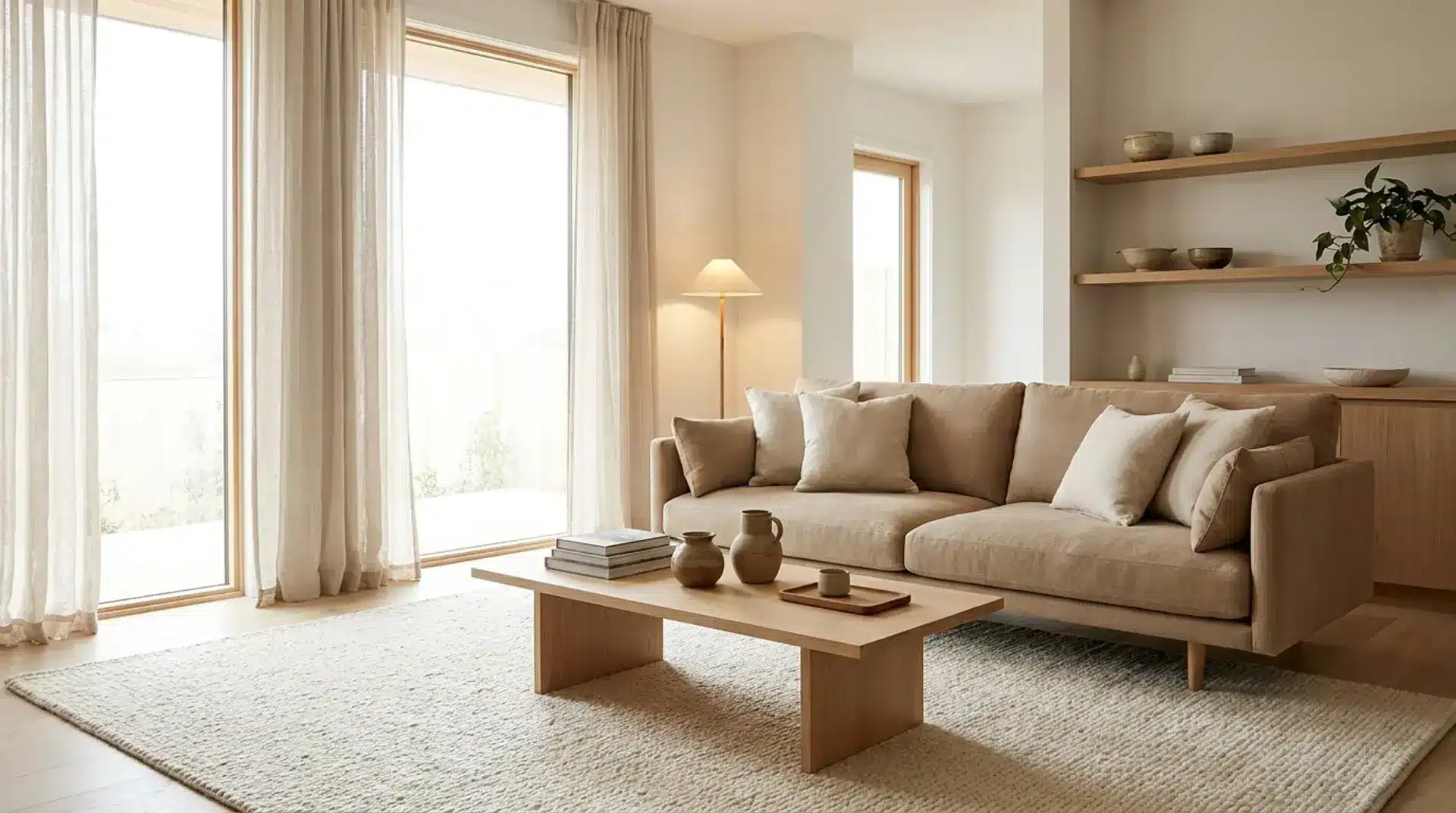
Choose a low-profile sofa in breathable linen or wool, paired with a simple wooden coffee table and a textured rug to define the seating area.
Keep surfaces uncluttered by displaying only meaningful objects, such as handmade ceramics, books, or natural accents. Soft lighting, warm neutrals, and organic textures help create a welcoming space.
Furnishing a Japandi living room typically costs $1,000–$4,000, depending on the quality of the sofa, rug, lighting, and furniture you choose.
2. Bedroom
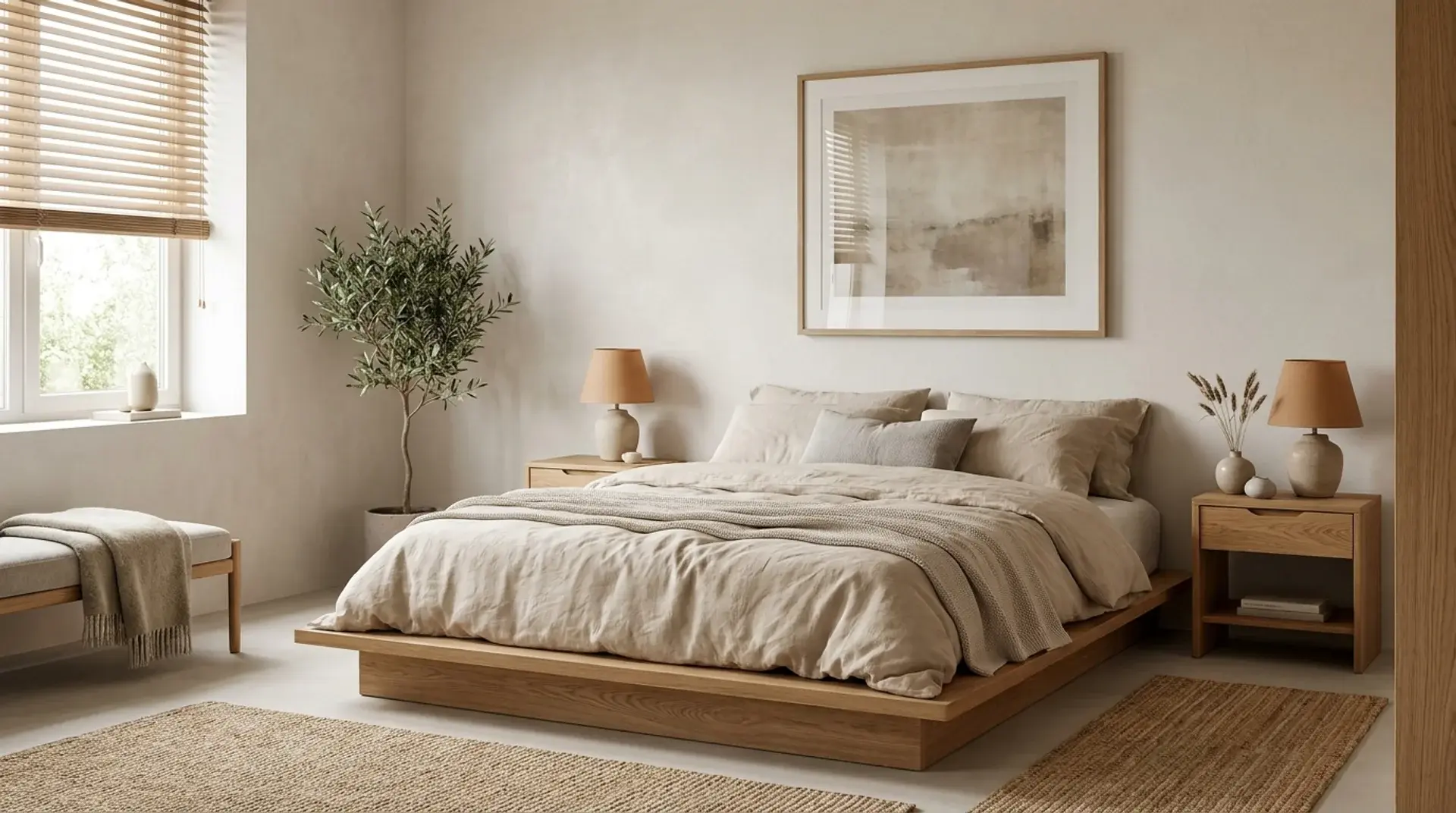
The bedroom should support relaxation by using a restrained palette, limiting the room to a few complementary colors, and focusing on natural bedding materials like linen or cotton for a softer feel.
A low platform bed, simple bedside tables, and minimal artwork can create a peaceful atmosphere. Avoid unnecessary decorations and instead introduce warmth.
A Japandi platform bed typically costs $200–$600, while premium solid wood designs range from $800–$2,500.
3. Kitchen
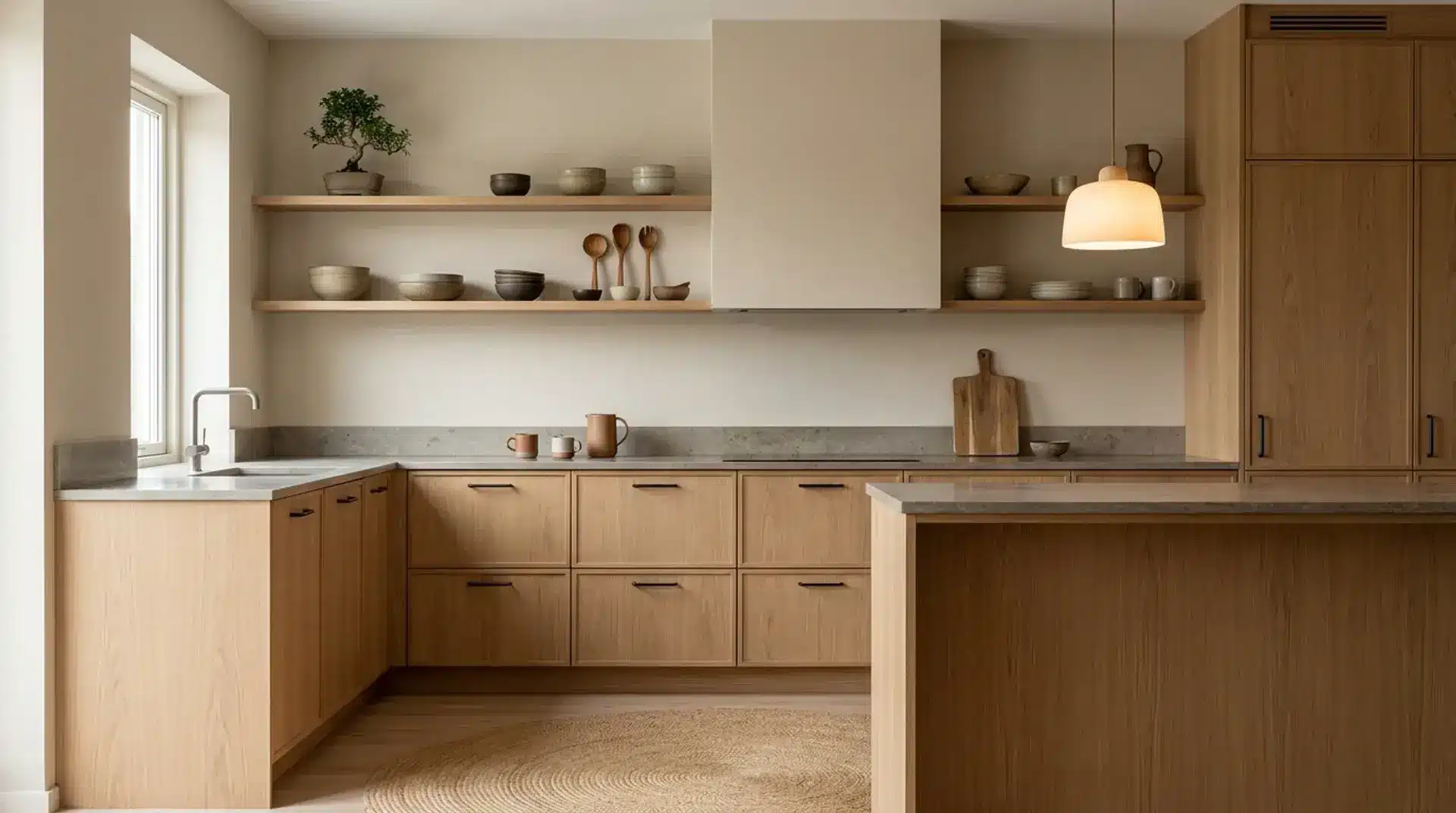
Light wood cabinetry, soft neutral tones, and understated hardware create a clean foundation without feeling overly modern or sterile.
Keeping countertops clear and choosing durable natural materials help maintain an organized space.
A Japandi-inspired kitchen refresh with new hardware, open shelving, and natural finishes can cost a few hundred dollars. At the same time, a full remodel may run into several thousand, depending on materials.
4. Bathroom
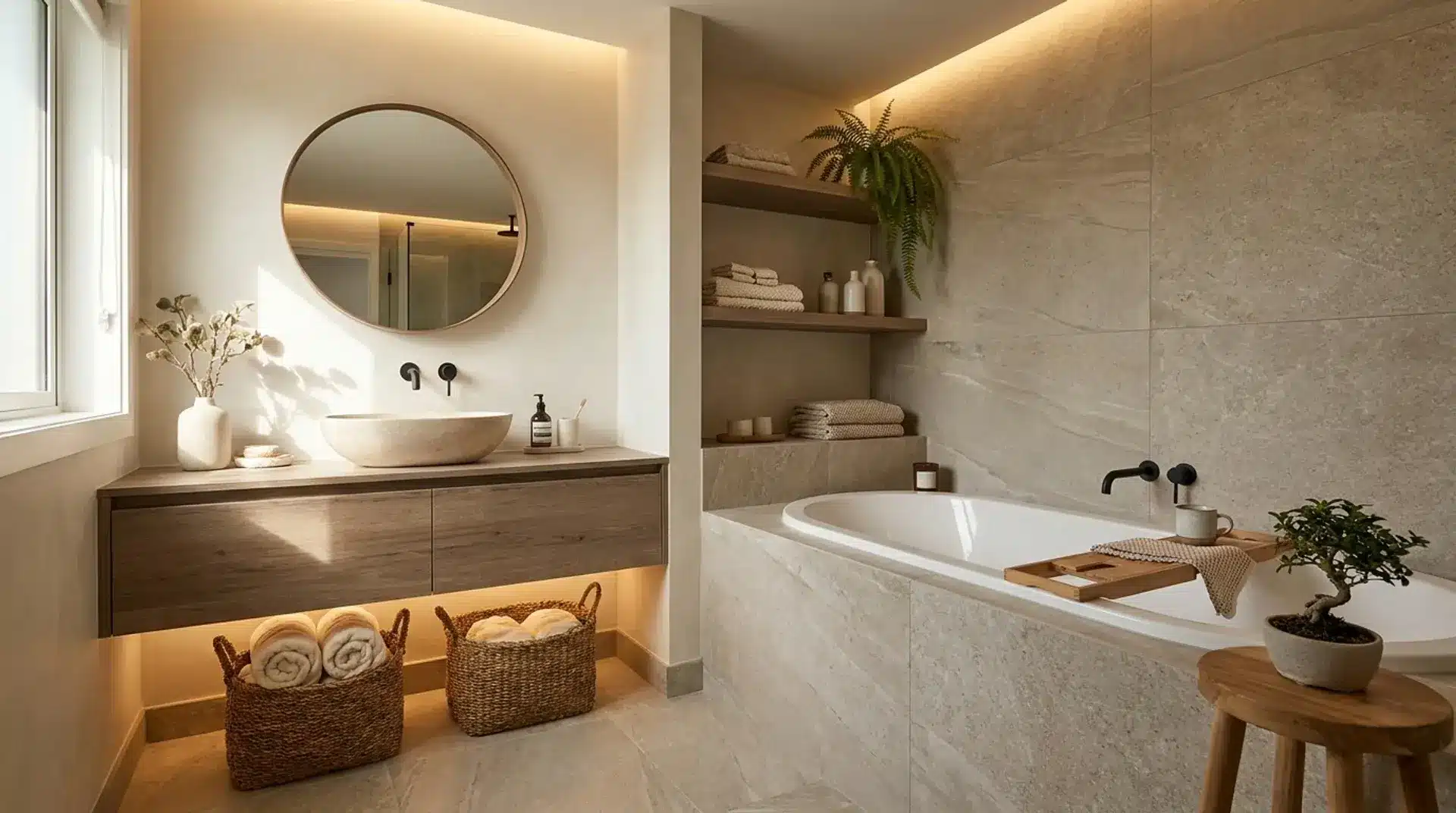
Stone-inspired surfaces, wood-look vanities, woven storage baskets, and soft textiles can add depth to the space. Keep accessories minimal and focus on quality materials that create a spa-like atmosphere.
Natural textures, warm lighting, and simple storage solutions help transform the bathroom into a quiet retreat that feels connected to the rest of the home.
Updating a bathroom with wood-look vanities, stone-inspired surfaces, and quality fixtures typically ranges from $1,000 for minor upgrades to $5,000+ for a complete renovation.
Common Mistakes to Avoid in Japandi Design
A few small missteps can pull a room away from Japandi and toward a generic neutral interior instead.
- Choosing cool grays: Blue-toned grays clash with warm wood tones, making a room feel sterile rather than calm.
- Overfilling shelves: Open shelving should hold a few curated pieces, not double as general storage.
- Using glossy finishes: High-shine surfaces work against the natural, slightly imperfect feel the style depends on.
- Skipping contrast: A room that is all soft neutrals, with no darker anchor point, can feel flat rather than grounded.
- Mixing too many wood tones: Stick to one or two wood species to keep the room cohesive rather than busy.
Avoiding these mistakes matters more than adding extra decor, since Japandi rewards restraint far more than it rewards accumulation.
Final Thoughts
Japandi interior design offers a practical way to create a calm, functional home without sacrificing warmth or personality.
By focusing on natural materials, a considered color palette, and furniture that earns its place, any room can take on this balanced, grounded feel over time.
Start small, choose one piece or one wall, and let the rest of the room follow at its own pace.
Have you tried bringing Japandi style into your own home, or are you planning your first room?
Share your experience, questions, or favorite sources of inspiration in the comments below.
Frequently Asked Questions
Why is Japandi Interior Design so Popular?
Japandi has become popular because it combines the warmth of Scandinavian interiors with the simplicity of Japanese design. The result is a timeless, functional style that feels calm.
Is Japandi A Good Choice for Families?
Yes. Japandi prioritizes durable materials, functional layouts, and purpose-driven furniture, making it practical for everyday family life. Smart storage solutions also help.
Can You Mix Japandi With Other Interior Styles?
Yes. Japandi pairs well with modern, contemporary, rustic, and even industrial interiors as long as the overall look remains uncluttered and focused on natural materials.
How to Make a Home Feel More Japandi without Renovating?
Start by decluttering, replacing synthetic materials with natural ones, and switching to a warm neutral color palette. Add small updates like linen curtains, wooden accents, and handcrafted decor.