


|
Grass Type |
Feedings Per Year |
Best Months |
Avoid |
|---|---|---|---|
|
Cool-season grass |
3 to 4 times |
Early spring and early fall |
Heavy feeding during summer heat |
|
Warm-season grass |
2 to 4 times |
Late spring through summer |
Late-season nitrogen before dormancy |
|
Newly seeded lawn |
4 to 5 times |
Every 6 to 8 weeks during the first season |
Skipping starter fertilizer |
A healthy lawn needs more than regular watering. Grass also depends on properly timed fertilizer to support stronger roots, steady growth, and rich green color throughout the growing season.
Timing matters as much as the fertilizer itself.
Feeding too early can encourage weak top growth, while applying too much during hot weather can scorch the grass. Fertilizing too late may also interfere with dormancy and increase stress.
Below, you’ll learn how often to fertilize, the best months to apply it, how to understand N-P-K ratios, and which application mistakes can damage your lawn.
How Often Should You Fertilize Your Lawn?
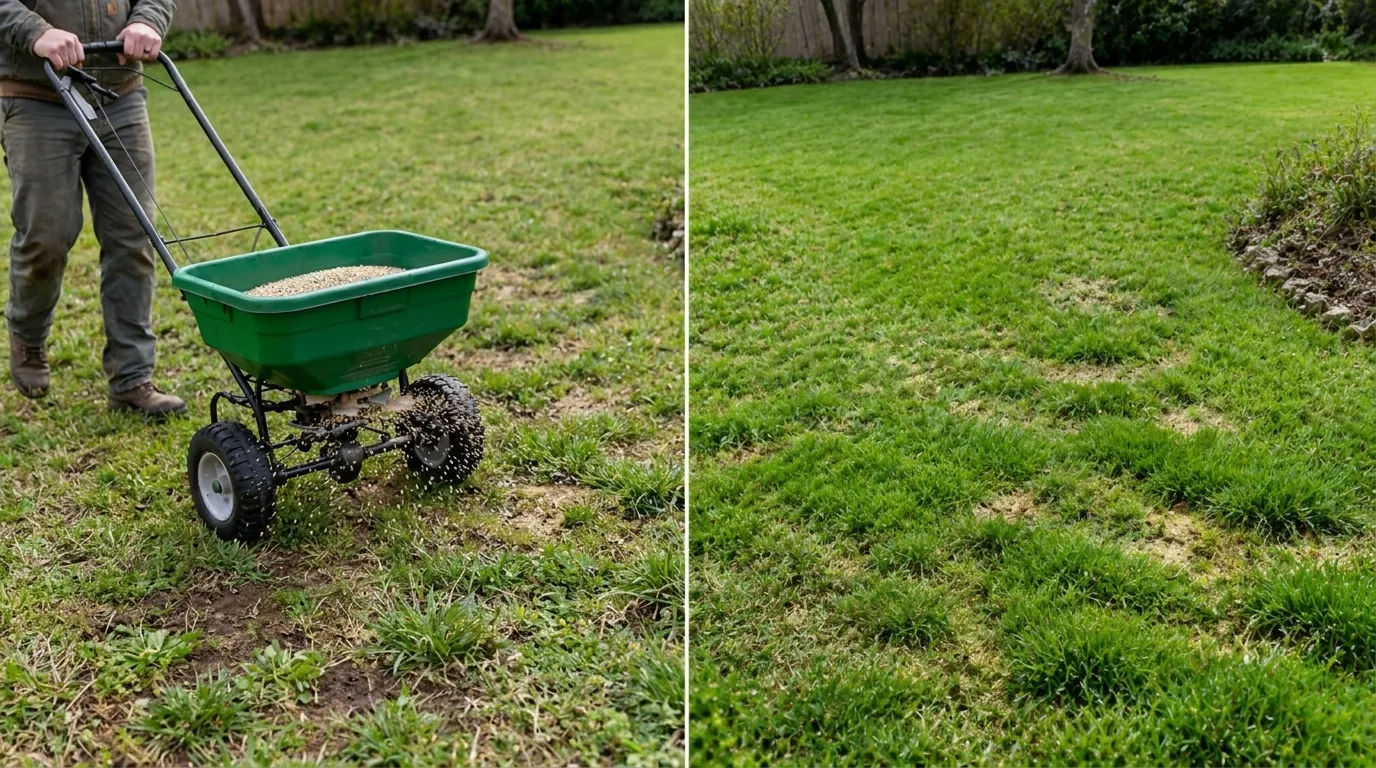
Most lawns need 2 to 4 fertilizer applications per year, but the right schedule depends on your grass type, climate, and growing conditions.
University of Illinois Extension suggests roughly one pound of nitrogen per 1,000 square feet per application. Split that across the growing season rather than applying it all at once.
|
Grass Type |
Feedings Per Year |
Best Months |
|---|---|---|
|
Cool-season grass |
3 to 4 |
Early spring and early fall |
|
Warm-season grass |
2 to 4 |
Late spring through summer |
|
Newly seeded lawn |
4 to 5 |
Every 6 to 8 weeks during the first season |
Cool-season grasses usually need more feeding in spring and fall, while warm-season grasses benefit from applications during their active summer growth.
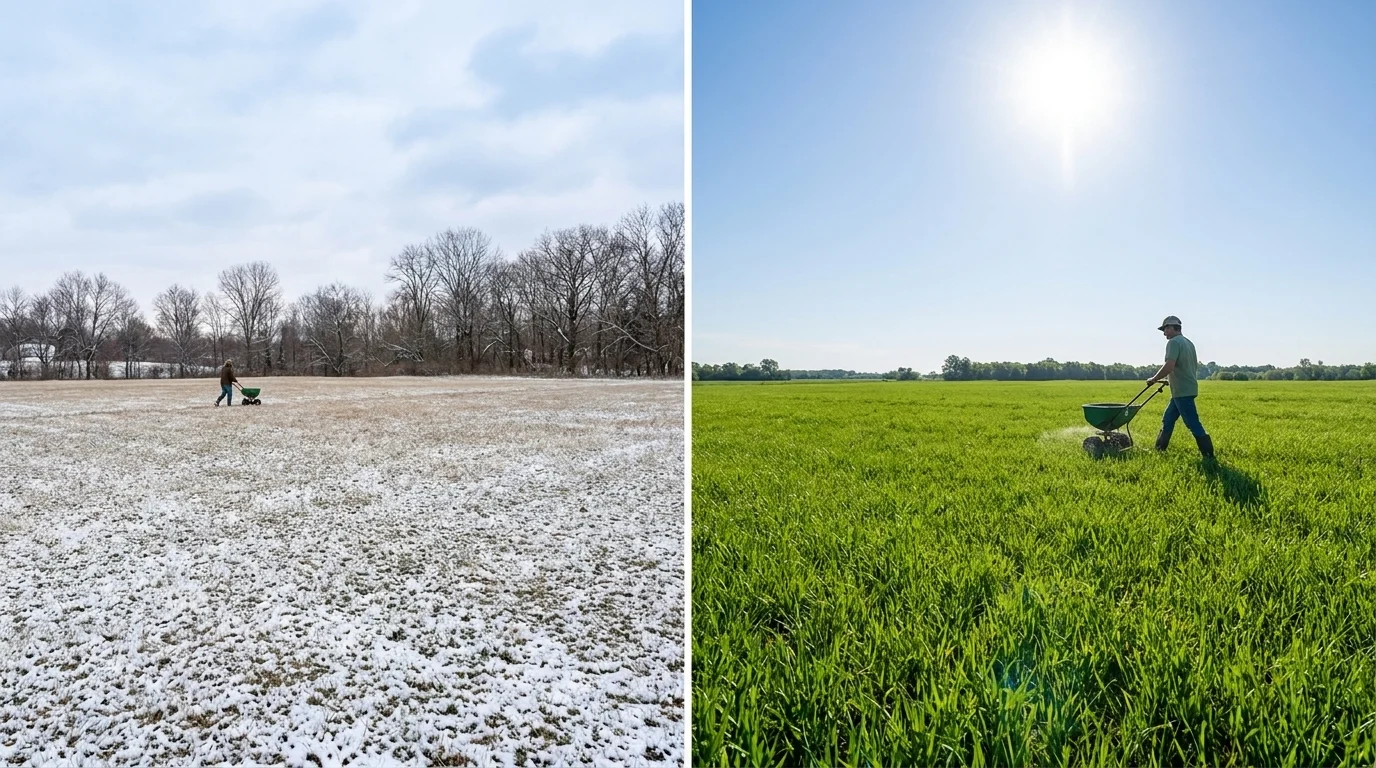
Avoid fertilizing just because the calendar says it is time. Grass absorbs nutrients most effectively during active growth, while extreme heat, drought, or dormancy can reduce the effectiveness of applications.
Pro Tip: Your lawn’s fertilizer needs can also change based on soil quality, sunlight exposure, mowing habits, and rainfall. A soil test can help identify nutrient gaps and prevent unnecessary applications.
Lawn Fertilizer Schedule by Region and Season
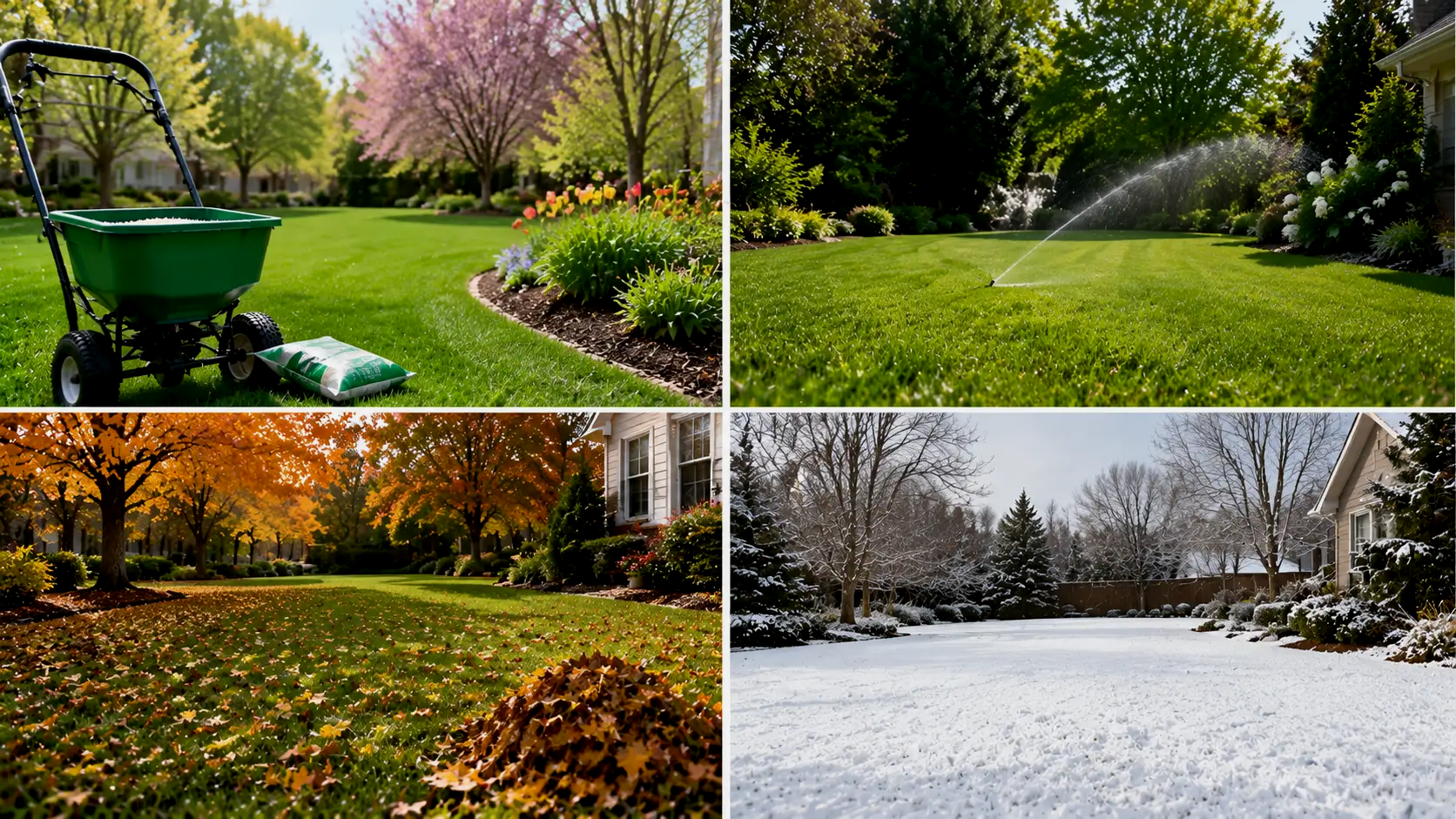
Local climate and grass type determine when your lawn can actually use fertilizer.
A northern cool-season lawn follows a different schedule than a southern warm-season lawn, so timing applications to coincide with active growth prevents wasted nutrients.
|
Region |
Spring |
Fall |
Winter |
|---|---|---|---|
|
Northern Regions |
Light feeding as grass starts growing |
Heavy feeding for root strength |
Little to none after dormancy |
|
Southern Regions |
Begin feeding as warm-season grass wakes up |
Reduce feeding as growth slows |
Apply only if grass stays active |
|
Transition Zones |
Feed based on dominant grass type |
Fall feeding benefits many lawns |
Usually minimal feeding |
Seasonal fertilizing follows the way grass grows throughout the year. It feeds the roots and blades so they can actually use the nutrients, rather than wasting product on dormant grass.
Key factors to adjust your schedule:
- Grass type: Cool-season and warm-season grasses have different growth cycles.
- Soil temperature: Fertilizer works best when grass is actively absorbing nutrients.
- Weather conditions: Avoid feeding during drought, extreme heat, or when soil is frozen.
This approach is stronger than separating season and region because readers usually want to know when to fertilize based on where they live.
Best Time to Fertilize Your Lawn Based on Grass Type
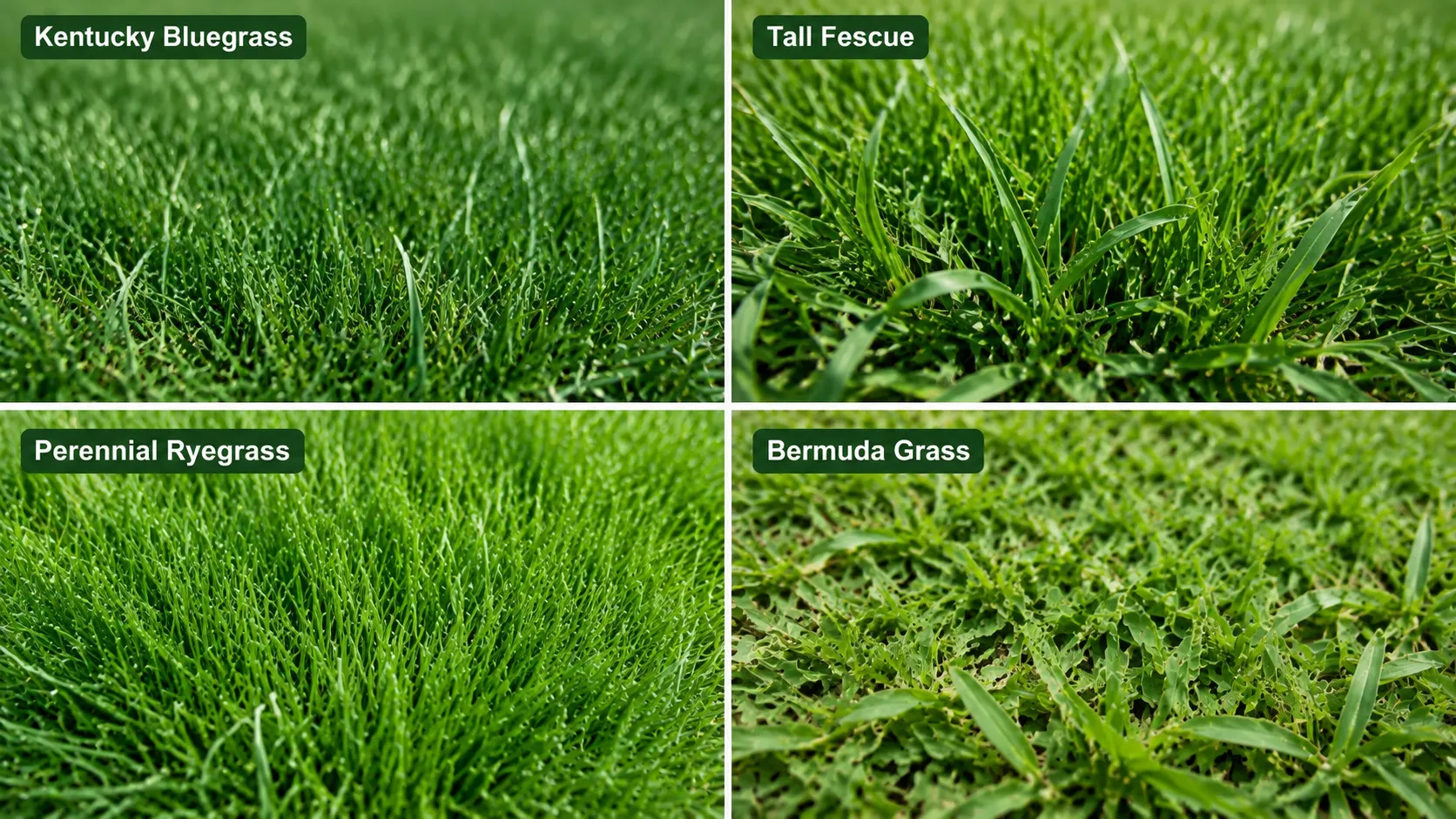
Grass type determines when your lawn is actively growing and ready to use fertilizer.
Cool-season and warm-season grasses have different peak growth periods, so their feeding schedules shouldn’t follow the same calendar.
|
Grass type |
Category |
Best feeding months |
Feedings per year |
|---|---|---|---|
|
Kentucky bluegrass, ryegrass, tall fescue |
Cool-season |
Early spring, early fall |
3 to 4 |
|
Bermuda, zoysia, St. Augustine, centipede |
Warm-season |
Late spring through summer |
2 to 4 |
1. Cool-season grass fertilizer schedule
Kentucky bluegrass, perennial ryegrass, and tall fescue all grow fastest in spring and fall. Plan your heaviest feedings for those two windows.
Use a lighter touch, or skip feeding entirely, during peak summer heat. A typical schedule spreads two to four feedings between early spring and late fall.
2. Warm-season grass fertilizer schedule
Bermuda grass, zoysia, St. Augustine, and centipede grass all grow most actively once summer temperatures climb. Fertilize these types through late spring and summer.
Then taper off as they head into dormancy in fall. Applying nitrogen too late in the year can leave warm-season grass open to winter injury.
How N-P-K Ratios Affect Your Lawn Fertilizer Schedule
Every fertilizer bag lists three numbers for nitrogen, phosphorus, and potassium. Most established lawns need far more nitrogen than phosphorus.
|
Nutrient |
What it does |
|---|---|
|
Nitrogen (N) |
Drives the green color and leaf growth you notice first |
|
Phosphorus (P) |
Supports root development, especially in young or newly seeded lawns |
|
Potassium (K) |
Helps grass handle drought, cold, and general wear |
The University of Illinois Extension recommends an N-P-K ratio of about 3-1-2 or 4-1-2 for typical home lawns. Most soils already contain enough phosphorus.
What Fertilizer Should You Use on Your Lawn?
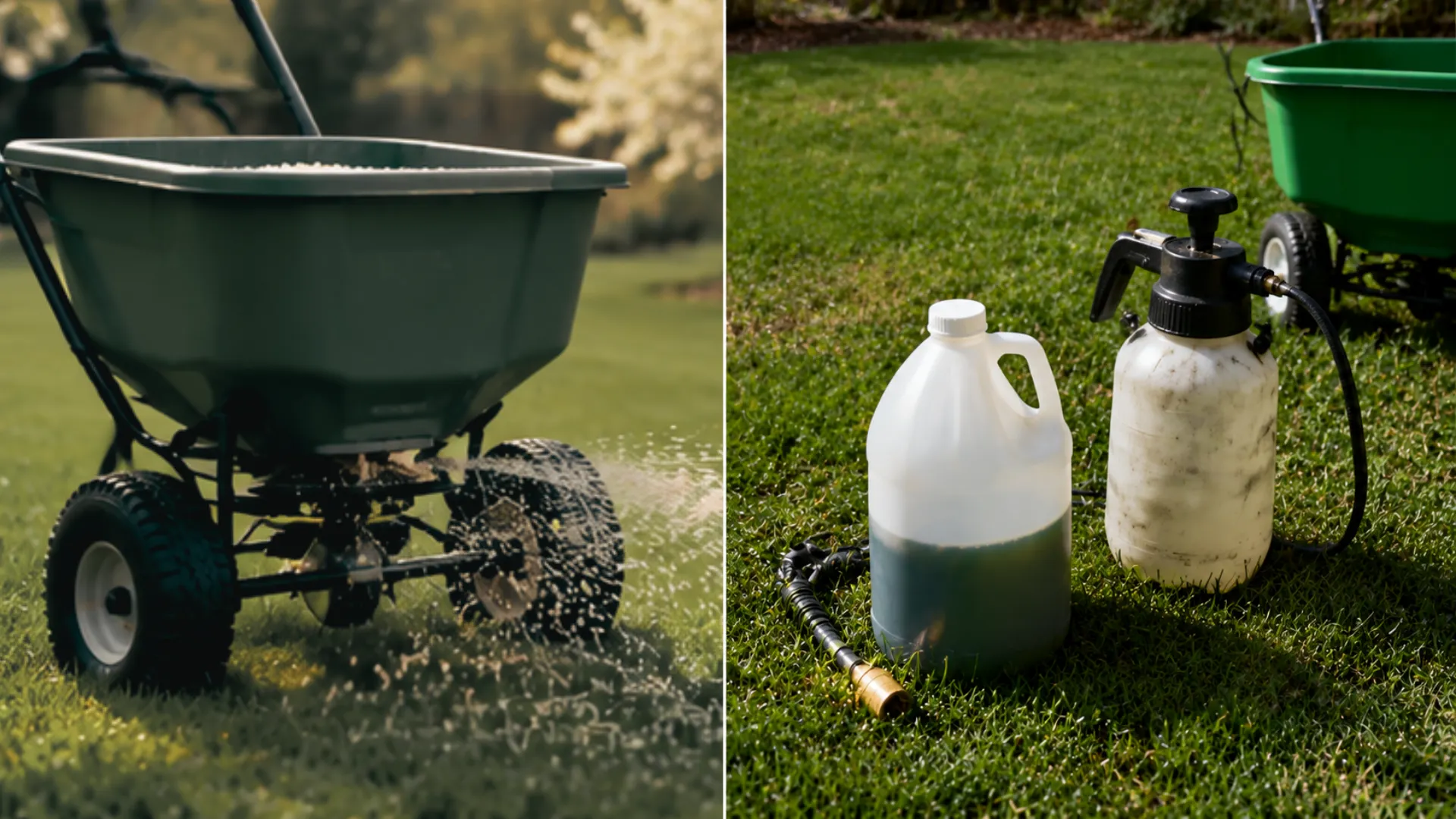
The right fertilizer depends on what your grass needs and what your soil already has. It also depends on timing and the results you want to see.
- Understanding fertilizer labels: The three numbers on every bag indicate the percentage by weight of nitrogen, phosphorus, and potassium. An 18-6-12 fertilizer is 18 percent nitrogen. Higher numbers mean you need less product to reach one pound per 1,000 square feet.
- Granular vs liquid fertilizer: Granular fertilizer spreads evenly with a spreader and often uses slow-release nitrogen to feed the lawn over several weeks. Liquid fertilizer is absorbed faster and corrects deficiencies quickly, but it requires careful, even application to avoid streaking or burning.
- Slow-release vs. quick-release fertilizer: Slow-release nitrogen breaks down gradually, lowering the risk of burn even at higher percentages. Quick-release nitrogen delivers a fast green-up but can scorch grass if overapplied, so many fertilizers blend both types of nitrogen.
Signs Your Lawn Needs Fertilizer?
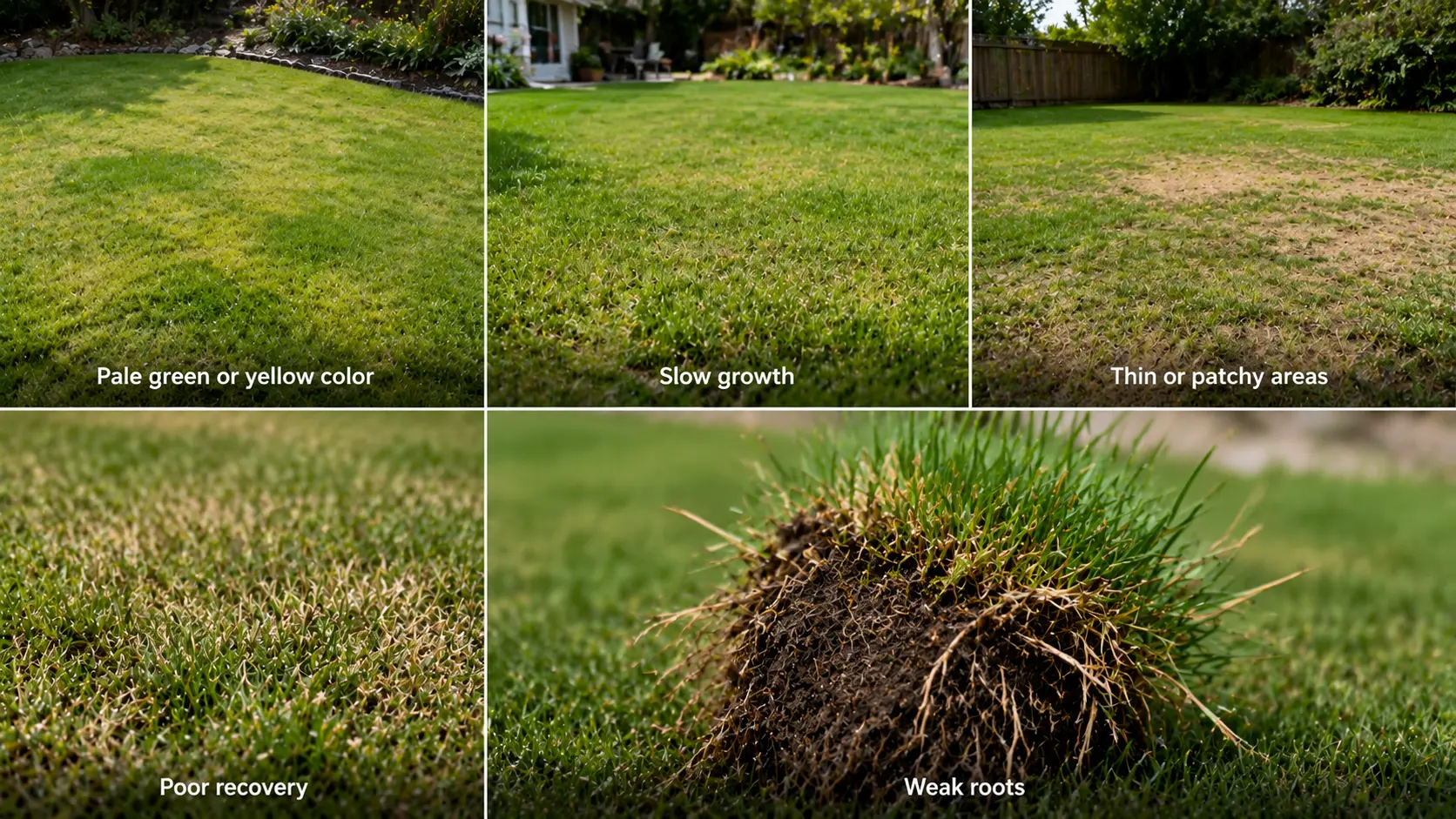
Watching for signs of nutrient deficiency tells you when your lawn actually needs feeding. This works better than relying only on a fixed date on the calendar.
Signs of nutrient deficiency
|
Sign |
What it looks like |
|---|---|
|
Pale green or yellow color |
Shows up first in the older sections of the lawn |
|
Slow growth |
Grass needs mowing less often than usual |
|
Thin or patchy areas |
Bare spots that never fill in on their own |
|
Poor recovery |
Struggles to bounce back after mowing or foot traffic |
|
Weak roots |
Shallow root systems that pull up easily |
Other causes of yellow grass
Yellowing grass is not always a nutrient issue. Overwatering, poor drainage, and compacted soil can all starve roots of oxygen. These problems can look just like a nutrient deficiency.
Diseases and pests, such as grubs feeding on roots, can also cause grass to turn yellow or brown in patches. A soil test, or a close look at the roots, can help you rule fertilizer in or out.
How to Apply Lawn Fertilizer Correctly
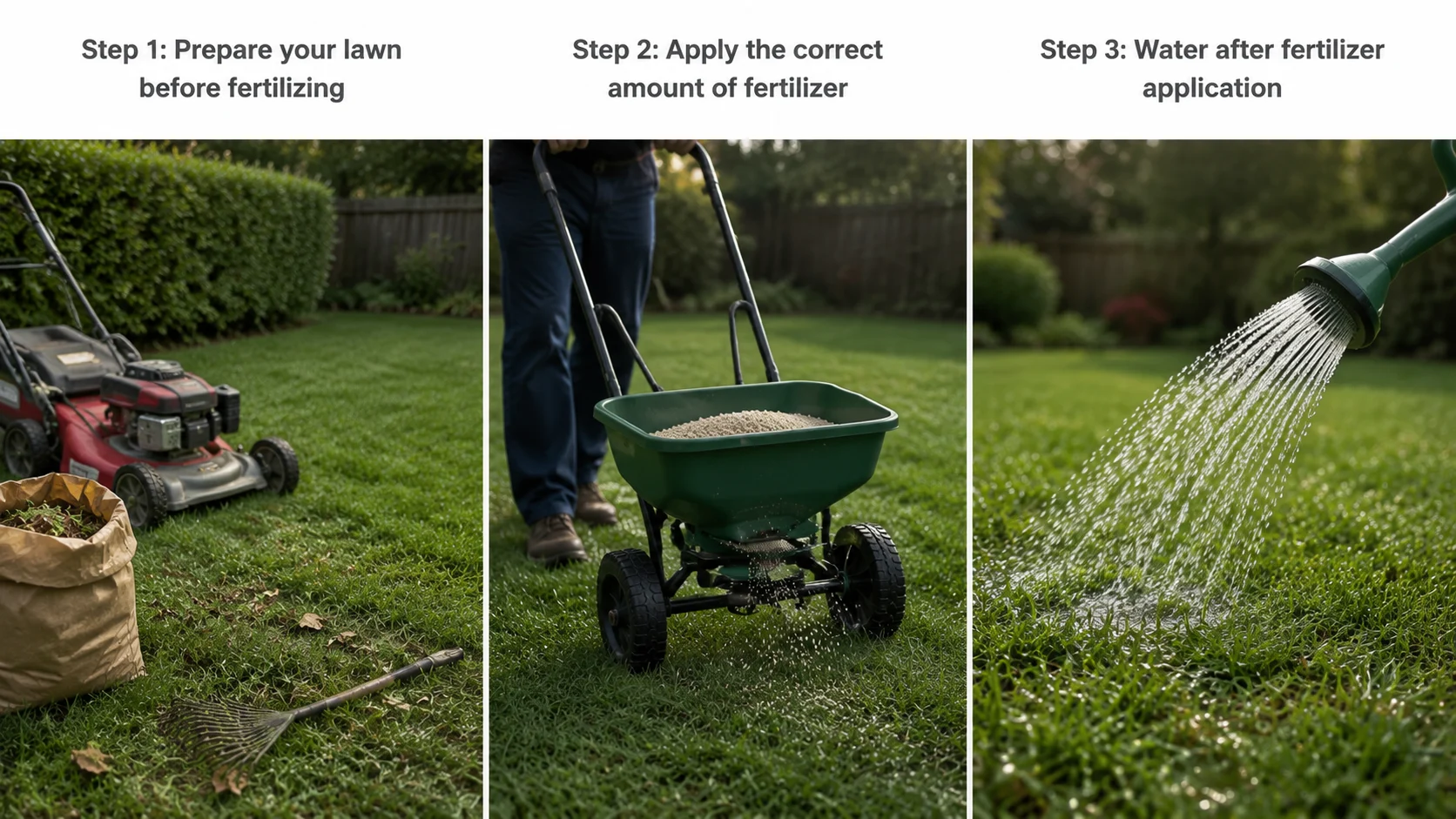
Correct application spreads nutrients evenly across the lawn. It also reduces the risk of burned grass, product runoff, and fertilizer waste during the growing season.
Step 1: Prepare your lawn before fertilizing
Check the forecast and skip heavy rain or drought conditions. Mow at your normal height beforehand, clear away debris, and run a soil test if needed.
Step 2: Apply the correct amount of fertilizer
Follow the rate printed on the bag rather than guessing, since more product does not speed up greening. Use a calibrated spreader to cover the lawn evenly without stripes.
Step 3: Water after fertilizer application
Granular fertilizer needs a light watering, and the best time to water is during the daytime unless rain is expected. Liquid fertilizer instructions vary by product. Either way, avoid overwatering, which can wash fertilizer into the street.
Factors That Affect Fertilizing Frequency
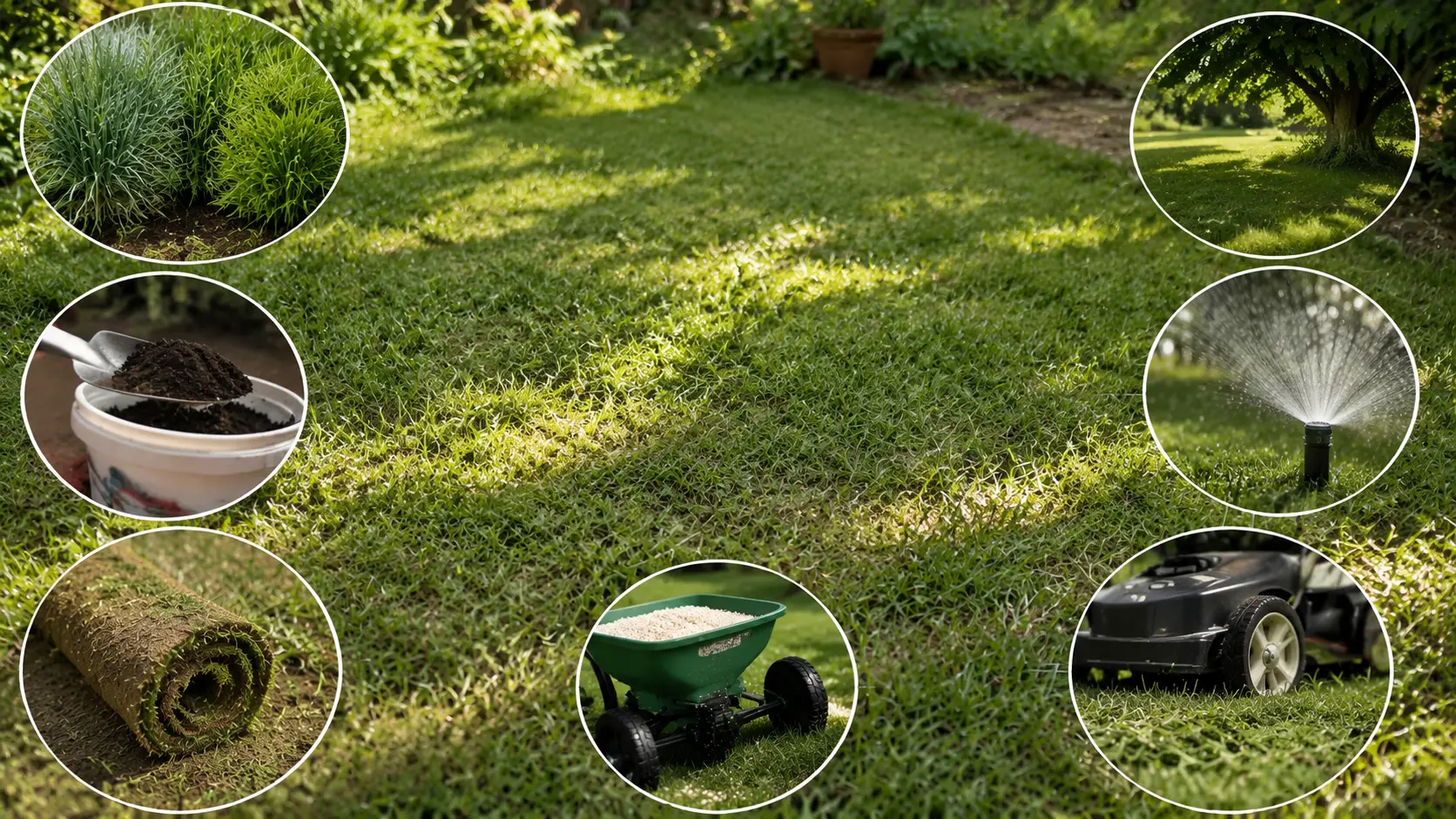
A soil test takes the guesswork out of feeding your lawn. It measures existing levels of nitrogen, phosphorus, and potassium, as well as soil pH.
That tells you exactly what your grass is missing, instead of guessing with a generic bag every few weeks.
|
Factor |
Why it matters |
|---|---|
|
Grass variety |
Faster-growing types need more frequent feeding |
|
Soil nutrient levels |
Existing nutrients reduce how much you need to add |
|
Lawn age |
Newly established lawns often need different rates than mature turf |
|
Sun exposure |
Shaded lawns grow more slowly and need less nitrogen than those in full sun |
|
Rainfall and irrigation |
More water moves nutrients through the soil faster |
|
Mowing habits |
Leaving clippings on the lawn returns some nitrogen naturally |
|
Prior applications |
Fertilizer already applied earlier in the season affects timing |
The University of Illinois Extension recommends testing every few years. Adjust fertilizer type and rate based on the results, not a fixed calendar alone.
What Lawn Fertilizer Mistakes Should You Avoid
Avoiding these errors protects your grass and field, making every feeding count throughout the growing season, season after season.
- Applying too much fertilizer: Excess nitrogen scorches grass blades (a problem known as fertilizer burn) and promotes weak growth that invites disease.
- Fertilizing at the wrong time: Feeding dormant grass in deep summer heat or hard winter cold wastes product and further stresses the lawn.
- Ignoring soil conditions: Skipping a soil test means guessing what your lawn needs, which can lead to unnecessary nutrient runoff.
- Using the same schedule every year: Rainfall, temperature, and lawn condition shift year to year, so watch how your lawn responds and adjust.
Frequently Asked Questions
How many times a year should I fertilize my lawn?
Most lawns need two to four feedings a year. Cool-season grasses do best with spring and fall applications, while warm-season grasses need feeding mainly during active summer growth months.
What month is best to fertilize a lawn?
Cool-season lawns benefit most from feedings in early spring and again in early fall. Warm-season lawns respond best to applications from late spring through summer, once the soil has warmed.
Can I fertilize my lawn too often?
Yes. Over-fertilizing can burn grass, push weak growth that invites disease, and raise nutrient runoff. Stick to labeled rates and space applications several weeks apart, rather than feeding on a whim.
Should I fertilize before or after mowing?
Fertilize after mowing, once the grass has a day or two to recover. Mowing right after fertilizing can remove fertilized leaf tips and reduce the benefit the lawn gets.
How long should I wait to water after fertilizing?
Water lightly within a day of applying granular fertilizer, unless rain is expected soon. This helps nutrients settle into the soil without washing the product off the lawn entirely.
Building Your Fertilizer Schedule
A steady lawn fertilizer schedule feeds grass when it can actually use the nutrients. It does not rely on a fixed date every month.
The right timing depends on your grass type, climate, soil, and how the lawn responds throughout the seasons.
Most yards do better with a handful of well-timed feedings than frequent, scattered ones. Testing your soil and picking a fertilizer suited to your lawn will help you avoid common problems.