

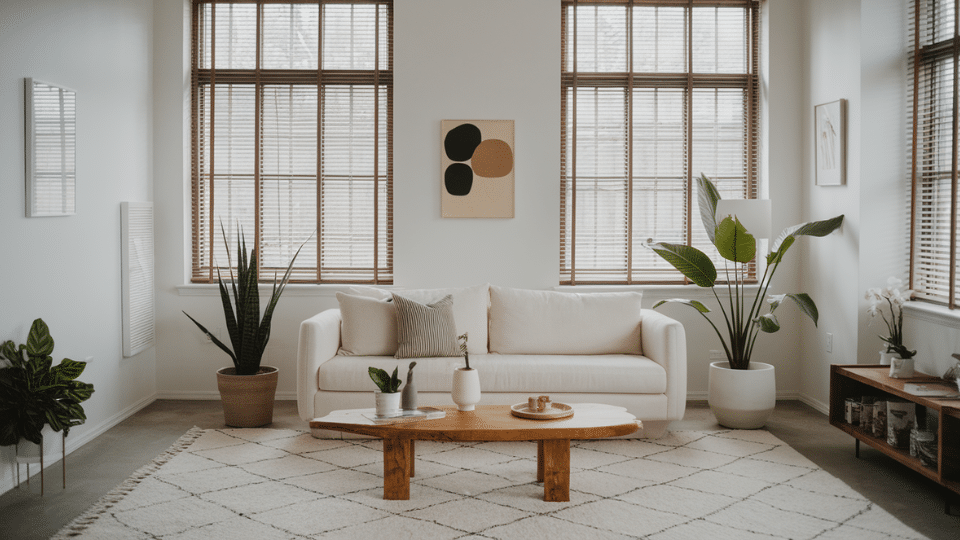


I used to think minimalist home decor meant empty white rooms with nothing personal inside. Turns out, that’s exactly what it shouldn’t be.
Real minimalism is about keeping what matters and letting go of visual noise that exhausts your brain the moment you walk through the door.
This guide breaks down the practical side of minimalist decorating, room by room, with actual rules you can follow instead of vague inspiration.
I’ll walk through the foundational principles, warmth-building techniques, quick resets you can do today, and smart shopping strategies.
The Case for Minimalism
Homes are getting smaller, shopping is easier than ever, and most of us are drowning in things we barely remember buying. Minimalism is the honest response to that.
It simply means this: everything in your home should earn its place. If it doesn’t serve a purpose or mean something real, it’s just noise, and noise makes a space harder to live in.
The minimalism you see online is largely Scandinavian design, pale wood, perfect light, bare counters. It works in homes built for it.
Most aren’t. In my work, the biggest mistake I see is copying that look without adapting it. Real minimalism isn’t a look. It’s decisions made around how you actually live.
Core Principles of Minimalist Decor
Minimalism has rules, not rigid ones, but decisions that separate a space that feels calm from one that just feels empty.
- Natural light is your first tool: It makes spaces feel larger and more open without changing a single piece of furniture. Where natural light is limited, daylight LED bulbs do the job without the clinical harshness of cool white lighting.
- Every piece should do more than one thing: An ottoman with storage, a bed frame with drawers, and a bench that doubles as a shoe cabinet. Multi-functional furniture isn’t a compromise; it’s the point.
- Neutral doesn’t mean beige: Texture is how you add depth, linen, wool, matte finishes. A neutral palette with varied texture feels intentional. Without it, it just feels unfinished.
- Empty space is a design choice: Not every surface needs something on it. Negative space gives the eye somewhere to rest, which is exactly what makes a minimalist room feel calm rather than sparse.
These principles act as a filter for every purchase and every arrangement decision you make. When something does not pass the filter, it does not belong in the room.
Color choice works the same way: earthy greens, soft taupes, and muted sage tones hold a room together in a way that stark whites rarely do, because they absorb light rather than bounce it back.
Rules of Minimalism in an Actual Lived-In Home
Real people living in homes accumulate clutter if they’re not mindful. But they are the ones who create storage issues. Find the middle ground. Get these things right, and the rest follows.
1. Furniture Selection: Fewer Pieces, More Breathing Room
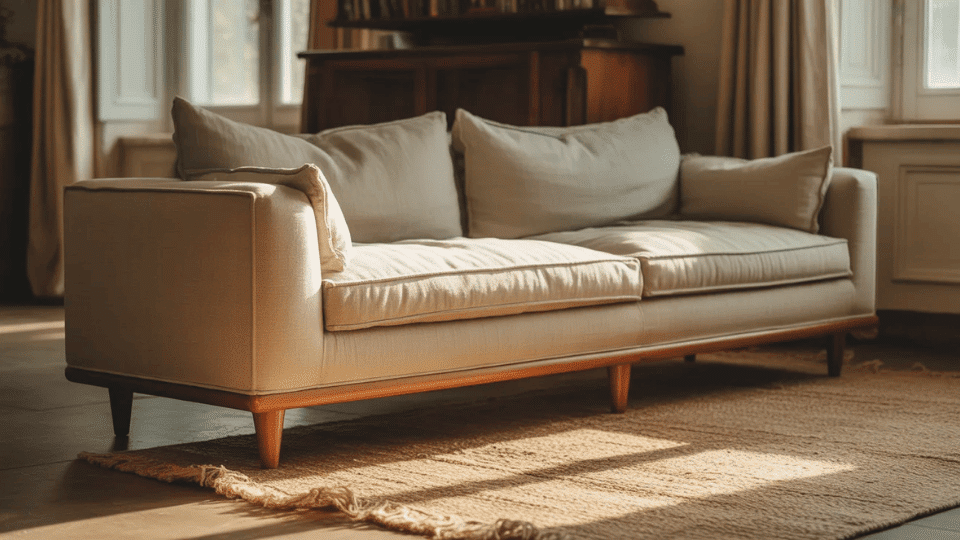
More furniture doesn’t make a room feel complete; space between pieces does. Every addition should have a reason.
The same logic applies to rugs; a busy pattern or the wrong size quietly undoes everything else, pulling the eye immediately and making the room feel restless before you’ve even sat down.
If you are working through the specific furniture arrangement, minimalist living room layout ideas cover scale, clearance paths, and low-profile sofa options in more detail.
In Practice:
- One sofa, one coffee table with storage underneath, one accent chair, only if space genuinely allows it
- Keep furniture legs visible; it lifts visual weight off the floor and makes the space feel larger
- One rug, solid tone or subtle texture, with front legs of furniture sitting on it
2. Storage and Visual Noise
Open shelves look clean in design photos because those photos are staged; in real life, they collect whatever doesn’t have a home. Closed storage does the actual work.
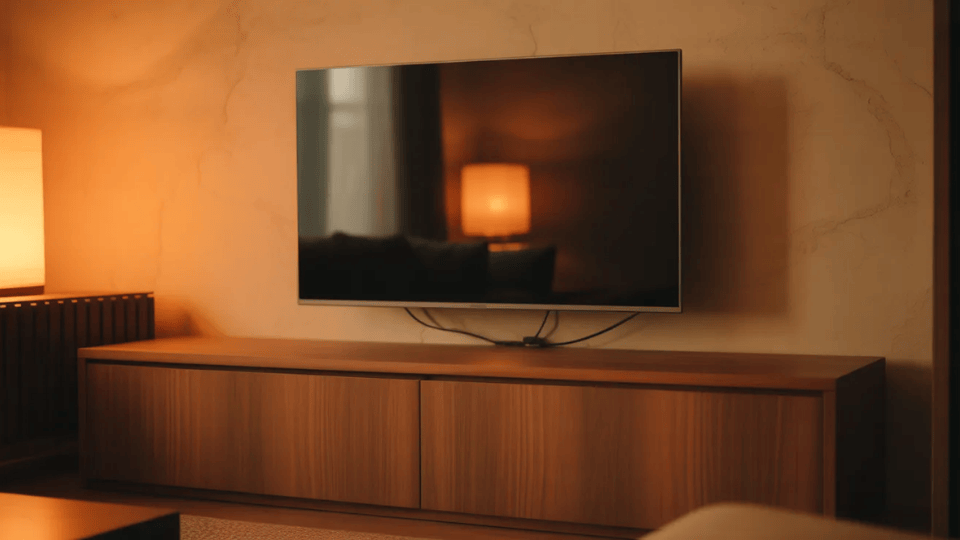
The same thinking applies to your TV. It’s a large dark rectangle on your wall, and the goal isn’t hiding it; it’s stopping it from dominating.
In Practice:
- Ottomans with lids and TV units with closed doors keep visual noise down without requiring you to own less
- Wall-mount the TV and sort the cords, visible cables undo an otherwise clean room instantly
3. Lighting and Empty Corners
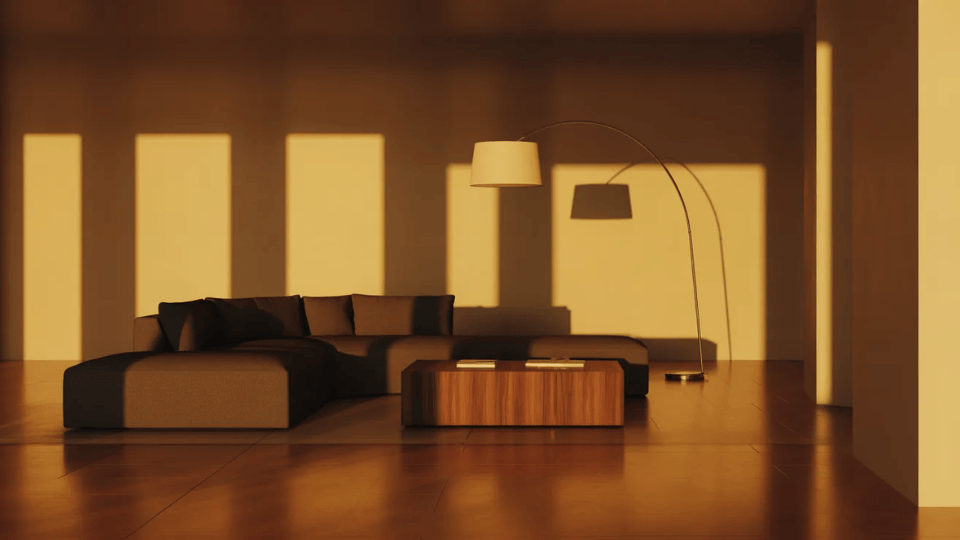
Harsh overhead lighting flattens a minimalist room; when there’s less to look at, light quality becomes impossible to ignore. Empty corners follow the same logic.
The discomfort of leaving one unfilled is trained, not a real design problem. Good light makes empty space feel intentional rather than unfinished.
In Practice:
- A floor lamp in one corner adds warmth without taking up surface space, and always beats a single ceiling light
- Warm white bulbs as default, daylight only where natural light is genuinely lacking
- If a corner needs something, one tall plant or floor lamp is enough
4. The Bed as the Only Statement
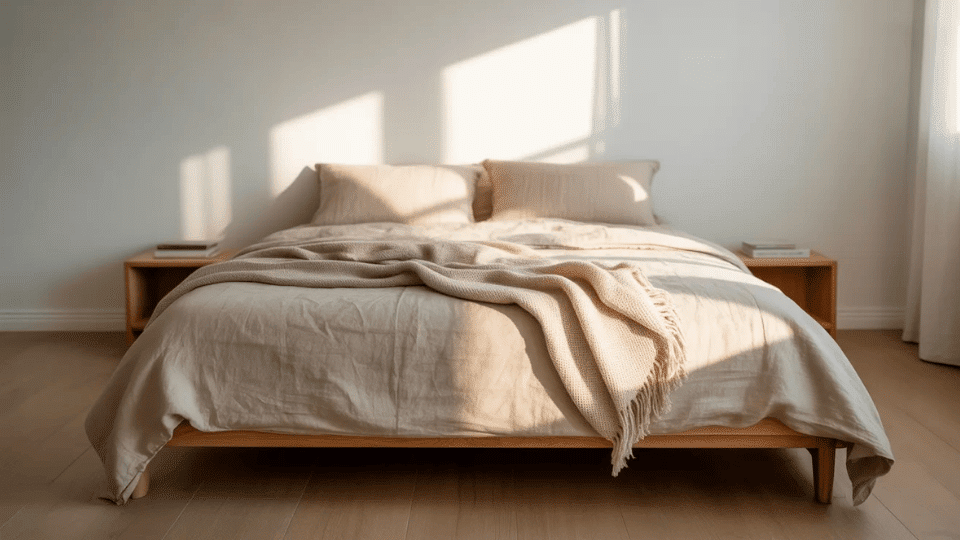
In a minimalist bedroom, the bed is the room. Everything else supports it. A bulky headboard, mismatched bedside furniture, or heavily patterned bedding immediately competes for attention, and the room feels busy before you’ve added anything else.
Solid-toned bedding in natural materials, such as linen and cotton, does more for a bedroom than any decorative layer.
In Practice
- Invest in one quality duvet cover in a solid, neutral tone; texture does the rest
- An upholstered or simple wooden headboard keeps the bed as the focal point without overpowering the room
- Keep bedding layers to a maximum of three: a duvet, two pillows per person, and one throw if needed
5. Counter Policy: What Stays Out and What Doesn’t
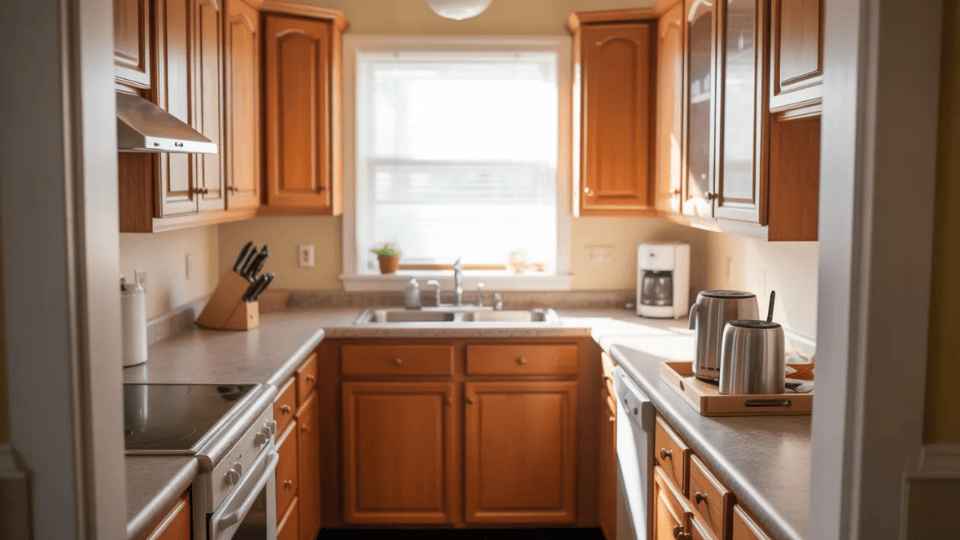
Counters are the most visible surface in a kitchen and the fastest to lose control of. The rule isn’t that counters should be empty, it’s that everything on them should be there because it’s used daily. A coffee maker, yes. A knife block, yes. The air fryer you use twice a week, no.
In Practice
- Group daily-use appliances in one zone rather than spreading them across the counter
- Use a small tray to contain loose items; it creates a boundary and stops the spread
- If it’s not used every day, it lives in a cabinet
6. The Dining Setup: Less on the Table, More From It
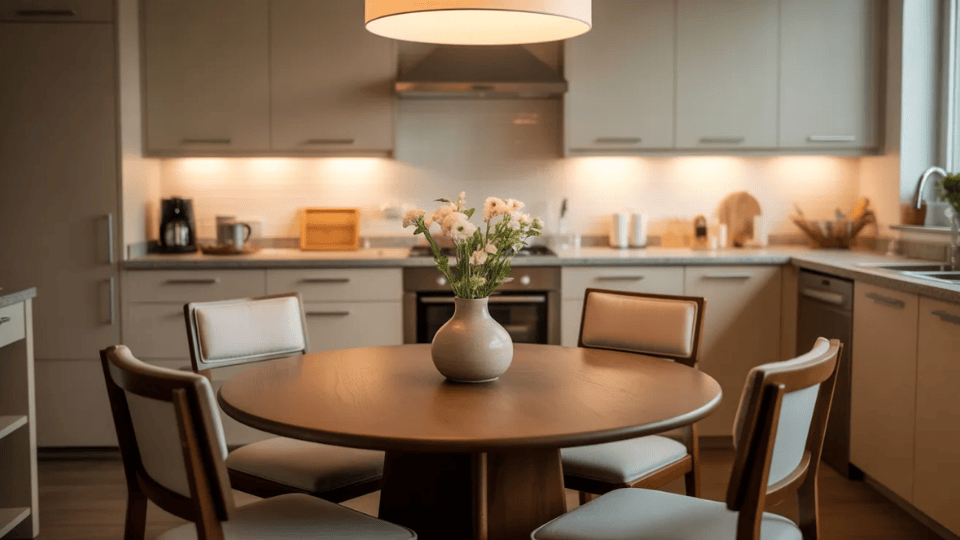
A dining table in a minimalist home should feel ready to use, not decorated for display. One centerpiece maximum, a small plant, a candle, a simple bowl. Anything more, and the table stops feeling like somewhere to sit and eat.
In Practice
- One centerpiece, centered, nothing else on the table between meals
- Keep dining chairs consistent; mismatched chairs work in maximalist spaces, not here
- If space is tight, a wall-mounted fold-down table is a genuinely practical option over a permanent table that crowds the room
7. The Tray Rule: Editing What’s Visible
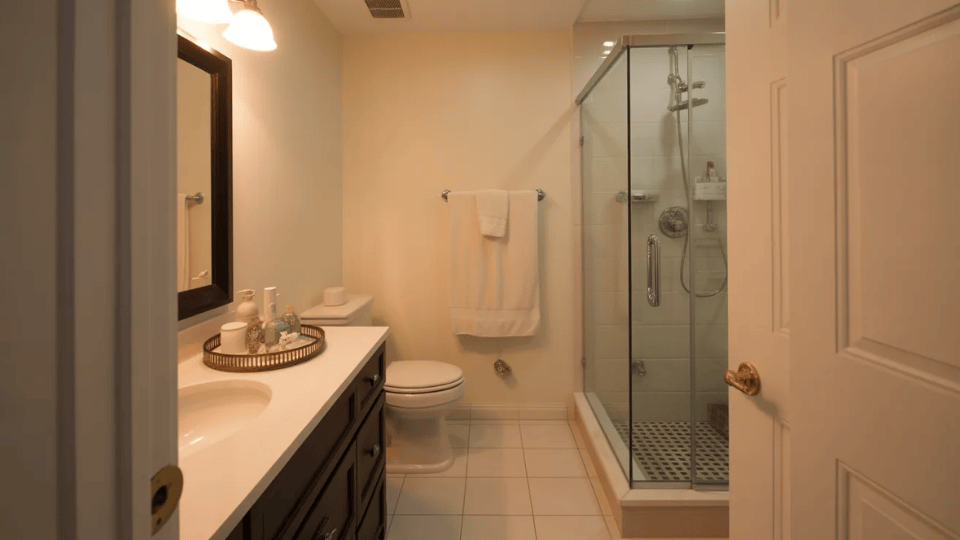
A tray on a bathroom counter works the same way it does in a kitchen; it creates a boundary and stops things from spreading.
But the tray only works if you’re honest about what goes on it. Daily use items only. Everything else needs a home behind a door or inside a drawer.
In Practice
- One tray, three to four items maximum, hand wash, one skincare product, nothing decorative
- Decant soaps and products into simple, uniform bottles if they’re going to be on display
- If the counter feels full, something comes off, not a bigger tray
8. What Goes Behind Doors: Everything That Doesn’t Need to Be Seen
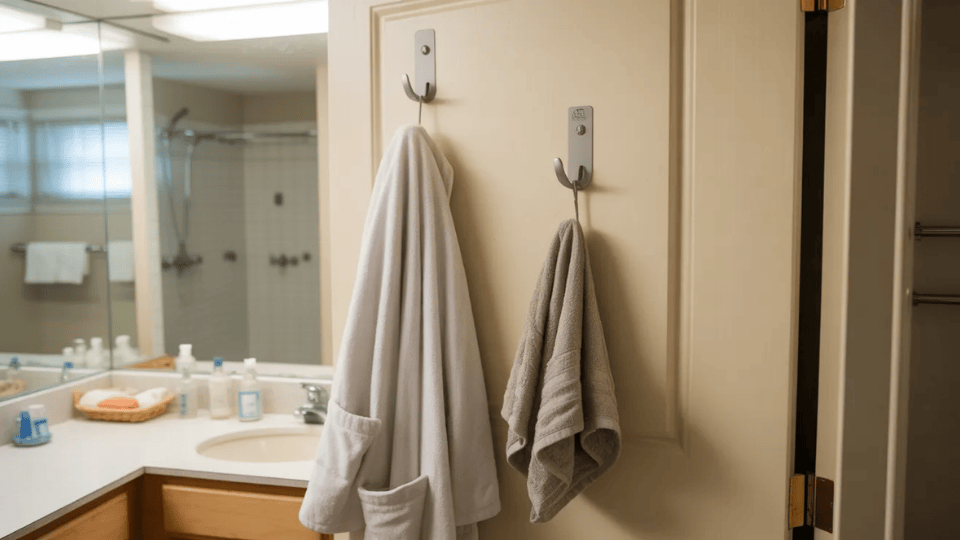
The bathroom is the one room where most of what you own genuinely doesn’t need to be on display.
Spare toilet rolls, cotton pads, medication, extra products, all of it can live behind a door. Visible storage in a bathroom almost always reads as clutter, regardless of how neatly it’s arranged.
In Practice
- A mirrored cabinet above the sink gives you storage and function in one, without adding visual bulk
- Keep one set of folded towels visible at maximum; the rest go in a cabinet
- Under-sink space is consistently underused; a simple organizer doubles its capacity immediately
9. The Landing Strip: Coat Rack, Shoe Storage, One Surface
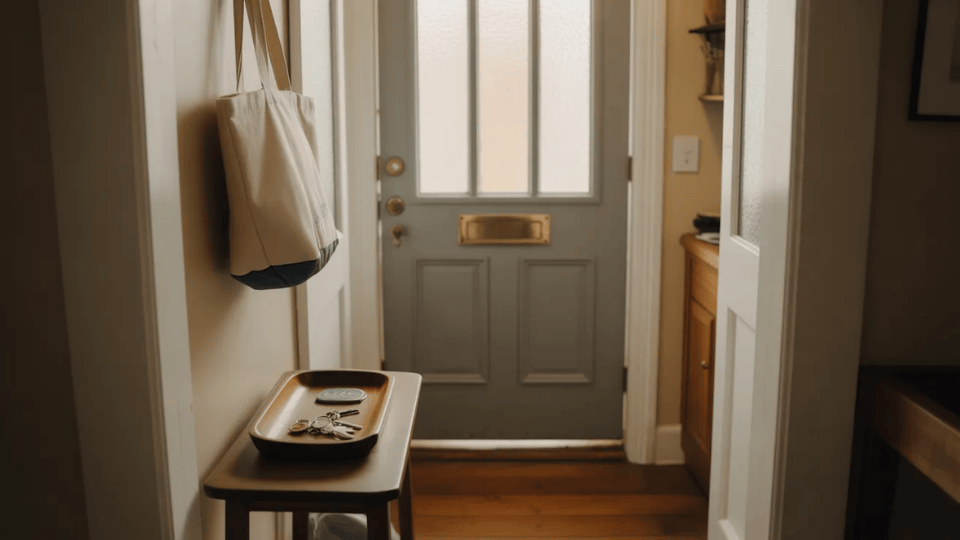
An entryway only needs to do a few things: hold coats, contain shoes, and give you somewhere to put things when you walk in.
The mistake is either ignoring it entirely or over-designing it. One wall-mounted coat rack, one shoe storage solution, one narrow surface. That’s a complete entryway.
In Practice
- A wall-mounted coat rack keeps floor space clear, limit it to current season coats only
- A bench with shoe storage underneath earns its place without adding bulk
- One narrow console or floating shelf is enough surface; anything wider invites clutter
Quick-Start: The 10-Minute Reset
Before shopping for new pieces, run this simple reset to see what your space actually needs versus what feels missing.
- Identify your visual hotspot: Pick the surface your eyes land on first when entering the room, coffee table, entry console, or kitchen counter.
- Clear it completely: Remove everything so you can see the bare surface. This creates immediate visual relief.
- Notice the difference: Most people realize how powerful empty space actually is in minimalist design at this stage.
- Return only 3 items maximum: Choose items that serve genuine daily function or bring real visual joy, nothing else.
- Add one functional container if needed: Use a basket, tray, or bowl to contain loose items like keys or mail without creating visual scatter.
- Keep the breathing room: Open space is an active design element in minimalism, not something to fill or fix. That calm you feel is the entire point.
Warm Minimalism: When Less Becomes More Personal
Minimalism done wrong does not look cluttered. It looks cold. A calm space and a personality-free one are not the same thing, and the distinction matters more in 2025 than it ever has.
The design world has moved clearly toward what is now called warm minimalism: earthy tones, tactile materials like raw linen and unfinished wood, and intentionally curated personal objects. This is not a departure from minimalist principles. It is what minimalist home decor always should have been.
When every surface reads the same pale shade with no texture variation, the room stops feeling intentional and starts feeling like a staged rental.
Colors that sit between white and beige, like Sherwin-Williams Oyster White, do this better than either pure white or a committed neutral, because they shift subtly with the light rather than holding one flat tone all day.
Warmth comes from contrast: linen against wood against matte plaster. One personal object is not clutter. A ceramic, a book, a plant.
Carry one material across the room rather than one colour. One piece of art, chosen deliberately, over a gallery wall every time.
Minimalism removes what does not belong. Personality belongs. Do not edit it out.
Common Mistakes in Minimalist Decor
Most minimalism mistakes don’t happen from carelessness; they happen from misunderstanding what minimalism actually asks of a space.
- Buying minimal-looking furniture instead of functional furniture. A beautiful thin-legged coffee table that wobbles, a sofa that photographs well but isn’t comfortable. Aesthetics without function defeats the entire purpose.
- Decluttering once and calling it done. Minimalism isn’t a one-time edit; stuff accumulates. Without a system for what comes in, the space reverts within months.
- Treating every room the same. A bedroom and a kitchen have completely different functional demands. Applying the same level of sparseness across both means one of them stops working properly.
- Confusing minimal with cold. No soft furnishings, no warmth, no personality. A room can be minimal and still feel like somewhere a person actually lives.
A minimalist home isn’t a finished project; it’s an ongoing set of decisions. The goal is a space that works better for you, not one that looks better in photos.
Wrap Up
Minimalist home decor works when you apply the right sequence: understand the foundations of light and symmetry, prevent coldness with strict palettes and texture, then tackle each room with function-first thinking.
The 10-minute reset proves how much visual calm one cleared surface creates before you spend a dollar.
Room-by-room guidance gave you concrete starting points without renovation pressure, and the shopping checklist keeps you from accumulating clutter disguised as decor.
What I’ve learned is that minimalism isn’t about perfection; it’s about repeatable daily choices that make spaces easier to maintain and genuinely calming to live in.
Check out more room-specific decorating strategies when you’re ready.
Frequently Asked Questions
What is minimalist home decor?
Minimalist home decor is a design approach where every item in the home serves a clear purpose or holds genuine meaning.
It prioritizes function, quality, and intentional negative space over decoration for its own sake. It is not about owning less as a goal in itself, but about ensuring everything that is there earns its place.
How do I make my home look minimalist without it feeling empty?
Texture is the answer. Linen cushions, a wool throw, a matte ceramic, a natural wood surface: these add depth without visual noise. Warm minimalism layers materials rather than objects.
The room feels considered rather than sparse because each element does something different to the light and surface, even if there are only a few of them.
What colors work best in minimalist home decor?
Neutral palettes work, but the 2025 direction is earthy rather than clinical: warm whites, off-whites, soft taupes, muted greens, and clay tones.
The key is choosing one or two base tones and staying consistent across rooms. Texture variation within the same neutral palette creates more visual interest than adding colors.
Benjamin Moore Moonshine is a useful reference point here: a soft gray that reads calm without the cold edge that most grays carry in north-facing rooms.
How do I decorate a minimalist living room?
Start with one sofa, one coffee table with storage, and one rug in a solid tone with front furniture legs sitting on it. Add a single floor lamp in one corner. Keep the TV wall-mounted with cables managed.
Clear every surface except for three items maximum on the coffee table. Everything else earns its place only if it is used daily or means something specific to you.
What furniture is best for a minimalist home?
Multi-functional pieces first: ottomans with storage, bed frames with drawers, and benches that double as shoe cabinets. Low-profile silhouettes with visible legs keep visual weight off the floor and make rooms feel larger.
Avoid pieces that look minimal but are functionally poor. A sofa you do not want to sit on is not a minimalist choice; it is just an expensive mistake.
How do I keep a minimalist home clutter-free long-term?
The system matters more than the initial declutter. For every item that comes in, something should either leave or be assigned a closed-storage home.
The 10-minute reset above is a useful weekly habit: identify the surface that has accumulated the most, clear it, and return only what belongs there.
Is minimalist home decor expensive to achieve?
Not necessarily. The 10-minute reset described above costs nothing. Clearing surfaces, sorting cords, moving items into closed storage, and removing one piece of furniture from an overcrowded room are all free.
The expense comes when people mistake minimalism for a shopping project, buying new “minimal” pieces before addressing what is already there.
How do you add warmth to a minimalist home?
Warm white bulbs instead of cool white. Linen or wool textiles rather than synthetics. One natural material carried consistently through the room: a single wood tone across furniture, or a consistent stone or ceramic.
One personal object that means something. A plant in one corner instead of a decorative filler. Warmth in a minimalist space comes from material quality and light quality, not from adding more items.