

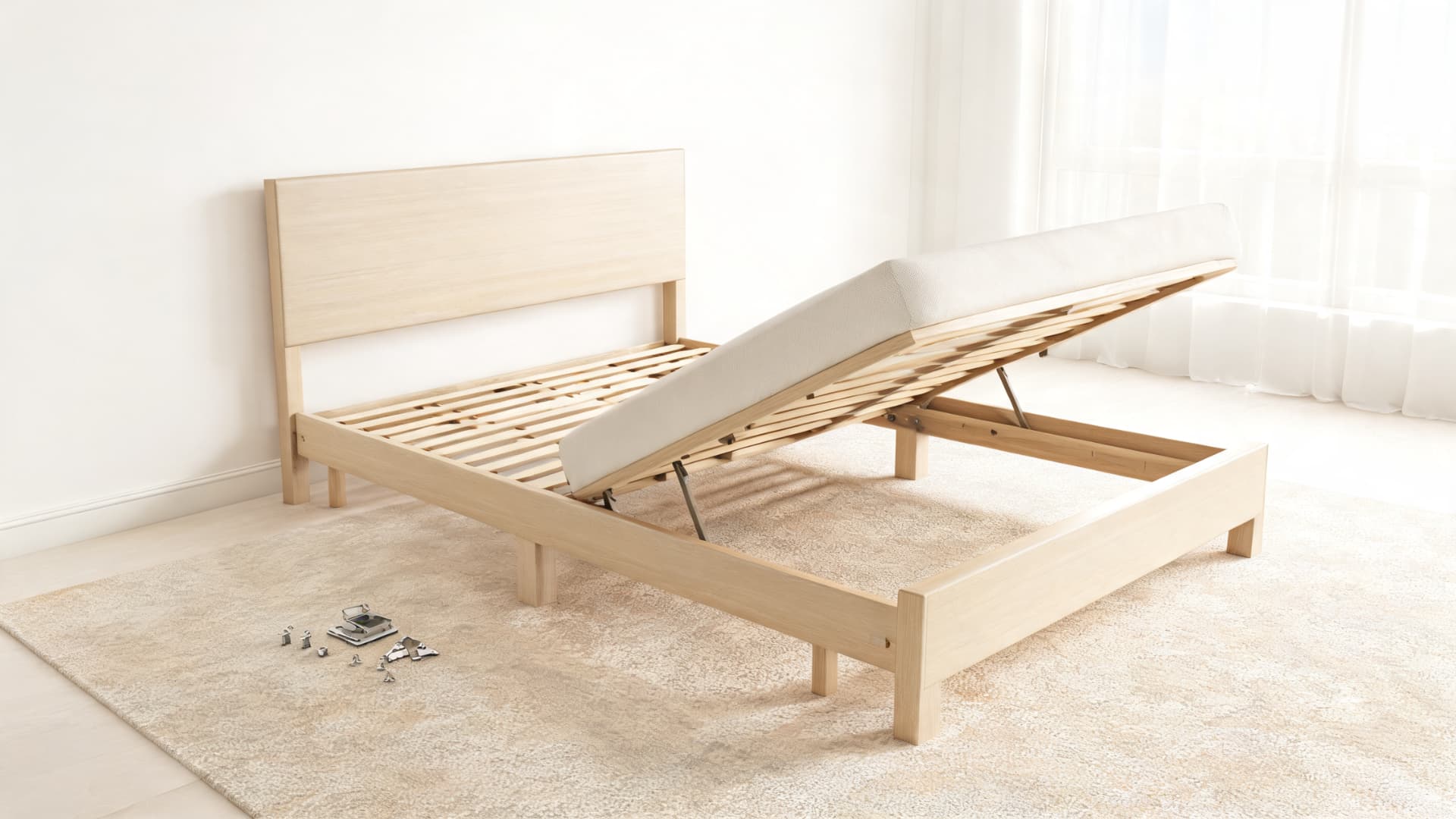


A bed is a place of comfort, but most people only notice the confusion when something starts to creak, sag, or break. That’s usually when the question comes up: What exactly am I looking at here?
A bed has several interconnected elements that work together to provide support and comfort. Once you understand the main bed frame parts, side rails, slats, headboards, and the base become easier to recognize in everyday use.
You can also see how the mattress sits on the structure and why problems such as movement, noise, or sinking can occur. This breakdown makes it easier to identify each part of a bed and understand what it does.
What are the Main Parts of a Bed?
A bed may look simple at first, but each part has a job. The frame holds the structure together; the rails and slats support the mattress, and pieces such as the headboard, footboard, and support legs enhance stability, height, and style.
The table below breaks down the main parts of a bed, what each one does, and where you usually find it.
| Bed Part | What It Does | Found On |
|---|---|---|
| Headboard | Supports the head area visually and physically | Most full bed frames |
| Footboard | Finishes the foot end of the bed | Traditional and panel beds |
| Side rails | Connect the headboard and footboard | Most framed beds |
| Bed frame | Holds the bed structure together | Nearly all beds |
| Center support beam | Stops sagging in larger beds | Queen, king, and California king beds |
| Support legs | Carry the weight down to the floor | Larger frames |
| Slats | Support the mattress or foundation | Platform beds and many wooden beds |
| Box spring | Adds height and shock absorption | Some traditional setups |
| Foundation | Provides a flat mattress base | Foam, hybrid, and modern mattresses |
| Mattress | Provides sleep comfort and body support | Every bed |
| Bedding | Adds warmth, softness, and cleanliness | Every made bed |
Knowing these parts makes it easier to choose a bed, fix a loose frame, or understand what a diagram is showing.
Bed Frame Parts (Core Structural Breakdown)
A bed frame is the main structure that holds the entire bed together. It is made of multiple connected parts, each contributing to strength, balance, and long-term stability.
1. Headboard and Footboard
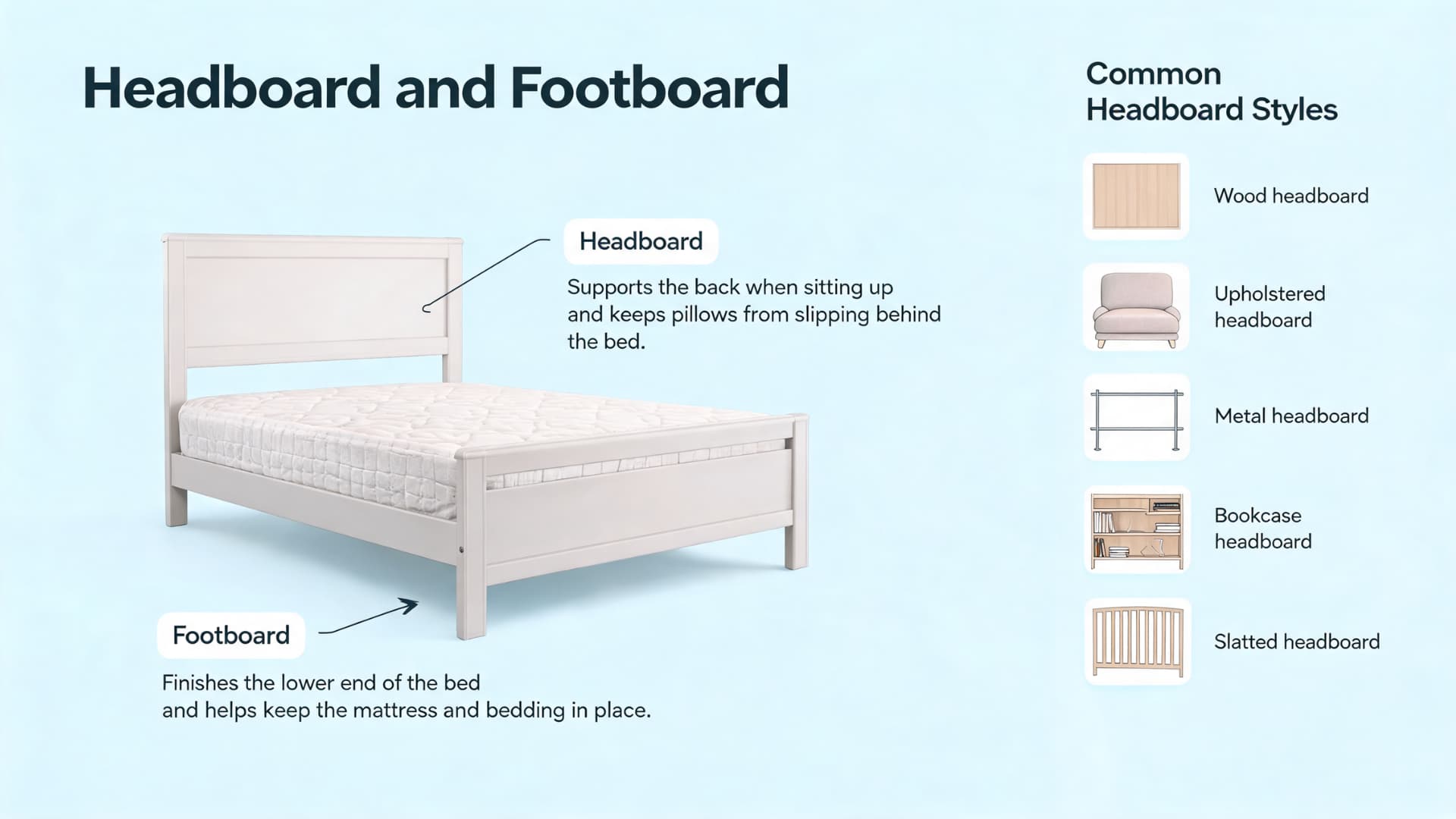
The headboard is the vertical panel fixed at the top end of the bed frame. It is one of the most noticeable parts of a bed and usually serves both comfort and support purposes. When you sit upright to read, work, or relax, the headboard gives your back a firm surface to lean against. It also helps keep pillows from slipping into the gap between the mattress and the wall.
- Wood headboards are often chosen for a sturdy, classic look.
- Upholstered headboards provide a softer surface for leaning.
- Metal headboards are durable and can suit simple or decorative bed styles. If you’re building rather than buying, the material choices for a DIY headboard follow the same logic.
- Bookcase headboards include built-in shelves for small storage.
- Slatted headboards use open rails or strips for a lighter design.
The footboard is the vertical panel at the lower end of the bed frame. When included, it helps keep the mattress in place and can prevent bedding from sliding too far down. In traditional bed frames, the footboard often connects to the side rails, adding stability and helping the frame stay square.
Not every bed has a footboard. Some modern beds skip it to create a cleaner, more open look, which can be helpful in smaller bedrooms.
2. Side Rails
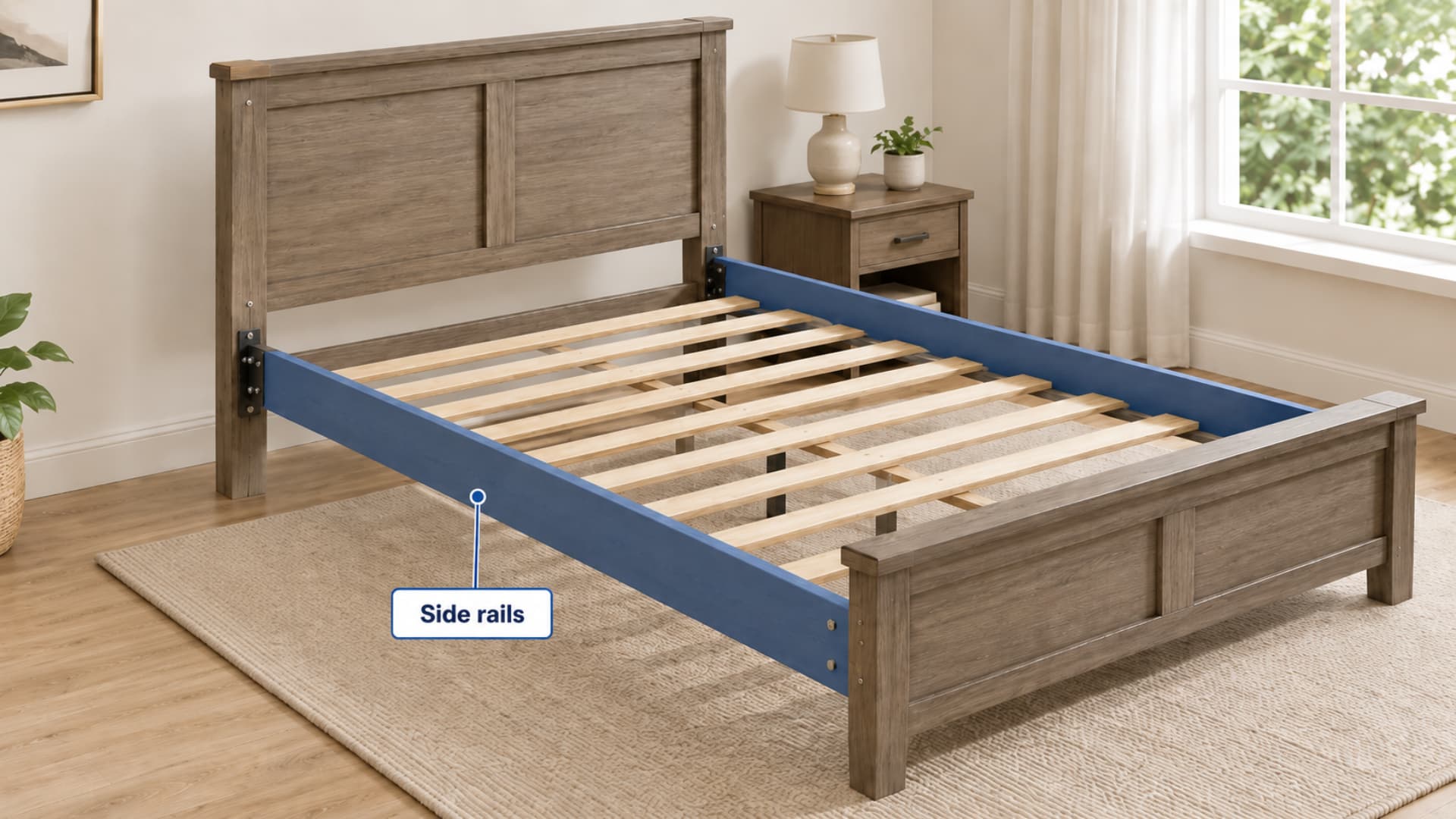
Side rails are long horizontal beams that run along both sides of the bed, connecting the headboard and footboard. They form one of the strongest structural links in the entire frame. These rails carry a large portion of the load from the mattress and the sleeper, distributing weight evenly across the bed structure.
Most beds rely heavily on properly secured side rails to prevent shifting or collapse. They are usually attached with brackets, hooks, or bolts, depending on the frame design.
3. Slats (or Platform Base)
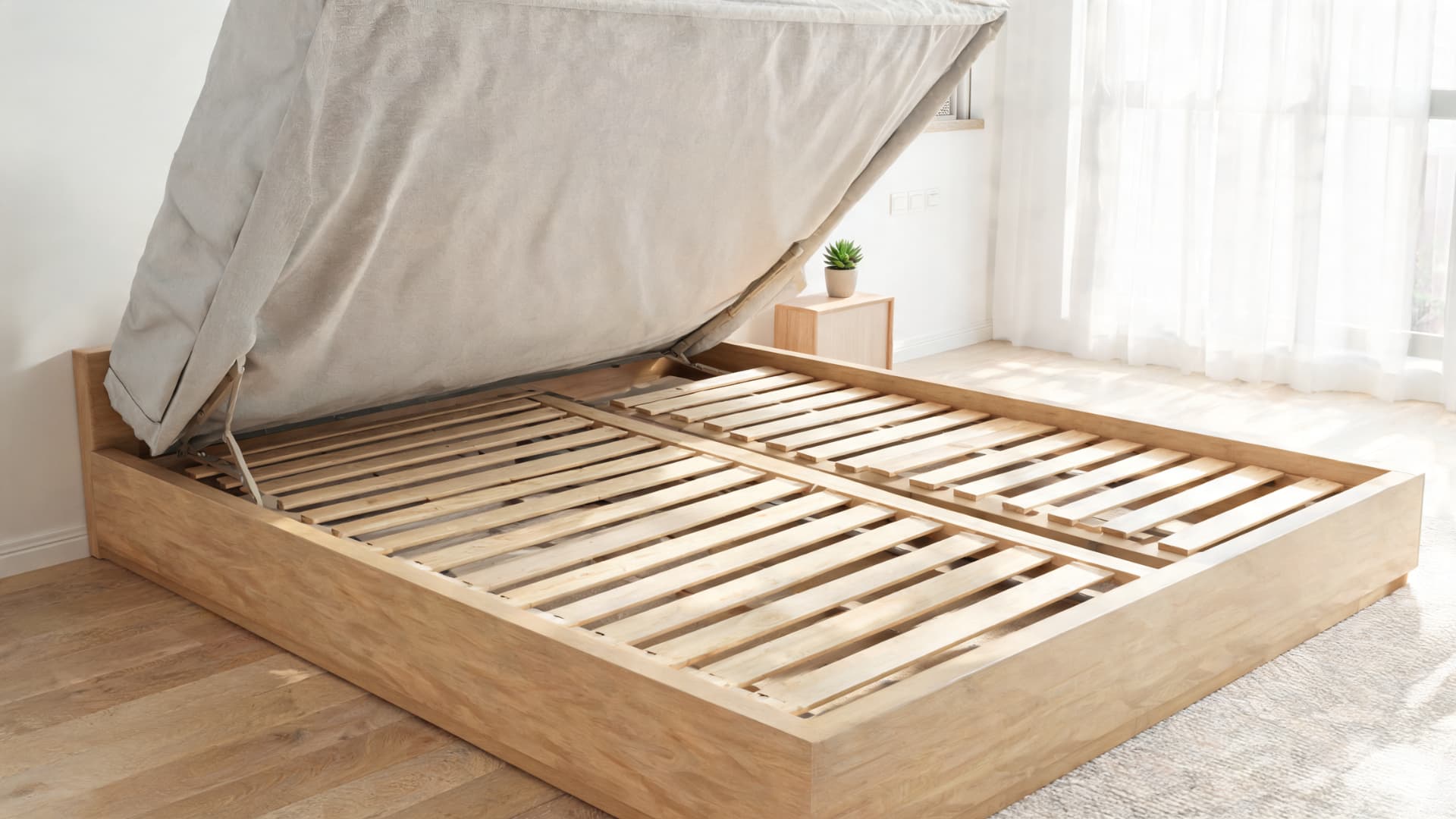
Slats are a series of evenly spaced wooden or metal strips placed across the width of the bed frame. Species matter more than most people expect pine and hardwood behave very differently under sustained load.
Their main function is to support the mattress while allowing airflow underneath, which helps reduce heat and moisture buildup. Proper spacing between slats is important for maintaining mattress durability and preventing sagging.
In some modern beds, slats are replaced by a platform base, a solid or semi-solid surface that provides continuous support without gaps. Both systems ensure weight is distributed evenly across the frame.
| Pro Tip: Before buying a bed frame, ask the retailer what species the slats are made from. “Solid wood” doesn’t tell you anything useful. Pine and oak are both solid wood. One will flex under a heavy mattress within a year; the other won’t. |
4. Center Support Beam
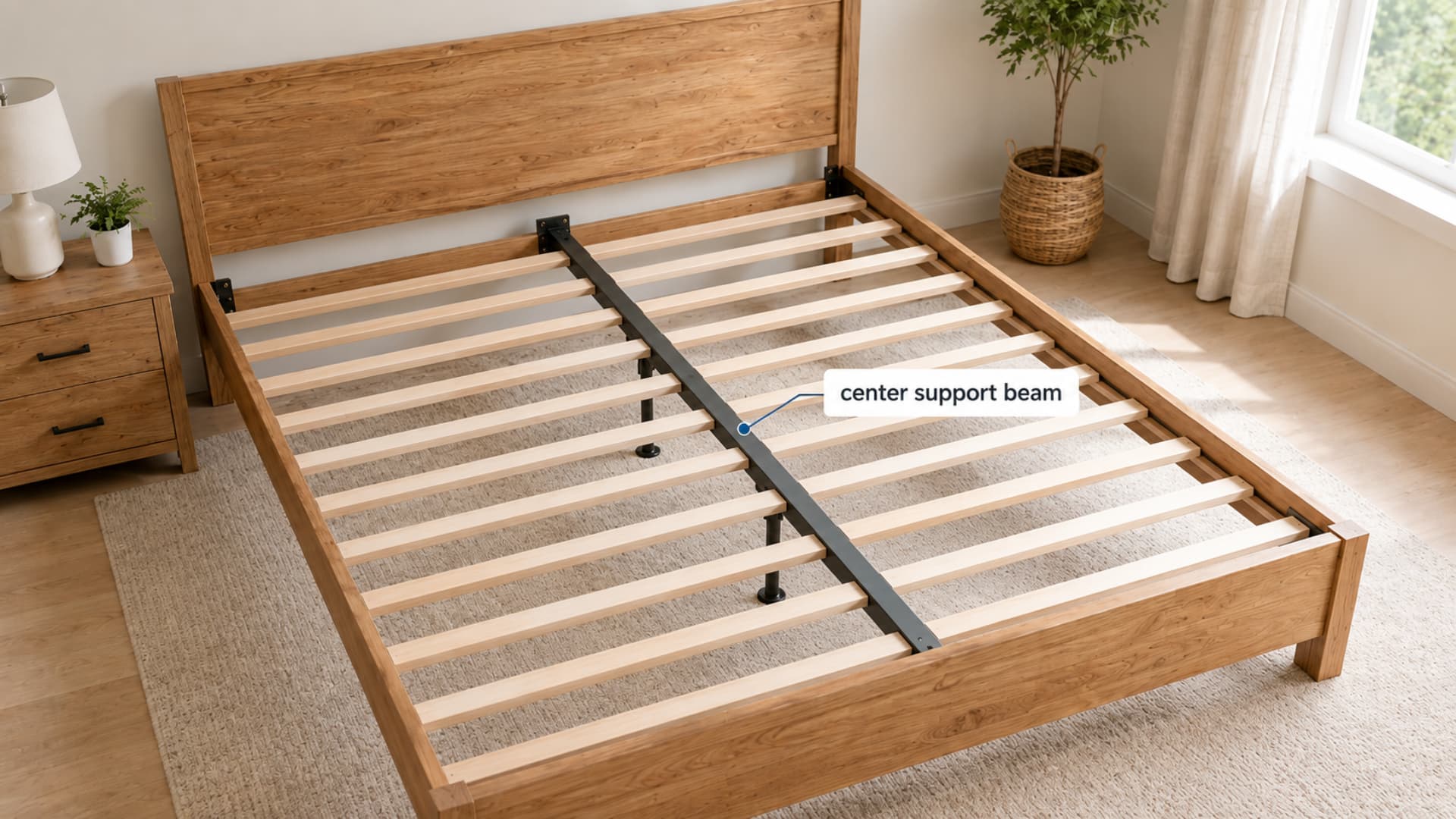
The center support beam is a reinforcement structure that runs vertically through the middle of larger beds, especially queen and king sizes. It is designed to prevent the frame from bending inward or sagging over time due to the weight pressure.
This beam often includes one or more support legs that transfer load directly to the floor. Without this component, larger beds may lose stability in the center, leading to uneven mattress support and reduced lifespan.
5. Bed Legs / Feet
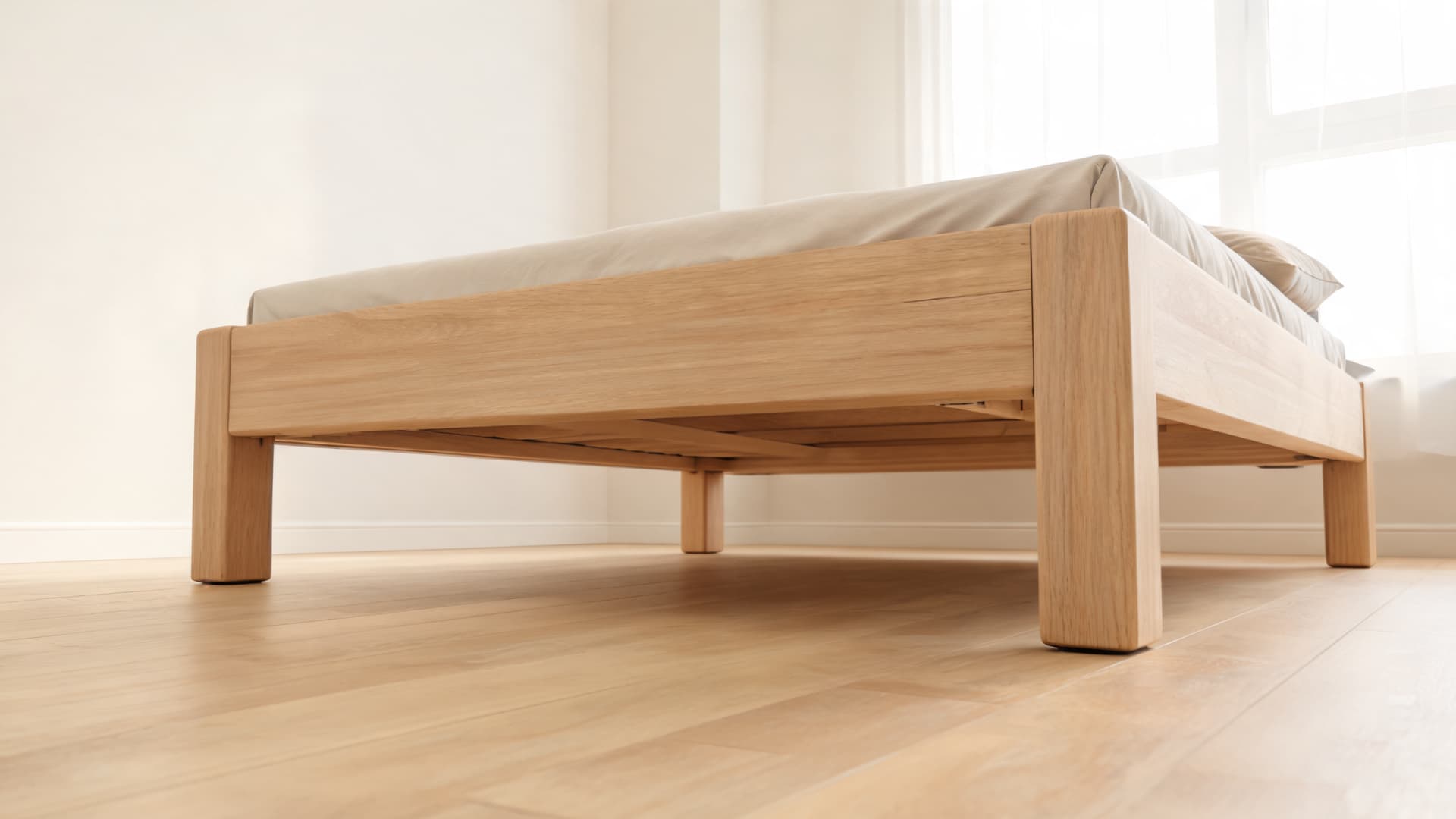
Bed legs or feet are the vertical supports that elevate the entire bed frame off the floor. They play a crucial role in stability by distributing weight evenly and preventing direct contact between the frame and the ground. This elevation also improves airflow underneath the bed, which helps maintain hygiene and reduce moisture buildup.
In addition to function, bed legs also influence overall height and can affect how easy it is to get in and out of bed. They are typically made from wood or metal and are securely attached to the frame for long-term strength.
Mattress and Its Components
The mattress is the main comfort and support layer people sleep on.
It sits above the bed frame, slats, box spring, foundation, or platform and works with that base to support the body through the night.
Common mattress types include innerspring, memory foam, latex, hybrid, and flippable mattresses. This section keeps the focus on bed anatomy, so the main thing to know is that the mattress is the sleep surface, while the frame and base support it from below.
1. Mattress Support Types
Before looking at the mattress itself, it helps to start with what sits underneath it. A mattress needs a steady base to stay level, prevent sagging, and properly support the sleeper. Some beds use slats, while others use a box spring, foundation, or solid platform.
| Support Type | Best For | Main Benefit | Watch Out For |
|---|---|---|---|
| Slats | Platform beds, foam, hybrid, latex | Airflow and simple support | Wide spacing can damage some mattresses |
| Box spring | Traditional innerspring mattresses | Height and shock absorption | Not needed for many modern mattresses |
| Foundation | Foam, hybrid, latex, innerspring | Flat, sturdy support | Must match mattress warranty rules |
| Solid platform | Minimal bed setups | No extra base needed | May reduce airflow under some mattresses |
The right type of support depends on the mattress and bed frame.
2. Mattress Layers, Topper, and Protector
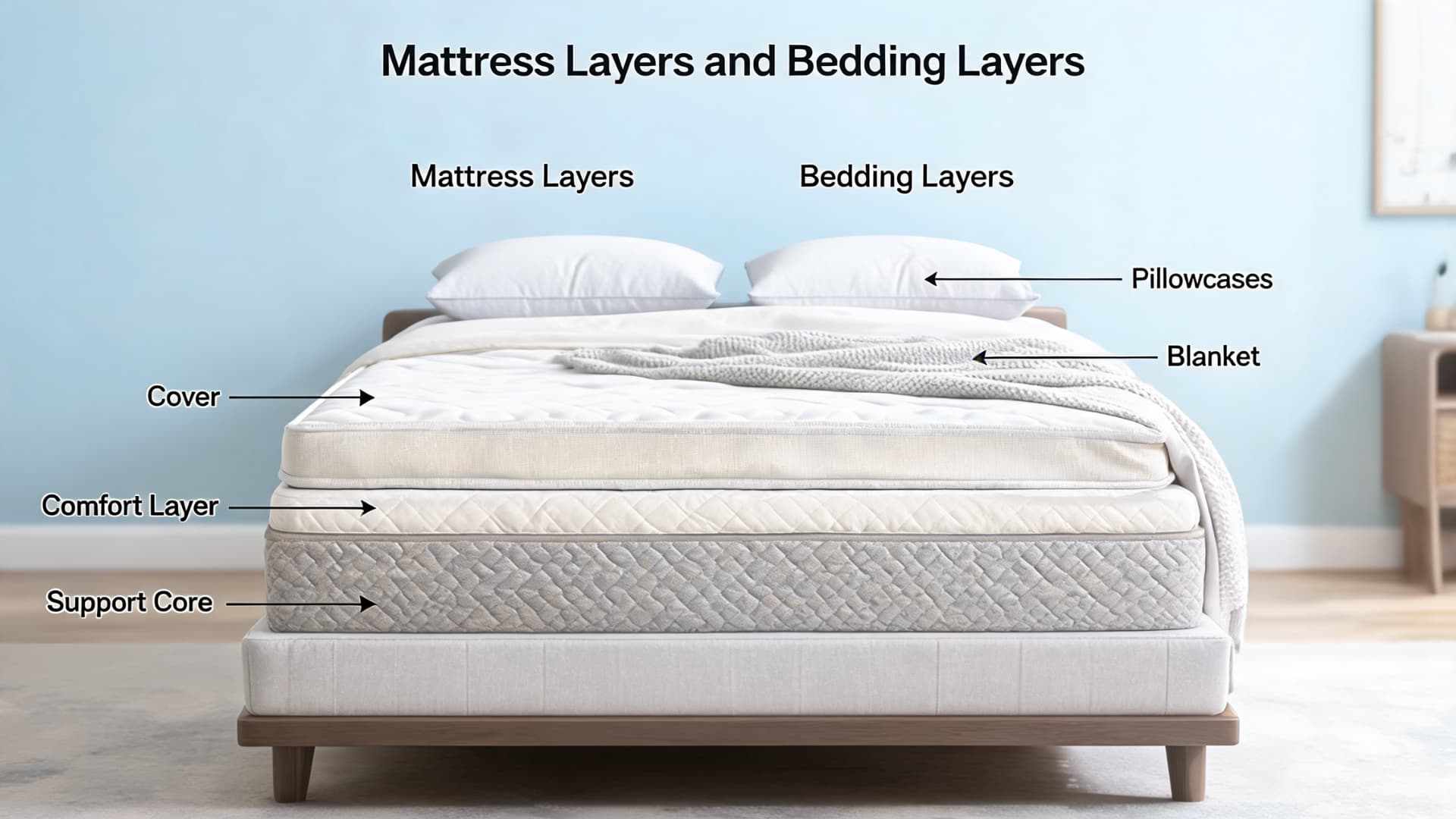
A mattress may look like a single unit, but it is usually made of several layers. These layers shape comfort, firmness, pressure relief, and long-term durability. A topper and a protector sit above the mattress, adding extra comfort or protection.
- Cover or Ticking Layer: The outer fabric that wraps around the mattress. It protects the internal materials from dust, moisture, and wear.
- Comfort Layer: The upper cushioning layer, often made from foam, latex, quilting, fiberfill, or pillow-top padding. It helps reduce pressure around the shoulders, hips, and back.
- Transition Layer: The middle layer that balances softness and firmness. It prevents the body from sinking too deeply and helps the mattress feel smoother from top to bottom.
- Support Core: The main structure inside the mattress. It may be made from coils, dense foam, latex, or a hybrid system. It provides firmness, body alignment, and durability.
- Mattress Topper: An extra comfort layer placed above the mattress. It can make the bed feel softer, firmer, cooler, or more pressure-relieving without replacing the mattress.
- Mattress Protector: A protective layer that goes over the mattress and sometimes over the topper too. It shields the mattress from sweat, spills, dust, and allergens.
3. Sheets and Top Bedding Layers
Sheets, blankets, comforters, duvets, and quilts are bedding layers, not parts of the bed frame or mattress structure. They sit above the mattress, adding comfort, warmth, softness, and cleanliness.
- Fitted Sheet: Wraps around the mattress and creates a smooth, washable layer for sleeping.
- Flat Sheet: Lies above the sleeper, adding a light layer between the body and heavier bedding.
- Pillowcases: Cover the pillows to keep them cleaner and softer against the face.
- Blanket: A single warm layer that can be used alone or under heavier bedding.
- Comforter: A thicker filled bed covering used for warmth and softness.
- Duvet: A soft insert placed inside a removable duvet cover, making it easier to wash the outer layer.
Together, these parts move from the base of the bed to the top layers that people use every night. The support system holds the mattress steady, the mattress supports the body, and the bedding adds comfort, warmth, and cleanliness.
Common Bed Frame Parts and Hardware
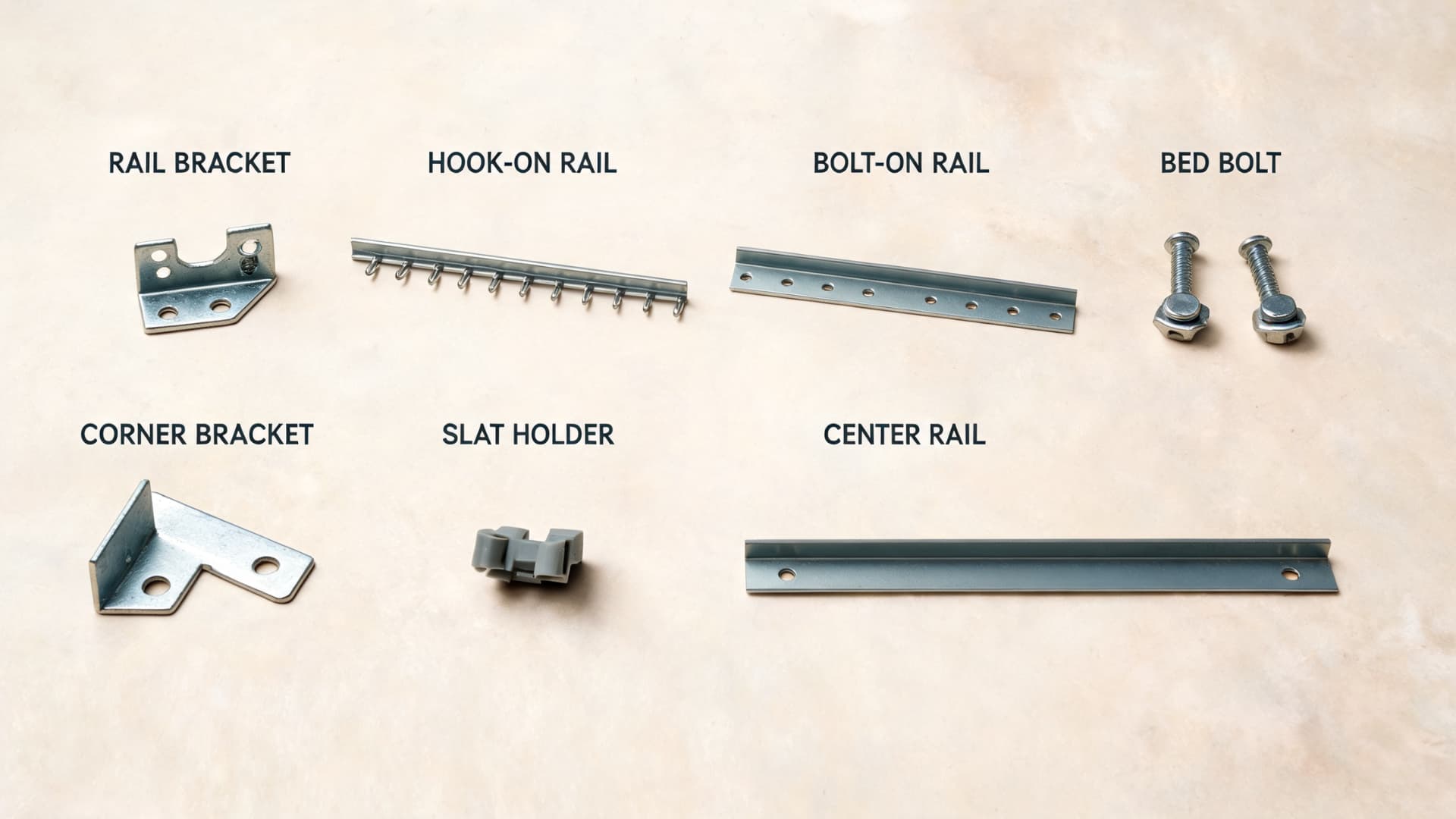
When a bed frame breaks, loosens, or needs a missing piece replaced, the hardest part is often knowing what to search for. Use the terms below when looking for common bed frame replacement parts.
| Part Name | What It Means |
|---|---|
| Rail bracket | Connects rails to the headboard or footboard |
| Hook-on rail | Rail with hooks that fit into slots |
| Bolt-on rail | Rail attached with bolts |
| Bed bolts | Long bolts are used to secure wood bed frames |
| Corner bracket | Reinforces frame corners |
| Slat holder | Keeps slats in position |
| Center rail | Middle support beam under the mattress |
Knowing these part names makes it easier to search for the right replacement, explain the issue to a seller, or compare hardware before buying. It can also help you fix one missing or damaged piece instead of replacing the whole bed frame.
Bed Types and How Their Parts Differ
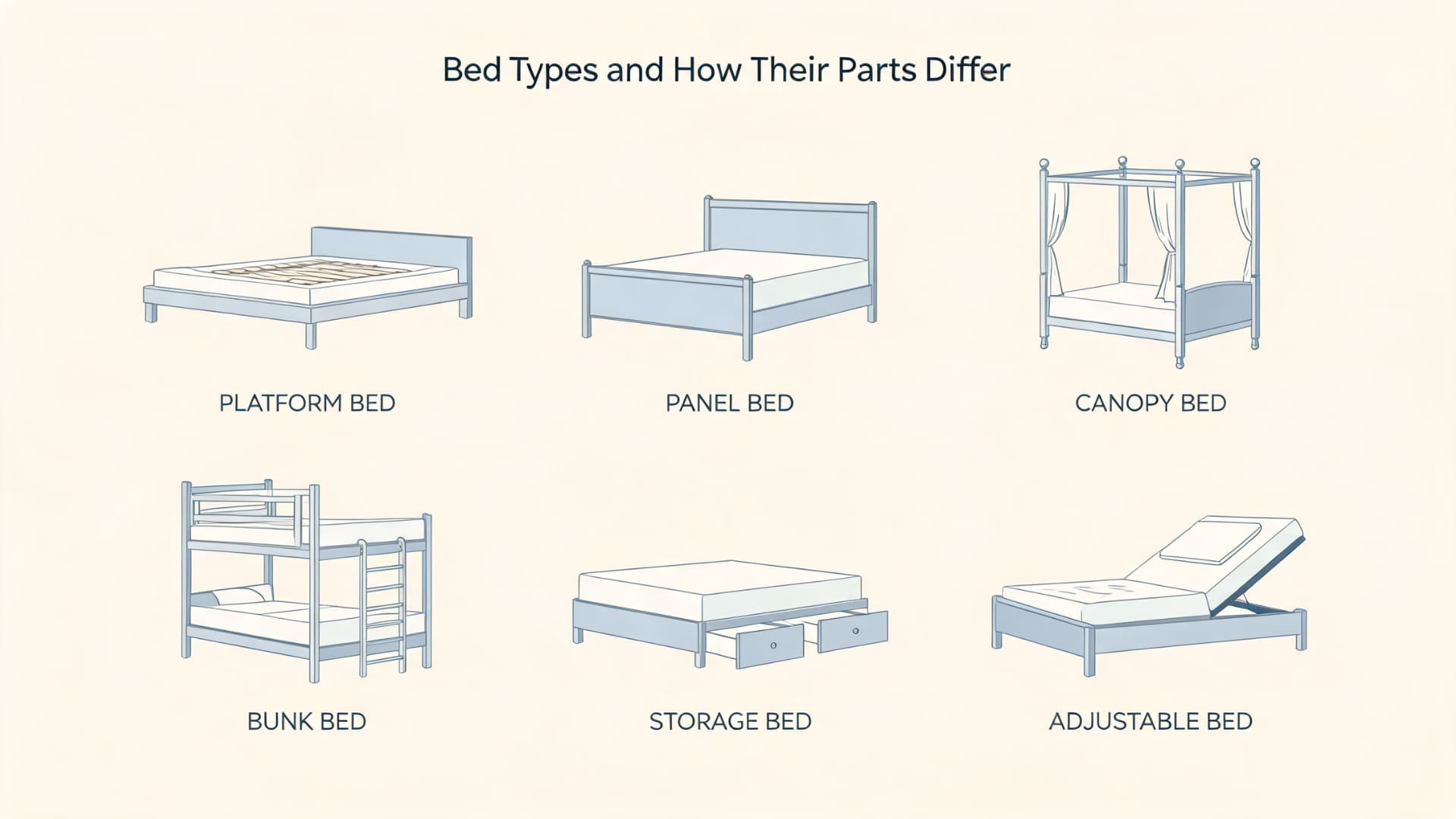
Different bed types use many of the same basic parts, but their frames, supports, posts, rails, and storage features can change significantly.
- Platform bed: Combines the frame and support surface, usually with slats or a solid platform, so a box spring is often unnecessary.
- Panel bed: Uses a traditional frame with a headboard, footboard, side rails, and slats or a foundation.
- Canopy bed: Has four posts connected by an upper frame that can be left open or draped with fabric.
- Bunk bed: Stacks one sleeping space above another and usually includes guard rails, a ladder, and slats.
- Storage bed: Includes built-in drawers, compartments, or lift-up storage below the mattress.
- Adjustable bed: Uses a motorized base with moving sections that raise or lower parts of the mattress.
Once you understand these differences, it becomes easier to compare frames, plan bedroom space, and find the right replacement parts when something breaks.
Finish Interaction: What Works on Which Frame Material
If you’re buying a raw or unfinished solid wood frame, or refinishing one, the choice of finish matters for durability as much as for aesthetics, and it starts with knowing your wood species before picking a product.
- Oil finishes (tung oil, Danish oil) penetrate the wood fiber and provide good moisture resistance on oak and maple. They require periodic reapplication, every few years in dry climates, annually in humid ones. They give a natural, low-sheen look that suits minimalist frames well.
- Polyurethane is the most durable option for a frame that will see heavy use. Water-based polyurethane dries clear and fast; oil-based adds a slight amber tone. Either works on hardwood frames. On pine, oil-based polyurethane can raise the grain and show application marks; test on an unexposed area first.
- Wax finishes look excellent on solid wood but offer minimal protection against moisture. Not a good choice for a frame in a humid room or near a window that gets left open in the rain.
- Paint on MDF or engineered wood is best applied over primer. Bare MDF absorbs paint unevenly at the edges where the material is most porous. Skip the primer step, and the finish looks fine initially, but starts showing edge absorption within six to twelve months.
How to Replace or Fix Bed Parts
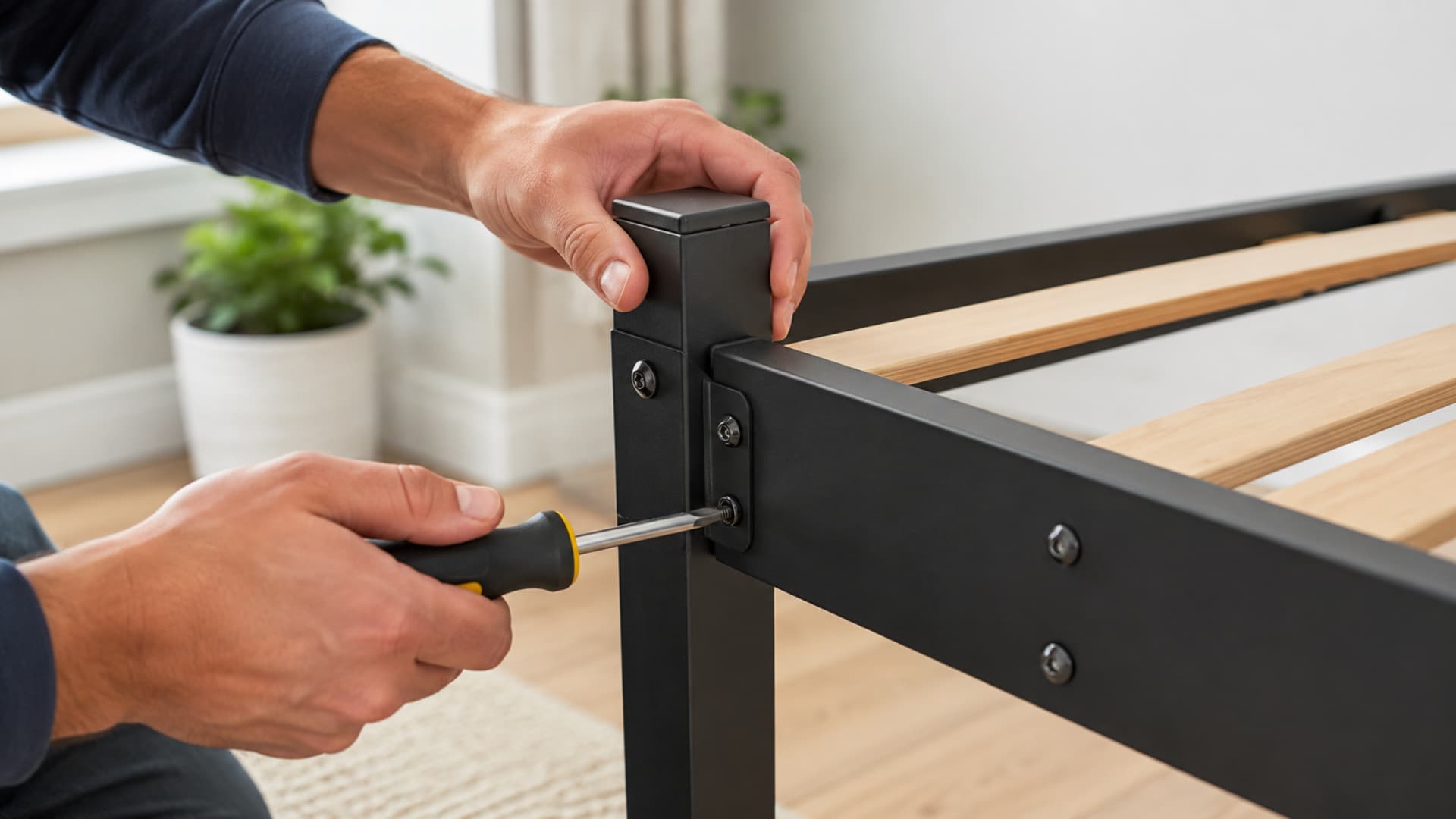
Fixing bed issues usually starts with identifying the weak component and addressing it directly. Broken slats should be replaced with new ones of the same size and thickness to restore proper mattress support.
Loose frame joints can often be solved by tightening bolts, screws, or cam locks to remove noise and movement. If the bed lacks middle support, installing a center support beam helps prevent sagging, especially in larger beds.
Worn-out hardware, such as brackets or fasteners, should be replaced to improve stability and safety. Uneven bed legs can be adjusted or fitted with pads to balance the structure and reduce wobbling.
Budget Reality Check: Where “Affordable” Cuts Corners
The $150–$350 price range for queen bed frames is where most of the material and build compromises live. Here’s what typically gets downgraded at that price point, and whether it matters:
- Slat material: Budget frames use pine or poplar slats at minimum thickness. If the frame claims “solid wood” and costs $200 for a queen, the slats are almost certainly pine. That’s workable for light use but will flex under sustained heavy load. Add an extra slat in the center if gaps exceed 3 inches.
- Rail thickness: Thin MDF rails covered in laminate are the most common cost-reduction method. They look fine. They don’t hold joinery well after repeated assembly and disassembly.
- Leg attachment: Threaded plastic inserts instead of steel hardware. This is the single most common failure point in budget frames. The insert strips, the leg wobbles, the frame feels unstable. Replacement hardware is rarely stocked for specific budget frame models.
- Center support: Many frames in this range include a center support leg, but make the beam from thin stock or a hollow tube. For a 100+-pound hybrid mattress with two sleepers, this is not enough. A center beam that flexes defeats the purpose of having one.
| Note: The upgrade from a $250 engineered-wood frame to a $450 solid-hardwood frame is usually worth it in one scenario: if you move frequently. Solid wood frames with bolt-on hardware tolerate repeated disassembly far better than cam-lock MDF frames, which degrade with each reassembly. |
Frequently Asked Questions
How many slats should a bed have for proper support?
The number of slats a bed needs depends on the bed size, frame design, and mattress type. In general, slats should be spaced about 2–4 inches apart to give the mattress steady support. If the gaps are too wide, the mattress may dip between the slats, which can lead to sagging.
How often should bed hardware be checked or tightened?
Bed hardware should usually be checked and tightened every 6–12 months, especially if the bed is used daily. Screws, bolts, brackets, and cam locks can slowly loosen due to regular movement, weight pressure, or shifting.
Do all bed frames need a center support beam?
Not every bed frame needs a center support beam, but larger beds usually do. Queen, king, and heavier mattress setups often require center support to prevent the frame from bending inward or sagging in the middle.
Can I use a mattress without a bed frame?
Yes, a mattress can be placed directly on the floor for a short time, but it is not ideal as a permanent setup. Without a bed frame, airflow under the mattress is reduced, which can trap moisture and lead to odor or mildew concerns.
End Takeaway
When you’re comparing frames, the parts of a bed that determine long-term performance are the slat material and spacing, the rail attachment method, and the center beam construction, in that order.
A white oak frame with properly spaced maple slats and bolted rail connections will still be solid in twenty years. A laminated MDF panel bed with cam-lock hardware and thin pine slats won’t make it to ten.
The price difference between those two outcomes is usually $250–$400 at purchase. Ask the retailer for the slat species, the rail attachment type, and the center beam material before you decide.
Those three answers will tell you more than any product description will.