

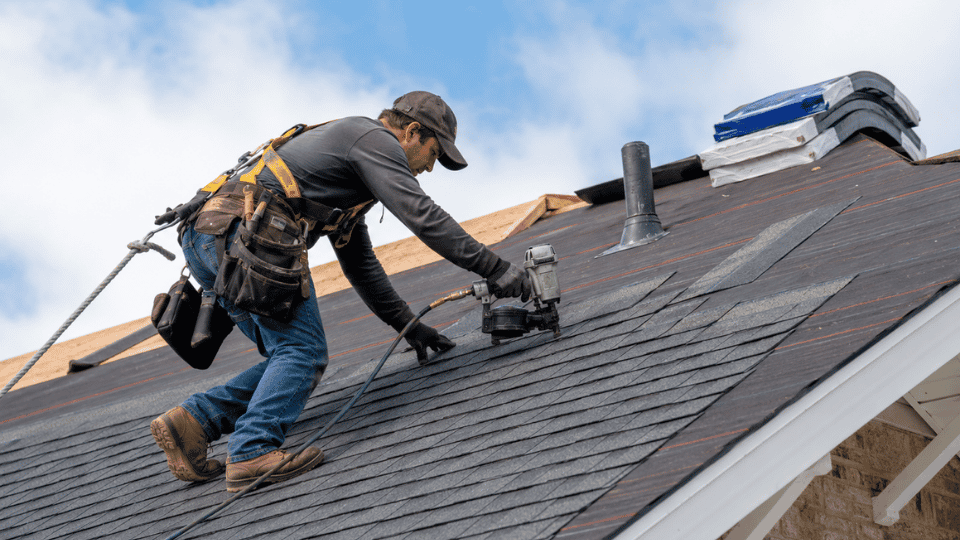


Roof replacement cost runs between $8,000 and $22,000 for most US homeowners using asphalt shingles, and the final number almost never matches the first number a contractor quotes.
The gap isn’t random. It comes down to three line items that most initial bids don’t surface: pitch, decking damage, and what gets lumped into “miscellaneous.”
This guide breaks down the actual cost structure by size, material, and region. It also tells you exactly which variables push your quote up and which ones are negotiable before you sign anything.
| Cost Note: Figures in this article are estimates based on national averages (Angi/HomeAdvisor 2026 cost data, NAHB). Actual costs vary significantly by region, contractor, materials, and project scope. Always get at least three quotes before committing to any project above $1,000. |
Average Roof Replacement Cost by Home Size
Your home’s square footage and your roof’s actual surface area are two different numbers. Pitch multiplies the surface beyond your footprint, and overhangs add more.
A 2,000 sq ft home with a medium pitch can have 26 to 32 roofing squares once the geometry is accounted for, and roofing is priced by the square (one square equals 100 sq ft of roof surface, not floor area).
| Home Size (sq ft) | Estimated Roof Squares | Estimated Cost Range |
| 1,000 to 1,500 | 12 to 18 | $5,500 to $10,000 |
| 1,500 to 2,000 | 18 to 25 | $8,000 to $14,000 |
| 2,000 to 2,500 | 25 to 32 | $11,000 to $18,000 |
| 2,500 to 3,000 | 32 to 40 | $14,000 to $22,000 |
| 3,000+ | 40+ | $20,000 to $35,000+ |
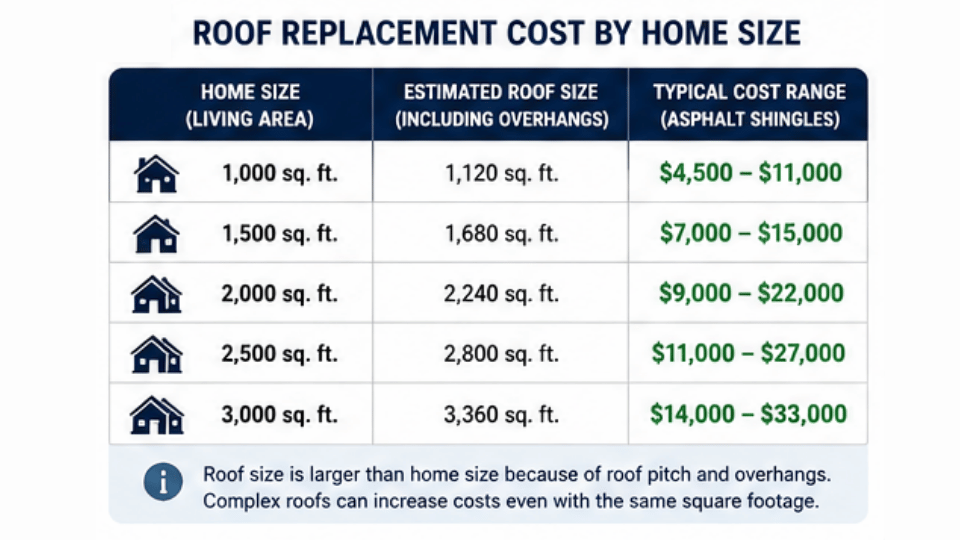
These ranges assume standard architectural asphalt shingles, a moderate pitch, and a single-story structure. Premium materials, steep pitches, or significant decking damage will push costs higher, sometimes by 20 to 40 percent.
Before calling contractors, run a quick self-estimate: multiply your home’s footprint (length x width) by a pitch multiplier (1.15 for low, 1.25 for medium, 1.41 for steep), then add 10 to 15 percent for waste.
At $450 to $550 per square installed for architectural shingles, a reasonable national mid-market figure for 2026, that gives you a working baseline. A 1,800 sq ft home at medium pitch comes to roughly 25 squares, or $11,000 to $14,000 before permits and decking.
Roof Replacement Cost by Material
Material selection is the biggest single lever in roof replacement cost outside of square footage. Here’s how the most common options compare on installed price per square and realistic lifespan:
| Roofing Material | Cost Per Square (Installed) | Lifespan |
| 3-tab asphalt shingles | $300 to $450 | 15 to 20 years |
| Architectural asphalt shingles | $400 to $600 | 25 to 30 years |
| Premium / designer asphalt | $500 to $800 | 30 to 40 years |
| Metal (steel panels) | $700 to $1,400 | 40 to 70 years |
| Standing seam metal | $1,200 to $2,000 | 50 to 70 years |
| Cedar shake | $900 to $1,600 | 20 to 30 years |
| Concrete tile | $900 to $1,500 | 40 to 50 years |
| Clay tile | $1,200 to $2,500 | 50 to 100 years |
| Slate | $1,500 to $4,000+ | 75 to 150 years |
| Synthetic slate or shake | $700 to $1,200 | 30 to 50 years |
Architectural asphalt shingles are the right choice for most homeowners. They cost 20 to 30 percent more than 3-tab but carry longer warranties and hold up significantly better over time.
Metal roofing costs more upfront but often makes financial sense in high-wind, hail-prone, or extreme-climate regions where asphalt shingles degrade faster.
The math only works in metal’s favor if you plan to stay in the home long enough to recoup the premium, typically 15 to 20 years.
What Drives the Final Roof Replacement Cost
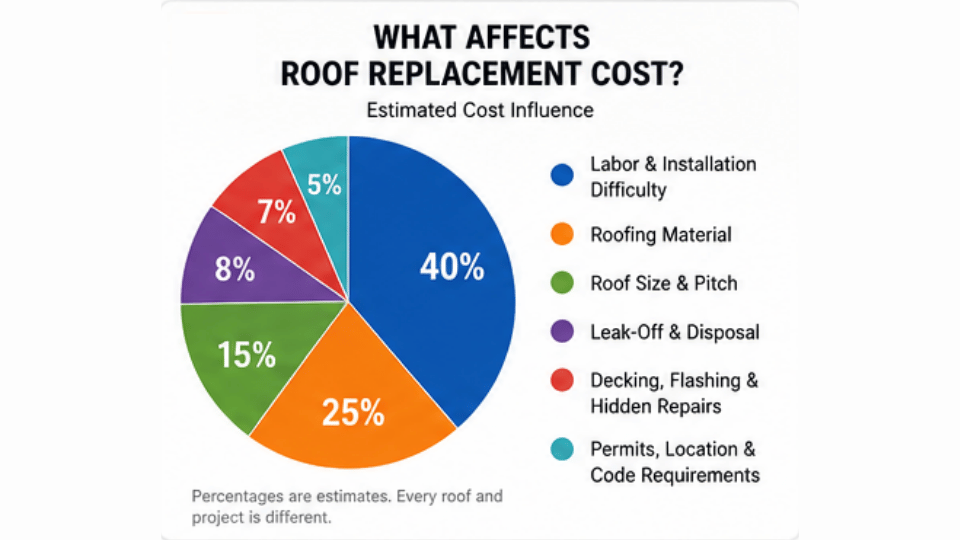
The material and square count set the baseline. These are the variables that routinely move the final invoice away from the initial quote, sometimes by thousands of dollars.
Roof Pitch and Complexity
Steeper roofs require safety equipment, slower crew movement, and more labor hours per square. A simple gable roof prices differently than one with dormers, multiple valleys, hips, or skylights, even when the square footage is the same.
Two 25-square roofs can have a $4,000 labor difference based entirely on shape. Always ask for the per-square labor rate broken out from the material cost.
Tear-Off and Disposal
Removing one layer of asphalt shingles is straightforward. Two or more layers, which many older homes have, adds labor time, dumpster weight, and disposal fees.
Some local codes prohibit adding a third overlay, making removal mandatory. Ask whether tear-off, dumpster rental, and debris cleanup are included in the quote or billed separately.
Underlayment
Underlayment sits between the deck and the outer roofing material. Felt paper is the lower-cost option; synthetic underlayment costs more but provides better moisture resistance and durability.
In colder climates, ice-and-water barrier is often required along eaves and valleys. This line item can add $500 to $1,500 to a standard job and should appear explicitly in any detailed quote.
Flashing
Flashing seals roof joints around chimneys, skylights, vents, and sidewalls. Poor flashing is one of the most common causes of leaks, not the shingles themselves.
Ask specifically whether existing flashing will be reused, repaired, or fully replaced. Reusing 15-year-old flashing on a new roof is a cost cut that typically shows up as a callback within three years.
Ventilation
Blocked soffits, missing ridge ventilation, or insufficient attic airflow will shorten the lifespan of new shingles. If ventilation is inadequate, a roofer should flag it during the estimate rather than after install.
Skipping the upgrade saves money upfront and costs it back within five to eight years of premature shingle degradation.
Decking Condition
This is the line item that surprises homeowners most. Rotted or water-damaged plywood can’t be seen until tear-off is complete, which is why it almost never shows up in the initial quote.
Contractors typically charge $60 to $100 per sheet for replacement. On a large roof with significant moisture damage, that can add $1,500 to $3,000 to the final invoice. Ask for the per-sheet decking rate in writing before signing anything.
Permits
Most jurisdictions require a permit for full roof replacement. Permit costs vary by location and project size, typically $150 to $500, and the paperwork process can also affect scheduling. Confirm whether the contractor pulls the permit or whether you’re responsible. Any quote that doesn’t address permits at all is worth questioning.
Where Budgets Go Wrong
I’ve seen homeowners budget carefully for the per-square rate and get surprised by everything else. These are the line items most likely to inflate your final invoice above the initial quote:
- Decking replacement: Not visible until tear-off. Get the per-sheet rate in writing. It’s the single biggest source of invoice surprises.
- Layered tear-off: Two or more existing shingle layers add time and disposal cost that low bids often exclude.
- Flashing replacement: Often treated as optional when it shouldn’t be. Full replacement adds $300 to $800 but protects a $12,000 investment.
- Ventilation upgrades: A necessary cost on older homes, but one that some contractors defer because it adds scope to the conversation.
- Dumpster and cleanup: Should be included but often isn’t itemized in base quotes. Confirm in writing.
Roof Replacement Cost by Region
Labor rates, material costs, and permitting fees vary enough that the same architectural shingle installation can cost $9,000 in Alabama and $20,000 in California.
Region matters as much as material type when you’re setting a budget. Similar cost patterns apply to other large home projects. The same regional variation shows up in sunroom addition costs, where labor accounts for a significant share of the spread.
| Region | States | Estimated Cost Range |
| Northeast | NY, MA, CT, NJ | $12,000 to $25,000+ |
| West Coast | CA, WA, OR | $12,000 to $22,000+ |
| Mid-Atlantic | VA, MD, PA | $10,000 to $18,000 |
| Midwest | IL, OH, MI | $9,000 to $17,000 |
| Southeast | GA, AL, TN | $7,500 to $14,000 |
| South Central | TX, AR, OK | $7,000 to $13,000 |
| Hawaii | N/A | Well above national average |
Regions with frequent storm activity, including the Gulf Coast, Tornado Alley, and Atlantic hurricane zones, often see elevated labor demand and compressed availability following major weather events.
If your roof needs replacement but isn’t actively failing, scheduling outside of post-storm seasons can improve both availability and price.
What Homeowners Are Saying
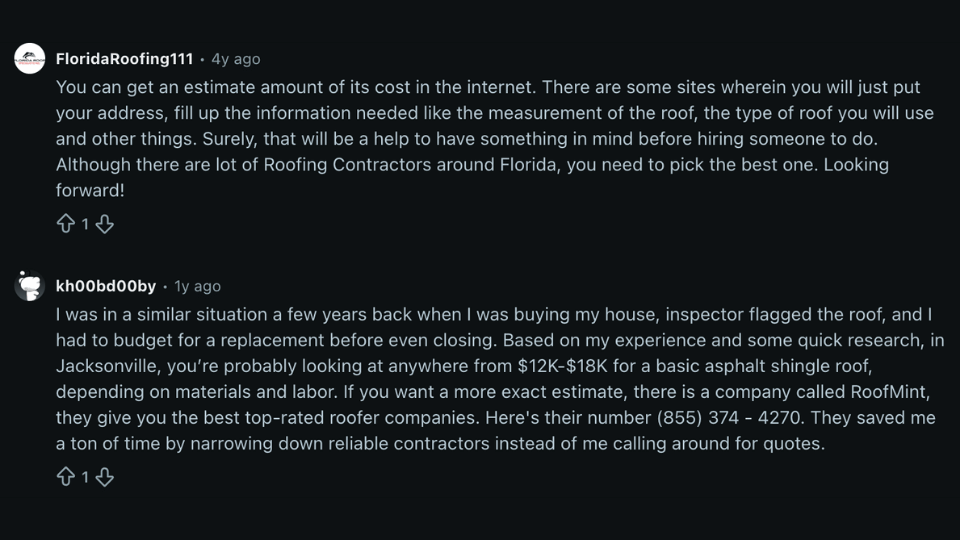
A thread in r/Roofing asking what to expect for a roof replacement on a 2,000 sq ft home in Jacksonville drew a range of honest responses.
Commenters quickly flagged that a 2,000 sq ft footprint doesn’t equal 20 roofing squares, since pitch and waste push the number higher, with one commenter calculating roughly 25.7 squares at a 6/12 pitch. Cost estimates ranged from $350 to $400 per square to $12,000 to $18,000 total, depending on region and scope.
That gap is exactly what I see in practice. The difference between what homeowners expect to pay and what they actually pay almost always comes down to pitch, waste factor, and decking repairs that nobody budgeted for.
Getting the per-square rate and the per-sheet decking rate in writing before signing anything closes that gap considerably.
Roof Repair vs. Roof Replacement
Not every roofing problem is a full replacement. The decision comes down to age, damage extent, and the honest math between repair cost and replacement cost.
| Situation | Recommended Action | Estimated Cost |
| Isolated leak, 1 to 5 shingles affected | Repair | $150 to $600 |
| Flashing failure, no structural damage | Repair or reseal | $200 to $500 |
| Granule loss in multiple areas | Evaluate age first | Varies |
| Roof under 15 years old, limited damage | Repair | $500 to $2,500 |
| Roof 20+ years old, widespread damage | Replacement | Full project cost |
| Multiple leak points, sagging, or rot | Replacement | Full project cost |
| Preparing home for sale, roof near end of life | Replacement often advised | Full project cost |
The benchmark I use: if repair costs exceed 50% of a full replacement, especially on a roof older than 15 years, replacement makes better long-term financial sense. You’re paying repair prices to extend a roof that’s already in the last quarter of its life.
This same cost-versus-lifespan logic applies to other major home projects. If you’re weighing significant exterior improvements alongside the roof, the cost breakdown for house additions follows a similar structure, with permit costs, regional labor variation, and scope creep as the main variables.
How to Compare Quotes Before Hiring
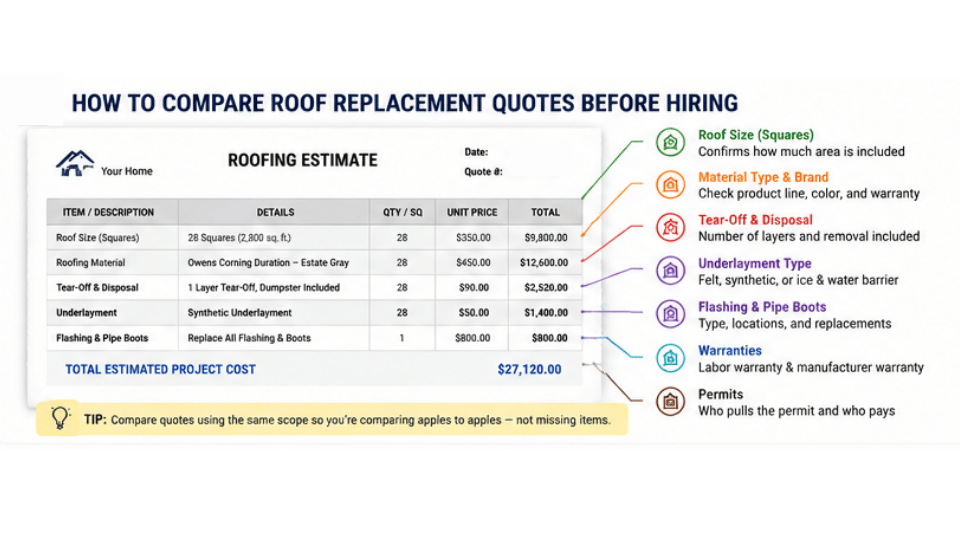
Getting three quotes only helps if each contractor is pricing the same scope. A lower bid isn’t a better deal if it leaves out flashing, ventilation, decking repair rates, permits, or cleanup.
What to Ask Your Contractor Before Signing
- How many roofing squares are you pricing? Home square footage and roof square footage are not the same. Get the exact number.
- What is your per-sheet rate for decking replacement? This is the single most important number to have before damage is found at tear-off.
- Is tear-off, dumpster rental, and cleanup included? These should be included. Confirm it in writing.
- Will the flashing be replaced or reused? Reusing old flashing on a new roof is a false economy.
- Who pulls the permit, and is the fee included in this quote?
Red Flags in a Roofing Quote
- Vague scope: “New roof” with no material spec, no square count, no flashing or underlayment listed
- No license or insurance: Creates personal liability if something goes wrong on your property
- No decking repair rate: The most common source of invoice surprises
- Pressure to sign quickly: A decision rushed in your direction benefits the contractor, not you
- Very low bid with no explanation: Something is missing from the scope. Find out what before you sign.
Ways to Lower Roof Replacement Cost
- Compare at least three written estimates from licensed local contractors
- Match scope before comparing totals so every bid includes the same materials and work
- Choose architectural asphalt shingles if upfront cost matters and premium materials aren’t needed
- Replace before leaks spread to decking, insulation, or framing. Deferred replacement is more expensive, not less.
- Ask about off-peak scheduling if you have flexibility. Post-storm seasons drive up demand and price.
- Check insurance eligibility after hail, wind, or storm damage before paying out of pocket
Frequently Asked Questions
These are the questions I hear most from homeowners who’ve already got a quote in hand and aren’t sure whether to trust it.
How much does a roof replacement cost for a 1,500 sq ft house?
Expect $7,000 to $12,000 for a standard architectural shingle replacement on a 1,500 sq ft home with a moderate pitch. That covers roughly 18 to 22 squares installed. Decking damage, steep pitch, or premium materials will push costs higher.
How much do roofers charge per square?
Most licensed contractors charge $400 to $600 per square installed for architectural asphalt shingles, including labor and materials. 3-tab shingles run $300 to $450 per square. Metal roofing starts at $700 per square and goes significantly higher for standing seam.
What is the average cost of roof replacement in 2026?
The national average for a full asphalt shingle roof replacement sits around $11,000 to $14,000 for a standard single-story home. That covers materials, labor, tear-off, and standard project costs, but not significant decking repairs or premium upgrades.
Is it cheaper to repair or replace a roof?
Repair is cheaper short-term. But if the roof is over 15 years old and repair costs exceed 50% of replacement cost, full replacement is typically the better financial decision. Partial repairs on an aging roof tend to chase the next failure point.
How much is a new roof per square foot?
Asphalt shingle roof replacement runs $4 to $6 per square foot installed for most homes. A 2,000 sq ft roof surface (not floor area) costs $8,000 to $12,000 in materials and labor before permits, disposal, and decking work.
Does roof replacement increase home value?
A new roof improves buyer confidence, supports a cleaner inspection report, and removes a negotiation point in a sale. Return on investment varies by market and material, but replacing a failing roof before listing is generally expected by buyers, not rewarded with a dollar-for-dollar premium.
What time of year is cheapest to replace a roof?
Late fall and winter tend to offer the most contractor availability and occasionally better pricing, as long as you’re outside of post-storm demand spikes. Avoid scheduling during or immediately after major storm events in your region, when compressed availability inflates quotes.
Final Verdict
The $8,000 to $22,000 range for asphalt shingle roof replacement is real, and where your project lands inside that range is decided by pitch, decking condition, and what the contractor left out of the initial bid.
Before you sign anything, get the per-sheet decking rate and confirm that tear-off, flashing, and permits are included in the scope. Those three questions close most of the gap between a quoted price and a final invoice.
Get at least three written estimates, compare them line by line against the same scope, and ask specifically about the one number that almost never shows up in a first quote: what does decking replacement cost per sheet if it’s needed?
|
Cost estimates based on Angi/HomeAdvisor 2026 national averages and NAHB residential construction data. Verify current pricing with local contractors and suppliers before budgeting. |