

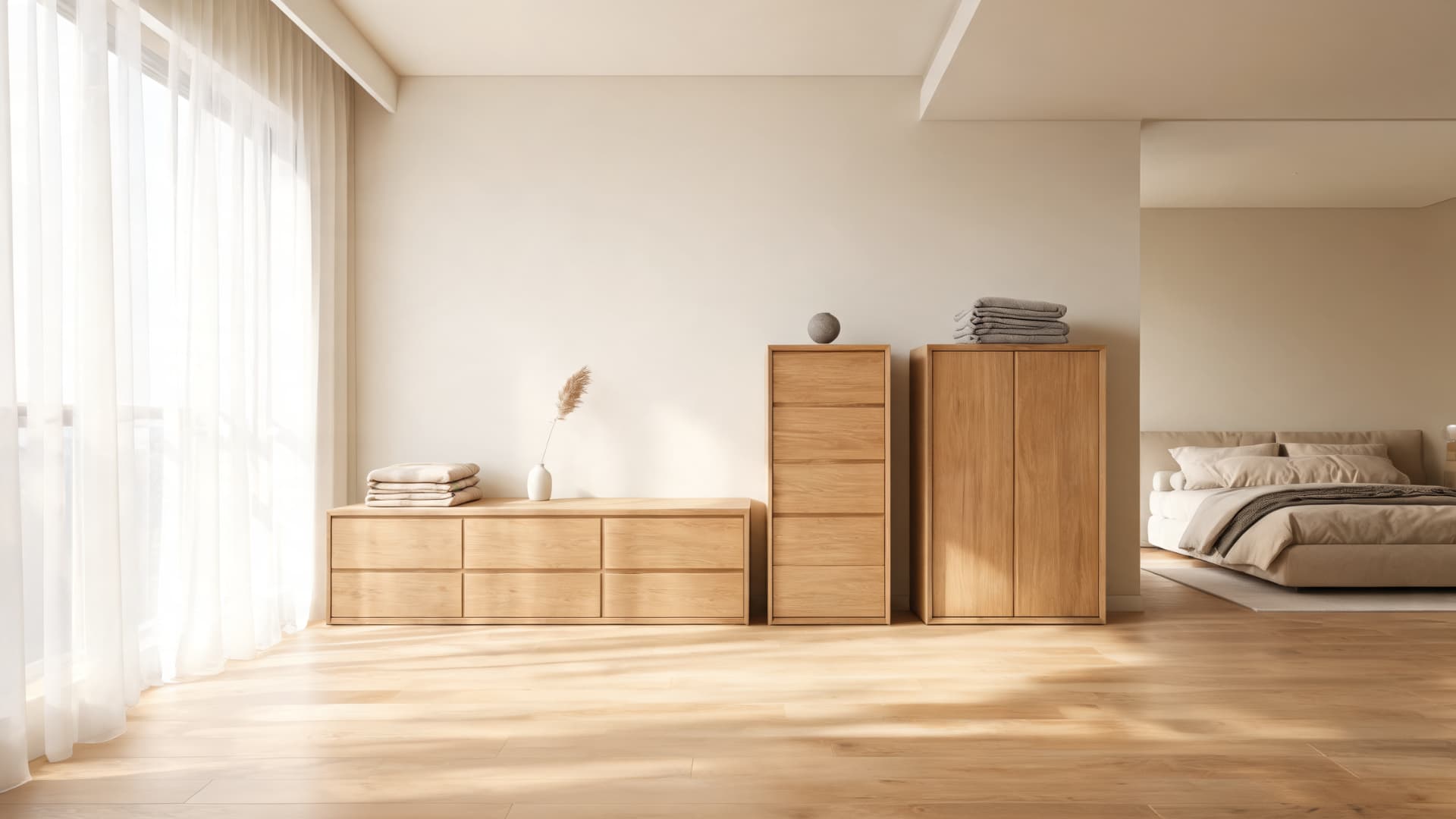


If you’re standing in a showroom, or scrolling through furniture listings at midnight, trying to figure out why a “highboy” costs three times what a “tallboy” does, this guide is for you.
The types of dressers you’ll encounter share one function (storing clothing) but differ sharply in height, width, drawer layout, and what they’re actually built to solve.
Before you buy, you need to know what each type is designed to do and which one fits your room’s specific constraints.
| Note: “Dresser,” “chest of drawers,” “tallboy,” and “highboy” are used inconsistently across furniture brands. Ignore the name. Compare height, width, drawer count, and storage configuration instead — those are the specs that determine whether a piece actually fits your room. |
Dresser vs Chest of Drawers: The Shape Difference That Matters
These two terms are often treated as synonyms, but the design difference affects how the piece sits in a room and how much surface area you actually get.
| Feature | Dresser | Chest of Drawers |
| Shape | Wide and low | Tall and narrow |
| Drawer layout | Side by side | Stacked vertically |
| Top surface | Larger — room for mirror, lamp, decor | Smaller — limited surface use |
| Wall space needed | More width required | Fits narrow gaps |
| Best for | Shared storage, mirror setups, primary bedrooms | Small rooms, apartments, tight wall spaces |
In practice, a vertical dresser and a chest of drawers are often the same piece described differently, depending on the retailer. What changes is the physical footprint, and that’s what you should be measuring against your wall space before anything else.
The Types of Dressers Explained
Before choosing any bedroom dresser, start with the limits of your room. Measure the wall width, ceiling height, and the space needed for drawers to open fully.
Also, think about what you need to store, from everyday clothes to bulky sweaters or extra bedding. Once you know those details, it becomes much easier to pick a dresser type that fits your room instead of crowding it.
1. Horizontal Dresser
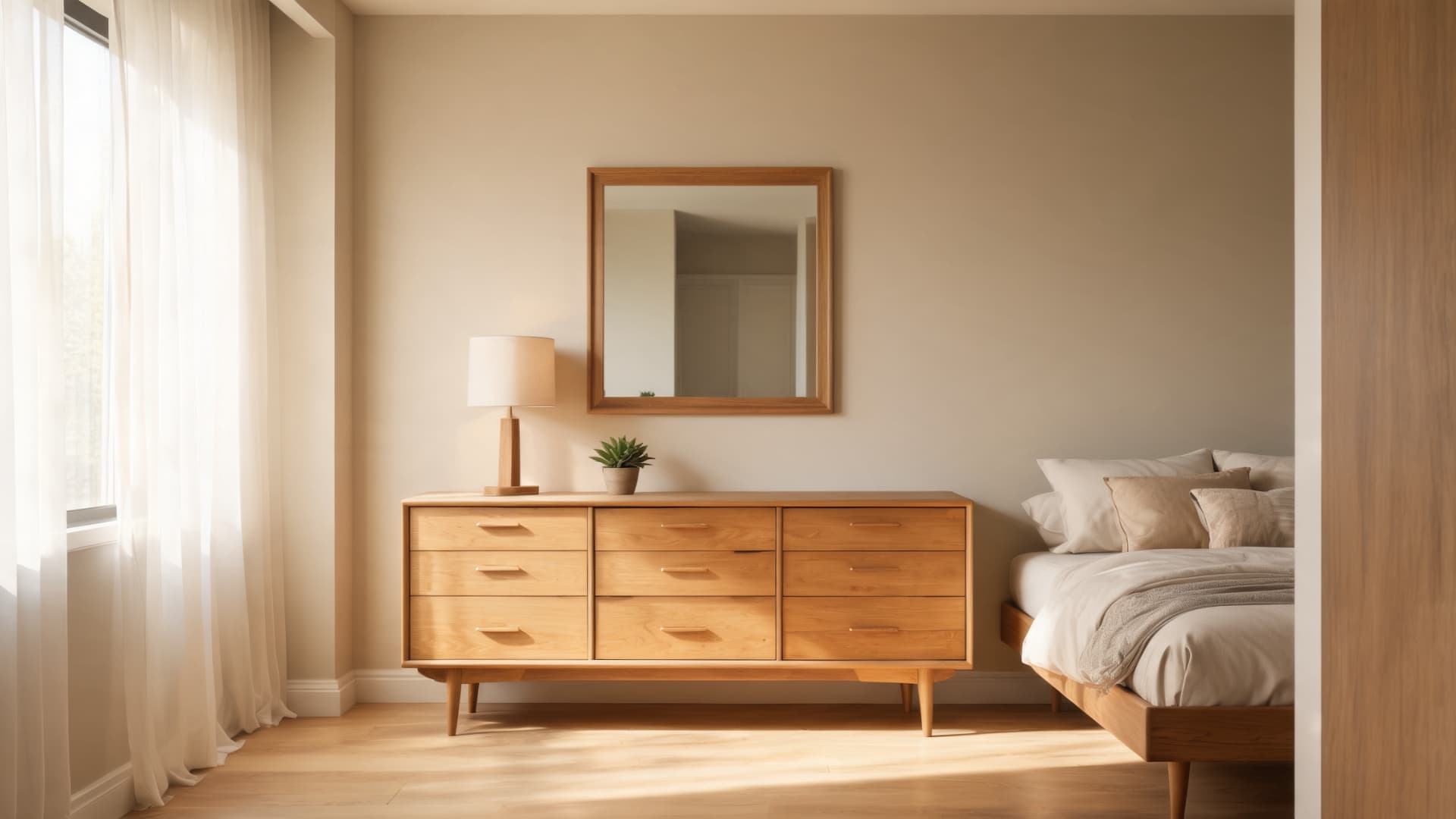
The horizontal dresser is the layout baseline for most primary bedrooms — wide, low, and built for maximum top surface. Drawers run side by side rather than stacking, which keeps the piece low enough to pair with a mirror and wide enough to share between two people.
Typical dimensions: 50–70 inches wide, 16–22 inches deep, 30–36 inches tall.
Best for: Medium to large bedrooms with enough wall length to clear the piece without blocking doors or closet access. Folded clothes, shared wardrobe storage, and mirror setups.
Before you buy: Measure 24–30 inches of clearance in front of the drawers. A horizontal dresser that opens into a bed frame or bedroom door becomes a daily frustration.
2. Double Dresser
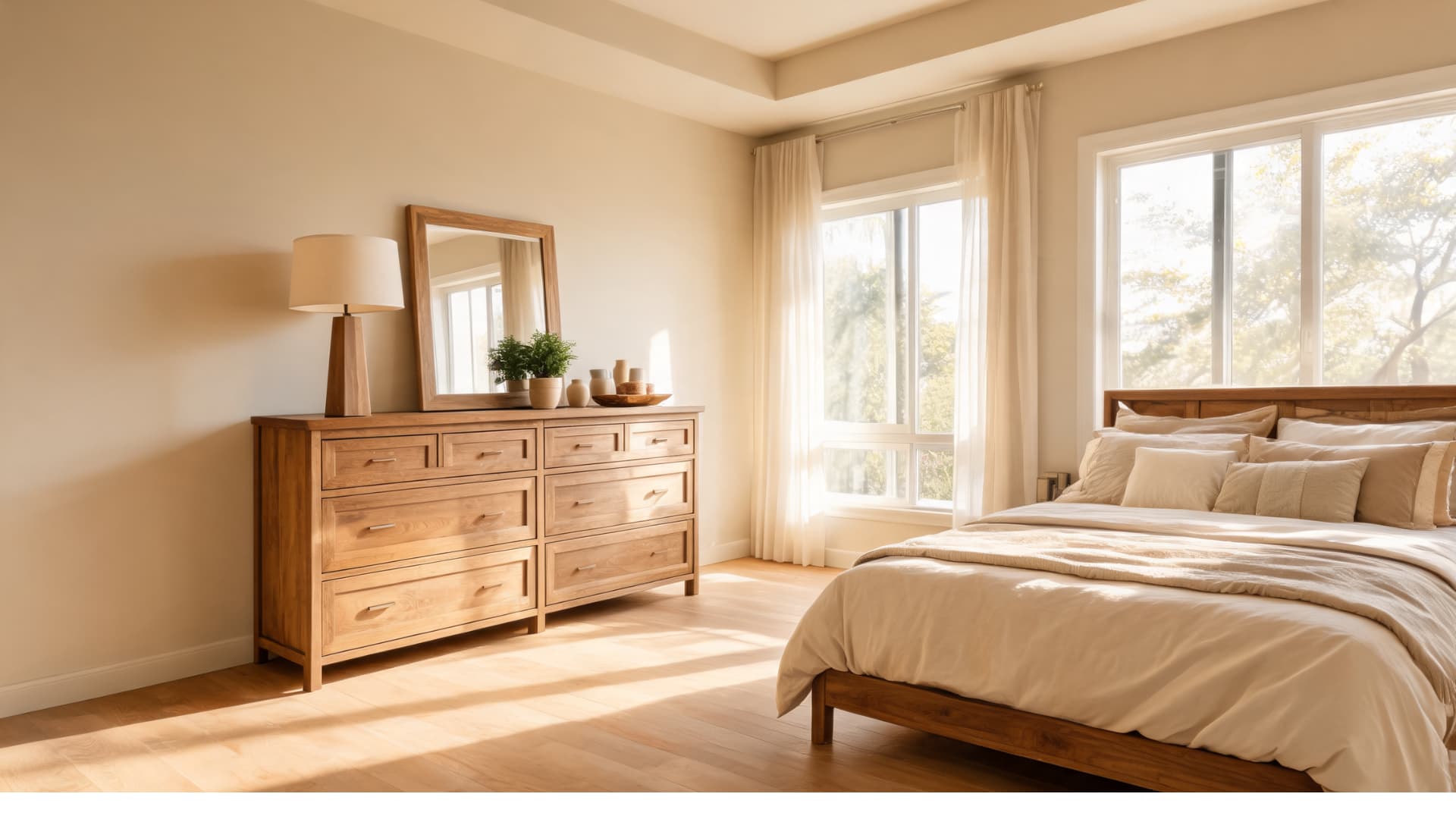
A double dresser is a wider version of the horizontal dresser — typically two full columns of drawers side by side. It’s the most common choice for couples or anyone with a large wardrobe who needs more drawer volume than a standard dresser provides.
Typical dimensions: 60–80 inches wide, 18–22 inches deep.
Best for: Primary bedrooms with enough wall length to absorb the width. Deep drawers make it practical for bulkier folded items — sweaters, jeans, extra linens.
Before you buy: A double dresser can eat the longest wall of a smaller room and still leave the bed area feeling crowded. Map the full room footprint first.
3. Vertical Dresser
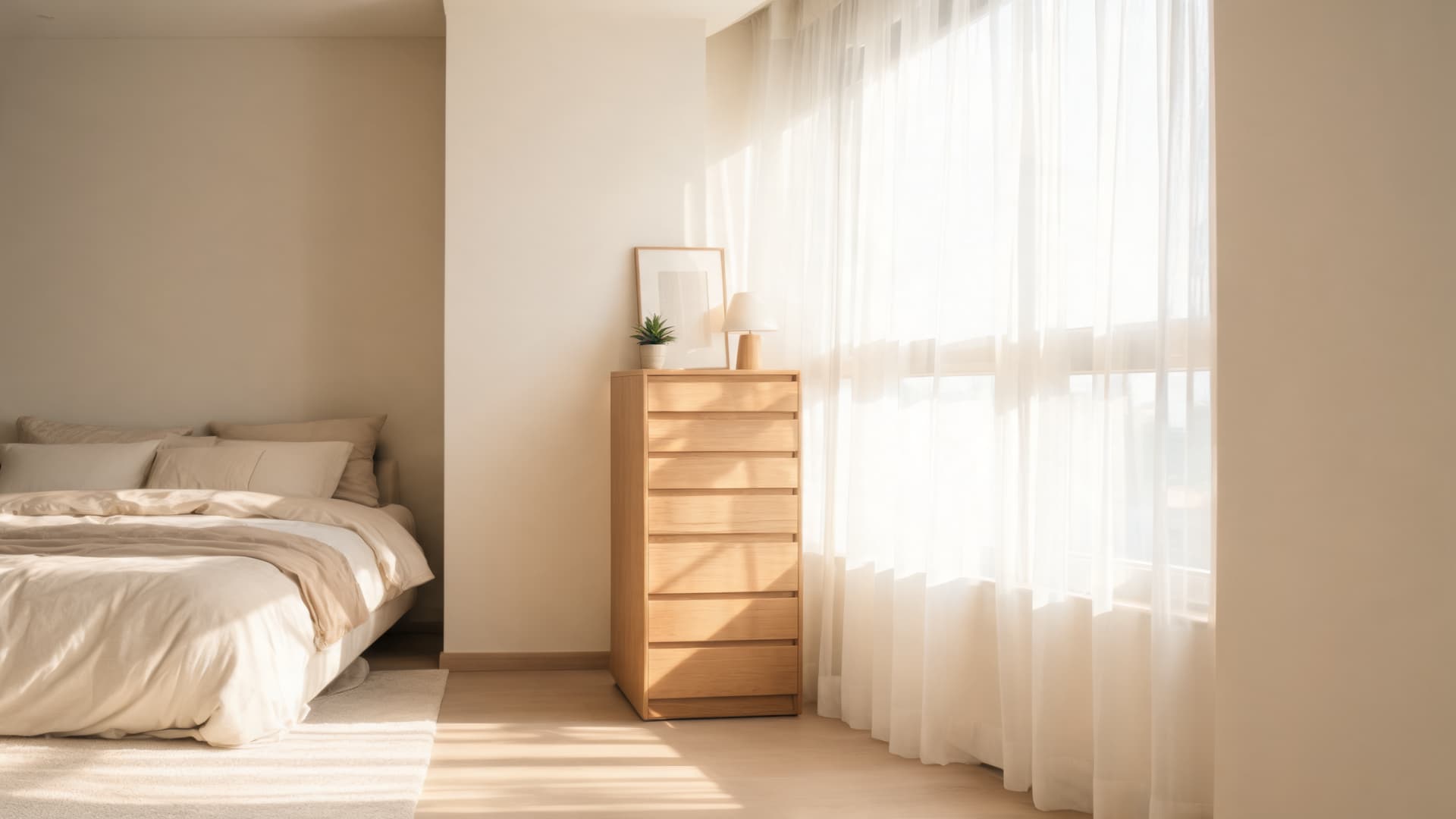
A vertical dresser trades width for height. The same number of drawers, stacked rather than spread. That footprint reduction is exactly what small bedroom storage layouts need — the piece can fit in a 30-inch gap beside a closet or between windows where a horizontal dresser simply won’t.
Typical dimensions: 28–42 inches wide, 16–20 inches deep, 48–60 inches tall.
Best for: Small bedrooms, studio apartments, and any room where floor space is the hard constraint.
Before you buy: Anchor it to the wall — especially in a child’s room or a busy bedroom where drawers may be opened at the same time. A tall dresser with open drawers can become top-heavy.
4. Highboy Dresser
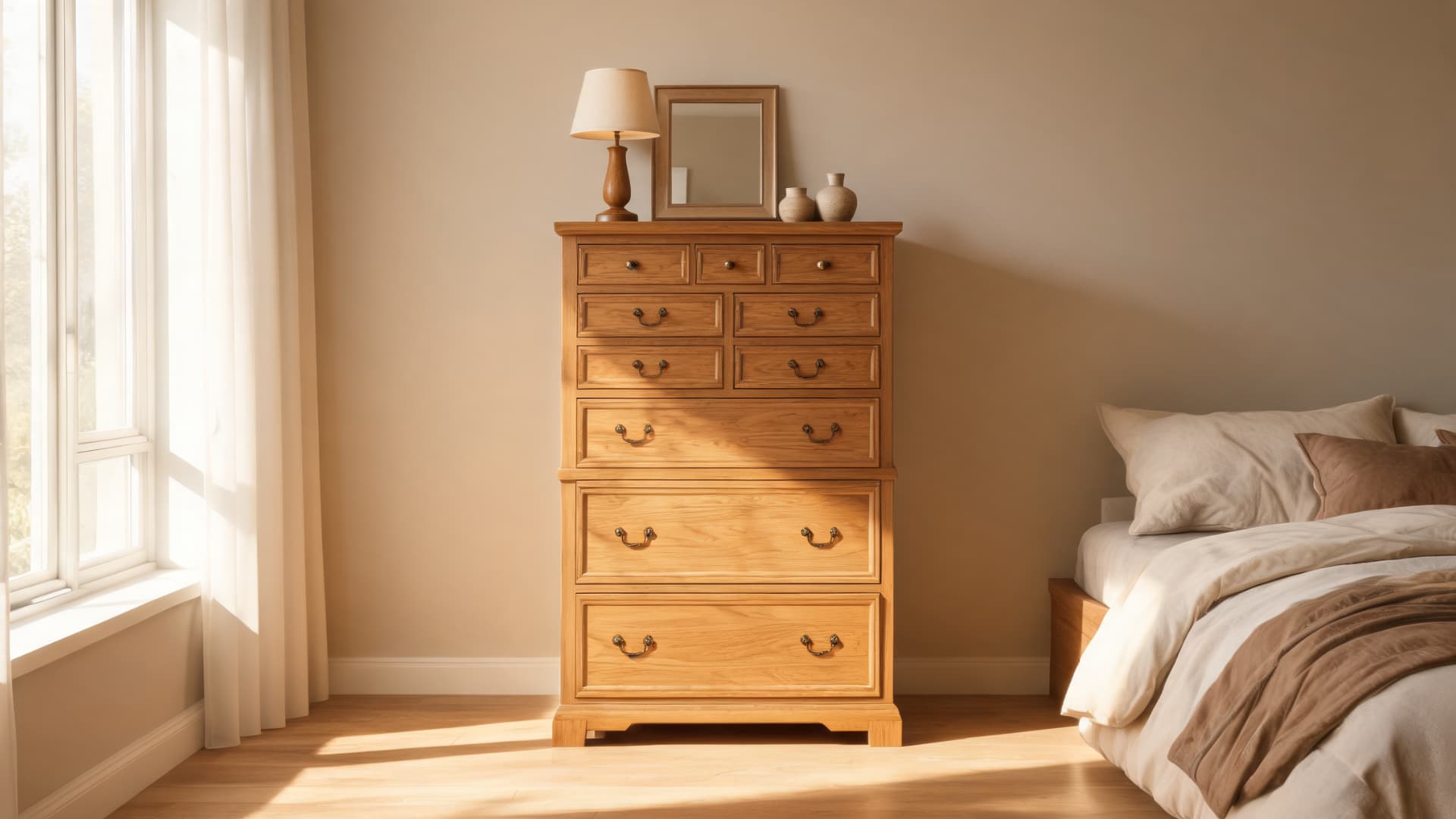
A true highboy is a chest-on-chest design — one cabinet stacked on top of another, historically joined at the base. The upper section typically has shallower drawers for smaller items; the lower section has deeper drawers for bulkier ones. Many pieces sold as “highboys” today are simply tall dressers using the name loosely.
Typical dimensions: 30–45 inches wide, 18–22 inches deep, 60–72 inches tall.
Best for: Rooms with high ceilings and narrow wall space. Bedrooms with a traditional or antique furniture style.
Before you buy: Confirm whether the listing describes a true chest-on-chest construction or just a tall dresser. The distinction affects both stability and price.
5. Lowboy Dresser
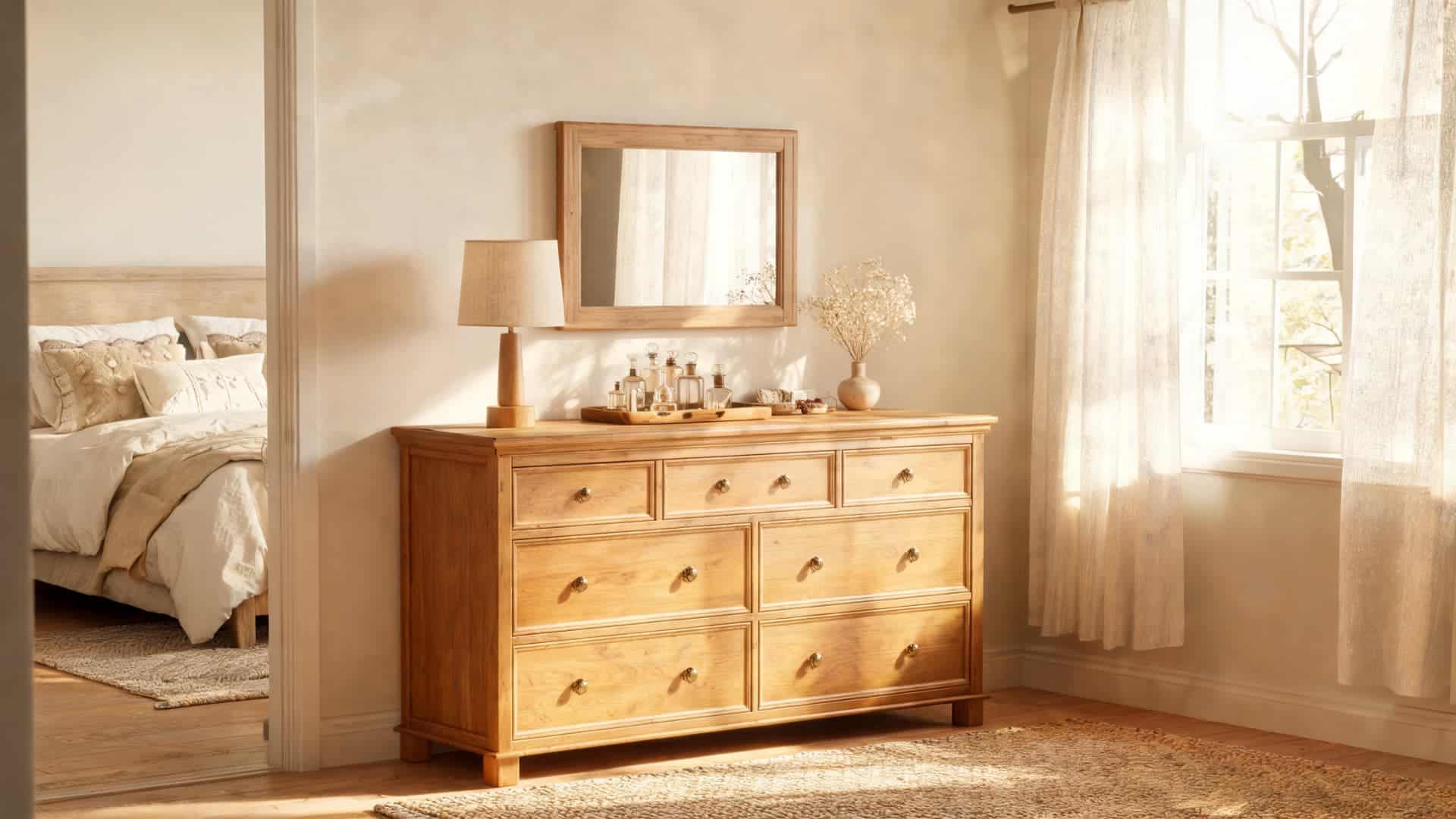
The lowboy is the vanity-adjacent dresser, shorter than a standard piece, wider than it is tall, and designed to sit at a height that makes surface items easy to reach and mirrors practical to use while seated or standing.
Think of it as a dressing table that also has drawers. In low-ceiling bedrooms, the lowboy’s reduced height keeps the furniture line well below the ceiling plane, which matters more than most buyers initially realize.
Typical dimensions: 40–60 inches wide, 16–22 inches deep, 28–34 inches tall.
Best for: Dressing corners, guest rooms with lower ceilings, or spaces where the dresser needs a lower visual profile to keep the room feeling open.
6. Tallboy Dresser
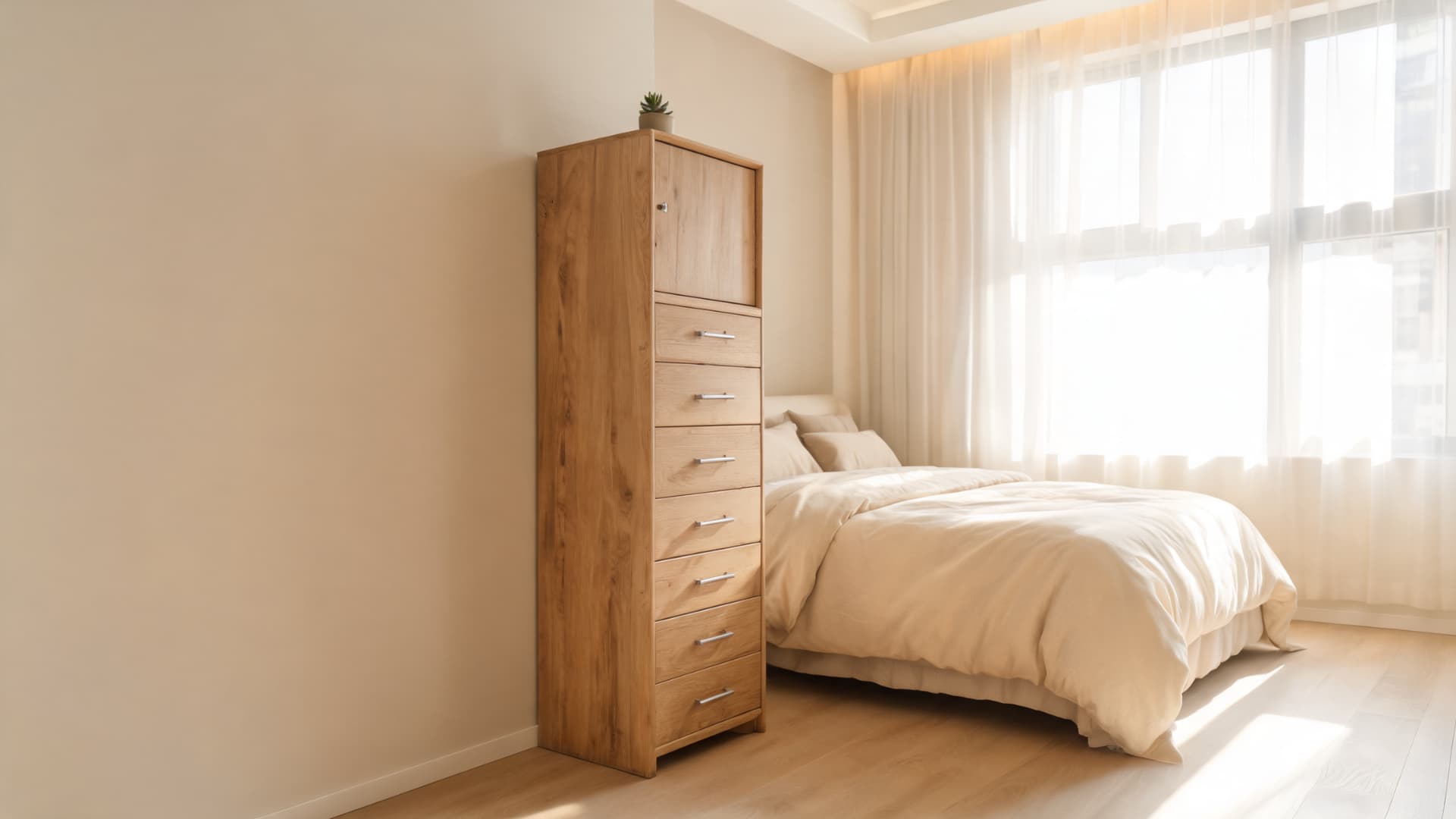
The tallboy and the vertical dresser describe roughly the same thing — a narrow, tall storage piece — though some tallboys include a combination of drawers and a cabinet section. The term varies enough between manufacturers that actual specs matter more than the label.
Typical dimensions: 28–40 inches wide, 16–22 inches deep, 50–65 inches tall.
Best for: Compact bedrooms, apartments, and guest rooms. Works particularly well in spaces where wall width is the binding constraint.
Before you buy: Check that drawer heights are accessible for whoever will use the piece most. Top drawers on a 65-inch tallboy are genuinely hard to reach for shorter users.
7. Bachelor’s Chest
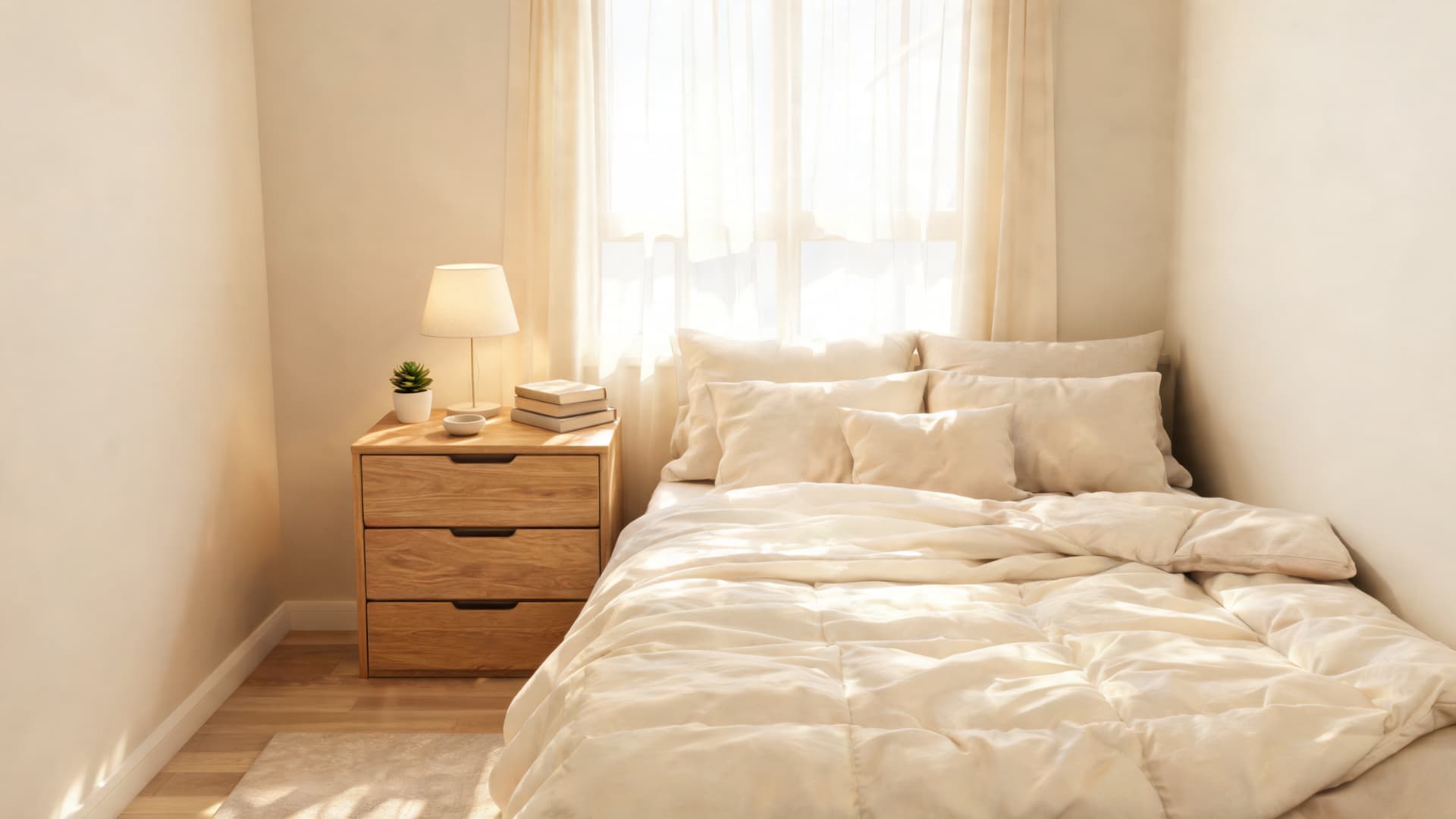
The bachelor’s chest is a compact multi-use piece — short enough and deep enough to double as a nightstand, but wide enough to store a meaningful amount of clothing. In studio apartments and small guest rooms, one piece doing two jobs is worth a lot more than square footage allows for two separate ones.
Typical dimensions: 24–36 inches wide, 14–18 inches deep.
Best for: Guest rooms, studio apartments, and bedrooms where floor space won’t allow a standard dresser plus a nightstand.
Before you buy: Check that the top surface is sturdy enough for a lamp, glass of water, or phone charger. Not all compact chests are built to handle constant nightstand-style use.
8. Gentleman’s Chest
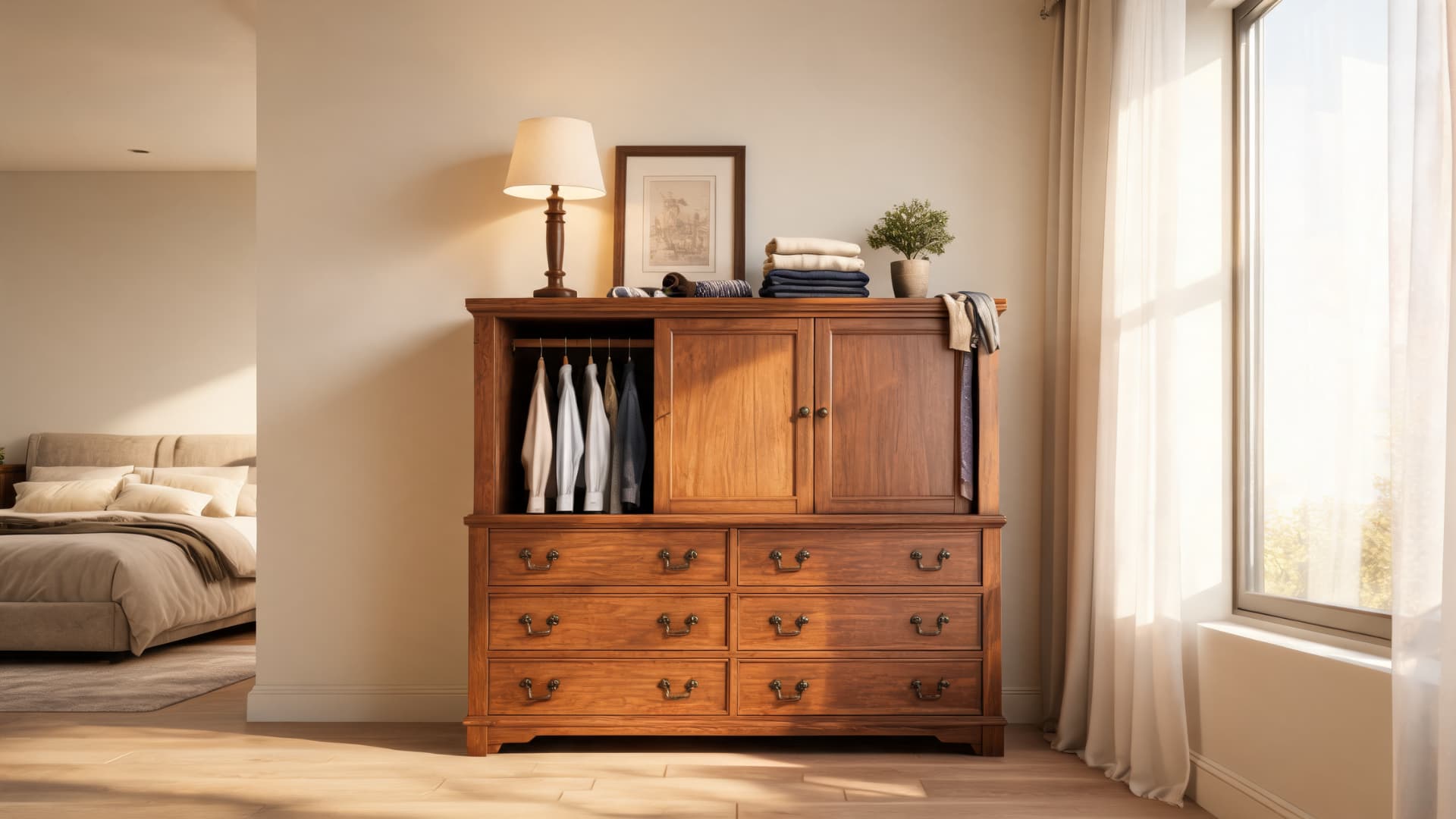
A gentleman’s chest combines drawers with cabinet or hanging sections in a single unit — the furniture equivalent of a wardrobe and dresser merged into one piece. It’s the right choice when the closet isn’t large enough to hold a full wardrobe, and you need both folded and hanging storage without adding two separate pieces of furniture.
Typical dimensions: 38–55 inches wide, 18–24 inches deep.
Best for: Bedrooms with limited closet space. Suits, jackets, and dress shirts that need to hang, plus everyday folded clothing in the drawers.
Before you buy: Check the hanging depth inside the cabinet section. Anything under 22 inches creates problems with shoulder width on most garments.
9. His and Hers Chest
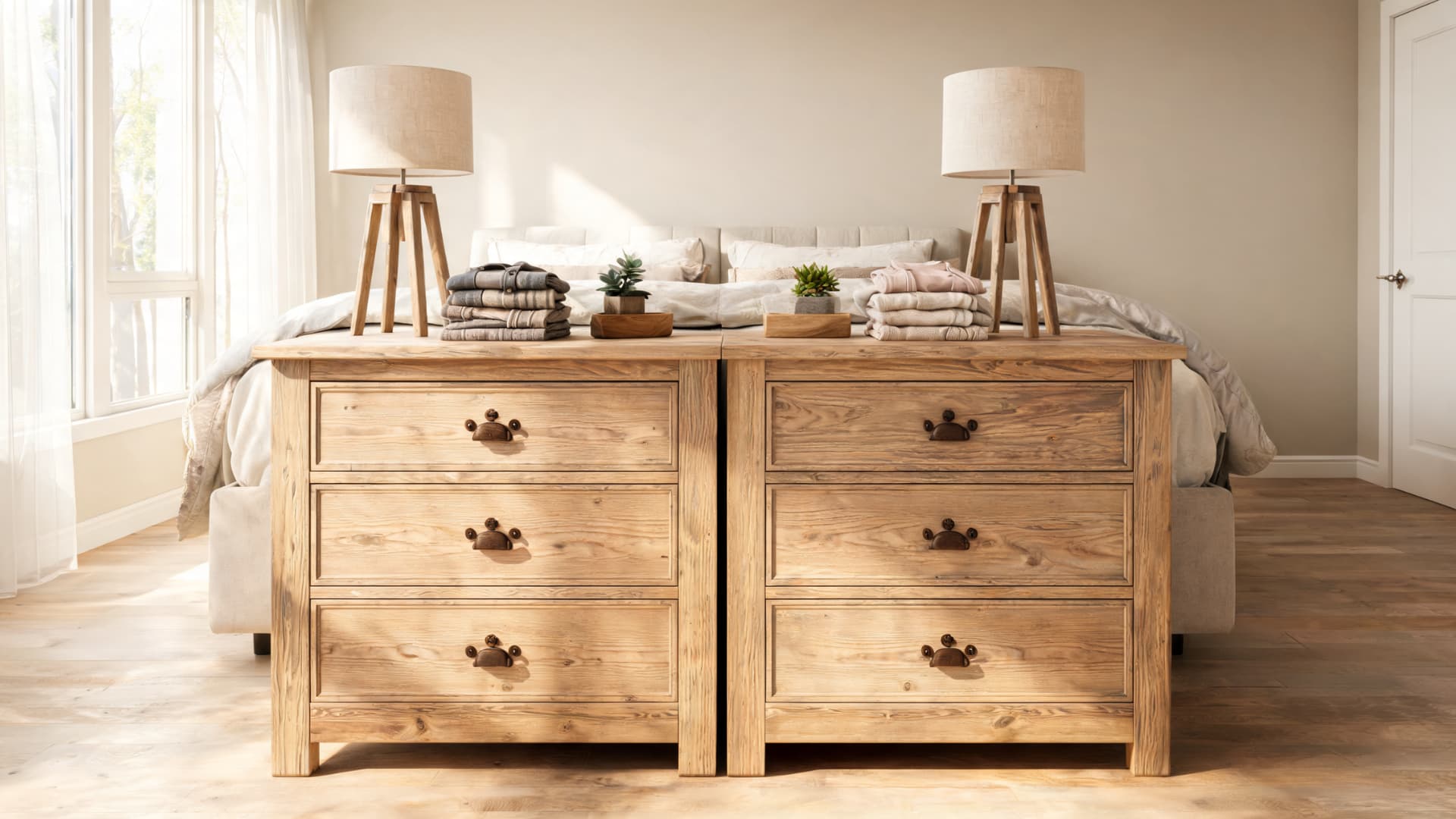
A his-and-hers chest provides divided storage for two people in one piece — typically two distinct sections with equal (or designated) drawer space. The appeal is eliminating two separate dressers while keeping individual storage clearly separated. The challenge is that it requires a wider wall than a single dresser.
Typical dimensions: 50–70 inches wide, 18–22 inches deep.
Best for: Shared primary bedrooms where both people need organized storage, and the wall allows the width.
Before you buy: Look at whether both sides actually have equal storage volume. Some designs are balanced in appearance but not in drawer count or depth.
10. Combo Dresser
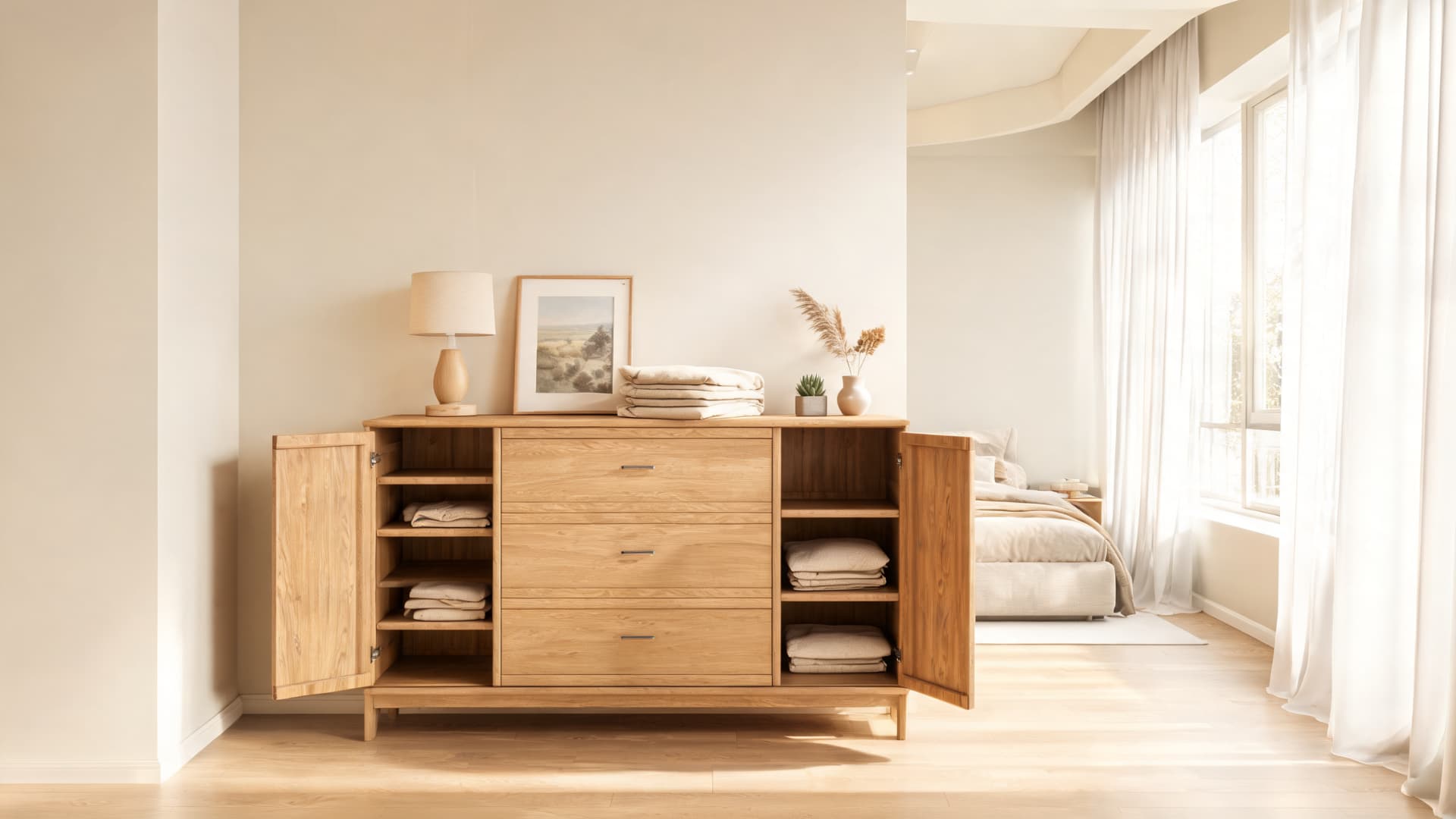
A combo dresser mixes drawers with open cabinet sections — giving you a place to store folded clothes alongside bags, extra bedding, or bulky items that won’t fold flat. It’s a better fit for bedrooms with varied storage needs than a pure drawer layout, but it works best when the cabinet space is purposeful rather than just decorative.
Typical dimensions: 45–70 inches wide, 18–24 inches deep.
Best for: Medium and large bedrooms where mixed storage matters — extra blankets, large bags, or items that need more space than a standard drawer allows.
Before you buy: Adjustable shelves are worth the premium if you plan to store items of varying sizes.
11. Chifferobe
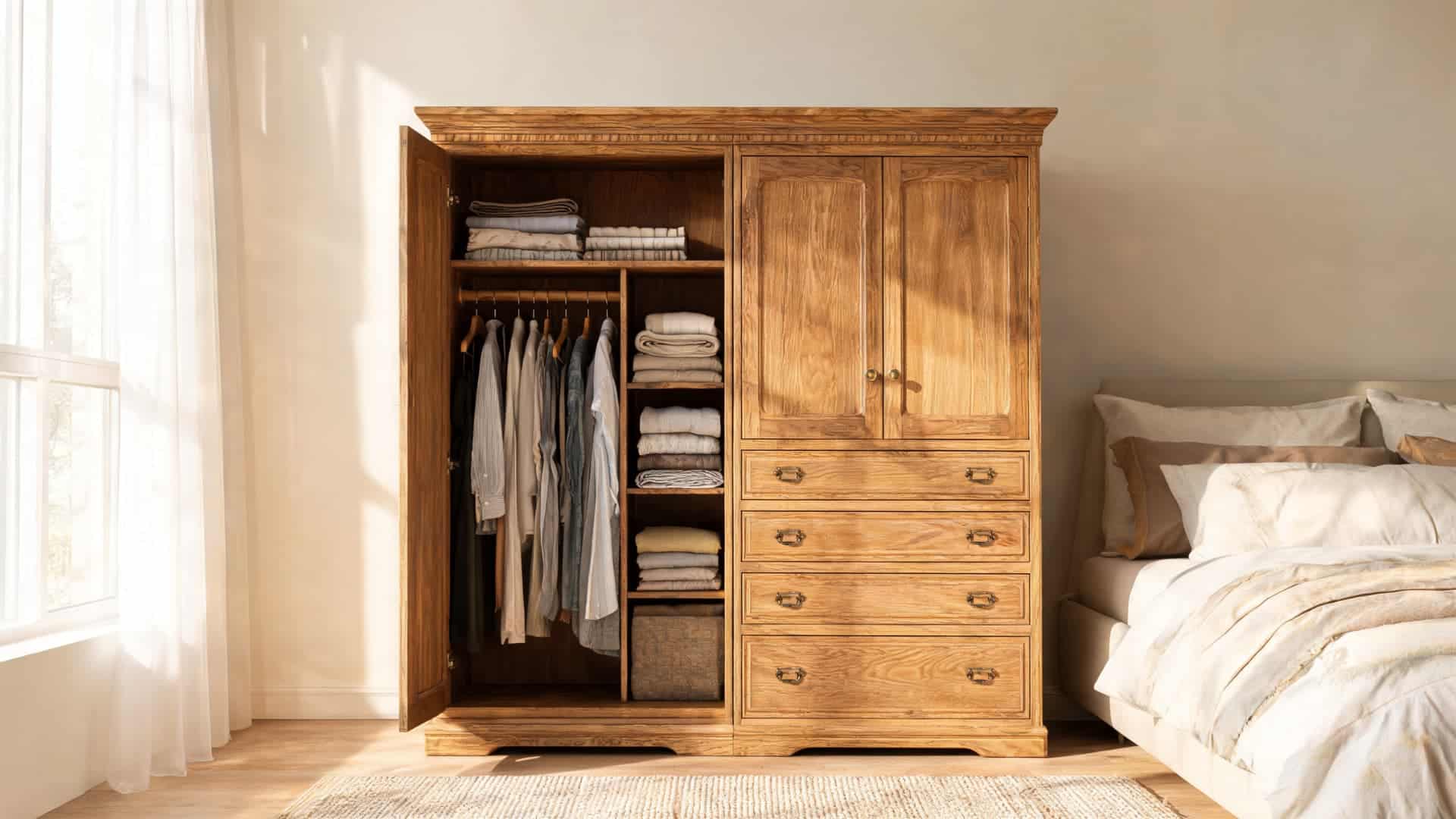
A chifferobe is a combined dresser and wardrobe in one tall unit — drawers on one side, hanging space and shelves on the other, behind a cabinet door. It was the standard solution in homes built before built-in closets became standard. It still makes practical sense in older homes, rental bedrooms, and any room where no closet exists.
Typical dimensions: 36–60 inches wide, 20–26 inches deep.
Best for: Older homes without closets, guest rooms, and rentals where you can’t modify the walls.
Before you buy: Measure the cabinet door swing. In a tight bedroom, a door that opens into the walking path kills the advantage of the extra storage.
12. Armoire
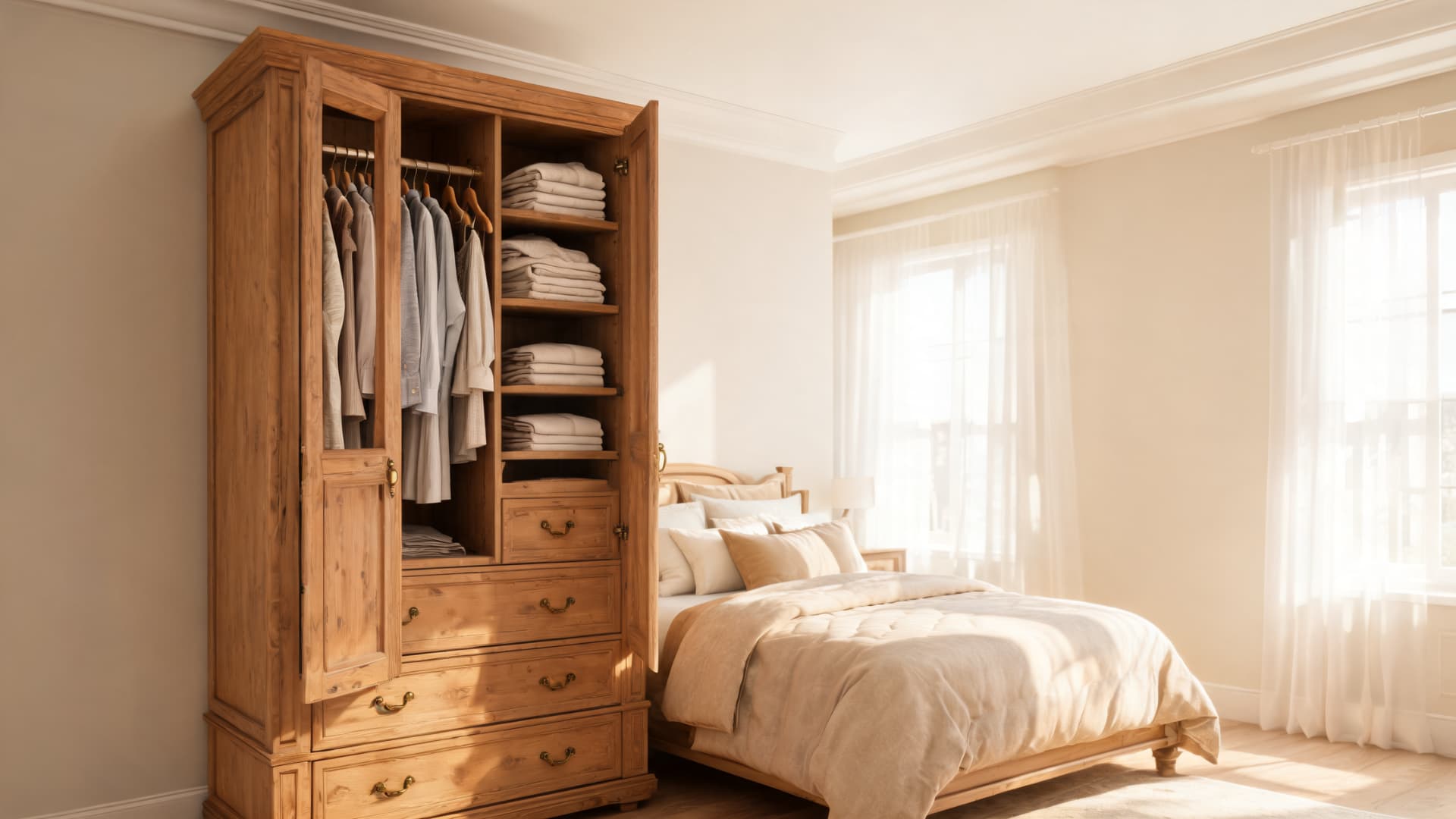
An armoire is a freestanding wardrobe with doors — typically offering a combination of hanging space, shelves, and sometimes a drawer section. It functions as a standalone closet. The ceiling height and door clearance requirements are real constraints that buyers often underestimate until delivery day.
Typical dimensions: 36–60 inches wide, 20–26 inches deep, 70–90 inches tall.
Best for: Bedrooms without built-in closets. Coats, dresses, and any garments that need to hang full length.
Before you buy: Measure ceiling height, door clearance, and hallway width for delivery. Armoires often need to be partially disassembled to get through standard doorways.
13. Lingerie Chest
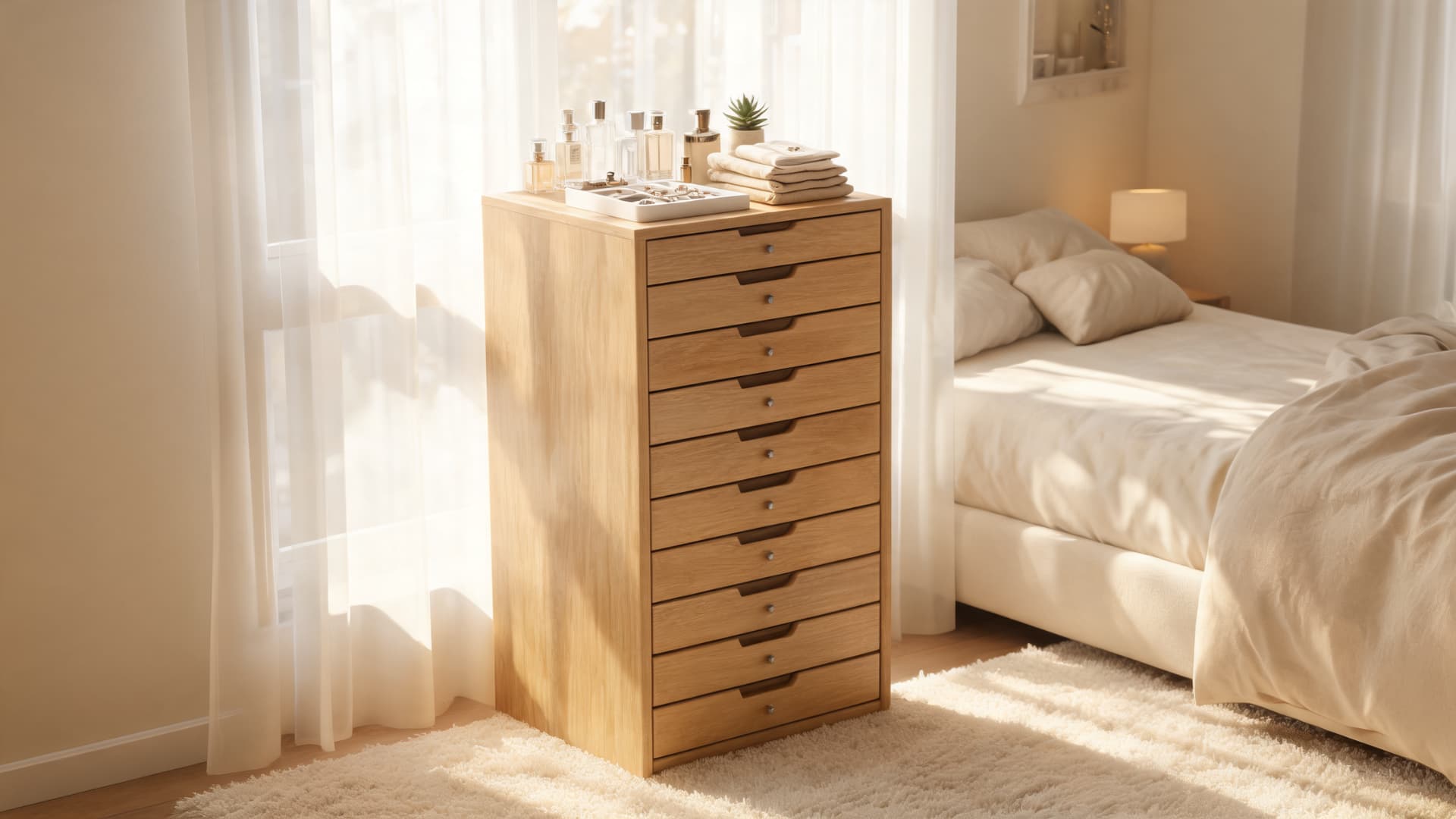
A lingerie chest is a narrow tower of shallow drawers — not a primary storage solution but a supplement to one. The shallow depth is the defining design feature: these drawers are sized for socks, undergarments, scarves, and accessories that would get lost in the deeper drawers of a standard dresser.
Typical dimensions: 18–28 inches wide, 14–18 inches deep.
Best for: Bedroom corners, walk-in closets, and dressing areas. Works alongside a larger dresser rather than replacing it.
Before you buy: Drawer dividers make a significant difference. Without them, shallow drawers with small items turn into one tangled drawer per opening.
14. Mirrored Dresser
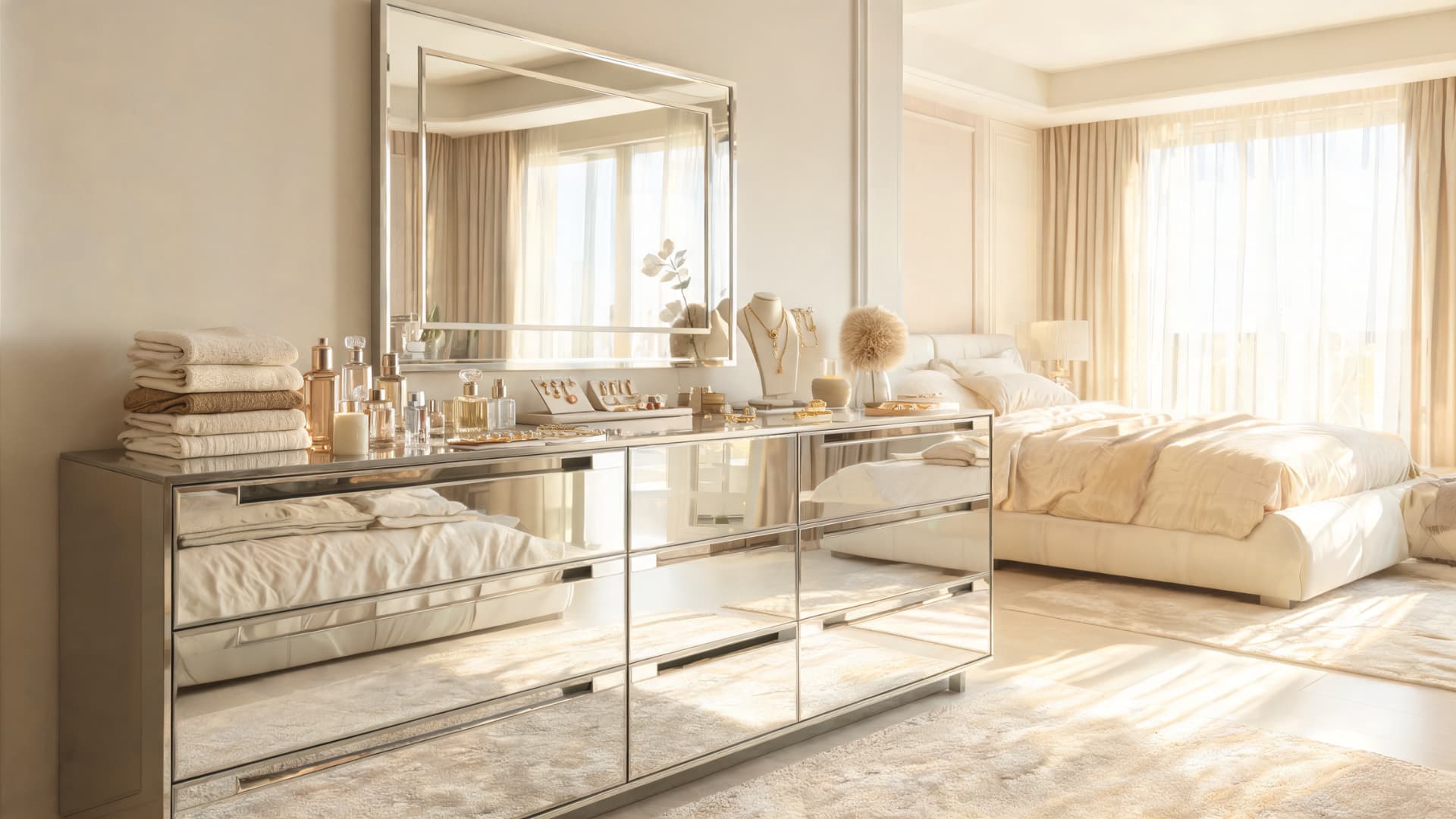
A mirrored dresser uses reflective surfaces — either on the drawer fronts or via an attached mirror — to add light and visual depth to a room. In smaller or darker bedrooms, that reflection can make a real difference. The trade-off is fingerprints, smudging, and the need to avoid direct glare from a nearby window or lamp.
Typical dimensions: 45–70 inches wide, 16–22 inches deep.
Best for: Small or dark bedrooms where reflection helps the room feel larger. Dressing areas and glam-style interiors.
Before you buy: Position it where light is soft and diffuse, not where a window or bright fixture will hit the mirror directly.
15. Media Chest
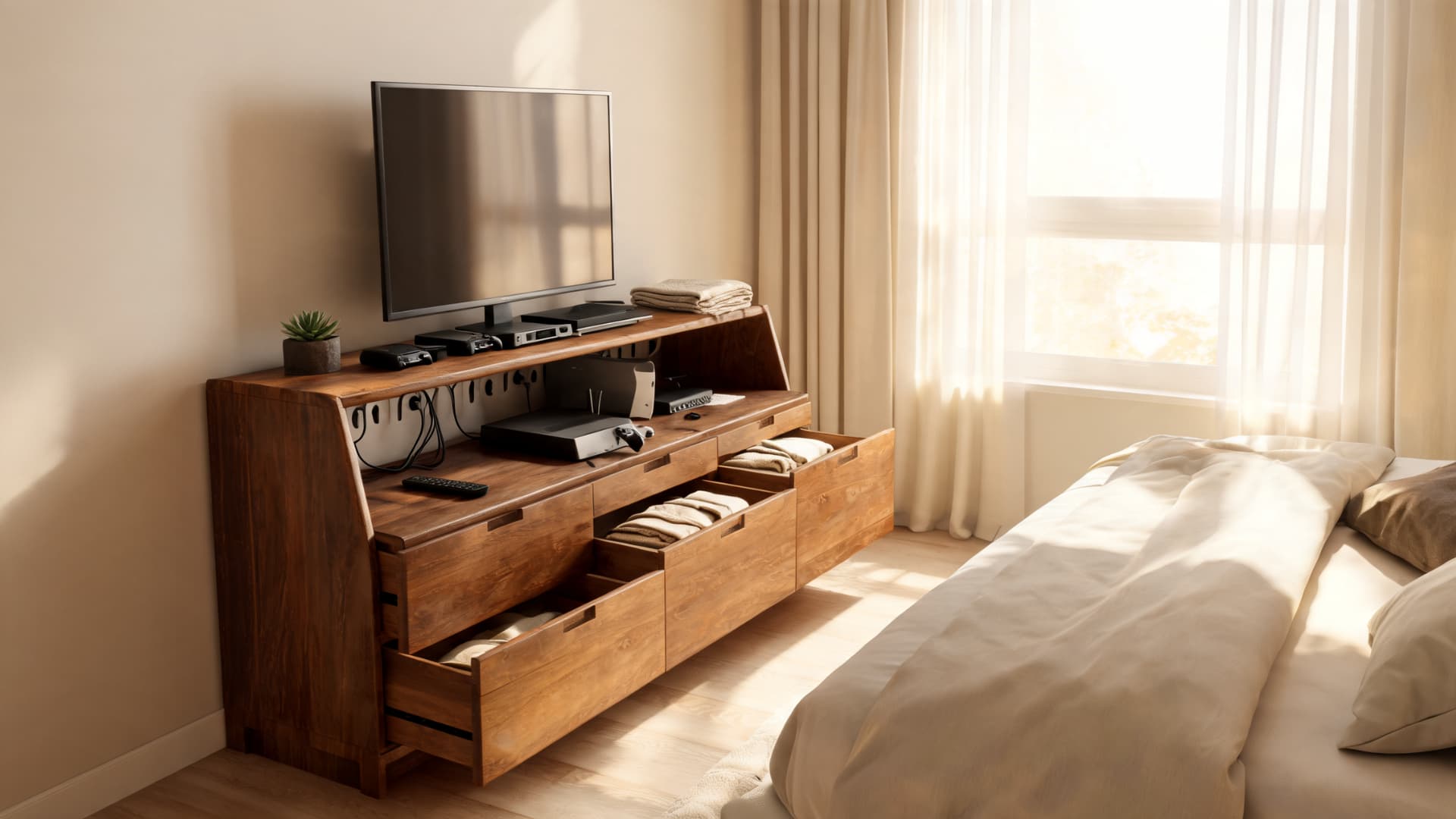
A media chest solves a specific layout problem: the bedroom where the TV and dresser need to share the same wall. Open shelving on top holds the TV and streaming devices; drawers below hold clothing. Many models include cable management cutouts built into the back panel.
Typical dimensions: 36–60 inches wide, 18–22 inches deep.
Best for: Bedrooms with a TV directly opposite the bed, where a separate TV stand and dresser would take too much floor space.
Before you buy: Check the shelf’s weight capacity and dimensions against your TV size before ordering.
16. Mule Chest
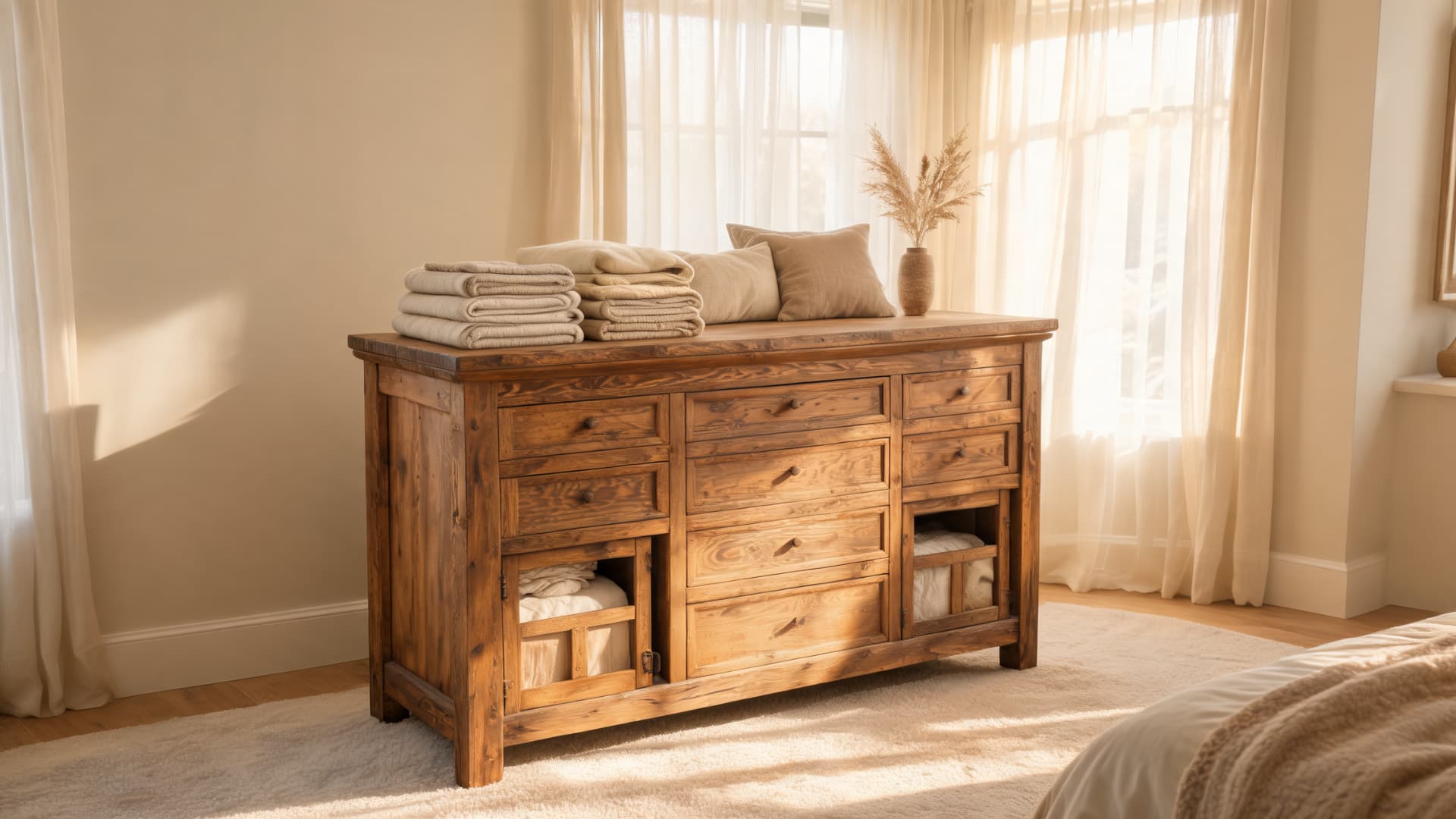
A mule chest is a high-capacity storage piece — drawers plus cabinet sections — built for rooms that need to store more than clothing. Blankets, pillows, bulky seasonal items. The sheer size requires a substantial wall and enough floor space that delivery and placement need to be planned ahead of purchase.
Typical dimensions: 55–75 inches wide, 18–24 inches deep.
Best for: Large primary bedrooms, guest suites, and rooms where maximum storage volume is the priority.
Before you buy: Measure doorways, stairwells, and hallways before the delivery date — not after.
17. Chesser
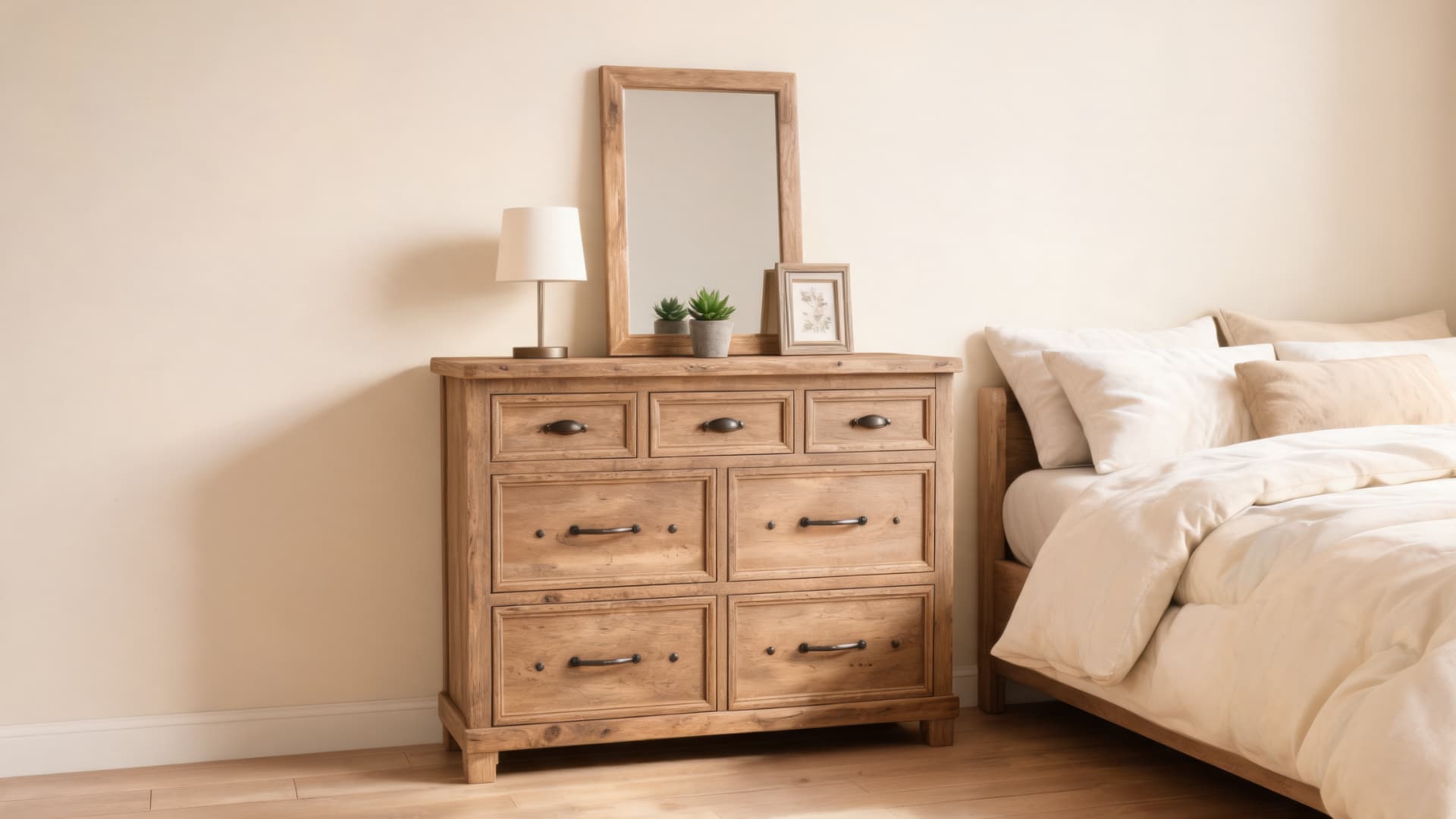
A chesser is a hybrid — somewhere between a standard dresser and a chest of drawers in both height and width. The term is used inconsistently across manufacturers. The practical value is finding a piece that fits where a standard dresser is too wide and a chest is too narrow. Evaluate by drawer count, dimensions, and configuration rather than the label.
Typical dimensions: 40–65 inches wide, 16–22 inches deep.
Best for: Bedrooms that need flexible storage but have space constraints that rule out both a full dresser and a narrow chest.
18. Changing Table Dresser
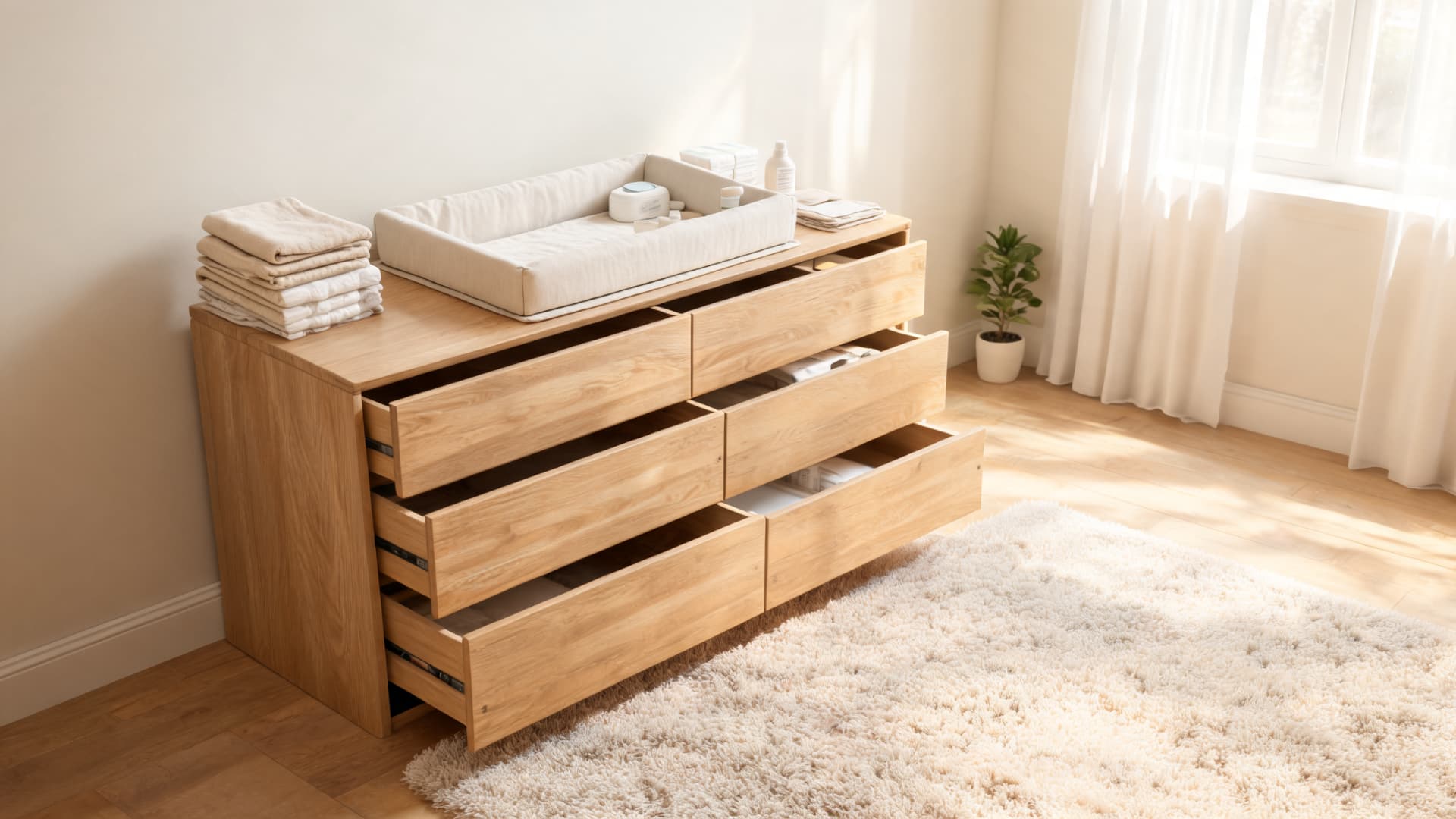
A changing table dresser is a nursery-specific piece that combines drawers for baby essentials with a top surface designed to hold a changing pad. The dual function is the point — one piece instead of two in a room where floor space is already under pressure from a crib, glider, and storage.
Typical dimensions: 36–60 inches wide, 18–22 inches deep.
Best for: Nurseries. Keeps diapers, wipes, onesies, and burp cloths within reach of the changing surface.
Before you buy: Choose a model with a removable changing tray. Once the child outgrows it, the piece converts to a standard dresser without modification.
19. Cloth Drawer Dresser
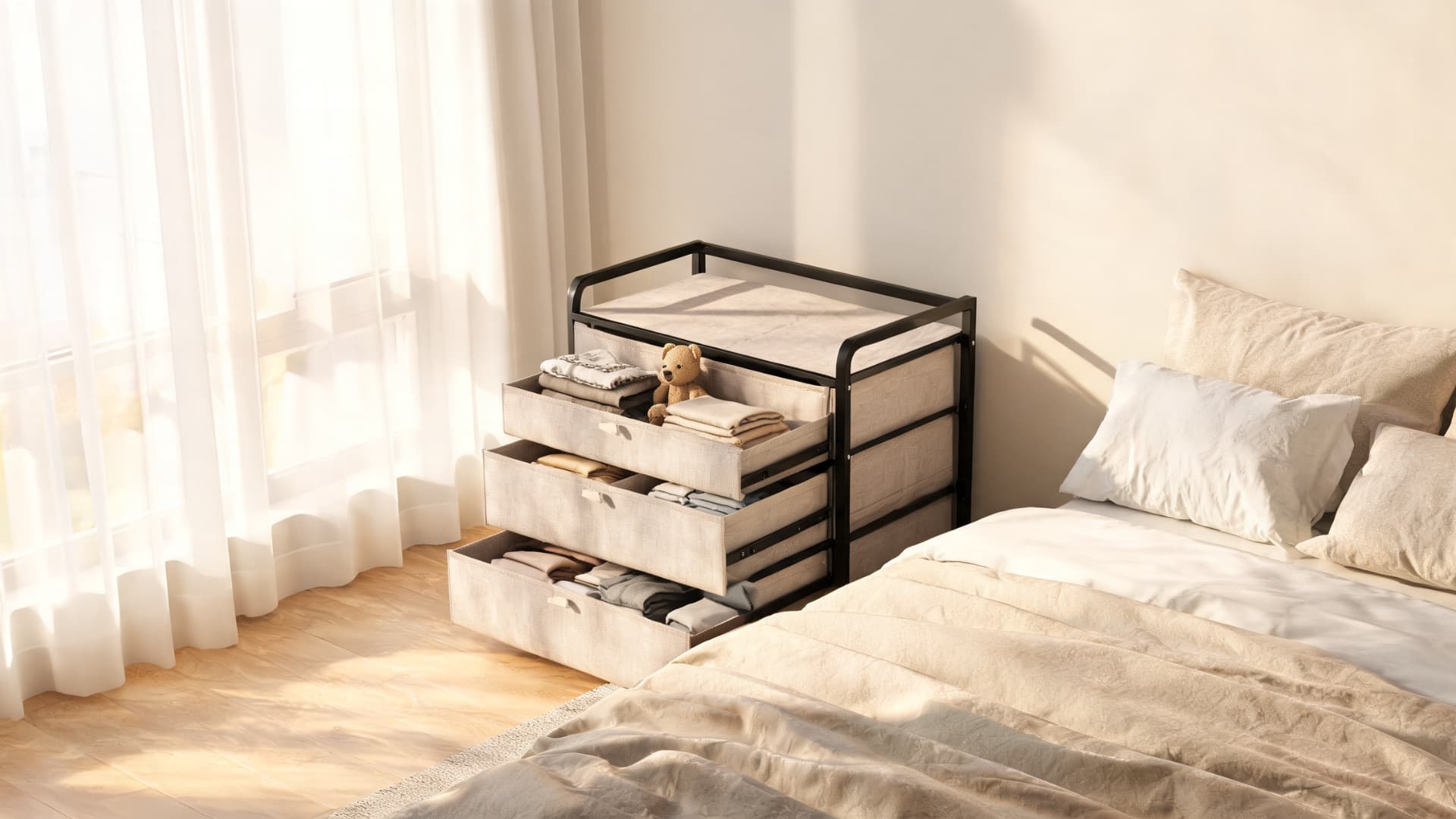
A cloth drawer dresser uses fabric drawers on a metal or wood frame, is lightweight, portable, and inexpensive. It is a short-term solution, not a long-term one. The drawers handle light clothing well, but sag under weight and degrade faster than any wood piece. It earns its place in dorm rooms, kids’ rooms, and temporary living situations where portability matters more than durability.
Typical dimensions: 24–45 inches wide, 12–16 inches deep.
Best for: Short-term setups, kids’ rooms for lightweight clothing, and closet overflow storage. Not a permanent solution.
20. Rolling Chest
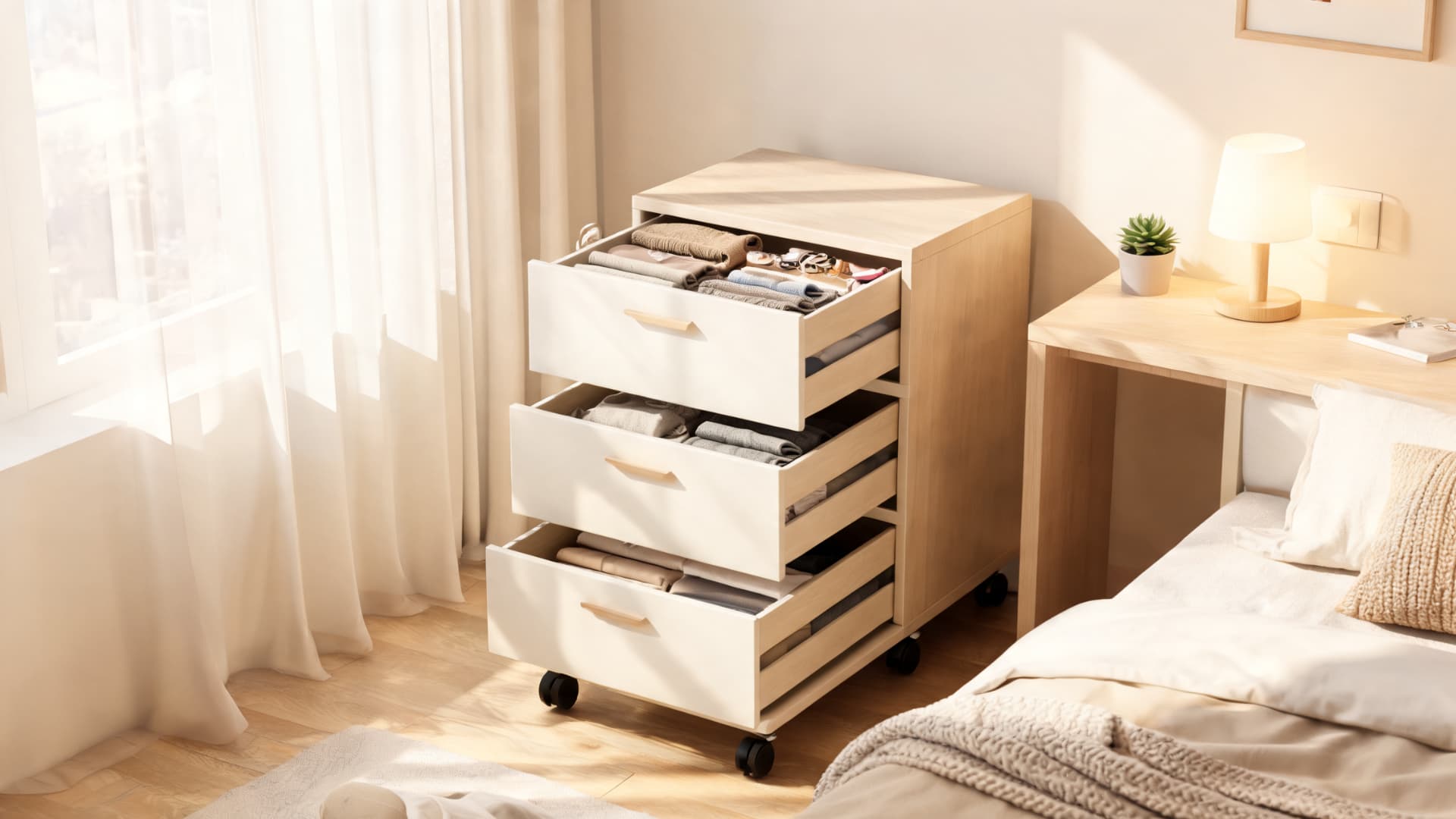
A rolling chest is a compact storage unit on casters — designed to be moved around a bedroom, closet, or multi-purpose room as the layout shifts. Useful for organizing overflow items: accessories, shoes, undergarments, craft supplies. It’s not a replacement for a primary dresser but a flexible supplement.
Typical dimensions: 18–36 inches wide, 14–20 inches deep.
Best for: Closets, craft rooms, dorm rooms, and anywhere the layout changes often enough that fixed furniture is a liability.
Before you buy: Locking casters are worth it on hard floors. A rolling chest without locks will shift every time a drawer is opened.
21. Dresser Desk
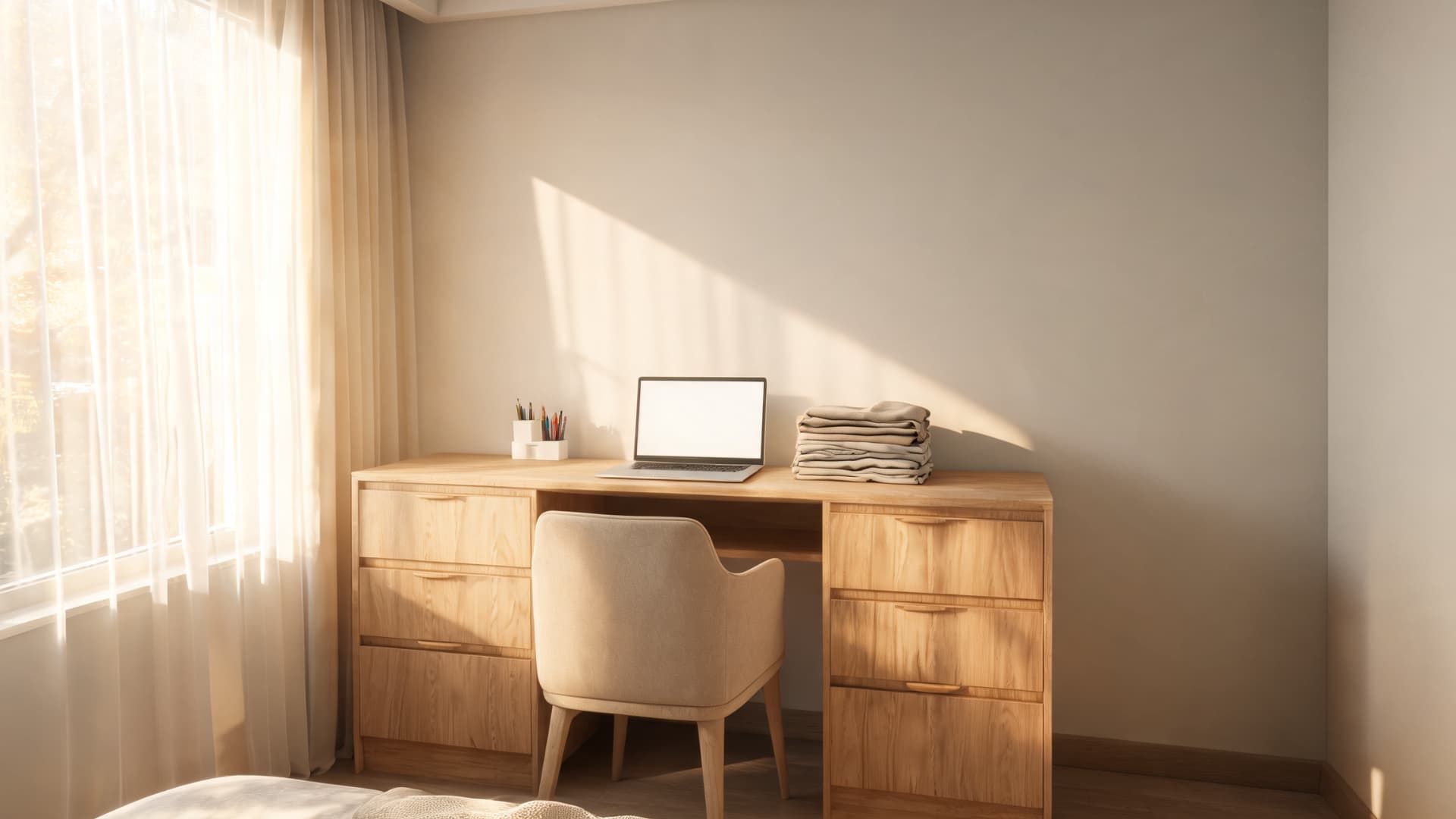
A dresser desk combines storage drawers with a built-in workspace, either a fixed writing surface or a fold-down panel. In studio apartments and small guest rooms where one piece needs to do two things, this cuts down on furniture count without eliminating function. The desk surface needs to be at a comfortable seated height, which isn’t always the case with converted furniture pieces.
Typical dimensions: 30–50 inches wide, 16–24 inches deep.
Best for: Studio apartments, work-from-bedroom setups, and guest rooms that double as home offices.
Before you buy: Sit at the surface with a chair before committing. Desk height and chair clearance are easy to miss in product photos.
22. Bombe Dresser
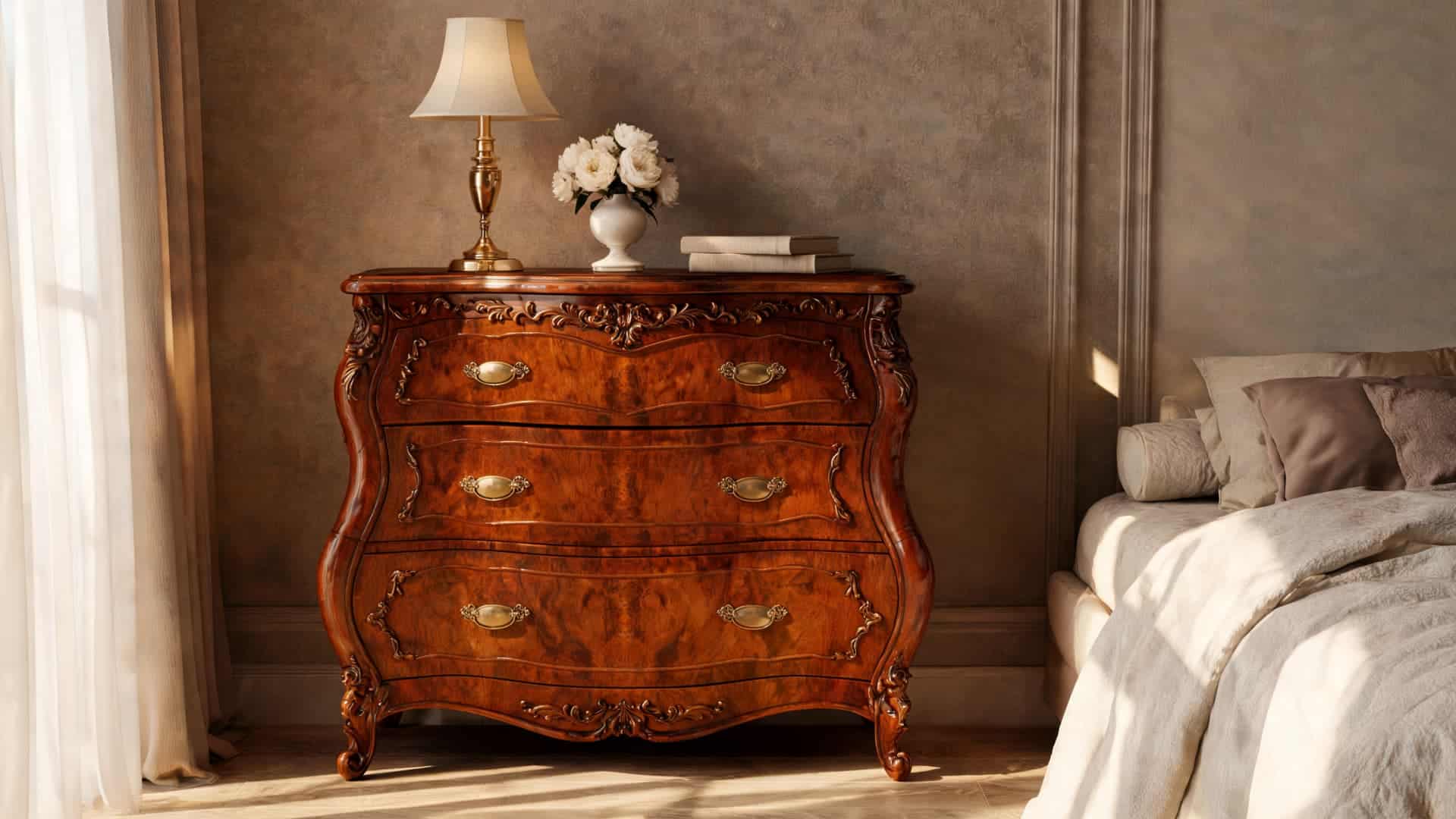
A bombe dresser is chosen for its shape first and its storage second. The curved, rounded front and ornate hardware make it a visual anchor in traditional, antique-style, or French-country rooms. Drawer depth is typically shallower than a standard dresser of the same width — the curve takes up interior space. Buy it knowing that.
Typical dimensions: 35–55 inches wide, 18–24 inches deep.
Best for: Traditional and formal bedrooms where the dresser is part of the room’s visual identity, not just its storage plan.
Where to Place Each Type of Dresser
The right dresser in the wrong position stops working immediately. These placement rules apply regardless of which type you choose.
| Placement Rule | Why It Matters |
| Leave 24–30 inches in front of all drawers | Drawers need clearance to open fully without hitting the bed frame or a second piece of furniture |
| Wide dressers go on the longest open wall | Keeps the room balanced and uses wall space that would otherwise be dead |
| Vertical dressers fit in narrow gaps | Between windows, beside closets, or at the foot of the bed in a long narrow room |
| Media chests go opposite the bed | Positions the TV at the right viewing angle without requiring a separate stand |
| Mirrored dressers belong in soft, indirect light | Avoids glare from windows or overhead fixtures hitting the reflective surface |
| Don’t place tall dressers near kids’ play zones | Open drawers raise the center of gravity — anchor tall pieces to the wall |
| Rolling chests belong in closets or corners | Their value is mobility — a fixed position removes the only advantage they have |
None of these rules is optional. Ignoring clearance in front of drawers is the single most common furniture placement mistake in bedrooms — and the most annoying one to live with.
Maintenance and Safety
A few things that matter more than most buyers realize until after the piece is in the room:
- Anchor every tall dresser, highboy, armoire, and chifferobe to the wall, especially in homes with children or pets
- Keep heavier items in lower drawers; top-loading a tall piece makes it easier to tip
- Close drawers when not in use, open drawers, shift the balance point forward
- Don’t put a heavy TV on a narrow dresser; use a media chest or a proper TV stand
- Clean wooden surfaces with a lightly dampened cloth. The species of wood for furniture affects how the surface responds to moisture, so excess water can warp joints or lift veneer, depending on the construction
- Use felt pads or a tray on the top surface to prevent scratches from daily items
- Tighten hardware regularly, drawer pulls, and knobs loosen faster than expected under daily use
When a Dresser Isn’t the Right Answer
Some bedrooms don’t have the floor space, wall width, or clearance to make a standard dresser work. These alternatives are worth considering before forcing the wrong piece into a room that can’t accommodate it.
| Alternative | Best For | What It Solves |
| Wardrobe / freestanding closet | Hanging clothes | Replaces a built-in closet entirely |
| Closet organizer system | Small bedrooms with existing closets | Turns unused closet space into folded-clothing storage |
| Storage bed frame | Hidden seasonal storage | Linens and off-season clothing without using wall space |
| Nightstand with drawers | Small daily essentials | Keeps bedside items organized without adding a full piece |
| Under-bed storage bins | Seasonal and overflow clothing | Uses dead space under the platform or raised beds |
| Cube storage unit | Kids’ rooms and flexible layouts | Adjustable, rearrangeable, and low-profile |
If the room can’t provide 24–30 inches of drawer clearance and enough wall width for the piece to sit without blocking traffic, one of these alternatives will serve better than a dresser that’s technically in the room but practically impossible to use.
Frequently Asked Questions
What dresser material lasts the longest?
Solid wood usually lasts the longest because it handles daily use better than particleboard or thin veneer. Hardwoods like oak, maple, and walnut are especially durable. Engineered wood can still work well, but check drawer joints, weight, and hardware quality before buying.
Are soft-close drawers worth it?
Yes, soft-close drawers are worth it if the dresser will be used daily. They reduce slamming, protect drawer joints, and feel smoother over time. They are especially helpful in shared bedrooms, nurseries, and guest rooms where quieter furniture makes the space more comfortable.
What dresser size works for a small bedroom?
A narrow vertical dresser usually works best in a small bedroom because it uses height instead of floor width. Look for a piece under 40 inches wide with enough drawer depth for folded clothes. Always leave space for drawers to open fully.
Can I use a dresser as a TV stand?
Yes, but only if the dresser is wide, stable, and strong enough for the TV. Check the top surface weight limit and make sure the screen sits at a comfortable viewing height. Avoid placing heavy TVs on narrow or tall dressers.
How do I stop dresser drawers from sticking?
First, remove the drawer and check for dust, loose screws, or warped wood. Clean the tracks and apply drawer wax or a dry lubricant. If the drawer still sticks, the frame may be uneven, overloaded, or affected by humidity.
Should a dresser be taller than the bed?
A dresser does not have to be taller than the bed. What matters more is balance, reach, and room layout. Low dressers feel open and work well with mirrors, while taller dressers save floor space and add more vertical storage.
How much should a good dresser cost?
A good dresser can vary widely in price based on size, material, and construction. Budget pieces may work for short-term use, while solid wood options cost more but last longer. Focus on sturdy drawers, smooth glides, stable legs, and strong hardware.
How do I style the top of a dresser?
Keep the top simple and useful. Add a lamp, mirror, tray, small plant, or framed photo. Group items in different heights so it feels balanced. Leave some empty space so the dresser still looks clean and does not become cluttered.
Final Verdict
Choosing the right dresser starts with knowing your room, not just liking a style. I always look at wall width, drawer clearance, ceiling height, and storage needs before picking a piece.
A wide dresser may work well in a large bedroom, while a vertical dresser, tallboy, or bachelor’s chest may fit better in a smaller space.
If your room lacks closet storage, an armoire, chifferobe, or gentleman’s chest may solve more problems than a standard dresser.
I also recommend measuring doorways and walkways before buying, so delivery and daily use are easier. Use this guide to compare your options, measure your space, and choose a dresser that truly fits your bedroom