

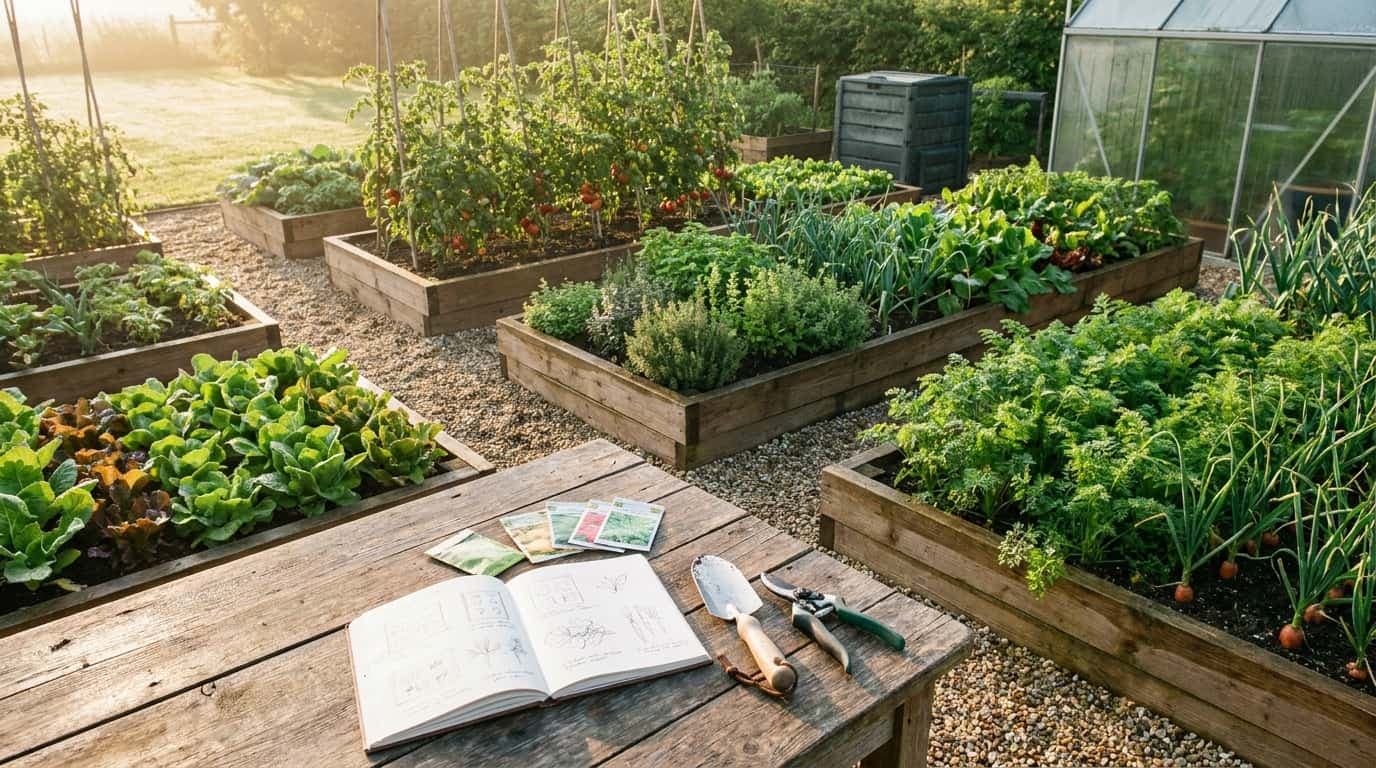


A vegetable garden can look simple online, but then feel confusing the moment you start measuring your own space. I get why it feels hard to know where tomatoes, lettuce, herbs, paths, and trellises should actually go.
The right vegetable garden ideas can help you plan before you plant, so you avoid crowded beds, shaded crops, and wasted space.
You will learn how to choose a layout, match crops to your sunlight, use small spaces better, plan spacing, and create a garden that is easier to water, weed, and harvest. I’ll keep it practical so you can start with a clear plan.
Why Planning Your Vegetable Garden Layout Matters
Most vegetable gardens fail in the planning, not the planting. The moment you put a tomato where it will shade your lettuce, or cram zucchini into a 4-foot bed with three other crops, the season is already harder than it needs to be. A clear vegetable garden layout solves these problems before seeds go in.
Planning is especially useful in small gardens, where every square foot has to earn its place. Once you know your sunlight, available space, and crop list, choosing the right layout and planting schedule becomes straightforward.
By accounting for sunlight, spacing, soil, water access, and seasonal timing before you plant, you avoid the most common mistakes and give each crop a realistic shot at a full harvest.
How to Plan Your Vegetable Garden
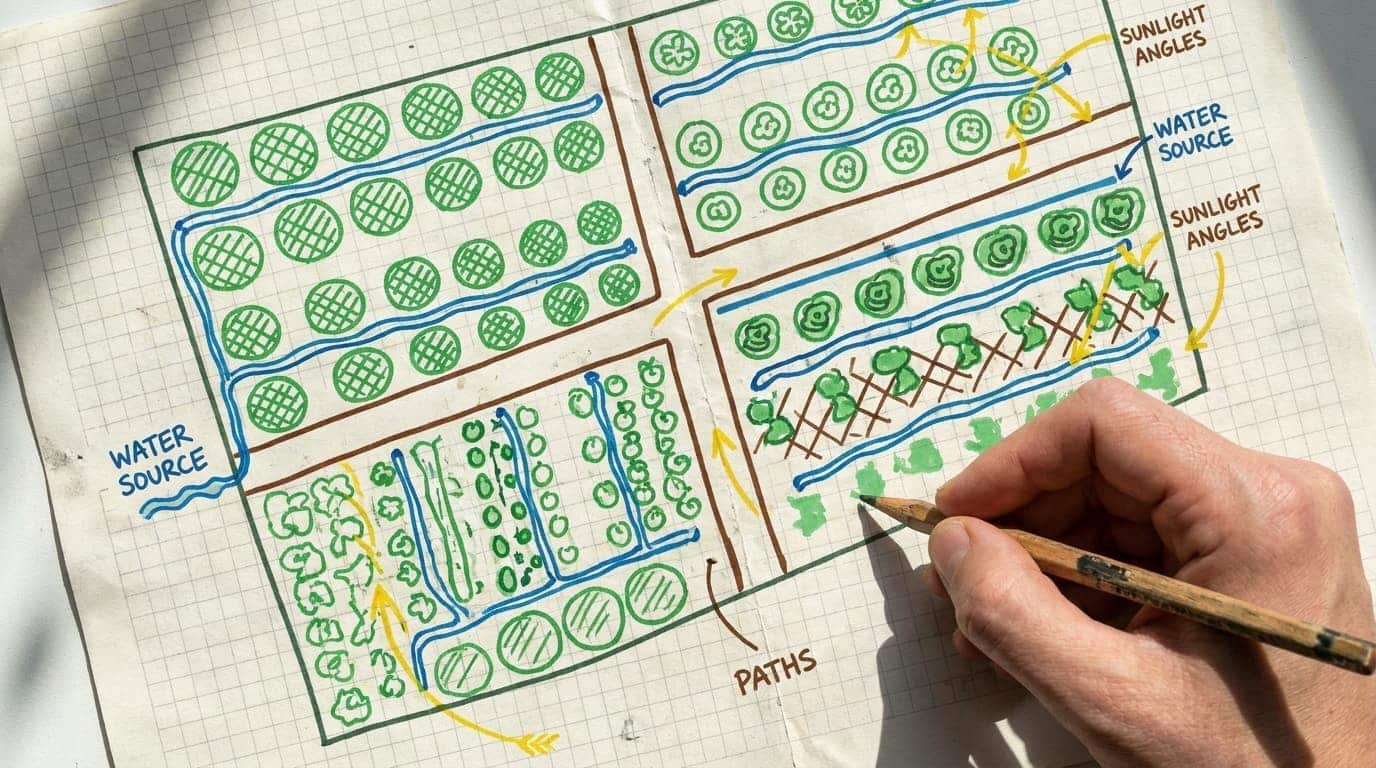
A clear plan makes planting easier because you know what fits, where each crop belongs, and how to avoid crowded beds before a single seed goes in.
- Check sunlight and water access first. Choose a spot that gets at least 6 hours of direct sun each day. Proximity to a water source matters more than most beginners expect, especially once summer heat arrives.
- Measure the space and choose a layout type. Write down the length and width, then pick a format that fits: raised bed, container garden, row garden, or vertical garden. The layout choice should come from your measurements, not a photo you liked online.
- Select vegetables you actually eat. Grow crops that land on your table regularly, such as tomatoes, lettuce, peppers, carrots, beans, herbs, or spinach. Match each crop to the right season before you buy seeds.
- Plan spacing and plant placement before you dig. Give each crop room for roots, leaves, and airflow. Keep tall plants where they will not block sunlight from shorter crops. Crowding at planting leads to problems that are difficult to fix later.
- Add paths, supports, and access points. Leave 18 to 24 inches to walk, weed, water, and harvest. Add cages, stakes, or trellises for tomatoes, beans, cucumbers, and other climbing plants.
- Sketch the final layout before you start. Draw a simple plan with crop names, spacing, paths, supports, and target planting dates. Graph paper or the GrowVeg app both work well for this.
Vegetable Garden Layout Options
The right layout depends on your available space, soil quality, budget, and how much time you can realistically spend maintaining the garden. Use the table below as a starting point.
| Garden Layout | Best For | Why It Works | Good Crops |
|---|---|---|---|
| Raised bed | Beginners, poor soil, small yards | Clear layout, full soil control, easier access | Tomatoes, lettuce, carrots, peppers, herbs |
| Square-foot | Tight spaces and organized planting | Uses small grid blocks with clear spacing rules | Spinach, radishes, onions, lettuce, basil |
| Container | Patios, balconies, rentals | Flexible, portable, and easy to adjust | Herbs, cherry tomatoes, peppers, greens |
| Vertical | Narrow spaces and fence lines | Uses height instead of ground footprint | Beans, cucumbers, peas, climbing squash |
| In-ground rows | Larger yards with good native soil | Low cost, simple, and easy to expand | Corn, beans, potatoes, squash |
| L-shaped bed | Corners and small backyards | Uses unused edges and fence lines efficiently | Tomatoes, herbs, greens, root crops |
| Tiered planter | Patios and decks | Stacks crops into a compact footprint | Lettuce, herbs, strawberries, spinach |
Each layout has a real trade-off. Raised beds cost more to set up but give you the fastest payoff on poor ground. In-ground rows cost almost nothing but require soil that is already worth planting in. Choose based on your actual conditions, not what looks good in a photo.
Vegetable Spacing for a Healthy Garden Layout
Spacing is where most beginner gardens go wrong. Each crop needs room for roots, leaves, airflow, and harvest access. The numbers below are the working minimums, not the ideal-world maximums.
| Vegetable | Plant Spacing | Row Spacing | Best Placement |
|---|---|---|---|
| Lettuce | 6 to 12 inches | 12 to 18 inches | Front rows, containers, raised beds |
| Radish | 2 to 4 inches | 8 to 12 inches | Edges, square-foot beds, small gaps |
| Carrot | 2 to 3 inches | 12 to 18 inches | Loose soil beds, front rows |
| Spinach | 4 to 6 inches | 12 to 18 inches | Cool-season beds, containers |
| Green onion | 2 to 4 inches | 6 to 12 inches | Edges, narrow rows, containers |
| Pepper | 18 to 24 inches | 24 to 36 inches | Middle rows, raised beds, pots |
| Tomato | 24 to 36 inches | 36 to 48 inches | Back rows, cages, trellis areas |
| Cucumber | 12 to 24 inches | 36 to 48 inches | Trellis side, fence line |
| Bush beans | 4 to 6 inches | 18 to 24 inches | Rows, blocks, raised beds |
| Zucchini | 24 to 36 inches | 36 to 48 inches | Open corners, larger beds |
Leave walking space around beds as well as plant space inside them. Small gardens can manage with 18-inch paths; larger plots are easier to work with 24 to 36 inches between beds. Paths are not wasted space. They are what make the rest of the space usable.
Vegetable Garden Plans: Step-by-Step Layouts
These sample plans show how to arrange crops by height, space, and harvest access. Use them as starting points and adjust based on your climate, plot size, and eating habits. The layout logic is more useful than the exact crop list.
How to sketch your plan: Use graph paper or the GrowVeg app. Measure the full space. Mark the direction of strongest sun. Place tall crops on the north side. Group plants by water needs. Keep paths at least 18 inches wide.
Plan 1: 4×4 Vegetable Garden Plan
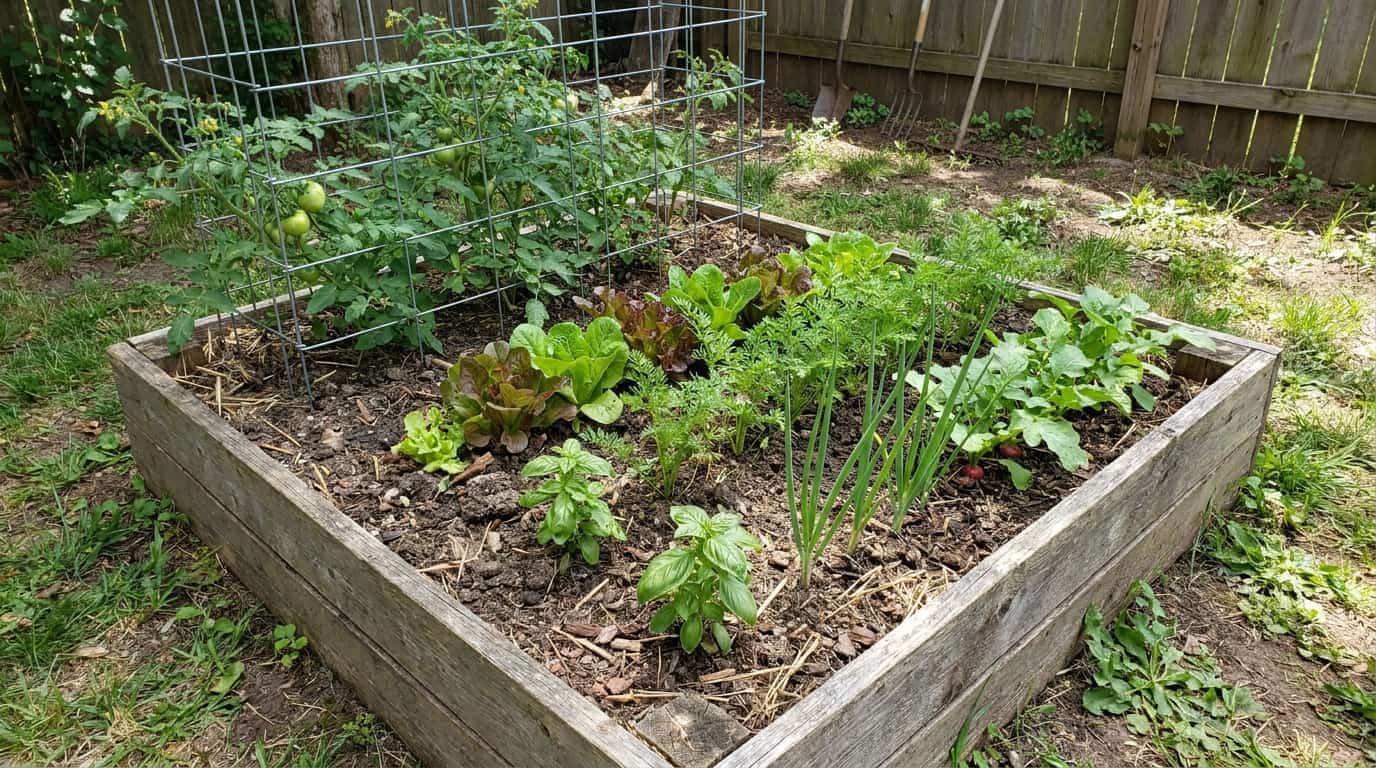
Layout: Back row — 1 caged tomato | Middle rows — lettuce, carrots, radishes | Front row — basil, green onions
This beginner layout keeps the tomato at the back and smaller crops near the front, where they are easy to thin, water, and harvest without stepping over anything. In a 4×4 bed, one tomato plant is genuinely enough.
Plan 2: 4×8 Raised Bed Garden Plan
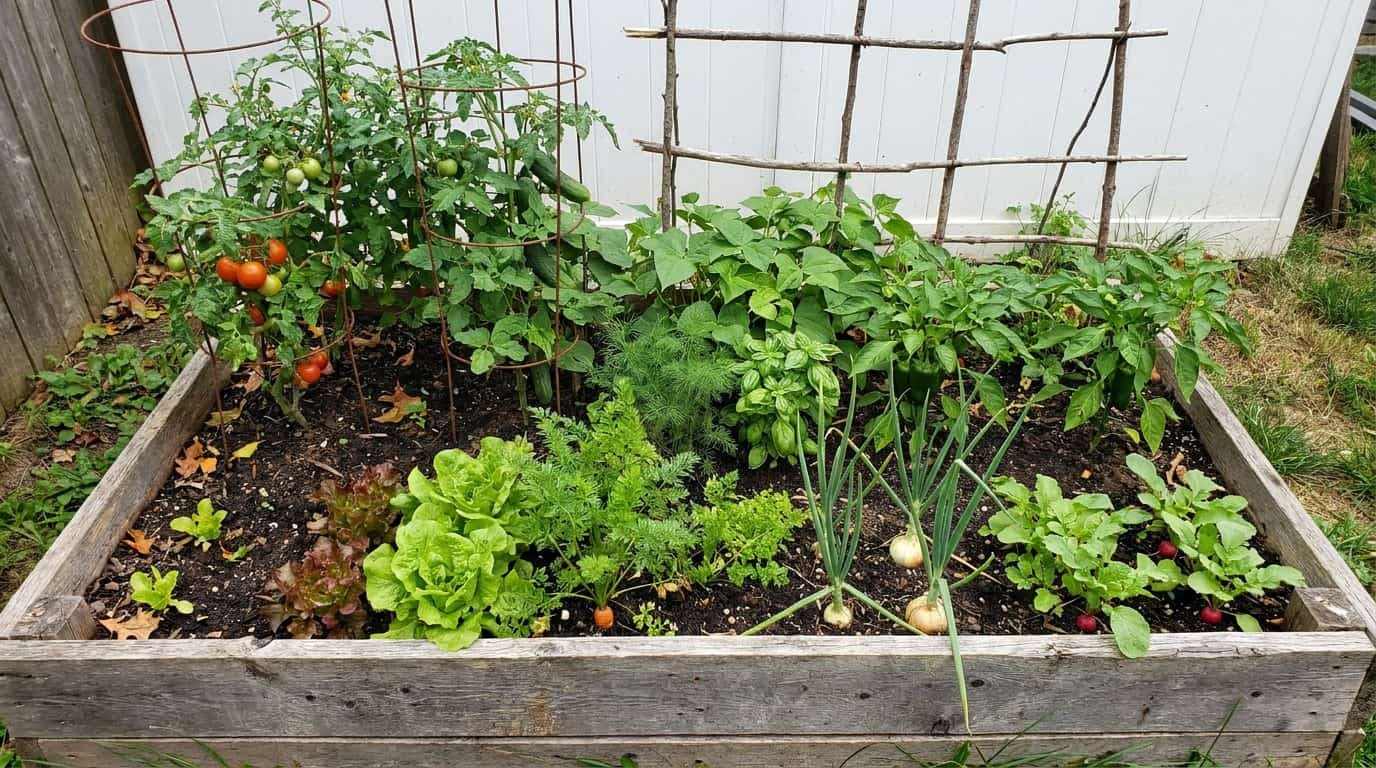
Layout: Back row — tomatoes, cucumbers on trellis | Middle rows — peppers, bush beans, herbs | Front row — lettuce, carrots, onions, radishes
A 4×8 bed allows more crop variety while still keeping everything reachable from one side. Trellising cucumbers at the back saves ground space for peppers, beans, herbs, and greens in front. This is the layout I would recommend to most people starting their first real vegetable garden.
Plan 3: 10×10 Backyard Vegetable Garden Plan
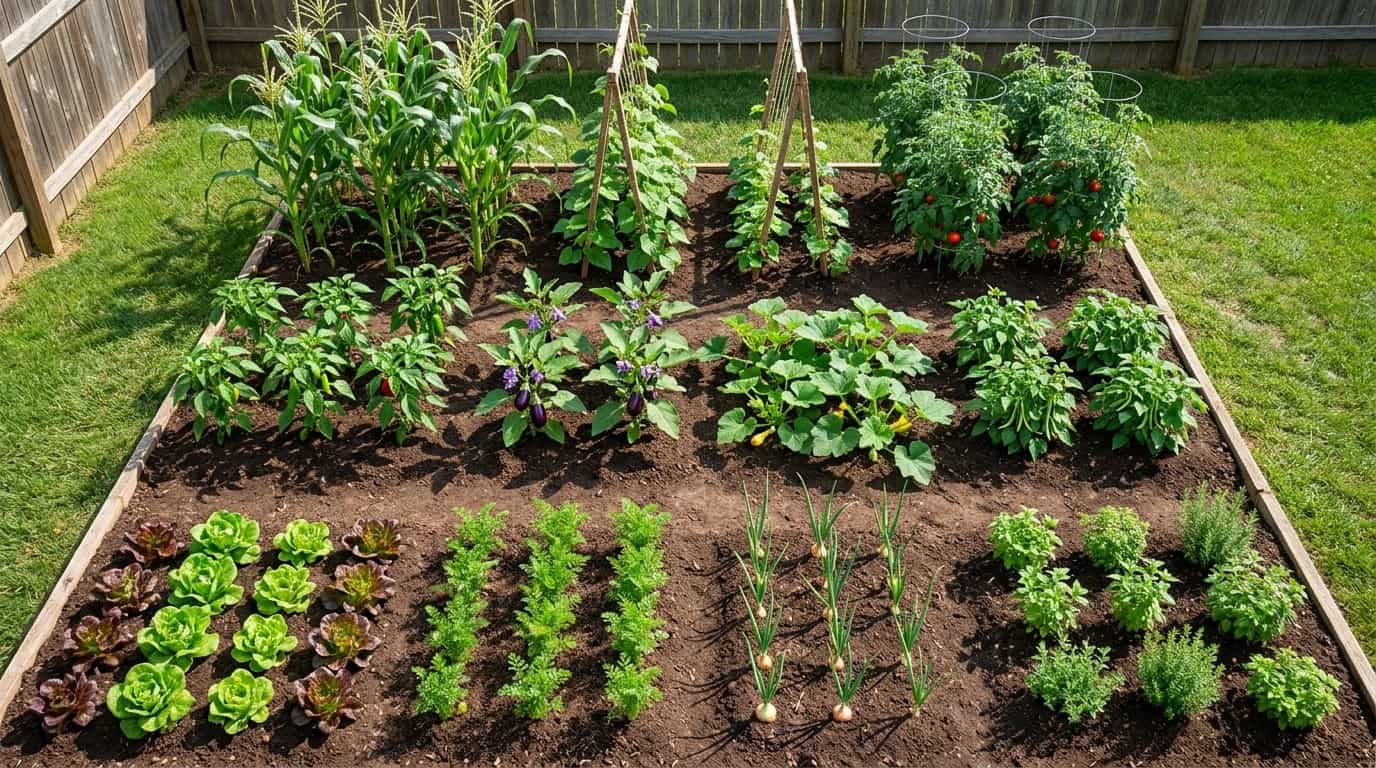
Layout: Back section — corn, pole beans, tomatoes | Center section — peppers, eggplant, squash, bush beans | Front section — lettuce, carrots, onions, herbs
This plan works for a larger backyard plot where you have room to grow warm-season crops alongside cool-season greens. Taller crops sit at the back, while medium and low crops stay toward the front for access. If you are planning a broader outdoor project alongside the garden, a backyard remodel cost breakdown can help you budget the full scope before you break ground.
Plan 4: Patio Vegetable Garden Plan
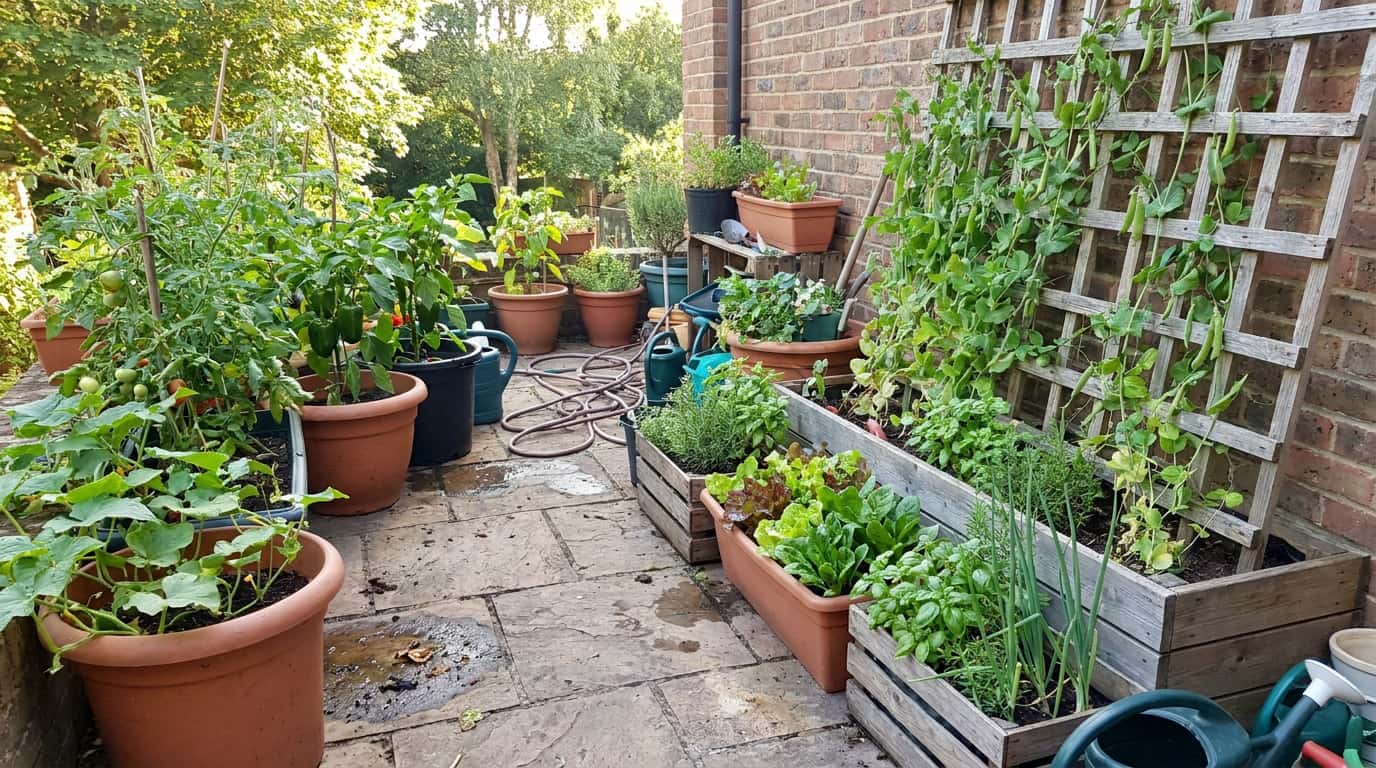
Layout: Large pots — tomatoes, peppers, cucumbers | Medium pots — lettuce, spinach, herbs, green onions | Wall or fence — peas or beans on a trellis
This setup works on patios, balconies, and paved corners. Match pot size to each crop: tomatoes need at least a 15-gallon container, while herbs and greens do fine in a 6-inch pot. The trellis keeps climbing crops off the ground and out of the traffic path.
Plan 5: Family Vegetable Garden Plan
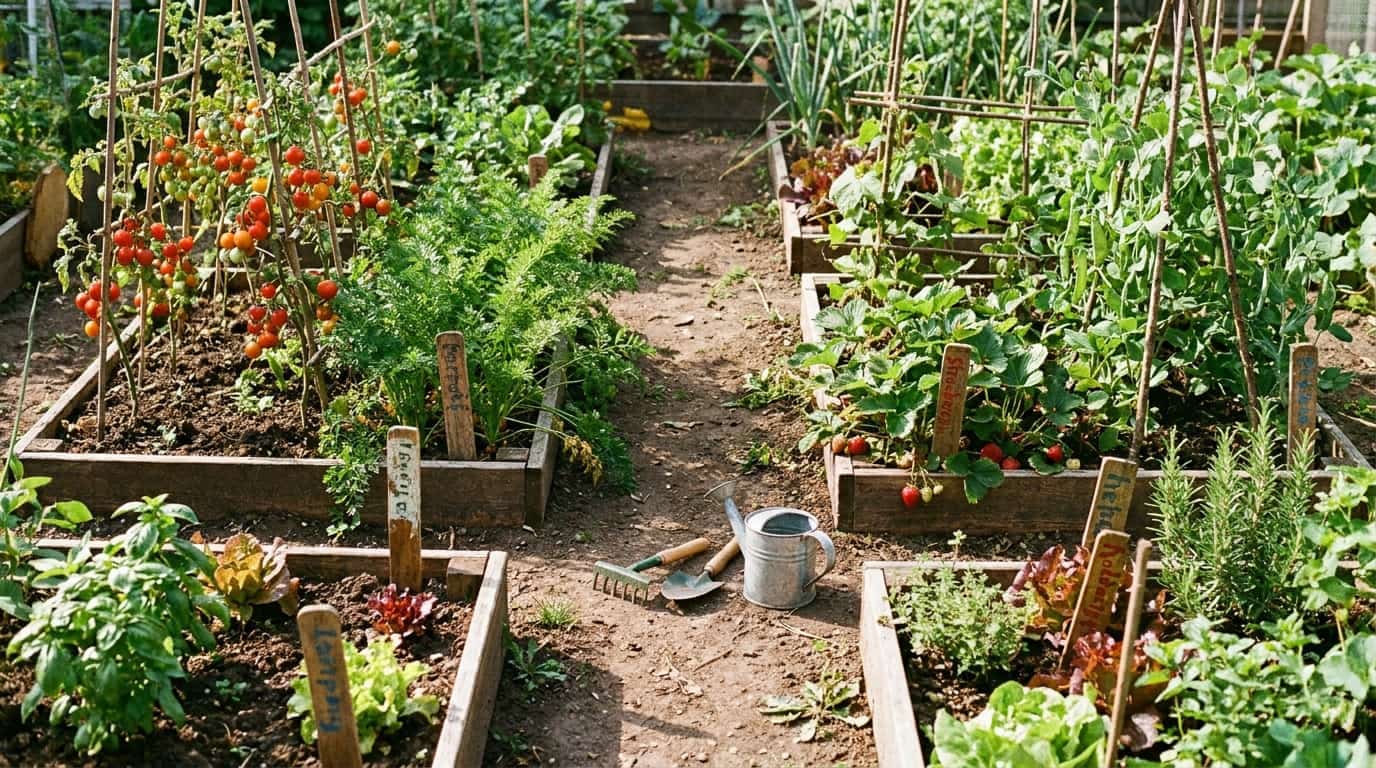
Layout: Growing beds — cherry tomatoes, carrots, peas, beans, strawberries, lettuce, herbs | Pathways — 18-inch access paths | Extras — labeled stakes per crop
Choose quick-maturing, familiar crops so kids can see progress within weeks rather than months. Cherry tomatoes, carrots, and snap peas all produce fast enough to keep younger gardeners interested. Labeled stakes help everyone track what is planted where without digging up a seedling to find out.
Vegetable Garden Ideas for a Practical Home Garden
A productive vegetable garden should feel useful, be manageable week to week, and suit the space you actually have. These vegetable garden ideas each solve a specific layout problem.
1. Raised Bed Vegetable Garden
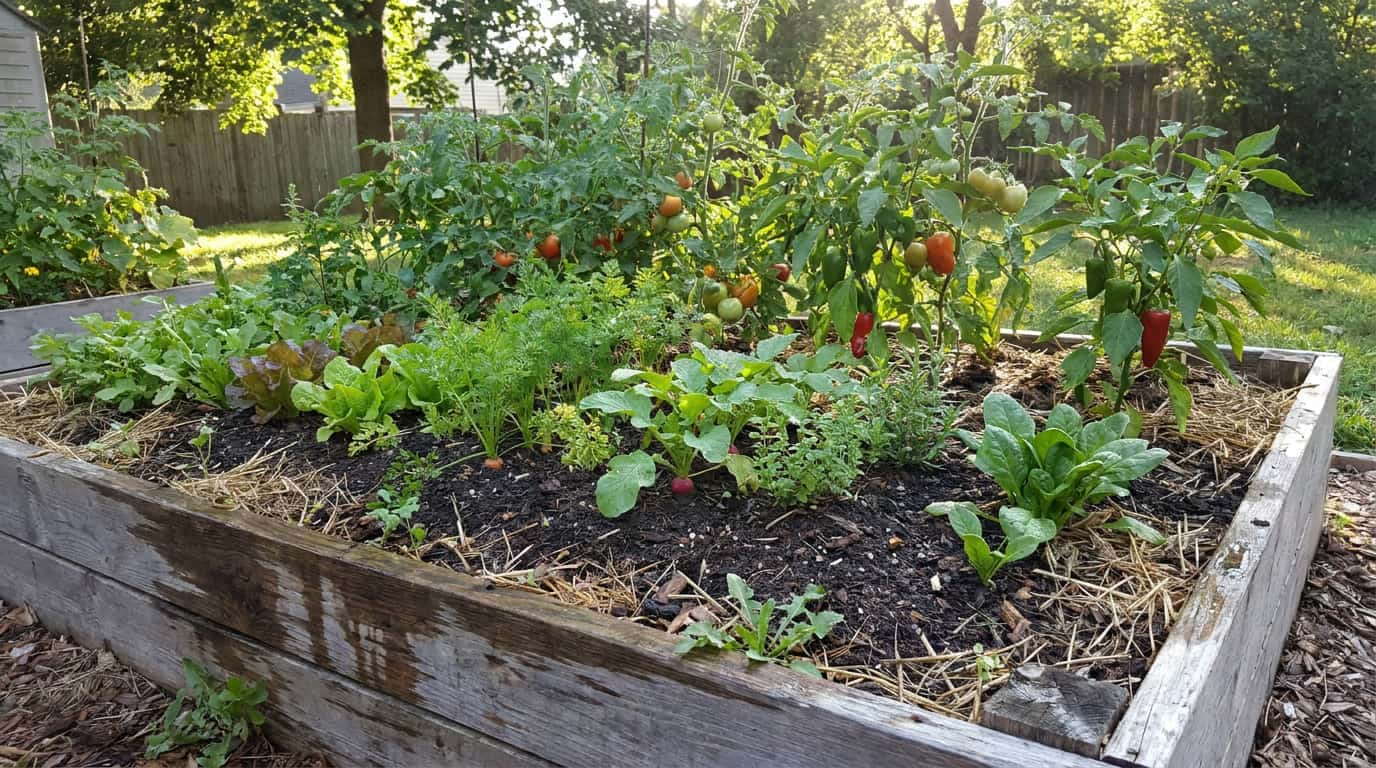
Raised beds are one of the most productive ways to grow vegetables because you build the growing environment from the ground up. You control the soil quality, drainage, and depth rather than inheriting whatever is under your lawn. Raised beds warm up faster in spring, which extends the growing window at both ends of the season. They also reduce bending and kneeling, which matters more as the season goes on.
- Best for: Beginners, families, and anyone dealing with poor native soil or limited yard space.
- Ideal crops: Tomatoes, peppers, lettuce, carrots, radishes, herbs, and spinach.
2. Square-Foot Garden
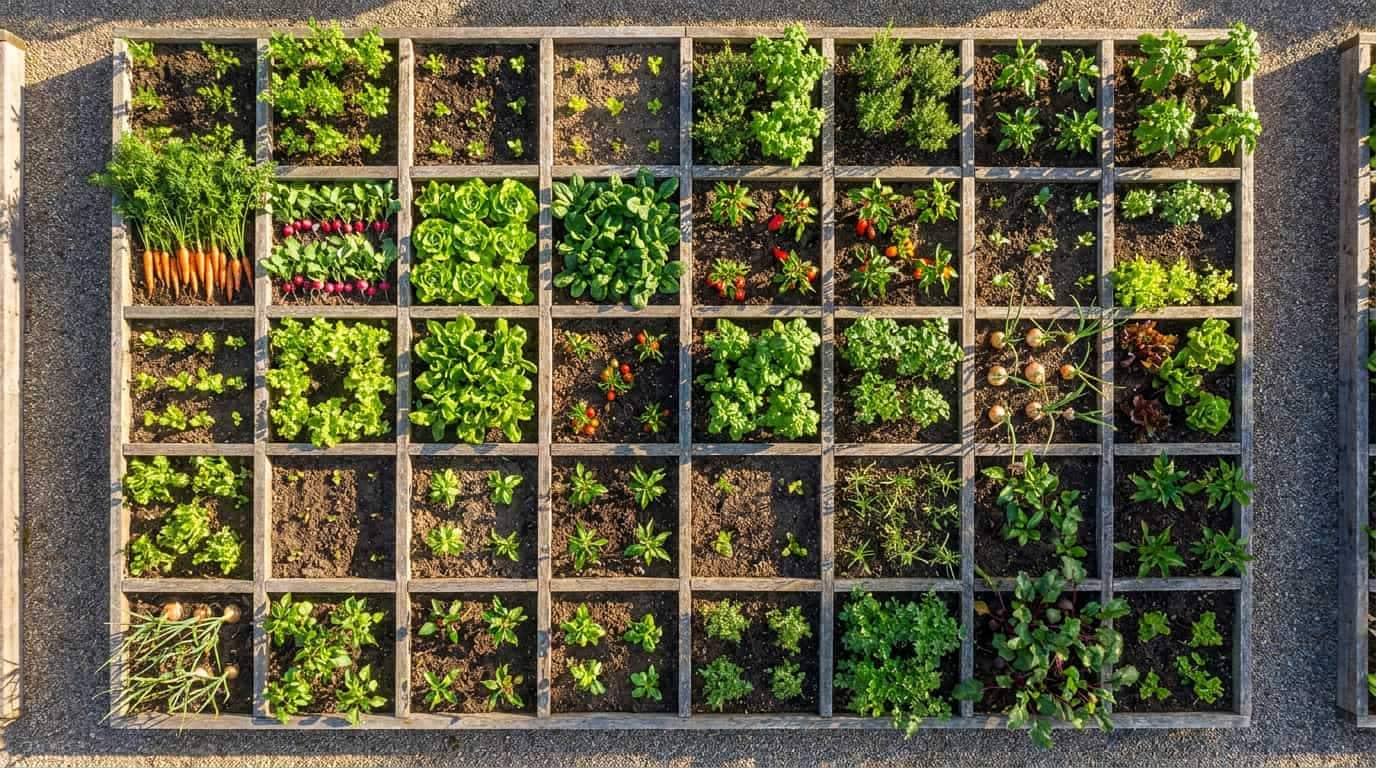
Square-foot gardening divides the bed into a grid of one-foot squares, with each square dedicated to a specific crop based on size. A single square holds 1 tomato, 4 lettuce plants, 9 spinach plants, or 16 radishes. The method removes the guesswork from spacing, reduces weeds by leaving no bare soil between plants, and squeezes more variety into a small footprint.
- Best for: Small-space gardeners, beginners, and those who want high yield with minimal waste.
- Ideal crops: Spinach, beans, onions, radishes, lettuce, basil, and beets.
3. Companion Planting Garden
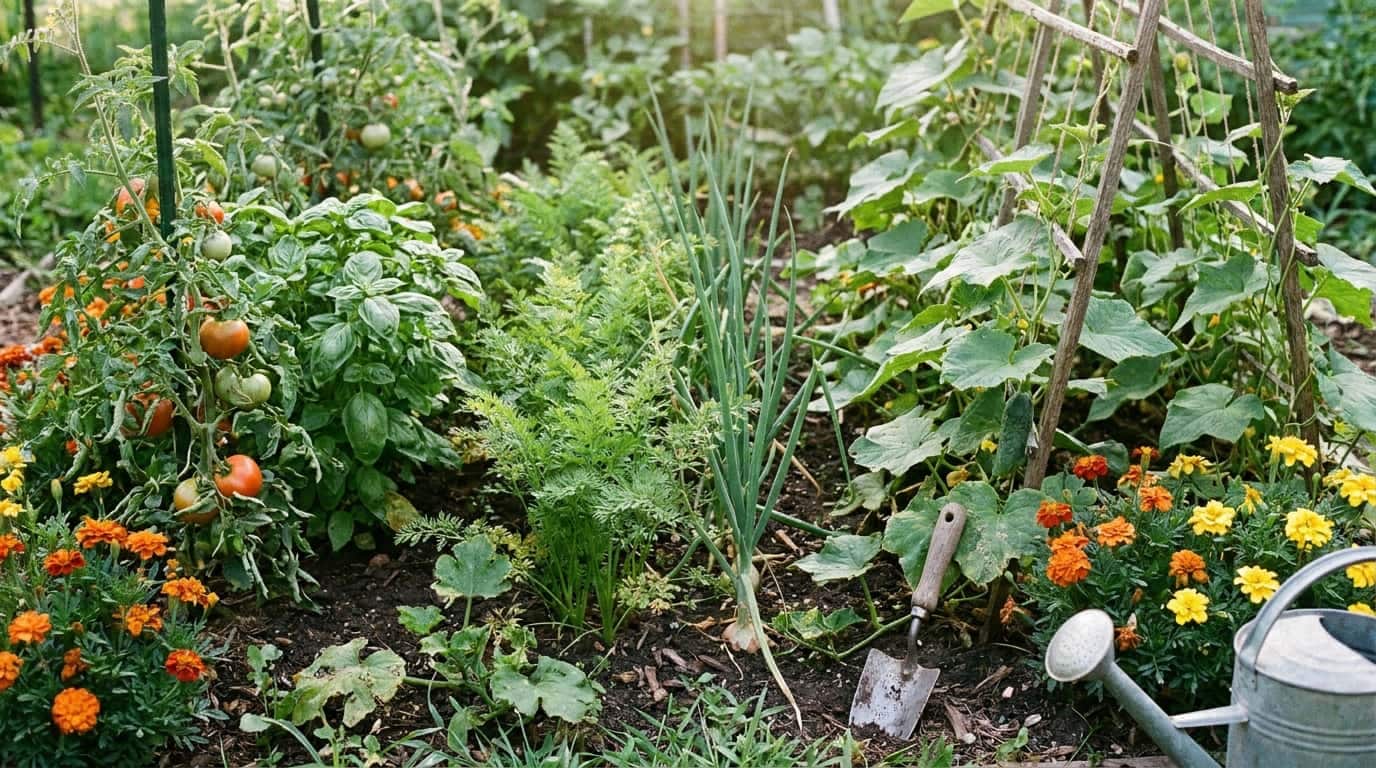
A companion planting garden arranges crops so neighboring plants help each other. Some pairings deter pests. Others improve flavor, fix nitrogen in the soil, or attract pollinators. Rather than planting in single-crop rows, you mix vegetables, herbs, and flowers in combinations that support the whole bed. It takes more planning upfront but produces a more resilient garden that depends less on intervention.
- Best for: Organic gardeners, eco-conscious growers, and anyone dealing with recurring pest problems.
- Ideal pairings: Tomatoes with basil, carrots with onions, cucumbers with beans, and marigolds alongside most vegetables.
4. Keyhole Garden
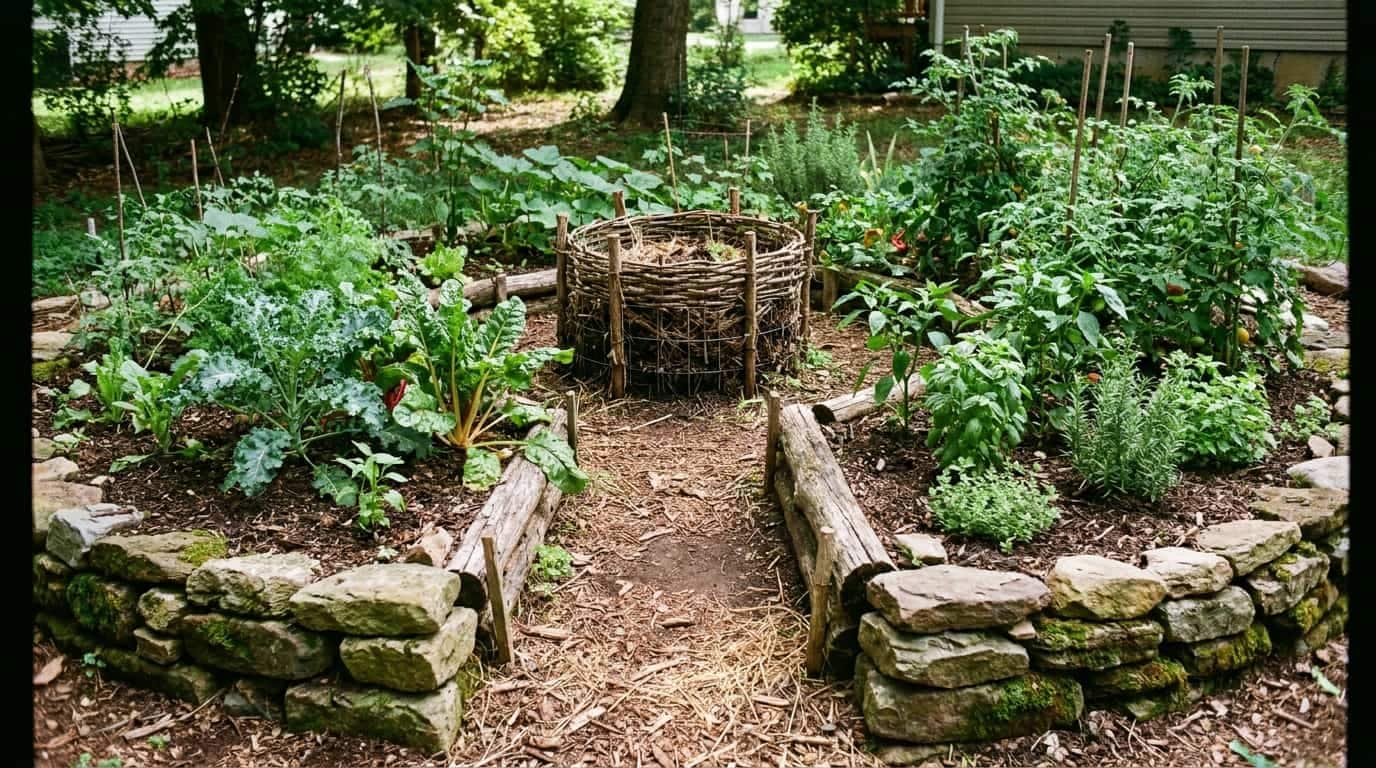
A keyhole garden is a circular raised bed with a narrow wedge-shaped path cut into the center, shaped like a keyhole from above. A composting basket sits at the center. Every time you water it, nutrients move outward into the surrounding soil. The design lets you reach every part of the bed from one standing position, with no stepping inside the planting area. Particularly useful if bending or walking distances are a daily limitation.
- Best for: Gardeners with mobility limitations, drought-prone regions, and those wanting a self-feeding, low-maintenance system.
- Ideal crops: Kale, Swiss chard, tomatoes, peppers, herbs, and leafy greens.
5. Lasagna Garden (No-Dig Method)
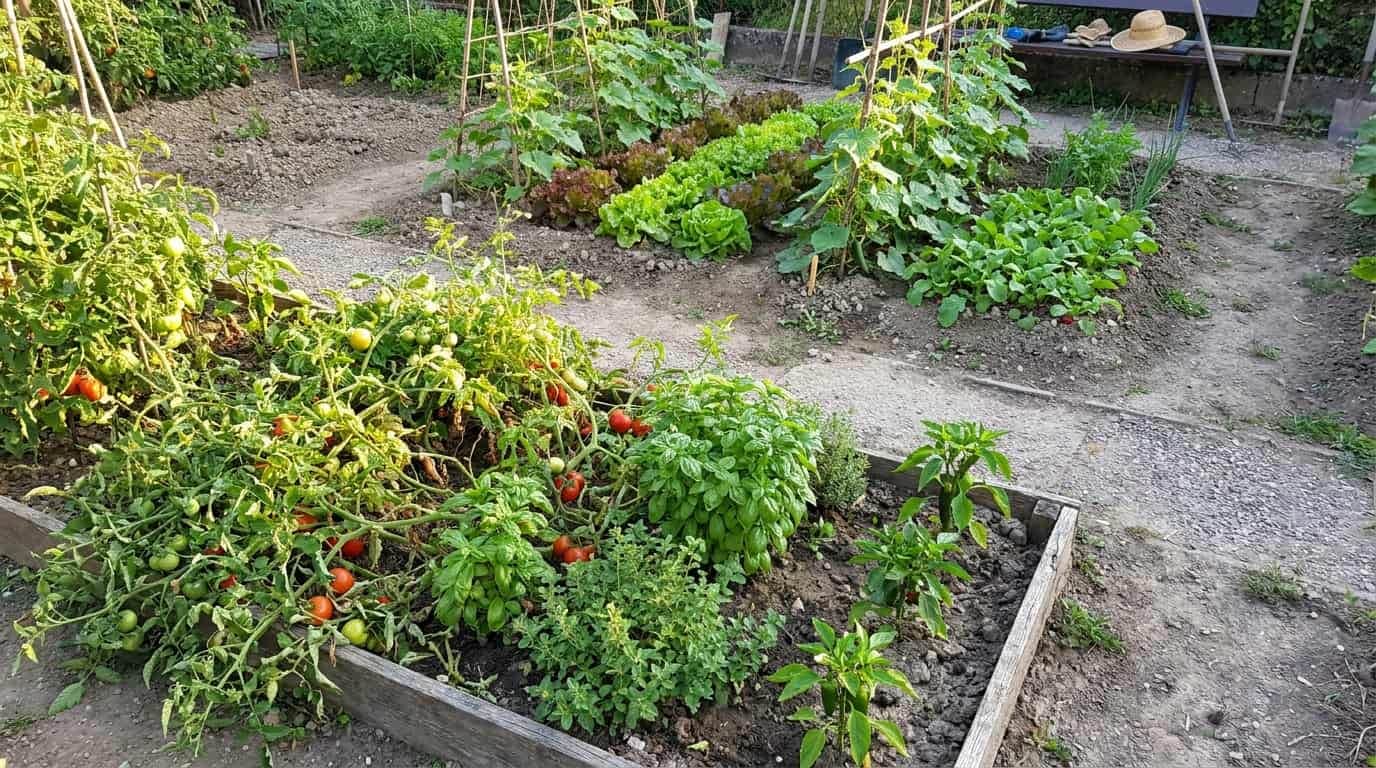
A lasagna garden is built by layering cardboard, compost, straw, aged manure, and topsoil directly on top of existing ground with no digging required. The layers break down over one to two seasons into rich, loose soil that root vegetables can penetrate easily. It is one of the most cost-effective ways to start a garden on patchy grass or compacted ground, because you are building fertility rather than fighting what is already there.
- Best for: First-time gardeners, budget-conscious growers, and anyone starting on grass or compacted soil.
- Ideal crops: Zucchini, pumpkins, potatoes, tomatoes, and deep-rooted vegetables.
6. Themed Vegetable Garden
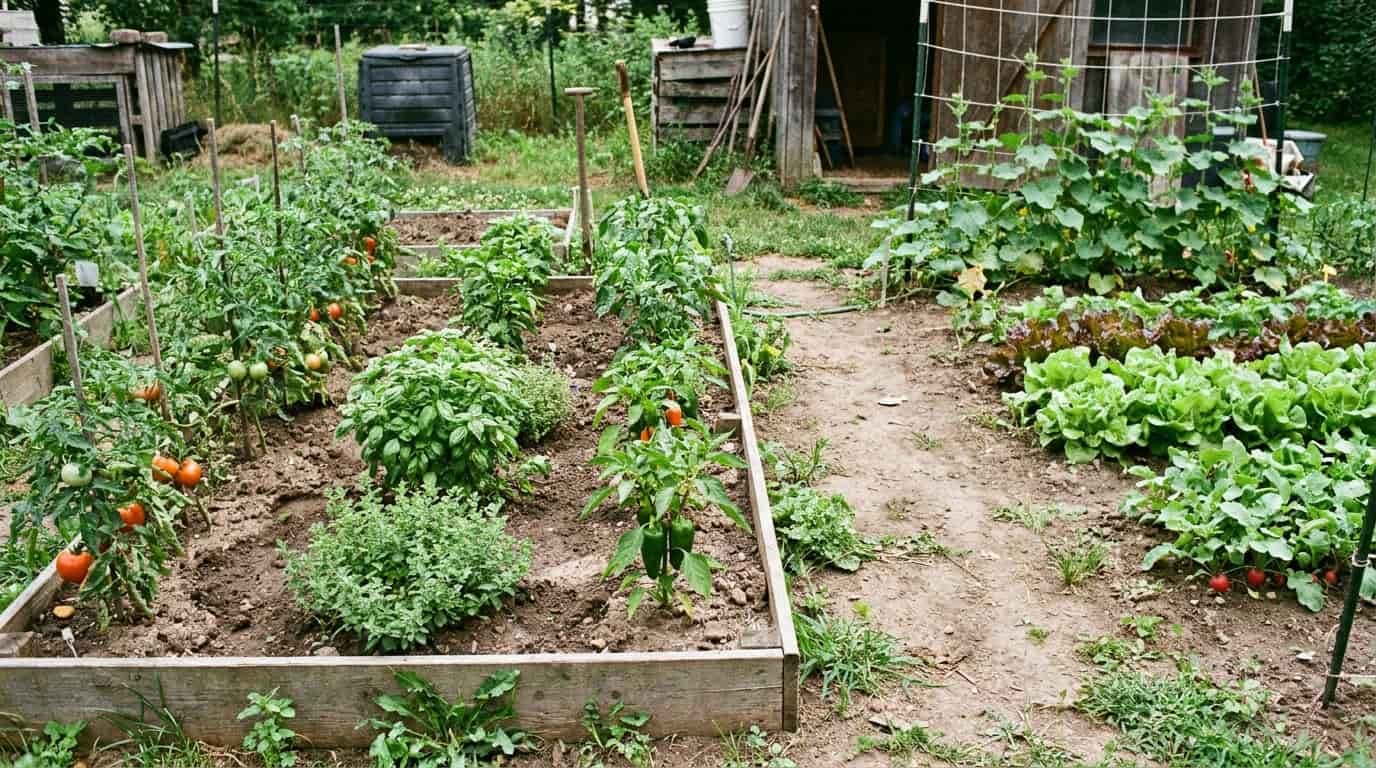
A themed garden organizes planting around a specific culinary goal. Instead of growing a random mix, you design the bed around meals you already cook. The crop list and layout flow from one central purpose, which makes planning faster and harvesting more satisfying because everything on the plate came from one place.
- Best for: Food-focused households, families with kids, and gardeners who want a purpose-driven layout.
- Ideal crops by theme: Pizza garden — tomatoes, basil, oregano, peppers. Salad garden — lettuce, cucumbers, radishes. Stir-fry garden — bok choy, garlic, ginger, beans.
7. Seasonal Rotation Garden
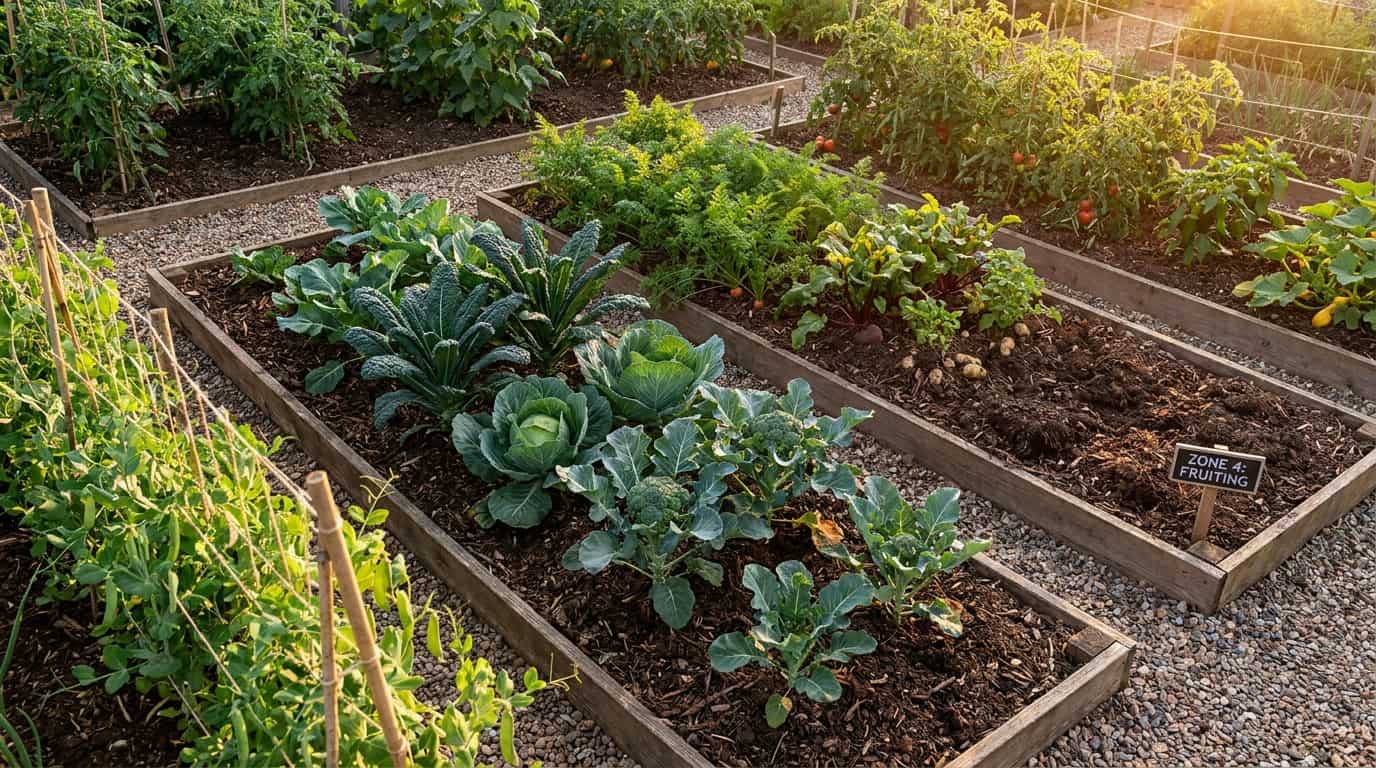
A seasonal rotation garden divides the space into distinct zones and moves crop families through those zones each season or year. This breaks pest and disease cycles that build up when the same crop grows in the same spot year after year. With a clear four-zone rotation, there is always something growing and always something being prepared for the next planting.
- Best for: Experienced gardeners, year-round growers, and anyone committed to long-term soil health.
- Zone rotation order: Legumes, brassicas, root vegetables, and fruiting crops, cycled through four defined zones across successive seasons.
Small Vegetable Garden Ideas for Tight Spaces
Small spaces can still grow plenty when layout, containers, height, and timing are planned carefully. These ideas make every corner more productive without requiring more ground.
8. Vertical Trellis Garden
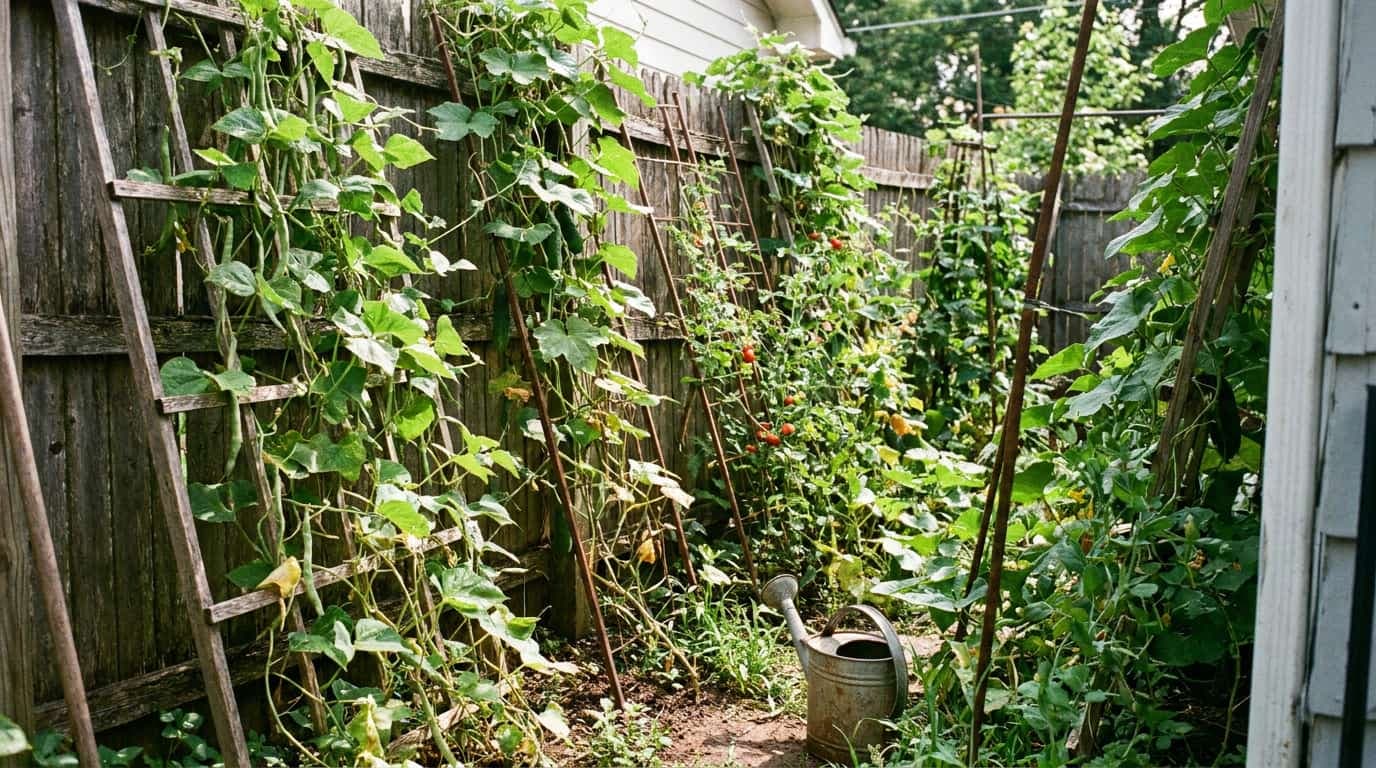
A trellis built into or behind a raised bed adds vertical growing space without expanding the footprint. A 6-foot cedar or galvanized conduit trellis anchored to the back wall of a 4×8 bed adds effective growing area for beans, cucumbers, and peas without shading the rest of the bed, provided it runs along the north or east face.
The same structural principles that apply to a DIY pergola build apply when attaching a heavy trellis to a raised bed frame: post anchoring, span limits, and load-bearing connections all matter. A trellis on the south face creates a sun block that cuts light to everything in front of it.
9. Window Box Herb and Salad Garden
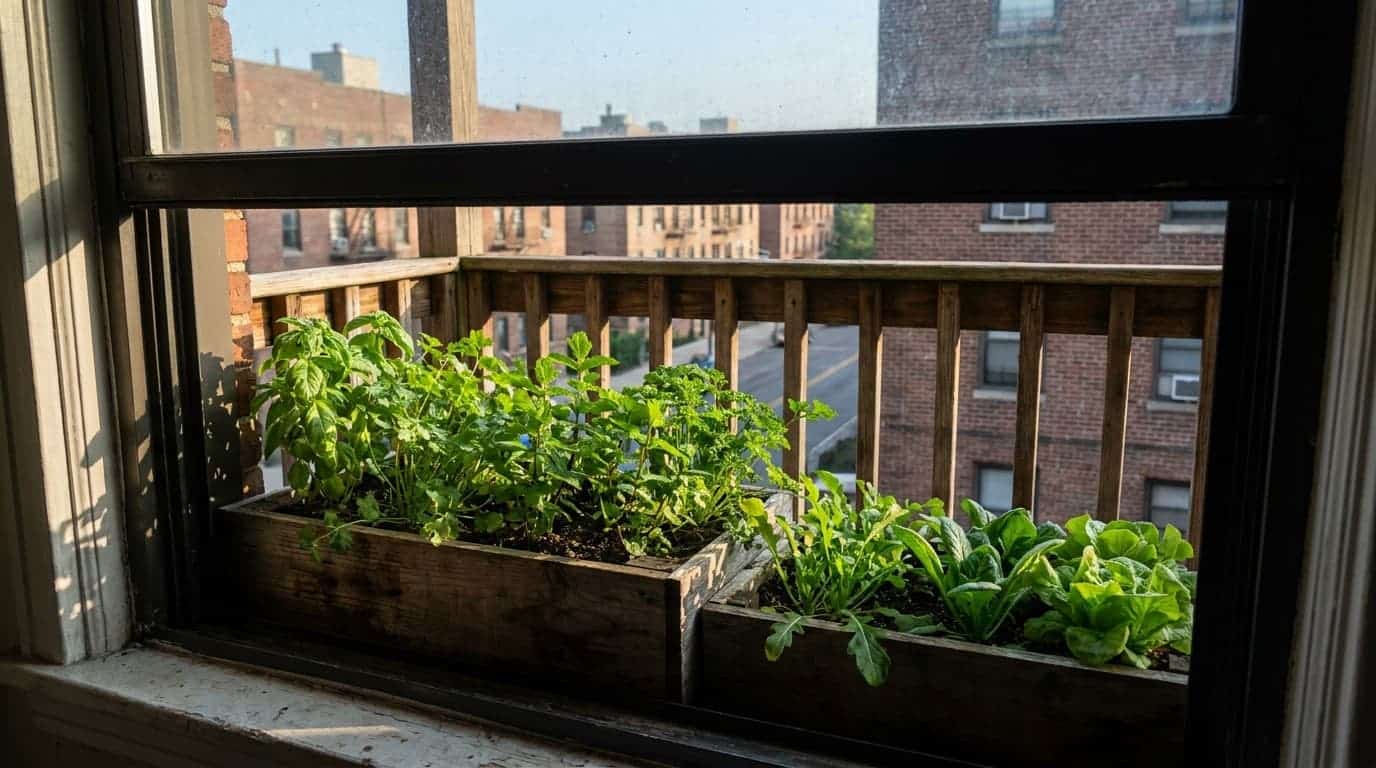
Window boxes work well for shallow-rooted crops: herbs, baby greens, and compact lettuce varieties. Place them where they get steady direct light and are easy to water daily. South- or east-facing exposures are the most reliable.
- Best for: Apartment residents, renters, and anyone with a south or east-facing window or balcony.
- Ideal crops: Basil, coriander, mint, parsley, arugula, baby spinach, and compact lettuce varieties.
10. Tiered Garden Planter
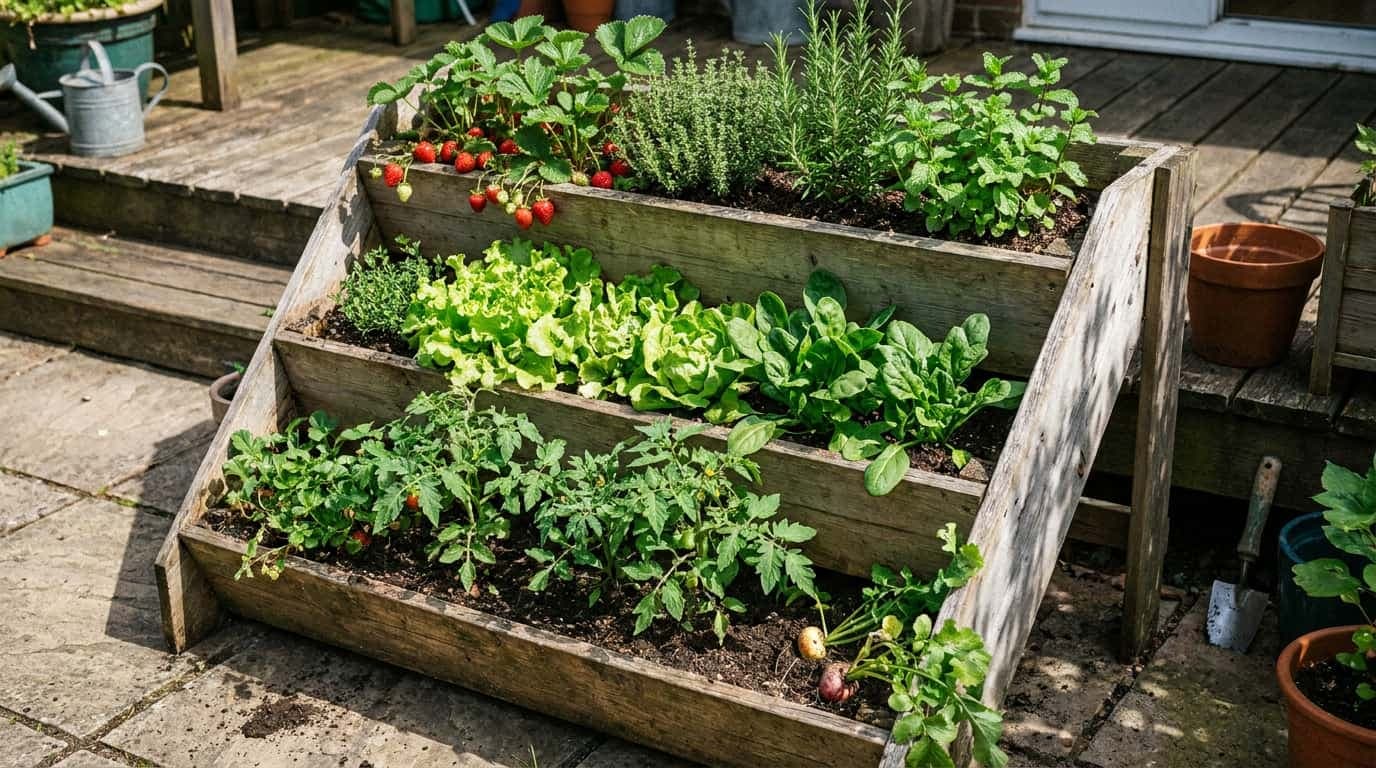
A tiered planter stacks multiple growing levels into one compact, stair-stepped structure, delivering the capacity of several separate beds in a single footprint.
Each tier can hold a different category of vegetable, which makes organization and harvesting straightforward. Use the top tiers for herbs and strawberries, the middle tiers for greens, and the deeper bottom tiers for crops with larger roots. Tiered planters work well on outdoor decks and patios where ground space is limited but vertical real estate is available.
- Best for: Patio and deck gardeners, small backyard owners, and those who want an attractive garden structure.
- Ideal crops: Strawberries and herbs on top tiers, lettuce and spinach in the middle, and root vegetables or tomatoes on the lowest, deepest level.
11. L-Shaped Corner Bed
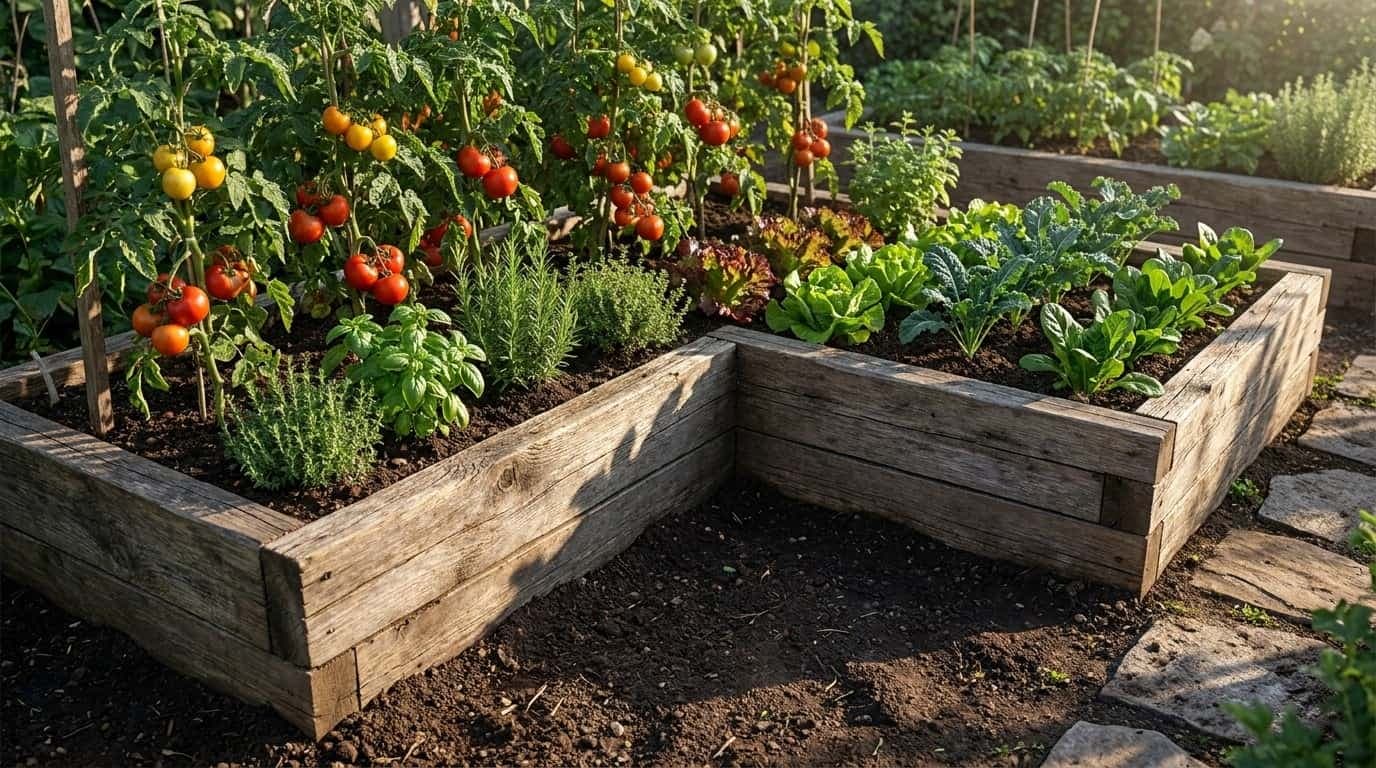
An L-shaped bed works well along fences, patios, or unused corners that would otherwise sit empty. Place tall crops or a trellis in the corner, then use the two side runs for herbs, greens, and root vegetables. The corner position often catches full sun from two directions, which is worth checking before you plant.
- Best for: Small backyards, courtyard gardens, and anyone wanting to garden along the perimeter of their outdoor space.
- Ideal crops: Tomatoes or trellised cucumbers at the corner, herbs and leafy greens along the shorter arm, root vegetables along the longer arm.
12. Succession Planting Micro Garden
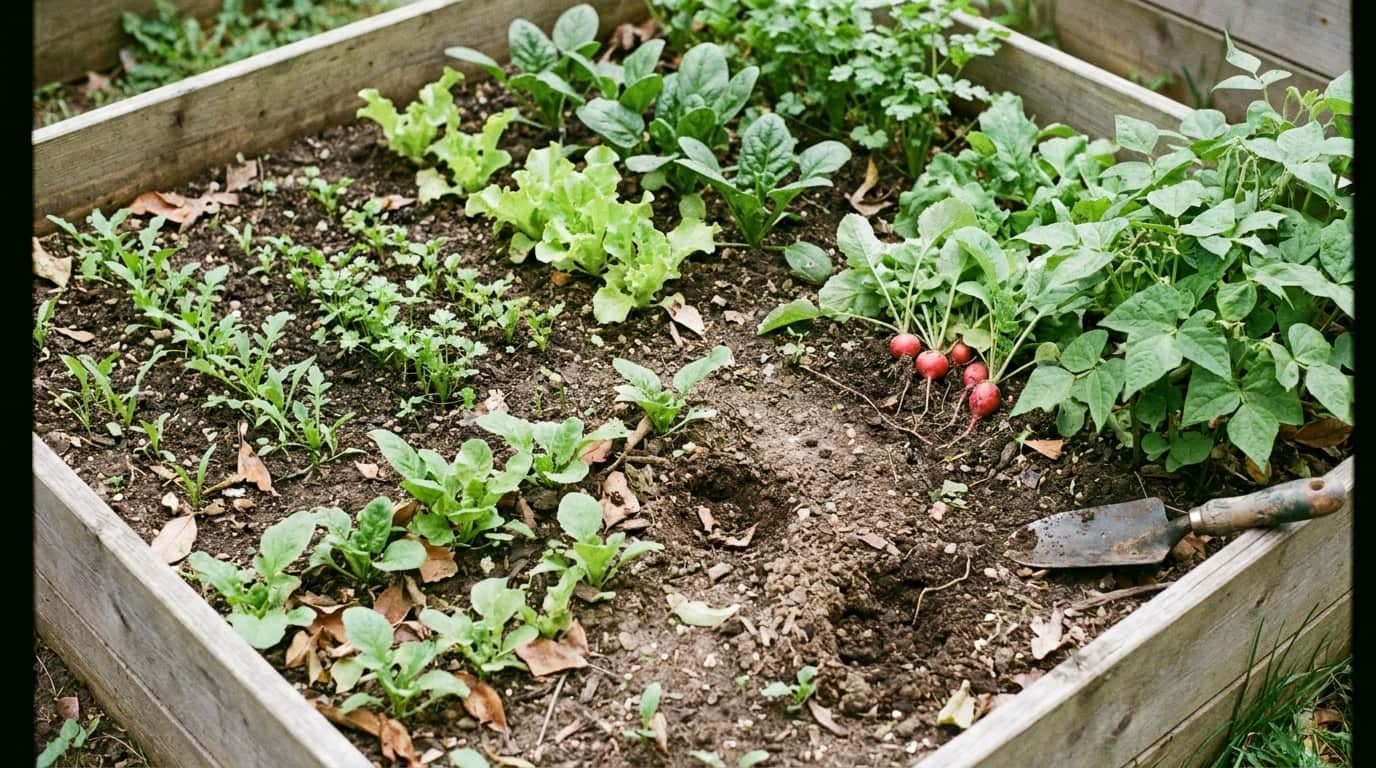
Successional planting is not defined by shape or structure but by strategy: sow small quantities of the same crop every two to three weeks to get a continuous, manageable harvest rather than a single glut. Even in the smallest raised bed or container setup, this approach keeps the garden producing without overwhelming the kitchen. It is particularly effective with fast-growing crops that mature in 30 to 45 days.
- Best for: Small-space gardeners, solo growers, and anyone who wants steady harvests without waste.
- Ideal crops: Lettuce, radishes, spinach, bush beans, arugula, and coriander.
Seasonal Vegetable Garden Planting Schedule
A seasonal planting schedule matches crops to the temperatures they actually grow in. Check your local frost dates first, then use this table as a planning base. Planting times shift by two to four weeks depending on your region, so the frost date is the anchor, not the calendar month.
| Season | Best Crops to Plant | Garden Focus |
|---|---|---|
| Early Spring | Lettuce, spinach, peas, radishes, carrots, onions, kale | Start cool-season crops that grow well in mild weather. Plant in small batches for steady harvests. |
| Late Spring | Tomatoes, peppers, cucumbers, beans, basil, eggplant, squash | Add warm-season crops after the last frost date. Give larger plants enough space and support from day one. |
| Summer | Beans, okra, cucumbers, squash, herbs, heat-tolerant greens | Focus on deep watering, mulching, pruning, and regular harvesting during hot weather. |
| Fall | Lettuce, spinach, kale, carrots, radishes, turnips, beets | Plant a second round of cool-season vegetables 6 to 8 weeks before the first hard frost. |
| Winter | Garlic in mild areas, cover crops, compost, seed planning | Use the season for soil care, tool cleaning, seed ordering, and next-year layout planning. |
Fall is the most commonly skipped season in home vegetable gardens. A second planting of lettuce, spinach, and kale in late August often yields better than the spring round because pest pressure is lower and temperatures are cooling rather than rising.
Soil, Watering, and Basic Care for Any Garden Setup
Healthy soil produces stronger roots and makes plants more resilient to heat and drought. For raised beds, use a loose mix of topsoil, compost, and drainage material. In-ground gardens benefit from adding 2 to 3 inches of compost before each planting season, worked into the top 8 to 10 inches of soil.
Water deeply but less often. Most vegetables do well with 1 to 2 inches of water per week. Containers dry out faster than in-ground beds and need checking daily during summer heat. Mulch, such as straw or wood chips, slows moisture loss, moderates soil temperature, and reduces weeds.
Feed plants every two weeks during peak growing season with a balanced liquid fertilizer. Test soil pH once a year. Most vegetables prefer a slightly acidic range of 6.0 to 6.8. A test kit from any garden center runs about $15 and gives you a baseline before you add any amendments.
Common Vegetable Garden Mistakes to Avoid
These are the problems that show up most often in first and second-year gardens, and all of them are avoidable with a bit of advance planning.
- Not thinning seedlings. Some seeds sprout too close together. Thin early so the strongest plants have room to develop properly. Leaving crowded seedlings in place stunts all of them.
- Skipping plant labels. Young vegetable plants look similar before they size up. Labels track crops, planting dates, and varieties without confusion later in the season.
- Using fresh manure. Fresh manure can burn plants and may carry harmful bacteria. Use only aged manure or finished compost, which has broken down for at least 90 days.
- Forgetting wind exposure. Strong wind dries soil faster, damages young plants, and breaks tall stems. A fence, screen, or sheltered position makes a measurable difference in exposed sites.
- Adding fertilizer without a reason. Too much fertilizer drives leaf growth at the expense of fruit and root development. Feed based on what the plants and soil actually need, not on a fixed schedule.
Practical Tips for a Better Vegetable Garden
A few consistent habits make more difference than any single product or technique.
- Harden off indoor seedlings over 7 to 10 days before moving them outside permanently. Set them out for 2 to 3 hours the first day and increase the exposure gradually.
- Keep a garden notebook. Record planting dates, harvest times, crop problems, and which varieties performed well. The notes from this season are the most valuable planning tool for next season.
- Choose disease-resistant varieties for problem-prone crops, especially tomatoes, cucumbers, squash, and peppers. Seed packets and plant tags usually list resistance codes.
- Remove dead leaves, diseased stems, and finished crops promptly before pests or disease spread to neighboring plants.
Frequently Asked Questions
Can seeds and transplants be used in the same vegetable garden?
Yes, and most productive gardens use both. Start tomatoes and peppers from transplants, since they take too long to mature from seed in most US climates. Sow radishes, lettuce, beans, and carrots directly, since they establish quickly and dislike root disturbance.
How can vegetables be protected from rabbits, birds, or squirrels?
Use barriers before damage starts. A low fence with the bottom 6 inches buried handles most rabbit problems. Netting works for birds. For squirrels, cover soil with hardware cloth mesh until plants are established enough that pulling them up takes effort.
How deep should a raised vegetable garden bed be?
Most raised beds should be at least 8 to 12 inches deep. Leafy greens manage in 6 inches. Tomatoes, peppers, and most root crops need a minimum of 12 inches. Carrots and parsnips need 16 to 18 inches of loose soil to develop a full root.
What vegetables grow well in a small space vegetable garden?
Lettuce, radishes, spinach, bush beans, green onions, herbs, and cherry tomatoes all perform well in tight spaces. Avoid sprawling crops like full-sized pumpkins, standard corn, or indeterminate squash varieties unless you have a vertical structure to train them on.
When should I start planning my vegetable garden for spring?
Six to eight weeks before your last frost date is the practical starting point for indoor seed starting. Layout planning can happen any time during winter. Most US gardeners in temperate zones start seeds in late February and plant outdoors in late April or May.
Do vegetable gardens need full sun all day?
Most fruiting vegetables, including tomatoes, peppers, squash, and cucumbers, need a minimum of 6 hours. Leafy greens and herbs tolerate 4 hours and can benefit from afternoon shade in hot climates. Root vegetables fall in the middle, preferring 6 hours but tolerating less.
Can a vegetable garden be started without buying many supplies?
Yes. A small in-ground bed, good soil amended with compost, seeds, water, and basic hand tools is enough. Reuse containers when safe. Add trellises, cages, or raised bed frames only when the garden has outgrown the basics.
Final Thoughts
A productive garden starts with a layout that fits your real space, not just a pretty photo. I would begin by measuring your area, checking sunlight, choosing crops you actually eat, and giving each plant enough room to grow.
The best vegetable garden ideas are the ones that make planting, watering, weeding, and harvesting easier week after week.
Raised beds, containers, vertical trellises, square-foot layouts, and seasonal planting plans can all work when they match your yard or patio.
Start with one simple sketch, adjust after your first season, and let your garden improve as you learn what works best for you.