

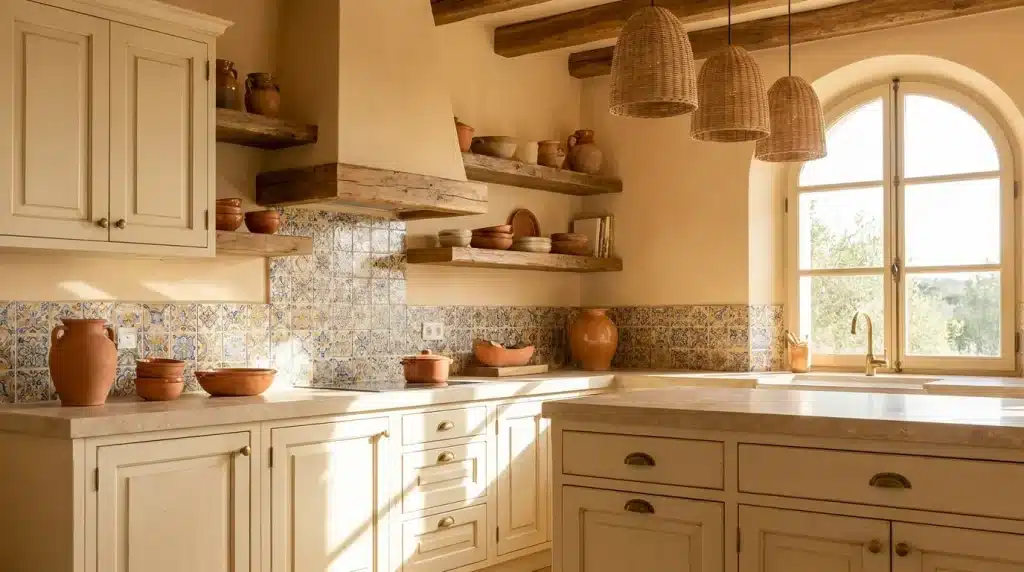


Tuscan interior design brings warmth, natural textures, and old-world charm inspired by Italian countryside homes, but today’s approach feels lighter and more updated.
I often find people are drawn to this style for its cozy character, yet are unsure how to adapt it without making the space feel dark or outdated. Modern Tuscan interiors solve this by combining traditional materials like stone, wood, and plaster with softer neutrals, open layouts, and natural light.
The result feels grounded but not heavy, rustic but still current. In this guide, I’ll walk through how Tuscan design has evolved, what key elements define its modern version, and how to apply it in real homes without losing balance.
You’ll also see practical ideas for colors, materials, furniture, and layout choices that make the style work in everyday living spaces
What Mediterranean Kitchen Design Actually Means
Mediterranean kitchen design keeps failing in American homes for one specific reason: people pick the tiles first. They find a patterned Spanish backsplash, fall for it, then build backward from there.
By the time the hood, cabinets, and counters are chosen, the kitchen is fighting itself. The way to avoid that is to decide on the feeling before you decide on the finishes.
The style draws from homes across Spain, Italy, Greece, and nearby coastal regions where kitchens were built around natural materials, real cooking, and daily use.
You see textured walls, ceramic tile, stone surfaces, wood details, soft curves, iron or brass accents, and colors pulled from sun, clay, sea, and earth. What holds it together is not any single material but how calm and connected the room feels despite having a lot of layers.
Choose Your Mediterranean Kitchen Direction First
Before you choose tile or cabinet colors, decide which type of Mediterranean kitchen you want. This one decision prevents the most common mistake I see in real projects: a kitchen that starts with coastal tile, adds Tuscan cabinets, Spanish lighting, and modern counters until each piece is nice, but together they feel confused.
If you are still figuring out which broader design style fits your home, the interior design styles, how Mediterranean sits alongside other directions, and what separates each one. These four paths give you a starting point:
- Clean modern Mediterranean: Warm whites, soft beige, light wood, simple cabinets, and handmade-looking tile. Works well in apartments, newer homes, and smaller kitchens because it feels open without looking cold.
- Rich Spanish Mediterranean: Patterned tile, arched shapes, iron details, terracotta tones, and deeper wood tones. More drama, which means it needs quiet walls or counters to stay balanced.
- Warm Tuscan-inspired Mediterranean: Rustic wood, stone-look counters, bronze hardware, and soft beige walls. Keep the lighting simple or it tips toward dated.
- Bright Greek or coastal Mediterranean: White walls, blue tile, light wood, open shelves, and functional ceramics. Fresh, relaxed, and easier to pull off in smaller spaces.
Once you pick the direction, every next choice gets easier. The tile, cabinets, counters, lighting, and decor start working together instead of pulling the room apart.
Mediterranean Kitchen Design Ideas
Mediterranean kitchen design works best when each idea has a clear role. Start with choices that shape the room first, then layer smaller details around them. That keeps the kitchen useful, balanced, and easy to live with. Use the ideas below as separate design moves, not as a checklist you must follow all at once.
1. Build Your Mediterranean Kitchen Around Sun-Washed Neutrals
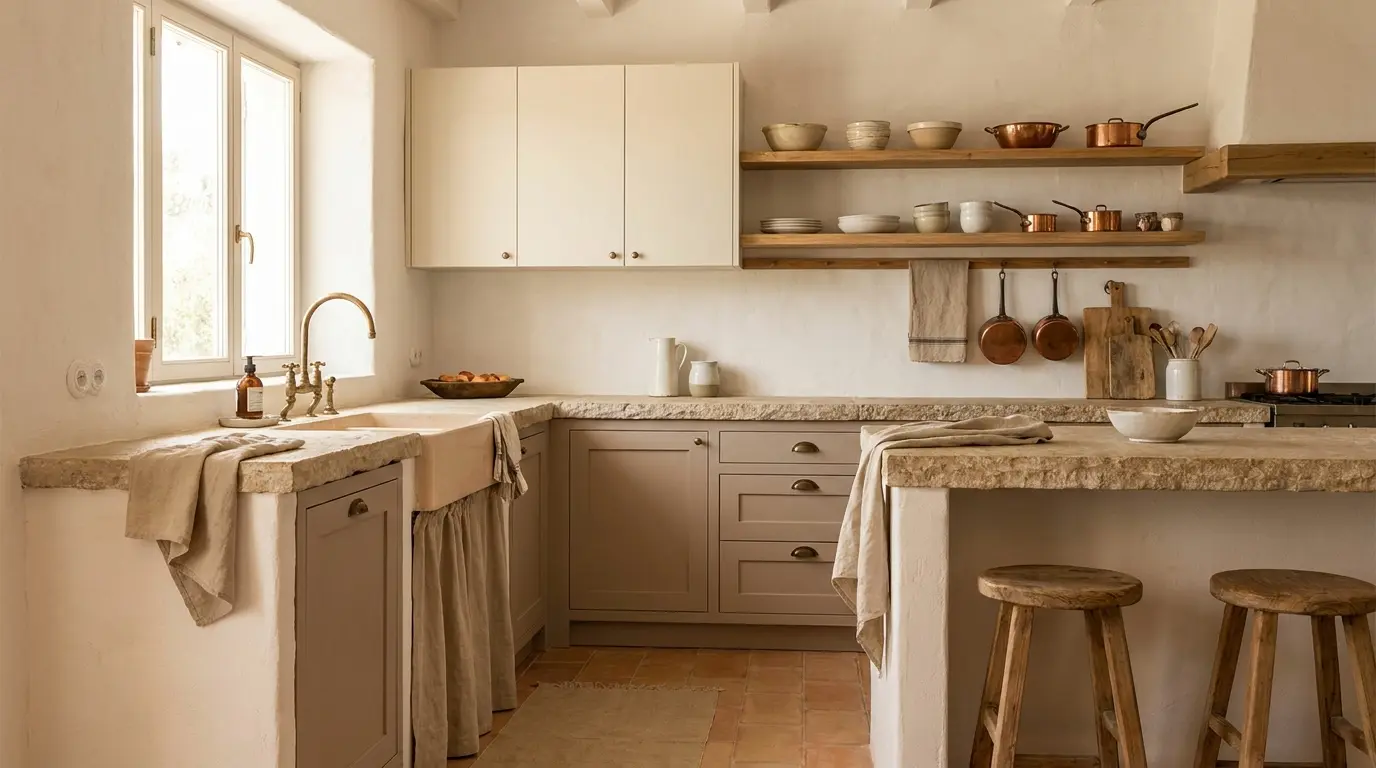
One thing that stands out in Mediterranean homes is how calm the background feels, even when the room includes patterned tile, natural stone, and handcrafted details. The reason is almost always the same: a warm neutral foundation set before anything decorative was chosen.
Soft creams, sandy beiges, and sun-washed whites reflect light well and give every other material room to read clearly. These are not trendy colors. They are tones pulled from limestone walls, coastal villages, and sunlit courtyards that have worked for centuries in this climate. Starting with a warm neutral palette makes future decisions easier because nearly every Mediterranean material works alongside it.
- Light Reflection: Cream and warm white surfaces bounce daylight around the room, helping smaller kitchens feel brighter without looking clinical.
- Material Connection: Sand and beige tones naturally bridge wood, stone, metal, and tile, preventing the kitchen from feeling like separate finishes placed together by accident.
- Long-Term Flexibility: Neutral cabinets and walls make it easier to update hardware, lighting, or decor later without creating color conflicts.
2. Warm Up the Room With Small Terracotta Moments
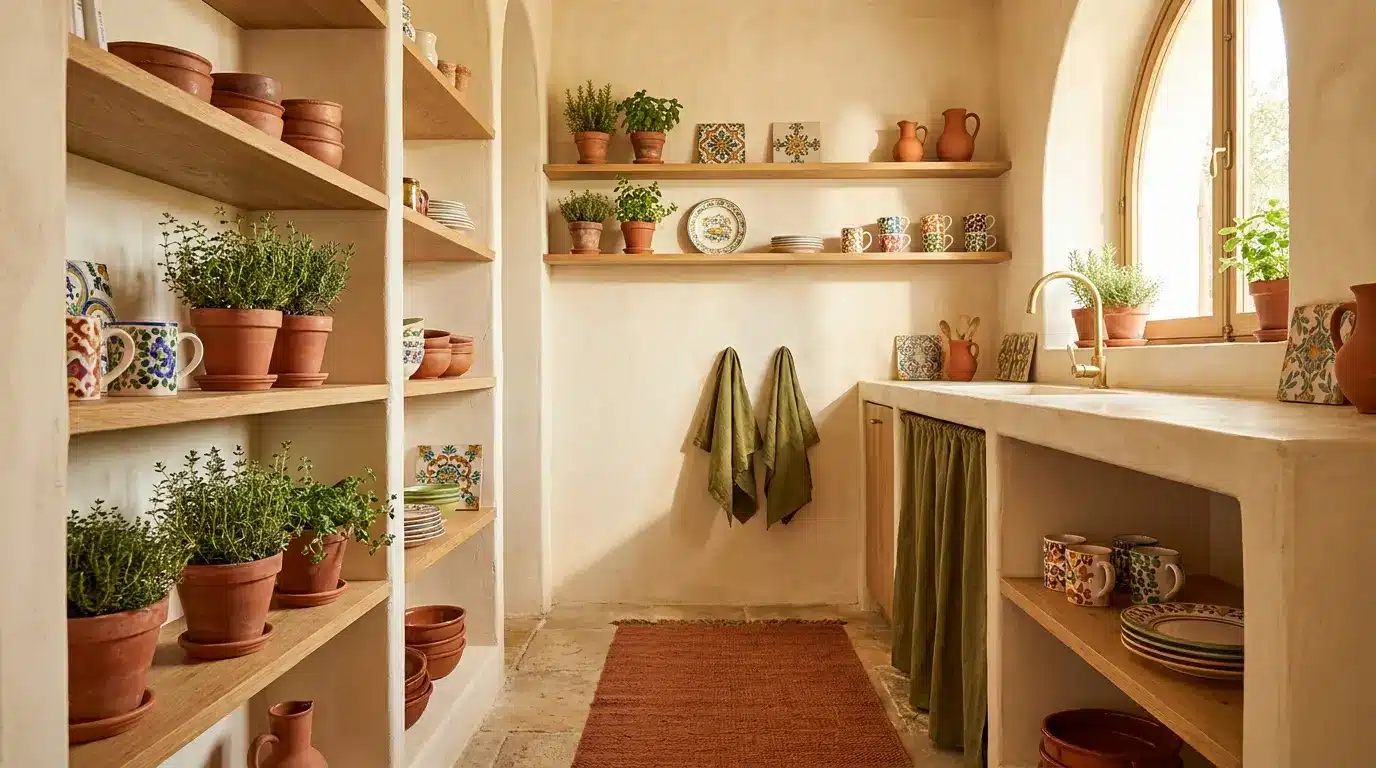
Terracotta appears across southern Spain, parts of Italy, and the Greek countryside in planters, pottery, roof tiles, and handcrafted objects because the color is native to the landscape. In a kitchen, it works best in small doses. Small touches often create a stronger Mediterranean feeling than covering large surfaces.
The goal is to introduce warmth in places that feel natural and useful rather than turning clay tones into the room’s main feature. Use terracotta where it can quietly enrich the space:
- Natural Pairing: Terracotta looks most authentic beside olive greens, natural wood, cream walls, or aged metals that soften its earthy color.
- Functional Pieces: Bowls, utensil holders, pitchers, and plant pots feel more natural than purely decorative objects because they support everyday routines.
- Targeted Warmth: Small accents add visual warmth to cooler kitchens without darkening the room the way large terracotta surfaces can.
3. Make Patterned Tile the Star of Your Backsplash
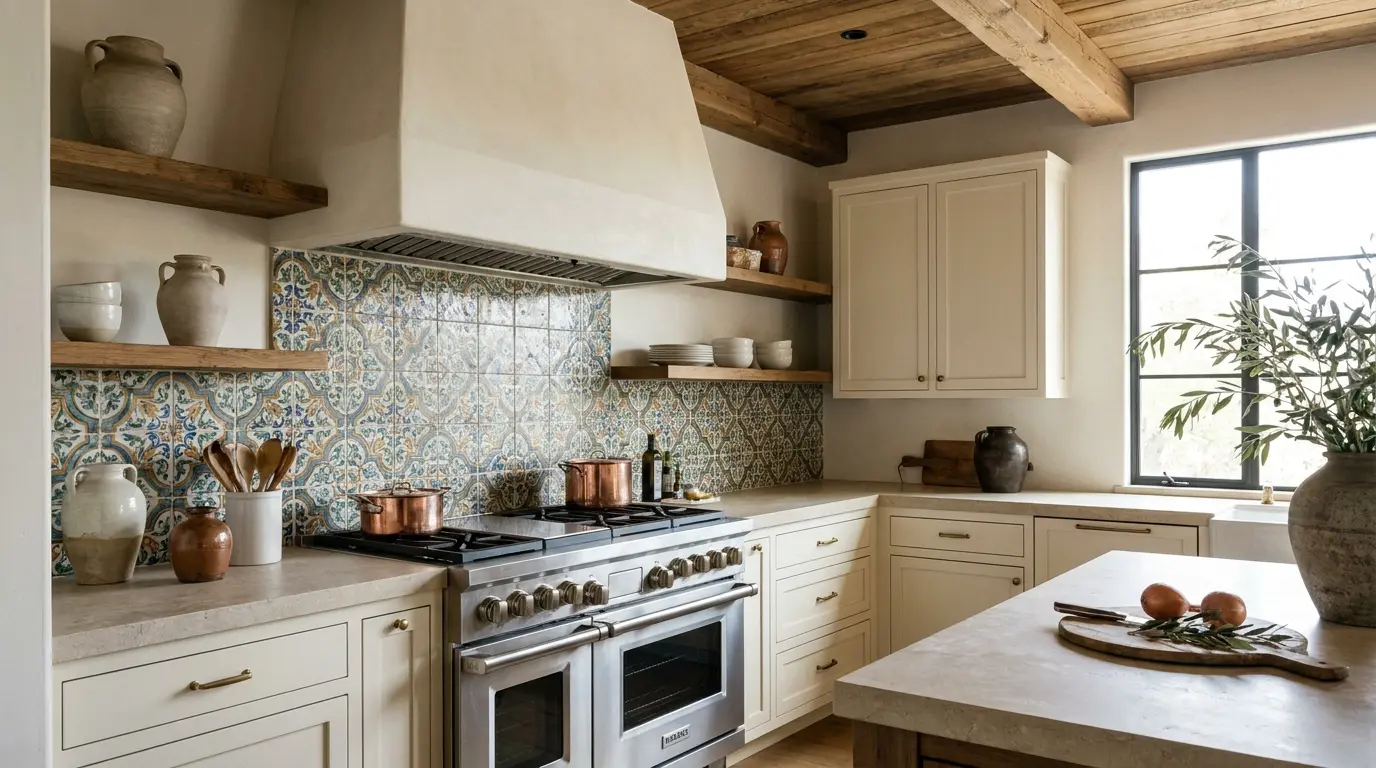
Patterned tile gives a Mediterranean kitchen a clear focal point without making the whole room feel heavy. A backsplash works well because it sits where the eye naturally lands, especially near the range or sink. The tile brings color, movement, and old-world character while the rest of the kitchen stays soft and grounded.
This works best when the backsplash feels intentional rather than like something added at the end. To keep the look balanced, focus on where the tile goes and what surrounds it:
- Range Focus: Place the patterned tile behind the stove to create a strong center point, then pair it with a clean hood so the area feels framed.
- Light Balance: Use it on a sink wall if the kitchen gets good daylight, since natural light helps the colors and small details read clearly.
- Small Accent: A framed panel or short backsplash run gives character without covering too much wall space.
4. Use Handmade Tile When the Kitchen Needs Quiet Texture
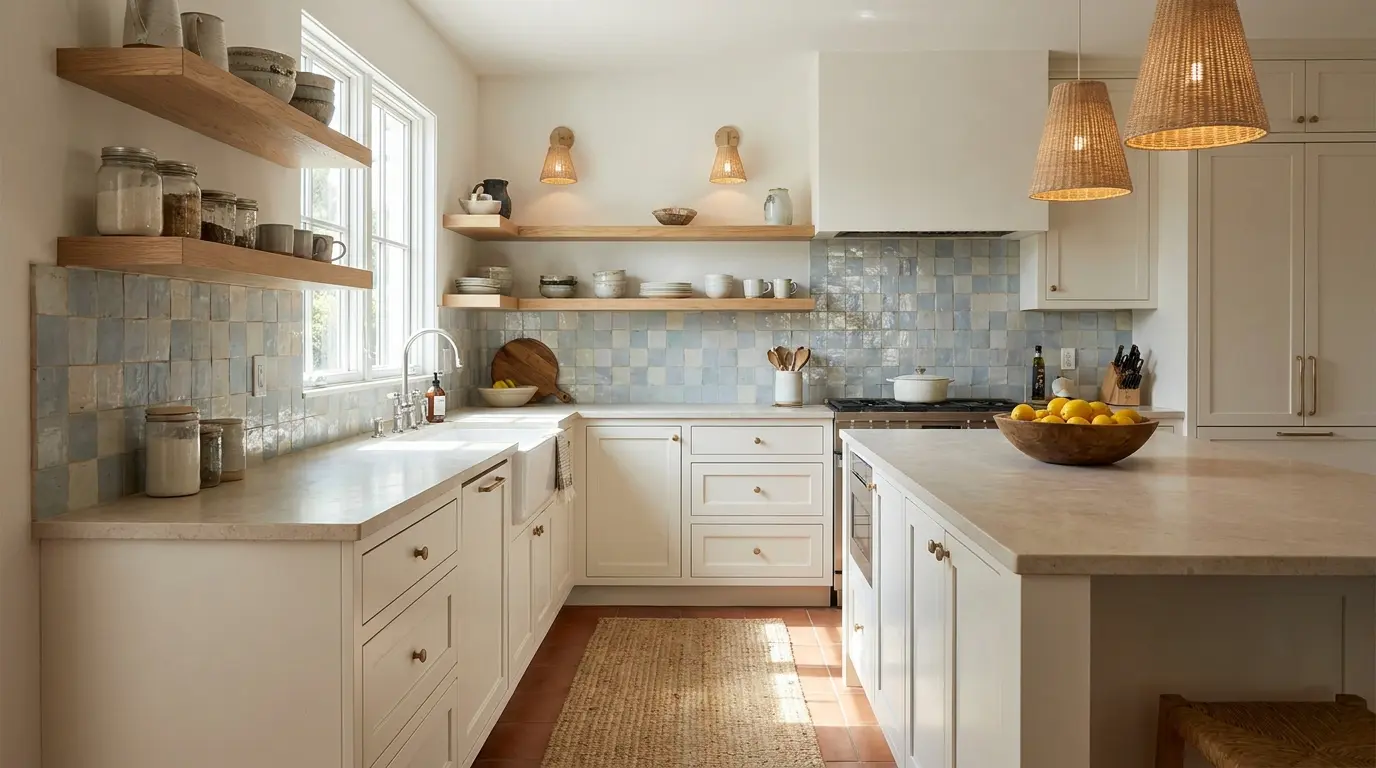
Handmade-looking tile is the choice I trust when a Mediterranean kitchen needs warmth without looking busy. Its uneven surface catches light in a soft way, which gives the wall movement without adding extra decor.
This makes it useful for small kitchens, modern layouts, and spaces where the cabinets already carry color. Use it where the room needs texture, light, or softness without adding visual weight:
- Soft Shine: Choose zellige-style tile for a backsplash when you want the wall to reflect light in a gentle, natural way.
- Modern Texture: Use textured subway tile in cleaner kitchens to keep the space from feeling flat.
- Muted Color: Cream, pale blue, or glazed ceramic works when the kitchen needs warmth or freshness without a bold pattern.
5. Turn the Range Wall Into the Heart of the Kitchen
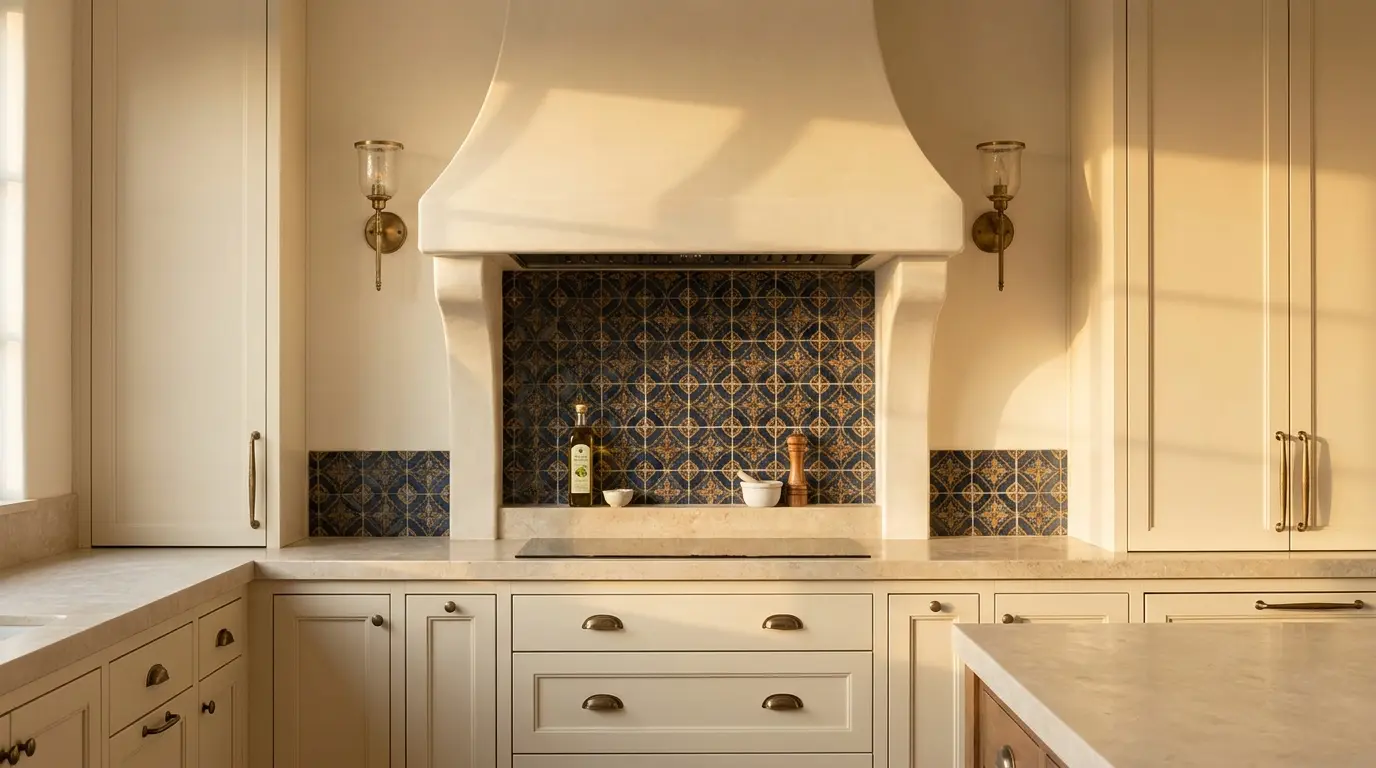
A range wall can set the whole mood of a Mediterranean kitchen because it gives the room one clear place to gather around. Treat this wall like a built-in feature, not just a spot for the stove.
When it has the right mix of shape, scale, and useful detail, the kitchen feels settled. The strongest range walls do not need too many parts, they need one clear idea that guides the rest of the room.
- Hood Shape: Choose a curved plaster hood, wood-trimmed hood, or clean chimney style to give the wall structure before adding smaller details.
- Side Lighting: Add sconces on both sides when there is enough wall space, so the cooking zone feels framed without needing extra decor.
- Useful Ledge: A narrow ledge above the backsplash keeps olive oil, salt, or small pottery pieces within reach while looking natural.
6. Let Cabinet Color Set the Whole Mediterranean Mood
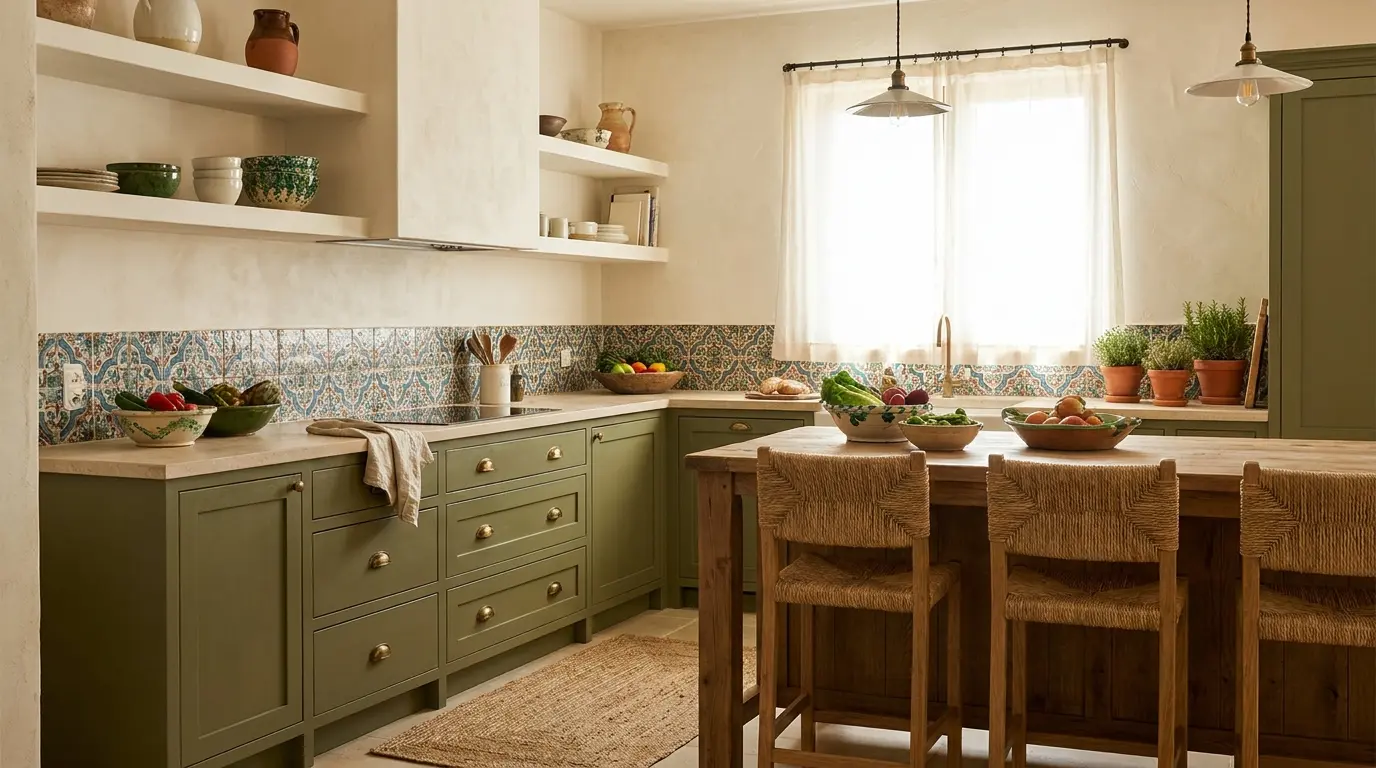
Cabinet color sets the mood faster than almost anything else because it covers so much visual space. This is the choice that decides whether the room feels coastal, rustic, earthy, modern, or old-world.
Warm white, cream, olive, muted blue, and soft beige all work, but each one needs the right tile, counter, and hardware around it. A cabinet color should feel settled before the smaller finishes are chosen.
For specific colors that hold up over time and avoid the most common pairing mistakes, the timeless kitchen cabinet colors piece directions age well, and which ones date fast.
- Warm Whites: Pair warm white or cream cabinets with handmade tile, aged brass, and soft stone when the goal is a clean Mediterranean look that still feels warm.
- Earthy Greens: Use olive or muted green in kitchens with natural wood, limestone-look counters, or clay-toned accents so the room feels grounded instead of trendy.
- Coastal Blues: Choose muted blue when the space has strong daylight, light counters, and simple hardware, since deeper shadows can make blue cabinets feel heavy.
7. Bring in Natural Wood Where the Kitchen Feels Too Hard
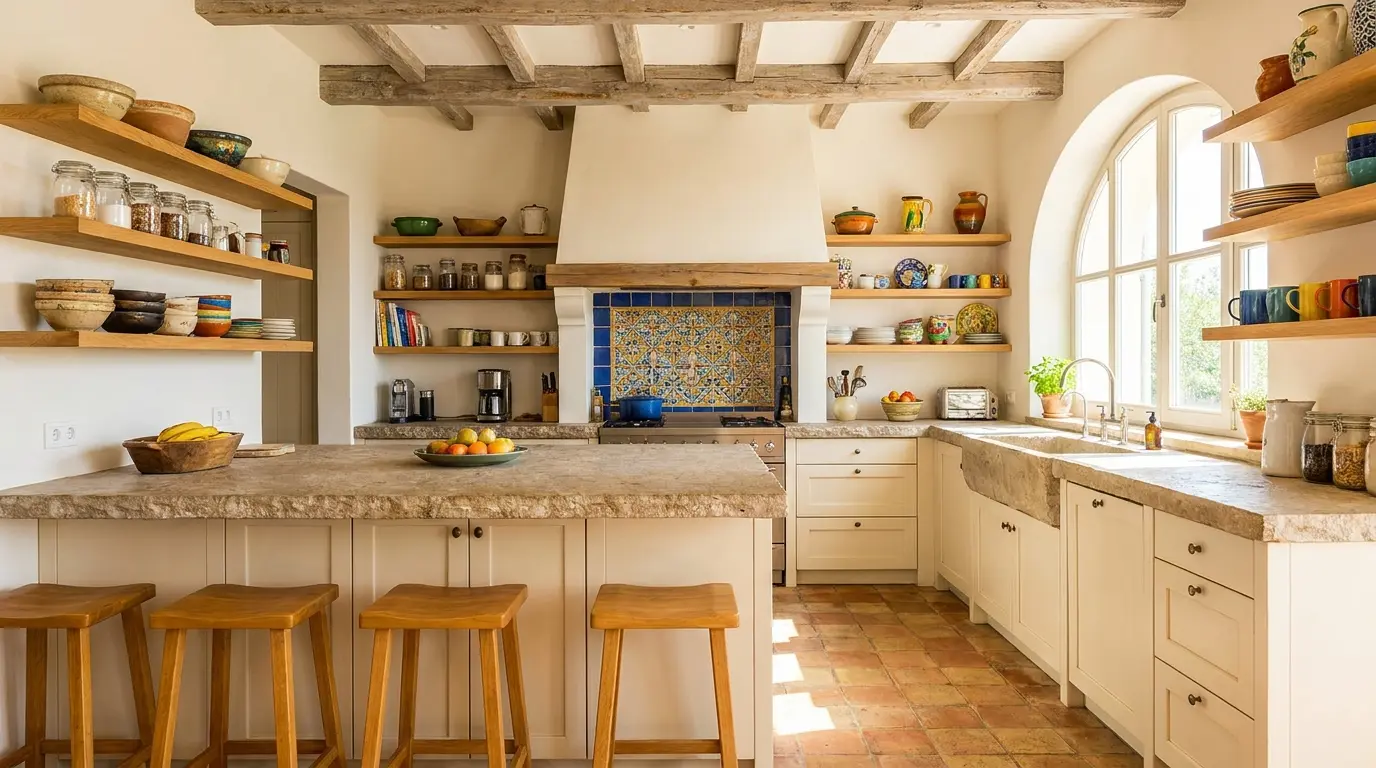
Natural wood makes a Mediterranean kitchen feel more relaxed when it appears in places people actually use. Designers rely on wood details when a kitchen has a lot of stone, tile, or painted cabinetry and needs something warmer to break it up.
The best pieces look practical, not staged. Shelves, stools, beams, boards, or a pantry door can soften the room while keeping the main cabinet plan intact.
- Open Shelves: Wood shelves on a tiled wall break up hard surfaces and create space for everyday bowls, jars, or serving pieces.
- Island Seating: Oak, walnut, or honey-toned stools beside a stone island make the seating area feel warmer.
- Ceiling Detail: Add beams only when the room has enough height or width — heavy wood overhead crowds a smaller kitchen.
8. Give the Hood a Shape That Feels Built Into the Home
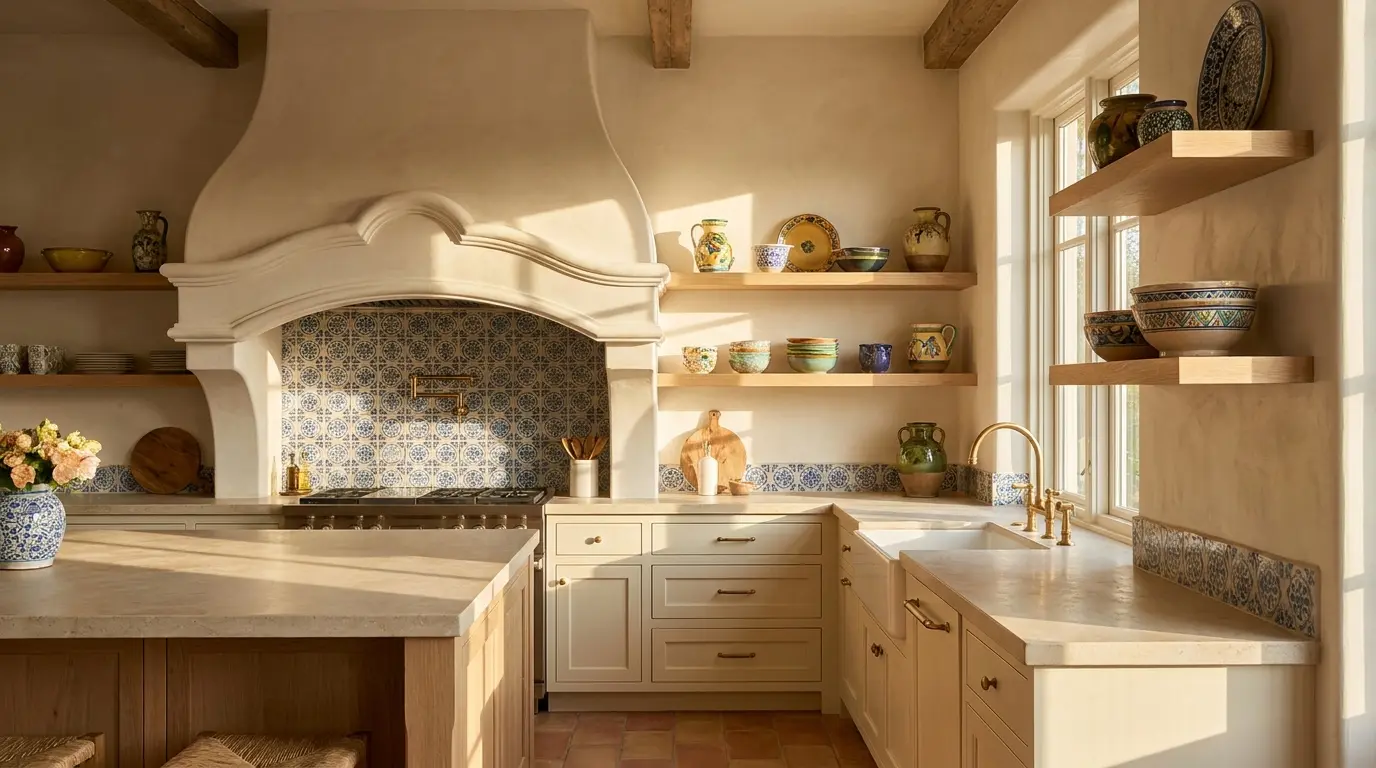
A hood can make the range area feel built into the home instead of looking like a separate appliance. In Mediterranean kitchens, the strongest hoods have shape, weight, or texture that connects to the rest of the room.
A curved plaster hood feels soft, a boxed hood feels cleaner, and an arched front leans more Spanish-inspired. The choice should depend on how much detail already exists nearby.
- Curved Form: Use a curved or arched hood when the kitchen has many straight cabinet lines and needs a softer center point.
- Plaster Finish: Choose a plaster-style hood when the walls, tile, or counters already have warm neutral tones, so the range wall feels connected.
- Clean Box: A boxed hood works in modern Mediterranean kitchens where the goal is structure without decorative detail.
9. Soften Sharp Kitchen Lines With Arches and Curves
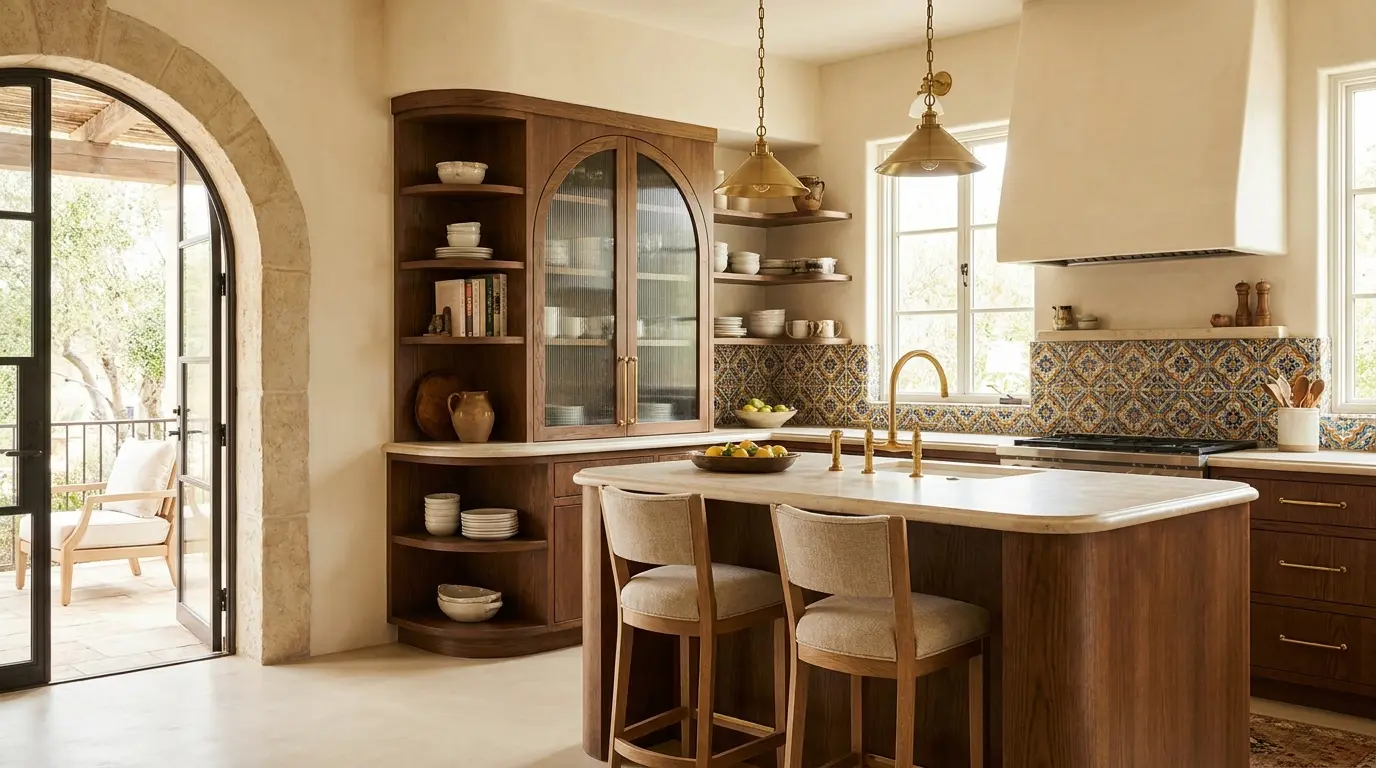
Curves are useful in Mediterranean kitchens because they reduce the boxy feeling that comes from cabinets, counters, and appliances. In older homes, curves show up through arches and openings.
In newer kitchens, the same effect comes from smaller choices: rounded island corners, arched glass doors, curved shelves, or a built-in niche. The key is placement. A curve should improve how the room moves or feels, not look like a random decorative add-on.
- Entry Arch: An arched opening between the kitchen and a dining room or hallway creates a softer transition between spaces.
- Island Edge: A rounded island corner near walkways makes the layout feel smoother and less sharp in daily use.
- Built-In Niche: An arched niche on an empty wall works for pottery, oils, or cookbooks when the room needs character without more cabinets.
10. Pick Countertops That Let the Main Features Shine
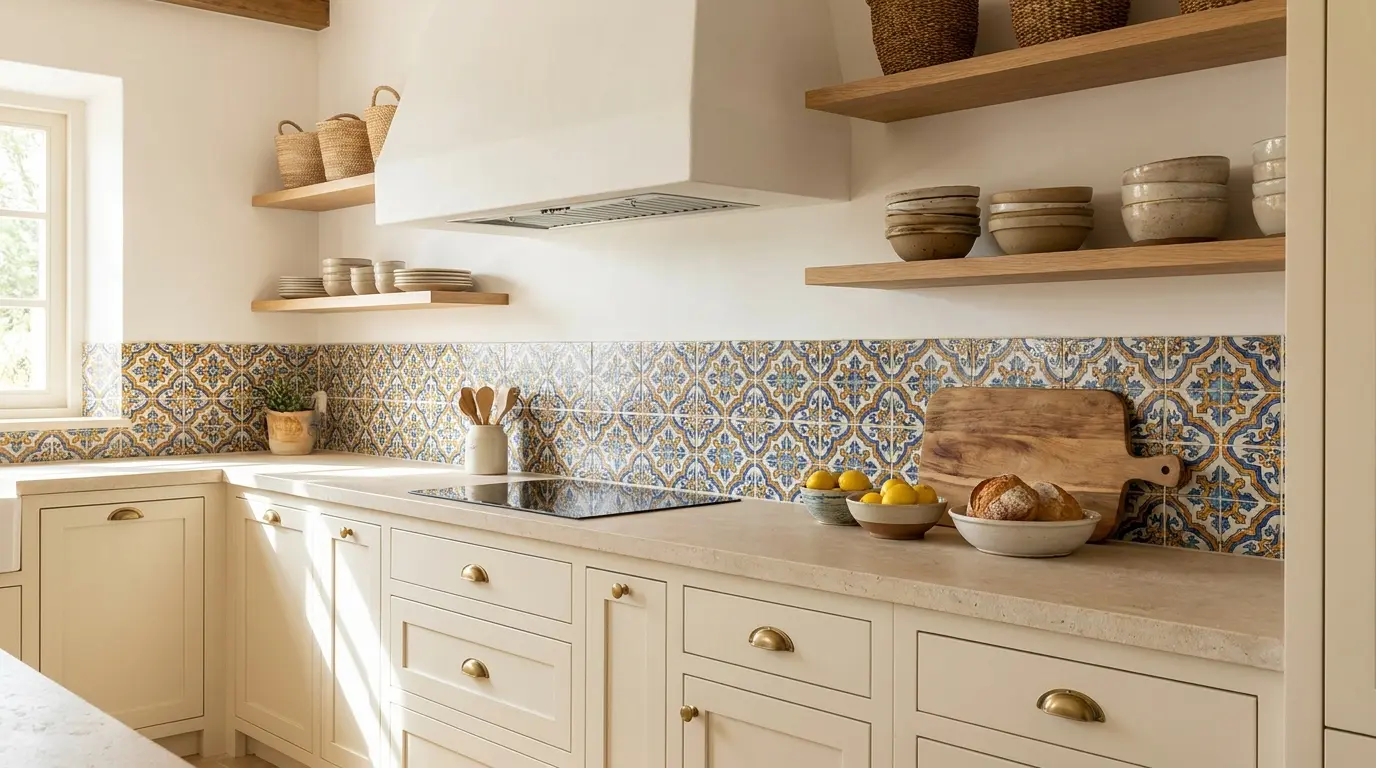
Countertops should help Mediterranean details feel connected instead of competing with them. In kitchens with patterned tile, keep the counter calmer so the backsplash leads. When the tile is plain, a surface with soft veining or a honed finish can add quiet movement.
Warm beige, limestone-look, marble-look quartz, and honed stone all work when the color stays soft. Cold gray, high shine, or very bold veining pulls the room away from the warmer Mediterranean feeling.
If budget is a constraint, the DIY marble countertops show how to get a stone-like surface for less than a full slab replacement.
- Plain Surface: A simple limestone-look or warm beige counter works when the backsplash has strong color, pattern, or handmade texture.
- Soft Movement: Gentle veining fills the gap when the cabinets and tile are quiet, keeping the kitchen from feeling flat.
- Honed Finish: A matte or honed surface in rustic kitchens feels softer and more natural than a polished counter.
11. Choose Flooring That Makes the Kitchen Feel Grounded
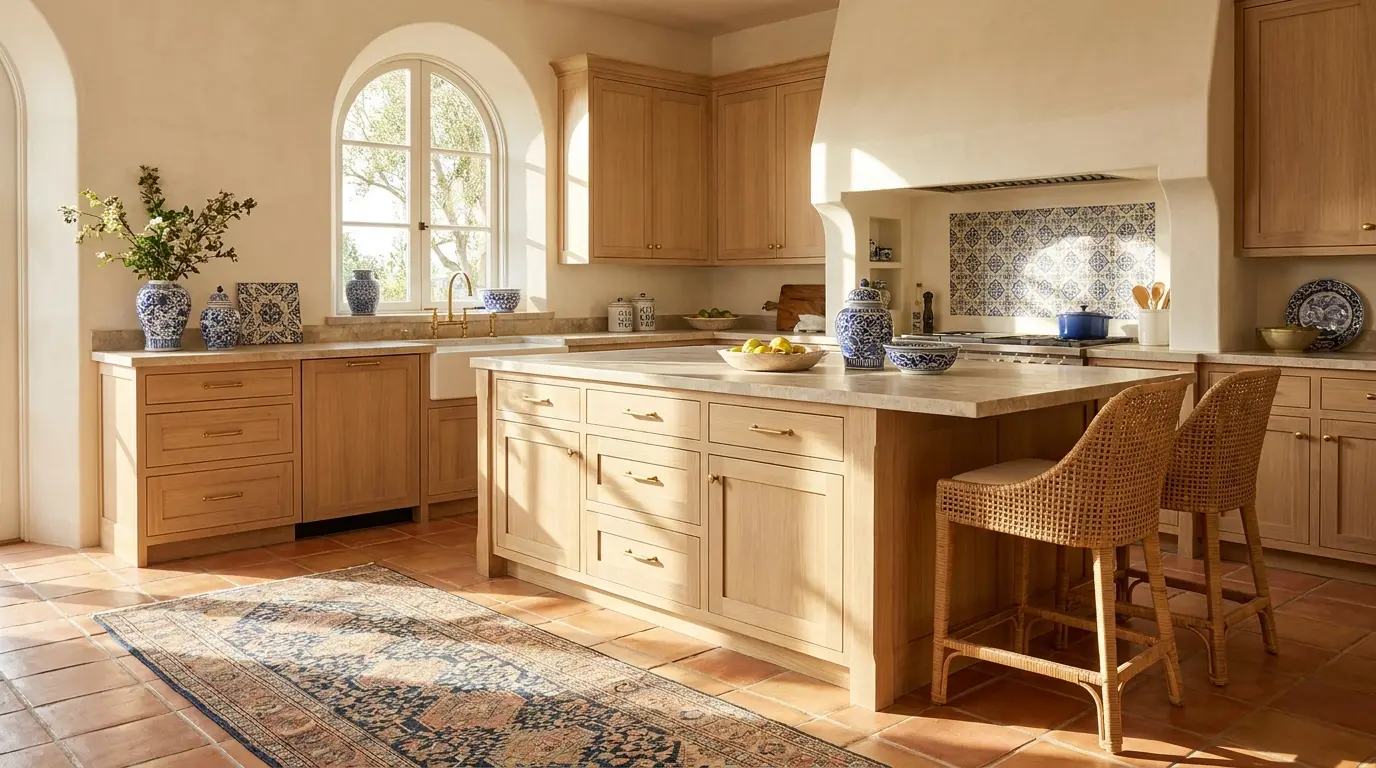
Flooring has a quiet way of deciding how finished a Mediterranean kitchen feels. The floor is what makes the room feel settled before the tile, lighting, or decor even stands out.
Terracotta, limestone-look tile, warm wood, and stone-look porcelain can all work, but the right choice depends on light, room size, and daily use.
- Terracotta Base: Use terracotta in larger kitchens where its color has enough breathing room and will not make the space feel closed in.
- Stone Practicality: Stone-look porcelain gives texture while staying easier to clean than natural stone — useful in busy homes.
- Light Foundation: Limestone-look tile works when the kitchen has limited daylight and needs a softer base under cabinets and counters.
12. Add Metal Details That Hint at Spanish, Tuscan, or Coastal Style
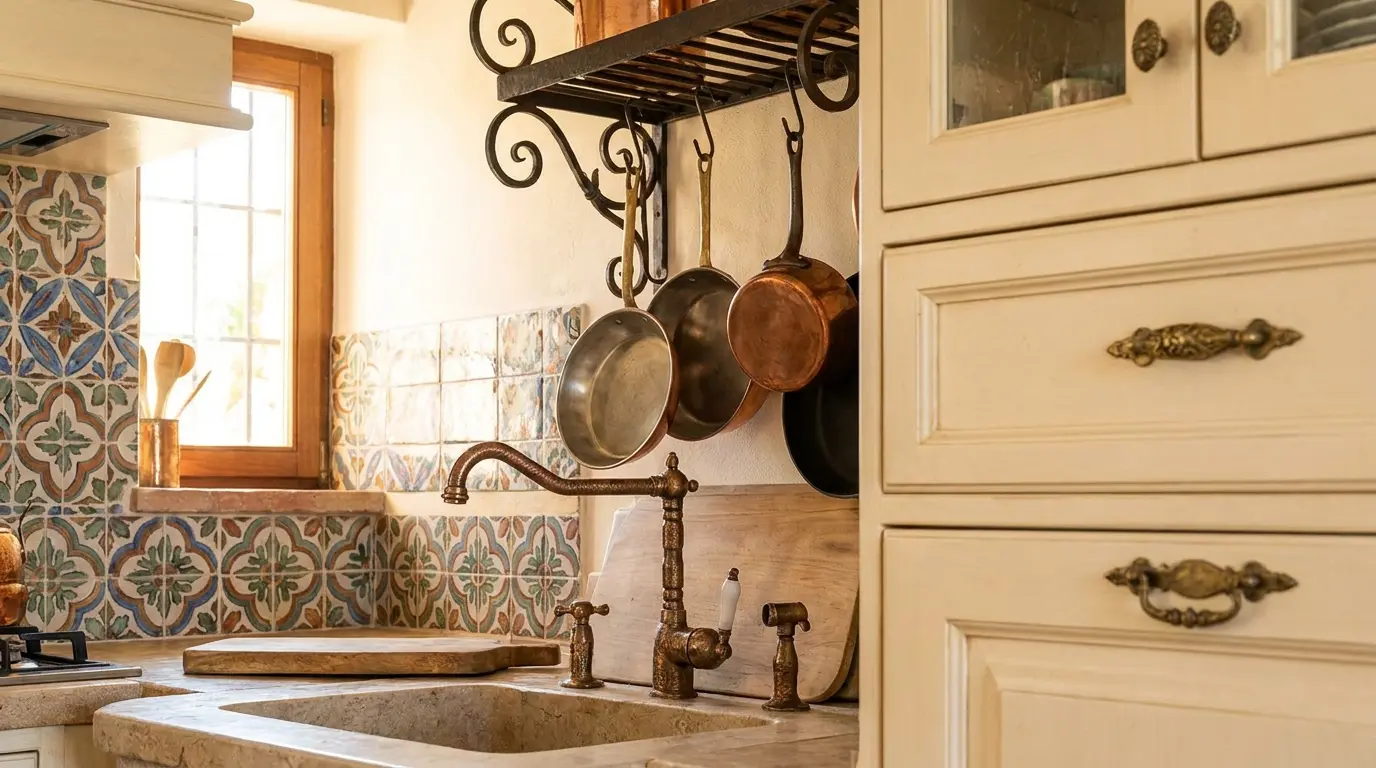
Metal details can shift the whole style of a Mediterranean kitchen, even when they are small. In Spanish or rustic kitchens, iron rails and hooks make the room feel older and more grounded.
In warmer modern kitchens, aged brass or bronze softens clean cabinets and stone counters. The mistake is using too many finishes at once. One main metal, repeated with care, makes the room feel planned rather than pieced together.
- Iron Accents: Use iron on pot rails, hooks, or lantern-style lights when the kitchen needs a stronger Spanish or rustic note.
- Aged Brass: Choose aged brass for pulls, faucets, or shelf brackets when you want warmth without making the hardware too shiny.
- Bronze Finish: Bronze works in kitchens with cream cabinets, clay tones, or darker wood because it adds depth without harsh contrast.
13. Use Layered Lighting to Make the Kitchen Glow at Night
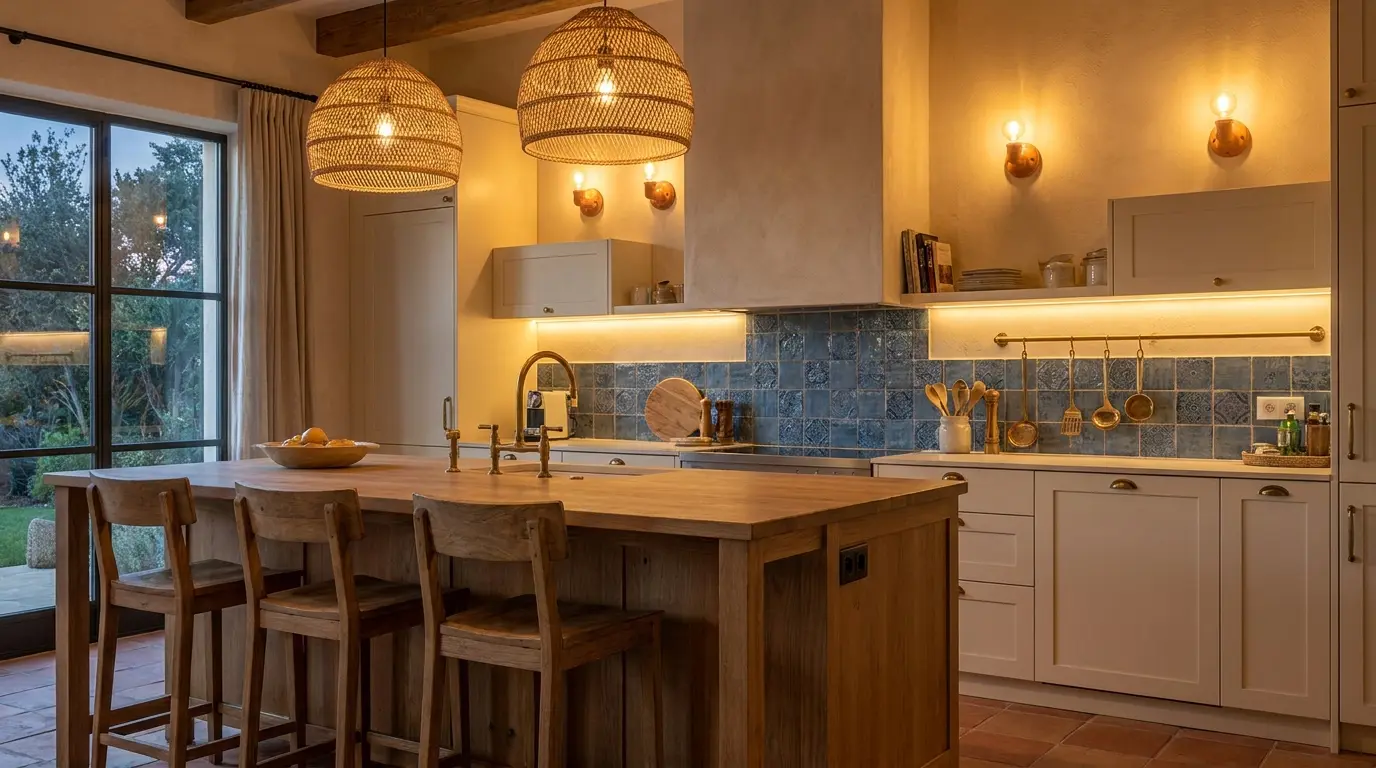
A Mediterranean kitchen should still feel good when daylight fades. One ceiling light cannot carry the whole room at 8pm. Layered lighting works better. Pendants, sconces, under-cabinet strips, and warm bulbs each do a different job.
The cooking area needs clear light, while the island, wall corners, and shelves can hold a softer glow that makes tile, wood, and stone look richer.
- Island Glow: Rattan, ceramic, or warm metal pendants over the island make the center of the room feel relaxed at night.
- Wall Wash: Sconces near shelves, the range wall, or a blank side wall bring depth where overhead lighting feels flat.
- Task Clarity: Under-cabinet lights above prep zones keep the kitchen practical without relying only on bright ceiling fixtures.
14. Make Open Shelves Useful, Not Just Pretty
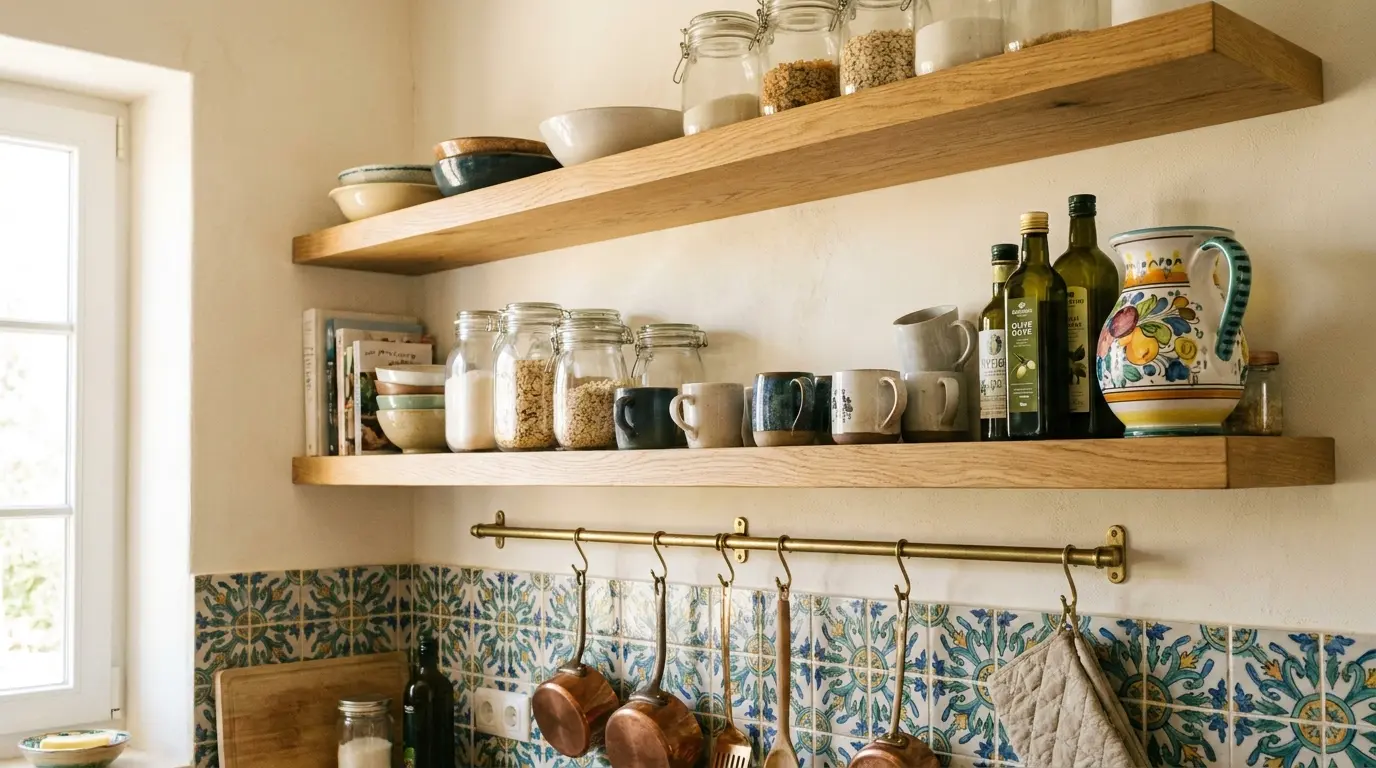
Open shelving works best when it solves a real daily need. Shelves that hold pieces people reach for every morning are more useful than objects chosen only for display. They can make a Mediterranean kitchen feel relaxed, but they need space around each item.
Too many bowls, jars, and plates will make the wall feel crowded. A useful shelf should look easy to live with, not hard to maintain.
- Prep Access: Everyday bowls, small plates, or oil bottles near the prep zone support cooking instead of just filling a wall.
- Drink Station: A short shelf near the coffee area for mugs or glasses works especially when upper cabinets would feel too heavy.
- Edited Display: Mix one useful item with one decorative piece, such as a jar beside a pitcher, so the shelf feels styled but still practical.
15. Style Handmade Ceramics As They Belong in Daily Life
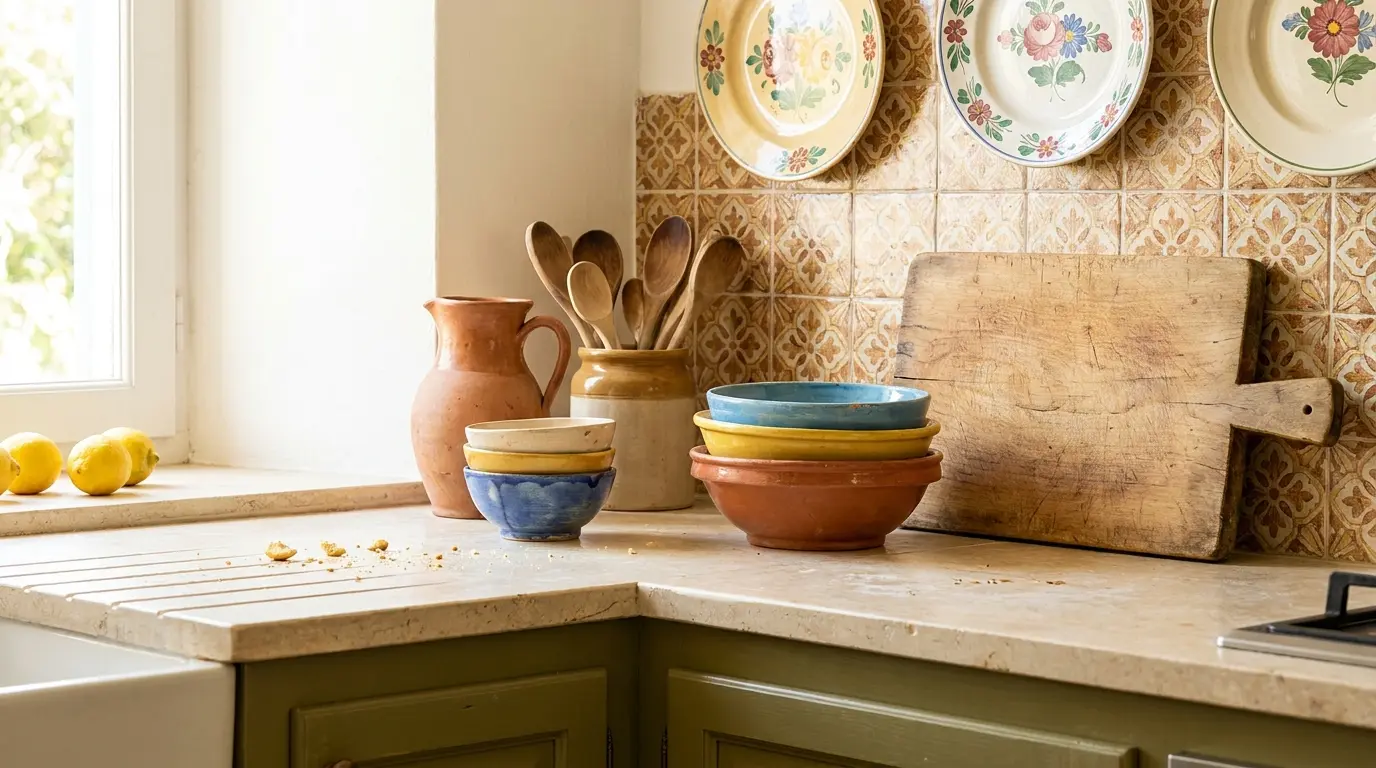
Handmade ceramics add the kind of character that feels natural in a Mediterranean kitchen because they belong around food, serving, and daily use.
Where the main finishes are already fixed, ceramics are often the easiest way to bring in color, shape, and a personal touch without a bigger change. The best pieces repeat colors already found in the room. Use ceramics as working pieces, not loose decoration:
- Counter Bowl: A serving bowl on the counter for fruit, bread, or produce gives the color a purpose.
- Utensil Jar: A ceramic jar near the stove for wooden spoons adds warmth and function to the cooking area.
- Shelf Piece: One hand-painted plate or pitcher on an open shelf introduces a small pattern without another tile choice.
16. Design an Island People Naturally Gather Around
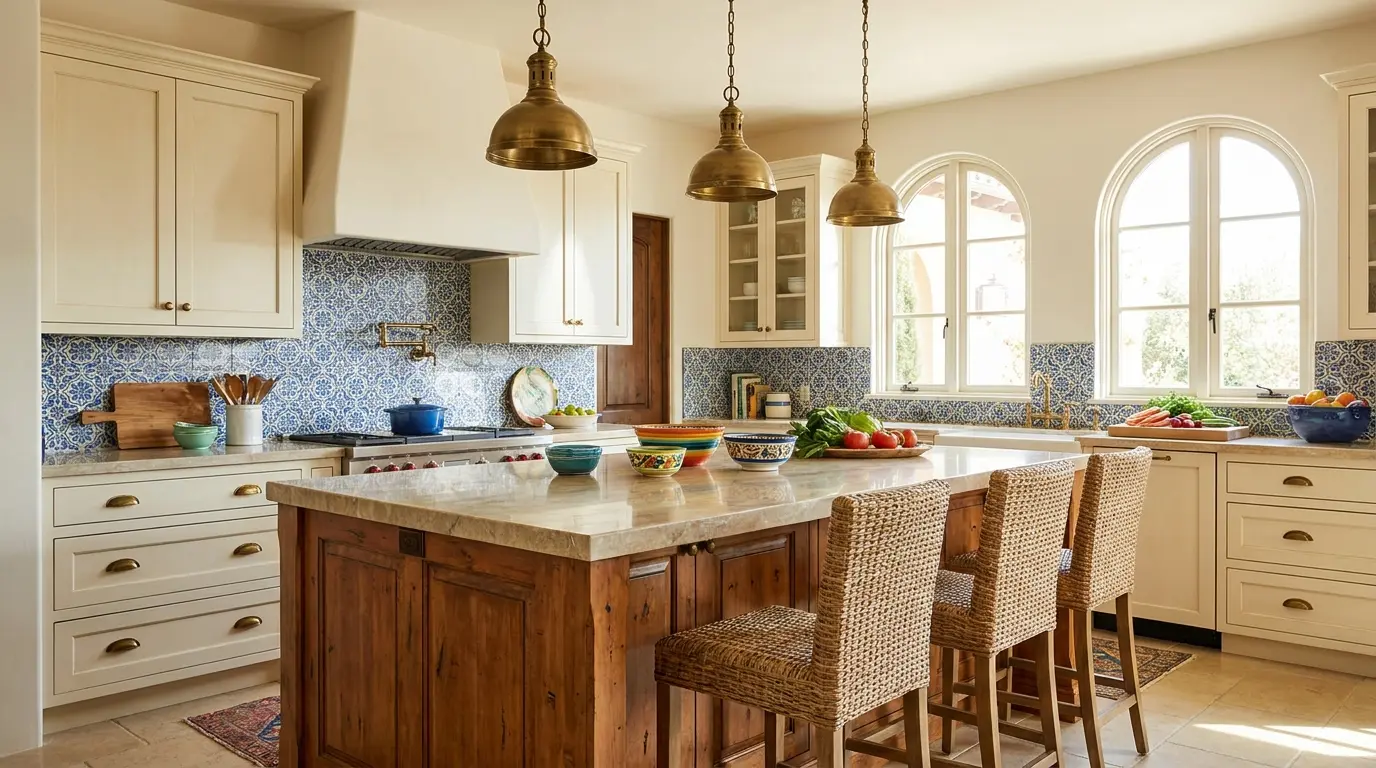
A Mediterranean kitchen island works best when it feels useful before it feels decorative. In family homes, this is where people prep food, serve small plates, help with homework, or talk while dinner is cooking.
That kind of use needs more than a pretty surface. The island should have clear walking space, deep storage, comfortable seating, and a top that can handle daily mess.
- Drawer Storage: Deep drawers for pans, serving bowls, or baking pieces let people reach items without bending into dark cabinets.
- Comfortable Seating: Leave enough knee space under the counter — stools only work well when people can sit without feeling squeezed. The standard kitchen island height is 36 inches for prep and 42 inches for bar seating.
- Clear Traffic: Keep 42 to 48 inches of walking clearance around all sides, especially near the fridge and stove, so the island helps movement instead of blocking it.
17. Give the Island Its Own Mediterranean Moment
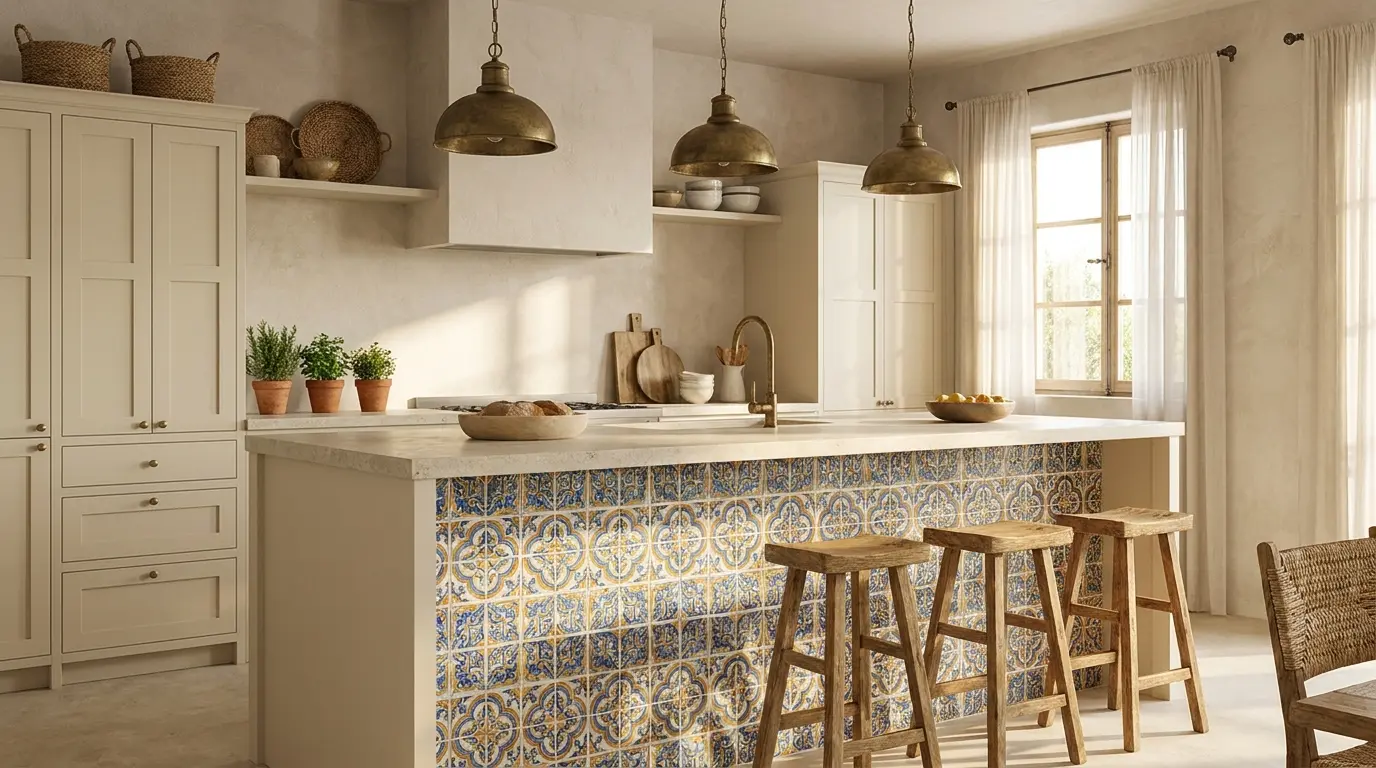
Rather than matching every cabinet, the island in a Mediterranean kitchen often carries a different material or finish that gives the room more depth. This approach works especially well when the surrounding cabinetry stays understated.
A carefully chosen finish makes the island feel intentional rather than like another row of cabinets placed in the middle of the room.
- Textured Surface: Fluted wood or ribbed detailing introduces shadow and dimension without relying on color.
- Color Accent: A muted painted finish brings personality while staying easy to update in the future.
- Crafted Detail: Tile or plaster treatments add character that feels connected to Mediterranean architecture.
18. Add Built-In Details That Make the Kitchen Feel Older
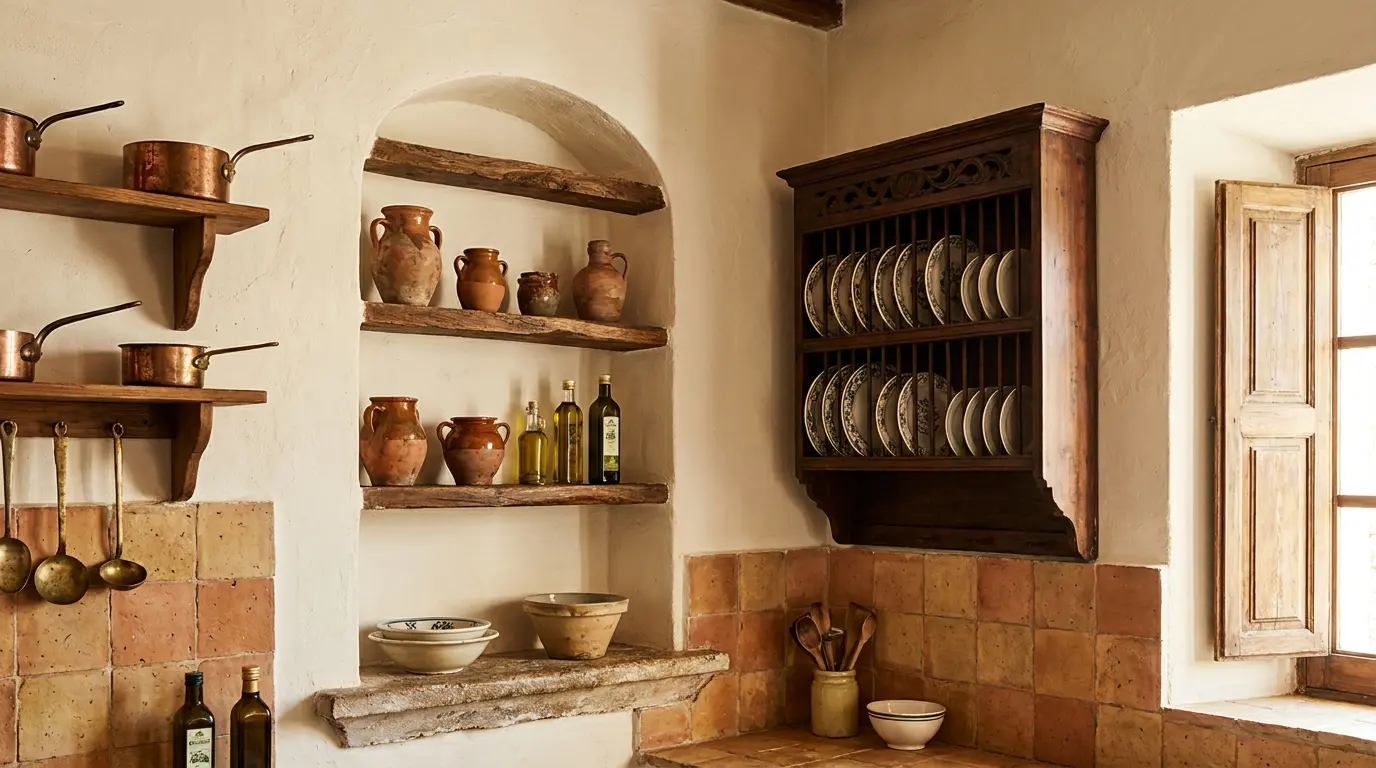
The most memorable Mediterranean kitchens are often defined not by expensive finishes but by thoughtful built-in features.
Small niches, ledges, and recessed storage areas appear again and again in older Spanish and Italian homes because they blend beauty with practicality. These elements make a kitchen feel established, as though it evolved naturally over time rather than being installed all at once.
- Recessed Display: Turn an empty wall section into a niche for pottery, cookbooks, or olive oil bottles.
- Functional Ledge: A narrow stone shelf provides display space without taking up valuable countertop area.
- Traditional Storage: Plate racks offer visual interest while keeping frequently used dishes within reach.
19. Soften Stone and Tile With Woven Texture
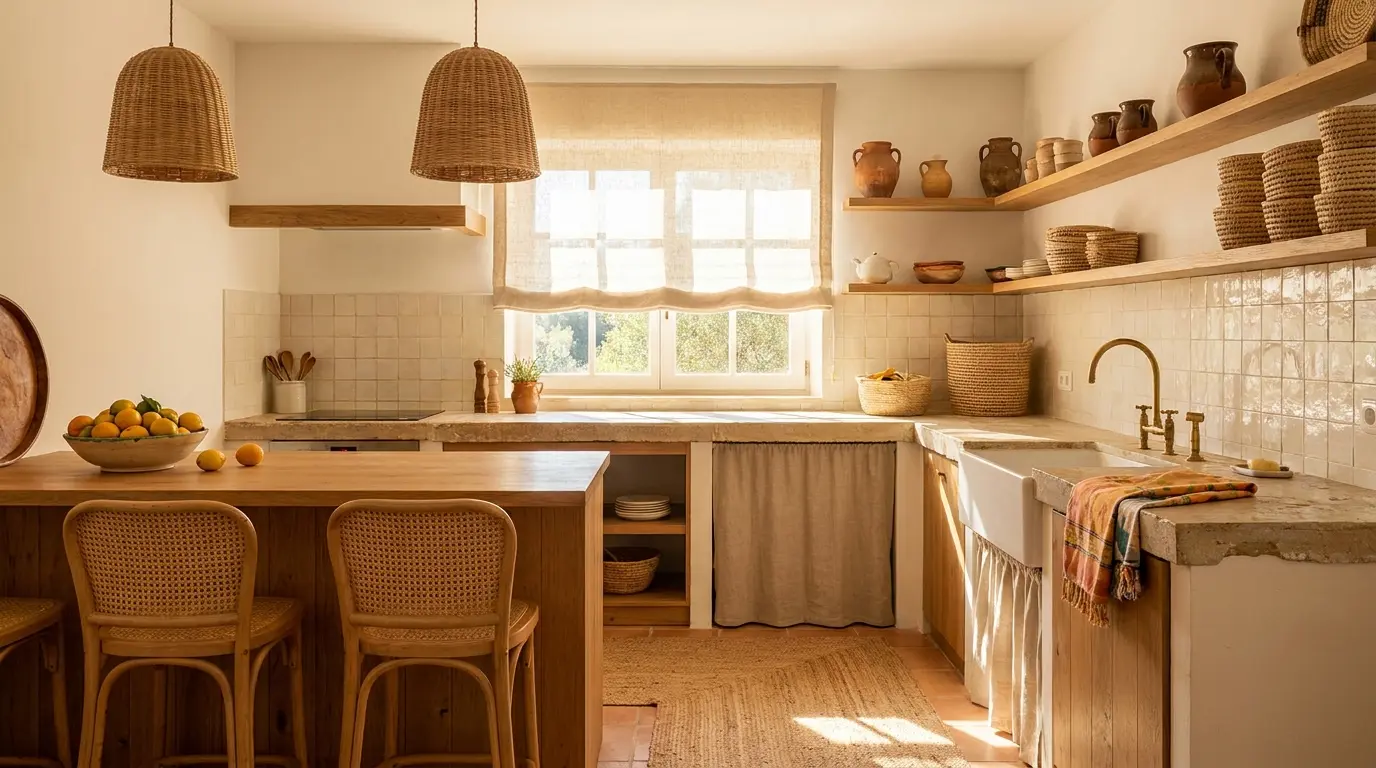
Stone, tile, metal, and wood are essential Mediterranean materials, but too much of any hard surface can leave a room feeling rigid.
Woven elements appear so often in coastal Mediterranean regions because they introduce softness while keeping the palette natural. Instead of adding another decorative object, woven materials quietly improve how the room feels.
- Cane Seating: Cane or rush stools around stone islands soften the seating area and feel lighter than solid wood.
- Rattan Lighting: A woven pendant breaks up straight cabinet lines, but works best away from heavy steam or grease zones.
- Storage Baskets: Baskets are most useful on lower shelves, pantry corners, or breakfast areas for linens, produce, or bread.
20. Bring in Herbs, Olive Branches, and Fresh Greenery
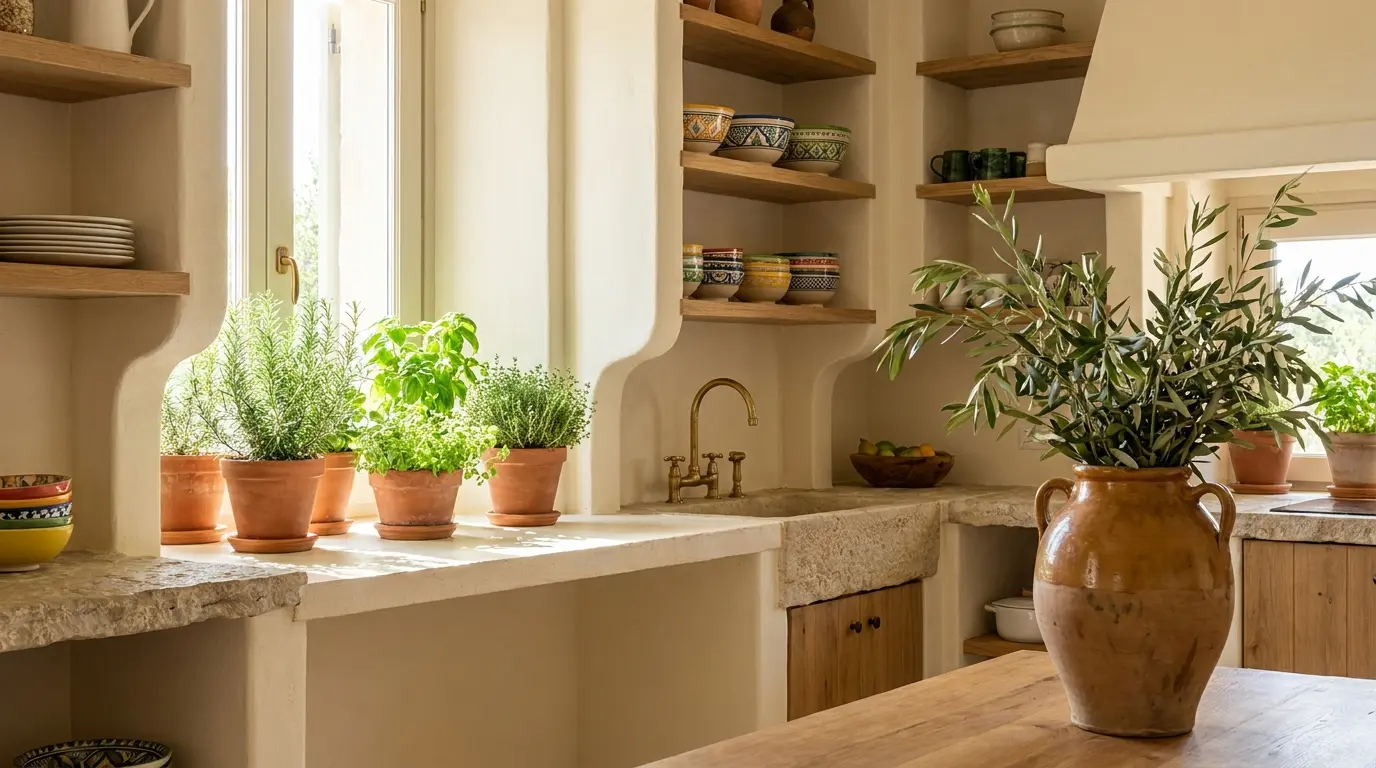
In Mediterranean homes, greenery rarely feels like decoration for its own sake. Fresh herbs, olive branches, and simple plants are tied directly to cooking and daily routines. This connection makes them feel natural within the kitchen environment.
Rather than filling every corner, a few carefully chosen pieces introduce freshness while keeping maintenance manageable.
- Herb Placement: Rosemary, basil, and thyme need bright light. Keep them near a sunny window instead of deep inside the kitchen.
- Branch Height: Olive branches in a tall vase add height without taking up as much surface space as a large plant.
- Easy Care: One healthy plant in a sink corner or on a ledge beats several small pots that need constant moving and watering.
21. Use Wall Texture When the Kitchen Feels Too Flat
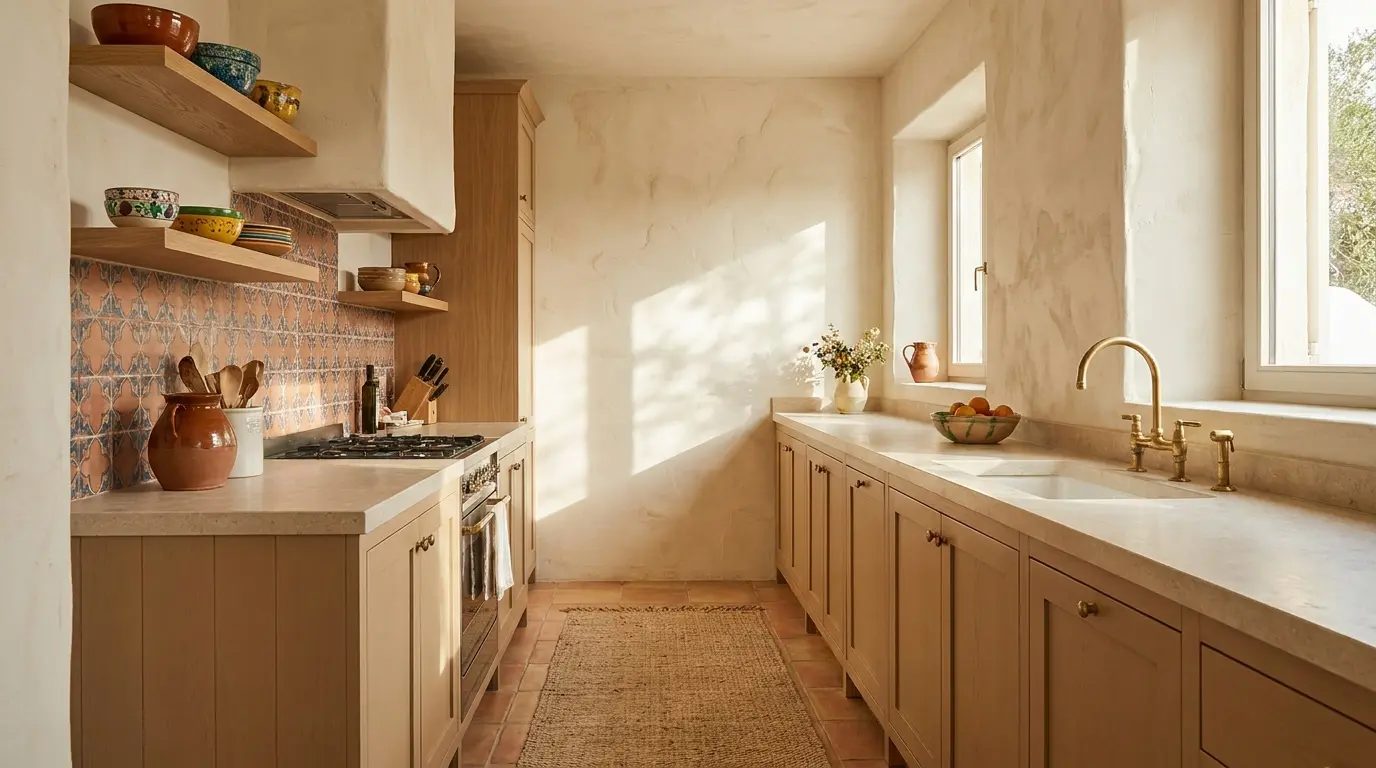
Not every kitchen needs another tile pattern or decorative feature. Sometimes the room simply needs more visual depth. Textured walls solve that problem by changing how light interacts with the space.
Limewash and plaster-inspired finishes appear often in modern Mediterranean interiors because they make plain walls feel richer while keeping the overall design calm and understated.
- Light Response: Limewash-style walls show their best movement when natural light hits them, so they work especially well near windows or open walls.
- Color Control: Warm beige, clay, or soft cream textures pair better with Mediterranean materials than cold gray finishes.
- Limited Use: One textured wall is usually enough in a kitchen because cabinets, tile, and counters already add several visual layers.
22. Create a Breakfast Nook That Feels Warm and Lived-In
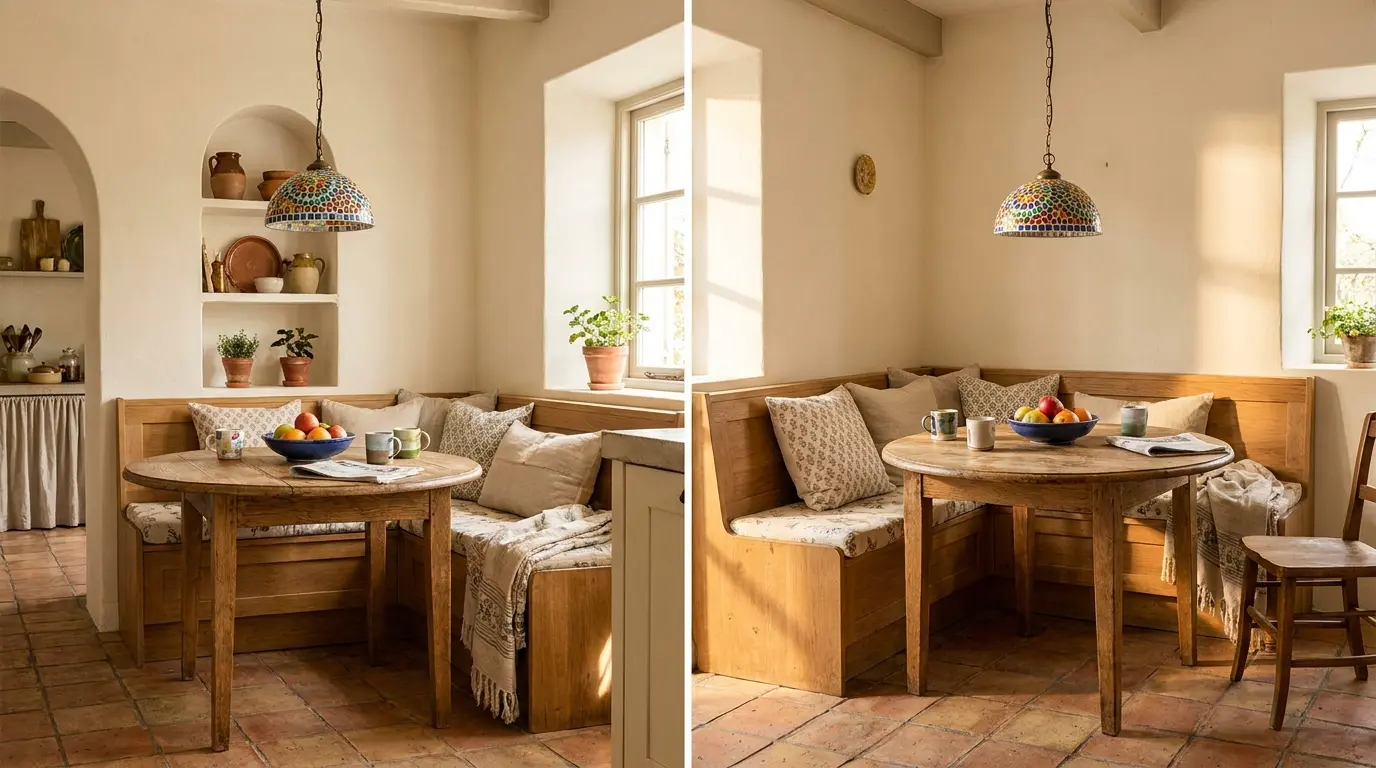
Some of the most inviting kitchens include a corner designed for slowing down. Whether it is used for morning coffee, casual lunches, or evening conversations, a breakfast nook creates a different rhythm from the main cooking zone.
Mediterranean homes embrace these smaller gathering spaces because they encourage everyday moments that feel relaxed and unhurried.
- Bench Fit: A built-in bench works best in corners where loose chairs would block movement or make the kitchen feel crowded.
- Table Shape: A round table is easier to move around in tight spaces and creates a softer shape beside straight cabinet lines.
- Comfort Layer: Use washable cushions or linen seat pads because kitchen seating needs to handle crumbs, spills, and daily use.
23. Refresh a Plain Kitchen With Mediterranean Details
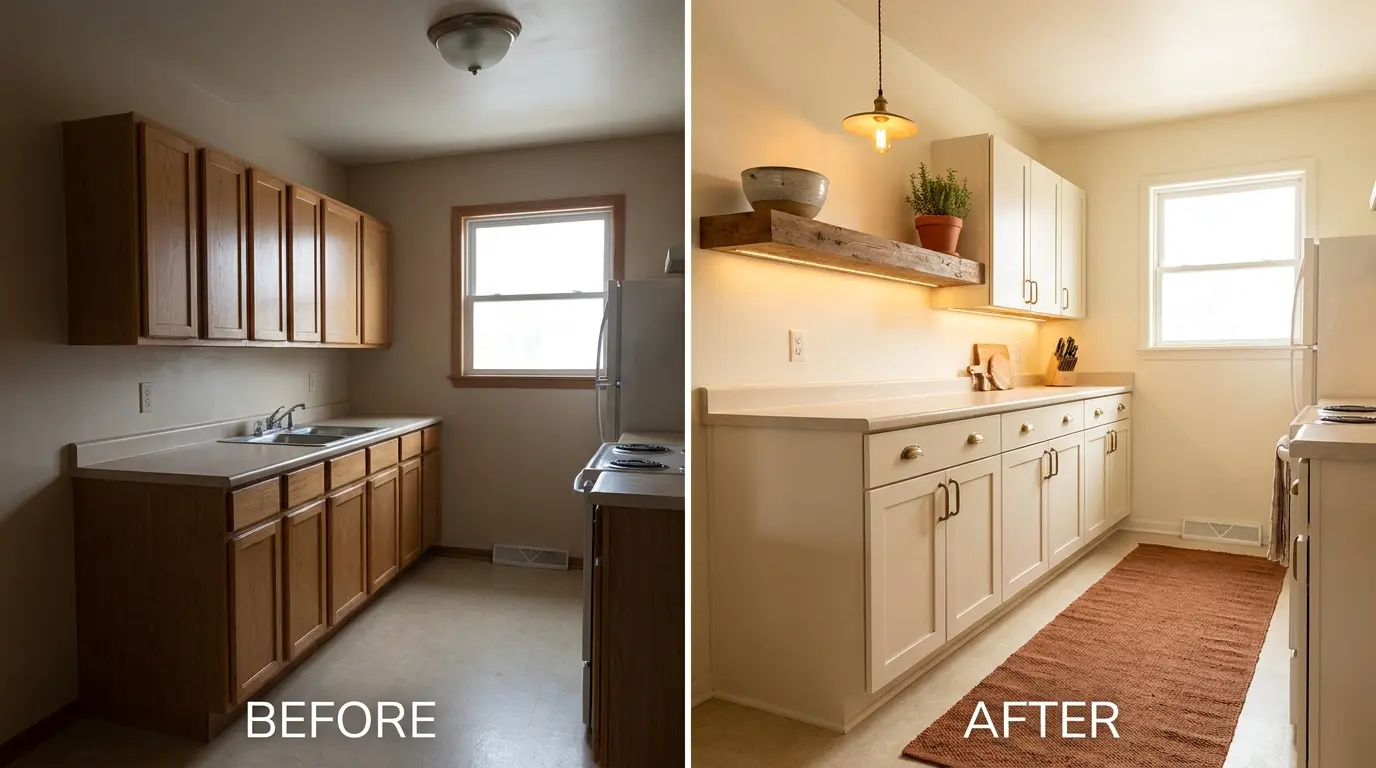
Not every Mediterranean-inspired kitchen starts with a renovation. Some of the most effective transformations come from a handful of thoughtful updates.
When a kitchen already functions well, changing what people notice first delivers the biggest impact. Light, texture, hardware, and styling details can shift the entire mood without removing a single cabinet.
- Lighting First: Replace cool white bulbs with warm bulbs before buying decor. Lighting changes how every color and finish reads, and a 2700K bulb costs almost nothing compared to a tile job.
- Hardware Upgrade: Aged brass, bronze, or iron pulls make flat cabinets feel more considered without repainting. The same logic applies to greige or neutral cabinets; the right pull changes the room’s personality, as the greige cabinet pairs with matte black and brass options side by side.
- Surface Edit: Remove random counter items first, then add one wood board, ceramic bowl, or herb pot so the room feels styled but still useful.
Mediterranean Kitchen Design by Layout
Layout decides where your style details should go. A galley kitchen needs different choices from an island kitchen. Look at movement first. Style should support how you cook, not block it.
| Layout | Best Design Move | What to Avoid |
|---|---|---|
| Galley kitchen | Keep one side visually lighter and use backsplash detail on one wall | Heavy upper cabinets on both sides |
| L-shaped kitchen | Use the longest wall for the main feature | Splitting strong details across both walls |
| U-shaped kitchen | Keep counters calm and add one detailed wall | Pattern on every surface |
| Island kitchen | Let the island support prep, storage, and seating | Oversized island with poor walking space |
| Open-plan kitchen | Repeat one finish outside the kitchen | A kitchen that feels separate from the next room |
A good layout lets the room work before it asks the room to look pretty. Once movement, storage, and clear surfaces are handled, Mediterranean details feel natural. If the layout is wrong, even the best tile will not save the kitchen.
Budget Planning Guide
| Cost Note: Figures in this article are estimates based on national averages. Actual costs vary significantly by region, contractor, materials, and project scope. Always get at least three quotes before committing to any project above $1,000. |
A Mediterranean kitchen budget should be planned on a scale, not on impulse. Small updates can adjust the mood, while larger projects change the structure, surfaces, and storage.
| Budget Level | Rough Range | Best Focus |
|---|---|---|
| Low budget | $300 to $1,500 | Paint, bulbs, hardware, ceramics |
| Light refresh | $1,500 to $5,000 | Faucet, shelves, runner, simple backsplash |
| Medium update | $5,000 to $15,000 | Cabinet refinishing, tile work, selected surfaces |
| Larger remodel | $15,000 to $50,000+ | Layout, cabinets, flooring, counters, built-ins |
The best spend is the one that fixes the weakest part of the room first. A limited budget should go toward visible changes. A medium budget can handle surface upgrades. A full remodel makes sense when the layout, storage, or main materials no longer support daily cooking. Costs rise quickly when plumbing, electrical work, custom cabinets, or structural changes are involved.
Common Mediterranean Kitchen Design Mistakes to Avoid
Most design mistakes happen when too many attractive details are used at the same time. Mediterranean kitchens already have many strong elements, so the room needs editing. Fewer choices often create a warmer, more natural space.
- Using too many patterns: Patterns should have one clear place in the kitchen. Use it on the backsplash, floor, or island, not all three. If one surface has a strong pattern, keep the nearby counters, cabinets, and hardware calmer so the room does not feel restless.
- Making the kitchen feel too dark: Warmth should not turn into heaviness. Dark wood, deep floors, and heavy finishes need balance from cream walls, light counters, better task lighting, or fewer upper cabinets. A kitchen should still feel open enough to cook in comfortably.
- Mixing too many Mediterranean styles: Spanish, Tuscan, coastal, and modern Mediterranean details each have their own mood. Pick one main direction, then use other influences only in small ways. If the room starts feeling confused, remove the strongest extra detail.
- Choosing decor over function: A kitchen still needs clear prep space, closed storage, and easy movement. Bowls, pitchers, boards, and jars are useful. Random decor makes the room harder to clean and less practical.
- Forgetting daily upkeep: Tile, stone, grout, open shelves, and textured finishes all need care. Before choosing them, think about cooking habits, cleaning time, and how often the kitchen is used. A beautiful finish should still fit daily life.
Frequently Asked Questions
How do you modernize Tuscan interior design without losing its character?
Modernizing Tuscan design involves reducing heavy textures, using lighter neutral tones, and simplifying furniture shapes. Keep natural materials like wood and stone, but balance them with open layouts, softer lighting, and minimal décor to avoid a dated or overly rustic look.
What is the difference between Tuscan and Mediterranean interior design?
Tuscan design is a specific subset of Mediterranean style focused on Italian countryside aesthetics, using warm earthy tones and rustic materials. Mediterranean design is broader, including Spanish, Greek, and coastal influences with more variety in color palettes and architectural features.
Can Tuscan interior design work in small apartments or modern homes?
Yes, but it needs adaptation. In smaller spaces, use lighter wall colors, simplified furniture, and fewer heavy textures. Avoid dark wood overload and instead focus on subtle Tuscan accents like stone finishes, soft plaster walls, and minimal rustic décor.
What lighting works best for modern Tuscan interiors?
Warm layered lighting works best, combining natural light, soft pendant fixtures, and wall sconces. Avoid harsh white lighting, as it flattens textures. Warm 2700K lighting enhances stone, wood, and plaster surfaces commonly used in Tuscan design.
How do you balance rustic and modern elements in Tuscan design?
Balance comes from contrast control. Use rustic materials like wood beams or stone flooring with modern elements such as clean-lined furniture and neutral palettes. The goal is to let rustic textures stand out while keeping overall composition simple and uncluttered.
Final Thoughts
Tuscan interior design today is less about heavy rustic spaces and more about creating warm, balanced homes that feel open and calm.
I’ve seen how small changes in tone, texture, and layout can completely shift how a room feels, and you can apply the same approach in your own space.
Focus on lighter neutrals, natural materials, and simple furniture choices while keeping stone, wood, and plaster as your base. You also saw how lighting, color balance, and layout decisions work together to avoid a dark or outdated look.
When you apply these ideas carefully, Tuscan interior design feels modern yet timeless. Try these tips in your home and see what works best for your space, or check out related interior design guides to refine your style further.