

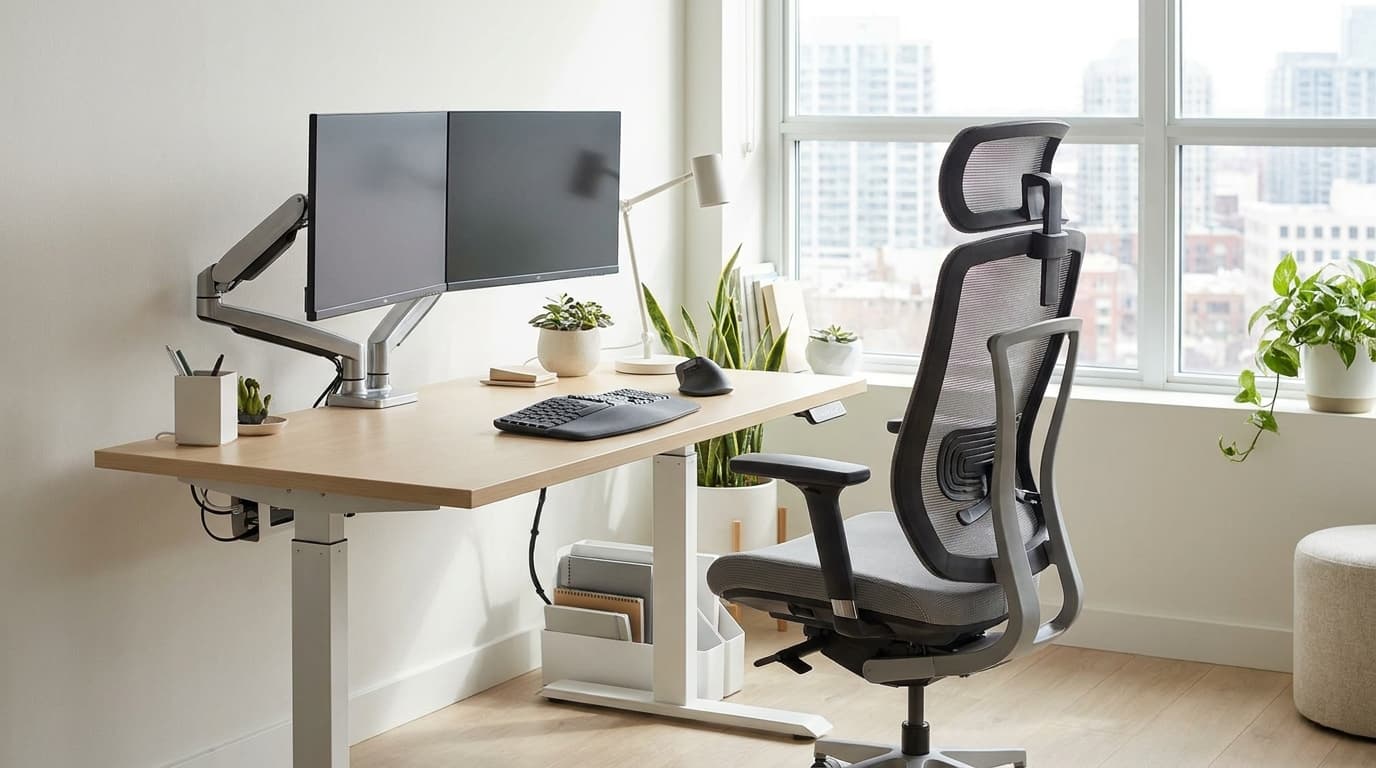


| Quick Answer: Ergonomic furniture is the type of furniture that is built to match the natural shape and movement of your body. It supports good posture, reduces pain, and helps you sit or stand comfortably for long hours. |
This is the furniture that adjusts to fit you, not the other way around. It supports your spine, wrists, and legs in a natural position.
Working from home or sitting at an office desk both carry the same risk. The right pieces can lower your chance of pain and injury.
Ergonomic furniture helps create a more comfortable workspace by improving posture, reducing strain, and making long hours of sitting easier on your body.
From adjustable desks to supportive chairs, small changes can make a noticeable difference in daily comfort.
What is Ergonomic Furniture?
Ergonomic furniture is designed around the science of human movement and body mechanics. It follows the principles of ergonomics, the study of how people interact with their environment.
Each piece aims to reduce physical stress on the body during everyday tasks. A regular chair forces you to adapt to its shape, but an ergonomic chair adapts to yours.
This furniture keeps your joints in neutral positions. It reduces pressure on your spine and prevents repetitive strain injuries. Long hours at a desk feel less taxing when your setup supports your body correctly.
The table below breaks down common types. It shows what each one offers.
| Furniture Type | Key Ergonomic Feature | Main Benefit |
|---|---|---|
| Ergonomic Chair | Adjustable lumbar support and seat height | Reduces lower back pain |
| Standing Desk | Height adjustment for sitting or standing | Cuts down sedentary time |
| Ergonomic Keyboard | Split or curved design | Lowers wrist and hand strain |
| Monitor Arm | Adjustable height and angle | Prevents neck and eye strain |
| Footrest | Angled support for feet | Improves leg circulation |
How Furniture Uses Ergonomic Principles to Support the Body
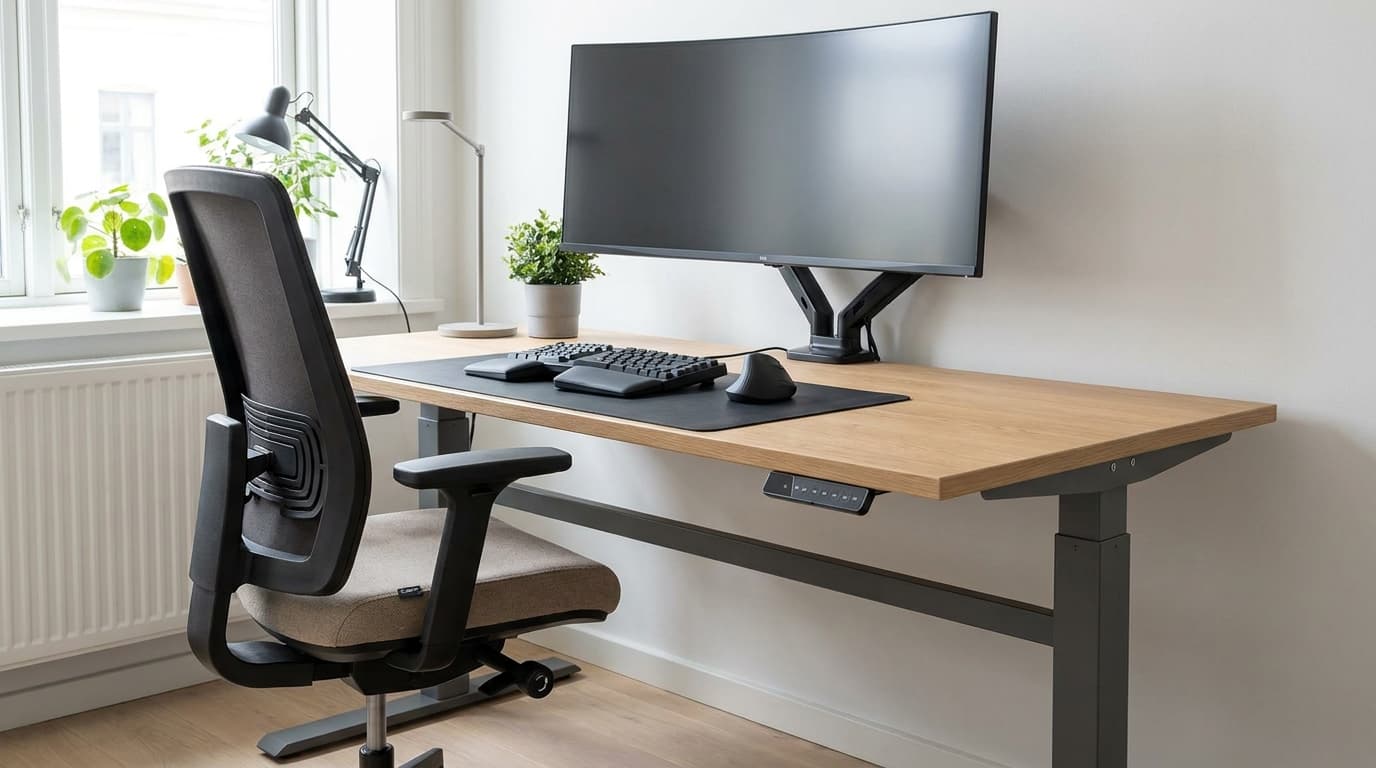
Ergonomics is the science of designing things around how the human body moves and works. It looks at posture, comfort, and movement patterns.
Furniture makers use these principles to create pieces that fit the human body. The result is less strain and more support during daily tasks. Good furniture design puts this science into practice.
1. Core Principles of Ergonomics
Ergonomic furniture design rests on four core principles. Each one addresses a different source of daily strain, from posture to movement. A well-built chair, desk, or keyboard follows all four at once.
2. Proper Body Alignment
Good furniture helps keep your spine, neck, shoulders, and hips aligned. It prevents your body from twisting into awkward angles. This alignment lowers the risk of long-term pain.
3. Adjustability
This furniture adapts to different body types and heights. A chair might offer adjustable seat height and lumbar support. A desk might raise or lower to match your reach.
4. Comfort and Support
This principle focuses on reducing pressure points. It supports areas that carry the most strain during long hours of use. Soft, shaped surfaces reduce fatigue over time.
5. Ease of Movement
Good design lets you shift positions naturally. It encourages healthy movement instead of sitting still for hours. Small posture changes throughout the day protect your joints.
What are the Different Types of Ergonomic Furniture
Ergonomic furniture comes in several forms, each built for a specific part of your workspace. Some pieces support your seating, while others manage your desk height or screen position.
Knowing the main types helps you build a setup that covers your whole body. Below are the pieces most people add first.
1. Ergonomic Office Chairs
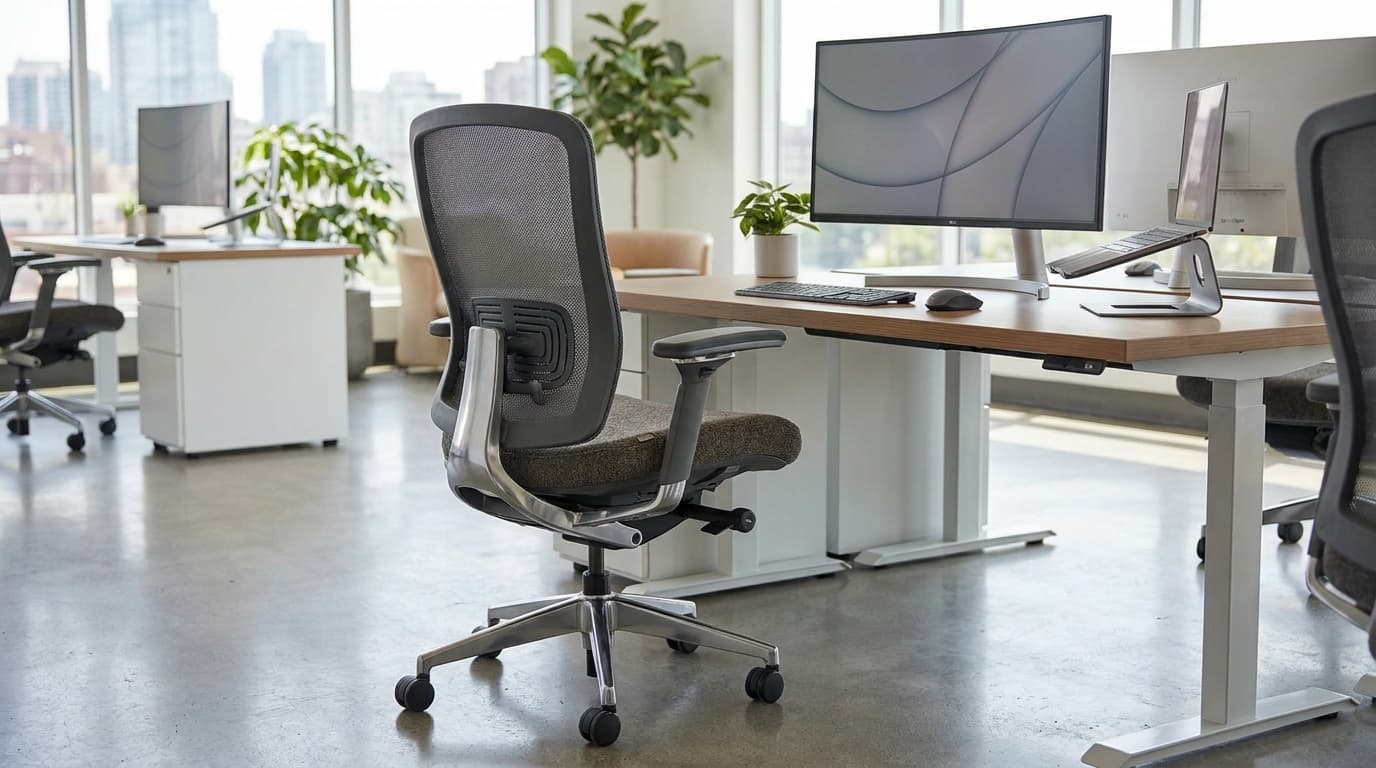
A good chair is often the first upgrade people make, and for good reason. Look for a seat height you can adjust to match your desk.
Lower back support should move up or down to fit your spine. Armrests that shift in height and width keep your shoulders relaxed.
Seat depth matters too, since a seat that is too long or short can cut off circulation behind your knees. Breathable fabric keeps you cool during long sessions.
2. Height Adjustable Desks
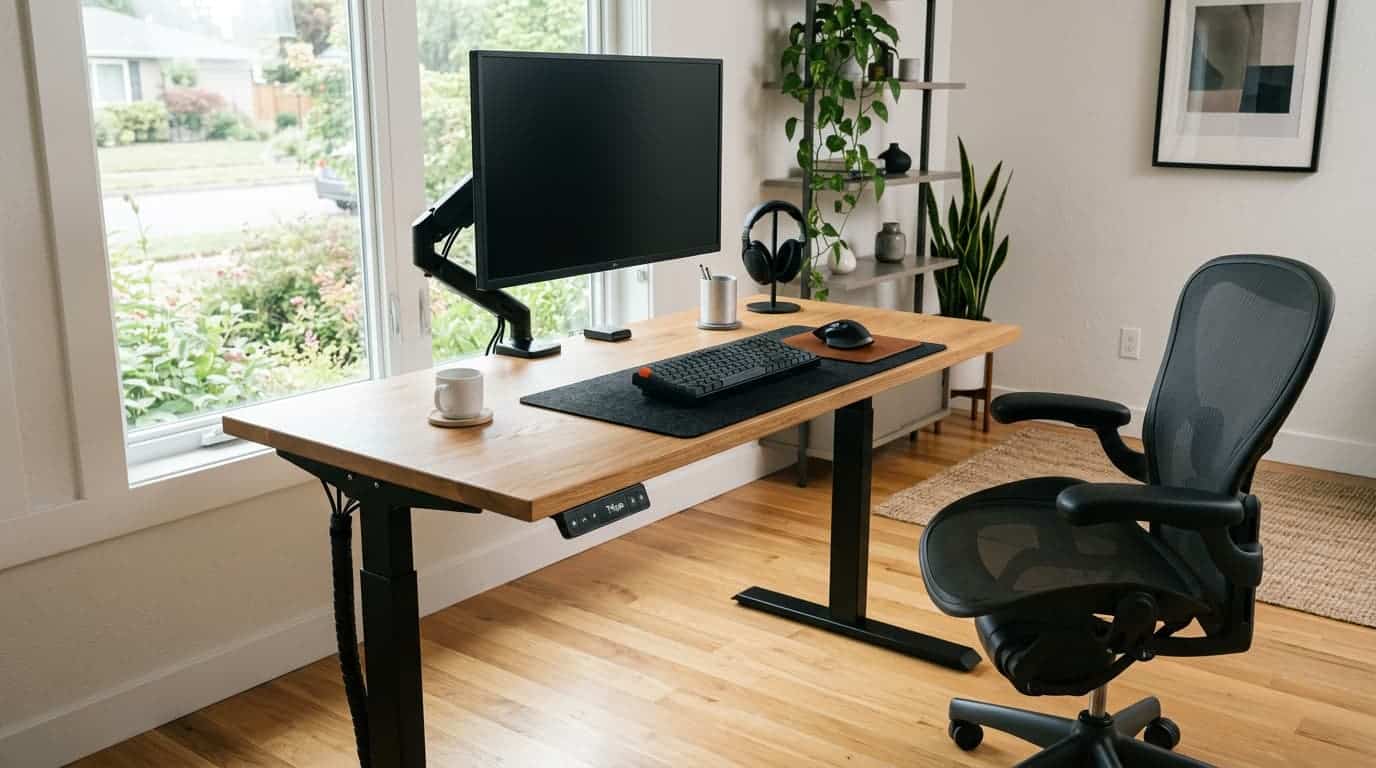
A desk that allows you to switch between sitting and standing gives you more freedom throughout the day. Switching positions cuts down the hours you spend sitting still.
Pairing an adjustable desk with the right minimalist home office furniture lets you position your screen and keyboard to suit your height, not a fixed standard.
Switching positions cuts down the hours you spend sitting still. Different users benefit in different ways. Taller or shorter people get a desk that actually fits them. Anyone with back pain gets a break from sitting all day.
3. Ergonomic Keyboard and Monitor Setups
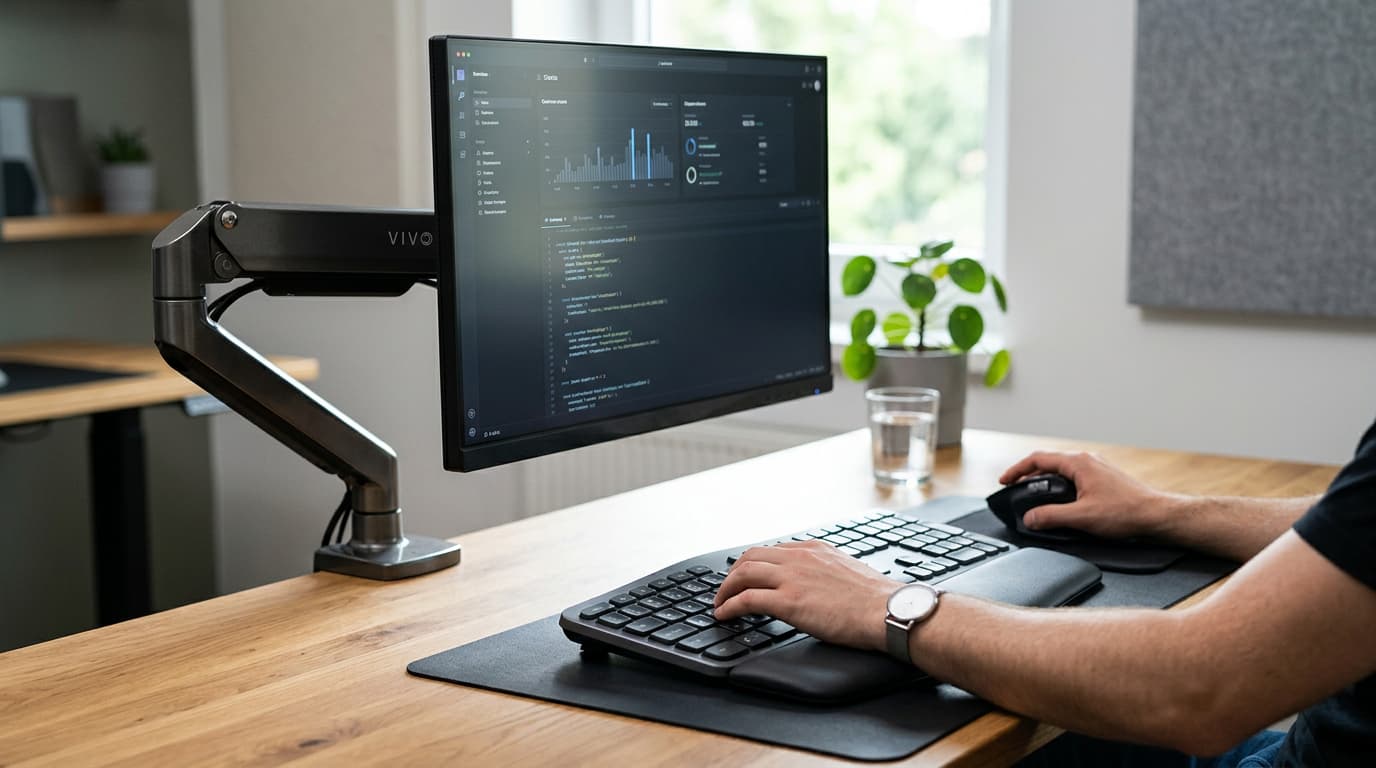
Your hands and neck need support too, not just your back. A keyboard placed too high or too low forces your wrists into an awkward bend.
Split or curved keyboards keep your wrists at a more natural angle. Your monitor should sit at eye level, so you avoid tilting your neck up or down.
Getting this height and angle right reduces neck strain and wrist fatigue during long work sessions.
4. Ergonomic Home Office Furniture
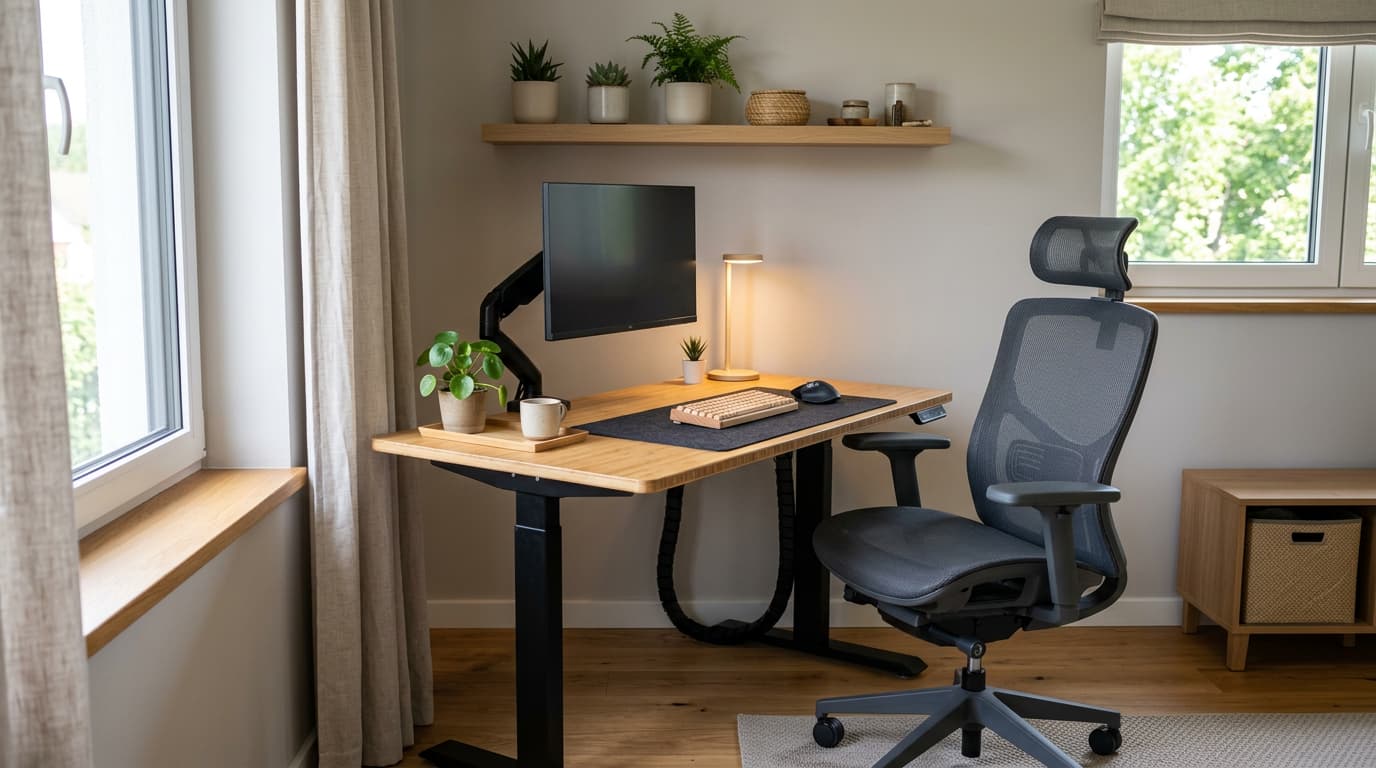
Remote workers face the same strain as office employees, often with less space to fix it. Compact ergonomic desks fit small rooms without giving up adjustability.
A supportive chair matters just as much at home as it does in an office. Look for setups built for smaller spaces that still let you adjust height and support.
A healthy home workspace protects your body just as well as a corporate one
What are the Benefits of Ergonomic Furniture
Choosing the right furniture pays off in ways beyond simple comfort. It changes how your body feels at the end of a workday. It can also affect how well you focus and how much you get done.
1. Improves Posture and Body Alignment
Standard furniture often lets you slouch without realizing it. Ergonomic pieces guide your body into a straighter, more balanced position.
Over weeks of use, this can train you to sit and stand with better alignment. Small daily corrections add up to a real change in posture.
2. Reduces Neck, Back, and Shoulder Strain
Poor desk setups are a common cause of daily aches. A screen placed too low or a chair with no support forces your muscles to compensate.
Proper height and support take that pressure off your neck, back, and shoulders. Many people notice less soreness within the first few weeks.
3. Increases Comfort During Long Work Hours
Long shifts at a desk feel very different with the right setup. Adjustable features let you fine-tune your chair and desk to your own body.
That personal fit makes hours at your desk feel less draining. Comfort during the day can also mean less stiffness once you stand up.
4. Supports Productivity and Focus
Discomfort pulls your attention away from your work. Shifting in your seat or rubbing a sore neck breaks your concentration.
A comfortable setup removes that distraction. Staying focused gets easier when your body isn’t fighting your furniture.
5. Encourages Healthier Movement
Sit-stand desks and adjustable chairs make it easier to change position throughout the day. Small shifts, like standing for a call or adjusting your seat, keep your body from staying still too long.
This kind of movement supports circulation and joint health. Over time, it can lower the risk of stiffness tied to long, fixed sitting.
Ergonomic Furniture vs Regular Furniture
At first, ergonomic and regular furniture can look similar. The real difference shows up in how each one treats your body.
Regular furniture follows one fixed shape for everyone. Ergonomic furniture adjusts around the person using it. That gap becomes clear once you compare the two side by side.
| Feature | Ergonomic Furniture | Regular Furniture |
|---|---|---|
| Adjustability | Multiple adjustments | Limited options |
| Body Support | Designed around human posture | General comfort |
| Customization | Fits individual users | Fixed dimensions |
| Long-Term Use | Better suited for extended use | May cause discomfort over time |
How to Choose Ergonomic Furniture
Picking the right piece takes a bit more effort than grabbing what is on sale. A few practical steps can help you avoid a poor fit and wasted money.
- Test the piece before you buy: Sit in the chair or try the desk height in a showroom if one is nearby. Many online retailers also offer trial periods, so check the return policy first. A short test run tells you more than any spec sheet.
- Check for recognized certifications and real reviews: Standards like BIFMA testing help verify durability and safety for office furniture sold in the United States. Reviews from real buyers often reveal how a piece holds up after months of daily use.
- Set a realistic budget before you shop: Decide which features matter most to you, such as adjustable height or lumbar support. This helps you avoid paying extra for features you will not use.
- Think about your room layout and space: Measure your area before ordering large items like a standing desk. Furniture for small spaces often includes compact desk alternatives worth considering first. A well-made ergonomic desk still needs to fit your room and its outlets.
Frequently Asked Questions
What is the Main Purpose of Ergonomic Furniture?
Ergonomic furniture supports your body’s natural posture. It reduces strain on your spine, neck, and joints during long hours of use.
Is Ergonomic Furniture Good for Back Pain?
Yes, it can help. Adjustable lumbar support and proper seat height ease pressure on your lower back.
Do Ergonomic Chairs Really Make a Difference?
Yes, they do. A chair with adjustable height, armrests, and lumbar support can reduce daily aches within weeks.
What Should I Look for in an Ergonomic Desk?
Look for height adjustability first. A desk that shifts between sitting and standing supports better posture and movement.
Is Ergonomic Furniture Expensive?
Prices vary widely. Many budget options offer solid adjustability without the cost of premium brands.
Final Thoughts
Ergonomic furniture supports your body instead of working against it. From chairs to desks to monitor arms, each piece helps reduce strain.
The right setup can ease back pain, improve posture, and keep you comfortable through long work hours.
Choosing ergonomic furniture depends on your habits and body. Test adjustability, match pieces to your daily routine, and prioritize quality materials over price alone.
A thoughtful setup today can protect your health for years of desk work ahead.