

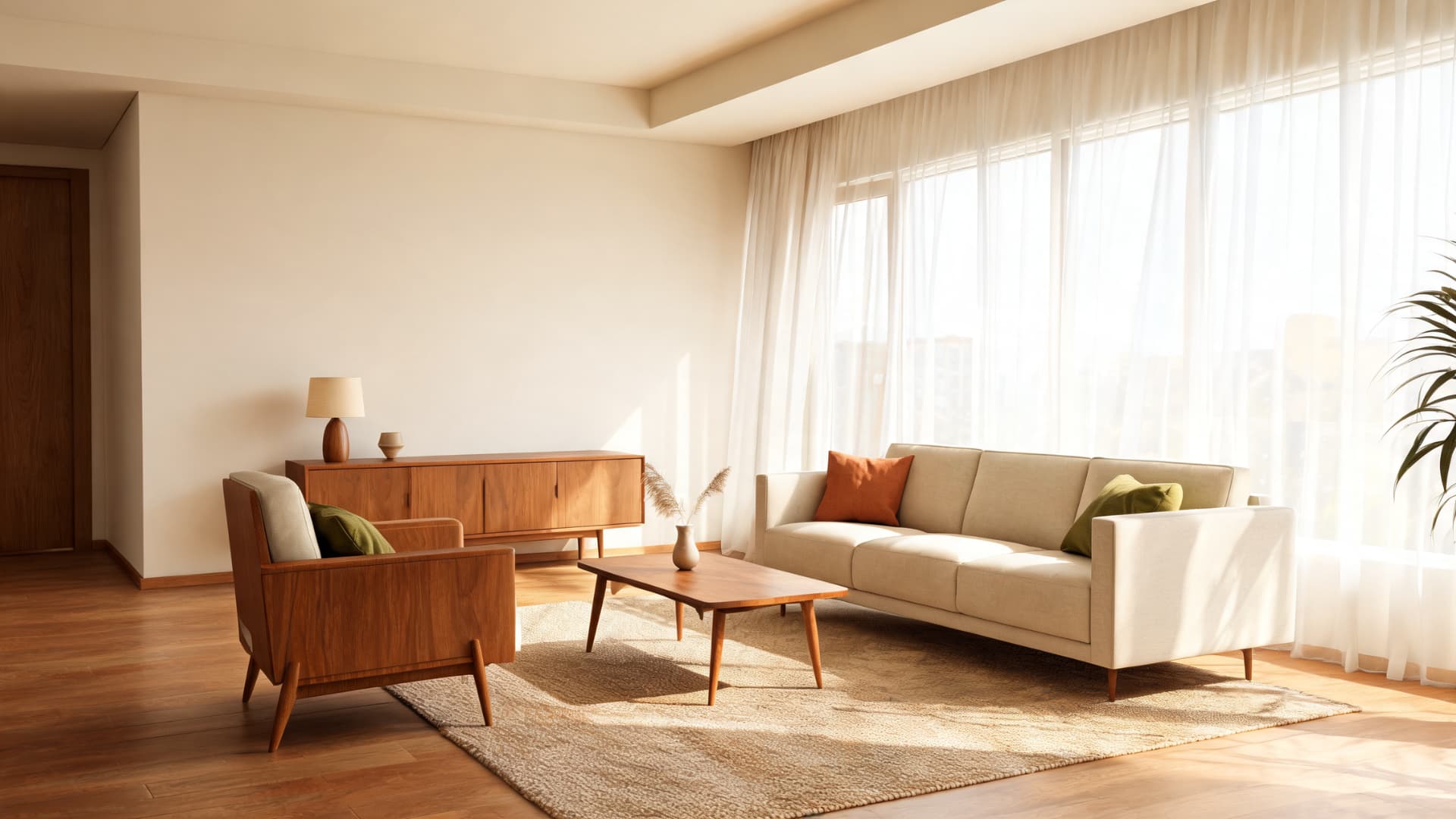


Mid-century modern is one of those design terms that gets used constantly and explained poorly.
So, what is MCM furniture? MCM furniture refers to mid-century modern pieces designed with clean lines, tapered legs, warm wood tones, low profiles, and practical function.
Most people can point to an Eames chair or a walnut credenza and say “that’s MCM,” but knowing what actually makes a piece fit the style is what separates a room that works from one that just looks like a vintage prop store.
This guide covers the history, defining features, furniture details, and how to use mid-century modern style in a real home without over-theming it.
Where Mid-Century Modern Came From
MCM is a design movement that ran roughly from 1945 to 1969, shaped almost entirely by the events of World War II. Returning soldiers needed affordable, functional homes. Manufacturers were sitting on new materials, molded plywood, fiberglass, plastic, tubular steel, developed for wartime production.
Architects and furniture designers had a practical question to answer: how do you build something that works well, uses these new materials efficiently, and doesn’t look heavy or oppressive in a small postwar house?
The answer became mid-century modern furniture. Designers like Charles and Ray Eames, George Nelson, Arne Jacobsen, and Eero Saarinen created pieces that were structurally light, visually open, and centered on how people actually used a room.
The Bauhaus movement and Scandinavian design, particularly Danish Modern, heavily influenced their approach, form follows function, materials are honest, and decoration adds nothing if the form is already right.
The term “mid-century modern” was formally defined in Cara Greenberg’s 1984 book Mid-Century Modern: Furniture of the 1950s. The style itself had been named by then, but the book gave it a framework that design historians and collectors use today.
What Defines Mid-Century Modern Furniture
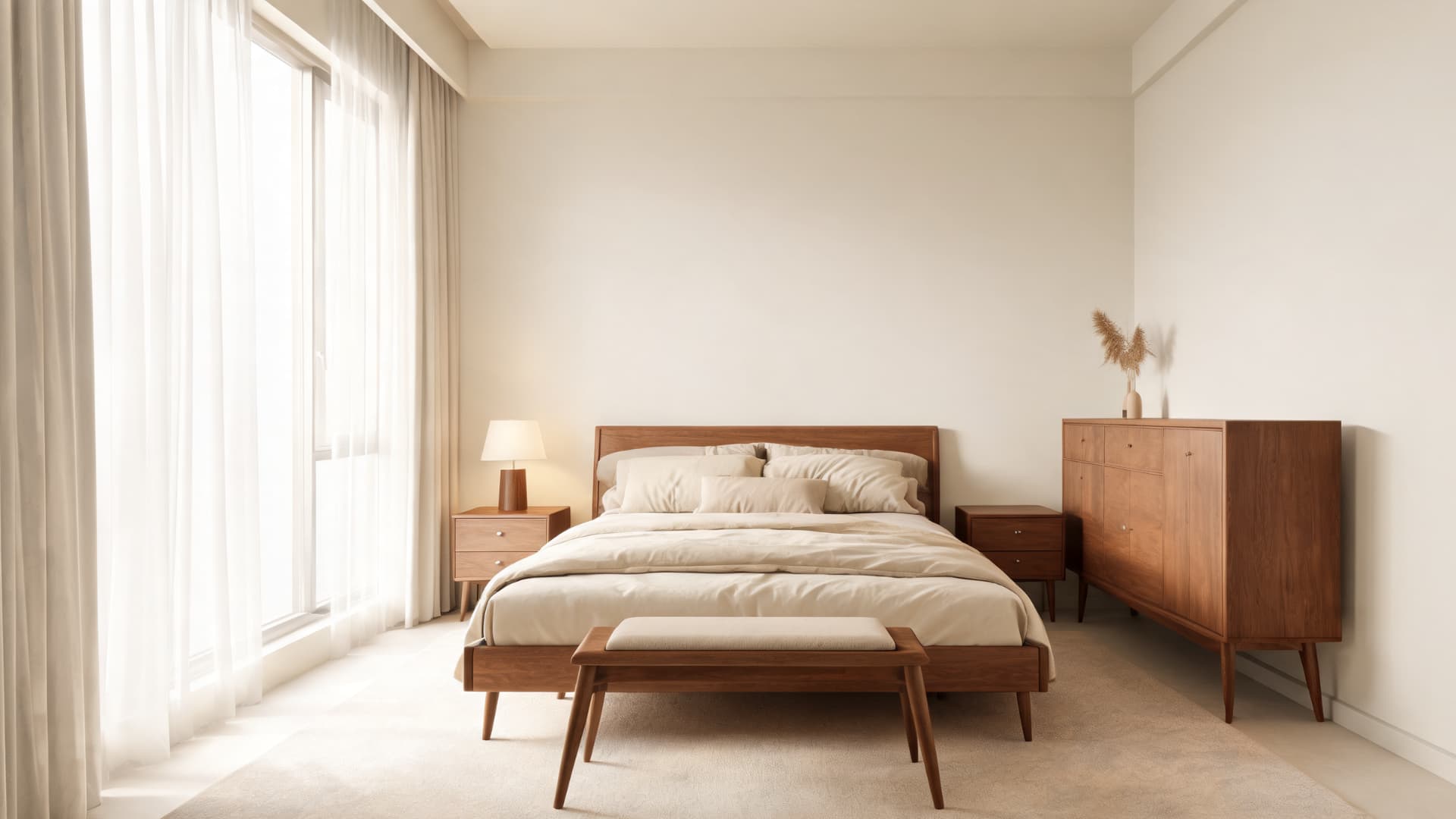
MCM furniture has a few features that appear across nearly every piece, regardless of who designed it or when it was made. Once you know what to look for, the style becomes easy to identify.
| Feature | What It Looks Like |
| Tapered or angled legs | Slim, splayed legs that lift furniture off the floor and keep it feeling light |
| Low profile | Sofas, beds, and case goods sit closer to the floor than traditional furniture |
| Warm wood tones | Walnut, teak, and oak dominate — chosen for grain, durability, and warmth |
| Organic curves | Chairs and accent pieces use soft curves drawn from natural forms, not pure geometry |
| Minimal hardware | Sideboards and dressers use recessed pulls, small handles, or no visible hardware |
| Mixed materials | Wood paired with leather, metal, molded plastic, or glass — often on the same piece |
What connects all of these features is the same logic: the piece should be useful, it should feel light in the room, and the form itself should do the work that decoration would otherwise be doing. Walnut and teak are the two woods that appear most consistently across original MCM pieces; both have a warm grain, take a clear finish well, and hold up over decades of use.
A good overview of how wood species compare for furniture is worth knowing before you buy, because not all woods sold as “walnut-finish” actually use walnut.
Key Features of Mid-Century Modern Style
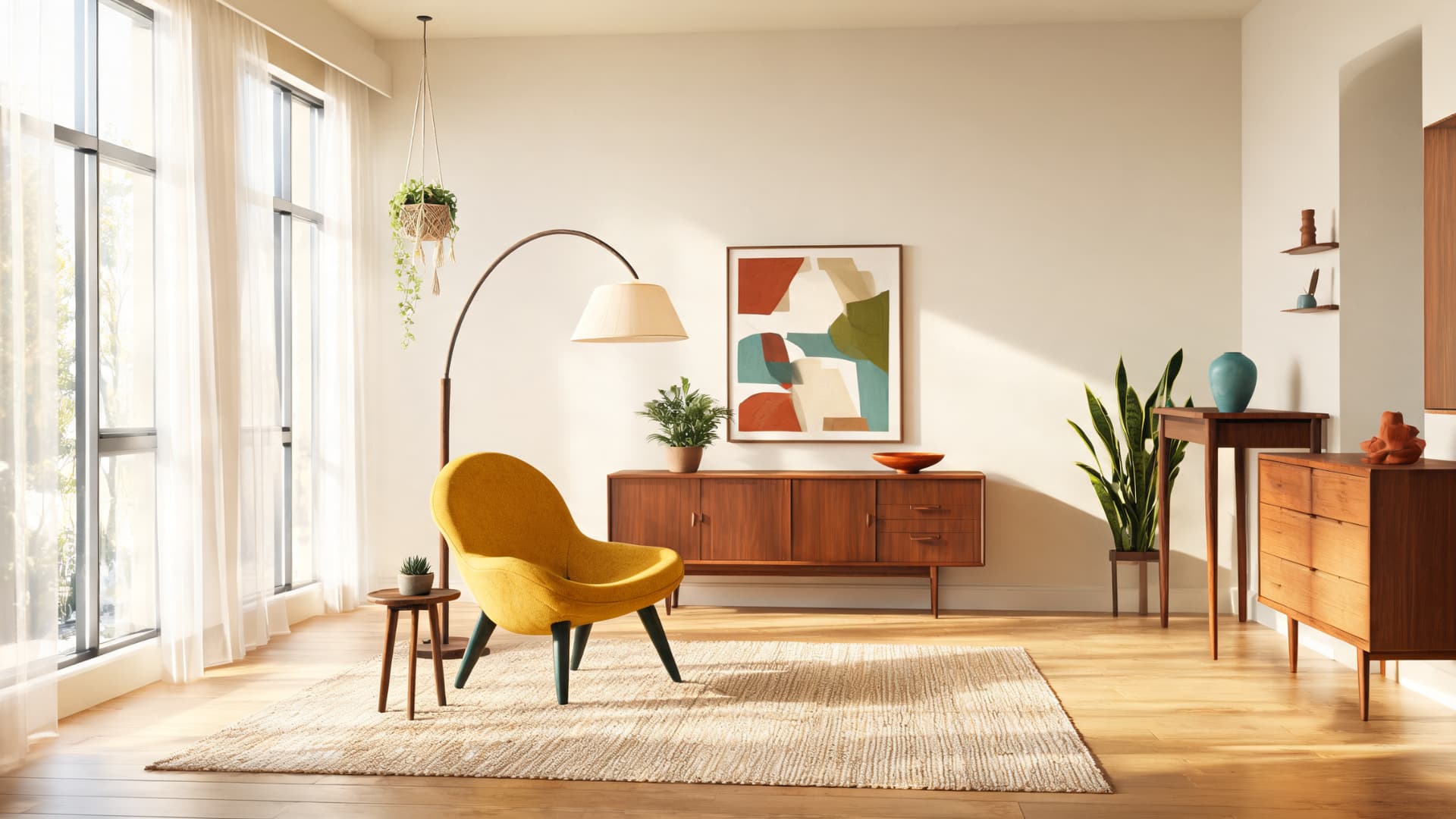
The full MCM look is a combination of principles that work together. Individually, most of them also appear in other styles. The combination, and the restraint in how each is applied, is what makes a room read as mid-century modern rather than just clean or contemporary.
Here’s the concise version:
Clean Lines and Simple Shapes: MCM furniture uses clear forms like rectangles, circles, and soft angles. The shape itself is the detail, not carved trim or extra decoration.
Organic Curves With Geometry: MCM balances straight-lined pieces with curved chairs and accents. This keeps rooms from feeling cold while still looking clean.
Functional Design First: Every piece should be useful, comfortable, and practical. MCM design is not just about looks; it has to work well in daily life.
Natural Materials: Walnut, teak, leather, stone, metal, and glass are common. The look is warm and refined, not rustic or distressed.
Open Space and Outdoor Connection: MCM rooms feel open, light, and uncluttered. Large windows, plants, and natural light help connect the indoors with the outdoors.
Color Palette: MCM uses neutral bases with earthy accents such as olive, rust, mustard, and terra cotta, plus bold pops like teal, avocado, and burnt orange.
If you’re choosing wall colors to pair with warm wood furniture, the principles of choosing paint colors for your decor apply directly to an MCM palette.
How to Identify Real MCM Furniture
Not everything with tapered legs is mid-century modern. Here’s what to check when evaluating a piece, whether you’re buying vintage, secondhand, or new.
- Shape first: Clean lines, low profile, clear silhouette with no ornamental additions. If the shape is busy, it’s probably not MCM.
- Check the legs: Tapered, angled, or splayed legs are a consistent MCM marker. Straight boxy legs, turned legs, or no legs at all lean toward other styles.
- Material matters: Walnut, teak, oak, leather, molded plywood, and glass are period-correct. Distressed pine, ornate veneers, and glossy lacquer are not.
- Look at the hardware: Small handles, recessed pulls, or no hardware. Large decorative pulls, bin handles, and ornate knobs are off-style.
- Proportions: The piece should look balanced at a glance. Not too heavy, not too thin. If anything about the silhouette feels awkward or overpowered, the proportions are off.
- Function: Can it do what it’s supposed to do comfortably? A chair that looks right but doesn’t seat well is not MCM in spirit.
| Pro Tip: If you’re buying secondhand MCM-style furniture, check the leg attachment points. Original or quality reproductions use a solid wood-to-wood joint or a metal plate. Furniture with legs attached by a single bolt through thin particleboard will wobble within months of regular use. |
Mid-Century Modern vs. Modern, Contemporary, and Scandinavian Style
These four styles share enough DNA that they get confused regularly. The differences are real, and knowing them helps when you’re trying to mix pieces or evaluate what fits.
| Style | Mood | Key Difference |
|---|---|---|
| Mid-Century Modern | Warm, clean, slightly retro | Rooted in 1945-1969 design; defined by warm wood tones, tapered legs, and organic curves alongside clean geometry |
| Modern | Minimal, neutral, streamlined | A broader movement; tends cooler and more spare than MCM, with less emphasis on warm wood and organic form |
| Contemporary | Current, flexible, trend-driven | Reflects present-day design preferences; absorbs whatever is current, so it shifts year to year |
| Scandinavian | Light, cozy, simple | Pale woods, white walls, soft textures, and hygge-influenced warmth; similar bones to MCM but noticeably lighter and airier |
The practical way to think about it: MCM is warmer than modern, more structured than Scandinavian, and less trend-dependent than contemporary. If you’re mixing styles, MCM pieces tend to work alongside Scandinavian furniture well — the materials and scale are compatible, and the warmth of one offsets the lightness of the other without conflict.
How to Use Mid-Century Modern Style Room by Room
The method is the same regardless of the room: start with one or two anchor pieces that establish the MCM character, then build around them with open space, warm materials, and minimal decoration. Resist the urge to fill corners.
1. Living Room
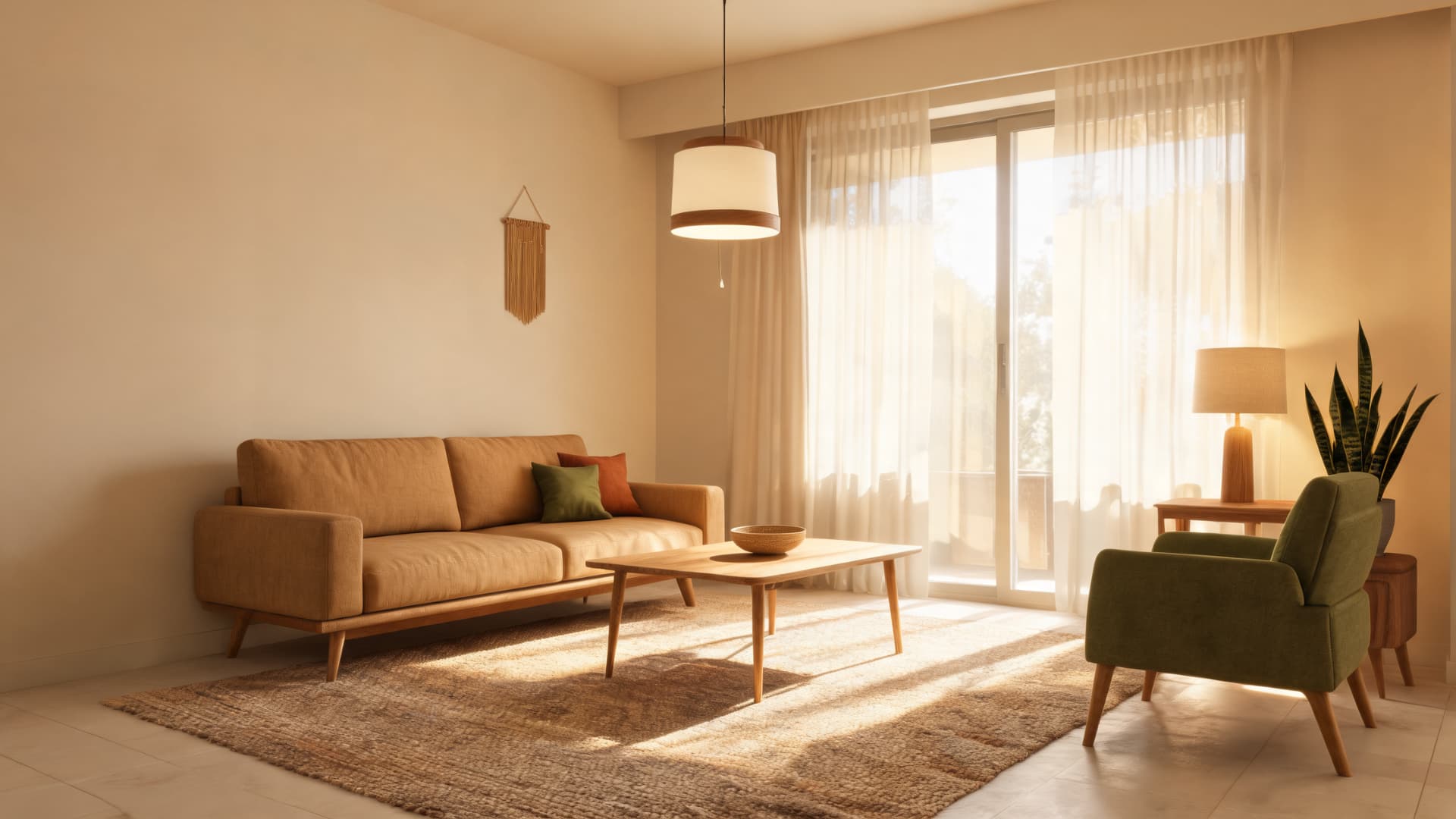
A low-profile sofa, a walnut or oak coffee table, and one sculptural accent chair are all you need to establish the look. Float the furniture away from the walls, at a minimum of 18 inches of clearance behind the sofa, to keep the room from feeling like a furniture showroom. A textured rug grounds the seating area.
Warm overhead lighting or a mid-century-style arc floor lamp handles atmosphere. Keep surfaces clear. If the room has a low ceiling, the low-profile MCM furniture scale actually works in your favor; the same principle applies in these low ceiling design tricks.
2. Dining Room
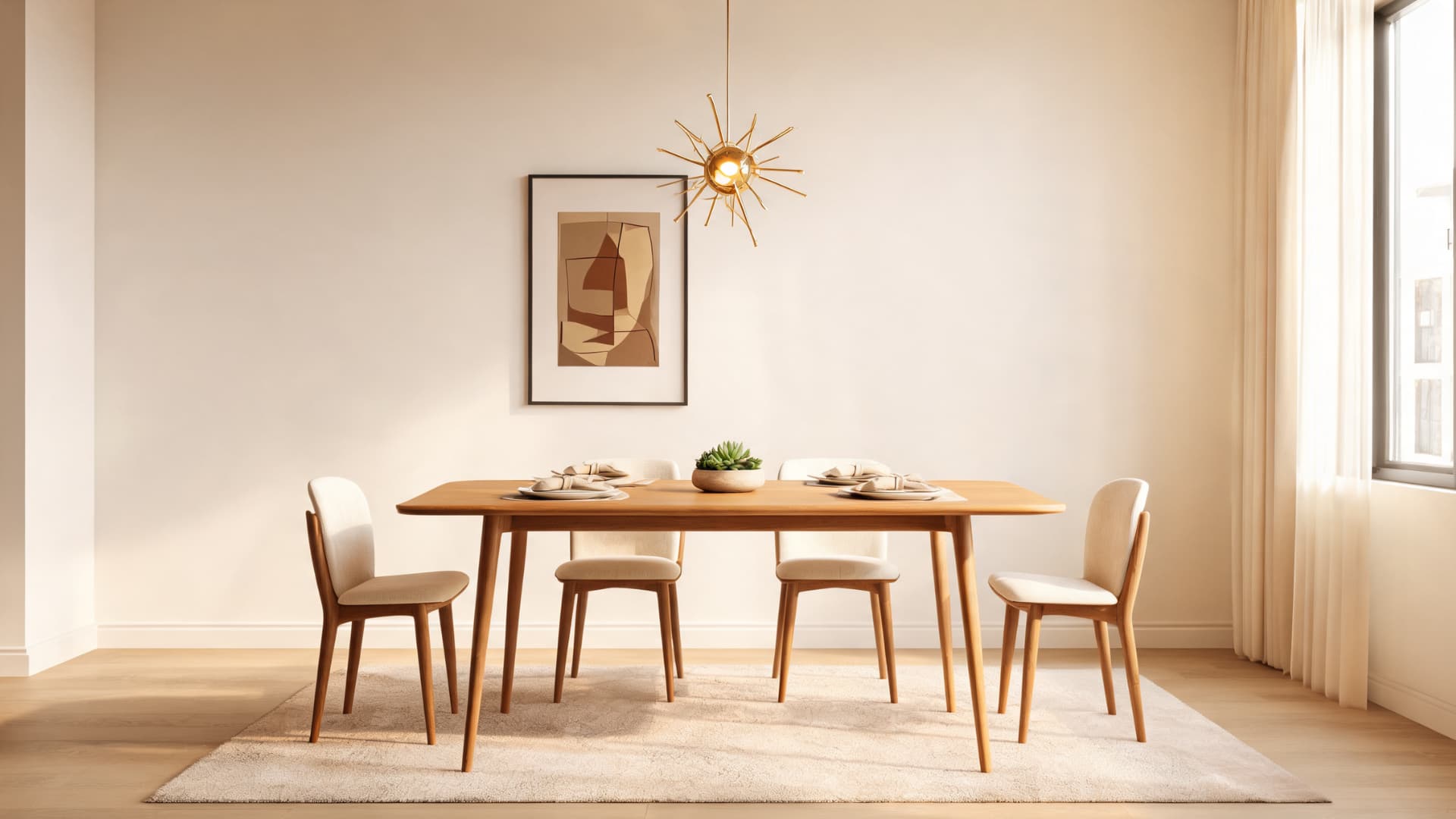
A solid wood dining table with tapered legs and four to six matching chairs is the core. Wood choice matters more in a dining table than almost any other piece of furniture because it takes daily wear, scratches, moisture, and heat exposure.
The comparison of wood options for dining tables is a useful reference before committing. A sputnik-style pendant or a clean drum shade above the table does the decorating. Keep the tabletop clear between meals, a small tray or a low centerpiece at most. One piece of framed abstract art on the wall is enough.
3. Home Office
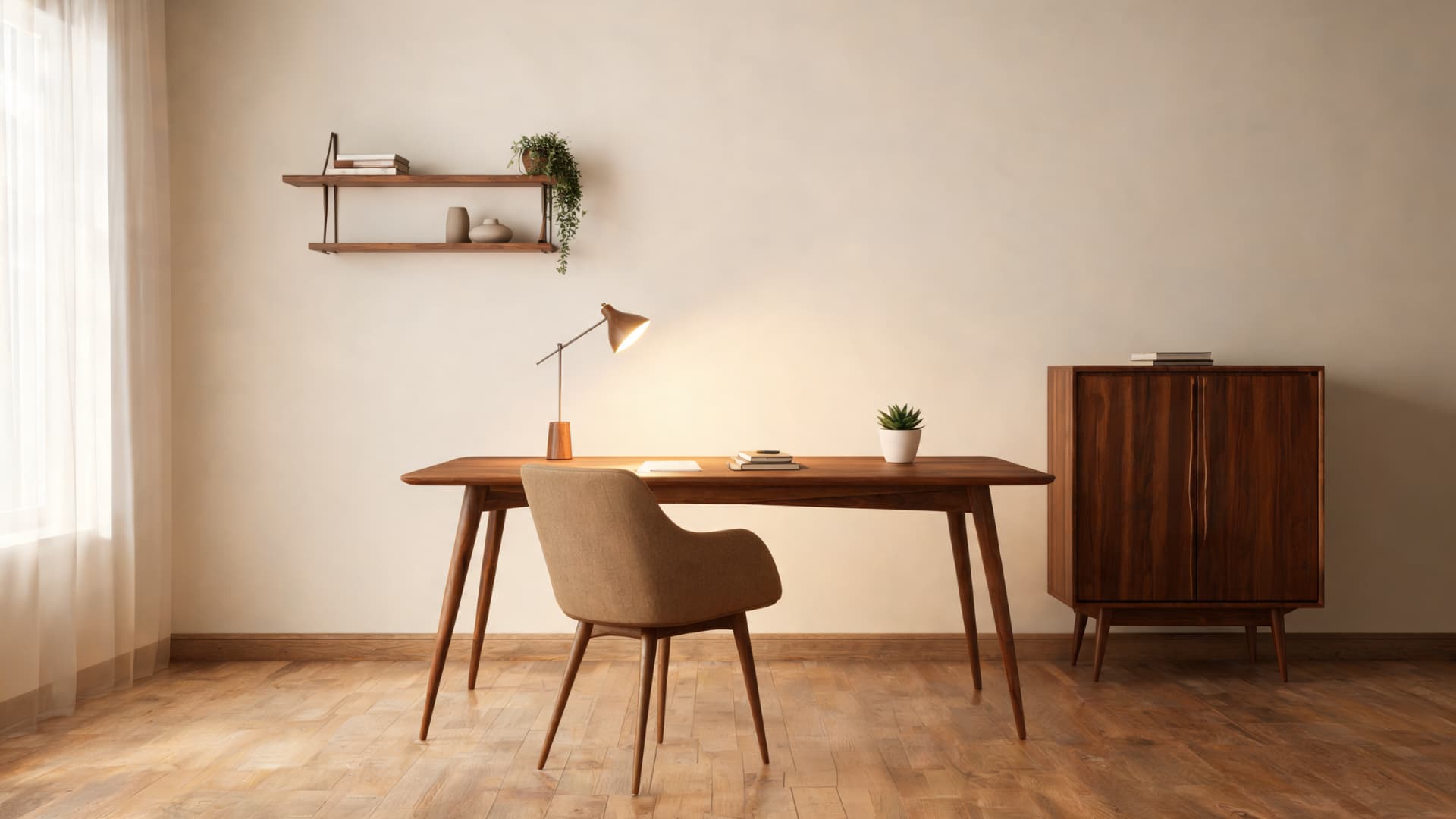
A solid wood desk, ideally walnut veneer or solid oak, with a task chair and open shelving handles most of what the room needs to do. Keep desk storage in a credenza or a low sideboard rather than bulky overhead cabinets, which break the clean sightline.
One plant, a focused desk lamp, and a rug under the chair if the floor is hard. The room should be calm enough to work in, not decorative enough to distract.
4. Bedroom
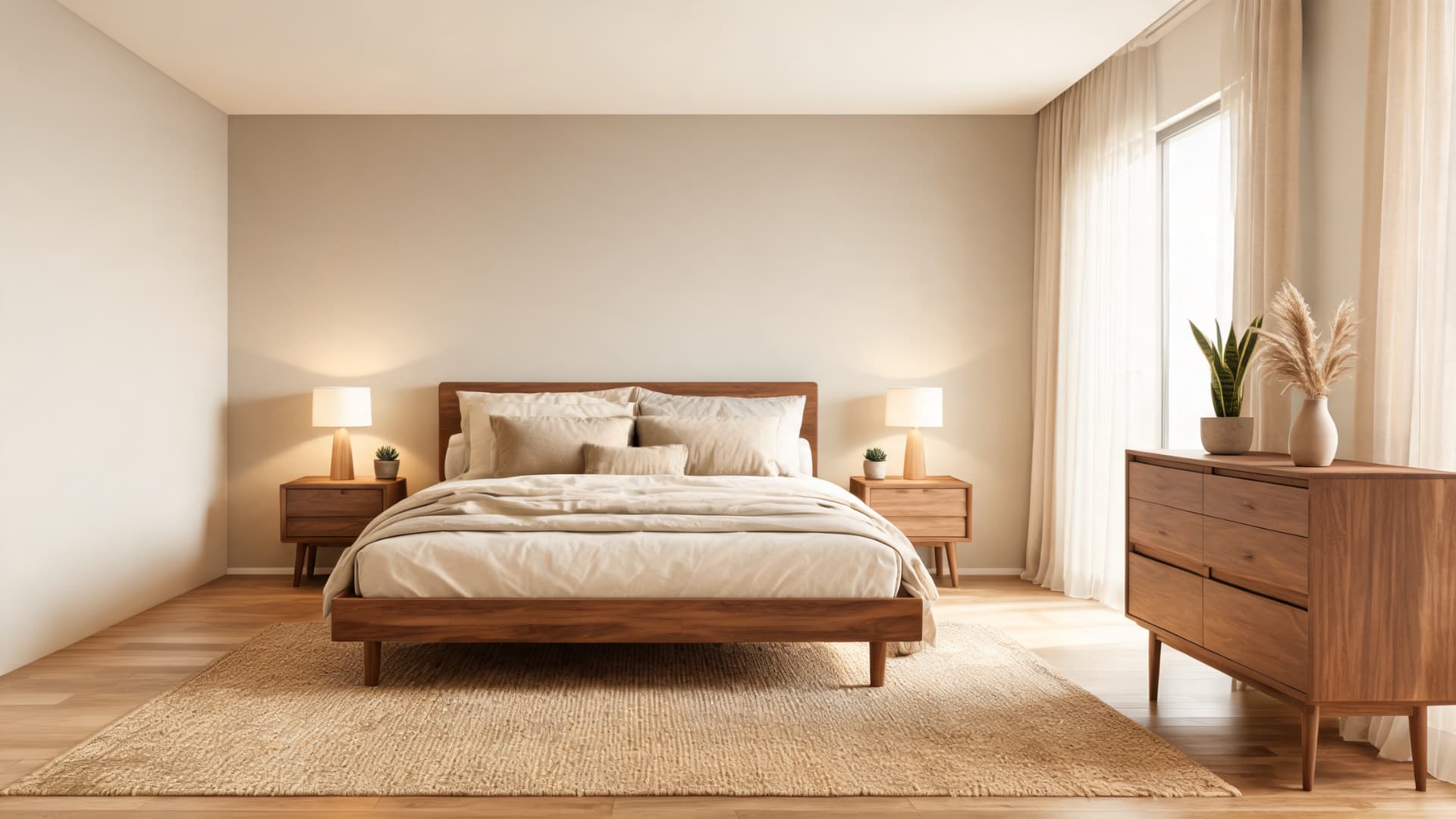
A low platform bed frame in walnut or oak is the anchor. Match the nightstands to the bed frame, the consistency matters more here than it does in other rooms. A dresser with tapered legs and minimal hardware against one wall keeps the room from needing additional storage pieces that clutter the floor.
Soft, layered lighting matters: a small lamp on each nightstand, and either overhead dimmer control or no overhead light at all. Bedding in neutral linen or cotton keeps the room restful.
5. Entryway
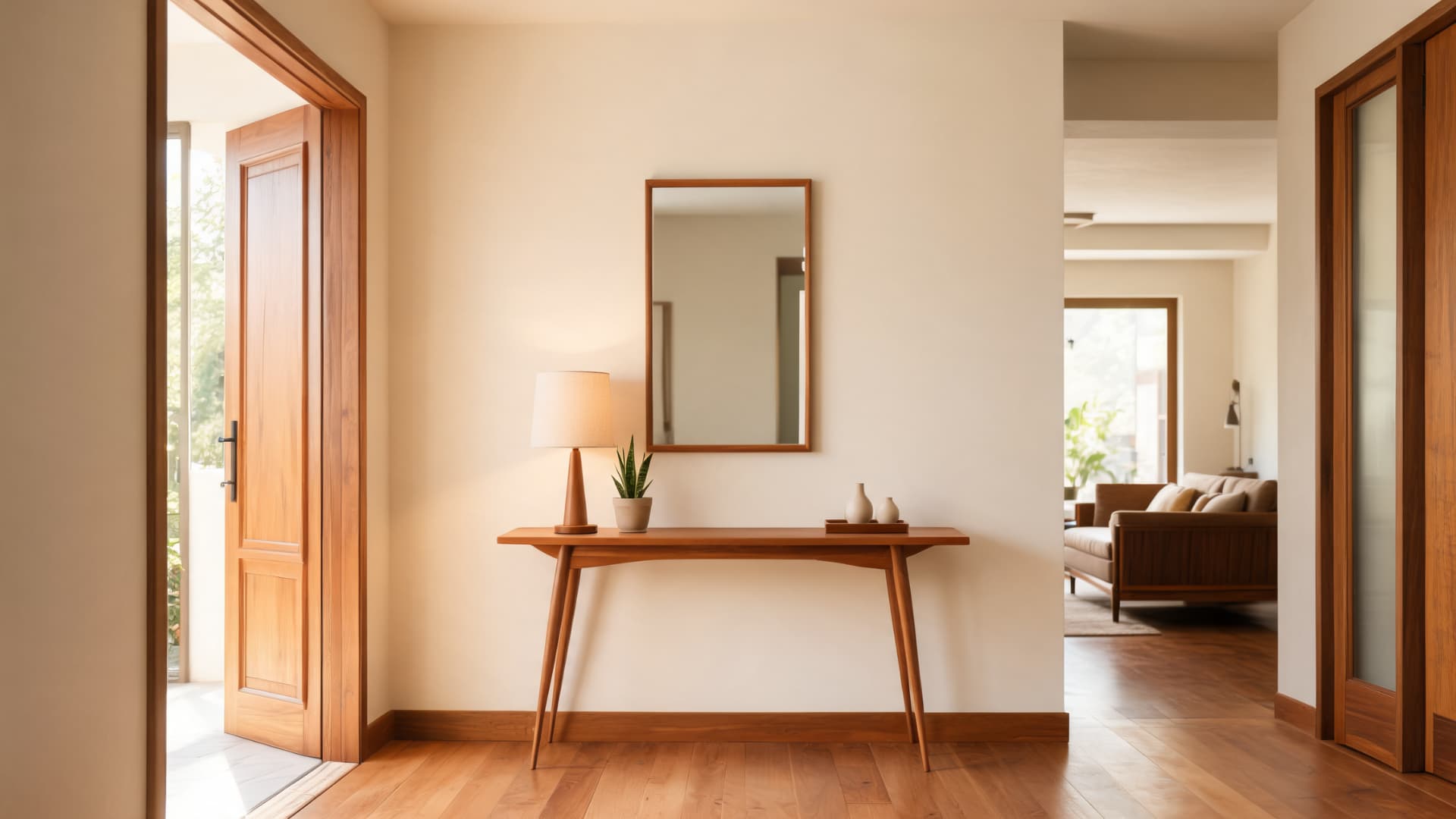
A slim console table, a simple round or rectangular mirror above it, and a small lamp or plant are enough. The entryway sets the expectation for the rest of the home; it should feel organized and uncluttered, not like a landing zone.
If you need shoe storage, look for a bench with hidden storage or a low cabinet that fits cleanly under the console. One hook strip for bags and coats, mounted cleanly, handles the functional side without visual chaos.
Common Mistakes That Undercut Mid-Century Modern Style
Most MCM rooms that don’t work have the same problems. None of them is hard to avoid once you know what to look for.
- Too many statement pieces are competing at once. Pick one: the chair, the sofa, the light fixture. Three sculptural pieces in the same sightline cancel each other out.
- Prioritizing looks over function. MCM furniture is supposed to be used. A sofa that photographs well but is uncomfortable to sit on is a category error. If you’re buying for daily use, sit in it first.
- Overcrowding the room. The open space is part of the design. A credenza needs breathing room. A chair needs clearance. If every surface has something on it and every corner has a piece of furniture, the clean lines disappear.
- Stacking too many retro accents. A vintage-style lamp, a starburst clock, a record player, and a rotary phone on one shelf is not curated — it’s themed. Two or three well-chosen vintage-inspired pieces are enough.
- Forgetting texture. All-wood, all-leather rooms can read cold. A textured rug, a bouclé throw, or upholstered seating in a warm fabric adds the sensory layer that makes an MCM room livable rather than museum-like.
Frequently Asked Questions
These are the questions that come up most often from people who are actively furnishing a space rather than just researching the style.
What makes furniture mid-century modern?
Tapered legs, low profile, clean geometric or organic silhouette, warm wood tones (walnut, teak, oak), and minimal hardware or decoration. The piece should feel visually light and serve a functional purpose — together, these two things define the aesthetic more accurately than any single feature.
Is mid-century modern still popular in 2025?
Yes, and consistently so for the past decade. The style holds because it’s genuinely functional and pairs well with other aesthetics. It doesn’t depend on a single trend cycle. A quality walnut credenza bought in 2010 fits as naturally in a 2025 room as it did then.
What colors are mid-century modern?
Warm neutrals as a base — white, warm beige, soft gray — with earthy accent tones like olive, mustard, rust, and terra cotta. Bold pops of teal, avocado green, or burnt orange add energy in small doses through upholstery or accessories. The key is restraint: one or two accent colors, not five.
What is the difference between mid-century modern and contemporary style?
MCM is period-specific — its forms are rooted in 1945-1969 design logic. Contemporary style reflects current trends, which change year to year. A contemporary room in 2025 may look nothing like one from 2018. A mid-century modern room has a consistent reference point regardless of when it’s built.
Can you mix mid-century modern with other styles?
Yes. MCM works particularly well with Scandinavian furniture (similar scale and material palette), Japandi-influenced decor (shared emphasis on natural materials and negative space), and even some industrial elements. The constraint is consistency in proportion and material quality. MCM pieces tend to lose coherence when mixed with heavy traditional or ornate furniture.
How do I make mid-century modern feel cozy rather than cold?
Add texture and warmth through soft goods: a wool or jute rug, linen or bouclé upholstery, a chunky throw, and layered lighting. Plants help. Wood accessories — a tray, a small bowl, a lamp base — reinforce the warmth of the furniture. The cold reading usually comes from too much hard surface with no soft counterpoint.
Does mid-century modern work in a small apartment?
It’s well-suited to small spaces. The low profiles keep rooms feeling open vertically, the tapered legs leave floor space visible under furniture (which reads as more room), and the emphasis on built-in or consolidated storage keeps clutter from accumulating. Avoid oversized MCM pieces — scale matters more in small rooms than in large ones.
Final Verdict
Mid-Century Modern remains popular because it makes a simple design feel warm, useful, and refined. I find its strength in how clean lines, natural materials, practical furniture, and open layouts create a home that feels calm without feeling empty.
If you came here wondering what MCM is, the answer is clear: it is a design style built around comfort, purpose, and visual balance.
Once you understand its history, key features, colors, and furniture details, the style becomes easier to recognize and apply. Use these ideas to choose Mid-Century Modern pieces that feel timeless, practical, and true to your home.
Now that Mid-Century Modern style feels a little clearer, I’d love to hear your take. Which part of the style stands out most to you: the furniture, colors, history, or simple design? Let me know in the comments.
Sources:
Cara Greenberg, Mid-Century Modern: Furniture of the 1950s. 1984.
The Spruce, “Mid-Century Modern Design Guide.” https://www.thespruce.com/mid-century-modern-design-guide
Houzz, “Mid-Century Modern Style Guide.” https://www.houzz.com/ideabooks/mid-century-modern