

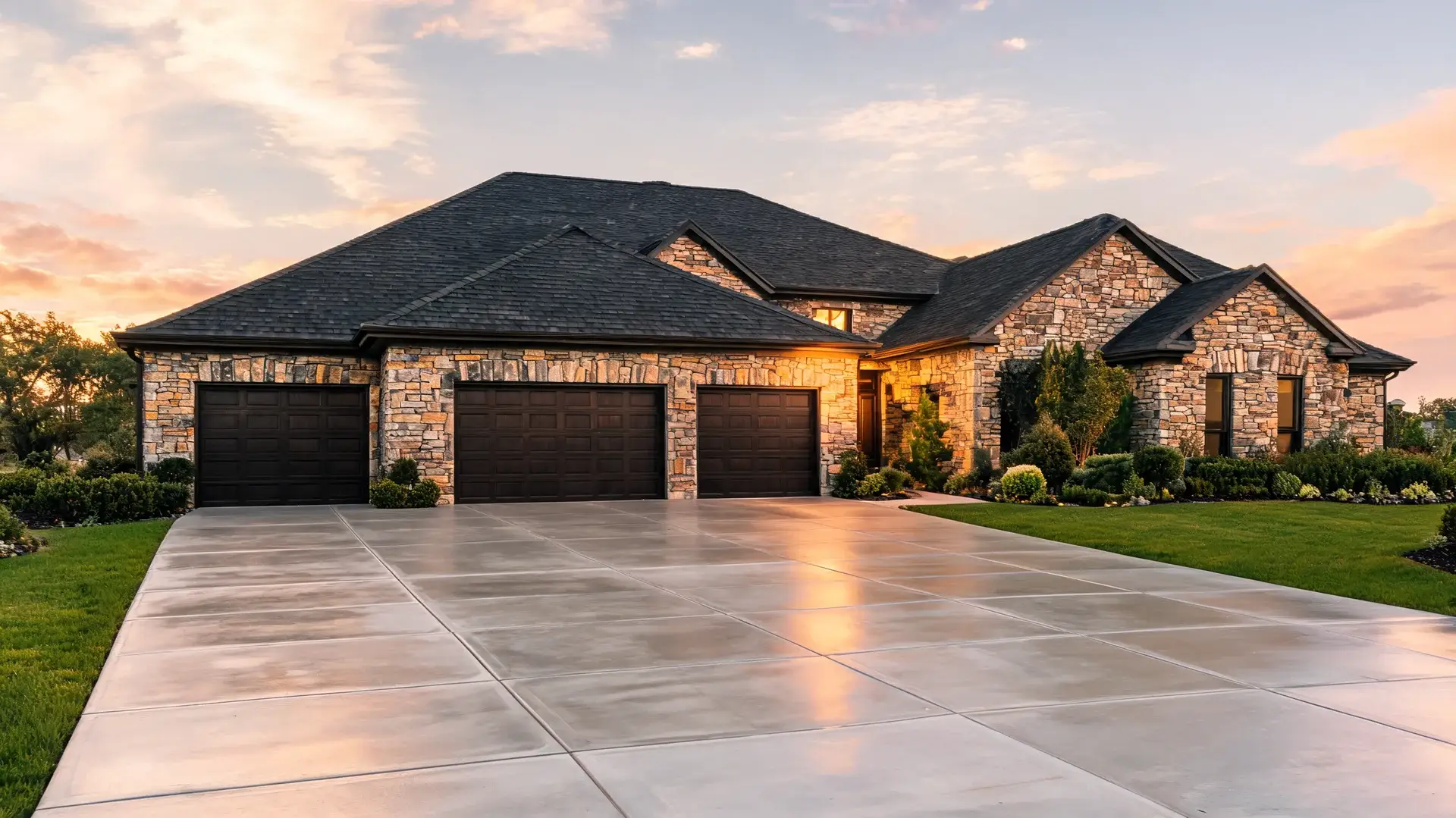


The outside of a home tells a story before anyone even knocks. Having spent years paying close attention to how front yards, driveways, and entries shape the first impression of a house.
I can say that astamped concrete driveway is one of the most impactful upgrades a homeowner can make to the outside of their property. It brings the look of stone, brick, or slate without the cost and labor of laying each piece by hand.
But the pattern is only part of the decision. The base, the sealer, the drainage, and the installer behind it all matter just as much, and that is exactly what this covers.
| Cost Note: Figures in this article are estimates based on national averages. Actual costs vary significantly by region, contractor, materials, and project scope. Always get at least three quotes before committing to any project above $1,000. |
Is a Stamped Concrete Driveway Worth It?
A patterned concrete driveway sits between plain concrete and individual pavers. It gives you more design choices than a flat gray slab, but it does not repair as easily as separate blocks. That is the tradeoff you should understand first.
It can be a good fit if you want a front driveway that looks more finished than asphalt, gravel, or plain concrete. It can also help your driveway match stone, brick, siding, trim, or walkway details around the house.
Still, the finish is not only about the pattern. The base must be stable. Water must drain away. Control joints need smart placement. The sealer should suit the slope and local weather. If those parts are rushed, the driveway can crack, fade, stain, or feel slick.
Advantages of a Stamped Concrete Driveway
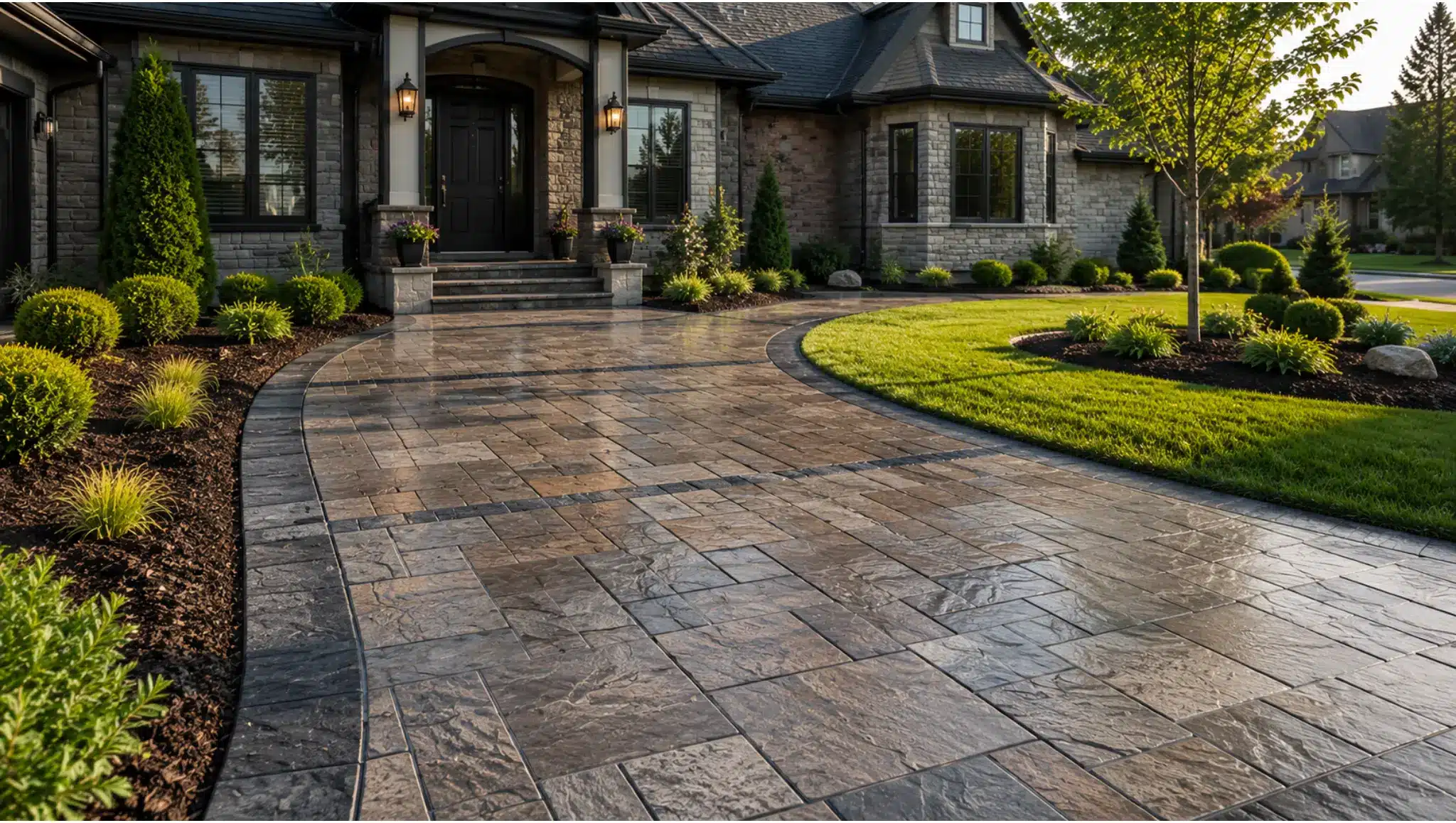
The biggest benefits come from its design range, front-yard value, and lower cost compared with some higher-end materials.
1. More Design Choices
Plain concrete is useful, but it can look basic. Using concrete stamps adds pattern, texture, and color so the driveway feels more connected to the rest of the home. You can choose slate, cobblestone, brick, flagstone, ashlar stone, wood plank, or a softer stone texture. The color can stay quiet with gray, tan, beige, or brown, or it can use darker accents when the home exterior supports them.
2. Lower Cost Than Pavers
Real pavers, brick, and stone use separate pieces. Each piece needs placement, leveling, and joint work. A stamped concrete surface is poured as one slab, then patterned while it is fresh. That reduces labor compared with setting individual pieces like pavers, though the final price still depends on the driveway size, base work, color, border details, and local labor rates.
3. Better Curb Appeal
I have seen too many homes where the interior is beautifully finished but the driveway looks like an afterthought, cracked gray concrete that undercuts the whole first impression. A stamped finish ties the garage, walkway, porch, and landscape edges together in a way plain surfaces simply cannot. I always recommend keeping the color close to the home’s existing materials so the driveway supports the exterior rather than competing with it.
4. Good for Large Driveways
Large driveways need patterns with the right scale. Ashlar stone, slate, large flagstone, cobblestone, and seamless stone textures all work well because they do not feel too small from the street. A border can frame a wide surface and create a cleaner edge where the driveway meets grass, mulch, or a walkway.
Disadvantages of a Stamped Concrete Driveway
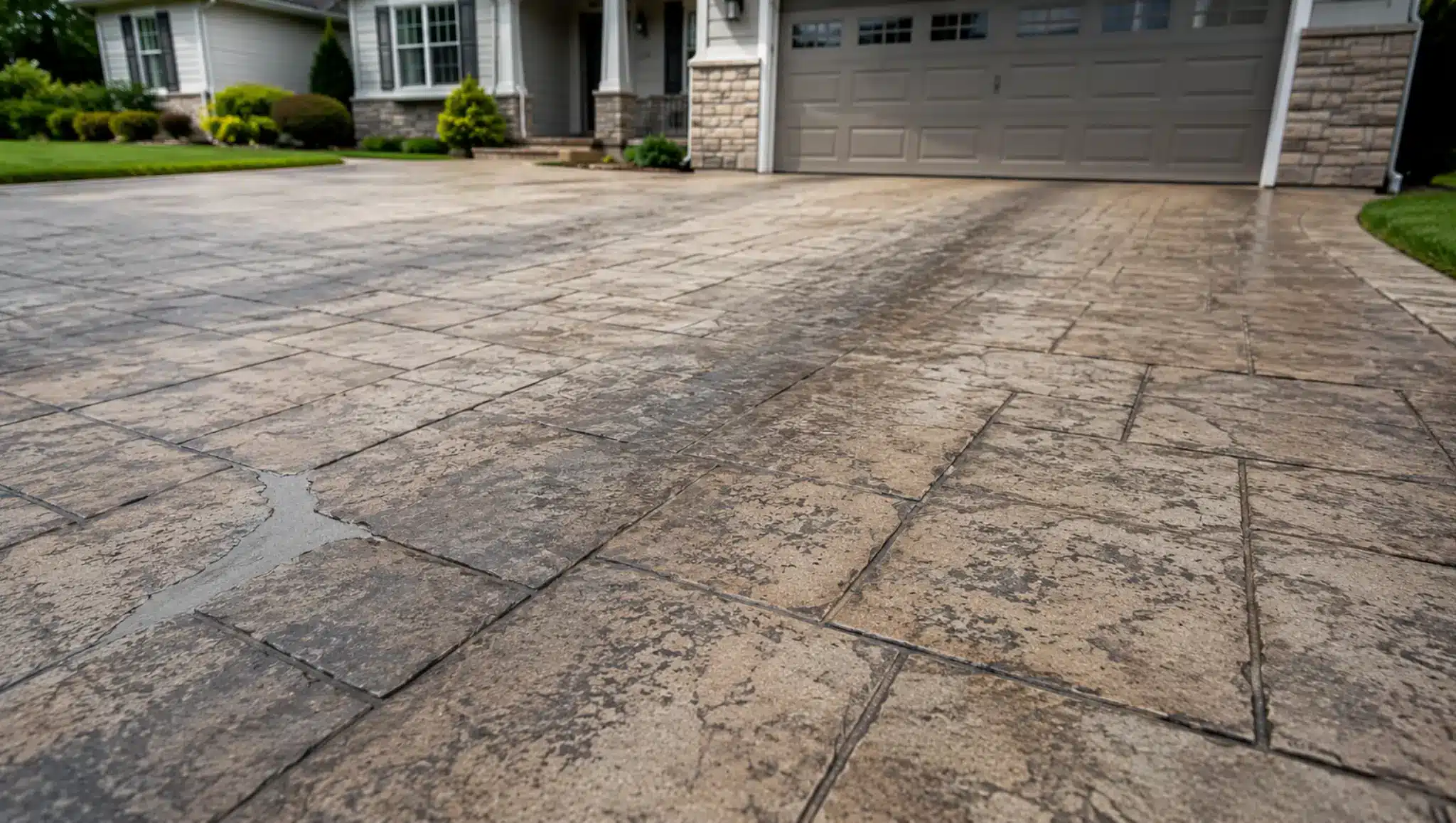
The drawbacks are mostly tied to cracks, repairs, sealing, traction, and the skill needed during installation.
- Visible Cracks: Concrete can crack due to soil movement, loads, poor prep, weather, or aging. Control joints guide crack locations but can’t prevent all. On stamped surfaces, cracks are more visible as they cross the pattern, whereas on plain concrete they are less noticeable.
- Hard-to-Match Repairs: A patch is hard to hide because the surface is already changed by sun, tires, weather, and sealer wear. Even careful repairs may appear slightly different, especially on front driveways visible from the street daily.
- Regular Sealing: Sealer guards the driveway against tires, oil, dirt, sun, rain, and snow, preventing fading and staining. If it appears dull or water no longer beads, reseal. Most stamped driveways need resealing every two to three years depending on sun, traffic, and sealer type.
- Slippery Finish Risk: A glossy sealer looks attractive but can reduce grip when wet, which is concerning on sloped driveways, in rainy climates, and during icy winters. A low-sheen sealer with a grip additive is safer and still looks finished.
- Not DIY-Friendly: Stamping relies on precise timing: the concrete must be firm enough for the pattern but soft enough for the impression. A full driveway requires a coordinated crew, sufficient mats, release material, and finishing skill. A small backyard test slab is a safer initial attempt than a visible front driveway.
Stamped Concrete Driveway vs. Other Driveway Materials
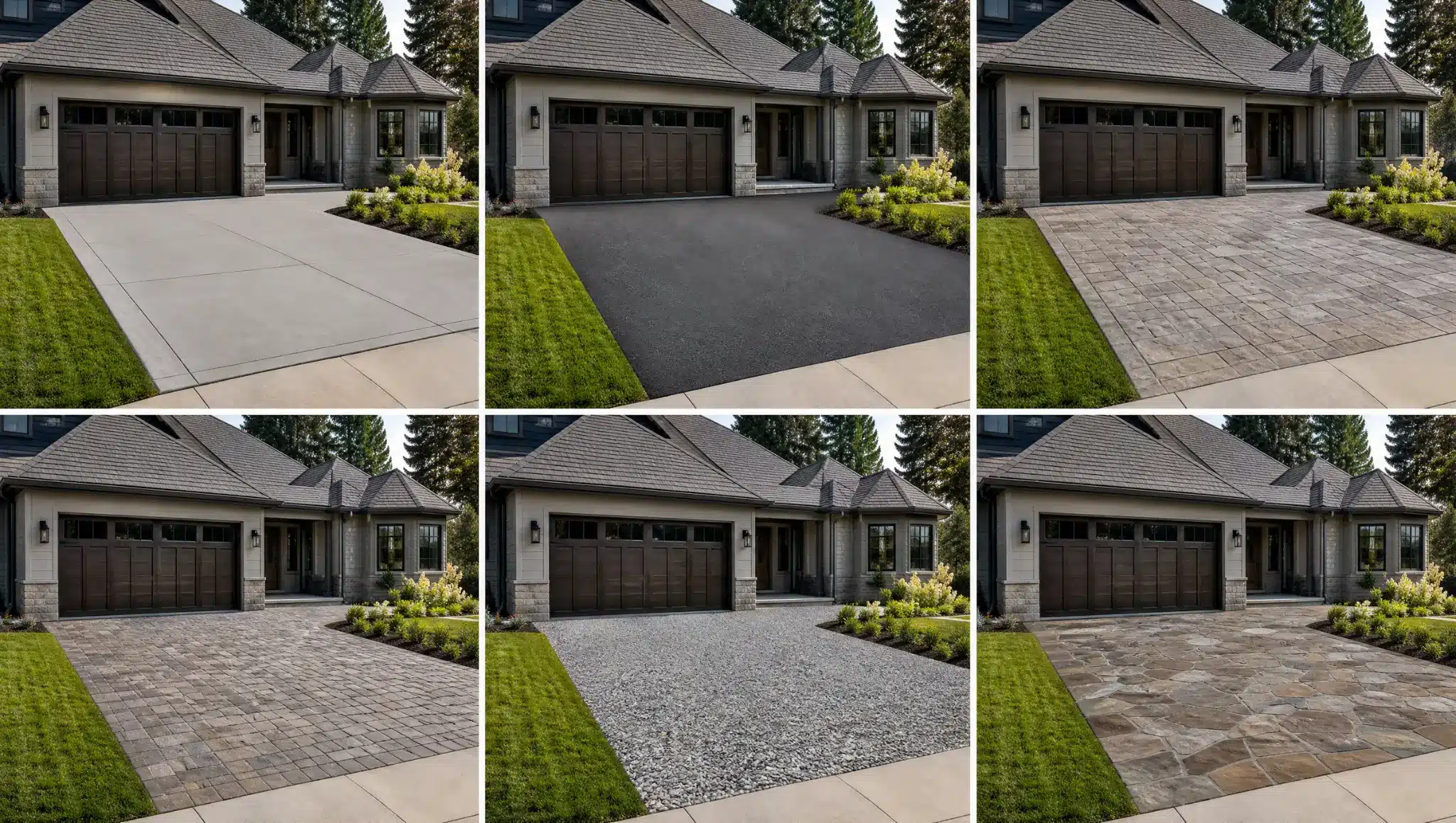
Before choosing a surface, look beyond the first price. Consider how each option handles daily use, repairs, weather, upkeep, and appearance from the street.
| Driveway Material | What It Does Well | Where It Falls Short | How It Compares With Stamped Concrete |
|---|---|---|---|
| Plain concrete | Simple, clean, and usually lower in cost | Basic look with fewer design choices | Stamped concrete looks more finished, but costs more and needs sealing |
| Asphalt | Works well for long driveways and tighter budgets | Limited color and pattern choices | Stamped concrete gives more curb appeal, but asphalt is often cheaper upfront |
| Pavers | Easier to repair in small sections | Higher labor cost and possible weed growth between joints | Stamped concrete gives a similar patterned look in one slab, but repairs are harder to match |
| Brick | Classic look with real individual pieces | Can shift, settle, or cost more to install | Stamped concrete can copy a brick look with fewer pieces, but brick may be easier to repair |
| Gravel | Low upfront cost and useful for rural homes | Can spread, rut, and need regular leveling | Stamped concrete looks cleaner and is easier to clear, but gravel costs less |
| Natural stone | Strong real-material look | Higher material and labor cost | Stamped concrete can give a stone-like look for less, but real stone may age better |
Choose stamped concrete when you want a planned, finished surface without the cost of real stone, brick, or full paver work. Choose plain concrete or asphalt when price is the priority.
Choose pavers or natural stone when easy individual repairs or real material matter more, though paver installation per square foot can shift that decision quickly.
Best Pattern by Driveway Type
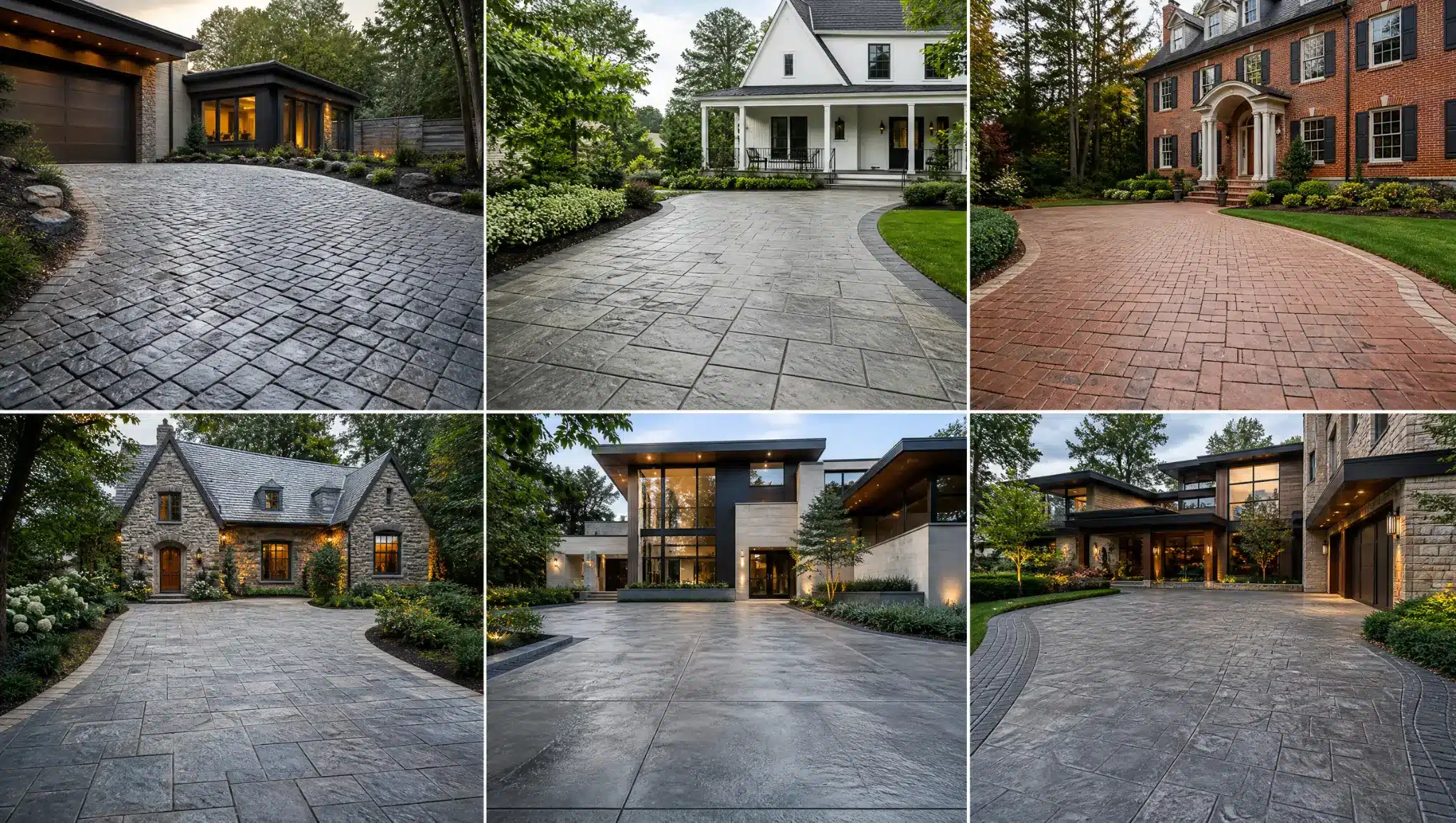
Use this table if you are stuck between two patterns. It ties the choice to your driveway shape, home style, and practical needs.
| Driveway Type | Best Pattern Choice | Why It Works |
|---|---|---|
| Wide front driveway | Ashlar stone or large flagstone | Larger shapes look more balanced from the street |
| Curved driveway | Cobblestone or seamless slate | These patterns work well with bends and soft edges |
| Modern home | Seamless stone or slate | The surface looks clean without too many lines |
| Brick home | Brick border or cobblestone | The pattern connects with the home’s brick tones |
| Sloped driveway | Light texture with low-sheen sealer | Grip matters more when water runs across the surface |
| Long driveway | Simple pattern with border only | Keeps cost and pattern repeat under control |
Once you narrow the pattern by driveway type, check it against your home color, slope, and budget. A good pattern should look natural from the street and still hold up to daily use.
Best Stamped Concrete Driveway Design Ideas
The best design fits the house, not just the driveway. Start with the home color, roof, garage door, trim, walkway, and yard. Then choose a pattern and concrete stamp type that supports those details.
Stamp mat size matters too. Larger mats suit wide driveways because small repeating patterns can feel busy at scale. Flexible mats help near garage doors, curves, steps, and corners. Seamless texture skins are useful when you want a softer stone-like surface without strong pattern lines across the whole area.
1. Cobblestone Pattern
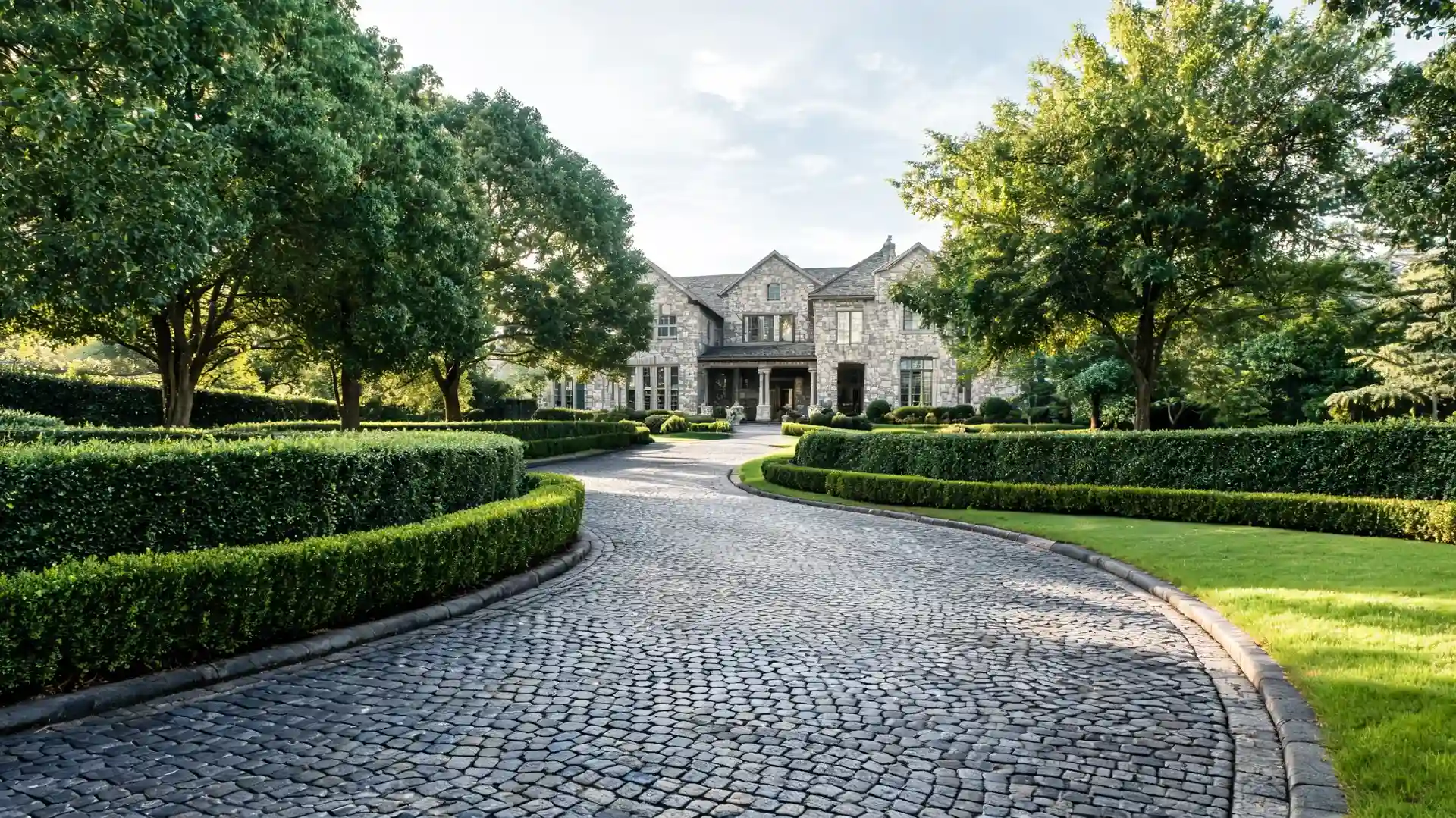
A cobblestone pattern works well for traditional homes, brick homes, cottage-style homes, and curved driveways. It gives the surface an older stone path character without the cost or labor of real cobbles. Gray, brown, charcoal, and soft tan shades tend to look better than bright colors, which can feel out of place against classic architecture.
- Best for: Traditional homes | Brick homes | Colonial-style exteriors
- Installer note: Use this pattern where the driveway has enough width so the repeated shapes do not feel crowded.
2. Slate Pattern
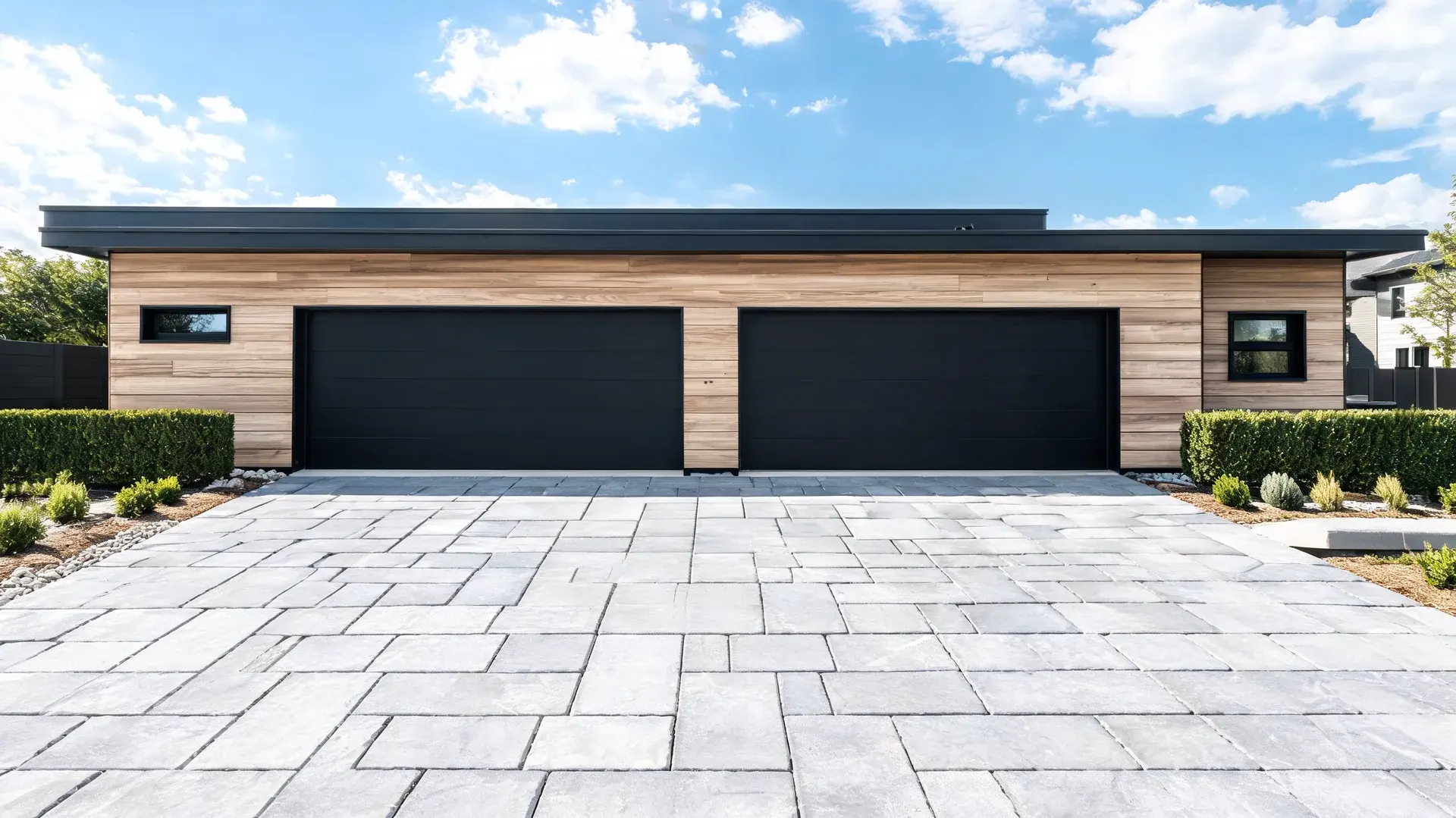
A slate pattern suits modern homes, stone-front homes, and driveways where you want texture without heavy lines. Good colors include soft gray, charcoal, beige, greige, and tan. A low-sheen sealer keeps the surface closer to a natural stone finish, which I prefer over a high-gloss coat on this pattern, the shine tends to look artificial against the natural texture of the slate impression.
- Best for: Modern homes | Stone-front homes | Clean front entries
- Installer note: Ask for a test area or past project photo in the same sealer finish before approving the final look.
3. Brick Pattern
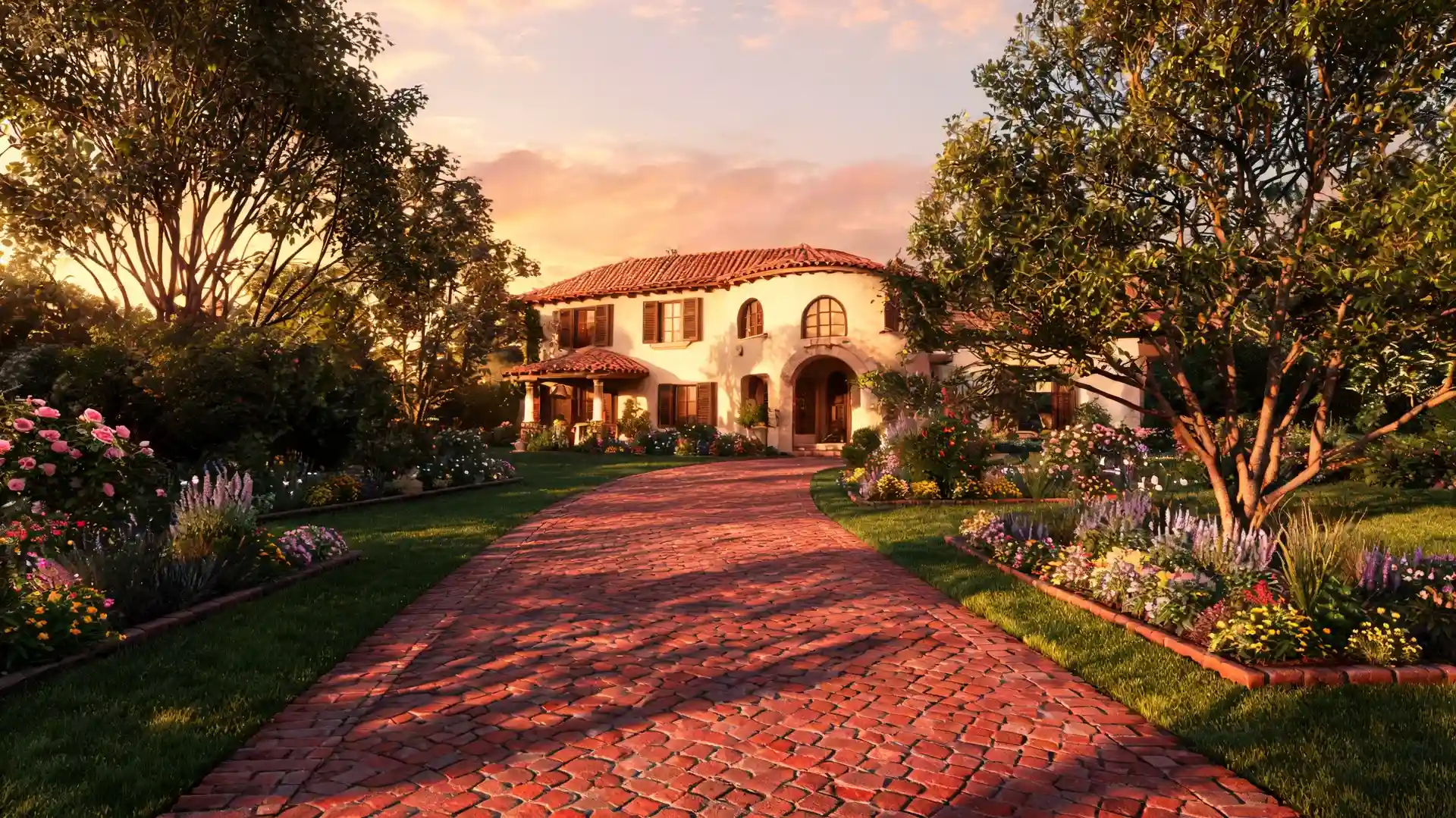
A brick pattern suits homes with brick exteriors, warm trim, red-toned roof details, or a traditional front yard. It can cover the full driveway or work only as a border around a simpler center field. Muted red, clay, brown, and charcoal tones read more naturally than bright red, which tends to compete with the house rather than complement it.
- Best for: Brick homes | Classic exteriors | Driveway borders
- Installer note: Keep the color softer than the house brick so the driveway does not compete with the exterior.
4. Ashlar Stone Pattern
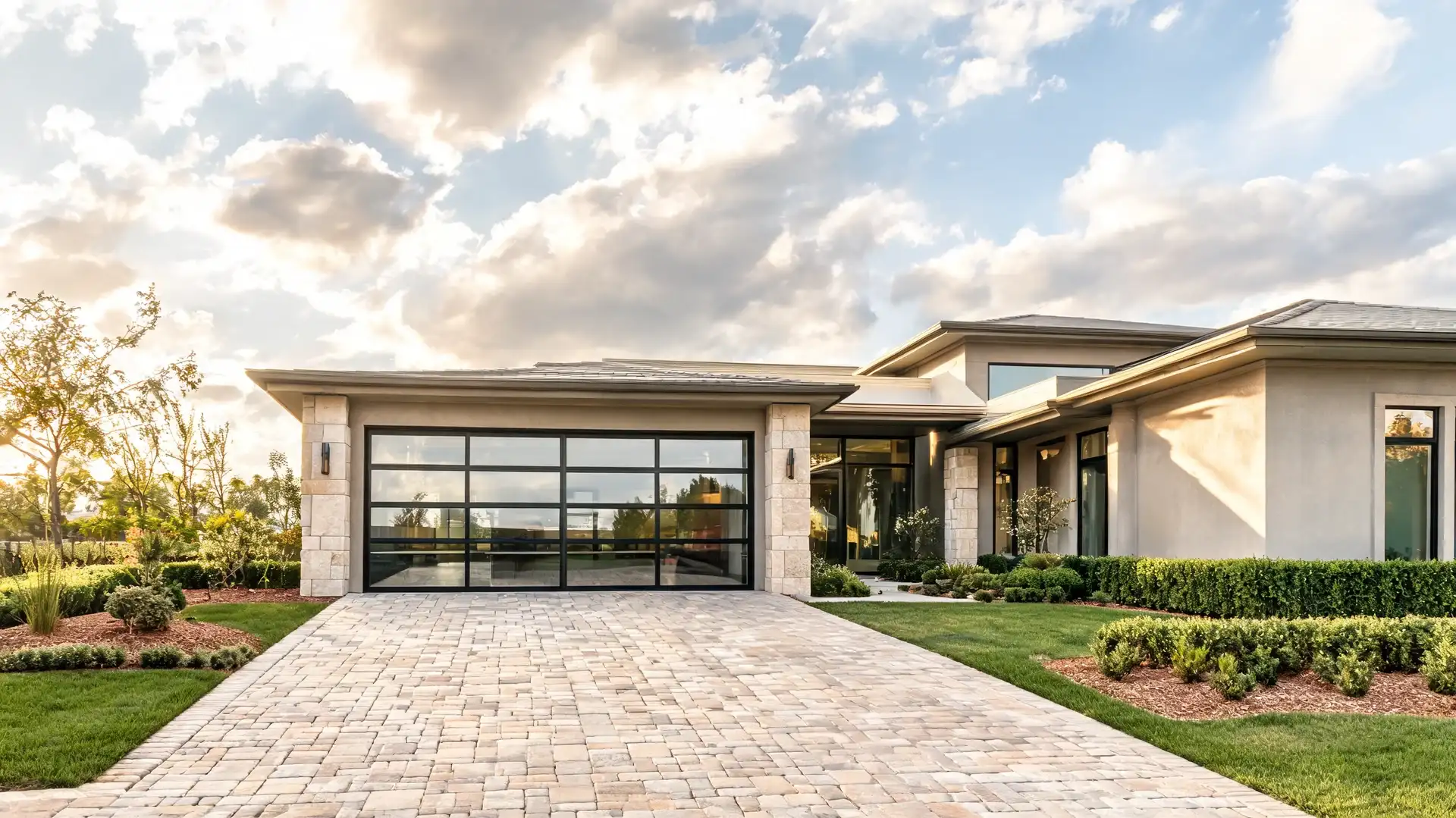
Ashlar stone gives the driveway the look of cut, fitted stone pieces arranged in a structured pattern. It works especially well on large driveways because the shapes are scaled to feel balanced across a wide surface. Mixed gray, tan, and brown tones add depth without making the slab look flat or uniform.
- Best for: Large driveways | Stone exteriors | Wide garage fronts
- Installer note: Choose larger stamp mats for wide areas so the scale looks right from the street.
5. Seamless Stone Texture
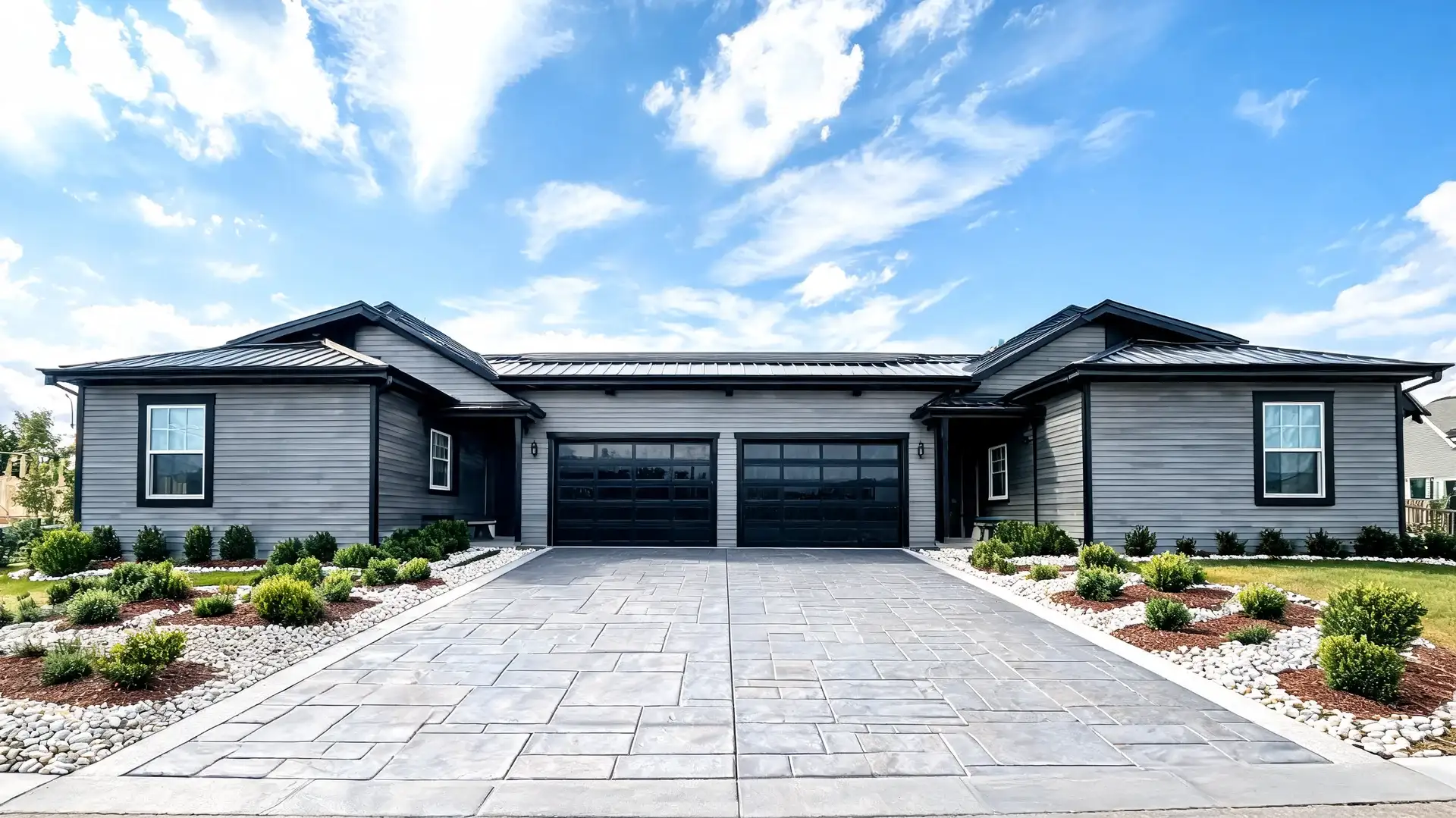
A seamless stone texture suits modern homes and wide driveways where you want depth without a repeating grid. Because there are no defined edges between pattern pieces, it is also more forgiving of minor layout imperfections during installation than a strict brick or cobblestone grid.
- Best for: Modern homes | Wide concrete areas | Softer stone looks
- Installer note: This is a safer choice when you want texture without strong lines across the whole driveway.
6. Borders and Bands
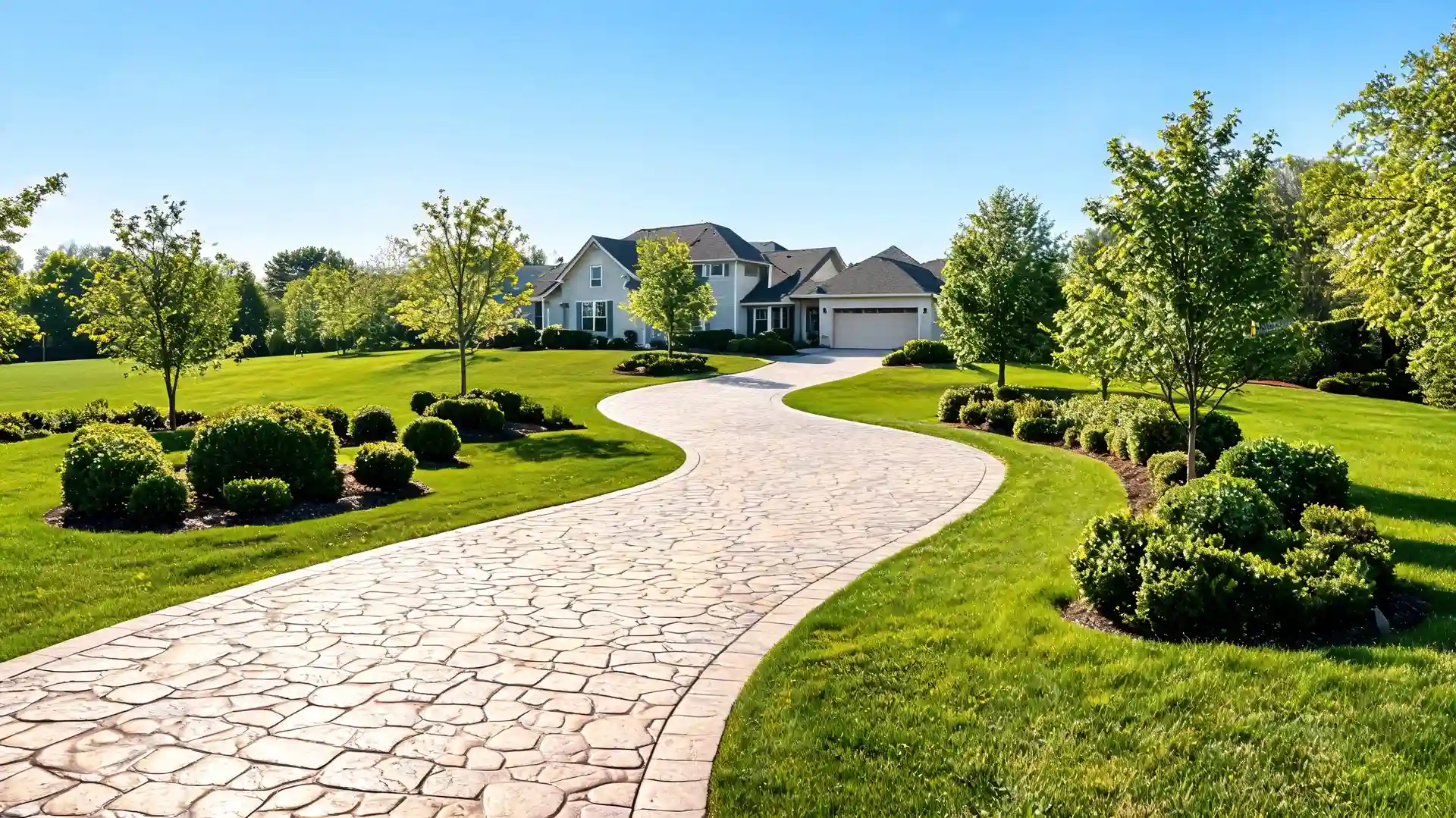
Borders and bands add a sense of structure to long or wide driveways without stamping the entire surface with a complex pattern. They can frame the edge, define the apron near the garage, or connect the driveway to the walkway. A darker border against a lighter center field tends to look clean and intentional, but adding too many color zones makes the layout feel busy.
- Best for: Long driveways | Simple center fields | Garage aprons
- Installer note: Keep the border detail clear and the center field calmer so the driveway does not look overdone.
How to Pick the Right Color Palette
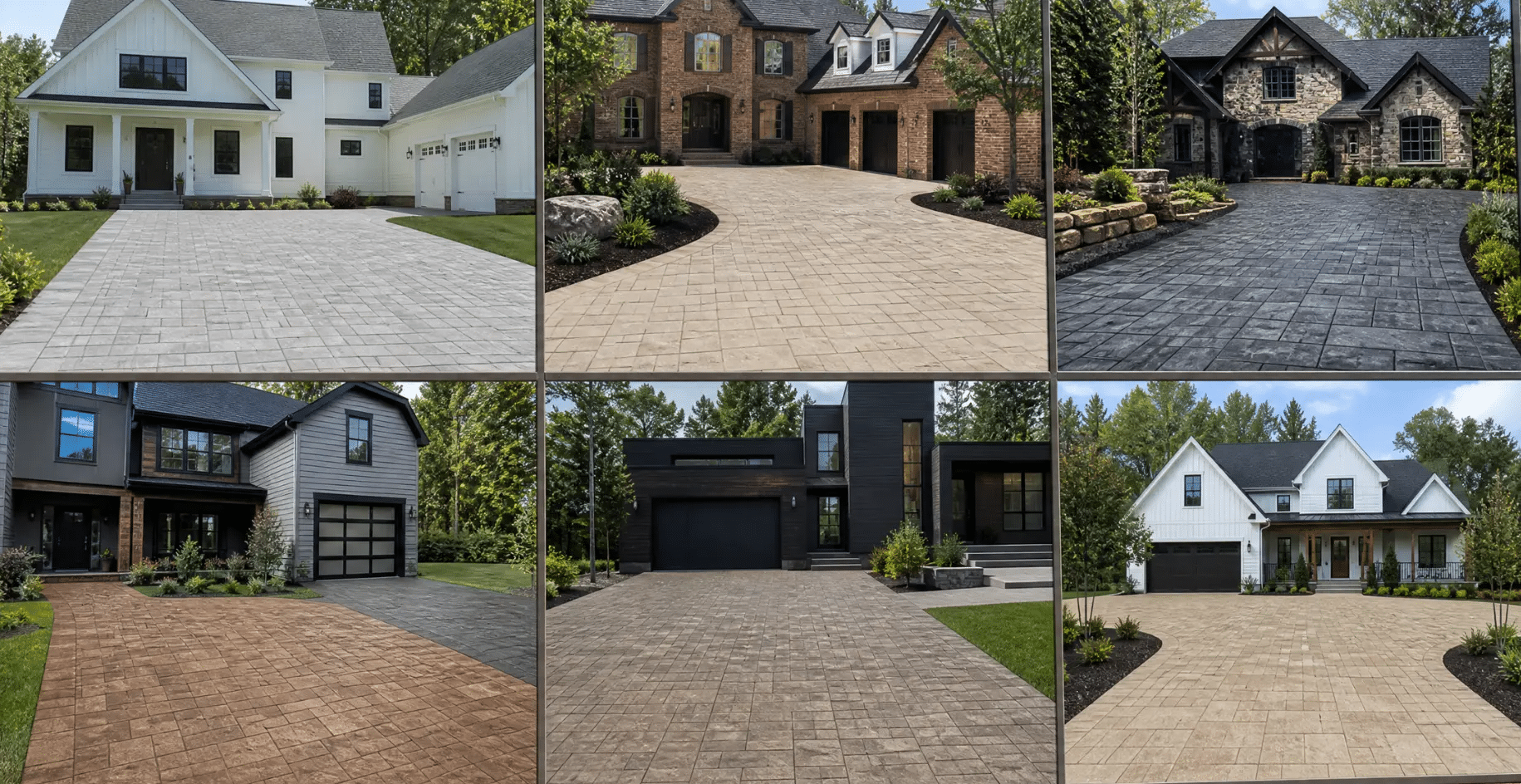
I always start with the house when choosing driveway color. The roof, siding, brick, stone, trim, garage door, and walkway should all be taken into account.
A driveway covers a large part of the front yard, so the color needs to support the home rather than pull attention away from it.
A shade that works beautifully on a small sample can look overwhelming across 400 square feet of slab, always ask for a larger sample or a photo of a finished project in the same color before committing.
| Home Exterior | Good Driveway Colors | Best Pattern Match | What to Avoid |
|---|---|---|---|
| White or cream siding | Light gray, warm beige, soft tan | Slate, ashlar stone, seamless stone | Very dark full-driveway colors that feel too harsh |
| Red brick | Charcoal, brown, clay, muted red | Brick, cobblestone, ashlar stone | Bright red that clashes with the brick |
| Gray siding | Charcoal, medium gray, greige, cool tan | Slate, seamless stone, large flagstone | Flat gray with no contrast |
| Stone front | Tan, gray, brown, beige mix | Ashlar stone, flagstone, slate | Colors that do not appear in the stone |
| Dark exterior | Light gray, warm tan, sand, soft brown | Seamless stone, slate, border bands | Glossy dark finishes on large areas |
| Farmhouse exterior | Soft gray, taupe, beige, weathered brown | Brick border, slate, cobblestone | Heavy black or bright red tones |
Stamped Concrete Driveway Cost Breakdown
A stamped driveway costs more than plain concrete because it requires color, stamping tools, release material, sealing, and skilled labor; any existing driveway removal or resurfacing adds to that figure.
Use $8 to $28 per square foot as a planning range. Simple designs sit closer to the lower end, while borders, multiple colors, curves, old driveway removal, and drainage fixes push the total higher.
| Cost Item | Typical Cost Range | What It Covers | How It Affects Price |
|---|---|---|---|
| Old driveway removal | $2 to $6 per sq. ft. | Breaking and hauling away concrete, asphalt, or pavers | Costs more if the old surface is thick, reinforced, or hard to access |
| Base preparation | $1.50 to $5 per sq. ft. | Grading, compacting, gravel base, and drainage setup | Poor base prep can lead to cracks, sinking, and water issues |
| Concrete pour | $4 to $10 per sq. ft. | Concrete mix, slab thickness, labor, and placement | Larger or thicker driveways cost more |
| Color | $1 to $4 per sq. ft. | Integral color, color hardener, or accent color | Multiple colors raise labor and material costs |
| Stamp work | $3 to $10 per sq. ft. | Pattern mats, border stamps, texture skins, and release material | Detailed patterns, borders, and tight areas add labor |
| Control joints | $0.50 to $2 per linear ft. | Cuts that help guide cracking | Needed for a cleaner long-term result |
| Sealer | $0.75 to $3 per sq. ft. | Clear, matte, low-sheen, or grip-added sealer | Better sealer costs more but extends surface life |
| Extra details | $5 to $20+ per sq. ft. in detailed areas | Borders, bands, apron details, curves, or custom features | Raises cost because layout and stamping take more time |
For a 400 sq. ft. driveway, a basic stamped finish may start around $3,200 to $6,000. A mid-range design with color and a border may land around $6,000 to $9,500. A more detailed design with removal, drainage work, multiple colors, or custom features can go above $10,000.
To keep costs manageable, stick to one pattern in the main area, choose one primary color, and reserve detail work for the border or apron only.
Maintenance Tips
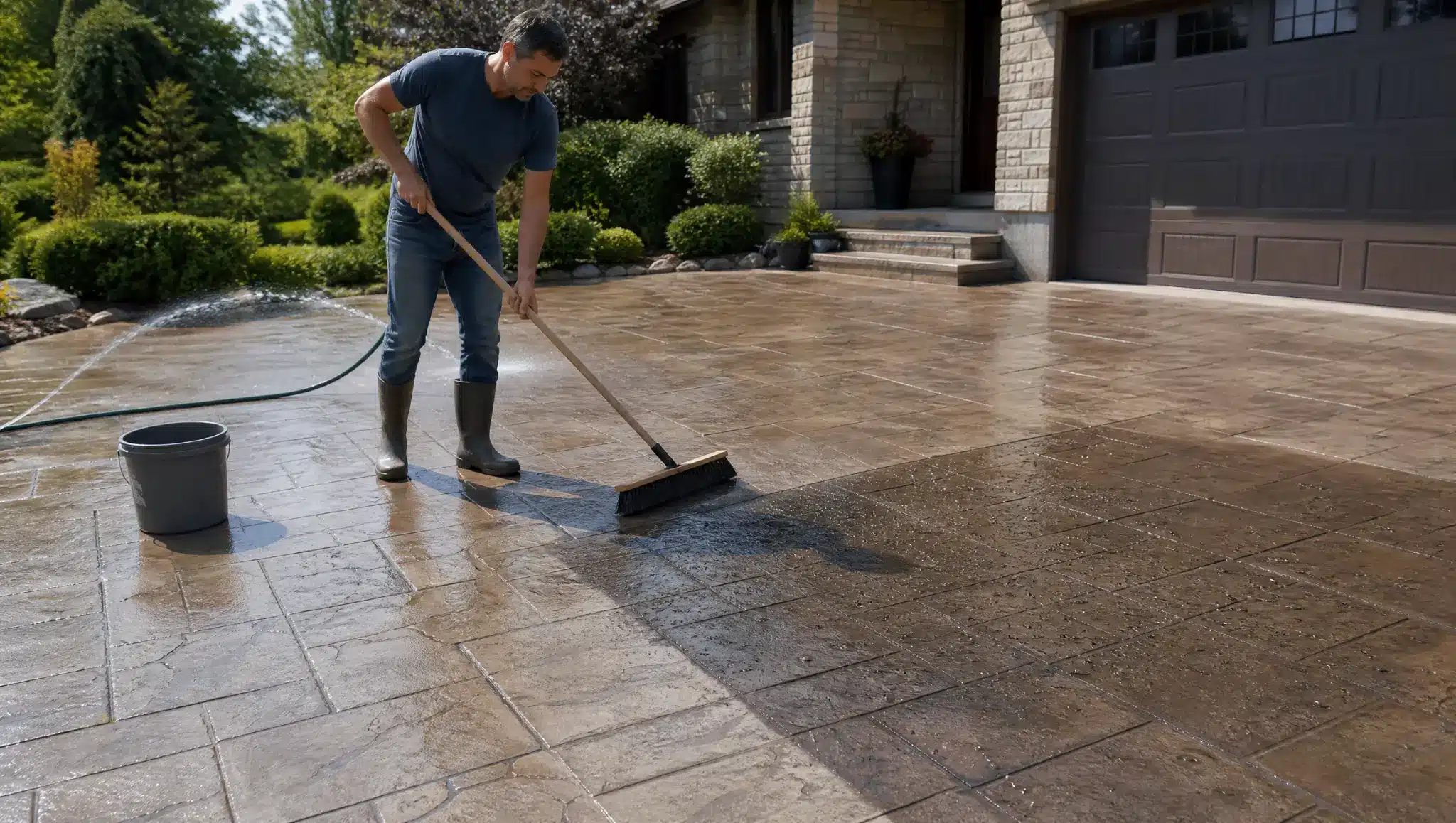
A simple care routine keeps the color, texture, and sealed finish looking good for years. Nothing here is heavy work, it is more about being consistent than being thorough.
- Sweep often: Remove leaves, dirt, and small debris before they sit long enough to stain the sealed surface.
- Rinse when needed: A garden hose clears mud, dust, and light buildup before it settles into the texture.
- Clean oil quickly: Treat oil spots as soon as you notice them. Old stains are much harder to lift from worn sealer.
- Use mild cleaners: Choose a concrete-safe cleaner. Strong chemicals can break down or dull the sealed finish over time.
- Avoid metal scraping: Plastic shovels and soft cleaning tools protect the surface from scratches that damage the sealer layer.
- Use sand in winter: Sand helps with grip on icy days without being as harsh on the surface as deicing salt, which can deteriorate the sealer and affect color over time.
- Watch for sealer wear: A dull surface or water that soaks in rather than beading is a sign the sealer is breaking down.
- Plan for resealing: Most stamped driveways need resealing every two to three years, though sun exposure, traffic volume, and sealer quality all affect the timeline.
What to Ask a Contractor Before You Hire
Stamped work depends on timing, crew size, tools, and finishing skill. A contractor who has done it many times will answer these questions without hesitation. One who has not will show it in vague or evasive answers.
- Have you installed stamped driveways before, and can I see recent photos?
- What pattern and stamp size fits my driveway dimensions?
- How will you prepare the base, and what depth will you compact to?
- Where will the control joints go, and how will you place them around the pattern?
- How will water drain away from the finished surface?
- What sealer will you use, and is a grip additive included?
- How soon after the pour can vehicles use the driveway?
If the answers feel uncertain or rushed, keep looking. The quality of the conversation before the job starts is usually a fair preview of the quality of the work itself.
Frequently Asked Questions
Does a stamped concrete driveway add resale value to a home?
A well-maintained stamped concrete driveway can improve a home’s curb appeal, which does factor into buyer perception and resale value. It is not a guaranteed dollar-for-dollar return, but a driveway that looks finished and well-kept tends to make a stronger first impression than a plain or worn surface, and first impressions matter in real estate.
How does stamped concrete hold up in freeze-thaw climates?
Freeze-thaw cycles challenge concrete as water seeps into cracks, freezes, expands, and widens them. Sealed driveways resist this better but require resealing and sand, not salt, in winter. In harsh climates, plain concrete or pavers often age better.
Is stamped concrete slippery when wet?
It can be, especially with a high-gloss sealer. A low-sheen sealer with a grip additive substantially reduces this risk. On sloped driveways, this is a non-negotiable specification, not a cosmetic preference.
What is the difference between integral color and color hardener in stamped concrete?
Integral color is mixed into the concrete batch before pouring, ensuring the color runs through the entire slab. If the surface chips or cracks, the color remains visible underneath. Color hardener is broadcast onto fresh concrete and pressed in, creating richer tones and a tougher surface, but it only penetrates the top layer. Many installers use both for depth and vibrancy.
How long does a stamped concrete driveway last?
A stamped concrete driveway can last 25 years or more with proper installation and regular sealing. The surface underneath is still concrete, so longevity depends heavily on the quality of the base, the thickness of the slab, drainage, and how consistently it is maintained. The pattern and color may show wear before the slab itself becomes structurally compromised.
Final Thoughts
The outside of a home deserves as much thought as the inside, and the driveway is where that exterior story begins.
A stamped concrete driveway, done right, with the correct base, proper drainage, a safe sealer, and well-placed control joints, can hold its appearance for decades.
The pattern choices offered through concrete stamps mean there is rarely a style mismatch with the house. What matters most is hiring someone who understands both the design side and the structural side.
If this helped you think it through, drop a comment below, and if you are weighing other surface options, have a look at how pavers and plain concrete stack up for your specific situation.