



|
Quick answer: Moss in lawns is best controlled by removing existing growth and improving shade, drainage, soil, and grass health. |
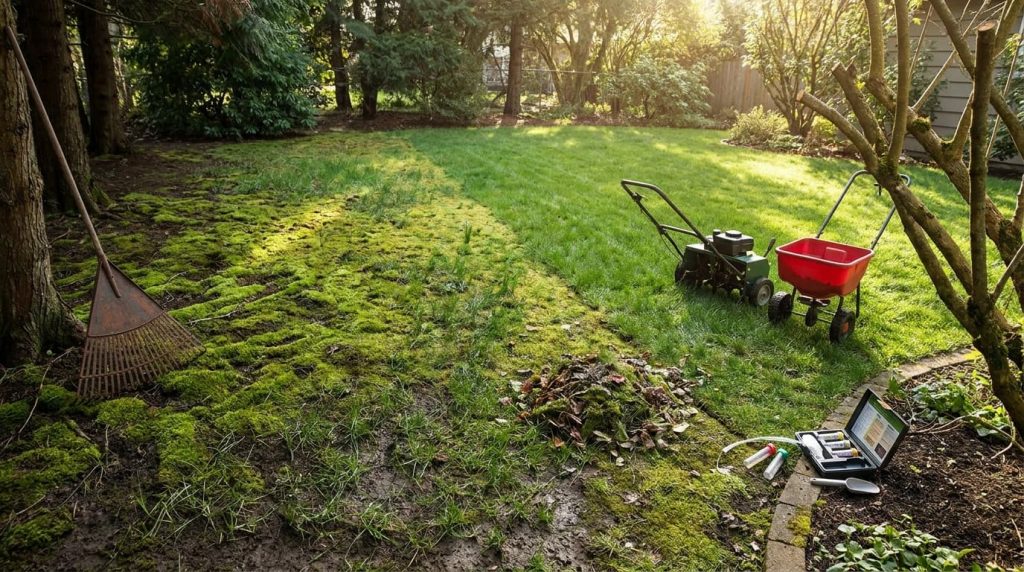
Moss can quickly take over areas where grass is already struggling, leaving a lawn looking patchy, damp, and uneven.
Simply removing the visible growth may improve its appearance for a while, but lasting results depend on correcting the conditions that allowed moss to spread in the first place.
This blog explains how to get rid of moss in the lawn, including the main causes, step-by-step removal methods, soil and drainage improvements, reseeding tips, prevention strategies, and common mistakes that can cause moss to return.
Why is Moss Growing in the Lawn?
Moss growing in lawn areas almost always points to a specific weak spot in your yard’s conditions.
Grass needs sunlight, good drainage, and loose soil to grow thick enough to crowd moss out. When one of these is missing, moss moves in fast because it tolerates conditions grass cannot handle.
Spotting the exact cause first saves you from wasting time on the wrong fix.
1. Too Much Shade
Grass slows down in low light, but moss keeps growing just fine in shade.
Areas under trees, near fences, or beside buildings often show the thickest moss growth. Less sunlight means thinner grass blades and more bare soil for moss to settle into.
Trimming back branches or thinning tree canopies can shift the balance back toward grass.
2. Poor Drainage and Excess Moisture
Moss thrives in soil that stays wet for long stretches. Low spots, compacted clay, or areas with poor drainage retain water near the surface.
Grass roots struggle in soggy soil, while moss spreads easily in these damp conditions, and standing water after rain is usually the clearest sign of a drainage issue.
3. Soil with Low pH
Grass grows best in soil with a near-neutral pH, while moss tolerates acidic soil far better. A pH below 6.0 often signals conditions that favor moss over turfgrass.
Testing your soil is the only reliable way to confirm this cause. Once you know the number, adjusting it is straightforward.
4. Compacted Soil
Foot traffic, mowing equipment, and heavy rain can pack soil down over time. Compacted ground blocks air, water, and nutrients from reaching the grass roots properly.
Under these conditions, grass thins out, leaving space for moss to take hold. High-traffic areas, such as paths and play zones, usually show compaction first.
5. Thin or Weak Grass Growth
Sometimes the real issue is the grass itself, not the soil or light. Old lawns, the wrong grass type for the climate, or years of skipped feeding all weaken turf over time.
Weak grass cannot compete with moss for space or nutrients. Strengthening the grass is often just as important as removing the moss on top.
How to Get Rid of Moss in Lawn Step by Step
Removing moss properly takes a bit more than raking it out and hoping for the best. These steps clear existing moss while setting the lawn up to recover rather than thin further.
Step 1: Rake Out the Moss
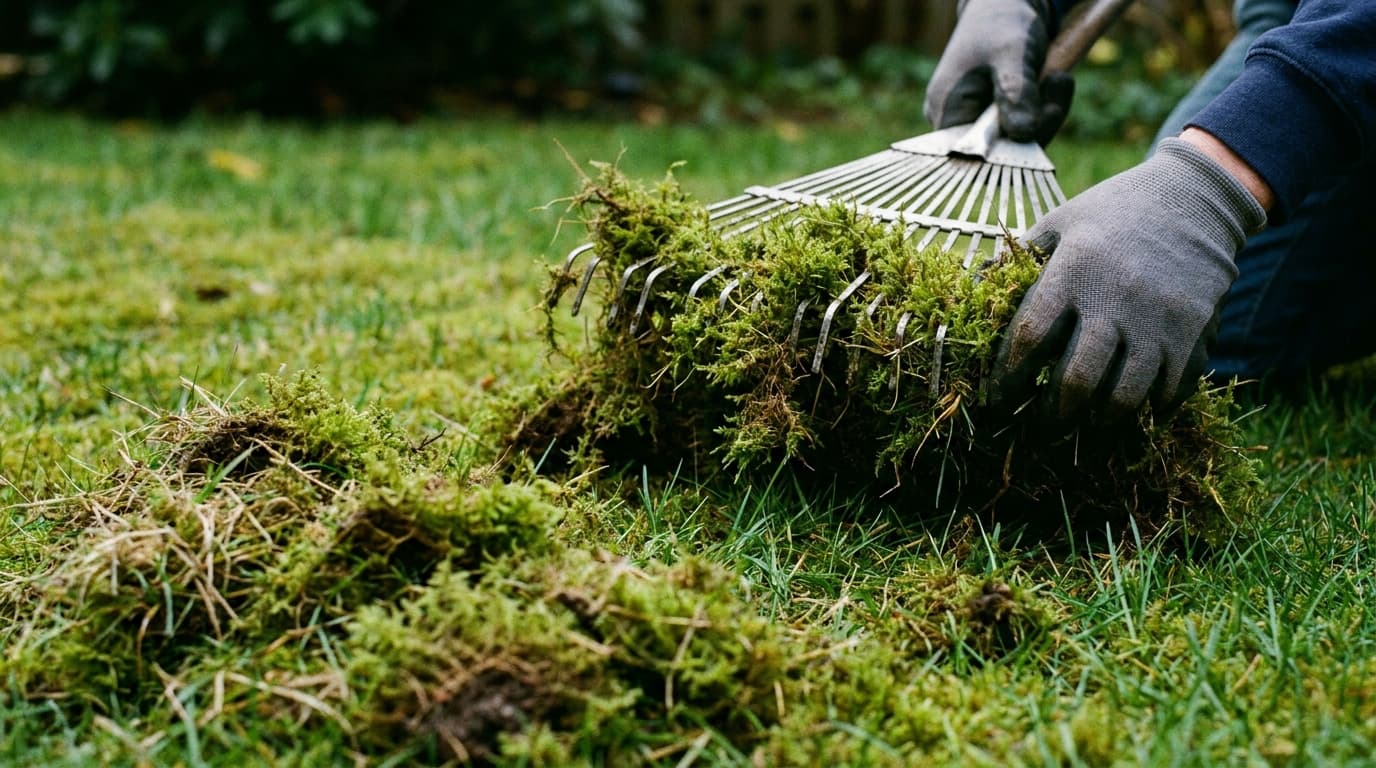
Use a metal-tined rake or a dethatching rake to pull moss away from the soil. Work in small sections and rake firmly, since moss often sits shallow but spreads wide.
This step also removes dead grass and debris trapped underneath the moss layer. Bag up the moss and toss it, since it can regrow if left on the lawn.
Step 2: Treat Stubborn Patches if Needed
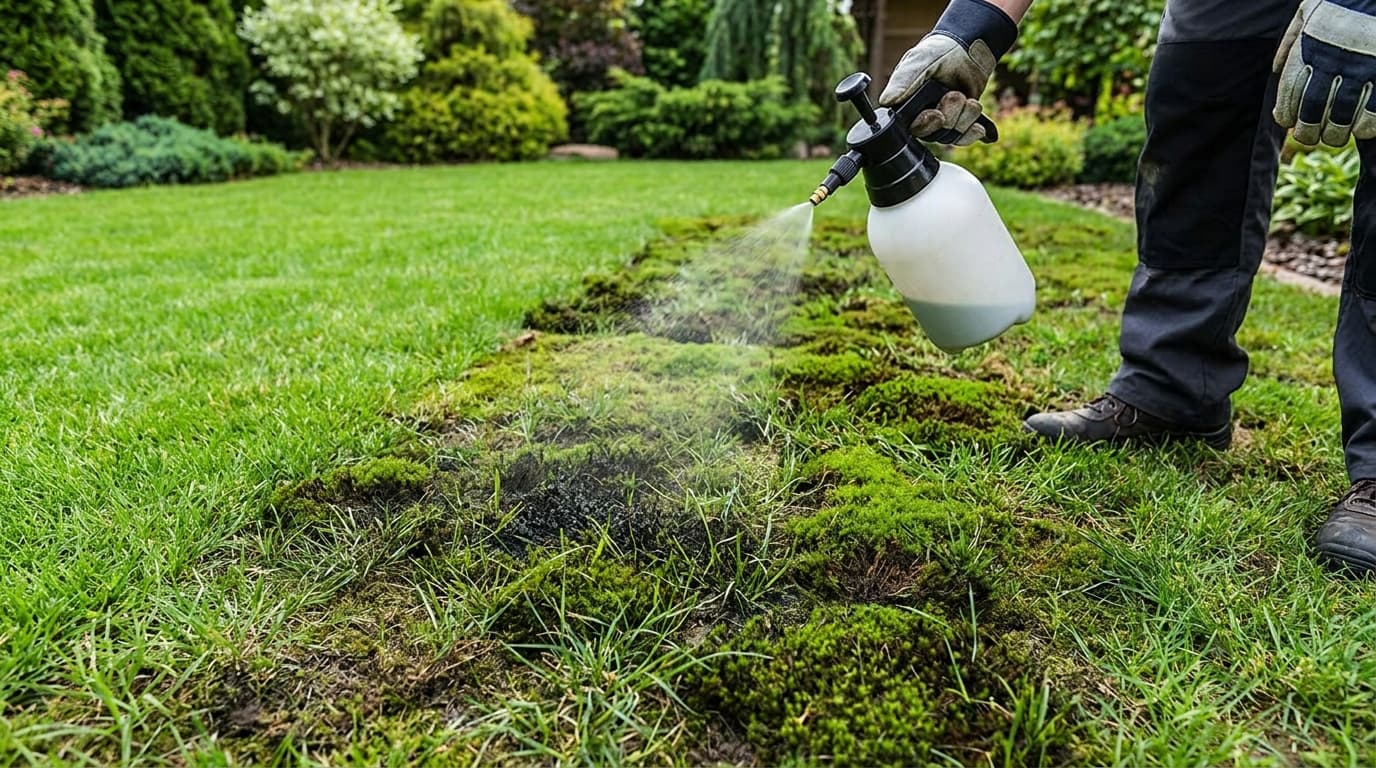
For thick or established moss, a moss killer can help clear the rest before raking.
Iron sulfate-based products are common and turn moss black within a day or two. Apply on a dry day and water lightly afterward, following the product label for exact timing.
Once the moss blackens, rake it out just like in Step 1.
Step 3: Loosen and Prepare the Soil
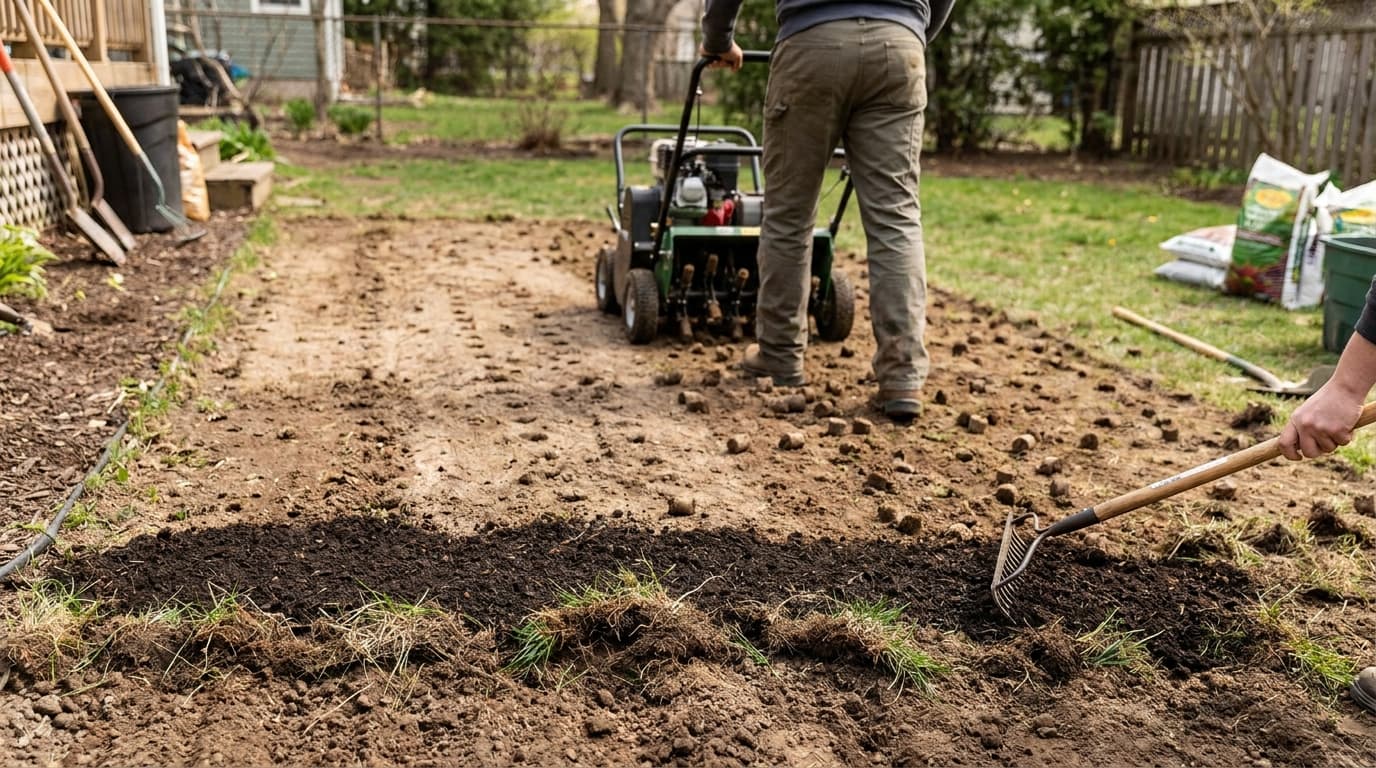
Aerate the treated area to break up compacted soil and improve airflow to the roots. A core aerator works well for larger lawns, while a hand aerator suits smaller patches.
This step matters as much as removal, since bare, compacted soil invites moss right back. Add a thin layer of compost if the soil feels especially hard or poor.
Step 4: Overseed the Bare Patches
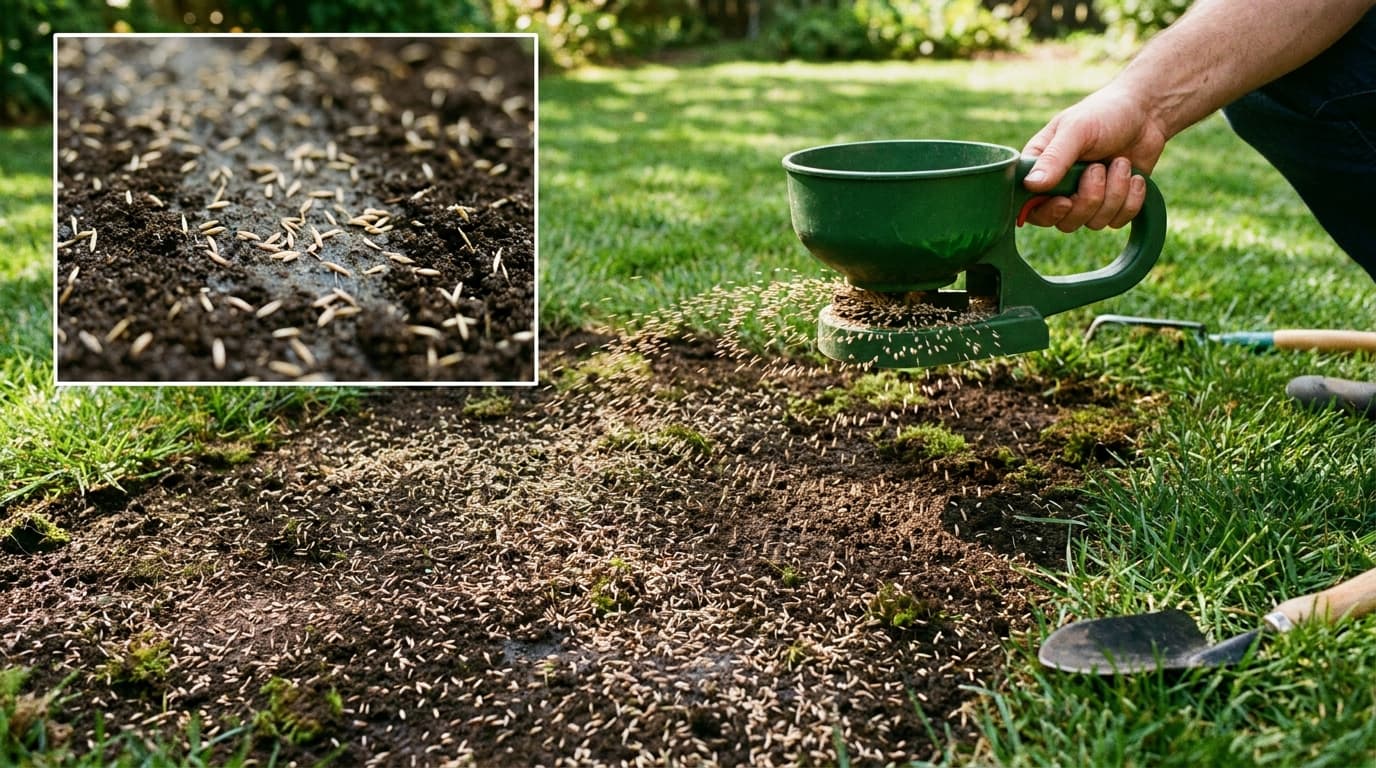
Spread grass seed suited to your climate and light conditions over the cleared soil. Choosing the wrong variety for your region is one of the main reasons reseeded patches stay thin.
Thick, healthy grass is the real long-term barrier against moss returning. Skipping this step is why moss often comes back within a few months.
How to Stop Moss from Growing Back
Removing moss is only half the job. Moss returns quickly if the lawn conditions that caused it in the first place stay unchanged.
1. Improve Sunlight Exposure
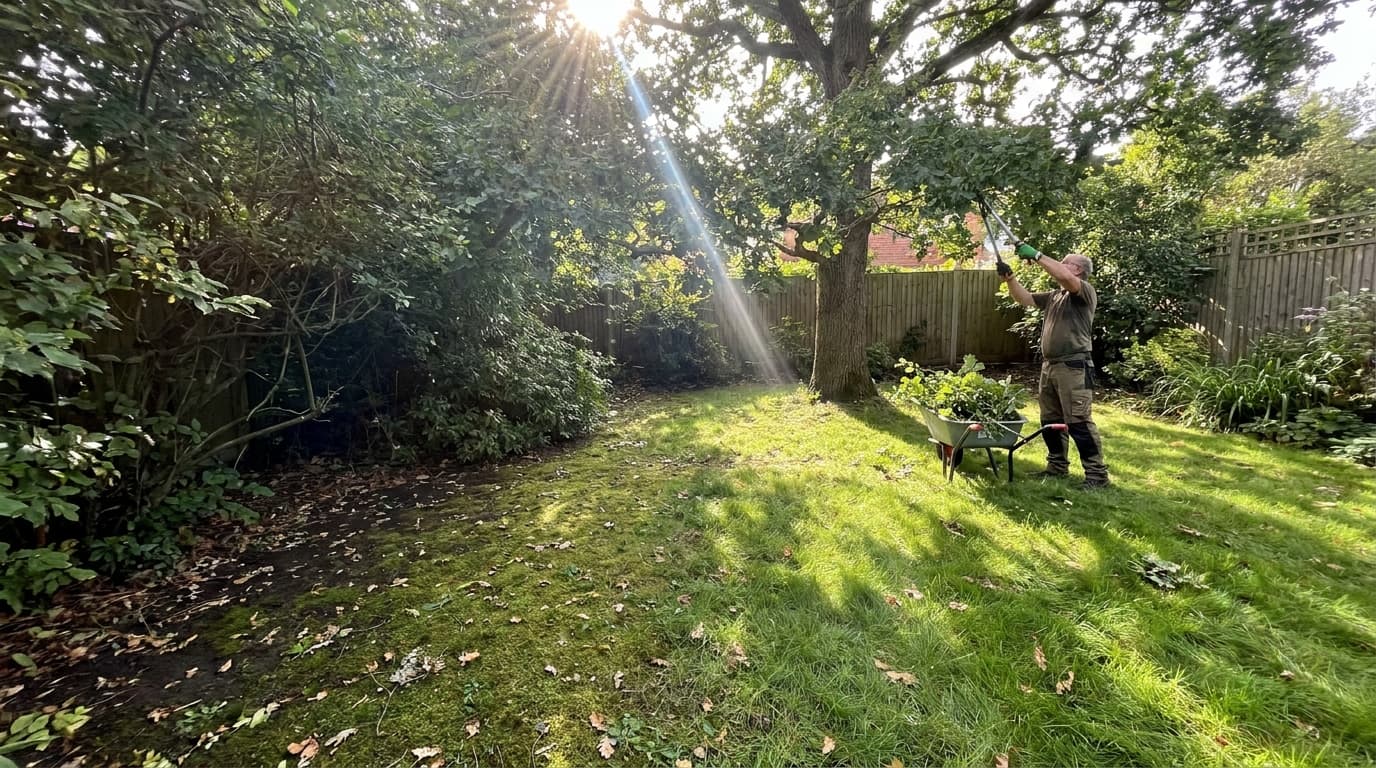
Grass needs a solid stretch of direct or filtered light each day to stay dense enough to outcompete moss.
Trim back low tree branches and thin out crowded shrubs near shaded lawn edges, since even a small increase in light can make a noticeable difference over the course of a season.
If a spot stays shaded no matter what you trim, consider a shade-tolerant grass blend instead of fighting the light problem directly.
Some yards simply have permanent shade zones. Replacing those patches with no-grass ground cover options removes the conditions moss needs without the ongoing battle.
2. Improve Lawn Drainage
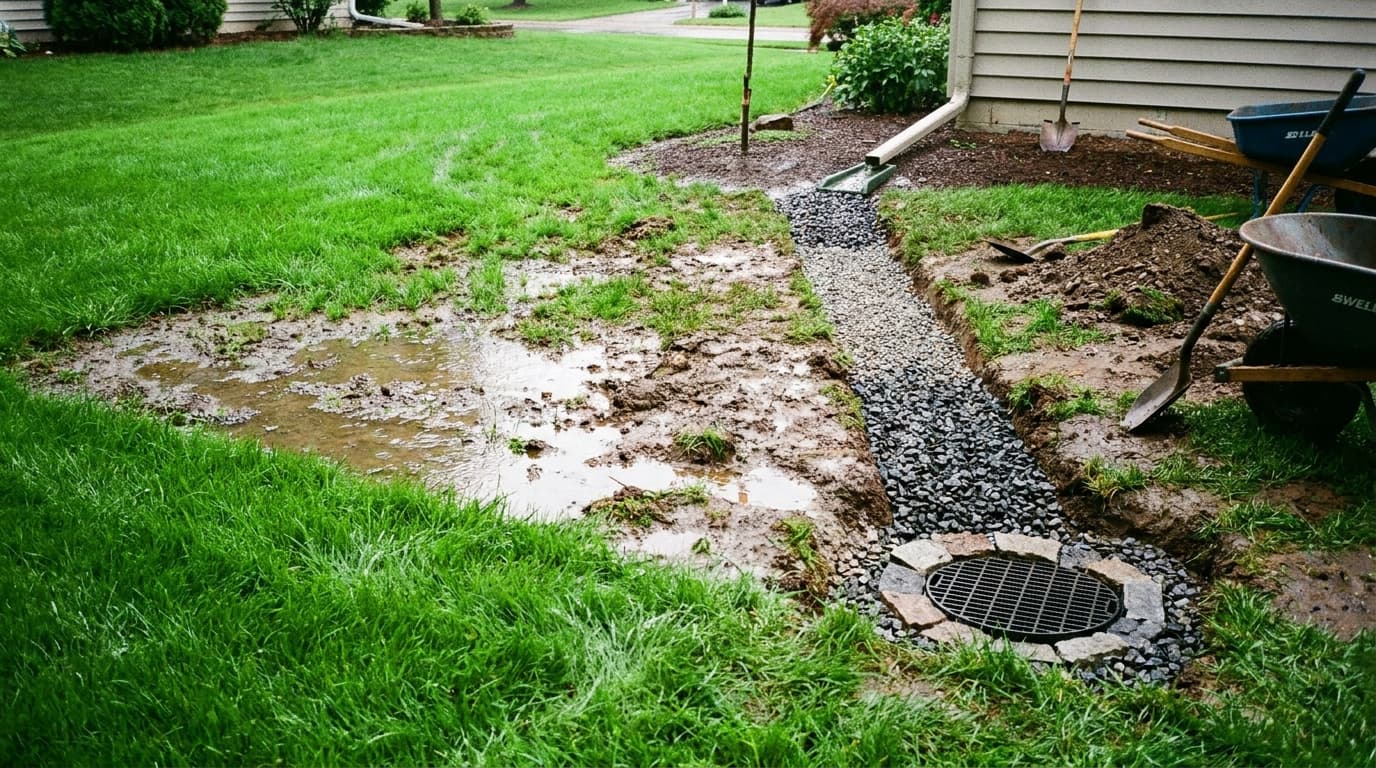
Check for low spots that collect water after rain, and consider regrading small dips and adding topsoil.
Redirecting downspouts away from the lawn helps, too, since many drainage problems stem from water running off a roof directly onto the lawn.
For larger drainage issues, a French drain or dry well may be worth the investment if soggy patches keep coming back year after year.
3. Test and Adjust Soil pH
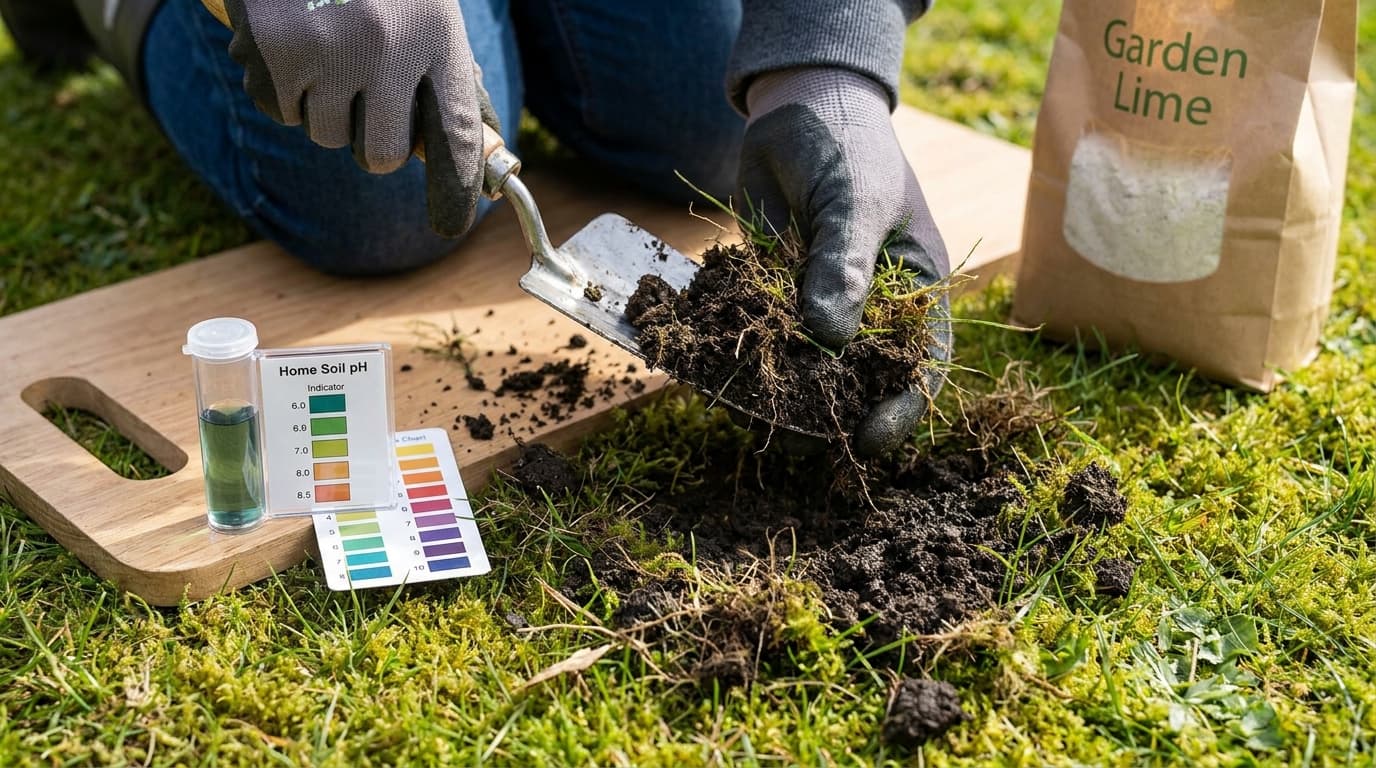
A pH below 6.0 tends to favor moss over turfgrass, so testing gives you a clear number to work from instead of a guess.
Home soil test kits are inexpensive and give a reading within minutes. If the test indicates acidic soil, applying garden lime gradually raises the pH over several weeks.
Retest after two to three months, since lime takes time to work into the soil and a single application rarely fixes deeply acidic ground in one pass.
4. Aerate Your Lawn Regularly
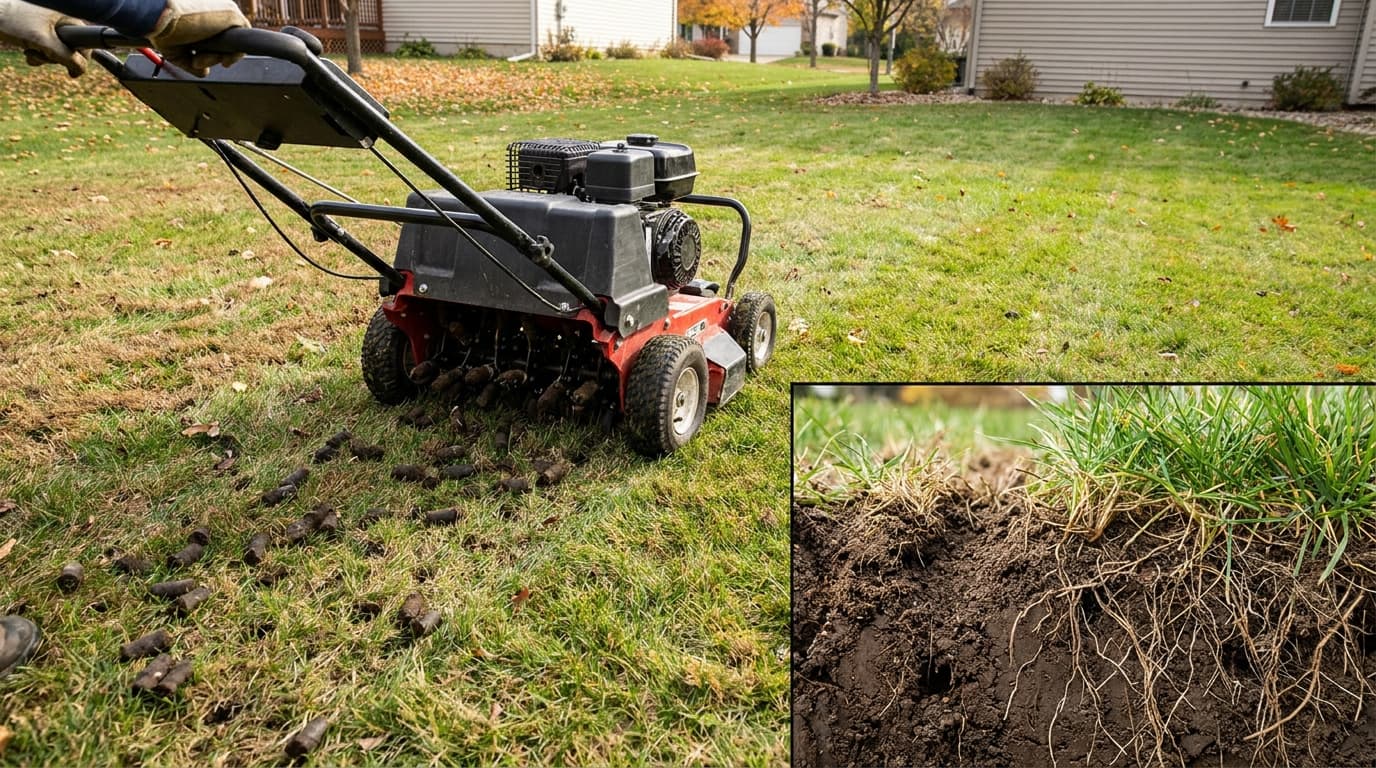
Compacted soil blocks water, air, and nutrients from reaching grass roots, weakening turf and inviting moss.
Core aeration once or twice a year, ideally in spring or fall, loosens the soil and lets roots grow deeper and stronger.
Leaving the soil plugs on the lawn after aerating is fine, since they break down and return nutrients to the soil.
5. Maintain Proper Mowing Habits
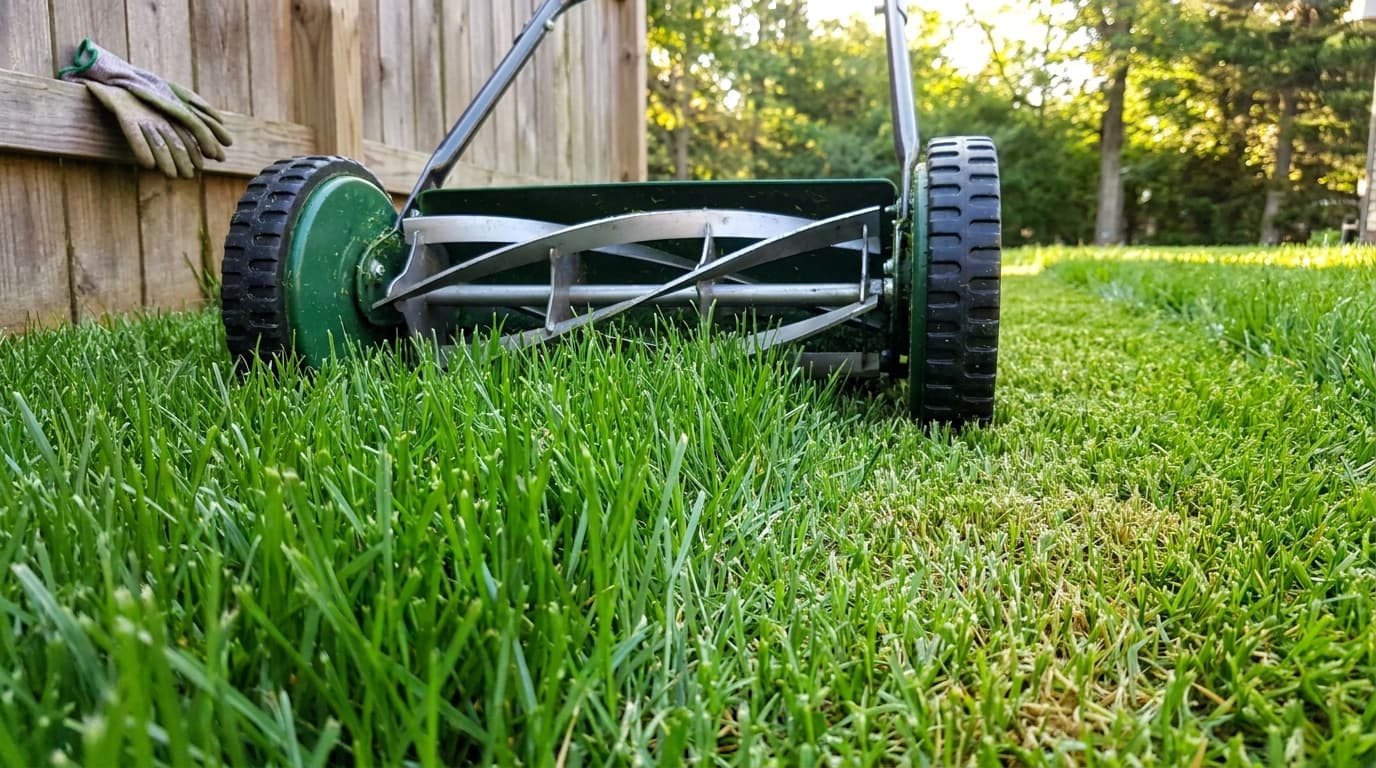
Cutting grass too short weakens it and makes it easier for moss to move in. Most lawns do best when kept at around 2.5 to 3.5 inches, depending on the grass type.
Mowing at this height lets grass develop deeper roots and shade out competing growth, such as moss.
Keep mower blades sharp, too, since dull blades tear grass rather than cut cleanly, leaving it more vulnerable to stress and disease.
Common Mistakes When Removing Moss from Lawn
A few missteps during moss removal can undo all the effort put into raking, treating, and reseeding.
- Skipping the cause and only removing moss: Fixing shade, drainage, pH, or compaction matters as much as raking or spraying. Skip it, and moss almost always returns.
- Applying moss killer at the wrong time: Extreme heat or rain right after spraying weakens the treatment. Dry, mild days work best.
- Leaving bare soil unseeded: Raked-out patches left empty invite moss straight back. Seed them right away.
- Mowing too short after treatment: Low cuts stress new growth and weaken its ability to compete with moss. Keep the mowing height taller while the lawn recovers.
- Skipping a soil test before applying lime: Lime without a pH test can push the soil too far in the other direction. Test first.
- Ignoring compacted high-traffic areas: Paths, gates, and play zones get skipped during aeration, but they need it most.
Avoiding these mistakes keeps the work already put into moss removal from going to waste.
Moss Prevention Lawn Care Schedule
Below is a breakdown of what to focus on for each season, so prevention steps occur at the right time rather than all at once.
|
Season |
Key Tasks |
Why It Matters |
|---|---|---|
|
Spring |
Rake out any moss, aerate soil, overseed bare patches, and test soil pH |
Grass is entering active growth, giving the seed the best chance to establish |
|
Summer |
Mow at proper height, water deeply but less often, and avoid heavy treatments |
Heat stresses grass, so light maintenance keeps it steady until fall |
|
Fall |
Aerate again if needed, apply lime based on test results, and overseed thin spots |
Cool weather supports strong root growth and seed germination |
|
Winter |
Trim overhanging branches, check drainage before freezing weather |
Prepares the lawn for spring by improving light and water flow |
Summing Up
Getting rid of moss in a lawn works best as a two-part process. Remove the moss first, then fix whatever caused it, whether that’s shade, poor drainage, low pH, or compacted soil.
Regular aeration, proper mowing height, balanced feeding, and good drainage all work together to keep the grass strong enough to crowd out moss on its own.
Small, consistent lawn care habits spread across the year beat one big cleanup every spring. Test your soil, watch for shaded or compacted spots, and stay ahead of the conditions that let moss take hold in the first place.
Frequently Asked Questions
Will Moss Come Back After Removal?
Yes, if you don’t correct the underlying cause. Moss returns quickly in shaded, damp, compacted, or acidic soil. Pairing removal with soil correction and reseeding gives grass a real chance to crowd moss out.
Is Baking Soda Good for Killing Moss?
Baking soda can temporarily dry out small moss patches by raising the surface pH, but it is not a long-term fix. It also does not address shade, drainage, or compaction, so moss often returns.
Does Moss Damage Grass Roots?
Moss itself does not directly damage grass roots, but it competes for space, light, and moisture. Thick moss growth can crowd out grass over time, making the lawn thinner in already weak areas.
How Often Should I Treat My Lawn for Moss?
Check for moss growth once each season, with focused treatment in spring or fall when grass grows fastest. Ongoing preventive steps, such as aeration and proper mowing, matter more than repeated applications of moss killer.
Can You Kill Moss Without Killing Grass?
Moss can be removed without harming grass. Rake out small patches by hand or use a lawn-safe moss killer. Fixing shade, drainage, soil problems, and weak grass growth helps prevent moss from returning.