

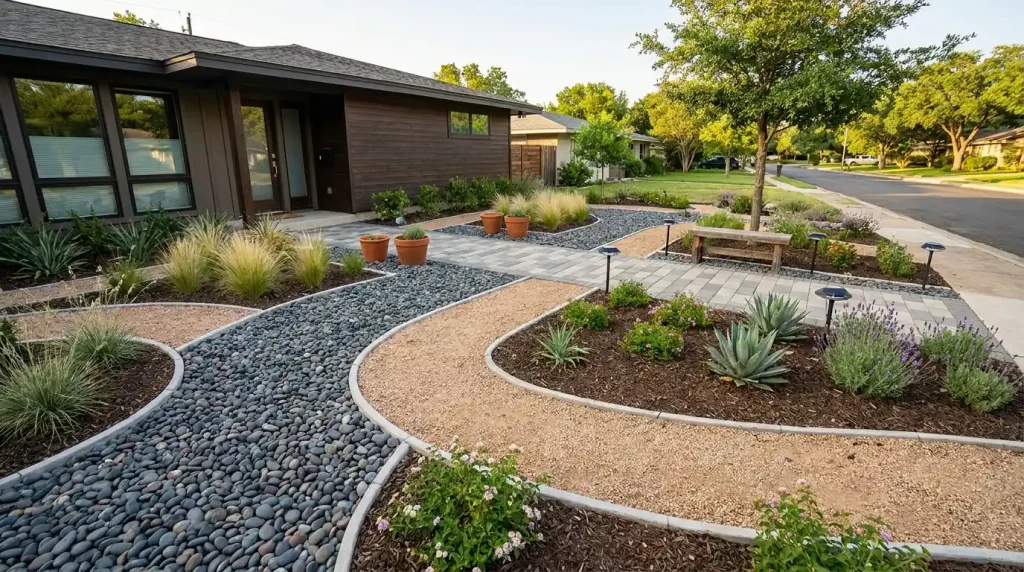


Gravel holds, mulch shifts, decorative concrete stays flat for decades if it’s sealed properly, and cracks if it isn’t. That’s what I’ve seen after years of evaluating front yard materials through freeze-thaw cycles, hard rains, and summers that bake surfaces to 140 degrees.
Cheap no grass front yard ideas aren’t hard to find. What’s harder to find is honest information about which ones still look good two winters from now and which ones require you to start over.
This article covers materials, costs, failure modes, and the decisions that matter before you spend anything. If you’re replacing a lawn you’re tired of maintaining, here’s what I’d actually tell a homeowner standing in their driveway trying to figure out where to start.
Material Comparison: No Grass Front Yard Options
Before choosing a material, understand its real-world performance, not just what it costs per bag at the hardware store.
These figures reflect installed costs for a standard 500–800 square foot front yard in the US. Regional labor rates can shift costs by 20–40% in either direction.
| Material | Installed Cost (per sq ft) | Lifespan | Maintenance | Climate Suitability |
| Pea gravel | $1.50–$3.50 | Indefinite with top-ups | Low: re-rake 1–2x per year | All climates; avoid on slopes |
| Decomposed granite | $1.00–$3.00 | 3–5 years before refresh | Low: compacts well, minimal drift | Excellent in dry climates; muddies in wet |
| Organic bark mulch | $0.50–$2.00 | 1–2 years per layer | Medium: annual refresh required | All climates; avoid in standing water zones |
| Concrete pavers | $8.00–$20.00 | 25–50 years | Low: occasional re-sanding of joints | All climates; needs proper base in freeze zones |
| Stamped concrete | $8.00–$18.00 | 25+ years if sealed | Low: reseal every 2–3 years | Good in mild climates; cracks in heavy freeze-thaw |
| Artificial turf | $5.00–$20.00 | 8–15 years | Low: rinse and rake periodically | Heat-prone without cooling fill; not for very wet climates |
| Succulents + rock bed | $3.00–$8.00 | Plants 10+ years with right species | Low: water twice monthly in summer | Zones 8–11; frost kills most varieties |
| Creeping thyme or ground cover | $2.00–$5.00 | Perennial, self-spreads | Very low: trim once or twice yearly | Zones 4–9; handles foot traffic and drought well |
Pea gravel and mulch have the lowest sticker price but aren’t always the cheapest over five years once annual refresh costs are factored in. That’s the math most homeowners miss when pricing out a no-grass yard.
Cheap No Grass Front Yard Ideas That Hold Up
These aren’t decoration ideas. They’re real installations I’ve seen survive multiple weather cycles. Cheap to install is not the same as cheap to own, and I’ll flag the difference where it exists.
Pea Gravel with Weed Barrier
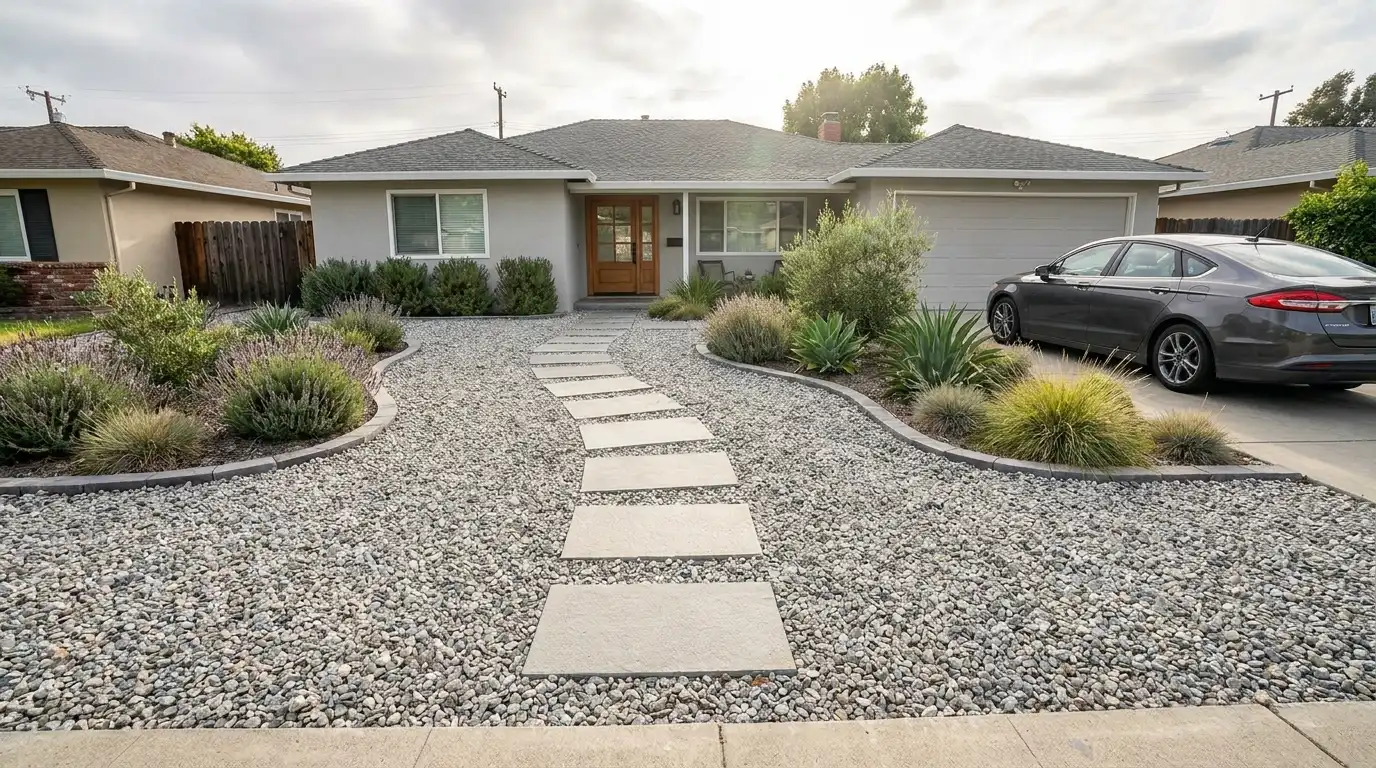
Pea gravel installed over commercial-grade landscape fabric is the lowest-cost no-grass setup that actually stays put.
Budget $1.50–$3.50 per square foot installed, plus edging. Skip the fabric, and you’ll be pulling weeds out of the gravel within one season.
Use steel or aluminum edging along all borders, not plastic, which buckles in summer heat and heaves in freeze-thaw zones.
On flat ground, this is a solid DIY project. Spread the gravel 2–3 inches deep and rake it level. The failure I see most often: people put down too little gravel, the fabric shows through, and the yard looks unfinished within a year. Minimum depth is 2 inches; 3 inches is better on a front-facing surface.
| Pro Tip: Use ¾-inch crushed gravel near the path you walk most often. Pea gravel is round and rolls underfoot. Crushed angular gravel locks in place and handles foot traffic far better over time. |
Rock Garden with Drought-Tolerant Plants
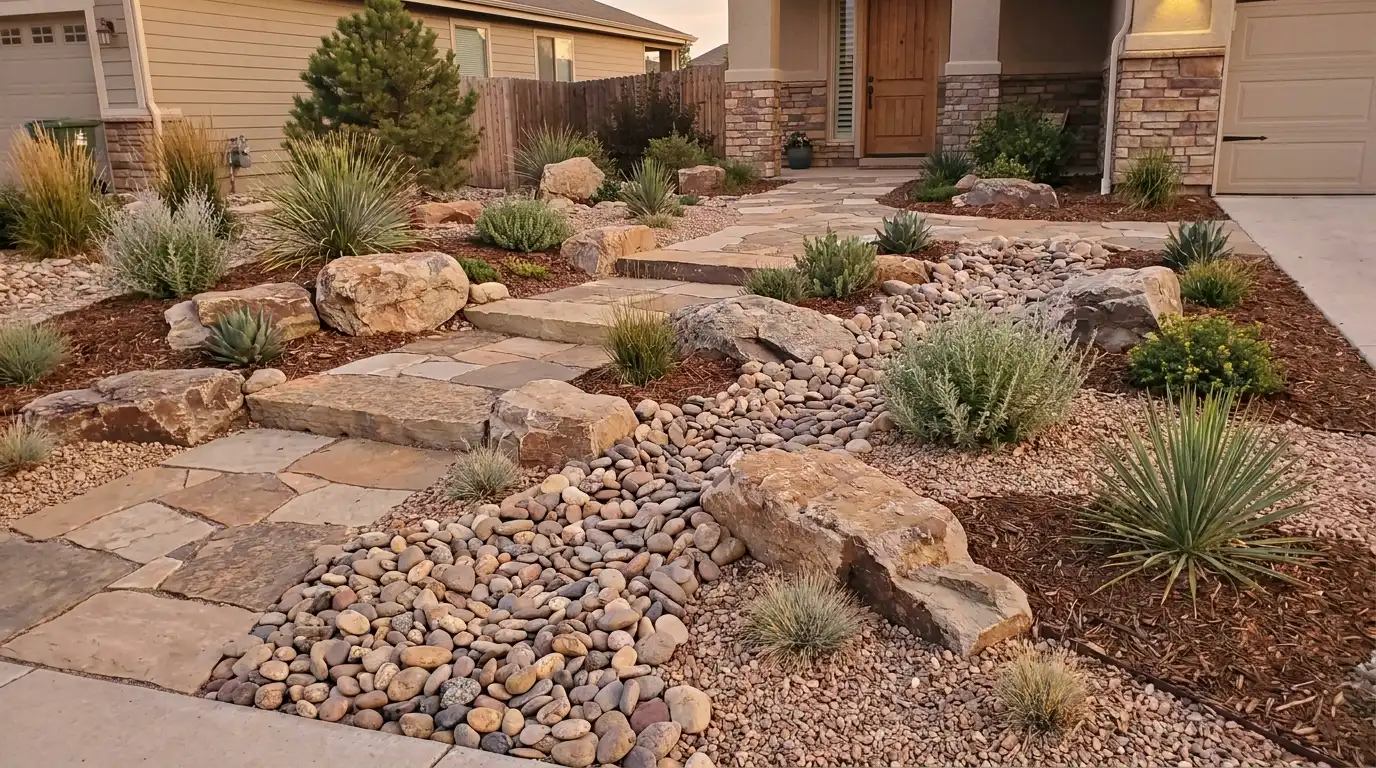
A layered rock garden with drought-tolerant plants costs $3.00–$8.00 per square foot depending on stone sourcing.
The bigger expense is plant selection: native and drought-adapted species cost more up front but stop needing supplemental water within two growing seasons, while cheap nursery plants often need irrigation for years.
Grade the ground before setting the stone. The biggest failure mode with rock gardens isn’t aesthetics. It’s water pooling near the foundation because nobody graded the bed away from the house.
A 2% slope (roughly ¼ inch per foot) directed away from the house solves this. Any contractor can handle regrading; a homeowner with basic tools can too if the slope change is minor.
Paver Pathway Yard
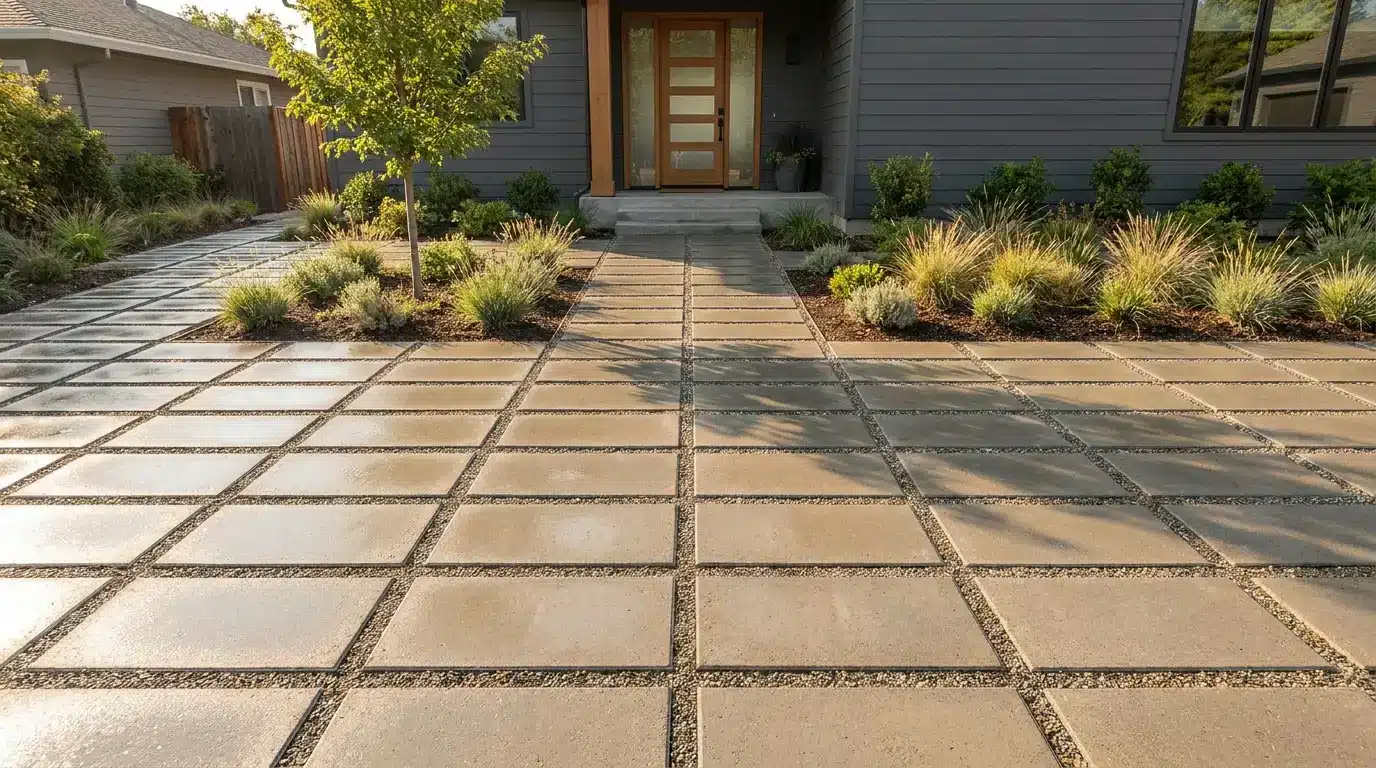
Concrete pavers are the highest upfront cost in this list, but the lowest long-term cost per year.
Installed at $8–$20 per square foot, a properly laid paver surface with a compacted gravel base and sand joint fill will outlast the house.
A 4-inch compacted gravel base under pavers prevents settling in freeze-thaw zones. Skip the base and individual pavers tip and crack within three winters.
Fill joints with polymeric sand, not regular sand. Regular sand washes out, letting weeds take root between pavers within a season. Polymeric sand sets firmly when wet and effectively locks out weed seeds.
Mulch Beds with Defined Edging
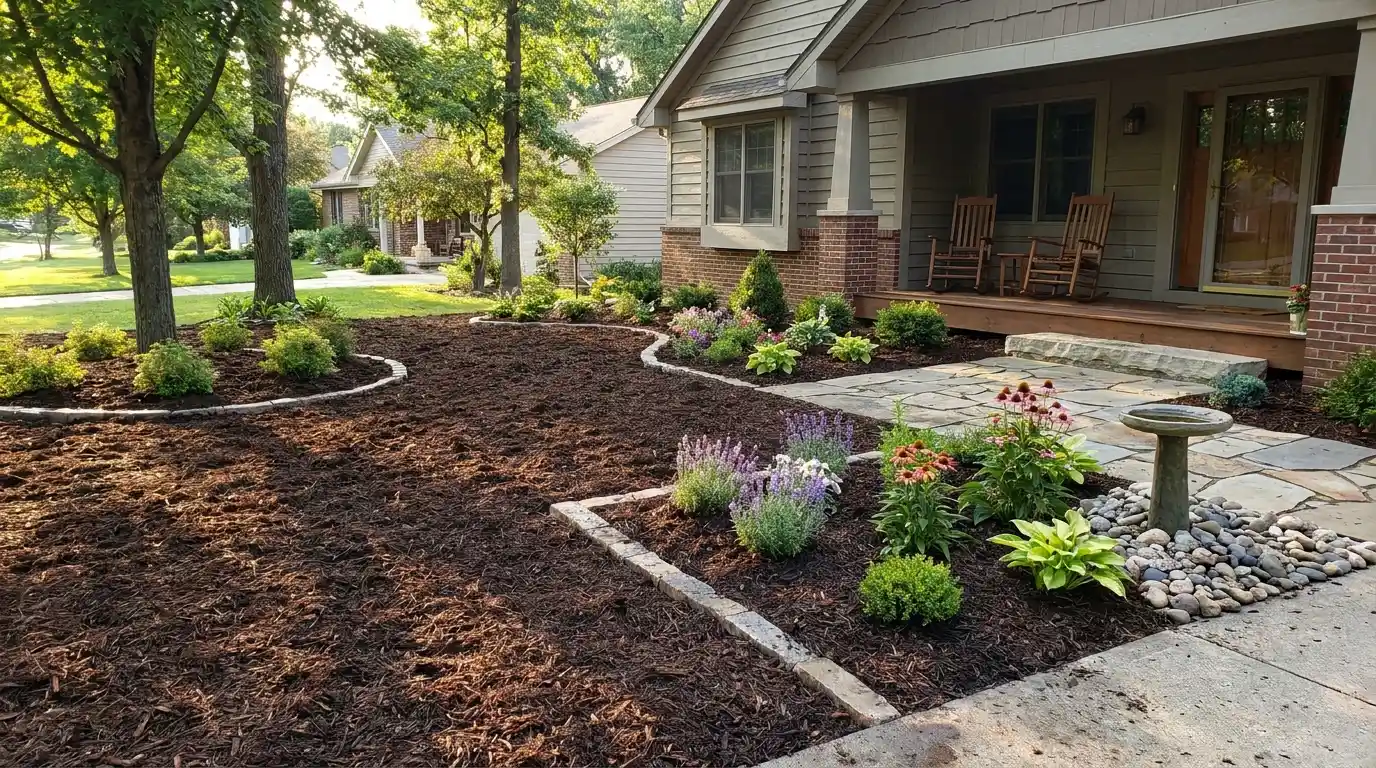
Mulch is the cheapest per square foot but requires the most ongoing investment of any material here.
Budget $0.50–$2.00 per square foot installed, then expect to refresh 1–2 inches every 12–18 months.
Organic bark mulch breaks down and feeds the soil, which is genuinely useful around plants, but it disappears faster than homeowners expect.
The thing that makes or breaks a mulch yard is edging. Sharp metal edging separating mulch from the driveway and walkway is not optional if you want the yard to look clean for more than one season.
Without it, mulch drifts, the edge blurs, and the whole design reads as neglected within a few months. For a low-maintenance front yard landscaping setup, mulch works best when paired with a defined plant structure, not spread across open ground.
Desert-Inspired Xeriscaping
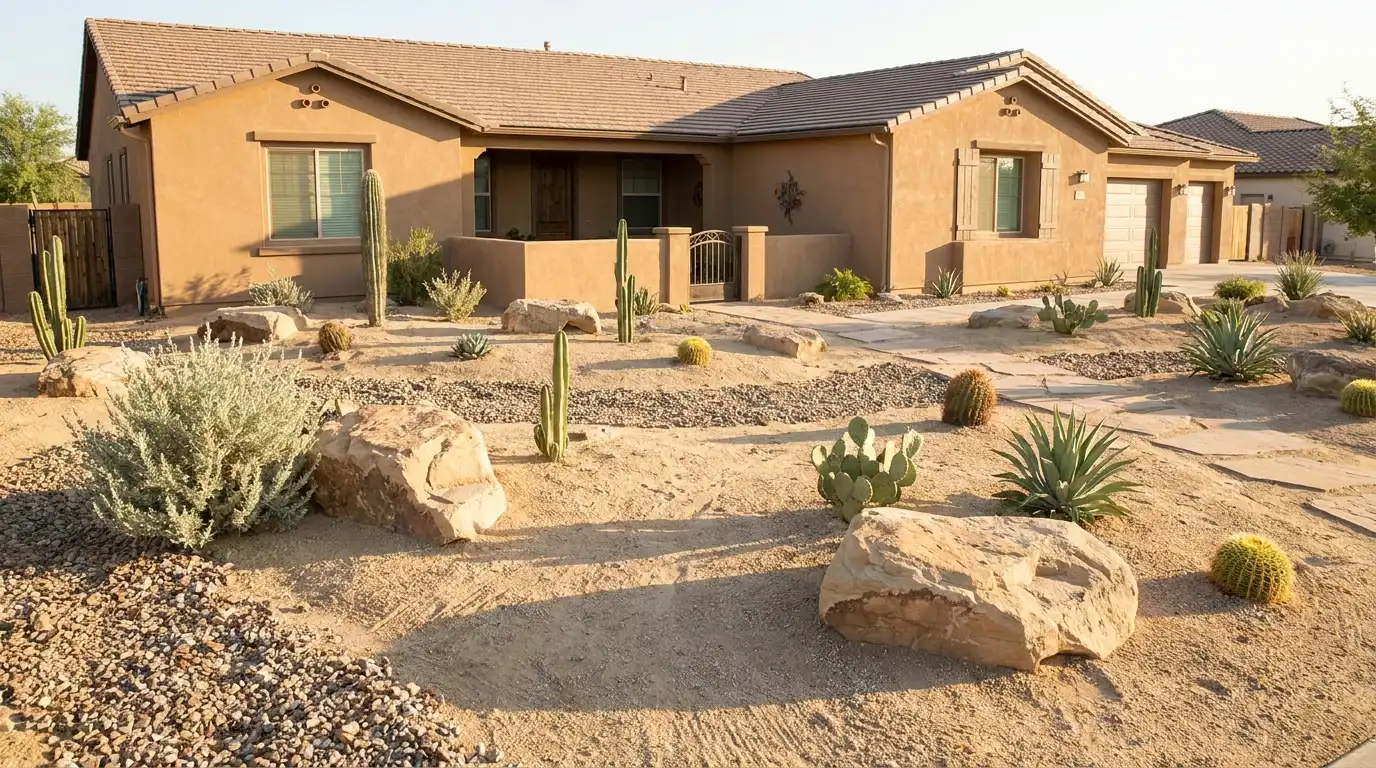
Xeriscaping is drought-tolerant landscaping that minimizes or eliminates the need for supplemental irrigation.
It’s the most climate-appropriate option for homeowners in USDA zones 8–11 and most of the Southwest.
The EPA WaterSense program estimates that replacing a 1,000-square-foot lawn with xeriscaping can reduce outdoor water use by 50–70%, which translates to $200–$600 annually in warm climates where lawn irrigation runs spring through fall.
The setup: compacted decomposed granite as the base surface, boulders and decorative rock for structure, and species like agave, salvia, ornamental grasses, or native shrubs for planting pockets. Installed cost ranges from $3.00 to $8.00 per square foot, depending on plant density.
Avoid using the same xeriscape design in a Zone 5 or 6 yard. Most desert-adapted species won’t survive the first winter, and the gravel base will hold water without the drainage that warmer, sandier soils provide.
For a broader look at how climate affects material choices across regions, the garden landscaping guide by region covers what actually works zone by zone.
Succulent Front Yard
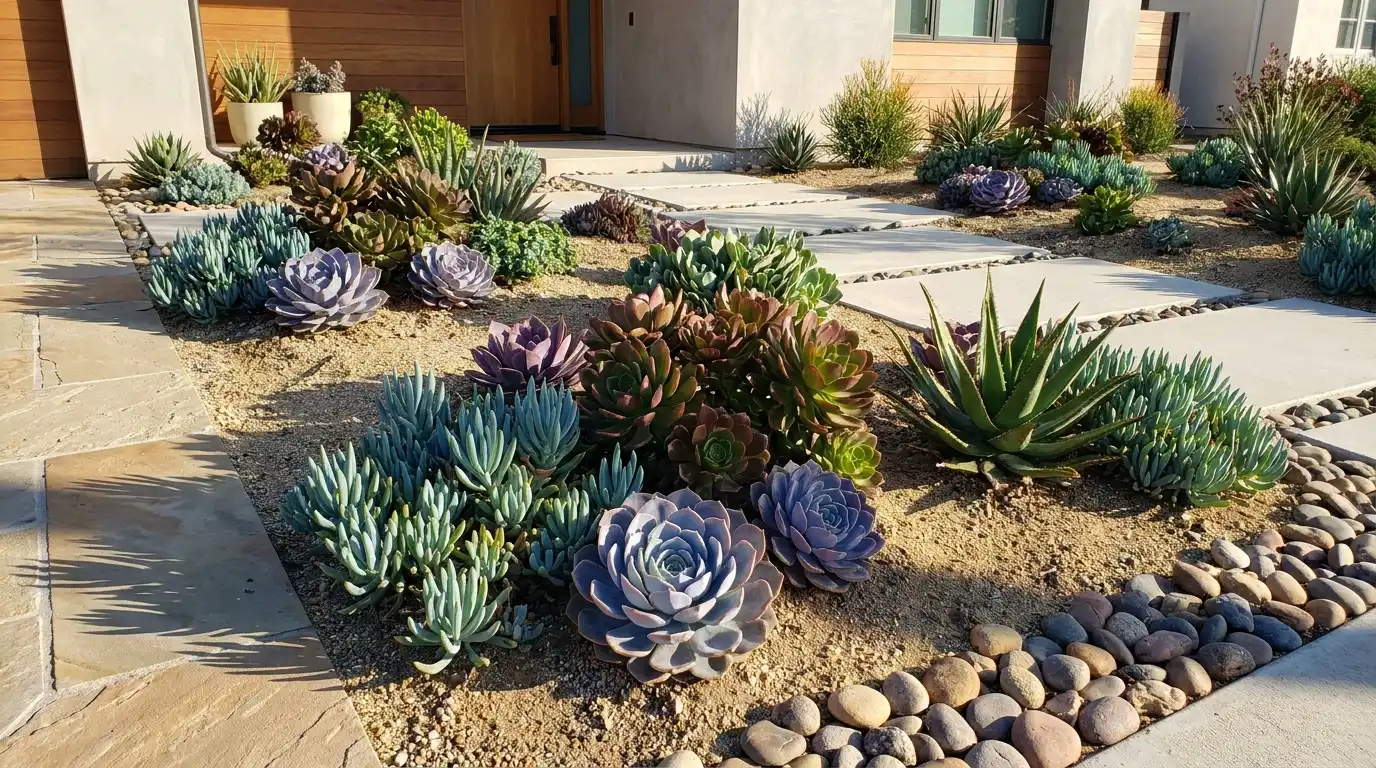
Succulents work in the right climate and fail badly in the wrong one.
In Zone 9 or warmer, a succulent bed over fast-draining sandy amended soil is genuinely low effort after establishment: water twice monthly in summer, less in winter, and the plants largely take care of themselves.
Mix shapes deliberately: flat rosette types (Echeveria, Sempervivum), upright varieties (Aloe, Agave), and trailing ground cover types (Sedum, Delosperma) create the visual variation that keeps the front yard from looking flat.
In Zone 7 or colder, limit succulents to containers you can move inside for winter. Ground-planted succulents at those latitudes freeze out, and replacing them each spring costs more than the design is worth.
Artificial Turf Zones
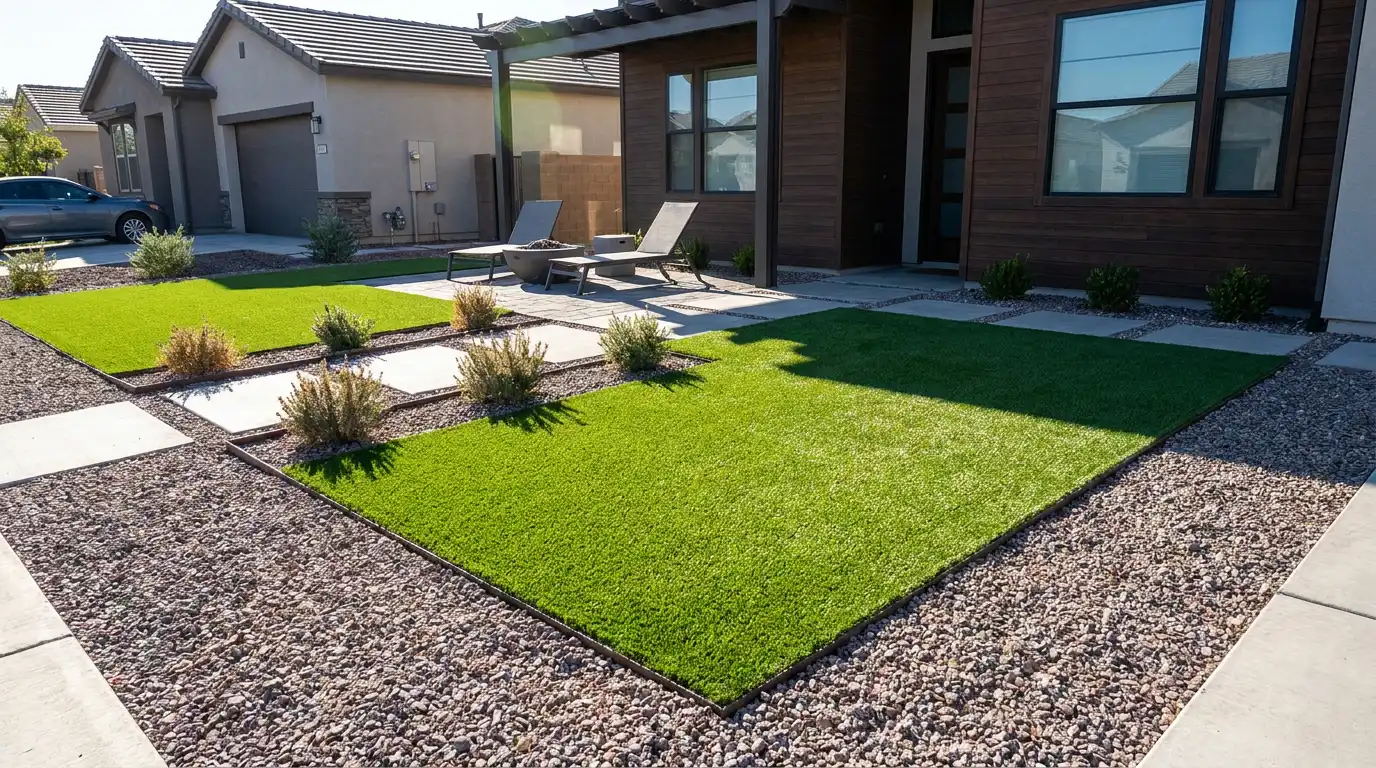
Artificial turf costs $5–$20 per square foot installed, depending on pile height, backing type, and infill material. The range is wide because quality varies enormously.
Budget turf bought off Amazon at $2 per square foot looks fine on day one and starts looking matted, faded, and plastic-like by year three.
Mid-grade turf from a reputable installer, with a UV-stabilized backing and silica sand or crumb rubber infill, realistically lasts 10–15 years.
Heat is the issue nobody mentions when they’re browsing turf samples. Black-backed turf in direct sun can reach 150–180°F on a summer afternoon.
For a front yard facing south or west in a warm climate, specify light-colored infill or heat-reflective backing.
Using turf only in select zones along a walkway or near an entry keeps costs manageable while still reducing the lawn area that needs mowing.
Pair it with gravel or pavers for the rest of the yard rather than going all-turf, which maximizes surface heat.
Flower Bed-Focused Layout
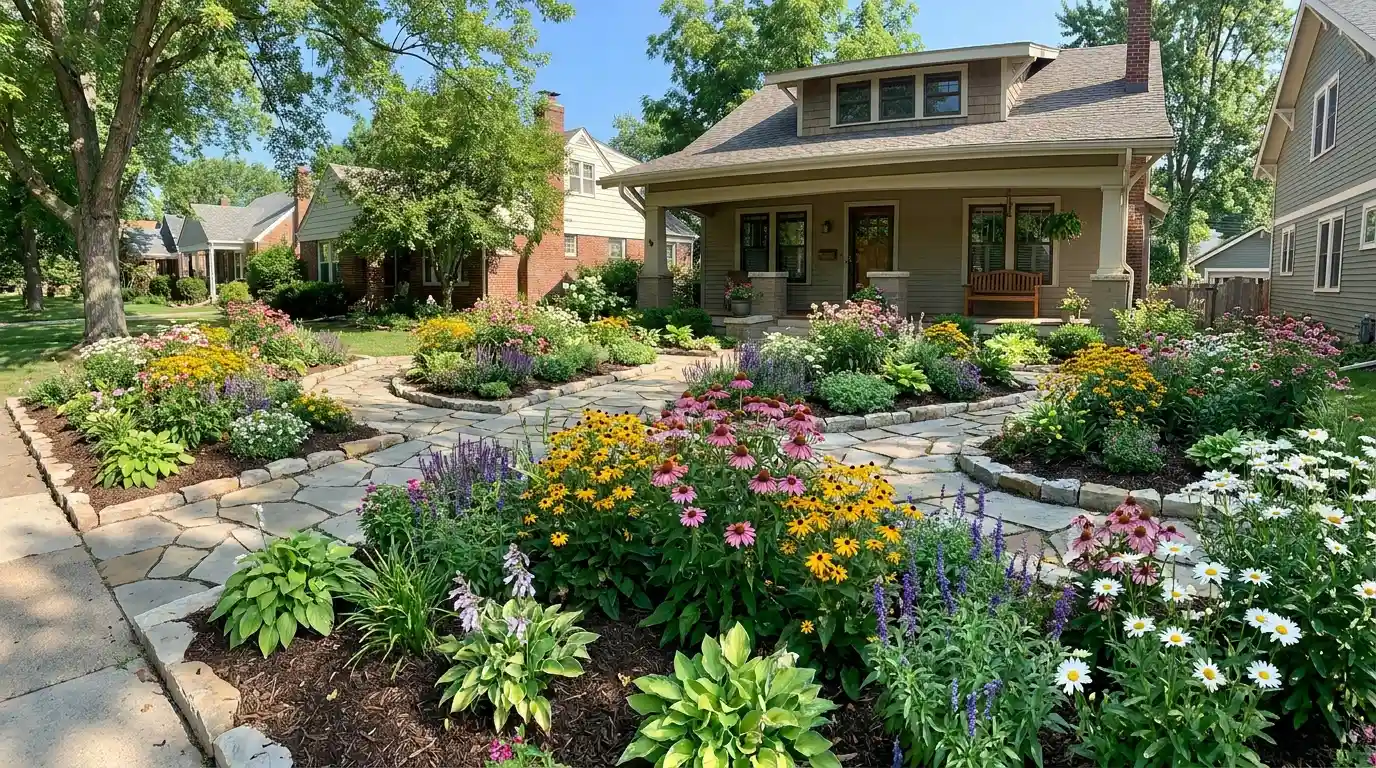
Structured flower beds replacing a full lawn are mid-range in both cost and maintenance. The budget is roughly $2–$5 per square foot for mulch and edging, plus plant costs that vary widely by species.
Annual flowers need replanting every season, which adds cost and time. Perennial beds come back on their own once established and require only a spring cleanup and occasional division.
Group plants by water needs, not just by color. Putting drought-adapted lavender next to thirsty impatiens means one of them is always wrong.
Defined stone or metal edging between bed sections is what keeps a multi-species layout looking intentional rather than overgrown. Without it, root systems compete, and the defined planting zones blur within a growing season.
Japanese-Inspired Minimal Yard
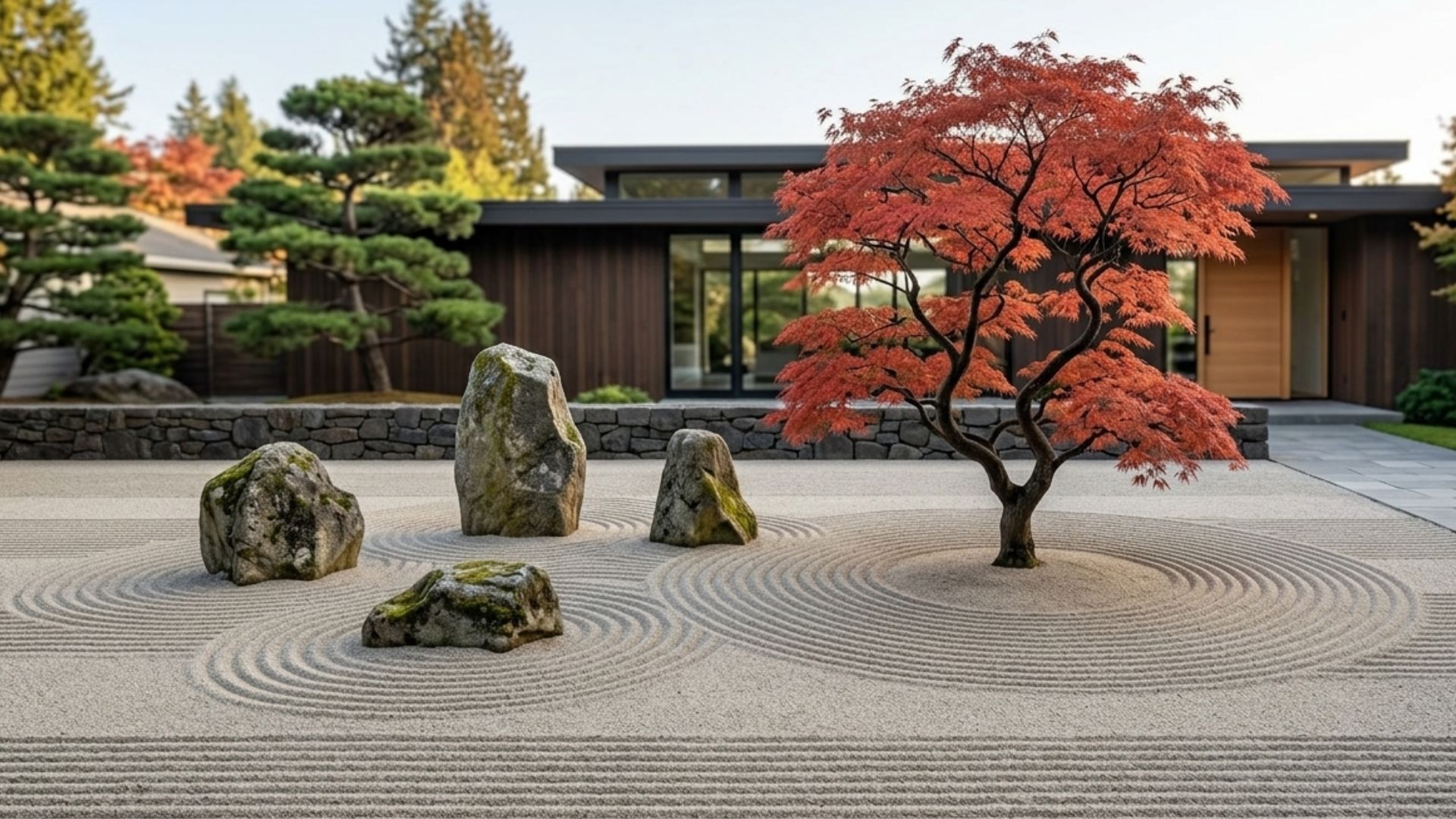
The appeal of a Japanese-inspired minimal front yard is restraint: a small number of materials, placed deliberately, with clear negative space between them. Done well, this holds up for years with almost no intervention.
Done poorly, it looks like a gravel lot with a few rocks thrown in. The elements that make this work:
- Decomposed granite or fine gravel raked to a consistent surface
- 2–3 large feature stones (not a dozen small ones)
- One structural plant such as a Japanese maple, ornamental pine, or compact boxwood as the focal point
Maintain the raked surface monthly to keep the pattern defined. The design fails when homeowners add too many elements, trying to make it look “fuller.” It’s supposed to be spare.
For a modern landscape design approach where fewer materials do more work, this is one of the strongest examples in a front-yard context.
Gravel and Planter Combination
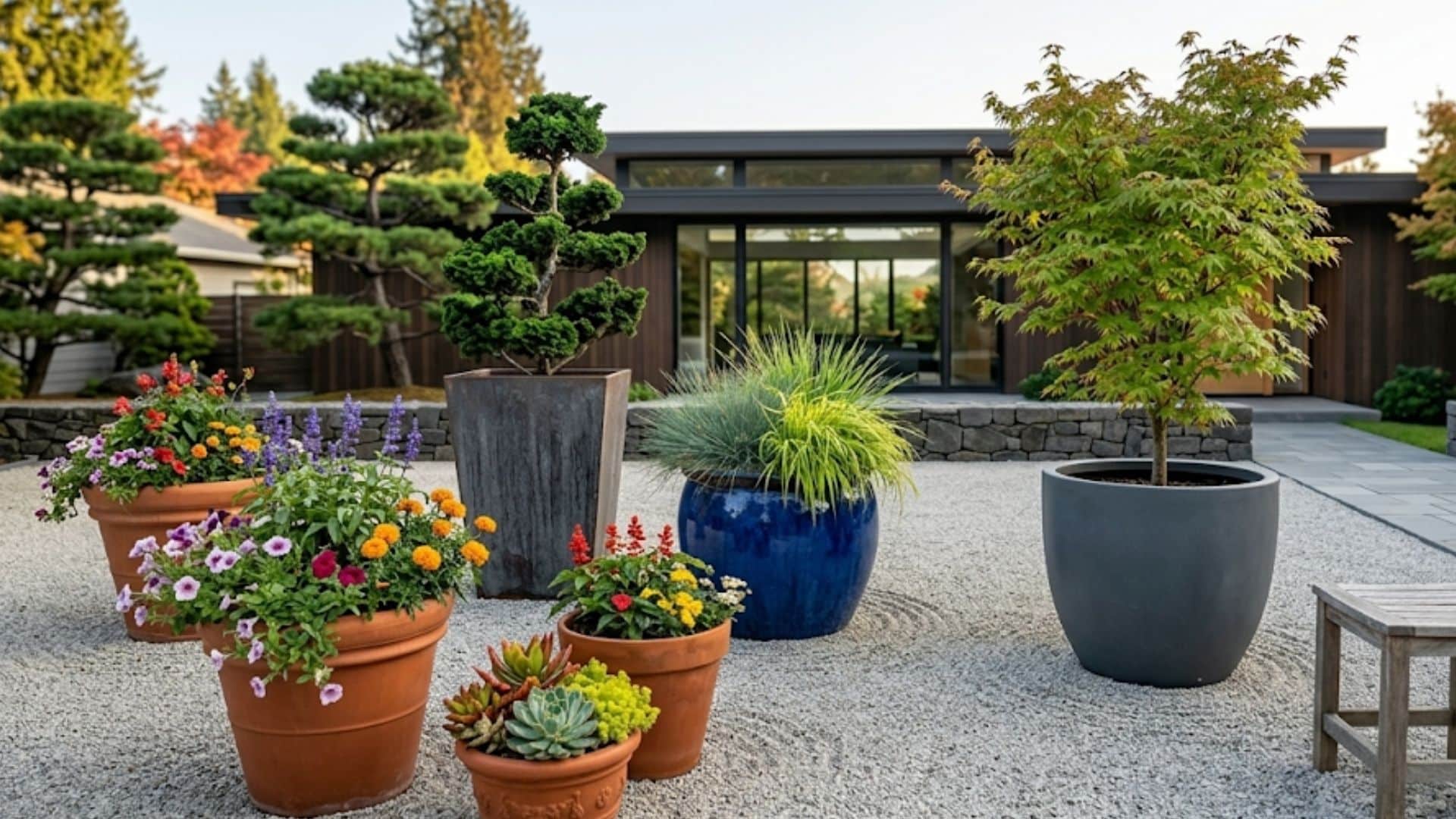
A gravel base with large planters is the most flexible setup for renters, people who move frequently, or anyone not ready to commit to a permanent design.
The gravel base costs $1.50–$3.50 per square foot installed; containers range from $30 for basic terracotta to several hundred dollars for powder-coated steel or large glazed ceramic.
Every container needs drainage holes. A planter sitting on gravel without drainage will waterlog plant roots and rot them within one season.
Use containers at least 12 inches deep for shrubs or ornamental grasses, and at least 8 inches for annuals and succulents.
Large ceramic planters filled with saturated soil can weigh 80–100 pounds and damage a gravel surface if you need to move them. Lightweight fiberglass containers in large sizes are worth the price difference if repositioning matters.
Creeping Thyme Ground Cover
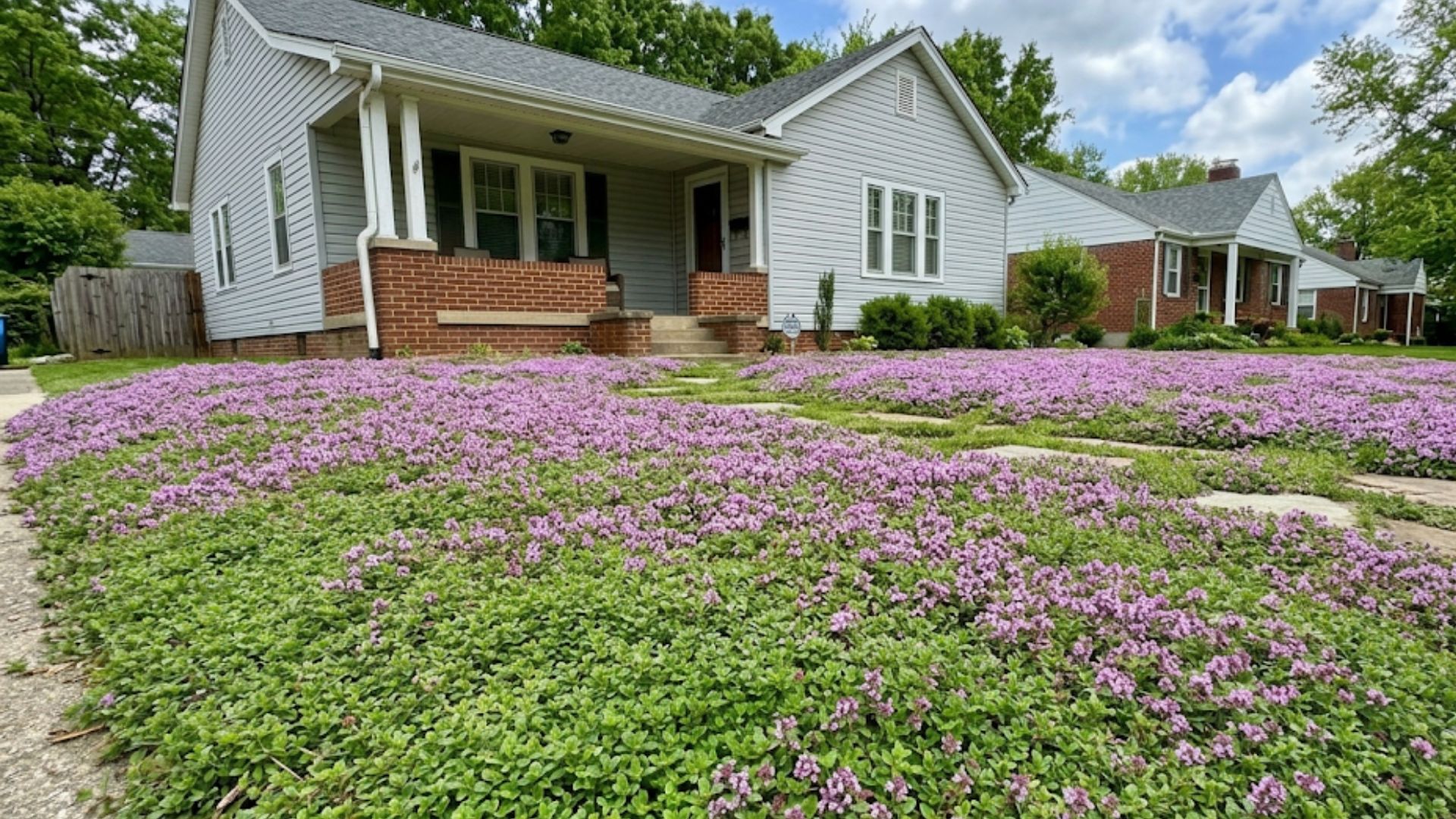
Creeping thyme is the most overlooked grass replacement in this list. At $2–$5 per square foot installed for plugs spaced 6–12 inches apart, it fills in within one growing season, handles moderate foot traffic, suppresses weeds once established, and requires no mowing.
A once-yearly trim keeps it from going woody. It’s a perennial across Zones 4–9, which means it covers most of the US, including climates that would kill succulents over winter.
It takes one full growing season to cover the ground, so your front yard will look like sparse plugs for the first summer. Use temporary mulch around the plugs to suppress weeds during establishment.
After that first year, it spreads on its own, and maintenance drops to close to zero.
It’s the most honest answer to “cheap no grass front yard” in a temperate climate, with a lower annual cost than gravel once refresh cycles are factored in.
Mixed Texture Landscape Design
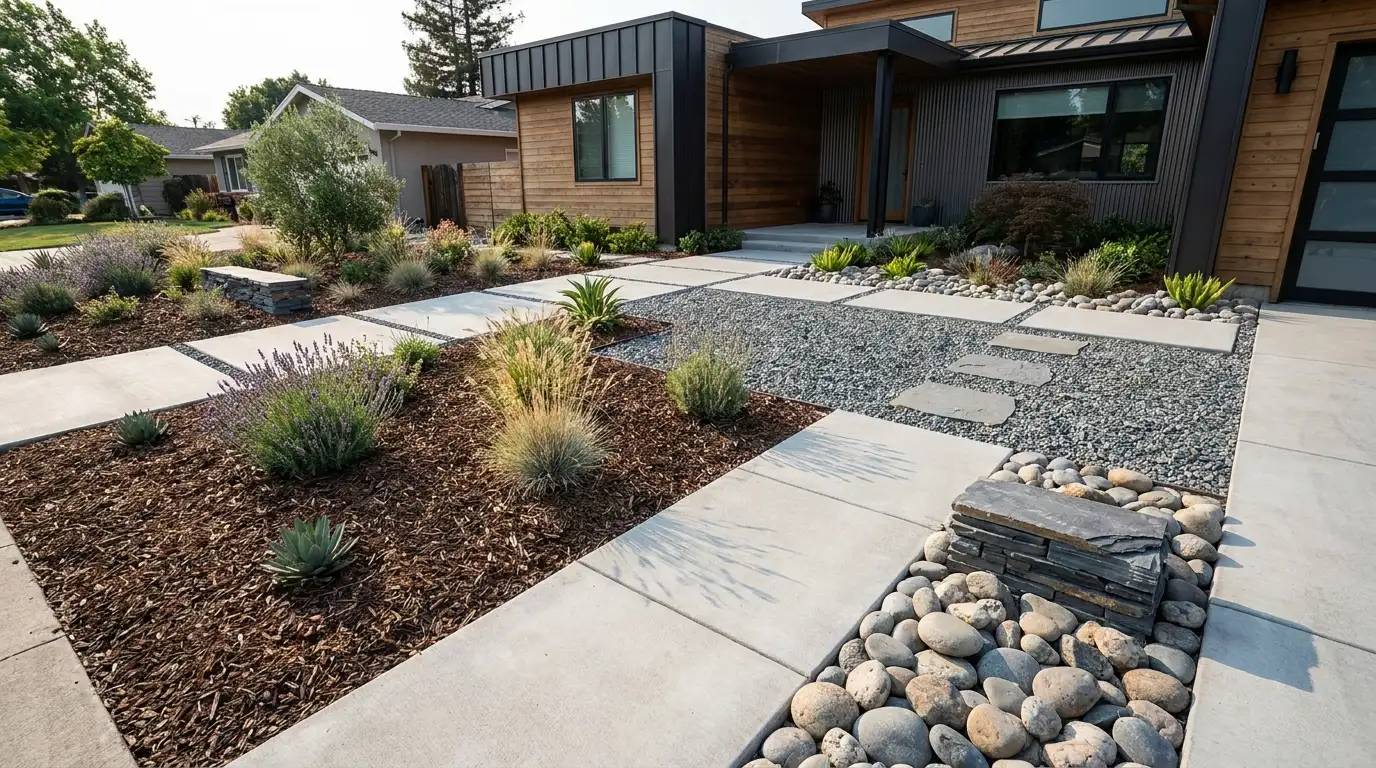
A mixed-texture approach combines gravel in the open areas, mulch around plantings, pavers for pathways, and rock accents at borders.
It’s how most well-executed no-grass yards are actually built because no single material does everything well.
Gravel provides drainage and low-maintenance, low-cost options. Mulch feeds the soil around plants. Pavers provide durable walking surfaces. Rock adds visual weight where structure is needed.
Every material needs a clear zone. Gravel paths, mulch beds, and paver areas need defined edging between them, or the boundaries blur within one rainy season, and the yard looks like it wasn’t planned.
Sketch the layout before ordering anything, because the edging requirements between zones are what drive installation cost up when homeowners skip this step.
Vertical Garden Front Yard
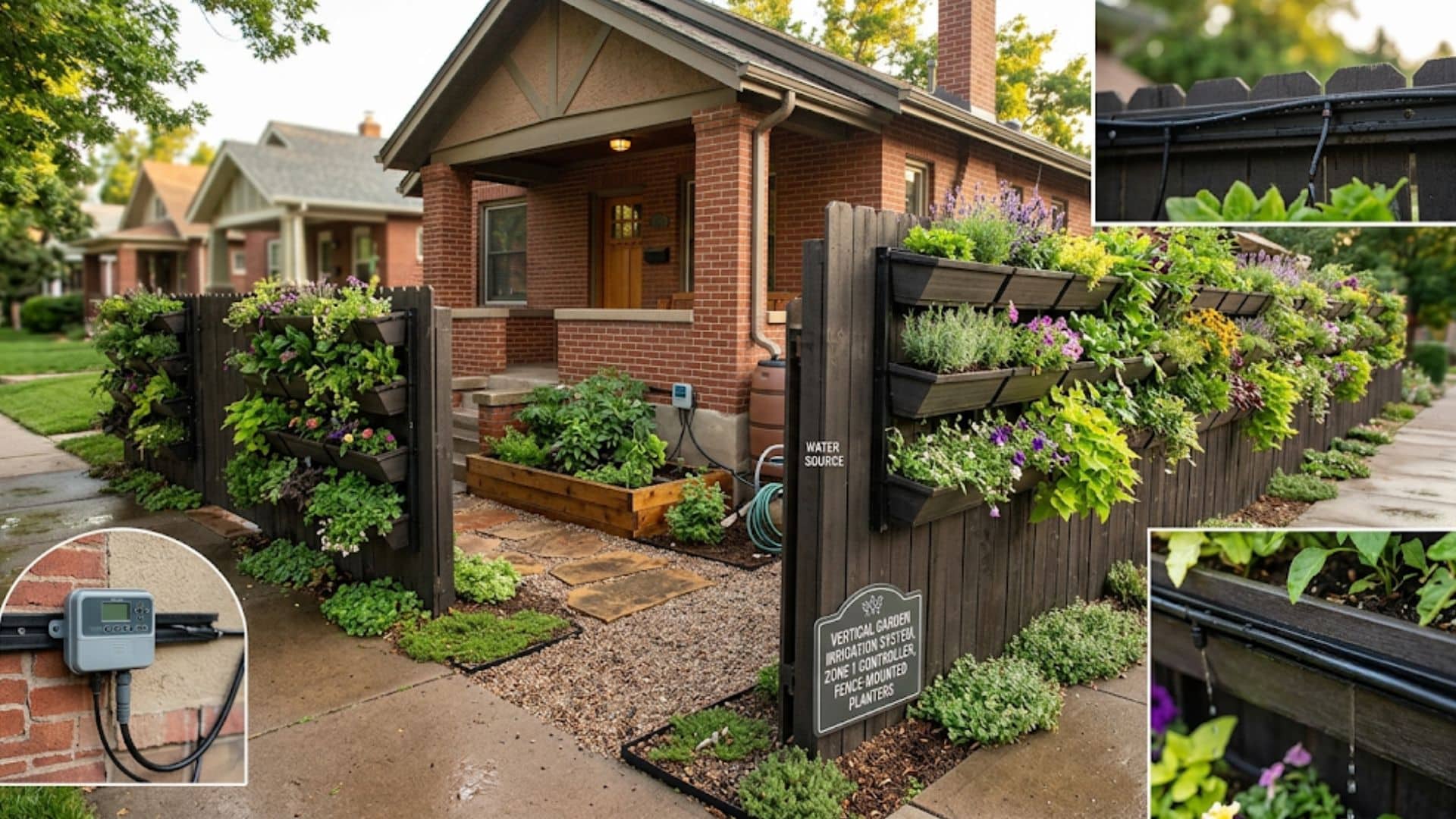
Wall-mounted or fence-mounted planters take the planting off the ground entirely, which works well for yards with very small footprints, poor soil, or privacy fencing that needs softening.
Installed systems run $20–$50 per linear foot for modular wall planters; a basic DIY trellis with hanging pots costs significantly less.
The maintenance reality of vertical plantings: watering frequency increases because containers dry out faster than in-ground plantings, and root zones are smaller. A drip irrigation line running along the mounting rail, with emitters at each planter, is the only way to manage a vertical setup at scale without constant hand-watering.
That adds $200–$600 to the project cost but makes the system actually sustainable. Without irrigation, most vertical gardens look good for a few weeks and then suffer from inconsistent watering.
What Fails Two Winters Later
Most no-grass front yards that look bad after a few years have one of four problems. None of them are design failures. They’re installation shortcuts that show up on a delay.
Gravel without edging
Round gravel migrates onto the driveway, lawn, and sidewalk within one season without steel or aluminum restraint edging.
Reinstalling edging after gravel is spread costs significantly more than doing it right the first time.
The edging needs to be set 2–3 inches into the ground and pinned with landscape stakes every 18–24 inches.
Mulch without fabric
Skip the weed barrier under mulch, and you’ll be pulling weeds through it every few weeks.
Use commercial-grade non-woven landscape fabric, not the thin woven kind sold in home improvement stores.
The woven type lets fine soil wash through over time and eventually provides a seed bed for weeds right on top of the barrier.
Paver base on inadequate gravel
Concrete pavers set on a 1-inch sand base over native soil will start heaving and tipping within two to three winters in freeze-thaw climates.
The correct base is 4–6 inches of compacted gravel, then 1 inch of bedding sand, then pavers.
Shortcuts here are expensive to correct after the fact: fixing it requires pulling up all the pavers and rebuilding the base.
Wrong plants for the climate
A front yard designed around succulent species planted in Zone 6 will lose most of its plants in the first hard freeze.
Verify hardiness zone compatibility before buying plants, not after. The USDA Plant Hardiness Zone Map is the reference for this, and it’s free online.
A front yard that loses its primary plant material in year one is not a cheap option, regardless of what the plants cost at the nursery.
Cost Breakdown and Installation Guide
| Cost Note: Figures in this article are estimates based on national averages. Actual costs vary significantly by region, contractor, materials, and project scope. Always get at least three quotes before committing to any project above $1,000. |
A 600 square foot front yard conversion typically falls into one of three cost tiers.
Understanding which tier fits your yard and budget before you start prevents the most common planning mistake: choosing a design that looks right but costs twice what you expected.
| Line Item | Low End | High End | What Drives the Variation |
| Sod/grass removal | $0 (DIY) | $600–$1,200 | Sod depth, root systems, disposal cost |
| Grading/leveling | $200 | $800–$2,000 | Slope correction, drainage rerouting |
| Landscape fabric | $50–$100 | $200–$400 | Coverage area and fabric grade |
| Edging (steel/aluminum) | $100 | $400–$800 | Linear footage and material type |
| Primary surface material (gravel, mulch, pavers) | $300–$900 | $4,800–$12,000 | Material choice; pea gravel is cheapest, pavers most expensive |
| Plants | $50–$300 | $800–$3,000+ | Species, maturity size, quantity |
| Labor (if contracted) | $0 (full DIY) | $800–$3,500 | Project scope and regional labor rates |
The DIY ceiling on this work is real but limited. Spreading gravel, laying landscape fabric, setting stepping stones, and planting are all well within a capable homeowner’s range with no specialized skills or equipment needed.
The two situations that require a licensed contractor: any irrigation work connected to the main water line (backflow prevention requirements vary by jurisdiction), and retaining walls or regrading projects that affect drainage toward a neighboring property.
For design principles that connect the front yard to the rest of the property’s outdoor system, the deck skirting and foundation guide cover how exterior transitions affect the overall look at ground level.
HOA and Permit Considerations
Before converting a front yard from grass, check two things: your HOA covenants and your local municipality’s front-yard ordinances.
Both can restrict material type, plant height, coverage percentage of hardscape versus landscaping, and whether gravel or artificial turf is permitted in the front yard at all.
HOA restrictions vary widely. Some prohibit decomposed granite because it can drift onto sidewalks; others require a minimum percentage of “live vegetation” in front yard landscaping.
Most municipalities don’t require permits for surface material changes unless they involve grading, retaining walls over a set height (often 18–24 inches), or connections to irrigation infrastructure.
Call your local building department before starting any grading or drainage-redirect work; the call takes five minutes and can save a costly correction order.
Frequently Asked Questions
These are the questions I hear most often once someone has decided to replace the lawn but isn’t sure which direction to go.
What is the cheapest way to replace a front yard lawn?
Pea gravel over landscape fabric is the lowest installed cost at $1.50–$3.50 per square foot, followed by bark mulch at $0.50–$2.00. Both require steel edging to hold properly. Creeping thyme ground cover is cheaper long-term than gravel once annual refresh costs are factored in, but it requires one full growing season to establish.
How do I keep weeds out of a no-grass front yard?
Commercial-grade non-woven landscape fabric under any loose surface material (gravel, mulch, decomposed granite) is the primary weed barrier. Top it with a minimum of 2–3 inches of material. Treat any gaps in edging or at plant bases with a pre-emergent herbicide in early spring. Avoid woven landscape fabric: it breaks down faster and provides a seed bed once soil filters through it.
Does a no-grass front yard add or reduce home value?
Professionally installed hardscape and drought-tolerant landscaping generally hold or improve curb appeal and resale value, particularly in drought-prone markets. Poorly maintained gravel, faded artificial turf, or patchy mixed installations can reduce curb appeal. The NAR landscape impact report estimates that quality front yard landscaping adds 5–11% to perceived home value.
What looks good as a grass alternative that isn’t gravel or concrete?
Creeping thyme fills like a lawn, handles light foot traffic, and requires no mowing. It’s suitable for Zones 4–9. Low-growing buffalo grass or native ground covers work in warm, dry climates. Clover lawns are legal in most areas and require minimal care. Each of these is a living surface that performs similarly to turf but at far lower maintenance cost once established.
How long does it take to install a no-grass front yard?
A single-material gravel or mulch install on a 600 square foot yard takes one to two weekends for a capable DIYer, once grass removal is complete. Paver installations take longer: two to three weekends for the same area including base preparation. Hiring a landscape contractor typically reduces that to one to two days of crew time.
Do I need to remove the grass before installing gravel or mulch?
Yes. Laying gravel or mulch directly over living grass will result in the grass growing through the material within one to two seasons. Either sod-cut and remove the turf (rent a sod cutter for $60–$100 per day), apply a non-selective herbicide and wait two weeks before installing, or use sheet mulching (cardboard over the grass, covered with 4–6 inches of wood chips) for a slower, no-herbicide method.
Is artificial turf a good, cheap option for a front yard?
Budget artificial turf ($2–$4 per sq ft materials only) is not a good long-term value. It fades within 3–5 years and sheds microplastics. Mid-grade turf from a reputable installer ($8–$12 per sq ft installed) lasts 10–15 years with proper maintenance and is a reasonable trade-off against lawn upkeep costs. Avoid any turf without UV stabilization: it’s the single biggest quality differentiator.
Summing Up
The most durable cheap no grass front yard ideas are the ones that treat material performance as the first decision, not appearance.
Pea gravel and landscape fabric hold for years if the edging is right. Pavers last a generation if the base is built correctly.
Creeping thyme outperforms every other option on long-term cost in a temperate climate once it’s established.
The failure modes, migrating gravel, weed-infested mulch, heaving pavers, almost always trace back to a skipped installation step, not the material itself.
Before you order anything, check your climate zone, verify what your HOA permits, and decide whether the surface change requires any regrading.
If the yard needs regrading toward the street or away from the foundation, get that done first. It’s the one step that’s nearly impossible to fix after the surface material is in place.