

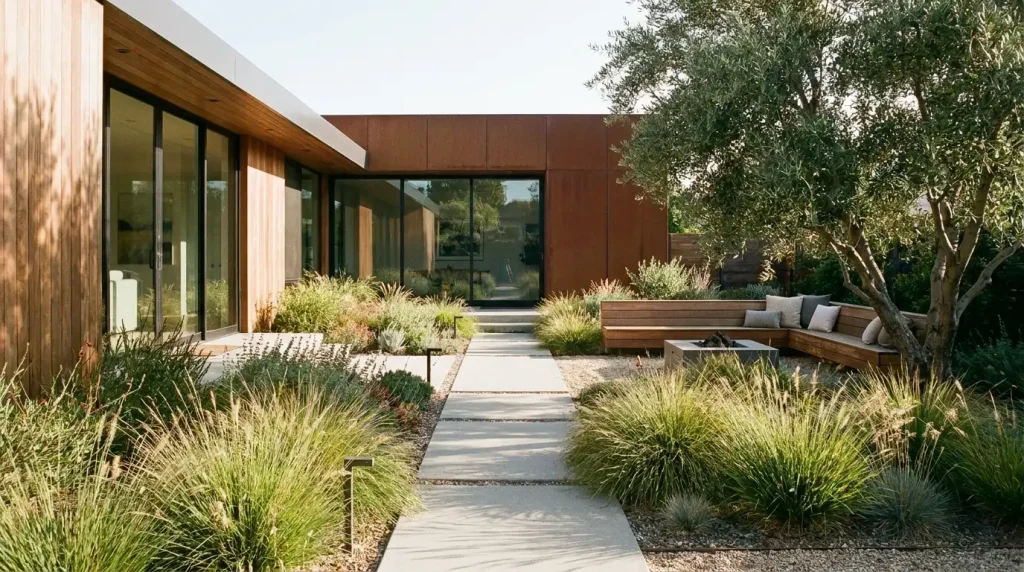


Most modern landscape designs look clean for about two seasons. Then the gravel migrates, the corten steel bleeds rust onto the concrete, and the ornamental grasses crowd out everything planted next to them.
The design was chosen for how it looked in a photo, not for how it holds up in a real yard, through real weather, with real maintenance schedules. That’s the problem I run into most often.
Modern landscaping done right starts with materials and function, then arrives at aesthetics.
That means understanding what concrete, decomposed granite, permeable pavers, and corten steel actually do in your climate, and choosing plants that survive without constant intervention.
The ideas below follow that order. Not style first, not trend first. Material first.
| Cost Note: Figures in this article are estimates based on national averages. Actual costs vary significantly by region, contractor, materials, and project scope. Always get at least three quotes before committing to any project above $1,000. |
21 Modern Landscape Design Ideas Worth Building
These are arranged by function: paths, planting, structures, water, and living zones. That order helps you identify which area of your yard needs work first, rather than picking ideas at random.
1. Floating Concrete Pathway With Groundcover Gaps
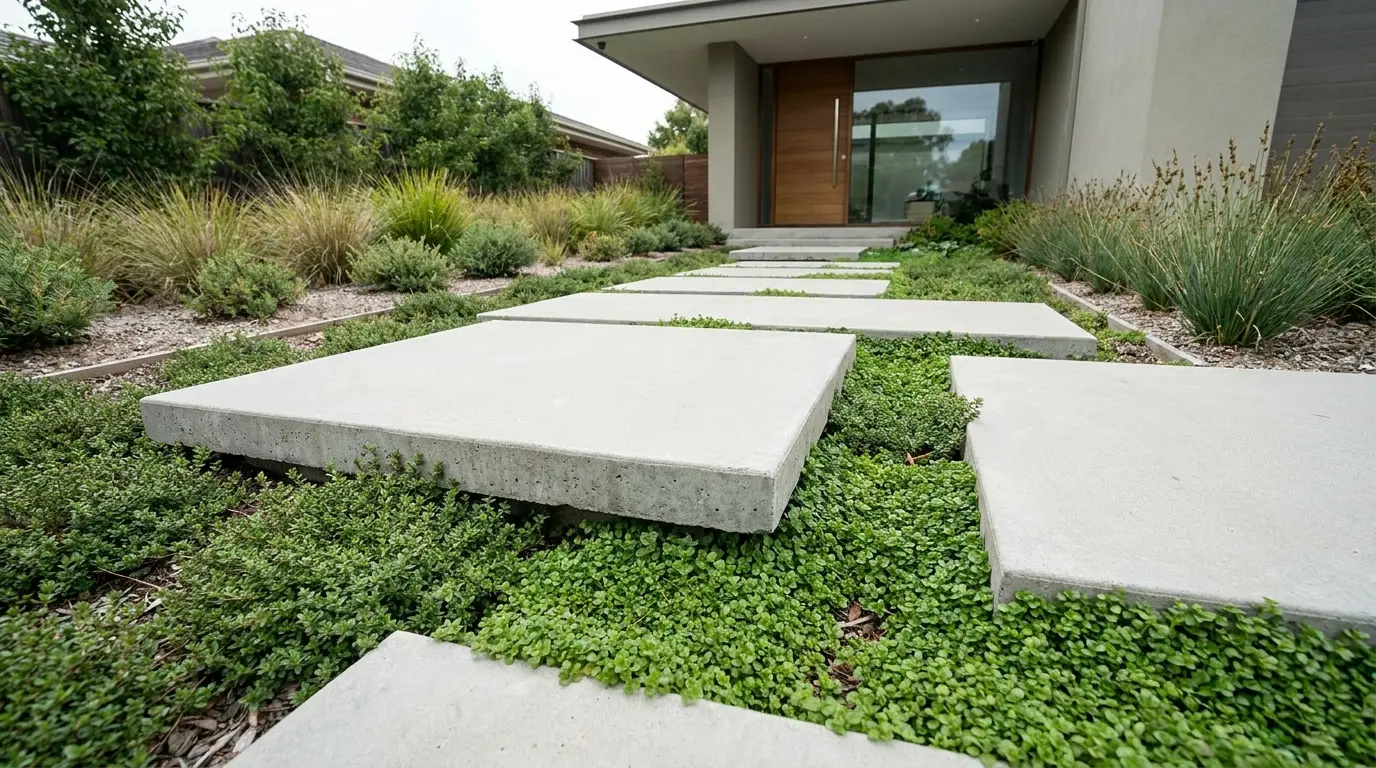
Poured concrete slabs with 2-inch gaps planted with creeping thyme or mondo grass.
The gaps do two things: they allow drainage, which matters much more than most people think when paving near a foundation, and they break up the visual weight so the path reads as designed rather than just laid.
Keep individual slabs at 18 to 24 inches square and space them at 30-inch centers for a natural walking stride.
Anything wider and the gaps look accidental. Anything narrower and you lose the softness that separates this from plain concrete.
2. Monochromatic White Garden With Textured Foliage
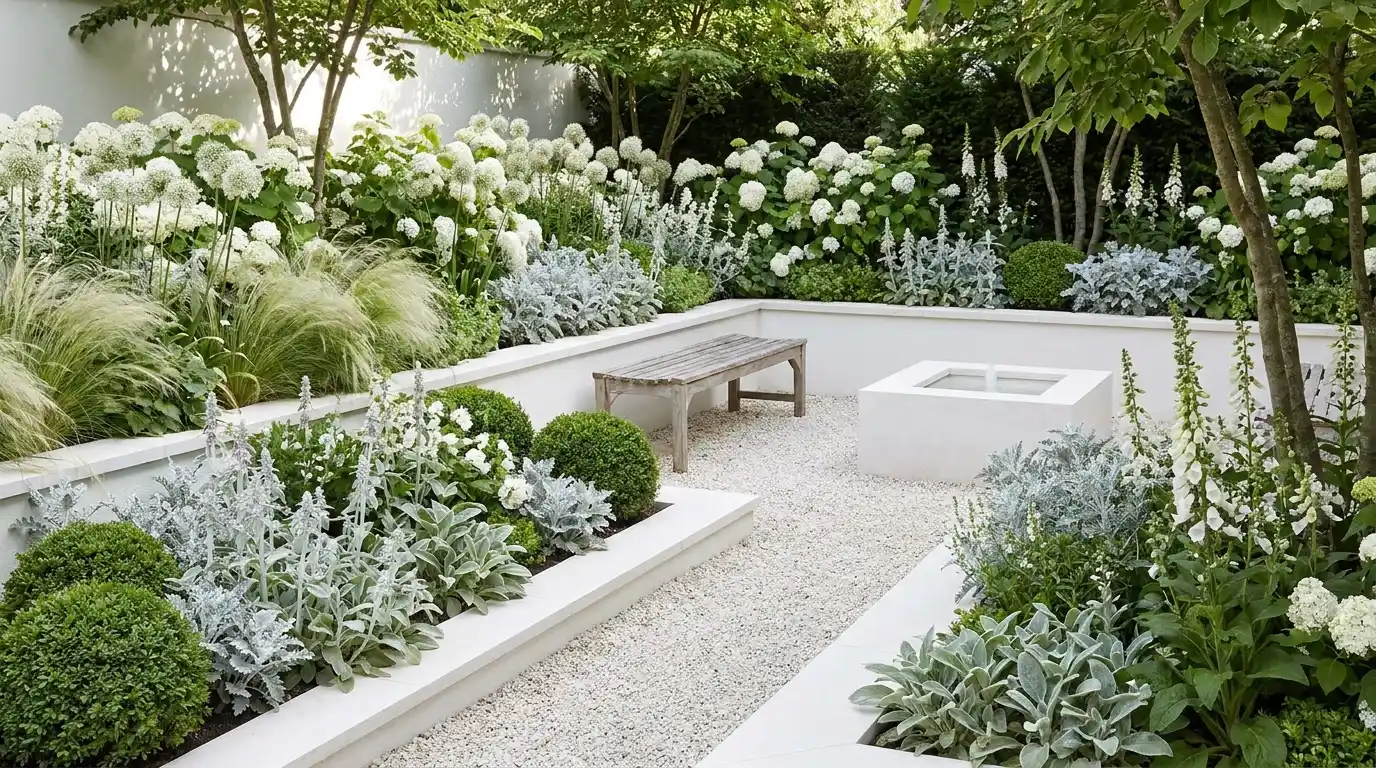
A single-color palette works when texture carries the contrast. White blooms, silver foliage (lamb’s ear, artemisia, dusty miller), and soft feathery grasses create depth without competing colors.
The risk is flatness. Avoid it by mixing plant forms deliberately: spiky agave or yucca against rounded mounding plants, with trailing groundcover at the base.
This planting scheme performs consistently in south- and west-facing beds where direct sun would bleach saturated colors anyway.
3. Sunken Conversation Pit With Built-In Seating
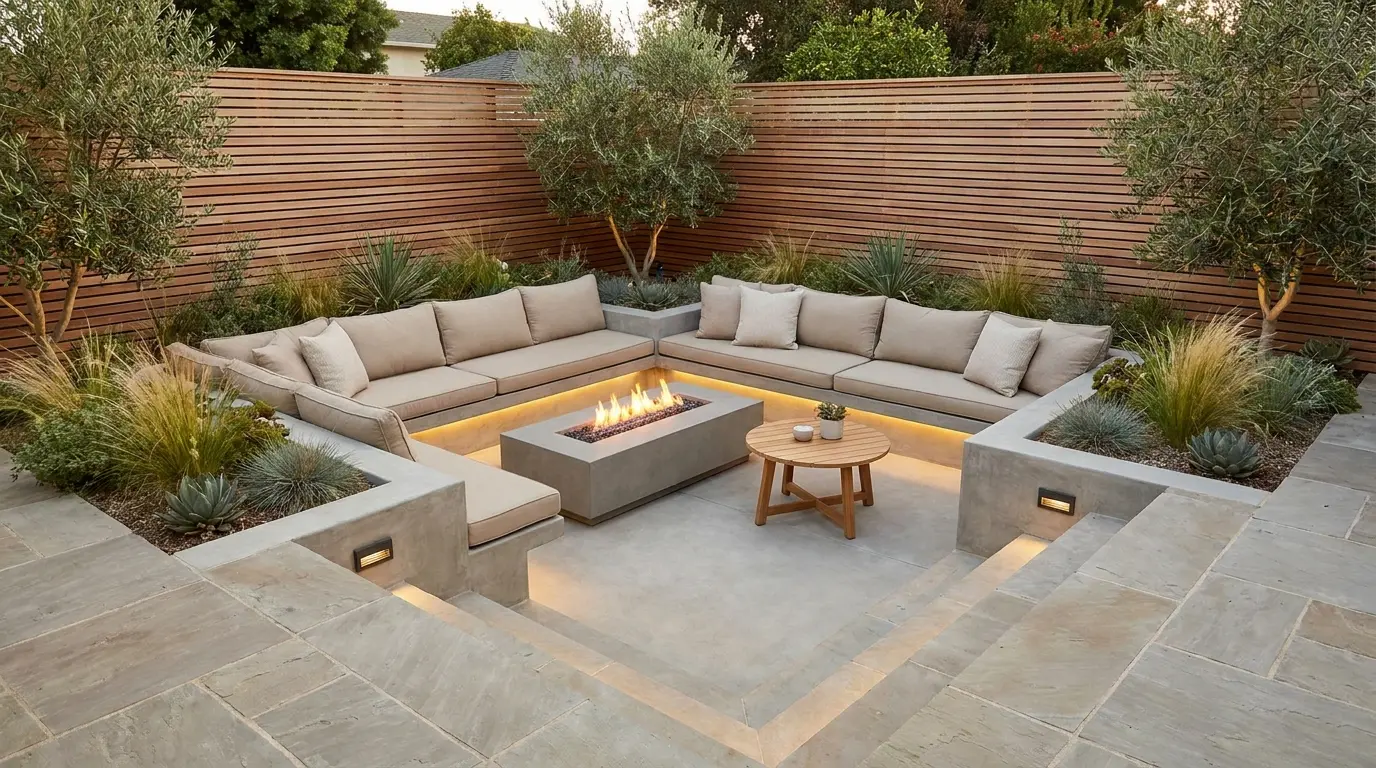
A sunken pit requires 18 to 24 inches of excavation and proper drainage below the seating surface. Skip the drainage layer and you’ll have a water feature you didn’t plan for.
Poured concrete or cut stone walls work well. The built-in seating cap should be at least 16 inches wide to be comfortable, and 18 inches is better. Add a central fire feature or a low table.
The sunken level naturally creates a sense of enclosure without fences or screens, which is why this works so well in exposed backyards where privacy planting would take years to establish.
4. Vertical Succulent Wall Panel
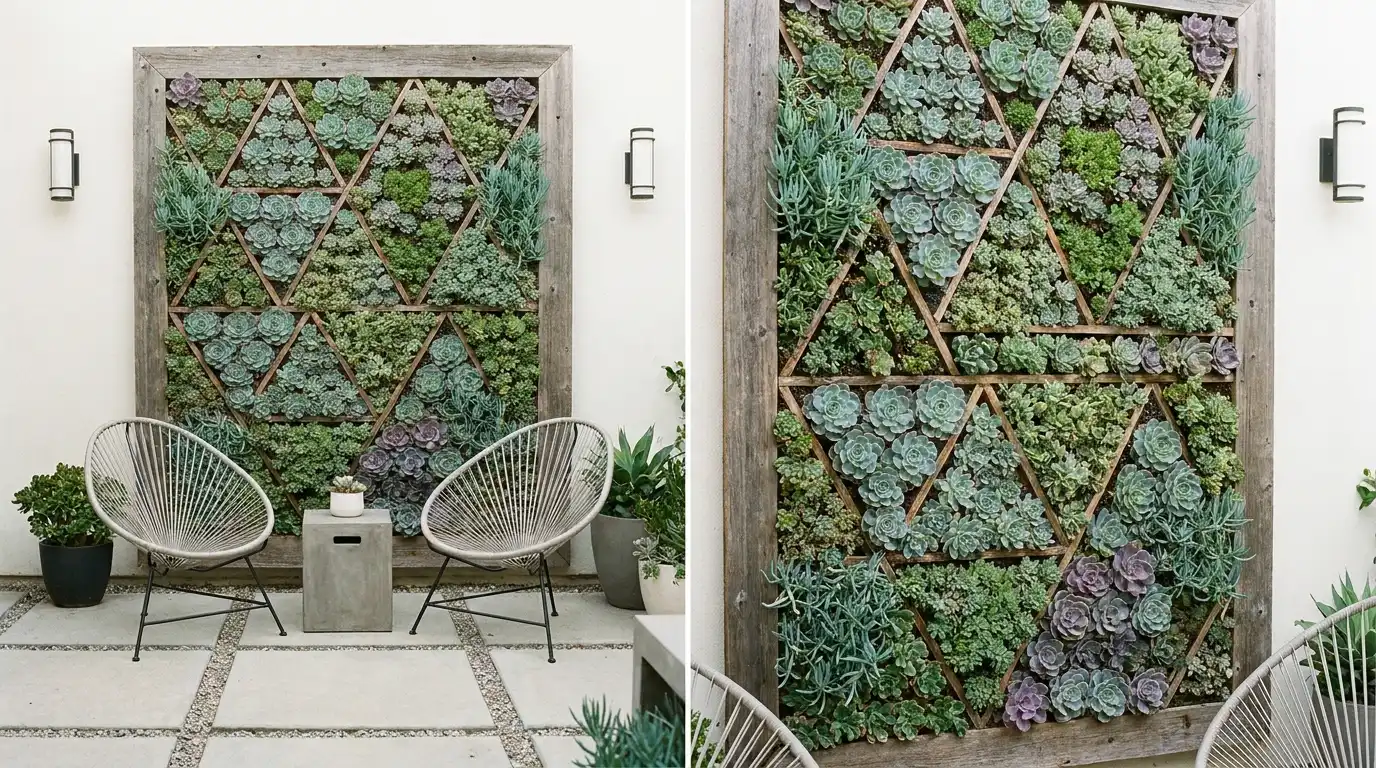
Vertical planting panels only work in the long term with proper irrigation. Drip lines built into each pocket or channel are non-negotiable unless you’re in a climate with consistent rainfall.
Manual watering on a vertical wall is unreliable, and plants dry out unevenly. Geo-textile pocket panels or welded wire frames with coco coir liner both work.
Arrange plants in repeating geometric blocks for a modern look. Avoid random placement. It reads as messy within a single growing season as plants spread at different rates.
5. Gravel-Filled Dry Creek Bed With Native Boulders
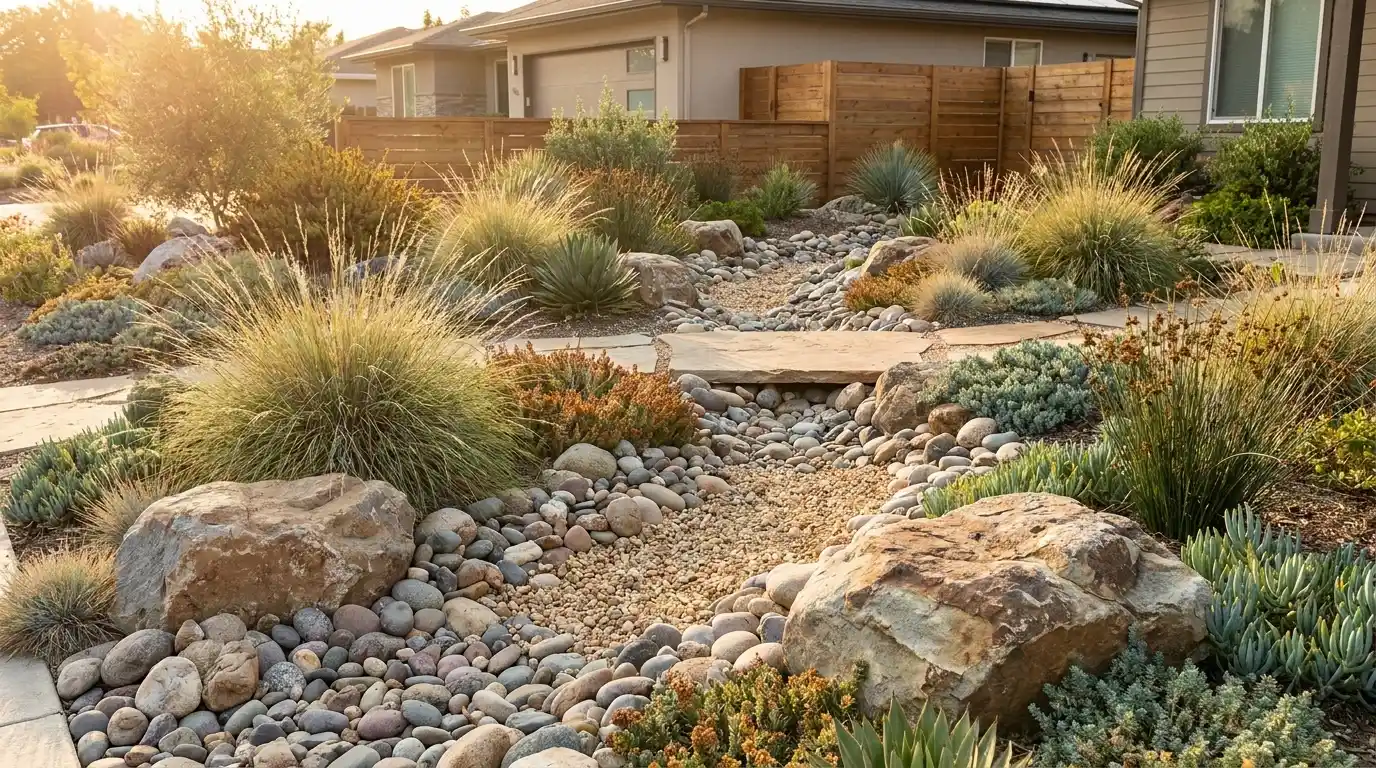
A dry creek bed is a drainage solution that doubles as a design feature. If your yard holds water after rain, run the creek from the wet zone to a lower drain point before worrying about aesthetics.
Use three gravel sizes: large river rock at 4 to 6 inches for the outer edges, medium cobble at 2 to 3 inches through the middle, and pea gravel in the narrower sections.
Single-size gravel looks like a filled trench. Vary the boulder sizes too. One large anchor boulder per 8 to 10 feet of run, with smaller stones between.
Plant ornamental grasses and native sedges along the edges to complete the look.
6. Rectangular Reflecting Pool
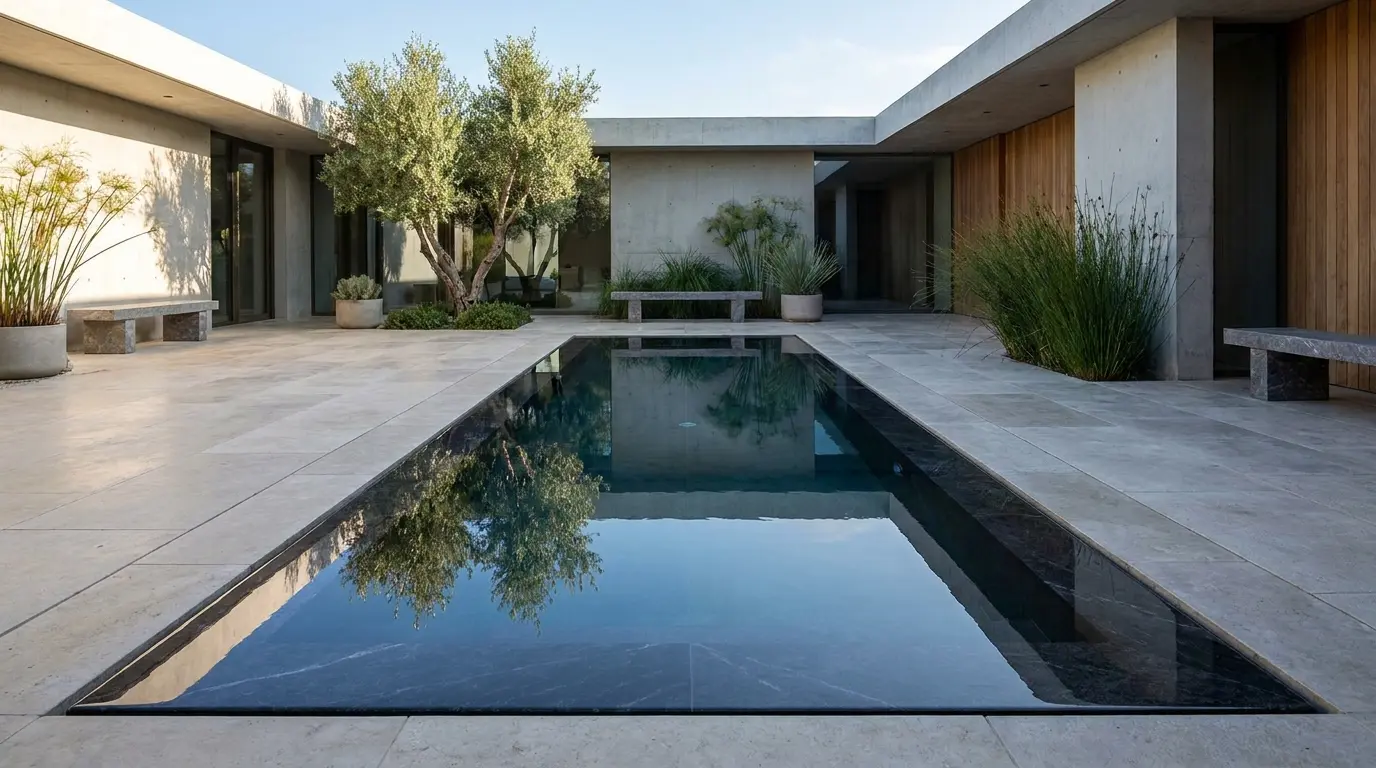
Reflecting pools are more maintenance than they look. Algae growth is the biggest ongoing issue, and a simple recirculating pump with UV sterilizer handles it without chemicals.
Keep the pool shallow (12 inches is enough) and the surround clean. A black or dark gray interior finish creates the mirror effect; light-colored plaster bounces light back and kills the reflection.
This feature works best when you frame it with simple, repeating elements: stone pavers, a single specimen tree, minimal planting.
A busy mixed border competes for attention in the reflection and undermines the whole point.
7. Corten Steel Edging With Ornamental Grass Borders
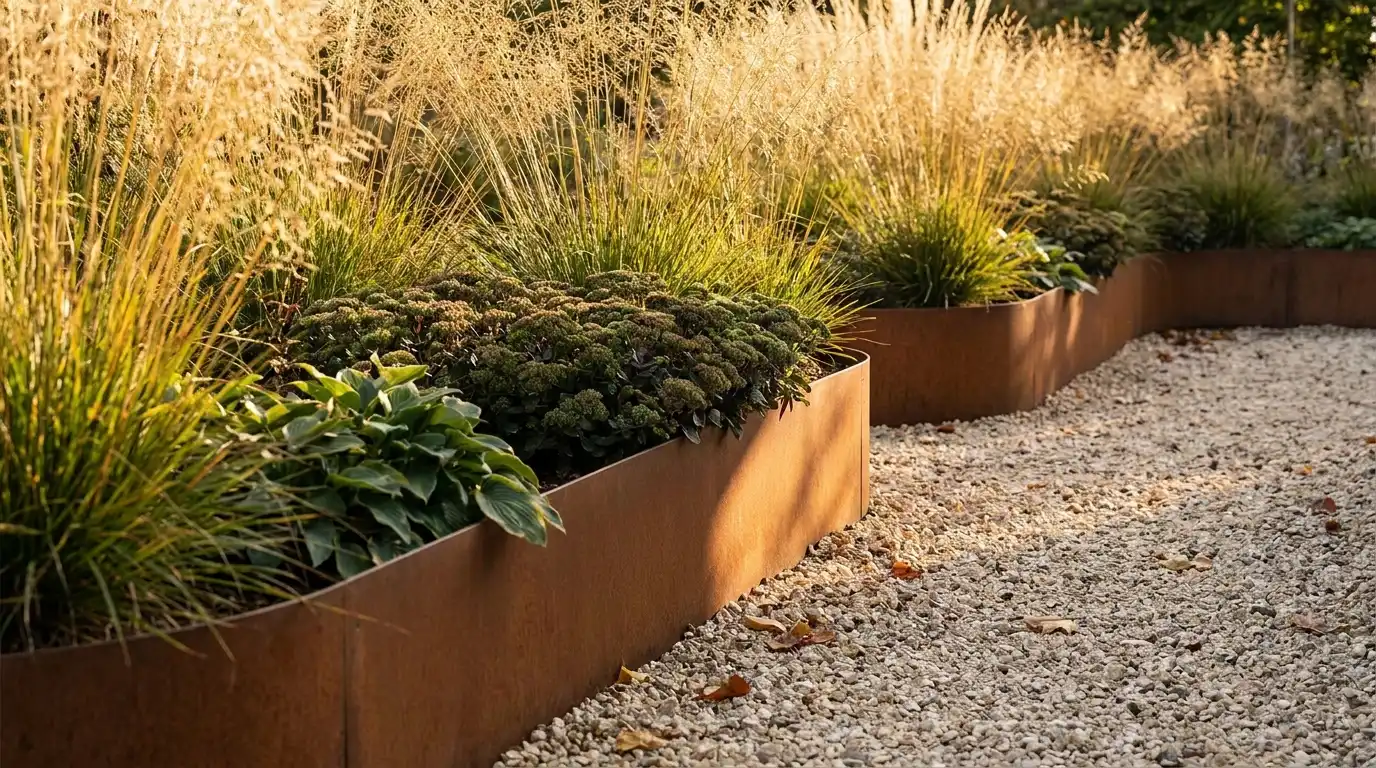
Corten steel develops its weathered orange-brown patina over 12 to 18 months and then stabilizes. It’s not actively rusting, just forming a sealed surface layer.
In the first season, it will bleed rust stain onto adjacent concrete or pavers. Install it with a 2-inch clearance from any hardscape you don’t want stained, or accept the patina will transfer.
At 3/16-inch thickness it holds a crisp edge for years without warping. Pair it with fountain grass, Karl Foerster, or blue oat grass. The warm rust tone plays well against both silver-blue and deep green foliage.
8. Geometric Hedge Alternatives
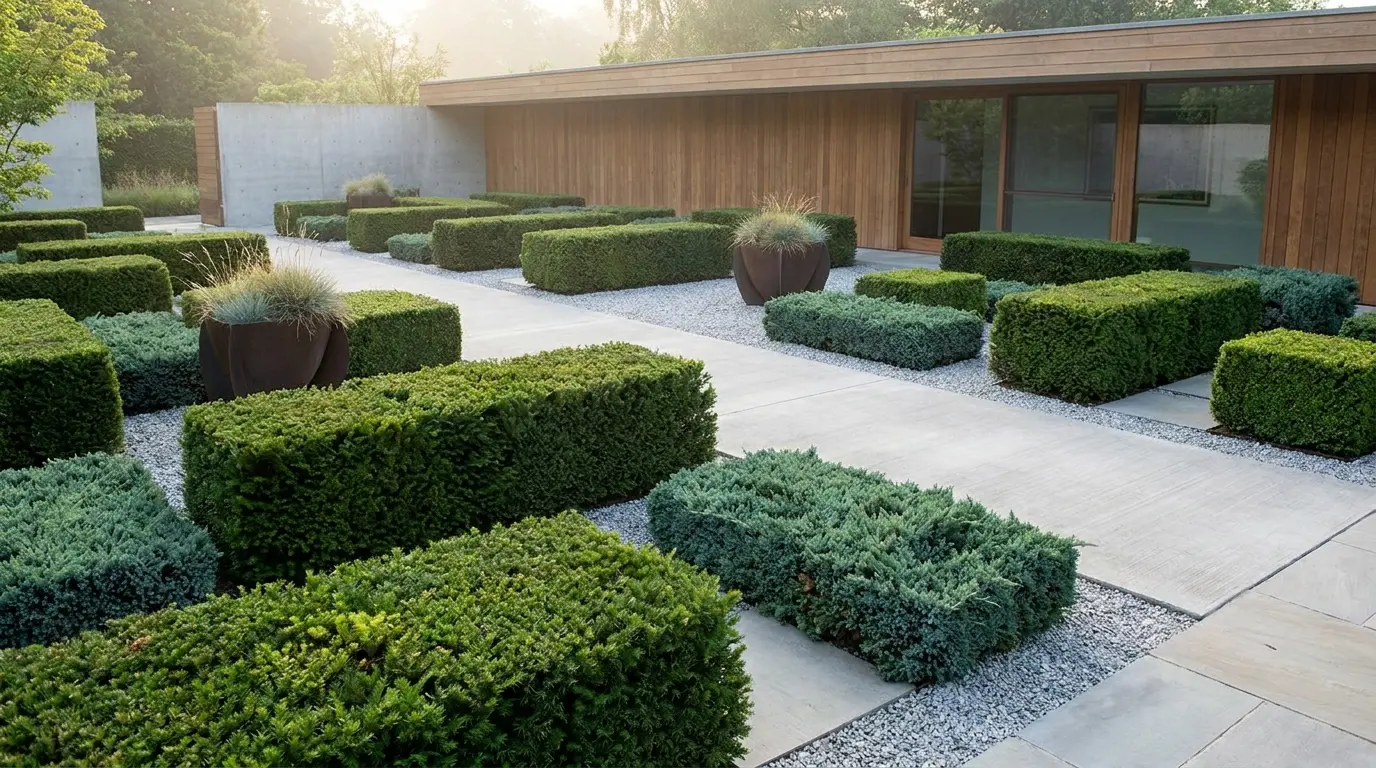
Clipped boxwood is the obvious choice, but boxwood blight has made it unreliable in humid climates east of the Rockies.
Japanese holly (Ilex crenata) or inkberry holly (Ilex glabra) are tougher alternatives that take the same tight shearing.
For a looser geometric form, upright yew or ‘Sky Pencil’ holly creates vertical structure without constant trimming.
Repeat the same plant in the same form. That repetition is what makes it read as designed rather than planted. One clipped sphere here and a cube there just looks like a nursery.
9. Decomposed Granite Courtyard With a Statement Tree
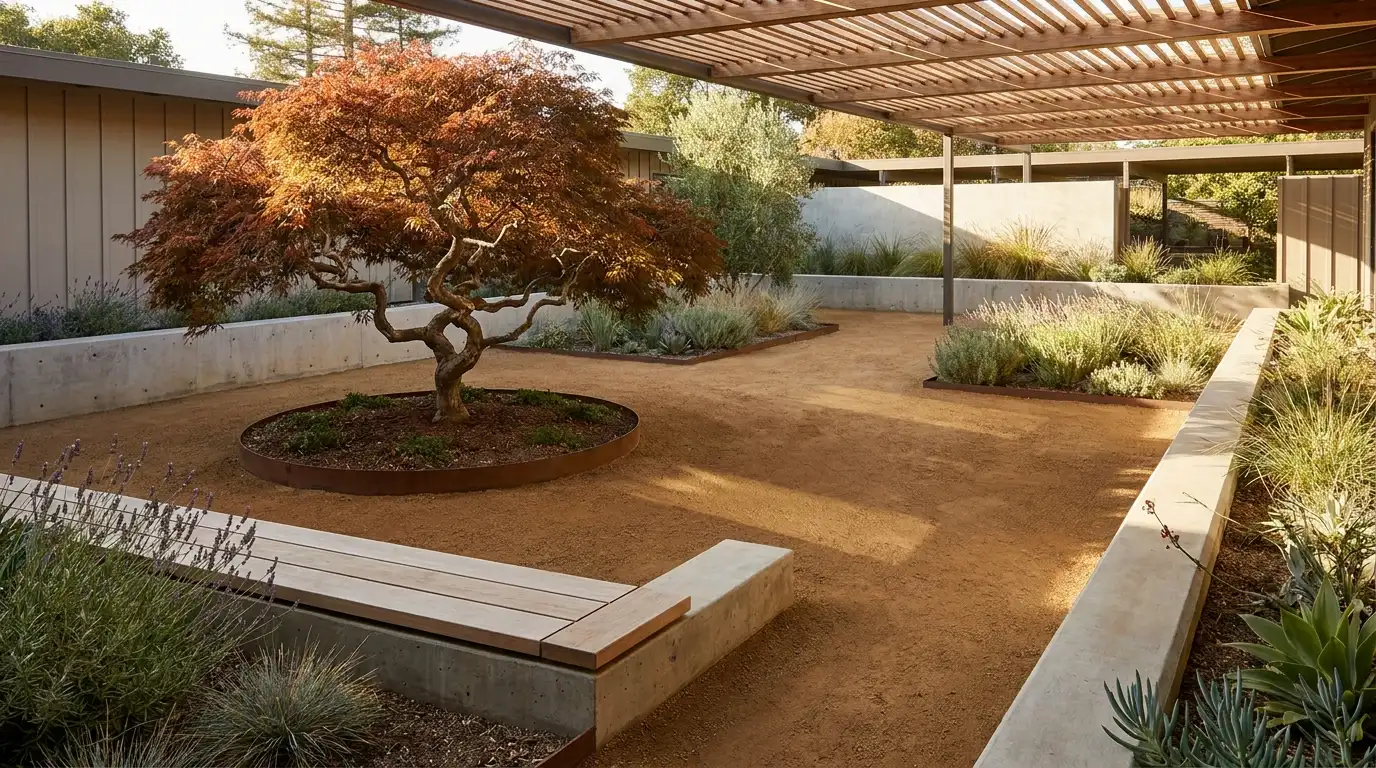
Decomposed granite compacts well and drains fast, but it migrates into adjacent planted areas and needs a stabilizer added (about 3 to 4 percent by weight) to stay in place on slopes.
At a 3-inch depth, it resists displacement from foot traffic. The statement tree does the visual work here: a multi-trunk olive, a Japanese maple, or a sculptural desert willow, depending on your region.
One tree, centered or deliberately off-axis. Two trees and the composition loses focus. Keep furniture and accent pieces minimal. The point is that the tree reads as the main event in the yard.
10. Hidden Outdoor Kitchen Behind a Slatted Privacy Screen
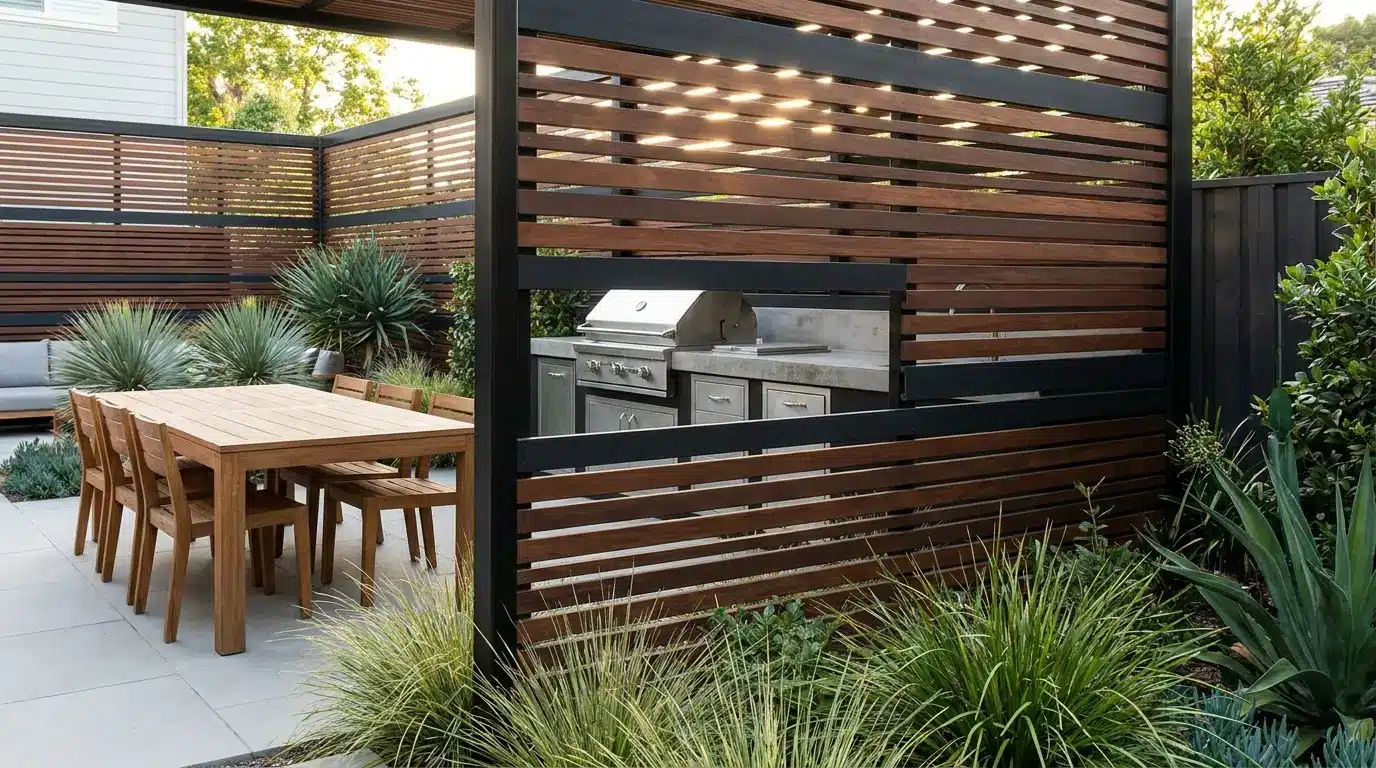
The screen material matters here. Ipe and teak hold up in outdoor conditions, but both are expensive.
Aluminum slat panels are more practical: powder-coated, no seasonal maintenance, and they don’t shrink and warp through freeze-thaw cycles the way wood does.
Space slats at 2 to 3 inches apart for partial screening that allows airflow around cooking equipment.
A gas line and a small prep counter need to be accessible, so plan the screen with a clearance door or removable panel, not a sealed wall.
11. Layered Retaining Walls as a Terraced Garden Feature
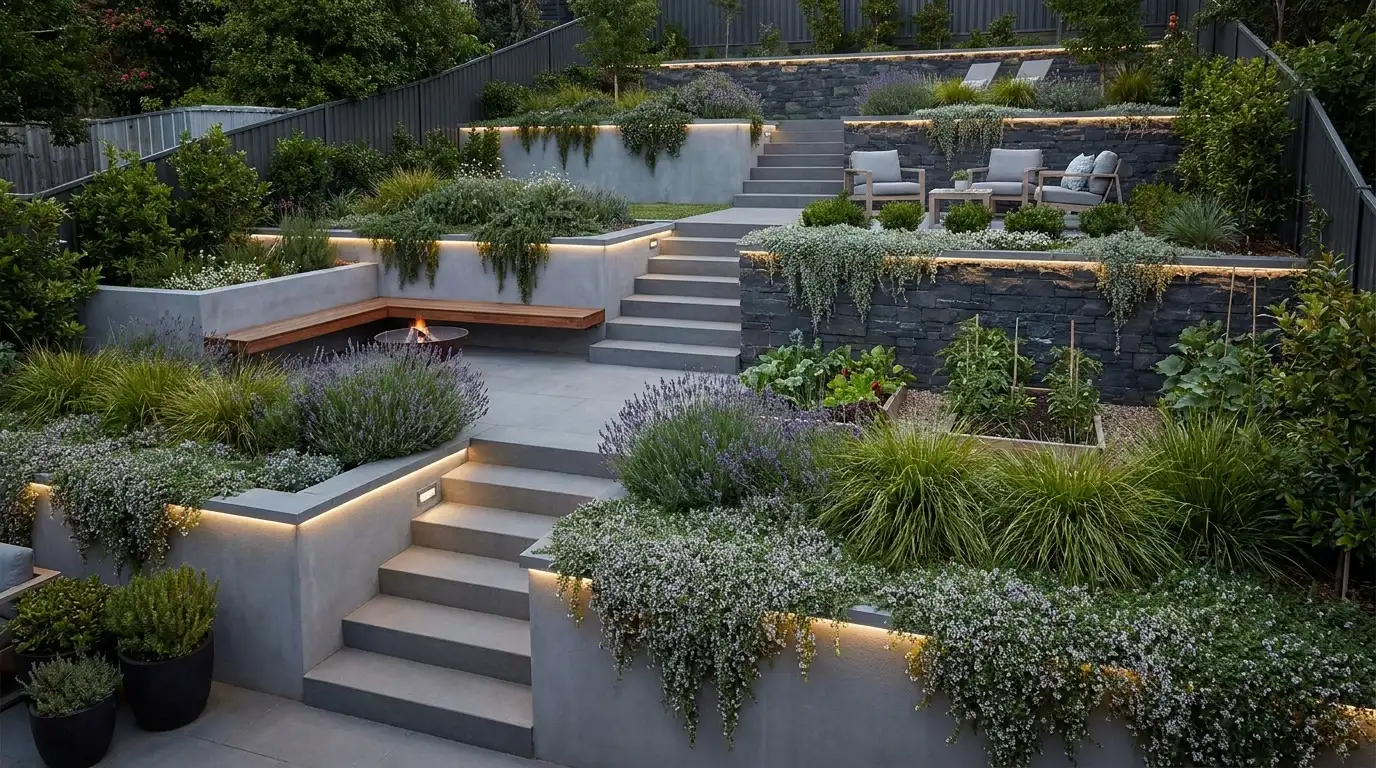
Any retaining wall over 4 feet in most jurisdictions requires a permit and engineering. Check before you build.
Under 4 feet, dry-stacked concrete block or poured concrete with a battered face (1 inch back for every 12 inches of height) handles most residential slope conditions.
The critical piece is drainage behind the wall: a perforated drain pipe in crushed stone at the base, sloped to daylight.
Without it, hydrostatic pressure builds up and walls fail, usually in the third or fourth wet season.
For sloped yards with significant grade changes, layering three or four smaller walls at 18 to 24 inches each is structurally safer than one tall wall and creates more planting opportunities between levels.
12. Black-Framed Pergola With Climbing Vines
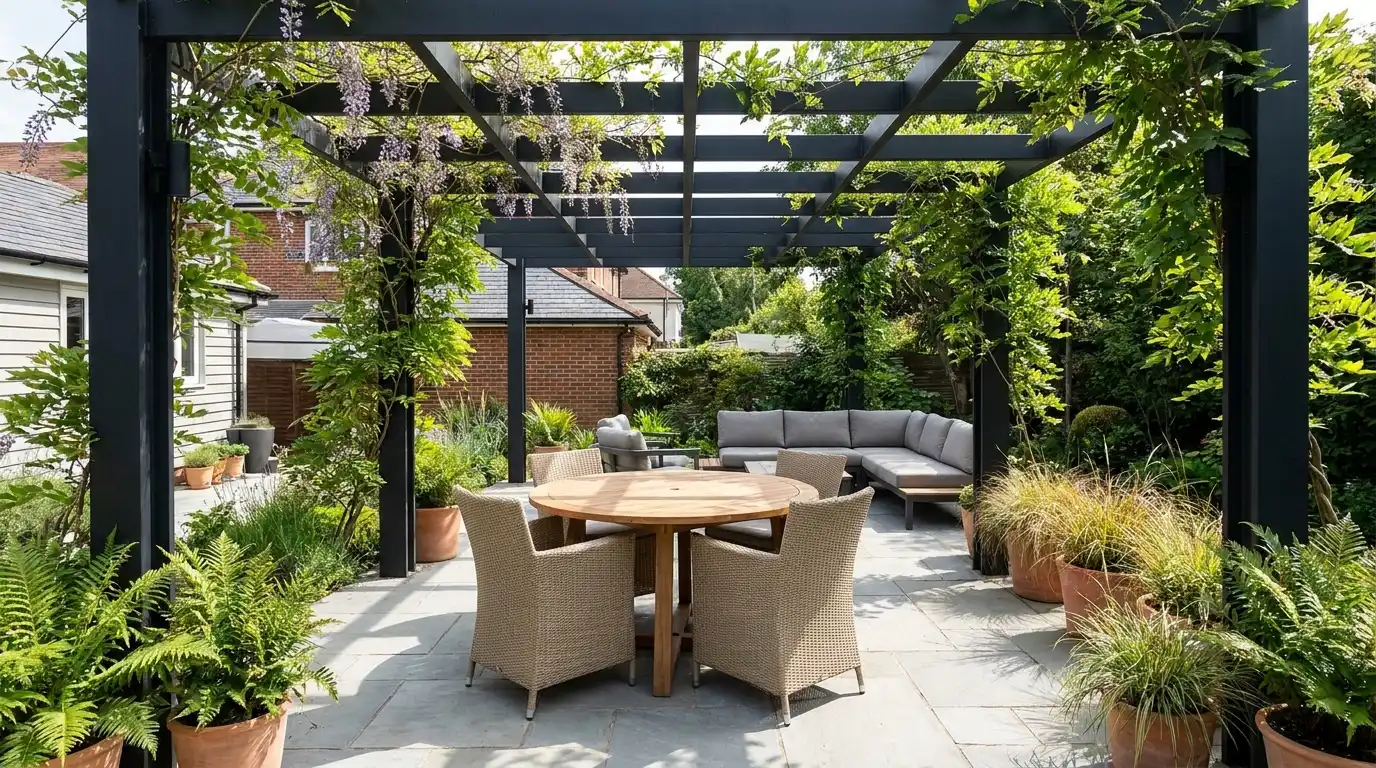
Steel pergola frames in a matte black powder coat hold their appearance indefinitely with minimal care.
That’s a major advantage over painted wood, which needs recoating every three to five years in most climates. The vine selection changes the character over time.
Wisteria is beautiful but aggressive and needs heavy annual pruning to stay manageable. Climbing hydrangea is slower to establish but lower maintenance.
Jasmine works well in warmer zones. Train the vine in its first two seasons before it sets its own direction. Redirecting a mature vine that’s wrapped structural members is significantly harder.
13. Lawn-Free Front Yard With Permeable Paving
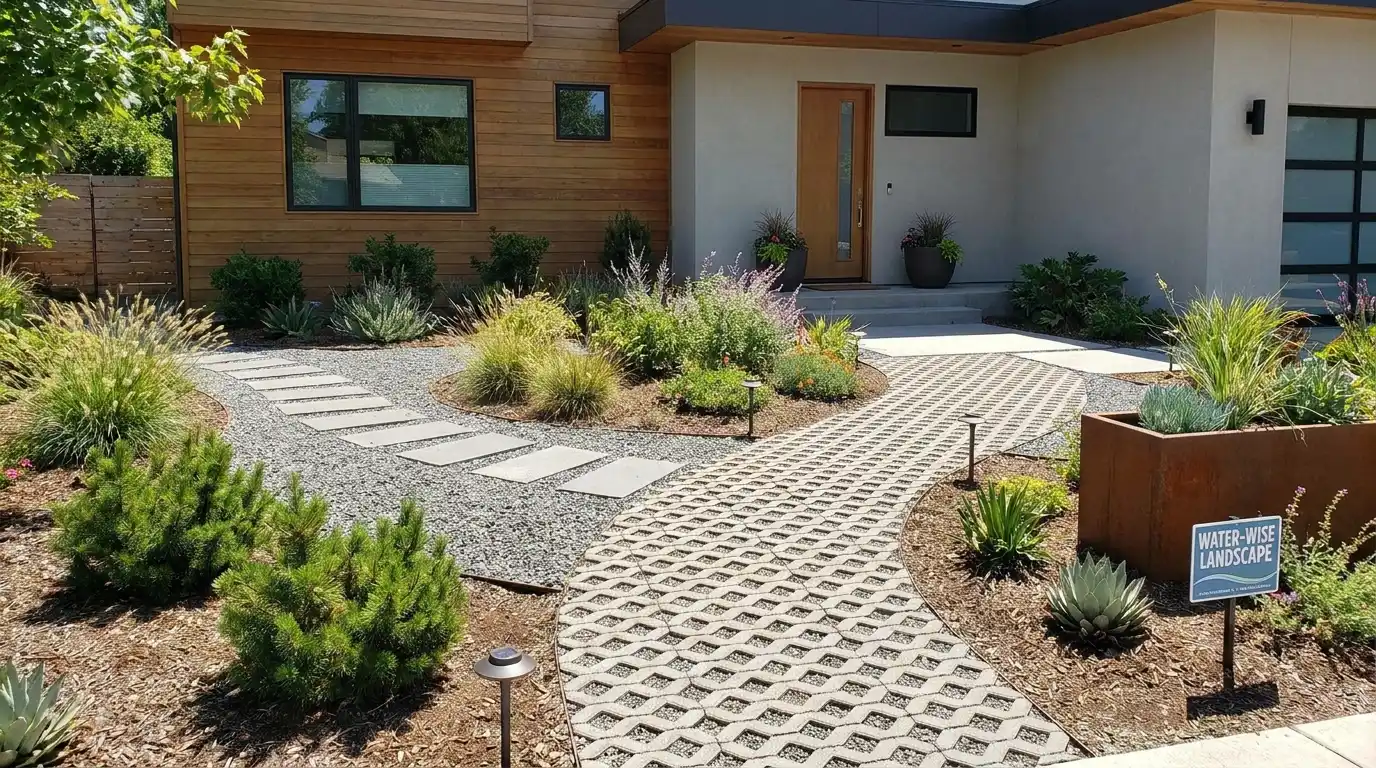
Permeable pavers allow stormwater to pass through into a gravel sub-base, which matters in municipalities that charge for stormwater runoff or where impervious surface coverage is restricted.
The system requires a 6-inch compacted gravel base minimum and maintenance to prevent the joints from filling with dirt and losing permeability over time.
Design-wise, limit yourself to two or three materials: one paving material, one gravel or decomposed granite, and planting.
More than three materials in a small front yard read as busy. Check paver installation costs per square foot before finalizing your material choice, because cost variation between paver types is significant.
14. Linear Fire Feature Built Into a Low Wall
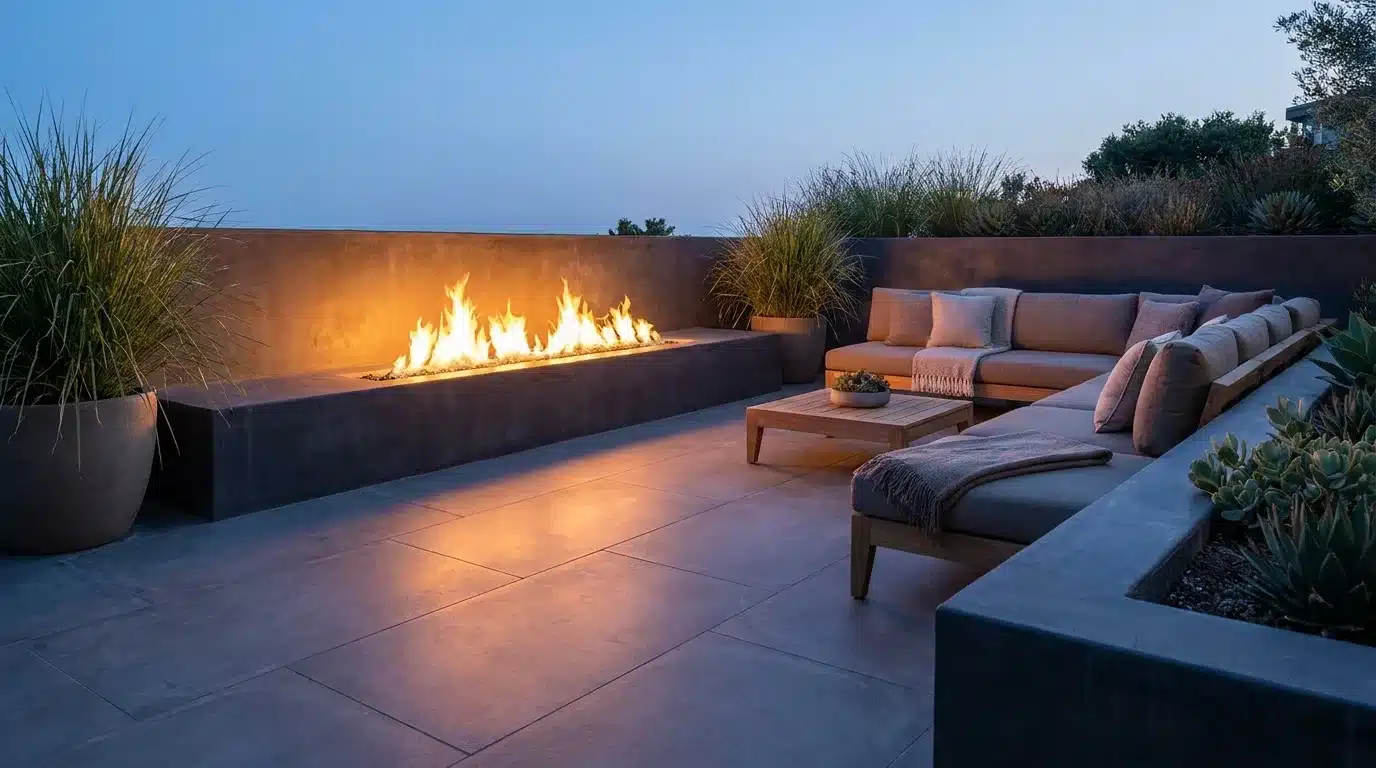
A linear gas fire feature runs on a dedicated gas line. This is not a DIY installation in most jurisdictions, and local code typically requires a licensed gas fitter for the connection.
The burner trough is usually 6 to 12 inches wide and set into a concrete or block wall cap at a height of 18 to 24 inches, comfortable for both standing and seated viewing.
Glass fire media (crushed tempered glass, not decorative rock) gives the cleanest look in a modern setting and holds up to outdoor conditions better than lava rock.
Site the wall 6 to 8 feet from seating for comfort without singeing. For more fire feature options that don’t require a gas line, a cast concrete fire pit is a lower-cost alternative.
15. Edible Kitchen Garden in Raised Steel Planters
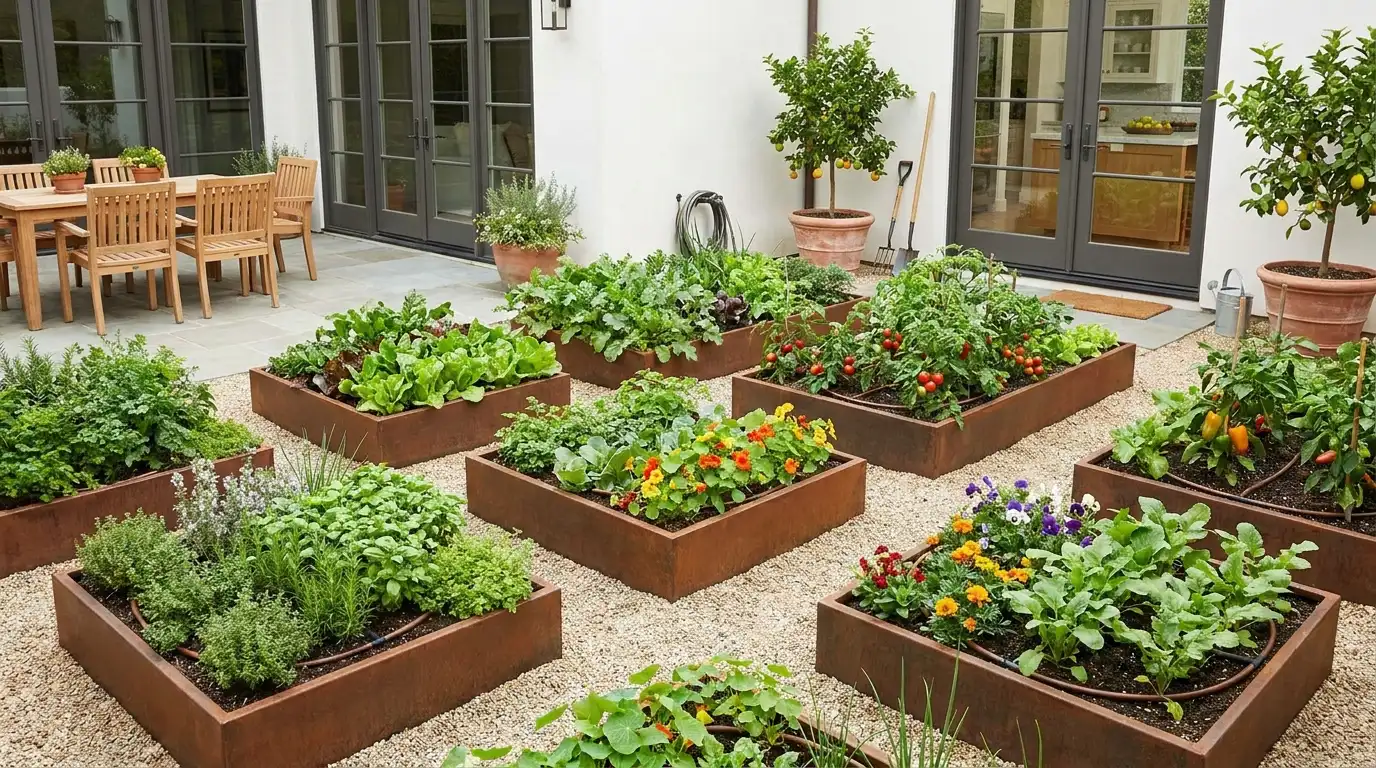
Galvanized or Corten steel raised planters in 12 to 16-inch depth handle most annual vegetables and herbs.
The steel heats the soil faster in spring, which is useful in shorter growing seasons, and the clean lines integrate better into a modern yard than timber boxes, which need replacing every eight to ten years.
Arrange herbs closest to the door (within 10 feet of the kitchen entry if possible) and taller crops like tomatoes or beans at the back.
A drip irrigation system through the planters reduces watering time significantly, especially in summer when daily watering would otherwise be necessary.
16. Nighttime Landscape Lighting as a Design Feature
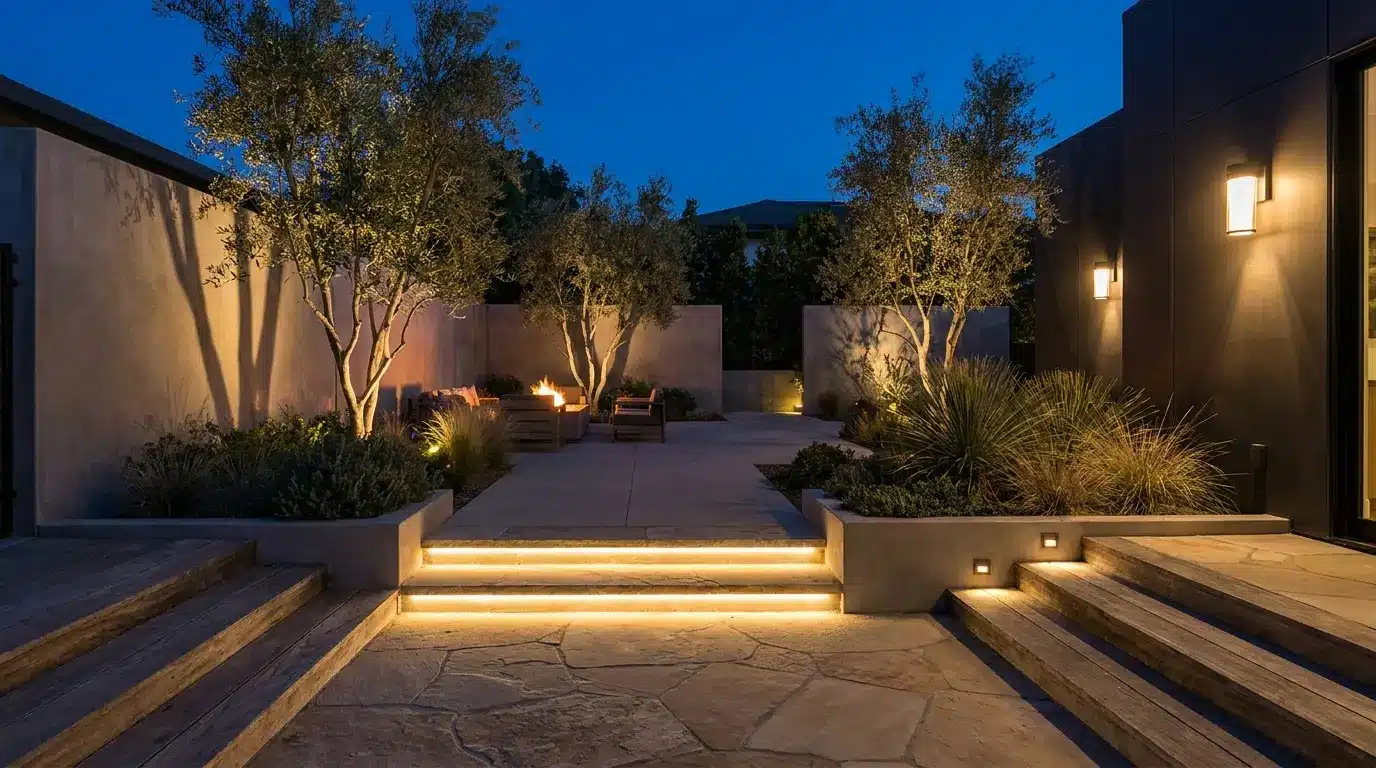
LED landscape lighting runs at 12 volts through a low-voltage transformer, typically DIY-installable unless you’re running new conduit or adding a circuit.
Warm white (2700K to 3000K) reads better outdoors at night than cool white, which creates a clinical, commercial look.
Prioritize three zones: step lighting for safety, uplighting for specimen trees or architectural features, and path lighting at 6 to 8-foot intervals.
Avoid ground floods pointing straight up at every plant. It looks like a crime scene. Keep light sources below eye level wherever possible so the effect is ambient rather than blinding.
17. Japanese-Inspired Raked Gravel Garden
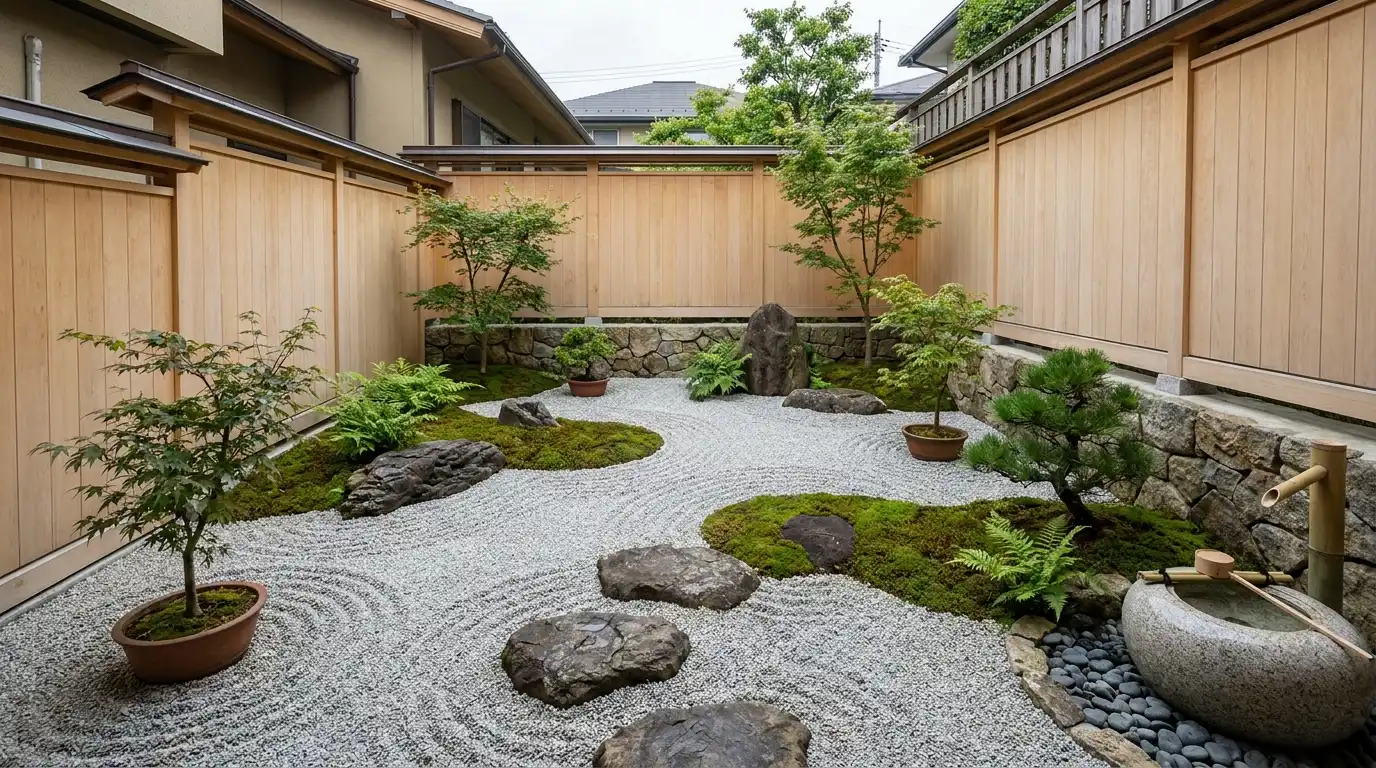
The maintenance commitment here is real. Raking gravel after wind, leaf fall, or rain is a regular task, not an occasional one.
Use angular granite or decomposed decomposed granite rather than river pebbles; round stones don’t hold the rake marks that make this feature visually distinctive.
Install a landscape fabric barrier below the gravel to limit weed intrusion, though it won’t eliminate it entirely.
This design works well in a small enclosed courtyard where wind and leaf fall are minimal. In an open backyard surrounded by trees, expect to rake weekly in autumn.
18. Smart Irrigation Zones Built Into the Design
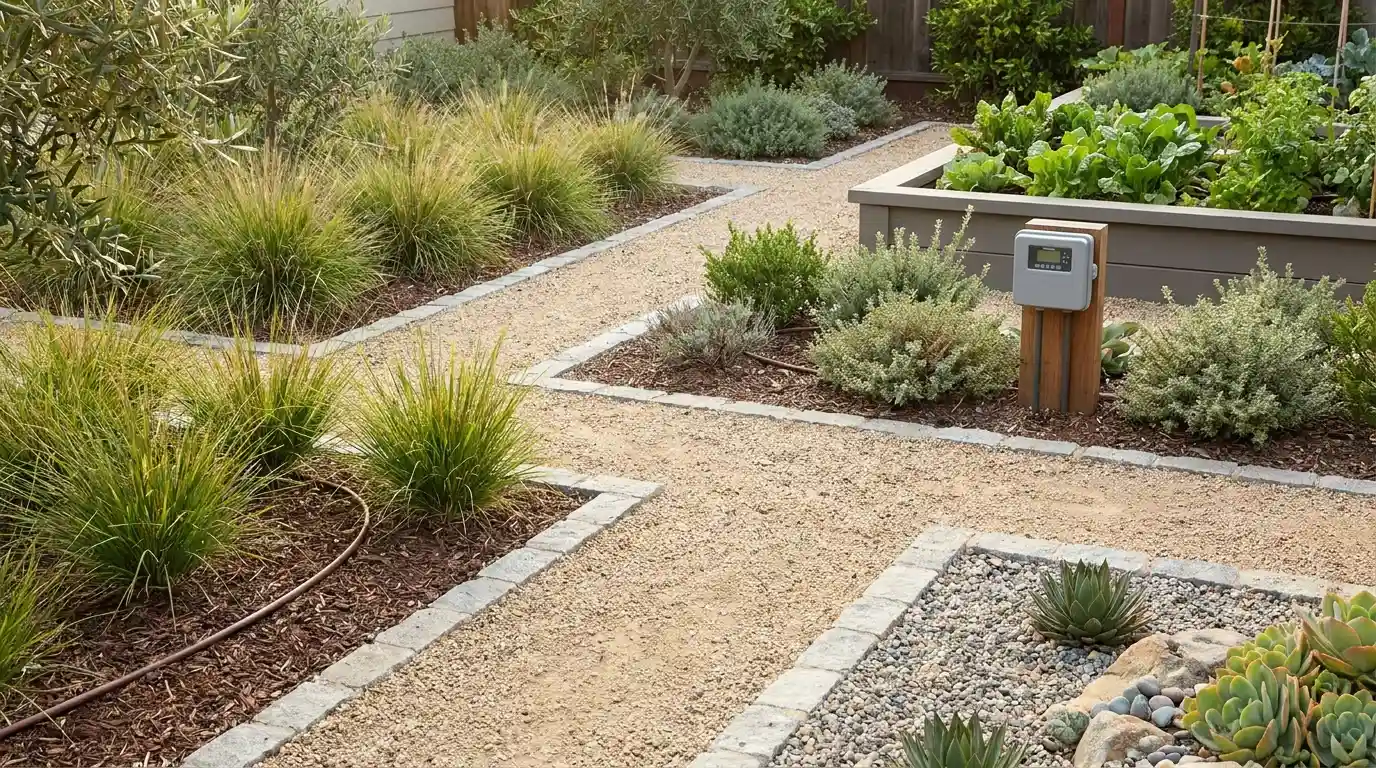
Zone irrigation matters more than controller sophistication. A basic timer with separate zones for grass (if any), shrub beds, and container plantings will outperform a smart controller running a single undifferentiated zone.
Drip irrigation at 1 to 2 gallons per hour delivers water directly to root zones and cuts water use significantly compared to spray heads. Run the lateral lines under gravel or mulch to keep them invisible.
If you’re redesigning the yard, install the irrigation infrastructure first. Retrofitting drip lines through established planting or under finished hardscape is more disruptive and expensive.
19. Outdoor Shower Framed by Privacy Planting
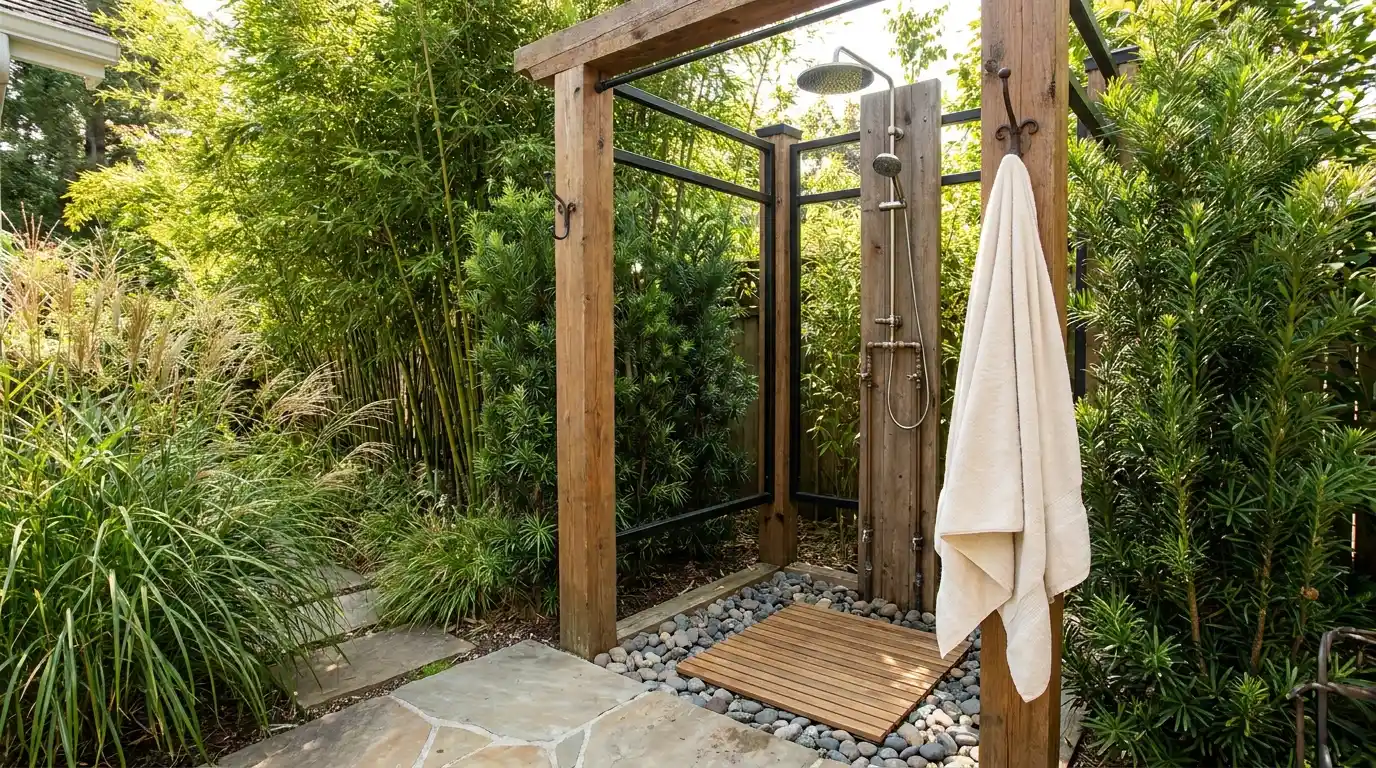
Drainage is the practical concern most people skip. An outdoor shower needs a French drain or dry well within 6 feet to handle the volume.
A standard shower runs at 2 gallons per minute, which adds up fast on surfaces that weren’t designed for runoff. A teak or composite platform over a gravel bed handles the drainage while keeping the surface clean underfoot.
Privacy planting works best when it’s planted at 80 percent of full size. You want screening now, not in five years.
Bamboo (in contained planters to prevent spreading), tall ornamental grasses, or dense arborvitae all establish fast enough to be useful in the first season.
20. Children’s Play Zone That Can Grow With the Yard
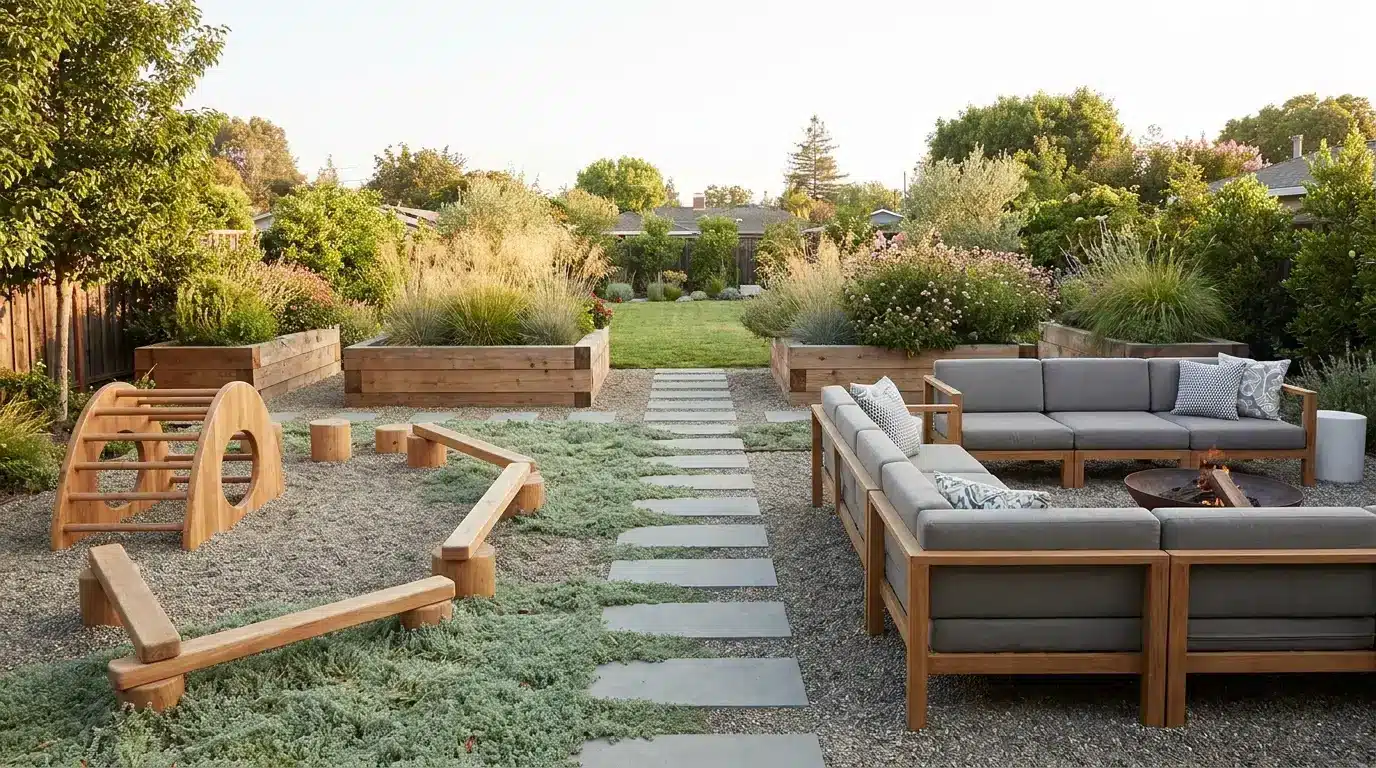
The most common mistake is building a play structure that dominates the yard for eight years and then has no second use.
A better approach: a level, well-drained area with a decomposed granite or engineered wood fiber surface, a simple timber frame structure, and enough open space around it that the furniture, structure, and fencing can be removed later without leaving a dead zone.
Plan the zone at least 6 feet from any boundary, fence, or wall. When the play phase ends, the flat, well-drained area converts naturally to a seating zone, a raised planting area, or an extension of the main patio.
21. Pollinator Meadow Strip Along Fence Lines
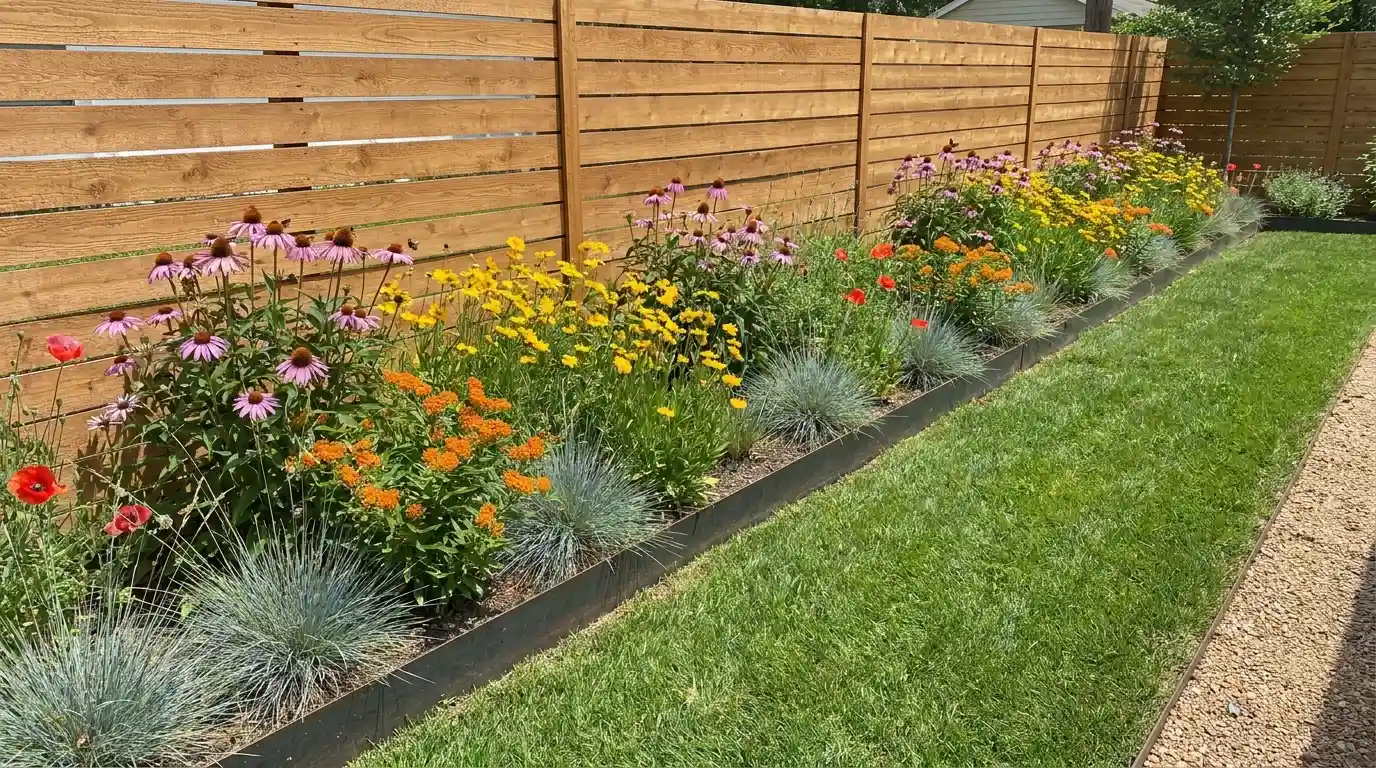
A meadow strip along a fence line reads as designed when it has a clean hard edge and a defined depth, typically 18 to 36 inches wide.
Without that, it looks like something you meant to mow. A corten steel or black steel edging strip along the front line makes the difference.
Plant in drifts of three to five plants of the same species, not individual specimens scattered randomly. Native wildflowers (coneflower, black-eyed Susan, little bluestem) establish faster and need less irrigation once rooted than exotic species.
Year-one establishment requires consistent moisture; after that, most native plantings are self-sustaining in their adapted climate.
How to Plan Modern Landscaping That Holds Up
The design sequence matters as much as the materials. Most landscape projects that fail or need expensive rework skipped one of these steps, usually the drainage or the material compatibility check.
- Drainage first: Before choosing any surface material or planting bed location, map where water currently goes in a heavy rain. Every path, patio, and planting zone needs a clear outlet. Hardscaping that concentrates water toward a foundation or low point is a structural problem, not just a design problem.
- One anchor feature: Pick one primary element (a specimen tree, a patio, a water feature) and design everything else to support it. A yard without a clear focal point reads as a collection of individual purchases.
- Match materials to climate: Decomposed granite is excellent in dry western climates but migrates badly in areas with significant rainfall. Corten steel performs well in most climates but bleeds rust in wet or coastal conditions without proper clearances. Wood degrades at different rates depending on species, treatment, and humidity. Regional climate determines which materials are worth the investment.
- Build infrastructure before finishes: Irrigation lines, electrical conduit for lighting, and drainage pipes need to be in the ground before paving or gravel goes down. Retrofitting them later means tearing up finished surfaces.
- Leave room to grow: Plants at installation are a fraction of their mature size. Spacing that looks sparse in year one is correct spacing for year five. Overcrowded planting looks good briefly and then becomes a maintenance problem that undermines the design.
Materials for Modern Landscaping: What to Expect Over Time
This is where most landscaping guides go wrong. They list materials by appearance without telling you what they cost in maintenance two or three years out. Here’s a practical comparison of the surfaces and structural elements that define modern landscape design.
| Material | Approx. Cost / sq ft installed | Lifespan | Maintenance | Climate Watch |
| Poured concrete | $6–$12 | 30+ years | Low; seal every 3-5 yrs | Freeze-thaw cracking in northern climates without fiber reinforcement |
| Permeable pavers | $12–$20 | 25–30 years | Medium; joints need clearing annually | Excellent for high-rainfall areas; restricts in heavy clay soil |
| Decomposed granite | $2–$5 | 5–10 years before refresh | Low; raking and top-up needed | Migrates in heavy rain; not suited to slopes above 5% |
| Corten steel edging | $4–$8 per linear ft | 20+ years | None after patina sets (12–18 months) | Avoid within 100 ft of saltwater; bleeds rust onto adjacent hardscape in year 1 |
| Composite decking | $8–$15 | 25–30 years | Low; annual cleaning | Thermal expansion in direct sun; gaps critical in hot climates |
| Natural stone (bluestone, travertine) | $15–$30 | 50+ years | Seal annually; watch for efflorescence in wet climates | Travertine slippery when wet; bluestone handles freeze-thaw better |
Cost estimates are US national averages based on HomeAdvisor data. Your actual figures will vary by region, labor rates, and project scale. Read a complete breakdown of paver installation costs before finalizing your hardscape budget.
Plant Choices for Modern Landscaping by Climate
The cleanest modern designs use plants that actually survive where you live. Here’s what performs reliably in each major US climate zone without constant intervention.
Dry Western Climates (Southwest, California)
Agave, blue fescue, ornamental bunchgrasses, desert willow, palo verde, and creosote. These tolerate long dry periods and look intentional in a modern composition.
They have strong silhouettes and don’t require deadheading or seasonal replanting. Avoid plants that need supplemental summer irrigation once established.
Humid Southeast and Gulf Coast
Muhly grass, inkberry holly, southern magnolia, camellia, and native ferns. High humidity and summer heat eliminate many of the species that look good in western or Pacific Northwest landscaping.
Boxwood blight is endemic here. Avoid it entirely. Focus on broad-leaf evergreens and grasses that handle both heat and periodic flooding.
Temperate Pacific Northwest
Japanese maple, hellebore, mondo grass, ferns, and bamboo (contained). This climate supports the widest range of ornamental plants, but slug pressure is significant.
Avoid hostas and thin-leafed species in high-moisture zones. Corten steel performs well here without coastal salt exposure.
Upper Midwest and Northeast
Karl Foerster grass, catmint, switchgrass (Panicum), native coneflowers, and serviceberry. Freeze-thaw cycles are the primary material challenge in these zones.
Focus on plants with good winter structure: seed heads and dried stems that hold form through snow rather than collapsing into mush by December.
For more on landscaping choices by region, including what specific plants survive in northern climates, that guide covers regional conditions in detail.
Modern Landscaping by Space Type
Different yard types have different constraints that shape which modern landscape design approaches actually work. A sloped yard needs grading decisions before it needs design decisions.
A small front yard needs fewer materials and more negative space, not more features. Use this table as a quick reference before committing to any specific idea.
| Space Type | Primary Challenge | Best Move | What to Avoid |
|---|---|---|---|
| Front yard | Curb appeal with limited depth | Clean entry path, one specimen plant, permeable paving | Cluttering with too many plant types or decorative features |
| Backyard | Creating zones without it feeling divided | Hardscape anchors, clear sightlines between zones, graduated screening | Solid fencing that makes the space feel smaller; full lawn with no planting beds |
| Small courtyard | Avoiding visual clutter | One material for the ground plane, vertical planting, single focal point | Multiple paving types, too many planters, anything that breaks the sightline |
| Sloped yard | Drainage and usable flat area | Layered retaining walls under 4 ft each, terraced planting, steps with drainage channels | Single tall retaining wall without drainage; planting on unstabilized slopes above 30 degrees |
This table gives you a starting framework. Adjust every choice against your local soil, rainfall, and frost conditions before committing materials or signing any contracts.
Common Modern Landscaping Mistakes That Show Up Two Years Later
The mistakes that create the most damage in a modern landscape aren’t the obvious ones. They’re the decisions that look fine initially and then compound over time. Here are the four I see most often in residential landscapes.
Skipping Drainage Planning
Hardscaping without drainage planning is the most expensive mistake in landscaping. Improperly sloped patios channel water toward foundations.
Planting beds without drainage hold moisture that rots root systems. Retaining walls without drainage fail within a few wet seasons.
Fix grading and drainage before choosing any surface material or plant. It’s cheaper to solve before the landscape is installed than after.
Choosing Plants by Appearance, Not Climate
Modern landscaping photos are shot in ideal conditions, usually in temperate California or Pacific Northwest climates.
The plants look clean and structural. Many of them don’t survive a humid summer in Georgia or a freeze in Minnesota.
Research plant hardiness zones and actual mature sizes before purchasing. A 3-gallon Miscanthus grass looks perfect at installation. At three years it’s 5 feet wide and blocking the path.
Overcrowding to Fill Space Immediately
Newly planted beds look sparse for the first two seasons. That’s correct. Planting at 50 percent of the recommended spacing creates a full look immediately and a jungle two years later.
The maintenance time and cost of managing overcrowded plants usually exceeds what was saved on additional plants at installation.
Prioritizing Style Before Function
A modern yard should handle water, movement, shade, and maintenance before it should look polished.
A beautiful patio with no drainage, a path that floods after rain, or a planting scheme that requires weekly attention defeats the practical purpose of an outdoor space.
The style follows when the function is working. If you’re adding a deck to your landscape, reviewing outdoor deck ideas alongside these landscaping principles helps ensure the built elements work together as one design.
Frequently Asked Questions
These are the questions that come up most when homeowners are deciding how to approach modern landscaping, before they’ve hired anyone or committed to materials.
What does modern landscape design actually look like?
It prioritizes clean lines, a limited material palette (usually two to three surfaces), structured planting with defined edges, and intentional negative space. It avoids ornate decoration, mixed plant styles, or busy borders. The result is a yard that reads as composed rather than accumulated.
What plants are used for modern landscaping?
Ornamental grasses, succulents, agave, yucca, native wildflowers, and clipped evergreen shrubs. Specific choices depend on climate. A modern Southwest yard uses agave and bunchgrasses; a modern Pacific Northwest yard uses Japanese maple, mondo grass, and ferns. Climate drives plant selection more than style does.
What is the cheapest way to make a yard look modern?
Add defined edging, resurface paths with decomposed granite or gravel, and reduce plant variety to two or three species planted in mass. Clean edges and reduced visual complexity have more visual impact per dollar than new structures or hardscape.
Does modern landscaping require a lot of maintenance?
Less than traditional landscaping when it’s designed correctly. Native plants in their climate zone, drip irrigation, gravel or decomposed granite surfaces, and defined edges all reduce ongoing maintenance. A lawn-heavy traditional yard typically requires more time and water than a well-planned modern one.
What is mid-century modern landscaping called?
Mid-century modern landscaping is sometimes called California modernist or ranch modern. It references the design vocabulary of the 1950s and 60s: clean concrete lines, low-maintenance planting, bold specimen plants, and the integration of indoor and outdoor living. It’s a specific subset of modern landscape design, not a separate category.
How do I add privacy without making the yard feel closed in?
Use slatted screens at 40 to 60 percent opacity, tall ornamental grasses, or a single row of columnar trees (Sky Pencil holly, Italian cypress) rather than a solid fence or dense hedge. Partial screening maintains spatial openness while blocking direct sightlines from adjacent properties or streets.
What are the landscape design trends for 2026?
Lawn removal and water-efficient planting, pollinator meadow strips, outdoor kitchen integration, and native plant landscaping are gaining consistent traction. Structurally, linear fire features, steel-framed pergolas, and permeable paving continue to define the clean-line modern look.
Is modern landscaping good for small front yards?
Modern design principles are better suited to small yards than traditional mixed planting. Fewer material types, more negative space, and one focal point make a small area feel larger. Restrict the plant palette to two species and let the hardscape carry the design. For specific ideas suited to smaller spaces, the modern deck skirting ideas guide includes approaches that help defined outdoor areas feel cohesive in compact yards.
Final Words
Done right, modern landscape design costs more upfront than patching a lawn or throwing down mulch, but it pays back in lower maintenance and longer material lifespans.
The concrete pathway lasts 30 years. The Corten steel outlasts the house. The native planting needs no irrigation after year two.
The investment question isn’t whether modern landscaping is expensive. It’s whether the materials and plants you’re choosing will hold up without constant attention in your specific climate.
Start with drainage, pick one anchor feature, and select materials for your region before worrying about aesthetics.
Get at least three contractor quotes for any work that involves hardscape or grading. That’s the honest sequence for a yard that still looks right a decade from now.